What is the Omicron Variant? How do vaccines work? And what about monoclonal antibody therapy? On this episode of StarTalk, Neil deGrasse Tyson has a wide-ranging and quite informative conversation with George Yancopoulos, president of Regeneron, the company that created the monoclonal antibody therapy now being used in the fight against COVID-19. And there’s an interesting side note: During the 1970s, Tyson and Yancopoulos were high school classmates together at Bronx Science. They’ve both come a long way, and now they re-unite to explain the science behind the latest phase of the pandemic.
If you would like to sign up for Open Culture’s free email newsletter, please find it here. It’s a great way to see our new posts, all bundled in one email, each day.
If you would like to support the mission of Open Culture, consider making a donation to our site. It’s hard to rely 100% on ads, and your contributions will help us continue providing the best free cultural and educational materials to learners everywhere. You can contribute through PayPal, Patreon, and Venmo (@openculture). Thanks!
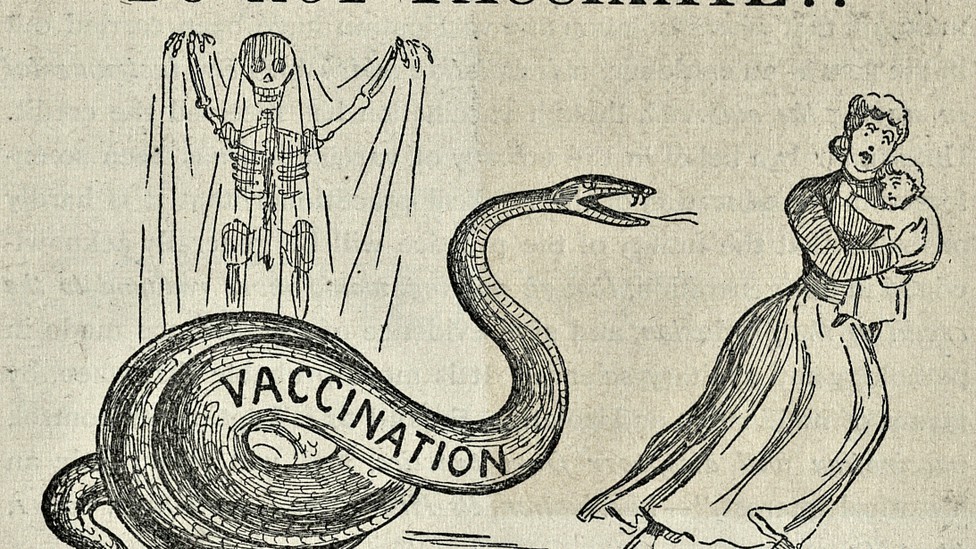
A cartoon from a December 1894 anti-vaccination publication (Courtesy of The Historical Medical Library of The College of Physicians of Philadelphia)
For well over a century people have queued up to get vaccinated against polio, smallpox, measles, mumps, rubella, the flu or other epidemic diseases. And they have done so because they were mandated by schools, workplaces, armed forces, and other institutions committed to using science to fight disease. As a result, deadly viral epidemics began to disappear in the developed world. Indeed, the vast majority of people now protesting mandatory vaccinations were themselves vaccinated (by mandate) against polio, smallpox, measles, mumps, rubella, etc., and hardly any of them have contracted those once-common diseases. The historical argument for vaccines may not be the most scientific (the science is readily available online). But history can act as a reliable guide for understanding patterns of human behavior.
In 1796, Scottish physician Edward Jenner discovered how an injection of cowpox-infected human biological material could make humans immune to smallpox. For the next 100 years after this breakthrough, resistance to inoculation grew into “an enormous mass movement,” says Yale historian of medicine Frank Snowden. “There was a rejection of vaccination on political grounds that it was widely considered as another form of tyranny.”
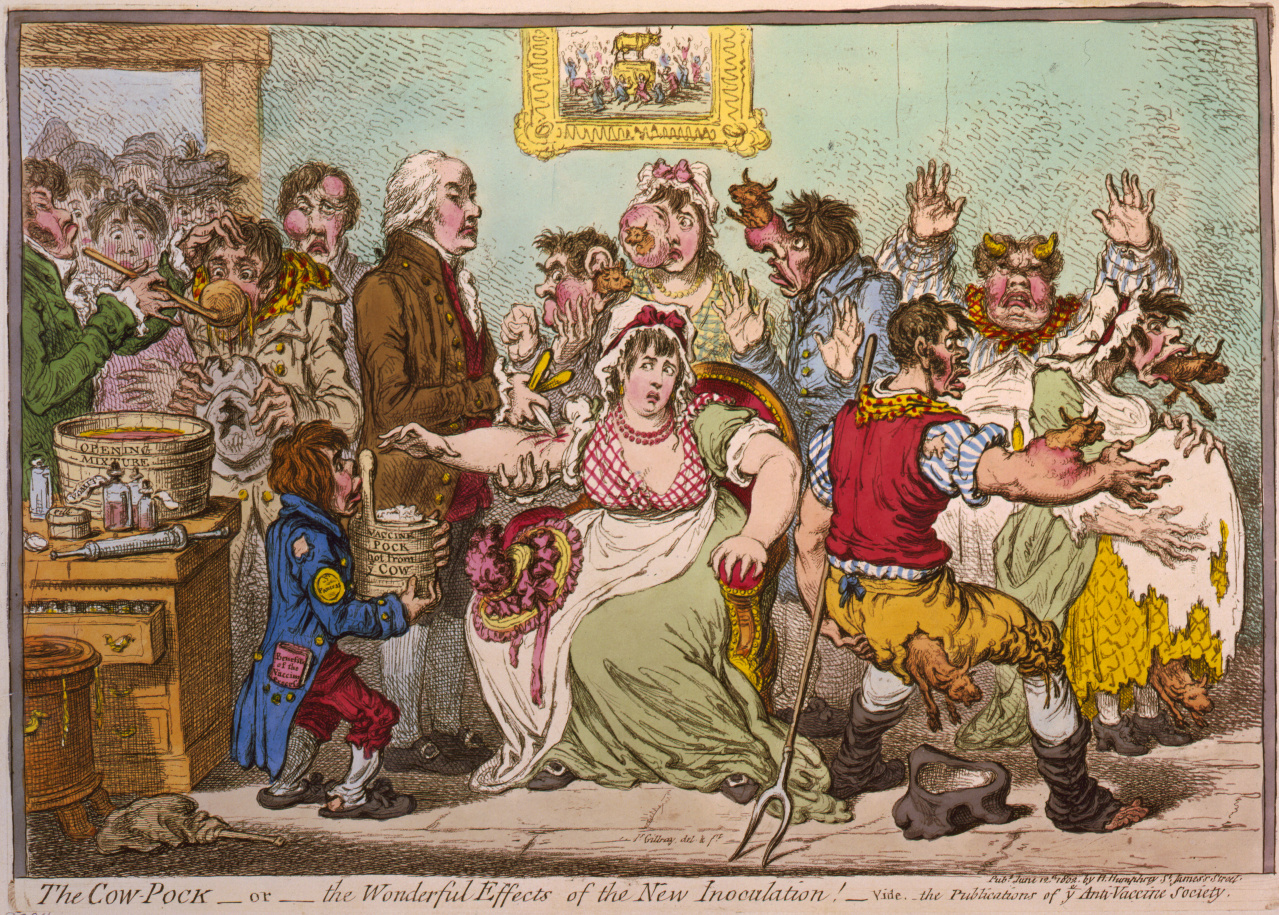
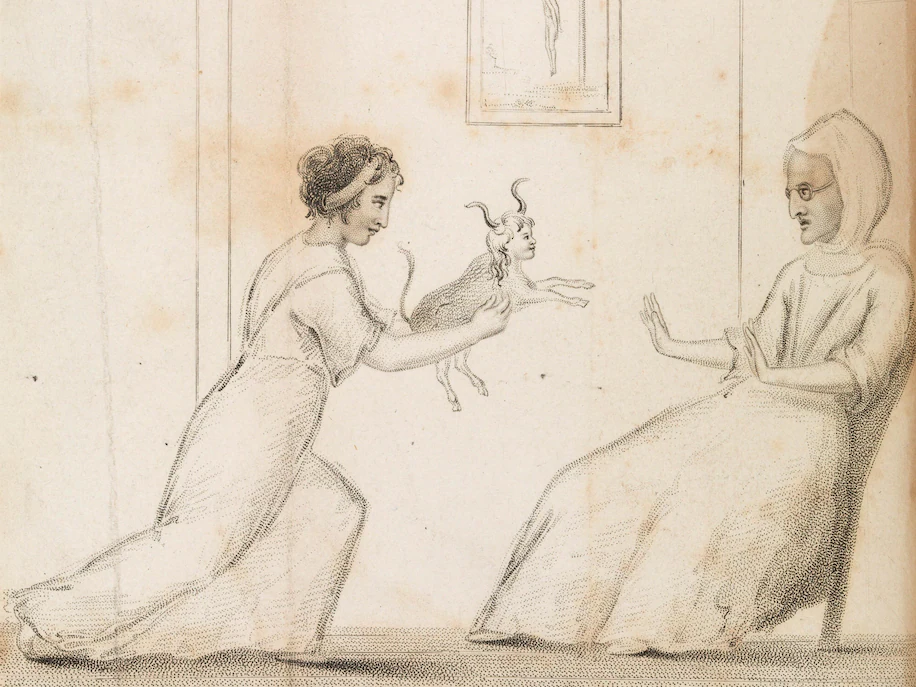
Fears that injections of cowpox would turn people into mutants with cow-like growths were satirized as early as 1802 by cartoonist James Gilray (below). While the anti-vaccination movement may seem relatively new, the resistance, refusal, and denialism are as old as vaccinations to infectious disease in the West.
Image via Wikimedia Commons
“In the early 19th century, British people finally had access to the first vaccine in history, one that promised to protect them from smallpox, among the deadliest diseases in the era,” writes Jess McHugh at The Washington Post. Smallpox killed around 4,000 people a year in the UK and left hundreds more disfigured or blinded. Nonetheless, “many Britons were skeptical of the vaccine.… The side effects they dreaded were far more terrifying: blindness, deafness, ulcers, a gruesome skin condition called ‘cowpox mange’ — even sprouting hoofs and horns.” Giving a person one disease to frighten off another one probably seemed just as absurd a notion as turning into a human/cow hybrid.
Jenner’s method, called variolation, was outlawed in 1840 as safer vaccinations replaced it. By 1867, all British children up to age 14 were required by law to be vaccinated against smallpox. Widespread outrage resulted, even among prominent physicians and scientists, and continued for decades. “Every day the vaccination laws remain in force,” wrote scientist Alfred Russel Wallace in 1898, “parents are being punished, infants are being killed.” In fact, it was smallpox claiming lives, “more than 400,000 lives per year throughout the 19th century, according to the World Health Organization,” writes Elizabeth Earl at The Atlantic. “Epidemic disease was a fact of life at the time.” And so it is again. Covid has killed almost 800,000 people in the U.S. alone over the past two years.
Then as now, medical quackery played its part in vaccine refusal — in this case a much larger part. “Never was the lie of ‘the good old days’ more clear than in medicine,” Greig Watson writes at BBC News. “The 1841 UK census suggested a third of doctors were unqualified.” Common causes of illness in an 1848 medical textbook included “wet feet,” “passionate fear or rage,” and “diseased parents.” Among the many fiery lectures, caricatures, and pamphlets issued by opponents of vaccination, one 1805 tract by William Rowley, a member of the Royal College of Physicians, alleged that the injection of cowpox could mar an entire bloodline. “Who would marry into any family, at the risk of their offspring having filthy beastly diseases?” it asked hysterically.
Then, as now, religion was a motivating factor. “One can see it in biblical terms as human beings created in the image of God,” says Snowden. “The vaccination movement injecting into human bodies this material from an inferior animal was seen as irreligious, blasphemous and medically wrong.” Granted, those who volunteered to get vaccinated had to place their faith in the institutions of science and government. After medical scandals of the recent past like the Tuskegee experiments or Thalidomide, that can be a big ask. In the 19th century, says medical historian Kristin Hussey, “people were asking questions about rights, especially working-class rights. There was a sense the upper class were trying to take advantage, a feeling of distrust.”
The deep distrust of institutions now seems intractable and fully endemic in our current political climate, and much of it may be fully warranted. But no virus has evolved — since the time of the Jenner’s first smallpox inoculation — to care about our politics, religious beliefs, or feelings about authority or individual rights. Without widespread vaccination, viruses are more than happy to exploit our lack of immunity, and they do so without pity or compunction.
No one living has experienced a viral event the size and scope of COVID-19. Maybe the unprecedented nature of the pandemic explains some of the vaccine resistance. Diseases of such virulence became rare in places with ready access to vaccines, and thus, ironically, over time, have come to seem less dangerous. But there are still many people in wealthy nations who remember polio, an epidemic that dragged on through the first half of the 20th century before Jonas Salk perfected his vaccine in the mid-fifties.
Polio’s devastation has been summed up visually in textbooks and documentaries by the terrifying iron lung, an early ventilator. “At the height of the outbreaks in the late 1940s,” Meilan Solly writes at Smithsonian, “polio paralyzed an average of more than 35,000 people each year,” particularly affecting children, with 3,000 deaths in 1952 alone. “Spread virally, it proved fatal for two out of ten victims afflicted with paralysis. Though millions of parents rushed to inoculate their children following the introduction of Jonas Salk’s vaccine in 1955, teenagers and young adults had proven more reluctant to get the shot.”
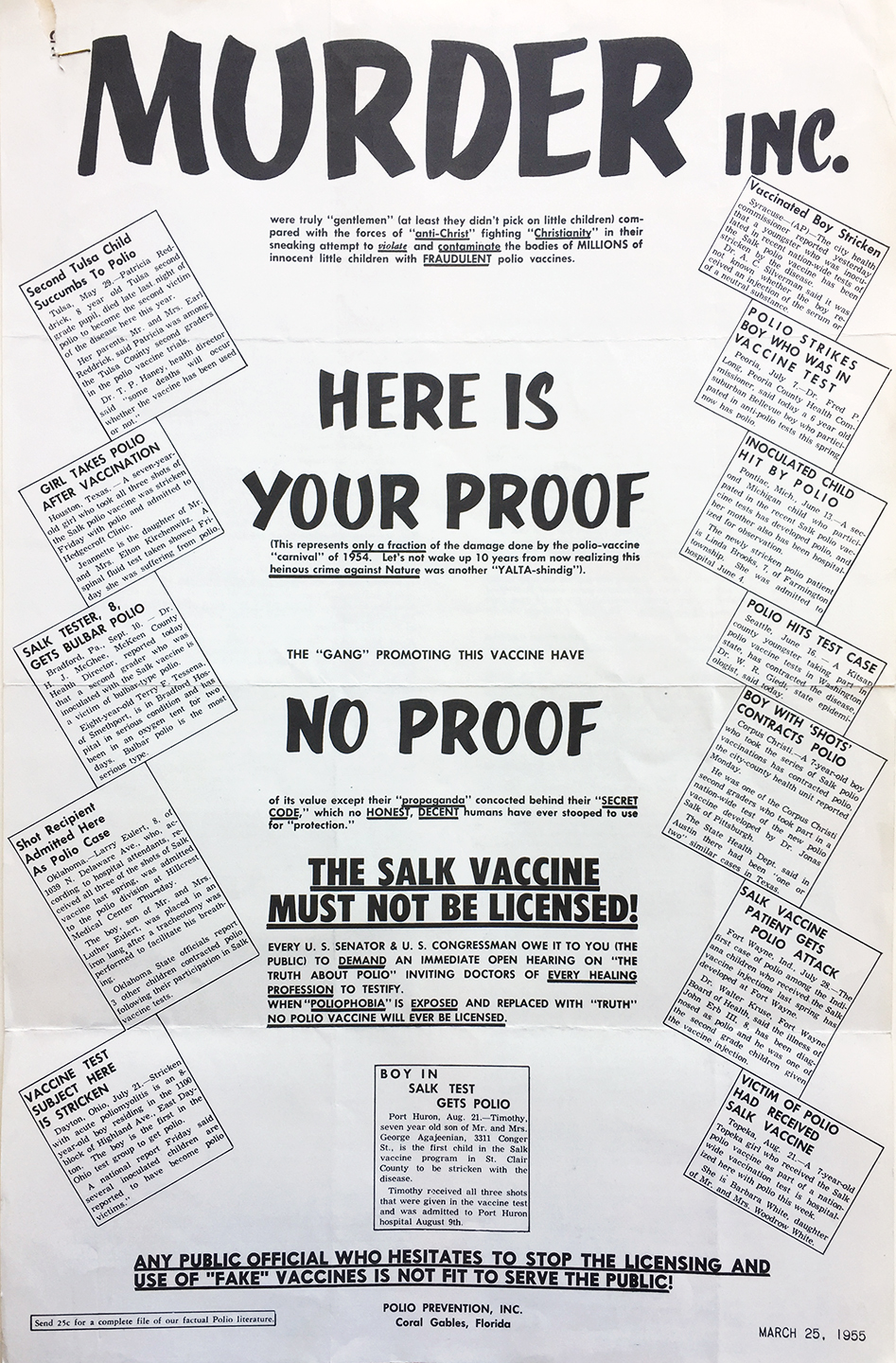
At the time, there were no violent, organized protests against the vaccine, nor was resistance framed as a patriotic act of political loyalty. But “cost, apathy and ignorance became serious setbacks to the eradication effort,” says historian Stephen Mawdsley. And, then as now, irresponsible media personalities with large platforms and little knowledge could do a lot of harm to the public’s confidence in life-saving public health measures, as when influential gossip columnist Walter Winchell wrote that the vaccine “may be a killer,” discouraging countless readers from getting a shot.
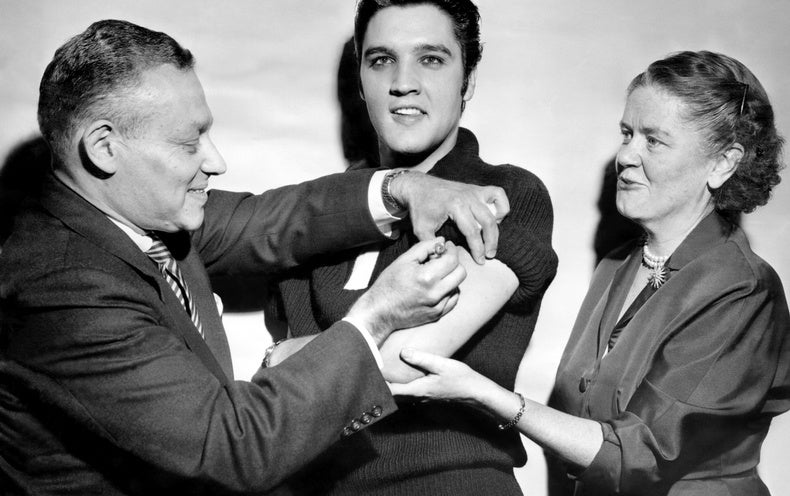
When Elvis Presley made his first appearance on Ed Sullivan’s show in 1956, “immunization levels among American teens were at an abysmal 0.6 percent,” note Hal Hershfield and Ilana Brody at Scientific American. To counter impressions that the polio vaccine was dangerous, public health officials did not solely rely on getting more and better information to the public; they also took seriously what Hershfield and Brody call the “crucial ingredients inherent to many of the most effective behavioral change campaigns: social influence, social norms and vivid examples.” Satisfying all three, Elvis stepped up and agreed to get vaccinated “in front of millions” backstage before his second appearance on the Sullivan show.
Elvis could not have been more famous, and the campaign was a success for its target audience, establishing a new social norm through influence and example: “Vaccination rates among American youth skyrocketed to 80 percent after just six months.” Despite the threat he supposedly posed to the establishment, Elvis himself was ready to serve the public. “I certainly never wanna do anything,” he said, “that would be a wrong influence.” See in the short video at the top how American public health officials stopped millions of preventable deaths and disabilities by admitting a fact propagandists and advertisers never shy from — humans, on the whole, are easily persuaded by celebrities. Sometimes they can even be persuaded for the good.
If you’ve ever wondered why one of science fiction’s greatest honors is called the “Hugo,” meet Hugo Gernsback, one of the genre’s most important figures, a man whose work has been variously described as “dreadful,” “tawdry,” “incompetent,” “graceless,” and “a sort of animated catalogue of gadgets.” But Gernsback isn’t remembered as a writer, but as an editor, publisher (of Amazing Stories magazine), and pioneer of science fact, for it was Gernsback who first introduced the earth-shaking technology of radio to the masses in the early 20th century.
“In 1905 (just a year after emigrating to the U.S. from Germany at the age of 20),” writes Matt Novak at Smithsonian, “Gernsback designed the first home radio set and the first mail-order radio business in the world.” He would later publish the first radio magazine, then, in 1913, a magazine that came to be called Science and Invention, a place where Gernsback could print catalogues of gadgets without the bother of having to please literary critics. In these pages he shone, predicting futuristic technologies extrapolated from the cutting edge. He was understandably enthusiastic about the future of radio. Like all self-appointed futurists, his predictions were a mix of the ridiculous and the prophetic.
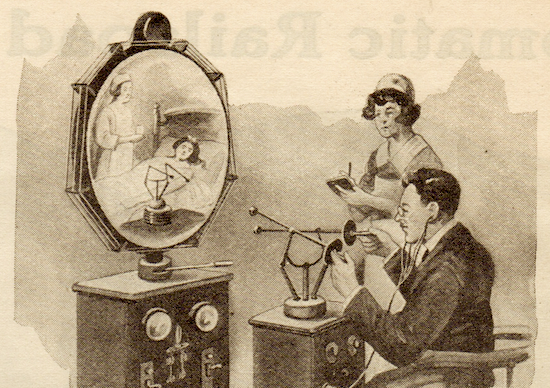
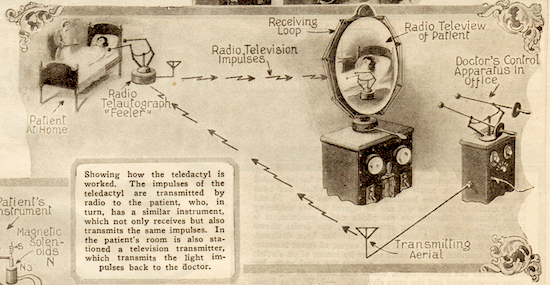
Case in point: Gernsback theorized in a 1925 Science and Invention article that communications technologies like radio would revolutionize medicine, in exactly the ways that they have in the 21st century, though not quite through the device Gernsback invented: the “teledactyl,” which is not a robotic dinosaur but a telemedicine platform that would allow doctors to examine, diagnose, and treat patients from a distance with robotic arms, a haptic feedback system, and “by means of a television screen.” Never mind that television didn’t exist in 1925. Sounding not a little like his contemporary Buckminster Fuller, Gernsback insisted that his device “can be built today with means available right now.”
It would require significant upgrades to radio technology before it could support the wireless internet that lets us meet with doctors on computer screens. Perhaps Gernsback wasn’t entirely wrong — technology may have allowed for some version of this in the early 20th century, if medicine had been inspired to move in a more sci-fi direction. But the focus of the medical community — after the devastation of the 1918 flu epidemic — had understandably turned toward disease cure and prevention, not distance diagnosis.
Gernsback looked fifty years ahead, to a time, he wrote, when “the busy doctor… will not be able to visit his patients as he does now. It takes too much time, and he can only, at best, see a limited number today.” Home visits did not last another fifty years, but remote medicine didn’t take their place until almost 100 years after Gernsback wrote. Indeed, the webcams that now give doctors access to patients in the pandemic only came about in 1991 for the purpose of making sure the break room in the computer science department at Cambridge had coffee.
Gernsback even anticipated advances in space medicine, which has spent the last several years building the technology he predicted in order to perform surgeries on sick and injured astronauts stuck months or years away from Earth. He would have particularly appreciated this usage, though he isn’t given credit for the idea. Gernsback also deserves credit for poking fun at himself, as he seemed to realize how hard it was for most people to take him seriously.
To non-visionaries, the technologies of the future would all seem equally ridiculous today, as in the pages of Gernsback’s satirical 1947 publication, Popular Neckanics Gagazine. Here, we find such objects as the Lamplifier, “the lamp that has EVERYTHING.” Gernsback’s love of gadgets blurred the boundaries between science fiction and fact, always with the strong suggestion that — no matter how useful or how ludicrous — if a machine could be imagined, it could be built and put to work.
The Fat Acceptance movement may seem like a 21st century phenomenon, rising to public consciousness with the success of high-profile writers, actors, filmmakers, and activists in recent years. But the movement can date its origins to 1967, when WBAI radio personality Steve Post held a “fat-in” in Central Park, bringing 500 people together to protest, celebrate, and burn diet books and photos of Twiggy. “That same year,” notes the Center for Discovery, “a man named Llewelyn ‘Lew’ Louderback wrote an article for the Saturday Evening Post titled, ‘More People Should be FAT.’” These early sallies led to the founding of the National Association to Advance Fat Acceptance (NAAFA) two years later and more radical groups in the 70s like the Fat Underground.
There would be no need for fat activism, of course, if there were no biases against fat people. This raises the question: where did those biases come from? They are not innate, says Harvard University evolutionary biologist Daniel Lieberman in the Slate video above, but are a product of a history that tracks, coincidentally, with the rise of mass marketing and mass consumerism. We have been sold the idea that thin bodies are better, healthier, more attractive, and more desirable, and that fat is something to be warred against. “However, as an evolutionary biologist, “says Lieberman, I’ve come to appreciate that without fat, we’d be dead. Humans wouldn’t really be the way we are. Fat is really life.”
A quick perusal of art history shows us that larger bodies have been valued around the world in much of human history. We now associate fat with poor health, but it has also signaled the opposite — a storehouse of caloric wealth and healthy fertility. “Our bodies have all sorts of tricks to make sure we never run out of energy,” says Lieberman, “and the main way that we store energy is fat.” Leiberman and other biologists in the video survey the role of fat in human survival and thriving. “Fat is an organ,” and scientists are learning how it communicates with other systems in the body to regulate energy consumption and feed our comparatively enormous brains.
Among animals, “humans are especially adapted to be fat.” Even the thinnest among us are corpulent compared to most primates. Still, the average human did not have any opportunity to become obese until relatively recent historical developments — in the grand evolutionary scheme of things — like agriculture, heavy industry, and the science to preserve and store food. When Europeans discovered sugar, then mass produced it on plantations and exported it around the world, sugar consumption magnified exponentially. The average American now eats 100 pounds of sugar per year. The average hunter-gatherer might have struggled the eat “a pound or two a year” from natural sources.
The over-abundance of calories has led to a type-II diabetes epidemic worldwide that is closely related to sugar consumption. It isn’t necessarily related to having a larger body, although fat deposits in the heart and elsewhere can worsen insulin resistance (and heart disease); the problem is almost certainly linked to excess sugar, the constant availability of high-calorie foods, and low incentives to exercise. Our hunger for sweets and love of comfort are not character flaws, however. They are evolutionary drives that allow us to acquire and conserve energy, operating in a food economy that often punishes us for those very drives. Dieting not only doesn’t work, as neuroscientist Sandra Aamodt explains in her TED Talk above, but it often backfires, making us even hungrier because our brains perceive us as deprived.
As scientists like Lieberman gain a better understanding of the role of fat in human biology, those in the medical community are realizing that doctors and nurses are hardly free from the societal biases against fat. Studies show those biases can translate to poorer medical care and bad advice about dieting, a vicious cycle in which health conditions unrelated to weight go untreated, and are then blamed on weight. Evolutionary biology explains the role of fat in human development, and human history explains its increase, but the question of where the hatred of fat comes from is a trickier one for these scientists to answer. They barely mention the role of advertising and entertainment.
In 1979, activists in the “Fat Liberation Manifesto” identified the problem as fat people’s “mistreatment by commercial and sexist interests” that have “exploited our bodies as objects of ridicule, thereby creating an immensely profitable market selling the false promise of avoidance of, or relief from, that ridicule.” Despite decades of resistance, the diet industry thrives. A Google search of the phrase “body fat” yields page upon page of unscientific advice about ideal body fat percentages, as though reminding the majority of Americans (7 in 10 are classified as overweight or obese) that they should feel there’s something wrong with them.
Blame, shame, and ridicule won’t solve medical problems, say the biologists in the video above, and it certainly doesn’t help people lose weight, if that’s what they need to do. If we better understood the role of fat in keeping us healthy, happy, and alive, maybe we could overcome our hatred of it and accept others, and ourselves, in whatever bodies we’re in.
We subscribe to the theory that art saves lives even in the best of times.
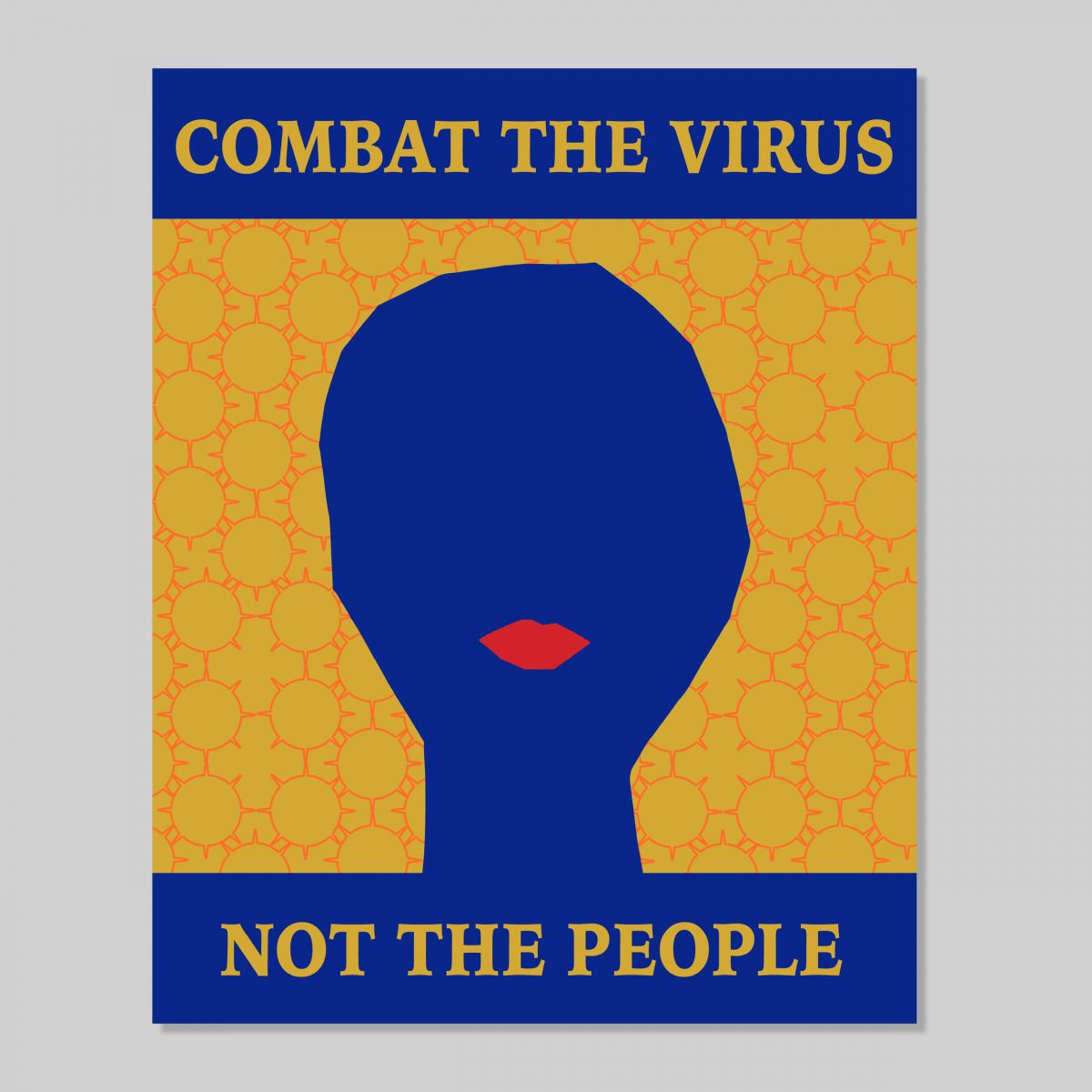
In the midst of a major public health crisis, art takes a front line position, communicating best practices to citizens with eye catching, easy to understand graphics and a few well chosen words.
In March of 2020, less than 2 weeks after COVID-19 brought New York to its knees, Angelina Lippert, the Chief Curator of Poster House, one of the city’s newer museums shared a blog post, considering the ways in which the CDC’s basic hygiene recommendations for helping stop the spread had been touted to previous generations.
As she noted in a lecture on the history of the poster as Public Service Announcement the following month, “mass public health action… is how we stopped tuberculosis, polio, and other major diseases that we don’t even think of today:”
And a major part of eradicating them was educating the public. That’s really what PSAs are—a means of informing and teaching the public en masse. It goes back to that idea … of not having to seek out information, but just being presented with it. Keeping the barrier for entry low means more people will see and absorb the information.
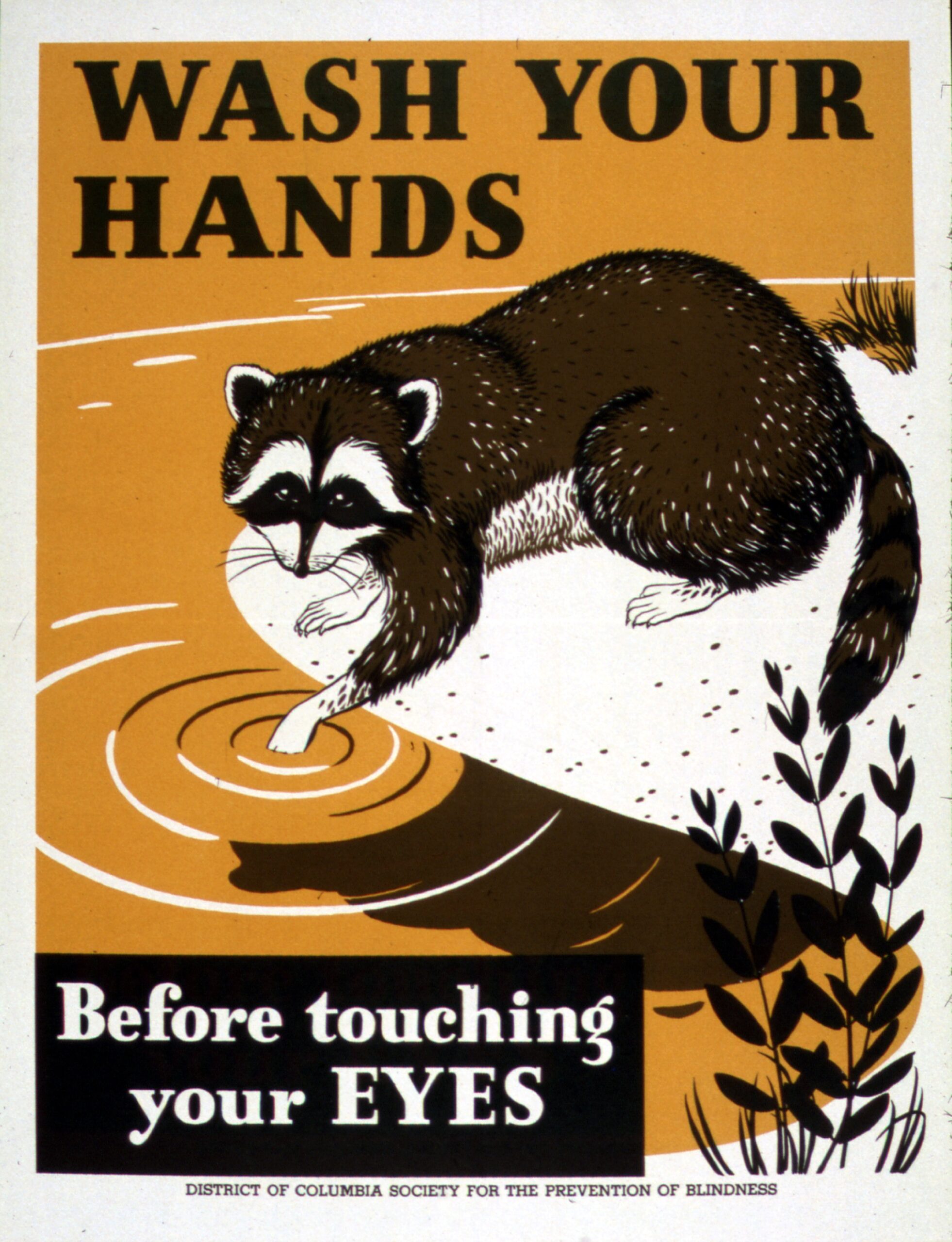
The Office of War Information and the District of Columbia Society for the Prevention of Blindness used an approachable looking raccoon to convince the public to wash hands in WWII.
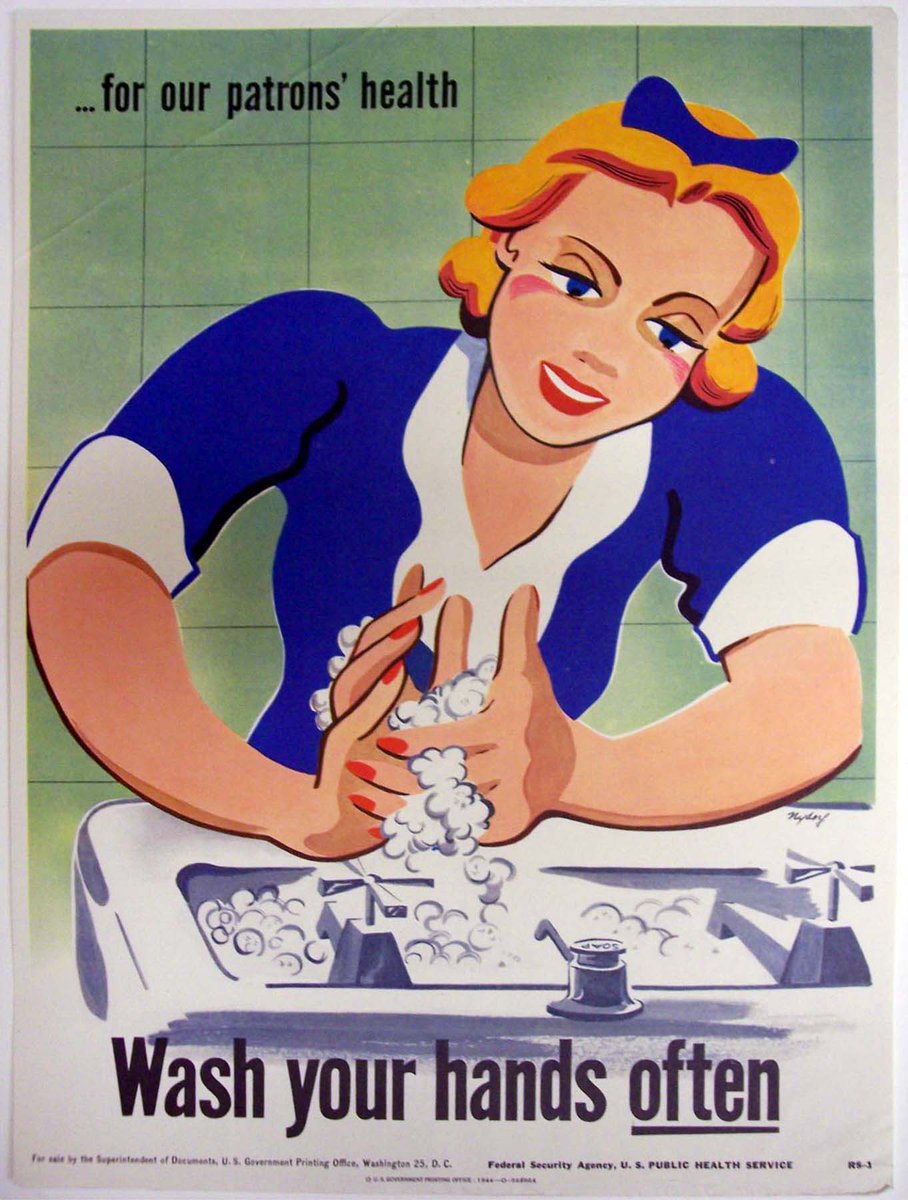
Artist Seymour Nydorf swapped the raccoon for a blonde waitress with glamorous red nails in a series of six posters for the U.S. Public Health Service of the Federal Security Agency
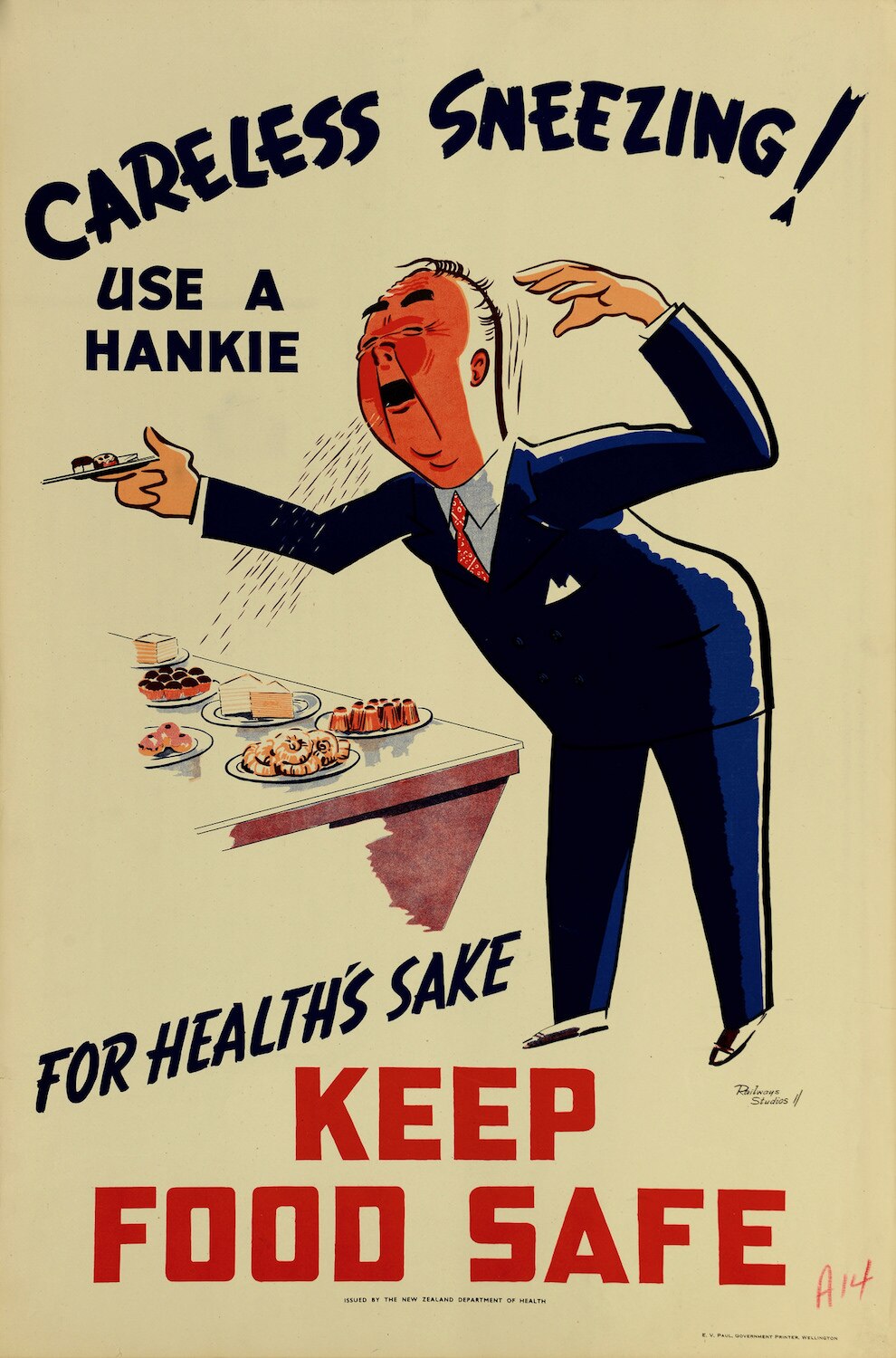
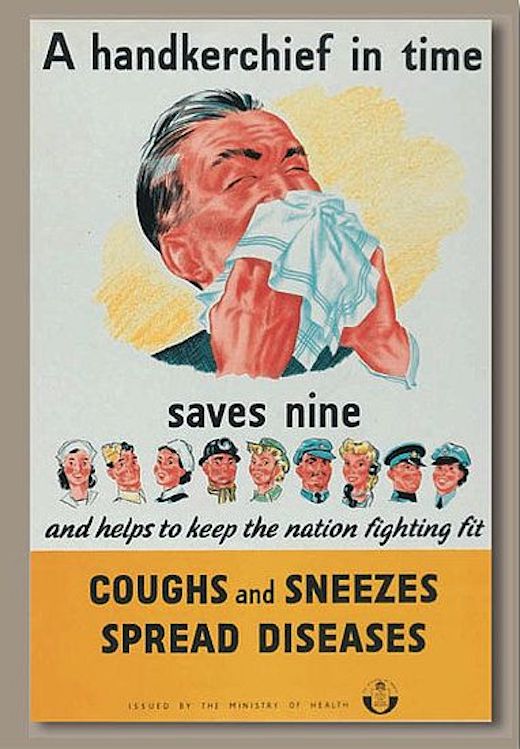
Coughing and sneezing took posters into somewhat grosser terrain.
The New Zealand Department of Health’s 50s era poster shamed careless sneezers into using a hankie, and might well have given those in their vicinity a persuasive reason to bypass the buffet table.
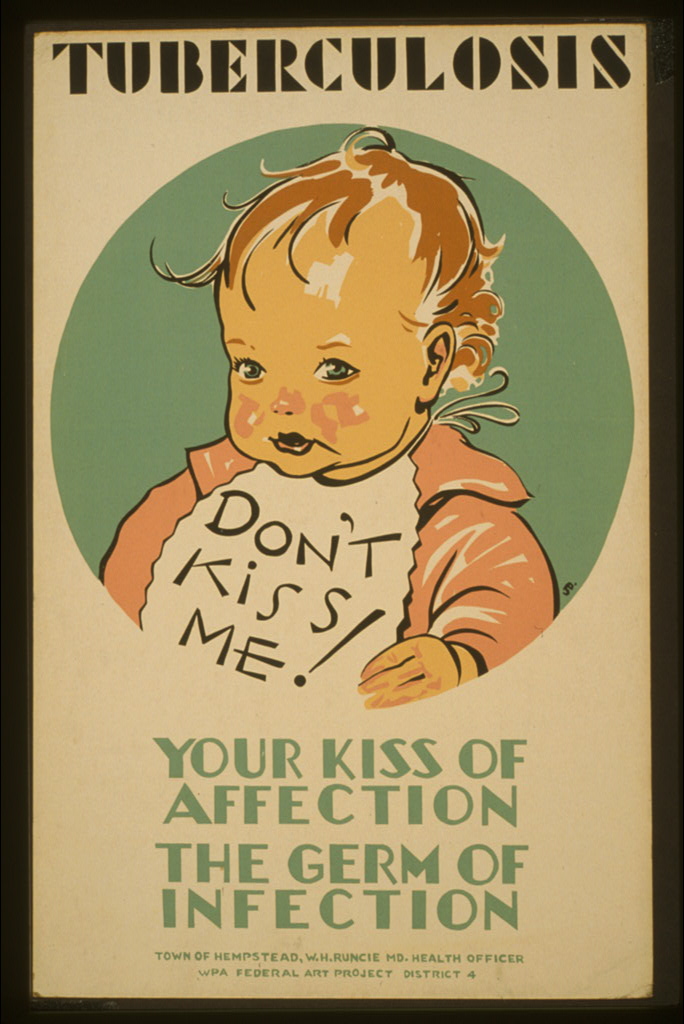
Children’s wellbeing can be a very persuasive tool. The WPA Federal Art Project was not playing in 1941 when it paired an image of a cherubic tot with stern warnings to parents and other family members to curb their affectionate impulses, as well as the transmission of tuberculosis.
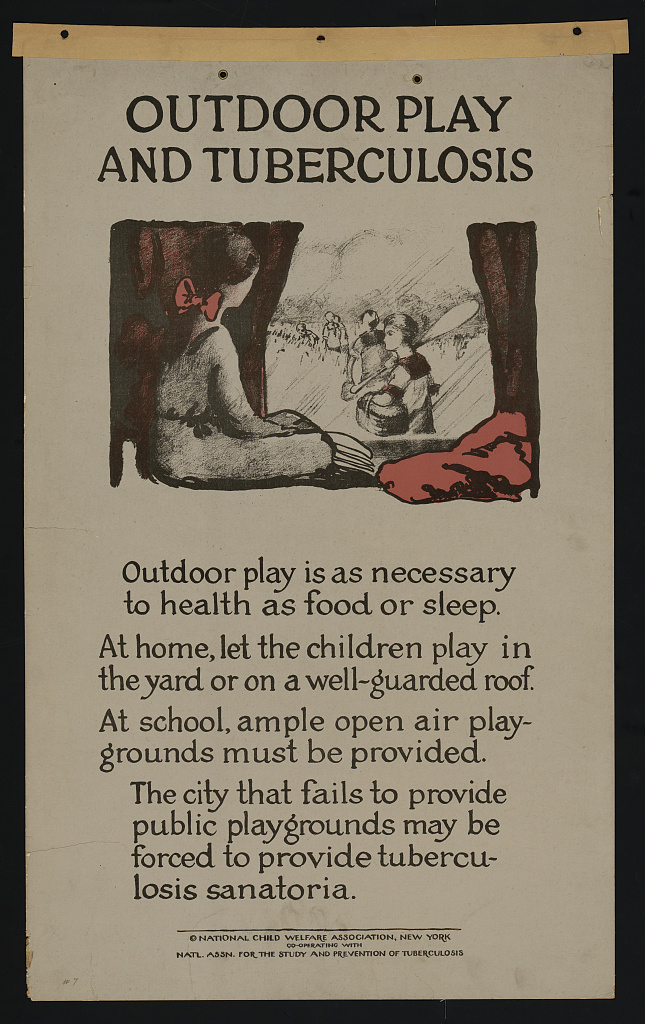
The arresting image packs more of a wallop than this earnest and far wordier, early 20s poster by the National Child Welfare Association and the National Association for the Study and Prevention of Tuberculosis.
Read Poster House Chief Curator Angelina Lippert’s Brief History of PSA Posters here.
Download the free anti-xenophobia PSAs Poster House commissioned from designer Rachel Gingrich early in the pandemic here.
The world now has COVID-19 vaccines, of which more and more people are receiving their doses every day. A year and a half ago the world did not have COVID-19 vaccines, though it was fast becoming clear how soon it would need them. The subsequent development of the ones now being deployed around the world took not just less than a year and a half but less than a year, an impressive speed even to many of us who never dug deep into medical science. The achievement owes in part to the use of mRNA, a term most of us may recall only dimly from biology classes; through the pandemic, messenger ribonucleic acid, to use its full name, has proven if not the savior of humanity, then at least the very molecule we needed.
One shouldn’t get “the idea that these vaccines came out of nowhere.” On Twitter, Dan Rather — these days a more outspoken figure than ever — calls the prevalence such a notion “a failure of science communication with tragic results,” describing the vaccines as “the result of DECADES of basic research in MULTIPLE fields building on the BREADTH and DEPTH of human knowledge.”
You can get a clearer sense of what that research has involved through videos like the animated TED-Ed explainer above. “In the twentieth century, most vaccines took well over a decade to research, test, and produce,” says its narrator. “But the vaccines for COVID-19 cleared the threshold for use in less than eleven months.” The “secret”? mRNA.
A “naturally occurring molecule that encodes the instructions for occurring proteins,” mRNA can be used in vaccines to “safely introduce our body to a virus.” Researchers first “encode trillions of mRNA molecules with instructions for a specific viral protein.” Then they inject those molecules into a specially designed “nanoparticle” also containing lipids, sugars, and salts. When it reaches our cells, this nanoparticle triggers our immune response: the body produces “antibodies to fight that viral protein, that will then stick around to defend against future COVID-19 infections.” And all of this happens without the vaccine altering out DNA,
While mRNA vaccines will “have a big impact on how we fight COVID-19,” says the narrator of the Vox video above, “their real impact is just beginning.” Their development marked “a turning point for the pandemic,” but given their potential applications in the battles against a host of other, even deadlier diseases (e.g., HIV), “the pandemic might also be a turning point for vaccines.”
Based in Seoul, Colin Marshall writes and broadcasts on cities, language, and culture. His projects include the Substack newsletterBooks on Cities, the book The Stateless City: a Walk through 21st-Century Los Angeles and the video series The City in Cinema. Follow him on Twitter at @colinmarshall or on Facebook.
Here’s the context to a sobering newly-released video from The New York Times:
In the video above, Alexander Stockton, a producer on the Opinion Video team, explores two of the main reasons the number of Covid cases is soaring once again in the United States: vaccine hesitancy and refusal.
“It’s hard to watch the pandemic drag on as Americans refuse the vaccine in the name of freedom,” he says.
Seeking understanding, Mr. Stockton travels to Mountain Home, Ark., in the Ozarks, a region with galloping contagion and — not unrelated — abysmal vaccination rates.
He finds that a range of feelings and beliefs underpins the low rates — including fear, skepticism and a libertarian strain of defiance.
This doubt even extends to the staff at a regional hospital, where about half of the medical personnel are not vaccinated — even while the intensive care unit is crowded with unvaccinated Covid patients fighting for their lives.
Mountain Home — like the United States as a whole — is caught in a tug of war between private liberty and public health. But Mr. Stockton suggests that unless government upholds its duty to protect Americans, keeping the common good in mind, this may be a battle with no end.
We're hoping to rely on loyal readers, rather than erratic ads. Please click the Donate button and support Open Culture. You can use Paypal, Venmo, Patreon, even Crypto! We thank you!
Open Culture scours the web for the best educational media. We find the free courses and audio books you need, the language lessons & educational videos you want, and plenty of enlightenment in between.