The summer solstice draws nigh, and many of us will spend it bemoaning the fact that we have yet again failed to make it to Stonehenge to view the sun rising over its massive Heel Stone.
Don’t beat yourself up too badly.
According to Vox’s Senior Editorial Producer Joss Fong, above, it’s likely that the winter solstice was actually a far bigger deal to the Neolithic builders who engineered the site.
While much of it is now in ruins, archeologists, historians, astronomers, and other experts have been able to reconstruct what the ancient monument would have looked like in its heyday. The placement of the massive stones in carefully arranged concentric circles suggest that its feats of astronomy were no accident.
As Fong points out, the builders would not have known that the earth travels around the sun, nor that it tilts on its vertical axis, thus effecting where the sun’s rays will strike throughout the year.
They would, however, have had good cause to monitor any natural phenomena as it related to their agricultural practices.
The summer solstice would have come at the height of their growing season, but if this year’s sunrise celebrants spin 180 degrees, they will be facing in the same direction as those ancient builders would have when they arrived to celebrate the winter solstice with a sunset feast.
These days, the winter solstice attracts a sizable number of tourists, along with neo-druids, neo-pagans, and Wiccans.
Ayun Halliday is an author, illustrator, theater maker and Chief Primatologist of the East Village Inky zine. Her solo show Nurse!, in which one of Shakespeare’s best loved female characters hits the lecture circuit to set the record straight opens June 12 at The Tank in New York City. Follow her @AyunHalliday.
“Omg wow this is rly cool and unique like I never knew the govermnet was wacthing me.”
So wrote an anonymous internet commenter on a Washington Post article about NSA mobile phone tracking, joking, or just emerging from a bunker somewhere off the grid. Everyone knows the government is watching or might be. Or at least we should since the infamous 2013 revelations about the massive scope of NSA domestic surveillance. Reports of domestic spying first appeared in 2005. In 2009, Alex Kingsbury at U.S. News and World Reportdescribed the Agency as “one of the most secretive fiefdoms inside the American government… probably familiar to most people only as the guys who may or may not be listening to your phone calls and reading your E‑mails as they surveil terrorists.”
As is often the case when government overreach, abuse, or corruption become public knowledge, the question is not whether most Americans know, but whether they care. An often-misused Ben Franklin quote pops up frequently in arguments about a necessary balance between “liberty” and “security.” The latter now seems to inevitably entail extra-constitutional spying (as well as torture, indefinite detention, police militarization and other totally normal government operations).
These days, as often as not, government surveillance takes place by proxy, by way of tech monopolies like AT&T, Amazon, and Google (which the NSA helped create). Maybe, when it comes to the government watching, resistance is futile, as a species of outer space cyborg totalitarians likes to say.
In any case, we might imagine that public debates about civil liberties and privacy are laughable to many a seasoned intelligence agent. A recently declassified trove of propaganda posters aimed at NSA employees, dating from the 50s, 60s, and 70s, shows that in the mind of the Agency, there is no conflict between liberty and security. Without security (or total secrecy), many of these posters suggest, all freedom is lost. They do so in some “super freaky” ways, to quote Jason Kottke, looking like “they were cooked up by Salvador Dali or the Dadaists. Or even Mad Magazine.”
Some of the posters, especially those from the Cold War, look pretty chilling in hindsight, with their theocratic overtones and anti-Communist apocalypticism. Agency employees were to understand that not only might they risk their jobs and clearances if they happened to spill classified info, but that everything they held dear—Christmas, prayer, fishing, freedom of the press—might be destroyed. The posters get progressively groovier as things thawed between the superpowers, and they stop alluding to specific enemies and threats to Christian piety. Still, there’s something a little creepy about an intelligence agency co-opting the Mona Lisa and Saturday Night Fever.
The agency was officially created in 1952 to monitor foreign electronic signals, which at the time meant radio and telephone traffic. The comparatively bronze-age technology available in the decades these posters were printed makes them seem all the more quaint, with their references to carelessly discarded documents and getting too chatty in the car pool. Is the government still warrantlessly spying on Americans? There may have been several recent “inadvertent compliance lapses,” the NSA admits, but surely a secret court and trustworthy Congress will keep everyone honest.
Sigmund Freud died in 1939, and the nearly eight decades since haven’t been kind to his psychoanalytical theories, but in some sense he survives. “For many years, even as writers were discarding the more patently absurd elements of his theory — penis envy, or the death drive — they continued to pay homage to Freud’s unblinking insight into the human condition,” writes the New Yorker’s Louis Menand. He claims that Freud thus evolved, “in the popular imagination, from a scientist into a kind of poet of the mind. And the thing about poets is that they cannot be refuted. No one asks of ‘Paradise Lost’: But is it true? Freud and his concepts, now converted into metaphors, joined the legion of the undead.”
The master of a legion of undead psychological metaphors — who, in the ranks of living illustrators, could be more suited to render such a figure than Ralph Steadman? And how many of us know that he actually did so in 1979, when he produced an “art-biography” of the “Father of Psychoanalysis”?
Sigmund Freud, which has spent long stretches out of print since its first publication, tells the story of Freud’s life, beginning with his childhood in Austria to his death, not long after his emigration in flight from the Nazis, in London. It was there that he met Virginia Woolf, who in her diary describes him as “a screwed up shrunk very old man: with a monkey’s light eyes, paralyzed spasmodic movements, inarticulate: but alert.”
There, again, Freud sounds like one of Steadman’s drawings, sometimes outwardly unappealing but always possessed of an unignorable vitality generated by a solid core of perceptiveness. Earlier chapters of Freud’s life, characterized by intellectual as well as physical vigorousness aided by the 19th-century “miracle drug” of cocaine, also give the illustrator rich material to work with. One can’t help but think of Fear and Loathing in Las Vegas, which forged a permanent cultural link between Steadman’s art and Hunter S. Thompson’s prose. How “true” is the drug-fueled desert odyssey that book recounts? More so, perhaps, than many of Freud’s supposedly scientific discoveries. But as with the work of Freud, so with that of Thompson and Steadman: we return to it not because we want the truth, exactly, but because we can’t turn away from the often grotesque versions of ourselves it shows us.
Based in Seoul, Colin Marshall writes and broadcasts on cities and culture. His projects include the book The Stateless City: a Walk through 21st-Century Los Angeles and the video series The City in Cinema. Follow him on Twitter at @colinmarshall or on Facebook.
More than half a century after his death, Winston Churchill continues to draw both great admiration and great fascination. Interest in the wartime Prime Minister of the United Kingdom has even increased in recent years, as evidenced last year by Joe Wright’s highly praised film Darkest Hour. Starring Gary Oldman as Churchill, it tells the story of his assumption of the office in May 1940 and navigation of the dire global geopolitical situation (including but not limited to the Battle of Dunkirk, also cinematically recreated last year by Christopher Nolan) into which it immediately plunged him.
“We get the greatest hits, out loud,” writes the New Yorker’s Anthony Lane on Oldman’s performance in a piece on why actors love to play Churchill. “We get the blood and the sweat, barked to the House of Commons, and, needless to say, we get the most celebrated speech of all, unleashed on June 4th, when the Prime Minister informed the world that Britain would fight the Germans on the beaches, in the streets, and wherever else they chose to intrude.”
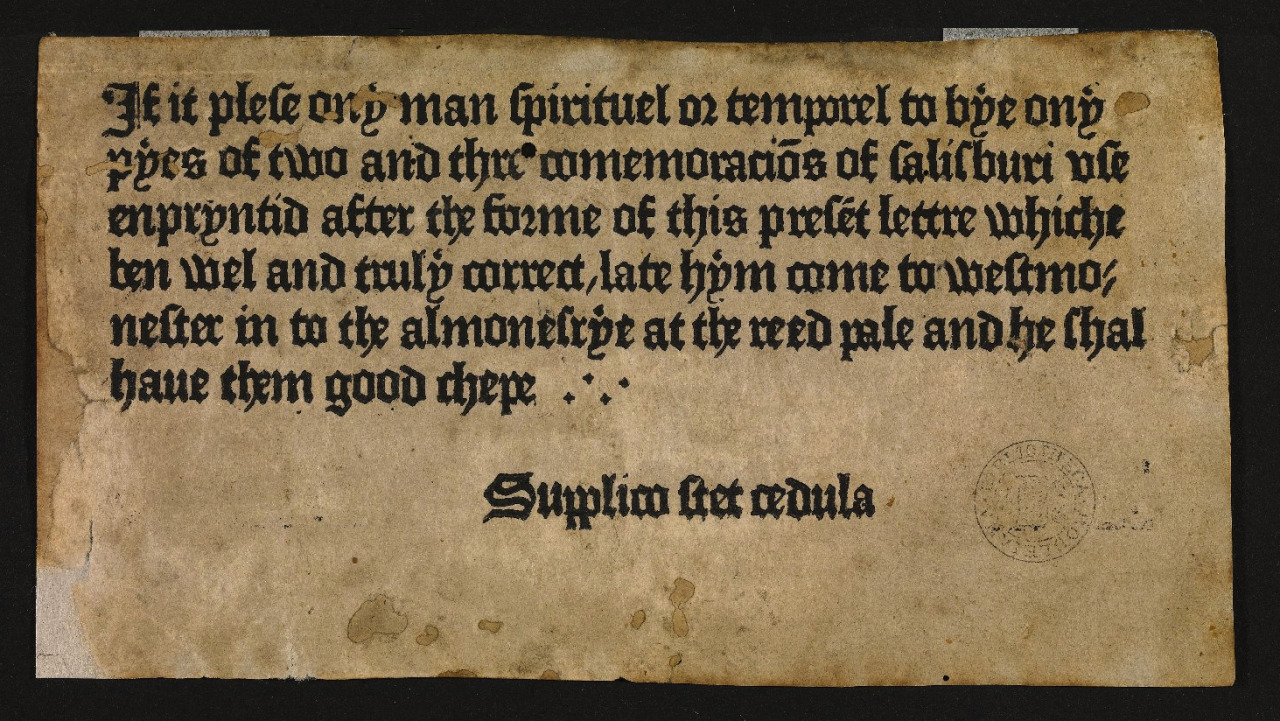
Churchill could issue a compelling communiqué on the subject not just in speech but in writing, and he even prepared one for distribution in the event of a German invasion. Its characteristic title: “Beating the Invader.”
“If invasion comes, everyone – young or old, men and women – will be eager to play their part worthily,” Churchill proclaims in the leaflet, which you can read in full at AbeBooks. “If you are advised by the authorities to leave the place where you live, it is your duty to go elsewhere when you are told to leave. When the attack begins, it will be too late to go; and, unless you receive definite instructions to move, your duty then will be to stay where are. You will have to get into the safest place you can find, and stay there until the battle is over. For all of you then the order and the duty will be: ‘STAND FIRM’.”
Churchill provides more specifics of his expectations in a Q&A section, addressing such concerns as “What do I do if fighting breaks out in my neighbourhood?”, “Is there any means by which I can tell that an order is a true order and not faked?” (“With a bit of common sense you can tell if a soldier is really British or only pretending to be so”), and “Should I defend myself against the enemy?” To that last he assures his reader that “you have the right of every man and woman to do what you can to protect yourself, your family and your home.” Thanks to those who gave their all to win the war, it never came to that. And even now, though Britain faces no apparent danger of imminent invasion, many still govern their conduct in the spirit of Churchill’s “second great order and duty, namely, ‘CARRY ON’.”
If you want to purchase an original copy of the document, find some here.
Based in Seoul, Colin Marshall writes and broadcasts on cities and culture. His projects include the book The Stateless City: a Walk through 21st-Century Los Angeles and the video series The City in Cinema. Follow him on Twitter at @colinmarshall or on Facebook.
Everybody knows a fact or two about the United States of America, even those who’ve never set foot there. At the very least, they know the US is a big country, but it’s one thing to know that and another to truly understand the scale involved. Today we offer you an artifact from cartographic history that illustrates it vividly: a 19th-century traveler’s map of the Mississippi River that, in order to display the length of that mighty 2,320-mile waterway, extends to a full eleven feet. (Or, for those especially unfamiliar with how things are in America, displays the river’s full 3,734-kilometer length at a full 3.35 meters.)
With a width of only three inches (or 7.62 centimeters), the Ribbon Map of the Father of Waterscame on a spool the reader could use to unroll it to the relevant section of the river anywhere between the Gulf of Mexico and northern Minnesota. First published in 1866, just a year after the end of the Civil War, the map “was marketed toward tourists, who were flocking to the Mississippi to see the sights and ride the steamboats.” So writes Atlas Obscura’s Cara Giamo, who quotes art historian Nenette Luarca-Shoaf as describing the river as “a source of great awe. That kind of length, that kind of spaciousness was incomprehensible to a lot of folks who were coming from the East Coast.”
Luarca-Shoaf describes the map, an invention of St. Louis entrepreneurs Myron Coloney and Sidney B. Fairchild, in more detail in an article of her own at Common-Place. “The completely unfurled map extends beyond the limits of the user’s reach, wondrously embodying the scope of the river in the time it took to unroll it and in the eleven feet of space it now occupies,” she writes. “At the same time, the care required to wind the strip back into Coloney and Fairchild’s patented spool apparatus reiterates the precariousness of human control — either representational or environmental — over the mercurial Mississippi.” We still today talk about “scrolling” maps, though we now mean it as nothing more than a digital metaphor.
Unwieldy though it may seem, the Ribbon Map of the Father of Waters must have struck its travel-minded buyers in the 1860s — some 150 years before technology put touchscreens in all of our hands — as the height of cartographic convenience. Despite having sold out their Mississippi River map quickly enough to necessitate a second edition, though, Coloney and Fairchild did little more with their patented concept. You can see a surviving example of the Ribbon Map in greater detail at the Library of Congress and the David Rumsey Map Collection. The current generation of river tourists yearning for an understanding of the surprising breadth of America’s land and depth of its history may even constitute sufficient market for a replica. But what happens when it gets wet?
Based in Seoul, Colin Marshall writes and broadcasts on cities and culture. His projects include the book The Stateless City: a Walk through 21st-Century Los Angeles and the video series The City in Cinema. Follow him on Twitter at @colinmarshall or on Facebook.
In my childhood, I heard stories about Henrietta Lacks’ miraculous cells. I heard these stories because she happened to have been my grandmother’s cousin. But this was just oral lore, I thought at first, legendary and implausible. Cells don’t just keep growing indefinitely. Nothing is immortal. That’s a safe assumption in most every other case, but millions of people now know what only a relatively self-contained community of researchers, doctors, biology students, and, eventually, the Lacks family once did: Henrietta’s cervical cancer cells continued to grow and multiply after her death in 1951. They may, indeed, do so forever.
The once anonymous cell line, called HeLa, has provided researchers worldwide with invaluable medical data. Henrietta herself went unrecognized and unremembered until fairly recently. That all changed after Rebecca Skloot’s book The Immortal Life of Henrietta Lacks, based on an earlier series of articles, appeared in 2010 to great acclaim. Since the publication of Skloot’s bestseller, the story of Henrietta and the Lacks family has further achieved renown in a 2017 film version starring Oprah Winfrey.
Suffice it say, seeing Henrietta arrive on the pop cultural stage has been a strange experience. (One made even weirder by other media moments, like indie band Yeasayer and former Dead Kennedys singer Jello Biafra releasing songs about her and her cells.) The injustices of Henrietta’s story are now well-known. She was poor and received substandard medical treatment. Her cells were harvested without her knowledge, and after her death, no one notified the family about the worldwide use of her cells for biomedical research. That is, until doctors did research on her children in the 70s, publishing family medical records without consent and gathering more data because the HeLa cells had contaminated other cell lines.
She has “become one of the most powerful symbols for informed consent in the history of science,” Nela Ulaby writes at NPR. She is also a symbol, says Bill Pretzer, senior curator at the National Museum of African American History and Culture (NMAAHC), “that history can be remade, re-remembered.” To that end, Henrietta has been immortalized as a whole human being, not just the source of extraordinarily immortal cells. Her portrait, by African-American artist Kadir Nelson, now hangs in the National Portrait Gallery, a representation of both the historical figure and her world-historical biological legacy.
Drawing on the photograph that adorns the cover of Skloot’s book, the portrait shows her “just like they said she was in life,” says her granddaughter Jeri Lacks-Whye, “happy, outgoing, giving,” and stylishly dressed. The two missing buttons on her dress represent the cells taken from her body, and the pattern behind her, which “almost looks like wallpaper,” says National Portrait Gallery curator Dorothy Moss, is “actually representative of her cells.” Other tributes, notes Ulaby, include a “high school for students interested in medicine” and “a minor planet whirling in the asteroid belt between Mars and Jupiter.” The cells have also generated billions of dollars in profit.
In life, she could never have imagined this strange kind of fame and fortune. The HeLa cells were instrumental in the development of the polio vaccine and research in cloning, gene mapping, and in vitro fertilization. They have traveled into space and around the world hundreds of times. The story of the person they came from, says Skloot in a 2010 interview, reminds us that “there are human beings behind every biological sample used in the laboratory… but they’re usually left out of the equation.” Making those lives an essential part of the conversation in medical research can help keep that research ethically honest, equitable, and, one hopes, based in serving human needs over corporate greed.
I remember the early days of the video arcade, where my friends and I went to have fun and spent our parents’ cash on Galaga, Robotron 2084, or–if you were a really big spender–Dragon’s Lair. Then, when we’d get home, and we would see scare pieces on the national news about the evils of the very arcades we had just visited, dens of drugs and depravity! Where were *those* arcades, we wondered.
Nothing has changed, it seems. Let’s go back nearly 80 years to another moral panic: pinball.
As these two mini docs show, in the 1930s and ‘40s pinball was banned in cities like New York (by mayor and future airport Fiorello LaGuardia) and Chicago because of its association with organized crime, but also the appeal it had to the children of the working class.
They kind of had a point: early pinball machine were purely games of chance, which put it very close to gambling. (A modern pachinko machine is closer to these early versions.) Like a carny game, you paid your money, and you watched as the ball careened down the table, out of your control.
But with the invention of user-controlled flippers that sent the ball back in play, these games of chance became games of skill. But that didn’t stop some moral crusaders.
And, as several pinball fans have found out–like the gentleman in the VICE doc below who wanted to open a pinball museum–antiquated laws remained on the books from those early years and had never been changed for modern times.
Roger Sharpe, known as “The Man Who Saved Pinball,” even went to a Chicago court in 1976 to prove that pinball was a game of skill. In a scene that sounds perfect for a final act in a movie, Sharpe, with his barbershop quartet mustache and groovy outfit, played pinball in front of legislators. Calling shots like a pool player might, he soon convinced the court that skill was everything. Sharpe would go on to become a star witness in similar hearings in Ohio, West Virginia, and Texas over their pinball laws.
Ironically, while video games replaced pinball in most arcades, home systems and computers replaced the need for arcades. It’s now a perfect time for these purely analog and tactile machines to make a comeback. Hell, a rock band might even make a musical about it one day.
Ted Mills is a freelance writer on the arts who currently hosts the artist interview-based FunkZone Podcast and is the producer of KCRW’s Curious Coast. You can also follow him on Twitter at @tedmills, read his other arts writing at tedmills.com and/or watch his films here.
The genre of animated time-lapse video maps—portraying the rise and fall of empires, the spread of people groups, the succession of rulers over hundreds of years, and other histories that used to fill entire textbooks—is one of those internet-only phenomena with useful, if limited application. As the bombastic music that sometimes accompanies these videos suggests, one primary effect is the production of maximally sweeping historical drama through mapping, which captures the imagination in ways dry prosaic descriptions often can’t.
The subject of the video above—the British Empire—seems to justify such an approach, given that, as one educational website notes, “the British Empire was the largest formal empire that the world had ever known.” Whether one celebrates or deplores this fact is a matter for political or moral debate—categories that have little seeming relevance to the production of animated video maps.
“At its height in 1922,” writes Jon Stone at The Independent, “the British Empire governed a fifth of the world’s population and the quarter of the world’s total land area.” His comment that this legacy “divides opinion” grossly understates the case. Yet as bare historical fact, the spread of the Empire is astonishing, an achievement of military and maritime power, unprecedented commercial ambition, bureaucratic systemization, trade maneuvering, and the massive displacement, detention, and enslavement of millions of people.
The video begins in 519 A.D., after the end of Roman rule in England, when the so-called Heptarchy formed, the seven Anglo-Saxon tribal kingdoms ruled by Germanic peoples who killed off or enslaved the native Celts. From there, we proceed through the Norman invasion, the English attempts to take French territory in Europe, Henry VIII’s invasion and annexation of Ireland, and other colonizing and empire-building events that precede British entry onto the far-flung global stage with the founding of the British East India Company’s first post in Surat, India in 1612 and Puritan settlement at Plymouth in 1620.
We see these events unfold in a split screen map showing different parts of the world, with a box on the side providing context and a color-coded legend. This rush through Imperial history occurs at a relatively breakneck speed, taking only 18 minutes to cover 1,500 years.
The long, slow rise of the British Empire was followed by a precipitous fall. By the mid-20th century postwar years, Britain saw its major colonies in India, Africa, and the West Indies achieve independence one by one. “By 1979,” writes Adam Taylor at The Washington Post, the Empire “was reduced to a few pockets around the world.” And by the current year, the former global power’s overseas colonial holdings comprise 14 small territories, including mostly unpopulated Antarctic land and the Falkland Islands.
See many more fascinating animated time-lapse maps, documenting all of world history, at the creator Ollie Bye’s YouTube channel.
We're hoping to rely on loyal readers, rather than erratic ads. Please click the Donate button and support Open Culture. You can use Paypal, Venmo, Patreon, even Crypto! We thank you!
Open Culture scours the web for the best educational media. We find the free courses and audio books you need, the language lessons & educational videos you want, and plenty of enlightenment in between.