It’s quite profound, isn’t it? — Helen Fagin, aged 100
Every time I open my laptop to discover a friend posting a vintage photo of their parent as a beaming bride or saucy sailor boy in lush black and white or gold-tinged Kodachrome, I know the deal.
Another elder has left the building.
With luck, I’ll have at least two or three decades before my kids start sniffing around in my shoe boxes of old snapshots.
In the meantime, I’ll wonder how much of the emotion that’s packed into those memorial postings gets expressed to the subject in the days leading up to their final exit.
Seems like most of us pussyfoot around the obvious until it’s too late.
There are, of course, medical situations that force us to acknowledge in a loved one’s presence the abyss in their immediate future, but otherwise, Western tradition has positioned us to shy away from those sorts of discussions.
In celebration of Helen’s centenary, Palmer asked Brain Picking’s Maria Popova to recommend a poem that Gaiman could read aloud during another in-person birthday visit.
No one can ever fully predict the consequences of their actions. Still, some warning bells should be hard to ignore. Take Alfred Nobel, for instance, the founder of the Nobel Prize. For most of his life, he had a different reputation—as the inventor of dynamite, one of the most destructive technologies of the age. Though he maintained his motives were pure, Nobel had no shortage of signs telling him his creation might do at least as much harm as good. He persevered and lived to regret it, it’s said.
Born in Sweden in 1833, Nobel became obsessed with explosives at a young age after meeting the inventor of nitro-glycerin. He spent some formative years trying to harness its power, even after a botched nitro-glycerin experiment at a factory killed his younger brother and five other workers. Nobel patented dynamite in 1867, a “new, transportable explosive,” notes the Sydney Morning Herald video above, that “was an instant hit in the mining and construction industries.” Originally called “Nobel’s Blasting Powder,” the chemist and engineer soon choose a new name, from the ancient Greek work for “power.”
It wouldn’t take long before dynamite became a conveniently devastating weapon of war, especially in the Spanish American War, which began two years after Alfred’s death. But ten years earlier, in 1888, when the bottle was already well uncorked, Alfred received a shock when a French newspaper misidentified him for his brother, Ludwig, who had just died. His erroneous pre-mortem obituary appeared with the headline “The Merchant of Death is Dead!” The unsparing bio went on to say that Nobel “became rich by finding ways to kill more people faster than ever before.”
This may have not been his intention, so he believed, but when he saw the image reflected back at him, he immediately sought to atone for his wayward invention. “Legend has it, Nobel was mortified… and spent the rest of his life trying to establish a positive legacy.” He sought to connect people around the world, pioneering an early version of Google Earth “with balloons and rockets instead of satellites.” And when he died in 1896, he left half of his wealth, “over half a billion dollars today, to establish the Nobel Prizes.”
It is a fascinating case, if we credit the mistaken obituary for turning Nobel’s life around. Adam Grant—whom Preet Bharara introduces on his podcast Stay Tuned as “an organizational psychologist and star professor at the Wharton School”—mentions Nobel as a “pretty radical example of people changing in pretty radical ways.” There are several problems with this interpretation. Nobel may have seen the light, but he did not radically change as a person. He was already an idealistic inventor, as a Vanderbilt University biography has it, a supporter of “the peace movement” and a “truly international figure.”
Called by Victor Hugo the “wealthiest vagabond in Europe,” Nobel wrote novels, poetry, drama, and letters in five languages. He had a broad humanist outlook but for some reason could or would not see the worst uses of his product, even as his company sold weapons—to Italy for example, an act for which his adopted nation of France deemed him a traitor in 1891.
Nobel’s first Swedish patent was for “ways to prepare gunpowder” and his father, also an inventor, managed the family factory before him and made arms for the Crimean War. Like many a gilded age industrialist, Nobel turned away from the suffering he caused, endowing the arts and sciences after death to ease his conscience in life, many think, but not to truly ameliorate the damage done.
Nobel’s companies have survived him, making rocket launchers and the like as well as undeniably useful mining and construction tools. His prizes, whatever his intentions, have also done the world much good, not least in creating a global platform for deserving luminaries. (Those who have rejected Nobels have vigorously argued otherwise.) Nobel was a sensitive and complicated individual whose life was filled with grief and loss and who left a lasting legacy as a patron of intellectual culture. He was also a manufacturer of deadly weapons of mass destruction. Both of these things were true.
But even if he did not radically change—either his character or his business model—he did shift his perspective enough to have a tremendous impact on his legacy, which is the lesson Grant draws from his story. “Too often,” he tells Bharara, “we’re looking at our lives through a microscope,” oblivious to the larger scale. “What we actually need is a wide-angle lens where we can zoom out and ask, what is my legacy? What is the impact of this behavior on my reputation?” Sometimes, says Grant, “people do not like the person that’s staring them in the mirror, and they decide they want to change.”
It’s that time of year when certain songs conspire with certain moods to hit you right in the ol’ brisket.
Thefeeling is voluptuous, and not necessarily unpleasant, provided there’s a bathroom stall or spare bedroom should you need to flee a party like Cinderella, as some old chestnut threatens to turn you into a blubbering mess.
Let the kiddies deck the halls, jingle bells, and prance about with Rudolph and Frosty. The best secular songs for grown ups are the ones with a thick current of longing just under the surface, a yearning for those who aren’t here with us, for a better future, for the way we were…
There’s got to be some hope in the balance though, some sweetness to savor as we muddle through.
(Judy Garland famously stonewalled on the first version of “Have Yourself a Merry Little Christmas” until lyricist Hugh Martin agreed to lighten things up a bit. In the end, both got what they wanted. She got her update:
Have yourself a merry little Christmas
Let your heart be light
Next year all our troubles will be out of sight
But the tension between the promise of a better tomorrow and her emotional delivery holds a place for Hughes’ appealingly dark sentiment:
As a rule, the oldies are the goodies in this department.
More recent bids by Coldplay and Taylor Swift have failed to achieve the proper mix of hope and hopelessness.
It’s a difficult balance, but singer-songwriter Ellia Bisker pulls it off beautifully, above, by turning to O. Henry’s enduring short story, “The Gift of the Magi.”
I want to give you something that I can’t afford,
Let you believe with me we’re really not so poor.
You see that package waiting underneath the tree?
It’s just a token of how much you mean to me.
(Spoiler for the handful of people unfamiliar with this tale: he does the same, thus negating the utility of both costly presents.)
In an interview with Open Culture, Bisker praised the O. Henry story’s ironic symmetry:
It’s a little like the death scene in Romeo & Juliet, but without the tragedy. The story itself still feels surprisingly fresh, despite the period details. It has more humor and sympathy to it than sentiment. It surprises you with real emotion.
The Romeo and Juliet comparison is apt. The story covers a time period so brief that the newlyweds’ feelings for each other never stray from purest wonder and admiration.
Bisker’s song starts, as it ends, with a pair of young, broke lovers who only have eyes for each other.
Let’s not forget O. Henry’s parting words:
The magi, as you know, were wise men—wonderfully wise men—who brought gifts to the Babe in the manger. They invented the art of giving Christmas presents. Being wise, their gifts were no doubt wise ones, possibly bearing the privilege of exchange in case of duplication. And here I have lamely related to you the uneventful chronicle of two foolish children in a flat who most unwisely sacrificed for each other the greatest treasures of their house. But in a last word to the wise of these days let it be said that of all who give gifts these two were the wisest. Of all who give and receive gifts, such as they are wisest. Everywhere they are wisest. They are the magi.
Enjoy this musical gift, readers. The artist has made the track free for downloading, though perhaps you could scratch up a few coins in thanks, without pawning your watch or cutting your hair.
Read O. Henry’s short story “The Gift of the Magi” here.
Chess Forum in Greenwich Village is, like Gramercy Typewriter and the Upper East Side’s Tender Buttons, the sort of shop New Yorkers feel protective of, even if they’ve never actually crossed the threshold.
“How can it still exist?” is a question left unanswered by “King of the Night,” Lonely Leap’s lovely short profile of Chess Forum’s owner, Imad Khachan, above, but no matter. We’re just glad it does.
The store, located a block and a half south of Washington Square, looks older than it is. Khachan, hung out his shingle in 1995, after five years as an employee of the now-defunct Village Chess Shop, a rift that riled the New York chess community.
Now, things are much more placid, though the film incorrectly suggests that Chess Forum is the only refuge where chess loving New Yorkers can avail themselves of an impromptu game, take lessons, and buy sets. (There are also shops in Brooklyn, Harlem, and the Upper East Side.) That said, Chess Forum might not be wrong to call itself “New York’s last great chess store.” It may well be the best of the last.
The narrow shop’s interior triggers nostalgia without seeming calculation, an organic reminder of the Village’s Bohemian past, when beret-clad folkies, artists, and students wiled away hours at battered wooden tables in its many cheap cafes and bars. (Two blocks away, sole survivor Caffé Reggio’s ambience is intact, but the prices have kept pace with the neighborhood, and the majority of its clientele are clutching guidebooks or the digital equivalent thereof.)
Khachan, born in Lebanon to Palestinian refugees, gives a warm welcome to tourists and locals alike, especially those who might make for an uneasy fit at tonier neighborhood establishments.
In an interview with the Greenwich Village Society for Historic Preservation, he recalled a “well-dressed and highly educated doctor who would come in wearing his Harvard logo sweater, and lose repeatedly to a homeless man who was a regular at Chess Forum and a chess master.”
The game also provides common ground for strangers who share no common tongue. In Jonathan Lord’s rougher New York City chess-themed doc,Passport Play, Khachan points out how diagrams in chess books speak volumes to experienced players, regardless of the language in which the book is written.
The store’s mottos also bear witness to the value its owner places on face-to-face human interaction:
Cool in the summer, warm in the winter and fuzzy all year long.
Chess Forum: An experience not a transaction
Smart people not smart phones. (You can play a game of chess on your phone, Khachan admits, but don’t fool yourself into thinking that it’s giving you a full chess experience.)
An hour of play costs about the same as a small latte in a coffeehouse chain (whose prevalence Khachan refers to as the Bostonization of NYC.) Senior citizens and children, both revered groups at Chess Forum, get an even better deal—from $1/hour to free.
Although the store’s official closing time is midnight, Khachan, single and childless, is always willing to oblige players who would stay later. His solitary musings on the neighborhood’s wee hours transformation supply the film’s title and meditative vibe, while reminding us that this gentle New York character was originally drawn to the city by the specter of a PhD in literature at nearby NYU.
Readers who would like to contribute to the health of this independently owned New York City establishment from afar can do so by purchasing a chess or backgammon set online.
Ayun Halliday is an author, illustrator, theater maker and Chief Primatologist of the East Village Inky zine. See her onstage in New York City through December 20th in the 10th anniversary production of Greg Kotis’ apocalyptic holiday tale, The Truth About Santa. Follow her @AyunHalliday.
In the late 1950’s, pioneering free jazz bandleader Sun Ra played a gig at a Chicago mental hospital, booked there by his manager Alton Abraham, who had an interest in alternative medicine. The experiment in musical therapy worked wonders. One patient who had not moved or spoken in years reportedly got up, walked over to the piano, and yelled out, “you call that music!”
The anecdote illustrates just one experience among untold millions in which a person suffering from a debilitating neurological condition responds positively, even miraculously, it seems, to music.
As famed neurologist and writer Oliver Sacks puts it in his book Musicophilia, “musical perception, musical sensibility, musical emotion and musical memory can survive long after other forms of memory have disappeared.”
This medical fact makes musical therapy an ideal intervention for patients suffering from Alzheimer’s disease and dementia. In the short video above, Sacks describes his visits to patients in various old age homes. “Some of them are confused, some are agitated, some are lethargic, some have almost lost language,” he says, “but all of them, without exception, respond to music.”
We can see just such a response in the clip at the top, in which the barely responsive Henry Dryer, a 92-year-old nursing home resident with dementia, transforms when he hears music. “The philosopher Kant called music ‘the quickening art,’ and Henry’s being quickened,” says Sacks says of the dramatic change, “he’s being brought to life.” Suddenly lucid and happy, Henry looks up and says, “I’m crazy about music. Beautiful sounds.”
The clip comes from a documentary called Alive Inside, winner of a 2014 Sundance Audience Award (see the trailer above), a film that shows us several musical “quickenings” like Henry’s. “Before Dryer started using his iPod,” notes The Week, “he could only answer yes-or-no questions—and sometimes he sat silently and still for hours at a time.” Now, he sings, carries on conversations and can “even recall things from years ago.”
Sacks comments that “music imprints itself on the brain deeper than any other human experience,” evoking emotions in ways that nothing else can. A 2010 Boston University study showed that Alzheimer’s patients “learned more lyrics when they were set to music rather than just spoken.” Likewise, researchers at the University of Utah found music to be “an alternative route for communicating with patients.”
As senior author of the Utah study, Dr. Norman Foster, says, “language and visual memory pathways are damaged early as the disease progresses, but personalized music programs can activate the brain, especially for patients who are losing contact with their environment.” See the effects for yourself in this extraordinary film, and learn more about Sacks’ adventures with music and the brain in the 2007 discussion of Musicophilia, just above.
If you would like to support the mission of Open Culture, consider making a donation to our site. It’s hard to rely 100% on ads, and your contributions will help us continue providing the best free cultural and educational materials to learners everywhere. You can contribute through PayPal, Patreon, and Venmo (@openculture). Thanks!
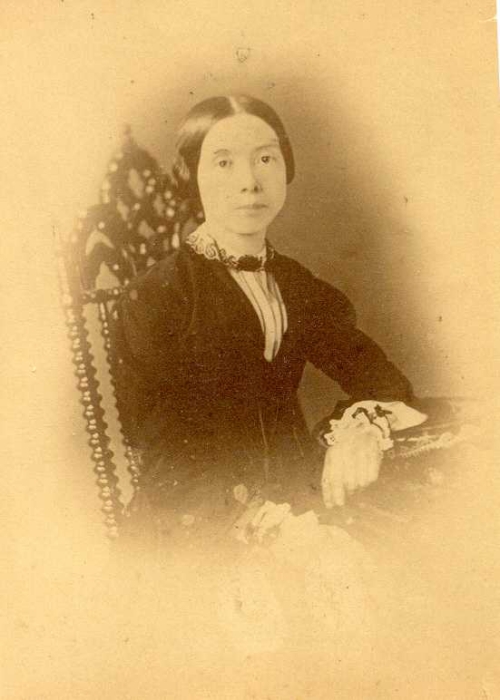
What are you doing to celebrate the poet’s 188th birthday?
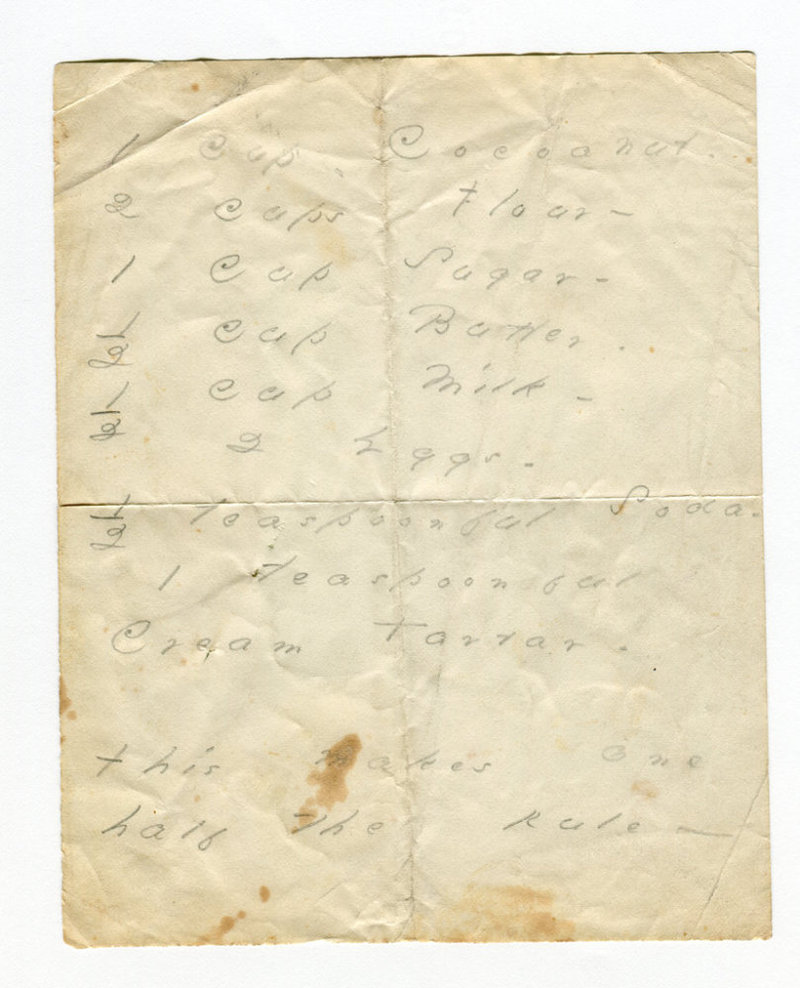
The Emily Dickinson Museum took advantage of the weekend to celebrate the occasion a couple of days early with Victorian crafts, readings, festive piano music, a display exploring the Dickinson family’s gift-giving tradition, and slices of coconut cake, baked from the birthday girl’s own recipe.
…whenever Dickinson saw children playing in her family gardens, “she headed for the pantry, filled a basket with cookies or slices of cake—often gingerbread—carried it upstairs to a window in the rear of the house (so their mothers wouldn’t see), and attached the basket to a rope to slowly lower it to the “storm-tossed, starving pirates” or the “lost, roaming circus performers” eagerly waiting below.
Truly, we owe it to her to return the favor.
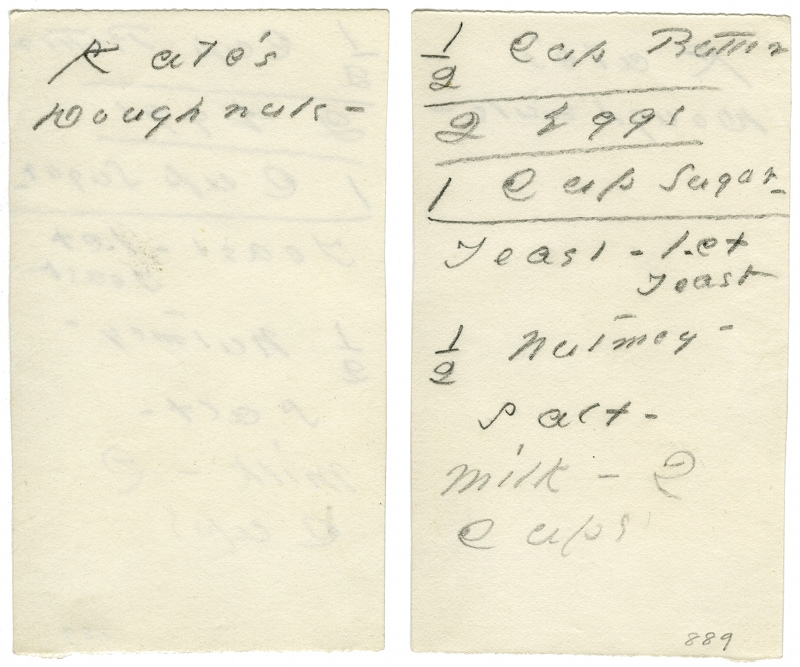
Shall we start with some Emily Dickinson doughnuts?
Like many experienced home cooks of the period, Dickinson’s instructions are a bit vague. She seems to have gotten the recipe from an acquaintance named Kate, jotting down measurements and ingredients, after which, she knew what to do.
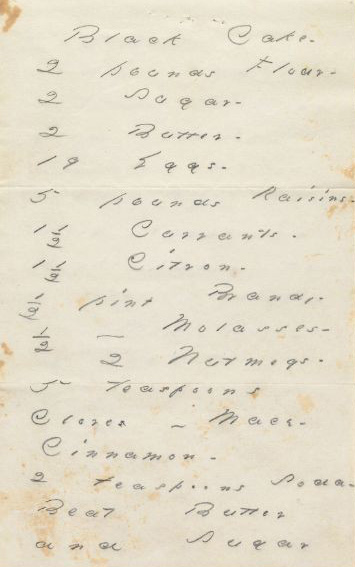
If you’ve never worked with yeast before, you might want to proceed straight to her Black Cake recipe…
Or not. You may have 5 pounds of raisins on hand, but this is no spur-of-the-moment recipe.
As if those with December birthdays aren’t overshadowed enough by the tyranny of Christmas! Must their special day’s cake flavor be dictated by that big gorilla too? (For those who say yes, Rosa Lillo of Pemberley Cup and Cakes breaks the recipe down 21st-century style, adding a simple icing sugar glaze and an embossed floral pattern.)
Perhaps that famous coconut cake really is the best choice for observing Emily Dickinson Day.
See if you can detect a note of inspiration in that buttery flavor. As was her habit, Dickinson flipped the scrap of paper on which she’d listed the ingredients, and pencilled in the beginnings of a poem:
The Things that never can come back, are several —
Childhood — some forms of Hope — the Dead —
Though Joys — like Men — may sometimes make a Journey —
Portman has done her homework with regard to breath pattern, pitch, and the refinement that strikes most 21st century ears as a bit stilted and strange. Most impressive to Singer is the way Portman transfers Kennedy’s oddly musical elongation of certain syllables to other words in the script. Tis no mere parrot job.
Jamie Foxx’s Oscar-winning turn as Ray Charles succeeds on copious research and his ability to inhabit Charles’ habitual smile. Obviously, the posture in which an individual holds their mouth has a lot to do with the sound of their voice, and Foxx was blessed with plenty of source material.
The 1982 epic Gandhi provided the versatile Ben Kingsley with the opportunity to showcase not one, but two, idiolects. The adult Gandhi underwent a dramatic and well documented evolution from the British accent he adopted as a young law student in London to a proudly Indian voice better suited to inspiring a nation to unify against its British colonizers.
It’s likely that many of us have never considered the speech-related building blocks Singer scrutinizes while analyzing 29 other performances for the WIRED video, above—epenthesis, tongue positions, relative degrees of emphatic muscularity, and retroflex consonants—but it’s easy to see how they play a part.
Singer invites you to expand his research and teaching library by recording yourself speaking extemporaneously and reading from two sample texts here. Pray that whoever plays you in the biopic gets it right.
We're hoping to rely on loyal readers, rather than erratic ads. Please click the Donate button and support Open Culture. You can use Paypal, Venmo, Patreon, even Crypto! We thank you!
Open Culture scours the web for the best educational media. We find the free courses and audio books you need, the language lessons & educational videos you want, and plenty of enlightenment in between.