Iggy Pop Conducts a Tour of New York’s Lower East Side, Circa 1993

I moved to New York City in 2000, and to the Low­er East Side in 2002. To my dis­may, the grit­ty down­town New York I’d loved from afar since childhood—represented by films like The War­riors, bands like Son­ic Youth, and graf­fi­ti artists like Zephyr—was near­ly at an end. CBGB’s was stag­ger­ing toward its final years; local venue Brown­ies, right across the street, closed dur­ing my tenure, then re-opened as anoth­er bar, the live bands replaced by a juke­box; the few remain­ing artists from the old days holed up in their apart­ments, surly and for­got­ten; and rumors of Whole Foods and glass & steel con­dos proved true in the com­ing years. It was sad.

But oh, to be there in the 80s and ear­ly 90s, when flow­ers of dirty punk art grew from the nee­dle-strewn Tomp­kins Square Park and the decay­ing squat­ters par­adis­es along Avenue A. Of course I’m roman­ti­ciz­ing a time of high crime, pover­ty, and low expec­ta­tions, a time many native New York­ers do not remem­ber fond­ly (then again, it seems, just as many do). There are many, many doc­u­ments of the old East Vil­lage mean streets—too many to prop­er­ly list in this short post. But I can imag­ine no bet­ter tour guide to pre-mil­len­ni­al NYC than Iggy Pop.

In the short film above, watch him show Dutch film­mak­er Bram van Splun­teren around Alpha­bet City. Grant­ed this is 1993. Things weren’t near­ly as hairy as they were a few years pri­or (a fact Iggy points out right away), but it’s still a world away from the Low­er East Side of today. Pop traipses through the neigh­bor­hood, point­ing out favorite land­marks and pieces of graf­fi­ti. No stranger to urban decay, the Detroit native seems right at home. This being New York, Pop can stroll around with­out being molest­ed (or most­ly even rec­og­nized). All in all it’s a pret­ty leisure­ly tour of the 90s Low­er East Side on a bright and sun­ny day with the guy who more-or-less invent­ed punk. What more could you want?

via Coudal.com

Relat­ed Con­tent:

From The Stooges to Iggy Pop: 1986 Doc­u­men­tary Charts the Rise of Punk’s God­fa­ther

Jim Pow­er, aka “the Mosa­ic Man,” Adorns the Lamp­posts of New York City’s East Vil­lage

Nico Sings “Chelsea Girls” in the Famous Chelsea Hotel

Josh Jones is a writer and musi­cian based in Wash­ing­ton, DC. Fol­low him at @jdmagness

The Late James Gandolfini, Star of The Sopranos, Appears on Inside the Actors Studio (2004)

We often write about the cur­rent “gold­en age” of high­ly craft­ed, the­mat­i­cal­ly lay­ered, tonal­ly var­ied tele­vi­sion dra­ma, espe­cial­ly its well-known recent high water marks in series like The WireMad Men, and Break­ing Bad. But if you believe many tele­vi­sion crit­ics, this long and cap­ti­vat­ing wave first rose back in 1999 with David Chase’s ultra­mod­ern mob show The Sopra­nos. Noth­ing onscreen drove its six sea­sons quite so dynam­i­cal­ly as the star­ring per­for­mance from James Gan­dolfi­ni as put-upon mafia boss Tony Sopra­no. The actor’s sud­den pass­ing yes­ter­day will sure­ly prompt count­less Sopra­nos fans to watch the entire series again, and as many soon-to-be Sopra­nos fans to final­ly catch up with the tele­vi­sion mas­ter­piece they’d missed. Before you launch into either of those extend­ed view­ing ses­sions, though (or their nine-minute com­pres­sion), con­sid­er watch­ing Gan­dolfini’s 2004 appear­ance on Inside the Actors Stu­dio at the top of the post (with Span­ish sub­ti­tles).

Gan­dolfini’s con­ver­sa­tion with host James Lip­ton cov­ers his Ital­ian fam­i­ly, his ear­ly work on the stage, his first turn as a mob­ster in True Romance (which includ­ed an appear­ance in what Lip­ton calls the most vio­lent scene Quentin Taran­ti­no ever wrote), which oth­er big star’s father his own father bought tires from, the praise Roger Ebert gave him, how he sees point of view as cen­tral to the craft of act­ing, and how Tony Sopra­no first entered his life. Lip­ton asks Gan­dolfi­ni what he saw in the char­ac­ter that he felt he could play. “It’s a man in strug­gle,” the actor replies. “He does­n’t have a reli­gion. He does­n’t believe in the gov­ern­ment. He does­n’t believe in any­thing except his code of hon­or, and his code of hon­or’s all going to shit. He has noth­ing left, so he’s look­ing around — that search­ing I think a lot of Amer­i­ca does half the time.” Just above, you can watch one of many intense moments in the life of Tony Sopra­no, this one a domes­tic one-on-one with his wife Carmela, played by the also-acclaimed Edie Fal­co.

Relat­ed Con­tent:

James Gan­dolfi­ni Reads from Mau­rice Sendak’s Sto­ry Book “In The Night Kitchen”

The Nine Minute Sopra­nos

David Chase Speaks

Col­in Mar­shall hosts and pro­duces Note­book on Cities and Cul­ture and writes essays on lit­er­a­ture, film, cities, Asia, and aes­thet­ics. He’s at work on a book about Los Ange­lesA Los Ange­les Primer. Fol­low him on Twit­ter at @colinmarshall.

Zen Master Alan Watts Discovers the Secrets of Aldous Huxley and His Art of Dying

Few fig­ures were as influ­en­tial as Alan Watts and Aldous Hux­ley in pop­u­lar­iz­ing exper­i­ments with psy­che­del­ic drugs and East­ern reli­gion in the 20th cen­tu­ry. Watts did more to intro­duce West­ern­ers to Zen Bud­dhism than almost any­one before or since; Huxley’s exper­i­ments with mesca­line and LSD—as well as his lit­er­ary cri­tiques of West­ern tech­no­crat­ic rationalism—are well-known. But in a coun­ter­cul­tur­al move­ment large­ly dom­i­nat­ed by men—Watts and Hux­ley, Ken Kesey, Tim­o­thy Leary, Allen Gins­berg, etc—Huxley’s wid­ow Lau­ra came to play a sig­nif­i­cant role after her husband’s death.

In fact, as we’ve dis­cussed before, she played a sig­nif­i­cant role dur­ing his death, inject­ing him with LSD and read­ing to him from The Tibetan Book of the Dead as he passed away. In the inter­view above, Lau­ra speaks with Watts about that expe­ri­ence, one she learned from Aldous, who per­formed a sim­i­lar ser­vice for his first wife as she died in 1955. The occa­sion of the interview—conducted at Watts’ Sausal­i­to home in 1968—is the pub­li­ca­tion of Lau­ra Huxley’s mem­oir of life with her hus­band, This Time­less Moment. But talk of the book soon prompts dis­cus­sion of Huxley’s grace­ful exit, which Watts calls “a high­ly intel­li­gent form of dying.”

Watts relates an anec­dote about Goethe’s last hours, dur­ing which a vis­i­tor was told that he was “busy dying.” “Dying is an art,” says Watts, “and it’s also an adven­ture,” Lau­ra adds. Their dis­cus­sion then turns to Huxley’s final nov­el, Island (which you can read in PDF here). Island has rarely been favor­ably reviewed as a lit­er­ary endeav­or. And yet, as Watts points out, it wasn’t intend­ed as lit­er­a­ture, but as a “soci­o­log­i­cal blue­print in the form of a nov­el.” Lau­ra Hux­ley, upset at the book’s chilly recep­tion, wish­es her hus­band had “writ­ten it straight.” Nonethe­less, she points out that Island was much more than a Utopi­an fan­ta­sy or philo­soph­i­cal thought exper­i­ment. It was a doc­u­ment in which “every method, every recipe… is some­thing he exper­i­ment­ed with him­self in his own life.” As Lau­ra wrote in This Time­less Moment:

Every sin­gle thing that is writ­ten in Island has hap­pened and it’s pos­si­ble and actu­al … Island is real­ly vision­ary com­mon sense. Things that Aldous and many oth­er peo­ple said, that were seen as so auda­cious — they are com­mon sense, but they were vision­ary because they had not yet hap­pened.

Those things includ­ed not only rad­i­cal forms of liv­ing, but also, as Hux­ley him­self demon­strat­ed, rad­i­cal ways of dying.

Relat­ed Con­tent:

Aldous Huxley’s Most Beau­ti­ful, LSD-Assist­ed Death: A Let­ter from His Wid­ow

Aldous Hux­ley Reads Dra­ma­tized Ver­sion of Brave New World

Leonard Cohen Nar­rates Film on The Tibetan Book of the Dead, Fea­tur­ing the Dalai Lama (1994)

Josh Jones is a writer and musi­cian based in Wash­ing­ton, DC. Fol­low him at @jdmagness

Philadelphia Orchestra Quartet Gets Stuck on a Plane in China, Plays Dvořák for Grateful Passengers

When a quar­tet from The Philadel­phia Orches­tra (my home town) recent­ly found itself ground­ed on a plane at the Bei­jing air­port, they decid­ed after three long hours (in coach!) that enough was enough. It was time to pro­vide musi­cal relief to pas­sen­gers shar­ing in their fatigue and frus­tra­tion. Above you’ll find Juli­ette Kan and Daniel Han on vio­lin; Che-Hung Chen on vio­la; and Yumi Kendall on cel­lo, treat­ing every­one to an impromp­tu ver­sion of Dvořák’s String Quar­tet No. 12 in F Major, Op. 96 “Amer­i­can” Finale.

Thanks to Burl for send­ing this our way!

Relat­ed Con­tent:

Pak­istani Orches­tra Plays Amaz­ing Ver­sion of Dave Brubeck’s Jazz Clas­sic, “Take Five”

Beethoven’s “Ode to Joy” Mov­ing­ly Flash­mobbed in Spain

The Recy­cled Orches­tra: Paraguayan Youth Play Mozart with Instru­ments Clev­er­ly Made Out of Trash

85,000 Clas­si­cal Music Scores (and Free MP3s) on the Web

by | Permalink | Make a Comment ( 5 ) |

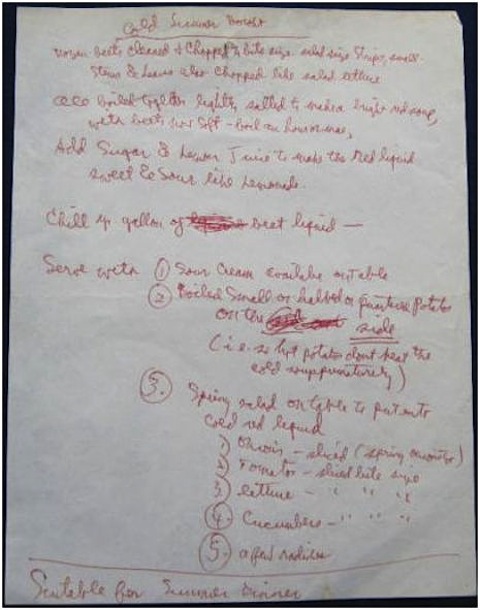
Allen Ginsberg’s Personal Recipe for Cold Summer Borscht

ginsbergsborscht

As sum­mer approach­es, let us look to Allen Gins­berg when we we feel dis­cour­aged by our lack of biki­ni-body. The author of “Sun­flower Sutra” did­n’t shy away from hav­ing his evolv­ing physique doc­u­ment­ed shirt­less or nude. Nar­row mind­ed beau­ty arbiters be damned. The man was well equipped for ten­e­ment liv­ing on the Low­er East Side of New York in the era before air-con­di­tion­ing.

Anoth­er Gins­ber­gian tac­tic for embrac­ing the sea­son’s heat: borscht. Unlike Rudolph Nureyev’s or Cyn­di Lau­per’s favorite from Vesel­ka, the round-the-clock Ukrain­ian din­er a few blocks from Gins­berg’s East Vil­lage home, Gins­berg’s borscht is veg­e­tar­i­an and cold. See the tran­scrip­tion of Gins­berg’s hand­writ­ten recipe below:

COLD SUMMER BORSCHT

Dozen beets cleaned & chopped to bite size sal­ad-size Strips
Stems & leaves also chopped like sal­ad let­tuce
All boiled togeth­er light­ly salt­ed to make a bright red soup,
with beets now soft — boil an hour or more
Add Sug­ar & Lemon Juice to make the red liq­uid
sweet & sour like Lemon­ade

Chill 4 gallon(s) of beet liq­uid -

Serve with (1) Sour Cream on table
(2) Boiled small or halved pota­to
on the side
(i.e. so hot pota­toes don’t heat the
cold soup pre­ma­ture­ly)
(3) Spring sal­ad on table to put into
cold red liq­uid
1) Onions — sliced (spring onions)
2) Toma­toes — sliced bite-sized
3) Let­tuce — dit­to
4) Cucum­bers — dit­to
5) a few radish­es
__________________________________
Suit­able for Sum­mer Din­ner

Cold Sum­mer Borscht was but one of many soups to remerge from Gins­berg’s twelve-gal­lon stock­pot. Read about his final batch here. Bon Apetit.

via Dan­ger­ous Minds

Relat­ed Con­tent:

Allen Ginsberg’s “Celes­tial Home­work”: A Read­ing List for His Class “Lit­er­ary His­to­ry of the Beats”

Allen Gins­berg Reads a Poem He Wrote on LSD to William F. Buck­ley

Allen Gins­berg Reads His Famous­ly Cen­sored Beat Poem, Howl

“Expan­sive Poet­ics” by Allen Gins­berg: A Free Course from 1981

Ayun Hal­l­i­day is the author of sev­en books includ­ing Dirty Sug­ar Cook­ies: Culi­nary Obser­va­tions, Ques­tion­able Taste. Fol­low her @AyunHalliday

Philip Roth Reads “In Memory of a Friend, Teacher & Mentor” (A Free Download Benefiting a Public Library)

roth reading

Philip Roth announced his retire­ment from the writ­ing life last fall, a few months shy of his 80th birth­day. Now, on a com­put­er in his New York City apart­ment, hangs a Post-It note that reads, “The strug­gle with writ­ing is over.” There won’t be anoth­er nov­el. There won’t be a 29th.

Admir­ers of Philip Roth may have to set­tle for the occa­sion­al odd pub­li­ca­tion, like the eulo­gy Roth pub­lished in the New York Times in April, when his high school teacher and long-time friend passed away. His name was Bob Lowen­stein. He taught at Wee­quahic High School in Newark, New Jer­sey, and Roth came to know him like this:

Bob was my home­room teacher. This meant that I saw him first thing in the morn­ing, every sin­gle day of the school year. I was nev­er to take a lan­guage course with him — I had Made­moi­selle Glucks­man for French and Señori­ta Baleroso for Span­ish — but I didn’t for­get him. Who at Wee­quahic did? Con­se­quent­ly, when it came his turn to be mauled in Congress’s anti-Com­mu­nist cru­sade of the 1940s and 1950s, I fol­lowed his fate as best I could in the sto­ries that I had my par­ents clip from the Newark news­pa­pers and mail to me.

I don’t remem­ber how we came togeth­er again around 1990, about 40 years after I’d grad­u­at­ed Wee­quahic High. I was back in Amer­i­ca from hav­ing lived large­ly abroad for some 12 years, and either I wrote to him about some­thing or he wrote to me about some­thing and we met for lunch at Zel­da and his house in West Orange. In the spir­it of Bob Lowen­stein, I will put the mat­ter in plain lan­guage, direct­ly as I can: I believe we fell in love with each oth­er.

In recent weeks, Roth vis­it­ed the head­quar­ters of Audible.com — also based in Newark, New Jer­sey — and record­ed an audio ver­sion of his trib­ute. You can down­load it for free at Audi­ble (or hear an excerpt below), and, for every down­load, Audi­ble will donate $1 to the Newark Pub­lic Library, cap­ping at $25,000. The down­load requires reg­is­ter­ing with Audi­ble.

Sep­a­rate­ly, if you want to down­load a nov­el by Philip Roth, you can always head over to Audible.com and reg­is­ter for a 30-day free tri­al. You can down­load any audio­book for free. Then, when the tri­al is over, you can con­tin­ue your Audi­ble sub­scrip­tion (as I do — I love the ser­vice), or can­cel it, and still keep the audio book. And, by the way, when­ev­er some­one signs up for a free tri­al, it helps sup­port Open Cul­ture. Also find more great reads in our col­lec­tion of Free Audio Books.

Listen as Albert Einstein Calls for Peace and Social Justice in 1945

einstein justice

Here is a rare record­ing of Albert Ein­stein read­ing his speech on the imme­di­ate after­math of World War II, “The War is Won, But the Peace is Not”:

The speech was deliv­ered on Decem­ber 10, 1945, at the Fifth Nobel Anniver­sary Din­ner at the Hotel Astor in New York. Only four months ear­li­er, the Unit­ed States had dropped atom­ic bombs on civil­ian pop­u­la­tions in the Japan­ese cities of Hiroshi­ma and Nagasa­ki. Ein­stein did­n’t work on the atom­ic bomb, but in 1939 he had signed a let­ter to Pres­i­dent Franklin D. Roo­sevelt urg­ing him to pro­cure ura­ni­um and accel­er­ate nuclear research. In his speech, Ein­stein draws a com­par­i­son between con­tem­po­rary physi­cists and the founder of the Nobel Prize, who invent­ed dyna­mite.

Physi­cists find them­selves in a posi­tion not unlike that of Alfred Nobel him­self. Alfred Nobel invent­ed the most pow­er­ful explo­sive ever known up to his time, a means of destruc­tion par excel­lence. In order to atone for this, in order to relieve his human con­science, he insti­tut­ed his awards for the pro­mo­tion of peace and for achieve­ments of peace. Today, the physi­cists who par­tic­i­pat­ed in forg­ing the most for­mi­da­ble and dan­ger­ous weapon of all times are harassed by an equal feel­ing of respon­si­bil­i­ty, not to say guilt. And we can­not desist from warn­ing, and warn­ing again, we can­not and should not slack­en in our efforts to make the nations of the world, and espe­cial­ly their gov­ern­ments, aware of the unspeak­able dis­as­ter they are cer­tain to pro­voke unless they change their atti­tude toward each oth­er and toward the task of shap­ing the future.

But Ein­stein says he is trou­bled by what he sees in the months fol­low­ing World War II.

The war is won, but the peace is not. The great pow­ers, unit­ed in fight­ing, are now divid­ed over the peace set­tle­ments. The world was promised free­dom from fear, but in fact fear has increased tremen­dous­ly since the ter­mi­na­tion of the war. The world was promised free­dom from want, but large parts of the world are faced with star­va­tion while oth­ers are liv­ing in abun­dance. The nations were promised lib­er­a­tion and jus­tice. But we have wit­nessed, and are wit­ness­ing even now, the sad spec­ta­cle of “lib­er­at­ing” armies fir­ing into pop­u­la­tions who want their inde­pen­dence and social equal­i­ty, and sup­port­ing in those coun­tries, by force of arms, such par­ties and per­son­al­i­ties as appear to be most suit­ed to serve vest­ed inter­ests. Ter­ri­to­r­i­al ques­tions and argu­ments of pow­er, obso­lete though they are, still pre­vail over the essen­tial demands of com­mon wel­fare and jus­tice.

Ein­stein then goes on to talk about a spe­cif­ic case: the plight of his own peo­ple, the Euro­pean Jews.

While in Europe ter­ri­to­ries are being dis­trib­uted with­out any qualms about the wish­es of the peo­ple con­cerned, the remain­ders of Euro­pean Jew­ry, one-fifth of its pre­war pop­u­la­tion, are again denied access to their haven in Pales­tine and left to hunger and cold and per­sist­ing hos­til­i­ty. There is no coun­try, even today, that would be will­ing or able to offer them a place where they could live in peace and secu­ri­ty. And the fact that many of them are still kept in the degrad­ing con­di­tions of con­cen­tra­tion camps by the Allies gives suf­fi­cient evi­dence of the shame­ful­ness and hope­less­ness of the sit­u­a­tion.

Ein­stein con­cludes by call­ing for “a rad­i­cal change in our whole atti­tude, in the entire polit­i­cal con­cept.” With­out doing so, he says, “human civ­i­liza­tion will be doomed.”

Note: The full text of “The War is Won, But the Peace is Not” is avail­able in the Ein­stein antholo­gies Out of My Lat­er Years and Ideas and Opin­ions.

Atheist Ira Glass Believes Christians Get the Short End of the Media Stick

So, an athe­ist and a devout Chris­t­ian walk into a Taco­ma hotel restau­rant-bar…

Wait, though, it’s not what you think! The athe­ist in ques­tion is pub­lic radio star Ira Glass, ami­ably sit­ting for an inter­view with ama­teur spir­i­tu­al anthro­pol­o­gist and for­mer This Amer­i­can Life guest Jim Hen­der­son. The mutu­al respect is refresh­ing. Hen­der­son makes it his mis­sion to seek out influ­en­tial peo­ple who are “unusu­al­ly inter­est­ed in oth­ers,” and will­ing to “stay in the room with dif­fer­ence.” Glass’ relaxed and chat­ty demeanor trans­lates to mis­sion accom­plished.

The non-believ­ing child of sec­u­lar Jews does his tribe proud by vol­un­teer­ing the opin­ion that Chris­tians get a bum rap in the nation­al media. The por­tray­al of Chris­tians as “doc­tri­naire crazy hot­head peo­ple” does­n’t square with fond rec­ol­lec­tions of for­mer pub­lic radio col­leagues who kept Bibles on their desks and invit­ed him to screen­ings of Rap­ture movies (At WBEZ? Real­ly?).

The civil­i­ty of the dis­course could renew your faith in mankind, what­ev­er your beliefs.

You can watch oth­er parts of the longer inter­view on YouTube here.

Relat­ed Con­tent:

Ira Glass on the Art and Craft of Telling Great Radio Sto­ries

The Unbe­liev­ers, A New Film Star­ring Richard Dawkins, Lawrence Krauss, Wern­er Her­zog, Woody Allen, & Cor­mac McCarthy

Does God Exist? Christo­pher Hitchens Debates Chris­t­ian Philoso­pher William Lane Craig

Alain de Bot­ton Wants a Reli­gion for Athe­ists: Intro­duc­ing Athe­ism 2.0

Ayun Hal­l­i­day is in Ira’s camp. Fol­low her @AyunHalliday

« Go BackMore in this category... »
Quantcast