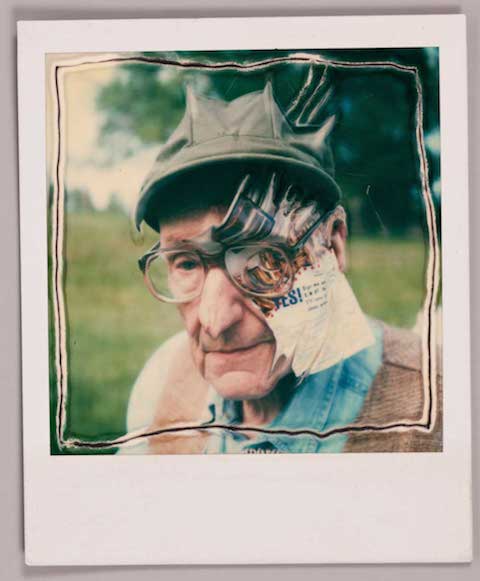
This is surely worth a quick mention: Today we have a recording of Raymond Carver reading his most famous story, “What We Talk About When We Talk About Love.” Taped in a Palo Alto hotel room in 1983 for a new radio series called Tell Me a Story, it’s the only known recording of Carver reading his signature story. The reading itself starts at the 6:00 mark. Start listening here (or stream it above).
In 2009, Stephen King called Raymond Carver “surely the most influential writer of American short stories in the second half of the 20th century.” If you’d like to get deeper into his literary world — a literary world that explores “the dim ache in the nondescript lives of aspiring students, down-and-outers, diner waitresses, salesmen, and unhappily hitched blue-collar couples,” as Josh Jones once put it — you can refer back to a previous post where we featured Richard Ford, Anne Enright, and David Means reading several other Carver stories.
If you would like to sign up for Open Culture’s free email newsletter, please find it here. It’s a great way to see our new posts, all bundled in one email, each day.
If you would like to support the mission of Open Culture, consider making a donation to our site. It’s hard to rely 100% on ads, and your contributions will help us continue providing the best free cultural and educational materials to learners everywhere. You can contribute through PayPal, Patreon, and Venmo (@openculture). Thanks!
Ah, the joys of dining at a new friend’s home, knowing sooner or later, one’s hostess’ bladder or some bit of last minute meal preparation will dictate that one will be left alone to rifle the titles on her bookshelf with abandon. No medicine cabinet can compete with this peek into the psyche.
Pity that some of the people whose bookshelves I’d be most curious to see are the least likely to open their homes to me. That’s why I’d like to thank The Strand bookstore for providing a virtual peek at the shelves of filmmakers-cum-authors Miranda July and Lena Dunham. (Previous participants in the Authors Bookshelf series include just-plain-regular authors George Saunders, Edwidge Danticat and the late David Foster Wallace whose contributions were selected by biographer D.T. Max.)
I wish Dunham and July had offered up some personal commentary to explain their hand-picked titles. (Surely their homes are lined with books. Surely each list is but a representative sampling, one shelf from hundreds. Hmm. Interesting. Did they run back and forth between various rooms, curating with a vengeance, or is this a case of whatever happened to be in the case closest at hand when deadline loomed?)
Which book’s a longtime favorite?
Which the literary equivalent of comfort food?
Are there things that only made the cut because the author is a friend?
Both women are celebrated storytellers. Surely, there are stories here beyond the ones contained between two covers.
But no matter. The lack of accompanying anecdotes means we now have the fun of inventing imaginary dinner parties:
ME: (flustered) Oh, ha ha, yes! Alex! … I sent him a Facebook request and he accepted.
LENA DUNHAM: (mutters under her breath)
ME: Design Sponge? Really? What’s someone in your shoes doing with a bunch of DIY decorating books?
LENA DUNHAM: (coldly) Research.
Actually, maybe it is better to admire one’s idols’ bookshelves from afar.
I’m chagrined that I don’t recognize more of their modern fiction picks. That wasn’t such a problem when I was measuring myself against the 430 books on Marilyn Monroe’s reading list.
Thank heaven for old standbys like Madame Bovary.
In all sincerity, I was glad that Dunham didn’t try to mask her love of home decor blog books.
One’s shelves, after all, are a matter of taste. So, celebrate the similarities, take their recommendations under advisement, see below and read what you like!
The Girls’ Guide to Hunting and Fishing — Melissa Bank
A Little History of the World — E. H. Gombrich
Anne of Green Gables — L.M. Montgomery
Apartment Therapy Presents: Real Homes, Real People, Hundreds of Real Design Solutions — Maxwell Gillingham-Ryan
Ariel: The Restored Edition — Sylvia Plath
Bad Feminist: Essays — Roxane Gay
Bastard Out of Carolina (20th Anniversary Edition) — Dorothy Allison
Blue is the Warmest Color — Julie Maroh
Brighton Rock — Graham Greene
Cavedweller - Dorothy Allison
Country Girl: A Memoir — Edna O’Brien
Crazy Salad and Scribble Scribble: Some Things About Women and Notes on Media — Nora Ephron
Design Sponge at Home — Grace Bonney
Dinner: A Love Story: It All Begins at the Family Table — Jenny Rosenstrach
Eleanor & Park — Rainbow Rowell
Eloise — Kay Thompson
Eloise In Moscow — Kay Thompson
Eloise In Paris — Kay Thompson
Fanny At Chez Panisse — Alice Waters
Goodbye, Columbus and Five Short Stories — Philip Roth
Holidays on Ice — David Sedaris
Important Artifacts and Personal Property from the Collection of Lenore Doolan and Harold Morris, Including Books, Street Fashion, and Jewelry — Leanne Shapton
Lentil — Robert McCloskey
Love Poems — Nikki Giovanni
Love, an Index (McSweeney’s Poetry Series) — Rebecca Lindenberg
Dostoevsky, a doodler? Surely not! Great Russian brow furrowed over the meaning of love and hate and faith and crime, diving into squalid hells, ascending to the heights of spiritual ecstasy, taking a gasp of heavenly air, then back down to the depths again to churn out the pages and hundreds of character arcs—that’s Dostoevsky’s style. Doodles? No. And yet, even Dostoevsky, the acme of literary seriousness, made time for the odd pen and ink caricature amidst his bouts of existential angst, poverty, and ill health. We’ve shown you some of them before—indeed, some very well rendered portraits and architectural drawings in the pages of his manuscripts. Now, just above, see yet another, a recently discovered tiny portrait of Shakespeare in profile, etched in the margins of a page from one of his angstiest novels, The Possessed, available in our collection, 800 Free eBooks for iPad, Kindle & Other Devices.
Annie Martirosyan in The Huffington Post points out some family resemblance between the Shakespeare doodle and the famous brooding oil portrait of Dostoevsky himself, by Vasily Perov. She also notes the ring stain and sundry drips over the “hardly legible… scribbles” and “marginalia… scattered naughtily across the page” is from the author’s tea. “Feodor Mikhailovich was an avid tea drinker,” and he would consume his favorite beverage while walking “to and fro in the room and mak[ing] up his characters’ speeches out loud….” Can’t you just see it? Under the drawing (see it closer in the inset)—in one of the many examples of the author’s painstaking handwriting practice—is the name “Atkinson.”
Martirosyan sums up a somewhat complicated academic discussion between Dostoevsky experts Vladimir Zakharov and Boris Tikhomirov about the source of this name. This may be of interest to literary specialists. But perhaps it suffices to say that both scholars “have now confirmed the authenticity of the image as Dostoevsky’s drawing of Shakespeare,” and that the name and drawing may have no conceptual connection. It’s also further proof that Dostoevsky, like many of us, turned to making pictures when, says scholar Konstantin Barsht—whom Colin Marshall quoted in our previous post—“the words came slowest.” In fact, some of the author’s character descriptions, Barsht claims, “are actually the descriptions of doodled portraits he kept reworking until they were right.”
So why Shakespeare? Perhaps it’s simply that the great psychological novelist felt a kinship with the “inventor of the human.” After all, Dostoevsky has been called, in those memorable words from Count Melchoir de Vogue, “the Shakespeare of the lunatic asylum.”
When Flannery O’Connor started writing in the middle of the 20th century, short stories — or at least fashionable short stories that were published in The New Yorker –unfolded delicately revealing gossamer-like layers of experience. O’Connor’s stories, in contrast, were pungent, grotesque, often violent moral tales dealing with unabashedly Christian themes. They definitely weren’t fashionable at the time. Yet since her untimely death at age 39 in 1964, O’Connor’s reputation has only increased. Even for readers who aren’t immersed in Catholic theology, her stories — which pair outlandish, often comic characters with harrowing, existential situations — have a way of burrowing into your consciousness and staying there. For O’Connor, the gothic tales were a means to an end: “To the hard of hearing you shout, and for the almost-blind you draw large and startling figures.”
In 1961, an English professor wrote to O’Connor hoping to help his students understand “A Good Man is Hard to Find.” The story, perhaps the author’s most famous, is a slippery, troubling work about a family of six casually murdered by an escaped convict called the Misfit in the backwoods of Georgia. The story’s main character is clearly the Grandmother. The story is seen through her eyes, and she is the one who ultimately dooms the family. Yet the professor didn’t quite see it that way:
We have debated at length several possible interpretations, none of which fully satisfies us. In general we believe that the appearance of the Misfit is not ‘real’ in the same sense that the incidents of the first half of the story are real. Bailey, we believe, imagines the appearance of the Misfit, whose activities have been called to his attention on the night before the trip and again during the stopover at the roadside restaurant. Bailey, we further believe, identifies himself with the Misfit and so plays two roles in the imaginary last half of the story. But we cannot, after great effort, determine the point at which reality fades into illusion or reverie. Does the accident literally occur, or is it part of Bailey’s dream? Please believe me when I say we are not seeking an easy way out of our difficulty. We admire your story and have examined it with great care, but we are not convinced that we are missing something important which you intended us to grasp. We will all be very grateful if you comment on the interpretation which I have outlined above and if you will give us further comments about your intention in writing ‘A Good Man is Hard to Find.’
O’Connor was understandably baffled by this reading. Her response:
28 March 1961
The interpretation of your ninety students and three teachers is fantastic and about as far from my intentions as it could get to be. If it were a legitimate interpretation, the story would be little more than a trick and its interest would be simply for abnormal psychology. I am not interested in abnormal psychology.
There is a change of tension from the first part of the story to the second where the Misfit enters, but this is no lessening of reality. This story is, of course, not meant to be realistic in the sense that it portrays the everyday doings of people in Georgia. It is stylized and its conventions are comic even though its meaning is serious.
Bailey’s only importance is as the Grandmother’s boy and the driver of the car. It is the Grandmother who first recognized the Misfit and who is most concerned with him throughout. The story is a duel of sorts between the Grandmother and her superficial beliefs and the Misfit’s more profoundly felt involvement with Christ’s action which set the world off balance for him.
The meaning of a story should go on expanding for the reader the more he thinks about it, but meaning cannot be captured in an interpretation. If teachers are in the habit of approaching a story as if it were a research problem for which any answer is believable so long as it is not obvious, then I think students will never learn to enjoy fiction. Too much interpretation is certainly worse than too little, and where feeling for a story is absent, theory will not supply it.
My tone is not meant to be obnoxious. I am in a state of shock.
Flannery O’Connor
You can hear O’Connor read “A Good Man is Hard to Find” below. We have more information on the 1959 reading here:
Jonathan Crow is a Los Angeles-based writer and filmmaker whose work has appeared in Yahoo!, The Hollywood Reporter, and other publications. You can follow him at @jonccrow. And check out his blog Veeptopus, featuring lots of pictures of badgers and even more pictures of vice presidents with octopuses on their heads. The Veeptopus store is here.
Alex, the protagonist of Anthony Burgess’ A Clockwork Orange takes teenage rebellion to psychotic extremes, but one act he and hisdroogs never indulge in is getting tattooed. It doesn’t even seem to be on their radar. How different things were in 1962, when the book was published!
It’s also just one of many Clockwork Orange-inspired images that decorates fans’ hides now that tattooing has hit the mainstream. What would Alex think?
The little monster’s ego would’ve have relished the notoriety, but I bet he’d have had a snicker, too, at the lengths to which eager chellovecks and devotchkas will go. It’s the kind of thing his dim droogie Dim would do—mark himself up permanent when he could’ve just as well have bought a totebag.
Whether or not you personally would consider making a salute to A Clockwork Orange a lifelong feature of your birthday suit, it’s hard not to admire the commitment of the passionate literature and film lovers who do.
In assembling the gallery below, we’ve opted to forgo the photorealistic portraits of McDowell—particularly the ones that recreate the aversion therapy scene—in favor of the graphic, the creative, the jaw dropping, the sly… and the unavoidable Hello Kitty mash up, which we’re kind of hoping washes off.
1850 was a tough year for Leo Tolstoy. It was a time when his future successes were impossible to see while his past failures were all too obvious. A few years prior, he had been thrown out of the University of Kazan. His teachers wrote him off as “both unable and unwilling to learn.” Thereafter, he went into a spiral of dissolution, first in St. Petersburg and then in Moscow, where he drank, caroused and racked up some serious gambling debts.
Yet Tolstoy had ambitions beyond being just another debauched scion of the upper class. He struggled to improve himself. So he started a journal in 1847 while recovering in a hospital ward from venereal disease. Influenced by Jean-Jacques Rousseau, the future author of War and Peace sought to use the diary as a tool for self-exploration. For the first few years, he was an intermittent diarist. Then, in 1850, he took this tool to new lacerating levels. Part psychotherapy, part literary exploration, part inquiry into the limits of narrative and part straight up masochism, Tolstoy set out to account for his every action during the day in what he called the “Journal of Daily Occupations.”
He divided his page into two columns. In “The Future” column, he listed the things he planned to do the next day. In “The Past” column, he judges himself (harshly) on how well he followed through on those plans, labeling each one of his failures with the appropriate sin – sloth, avarice etc. There was no column for “The Present.”
24. Arose somewhat late and read, but did not have time to write. Poiret came, I fenced, and did not send him away (sloth and cowardice). Ivanov came, I spoke with him for too long (cowardice). Koloshin (Sergei) came to drink vodka, I did not escort him out (cowardice). At Ozerov’s argued about nothing (habit of arguing) and did not talk about what I should have talked about (cowardice). Did not go to Beklemishev’s (weakness of energy). During gymnastics did not walk the rope (cowardice), and did not do one thing because it hurt (sissiness).—At Gorchakov’s lied (lying). Went to the Novotroitsk tavern (lack of fierté). At home did not study English (insufficient firmness). At the Volkonskys’ was unnatural and distracted, and stayed until one in the morning (distractedness, desire to show off, and weakness of character).
25. [This is a plan for the next day, the 25th, written on the 24th—I.P.] From 10 to 11 yesterday’s diary and to read. From 11 to 12—gymnastics. From 12 to 1—English. Beklemishev and Beyer from 1 to 2. From 2 to 4—on horseback. From 4 to 6—dinner. From 6 to 8—to read. From 8 to 10—to write.—To translate something from a foreign language into Russian to develop memory and style.—To write today with all the impressions and thoughts it gives rise to.—25. Awoke late out of sloth. Wrote my diary and did gymnastics, hurrying. Did not study English out of sloth. With Begichev and with Islavin was vain. At Beklemishev’s was cowardly and lack of fierté. On Tver Boulevard wanted to show off. I did not walk on foot to the Kalymazhnyi Dvor (sissiness). Rode with a desire to show off. For the same reason rode to Ozerov’s.—Did not return to Kalymazhnyi, thoughtlessness. At the Gorchakovs’ dissembled and did not call things by their names, fooling myself. Went to L’vov’s out of insufficient energy and the habit of doing nothing. Sat around at home out of absentmindedness and read Werther inattentively, hurrying.
26 [This is a plan for the next day, the 26th, written on the 25th—I.P.] To get up at 5. Until 10—to write the history of this day. From 10 to 12—fencing and to read. From 12 to 1—English, and if something interferes, then in the evening. From 1 to 3—walking, until 4—gymnastics. From 4 to 6, dinner—to read and write.— (46:55).
Tolstoy’s regime of self-improvement wasn’t restricted to this punishing daily accounting of failures. He also kept a “Journal for Weaknesses,” which tallied up all of his moral failures, arranged in columns for laziness, indecision, sensuality etc., not to mention a series of notebooks for rules: “Rules for life,” “Rules for developing will,” and “Rules for playing cards in Moscow until January 1.”
One gets the sense that there’s a real opportunity for a line of Tolstoyan self-help books. Six Pillars of Self-Flagellation, perhaps? 7 Habits of Highly Effective Moral Failures? The Power of Spiritual Angst?
Jonathan Crow is a Los Angeles-based writer and filmmaker whose work has appeared in Yahoo!, The Hollywood Reporter, and other publications. You can follow him at @jonccrow. And check out his blog Veeptopus, featuring lots of pictures of badgers and even more pictures of vice presidents with octopuses on their heads. The Veeptopus store is here.
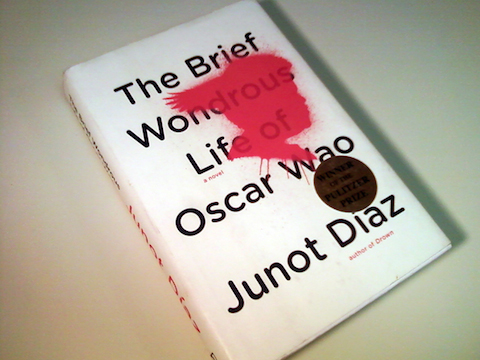
Earlier this month, the reading world thrilled to the news that Haruki Murakami would, in a new column on his official site, take on the role of agony uncle. I, for one, had to look up the term “agony uncle,” a term out of British English, a language that surprises me even more often than does Murakami’s native Japanese. It means an advice columnist, or more specifically an avuncular type of writer to whom readers can pour out their agonies.
Despite his rare public appearances and few first-person pieces available in translation, readers around the globe have surely sensed the writer’s calm manner and sympathetic ear. And when he gives advice straight-up, as when he talks about what makes a good runner or writer (almost the same thing, to his mind) he does it with succinctness and wisdom. And so we have 村上さんのところ, or “Mr. Murakami’s Place,” where Murakami will, over the next few months, briefly address all manner of reader queries submitted in January.
(Which means that, if you have anything to ask him you’ve still got a few days left to do so. Though you’ll notice that the site appears almost entirely in Japanese, the English-speaking Murakami also answers questions submitted in that language; just consult James Smyth’s translation of the question submission form if you want to go that route.)
“Do you think cats can understand how humans feel?” asks a fan named Vivian. “My cat Bobo ran away when she saw me crying.” And despite, or because of, having spent a good deal of time rendering cats as literary presences, Murakami feels a bit dubious about the issue: “I suspect that either you or your cat is extremely sensitive. I have had many cats, but no cat has ever been so sympathetic. They were just as egoistic as they could be.” “Do you have some places you always stay for a while?” asks a 20-year-old student. “An easy question. In the bed with someone I love. Where else?”
Not only do the Japanese-language questions and answers get slightly more expansive, they sometimes even take the traditional advice-column form. Take, for example, “On the Cusp of 30”:
30 is right around the corner for me, but there isn’t a single thing that I feel like I’ve accomplished. When I was young, I thought to be an ‘adult’ must be so wonderful, but my current reality is so far away from what I imagined. And when faced with that reality, I get very disheartened. What should I do with myself?
(Jo & Maca, Female, 28)
I don’t mean to be rude, but I think “to be an ‘adult’ must be so wonderful,” is just wrong. ‘Adult’ is nothing more than an empty form. What you fill that form with is your own responsibility. Accomplishments don’t come easily. When you start to fill your ‘adult’ form little by little, then everything will begin. But 28 is not really ‘adult.’ You’re only just beginning.
My wife quite frequently belches right near the back of my head when she passes behind me. When I say to her, “Stop burping behind me all the time,” she says, “It’s not on purpose. It just comes out.” I don’t think I’m bringing it upon myself in any way. Is there something I can do to stop my wife’s belching?
(ukuleleKazu, Male, 61, Self-Employed)
I hope you’ll pardon me for saying so, but I think belching is far better than farting. Perhaps you should think of it that way.
Image via YouTube, 1959 interview with Mike Wallace
I recently happened upon the Modern Library’s “100 Best Novels” list and noticed something interesting. The list divides into two columns—the “Board’s List” on the left and “Reader’s List” on the right. The “Board’s List” contains in its top ten such expected “great books” as Joyce’s Ulysses (#1) and William Faulkner’s The Sound and the Fury (#6). These are indeed worthy titles, but not the most accessible of books, to be sure, though Ulysses does appear at number eleven on the “Reader’s List.” At the very top of that more popular ranking, however, is a book the literati could not find more worthy of contempt: Ayn Rand’s Atlas Shrugged. Just below it is Rand’s The Fountainhead, and at numbers seven and eight, respectively, her Anthem and We the Living. (Also in the top ten on the “Reader’s List,” three novels by L. Ron Hubbard.)
One obvious takeaway… masses of ordinary people really like Ayn Rand. Which is odd, because Ayn Rand seemed to positively hate the masses of ordinary people. As Michael O’Donnell writes in Washington Monthly, “Rand… lived a life of contempt: for people, for ideas, for government, and for the very concept of human kindness.”
Perhaps her most sympathetic reader, economist Ludwig von Mises, summed up the overarching theme of her life’s work in one very tidy sentence: “You have the courage to tell the masses what no politician told them: you are inferior and all the improvements in your conditions which you simply take for granted you owe to the effort of men who are better than you.” This is apparently a message that a great many people are eager to hear. (And if any fiction is “message driven,” it is Rand’s.)
But imagine, if you will, that you are not a reader of Ayn Rand, but a family member. Not by blood, but marriage, but connected, nonetheless. You are Ayn Rand’s niece—Rand’s husband Frank O’Connor’s sister’s daughter, to be precise. Your name is Connie Papurt, you are 17, and you have written Auntie Ayn to ask for $25 for a new dress. Have you done this simply to be cheeky? You do know, Connie, how deeply your Aunt Ayn despises moochers, do you not? No matter—we have neither Connie’s letter, nor a window into her motivations. We do have, however, Rand’s replies, plural, from May 22, 1949, then again—in response to Connie’s follow-up—from June 4 of that same year. The initial request prompted some earnest sermonizing from Rand on the value of hard work, and of being a “self-respecting, self-supporting, responsible, capitalistic person.” Etcetera.
Now, to Rand’s credit, the first reply letter contains some common sense advice, and describes some situations in which other close connections apparently took advantage of her generosity. She seems to have cause for leeriness, as, granted, do we all in these situations. Borrowing from family is very often a tricky business. As was her wont, however, Rand seized upon the occasion not only to dispense wisdom on personal responsibility, but also to moralize on the worthlessness of people who fail her test of character. As The Toast comments, the letter is “30% very good advice, 50% unnecessary yelling, and 20% nonsense.” First, Rand lays out for Connie an installment plan:
Here are my conditions: If I send you the $25, I will give you a year to repay it. I will give you six months after your graduation to get settled in a job. Then, you will start repaying the money in installments: you will send me $5 on January 15, 1950, and $4 on the 15th of every month after that; the last installment will be on June 15, 1950—and that will repay the total.
Are you willing to do that?
Notice, Rand assesses no interest—a kindness, indeed. And yet,
I want you to understand right now that I will not accept any excuse—except a serious illness. If you become ill, then I will give you an extension of time—but for no other reason. If, when the debt becomes due, you tell me that you can’t pay me because you needed a new pair of shoes or a new coat or you gave the money to somebody in the family who needed it more than I do—then I will consider you as an embezzler. No, I won’t send a policeman after you, but I will write you off as a rotten person and I will never speak or write to you again.
According to her 2012 obituary, Connie went on to became a local Cleveland actress and nurse, a person “dedicated to making the lives of others better.” According to her aunt, she should have nothing better to do—for anyone—but to pay back her debt, should she wish to remain in the good graces of the great Objectivist. We do not know if Connie accepted the terms, but she apparently wrote back in such a way as to leave quite an impression on Rand, whose June 4 reply is “damn charming!”
I must tell you that I was very impressed with the intelligent attitude of your letter. If you really understood, all by yourself, that my long lecture to you was a sign of real interest on my part, much more so than if I had sent you a check with some hypocritical gush note, and if you understood that my letter was intended to treat you as an equal—then you have just the kind of mind that can achieve anything you choose to achieve in life.
The letter goes on in very kindly, even sentimental, terms. In fact, it may convince you that O’Donnell is dead wrong to single out contempt as Rand’s defining quality. And yet, he argues, her biographers show that “she happily accepted help from others while denouncing altruistic kindness” (and those who accept it), espousing “an individualism so extreme that it does not merely ignore others, but actually spits in their faces.” While Connie managed to escape her wrath, such as it was, most others, through their own failings of true capitalistic character or the cruelty of circumstances beyond their control, did not.
We're hoping to rely on loyal readers, rather than erratic ads. Please click the Donate button and support Open Culture. You can use Paypal, Venmo, Patreon, even Crypto! We thank you!
Open Culture scours the web for the best educational media. We find the free courses and audio books you need, the language lessons & educational videos you want, and plenty of enlightenment in between.