Why Should You Read Edgar Allan Poe? An Animated Video Explains

His gloomy, haunt­ed vis­age adorns the cov­ers of col­lect­ed works, pub­li­ca­tions of whose like he would nev­er see in his life­time. Edgar Allan Poe died in penury and near-obscu­ri­ty, and might have been for­got­ten had his work not been turned into sen­sa­tion­al­ized, abridged, adap­ta­tions posthu­mous­ly, a fate he might not have wished on his most hat­ed lit­er­ary rival.

But Poe sur­vived car­i­ca­ture to become known as one of the great­est of Amer­i­can writ­ers in any genre. A pio­neer of psy­cho­log­i­cal hor­ror and sci­ence fic­tion, founder of the detec­tive sto­ry, poet of loss and mourn­ing, and inci­sive lit­er­ary crit­ic whose prin­ci­ples informed his own work so close­ly that we can use essays like his 1846 “The Phi­los­o­phy of Com­po­si­tion” as keys to unlock the for­mal prop­er­ties of his sto­ries and nar­ra­tive poems.

In the short TED-Ed video above, script­ed by Poe schol­ar Scott Peeples of the Col­lege of Charleston, we are intro­duced to many of the qual­i­ties of form and style that make Poe dis­tinc­tive, and that made him stand out among a crowd of pop­u­lar hor­ror writ­ers of the time. There are his prin­ci­ples, elab­o­rat­ed in his essay, which state that one should be able to read a sto­ry in one sit­ting, and that every word in the sto­ry must count.

These rules pro­duced what Poe called the “Uni­ty of Effect,” which “goes far beyond fear. Poe’s sto­ries use vio­lence and hor­ror to explore the para­dox­es and mys­ter­ies of love, grief, and guilt, while resist­ing sim­ple inter­pre­ta­tions or clear moral mes­sages. And while they often hint at super­nat­ur­al ele­ments, the true dark­ness they explore is the human mind.”

This obser­va­tion leads to an analy­sis of Poe’s unre­li­able nar­ra­tors, par­tic­u­lar­ly in sto­ries like The Tell-Tale Heart. But there is anoth­er aspect to Poe—one which makes his unre­li­able voic­es so com­pelling. Even when the sto­ries seem incred­i­ble, the events bizarre, the nar­ra­tors mani­a­cal, we believe them whole­heart­ed­ly. And this has much to do with the fram­ing con­ven­tions Poe uses to draw read­ers in and impli­cate them, forc­ing them to iden­ti­fy with the sto­ries’ tellers.

For exam­ple, “Ms. Found in a Bot­tle,” the very first sto­ry in Poe’s posthu­mous col­lec­tion, Tales of Mys­tery and Imag­i­na­tion, opens with an epi­graph from French libret­tist Quinault’s opera Atys, an adap­tion of one of Ovid’s sto­ries. The lines trans­late to “He who has but a moment to live has no longer any­thing to dis­sem­ble.”

We are invit­ed into a con­fi­dence through the door­way of this device—a clas­si­cal, and neo­clas­si­cal, ref­er­ence to truth-telling, a sober, learned lit­er­ary stamp of author­i­ty. As the name­less nar­ra­tor intro­duces him­self, he makes sure to place him­self in anoth­er ancient tra­di­tion, Pyrrhon­ism, a skep­ti­cal phi­los­o­phy con­cerned with epis­te­mol­o­gy, or how it is we can know what we know.

The nar­ra­tor assures us that “no per­son could be less liable than myself to be led away from the severe precincts of truth by the ignes fatui of super­sti­tion.” Though we may doubt this bold asser­tion, and the per­son mak­ing it, we might also be con­vinced of our own unshake­able ratio­nal­i­ty and skep­ti­cism. These are the moves, to put it plain­ly, of stage magi­cians, moun­te­banks, and con­fi­dence men, and Poe was one of the great­est of them all.

He flat­ters his read­ers’ intel­li­gence, draws them close enough to see his hands mov­ing, then picks their com­fort­able assump­tions from their pock­ets. Poe under­stood what many of his peers did not: read­ers love to be conned by a juicy yarn, but it must be real­ly good—it must show us some­thing we did not see before, and that we could, per­haps, only look at it indi­rect­ly, through a pleas­ing act of aes­thet­ic (self) decep­tion.

Relat­ed Con­tent:

Down­load The Com­plete Works of Edgar Allan Poe on His Birth­day

7 Tips from Edgar Allan Poe on How to Write Vivid Sto­ries and Poems

Edgar Allan Poe’s the Raven: Watch an Award-Win­ning Short Film That Mod­ern­izes Poe’s Clas­sic Tale

Josh Jones is a writer and musi­cian based in Durham, NC. Fol­low him at @jdmagness

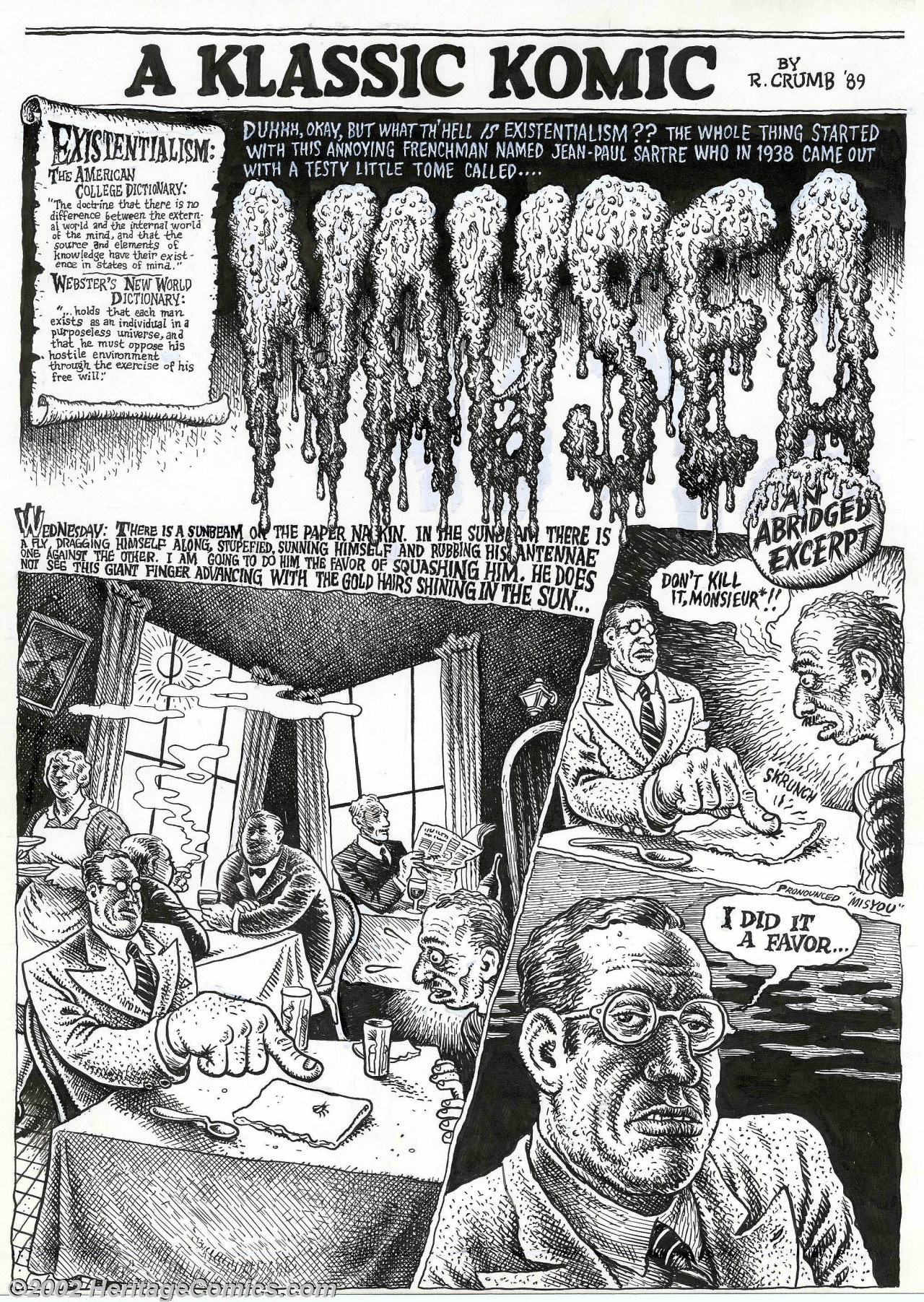
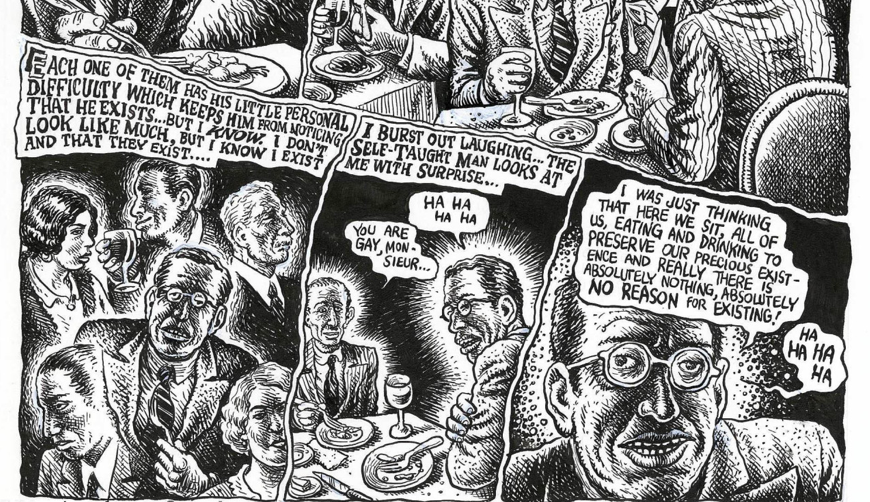
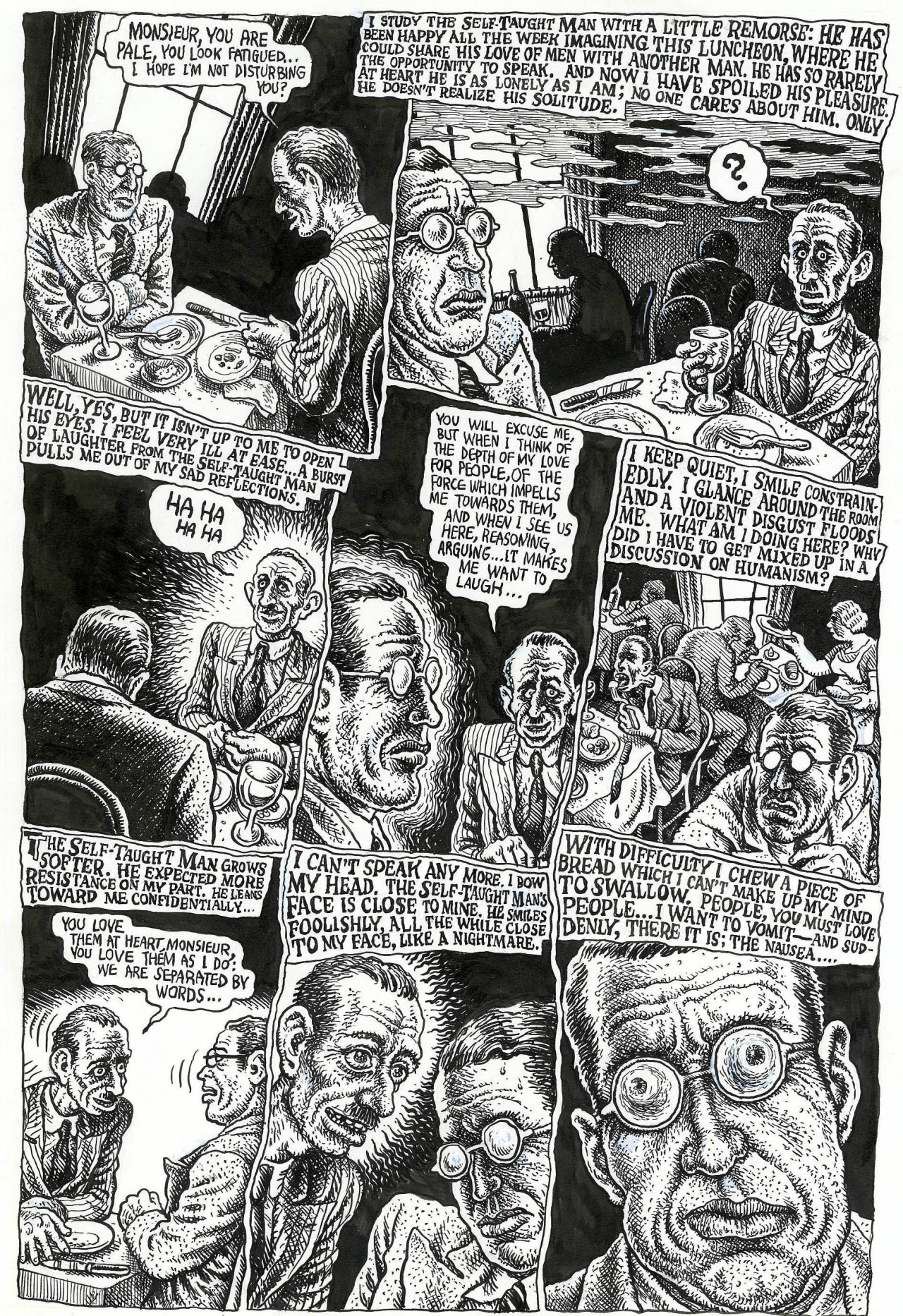
R. Crumb Illustrates Jean-Paul Sartre’s Nausea: Existentialism Meets Underground Comics

Sartre’s nov­el Nau­sea intro­duced his philo­soph­i­cal view as a form of ill­ness to a WWII read­er­ship. “Nau­sea is exis­tence reveal­ing itself—and expe­ri­ence is not pleas­ant to see,” he wrote in his own sum­ma­ry of his first book, pub­lished in 1938. The novel’s drama­ti­za­tion of His­to­ri­an Roquentin’ s cri­sis presents a case of exis­ten­tial sick­ness as most­ly invol­un­tary.

Though pub­lished before his many Marx­ist books and essays, Nau­sea con­nects the malaise to a cer­tain class expe­ri­ence. “I have no trou­bles,” thinks Roquentin in Robert Crumb’s short adap­ta­tion of the book above, “I have mon­ey like a cap­i­tal­ist, no boss, no wife, no chil­dren; I exist, that’s all…. And that trou­ble is so vague, so meta­phys­i­cal that I am ashamed of it.” Nau­sea, in one sense, is bour­geoise alien­ation, while Roquentin’s con­ver­sa­tion part­ner, the Self-Taught Man, con­fess­es a naïve human­ist ide­al­ism.

The char­ac­ters alone, some crit­ics sug­gest, imbue the book with a sub­tle par­o­dy. As he lis­tens to the Self-Taught Man’s trou­bles and rumi­nates on his own, Crumb’s Roquentin grows more Sartre-like. Sig­nif­i­cant­ly, the Self-Taught Man takes on a Crumb-like demeanor and aspect. Their dia­logue moves briskly, the scene resem­bling My Din­ner with Andre with less ban­ter and more neu­ro­sis. Sartre’s tone lends itself well to Crumb’s obses­sive, tight­ly-com­posed pan­els.

Crumb’s lit­er­ary inter­pre­ta­tions have grav­i­tat­ed toward oth­er anx­ious writ­ers like Charles Bukows­ki and Franz Kaf­ka, as well as the mur­der and incest of the book of Gen­e­sis. The under­ground comics leg­end is right at home with Sartre­an dread and despair. Crumb became famous for Fritz the Cat, an ani­mat­ed film ver­sion of his raunchy hip­ster, what many called his gross­ly sex­ist and racist sex fan­tasies, and the draw­ing and slo­gan “Keep on Truckin’.” He was a fig­ure of 60s and 70s coun­ter­cul­ture, but that’s nev­er where he belonged.

Crumb was a Sartre­an pro­tag­o­nist , even when he “often por­trayed him­self in his work as naked… and pri­apic.” In an an inter­view with Crumb The Guardian describes him:

his words are depres­sive and lugubri­ous, and yet he appears mel­low, laugh­ing eas­i­ly through his exis­ten­tial nau­sea. The most ter­ri­ble sto­ries amuse him as much as they pain him. He tells me how a best friend killed him­self by swal­low­ing four bot­tles of paper cor­rec­tion flu­id, and he chor­tles. He talks of his own despair, and gig­gles. He admits that he could nev­er have imag­ined a life quite so fulfilled—with Aline, and his beloved daugh­ter Sophie, also a car­toon­ist, and suc­cess and money—and says he’s still mis­er­able as hell, and laughs.

He is a lit­tle Roquentin, a lit­tle bit Sartre, a lit­tle bit Self-Taught man, apply­ing to his read­ing of lit­er­a­ture and phi­los­o­phy an LSD-assist­ed, sex-pos­i­tive, and unavoid­ably con­tro­ver­sial and depres­sive sen­si­bil­i­ty. See the full Crumb-illus­trat­ed Nau­sea here.

Relat­ed Con­tent:

R. Crumb Describes How He Dropped LSD in the 60s & Instant­ly Dis­cov­ered His Artis­tic Style

R. Crumb Shows Us How He Illus­trat­ed Gen­e­sis: A Faith­ful, Idio­syn­crat­ic Illus­tra­tion of All 50 Chap­ters

Three Charles Bukows­ki Books Illus­trat­ed by Robert Crumb: Under­ground Com­ic Art Meets Out­sider Lit­er­a­ture

Under­ground Car­toon­ist Robert Crumb Cre­ates an Illus­trat­ed Intro­duc­tion to Franz Kafka’s Life and Work

Josh Jones is a writer and musi­cian based in Durham, NC. Fol­low him at @jdmagness

Umberto Eco Explains Why We Make Lists

Cre­ative Com­mons image by Rob Bogaerts, via the Nation­al Archives in Hol­land

We hate lists, which have told us what to do since at least the days Leonar­do da Vin­ci, and which now, as “lis­ti­cles,” con­sti­tute one of the low­est stra­ta of inter­net con­tent. But we also love lists: a great many of us click on those lis­ti­cles, after all, and one might argue that the list, as a form, rep­re­sents the begin­ning of writ­ten texts. “The list is the ori­gin of cul­ture,” said Umber­to Eco in a 2009 Der Spiegel inter­view about the exhi­bi­tion on the his­to­ry of the list he curat­ed at the Lou­vre. “It’s part of the his­to­ry of art and lit­er­a­ture. What does cul­ture want? To make infin­i­ty com­pre­hen­si­ble. It also wants to cre­ate order  — not always, but often.”

How, as mere human beings, do we impose order when we gaze up into infin­i­ty, down into the abyss — pick your metaphor of the sub­lime­ly, incom­pre­hen­si­bly vast? We do it, Eco thought, “through lists, through cat­a­logs, through col­lec­tions in muse­ums and through ency­clo­pe­dias and dic­tio­nar­ies.” The breadth as well as depth of the knowl­edge he accu­mu­lat­ed through­out his 84 years — which itself could seem sub­lime­ly and incom­pre­hen­si­bly vast, as any­one who has read one of his list-filled nov­els knows — placed him well to explain the ori­gins, func­tions, and impor­tance of the list. In the Spiegel inter­view he names Don Gio­van­ni’s 2,063 lovers, the con­tents of Leopold Bloom’s draw­ers, and the many ships and gen­er­als spec­i­fied in the Ili­ad as just a few of the clas­sic lists and enu­mer­a­tions of West­ern cul­ture.

Eco’s research into and/or obses­sion with lists pro­duced not just the exhi­bi­tion at the Lou­vre but also a book, The Infin­i­ty of Lists: An Illus­trat­ed Essay. Did it also lead him to any oth­er answers about why, whether in the Mid­dle Ages with its “very clear image of the uni­verse,” the Renais­sance and Baroque eras with their “world­view based on astron­o­my,” the “post­mod­ern age” in which we live today, or any oth­er time, “the list has pre­vailed over and over again?” Ulti­mate­ly, we make lists when­ev­er we expe­ri­ence a “defi­cien­cy of lan­guage,” such as when lovers describe one anoth­er (“Your eyes are so beau­ti­ful, and so is your mouth, and your col­lar­bone”) or when we remem­ber the “very dis­cour­ag­ing, humil­i­at­ing lim­it” of death. Mak­ing lists of things that seem infi­nite is “a way of escap­ing thoughts about death. We like lists because we don’t want to die.”

Hav­ing died in 2016 him­self, Eco left behind an immense per­son­al library (his walk­through of which we’ve pre­vi­ous­ly fea­tured here on Open Cul­ture). “It might actu­al­ly be 50,000 books,” he said to the Spiegel inter­view­er, but he refused to put them on a list and find out for sure: “When my sec­re­tary want­ed to cat­a­logue them, I asked her not to. My inter­ests change con­stant­ly, and so does my library.” If he were to try to list his inter­ests, he would have had to keep scrap­ping the list and draw­ing up a new one; more than pro­vid­ing abun­dant mate­r­i­al for his writ­ing, this con­stant and life­long cir­cu­la­tion of fas­ci­na­tions (he men­tioned first lov­ing Chopin at 16, and again in his sev­en­ties) con­firmed his engage­ment with the infi­nite world around him: “If you inter­act with things in your life, every­thing is con­stant­ly chang­ing. And if noth­ing changes, you’re an idiot.”

Relat­ed Con­tent:

Umber­to Eco Explains the Poet­ic Pow­er of Charles Schulz’s Peanuts

Umber­to Eco Makes a List of the 14 Com­mon Fea­tures of Fas­cism

Watch Umber­to Eco Walk Through His Immense Pri­vate Library: It Goes On, and On, and On!

Umber­to Eco Dies at 84; Leaves Behind Advice to Aspir­ing Writ­ers

Leonar­do Da Vinci’s To Do List (Cir­ca 1490)

Based in Seoul, Col­in Mar­shall writes and broad­casts on cities and cul­ture. His projects include the book The State­less City: a Walk through 21st-Cen­tu­ry Los Ange­les and the video series The City in Cin­e­ma. Fol­low him on Twit­ter at @colinmarshall or on Face­book.

Mary Shelley’s Handwritten Manuscript of Frankenstein: This Is “Ground Zero of Science Fiction,” Says William Gibson

Who invent­ed cyber­punk, that vivid sub­genre of sci­ence fic­tion at the inter­sec­tion of “high tech and low life”? Some put forth the name of William Gib­son, whose 1984 nov­el Neu­ro­mancer crys­tal­lized many of the ele­ments of cyber­punk that still char­ac­ter­ize it today, even if it was­n’t the first exam­ple of all of them. And who, for that mat­ter, invent­ed sci­ence fic­tion? Bri­an Ald­iss, a sci-fi writer and a respect­ed schol­ar of the tra­di­tion, argued for Mary Shel­ley, author of Franken­stein. “The sem­i­nal point about Franken­stein,” Ald­iss writes, “is that its cen­tral char­ac­ter makes a delib­er­ate deci­sion. He suc­ceeds in cre­at­ing life only when he throws away dusty old author­i­ties and turns to mod­ern exper­i­ments in the lab­o­ra­to­ry.”

In oth­er words, Vic­tor Franken­stein uses sci­ence, which accord­ing to Ald­iss had not pro­pelled a nar­ra­tive before Franken­stein’s pub­li­ca­tion in 1818. The nov­el came out, in an edi­tion of just 500 three-vol­ume copies, under the full title Franken­stein; or, The Mod­ern Prometheus, and with­out any author’s name. Shel­ley’s deci­sion to pub­lish her work anony­mous­ly, with a pref­ace by her hus­band Per­cy Bysshe Shel­ley, led read­ers to assume that the poet him­self had writ­ten the book. Though he had­n’t, he had accom­pa­nied the then-18-year-old Mary Shel­ley on the trip to Switzer­land where she came up with the sto­ry. There, kept indoors by foul weath­er at Lake Geneva’s Vil­la Dio­dati, the cou­ple and Lord Byron, whom they had come to vis­it, binge-read ghost sto­ries to one anoth­er until they decid­ed to each write an orig­i­nal one.

It took Shel­ley some time to come up with an idea, but when inspi­ra­tion final­ly struck, it brought on an unig­nor­able vision. “I saw the pale stu­dent of unhal­lowed arts kneel­ing beside the thing he had put togeth­er,” Shel­ley writes in her intro­duc­tion to the non-anony­mous 1831 edi­tion of Franken­stein.  “I saw the hideous phan­tasm of a man stretched out, and then, on the work­ing of some pow­er­ful engine, show signs of life, and stir with an uneasy, half vital motion.” She thus began to write her sto­ry, first in short form and lat­er, with Per­cy’s encour­age­ment, expand­ing it into a nov­el. A few days ago, Gib­son retweet­ed a page of one of Shel­ley’s hand­writ­ten man­u­scripts, adding only, “This is, lit­er­al­ly, ground zero of sci­ence fic­tion.”

The orig­i­nal tweet­er of the image, some­one called Lau­ra N, describes it as “the first page of Franken­stein,” although its text page appears in the pub­lished book as the first page of its eigh­teenth chap­ter. She also links to the Shel­ley-God­win Archive, home of dig­i­tized man­u­scripts of Per­cy Bysshe Shel­ley, Mary Woll­stonecraft Shel­ley, her father William God­win, and her moth­er Mary Woll­stonecraft. There, as we’ve pre­vi­ous­ly fea­tured on Open Cul­ture, you can trace the evo­lu­tion of Franken­stein by view­ing all the extant pages of all its extant man­u­scripts. A full two cen­turies after its pub­li­ca­tion, Shel­ley’s nov­el con­tin­ues to fas­ci­nate, and its cen­tral ideas and char­ac­ters have become famil­iar to read­ers — and even non-read­ers — around the world. And in the view of Ald­iss, Gib­son, and many oth­ers besides, this sto­ry of a mon­ster’s cre­ation also brought to life a whole new cul­tur­al uni­verse.

Relat­ed Con­tent:

Mary Shelley’s Hand­writ­ten Man­u­scripts of Franken­stein Now Online for the First Time

Read a Huge Anno­tat­ed Online Edi­tion of Franken­stein: A Mod­ern Way to Cel­e­brate the 200th Anniver­sary of Mary Shelley’s Clas­sic Nov­el

Read­ing Mary Shelley’s Franken­stein on Its 200th Anniver­sary: An Ani­mat­ed Primer to the Great Mon­ster Sto­ry & Tech­nol­o­gy Cau­tion­ary Tale

Dis­cov­ered: Lord Byron’s Copy of Franken­stein Signed by Mary Shel­ley

How Chris Marker’s Rad­i­cal Sci­Fi Film, La Jetée, Changed the Life of Cyber­punk Prophet William Gib­son

Based in Seoul, Col­in Mar­shall writes and broad­casts on cities and cul­ture. His projects include the book The State­less City: a Walk through 21st-Cen­tu­ry Los Ange­les and the video series The City in Cin­e­ma. Fol­low him on Twit­ter at @colinmarshall or on Face­book.

Enter an Archive of William Blake’s Fantastical “Illuminated Books”: The Images Are Sublime, and in High Resolution

William Blake earned his place as the patron saint of all free­think­ing out­sider artists. One might say he per­fect­ed the role as he per­fect­ed his art—or his arts rather, since his poet­ry inspires as much awe and acclaim as his vision­ary engrav­ings and illus­tra­tions. Stand­ing astride the Neo­clas­si­cal eigh­teenth cen­tu­ry and the Roman­tic era, Blake reject­ed the ratio­nal­ism and clas­si­cism that sur­round­ed him from birth and devel­oped a prophet­ic style drawn from an ear­li­er age.

He “sought to emu­late the exam­ple of artists such as Raphael, Michelan­ge­lo and Dür­er in pro­duc­ing time­less, ‘Goth­ic’ art, infused with Chris­t­ian spir­i­tu­al­i­ty and cre­at­ed with poet­ic genius,” writes the Met’s Eliz­a­beth Bark­er. (“Blake described his paint­ing tech­nique as ‘fres­co.’) But no one would ever mis­take the works of Blake for any­one oth­er than Blake, with their mus­cu­lar, hero­ic fig­ures, vio­lent­ly expres­sive faces, and tor­tured pos­es.

The William Blake Archive gives us access to a huge sam­pling of Blake’s work, from his book illus­tra­tions to his draw­ings and paint­ings, to his man­u­scripts, etc. The images are high res­o­lu­tion scans that users can add to a light­box, rotate, zoom into, view “true size,” or enlarge.

Per­haps most inter­est­ing are the images, like those here, from Blake’s “Illu­mi­nat­ed Books,” a series of philo­soph­i­cal, reli­gious, and mytho­log­i­cal works com­posed from about 1788 to 1822. The archive con­tains dozens of vari­ant print­ings of these end­less­ly fas­ci­nat­ing hand-let­tered books.

Becom­ing a furi­ous­ly pro­lif­ic, mys­ti­cal­ly inspired artist while liv­ing in pover­ty and near-obscurity—“considered insane and large­ly dis­re­gard­ed by his peers,” as BBC His­to­ry puts it—required for­ti­tude and almost super­hu­man belief in him­self, espe­cial­ly since his belief sys­tem was large­ly self-cre­at­ed. While Blake con­sid­ered the Bible “the great­est work of poet­ry ever writ­ten,” and its themes and nar­ra­tives spoke to him through­out his career, his own reli­gious ten­den­cies took the form of the mythol­o­gy he elab­o­rat­ed through the fan­tas­ti­cal illu­mi­nat­ed books.

“I must Cre­ate a Sys­tem,” he wrote in Jerusalem, com­posed between 1804 and 1820, “or be enslav’d by anoth­er Mans,” and so he did, invent­ing fig­ures like Los, Urizen (the oppres­sive, sup­pres­sive God of the Old Tes­ta­ment), Albion, the per­son­i­fi­ca­tion of Eng­land, and his daugh­ters, Bromion, Oothoon, and Theotor­mon. While work­ing on these unortho­dox projects, he bare­ly “eked out a liv­ing as an engraver and illus­tra­tor” of com­mer­cial books. He also drew and paint­ed sev­er­al Bib­li­cal sub­jects and scenes from lit­er­ary texts by his favorite authors, Mil­ton and Dante.

The illu­mi­nat­ed books, Bark­er writes “rank among Blake’s most cel­e­brat­ed achieve­ments.” Writ­ten “in a range of forms—prophecies, emblems, pas­toral vers­es, bib­li­cal satire, and children’s books,” these eclec­tic works “addressed var­i­ous time­ly subjects—poverty, child exploita­tion, racial inequal­i­ty, tyran­ny, reli­gious hypocrisy.” With lit­er­ary vig­or, moral clar­i­ty, and emo­tion­al insight, Blake harsh­ly cri­tiqued what he saw as the evils of his age, and more­over, offered an alternative—an anti-Enlight­en­ment, rad­i­cal­ly egal­i­tar­i­an, free love vision, com­posed of patch­work ele­ments of the Bible, Mil­ton, Emanuel Swe­den­borg, and pagan and druidic sources.

Two of the most famous of Blake’s illu­mi­nat­ed books show the influ­ence of Milton’s Il Penseroso and L’Allegro, stud­ies in the con­trast of melan­choly and mirth, which Blake once illus­trat­ed. In Blake’s hands, these become Songs of Inno­cence, “the gen­tlest of his lyrics,” writes BBC, and Songs of Expe­ri­ence, “con­tain­ing a pro­found expres­sion of adult cor­rup­tion and repres­sion.” Blake also found in Dante “a seem­ing­ly inex­haustible source of inspi­ra­tion in his own fer­tile mind,” Bark­er explains. But just as he trans­formed his artis­tic influ­ences, he took his lit­er­ary inspi­ra­tions in direc­tions no one else but Blake would think to do. And for that, he remains a sin­gu­lar­ly orig­i­nal artist, peer­less in inven­tive­ness and ded­i­ca­tion to his work.

See the William Blake Archive here. The link to his “Illu­mi­nat­ed Books” from which the images here come is at the top left-hand cor­ner of the archive’s nav bar.

You can pur­chase a copy of William Blake: The Com­plete Illu­mi­nat­ed Books in book for­mat here.

Relat­ed Con­tent:

William Blake’s Hal­lu­ci­na­to­ry Illus­tra­tions of John Milton’s Par­adise Lost

William Blake’s Mas­ter­piece Illus­tra­tions of the Book of Job (1793–1827)

Artists Illus­trate Dante’s Divine Com­e­dy Through the Ages: Doré, Blake, Bot­ti­cel­li, Mœbius & More

Josh Jones is a writer and musi­cian based in Durham, NC. Fol­low him at @jdmagness

Why You Should Read One Hundred Years of Solitude: An Animated Video Makes the Case

Maybe we read some cel­e­brat­ed lit­er­ary works the way we eat kale or quinoa—you don’t exact­ly love it but they say it’s, like, a super­food. Not so Gabriel Gar­cia Marquez’s One Hun­dred Years of Soli­tude. When I first start­ed read­ing the nov­el, I couldn’t stop. Twelve hours and a cou­ple pots of cof­fee lat­er, I want­ed to read it again right away. It’s a page-turner—not some­thing one often says of lit­er­ary fic­tion beloved by high­brow crit­ics and academics—but I mean it as the high­est pos­si­ble com­pli­ment.

The book has every fea­ture of a binge-wor­thy soap opera: char­ac­ters we love and love to hate, doomed affairs, sex, vio­lence, end­less fam­i­ly squab­bling, tragedy, intrigue, melo­dra­ma…. Again, this is no crit­i­cism; Mar­quez loved telen­ov­e­las and even wrote a script for one. He want­ed his work to reach as many peo­ple as pos­si­ble, to thrill and enter­tain. But he did­n’t with­hold any lit­er­ary nutri­ents either.


The novel’s poet­ic lan­guage, his­tor­i­cal scope, and the­mat­ic and sym­bol­ic com­plex­i­ty has led crit­ics like William Kennedy to com­pare it to the book of Gen­e­sis, and led no small num­ber of read­ers to wild­ly pre­fer it to the Bible or any oth­er ancient book of mythol­o­gy.

If you’re one of the two or three peo­ple who hasn’t read the nov­el, and you don’t find all this praise ful­ly con­vinc­ing, con­sid­er the case made by Fran­cis­co Díez-Buzo in the TED-Ed ani­mat­ed video above.

The sto­ry, we learn, arrived as an epiphany Mar­quez had while he and his fam­i­ly were on the road to a vaca­tion des­ti­na­tion. He turned the car around, aban­doned the trip, and start­ed writ­ing immediately—an exam­ple of the total com­mit­ment many writ­ers promise them­selves they’ll one day get around to maybe work­ing on. Eigh­teen months and many pots of cof­fee lat­er, One Hun­dred Years of Soli­tude appeared, intro­duc­ing a world­wide read­er­ship to Mar­quez, mag­i­cal real­ism, and Latin Amer­i­can lit­er­a­ture, pol­i­tics, and his­to­ry.

Most every read­er now has a vol­ume of Octavio Paz or Pablo Neru­da on the shelf, and nov­els by Mar­quez, Mario Var­gas Llosa, or Isabelle Allende. Before Cien años de soledad arrived, how­ev­er, this was rarely so out­side of Span­ish-speak­ing coun­tries. The nov­el cre­at­ed a glob­al appetite for rich Latin Amer­i­can tra­di­tions of sto­ry­telling and lyri­cal poet­ry. New trans­la­tions from the region began appear­ing every­where.

Like Faulkner’s entire cor­pus com­pressed into one vol­ume, the epic tale of sev­en gen­er­a­tions of Buendías in the fic­tion­al Colom­bian town of Macon­do is vast and sprawl­ing. It “is not an easy book to read,” says Díez-Buzo. Here, as you might expect, I dis­agree. It is hard­er not to read it once you’ve picked it up. But you will need to read it again, and again, and again.

So packed is the book with detail, allu­sion, his­tor­i­cal ref­er­ence, and nar­ra­tive that you could read it for the rest of your life and nev­er exhaust its lay­ers of mean­ing. As Harold Bloom put it, “every page is rammed full of life beyond the capac­i­ty of any sin­gle read­er to absorb… There are no wast­ed sen­tences, no mere tran­si­tions, in this nov­el, and you must notice every­thing at the moment you read it.” Pablo Neru­da called it “the great­est rev­e­la­tion in the Span­ish lan­guage since Don Quixote of Cervantes”—the found­ing text of Span­ish-lan­guage lit­er­a­ture and, indeed, of the nov­el form itself.

The super­nat­ur­al and the sur­re­al suf­fuse each page, rais­ing even mun­dane encoun­ters to a myth­ic dimen­sion, stag­ing his­to­ry as time­less dra­ma, played out over and over again through each gen­er­a­tion. In each rep­e­ti­tion, fan­tas­tic and fatal changes also “pro­duce a sense of his­to­ry,” says Díez-Buzo, “as a down­ward spi­ral the char­ac­ters seem pow­er­less to escape.”

It is this his­to­ry that Mar­quez described, when he accept­ed the Nobel Prize in 1982, as “a bound­less realm of haunt­ed men and his­toric women, whose unend­ing obsti­na­cy blurs into leg­end.” Marquez’s own fam­i­ly his­to­ry, full of “haunt­ed men and his­toric women,” served as a mod­el for his suc­ces­sion of fic­tion­al ances­tors. Latin Amer­i­cans, he said, “have not had a moment’s rest,” yet in the face of colo­nial­ist bru­tal­i­ty, civ­il war, dic­ta­tor­ships, “oppres­sion, plun­der­ing and aban­don­ment,” he declared, “we respond with life.” By some strange act of mag­ic, Mar­quez con­tained all of that life in one extra­or­di­nary nov­el.

Relat­ed Con­tent:

Hear Gabriel Gar­cía Márquez’s Extra­or­di­nary Nobel Prize Accep­tance Speech, “The Soli­tude Of Latin Amer­i­ca,” in Eng­lish & Span­ish (1982)

New Gabriel Gar­cía Márquez Dig­i­tal Archive Fea­tures More Than 27,000 Dig­i­tized Let­ters, Man­u­script Pages, Pho­tos & More

Gabriel Gar­cía Márquez Describes the Cul­tur­al Mer­its of Soap Operas, and Even Wrote a Script for One

Josh Jones is a writer and musi­cian based in Durham, NC. Fol­low him at @jdmagness

V.S. Naipaul Creates a List of 7 Rules for Beginning Writers

Pho­to by Faizul Latif Chowd­hury, via Wiki­me­dia Com­mons

As even his harsh­est crit­ics admit­ted, V.S. Naipaul knew how to write. The death ear­li­er this month of the author of A House for Mr Biswas, A Bend in the Riv­er, and The Enig­ma of Arrival got read­ers think­ing again about the nature of his art. A Trinidad-born Indi­an who went to Eng­land on a gov­ern­ment schol­ar­ship to Oxford, he even­tu­al­ly achieved a lit­er­ary mas­tery of the Eng­lish lan­guage that few of his peers in Eng­land — or any­one else there, for that mat­ter — could hope to match.

Like any cel­e­brat­ed cre­ator, Naipaul has long had his imi­ta­tors. But instead of try­ing to repli­cate what they read in his books, they would do bet­ter to repli­cate how he made him­self a writer. “It took a lot of work to do it,” Naipaul once told an inter­view­er. “In the begin­ning I had to for­get every­thing I had writ­ten by the age of 22. I aban­doned every­thing and began to write like a child at school. Almost writ­ing ‘the cat sat on the mat.’” Ami­ta­va Kumar quotes that line in an essay on his own devel­op­ment as a writer, influ­enced not just by Naipaul’s mem­o­ries of start­ing out but Naipaul’s sev­en rules.

“There was a pen-and-ink por­trait of Naipaul on the wall,” writes Kumar about his first day work­ing at the Indi­an news­pa­per Tehel­ka. “High above someone’s com­put­er was a sheet of paper that said ‘V. S. Naipaul’s Rules for Begin­ners.’ ” Tehel­ka reporters had asked the famed writer “if he could give them some basic sug­ges­tions for improv­ing their lan­guage. Naipaul had come up with some rules. He had fussed over their for­mu­la­tion, cor­rect­ed them, and then faxed back the cor­rec­tions.” Kumar decid­ed to fol­low the rules and found they were “a won­der­ful anti­dote to my prac­tice of using aca­d­e­m­ic jar­gon, and they made me con­scious of my own writ­ing habits. I was dis­cov­er­ing lan­guage as if it were a new coun­try.”

Naipaul’s list of rules for begin­ning writ­ers runs as fol­lows:

Do not write long sen­tences. A sen­tence should not have more than 10 or 12 words.

Each sen­tence should make a clear state­ment. It should add to the state­ment that went before. A good para­graph is a series of clear, linked state­ments.

Do not use big words. If your com­put­er tells you that your aver­age word is more than five let­ters long, there is some­thing wrong. The use of small words com­pels you to think about what you are writ­ing. Even dif­fi­cult ideas can be bro­ken down into small words.

Nev­er use words whose mean­ings you are not sure of. If you break this rule you should look for oth­er work.

The begin­ner should avoid using adjec­tives, except those of col­or, size and num­ber. Use as few adverbs as pos­si­ble.

Avoid the abstract. Always go for the con­crete.

Every day, for six months at least, prac­tice writ­ing in this way. Small words; clear, con­crete sen­tences. It may be awk­ward, but it’s train­ing you in the use of lan­guage. It may even be get­ting rid of the bad lan­guage habits you picked up at the uni­ver­si­ty. You may go beyond these rules after you have thor­ough­ly under­stood and mas­tered them.

If you’ve read oth­er writ­ers’ tips, espe­cial­ly those we’ve fea­tured before here on Open Cul­ture, some of Naipaul’s rules may sound famil­iar. “Nev­er use a long word where a short one will do,” says George Orwell. “The more abstract a truth which one wish­es to teach, the more one must first entice the sens­es,” says Niet­zsche. “The adverb is not your friend,” says Stephen King. Naipaul’s rules may strike you as over­ly restric­tive, but bear in mind that he com­posed them for news­pa­per­men look­ing to make improve­ments in their prose, and rec­om­mend­ed fol­low­ing them for six months as a kind of course of treat­ment to rid them­selves of “bad lan­guage habits.”

The sea­soned writer, how­ev­er, can work accord­ing to rules of his own. Naipaul once explained this in no uncer­tain terms to Knopf edi­tor-in-chief Son­ny Mehta. “It hap­pens that Eng­lish — the his­to­ry of the lan­guage — was my sub­ject at Oxford,” he wrote in a let­ter rep­ri­mand­ing the house for its overzeal­ous copy edit­ing, labo­ri­ous­ly adher­ent to French-style “court rules,” of one of his man­u­scripts. “The glo­ry of Eng­lish is that it is with­out these court rules: it is a lan­guage made by the peo­ple who write it. My name goes on my book. I am respon­si­ble for the way the words are put togeth­er. It is one rea­son why I became a writer.”

via Lithub

Relat­ed con­tent:

V.S. Naipaul Writes an Enraged Let­ter to His Pub­lish­er After a Copy-Edi­tor Revis­es His Book, A Turn in the South

Writ­ing Tips by Hen­ry Miller, Elmore Leonard, Mar­garet Atwood, Neil Gaiman & George Orwell

George Orwell’s Six Rules for Writ­ing Clear and Tight Prose

Nietzsche’s 10 Rules for Writ­ing with Style (1882)

Stephen King’s Top 20 Rules for Writ­ers

Based in Seoul, Col­in Mar­shall writes and broad­casts on cities and cul­ture. His projects include the book The State­less City: a Walk through 21st-Cen­tu­ry Los Ange­les and the video series The City in Cin­e­ma. Fol­low him on Twit­ter at @colinmarshall or on Face­book.

The New York Public Library Puts Classic Stories on Instagram: Start with Alice’s Adventures in Wonderland and Read Kafka’s The Metamorphosis Soon

I’d be hap­py if I could think that the role of the library was sus­tained and even enhanced in the age of the com­put­er. —Bill Gates

The New York Pub­lic Library excels at keep­ing a foot in both worlds, par­tic­u­lar­ly when it comes to engag­ing younger read­ers.

Vis­i­tors from all over the world make the pil­grim­age to see the real live Win­nie-the-Pooh and friends in the main branch’s hop­ping children’s cen­ter.

And now any­one with a smart­phone and an Insta­gram account can “check out” their dig­i­tal age take on Lewis Carroll’s Alice’s Adven­tures in Won­der­landno library card required. See Part 1 here and Part 2 here.

Work­ing with the design firm Moth­er, the library has found a way to make great page-turn­ing use of the Insta­gram Sto­ries plat­formmore com­mon­ly used to share blow-by-blow pho­to­graph­ic evi­dence of road trips, restau­rant out­ings, and hash-tagged wed­dings.

The Won­der­land expe­ri­ence remains pri­mar­i­ly text-based.

In oth­er words, sor­ry, har­ried care­givers! There’s no hand­ing your phone off to the pre-read­ing set this time around!

No trip­py Dis­ney teacups…

Sir John Ten­niel’s clas­sic illus­tra­tions won’t be spring­ing to ani­mat­ed life. Instead, you’ll find con­cep­tu­al artist Magoz’s bright min­i­mal­ist ding­bats of key­holes, teacups, and pock­et watch­es in the low­er right hand cor­ner. Tap your screen in rapid suc­ces­sion and they func­tion as a crowd-pleas­ing, all ages flip book.

Else­where, ani­ma­tion allows the text to take on clever shapes or reveal itself line by linea pleas­ant­ly the­atri­cal, Cheshire Cat like approach to Carroll’s impu­dent poet­ry.

Remem­ber the famous scene where the Duchess and the Cook force Alice to mind a baby who turns into a pig? Grab some friends and hunch over the phone for a com­mu­nal read aloud! (It’s on page 75 of part 1)

Speak rough­ly to your lit­tle boy,

 And beat him when he sneezes:

 He only does it to annoy,

 Because he knows it teas­es

CHORUS

 (In which the cook and the baby joined)

 ‘Wow! wow! wow!’ 

Nav­i­gat­ing this new media can be a bit con­fus­ing for those whose social media flu­en­cy is not quite up to speed, but it’s not hard once you get the hang of the con­trols.

Tap­ping the right side of the screen turns the page.

Tap­ping left goes back a page.

And keep­ing a thumb (or any fin­ger, actu­al­ly) on the screen will keep the page as is until you’re ready to move on. You’ll def­i­nite­ly want to do this on ani­mat­ed pages like the one cit­ed above. Pre­tend you’re play­ing the flute and you’ll save a lot of frus­tra­tion.

The library plans to intro­duce your phone to Char­lotte Perkins Gilman’s short sto­ry “The Yel­low Wall­pa­per” and Franz Kafka’s The Meta­mor­pho­sis via Insta­gram Sto­ries over the next cou­ple of months. Like Alice, both works are in the pub­lic domain and share an appro­pri­ate com­mon theme: trans­for­ma­tion.

Use these links to go direct­ly to part 1 and part 2 of Alice’s Adven­tures in Won­der­land on Insta­gram Sto­ries. Both parts are cur­rent­ly pinned to the top of the library’s Insta­gram account.

Relat­ed Con­tent:

Behold Lewis Carroll’s Orig­i­nal Hand­writ­ten & Illus­trat­ed Man­u­script for Alice’s Adven­tures in Won­der­land (1864)

Alice in Won­der­land: The Orig­i­nal 1903 Film Adap­ta­tion

The Psy­cho­log­i­cal & Neu­ro­log­i­cal Dis­or­ders Expe­ri­enced by Char­ac­ters in Alice in Won­der­land: A Neu­ro­science Read­ing of Lewis Carroll’s Clas­sic Tale

Ayun Hal­l­i­day is an author, illus­tra­tor, the­ater mak­er and Chief Pri­ma­tol­o­gist of the East Vil­lage Inky zine. Join her in NYC on Mon­day, Sep­tem­ber 24 for anoth­er month­ly install­ment of her book-based vari­ety show, Necro­mancers of the Pub­lic Domain. Fol­low her @AyunHalliday.

« Go BackMore in this category... »
Quantcast