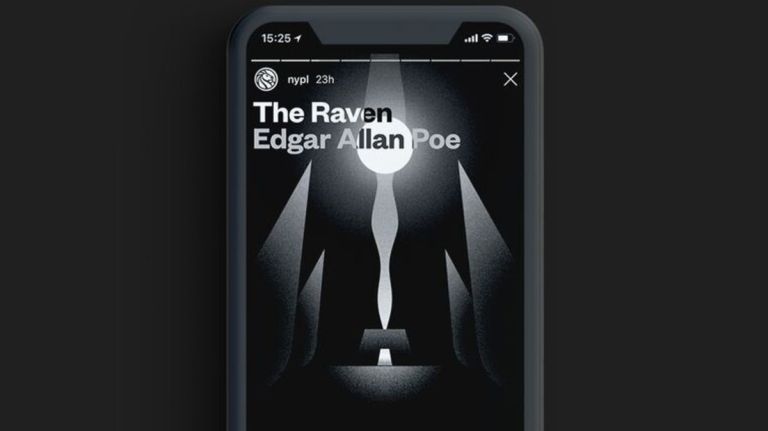
“The Raven” includes a unique series of animations produced by Psyop and Studio AKA that takes readers on an ominous procession through a stark psychological landscape where the differing perspectives of both the Raven and Poe’s protagonist are depicted. The viewpoints steadily intercut and converge as the animation builds to its disquieting climax, as the door creaks open revealing “darkness there and nothing more.”
Read “The Raven” on Instagram here. And keep an eye out for NYPL’s upcoming adaptation of “The Metamorphosis” by Franz Kafka. It’s due out by the end of the year.
If you would like to support the mission of Open Culture, consider making a donation to our site. It’s hard to rely 100% on ads, and your contributions will help us continue providing the best free cultural and educational materials to learners everywhere. You can contribute through PayPal, Patreon, and Venmo (@openculture). Thanks!
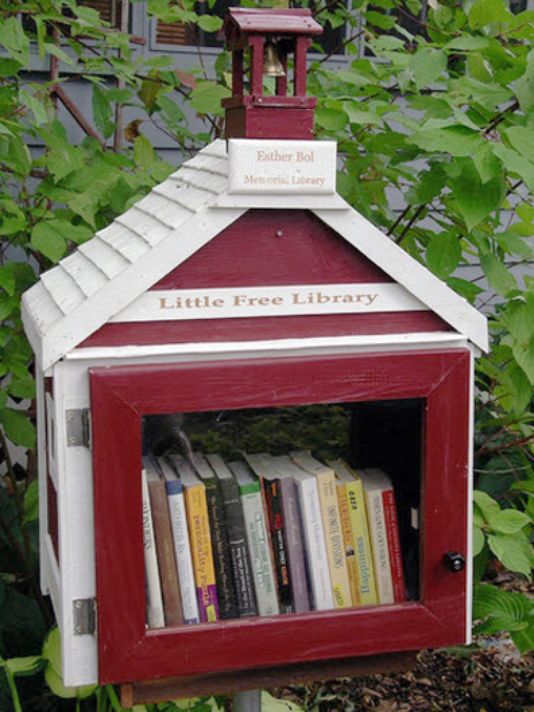
“The Little Free Library: Billions and billions read.”
In the 2013 Ted‑X talk above, Todd Bol, founder of the Little Free Library movement, expressed the desire that one day, he might be able to boast that his labor of love had surpassed McDonalds with regard to the number of customers’ served.
He seemed proudest of the libraries’ community building effect (though he was also pretty chuffed when Reader’s Digest ranked the project above Bruce Springsteen in its 2013 feature ”50 Surprising Reasons We Love America.” )
A steward who posted news of his dog’s death on the side of his library received sympathy cards from neighbors both known and unknown to him.
A steward who specializes in giving away cookbooks, and invites patrons to snip herbs from an adjacent garden, frequently wakes to find homemade quiche and other goodies on the doorstep.
The meaning of this surprisingly sturdy Absurdist play is famously open for debate.
Author Samuel Beckett told Roger Blin, who directed and acted in its first production at the Théâtre de Babylon in 1953, that all he knew for certain was that the two main characters, Vladimir and Estragon, wore bowler hats.
A “tragicomedy in two acts,” according to Beckett, Waiting for Godot emerged during a vibrant moment for experimental theater, as playwrights turned their backs on convention to address the devastation of WWII.
Comedy got darker. Boredom, religious dread, and existential despair were major themes.
Perhaps we are on the brink of such a period ourselves?
Critics, scholars, and directors have found Godot a meaningful lens through which to consider the Cold War, the French resistance, England’s colonization of Ireland, and various forms of apocalyptic near-future.
Was I sleeping, while the others suffered? Am I sleeping now? Tomorrow, when I wake, or think I do, what shall I say of today? That with Estragon my friend, at this place, until the fall of night, I waited for Godot? That Pozzo passed, with his carrier, and that he spoke to us? Probably. But in all that what truth will there be? (Estragon, having struggled with his boots in vain, is dozing off again. Vladimir looks at him.) He’ll know nothing. He’ll tell me about the blows he received and I’ll give him a carrot. (Pause.) Astride of a grave and a difficult birth. Down in the hole, lingeringly, the grave digger puts on the forceps. We have time to grow old. The air is full of our cries. (He listens.) But habit is a great deadener. (He looks again at Estragon.) At me too someone is looking, of me too someone is saying, He is sleeping, he knows nothing, let him sleep on. (Pause.) I can’t go on! (Pause.) What have I said?
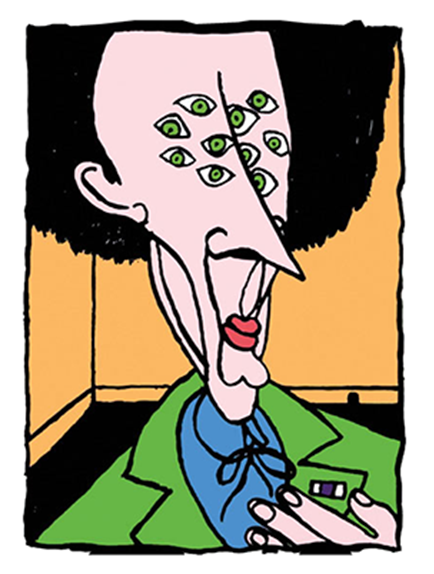
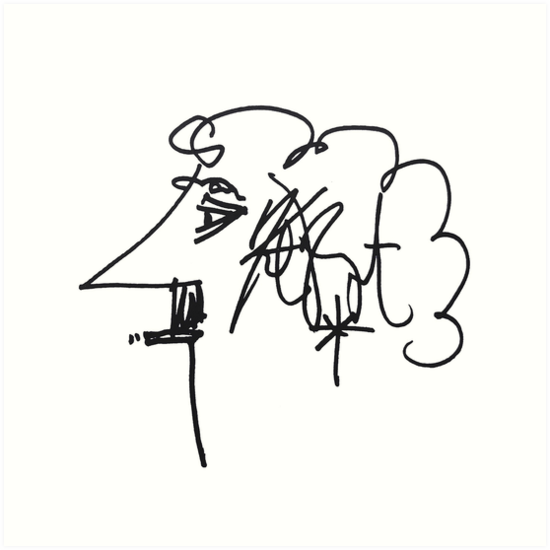
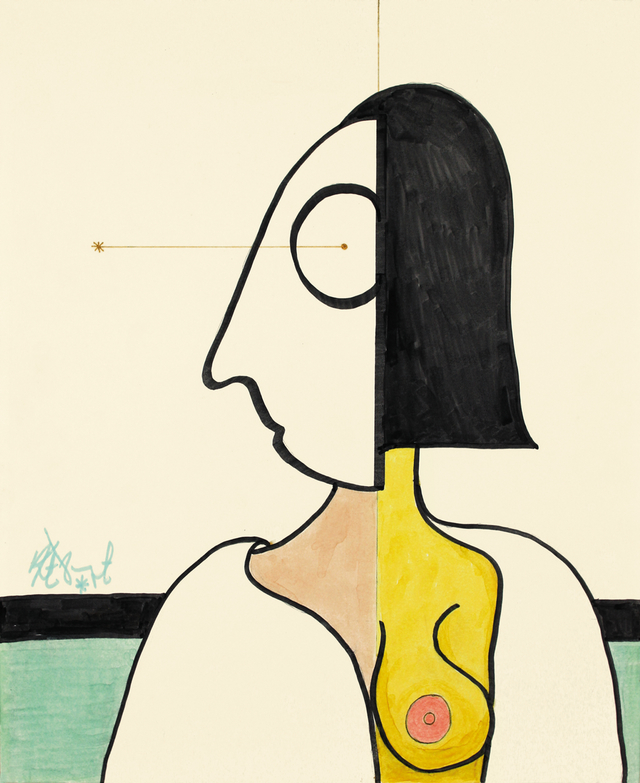
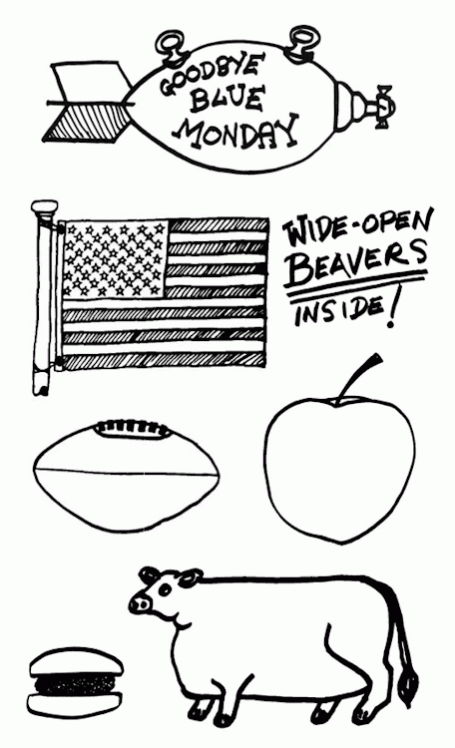
I see hints of blueprints, tile work, leaded-glass windows, William Blake, Paul Klee, Saul Steinberg, Al Hirschfeld, Edward Gorey, my mother’s wasp waist, cats and dogs. I see my father, at age four, forty, and eighty-four, doodling his heart out.
His daughter, Nanette, notes that he was drawn by the human face—his own and those of others.
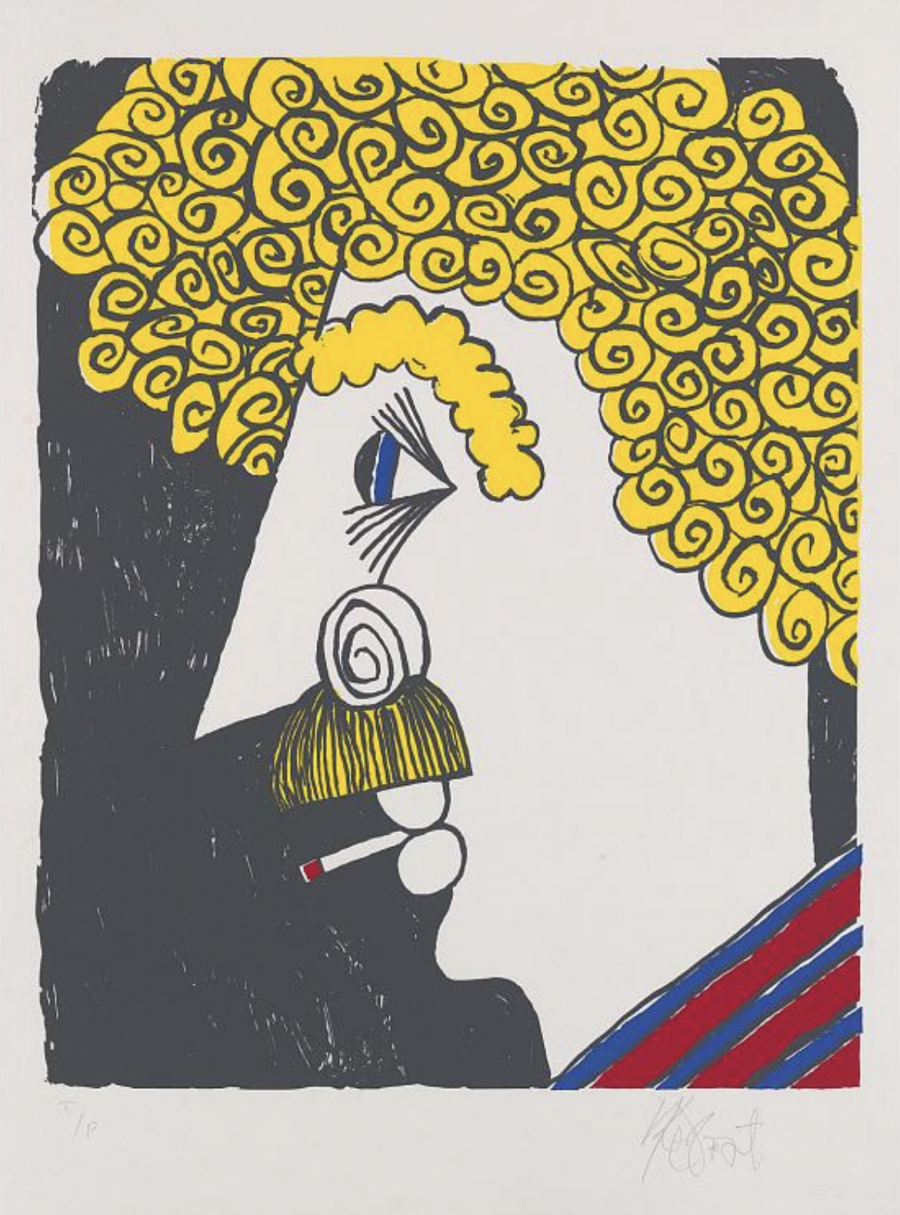
Portraits include one of his best-known fictional characters, the unsuccessful science fiction author Kilgore Trout. It’s a revelation, especially to those of us who imagined Trout as something closer to veteran character actor Seymour Cassel.
In addition to his humorous doodles, Vonnegut was known to chisel out a sculpture or two on the kitchen counter.
He had a one-man show of his felt tip drawings in Greenwich Village in 1980 (“not because my pictures were any good but because people had heard of me”).
The son and grandson of architects, Vonnegut preferred to think of himself less as an artist than as a “picture designer.” Working on a novel was a “nightmare,” but drawing was pure pleasure.
Perfection was not the goal. Vonnegut realized a sympathetic community would spring up around an artist struggling within his limitations, and acted accordingly.
To that end, he recommended that people practice art “no matter how badly because it’s known to make a soul grow.”
We know well the role music plays in the work of prolific Japanese novelist Haruki Murakami. We’ve previously featured his passion for jazz, his first love. He began as a jazz club owner in Tokyo, and he has written two collections of essays titled Portrait in Jazz and Portrait in Jazz 2. But Murakami is no less a fan of classical music and rock and roll—all three forms intertwine in his novels and stories, providing recurring motifs, soundtracks, and backdrops. Music is more than thematic; it defines his literary style, as he told listeners on “Murakami Radio,” his stint as a DJ on Tokyo FM.
“Rather than learning storytelling technique from someone,” the novelist explained, “I’ve taken a musical approach, while being very conscious about rhythms, harmony and improvisation.” Perhaps this approach explains the wonderfully evocative quality of his prose.
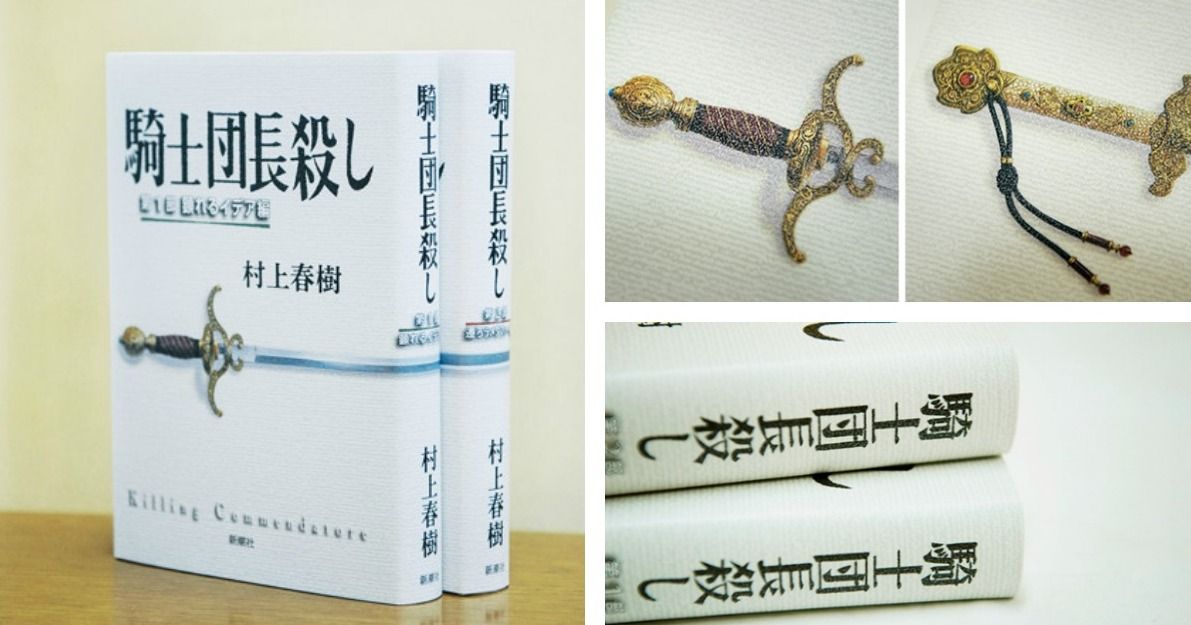
Reading his books, “you feel sad without knowing why,” writes Charles Finch at The Independent, in a review of Murakami’s latest, Killing Commendatore, “and yet, within that sadness glows a small ember of happiness, because to feel sad is at least to feel honestly.” We could say something similar about the feelings evoked by an aria, a blues, or a Dylan song—music helps us access emotions for which we don’t have ready words.
Murakami translates that “ineffable yearning” into writing. “The obscurely lonely domestic images that run through his novels—rain, swimming, pasta, jazz, a particular sort of warm, impersonal sex—root that yearning in the truth of everyday life.” His newest novel brings in a third art, painting; its protagonist, seeking to reinvent his life and work, comes to discover an important message through a series of magical events. It’s familiar territory for Murakami, but don’t ask him to explain any of it. As he told Sarah Lyall at The New York Times, “I cannot explain anything at all… you just have to accept the form. A book is a metaphor.”
Better to get him talking about music, which he is happy to do, moving smoothly between styles with the same imaginative leaps he makes on the page. Above, some fine soul has put together a playlist (listen to it on Spotify here) for Killing Commendatoreand it is classic Murakami, a collection of music from Sheryl Crow, Puccini, the Modern Jazz Quartet, Mozart, Thelonious Monk, Verdi, Dylan, The Doors, Beethoven, Bruce Springsteen, Roberta Flack, The Beatles, The Beach Boys, and more. How do all of these artists fit together? Like the strange happenings in Murakami’s world, you have to stop trying to make sense of things and just go with it.
In his native Japan, Haruki Murakami has published not just fiction but all sorts of essays dealing with a variety of subjects, from travel to music to writing itself. One collection of these pieces came out under the title Murakami Radio, a possible inspiration for a broadcast of the same name this past summer on Tokyo FM. For its 55-minute duration, Murakami took the DJ’s seat and spun records (or rather, files from several of his music-filled iPods) from his famously vast personal library, including The Beach Boys’ “Surfin’ USA,” Joey Ramone’s version of “What a Wonderful World,” Eric Burdon and The Animals’ “Sky Pilot,” and Daryl Hall and John Oates’ version of “Love Train.” You can listen to all his selections in the Youtube Playlist above.
“It has been my hobby to collect records and CDs since my childhood, and thanks to that, my house is inundated with such things,” wrote Murakami in a message posted by Tokyo FM. “However, I have often felt a sense of guilt toward the world while listening to such amazing music and having a good time alone. I thought it may be good to share such good times with other people while chatting over a glass of wine or a cup of coffee.”
He also chatted a bit himself between songs, answering listener questions and explaining the relationship between the music he loves and the books he writes. “Rather than learning storytelling technique from someone, I’ve taken a musical approach, while being very conscious about rhythms, harmony and improvisation,” he said on-air. “It’s like writing as I dance, even though I don’t actually dance.”
For many of Murakami’s fans, Murakami Radio (full recordings of which do exist on the internet) marks the first time they’ve ever heard his actual voice, and it turns out to have a thing or two in common with his authorial one: take, for instance, his use of boku, the informal personal pronoun favored by most of his narrators. With the broadcast initially announced as a one-off, it might also have seemed like the last chance to hear Murakami speak, but the official Murakami Radio site recently announced two more editions. The next one, scheduled for October 19th, will deal with not just music but another of Murakami’s passions, running. Anyone who’s read Murakami’s 1979 debut novel Hear the Wind Sing will remember the talkative Saturday-night radio DJ who makes occasional appearances in the text — and may wonder if, nearly 40 years later, Murakami channels him again when he gets behind the microphone himself.
Based in Seoul, Colin Marshall writes and broadcasts on cities, language, and culture. His projects include the book The Stateless City: a Walk through 21st-Century Los Angeles and the video series The City in Cinema. Follow him on Twitter at @colinmarshall or on Facebook.
In “one of the strangest stories in modern film,” Monty Python alumnus and critically-lauded director Terry Gilliam strove for three decades to make his take on Don Quixote, an ordeal that inspired two documentaries and that did not end in triumph even when the film premiered to acclaim at Cannes this year after its long gestation. Just a few weeks afterward, Gilliam lost the rights to the film in a lawsuit with its former producer. Nonetheless, for all of the serious setbacks on the road to its completion, Gilliam’s The Man Who Killed Don Quixote has still mostly fared better than the protagonist of Cervantes’ novel.
But the delusional knight-errant and his much-put-upon squire’s ridiculous and inevitable failures are what constitute the novel’s enduring appeal. Published in two volumes in 1605 and 1615, The Ingenious Nobleman Sir Quixote of La Mancha has become the best-selling novel of all time, and by the accounts of its most illustrious admirers, the matrix of all modern fiction. “The novelist need answer to no one but Cervantes,” says Milan Kundera. Mexican novelist Carlos Fuentes called Don Quixote“the first modern novel, perhaps the most eternal novel ever written and certainly the fountainhead of European and American fiction.”
Such effusive praise for Cervantes is near-universal, but like Gilliam’s film, and the fictional knight’s quest, the Spanish writer’s epic adventure came to him late in life, when he was almost sixty, having “spent most of his life as a struggling poet and playwright,” says Ilan Stavans in the TED-Ed video above. He succeeded after a long, undistinguished career with a book that satirized the chivalric romances which “dominated European culture” at the time.
Cervantes’ brilliant idea—conjuring a character who actually believed these stories—gave us the great parodic epic and, in its second volume, a brilliant work of pre-post-modern metafiction in which the characters Quixote meets have already read about his exploits in the first book. The mad hidalgo Don Quixote, unlike the stock figures in popular romances, actually develops and matures as a character, a unique feature of fiction at the time and one reason Cervantes’ book is called the “first modern novel.”
Other foundational features of the novel include the relationship of Quixote and Sancho Panza, a fictional study in contrasts that may be the origin of so many iconic duos since—from Sherlock Holmes and Dr. Watson to Batman and Robin and the Odd Couple. The novel’s commercial success was immediate and global—again marking it as a product of modernity. Pirated copies circulated where it had been banned in the Americas. Asserting his proprietary rights over the character while also meeting reader demand, he wrote and published volume two to preempt spurious sequels.
The TED-Ed video is part of a “Why you should read X” series trumpeting the value of great works of literature. These efforts will, hopefully, inspire many people to pick up the books of Gabriel Garcia Marquez, Edgar Allan Poe, Virginia Woolf, and more. But ultimately, great works of literature should speak for themselves. Why should you read Don Quixote? Well, yes, because it is the foundation of modern fiction. But the real answer to the question lies between the novel’s covers. Pick up Don Quixote(I like Edith Grossman’s 2003 translation), and find out for yourself.
For all the grotesque humor of her stories and novels, Flannery O’Connor took the writing of fiction as seriously as it is possible to do. Even at the age of 18, she saw the task as a divine calling, writing in her journal, “I feel that God has made my life empty in this respect so that I may fill it some wonderful way.” Intense self-doubt also made her fear that she would fail in her mission, a too-familiar feeling for every creative writer: “I may grovel the rest of my life in a stew of effort, of misguided hope.”
In acquiring the needed confidence to push through fear, O’Connor also acquired a theory of fiction—a serious and demanding one that left no room for frivolous entertainments or propaganda. “I know well enough that very few people who are interested in writing are interested in writing well,” she told a student audience in her lecture “The Nature and Aim of Fiction” (collected in Mystery and Manners).
Writing well, for O’Connor, meant pursuing “the habit of art,” a phrase she took from French Catholic philosopher Jacques Maritain. While she admits that Art is “a word that immediately scares people off, as being a little too grand,” her definition is simple enough, if vague: “something that is valuable in itself and that works in itself.” When she gets into the meat of these ideas, we see why she could be so harsh a critic of fellow writers in her many letters to friends and acquaintances.
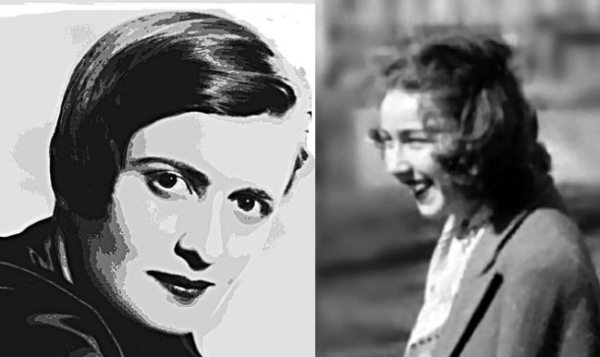
In one particularly harsh assessment in a May, 1960 letter to playwright Maryat Lee, O’Connor wrote, “I hope you don’t have friends who recommend Ayn Rand to you. The fiction of Ayn Rand is as low as you can get re fiction. I hope you picked it up off the floor of the subway and threw it in the nearest garbage pail. She makes Mickey Spillane look like Dostoevsky.”
The reference to Spillane is interesting. Rand corresponded with the crime novelist and admired his work, seeming “greatly pleased,” William Thomas writes at the Randian Atlas Society, by his “sense of life,” if not “enamored of his skill in conveying it.” Surely Rand’s hyper-individualistic, purely materialist “sense of life” repelled O’Connor, but her objections to Rand’s fiction would have certainly—if not primarily—extended to the writing itself.
In her lecture, O’Connor elaborates on her definition of the art of fiction by telling her audience what it is not:
I find that most people know what a story is until they sit down to write one. Then they find themselves writing a sketch with an essay woven through it, or an essay with a sketch woven through it, or an editorial with a character in it, or a case history with a moral, or some other mongrel thing.
Rand’s fiction presents readers with speechifying heroes who serve as one-dimensional exponents of Objectivism, and cardboard villains acting as straw caricatures of the democratic or socialist philosophies she loathed. Books like Atlas Shrugged embody all the marks of amateurism, according to O’Connor, of writers who “are conscious of problems, not of people, of questions and issues, not of the texture of existence, of case histories and everything that has a sociological smack, instead of with all those concrete details of life that make actual the mystery of our position on earth.”
For O’Connor, the habit of art requires keen observation of complex human behavior, compassion for human failings, a genuine openness to paradox and the unknown, and a preference for idiosyncratic specificity over grand abstractions and stereotypes—qualities Rand simply did not possess. Perhaps most importantly, however, as O’Connor told her student audience in “The Nature and Aim of Fiction,” the writer’s “moral sense must coincide with his dramatic sense.” One imagines O’Connor felt that Rand’s moral sense could only produce profoundly impoverished drama.
We're hoping to rely on loyal readers, rather than erratic ads. Please click the Donate button and support Open Culture. You can use Paypal, Venmo, Patreon, even Crypto! We thank you!
Open Culture scours the web for the best educational media. We find the free courses and audio books you need, the language lessons & educational videos you want, and plenty of enlightenment in between.