Chris Rock Reads James Baldwin’s Still Timely Letter on Race in America: “We Can Make What America Must Become”

A black quar­ter­back refus­es to stand dur­ing the nation­al anthem—a song, inci­den­tal­ly, writ­ten by a “patri­ot” who was also a “big­ot” and slave­own­er, “vehe­ment­ly opposed to abo­li­tion.” The quar­ter­back declares that he will not “show pride in a flag for a coun­try that oppress­es black peo­ple and peo­ple of col­or.” The quar­ter­back is told he has dis­re­spect­ed the coun­try, the police, and the mil­i­tary. His crit­ics become enraged, apoplec­tic. He is told he should leave the coun­try. He is mocked by thou­sands of peo­ple who point to his wealth and priv­i­leged, adop­tive upbring­ing. An upbring­ing among white peo­ple. Such suc­cess, the under­ly­ing log­ic goes, and such a child­hood should have made the quar­ter­back patri­ot­ic, grate­ful, col­or­blind.…

What if the quar­ter­back had not grown up priv­i­leged, but in one of many com­mu­ni­ties of col­or that bear the brunt of well-doc­u­ment­ed but most­ly ignored police vio­lence and insti­tu­tion­al dis­crim­i­na­tion and impov­er­ish­ment? How would his actions be received then? We can imag­ine much the same, giv­en the reac­tion to ear­li­er, less-priv­i­leged sports fig­ures, to Black Lives Mat­ter pro­test­ers around the coun­try, and to move­ments of the past. (Until last year, nine men in South Car­oli­na still bore con­vic­tions for tres­pass­ing after their sit-in protests in 1961.) Protest­ing the country’s racist past and present—like protest­ing the country’s wars, inequal­i­ty, or envi­ron­men­tal depredations—is crim­i­nal, we’re told, blas­phe­mous, tan­ta­mount to trea­son… or ter­ror­ism. The nation is inno­cent of all charges, and the pro­tes­tors are bit­ter, naive, hate­ful, and worse. For read­ers of James Bald­win, it all sounds ter­ri­bly famil­iar.

Bald­win’s is a dif­fi­cult lit­er­ary lega­cy: while we rejoice that he is still so often read, we lament that so many of his con­tem­po­rary obser­va­tions remain rel­e­vant. In 1962, Bald­win pub­lished an essay in The Pro­gres­sive in the form of a let­ter to his nephew, James. Lat­er col­lect­ed in The Fire Next Time, the let­ter pro­vid­ed the inspi­ra­tion for Ta-Nehisi Coates’ recent best­seller, Between the World and Me, writ­ten as a let­ter to his then 15-year-old son. In the video above—from this January’s star-stud­ded MLK Now cel­e­bra­tion—Chris Rock reads Baldwin’s pas­sion­ate let­ter, itself an act of protest, unpa­tri­ot­ic, if you like, in which he levies the same charges against the nation as Col­in Kaeper­nick has fifty-four years lat­er.

“This is the crime of which I accuse my coun­try and my coun­try­men,” writes Bald­win, “and for which nei­ther I nor time nor his­to­ry will ever for­give them, that they have destroyed and are destroy­ing hun­dreds of thou­sands of lives and do not know it and do not want to know it.”

Now, my dear name­sake, these inno­cent and well mean­ing peo­ple, your coun­try­men, have caused you to be born under con­di­tions not far removed from those described for us by Charles Dick­ens in the Lon­don of more than a hun­dred years ago. I hear the cho­rus of the inno­cents scream­ing, “No, this is not true. How bit­ter you are,” but I am writ­ing this let­ter to you to try to tell you some­thing about how to han­dle them, for most of them do not yet real­ly know that you exist. I know the con­di­tions under which you were born for I was there. Your coun­try­men were not there and haven’t made it yet. Your grand­moth­er was also there and no one has ever accused her of being bit­ter. I sug­gest that the inno­cent check with her. She isn’t hard to find. Your coun­try­men don’t know that she exists either, though she has been work­ing for them all their lives.

Baldwin’s iron­ic insis­tence on the country’s “inno­cence” is com­plex, his lan­guage filled with the cos­mic imagery of the jere­mi­ad. The peo­ple Bald­win speaks of real­ly are in a sense “inno­cent,”  in that they too are vic­tims, “still trapped in a his­to­ry which they do not under­stand and until they under­stand it, they can­not be released from it.” Peo­ple, as Coates put it, trapped in an unre­al dream. “We can­not be free,” he writes, “until they are free.” With the com­ing of civ­il rights-era fights against racism, how­ev­er, “those inno­cents who believed that your impris­on­ment made them safe are los­ing their grasp of real­i­ty.”

Nonethe­less, he urges his nephew to stay and “with love… force our broth­ers to see them­selves as they are, to cease flee­ing from real­i­ty and begin to change it.” Despite the grim, prophet­ic tenor of his mes­sage, Bald­win ends on a note of hope, one that rec­og­nizes love of coun­try not as sen­ti­men­tal, rit­u­al­ized loy­al­ty pledges, but as a strug­gle and a reck­on­ing with that coun­try’s ugly truths:

For this is your home, my friend. Do not be dri­ven from it. Great men have done great things here and will again and we can make Amer­i­ca what Amer­i­ca must become.

Relat­ed Con­tent:

James Bald­win Debates Mal­colm X (1963) and William F. Buck­ley (1965): Vin­tage Video & Audio

James Baldwin’s One & Only, Delight­ful­ly-Illus­trat­ed Children’s Book, Lit­tle Man Lit­tle Man: A Sto­ry of Child­hood (1976)

Ralph Elli­son Reads from His Nov­el-in-Progress, June­teenth, in Rare Video Footage (1966)

Josh Jones is a writer and musi­cian based in Durham, NC. Fol­low him at @jdmagness

Enter an Archive of 6,000 Historical Children’s Books, All Digitized and Free to Read Online

5 Little PIgs

We can learn much about how a his­tor­i­cal peri­od viewed the abil­i­ties of its chil­dren by study­ing its chil­dren’s lit­er­a­ture. Occu­py­ing a space some­where between the pure­ly didac­tic and the non­sen­si­cal, most children’s books pub­lished in the past few hun­dred years have attempt­ed to find a line between the two poles, seek­ing a bal­ance between enter­tain­ment and instruc­tion. How­ev­er, that line seems to move clos­er to one pole or anoth­er depend­ing on the pre­vail­ing cul­tur­al sen­ti­ments of the time. And the very fact that children’s books were hard­ly pub­lished at all before the ear­ly 18th cen­tu­ry tells us a lot about when and how mod­ern ideas of child­hood as a sep­a­rate cat­e­go­ry of exis­tence began.

ABCs

“By the end of the 18th cen­tu­ry,” writes New­cas­tle Uni­ver­si­ty pro­fes­sor M.O. Gren­by, “children’s lit­er­a­ture was a flour­ish­ing, sep­a­rate and secure part of the pub­lish­ing indus­try in Britain.” The trend accel­er­at­ed rapid­ly and has nev­er ceased—children’s and young adult books now dri­ve sales in pub­lish­ing (with 80% of YA books bought by grown-ups for them­selves).

Gren­by notes that “the rea­sons for this sud­den rise of children’s lit­er­a­ture” and its rapid expan­sion into a boom­ing mar­ket by the ear­ly 1800s “have nev­er been ful­ly explained.” We are free to spec­u­late about the social and ped­a­gog­i­cal winds that pushed this his­tor­i­cal change.

Afloat with Nelson

Or we might do so, at least, by exam­in­ing the children’s lit­er­a­ture of the Vic­to­ri­an era, per­haps the most inno­v­a­tive and diverse peri­od for children’s lit­er­a­ture thus far by the stan­dards of the time. And we can do so most thor­ough­ly by sur­vey­ing the thou­sands of mid- to late 19th cen­tu­ry titles at the Uni­ver­si­ty of Florida’s Bald­win Library of His­tor­i­cal Children’s Lit­er­a­ture. Their dig­i­tized col­lec­tion cur­rent­ly holds over 6,000 books free to read online from cov­er to cov­er, allow­ing you to get a sense of what adults in Britain and the U.S. want­ed chil­dren to know and believe.

Zig Zag

Sev­er­al gen­res flour­ished at the time: reli­gious instruc­tion, nat­u­ral­ly, but also lan­guage and spelling books, fairy tales, codes of con­duct, and, espe­cial­ly, adven­ture stories—pre-Hardy Boys and Nan­cy Drew exam­ples of what we would call young adult fic­tion, these pub­lished prin­ci­pal­ly for boys. Adven­ture sto­ries offered a (very colo­nial­ist) view of the wide world; in series like the Boston-pub­lished Zig Zag and Eng­lish books like Afloat with Nel­son, both from the 1890s, fact min­gled with fic­tion, nat­ur­al his­to­ry and sci­ence with bat­tle and trav­el accounts. But there is anoth­er dis­tinc­tive strain in the children’s lit­er­a­ture of the time, one which to us—but not nec­es­sar­i­ly to the Victorians—would seem con­trary to the impe­ri­al­ist young adult nov­el.

Bible Picture Book

For most Vic­to­ri­an stu­dents and read­ers, poet­ry was a dai­ly part of life, and it was a cen­tral instruc­tion­al and sto­ry­telling form in children’s lit. The A.L.O.E.’s Bible Pic­ture Book from 1871, above, presents “Sto­ries from the Life of Our Lord in Verse,” writ­ten “sim­ply for the Lord’s lambs, rhymes more read­i­ly than prose attract­ing the atten­tion of chil­dren, and fas­ten­ing them­selves on their mem­o­ries.” Chil­dren and adults reg­u­lar­ly mem­o­rized poet­ry, after all. Yet after the explo­sion in children’s pub­lish­ing the for­mer read­ers were often giv­en infe­ri­or exam­ples of it. The author of the Bible Pic­ture Book admits as much, beg­ging the indul­gence of old­er read­ers in the pref­ace for “defects in my work,” giv­en that “the vers­es were made for the pic­tures, not the pic­tures for the vers­es.”

Elfin Rhymes

This is not an author, or per­haps a type of lit­er­a­ture, one might sus­pect, that thinks high­ly of children’s aes­thet­ic sen­si­bil­i­ties.  We find pre­cise­ly the oppo­site to be the case in the won­der­ful Elfin Rhymes from 1900, writ­ten by the mys­te­ri­ous “Nor­man” with “40 draw­ings by Car­ton Moorepark.” Who­ev­er “Nor­man” may be (or why his one-word name appears in quo­ta­tion marks), he gives his read­ers poems that might be mis­tak­en at first glance for unpub­lished Christi­na Ros­set­ti vers­es; and Mr. Moorepark’s illus­tra­tions rival those of the finest book illus­tra­tors of the time, pre­sag­ing the high qual­i­ty of Calde­cott Medal-win­ning books of lat­er decades. Elfin Rhymes seems like a rare odd­i­ty, like­ly pub­lished in a small print run; the care and atten­tion of its lay­out and design shows a very high opin­ion of its read­ers’ imag­i­na­tive capa­bil­i­ties.

Elfin Rhymes 2

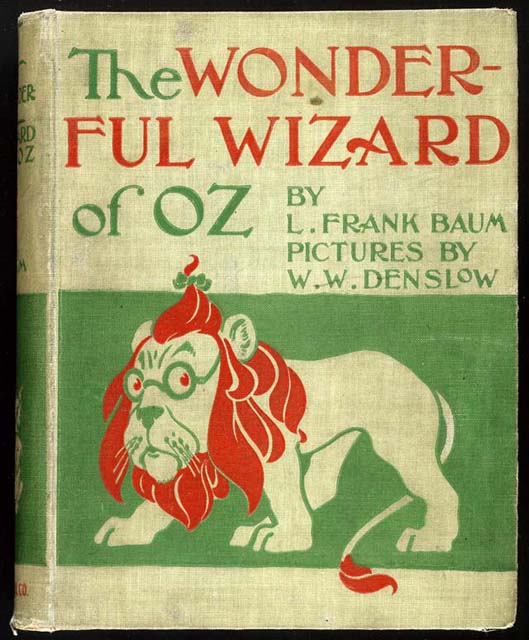
This title is rep­re­sen­ta­tive of an emerg­ing genre of late Vic­to­ri­an children’s lit­er­a­ture, which still tend­ed on the whole, as it does now, to fall into the trite and for­mu­la­ic. Elfin Rhymes sits astride the fan­ta­sy boom at the turn of the cen­tu­ry, her­ald­ed by huge­ly pop­u­lar books like Frank L. Baum’s Wiz­ard of Oz series and J.M. Barrie’s Peter Pan. These, the Har­ry Pot­ters of their day, made mil­lions of young peo­ple pas­sion­ate read­ers of mod­ern fairy tales, rep­re­sent­ing a slide even fur­ther away from the once quite nar­row, “remorse­less­ly instruc­tion­al… or deeply pious” cat­e­gories avail­able in ear­ly writ­ing for chil­dren, as Gren­by points out.

All Around the Moon

Where the bound­aries for kids’ lit­er­a­ture had once been nar­row­ly fixed by Latin gram­mar books and Pilgrim’s Progress, by the end of the 19th cen­tu­ry, the influ­ence of sci­ence fic­tion like Jules Verne’s, and of pop­u­lar super­nat­ur­al tales and poems, pre­pared the ground for com­ic books, YA dystopias, magi­cian fic­tion, and dozens of oth­er children’s lit­er­a­ture gen­res we now take for grant­ed, or—in increas­ing­ly large numbers—we buy to read for our­selves. Enter the Bald­win Library of His­tor­i­cal Children’s Lit­er­a­ture here, where you can browse sev­er­al cat­e­gories, search for sub­jects, authors, titles, etc, see full-screen, zoomable images of book cov­ers, down­load XML ver­sions, and read all of the over 6,000 books in the col­lec­tion with com­fort­able read­er views. Find more clas­sics in our col­lec­tion, 800 Free eBooks for iPad, Kin­dle & Oth­er Devices.

Relat­ed Con­tent:

The First Children’s Pic­ture Book, 1658’s Orbis Sen­su­al­i­um Pic­tus

The Anti-Slav­ery Alpha­bet: 1846 Book Teach­es Kids the ABCs of Slavery’s Evils

The Inter­na­tion­al Children’s Dig­i­tal Library Offers Free eBooks for Kids in Over 40 Lan­guages

Josh Jones is a writer and musi­cian based in Durham, NC. Fol­low him at @jdmagness

Free: Hear Robert Louis Stevenson’s Treasure Island, Read by Hans Conried (1958)

treasure island

Briefly not­ed: Over on Spo­ti­fy you can stream a clas­sic audio book of Robert Louis Steven­son’s Trea­sure Island (iPad/iPhone – Kin­dle + Oth­er For­mats – Read Online). Record­ed in 1958 by char­ac­ter actor Hans Con­ried, this clas­sic pirate’s tale runs 5 hours, 20 minutes–which is short­er than oth­er record­ings avail­able on the mar­ket, sug­gest­ing that it’s abridged. But nonethe­less it’s worth the lis­ten. Con­ried’s read­ing (which can also be pur­chased online) will be added to our col­lec­tion, 1,000 Free Audio Books: Down­load Great Books for Free. Steven­son’s text itself appears in our col­lec­tion of Free eBooks. If you need Spo­ti­fy’s free soft­ware, down­load it here.

Look­ing for free, pro­fes­­sion­al­­ly-read audio books from Audible.com? Here’s a great, no-strings-attached deal. If you start a 30 day free tri­al with Audible.com, you can down­load two free audio books of your choice. Get more details on the offer here.

When James Joyce & Marcel Proust Met in 1922, and Totally Bored Each Other

Joyce Proust

When we invoke the names of famous artists of the past, we refer to their most hal­lowed work—Orson Welles simul­ta­ne­ous­ly means Cit­i­zen Kane, for exam­ple, or War of the Worlds, and H.G. Wells means The Time Machine or…  War of the Words. It hap­pens that when these two artists got togeth­er in 1940, they found that their worlds, which had already met in Welles’ noto­ri­ous broad­cast, had quite a lot to say to each oth­er, genial­ly trad­ing sto­ries, ideas, and mutu­al admi­ra­tion.

Anoth­er his­toric meet­ing between two artists we might con­sid­er kin­dred, James Joyce of Ulysses fame and Mar­cel Proust of In Search of Lost Time, did not pro­duce such a rich exchange. As Irish crit­ic Arthur Pow­er remarked, “Here are the two great­est lit­er­ary fig­ures of our time meet­ing and they ask each oth­er if they like truf­fles.”

That, at least, is one account of the occa­sion in May of 1922, near the end of Proust’s life. The meet­ing took place at a par­ty for Igor Stravin­sky and Sergei Diaghilev at the Majes­tic Hotel. Though both nov­el­ists pro­pelled their great­est work for­ward by extrap­o­lat­ing from their favorite sub­ject, them­selves, the selves in their work are expan­sive and vast, tak­ing in whole cities, nations, and social worlds. Both were vora­cious read­ers with incred­i­ble mem­o­ries (as we cer­tain­ly know of Proust) and an intu­itive grasp of the cul­tur­al mech­a­nisms of moder­ni­ty. Such seri­ous con­ver­sa­tions the two of them might have.…

But one attendee, William Car­los Williams, paints a much more com­ic pic­ture.….

Joyce, writes Ben Jack­son at the Lon­don Review of Books, “arrived drunk and poor­ly dressed; Proust, draped in furs, opened the door.” Then, writes Williams, the two men sat in chairs side by side, while “par­ti­sans” wait­ed for “the wits to sparkle and flash.” Instead, they kvetched in the sports-and-weath­er small talk of two elder­ly men meet­ing in a doctor’s wait­ing room, or two Samuel Beck­ett char­ac­ters, beset by pet­ty com­plaints of ulti­mate impor­tance.

Joyce said, “I’ve headaches every day. My eyes are ter­ri­ble.”
Proust replied, “My poor stom­ach. What am I going to do? It’s killing me. In fact, I must leave at once.”
“I’m in the same sit­u­a­tion,’ replied Joyce. ‘If I can find some­one to take me by the arm. Good­bye!”
“Char­mé,” said Proust. “Oh, my stom­ach, my stom­ach.”

Ford Madox Ford con­firms the account, but the party’s host, nov­el­ist Syd­ney Schiff denied it, reports Joyce’s most respect­ed biog­ra­ph­er Richard Ell­mann. Ell­mann doesn’t seem to favor one ver­sion or anoth­er, but he does give us Joyce’s own ver­sion, mul­ti­ply attest­ed. The Ulysses author remem­bered that their “talk con­sist­ed sole­ly of the word ‘No.’ Proust asked me if I knew the duc du so-and-so. I said, ‘No.’” Proust was asked if he’d read Ulysses, and like­wise replied in the neg­a­tive. “The sit­u­a­tion,” Joyce remem­bered, “was impos­si­ble.” Oth­er guests remem­bered the meet­ing sim­i­lar­ly.

In yet anoth­er ver­sion, we see the after­math of their conference—in a sto­ry that resem­bles many an end-of-the-night-gone-sour sce­nario. Syd­ney Schiff’s wife Vio­let recalled Joyce drunk­en­ly invit­ing him­self into a taxi with the two of them and Proust, and prompt­ly open­ing the win­dow. “Know­ing Proust’s dead­ly fear of drafts,” writes a Proust site, Vio­let “imme­di­ate­ly closed the win­dow.” When the cab arrived at Proust’s apart­ment, the French nov­el­ist “urged the Irish­man to let the taxi take him home,” then “fled to his apart­ment.”

The many con­flict­ing ren­di­tions all seem to agree on one thing: the meet­ing was a wash. Nonethe­less, one author recent­ly pub­lished what pur­ports to be an entire book on the sub­ject. Even he con­cludes “no one can say for cer­tain exact­ly what they said to each oth­er.” It’s tempt­ing to think things might have gone oth­er­wise, had they met ear­li­er or in dif­fer­ent cir­cum­stances, giv­en Joyce’s ten­den­cy to get too drunk and Proust’s ill health and aver­sion to, well, com­pa­ny. The New Inquiry cites a remark Joyce made to Samuel Beck­ett about Proust: “If we had been allowed to meet and have a talk some­where….”

Although it’s said that both writ­ers con­fessed to not hav­ing read the oth­er, Jack­son notes that when Joyce “did admit to pass­ing his eyes over a few pages he declared that he did not see ‘any spe­cial tal­ent.’” He also con­fessed to some envy of Proust’s com­fort­able cir­cum­stances. Proust, who died six months lat­er, left no men­tion of their meet­ing.

Relat­ed Con­tent:

Orson Welles Meets H.G. Wells in 1940: The Leg­ends Dis­cuss War of the Worlds, Cit­i­zen Kane, and WWII

The His­toric Meet­ing Between Dick­ens and Dos­to­evsky Revealed as a Great Lit­er­ary Hoax

Edward Said Recalls His Depress­ing Meet­ing With Sartre, de Beau­voir & Fou­cault (1979)

Josh Jones is a writer and musi­cian based in Durham, NC. Fol­low him at @jdmagness

James Joyce: An Animated Introduction to His Life and Literary Works

So maybe you didn’t take a class on James Joyce’s Ulysses in col­lege with a wiz­ened pro­fes­sor from Dublin who explained in excru­ci­at­ing detail, week after week, why the famed mod­ernist writer is the great­est nov­el­ist that ever lived and also some kind of sec­u­lar sage and con­duit of the col­lec­tive genius of human­i­ty. Maybe your encounter with Joyce began and end­ed with a few sto­ries from Dublin­ers or with the thin­ly veiled mem­oir, A Por­trait of an Artist as a Young Man. In that case, you may won­der why he inspires such cult-like devo­tion, even to the point of hav­ing his own hol­i­day, Blooms­day, in which, Jonathan Gold­man writes, “aca­d­e­mics and pro­fes­sion­als min­gle with obses­sives and cranks”—many of either camp-dressed in peri­od garb, quot­ing Ulysses from mem­o­ry, and re-enact­ing major scenes from the nov­el.

If you don’t know Joyce at all, or haven’t read Ulysses, there’s no time like the present to dis­cov­er why you should. In his short School of Life ani­mat­ed video above, Alain de Bot­ton lays out just a few of the rea­sons for the Joyce-wor­ship, includ­ing the writer’s “devo­tion to some cru­cial themes” like “the idea of the grandeur of ordi­nary life” and “his deter­mi­na­tion to por­tray what actu­al­ly goes on through our heads moment by moment, what we now know, part­ly thanks to him, as the ‘stream-of-con­scious­ness.’” That phrase did not orig­i­nate with Joyce, how­ev­er, but with William James in the 1890s and his descrip­tion of the col­lec­tive char­ac­ter­is­tics of “per­son­al con­scious­ness.”

But since Joyce’s lit­er­ary use of inte­ri­or mono­logues that mim­ic the ran­dom asso­ci­a­tions of thought, we use “stream-of-con­scious­ness” to mean “the pre­sen­ta­tion of thoughts and sense impres­sions in a life­like fash­ion.” The “life­like­ness” of Joyce’s approach explains its appeal to so broad a range of read­ers, and its influ­ence upon so many writ­ers. Ulysses may prin­ci­pal­ly be a nov­el about Dublin, as are all of Joyce’s books, but it also retells the epic sto­ry of the Odyssey, a “pin­na­cle of high cul­ture,” Bot­ton pro­nounces, through the worka­day mean­der­ings, rou­tines, and dis­trac­tions of ordi­nary, undis­tin­guished peo­ple.

Ancient lit­er­a­ture like Homer gives us great men of action—archetypes ruled by fate—and the Vic­to­ri­an nov­el Joyce replaced offers extremes of aris­toc­ra­cy and des­ti­tu­tion. In Ulysses, shop­keep­ers, bar­tenders, seam­stress­es, stu­dents, and adver­tis­ing men become three-dimen­sion­al, psy­cho­log­i­cal­ly real actors in a his­tor­i­cal dra­ma, sim­ply by being who they are. Ulysses’ pro­tag­o­nist, Leopold Bloom, is “very unlike a tra­di­tion­al hero, but he is rep­re­sen­ta­tive of our aver­age, unim­pres­sive, frag­ile, but still rather like­able every­day selves.”

The novel’s cat­a­logue of Bloom’s thoughts and actions over the course of an unex­cep­tion­al day com­mu­ni­cate to us that “the appar­ent­ly lit­tle things that hap­pen in dai­ly life… aren’t real­ly lit­tle things at all. If we look at them through the right lens, they are revealed as beau­ti­ful, seri­ous, deep and fas­ci­nat­ing. Our own lives are just as fas­ci­nat­ing as those of the tra­di­tion­al heroes.” We must also note, how­ev­er, that Ulysses makes huge demands on its read­er. As one ear­ly review­er of the nov­el wrote, “few intu­itive, sen­si­tive vision­ar­ies may under­stand and com­pre­hend ‘Ulysses’… with­out going through a course of train­ing or instruc­tion.” Like Dante’s Divine Com­e­dy, which great­ly influ­enced Joyce, Ulysses is laden with local and his­tor­i­cal ref­er­ences, poet­ic allu­sions, and arcane philo­soph­i­cal and the­o­log­i­cal debates… one may need a Vir­gil to fin­ish the tour.

If we’re spec­u­lat­ing about Joyce’s inten­tions in giv­ing us ordi­nary char­ac­ters through extra­or­di­nary lit­er­ary means, they may have been less didac­tic than ped­a­gog­i­cal. Yes, we can see our ordi­nary selves—the shape and form of our “per­son­al consciousness”—looking back at us from Ulysses’ pages. To use a cur­rent buzz­word, Joyce was a “mas­ter of lit­er­ary mind­ful­ness.” We must become bet­ter, more patient and dili­gent read­ers to appre­ci­ate the epic scope of human inte­ri­or­i­ty in his best known nov­el. In that regard, Joyce teach­es us not only to think of our­selves as heroes, but also to move through our seem­ing­ly banal mod­ern envi­ron­ment with the same lev­el of curios­i­ty, excite­ment, and awe that moves us through the world of Odysseus. They are ulti­mate­ly, he sug­gests, the same world.

Relat­ed Con­tent:

The Very First Reviews of James Joyce’s Ulysses: “A Work of High Genius” (1922)

James Joyce’s Dublin Cap­tured in Vin­tage Pho­tos from 1897 to 1904

Carl Jung Writes a Review of Joyce’s Ulysses and Mails It To The Author (1932)

Free Online Lit­er­a­ture Cours­es

Josh Jones is a writer and musi­cian based in Durham, NC. Fol­low him at @jdmagness

In the Only Surviving Recording of Her Voice, Virginia Woolf Explains Why Writing Isn’t a “Craft” (1937)

The lit­er­ary voice of Vir­ginia Woolf comes to us from a life lived ful­ly in the ser­vice of lit­er­a­ture, a life devot­ed, we might say, to the “craft of writ­ing.” That earnest expres­sion gets tossed around inno­cent­ly enough in var­i­ous gram­mat­i­cal forms. Writ­ers craft sen­tences and para­graphs and set about craft­ing worlds for char­ac­ters to inhab­it. Describ­ing writ­ing as a craft seems a corol­lary to our cur­rent util­i­tar­i­an think­ing that lit­er­a­ture should serve us, not we it; that we should jus­ti­fy our time spent read­ing and writ­ing by talk­ing about the use-val­ue of these activ­i­ties. Vir­ginia Woolf had lit­tle use for these sen­ti­ments.

In an essay offer­ing guid­ance on how to read lit­er­a­ture, for exam­ple, she asks rhetor­i­cal­ly whether there are “not some pur­suits that we prac­tice because they are good in them­selves, and some plea­sures that are final?” Is not read­ing among these? Just as she decries read­ing as a pro­fes­sion­al task, Woolf cri­tiques the idea of writ­ing as a form of “Crafts­man­ship” in an essay with that title that she deliv­ered as a talk on BBC radio in 1937 as part of a series called “Words Fail Me.” In the excerpt above, the only sur­viv­ing record­ing of Woolf’s voice, she reads the open­ing para­graphs of her essay, stat­ing upfront that she finds “some­thing incon­gru­ous, unfit­ting, about the term ‘crafts­man­ship’ when applied to words.”

“Craft,” ways Woolf, applies to “mak­ing use­ful objects out of sol­id mat­ter,” and it also stands as a syn­onym for “cajol­ery, cun­ning, deceit.” In either usage, the word mis­char­ac­ter­izes the act of writ­ing. “Words,” Woolf says, echo­ing her con­tem­po­rary Oscar Wilde, “nev­er make any­thing that is use­ful.” She offers us many col­or­ful exam­ples to make the point, and argues also that words can­not be deceit­ful since “they are the truest” of all things and “seem to live for­ev­er.” These qual­i­ties of lan­guage, it’s use­less­ness and truth­ful­ness, make the prac­tice of writ­ing as “craft” impos­si­ble, since writ­ers do not work by “find­ing the right words and putting them in the right order,” like one would build a house.

Words do not coop­er­ate in neat and tidy ways. Indeed, “to lay down any laws for such irreclaimable vagabonds is worse than use­less,” says Woolf, “A few tri­fling rules of gram­mar and spelling are all the con­straint we can put on them.” Rather than think­ing of words as raw mate­r­i­al we assem­ble by rote, or as incan­ta­to­ry sym­bols in mag­i­cal for­mu­lae, we should think of words as sen­tient enti­ties who “like peo­ple to think and feel before they use them.” Words, says Woolf in her mel­liflu­ous voice, “are high­ly sen­si­tive, eas­i­ly made self-con­scious” and “high­ly demo­c­ra­t­ic, too.”

Against mod­ern con­cep­tions of writ­ing as a prac­ti­cal craft, in her time and ours, Woolf tells us that words “hate being use­ful; they hate mak­ing mon­ey; they hate being lec­tured about in pub­lic. In short, they hate any­thing that stamps them with one mean­ing or con­fines them to one atti­tude, for it is in their nature to change.” At best, she sug­gests, we can change with them, but we can­not con­trol them or shape and bend them to our ends.

Relat­ed Con­tent:

Vir­ginia Woolf Offers Gen­tle Advice on “How One Should Read a Book”

The Steamy Love Let­ters of Vir­ginia Woolf and Vita Sackville-West (1925–1929)

An Ani­mat­ed Intro­duc­tion to Vir­ginia Woolf

Josh Jones is a writer and musi­cian based in Durham, NC. Fol­low him at @jdmagness

Hear the 14-Hour “Essential Edgar Allan Poe” Playlist: “The Raven,” “The Tell-Tale Heart” & Much More

poe cause of death

Edgar Allan Poe: any­one with an inter­est in scary stories—and not just scary, but deeply, whole-oth­er-lev­el scary stories—quickly learns the name. Pre­sum­ably they also learn the prop­er spelling of the name: “Allan” with two As, not “Allen” with an E. But despite using the incor­rect lat­ter, the good peo­ple at Spo­ti­fy have still man­aged to craft the most expan­sive Poeian playlist cur­rent­ly avail­able on the inter­net, whose four­teen hours con­sti­tute “the essen­tial Poe lis­ten­ing expe­ri­ence, from vin­tage radio ver­sions to con­tem­po­rary read­ings.” (If you don’t have Spo­ti­fy’s free soft­ware, down­load it here.)

Though he com­posed his entire body of work in the first half of the nine­teenth cen­tu­ry, Poe lives on, for those who like their cock­tails of mys­tery and the macabre with a long-last­ing (and long-trou­bling) psy­cho­log­i­cal after­taste, as the sto­ry­teller to beat. As impres­sive a num­ber of his writ­ings—“The Tell-Tale Heart,” “The Fall of the House of Ush­er,” “The Cask of Amon­til­la­do,” and “The Pit and the Pen­du­lum”—have tak­en a per­ma­nent place in not just the Amer­i­can but human con­scious­ness, none have attained as much uni­ver­sal­i­ty as “The Raven,” the poem of lone­li­ness and the super­nat­ur­al which jus­ti­fi­ably begins the playlist.

Giv­en its sheer length, Spo­ti­fy’s Essen­tial Edgar Allen Allan Poe does­n’t just play the hits: even avowed Poe appre­ci­a­tors will like­ly hear a few intrigu­ing lit­er­ary B‑sides they nev­er have before. They’ll cer­tain­ly hear more than a few pro­duc­tions and inter­pre­ta­tions of their favorite pieces from the Poe canon. The playlist would also make a fine, if intense, intro­duc­tion for those who have yet set­tled in with the work of the man who defined mod­ern psy­cho­log­i­cal hor­ror. If you crave more afterward—and get­ting his read­er­ship hooked ranked not least among Poe’s concerns—do delve into the copi­ous amount of Poe mate­r­i­al we’ve pre­vi­ous­ly fea­tured here on Open Cul­ture, a few selec­tions from which appear below. You’ll find it all endur­ing­ly and dread­ful­ly com­pelling, no mat­ter how you spell its author’s name.

The “Essen­tial Edgar Allan Poe” Playlist will be added to our col­lec­tion, 1,000 Free Audio Books: Down­load Great Books for Free.

Relat­ed Con­tent:

Down­load The Com­plete Works of Edgar Allan Poe: Macabre Sto­ries as Free eBooks & Audio Books

5 Hours of Edgar Allan Poe Sto­ries Read by Vin­cent Price & Basil Rath­bone

Edgar Allan Poe’s “The Raven,” Read by Christo­pher Walken, Vin­cent Price, and Christo­pher Lee

Iggy Pop, Deb­bie Har­ry, Jeff Buck­ley & Oth­er Celebs Read Tales by Edgar Allan Poe

William S. Bur­roughs Reads Edgar Allan Poe’s “The Masque of the Red Death”

Hear Orson Welles Read Edgar Allan Poe on a Cult Clas­sic Album by The Alan Par­sons Project

Edgar Allan Poe Ani­mat­ed: Watch Four Ani­ma­tions of Clas­sic Poe Sto­ries

Based in Seoul, Col­in Mar­shall writes and broad­casts on cities and cul­ture. He’s at work on a book about Los Ange­les, A Los Ange­les Primer, the video series The City in Cin­e­ma, the crowd­fund­ed jour­nal­ism project Where Is the City of the Future?, and the Los Ange­les Review of Books’ Korea Blog. Fol­low him on Twit­ter at @colinmarshall or on Face­book.

Stephen King on the Magic Moment When a Young Writer Reads a Published Book and Says: “This Sucks. I Can Do Better.”

Go to a book­store.

Tell the clerk you’re an aspir­ing writer.

You’ll be direct­ed to a shelf—possibly an entire section—brimming with prompts, exer­cis­es, for­mu­lae, and Jedi mind tricks. Round out your pur­chase with a jour­nal, a fan­cy pen, or an inspi­ra­tional quote in book­mark form.

Few of author Stephen King’s books would be at home in this sec­tion, but his 2000 mem­oir, On Writ­ing, a com­bi­na­tion of per­son­al his­to­ry and prac­ti­cal advice, cer­tain­ly is. The writ­ing rules list­ed there­in are numer­ous enough to yield a top 20. He makes no bones about read­ing being a manda­to­ry activ­i­ty:

If you don’t have time to read, you don’t have the time (or the tools) to write. Sim­ple as that.

Not sur­pris­ing­ly, giv­en his prodi­gious out­put, he also believes that writ­ers must write dai­ly. Prac­tice helps shape a writer’s voice. Dai­ly prac­tice keeps him or her on inti­mate terms with char­ac­ters and plot.

Got that?

Nose to the grind­stone, young writer! Quit look­ing for fairy god­moth­ers and mak­ing excus­es! Though you might be able to fast track to the mag­i­cal moment King revealed in a 2003 speech at Yale, above.

Go back to the book­store.

Ask the clerk to point you toward the shelves of what­ev­er genre has tra­di­tion­al­ly made your flesh crawl. Chick litvam­pire erot­i­caman­ly air­plane reads. Select the most odi­ous seem­ing title. Buy it. Read it. And heed the words of King:

There’s a mag­ic moment, a real­ly mag­ic moment if you read enough, it will always come to you if you want to be a writer, when you put down some book and say, This real­ly sucks. I can do bet­ter than this, and this got pub­lished!

(It’s real­ly more of a spon­ta­neous­ly occur­ring rite of pas­sage than mag­ic moment, but who are we to fault Stephen King for giv­ing it a crowd-pleas­ing super­nat­ur­al spin?)

Relat­ed Con­tent:

Stephen King’s Top 20 Rules for Writ­ers

Stephen King Cre­ates a List of 96 Books for Aspir­ing Writ­ers to Read

Stephen King Cre­ates a List of 82 Books for Aspir­ing Writ­ers (to Sup­ple­ment an Ear­li­er List of 96 Rec­om­mend Books)

Ayun Hal­l­i­day is an author, illus­tra­tor, and Chief Pri­ma­tol­o­gist of the East Vil­lage Inky zine. Fol­low her @AyunHalliday.

« Go BackMore in this category... »
Quantcast