How Humans Migrated Across The Globe Over 200,000 Years: An Animated Look

Cov­er­age of the refugee cri­sis peaked in 2015. By the end of the year, note researchers at the Uni­ver­si­ty of Bergen, “this was one of the hottest top­ics, not only for politi­cians, but for par­tic­i­pants in the pub­lic debate,” includ­ing far-right xeno­phobes giv­en mega­phones. What­ev­er their intent, Daniel Trilling argues at The Guardian, the explo­sion of refugee sto­ries had the effect of fram­ing “these new­ly arrived peo­ple as oth­ers, peo­ple from ‘over there,’ who had lit­tle to do with Europe itself and were strangers.”

Such a char­ac­ter­i­za­tion ignores the cru­cial con­text of Europe’s pres­ence in near­ly every part of the world over the past sev­er­al cen­turies. And it frames mass migra­tion as extra­or­di­nary, not the norm. The cri­sis aspect is real, the result of dan­ger­ous­ly accel­er­at­ed move­ment of cap­i­tal and cli­mate change. But mass move­ments of peo­ple seek­ing bet­ter con­di­tions, safe­ty, oppor­tu­ni­ty, etc. may be the old­est and most com­mon fea­ture of human his­to­ry, as the Sci­ence Insid­er video shows above.

The yel­low arrows that fly across the globe in the dra­mat­ic ani­ma­tion make it seem like ear­ly humans moved by bul­let train. But when con­se­quen­tial shifts in cli­mate occurred at a glacial pace—and economies were built on what peo­ple car­ried on their backs—mass migra­tions hap­pened over the span of thou­sands of years. Yet they hap­pened con­tin­u­ous­ly through­out last 200,000 to 70,000 years of human his­to­ry, give or take. We may nev­er know what drove so many of our dis­tant ances­tors to spread around the world.

But how can we know what routes they took to get there? “Thanks to the amaz­ing work of anthro­pol­o­gists and pale­on­tol­o­gists like those work­ing on Nation­al Geographic’s Geno­graph­ic Project,” Sci­ence Insid­er explains, “we can begin to piece togeth­er the sto­ry of our ances­tors.” The Geno­graph­ic Project was launched by Nation­al Geo­graph­ic in 2005, “in col­lab­o­ra­tion with sci­en­tists and uni­ver­si­ties around the world.” Since then, it has col­lect­ed the genet­ic data of over 1 mil­lion peo­ple, “with a goal of reveal­ing pat­terns of human migra­tion.”

The project assures us it is “anony­mous, non­med­ical, and non­prof­it.” Par­tic­i­pants sub­mit­ted their own DNA with Nation­al Geographic’s “Geno” ances­try kits (and may still do so until next month). They can receive a “deep ances­try” report and cus­tomized migra­tion map; and they can learn how close­ly they are relat­ed to “his­tor­i­cal genius­es,” a cat­e­go­ry that, for some rea­son, includes Jesse James.

Do projects like these veer close to recre­at­ing the “race sci­ence” of pre­vi­ous cen­turies? Are they valid ways of recon­struct­ing the “human sto­ry” of ances­try, as Nation­al Geo­graph­ic puts it? Crit­ics like sci­ence jour­nal­ist Angela Sai­ni are skep­ti­cal. “DNA test­ing can­not tell you that,” she says in an inter­view on NPR, but it can “make us believe that iden­ti­ty is bio­log­i­cal, when iden­ti­ty is cul­tur­al.” Nation­al Geo­graph­ic seems to dis­avow asso­ci­a­tions between genet­ics and race, writ­ing, “sci­ence defines you by your DNA, soci­ety defines you by the col­or of your skin.” But it does so at the end of a video about a group of peo­ple bond­ing over their sim­i­lar fea­tures.

Despite the sig­nif­i­cance mod­ern humans have ascribed to vari­a­tions in phe­no­type, race is a cul­tur­al­ly defined cat­e­go­ry and not a sci­en­tif­ic one. argues Joseph L. Graves, pro­fes­sor of bio­log­i­cal sci­ences at the Joint School of Nanoscience and Nano­engi­neer­ing.. “Every­thing we know about our genet­ics has proven that we are far more alike than we are dif­fer­ent. If more peo­ple under­stood that, it would be eas­i­er to debunk the myth that peo­ple of a cer­tain race are ‘nat­u­ral­ly’ one way or anoth­er,” or that refugees and asy­lum seek­ers are dan­ger­ous oth­ers instead of just like every oth­er human who has moved around the world over the last 200,000 years.

Relat­ed Con­tent:

Col­or­ful Ani­ma­tion Visu­al­izes 200 Years of Immi­gra­tion to the U.S. (1820-Present)

Where Did Human Beings Come From? 7 Mil­lion Years of Human Evo­lu­tion Visu­al­ized in Six Min­utes

Ian McK­ellen Reads a Pas­sion­ate Speech by William Shake­speare, Writ­ten in Defense of Immi­grants

Josh Jones is a writer and musi­cian based in Durham, NC. Fol­low him at @jdmagness

The First High-Resolution Map of America’s Food Supply Chain: How It All Really Gets from Farm to Table

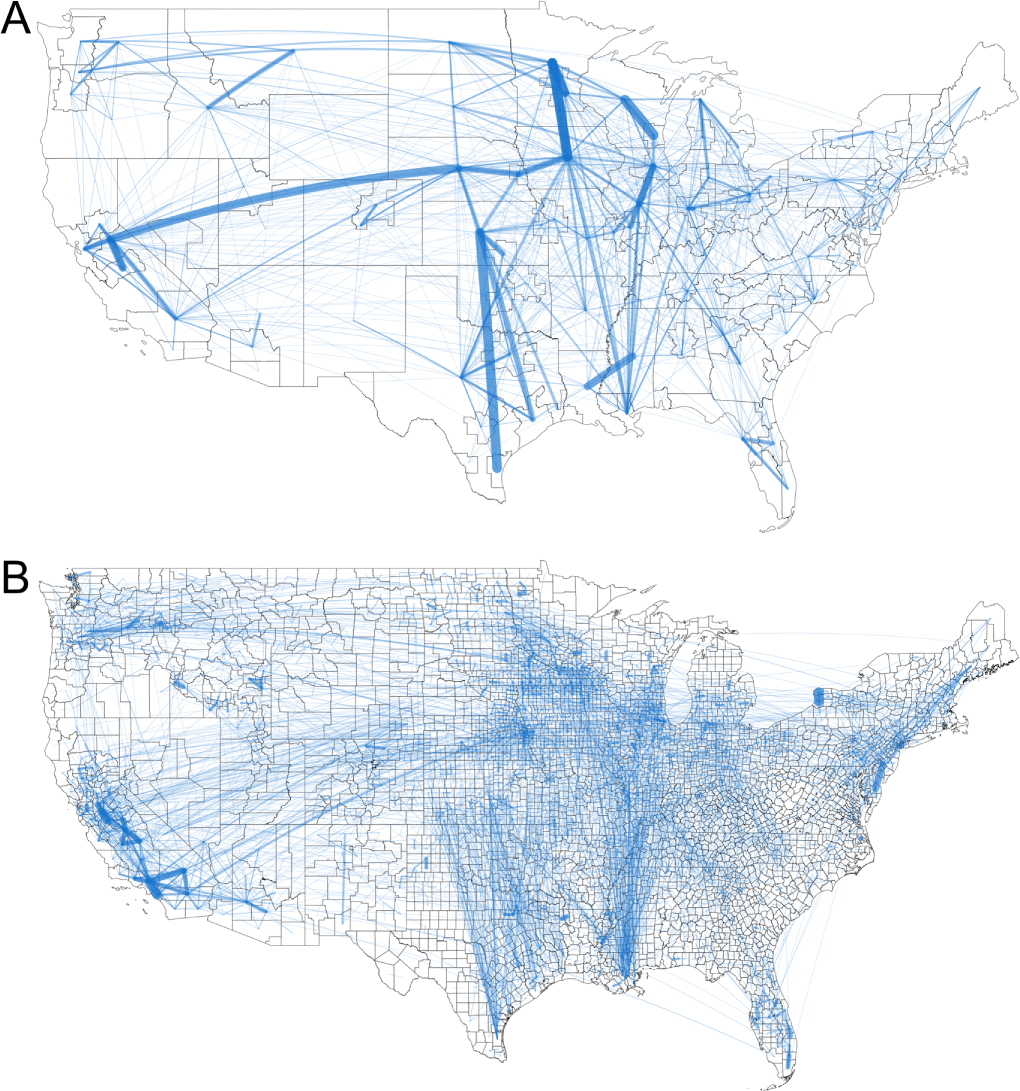
The phrase “farm to table” has enjoyed vogue sta­tus in Amer­i­can din­ing long enough to be fac­ing dis­place­ment by an even trendi­er suc­ces­sor, “farm to fork.” These labels reflect a new aware­ness — or an aspi­ra­tion to aware­ness — of where, exact­ly, the food Amer­i­cans eat comes from. A vast and fer­tile land, the Unit­ed States pro­duces a great deal of its own food, but giv­en the dis­tance of most of its pop­u­la­tion cen­ters from most of its agri­cul­tur­al cen­ters, it also has to move near­ly as great a deal of food over long domes­tic dis­tances. Here we have the very first high-res­o­lu­tion map of that food sup­ply chain, cre­at­ed by researchers at the Uni­ver­si­ty of Illi­nois study­ing “food flows between coun­ties in the Unit­ed States.”

“Our map is a com­pre­hen­sive snap­shot of all food flows between coun­ties in the U.S. – grains, fruits and veg­eta­bles, ani­mal feed, and processed food items,” writes Assis­tant Pro­fes­sor of Civ­il and Envi­ron­men­tal Engi­neer­ing Megan Konar in an explana­to­ry post at The Con­ver­sa­tion. (The top ver­sion shows the total tons of food moved, and the bot­tom one is bro­ken down to the coun­ty scale.)

“All Amer­i­cans, from urban to rur­al are con­nect­ed through the food sys­tem. Con­sumers all rely on dis­tant pro­duc­ers; agri­cul­tur­al pro­cess­ing plants; food stor­age like grain silos and gro­cery stores; and food trans­porta­tion sys­tems.” The map visu­al­izes such jour­neys as that of a ship­ment of corn, which “starts at a farm in Illi­nois, trav­els to a grain ele­va­tor in Iowa before head­ing to a feed­lot in Kansas, and then trav­els in ani­mal prod­ucts being sent to gro­cery stores in Chica­go.”

Konar and her col­lab­o­ra­tors’ research arrives at a few sur­pris­ing con­clu­sions, such as that Los Ange­les coun­ty is both the largest ship­per and receiv­er of food in the U.S. Not only that, but almost all of the nine coun­ties “most cen­tral to the over­all struc­ture of the food sup­ply net­work” are in Cal­i­for­nia. This may sur­prise any­one who has laid eyes on the sub­lime­ly huge agri­cul­tur­al land­scapes of the Mid­west “Corn­belt.” But as Konar notes, “Our esti­mates are for 2012, an extreme drought year in the Corn­belt. So, in anoth­er year, the net­work may look dif­fer­ent.” And of the grain pro­duced in the Mid­west, much “is trans­port­ed to the Port of New Orleans for export. This pri­mar­i­ly occurs via the water­ways of the Ohio and Mis­sis­sip­pi Rivers.”

Konar also warns of trou­bling frail­ties: “The infra­struc­ture along these waterways—such as locks 52 and 53—are crit­i­cal, but have not been over­hauled since their con­struc­tion in 1929,” and if they were to fail, “com­mod­i­ty trans­port and sup­ply chains would be com­plete­ly dis­rupt­ed.” The ana­lyt­i­cal minds at Hack­er News have been dis­cussing the impli­ca­tions of the research shown on this map, includ­ing whether the U.S. food sup­ply chain is real­ly, as one com­menter put it, “very brit­tle and con­tains many weak points.” The Amer­i­can Soci­ety of Civ­il Engi­neers, as Konar tells Food & Wine, has giv­en the coun­try’s civ­il engi­neer­ing infra­struc­ture a grade of D+, which at least implies con­sid­er­able room for improve­ment. But against what from some angles look like long odds, food keeps get­ting from Amer­i­can farms to Amer­i­can tables — and Amer­i­can forks, Amer­i­can mouths, Amer­i­can stom­achs, and so on.

Relat­ed Con­tent:

Down­load 91,000 His­toric Maps from the Mas­sive David Rum­sey Map Col­lec­tion

The His­to­ry of Car­tog­ra­phy, “the Most Ambi­tious Overview of Map Mak­ing Ever Under­tak­en,” Is Free Online

View and Down­load Near­ly 60,000 Maps from the U.S. Geo­log­i­cal Sur­vey (USGS)

Based in Seoul, Col­in Mar­shall writes and broad­casts on cities, lan­guage, and cul­ture. His projects include the book The State­less City: a Walk through 21st-Cen­tu­ry Los Ange­les and the video series The City in Cin­e­ma. Fol­low him on Twit­ter at @colinmarshall or on Face­book.

The Difference Between the United Kingdom, Great Britain and England: A (Pre-Brexit) Video Explains

I once played in a New York pub band with an Eng­lish­man, a North­ern Irish­man, and a Scots­man. This is not the set­up for a joke. (We weren’t that bad!) But I had ques­tions. Were they all from dif­fer­ent coun­tries or dif­fer­ent parts of one coun­try called Britain, or Great Britain, or the grander-sound­ing Unit­ed King­dom?

British his­to­ry could be a con­tentious sub­ject in such com­pa­ny, and no won­der giv­en that the vio­lence of the Empire began at home, or with the neigh­bor­ing peo­ple who were absorbed—sometimes, part­ly, but not always—against their will into a larg­er enti­ty. So, what to call that ter­ri­to­ry of the crown which once claimed one fourth of the world as its own prop­er­ty?

CGP Grey, mak­er of the YouTube explain­er above, aims to clear things up in five min­utes, offer­ing his own spin on British impe­r­i­al his­to­ry along the way. The Unit­ed King­dom is a “coun­try of coun­tries that con­tains inside it four coequal and sov­er­eign nations,” Eng­land, Scot­land, Wales, and North­ern Ire­land. “You can call them all British,” says Grey, but “it’s gen­er­al­ly not rec­om­mend­ed as the four coun­tries gen­er­al­ly don’t like each oth­er.”

Like it or not, how­ev­er, they are all British cit­i­zens of “The Unit­ed King­dom of Great Britain and North­ern Ire­land.” Still con­fused? Well, Britain and the Unit­ed King­dom name the same coun­try. But “Great Britain” is a geo­graph­i­cal term that includes Scot­land, Eng­land, and Wales, but not North­ern Ire­land. As a “geo­graph­i­cal rather than a polit­i­cal term,” Great Britain sounds sil­ly when used to describe nation­al­i­ty.

But it gets a bit more com­pli­cat­ed. All of the coun­tries locat­ed with­in Great Britain have neigh­bor­ing islands that are not part of Great Britain, such as the Hebrides, Shet­land and Orkney Islands, and Isles of Angle­sey and Wight. Ire­land is a geo­graph­i­cal term for the land mass encom­pass­ing two nations: North­ern Ire­land, which is part of Britain, or the Unit­ed King­dom, and the Repub­lic of Ire­land, which—as you know—is decid­ed­ly not.

All of these coun­tries and “coun­tries of coun­tries” are part of the Euro­pean Union, says Grey, at which point it becomes clear that the video, post­ed in 2011, did not antic­i­pate any such thing as Brex­it. Nonethe­less, this infor­ma­tion holds true for the moment, though that ugly saga is sure to reach some res­o­lu­tion even­tu­al­ly, at which point, who knows what new maps, inde­pen­dence ref­er­en­da, and bor­der wars will arise, or res­ur­rect, on the British Isles.

Relat­ed Con­tent:

The Entire His­to­ry of the British Isles Ani­mat­ed: 42,000 BCE to Today

Watch the Rise and Fall of the British Empire in an Ani­mat­ed Time-Lapse Map ( 519 A.D. to 2014 A.D.)

The His­to­ry of Europe from 400 BC to the Present, Ani­mat­ed in 12 Min­utes

Josh Jones is a writer and musi­cian based in Durham, NC. Fol­low him at @jdmagness

Behold the New York City Street Tree Map: An Interactive Map That Catalogues the 700,000 Trees Shading the Streets of New York City

It may sound odd, but one of the things I miss most about liv­ing in New York City is the abil­i­ty to hop on a bus or train, or walk a few blocks from home, and end up loung­ing in a for­est, the cacoph­o­ny of traf­fic reduced to a dim hum, squir­rels bound­ing around, birds twit­ter­ing away above. Such urban respites are plen­ti­ful in NYC thanks to its 10,542 acres of forest­ed land, “about half as much as the Con­ga­ree Swamp in South Car­oli­na,” notes James Bar­ron at The New York Times, in one of the most dense­ly pop­u­lat­ed urban areas in the coun­try.

“Most of the city’s for­est is deep in parks”—in Cen­tral Park, of course, and also Prospect Park and River­side, and dozens of small­er oases, and the lush Botan­i­cal Gar­dens in the Bronx. The city’s forests are sub­ject to the usu­al pres­sures oth­er wood­ed areas face: cli­mate change, inva­sive species, etc.

They are also depen­dent on a well-fund­ed Parks Depart­ment and non­prof­its like the Nat­ur­al Areas Con­ser­van­cy for the preser­va­tion and upkeep not only of the large parks but of the trees that shade city streets in all five bor­oughs.

Luck­i­ly, the city and non­prof­it groups have been work­ing togeth­er to plan for what the conservancy’s senior ecol­o­gist, Helen For­gione, calls “future forests,” using big data to map out the best paths for urban wood­land. The NYC Parks depart­ment has been busy com­pil­ing fig­ures, and you can find all of their tree stats at the New York City Street Tree Map, which “brings New York City’s urban for­est to your fin­ger­tips. For the first time,” the Parks depart­ment writes, “you have access to infor­ma­tion about every street tree in New York City.”

Large forest­ed parks on the inter­ac­tive map appear as flat green fields—the depart­ment has not count­ed each indi­vid­ual tree in Cen­tral Park. But the map gives us fine, gran­u­lar detail when it comes to street trees, allow­ing users to zoom in to every inter­sec­tion and click on col­ored dots that rep­re­sent each tree, for exam­ple lin­ing Avenue D in the East Vil­lage or Flat­bush Avenue in Brook­lyn. You can search spe­cif­ic loca­tions or comb through city­wide sta­tis­tics for the big pic­ture. At the time of this writ­ing, the project has mapped 694,249 trees, much of that work under­tak­en by vol­un­teers in the TreesCount! 2015 ini­tia­tive.

There are many more trees yet to map, and the department’s forestry team updates the site dai­ly. Out of 234 species iden­ti­fied, the most com­mon is the Lon­don Plan­e­tree, rep­re­sent­ing 12% of the trees on the map. Oth­er pop­u­lar species include the Lit­tle­leaf Lin­den, Nor­way Maple, Pin Oak, and Ginko. Some oth­er stats show the eco­log­i­cal ben­e­fits of urban trees, includ­ing the amount of ener­gy con­served (667,590,884 kWh, or $84,279,933.06) and amount of car­bon diox­ide reduced (612,100 tons).

Vis­it the New York City Street Tree Map for the full, vir­tu­al tour of the city’s trees, and marvel—if you haven’t expe­ri­enced the city’s vibrant tree life firsthand—at just how green the empire city’s streets real­ly are.

Relat­ed Con­tent:

New York Pub­lic Library Puts 20,000 Hi-Res Maps Online & Makes Them Free to Down­load and Use

New York City: A Social His­to­ry (A Free Online Course from N.Y.U.) 

The Secret Lan­guage of Trees: A Charm­ing Ani­mat­ed Les­son Explains How Trees Share Infor­ma­tion with Each Oth­er

Josh Jones is a writer and musi­cian based in Durham, NC. Fol­low him at @jdmagness

The Evolution of the World Map: An Inventive Infographic Shows How Our Picture of the World Changed Over 1,800 Years

For about 190 years, human­i­ty has known what the world looks like. Or rather, human­i­ty has known the shape and size of the land mass­es that rise up above the oceans, as well as where those land mass­es stand in rela­tion to one anoth­er. For gen­er­a­tion upon gen­er­a­tion, we’ve all grown up see­ing visu­al depic­tions of this knowl­edge in the form of the stan­dard world map — dis­tort­ed, of course, usu­al­ly by Mer­ca­tor pro­jec­tion, giv­en the impos­si­bil­i­ty of turn­ing a three-dimen­sion­al globe into a two-dimen­sion­al image with per­fect accu­ra­cy. We can call it to mind (or up on our phones) when­ev­er we need it. But what did the world look like before we knew what it looked like? Thanks to a Red­di­tor who goes by PisseGuri82, we can now take in, at a glance, human­i­ty’s image of the world as it evolved over the past two mil­len­nia.

This Shape of the World info­graph­ic begins in 150 AD with the world map used by Claudius Ptole­my of Alexan­dria, Egypt, “the first to use posi­tions of lat­i­tude and lon­gi­tude based on astro­nom­i­cal obser­va­tions.” Not that those obser­va­tions pro­duced any­thing imme­di­ate­ly resem­bling an ances­tor of the map we remem­ber from class­room walls grow­ing up, but it cer­tain­ly must have marked an improve­ment on the guess­work and pure fan­ta­sy used in even ear­li­er times.

World maps from the medieval peri­od, such as the one includ­ed on the dia­gram cre­at­ed by an unknown French monk in 1050, were meant “not to explain the world but the Bible.” Hence its focus on such Bib­li­cal parts of the world as Jerusalem, the Red Sea, and even the Gar­den of Eden.

Just over a cen­tu­ry lat­er, a map by Italy’s Muhammed al-Idrisi employed the more objec­tive method of cal­cu­lat­ing dis­tances by what trav­el­ers and mer­chants told him about how long it took them to reach the dis­tant lands they vis­it­ed. Despite its “rec­og­niz­able and detailed Eura­sia and North­ern Africa,” how­ev­er, it still makes for a vague (and, need­less to say, hard­ly com­plete) approx­i­ma­tion of the world. Only in 1529, with the empire-mind­ed Span­ish Crown’s offi­cial and secret “mas­ter map,” updat­ed “by Span­ish explor­ers on pain of death,” do we arrive at a world map that would remind any of us of the ones we use in the 21st cen­tu­ry.

Sub­se­quent devel­op­ments came from such advances as the afore­men­tioned Mer­ca­tor pro­jec­tion, invent­ed in 1569 in the Nether­lands and refined in Eng­land 30 years lat­er, as well as the inven­tion of the marine chronome­ter in 1778. The final map in the chart, an 1832 edi­tion by Ger­many’s Adolf Stiel­er in which “only the unex­plored Polar regions are miss­ing or depict­ed inac­cu­rate­ly,” may look almost exact­ly like the world maps we use today. But the evo­lu­tion cer­tain­ly has­n’t stopped: with the ever more detailed dig­i­tal maps and satel­lite imagery that now fea­ture in our world maps, our abil­i­ty to per­ceive the Earth still improves every day. Our descen­dants 2000 years hence may well place them­selves in a world we would hard­ly rec­og­nize. See the full-size “Shape of the World” info­graph­ic here. Make sure you click on the image once you open the page, and then you can see it in a larg­er for­mat.

Relat­ed Con­tent:

Ani­mat­ed Maps Reveal the True Size of Coun­tries (and Show How Tra­di­tion­al Maps Dis­tort Our World)

The “True Size” Maps Shows You the Real Size of Every Coun­try (and Will Change Your Men­tal Pic­ture of the World)

Japan­ese Design­ers May Have Cre­at­ed the Most Accu­rate Map of Our World: See the Autha­Graph

The His­to­ry of Car­tog­ra­phy, the “Most Ambi­tious Overview of Map Mak­ing Ever,” Now Free Online

A Rad­i­cal Map Puts the Oceans – Not Land – at the Cen­ter of Plan­et Earth (1942)

Why Mak­ing Accu­rate World Maps Is Math­e­mat­i­cal­ly Impos­si­ble

Based in Seoul, Col­in Mar­shall writes and broad­casts on cities, lan­guage, and cul­ture. His projects include the book The State­less City: a Walk through 21st-Cen­tu­ry Los Ange­les and the video series The City in Cin­e­ma. Fol­low him on Twit­ter at @colinmarshall, on Face­book, or on Insta­gram.

Download Beautiful Panoramic Paintings of U.S. National Parks by H.C. Berann: Maps That Look Even More Vivid Than the Real Thing

The Unit­ed States of Amer­i­ca’s nation­al parks have been inspir­ing artists even before they were offi­cial­ly declared nation­al parks. That goes not just for Amer­i­can artists such as the mas­ter land­scape pho­tog­ra­ph­er Ansel Adams, but for­eign artists as well. Take the Aus­tri­an painter Hein­rich C. Berann, described by his offi­cial web site as “the father of the mod­ern panora­ma map,” a dis­tinc­tive form that allowed him to hybridize “old Euro­pean paint­ing tra­di­tion with mod­ern car­tog­ra­phy.”

Berann found his way to car­tog­ra­phy after win­ning a com­pe­ti­tion to paint a map of Aus­tri­a’s Gross­glock­n­er High Alpine Road, which opened in 1934, a cou­ple years after Beran­n’s grad­u­a­tion from art school. “In the fol­low­ing years,” says the artist’s bio, “he improved this tech­nique, cre­at­ed the mod­ern panora­ma map and became famous all over the world for his maps that are in a class of their own.” Maps in a class of their own need geo­graph­i­cal sub­jects in a class of their own, and Amer­i­ca’s nation­al parks fit that bill neat­ly.

Beran­n’s panora­mas of Denali, North Cas­cades, Yel­low­stone, and Yosemite “were cre­at­ed in the 1980s and 90s as part of a poster pro­gram to pro­mote the nation­al parks,” writes Nation­al Geo­graph­ic’s Bet­sy Mason. Just a few years ago, U.S. Nation­al Park Ser­vice senior car­tog­ra­ph­er Tom Pat­ter­son got to work on scan­ning the art­works in high res­o­lu­tion. When the project was com­plete, “the Nation­al Park Ser­vice released the new images on their new­ly redesigned online map por­tal, which also has more than a thou­sand maps that are freely avail­able for the pub­lic to down­load.”

Beran­n’s 1994 paint­ing of Denali Nation­al Park just above was his final work before retire­ment. It came at the end of a long and var­ied career in art that saw him paint not just the Alps, the Himalayas, the Vir­gin Islands, and the floor of the Pacif­ic Ocean (as well as oth­er impres­sive parts of the world under com­mis­sion from the Nation­al Geo­graph­ic soci­ety and six dif­fer­ent Olympic Games) but trav­el posters and draw­ings of every­thing from land­scapes to por­traits to nudes.

But it is Beran­n’s panoram­ic paint­ings of Amer­i­ca’s nation­al parks, which you can down­load in high res­o­lu­tion here, that have done the most to make peo­ple see their sub­jects in a new way. Not least because, with an artis­tic sleight-of-hand that com­bines as many land­marks as pos­si­ble into sin­gle vis­tas ren­dered with a strik­ing­ly wide range of col­ors, Berann pro­vides them a series of van­tage points entire­ly unavail­able in real life. In one sense, these are all real nation­al parks, but they’re nation­al parks cap­tured in a way even Ansel Adams nev­er could have done.

via Boing Boing

Relat­ed Con­tent:

Browse & Down­load 1,198 Free High Res­o­lu­tion Maps of U.S. Nation­al Parks

Down­load 100,000 Pho­tos of 20 Great U.S. Nation­al Parks, Cour­tesy of the U.S. Nation­al Park Ser­vice

Dis­cov­er Ansel Adams’ 226 Pho­tos of U.S. Nation­al Parks (and Anoth­er Side of the Leg­endary Pho­tog­ra­ph­er)

Down­load Icon­ic Nation­al Park Fonts: They’re Now Dig­i­tized & Free to Use

Yosemite Nation­al Park in All of Its Time-Lapse Splen­dor

Artist Re-Envi­sions Nation­al Parks in the Style of Tolkien’s Mid­dle Earth Maps

Based in Seoul, Col­in Mar­shall writes and broad­casts on cities, lan­guage, and cul­ture. His projects include the book The State­less City: a Walk through 21st-Cen­tu­ry Los Ange­les and the video series The City in Cin­e­ma. Fol­low him on Twit­ter at @colinmarshall, on Face­book, or on Insta­gram.

Meet Emma Willard, the First Female Map Maker in the U.S., and Her Brilliantly Inventive Maps (Circa 1826)

Amer­i­cans have nev­er like the word “empire,” hav­ing seced­ed from the British Empire to osten­si­bly found a free nation. The founders blamed slav­ery on the British, nam­ing the king as the respon­si­ble par­ty. Three of the most dis­tin­guished Vir­ginia slave­hold­ers denounced the prac­tice as a “hideous blot,” “repug­nant,” and “evil.” But they made no effort to end it. Like­wise, accord­ing to the Dec­la­ra­tion of Inde­pen­dence, the British were respon­si­ble for excit­ing “domes­tic insur­rec­tions among us,” and endeav­our­ing “to  bring on the inhab­i­tants of our fron­tiers, the mer­ci­less Indi­an Sav­ages.”

These denun­ci­a­tions aside, the new coun­try nonethe­less began a course iden­ti­cal to every oth­er Euro­pean world pow­er, wag­ing per­pet­u­al war­fare, seiz­ing ter­ri­to­ry and vast­ly expand­ing its con­trol over more and more land and resources in the decades after Inde­pen­dence.

U.S. impe­r­i­al pow­er was assert­ed not only by force of arms and coin but also through an ide­o­log­i­cal view that made its appear­ance and growth an act of both divine and sec­u­lar prov­i­dence. We see this view reflect­ed espe­cial­ly in the mak­ing of maps and ear­ly his­tor­i­cal info­graph­ics.

In 1851, three years after war with Mex­i­co had halved that coun­try and expand­ed U.S. ter­ri­to­ry into what would become sev­er­al new states, Emma Willard, the nation’s first female map­mak­er, cre­at­ed the “Chrono­g­ra­ph­er of Ancient His­to­ry” above, a visu­al rep­re­sen­ta­tion to “teach stu­dents about the shape of his­tor­i­cal time,” writes Rebec­ca Onion at Slate. The Chrono­g­ra­ph­er is a “more spe­cial­ized off­shoot of Willard’s mas­ter Tem­ple of Time, which tack­led all of history”—or all six thou­sand years of it, any­way, since “Cre­ation BC 4004.”

Willard made sev­er­al such maps, illus­trat­ing an idea pop­u­lar among 18th and 19th cen­tu­ry his­to­ri­ans, and illus­trat­ed in many sim­i­lar ways by oth­er artists: cast­ing his­to­ry as a suc­ces­sion of great empires, one tak­ing over for anoth­er. View­ers of the map stand out­side the temple’s sta­ble fram­ing, assured they are the inher­i­tors of its his­tor­i­cal largesse. Oth­er visu­al metaphors told this sto­ry, too. Willard, as Ted Wid­mer points out at The Paris ReviewWillard was an “inven­tive visu­al thinker,” if also a very con­ven­tion­al his­tor­i­cal one.

In an ear­li­er map, from 1836, Willard visu­al­ized time as a series of branch­ing impe­r­i­al streams, flow­ing down­ward from “Cre­ation.” Curi­ous­ly, she sit­u­ates Amer­i­can Inde­pen­dence on the periph­ery, end­ing with the “Empire of Napoleon” at the cen­ter. The U.S. was both some­thing new in the world and, in oth­er maps of hers, the fruition of a seed plant­ed cen­turies ear­li­er. Willard’s map­mak­ing began as an effort to sup­ple­ment her mate­ri­als as “a pio­neer­ing edu­ca­tor,” founder of the Emma Willard School in Troy, New York, and a “ver­sa­tile writer, pub­lish­er and yes, map­mak­er,” who “used every tool avail­able to teach young read­ers (and espe­cial­ly young women) how to see his­to­ry in cre­ative new ways.”

In anoth­er “chrono­g­ra­ph­er” text­book illus­tra­tion, she shows the “His­to­ry of the U. States or Repub­lic of Amer­i­ca” as a tree which had been grow­ing since 1492, though no such place as the Unit­ed States exist­ed for most of this his­to­ry. Maps, writes Sarah Laskow at Atlas Obscu­ra, “have the pow­er to shape his­to­ry” as well as to record it. Willard’s maps told grand, uni­ver­sal stories—imperial stories—about how the U.S. came to be. In 1828, when she was 41, “only slight­ly old­er than the Unit­ed States of Amer­i­ca itself,” Willard pub­lished a series of maps in her His­to­ry of the Unit­ed States, or Repub­lic of Amer­i­ca.

This was “the first book of its kind—the first atlas to present the evo­lu­tion of Amer­i­ca.” Willard’s maps show the move­ment of Indige­nous nations in plates like “Loca­tions and Wan­der­ings of The Abo­rig­i­nal Tribes… The Direc­tion of their Wan­der­ings,” below—these were part of “a sto­ry about the tri­umph of Anglo set­tlers in this part of the world. She helped solid­i­fy, for both her peers and her stu­dents, a nar­ra­tive of Amer­i­can des­tiny and inevitabil­i­ty, writes Uni­ver­si­ty of Den­ver his­to­ri­an Susan Schul­ten. Willard was “an exu­ber­ant nation­al­ist,” who gen­er­al­ly “accept­ed the removal of these tribes to the west as inevitable.”

Willard was a pio­neer in many respects, includ­ing, per­haps, in her adop­ta­tion of Euro­pean neo­clas­si­cal ideas about his­to­ry and time in the jus­ti­fi­ca­tion of a new Amer­i­can empire. Her snap­shots of time col­lapse “cen­turies into a sin­gle image,” Schul­ten explains, as a way of map­ping time “in a dif­fer­ent way as a pre­lude to what comes to next.” See many more of Willard’s maps from The His­to­ry of the Unit­ed States, or Repub­lic of Amer­i­ca, the first his­tor­i­cal atlas of the Unit­ed States, at Boston Rare Maps.

via The Paris Review

Relat­ed Con­tent:

Two Ani­mat­ed Maps Show the Expan­sion of the U.S. from the Dif­fer­ent Per­spec­tives of Set­tlers & Native Peo­ples

Inter­ac­tive Map Shows the Seizure of Over 1.5 Bil­lion Acres of Native Amer­i­can Land Between 1776 and 1887

The Atlantic Slave Trade Visu­al­ized in Two Min­utes: 10 Mil­lion Lives, 20,000 Voy­ages, Over 315 Years

Josh Jones is a writer and musi­cian based in Durham, NC. Fol­low him at @jdmagness

How to Rescue a Wet, Damaged Book: A Handy Visual Primer

How to save those wet, dam­aged books? The ques­tion has to be asked. Above, you can watch a visu­al primer from the Syra­cuse Uni­ver­si­ty Libraries–peo­ple who know some­thing about tak­ing care of books. It con­tains a series of tips–some intu­itive, some less so–that will give you a clear action plan the next time water and paper meet.

If you would like to sign up for Open Culture’s free email newslet­ter, please find it here. It’s a great way to see our new posts, all bun­dled in one email, each day.

If you would like to sup­port the mis­sion of Open Cul­ture, con­sid­er mak­ing a dona­tion to our site. It’s hard to rely 100% on ads, and your con­tri­bu­tions will help us con­tin­ue pro­vid­ing the best free cul­tur­al and edu­ca­tion­al mate­ri­als to learn­ers every­where. You can con­tribute through Pay­Pal, Patre­on, and Ven­mo (@openculture). Thanks!

Relat­ed Con­tent:

The Art of Mak­ing Old-Fash­ioned, Hand-Print­ed Books

How to Clean Your Vinyl Records with Wood Glue

How to Open a Wine Bot­tle with Your Shoe

by | Permalink | Make a Comment ( 4 ) |

« Go BackMore in this category... »
Quantcast