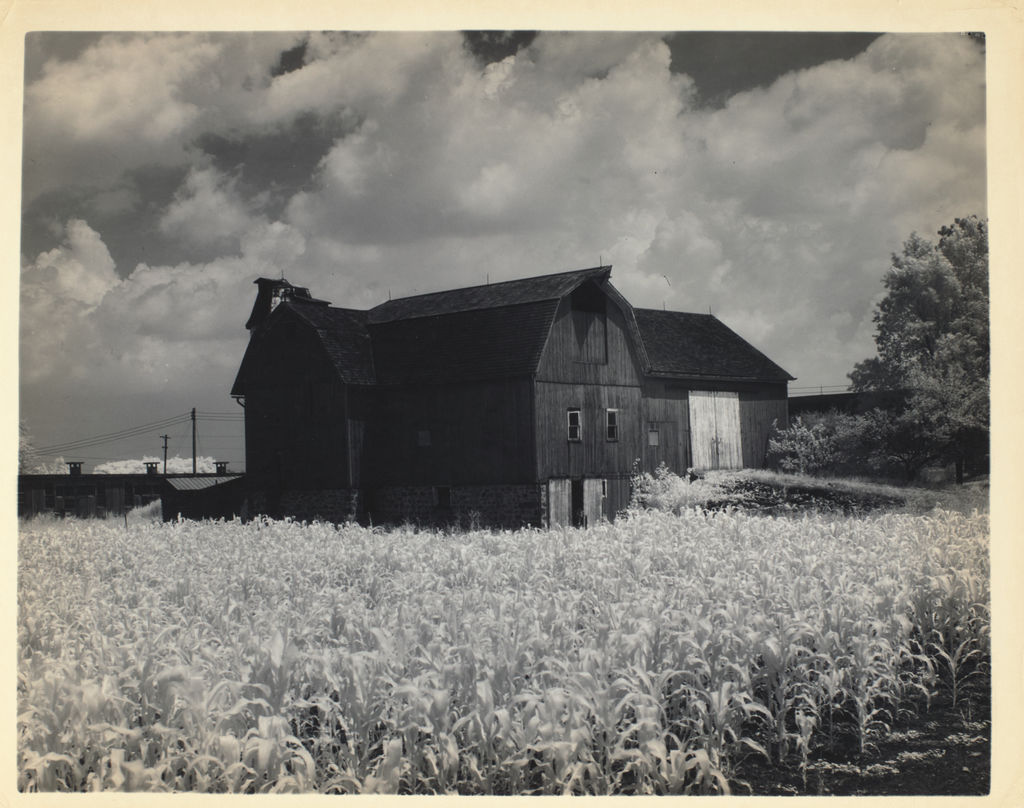
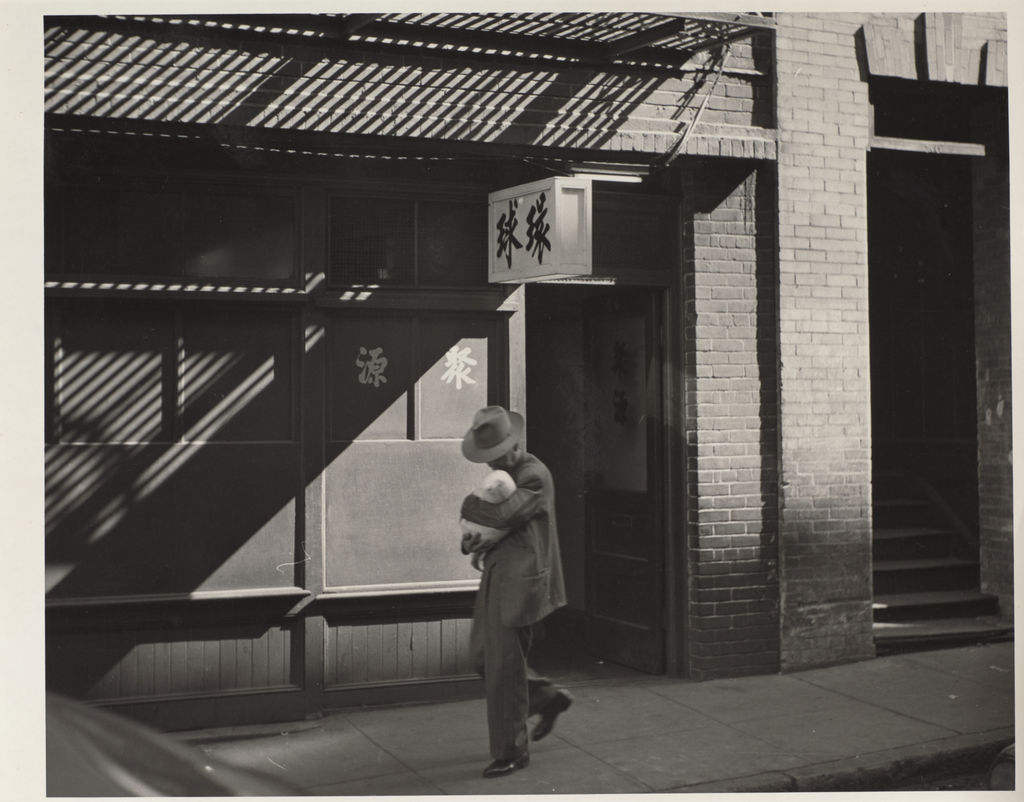
When the photographer Minor White died in 1976, after a prolific career and an epic journey of a life, he left his archives to Princeton University. But it took about forty years before that institution could make the collection truly available to the world in the form of the Minor White Archive online. He became “one of the most important photographic artists of the twentieth century” and “a key figure in shaping a distinctly modern American photographic style,” as the archive’s “About” page puts it, by capturing the images of humans, landscapes urban and rural, and even abstract subjects, all the while pursuing new and ever more personal ways to capture them.
In his endless search for inspirations with which to refine his photographic practice, White seemed to turn down no potential source. Not only did he put in time with such colossal predecessors in American photography as Alfred Stieglitz, Edward Weston, and Ansel Adams (who taught him, among other things, his reliable “visualization” technique), he also drew deeply from less conventional wells: the I Ching, Zen meditation, mythology, astrology, Gestalt psychology, and the mystic philosophy of G. I. Gurdjieff (who also had an influence on the comic persona of Bill Murray).
“To some in the 1960s and ‘70s,” remembers onetime associate John Weiss, “Minor White was a deity. Every word was an invocation. To others he was a self-promoter, a fraud, talking nonsense.”
Either way, White was above all a photographer. Princeton’s digital archive features more than 5,000 of his photographs (and other materials like proof cards, contact sheets, and even journals) free to view online. It offers “a comprehensive survey of White’s career,” as Hyperallergic’s Claire Voon writes, “from his early captures of Portland, Oregon in 1938 to his latest work in 1974 of portraits and landscapes taken around the US.” Have a look through the archive, starting at its search page and, once there, either entering search terms or browsing by subject or location, and you’ll see why, when it comes to American photographic art, Minor was very much major.
Based in Seoul, Colin Marshall writes and broadcasts on cities and culture. His projects include the book The Stateless City: a Walk through 21st-Century Los Angeles and the video series The City in Cinema. Follow him on Twitter at @colinmarshall or on Facebook.
The title of Walker Evans and James Agee’s extraordinary work of literary photojournalism, Let Us Now Praise Famous Men, may have lost some of its ironic edge with subsequent acclaim and the fame of its writer and photographer. First begun in 1936 as a project documenting the largely invisible lives of white sharecropping families in rural Alabama, when the book appeared in print in 1941 it only sold about 600 copies. But over time, writes Malcolm Jones at Daily Beast, “it has established itself as a unique and enduring mashup of reporting, confession, and oracular prose.” As essential as Agee’s documentary prose poetics is to the book’s appeal, Evans’ photographs, like those of his many Depression-era contemporaries, have served as models for generations of photographers in decades hence.
Evans “photographs are not illustrative,” wrote Agee in the Preface. “They, and the text, are coequal, mutually independent, and fully collaborative.” If “the text was written with reading aloud in mind,” and Agee wanted us to hear, not simply see the language, perhaps we are also meant to see the individuals Evans captured, rather than just gaze at weathered faces and battered clothing, and view their bearers collectively as forlorn objects of pity.
Moreover, we shouldn’t look at these individuals only as members of a particular national group. In the book’s first paragraph, Agee writes:
The world is our home. It is also the home of many, many other children, some of whom live in far-away lands. They are our world brothers and sisters….
We are meant to see the subjects of Evans’ photographs and Agee’s exquisite descriptions as distinctive parts who make up the whole of humanity—or, more precisely, the world’s laboring people. Agee opens with a famous epigraph from The Communist Manifesto: “Workers of the world, unite and fight. You have nothing to lose but your chains, and a world to win.” (With a canny qualifying footnote explaining these words and their author as potentially “the property of any political party, faith, or faction”).
Several photographers employed, like Evans, by the Farm Security Administration during the Great Depression shared these sensibilities. The sympathies of Dorothea Lange, for example, lay with working people, not with the noblesse oblige of middle-class audiences who might support relief efforts but who had little desire to mingle with the great American unwashed. Many viewers—disconnected from rural life—stared at the photographs, writes Carrie Melissa Jones, “in issues of the now-defunct Life magazine, Time, Fortune, Forbes, and more,” and “took a paternalistic view of the south, asking: ‘How do we save them from themselves?’”
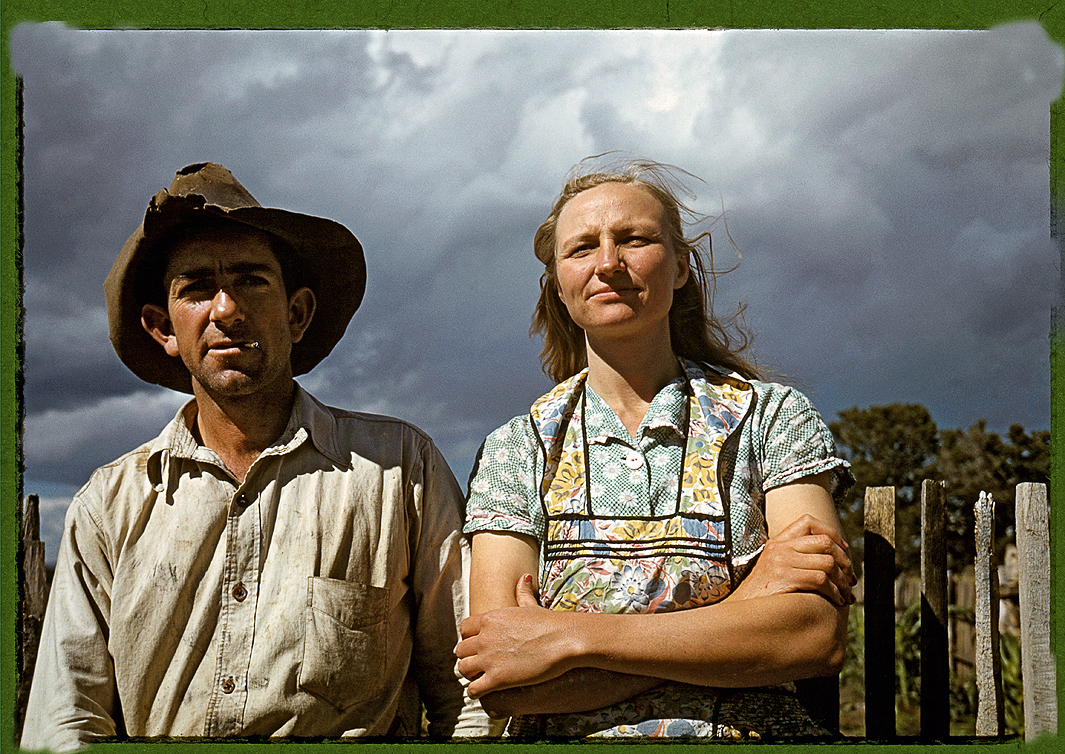
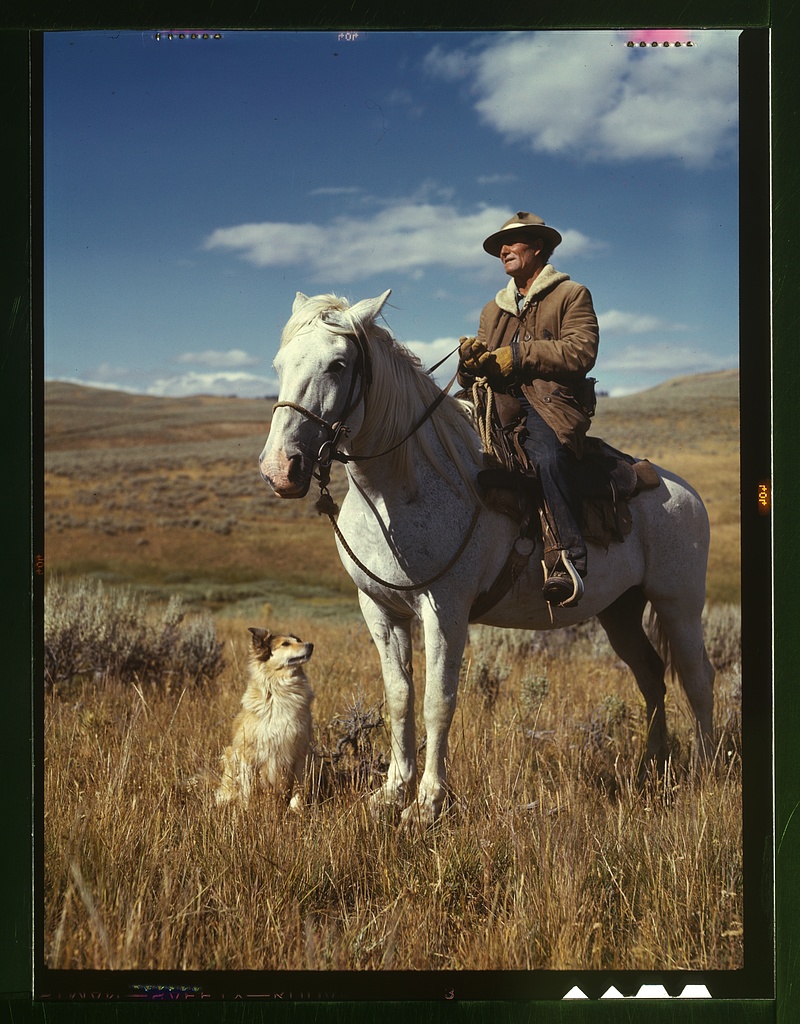
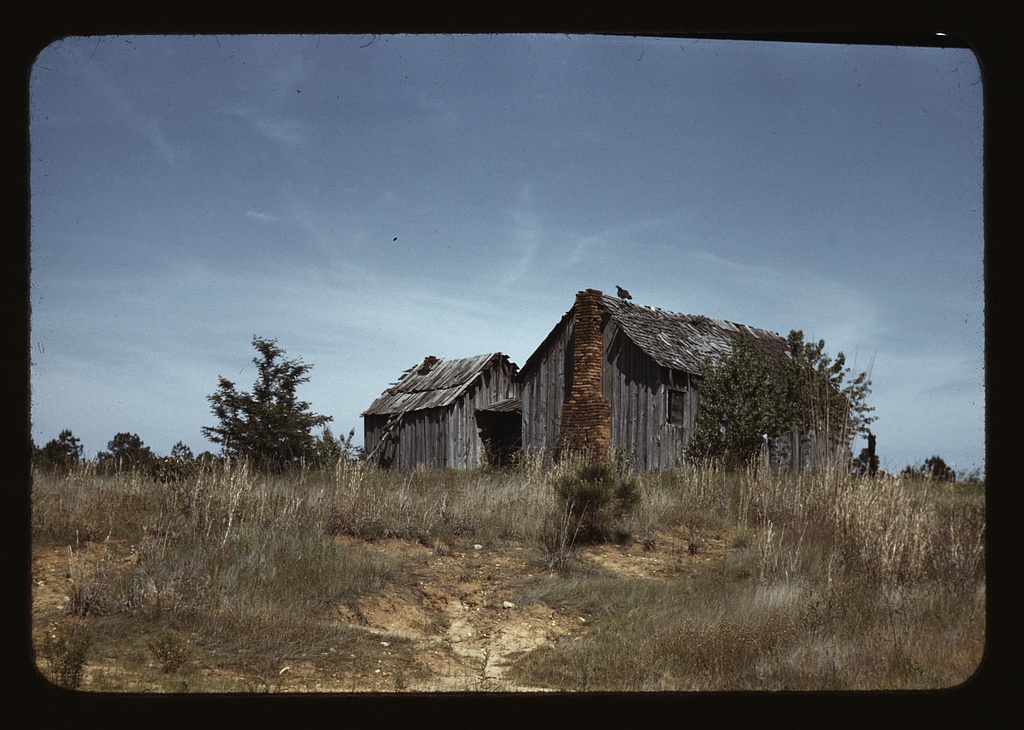
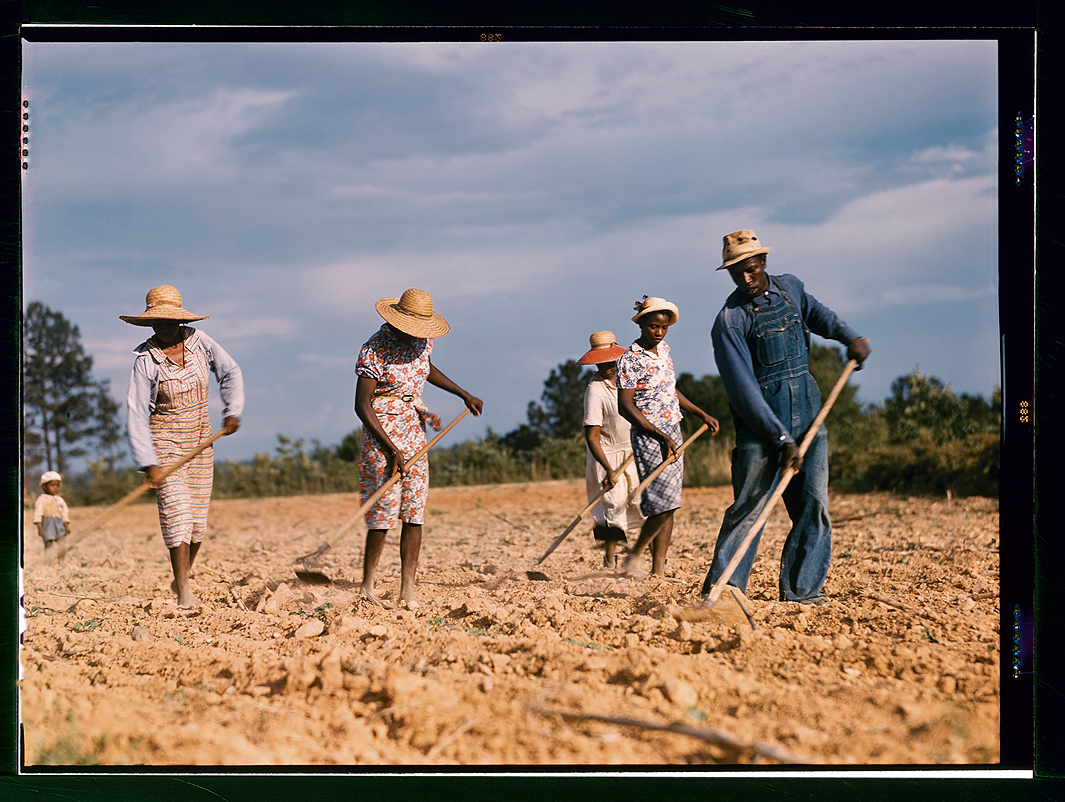
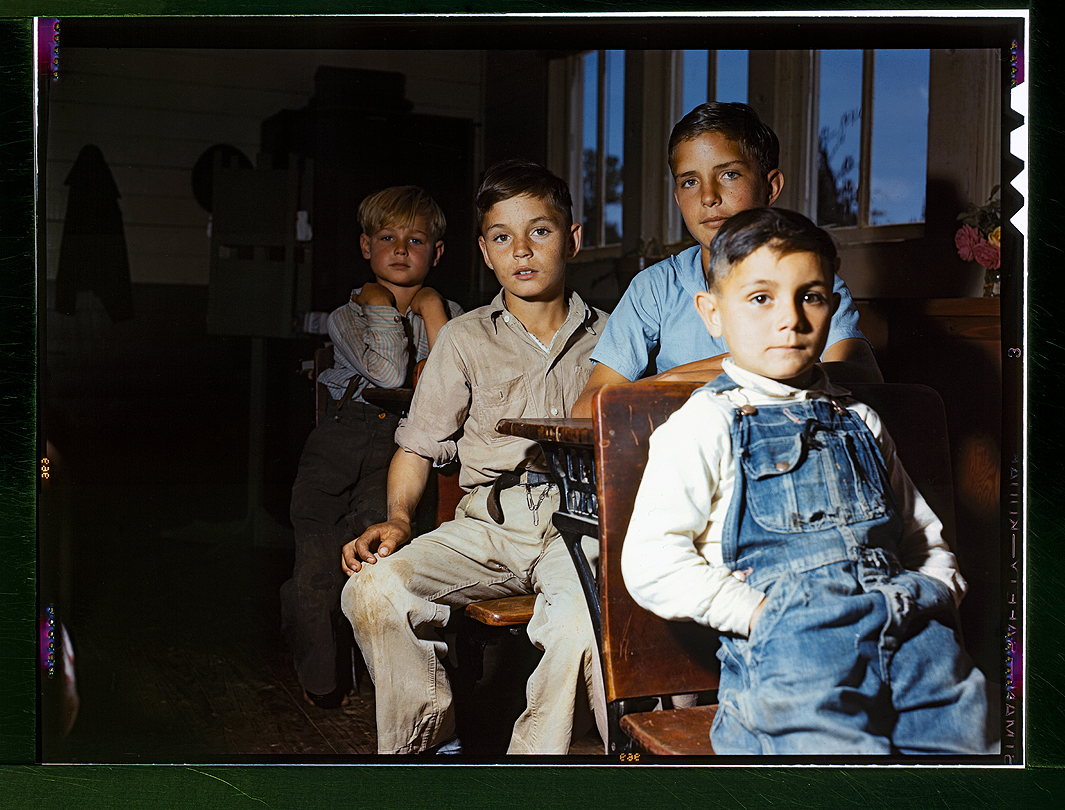
Can viewers of Depression-era photographs today put aside their implicit or explicit sense of moral superiority? Perhaps seeing photos of the era in color brings their subjects more immediacy and vividness, and you can see them by the hundreds at the Library of Congress’s online collection of work commissioned by the federal government during the Depression and World War II. Evans himself may have thought color photography “garish” and “vulgar,” Jordan G. Teicher notes at Slate (though Evans began taking his own color images in 1946). But contemporaries like Russell Lee, Marion Post Wolcott, Jack Delano, and John Vachon proved him wrong.
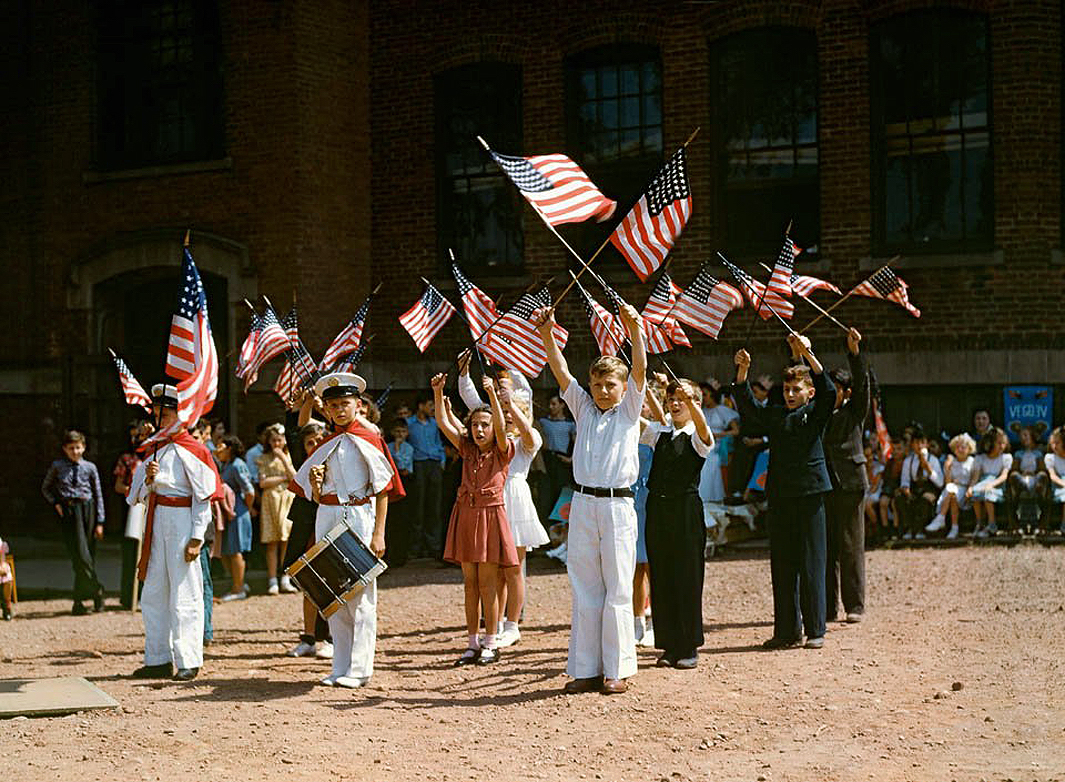
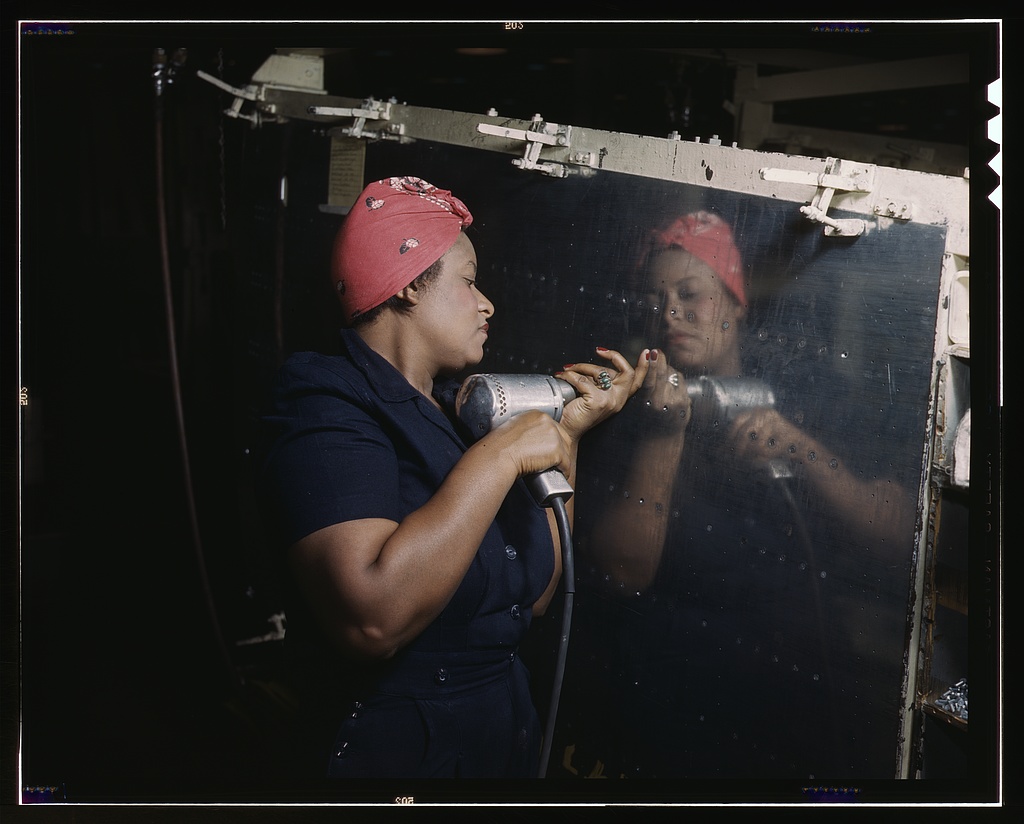
Once the U.S. entered the war, many Farm Security Administration photographers were reassigned to make propaganda for the Office of War Information (and a few, like Lange, also received commissions to photograph the Japanese Internment Camps). The nature of documentary photography began to change, largely reflecting small town American industriousness and civic pride, rather than rural desperation and struggle. Images like Fenno Jacobs’ patriotic demonstration in Southington Connecticut (1942) above, are typical. Quaint rows of houses and storefronts dominate during the war years. We also find interesting images like that of the woman below working on a “Vengeance” dive bomber in Tennessee, taken by Alfred T. Palmer in 1943. Aside from the dated clothing and machinery, her photograph seems as fresh and compelling as the day it first appeared.
“In color,” writes Emory University’s Jesse Karlsberg, “these images present themselves as relevant to the present, rather than consigned to the past. By displaying the problems they depict—such as segregation, poverty, and environmental degradation—in a contemporary form, the images imply that such problems may continue to be critical today.” They are indeed critical today. And may become even more so. And one hopes that writers, photographers, and artists, though they will not do so under the aegis of New Deal agencies, can find ways to document what is happening as they did decades ago. Such work carries global significance. And, as a recent Taschen book that collects New Deal photography from 1935 to 1943 describes it, photographs like those you see here “introduced America to Americans.” They also introduced Americans—who have been as divided in the past as they are today—to each other.
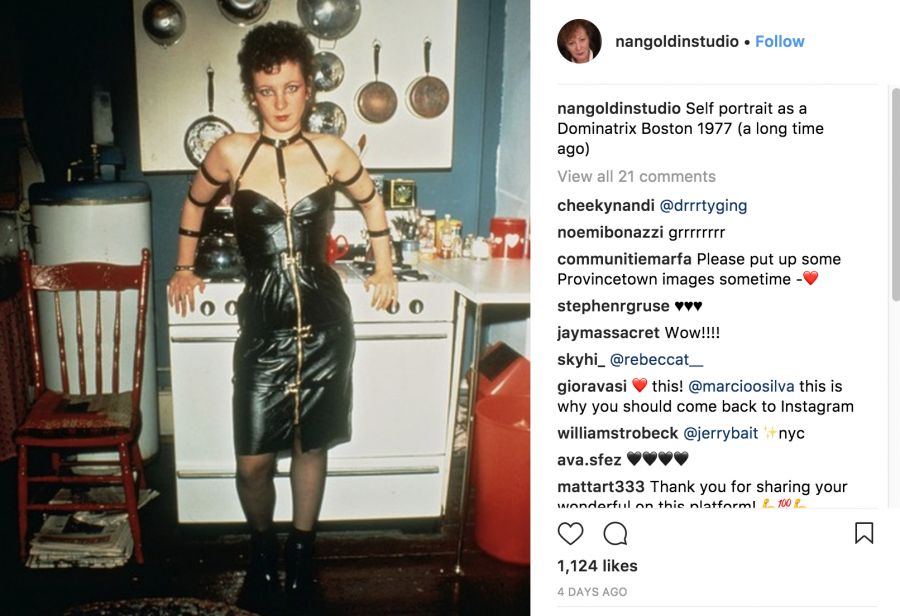
Goldin’s Instagram account makes its debut at the same time that Steidl Books has re-released Nan Goldin: The Beautiful Smile–the memoir in which Goldin famously photographed, writes The New York Times, the subjects who “have been those closest to her: Transsexuals, cross-dressers, drug users, lovers, all people she befriended when she moved to New York” and who lived in what mainstream critics would coldly call the ‘margins of society’.” The highly-praised book is now out again.
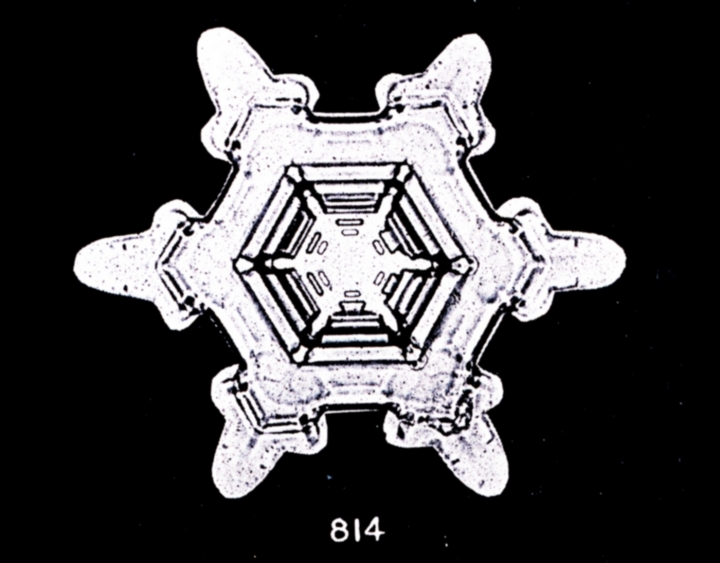
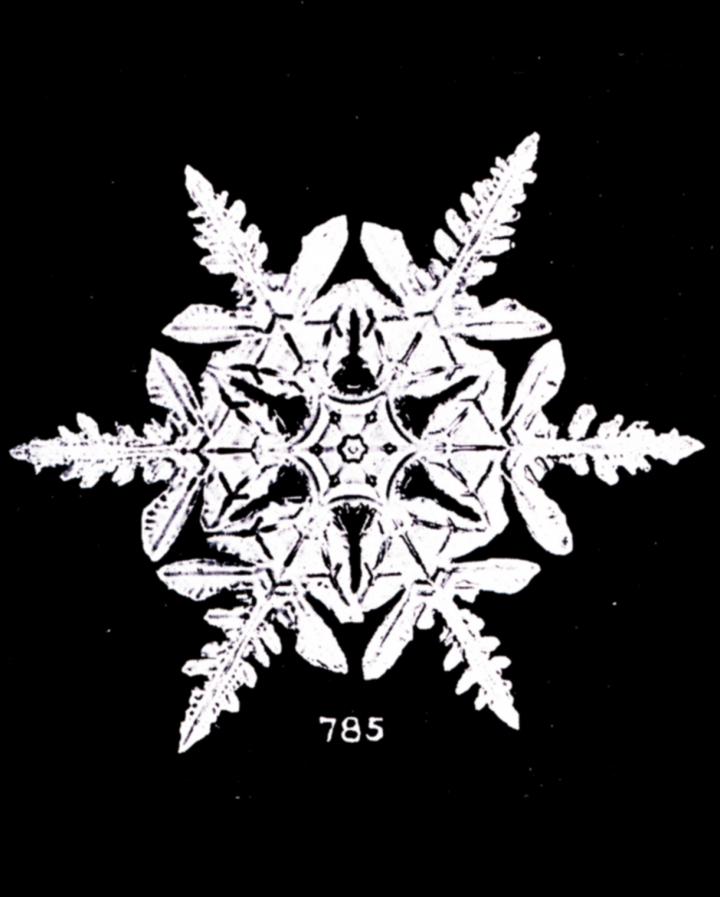
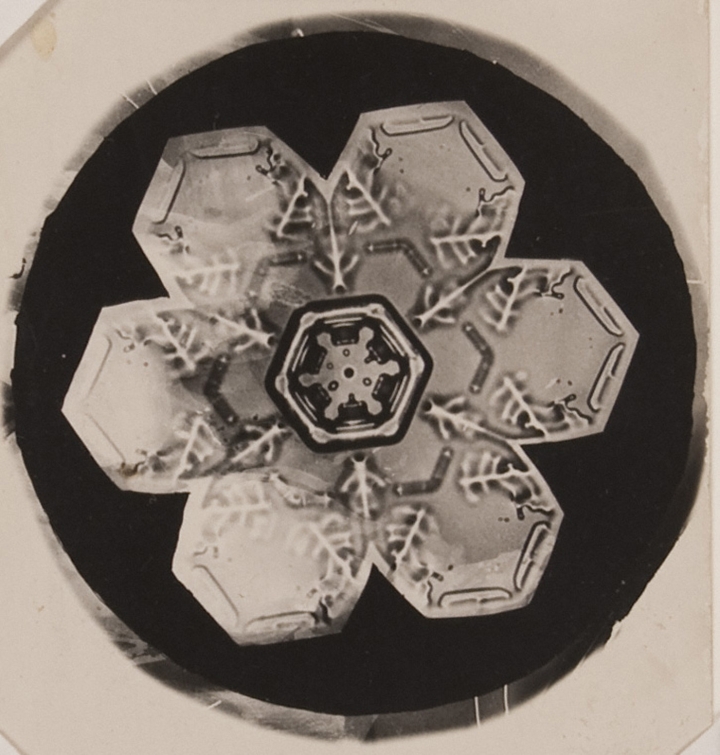
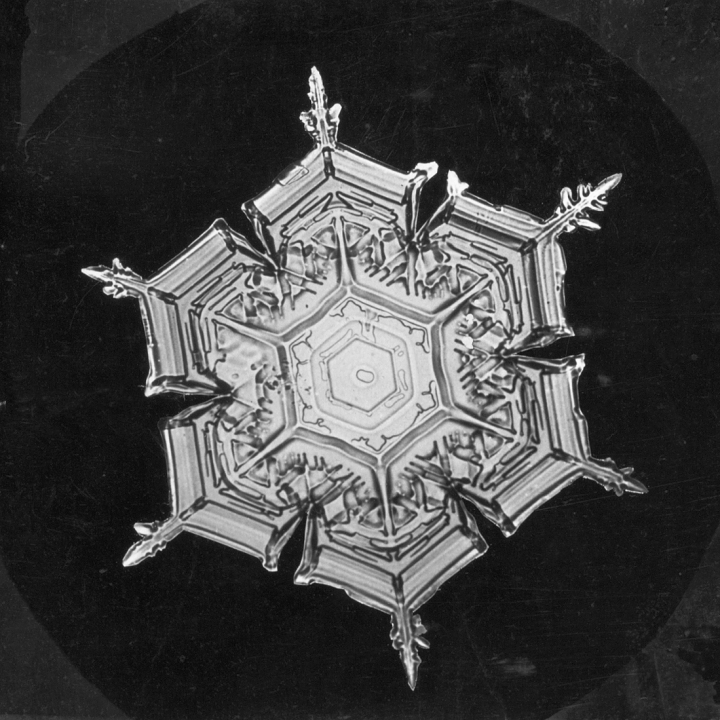
What kind of a blighted society turns the word “snowflake” into an insult?, I sometimes catch myself thinking, but then again, I’ve never understood why “treehugger” should offend. All irony aside, being known as a person who loves nature or resembles one of its most elegant creations should be a mark of distinction, no? At least that’s what Wilson “Snowflake” Bentley surely thought.
The Vermont farmer, self-educated naturalist, and avid photographer, was the first person to offer the following wisdom on the record, then illustrate it with hundreds upon hundreds of pictures of snowflakes, 5,000 in all:
I found that snowflakes were miracles of beauty; and it seemed a shame that this beauty should not be seen and appreciated by others. Every crystal was a masterpiece of design and no one design was ever repeated. When a snowflake melted, that design was forever lost. Just that much beauty was gone, without leaving any record behind.
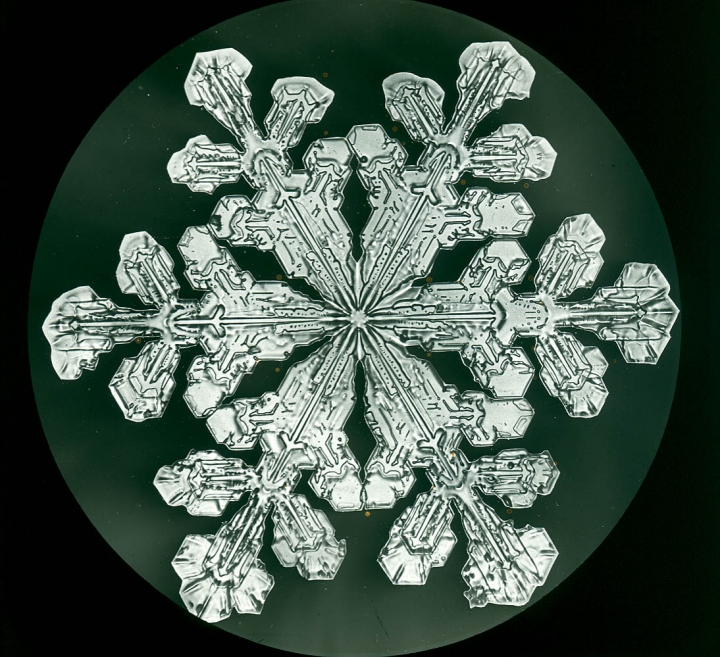
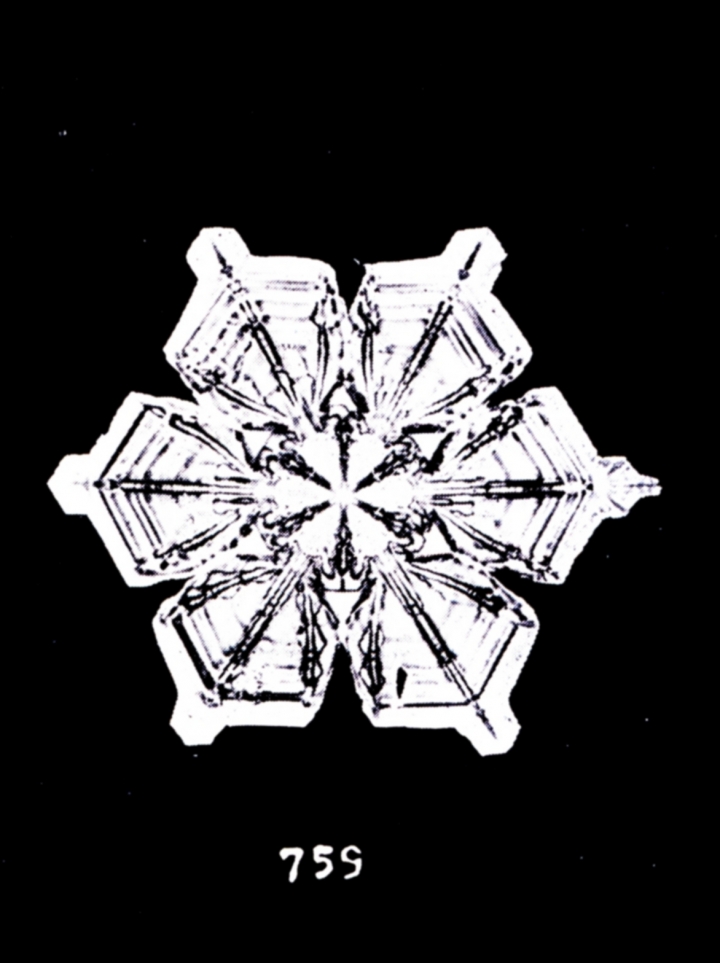
Bentley left a considerable record—though still an insignificant sample size given the scope of the object of study. But his photographs give the impression of an infinite variety of different types, each with the same basic crystalline latticework structure. He took his first photograph of a snowflake, the first ever taken, in 1885, by adapting a microscope to a bellows camera, after years of making sketches and much trial and error.
Some great portion of this work must have been tedious and frustrating—Bentley had to hold his breath for each exposure lest he destroy the photographic subject. But it was worth the effort. Bentley, the Smithsonian informs us, “was a pioneer in ‘photomicrography,’ the photographing of very small objects.” Five hundred of his photographs now reside at the Smithsonian Institution Archives, “offered by Bentley in 1903 to protect against ‘all possibility of loss and destruction, through fire or accident.” You can see a huge digital gallery of those hundreds of photos here.
Along with U.S. Weather Bureau physicist William J. Humphreys, he published 2300 of his snowflake photographs in a monograph titled Snow Crystals. Bentley also published over 60 articles on the subject (read two of them here). Despite his contributions, he receives no mention in most histories of photomicrography. This may be due to his provincial location (he never left Jericho, VT) or his lack of scientific training and credentials, or a lack of interest in photos of snowflakes on the part of most photomicrography historians.
Or it may be because Bentley was thought to be a fraud. When a German meteorologist commissioned some images of his own and got some very different results, he accused the farmer of retouching. Bentley readily admitted it, saying, “a true scientist wishes above all to have his photographs as true to nature as possible, and if retouching will help in this respect, then it is fully justified.”
The defense is a good one. Although the “nature” Bentley’s photos show us may be a theoretical idealization, so too are the hand-rendered illustrations of most scientists throughout history (and nearly every medical diagram today). Take, for example, the psychedelic, brightly colored patterns of accomplished biologist Ernst Haeckel, who turned the micro- and macroscopic world into surreally symmetrical art in his drawings. Though he might not have said so directly, Bentley was doing something similar with a camera. Just listen to him describe his process in a 1900 issue of Harper’s:
Quick, the first flakes are coming; the couriers of the coming snow storm. Open the skylight, and directly under it place the carefully prepared blackboard, on whose ebony surface the most minute form of frozen beauty may be welcome from cloud-land. The mysteries of the upper air are about to reveal themselves, if our hands are deft and our eyes quick enough.
In the “quiet frenzy of his winter’s quest,” writes Allison Meier at Hyperallergic, he produced images of “beautiful ghosts from a winter that bristled the air over a century ago.” Learn more about Bentley’s life, work, and the Smithsonian collection in the short documentary further up, the Washington Post video above, and the Radiolab episode below, in which a breathless Latif Nasser takes us into the heart of Bentley’s origin story, and “snowflake expert and photographer Ken Libbrecht helps set the record straight.”
Real snowflakes have many imperfections, and perhaps Bentley did snow a disservice to so strenuously suggest otherwise. But the record he left us, Meier notes, “is appreciated as much as an artistic archive as a meteorological one.” He might have been a scientist when it came to technique, but Bentley was a romantic when it came to snow. His story is as fascinating as his photographs. Maybe a delightful alternative to the usual Christmas fare. There’s even a children’s book called… what else?… Snowflake Bentley.
FYI: If you sign up for a MasterClass course by clicking on the affiliate links in this post, Open Culture will receive a small fee that helps support our operation.
John Lennon and Yoko Ono, Dolly Parton and Arnold Schwarzenegger, Barack Obama and family, Bruce Springsteen, Whoopi Goldberg, Bill Gates, Queen Elizabeth II, Lady Gaga: name someone who has risen to the very top of the zeitgeist over the past few decades, and Annie Leibovitz has probably photographed them. Her images, in fact, have often come to stand for the images of her subjects in the culture: when we think of certain celebrities, we instinctively imagine them as they appeared on a Leibovitz-shot cover of Rolling Stone or Vanity Fair. Safe to say, then, that she knows a thing or two about how to take a picture that makes an impact.
The early lessons in “Annie Leibovitz Teaches Photography” cover subjects like memories of her own development as a photographer to discussions of her influences and her view of the medium itself. Later on, she gets into the real-life case study of shooting chef Alice Waters for Vanity Fair, digital post-production, how to come up with the right concept (ideally, so her career has shown, one just strange or daring enough to get people talking), and how to work with your subject. “There’s this idea that in portraiture, it’s the photographer’s job to set the subject at ease,” Leibovitz says in the class trailer above. “I don’t believe that.”
Few aspects of Leibovitz’s method have drawn as much attention as the way she handles her subjects, which tends to involve both developing enough of a relationship with them to gain some understanding of their inner lives and putting them in situations which, so she has studiously learned while getting to know them, may lie a bit outside of their comfort zone. Few of us will ever have that much face time with a photographer like Leibovitz, let alone enough to ask her in-depth questions about the craft, but if you suspect you might find yourself one day in a position to photograph the next Caitlyn Jenner, Mark Zuckerberg, or Kim Kardashian — or someone more important to you personally — the strategies explained in her Masterclass course will surely come in handy.
If you would like to support the mission of Open Culture, consider making a donation to our site. It’s hard to rely 100% on ads, and your contributions will help us continue providing the best free cultural and educational materials to learners everywhere. You can contribute through PayPal, Patreon, and Venmo (@openculture). Thanks!
Based in Seoul, Colin Marshall writes and broadcasts on cities and culture. His projects include the book The Stateless City: a Walk through 21st-Century Los Angeles and the video series The City in Cinema. Follow him on Twitter at @colinmarshall or on Facebook.
New York, New York—there are many ways of assessing whether or not you’ve “made” it here—these days it includes an appearance on photographer Brandon Stanton’s wildly popular blog, Humans of New York, in which a spontaneous street portrait is anchored by a personal quote or longer anecdote.
Following several books and a UN-sponsored world tour to document humans in over twenty countries, the project has morphed into a 13-episode docu-series as part of Facebook’s original video content platform.
Aided by cinematographer Michael Crommett, Stanton elicits his customary blend of universal and specific truths from his interview subjects. Extending the moment into the video realm affords viewers a larger window onto the complexities of each human’s situation.
Take episode four, “Relationships,” above:
An ample, unadorned woman in late-middle age recalls being swept off her feet by a passion that still burns bright…
An NYU grad stares uncomfortably in her purple cap and gown as her divorced parents air various regrets…
A couple with mismatched views on marriage are upstaged by a spontaneous proposal unfolding a few feet away…
La Vie en Rose holds deep meaning for two couples, despite radically different locations, presentations, and orientations.
A little girl has no problem calling the shots around her special fella…
I love you, New York!!!
Other themes include Money, Time, Purpose, and Parenting.
One of the great pleasures of both series and blog is Stanton’s open-mindedness as to what constitutes New York and New Yorkers.
Some interviews take place near such tourist-friendly locales as Bethesda Fountain and the Washington Square Arch, but just as many transpire alongside noticeably Outer Borough architecture or the blasted cement heaths aproning its less sought after public schools.
Below, Stanton explains his goal when conducting interviews and demonstrates how a non-threatening approach can soften strangers to the point of candor.
Americans have long considered New York City, at least during its relatively inexpensive eras or in its relatively expensive areas, a haven for every type of artist and members of all subcultures. The density of its population, by American standards, also presents its denizens with the opportunity to cross between one artistic or subcultural realm and another with ease — or with geographical ease, anyway. Few New York figures crossed as many such boundaries as creatively in the early 20th century as a Cedar Rapids-born writer and photographer named Carl van Vechten.
“When Van Vechten first arrived in New York, in 1906, there were few signs that he would ever attempt to appoint himself bard of Harlem,” writes Kelefa Sanneh in a New Yorker piece on Van Vechten’s life. “He was a self-consciously sophisticated exile from the Midwest, and he was quickly hired by the Times as a music and dance critic.” In addition, to his criticism, “he also published a series of mischievous novels that were notable mainly, one critic observed, for their ‘annoying mannerisms.’ ” (The critic? Probably the author himself.) And the longer Van Vechten lived in New York, “the more interested he became in the sights and sounds of Harlem, where raucous and inventive night clubs were thriving under Prohibition.”
The white Van Vechten wrote a novel about black life in Harlem, insisting on a title that I doubt I can even type here. It expressed what Sanneh calls “his conviction that Negro culture was the essence of America,” which went with “his simultaneous fascination with the avant-garde and the broadly popular; and his string of sexual relationships with men, which were an open secret during his life. Van Vechten’s tastes were varied: his bibliography includes an erudite cultural history of the house cat, and in his later decades he became an accomplished portrait photographer.” Black, white, or otherwise, nearly every major figure in the American culture of the day seems to have sat for his camera: actors, writers, musicians, intellectuals, architects, magnates, and many other types besides.
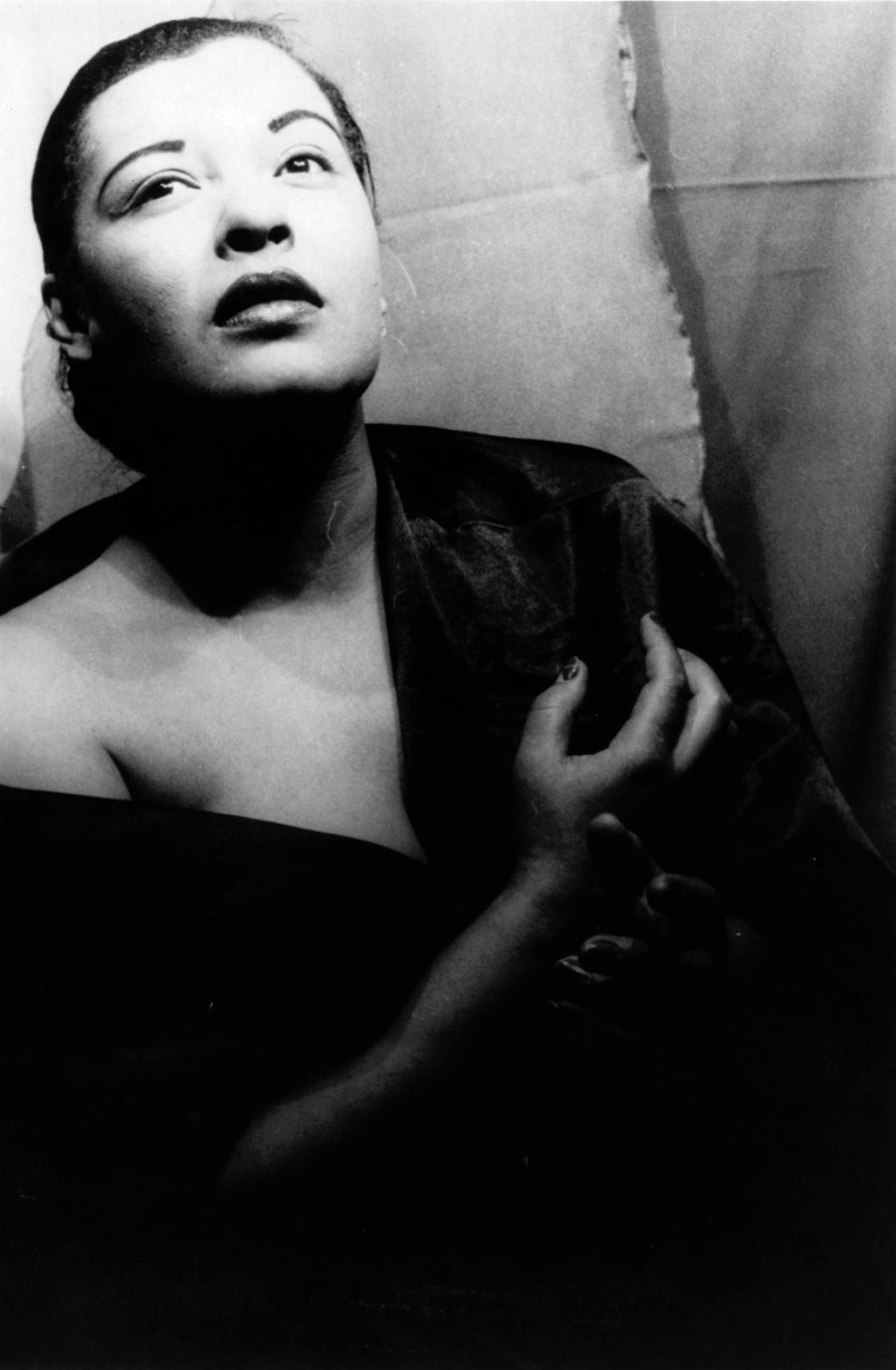
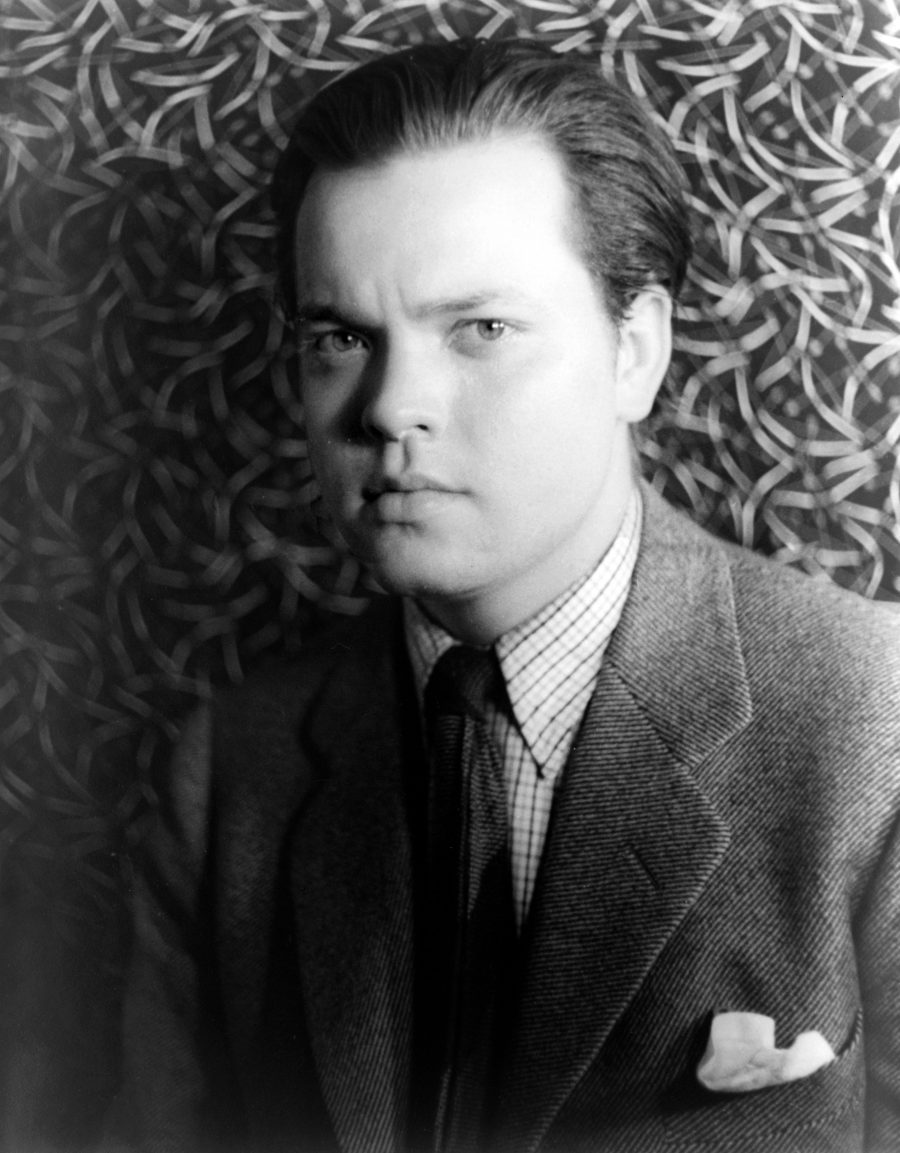
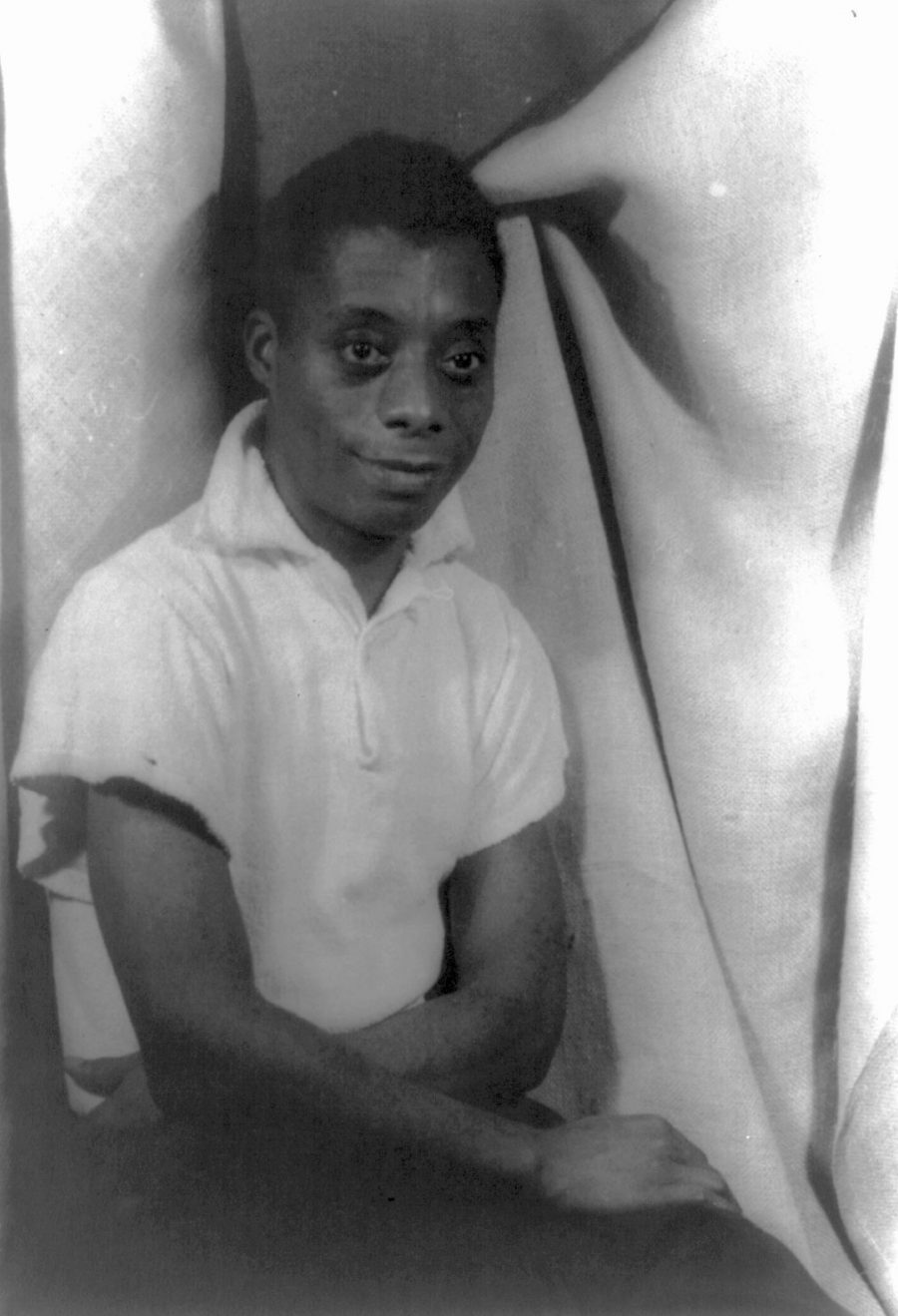
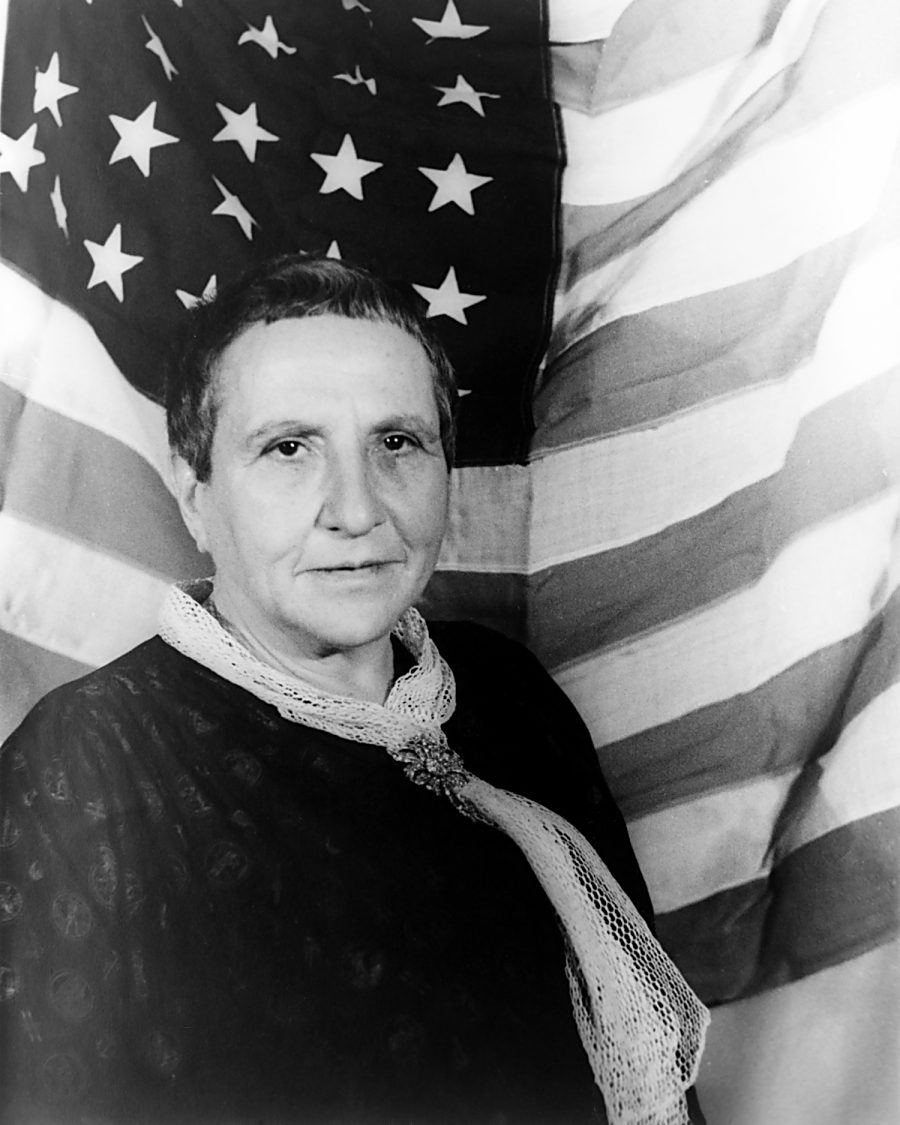
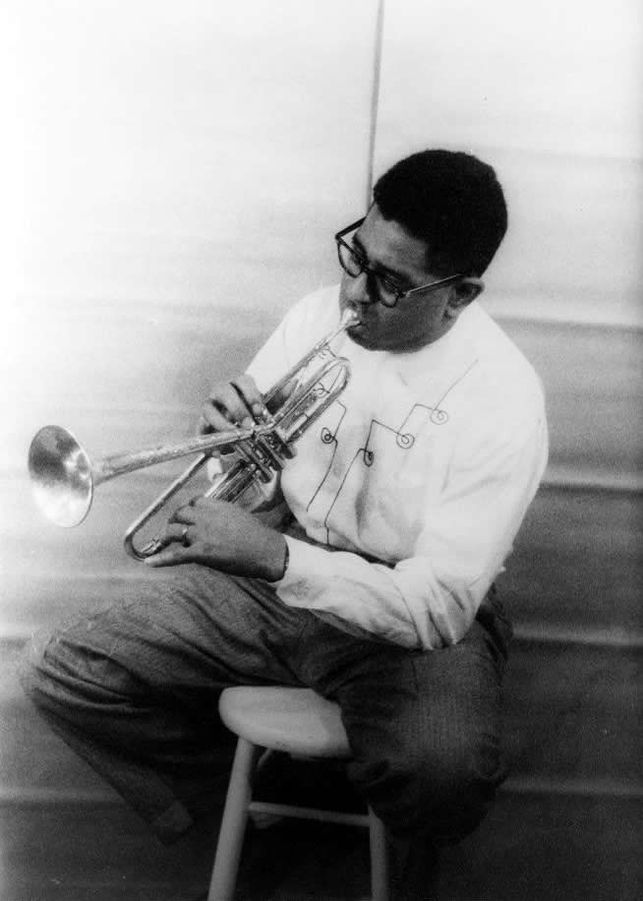
Some of the subjects of Van Vechten’s over 9,000 portraits, all browsable online at Yale’s Beinecke Rare Book and Manuscript Library, were his friends: Gertrude Stein, and Langston Hughes, for instance, both of whom expressed great enthusiasm for Van Vechten’s writing on black culture. Others created that black culture, now known as the Harlem Renaissance: Dizzy Gillespie, Billie Holliday, James Baldwin. Others made up the culture of global celebrity, then only in its infancy: Orson Welles, Lotte Leyna, Laurence Olivier.
They, and more so Van Vechten himself, knew that to become an icon in the 20th century, you needed to do much more than excel in the human realm: you had to transcend it, ascending into that of the image. If you sufficiently fascinated Van Vechten, it seems, he was only too glad to help you on your way there. See thousands of his portraits at this Yale website.
Portraits in order of appearance on this page include: Billie Holliday, Orson Welles, James Baldwin, Gertrude Stein, and Dizzy Gillespie. All come courtesy of the Van Vechten Collection at Library of Congress.
Based in Seoul, Colin Marshall writes and broadcasts on cities and culture. His projects include the book The Stateless City: a Walk through 21st-Century Los Angeles and the video series The City in Cinema. Follow him on Twitter at @colinmarshall or on Facebook.
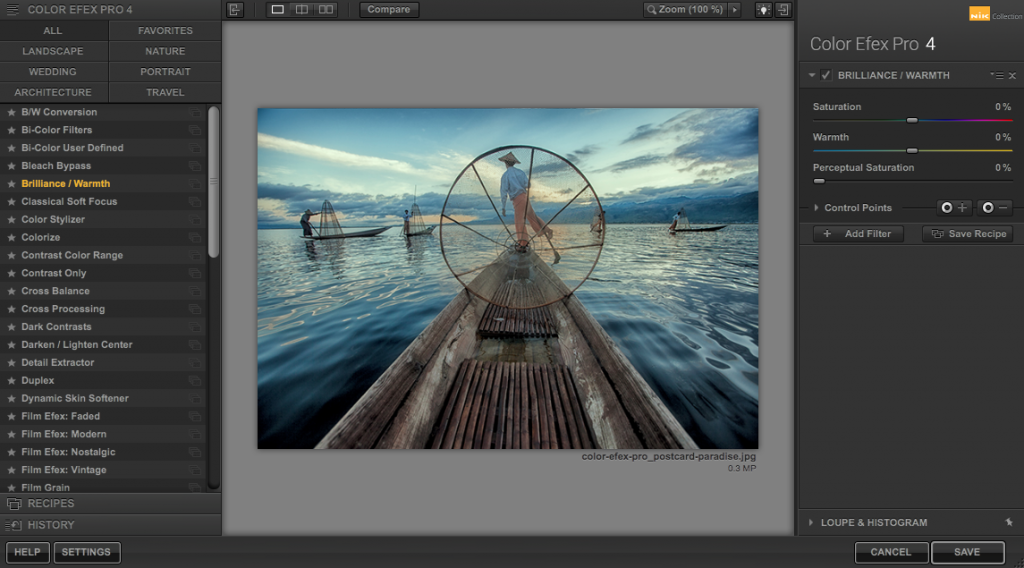
If there was cause for celebration, it didn’t last that long. Earlier this year, Google followed up with another announcement–that it planned to discontinue development of the Nik Collection, and essentially let it wither on the vine.
Now here’s the latest chapter in the story. A seemingly good one. The image processing company DxO has acquired the Nik Collection from Google. Jérôme Ménière, DxO’s founder and CEO, declared in a press release, “DxO revolutionized the image processing market many times over the years with its innovative solutions, and we will continue to do so with Nik’s tools, which offer new creative opportunities to millions of photographers.” Apparently the Nik Collection gets to live another day.
Also on the DxO website they’ve announced plans for a future iteration of the Nik Collection, saying “The new ‘Nik Collection 2018 Edition’ will be released mid-2018, please leave your email below to be informed when it’s available.” Whether that 2018 edition will stay free remains to be seen.
We're hoping to rely on loyal readers, rather than erratic ads. Please click the Donate button and support Open Culture. You can use Paypal, Venmo, Patreon, even Crypto! We thank you!
Open Culture scours the web for the best educational media. We find the free courses and audio books you need, the language lessons & educational videos you want, and plenty of enlightenment in between.