Photo Archive Lets You Download 4,300 High-Res Photographs of the Historic Normandy Invasion

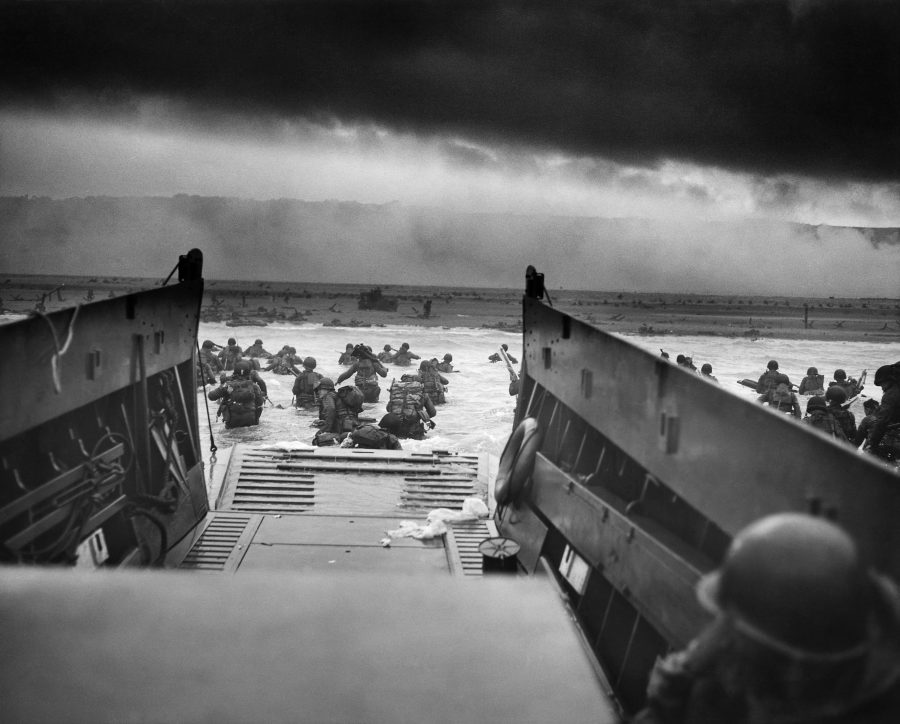
Taxis to Hell – and Back – Into the Jaws of Death, by Robert F. Sar­gent, via Wiki­me­dia Com­mons

In the mid-20th cen­tu­ry, the­o­rists like Roland Barthes and Pierre Bour­dieu explod­ed naive notions of pho­tog­ra­phy as “a per­fect­ly real­is­tic and objec­tive record­ing of the vis­i­ble world… a ‘nat­ur­al lan­guage,’” as Bour­dieu wrote in Pho­tog­ra­phy: A Mid­dle­brow Art. Bour­dieu him­self wield­ed a cam­era dur­ing his ethno­graph­ic work in Alge­ria, tak­ing dozens of con­ven­tion­al and uncon­ven­tion­al pho­tographs of the nation’s strug­gle for inde­pen­dence from France in the 50s. Yet he urged us to see pho­tog­ra­phy as for­mal­ly medi­at­ing social real­i­ty rather than trans­par­ent­ly rep­re­sent­ing the truth.

We have been trained to inter­pret the per­spec­tives most pho­tographs adopt as objec­tive views, when in fact they are “per­fect­ly in keep­ing with the rep­re­sen­ta­tion of the world which has dom­i­nat­ed Europe since the Quat­tro­cen­to.” Pho­tog­ra­phy, in oth­er words, tends to give us art imi­tat­ing Renais­sance art. It can be dif­fi­cult to bear this in mind when we look at indi­vid­ual photographs—what Barthes calls “the This.”

Whether they doc­u­ment our own fam­i­ly his­to­ries or such momen­tous events as the Nor­mandy Inva­sion that began on D‑Day, June 6th, 1944, pho­tographs elic­it pow­er­ful emo­tion­al reac­tions that defy aes­thet­ic cat­e­gories.

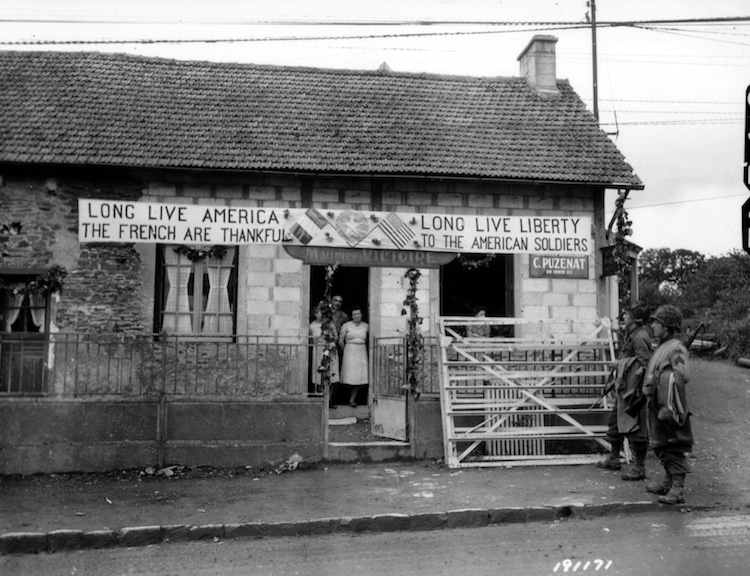
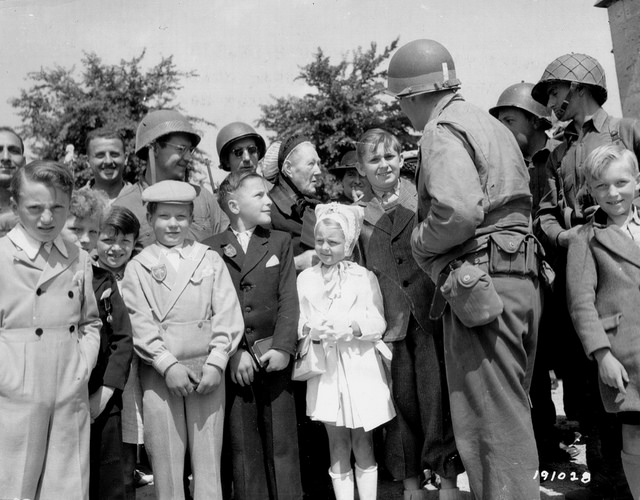
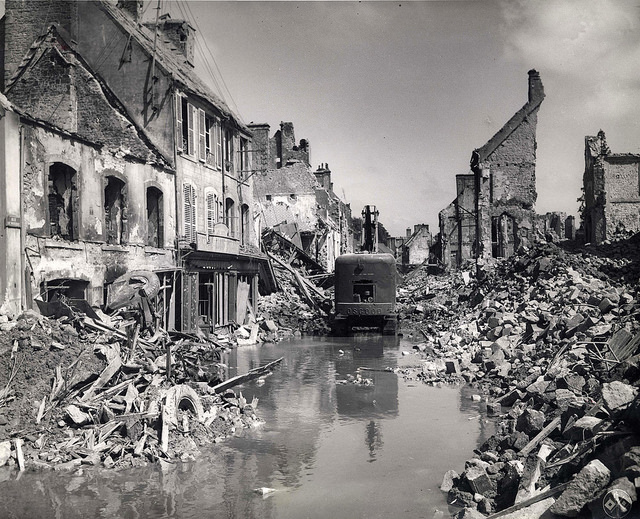
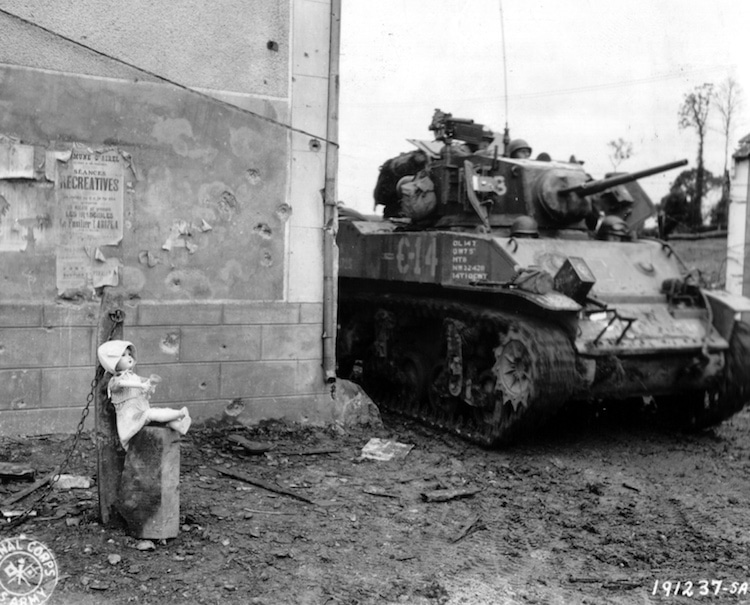
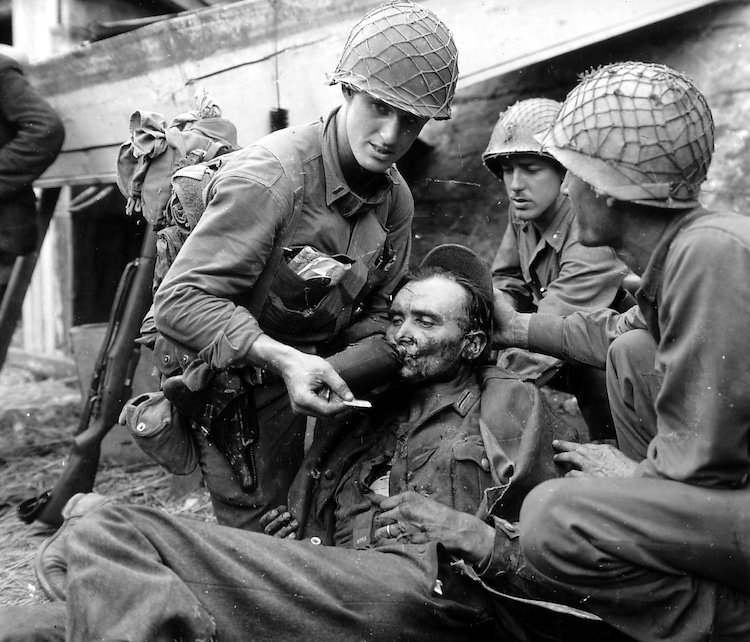
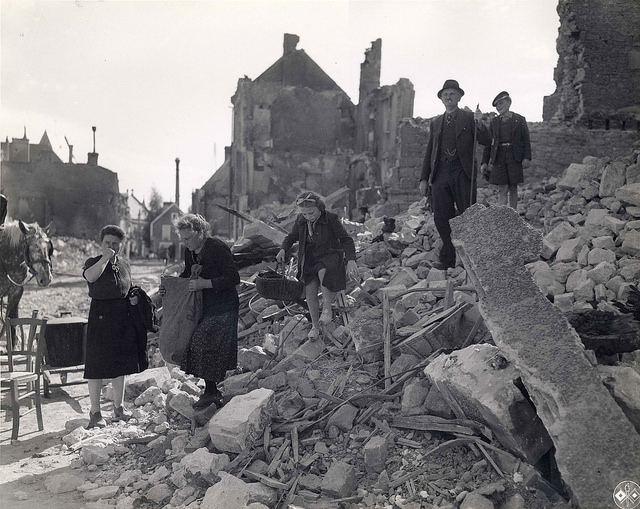
At the Flickr account Pho­to­sNor­mandie, you can browse and search over 4,300 high res­o­lu­tion pho­tographs from the piv­otal Nor­mandy cam­paign, “From icon­ic images like Into the Jaws of Death by Robert F. Sar­gent,” My Mod­ern Met writes, “to troops inter­act­ing with locals as they lib­er­ate areas of Nor­mandy.” The pho­tos are deeply affect­ing, often awe-inspir­ing. When we look with a crit­i­cal eye, we’ll find our­selves ask­ing cer­tain ques­tions about them.

The skewed per­spec­tive and omi­nous sky in Sargent’s “Into the Jaws of Death,” for exam­ple, at the top of the post, might make us think of the Sturm und Drang of many a dra­mat­ic ship­wreck paint­ing from the Roman­tic peri­od. Was Sar­gent aware of the sim­i­lar­i­ty when he looked through the lens? Did he posi­tion him­self to height­en the effect? In pho­tos like that fur­ther up, of a French home dis­play­ing a pro‑U.S. sign on July 11th, 1944, we might won­der whether the res­i­dents made the sign or whether it was giv­en to them, per­haps for this very pho­to op. As always, we’re jus­ti­fied in ask­ing about the role of the pho­tog­ra­ph­er in stag­ing or fram­ing a par­tic­u­lar scene.

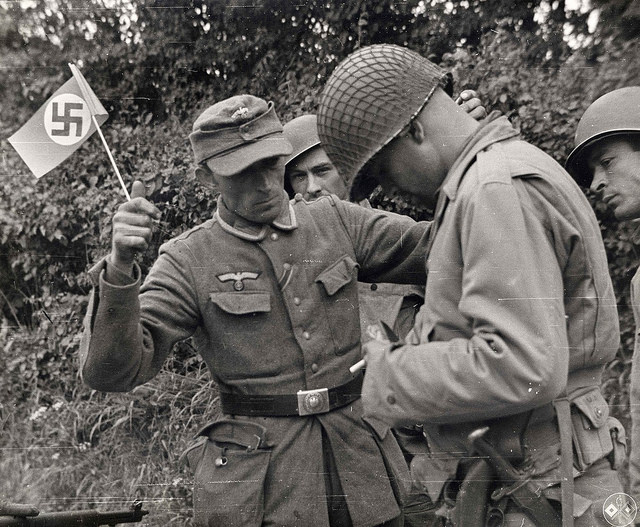
For exam­ple, the pho­to of a Ger­man sol­dier sur­ren­der­ing to Amer­i­can G.I.s, above, looks staged. But what exact­ly these sol­diers are doing remains a mys­tery. How much do these exter­nal details mat­ter? Pho­tog­ra­phy is unique among oth­er visu­al arts in that “the Pho­to­graph,” Barthes writes, “repro­duces to infin­i­ty” what has “occurred only once.” It is the meet­ing of infin­i­ty with “only once” that engages us in more exis­ten­tial explo­rations.  All of these sol­diers and civil­ians, shar­ing their joy and anguish, most of them now passed into his­to­ry. Who were these peo­ple? What did these moments mean to them? What do they mean to us 70 years lat­er?

The bombed-out cathe­drals and defeat­ed tanks make us pon­der the fragili­ty of our own built envi­ron­ment, though the destruc­tive forces threat­en­ing to undo the mod­ern world now seem as like­ly to be nat­ur­al as man-made—or rather some new, fright­en­ing com­bi­na­tion of the two. In the faces of the wound­ed and the dis­placed, we see spe­cif­ic man­i­fes­ta­tions of the same trag­ic inva­sions and migra­tions that reach back to Thucy­dides and for­ward to the present moment in world his­to­ry, in which some 60 mil­lion peo­ple dis­placed by war and hard­ship seek sanc­tu­ary.

The images draw us away into gen­er­al obser­va­tions as they draw us back to the unre­peat­able moment. This project began on the 60th anniver­sary of D‑Day “as a way,” My Mod­ern Met explains, “to crowd­source descrip­tions of images on the now defunct Archives Nor­mandie, 1939–1945. Thus, users are encour­aged to com­ment on pho­tos if they are able to improve descrip­tions, loca­tions, and iden­ti­fi­ca­tions.” His­to­ry may rhyme with the present—as one famous quote attrib­uted to Mark Twain has it—but it nev­er exact­ly repeats. The pho­to­graph, Barthes wrote, “mechan­i­cal­ly repeats what could nev­er be repeat­ed exis­ten­tial­ly.” Moments for­ev­er lost to time, trans­mut­ed into time­less­ness by the cam­er­a’s eye. Enter the Pho­to­sNor­mandie gallery here.

via My Mod­ern Met

Relat­ed Con­tent:

Ansel Adams, Dorothea Lange, Clem Albers & Fran­cis Stewart’s Cen­sored Pho­tographs of a WWII Japan­ese Intern­ment Camp

The Fin­land Wartime Pho­to Archive: 160,000 Images From World War II Now Online

31 Rolls of Film Tak­en by a World War II Sol­dier Get Dis­cov­ered & Devel­oped Before Your Eyes

200,000 Pho­tos from the George East­man Muse­um, the World’s Old­est Pho­tog­ra­phy Col­lec­tion, Now Avail­able Online

Josh Jones is a writer and musi­cian based in Durham, NC. Fol­low him at @jdmagness
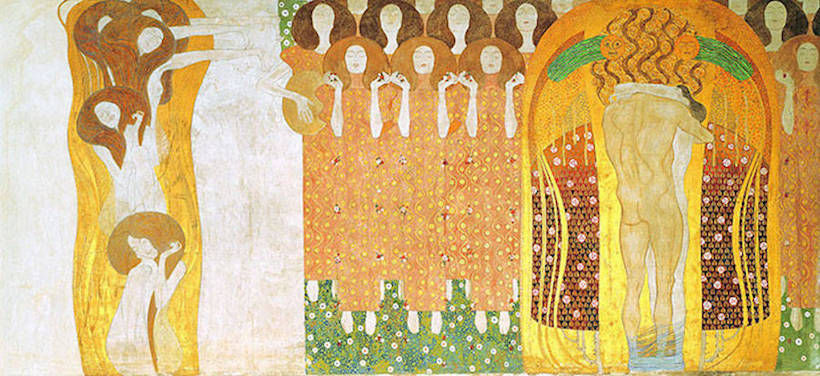
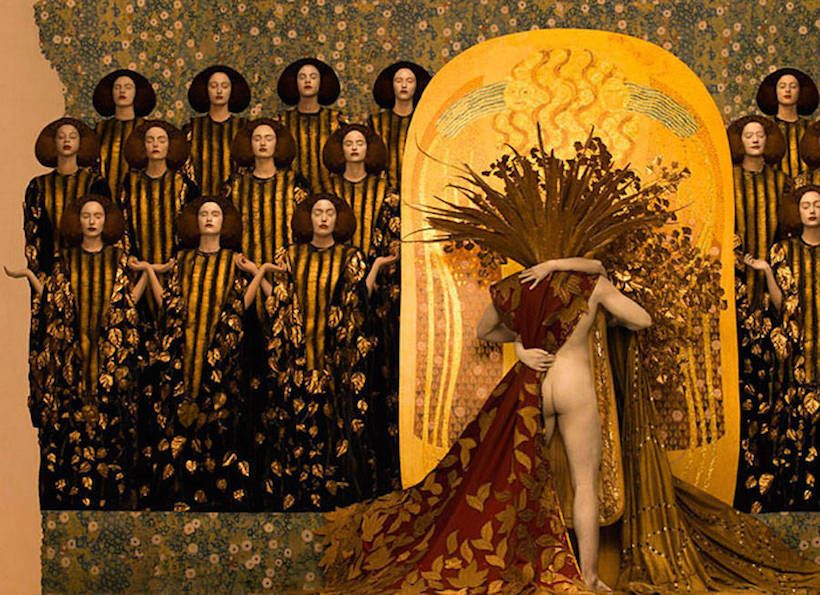
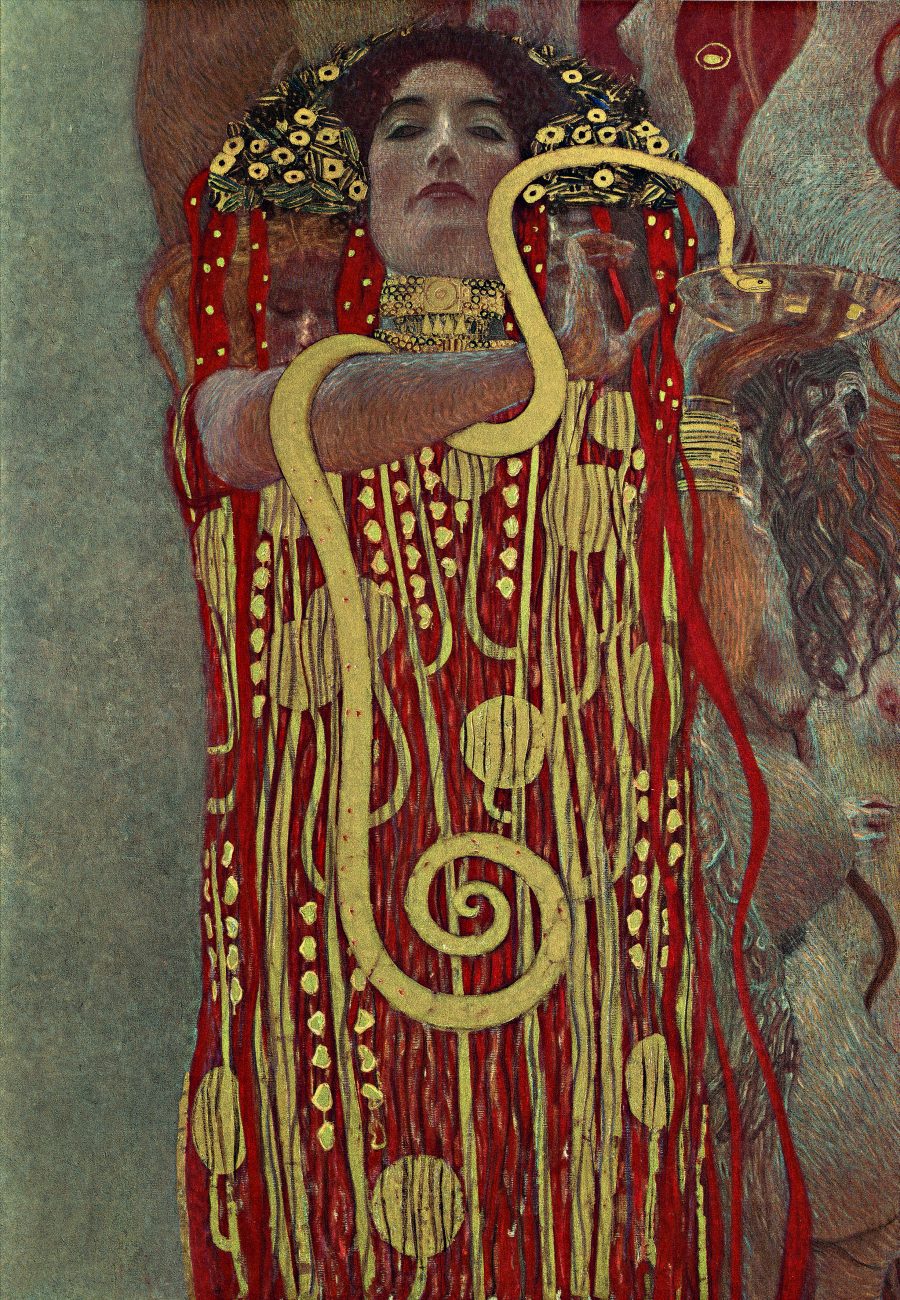
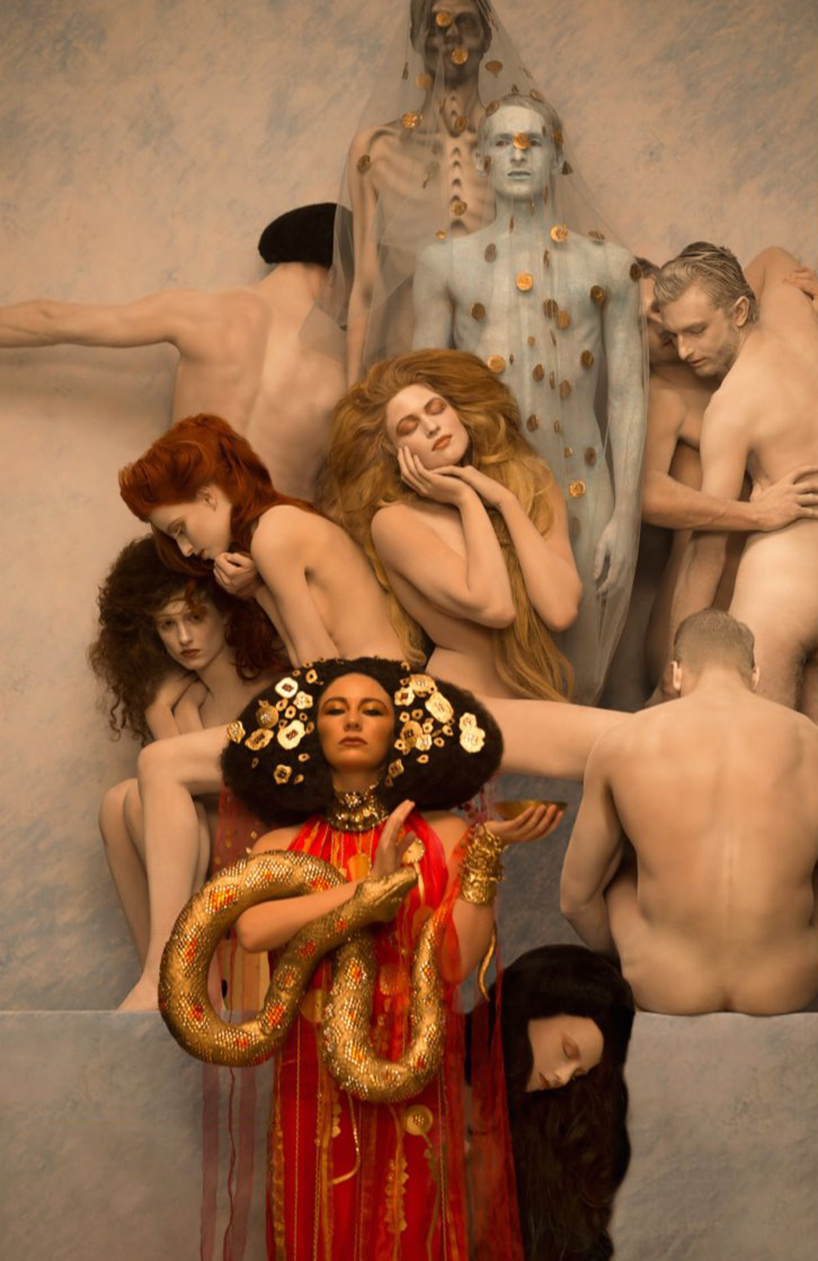
Gustav Klimt’s Haunting Paintings Get Re-Created in Photographs, Featuring Live Models, Ornate Props & Real Gold

Image by Inge Prad­er

Gus­tav Klimt paint­ed a glit­ter­ing, erot­ic, haunt­ing real­i­ty of his own, dis­tinc­tive even by the stan­dards of his artis­ti­cal­ly abun­dant envi­ron­ment of late 19th- and ear­ly 20th-cen­tu­ry Vien­na. “Who­ev­er wants to know some­thing about me,” he once wrote in a com­men­tary on the self-por­trait he nev­er paint­ed, “ought to look care­ful­ly at my pic­tures.” Giv­en the lev­el of scruti­ny with which she’s no doubt had to look at his pic­tures, Klimt’s coun­try­woman Inge Prad­er must there­fore know every­thing about the painter there is to know.

Image by Inge Prad­er

A pho­tog­ra­ph­er with a wide vari­ety of cor­po­rate clients, Prad­er has drawn a good deal of atten­tion by shoot­ing recre­ations of Klimt’s can­vass­es made for Vien­na’s Life Ball, an AIDS char­i­ty event, using real mod­els, real cos­tumes, and real gold. That last has a par­tic­u­lar impor­tance, giv­en Prader’s focus on paint­ings from the “Gold­en Phase” that Klimt entered after becom­ing a suc­cess. “In 1903 Klimt vis­it­ed Venice, Ravenne and Flo­rence,” writes Kon­bini’s Don­nia Ghe­zlane-Lala. “It was his vis­it to the San Vitale basil­i­ca in Ravenne that struck him the most. Fas­ci­nat­ed by Byzan­tine mosaics, he decid­ed to inte­grate the colour gold into his work using gold paper and gold leaf. Also, fun fact, Klimt was the son of a gold­smith.”

Image by Inge Prad­er

Prader’s “care­ful­ly posed mod­els and intri­cate­ly craft­ed props dupli­cate some of Klimt’s most icon­ic mas­ter­works like Death and Life and Beethoven Frieze, mir­ror­ing the gold hued, high­ly dec­o­ra­tive and erot­ic aes­thet­ic the Aus­tri­an artist became best known for,” writes Design­boom’s Nina Azzarel­lo. “Rich­ly orna­ment­ed cos­tumes cloth­ing war­riors and women alike are sit­u­at­ed along­side semi-nude fig­ures and set against detailed mosa­ic back­drops.” These “par­adise-like con­di­tions” on the can­vas trans­fer sur­pris­ing­ly well to pho­tog­ra­phy, espe­cial­ly with the eye Prad­er has devel­oped in fash­ion and adver­tis­ing, two realms guar­an­teed to instill any­body with a pos­i­tive­ly Klimt-like appre­ci­a­tion for strik­ing com­po­si­tions, lux­u­ri­ous mate­ri­als, and beau­ti­ful women.

You can see more of Prader’s Klimt recre­ations at Kon­bi­ni and Design­boom.

Relat­ed Con­tent:

Pho­tog­ra­ph­er Cre­ates Stun­ning Real­is­tic Por­traits That Recre­ate Sur­re­al Scenes from Hierony­mus Bosch Paint­ings

Flash­mob Recre­ates Rembrandt’s “The Night Watch” in a Dutch Shop­ping Mall

How Famous Paint­ings Inspired Cin­e­mat­ic Shots in the Films of Taran­ti­no, Gilliam, Hitch­cock & More: A Big Super­cut

Name That Paint­ing!

Based in Seoul, Col­in Mar­shall writes and broad­casts on cities and cul­ture. He’s at work on the book The State­less City: a Walk through 21st-Cen­tu­ry Los Ange­les, the video series The City in Cin­e­ma, the crowd­fund­ed jour­nal­ism project Where Is the City of the Future?, and the Los Ange­les Review of Books’ Korea Blog. Fol­low him on Twit­ter at @colinmarshall or on Face­book.

Long Before Photoshop, the Soviets Mastered the Art of Erasing People from Photographs — and History Too

Adobe Pho­to­shop, the world’s best-known piece of image-edit­ing soft­ware, has long since tran­si­tioned from noun to verb: “to Pho­to­shop” has come to mean some­thing like “to alter a pho­to­graph, often with intent to mis­lead or deceive.” But in that usage, Pho­to­shop­ping did­n’t begin with Pho­to­shop, and indeed the ear­ly mas­ters of Pho­to­shop­ping did it well before any­one had even dreamed of the per­son­al com­put­er, let alone a means to manip­u­late images on one. In Amer­i­ca, the best of them worked for the movies; in Sovi­et Rus­sia they worked for a dif­fer­ent kind of pro­pa­gan­da machine known as the State, not just pro­duc­ing offi­cial pho­tos but going back to pre­vi­ous offi­cial pho­tos and chang­ing them to reflect the regime’s ever-shift­ing set of pre­ferred alter­na­tive facts.

“Like their coun­ter­parts in Hol­ly­wood, pho­to­graph­ic retouch­ers in Sovi­et Rus­sia spent long hours smooth­ing out the blem­ish­es of imper­fect com­plex­ions, help­ing the cam­era to fal­si­fy real­i­ty,” writes David King in the intro­duc­tion to his book The Com­mis­sar Van­ish­es: The Fal­si­fi­ca­tion of Pho­tographs and Art in Stal­in’s Rus­sia. “Stal­in’s pock­marked face, in par­tic­u­lar, demand­ed excep­tion­al skills with the air­brush. But it was dur­ing the Great Purges, which raged in the late 1930s, that a new form of fal­si­fi­ca­tion emerged. The phys­i­cal erad­i­ca­tion of Stal­in’s polit­i­cal oppo­nents at the hands of the secret police was swift­ly fol­lowed by their oblit­er­a­tion from all forms of pic­to­r­i­al exis­tence.”

Using tools that now seem impos­si­bly prim­i­tive, Sovi­et pro­to-Pho­to­shop­pers made “once-famous per­son­al­i­ties van­ish” and craft­ed pho­tographs rep­re­sent­ing Stal­in “as the only true friend, com­rade, and suc­ces­sor to Lenin, the leader of the Bol­she­vik Rev­o­lu­tion and founder of the USSR.”

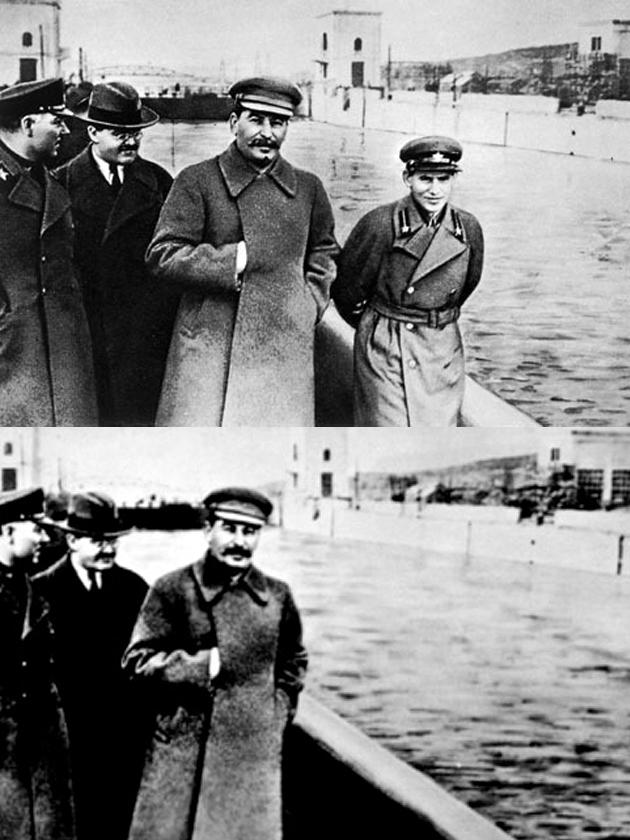
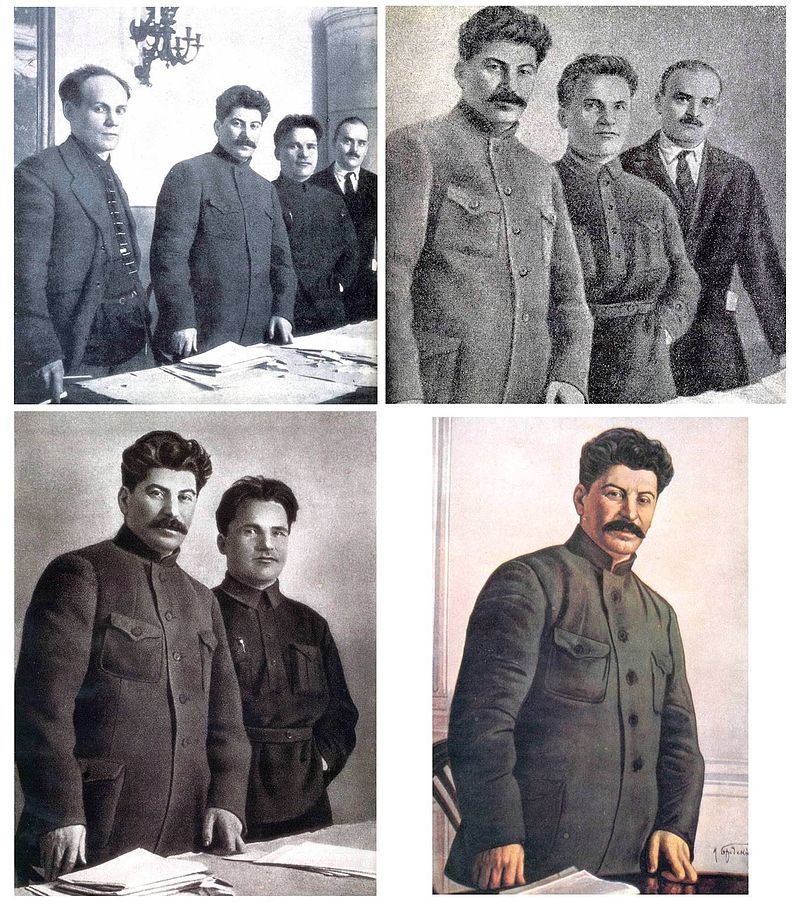
This qua­si-arti­sanal work, “one of the more enjoy­able tasks for the art depart­ment of pub­lish­ing hous­es dur­ing those times,” demand­ed seri­ous dex­ter­i­ty with the scalpel, glue, paint, and air­brush. (Some exam­ples, as you can see in this five-page gallery of images from The Com­mis­sar Van­ish­es, evi­denced more dex­ter­i­ty than oth­ers.) In this man­ner, Stal­in could order writ­ten out of his­to­ry such com­rades he ulti­mate­ly deemed dis­loy­al (and who usu­al­ly wound up exe­cut­ed as) as Naval Com­mis­sar Niko­lai Yezhov, infa­mous­ly made to dis­ap­pear from Stal­in’s side on a pho­to tak­en along­side the Moscow Canal, or Peo­ple’s Com­mis­sar for Posts and Telegraphs Niko­lai Antipov, com­man­der of the Leningrad par­ty Sergei Kirov, and Chair­man of the Pre­sid­i­um of the Supreme Sovi­et Niko­lai Shvernik — pic­tured, and removed one by one, just above.

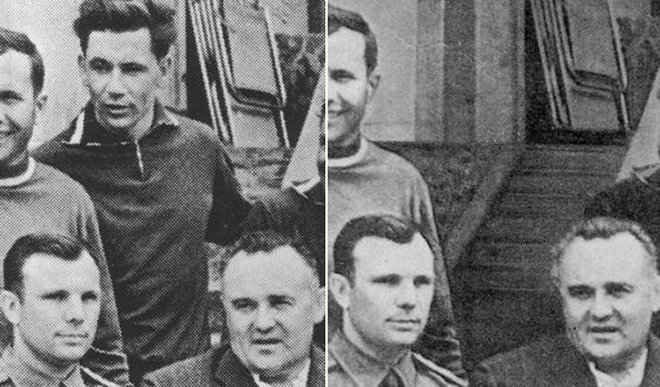
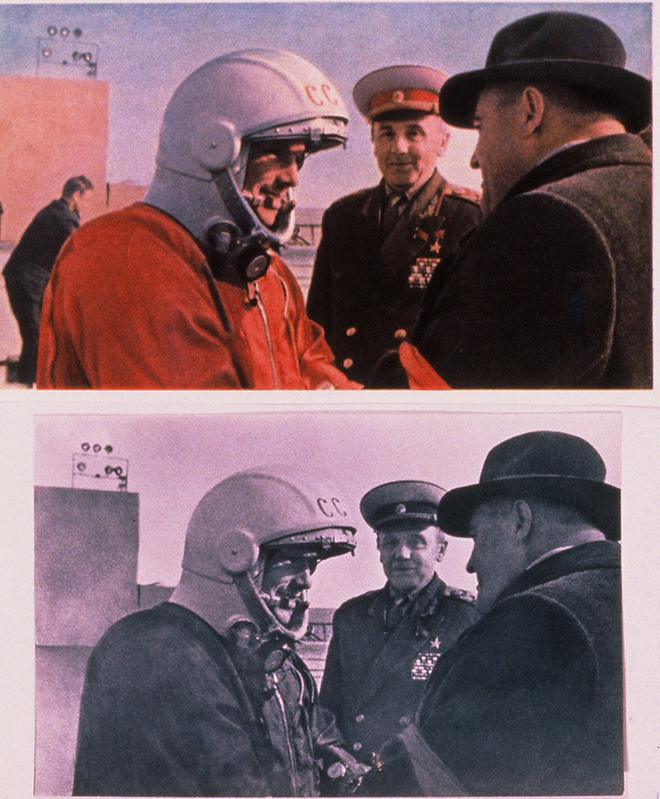
This prac­tice even extend­ed to the mate­ri­als of the Sovi­et space pro­gram, writes Wired’s James Oberg. Cos­mo­nauts tem­porar­i­ly erased from his­to­ry include Valentin Bon­darenko, who died in a fire dur­ing a train­ing exer­cise, and the espe­cial­ly promis­ing Grig­oriy Nelyubov (pic­tured, and then not pic­tured, at the top of the post), who “had been expelled from the pro­gram for mis­be­hav­ior and lat­er killed him­self.” Yuri Gagarin, the cos­mo­naut who made his­to­ry as the first human in out­er space, did not, of course, get erased by the proud author­i­ties, but even his pho­tos, like the one just above where he shakes hands with the Sovi­et space pro­gram’s top-secret leader Sergey Koroly­ov, went under the knife for cos­met­ic rea­sons, here the removal of the evi­dent­ly dis­tract­ing work­man in the back­ground — hard­ly a major his­tor­i­cal fig­ure, let alone a con­tro­ver­sial one, but still a real and maybe even liv­ing reminder that while the cam­era may lie, it can’t hold its tongue for­ev­er.

h/t @JackFeerick

Relat­ed Con­tent:

Joseph Stal­in, a Life­long Edi­tor, Wield­ed a Big, Blue, Dan­ger­ous Pen­cil

Leon Trot­sky: Love, Death and Exile in Mex­i­co

Watch the Sur­re­al­ist Glass Har­mon­i­ca, the Only Ani­mat­ed Film Ever Banned by Sovi­et Cen­sors (1968)

Sovi­et Union Cre­ates a List of 38 Dan­ger­ous Rock Bands: Kiss, Pink Floyd, Talk­ing Heads, Vil­lage Peo­ple & More (1985)

Russ­ian His­to­ry & Lit­er­a­ture Come to Life in Won­der­ful­ly Col­orized Por­traits: See Pho­tos of Tol­stoy, Chekhov, the Romanovs & More

Based in Seoul, Col­in Mar­shall writes and broad­casts on cities and cul­ture. He’s at work on the book The State­less City: a Walk through 21st-Cen­tu­ry Los Ange­les, the video series The City in Cin­e­ma, the crowd­fund­ed jour­nal­ism project Where Is the City of the Future?, and the Los Ange­les Review of Books’ Korea Blog. Fol­low him on Twit­ter at @colinmarshall or on Face­book.

Ansel Adams, Dorothea Lange, Clem Albers & Francis Stewart’s Censored Photographs of a WWII Japanese Internment Camp


Image by Ansel Adams

In places where atroc­i­ties or wide­spread human rights vio­la­tions occur, we some­times hear ordi­nary cit­i­zens lat­er claim they didn’t know what was going on. In the case of the intern­ment of Japan­ese Amer­i­cans dur­ing World War II, this would be almost impos­si­ble to believe. “120,000 peo­ple,” notes Newsweek, “lost their prop­er­ty and their free­dom,” round­ed up in full view of their neigh­bors. Every major pub­li­ca­tion of the time report­ed on Franklin Roosevelt’s 1941 Exec­u­tive Order. Newsweek wrote “that peo­ple in coastal areas ‘were more anx­ious than ever to get rid of their aliens after rumors that sig­nal lights were seen before sub­ma­rine attacks’ ” off the coast of South­ern Cal­i­for­nia. There were many such rumors, the kind that spread xeno­pho­bic fear and para­noia, and which peo­ple used to vocal­ly sup­port, or tac­it­ly approve of, send­ing their neigh­bors to intern­ment camps because of their ances­try.


Image by Fran­cis Stew­art

Oth­er reac­tions were less than sub­tle. The West Seat­tle Her­ald con­front­ed read­ers with the blunt head­line “GET ‘EM OUT!” Nonethe­less, Newsweek’s Rob Verg­er writes, “the pol­i­cy was by no means greet­ed with unan­i­mous sup­port,” and a vig­or­ous pub­lic debate played out, with oppo­nents point­ing to the bla­tant racism and vio­la­tions of civ­il rights. Two-thirds of the internees were Amer­i­can cit­i­zens. Yet all Japan­ese Amer­i­cans were repeat­ed­ly called “aliens,” lan­guage con­sis­tent with the vir­u­lent­ly anti-Japan­ese pro­pa­gan­da cam­paigns emerg­ing at the same time.

Once the camps were built and the internees impris­oned, how­ev­er, a mas­sive pro­pa­gan­da effort began, not only the sell the camps as a nec­es­sary nation­al secu­ri­ty mea­sure, but to por­tray them as idyl­lic vil­lages where the patri­ot­ic internees patient­ly wait­ed out the war by farm­ing, play­ing base­ball, mak­ing arts and crafts, run­ning gen­er­al stores, attend­ing school, wav­ing flags, and run­ning news­pa­pers.


Image by Clem Albers

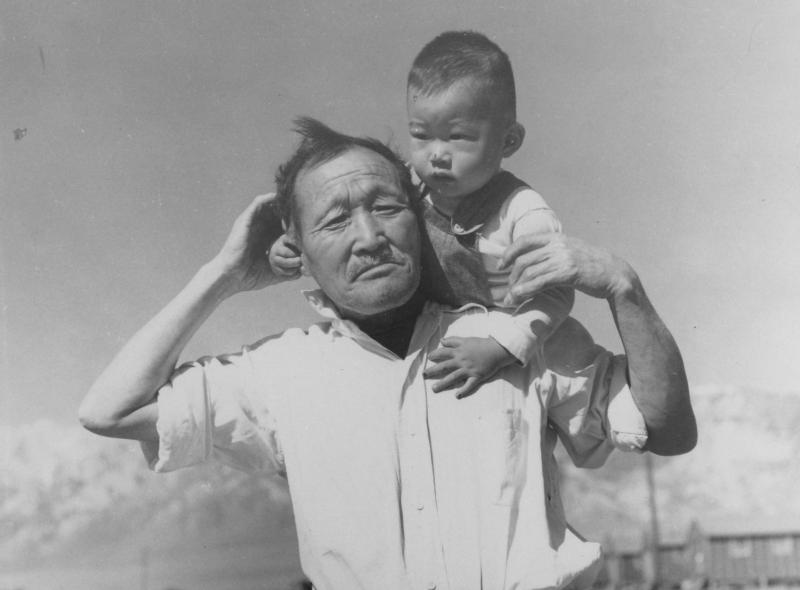
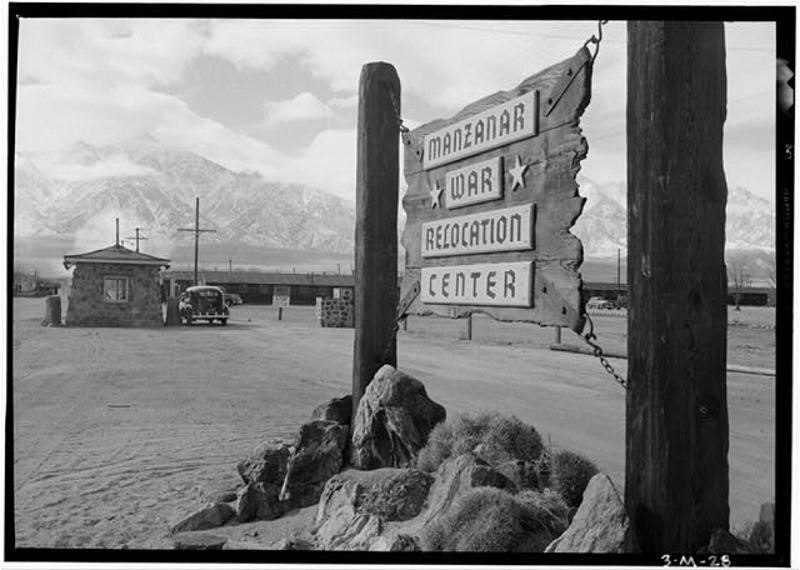
Much of that infor­ma­tion was con­veyed to the pub­lic visu­al­ly by pho­tog­ra­phers hired by the War Relo­ca­tion Author­i­ty to doc­u­ment the camps. Among them were Clem Albers, Fran­cis Stew­art, and Dorothea Lange—well known for her pho­tographs of the Great Depres­sion. All three vis­it­ed the camp called Man­za­nar in the foothills of the Sier­ra moun­tains. Anoth­er famous pho­tog­ra­ph­er, Ansel Adams, gained access to Man­za­nar by virtue of his friend­ship with its direc­tor, Ralph Mer­ritt.


Image by Dorothea Lange

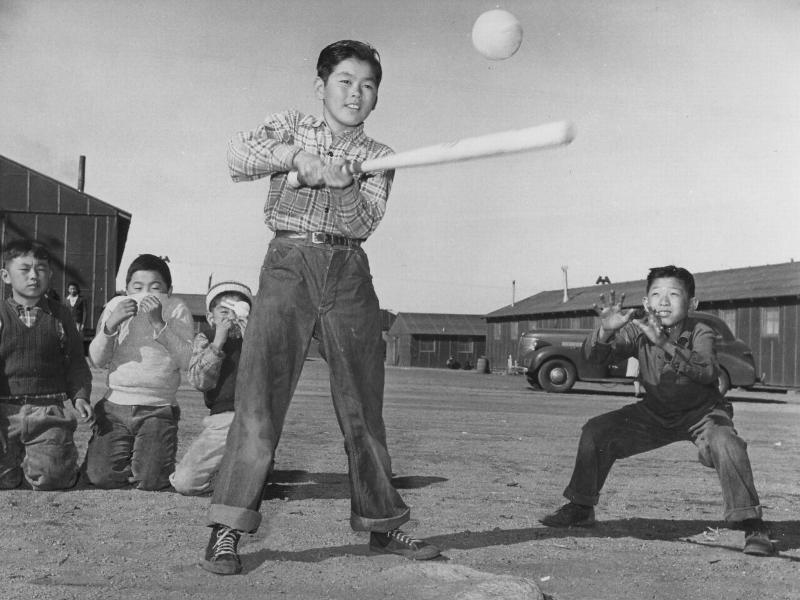
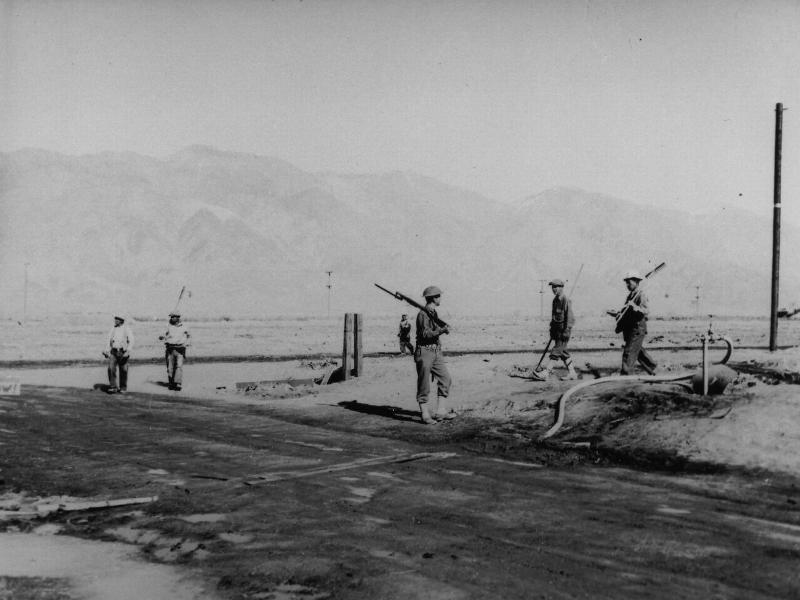
Their pho­tographs, for the most part, show busi­ly work­ing men and women, smil­ing school­child­ren, and lots of patri­ot­ic leisure activ­i­ties, like Stewart’s pho­to of sixth grade boys play­ing soft­ball, fur­ther up. The pho­tog­ra­phers were strict­ly pro­hib­it­ed from pho­tograph­ing guards, watch­tow­ers, search­lights, or barbed wire, and the heavy mil­i­tary pres­ence at the camp is near­ly always out of frame, with some very rare excep­tions, like Albers’ pho­to­graph above of mil­i­tary police.


Image by Ansel Adams

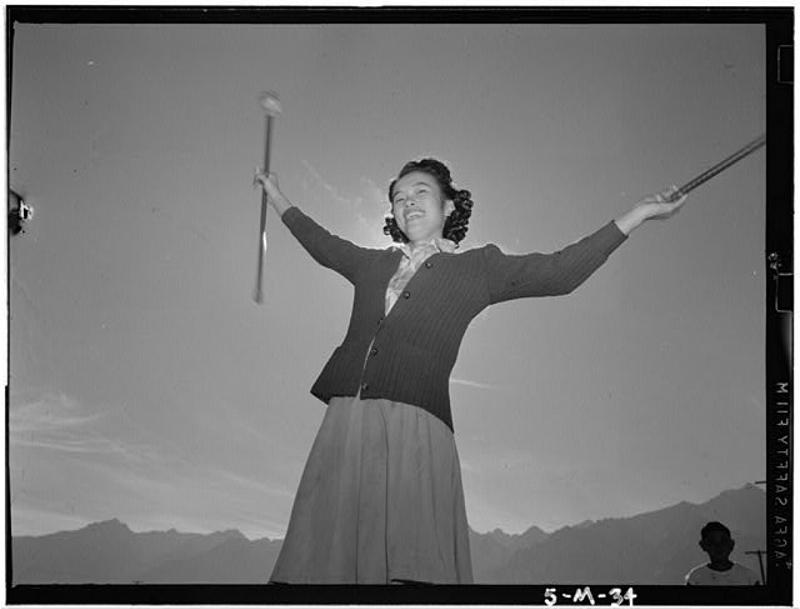
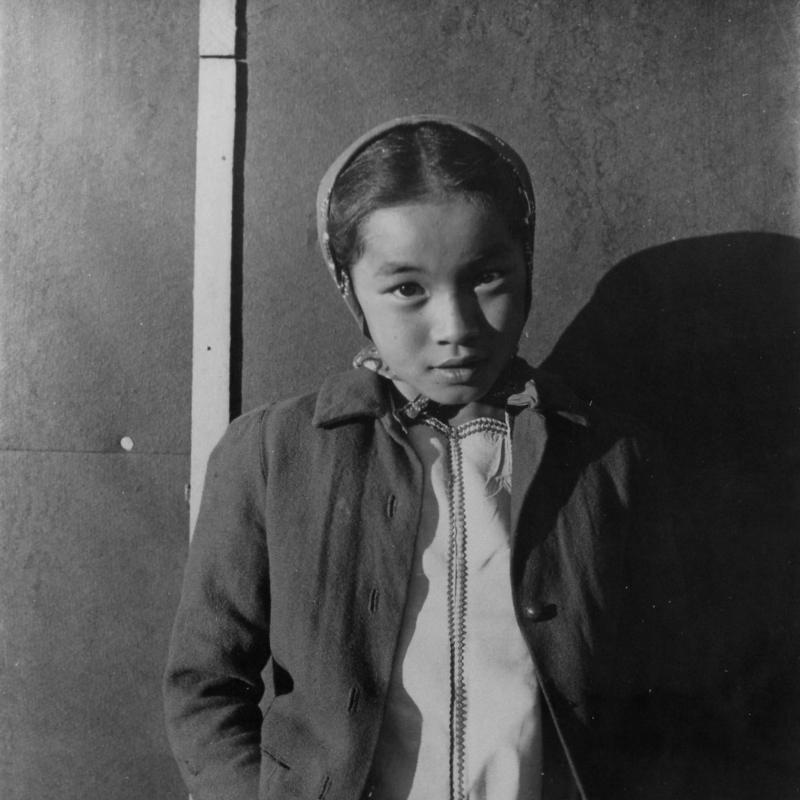
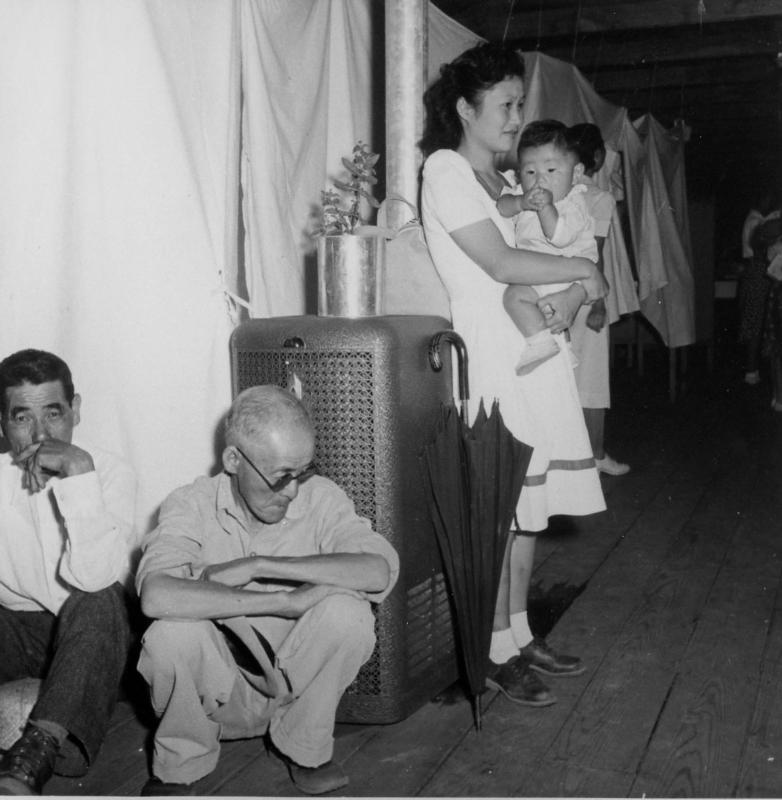
Adams worked under these pro­hi­bi­tions as well, but his pho­tos cap­tured camp life as hon­est­ly as he could. The stun­ning land­scapes some­times com­pete, even in the back­ground, with the real sub­ject of some of his images (as in the pho­to at the top). But he also con­veyed the harsh bar­ren­ness of the region. He tried to inti­mate the oppres­sive police appa­ra­tus by cap­tur­ing its shad­ow. “The pur­pose of my work,” he wrote to the Library of Con­gress in 1965 upon donat­ing his col­lec­tion, “was to show how these peo­ple, suf­fer­ing under a great injus­tice, and loss of prop­er­ty, busi­ness and pro­fes­sions, had over­come a sense of defeat and despair [sic].” His images often show internees “in hero­ic pos­es,” writes Dini­tia Smith, as above, in order to enno­ble their con­di­tions. Lange’s pho­tographs, on the oth­er hand, like that of a young girl below, “seem­ing­ly unstaged and unlight­ed… bear the hall­marks” of her “dis­tinc­tive­ly doc­u­men­tary style.” Her pic­tures “com­press intense human emo­tion into care­ful­ly com­posed frames.” Some of her pho­tos show smil­ing, relaxed sub­jects. Many oth­ers, like the pho­to­graph of a bar­racks inte­ri­or fur­ther down, show the faces of weary, uncer­tain, and despon­dent civil­ian pris­on­ers of war.


Image by Dorothea Lange

Per­haps because of her refusal to sen­ti­men­tal­ize the camps, or because of her left-wing pol­i­tics and oppo­si­tion to intern­ment (both known before she was hired), Lange’s work was cen­sored, not only through restrict­ed access, but through the impound­ment of over 800 pho­tographs she took at 21 loca­tions. Those pho­tos were recent­ly pub­lished in a book called Impound­ed: Dorothea Lange and the Cen­sored Images of Japan­ese Amer­i­can Intern­ment and hun­dreds of them are free to view online at the Den­sho Dig­i­tal Repository’s Dorothea Lange Col­lec­tion. The Nation­al Park Service’s col­lec­tion fea­tures 16 pic­tures from Lange’s vis­it to Man­za­nar. At the NPS site, you’ll also find col­lec­tions of pho­tographs from that camp by Adams, Albers, and Stew­art. Each, to one degree or anoth­er, faced a form of cen­sor­ship in what they could pho­to­graph or whether their work would be shown at all. What most ordi­nary peo­ple saw at the time did not tell the whole sto­ry. For all prac­ti­cal pur­pos­es, writes Ober­lin Library, “life at a Japan­ese intern­ment camp was com­pa­ra­ble to the life of a pris­on­er behind bars.”


Image by Dorothea Lange

h/t @Histouroborus

Relat­ed Con­tent:

478 Dorothea Lange Pho­tographs Poignant­ly Doc­u­ment the Intern­ment of the Japan­ese Dur­ing WWII

200 Ansel Adams Pho­tographs Expose the Rig­ors of Life in Japan­ese Intern­ment Camps Dur­ing WW II

Dr. Seuss Draws Anti-Japan­ese Car­toons Dur­ing WWII, Then Atones with Hor­ton Hears a Who!

Josh Jones is a writer and musi­cian based in Durham, NC. Fol­low him at @jdmagness
Cindy Sherman’s Instagram Account Goes Public, Revealing 600 New Photos & Many Strange Self-Portraits

The career of Jen­ny Holz­er, the artist who became famous in the 1970s and 80s through her pub­lic instal­la­tions of phras­es like “ABUSE OF POWER COMES AS NO SURPRISE” and “PROTECT ME FROM WHAT I WANT,” has made her into an ide­al Tweet­er. By the same token, the career of Cindy Sher­man, the artist who became famous in the 1970s and 80s through her inven­tive not-exact­ly-self-por­traits — pic­tures of her­self elab­o­rate­ly remade as a vari­ety of oth­er peo­ple, includ­ing oth­er famous peo­ple, in a vari­ety of time peri­ods — has made her into an ide­al Insta­gram­mer.

But though Sher­man had been using Insta­gram for quite some time, most of the pub­lic had no idea she had any pres­ence there at all until just this week. “The account, which mys­te­ri­ous­ly switched from pri­vate to pub­lic in recent months, is a mix of per­son­al pho­tos along­side Sherman’s ever-famous manip­u­lat­ed images of her­self,” reports Art­net’s Car­o­line Elbaor.

“What we see here is some­what of a depar­ture from the artist’s tra­di­tion­al mod­el: the frame is tighter and clos­er to her face, in what is clear use of a phone’s front-fac­ing cam­era. Plus, the sub­ject mat­ter is decid­ed­ly inti­mate in com­par­i­son to her usu­al work — the lat­est posts doc­u­ment a stay in the hos­pi­tal. She may even be hav­ing fun with fil­ters.”

She appar­ent­ly start­ed hav­ing fun with them a few months ago, from one May post whose pho­to she describes as “Self­ie! No fil­ter, haha­ha” — but in which she does seem to have made use of cer­tain effects to give the image a few of the suite of uncan­ny qual­i­ties in which she spe­cial­izes. Though not a mem­ber of the gen­er­a­tions the world most close­ly asso­ciates with avid self­ie-tak­ing, Sher­man brings a unique­ly rich expe­ri­ence with the form, or forms like it. Her “method of turn­ing the lens onto her­self is uncan­ni­ly appro­pri­ate to our times,” writes Elbaor,” in which the stage-man­aged self­ie has become so ubiq­ui­tous that it’s now fod­der for exhi­bi­tions and often cit­ed as an art form in itself.”

Sher­man’s Insta­gram self-por­trai­ture, in con­trast to the often (but not always) glam­orous pro­duc­tions that hung on the walls of her shows before, has entered fas­ci­nat­ing new realms of strange­ness and even grotes­querie. Using the image-mod­i­fi­ca­tion tools so many of us might pre­vi­ous­ly assumed were used only by teenage girls des­per­ate to erase their imag­ined flaws, Sher­man twists and bends her own fea­tures into what look like liv­ing car­toon char­ac­ters. “A bit scary,” one com­menter wrote of Sher­man’s recent hos­pi­tal-bed self­ie (tak­en while recov­er­ing from a fall from a horse), “but I can’t look away.” Many of the artist’s thou­sands and thou­sands of new and cap­ti­vat­ed Insta­gram fol­low­ers are sure­ly react­ing the same way. Check out Sher­man’s Insta­gram feed here.

Relat­ed Con­tent:

Say What You Real­ly Mean with Down­load­able Cindy Sher­man Emoti­cons

Muse­um of Mod­ern Art (MoMA) Launch­es Free Course on Look­ing at Pho­tographs as Art

See The First “Self­ie” In His­to­ry Tak­en by Robert Cor­nelius, a Philadel­phia Chemist, in 1839

Based in Seoul, Col­in Mar­shall writes and broad­casts on cities and cul­ture. He’s at work on the book The State­less City: a Walk through 21st-Cen­tu­ry Los Ange­les, the video series The City in Cin­e­ma, the crowd­fund­ed jour­nal­ism project Where Is the City of the Future?, and the Los Ange­les Review of Books’ Korea Blog. Fol­low him on Twit­ter at @colinmarshall or on Face­book.

Accidental Wes Anderson: Every Place in the World with a Wes Anderson Aesthetic Gets Documented by Reddit

Wes Ander­son­’s immac­u­late­ly art-direct­ed, imme­di­ate­ly rec­og­niz­able films may take place in a real­i­ty of their own, but that does­n’t mean a real­i­ty with no con­nec­tion to ours. To go by their results, the direc­tor of The Life Aquat­ic, Moon­rise King­dom, and The Grand Budapest Hotel (to name only three of his most visu­al­ly dis­tinc­tive pic­tures) and his col­lab­o­ra­tors have clear­ly immersed them­selves in the very real his­to­ry of the West in the twen­ti­eth cen­tu­ry, drink­ing deeply of its fash­ion, its archi­tec­ture, and its indus­tri­al and graph­ic design.

So no mat­ter how fan­ci­ful his con­struct­ed set­tings — The Roy­al Tenen­baums’ dream of New York City, The Dar­jeel­ing Lim­it­ed’s train cross­ing India in quirky old-school splen­dor, The Grand Budapest Hotel’s unspe­cif­ic Alpine mit­teleu­ropa — Ander­son always assem­bles them from prece­dent­ed ele­ments.

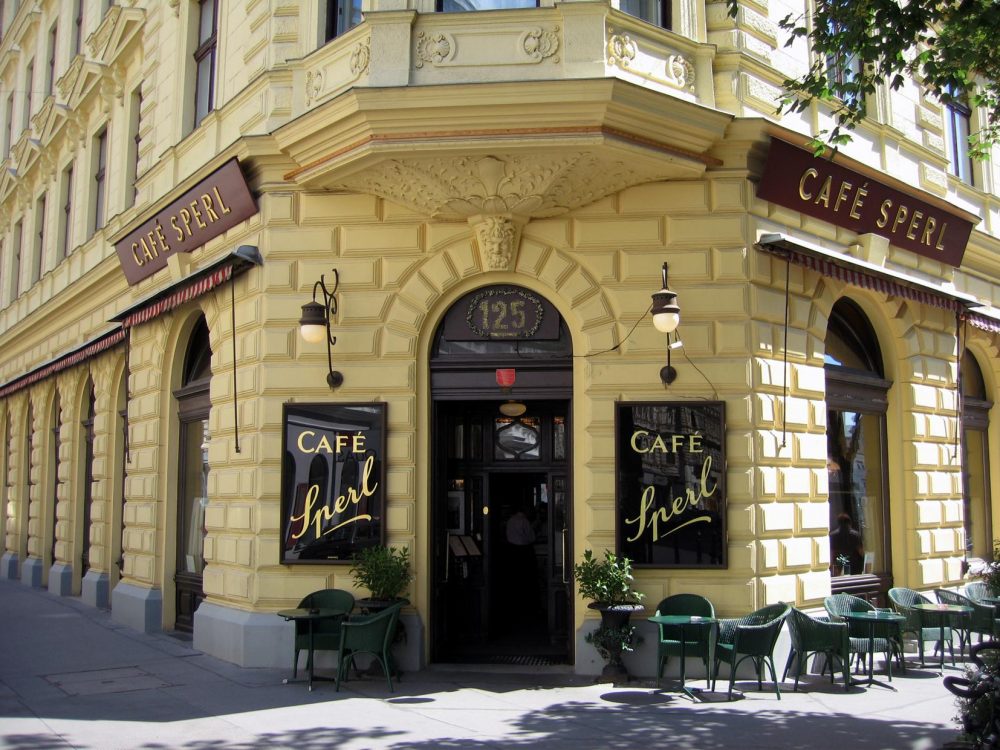
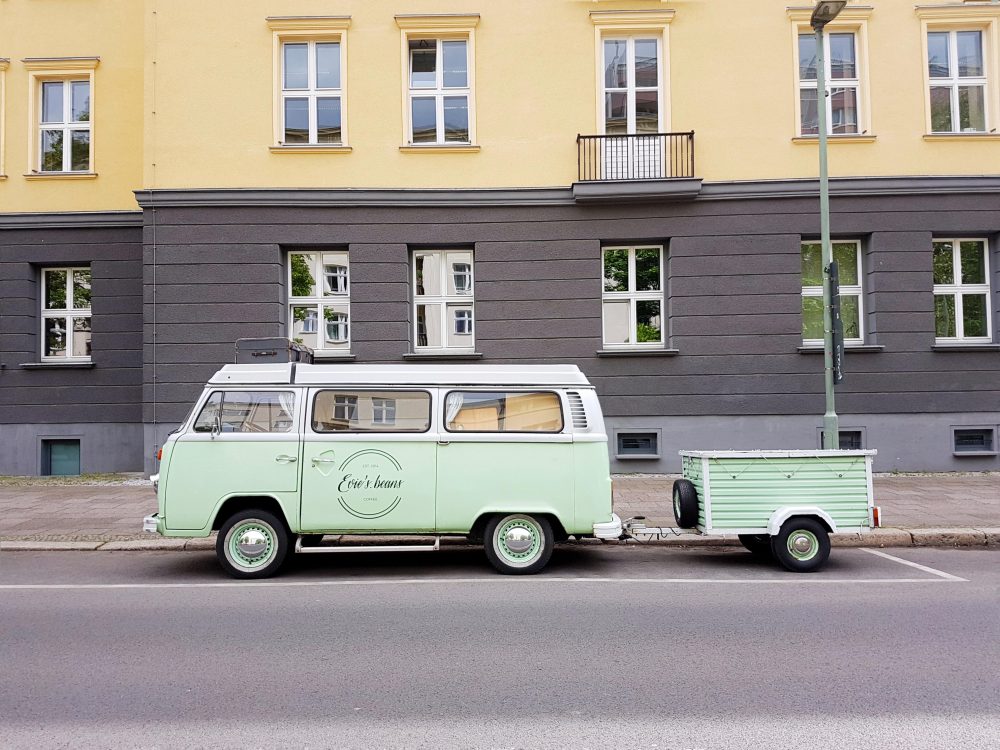
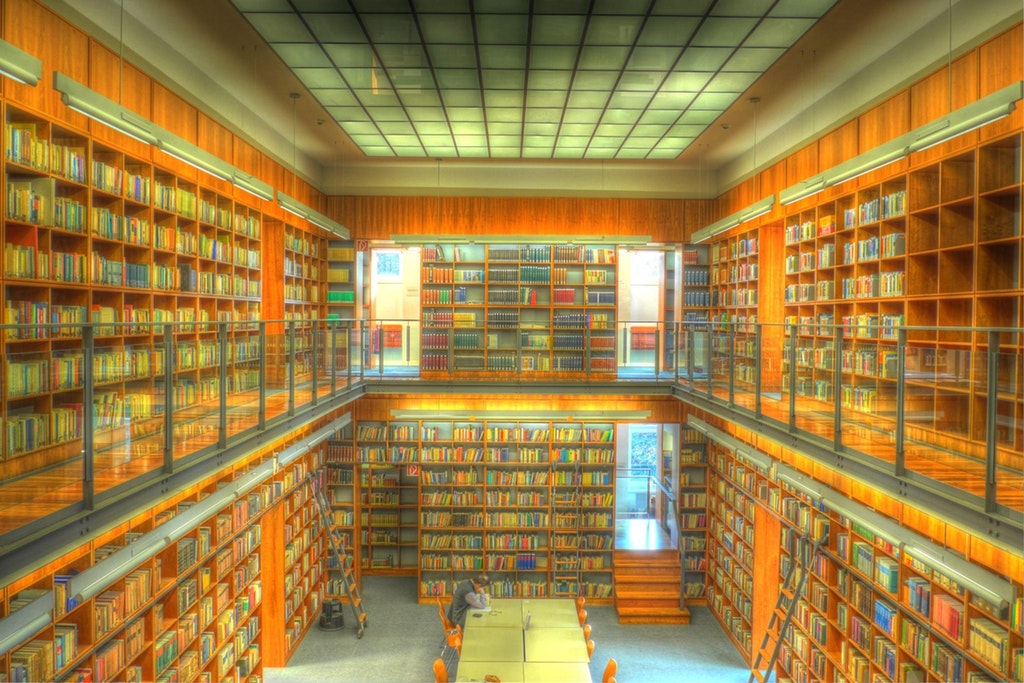
And so the habitués of a sub­red­dit called Acci­den­tal Ander­son have set out to post pic­tures of his sources, or places that might well pass for his sources, all over not just Europe, of course — where they found the Vien­nese cafe at the top of the post and the Berlin­er deliv­ery van with wag­on just above — but Amer­i­ca, Asia, the Mid­dle East, and else­where.

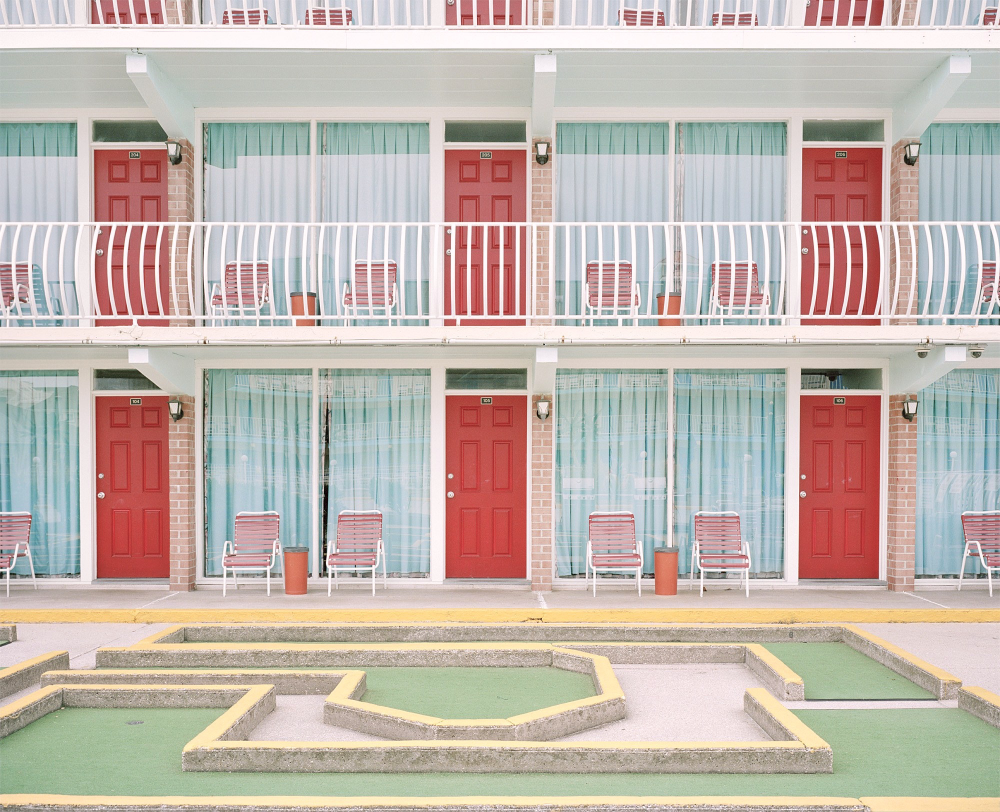
Much of a loca­tion’s acci­den­tal Ander­son­ian poten­tial comes down to its geom­e­try and its col­ors: deep reds, bright yel­lows, and espe­cial­ly pale pinks and greens. Many of Ander­son­’s pre­ferred hues appear in the Gold Crest Resort Motel just above, which may strike a fan as hav­ing come right out of an Ander­son pic­ture even more so than the motel he actu­al­ly used in his debut fea­ture Bot­tle Rock­et. The direc­tor has since moved on to much fin­er hostel­ries, which thus form a strong thread among Acci­den­tal Ander­son­’s pop­u­lar post­ings: Flori­da’s Don CeSar Hotel (known as the “Pink Lady”), Cuba’s Hotel Sarato­ga, Switzer­land’s Hotel Belvédère, Italy’s Grand Hotel Mis­ur­nia.

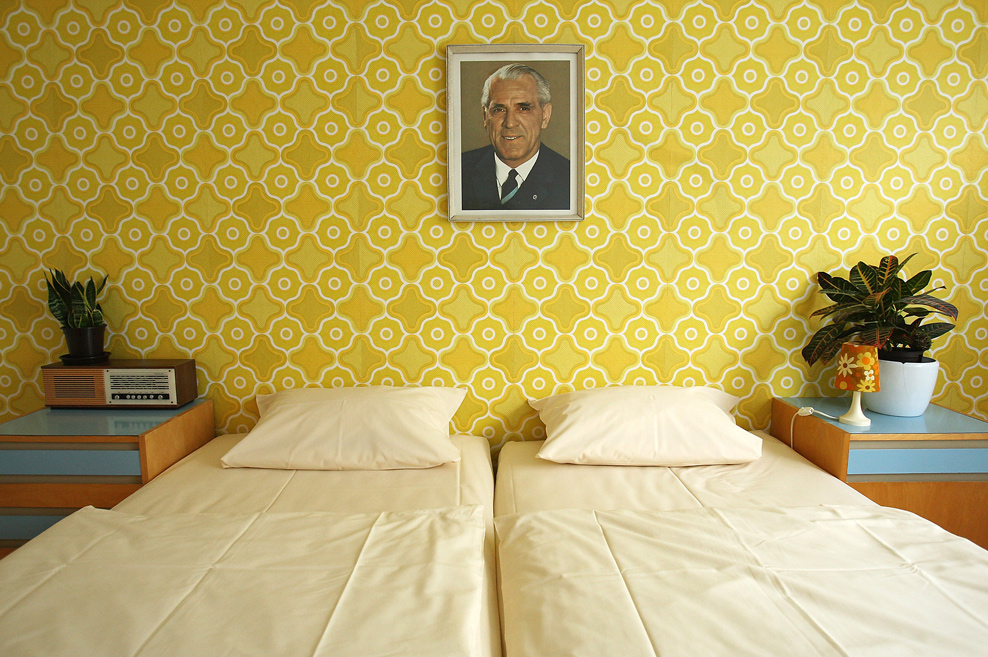
Berlin’s hum­bler Ostel, a themed trib­ute to the design sen­si­bil­i­ties of the for­mer East Ger­many, might also res­onate with the ever-deep­en­ing his­tor­i­cal con­scious­ness of Ander­son­’s movies. (Remem­ber The Grand Budapest Hotel’s tit­u­lar build­ing, sad­ly redone in a util­i­tar­i­an, faint­ly Sovi­et avo­ca­do-and-ochre dur­ing the film’s 1960s pas­sages.)

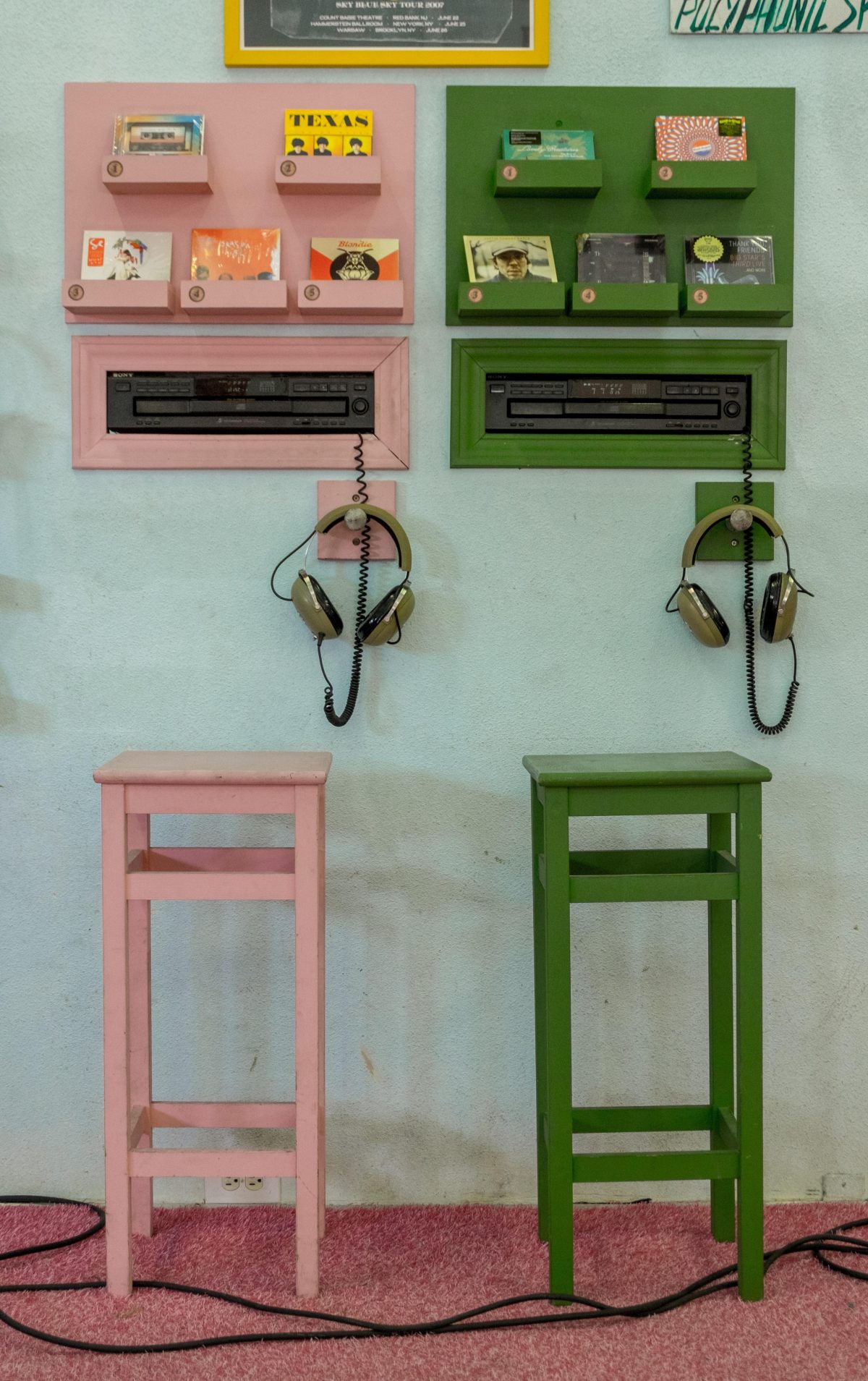
To think that Ander­son came from a place no less impos­si­bly dis­tant from the realm of mid­cen­tu­ry Europe than Texas, home of the Dal­las music store pic­tured below. Giv­en his increas­ing pop­u­lar­i­ty, it’s hard­ly a sur­prise to see his sig­na­ture aes­thet­ic being not just reflect­ed but adopt­ed around the world. If life con­tin­ues to imi­tate art, Acci­den­tal Ander­son­’s con­trib­u­tors will long have their work cut out for them. Pay a vis­it to Acci­den­tal Ander­son here.

Relat­ed Con­tent:

Wes Ander­son Movie Sets Recre­at­ed in Cute, Minia­ture Dio­ra­mas

The Per­fect Sym­me­try of Wes Anderson’s Movies

The Geo­met­ric Beau­ty of Aki­ra Kuro­sawa and Wes Anderson’s Films

Wes Ander­son Likes the Col­or Red (and Yel­low)

Based in Seoul, Col­in Mar­shall writes and broad­casts on cities and cul­ture. He’s at work on the book The State­less City: a Walk through 21st-Cen­tu­ry Los Ange­les, the video series The City in Cin­e­ma, the crowd­fund­ed jour­nal­ism project Where Is the City of the Future?, and the Los Ange­les Review of Books’ Korea Blog. Fol­low him on Twit­ter at @colinmarshall or on Face­book.

Russian History & Literature Come to Life in Wonderfully Colorized Portraits: See Photos of Tolstoy, Chekhov, the Romanovs & More

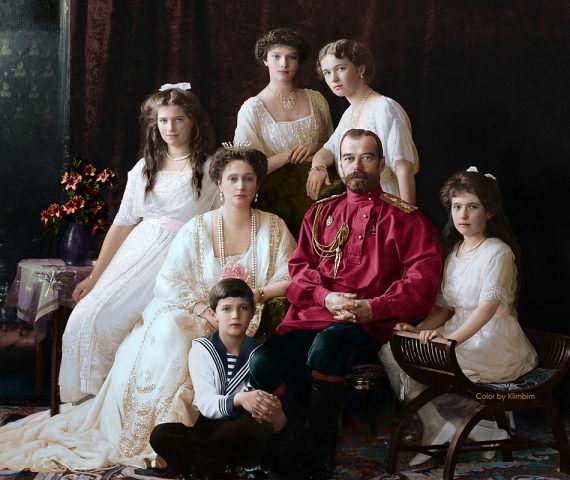
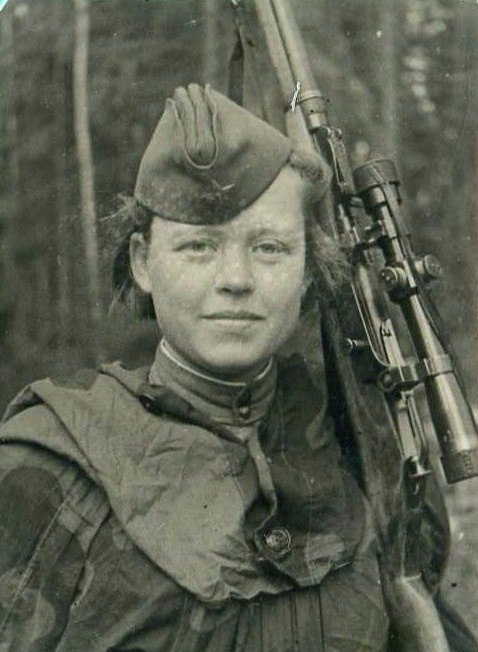
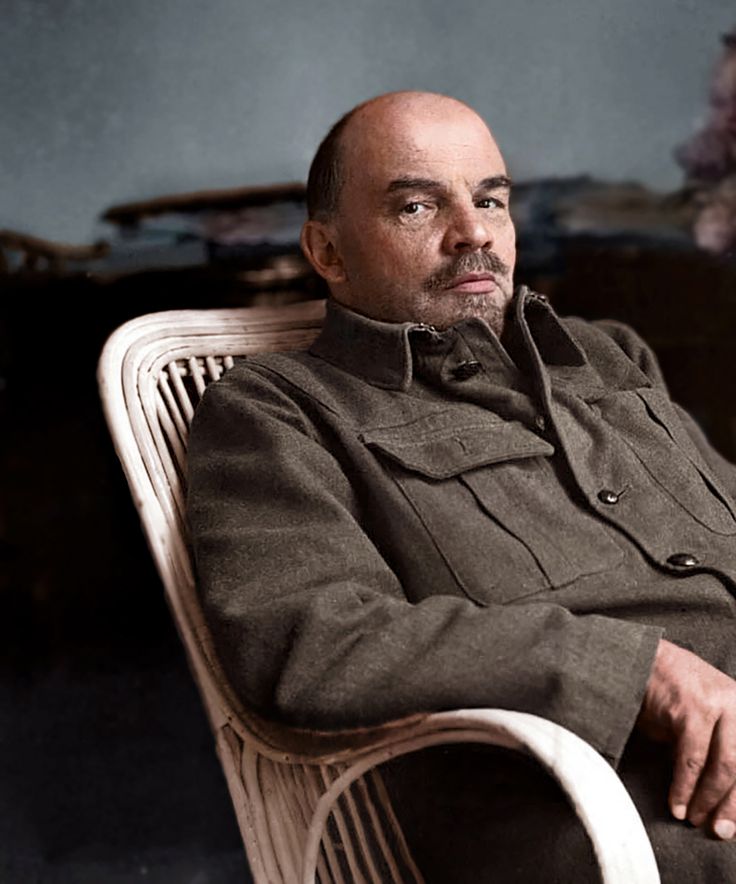
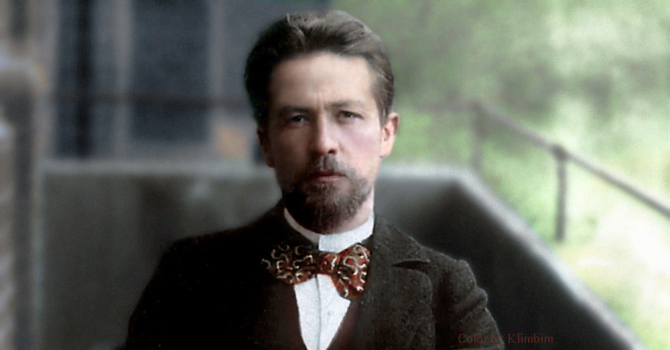
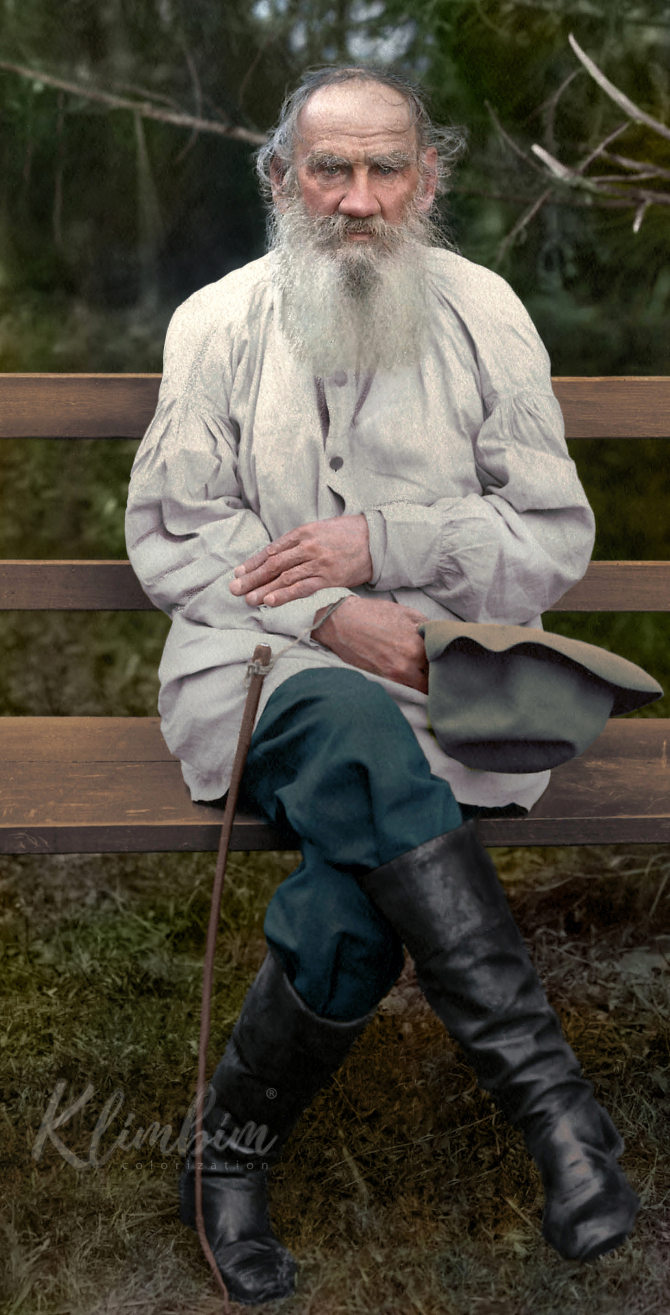
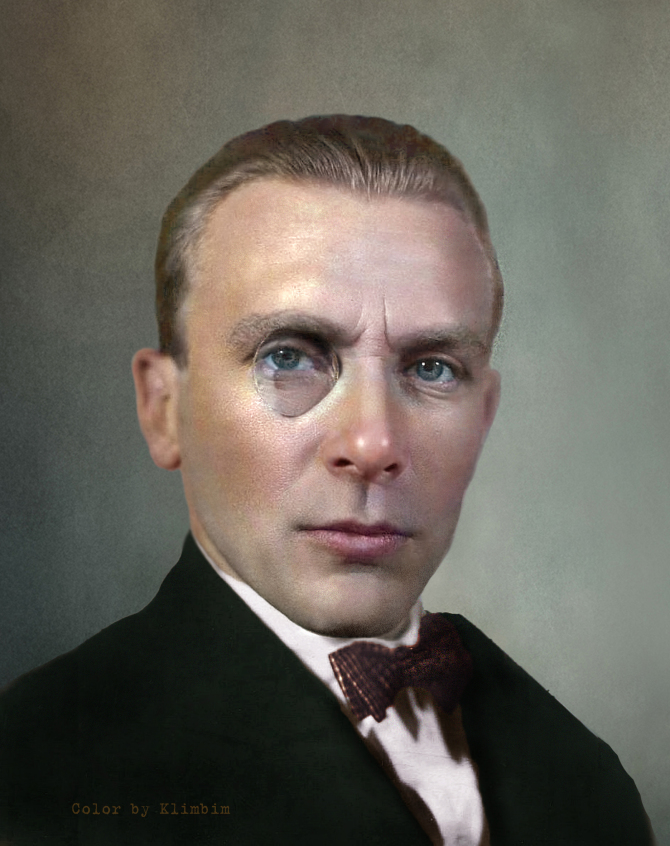
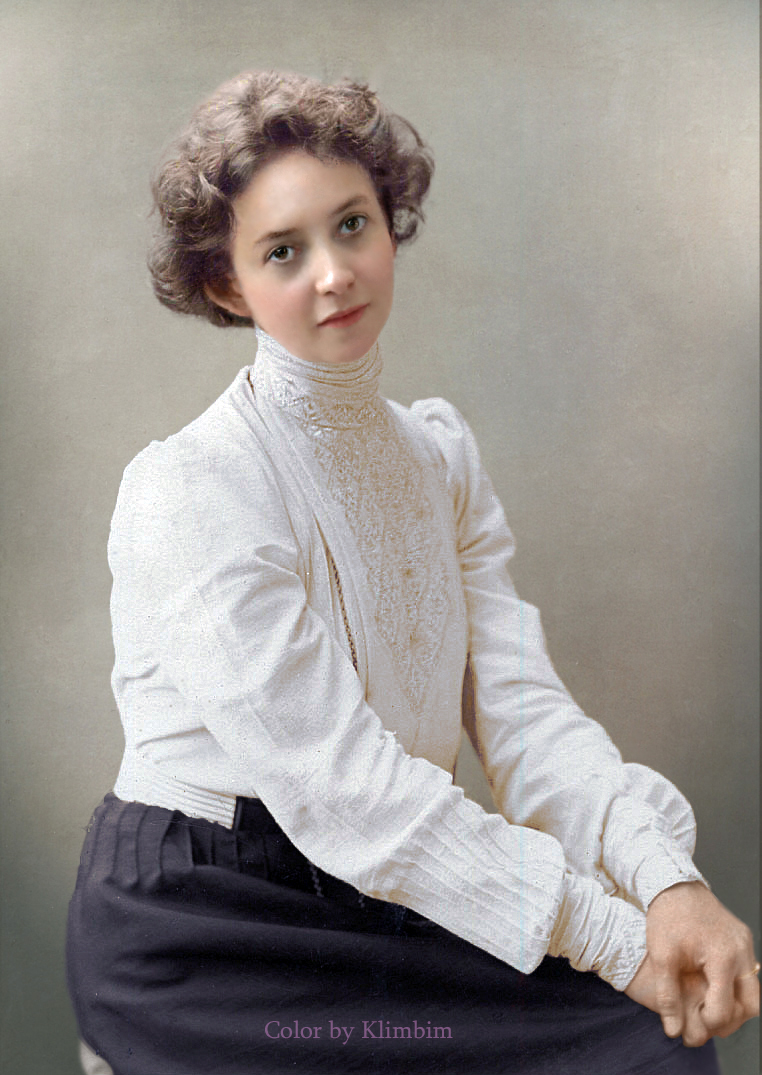
Col­orized episodes of I Love Lucy verge on sac­ri­lege, but Olga Shirn­i­na, a trans­la­tor and ama­teur col­orist of con­sid­er­able tal­ent, has unques­tion­ably noble goals when col­oriz­ing vin­tage por­traits, such as that of the Romanovs, above.

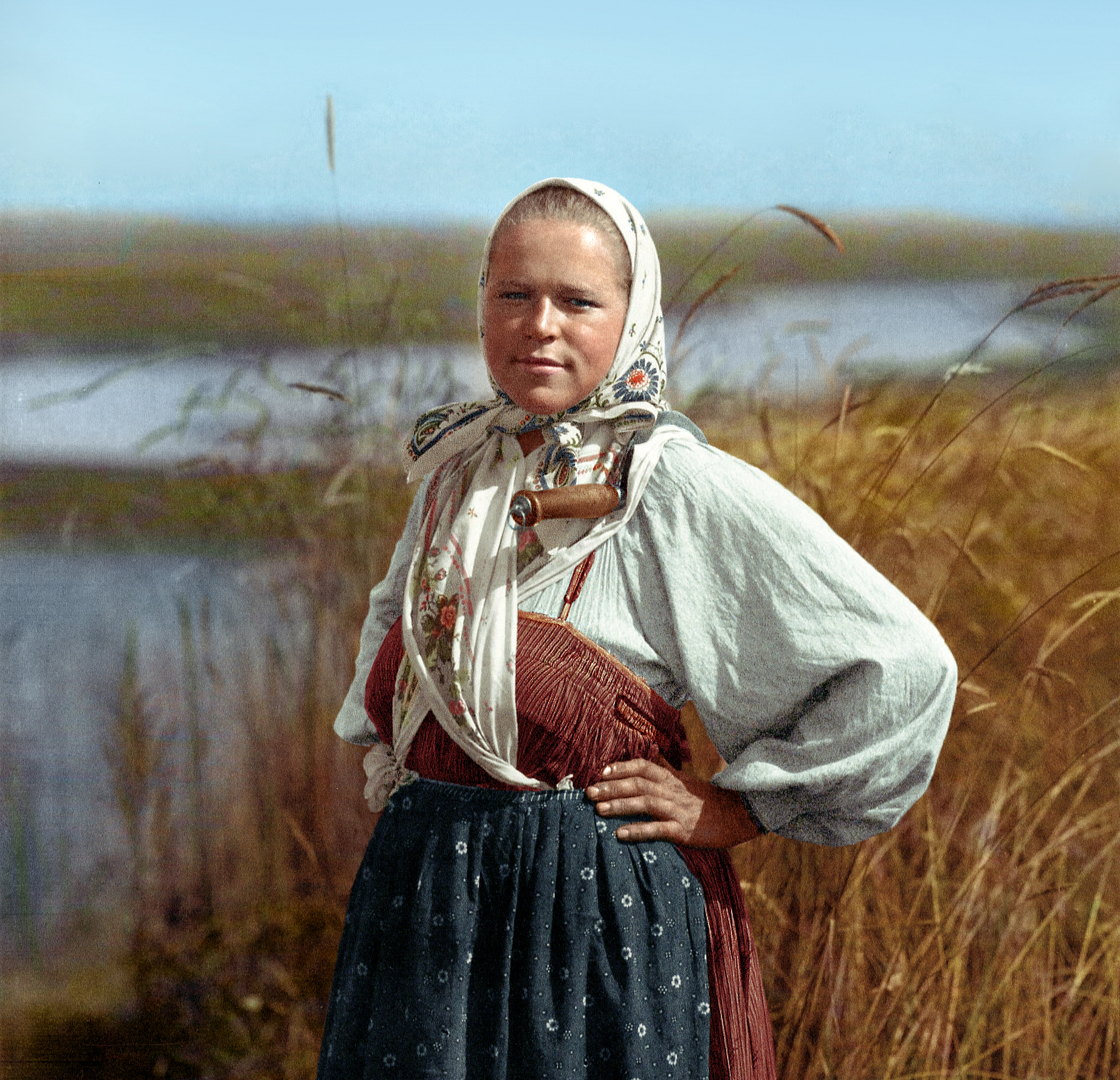
In her view, col­or has the pow­er to close the gap between the sub­jects of musty pub­lic domain pho­tos and their mod­ern view­ers. The most ful­fill­ing moment for this artist, aka Klimblim, comes when “sud­den­ly the per­son looks back at you as if he’s alive.”

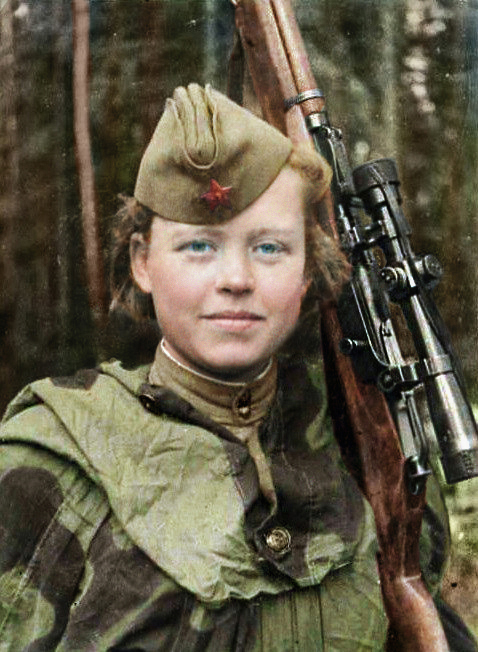
A before and after com­par­i­son of her dig­i­tal makeover on Nadezh­da Kolesniko­va, one of many female Sovi­et snipers whose vin­tage like­ness­es she has col­orized bears this out. The col­or ver­sion could be a fash­ion spread in a cur­rent mag­a­zine, except there’s noth­ing arti­fi­cial-seem­ing about this 1943 pose.

“The world was nev­er mono­chrome even dur­ing the war,” Shirn­i­na reflect­ed in the Dai­ly Mail.

Mil­i­tary sub­jects pose a par­tic­u­lar chal­lenge:

When I col­orize uni­forms I have to search for info about the colours or ask experts. So I’m not free in choos­ing col­ors. When I col­orize a dress on a 1890s pho­to, I look at what col­ors were fash­ion­able at that time. When I have no lim­i­ta­tions I play with colours look­ing for the best com­bi­na­tion. It’s real­ly quite arbi­trary but a cou­ple of years ago I trans­lat­ed a book about colours and hope that some­thing from it is left in my head.

She also puts her­self on a short leash where famous sub­jects are con­cerned. Eye­wit­ness accounts of Vladimir Lenin’s eye col­or ensured that the revolutionary’s col­orized iris­es would remain true to life.

And while there may be a mar­ket for rep­re­sen­ta­tions of punked out Russ­ian lit­er­ary heroes, Shirn­i­na plays it straight there too, eschew­ing the dig­i­tal Man­ic Pan­ic where Chekhov, Tol­stoy, and Bul­gakov are con­cerned.

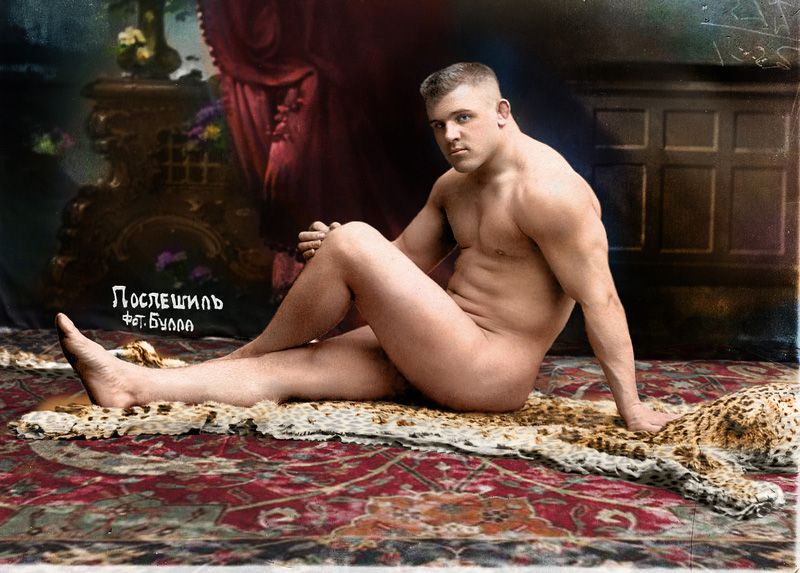
Her hand with Pho­to­shop CS6 may restore celebri­ty to those whose stars have fad­ed with time, like Vera Komis­sarzhevskaya, the orig­i­nal ingenue in Chekhov’s much per­formed play The Seag­ull and wrestler Karl Pospis­chil, who showed off his physique sans culotte in a pho­to from 1912.

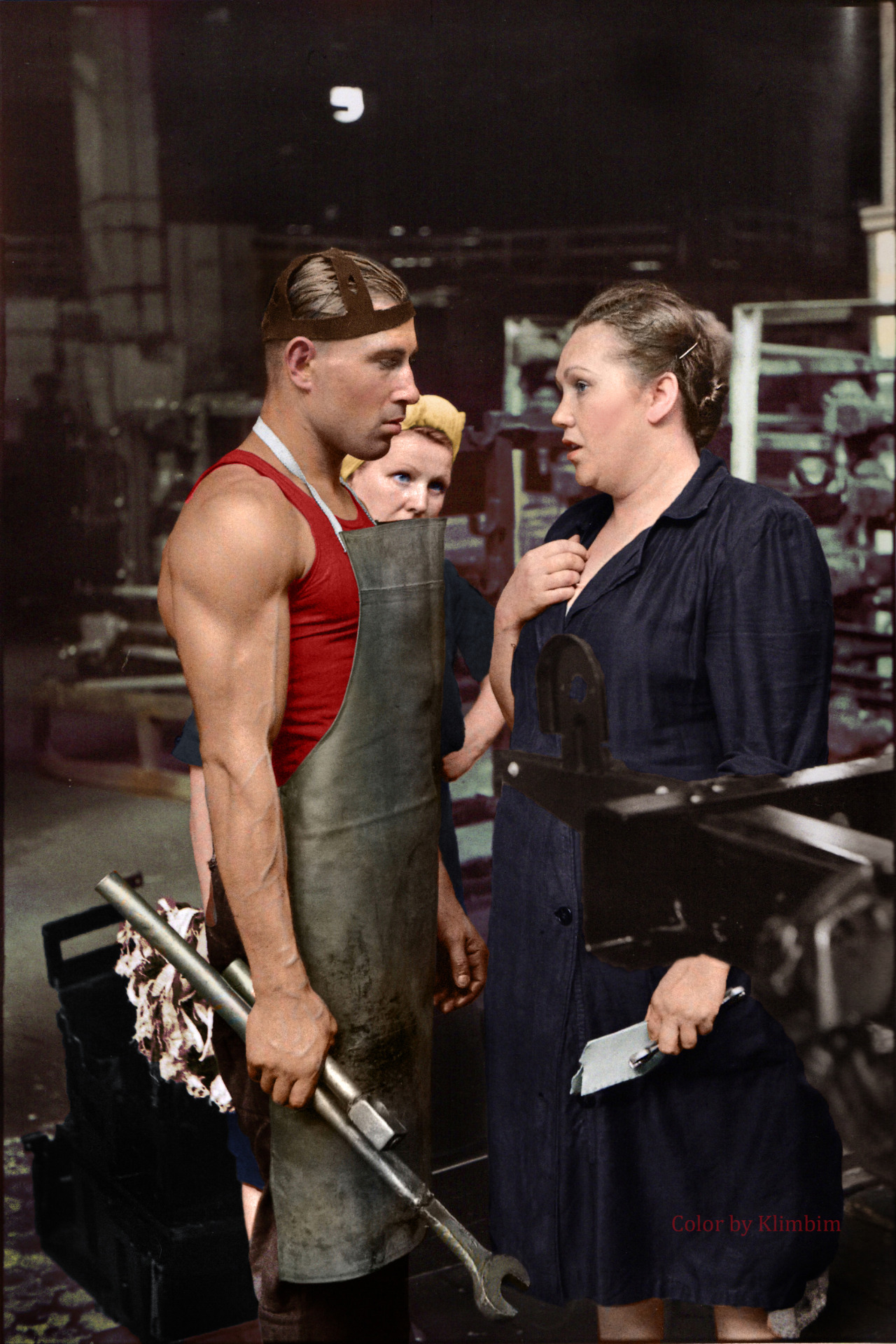
Even the unsung pro­le­tari­at are giv­en a chance to shine from the fields and fac­to­ry floors.

Browse an eye pop­ping gallery of Olga Shirnina’s work on her web­site.

Relat­ed Con­tent:

Beau­ti­ful, Col­or Pho­tographs of Paris Tak­en 100 Years Ago—at the Begin­ning of World War I & the End of La Belle Époque

Col­orized Pho­tos Bring Walt Whit­man, Char­lie Chap­lin, Helen Keller & Mark Twain Back to Life

Venice in Beau­ti­ful Col­or Images 125 Years Ago: The Rial­to Bridge, St. Mark’s Basil­i­ca, Doge’s Palace & More

Ayun Hal­l­i­day is an author, illus­tra­tor, the­ater mak­er and Chief Pri­ma­tol­o­gist of the East Vil­lage Inky zine.  Fol­low her @AyunHalliday.

An Archive of Iconic Photos from the Golden Age of Jazz: William Gottlieb’s Portraits of Dizzy, Thelonious, Billie, Satchmo & More

If you’ve seen the most famous pho­tographs of Bil­lie Hol­i­day, Dizzy Gille­spie, Thelo­nious Monk, Frank Sina­tra, Djan­go Rein­hardt, or near­ly any oth­er jazz leg­end from the mid-20th cen­tu­ry, you’ve seen the work of William P. Got­tlieb. His pho­tos have graced many a clas­sic album cov­er, mag­a­zine spread, and poster. “Between 1938 and 1948,” writes Maria Popo­va, Got­tlieb “doc­u­ment­ed the jazz scene in New York City and Wash­ing­ton, D.C., and cre­at­ed what even­tu­al­ly became some of history’s most icon­ic por­traits of jazz greats.” He ini­tial­ly did so as a self-taught ama­teur, a jazz colum­nist whose pho­tog­ra­phy was “an after­thought,” notes Gottlieb’s 2006 Wash­ing­ton Post obit­u­ary,” mere visu­al accom­pa­ni­ment to his reg­u­lar work.”

As Got­tlieb once told The New York Times, “I got into pho­tog­ra­phy because The Post was stingy and wouldn’t pay pho­tog­ra­phers to cov­er my 11 o’clock con­certs.” But he devel­oped an unde­ni­ably keen eye for per­for­mance.

What’s more, his work is deeply informed by affec­tion and empa­thy. Got­tlieb was an artist who had warm rela­tion­ships with his sub­jects. He took the pho­to at the top, per­haps the most famous image of Bil­lie Hol­i­day, in 1947, when the singer “was at her peak,” he wrote, “musi­cal­ly and physically”—two years clean and sober after her time in a fed­er­al prison.

“Regret­tably,” he writes, “Bil­lie regressed.” Got­tlieb tells the heart­break­ing sto­ry of the last time he went to see her. The “audi­ence wait­ed… and wait­ed.” The pho­tog­ra­ph­er, “play­ing a hunch,” went back­stage to find her “pret­ty much ‘out of it.’”

I helped her fin­ish dress­ing, then led her to the micro­phone. She looked hor­ri­ble. She sound­ed worse. I replaced my note­book in my pock­et, put a lens cap on my cam­era, and walked away, choos­ing to remem­ber this remark­able woman as she once was.

Most of Gottlieb’s sto­ries are not near­ly so trag­ic. Take his last run-in with Louis Arm­strong, at their den­tist office’s wait­ing room. “After small talk,” he wrote, “Satch­mo looked me over, decid­ing I, too, had been gain­ing weight. He reached into his jack­et pock­et, pulled out a print­ed diet (that he kept for friends-in-need), and hand­ed me a copy. ‘Pops,’ he said, ‘try this.’ I quick­ly not­ed that it fea­tured Plu­to Water [a lax­a­tive]. But I thanked him, any­way.”

Got­tlieb retired from pho­tog­ra­phy and jazz writ­ing in the fifties and made a career as a children’s book author and edu­ca­tion­al film pro­duc­er. In 1979, he pub­lished 219 of his best pho­tographs in a book called The Gold­en Age of Jazz, and in 2010, much of Gottlieb’s work entered the pub­lic domain, accord­ing to The Library of Con­gress (LOC). You can see hun­dreds of his photographs—famous images like those of Sarah Vaugh­an, fur­ther up, Thelo­nious Monk, above, Bud­dy Rich, below, and so many more—at the Library of Congress’s online William P. Got­tlieb Col­lec­tion. The LOC describes the col­lec­tion thus:

The online col­lec­tion pro­vides access to dig­i­tal images of all six­teen hun­dred neg­a­tives and trans­paren­cies, approx­i­mate­ly one hun­dred anno­tat­ed con­tact prints, and over two hun­dred select­ed pho­to­graph­ic prints that show Got­tlieb’s crop­ping, burn­ing, and dodg­ing pref­er­ences. One can fol­low the artist’s work process by exam­in­ing first a raw neg­a­tive, then an anno­tat­ed con­tact print, and final­ly a fin­ished, pub­lished prod­uct. The Web site also includes dig­i­tal images of Down Beat mag­a­zine arti­cles in which Got­tlieb’s pho­tographs were first pub­lished. Oth­er spe­cial fea­tures of the online pre­sen­ta­tion are audio clips of Got­tlieb dis­cussing spe­cif­ic pho­tographs, arti­cles about the col­lec­tion from Civ­i­liza­tion mag­a­zine and the Library of Con­gress Infor­ma­tion Bul­letin, an essay describ­ing Got­tlieb’s life and work, and a “Got­tlieb on Assign­ment” sec­tion that show­cas­es Down Beat arti­cles about Thelo­nious Monk, Dar­d­anelle, Willie “the Lion” Smith, and Bud­dy Rich.

You can also down­load high res­o­lu­tion ver­sions of near­ly every image in the archive. (To pur­chase prints, see Got­tlieb’s online gallery, Jazz Pho­tos.) There may be no bet­ter way, short of actu­al­ly being there and meet­ing the stars, to wit­ness the gold­en age of jazz than through the eyes and ears of such a sym­pa­thet­ic observ­er as William P. Got­tlieb. Enter the col­lec­tion here.

Relat­ed Con­tent:

Hear 2,000 Record­ings of the Most Essen­tial Jazz Songs: A Huge Playlist for Your Jazz Edu­ca­tion

Stan­ley Kubrick’s Jazz Pho­tog­ra­phy and The Film He Almost Made About Jazz Under Nazi Rule

How “America’s First Drug Czar” Waged War Against Bil­lie Hol­i­day and Oth­er Jazz Leg­ends

Josh Jones is a writer and musi­cian based in Durham, NC. Fol­low him at @jdmagness
« Go BackMore in this category... »
Quantcast