Wim Wenders Explains How Polaroid Photos Ignite His Creative Process and Help Him Capture a Deeper Kind of Truth

Wim Wen­ders began his pro­lif­ic fea­ture film­mak­ing career in 1970, and near­ly half a cen­tu­ry lat­er — hav­ing direct­ed such cinephile favorites as Alice in the CitiesThe Amer­i­can FriendParis, Texas, and Wings of Desire along the way — he shows no signs of slow­ing down. Known for his col­lab­o­ra­tion with cin­e­matog­ra­phers, and with Rob­by Müller in par­tic­u­lar, Wen­ders has worked in every­thing from black-and-white 16-mil­lime­ter film, when he first start­ed out, to dig­i­tal 3D, which he’s spent recent years putting to a vari­ety of cin­e­mat­ic ends. But we can trace all of his visions back, in one way or anoth­er, to the hum­ble Polaroid instant cam­era.

“Every movie starts with a cer­tain idea,” says Wen­ders in the short “Pho­tog­ra­phers in Focus” video above, and the Polaroid was just a col­lec­tion of con­stant ideas.” The auteur speaks over images of some of the Polaroids he’s tak­en through­out his life, relat­ing his his­to­ry with the medi­um.

“My very first Polaroid cam­era was a very sim­ple one. Mid-six­ties. I was 20, and I used Polaroid cam­eras exclu­sive­ly until I was about 35 or so. Most of them I gave away, because when you took Polaroids, peo­ple were always greedy and want­ed them because it was an object, it was a sin­gu­lar thing.”

Wen­ders describes his Polaroids as “very insight­ful into the process of my first six, sev­en movies, all the movies I did through the sev­en­ties,” the era in which he mas­tered the form of the road movie first in his native Ger­many, then in the much-mythol­o­gized Unit­ed States. He not only shot Polaroids in prepa­ra­tion, but dur­ing pro­duc­tion, snap­ping them casu­al­ly, much as one would on a gen­uine road trip. “Polaroids were nev­er so exact about the fram­ing. You did­n’t real­ly care about that. It was about the imme­di­a­cy of it. It’s almost a sub­con­scious act, and then it became some­thing real. That makes it such a win­dow into your soul as well.” Polaroid pho­tographs, as Wen­ders sees them, cap­ture a deep­er kind of truth. It’s no sur­prise, then, even in age of the 3D dig­i­tal cam­era, to see them mak­ing a come­back.

Relat­ed Con­tent:

Wim Wen­ders Reveals His Rules of Cin­e­ma Per­fec­tion

The Mas­ter­ful Polaroid Pic­tures Tak­en by Film­mak­er Andrei Tarkovsky

Watch Lau­rence Olivi­er, Liv Ull­mann and Christo­pher Plummer’s Clas­sic Polaroid Ads

Gun Nut William S. Bur­roughs & Gonzo Illus­tra­tor Ralph Stead­man Make Polaroid Por­traits Togeth­er

Based in Seoul, Col­in Mar­shall writes and broad­casts on cities and cul­ture. His projects include the book The State­less City: a Walk through 21st-Cen­tu­ry Los Ange­les and the video series The City in Cin­e­ma. Fol­low him on Twit­ter at @colinmarshall or on Face­book.

Virginia Woolf’s Personal Photo Album Digitized & Put Online by Harvard: See Candid Snapshots of Woolf, Her Family, and Friends from the Bloomsbury Group

Some writ­ers are rest­less by nature, roam­ing like Ernest Hem­ing­way or Hen­ry Miller, set­tling nowhere and every­where. Oth­ers are home­bod­ies, like William Faulkn­er and Vir­ginia Woolf. Their fic­tion reflects their desire to nest in place. Strolling the grounds of Faulkner’s Rowan Oak one swel­ter­ing sum­mer, I swear I saw the author round a cor­ner of the house, lost in thought and wear­ing rid­ing clothes. Vis­i­tors to Vir­ginia Woolf’s home in the vil­lage of Rod­mell in East Sus­sex have sure­ly had sim­i­lar visions.

Woolf’s home con­tains her writ­ing life with­in the lush gar­den grounds and cot­tage walls of the 17th cen­tu­ry Monk’s House—Vir­ginia and Leonard’s retreat, then per­ma­nent home, from 1919 until her sui­cide by drown­ing in the near­by Riv­er Ouse in 1941.

Even in death she belonged to the house; Leonard buried her ash­es beneath an elm in the Monk’s House gar­den. Although Leonard was the gar­den­er, “there are very few entries” in Virginia’s diary “which do not men­tion the gar­den.”

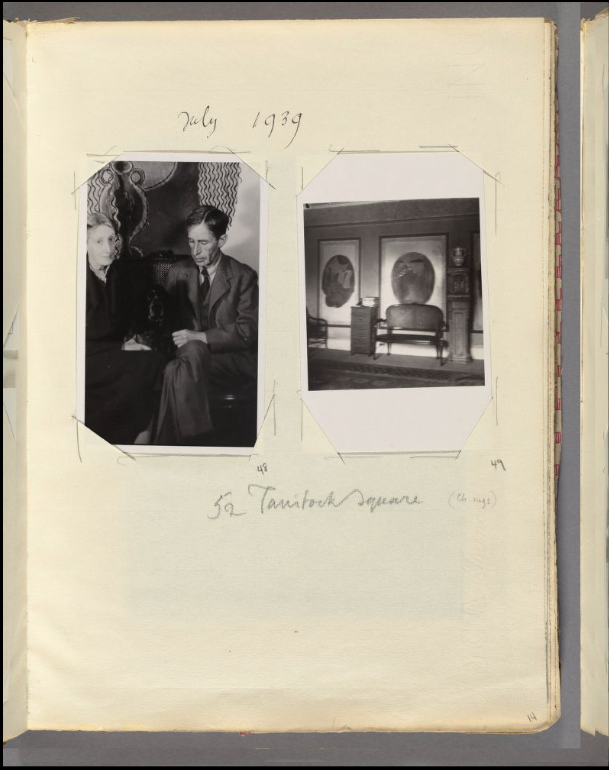
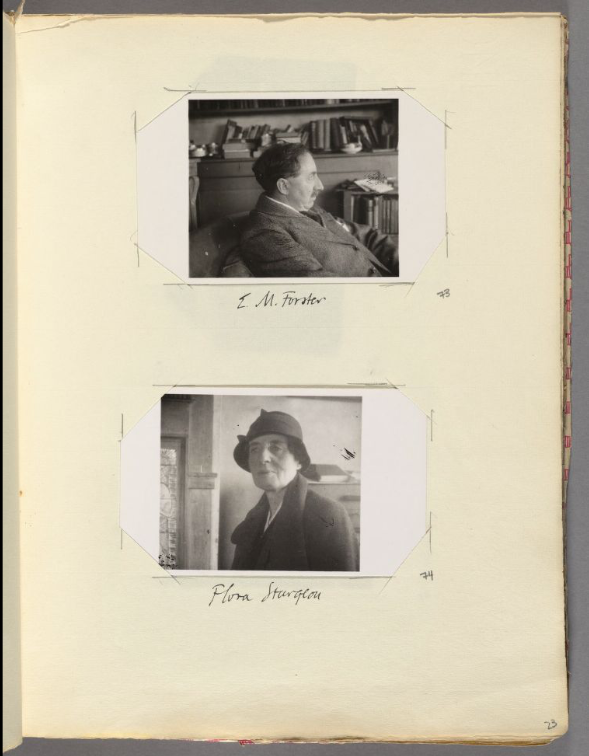
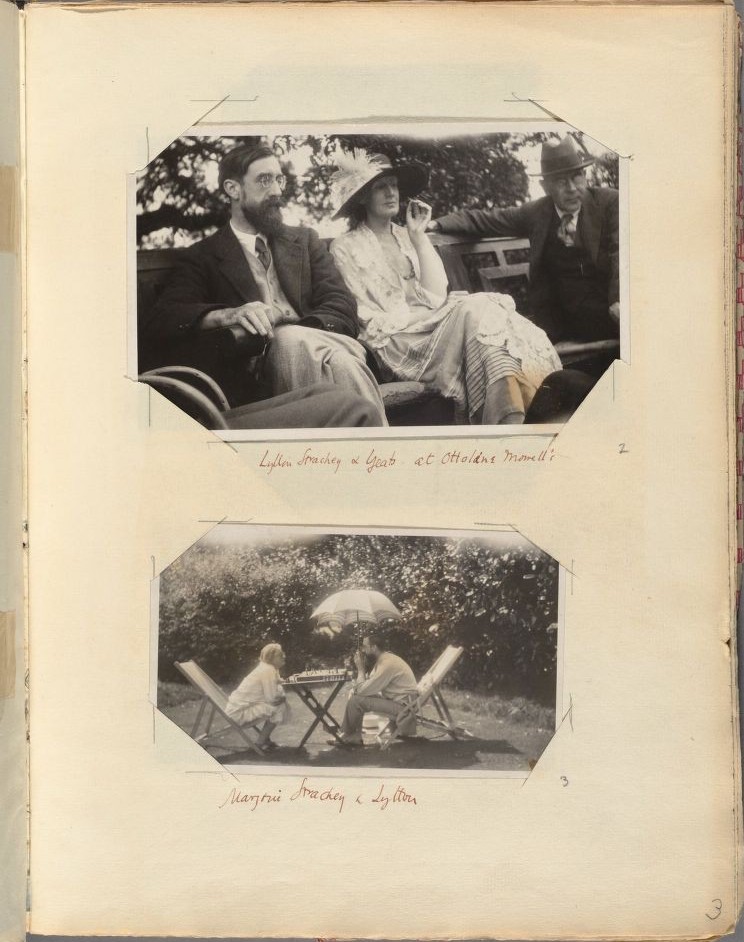
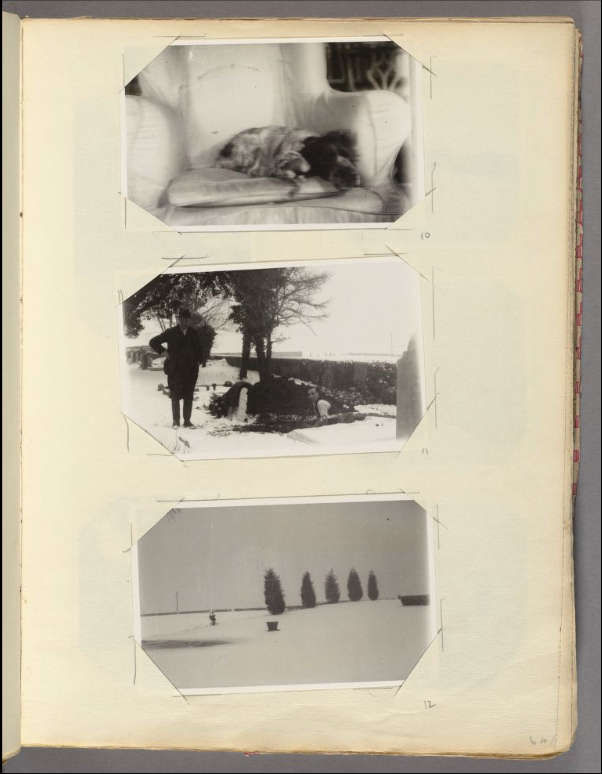
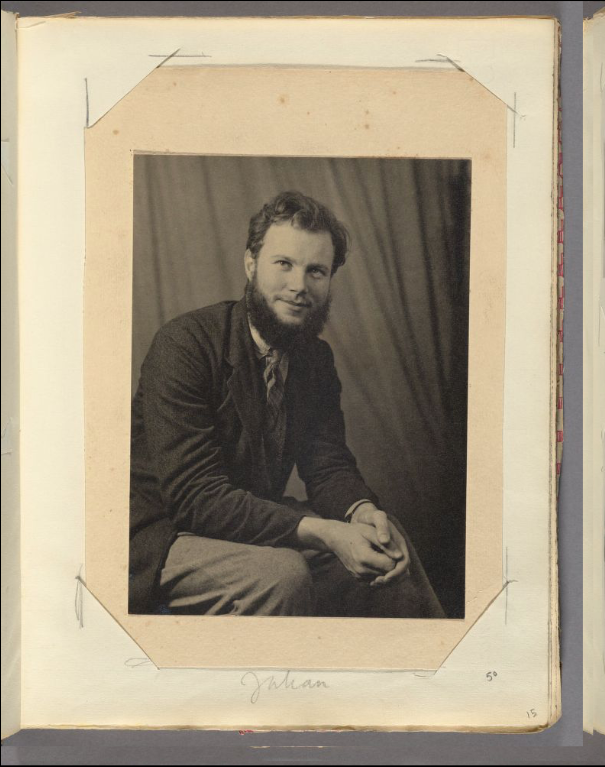
But there are many oth­er ways to meet the author of Mrs. Dal­loway and Jacob’s Room than trav­el­ing to her writer’s lodge, a tidy, tiny house on the Monk’s House grounds that served as her office. Like an avid Instragrammer—or like my moth­er and prob­a­bly yours—Woolf kept care­ful record of her life in pho­to albums, which now reside at Harvard’s Houghton Library. The Monk’s House albums, num­bered 1–6, con­tain images of Woolf, her fam­i­ly, and her many friends, includ­ing such famous mem­bers of the Blooms­bury group as E.M. Forster (above, top), John May­nard Keynes, and Lyt­ton Stra­chey (below, with Woolf and W.B. Yeats, and play­ing chess with sis­ter Mar­jorie). Har­vard has dig­i­tized one album, Monk’s House 4, dat­ed 1939 on the cov­er. You can view its scanned pages at their library site.

There are vaca­tion pho­tos and fam­i­ly pho­tos; land­scapes and pho­tos of pets; clip­pings from news­pa­pers and mag­a­zines; and, of course, the gar­den. The albums span the peri­od 1890 to 1947 (includ­ing addi­tions by Leonard after Virginia’s death). Many of the pho­tos are labeled, many are not. Many of the albums’ pages are left blank. The pho­tographs are arranged in no par­tic­u­lar order. The net effect is that of a life rec­ol­lect­ed in preg­nant images laced with lacu­nae, a psy­cho­log­i­cal theme of so much of Woolf’s writ­ing. Woolf, writes Mag­gie Humm, “believed that pho­tographs could help her to sur­vive those iden­ti­ty-destroy­ing moments of her own life—her inco­her­ent ill­ness­es.”

But pho­tog­ra­phy was also a means for cul­ti­vat­ing rela­tion­ships. Woolf “skill­ful­ly trans­formed friends and moments into art­ful tableaux, and she was sur­round­ed by female friends and fam­i­ly who were also ener­getic pho­tog­ra­phers,” includ­ing her sis­ter, Lady Otto­line Mor­rell, her friend and lover Vita Sackville-West, and her great aunt Julia Mar­garet Cameron. She “fre­quent­ly invit­ed friends to share her reflec­tions. The let­ters and diaries describe a con­stant exchange of pho­tographs, in which the pho­tographs become a meet­ing-place, a con­ver­sa­tion, aide-mémoires, and some­times mech­a­nisms of sur­vival and entice­ment.”

Unlike Monk’s House, a world built and shared with her hus­band, Woolf’s albums rep­re­sent her own per­son­al net­work of rela­tion­ships. They serve as memo­ri­als and med­i­ta­tions after the deaths of those close to her. “Pho­tographs of friends were impor­tant memen­to mori,” such as the por­trait of poet Julian Bell, above, her nephew, who was killed in the Span­ish Civ­il War. The pho­tos doc­u­ment gath­er­ings and impor­tant life events among her social cir­cle. They per­form all the tasks of ordi­nary pho­to albums, and more—showing us the “chain of per­cep­tions” of which per­son­al iden­ti­ty is made in Woolf’s mod­ernist vision, with rep­e­ti­tions and sequences cen­tered around famil­iar objects like her favorite chair.

For fans, avid read­ers, crit­ics, and lit­er­ary his­to­ri­ans, the pho­tographs pro­vide a visu­al record of a life we come to know so well through the let­ters, diaries, and romans à clef. Writ­ing to her sis­ter, Woolf once described paint­ing a por­trait “using dozens of snap­shots in the paint.” Vis­it her pho­to album here at the Har­vard Library site, and flip through the pages of her life in snap­shots.

via @HarvardTheatre

Relat­ed Con­tent:

An Ani­mat­ed Intro­duc­tion to Vir­ginia Woolf

In the Only Sur­viv­ing Record­ing of Her Voice, Vir­ginia Woolf Explains Why Writ­ing Isn’t a “Craft” (1937)

The Steamy Love Let­ters of Vir­ginia Woolf and Vita Sackville-West (1925–1929)

Why Should We Read Vir­ginia Woolf? A TED-Ed Ani­ma­tion Makes the Case

Josh Jones is a writer and musi­cian based in Durham, NC. Fol­low him at @jdmagness

Google’s Free App Analyzes Your Selfie and Then Finds Your Doppelganger in Museum Portraits

Hav­ing the abil­i­ty to vir­tu­al­ly explore the his­to­ry, back sto­ries, and cul­tur­al sig­nif­i­cance of art­works from over a thou­sand muse­ums gen­er­ates nowhere near the excite­ment as a fea­ture allow­ing users to upload self­ies in hopes of locat­ing an Insta­gram-wor­thy dop­pel­gänger some­where in this vast dig­i­tal col­lec­tion.

On the oth­er hand, if this low-brow inno­va­tion leads great hordes of mil­len­ni­als and iGen-ers to cross the thresh­olds of muse­ums in over 70 coun­tries, who are we to crit­i­cize?

So what if their pri­ma­ry moti­va­tion is snap­ping anoth­er self­ie with their Flem­ish Renais­sance twin? As long as one or two devel­op a pas­sion for art, or a par­tic­u­lar muse­um, artist, or peri­od, we’re good.

Alas, some dis­grun­tled users (prob­a­bly Gen X‑ers and Baby Boomers) are giv­ing the Google Arts & Cul­ture app (iPhone-Android) one-star reviews, based on their inabil­i­ty to find the only fea­ture for which they down­loaded it.

Allow us to walk you through.

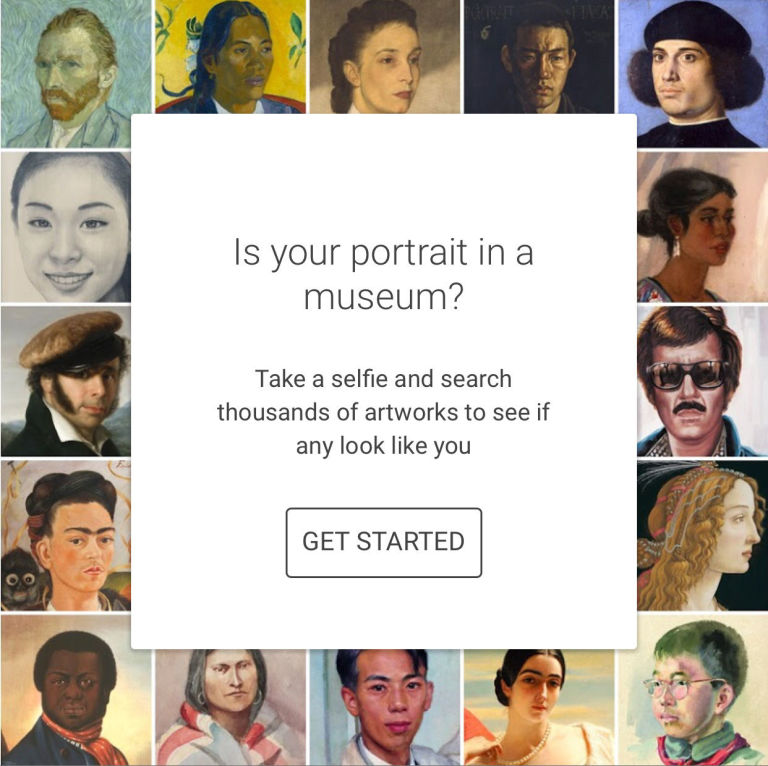
After installing the app (iPhone-Android) on your phone or tablet, scroll down the home­page to the ques­tion “Is your por­trait in a muse­um?”

The sam­pling of art­works fram­ing this ques­tion sug­gest that the answer may be yes, regard­less of your race, though one need not be a Gueril­la Girl to won­der if Cau­casian users are draw­ing their match­es from a far larg­er pool than users of col­or…

Click “get start­ed.” (You’ll have to allow the app to access your device’s cam­era.)

Take a self­ie. (I sup­pose you could hedge your bets by switch­ing the cam­era to front-fac­ing ori­en­ta­tion and aim­ing it at a pleas­ing pre-exist­ing head­shot.)

The app will imme­di­ate­ly ana­lyze the self­ie, and with­in sec­onds, boom! Say hel­lo to your five clos­est match­es.

In the name of sci­ence, I sub­ject­ed myself to this process, grin­ning as if I was sit­ting for my fourth grade school pic­ture. I and received the fol­low­ing results, none of them high­er than 47%:

Vic­to­rio C. Edades’ Moth­er and Daugh­ter (flat­ter­ing­ly, I was pegged as the daugh­ter, though at 52, the resem­blance to the moth­er is a far truer match.)

Gus­tave Courbet’s Jo, la Belle Irlandaise (Say what? She’s got long red hair and skin like Snow White!)

Hen­ry Inman’s por­trait of Pres­i­dent Mar­tin Van Buren’s daugh­ter-in-law and defac­to White House host­ess, Angel­i­ca Sin­gle­ton Van Buren (Well, she looks ….con­ge­nial. I do enjoy par­ties…)

 and Sir Antho­ny van Dyck’s post-mortem paint­ing of Vene­tia, Lady Dig­by, on her Deathbed (Um…)

Hop­ing that a dif­fer­ent pose might yield a high­er match I chan­neled artist Nina Katchadouri­an, and adopt­ed a more painter­ly pose, unsmil­ing, head cocked, one hand lyri­cal­ly rest­ing on my breast­bone… for good mea­sure, I moved away from the win­dow. This time I got:

Joseph Stella’s Boy with a Bag­pipe (Maybe this wasn’t such a hot idea with regard to my self-image?)

Cipri­ano Efsio Oppo Por­trait of Isabel­la (See above.)

Adolph Tidemand’s Por­trait of Guro Sil­vers­dat­ter Tra­ven­dal (Is this uni­verse telling me it’s Babush­ka Time?)

Johannes Chris­tiann Janson’s A Woman Cut­ting Bread (aka Renounce All Van­i­ty Time?)

and Anders Zorn’s Madon­na (This is where the mean cheer­leader leaps out of the bath­room stall and calls me the horse from Guer­ni­ca, right?)

Mer­ci­ful­ly, none of these results topped the 50% mark, nor did any of the exper­i­ments I con­duct­ed using self­ies of my teenage son (whose 4th clos­est match had a long white beard).

Per­haps there are still a few bugs to work out?

If you’re tempt­ed to give Google Arts and Culture’s exper­i­men­tal por­trait fea­ture a go, please let us know how it worked out by post­ing a com­ment below. Maybe we’re twins, I mean, triplets!

If such folderol is beneath you, please avail your­self of the app’s orig­i­nal fea­tures:

  • Zoom Views — Expe­ri­ence every detail of the world’s great­est trea­sures
  • Vir­tu­al Real­i­ty — Grab your Google Card­board view­er and immerse your­self in arts and cul­ture
  • Browse by time and col­or — Explore art­works by fil­ter­ing them by col­or or time peri­od
  • Vir­tu­al tours — Step inside the most famous muse­ums in the world and vis­it icon­ic land­marks
  • Per­son­al col­lec­tion — Save your favorite art­works and share your col­lec­tions with friends
  • Near­by — Find muse­ums and cul­tur­al events around you
  • Exhibits — Take guid­ed tours curat­ed by experts
  • Dai­ly digest — Learn some­thing new every time you open the app
  • Art Rec­og­niz­er — Learn more about art­works at select muse­ums by point­ing your device cam­era at them, even when offline
  • Noti­fi­ca­tions — sub­scribe to receive updates on the top arts & cul­ture sto­ries

Down­load Google Arts and Cul­ture or update to Ver­sion 6.0.17 here (for Mac) or here (for Android).

Note: We’re get­ting reports that the app does­n’t seem to be avail­able in every geo­graph­i­cal loca­tion. If it’s not avail­able where you live, we apol­o­gize in advance.

via Good House­keep­ing

Relat­ed Con­tent:

Google Gives You a 360° View of the Per­form­ing Arts, From the Roy­al Shake­speare Com­pa­ny to the Paris Opera Bal­let

Google Art Project Expands, Bring­ing 30,000 Works of Art from 151 Muse­ums to the Web

Google Cre­ates a Dig­i­tal Archive of World Fash­ion: Fea­tures 30,000 Images, Cov­er­ing 3,000 Years of Fash­ion His­to­ry

Ayun Hal­l­i­day is an author, illus­tra­tor, the­ater mak­er and Chief Pri­ma­tol­o­gist of the East Vil­lage Inky zine.  Fol­low her @AyunHalliday.

19-Year-Old Student Uses Early Spy Camera to Take Candid Street Photos (Circa 1895)

We are gen­er­al­ly accus­tomed to think­ing of 19th cen­tu­ry pho­tog­ra­phy as quite sta­t­ic and rigid, and for much of its ear­ly his­to­ry, tech­ni­cal lim­i­ta­tions ensured that it was. Por­trai­ture espe­cial­ly pre­sent­ed a chal­lenge to ear­ly pho­tog­ra­phers, since it involved sub­jects who want­ed, or need­ed, to move, while long expo­sure times called for max­i­mum still­ness. Thus, we have the stiff, unsmil­ing pos­es of peo­ple try­ing to make like trees and stay plant­ed in place.

One strik­ing excep­tion, from 1843, shows us a jovial group­ing of three men in the first known pic­ture of mer­ry-mak­ing at the pub. Though staged, and includ­ing one of the duo of pho­tog­ra­phers respon­si­ble for the por­trait, the image has all the vital­i­ty of an off-the-cuff snap­shot. We might be sur­prised to learn that it would only be a few decades lat­er, before the turn of the cen­tu­ry, when tru­ly can­did shots of peo­ple in action could be made with rel­a­tive ease.

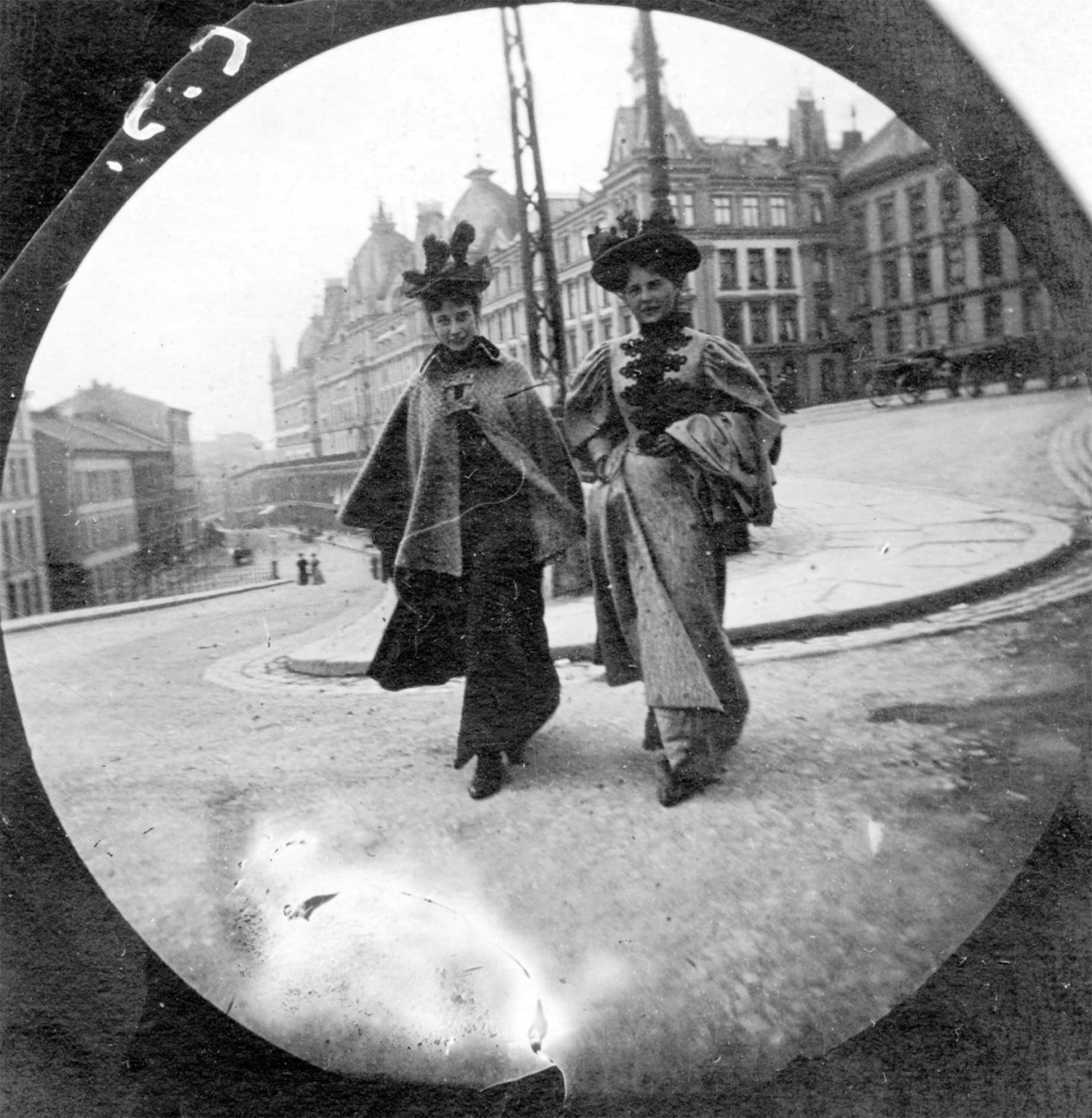
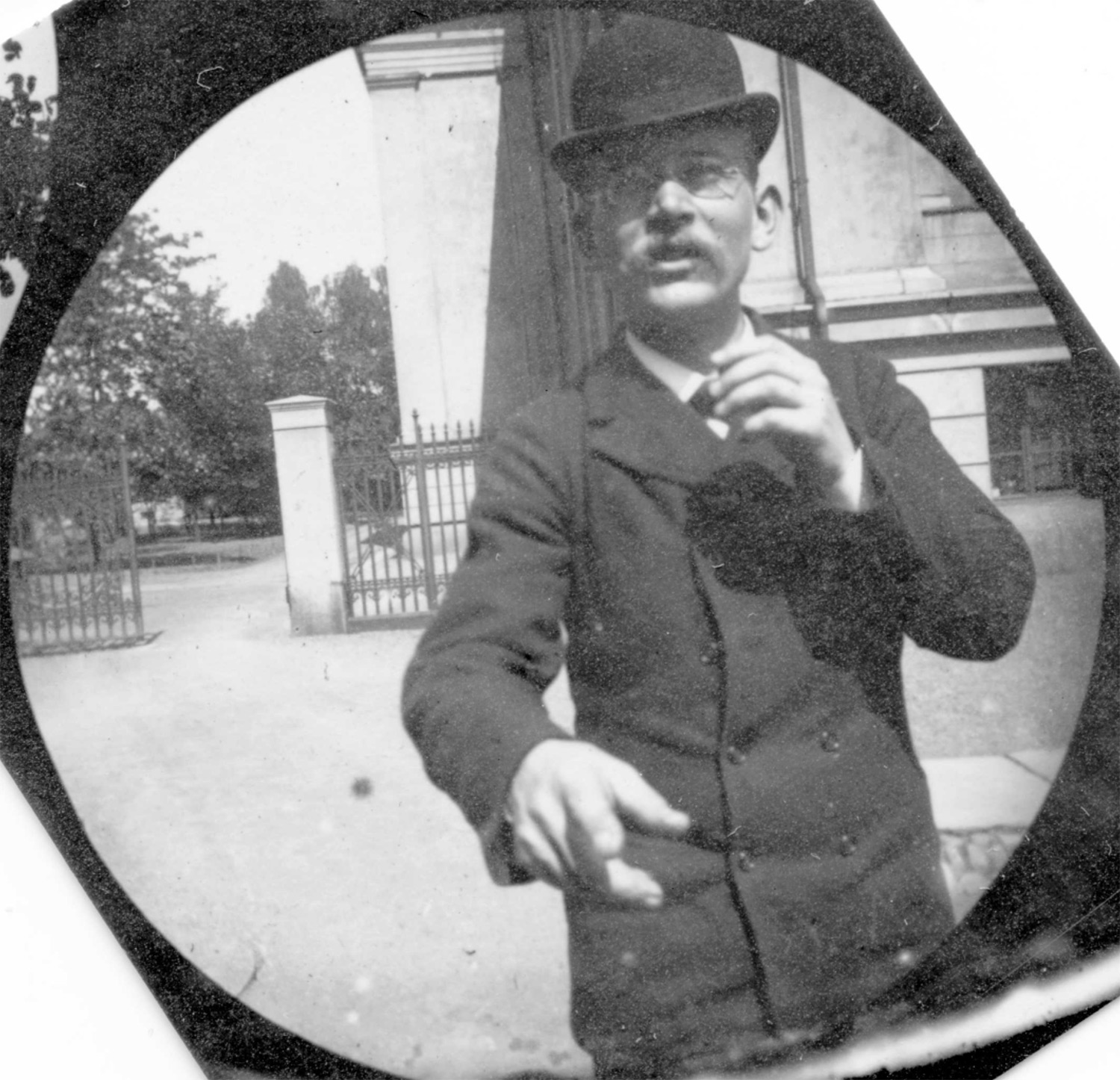
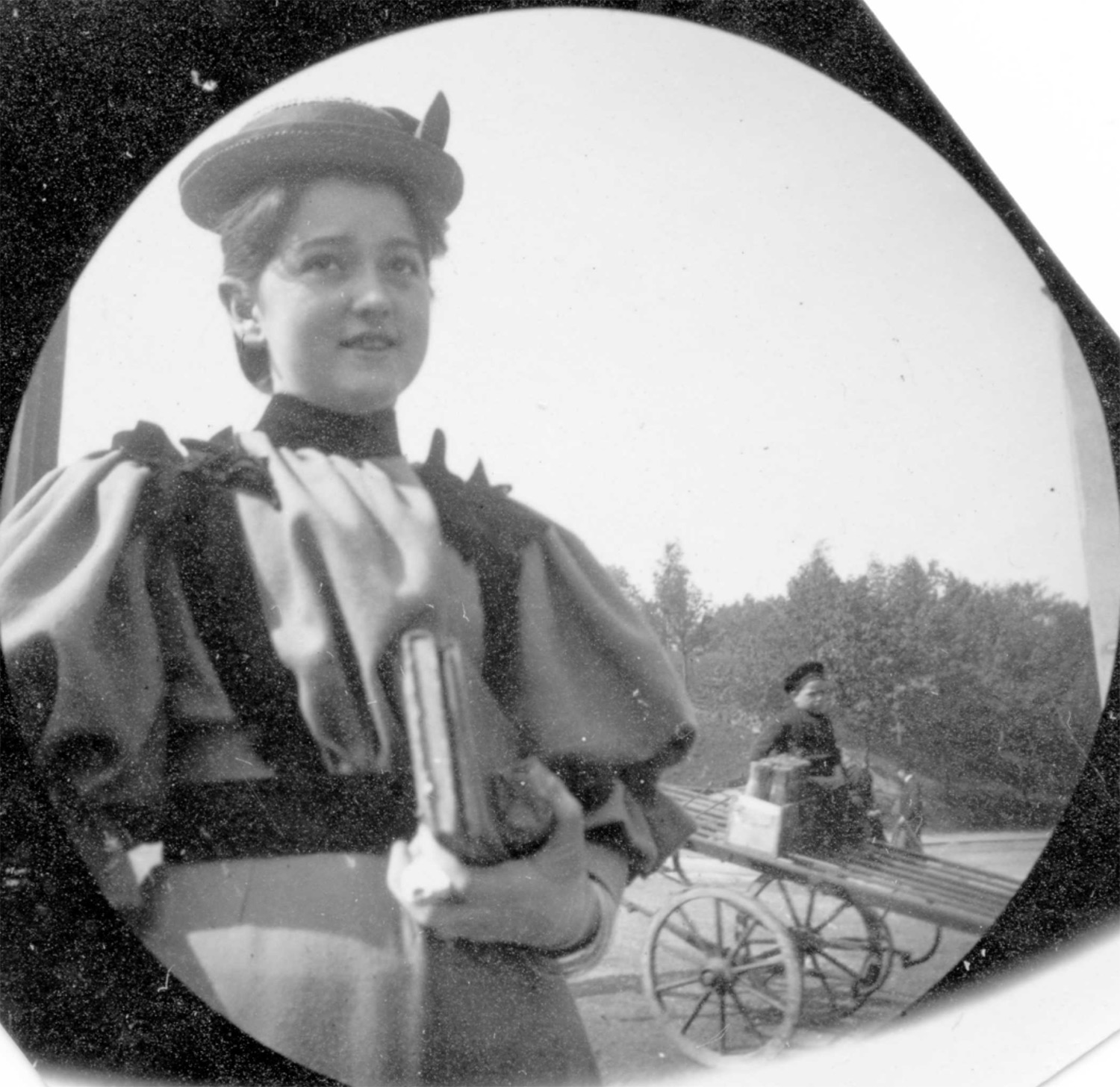
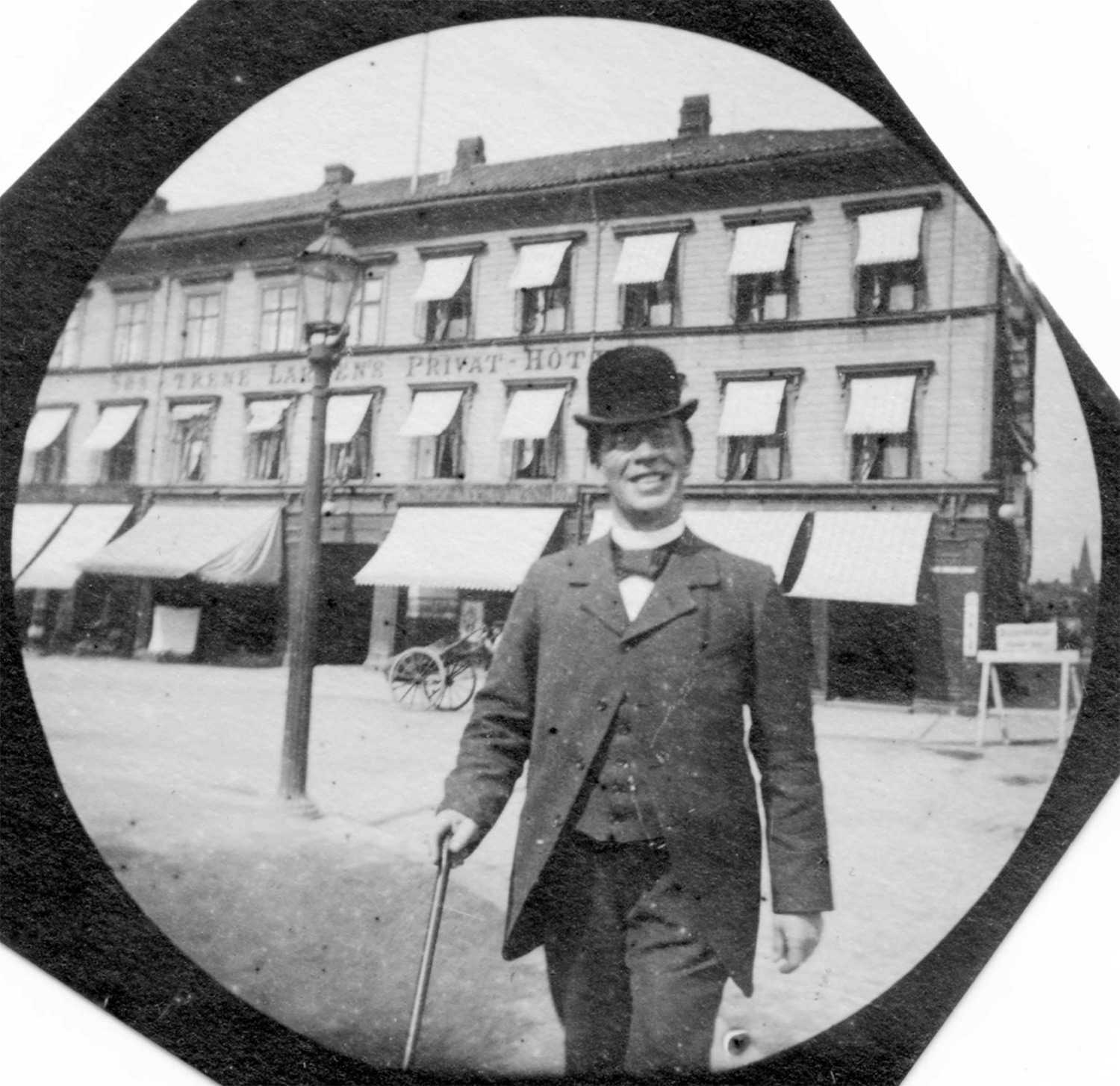
Not only were many of these pho­tos can­did, but many were also secre­tive, the prod­uct of the C.P. Stirn Con­cealed Vest Spy Cam­era. The images here come from one such cam­era hid­den in the but­ton­hole of Carl Størmer, a Nor­we­gian math­e­mati­cian and physi­cist who was at the time a 19-year-old stu­dent at the Roy­al Fred­er­ick Uni­ver­si­ty. Størmer strolled the streets of Oslo, greet­ing passers­by and, unbe­knownst to them, tak­ing the por­traits you see here, which show us peo­ple from the peri­od in relaxed, active pos­es, going about their dai­ly lives, “often smil­ing,” writes This is Colos­sal, “and per­haps caught off guard from the young stu­dent angling for the shot.”

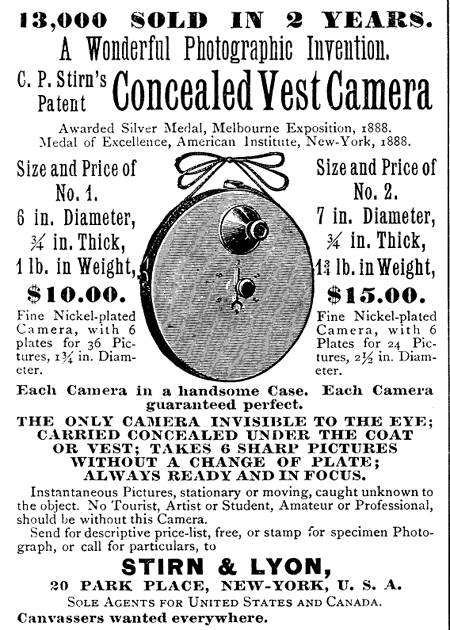
The Con­cealed Vest Cam­era was invent­ed by Robert D. Gray, notes Cam­er­a­pe­dia. In 1886, C.P. Stirn bought the rights to the device, and his broth­er Rudolf man­u­fac­tured them in Berlin. The cam­era came in two sizes, “one for mak­ing four 6cm wide round expo­sures… the oth­er with a small­er lens fun­nel, for mak­ing six 4cm wide round expo­sures.” Mar­ket­ed by Stirn & Lyon in New York, the cam­eras sold by the tens of thou­sands (as the ad above informs us).

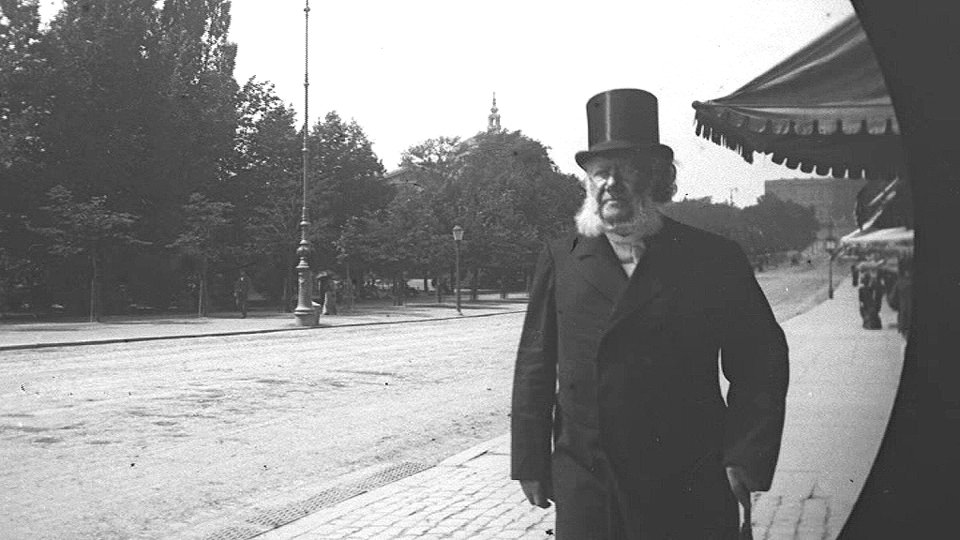
Størmer’s own cam­era was the small­er ver­sion, as we learn from his com­ments to the St. Hal­l­vard Jour­nal in 1942: “I strolled down Carl Johan, found me a vic­tim, greet­ed, got a gen­tle smile and pulled. Six images at a time and then I went home to switch [the] plate.” The future sci­en­tist, soon to be known for his work on num­ber the­o­ry and his sta­tus as an author­i­ty on polar auro­ra, took around 500 such secret pho­tographs. (See 484 of them at the Nor­we­gian Folke­mu­se­um site.) He even man­aged to get a shot of Hen­rik Ibsen, just above.

The Stirn Vest Cam­era joins a num­ber of oth­er ear­ly clan­des­tine imag­ing devices, includ­ing a tele­scop­ic watch cam­era made in 1886 and book cam­era from 1888. Spy cam­eras were refined over the years, becom­ing essen­tial to espi­onage dur­ing two World Wars and the ensu­ing con­test for glob­al suprema­cy dur­ing the Cold War. But Størmer’s pho­to­graph­ic inter­ests became more ger­mane to his sci­en­tif­ic work. “Togeth­er with O.A. Krognes,” writes the Nor­we­gian North­ern Lights site Nordlys, he “built the first auro­ral cam­eras” and took “more than 40,000 pic­tures” of the phe­nom­e­na (learn more about such work here).

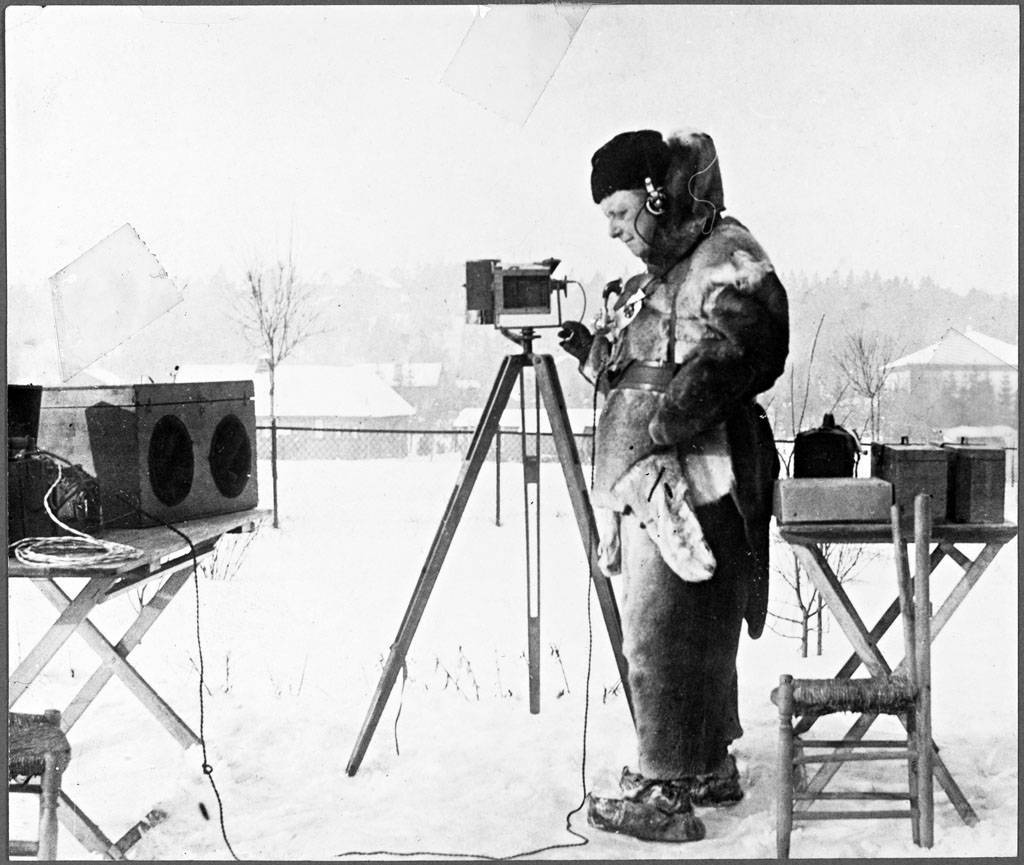
Størmer’s North­ern Lights pho­tos are much hard­er to find online than the charm­ing but­ton­hole cam­era por­traits from his stu­dent days. But just above, see an image from eBay pur­port­ing to show the sci­en­tist and pho­tog­ra­phy enthu­si­ast bun­dled up behind a cam­era, pho­tograph­ing the auro­ra.

via Bored Pan­da/This is Colos­sal

Relat­ed Con­tent:

The First Known Pho­to­graph of Peo­ple Shar­ing a Beer (1843)

See the First Pho­to­graph of a Human Being: A Pho­to Tak­en by Louis Daguerre (1838)

The His­to­ry of Pho­tog­ra­phy in Five Ani­mat­ed Min­utes: From Cam­era Obscu­ra to Cam­era Phone

Josh Jones is a writer and musi­cian based in Durham, NC. Fol­low him at @jdmagness

5,000+ Photographs by Minor White, One of the 20th Century’s Most Important Photographers, Now Digitized and Available Online

Barn + Corn (Vicin­i­ty of Dans­ville, New York), 1955. From The Minor White Archive, Prince­ton Uni­ver­si­ty Art.

When the pho­tog­ra­ph­er Minor White died in 1976, after a pro­lif­ic career and an epic jour­ney of a life, he left his archives to Prince­ton Uni­ver­si­ty. But it took about forty years before that insti­tu­tion could make the col­lec­tion tru­ly avail­able to the world in the form of the Minor White Archive online. He became “one of the most impor­tant pho­to­graph­ic artists of the twen­ti­eth cen­tu­ry” and “a key fig­ure in shap­ing a dis­tinct­ly mod­ern Amer­i­can pho­to­graph­ic style,” as the archive’s “About” page puts it, by cap­tur­ing the images of humans, land­scapes urban and rur­al, and even abstract sub­jects, all the while pur­su­ing new and ever more per­son­al ways to cap­ture them.

In his end­less search for inspi­ra­tions with which to refine his pho­to­graph­ic prac­tice, White seemed to turn down no poten­tial source. Not only did he put in time with such colos­sal pre­de­ces­sors in Amer­i­can pho­tog­ra­phy as Alfred Stieglitz, Edward West­on, and Ansel Adams (who taught him, among oth­er things, his reli­able “visu­al­iza­tion” tech­nique), he also drew deeply from less con­ven­tion­al wells: the I Ching, Zen med­i­ta­tion, mythol­o­gy, astrol­o­gy, Gestalt psy­chol­o­gy, and the mys­tic phi­los­o­phy of G. I. Gur­d­ji­eff (who also had an influ­ence on the com­ic per­sona of Bill Mur­ray).

“To some in the 1960s and ‘70s,” remem­bers one­time asso­ciate John Weiss, “Minor White was a deity. Every word was an invo­ca­tion. To oth­ers he was a self-pro­mot­er, a fraud, talk­ing non­sense.”

Chi­na­town 1953. From The Minor White Archive, Prince­ton Uni­ver­si­ty Art.

Either way, White was above all a pho­tog­ra­ph­er. Prince­ton’s dig­i­tal archive fea­tures more than 5,000 of his pho­tographs (and oth­er mate­ri­als like proof cards, con­tact sheets, and even jour­nals) free to view online.  It offers “a com­pre­hen­sive sur­vey of White’s career,” as Hyper­al­ler­gic’s Claire Voon writes, “from his ear­ly cap­tures of Port­land, Ore­gon in 1938 to his lat­est work in 1974 of por­traits and land­scapes tak­en around the US.” Have a look through the archive, start­ing at its search page and, once there, either enter­ing search terms or brows­ing by sub­ject or loca­tion, and you’ll see why, when it comes to Amer­i­can pho­to­graph­ic art, Minor was very much major.

via Hyper­al­ler­gic

Relat­ed Con­tent:

Dis­cov­er Ansel Adams’ 226 Pho­tos of U.S. Nation­al Parks (and Anoth­er Side of the Leg­endary Pho­tog­ra­ph­er)

Ansel Adams, Dorothea Lange, Clem Albers & Fran­cis Stewart’s Cen­sored Pho­tographs of a WWII Japan­ese Intern­ment Camp

Alfred Stieglitz: The Elo­quent Eye, a Reveal­ing Look at “The Father of Mod­ern Pho­tog­ra­phy”

Yale Launch­es an Archive of 170,000 Pho­tographs Doc­u­ment­ing the Great Depres­sion

200,000 Pho­tos from the George East­man Muse­um, the World’s Old­est Pho­tog­ra­phy Col­lec­tion, Now Avail­able Online

Based in Seoul, Col­in Mar­shall writes and broad­casts on cities and cul­ture. His projects include the book The State­less City: a Walk through 21st-Cen­tu­ry Los Ange­les and the video series The City in Cin­e­ma. Fol­low him on Twit­ter at @colinmarshall or on Face­book.

1,600 Rare Color Photographs Depict Life in the U.S During the Great Depression & World War II

The title of Walk­er Evans and James Agee’s extra­or­di­nary work of lit­er­ary pho­to­jour­nal­ism, Let Us Now Praise Famous Men, may have lost some of its iron­ic edge with sub­se­quent acclaim and the fame of its writer and pho­tog­ra­ph­er. First begun in 1936 as a project doc­u­ment­ing the large­ly invis­i­ble lives of white share­crop­ping fam­i­lies in rur­al Alaba­ma, when the book appeared in print in 1941 it only sold about 600 copies. But over time, writes Mal­colm Jones at Dai­ly Beast, “it has estab­lished itself as a unique and endur­ing mashup of report­ing, con­fes­sion, and orac­u­lar prose.” As essen­tial as Agee’s doc­u­men­tary prose poet­ics is to the book’s appeal, Evans’ pho­tographs, like those of his many Depres­sion-era con­tem­po­raries, have served as mod­els for gen­er­a­tions of pho­tog­ra­phers in decades hence.

Evans “pho­tographs are not illus­tra­tive,” wrote Agee in the Pref­ace. “They, and the text, are coequal, mutu­al­ly inde­pen­dent, and ful­ly col­lab­o­ra­tive.” If “the text was writ­ten with read­ing aloud in mind,” and Agee want­ed us to hear, not sim­ply see the lan­guage, per­haps we are also meant to see the indi­vid­u­als Evans cap­tured, rather than just gaze at weath­ered faces and bat­tered cloth­ing, and view their bear­ers col­lec­tive­ly as for­lorn objects of pity.

More­over, we shouldn’t look at these indi­vid­u­als only as mem­bers of a par­tic­u­lar nation­al group. In the book’s first para­graph, Agee writes:

The world is our home. It is also the home of many, many oth­er chil­dren, some of whom live in far-away lands. They are our world broth­ers and sis­ters….

We are meant to see the sub­jects of Evans’ pho­tographs and Agee’s exquis­ite descrip­tions as dis­tinc­tive parts who make up the whole of humanity—or, more pre­cise­ly, the world’s labor­ing peo­ple. Agee opens with a famous epi­graph from The Com­mu­nist Man­i­festo: “Work­ers of the world, unite and fight. You have noth­ing to lose but your chains, and a world to win.” (With a can­ny qual­i­fy­ing foot­note explain­ing these words and their author as poten­tial­ly “the prop­er­ty of any polit­i­cal par­ty, faith, or fac­tion”).

Sev­er­al pho­tog­ra­phers employed, like Evans, by the Farm Secu­ri­ty Admin­is­tra­tion dur­ing the Great Depres­sion shared these sen­si­bil­i­ties. The sym­pa­thies of Dorothea Lange, for exam­ple, lay with work­ing peo­ple, not with the noblesse oblige of mid­dle-class audi­ences who might sup­port relief efforts but who had lit­tle desire to min­gle with the great Amer­i­can unwashed. Many viewers—disconnected from rur­al life—stared at the pho­tographs, writes Car­rie Melis­sa Jones, “in issues of the now-defunct Life mag­a­zine, Time, For­tune, Forbes, and more,” and “took a pater­nal­is­tic view of the south, ask­ing: ‘How do we save them from them­selves?’”

Can view­ers of Depres­sion-era pho­tographs today put aside their implic­it or explic­it sense of moral supe­ri­or­i­ty? Per­haps see­ing pho­tos of the era in col­or brings their sub­jects more imme­di­a­cy and vivid­ness, and you can see them by the hun­dreds at the Library of Congress’s online col­lec­tion of work com­mis­sioned by the fed­er­al gov­ern­ment dur­ing the Depres­sion and World War II. Evans him­self may have thought col­or pho­tog­ra­phy “gar­ish” and “vul­gar,” Jor­dan G. Teich­er notes at Slate (though Evans began tak­ing his own col­or images in 1946). But con­tem­po­raries like Rus­sell Lee, Mar­i­on Post Wol­cott, Jack Delano, and John Vachon proved him wrong.

At the top of the post, see two pho­tos from Lee—of two home­stead­ers in New Mex­i­co (1940) and a shep­herd with his horse and dog in Mon­tana (1942). Beneath that, we have Wolcott’s strik­ing pho­to of a rur­al cab­in some­where “in South­ern U.S.,” cir­ca 1940. Fur­ther up, see Delano’s image of share­crop­pers chop­ping cot­ton in White Plains, Geor­gia (1941), which resem­bles the hero­ic fig­ures in a Diego Rivera mur­al. And just above we have John Vachon’s image of rur­al school chil­dren in San Augus­tine Coun­ty, Texas (1943). As we scan these faces and places, we might con­sid­er again Agee’s pref­ace: “The gov­ern­ing instrument—which is also one of the cen­ters of the subject—is indi­vid­ual, anti-author­i­ta­tive human con­scious­ness.” His instruc­tions invite us to both empa­thy for each per­son we see and to broad human sym­pa­thy for all of them.

Once the U.S. entered the war, many Farm Secu­ri­ty Admin­is­tra­tion pho­tog­ra­phers were reas­signed to make pro­pa­gan­da for the Office of War Infor­ma­tion (and a few, like Lange, also received com­mis­sions to pho­to­graph the Japan­ese Intern­ment Camps). The nature of doc­u­men­tary pho­tog­ra­phy began to change, large­ly reflect­ing small town Amer­i­can indus­tri­ous­ness and civic pride, rather than rur­al des­per­a­tion and strug­gle. Images like Fen­no Jacobs’ patri­ot­ic demon­stra­tion in Southing­ton Con­necti­cut (1942) above, are typ­i­cal. Quaint rows of hous­es and store­fronts dom­i­nate dur­ing the war years. We also find inter­est­ing images like that of the woman below work­ing on a “Vengeance” dive bomber in Ten­nessee, tak­en by Alfred T. Palmer in 1943. Aside from the dat­ed cloth­ing and machin­ery, her pho­to­graph seems as fresh and com­pelling as the day it first appeared.

“In col­or,” writes Emory University’s Jesse Karls­berg, “these images present them­selves as rel­e­vant to the present, rather than con­signed to the past. By dis­play­ing the prob­lems they depict—such as seg­re­ga­tion, pover­ty, and envi­ron­men­tal degradation—in a con­tem­po­rary form, the images imply that such prob­lems may con­tin­ue to be crit­i­cal today.” They are indeed crit­i­cal today. And may become even more so. And one hopes that writ­ers, pho­tog­ra­phers, and artists, though they will not do so under the aegis of New Deal agen­cies, can find ways to doc­u­ment what is hap­pen­ing as they did decades ago. Such work car­ries glob­al sig­nif­i­cance. And, as a recent Taschen book that col­lects New Deal pho­tog­ra­phy from 1935 to 1943 describes it, pho­tographs like those you see here “intro­duced Amer­i­ca to Amer­i­cans.” They also intro­duced Americans—who have been as divid­ed in the past as they are today—to each oth­er.

Relat­ed Con­tent:

Found: Lost Great Depres­sion Pho­tos Cap­tur­ing Hard Times on Farms, and in Town

Ansel Adams, Dorothea Lange, Clem Albers & Fran­cis Stewart’s Cen­sored Pho­tographs of a WWII Japan­ese Intern­ment Camp

Yale Launch­es an Archive of 170,000 Pho­tographs Doc­u­ment­ing the Great Depres­sion

Josh Jones is a writer and musi­cian based in Durham, NC. Fol­low him at @jdmagness

Photographer Nan Goldin Now on Instagram

A quick heads up: Back in August, Cindy Sher­man, one of the best-known pho­tog­ra­phers work­ing today, launched an Insta­gram account where she has post­ed 600 new pho­tos and strange self-por­traits. Now you can look for­ward to explor­ing an Insta­gram account belong­ing to anoth­er influ­en­tial Amer­i­can pho­tog­ra­ph­er, Nan Goldin. So far, you’ll only find 19 pho­tos, includ­ing the one above, cap­tioned as “Self por­trait as a Dom­i­na­trix Boston 1977 (a long time ago).” But hope­ful­ly that’s just the begin­ning.

Gold­in’s Insta­gram account makes its debut at the same time that Stei­dl Books has re-released Nan Goldin: The Beau­ti­ful Smile–the mem­oir in which Goldin famous­ly pho­tographed, writes The New York Times, the sub­jects who “have been those clos­est to her: Trans­sex­u­als, cross-dressers, drug users, lovers, all peo­ple she befriend­ed when she moved to New York” and who lived in what main­stream crit­ics would cold­ly call the ‘mar­gins of soci­ety’.” The high­ly-praised book is now out again.

via Hyper­al­ler­gic

Relat­ed Con­tent:

Cindy Sherman’s Insta­gram Account Goes Pub­lic, Reveal­ing 600 New Pho­tos & Many Strange Self-Por­traits

Say What You Real­ly Mean with Down­load­able Cindy Sher­man Emoti­cons

Muse­um of Mod­ern Art (MoMA) Launch­es Free Course on Look­ing at Pho­tographs as Art

The First Photographs of Snowflakes: Discover the Groundbreaking Microphotography of Wilson “Snowflake” Bentley (1885)

What kind of a blight­ed soci­ety turns the word “snowflake” into an insult?, I some­times catch myself think­ing, but then again, I’ve nev­er under­stood why “tree­hug­ger” should offend. All irony aside, being known as a per­son who loves nature or resem­bles one of its most ele­gant cre­ations should be a mark of dis­tinc­tion, no? At least that’s what Wil­son “Snowflake” Bent­ley sure­ly thought.

The Ver­mont farmer, self-edu­cat­ed nat­u­ral­ist, and avid pho­tog­ra­ph­er, was the first per­son to offer the fol­low­ing wis­dom on the record, then illus­trate it with hun­dreds upon hun­dreds of pic­tures of snowflakes, 5,000 in all:

I found that snowflakes were mir­a­cles of beau­ty; and it seemed a shame that this beau­ty should not be seen and appre­ci­at­ed by oth­ers. Every crys­tal was a mas­ter­piece of design and no one design was ever repeat­ed. When a snowflake melt­ed, that design was for­ev­er lost. Just that much beau­ty was gone, with­out leav­ing any record behind.

Bent­ley left a con­sid­er­able record—though still an insignif­i­cant sam­ple size giv­en the scope of the object of study. But his pho­tographs give the impres­sion of an infi­nite vari­ety of dif­fer­ent types, each with the same basic crys­talline lat­tice­work struc­ture. He took his first pho­to­graph of a snowflake, the first ever tak­en, in 1885, by adapt­ing a micro­scope to a bel­lows cam­era, after years of mak­ing sketch­es and much tri­al and error.

Some great por­tion of this work must have been tedious and frustrating—Bentley had to hold his breath for each expo­sure lest he destroy the pho­to­graph­ic sub­ject. But it was worth the effort. Bent­ley, the Smith­son­ian informs us, “was a pio­neer in ‘pho­tomi­crog­ra­phy,’ the pho­tograph­ing of very small objects.” Five hun­dred of his pho­tographs now reside at the Smith­son­ian Insti­tu­tion Archives, “offered by Bent­ley in 1903 to pro­tect against ‘all pos­si­bil­i­ty of loss and destruc­tion, through fire or acci­dent.” You can see a huge dig­i­tal gallery of those hun­dreds of pho­tos here.

Along with U.S. Weath­er Bureau physi­cist William J. Humphreys, he pub­lished 2300 of his snowflake pho­tographs in a mono­graph titled Snow Crys­tals. Bent­ley also pub­lished over 60 arti­cles on the sub­ject (read two of them here). Despite his con­tri­bu­tions, he receives no men­tion in most his­to­ries of pho­tomi­crog­ra­phy. This may be due to his provin­cial loca­tion (he nev­er left Jeri­cho, VT) or his lack of sci­en­tif­ic train­ing and cre­den­tials, or a lack of inter­est in pho­tos of snowflakes on the part of most pho­tomi­crog­ra­phy his­to­ri­ans.

Or it may be because Bent­ley was thought to be a fraud. When a Ger­man mete­o­rol­o­gist com­mis­sioned some images of his own and got some very dif­fer­ent results, he accused the farmer of retouch­ing. Bent­ley read­i­ly admit­ted it, say­ing, “a true sci­en­tist wish­es above all to have his pho­tographs as true to nature as pos­si­ble, and if retouch­ing will help in this respect, then it is ful­ly jus­ti­fied.”

The defense is a good one. Although the “nature” Bentley’s pho­tos show us may be a the­o­ret­i­cal ide­al­iza­tion, so too are the hand-ren­dered illus­tra­tions of most sci­en­tists through­out his­to­ry (and near­ly every med­ical dia­gram today). Take, for exam­ple, the psy­che­del­ic, bright­ly col­ored pat­terns of accom­plished biol­o­gist Ernst Haeck­el, who turned the micro- and macro­scop­ic world into sur­re­al­ly sym­met­ri­cal art in his draw­ings. Though he might not have said so direct­ly, Bent­ley was doing some­thing sim­i­lar with a cam­era. Just lis­ten to him describe his process in a 1900 issue of Harper’s:

Quick, the first flakes are com­ing; the couri­ers of the com­ing snow storm. Open the sky­light, and direct­ly under it place the care­ful­ly pre­pared black­board, on whose ebony sur­face the most minute form of frozen beau­ty may be wel­come from cloud-land. The mys­ter­ies of the upper air are about to reveal them­selves, if our hands are deft and our eyes quick enough.

In the “qui­et fren­zy of his winter’s quest,” writes Alli­son Meier at Hyper­al­ler­gic, he pro­duced images of “beau­ti­ful ghosts from a win­ter that bris­tled the air over a cen­tu­ry ago.” Learn more about Bentley’s life, work, and the Smith­son­ian col­lec­tion in the short doc­u­men­tary fur­ther up, the Wash­ing­ton Post video above, and the Radi­o­lab episode below, in which a breath­less Latif Nass­er takes us into the heart of Bentley’s ori­gin sto­ry, and “snowflake expert and pho­tog­ra­ph­er Ken Lib­brecht helps set the record straight.”

Real snowflakes have many imper­fec­tions, and per­haps Bent­ley did snow a dis­ser­vice to so stren­u­ous­ly sug­gest oth­er­wise. But the record he left us, Meier notes, “is appre­ci­at­ed as much as an artis­tic archive as a mete­o­ro­log­i­cal one.” He might have been a sci­en­tist when it came to tech­nique, but Bent­ley was a roman­tic when it came to snow. His sto­ry is as fas­ci­nat­ing as his pho­tographs. Maybe a delight­ful alter­na­tive to the usu­al Christ­mas fare. There’s even a chil­dren’s book called… what else?…  Snowflake Bent­ley.

via Smith­son­ian/Hyper­al­ler­gic

Relat­ed Con­tent:

Behold the Very First Col­or Pho­to­graph (1861): Tak­en by Scot­tish Physi­cist (and Poet!) James Clerk Maxwell

See the First Pho­to­graph of a Human Being: A Pho­to Tak­en by Louis Daguerre (1838)

The First Known Pho­to­graph of Peo­ple Shar­ing a Beer (1843)

Josh Jones is a writer and musi­cian based in Durham, NC. Fol­low him at @jdmagness

« Go BackMore in this category... »
Quantcast