A Reading of Edgar Allan Poe’s “The Raven” in 100 Celebrity Voices

For every august per­son­age who’s tak­en a crack Edgar Allan Poe’s ever­green poem, “The Raven,” there are thou­sands more who haven’t.

Humorist Jor­dan Mon­sell is doing what he can to close that gap, pro­vid­ing a sam­pling of 100 most­ly male, most­ly white, most­ly human celebri­ty voic­es. It’s a solo recita­tion, but vocal­ly a col­lab­o­ra­tive one, with a fair num­ber of ani­mat­ed char­ac­ters mak­ing their way into the cred­its, too.

He cer­tain­ly knows how to cast out­side the box. Tra­di­tion­al Poe inter­preters such as Vin­cent Price and John Astin bring some well estab­lished creep cred to the enter­prise. Mon­sell picks Christo­pher Walken and Christo­pher Lee already have exist­ing takes on this clas­sic, and Antho­ny Hop­kins and Willem Dafoe are wel­come addi­tions.

But what to make of Jer­ry Sein­feld, Pee-Wee Her­man, John­ny Cash… and even poet­ry lover Bill Mur­ray? Man­ic and much missed Robin Williams may offer a clue. What good is hav­ing an arse­nal of impres­sions if you’re not will­ing to roll them out in rapid suc­ces­sion?

While some of Mon­sel­l’s imper­son­ations (cough, David Bowie) fall a bit short of the mark, oth­ers will have you regret­ting that no one had the fore­thought to record Don Knotts or JFK recit­ing the poem in its entire­ty.

The titles offer a bit of a mis­nomer. In many instances, it’s not real­ly the per­form­ers but their best known char­ac­ters being aped. While there may not be too great a vocal divide between play­wright Wal­lace Shawn and Vizzi­ni in The Princess Bride, The Dude is not Jeff Bridges, any more than Cap­tain Jack Spar­row is John­ny Depp.

The project seems like­ly to play best with nerdy ado­les­cent boys… which could be good news for teach­ers look­ing to get reluc­tant read­ers onboard. Show it on the class­room Smart Board, and be pre­pared to have mini-teach-ins on Katharine Hep­burn, Wal­ter Matthau, the late great Robert Shaw, and oth­er big names whose day has passed. Shrek, Gol­lum, and Har­ry Potter’s house elf, Dob­by, are on hand to keep the ref­er­ences from feel­ing too moldy.

The specter of Poe gets the cov­et­ed final word, a balm to the ears after the triple assault of Chris­t­ian Bale’s Bat­man, Mad Max’s Tom Hardy, and Heath Ledger’s Jok­er. (It may be a mat­ter of taste. You’ll hear no com­plaint from these quar­ters with regard to Mick­ey Mouse, Bert Lahr’s Cow­ard­ly Lion, or The Simpson’s Krusty the Klown, won­der­ful­ly unc­tu­ous.)

The break­neck audio patch­work approach doesn’t do much for read­ing com­pre­hen­sion, but could lead to a live­ly mid­dle school dis­cus­sion on what con­sti­tutes a suc­cess­ful per­for­mance. Who served the text best? Read­ers?

Fur­ther­more, who’s miss­ing? What voice would you add to the Monsell’s roll call, below?

Mor­gan Free­man

Ker­mit the Frog

John­ny Cash

Ringo Starr

David Bowie

Rick Mora­nis

Gary Old­man

Peter Lorre

Adam San­dler

Don Knotts

William Shat­ner

George Takei

Michael Dorn

Daffy Duck

Ricky Ger­vais

Foghorn Leghorn

Liam Nee­son

Nicholas Cage

John Tra­vol­ta

Antho­ny Hop­kins

Rod Ser­ling

Cook­ie Mon­ster

Jay Baruchel

Jeff Bridges

John­ny Depp

Archer

Dr. Phil

Gol­lum

Mandy Patinkin

Wal­lace Shawn

Bil­ly Crys­tal

Owen Wil­son

Dustin Hoff­man

Krusty the Klown

Apu

Chris­t­ian Bale

Michael Caine

Tom Hardy

Heath Ledger

Mick­ey Mouse

John Wayne

Jer­ry Sein­feld

Phil Hart­man

Goofy

Al Paci­no

Mar­lon Bran­do

Jack Lem­mon

Wal­ter Matthau

Christo­pher Walken

Rowlf the Dog

John Cleese

Robin Williams

Katharine Hep­burn

Woody Allen

Matthew McConaugh­ey

Cow­ard­ly Lion

Jim­my Stew­art

John C. Reil­ly

James Mason

Sylvester Stal­lone

Arnold Schwarzeneg­ger

Stewie

Daniel Day Lewis

Mag­gie Smith

Alan Rick­man

Dob­by

Jack Nichol­son

Christoph Waltz

Bill Mur­ray

Dan Aykroyd

Sean Con­nery

Bill Cos­by

Christo­pher Lloyd

Droopy Dog

Kevin Spacey

Har­ri­son Ford

Ronald Rea­gan

JFK

Bill Clin­ton

Keanu Reeves

Ian McK­ellen

Paul Gia­mat­ti

Sebas­t­ian

Stan Lee

Jeff Gold­blum

Hugh Grant

Ken­neth Branagh

Lar­ry the Cable Guy

Pee-Wee Her­man

Shrek

Don­key

Charl­ton Hes­ton

Michael Keaton

Homer Simp­son

Yoda

Willem Dafoe

Bruce Willis

Robert Shaw

Christo­pher Lee

Edgar Allan Poe

Relat­ed Con­tent:

Hear Clas­sic Read­ings of Poe’s “The Raven” by Vin­cent Price, James Earl Jones, Christo­pher Walken, Neil Gaiman, Stan Lee & More

Edgar Allan Poe’s the Raven: Watch an Award-Win­ning Short Film That Mod­ern­izes Poe’s Clas­sic Tale

The Grate­ful Dead Pays Trib­ute to Edgar Allan Poe’s “The Raven” in a 1982 Con­cert: Hear “Raven Space”

Ayun Hal­l­i­day is an author, illus­tra­tor, the­ater mak­er and Chief Pri­ma­tol­o­gist of the East Vil­lage Inky zine.  Fol­low her @AyunHalliday.

Harry Dean Stanton (RIP) Reads Poems by Charles Bukowski

Vari­ety is report­ing tonight that Har­ry Dean Stan­ton has died in Los Ange­les, at the age of 91. He’s best remem­bered, of course, for his roles in David Lynch’s Twin Peaks, HBO’s Big Love, Alex Cox’s Repo Man, and Wim Wen­der’s Paris, Texas. Over a 60 year career, Stan­ton made appear­ances in 116 films, 77 TV shows, and sev­er­al music videos. He also lent his voice to an Alien video game and record­ed poems by Charles Bukows­ki. Above and below, hear him read “Blue­bird” and “Torched Out.” Both record­ings come from the 2003 doc­u­men­tary, Bukows­ki: Born Into This. Back in 2012, Stan­ton head­lined an L.A. trib­ute to the Los Ange­les poet.

If you would like to sign up for Open Culture’s free email newslet­ter, please find it here. It’s a great way to see our new posts, all bun­dled in one email, each day.

If you would like to sup­port the mis­sion of Open Cul­ture, con­sid­er mak­ing a dona­tion to our site. It’s hard to rely 100% on ads, and your con­tri­bu­tions will help us con­tin­ue pro­vid­ing the best free cul­tur­al and edu­ca­tion­al mate­ri­als to learn­ers every­where. You can con­tribute through Pay­Pal, Patre­on, and Ven­mo (@openculture). Thanks!

Relat­ed Con­tent:

1,000 Free Audio Books: Down­load Great Books for Free

Three Charles Bukows­ki Books Illus­trat­ed by Robert Crumb: Under­ground Com­ic Art Meets Out­sider Lit­er­a­ture

Tom Waits Reads Two Charles Bukows­ki Poems, “The Laugh­ing Heart” and “Nir­vana”

Watch “Beer,” a Mind-Warp­ing Ani­ma­tion of Charles Bukowski’s 1971 Poem Hon­or­ing His Favorite Drink

The Periodic Table of Elements Presented as Interactive Haikus

British poet and spec­u­la­tive fic­tion writer recent­ly got a lit­tle cre­ative with the Peri­od­ic Table, writ­ing one haiku for each ele­ment.

Car­bon

Show-steal­ing diva,
throw your­self at any­one,
decked out in dia­monds.

Sil­i­con

Locked in rock and sand,
age upon age
await­ing the dig­i­tal dawn.

Stron­tium

Dead­ly bone seek­er
released by Fukushi­ma;
your sweet days long gone.

You can access the com­plete Ele­men­tal haiku here.

If you would like to sign up for Open Culture’s free email newslet­ter, please find it here. It’s a great way to see our new posts, all bun­dled in one email, each day.

If you would like to sup­port the mis­sion of Open Cul­ture, con­sid­er mak­ing a dona­tion to our site. It’s hard to rely 100% on ads, and your con­tri­bu­tions will help us con­tin­ue pro­vid­ing the best free cul­tur­al and edu­ca­tion­al mate­ri­als to learn­ers every­where. You can con­tribute through Pay­Pal, Patre­on, and Ven­mo (@openculture). Thanks!

via Men­tal Floss

Relat­ed Con­tent

Inter­ac­tive Peri­od­ic Table of Ele­ments Shows How the Ele­ments Actu­al­ly Get Used in Mak­ing Every­day Things

The Peri­od­ic Table of Ele­ments Scaled to Show The Ele­ments’ Actu­al Abun­dance on Earth

Peri­od­ic Table Bat­tle­ship!: A Fun Way To Learn the Ele­ments

“The Peri­od­ic Table Table” — All The Ele­ments in Hand-Carved Wood

World’s Small­est Peri­od­ic Table on a Human Hair

“The Peri­od­ic Table of Sto­ry­telling” Reveals the Ele­ments of Telling a Good Sto­ry

Chem­istry on YouTube: “Peri­od­ic Table of Videos” Wins SPORE Prize

Free Online Chem­istry Cours­es

by | Permalink | Make a Comment ( 2 ) |

Discover the Paintings, Drawings & Collages of Sylvia Plath: Now on Display at the Smithsonian National Portrait Gallery

Sylvia Plath was a study in con­trasts. Her pop­u­lar­iza­tion as a con­fes­sion­al poet, fem­i­nist lit­er­ary icon, and trag­ic casu­al­ty of major depres­sion; her mid­dle-class Boston back­ground and tor­tured mar­riage to poet Ted Hugh­es—these are the high­lights of her biog­ra­phy, and, in many cas­es, all many peo­ple get to know about her. But “she was much more than that,” Dorothy Moss tells Men­tal Floss. As Vanes­sa Willough­by puts it in a stun­ning essay about her own encoun­ters with Plath’s work, “this woman was not the sum of a gas oven and two sleep­ing chil­dren nes­tled in their beds.”

Moss, a cura­tor at the Smith­son­ian Nation­al Por­trait Gallery has orga­nized an exhib­it fea­tur­ing many more sides of the poet­’s divid­ed, yet pur­pose­ful self, includ­ing her work as a visu­al artist. Read­ers of Plath’s poet­ry may not be sur­prised to learn she first intend­ed to become an artist. Her visu­al sense is so keen that ful­ly-formed images seem to leap out of poems like “Black­ber­ry­ing,” and into the reader’s hands; like the “high green mead­ows” she describes, her lines are “lit from with­in” by a deep appre­ci­a­tion for col­or, tex­ture, and per­spec­tive.

Black­ber­ries / Big as the ball of my thumb, and dumb as eyes / Ebon in the hedges, fat / With blue-red juices. These they squan­der on my fin­gers.

The black­ber­ries come alive not only in their per­son­i­fi­ca­tion but through the kind of vivid lan­guage that could only come from some­one with a painter­ly way of look­ing at things. Plath “drew and paint­ed and sketched con­stant­ly as a child,” says Moss, and first enrolled at Smith Col­lege as an art major.

The exhi­bi­tion, the Nation­al Por­trait Gallery writes, “reveals how Plath shaped her iden­ti­ty visu­al­ly as she came of age as a writer in the 1950s.” Unsur­pris­ing­ly, her most fre­quent sub­ject is her­self. Her visu­al art, like her poet­ry, notes Men­tal Floss, “is often pre­oc­cu­pied with themes of self-iden­ti­ty.” But as in her elo­quent­ly-writ­ten let­ters and jour­nals, as well as her pub­lished lit­er­ary work, she is nev­er one self, but many—and not all of them vari­a­tions on the sly, yet brood­ing intel­lec­tu­al we see star­ing out at us from the well-known pho­tographs.

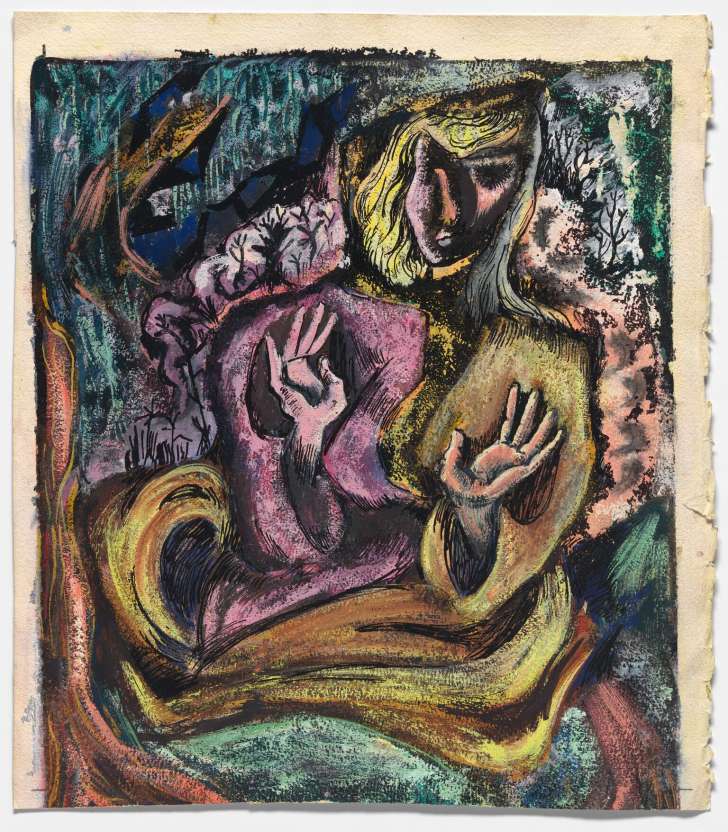
We’ve pre­vi­ous­ly fea­tured some of Plath’s draw­ings and self-por­traits here, but the Smith­son­ian exhib­it offers a con­sid­er­ably rich­er selec­tion than has been avail­able online. The ink and gouache por­trait at the top, for exam­ple, seems to draw from Marc Cha­gall in its mate­ri­als and swirling lines and col­ors. It also recalls lan­guage in a diary entry from 1953:

Look at that ugly dead mask here and do not for­get it. It is a chalk mask with dead dry poi­son behind it, like the death angel. It is what I was this fall, and what I nev­er want to be again.

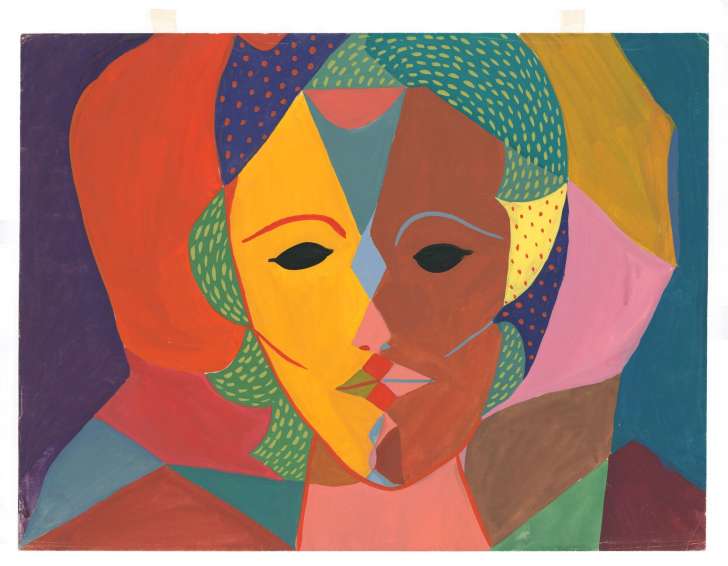
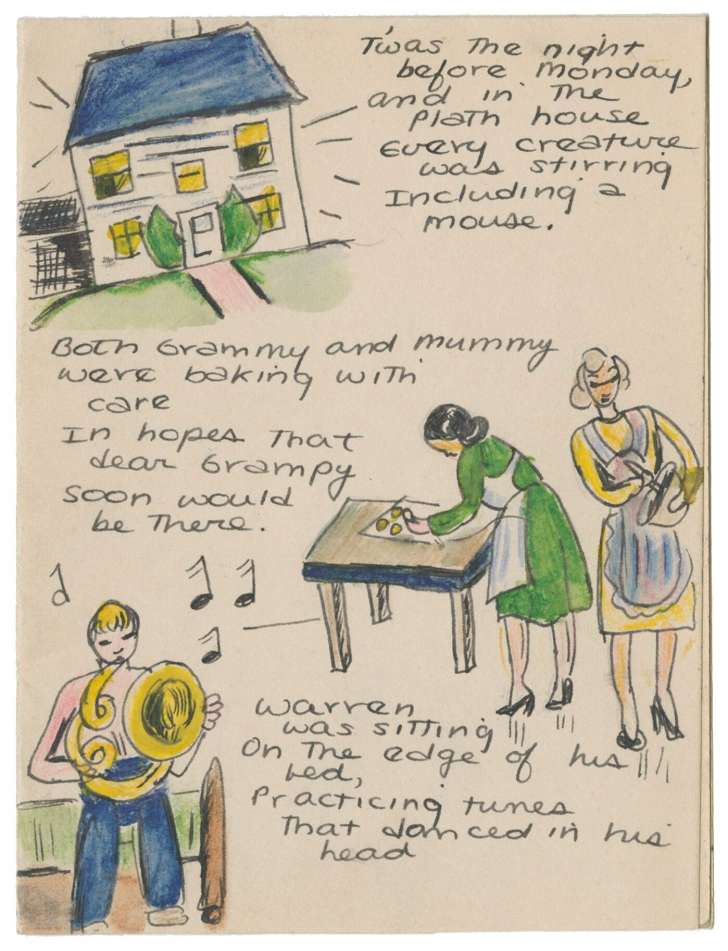
The hands thrown up in defense or sur­ren­der, the black life­less eyes… Plath emerges from the ring of dead trees behind her like a suf­fer­ing saint. Anoth­er por­trait, fur­ther up also resem­bles a mask, call­ing to mind the ancient ori­gins of the word per­sona. But the style has total­ly changed, the tumult of brush­strokes smoothed out into clean geo­met­ric lines and uni­form patch­es of col­or. Three masks com­bine into one face, a trin­i­ty of Plaths. The poet always had a sense of her­self as divid­ed, refer­ring to two dis­tinct per­son­al­i­ties as her “brown-haired” and “plat­inum” selves. The brown-haired young girl made sev­er­al charm­ing sketch­es of her fam­i­ly, with humor­ous com­men­tary. (Her trou­bling father is telling­ly, per­haps, absent.)

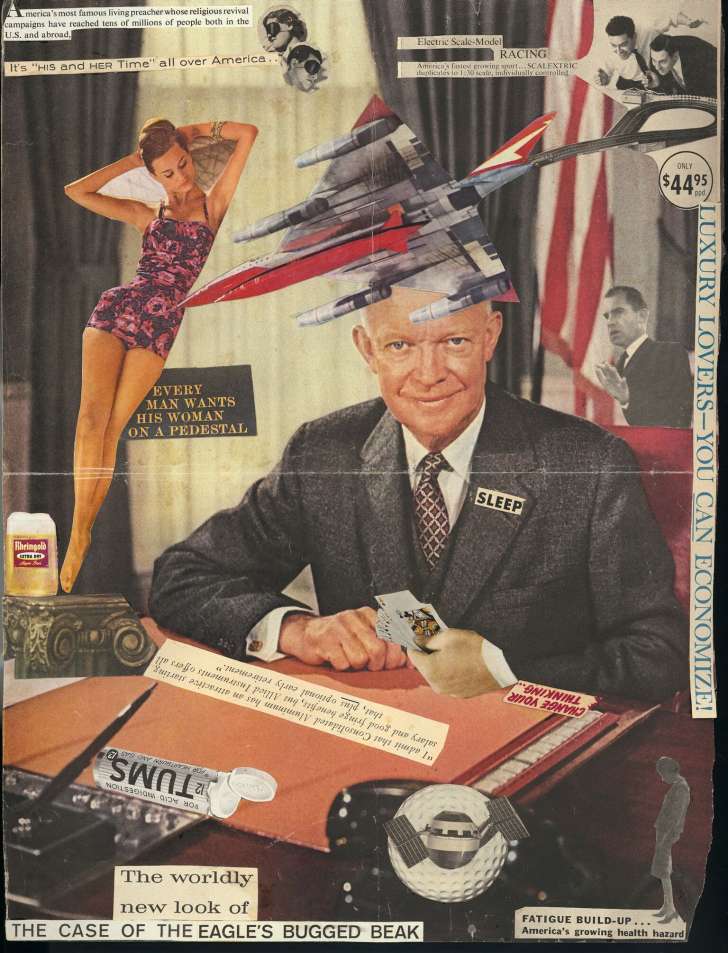
Hers was an epit­o­me of stan­dard-issue 50s white, mid­dle class Amer­i­can child­hood, the kind of sup­pos­ed­ly idyl­lic upbring­ing which no small num­ber of peo­ple still remem­ber today in a glow­ing, nos­tal­gic haze. In Plath’s exca­va­tions of the iden­ti­ties that she cul­ti­vat­ed her­self and those she had pushed upon her, she gazed with rad­i­cal inten­si­ty at America’s patri­ar­chal social fic­tions, and the vio­lence and enti­tle­ment that lay beneath them. The col­lage above from 1960 presents us with the kind of lay­ered, cut-up, hybrid text that William Bur­roughs had begun exper­i­ment­ing with not long before. You can see more high­lights from the Plath exhib­it, “One Life: Sylvia Plath,” at the Nation­al Por­trait Gallery. Also fea­tured are Plath’s fam­i­ly pho­tos, books, let­ters, her typewriter—and, in gen­er­al, sev­er­al more dimen­sions of her life than most of us know.

“One Life: Sylvia Plath” runs from June 30, 2017 through May 20, 2018.

Relat­ed Con­tent:

The Art of Sylvia Plath: Revis­it Her Sketch­es, Self-Por­traits, Draw­ings & Illus­trat­ed Let­ters

Hear Sylvia Plath Read 15 Poems From Her Final Col­lec­tion, Ariel, in 1962 Record­ing

Sylvia Plath’s 10 Back to School Com­mand­ments (1953)

Josh Jones is a writer and musi­cian based in Durham, NC. Fol­low him at @jdmagness

Hear Patti Smith Read the Poetry that Would Become Horses: A Reading of 14 Poems at Columbia University, 1975

Note: The first poem and oth­ers con­tain some offen­sive lan­guage.

In the con­text of the rad­i­cal socio-polit­i­cal change of 1975, Pat­ti Smith announced her­self to the world with Hors­es, “the first real full-length hint of the artis­tic fer­ment tak­ing place in the mid-‘70s at the junc­ture of Bow­ery and Bleeck­er,” writes Mac Ran­dall. Though born in an insu­lar down­town milieu, Smith’s view was vast, con­duct­ing the poet­ry of the past—of Rim­baud, the Beats, and rock and roll—into an uncer­tain future, through the nascent medi­um of punk rock. The album is “close­ly asso­ci­at­ed with the begin­ning of some­thing,” and yet is “so con­cerned with end­ings”: the loss of Jimi Hen­drix (at whose stu­dio Smith record­ed), and of “oth­er depart­ed coun­ter­cul­ture heroes like Jim Mor­ri­son, Janis Joplin and Bri­an Jones.”

In a way, Smith’s voice defines the piv­otal moment in which it arrived: antic­i­pat­ing an anx­ious age of aus­ter­i­ty and wom­en’s lib­er­a­tion; mourn­ing the loss of 60s ide­al­ism and the promise of racial equi­ty. She was a female artist ful­ly uncon­strained by patri­ar­chal expec­ta­tions, with com­plete author­i­ty over her vision. “My peo­ple were try­ing to forge a new bridge between the peo­ple we had lost and learned from and the future,” she recent­ly remarked.

In her “fab­u­lous­ly grand” way, she told The Guardian’s Simon Hat­ten­stone in 2013, “I felt in the cen­ter, not quite the old gen­er­a­tion, not quite the new gen­er­a­tion. I felt like the human bridge.” Smith was no naïf when she made Hors­es, but a con­fi­dent artist who, at 29, had worked in the­ater with her late­ly-depart­ed friend Sam Shep­ard, become her famous lover Robert Mapplethorpe’s favorite sub­ject, joined the St. Mark’s Poet­ry Project, and pub­lished two col­lec­tions of verse.

She thought of her­self as a poet who “got side­tracked” by music. “When I was young,” Smith says, “all I want­ed was to write books and be an artist.” But poet­ry was always cen­tral to her work; Hors­es, she says, “evolved organ­i­cal­ly” from her first poet­ry read­ing, four years ear­li­er, at St. Mark’s Church, along­side Allen Gins­berg, William Bur­roughs, and oth­er lumi­nar­ies. Above, you can hear her dis­cuss that atten­tion-grab­bing first read­ing, and at the top of the post, lis­ten to Smith at Colum­bia Uni­ver­si­ty in 1975, read­ing the poems that devel­oped that year into the songs on Hors­es, includ­ing her 1971 “Oath,” which begins with a vari­a­tion on Hors­es’ open­ing sneer, “Christ died for somebody’s sins, but not mine.”

Be warned the first poem she reads con­tains offen­sive lan­guage, as do many oth­ers. No one should be shocked by this. But some who only know Smith as a singer may be sur­prised by her mas­ter­ful lit­er­ary voice and wicked sense of humor. She has always been an elegist, mourn­ing her cul­tur­al heroes, most of whom died young, as well as a trag­ic string of per­son­al loss­es. “When I start­ed work­ing with the mate­r­i­al that became Hors­es,” she remem­bers, “a lot of our great voic­es had died.” But her intent went beyond ele­gy, beyond a maudlin appro­pri­a­tion of fad­ing 60s heroes. Smith had a “mis­sion,” she says, of “form­ing a cul­tur­al voice through rock’n’roll that incor­po­rat­ed sex and art and poet­ry and per­for­mance and rev­o­lu­tion.” It sounds grandiose, but it’s a mis­sion she’s large­ly ful­filled. At the cen­ter of her project is poet­ry as per­for­mance, as a means of enter­tain­ing, shock­ing, and seduc­ing an audi­ence. The read­ing at the top is an espe­cial­ly faith­ful record of her fear­less onstage per­sona.

Find more poet­ry read­ings in our col­lec­tion, 1,000 Free Audio Books: Down­load Great Books for Free.

Relat­ed Con­tent:

Hear Pat­ti Smith Read 12 Poems From Sev­enth Heav­en, Her First Col­lec­tion (1972)

Watch Pat­ti Smith Read from Vir­ginia Woolf, and Hear the Only Sur­viv­ing Record­ing of Woolf’s Voice

Pat­ti Smith’s New Haunt­ing Trib­ute to Nico: Hear Three Tracks

Josh Jones is a writer and musi­cian based in Durham, NC. Fol­low him at @jdmagness

Discover Langston Hughes’ Rent Party Ads & The Harlem Renaissance Tradition of Playing Gigs to Keep Roofs Over Heads

Both com­mu­ni­ties of col­or and com­mu­ni­ties of artists have had to take care of each oth­er in the U.S., cre­at­ing sys­tems of sup­port where the dom­i­nant cul­ture fos­ters neglect and depri­va­tion. In the ear­ly twen­ti­eth cen­tu­ry, at the nexus of these two often over­lap­ping com­mu­ni­ties, we meet Langston Hugh­es and the artists, poets, and musi­cians of the Harlem Renais­sance. Hugh­es’ bril­liant­ly com­pressed 1951 poem “Harlem” speaks of the sim­mer­ing frus­tra­tion among a weary peo­ple. But while its star­tling final line hints grim­ly at social unrest, it also looks back to the explo­sion of cre­ativ­i­ty in the sto­ried New York City neigh­bor­hood dur­ing the Great Depres­sion.

Hugh­es had grown reflec­tive in the 50s, return­ing to the ori­gins of jazz and blues and the his­to­ry of Harlem in Mon­tage of a Dream Deferred. The strained hopes and hard­ships he had elo­quent­ly doc­u­ment­ed in the 20s and 30s remained large­ly the same post-World War II, and one of the key fea­tures of Depres­sion-era Harlem had returned; Rent par­ties, the wild shindigs held in pri­vate apart­ments to help their res­i­dents avoid evic­tion, were back in fash­ion, Hugh­es wrote in the Chica­go Defend­er in 1957.

“Maybe it is infla­tion today and the high cost of liv­ing that is caus­ing the return of the pay-at-the-door and buy-your-own-refresh­ments par­ties,” he said. He also not­ed that the new par­ties weren’t as much fun.

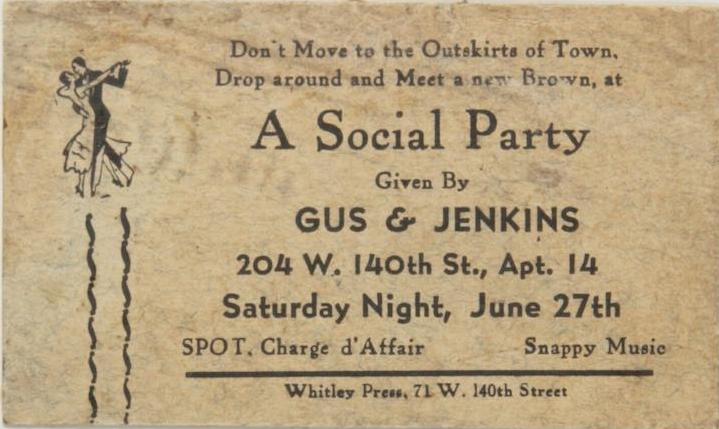
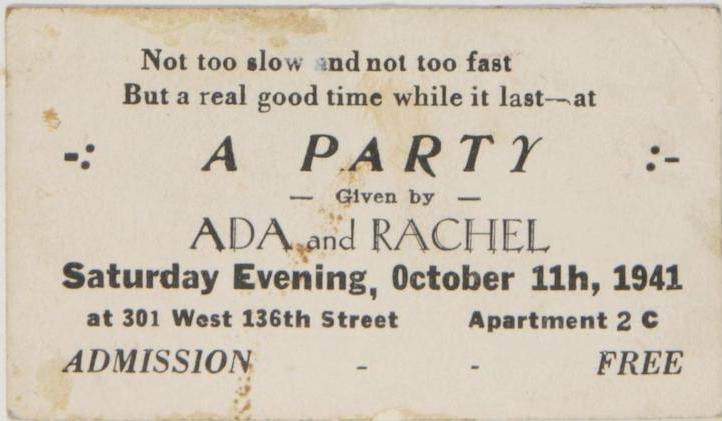
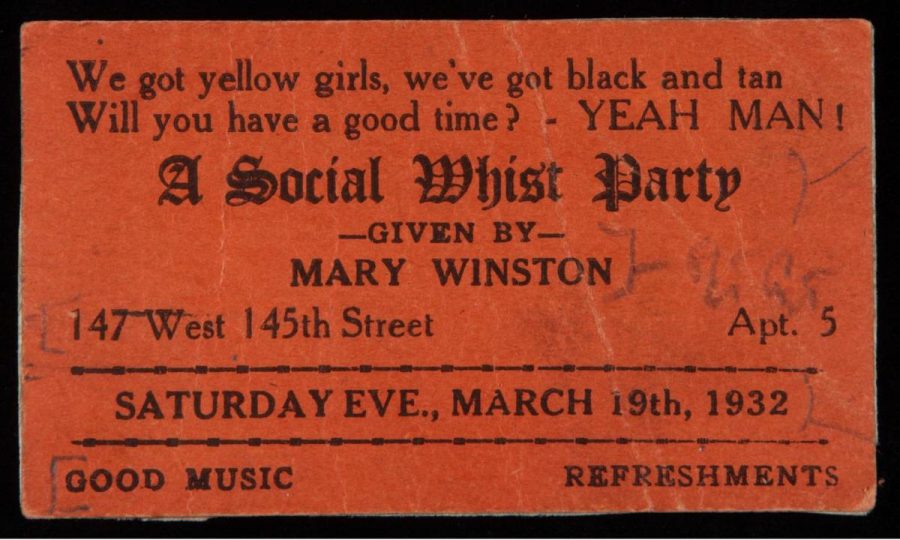
But how could they be? Depres­sion-era rent par­ties were leg­endary. They “impact­ed the growth of Swing and Blues danc­ing,” writes dance teacher Jered Morin, “like few oth­er peri­ods.” As Hugh­es com­ment­ed, “the Sat­ur­day night rent par­ties that I attend­ed were often more amus­ing than any night club, in small apart­ments where God-knows-who lived.” Famous artists met and rubbed elbows, musi­cians formed impromp­tu jams and invent­ed new styles, work­ing class peo­ple who couldn’t afford a night out got to put on their best clothes and cut loose to the lat­est music. Hugh­es was fas­ci­nat­ed, and as a writer, he was also quite tak­en by the quirky cards used to adver­tise the par­ties. “When I first came to Harlem,” he said, “as a poet I was intrigued by the lit­tle rhymes at the top of most House Rent Par­ty cards, so I saved them. Now I have quite a col­lec­tion.”

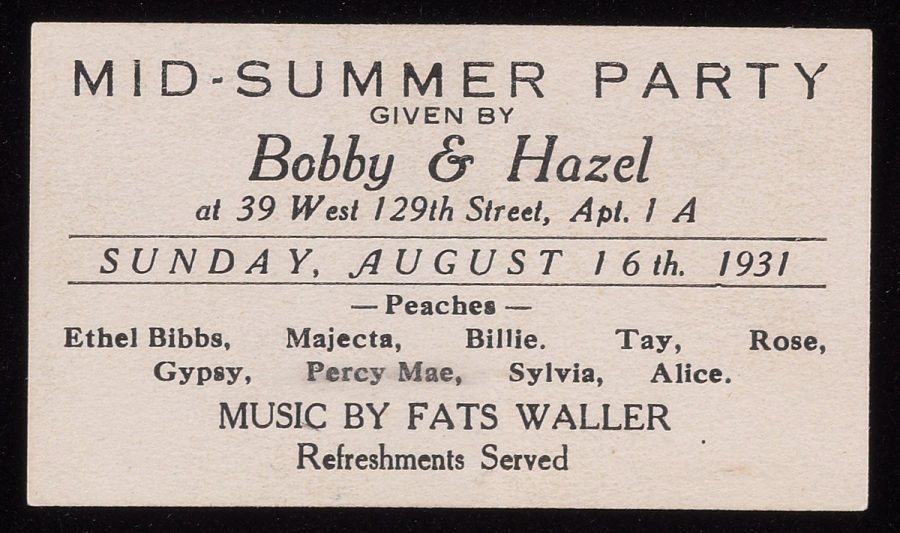
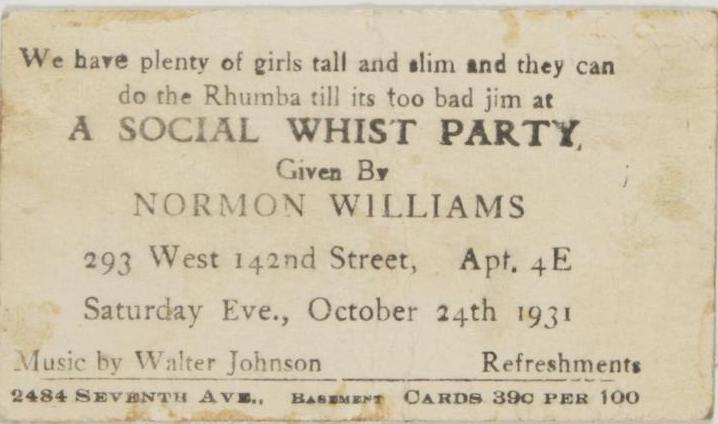
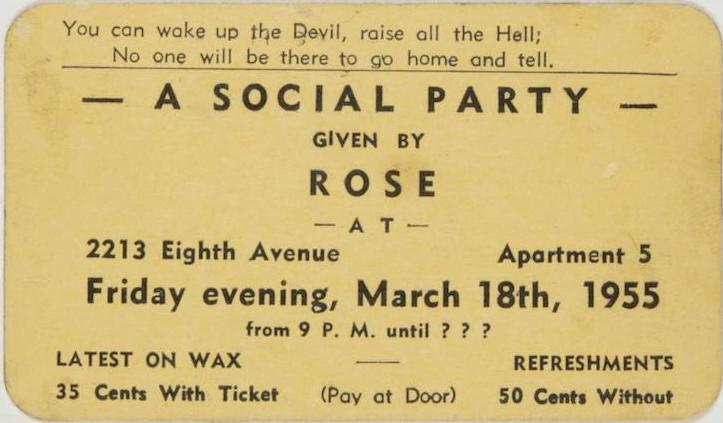
The cards you see here come from Hugh­es’ per­son­al col­lec­tion, held with his papers at Yale’s Bei­necke Rare Book and Man­u­script Library. Many of these date from the 40s and 50s, but they all draw their inspi­ra­tion from the Harlem Renais­sance peri­od, when the phe­nom­e­non of jazz-infused rent par­ties explod­ed.  “San­dra L. West points out that black ten­ants in Harlem dur­ing the 1920s and 1930s faced dis­crim­i­na­to­ry rental rates,” notes Rebec­ca Onion at Slate. “That, along with the gen­er­al­ly low­er salaries for black work­ers, cre­at­ed a sit­u­a­tion in which many peo­ple were short of rent mon­ey. These par­ties were orig­i­nal­ly meant to bridge that gap.” A 1938 Fed­er­al Writ­ers Project account put it plain­ly: Harlem “was a typ­i­cal slum and ten­e­ment area lit­tle dif­fer­ent from many oth­ers in New York except for the fact that in Harlem rents were high­er; always have been, in fact, since the great war-time migra­to­ry influx of col­ored labor.”

Ten­ants took it in stride, draw­ing on two long­stand­ing com­mu­ni­ty tra­di­tions to make ends meet: the church fundrais­er and the Sat­ur­day night fish fry. But rent par­ties could be rau­cous affairs. Guests typ­i­cal­ly paid a few cents to enter, and extra for food cooked by the host. Apart­ments filled far beyond capac­i­ty, and alcohol—illegal from 1919 to 1933—flowed freely. Gam­bling and pros­ti­tu­tion fre­quent­ly made an appear­ance.  And the com­pe­ti­tion could be fierce. The Ency­clo­pe­dia of the Harlem Renais­sance writes that in their hey­day, “as many as twelve par­ties in a sin­gle block and five in an apart­ment build­ing, simul­ta­ne­ous­ly, were not uncom­mon.” Rent par­ties “essen­tial­ly amount­ed to a kind of grass­roots social wel­fare,” though the atmos­phere could be “far more sor­did than the aver­age neigh­bor­hood block par­ty.” Many upright cit­i­zens who dis­ap­proved of jazz, gam­bling, and booze turned up their noses and tried to ignore the par­ties.

In order to entice par­ty-goers and dis­tin­guish them­selves, writes Onion, “the cards name the kind of musi­cal enter­tain­ment atten­dees could expect using lyrics from pop­u­lar songs or made-up rhyming verse as slo­gans.” They also “used euphemisms to name the par­ties’ pur­pose,” call­ing them “Social Whist Par­ty” or “Social Par­ty,” while also sly­ly hint­ing at row­di­er enter­tain­ments. The new rent par­ties may not have lived up to Hugh­es’ mem­o­ries of jazz-age shindigs, per­haps because, in some cas­es, live musi­cians had been replaced by record play­ers. But the new cards, he wrote “are just as amus­ing as the old ones.”

via Slate

Relat­ed Con­tent:

Langston Hugh­es Presents the His­to­ry of Jazz in an Illus­trat­ed Children’s Book (1955)

Langston Hugh­es Cre­ates a List of His 100 Favorite Jazz Record­ings: Hear 80+ of Them in a Big Playlist

Watch Langston Hugh­es Read Poet­ry from His First Col­lec­tion, The Weary Blues (1958)

Josh Jones is a writer and musi­cian based in Durham, NC. Fol­low him at @jdmagness

When J.M. Coetzee Secretly Programmed Computers to Write Poetry in the 1960s

Before J.M. Coet­zee became per­haps the most acclaimed nov­el­ist alive, he worked as a pro­gramer. That may not sound par­tic­u­lar­ly notable these days, but bear in mind that the Nobel lau­re­ate and two-time Book­er-win­ning author of Wait­ing for the Bar­bar­ians, Dis­grace, and Eliz­a­beth Costel­lo held that day job first at IBM in the ear­ly 1960s — back, in oth­er words, when nobody had a com­put­er on their desk. And back when IBM was IBM: that mighty Amer­i­can cor­po­ra­tion had brought the kind of com­put­ing pow­er it alone could com­mand to branch offices in cities around the world, includ­ing Lon­don, where Coet­zee land­ed after leav­ing his native South Africa after grad­u­at­ing from the Uni­ver­si­ty of Cape Town.

The years Coet­zee spent “writ­ing machine code for com­put­ers,” he once wrote in a let­ter to Paul Auster, saw him “get­ting so deeply sucked into the process that I some­times felt I was descend­ing into a mad­ness in which the brain is tak­en over by mechan­i­cal log­ic.” This must have caused some dis­tress to a lit­er­ar­i­ly mind­ed young man who heard his true call­ing only from poet­ry.

“I was very heav­i­ly under the influ­ence, in my teens and ear­ly twen­ties, of, first, T.S. Eliot, but then, more sub­stan­tial­ly, Ezra Pound, and lat­er of Ger­man poet­ry, of Rilke in par­tic­u­lar,” he says to Peter Sacks in the inter­view above, remem­ber­ing the years before he put poet­ry aside as a craft in favor of the nov­el.

“Under the shad­ow­less glare of the neon light­ing, he feels his very soul to be under attack,“Coetzee writes, in the auto­bi­o­graph­i­cal nov­el Youth, of the pro­tag­o­nist’s time as a pro­gram­mer. “The build­ing, a fea­ture­less block of con­crete and glass, seems to give off a gas, odour­less, colour­less, that finds its way into his blood and numbs him. IBM, he can swear, is killing him, turn­ing him into a zom­bie.” Only in the evening can he “leave his desk, wan­der around, relax. The machine room down­stairs, dom­i­nat­ed by the huge mem­o­ry cab­i­nets of the 7090, is more often than not emp­ty; he can run pro­grams on the lit­tle 1401 com­put­er, even, sur­rep­ti­tious­ly, play games on it.”

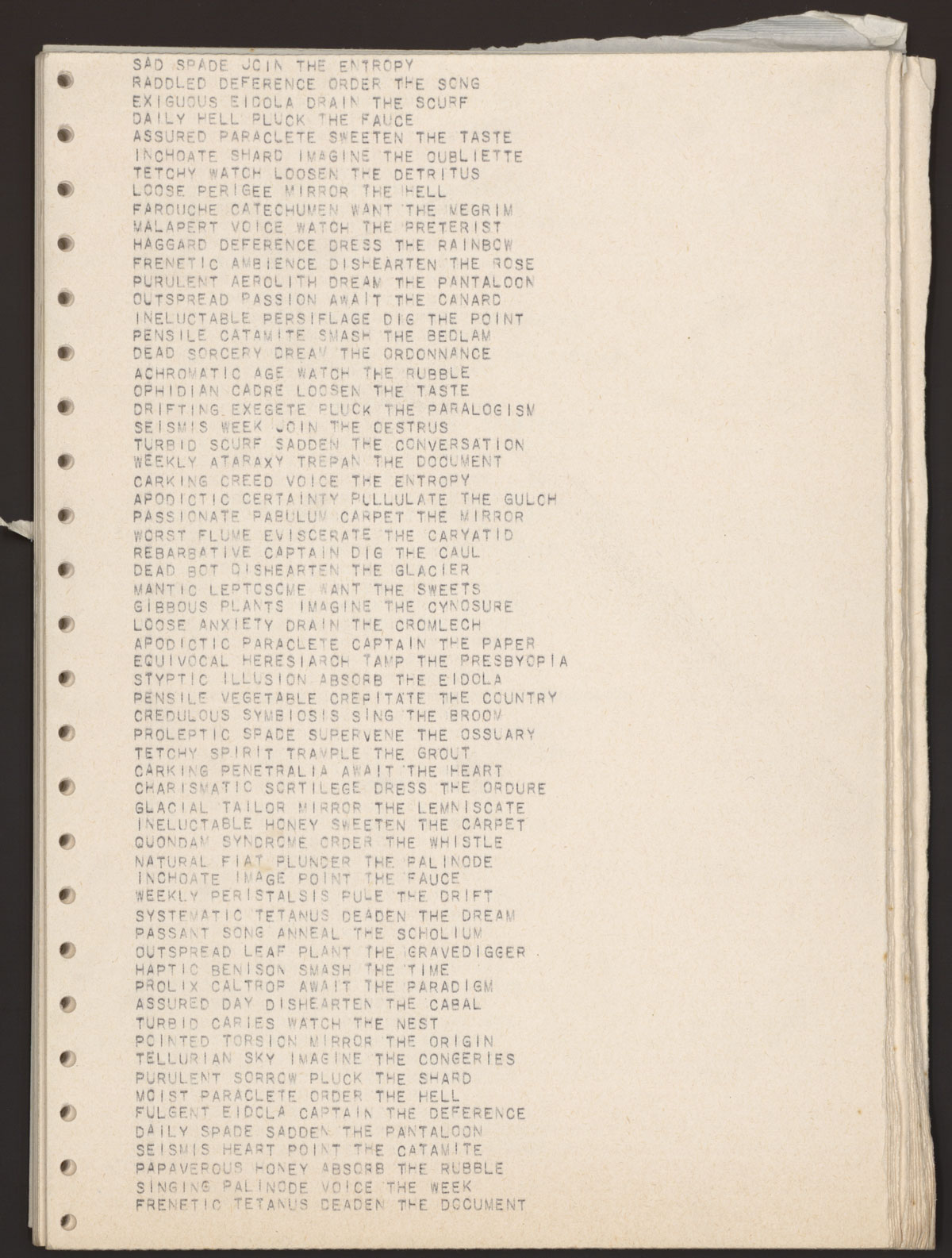
He could also use these clunky, punch­card-oper­at­ed com­put­ers to write poet­ry. “In the mid 1960s Coet­zee was work­ing on one of the most advanced pro­gram­ming projects in Britain,” writes King’s Col­lege Lon­don researcher Rebec­ca Roach. “Dur­ing the day he helped to design the Atlas 2 super­com­put­er des­tined for the Unit­ed Kingdom’s Atom­ic Ener­gy Research Estab­lish­ment at Alder­mas­ton. At night he used this huge­ly pow­er­ful machine of the Cold War to write sim­ple ‘com­put­er poet­ry,’ that is, he wrote pro­grams for a com­put­er that used an algo­rithm to select words from a set vocab­u­lary and cre­ate repet­i­tive lines.”

These lines, as seen here in one page of the print-outs held at the Coet­zee archive at the Uni­ver­si­ty of Texas at Austin’s Har­ry Ran­som Cen­ter, include “INCHOATE SHARD IMAGINE THE OUBLIETTE,” “FRENETIC AMBIENCE DISHEARTEN THE ROSE,” “PASSIONATE PABULUM CARPET THE MIRROR,” and “FRENETIC TETANUS DEADEN THE DOCUMENT.” Though he nev­er pub­lished these results, writes Roach, he “edit­ed and includ­ed phras­es from them in poet­ry that he did pub­lish.” Is this a curi­ous chap­ter in the ear­ly life of a promi­nent man of let­ters, or was this realm of “flat metal­lic sur­faces” an ide­al forge for the sen­si­bil­i­ties of a writer now known, as John Lan­ches­ter so apt­ly put it, for his “unusu­al qual­i­ty of pas­sion­ate cold­ness” — a kind of bril­liant aus­ter­i­ty that hard­ly dead­ens any of his doc­u­ments.

Relat­ed Con­tent:

J.M. Coet­zee on the Plea­sures of Writ­ing: Total Engage­ment, Hard Thought & Pro­duc­tive­ness

Read and Hear Famous Writ­ers (and Arm­chair Sports­men) J.M. Coet­zee and Paul Auster’s Cor­re­spon­dence

New Jorge Luis Borges-Inspired Project Will Test Whether Robots Can Appre­ci­ate Poet­ry

Japan­ese Com­put­er Artist Makes “Dig­i­tal Mon­dri­ans” in 1964: When Giant Main­frame Com­put­ers Were First Used to Cre­ate Art

Based in Seoul, Col­in Mar­shall writes and broad­casts on cities and cul­ture. He’s at work on the book The State­less City: a Walk through 21st-Cen­tu­ry Los Ange­les, the video series The City in Cin­e­ma, the crowd­fund­ed jour­nal­ism project Where Is the City of the Future?, and the Los Ange­les Review of Books’ Korea Blog. Fol­low him on Twit­ter at @colinmarshall or on Face­book.

2,000+ Cassettes from the Allen Ginsberg Audio Collection Now Streaming Online

Last month Col­in Mar­shall gave you the scoop on Stan­ford Uni­ver­si­ty’s dig­i­ti­za­tion of Allen Gins­berg’s “Howl,” a project that takes you inside the mak­ing of the icon­ic 1955 poem. As a quick fol­low up, it’s worth men­tion­ing this: Stan­ford has also just put online over 2,000 Gins­berg audio cas­sette record­ings, giv­ing you access to “a stag­ger­ing amount of pri­ma­ry source mate­r­i­al asso­ci­at­ed with the Beat Gen­er­a­tion” and its most acclaimed poet.

For a quick taste of what’s in the archive, Stan­ford Libraries points you to an after­noon break­fast table con­ver­sa­tion between Gins­berg and anoth­er leg­endary Beat fig­ure, William S. Bur­roughs. But you can rummage/search through the whole col­lec­tion and find your own favorite record­ings here.

via Stan­ford Libraries and Austin Kleon’s newslet­ter (which you should sub­scribe to here)

If you would like to sign up for Open Culture’s free email newslet­ter, please find it here. It’s a great way to see our new posts, all bun­dled in one email, each day.

If you would like to sup­port the mis­sion of Open Cul­ture, con­sid­er mak­ing a dona­tion to our site. It’s hard to rely 100% on ads, and your con­tri­bu­tions will help us con­tin­ue pro­vid­ing the best free cul­tur­al and edu­ca­tion­al mate­ri­als to learn­ers every­where. You can con­tribute through Pay­Pal, Patre­on, and Ven­mo (@openculture). Thanks!

Relat­ed Con­tent:

Allen Ginsberg’s Howl Man­u­scripts Now Dig­i­tized & Put Online, Reveal­ing the Beat Poet’s Cre­ative Process

The First Record­ing of Allen Gins­berg Read­ing “Howl” (1956)

Allen Gins­berg Reads His Famous­ly Cen­sored Beat Poem, “Howl” (1959)

James Fran­co Reads a Dream­i­ly Ani­mat­ed Ver­sion of Allen Ginsberg’s Epic Poem ‘Howl’

Allen Ginsberg’s “Celes­tial Home­work”: A Read­ing List for His Class “Lit­er­ary His­to­ry of the Beats

Allen Gins­berg Record­ings Brought to the Dig­i­tal Age. Lis­ten to Eight Full Tracks for Free

Allen Ginsberg’s Hand­writ­ten Poem For Bernie Sanders, “Burling­ton Snow” (1986)

by | Permalink | Make a Comment ( 2 ) |

« Go BackMore in this category... »
Quantcast