How to Recognize a Dystopia: Watch an Animated Introduction to Dystopian Fiction

Lit­er­a­ture and film can open up to the depth and immen­si­ty of social truths we find pro­found­ly dif­fi­cult, if not impos­si­ble, to artic­u­late. If our polit­i­cal vocab­u­lary (as Oxford Dic­tio­nar­ies sug­gest­ed in their word of the year) has become “post-truth,” it can seem like the only hon­est rep­re­sen­ta­tions of real­i­ty are found in the imag­i­nary.

Amidst the vio­lent upheavals of the last cou­ple decades, for exam­ple, we have seen an explo­sion of the dystopi­an, that ven­er­a­ble yet mod­ern genre we use to explain our con­tem­po­rary polit­i­cal con­di­tions to our­selves. It has become com­mon prac­tice in seri­ous debate to ges­ture toward the out­sized cin­e­mat­ic sce­nar­ios of Snow­piercer, or The Hunger Games and Har­ry Pot­ter series, as stand-ins for dis­turb­ing present real­i­ties.

You may have also encoun­tered recent ref­er­ences to lit­er­ary spec­u­la­tive fic­tion like William Gibson’s The Periph­er­al, Mar­garet Atwood’s The Handmaid’s Tale, Olivia Butler’s Para­ble series, and Philip K. Dick’s Radio Free Albe­muth, the first nov­el Dick wrote before VALIS about his sup­posed reli­gious expe­ri­ence. Draft­ed in 1976 but only pub­lished posthu­mous­ly in 1985, Dick­’s pre­scient nov­el takes place in an alter­nate U.S. (like The Man in the High Cas­tle), in which para­noid right-wing zealot Fer­ris Fre­mont, a Joseph McCarthy/Richard Nixon-like fig­ure, suc­ceeds Lyn­don John­son as pres­i­dent.

There is no point in dwelling on the ethics of Fer­ris Fre­mont.… The Sovi­ets backed him, the right-wingers backed him, and final­ly just about every­one… Fre­mont had the back­ing of the US intel­li­gence com­mu­ni­ty, as they liked to call them­selves, and exi­gents played an effec­tive role in dec­i­mat­ing polit­i­cal oppo­si­tion. In a one-par­ty sys­tem there is always a land­slide.

The sti­fling total­i­tar­i­an con­trol Fre­mont exer­cis­es is very much a hall­mark of dystopi­an fic­tion. But does Dick’s novel—set in an alter­nate present rather than a fright­en­ing future, and with an alien/supernatural invasion—qualify as dystopi­an? What about Har­ry Pot­ter, with its fairy tale intru­sions of the mag­i­cal into the present? The TED Ed video at the top, nar­rat­ed by Alex Gendler, sets flex­i­ble bound­aries for a cat­e­go­ry we’ve most­ly come to asso­ciate with prophet­ic, futur­is­tic sci­ence fic­tion, and offers a broad­ly com­pre­hen­sive def­i­n­i­tion.

The word dystopia, a Greek coinage for “bad place,” dates to 1868, from a usage by John Stu­art Mill to char­ac­ter­ize the indus­tri­al world’s moral inver­sion of Sir Thomas More’s Utopia. That word, Gendler points out, is a term More invent­ed to mean either “no place” or “good place.” Gendler dates the emer­gence of the dystopi­an to Jonathan Swift’s satire Gulliver’s Trav­els, a book, like Har­ry Pot­ter, set in an alter­nate present fea­tur­ing many mon­strous intru­sions of the fan­tas­tic into the real. Unlike the boy wiz­ard’s saga, how­ev­er, the mon­sters in Gul­liv­er serve as alle­gories for us.

Swift, Gendler argues, “estab­lished a blue­print for dystopia.” His Lil­liputians, Bob­d­ing­na­gians, Laputions, and Houy­hnhn­ms all rep­re­sent “cer­tain trends in con­tem­po­rary soci­ety… tak­en to extremes.” In lat­er exam­ples, the form con­tin­ued to reflect the per­ni­cious thought and sci­ence of the age: the extreme eugen­ics of H.G. Wells’ The Time Machine, the prison-like fac­to­ry con­di­tions of Fritz Lang’s film Metrop­o­lis, the repres­sive hyper-ratio­nal­iza­tion in Yevge­ny Zamyatin’s 1924 Sovi­et-based dystopia We, and the med­ical tech­noc­ra­cy of Aldous Huxley’s Brave New World.

Bor­row­ing lib­er­al­ly from Zamy­atin and com­pet­ing with Hux­ley, George Orwell’s 1984 set a new stan­dard of verisimil­i­tude for dystopi­an fic­tion, stark­ly remind­ing thou­sands of post-war read­ers that “the best-known dystopias were not imag­i­nary at all,” Gendler says. The his­tor­i­cal night­mares of World War II and the fol­low­ing Cold War dic­ta­tor­ships birthed hor­rors for which we can nev­er find appro­pri­ate lan­guage. And so we turn to nov­els like 1984 and Kurt Vonnegut’s Cat’s Cra­dle, both of which apt­ly show us worlds where lan­guage has ceased to func­tion in any ordi­nary com­mu­nica­tive sense.

Per­haps one of the most-ref­er­enced of dystopi­an nov­els in U.S. polit­i­cal dis­course, Sin­clair Lewis’ 1935 It Can’t Hap­pen Here, gave lit­tle but its title to the pop­u­lar lex­i­con. “Lewis,” writes Alexan­der Nazaryan in The New York­er, “was nev­er much of an artist, but what he lacked in style he made up for with social obser­va­tion.” The nov­el “envi­sioned how eas­i­ly,” Gendler says, “democ­ra­cy gives way to fas­cism.” The cri­sis point comes when the peo­ple want “safe­ty and con­ser­vatism again,” as Roo­sevelt observed that same year—a year in which “the promise of the New Deal,” Nazaryan remarks, “remained unful­filled for many.”

The irony of Lewis’ sce­nario is that those left behind by Roo­sevelt’s poli­cies are those who suf­fer most under the fic­tion­al pres­i­den­cy of author­i­tar­i­an Sen­a­tor Berzelius “Buzz” Win­drip. Mean­while, the more com­fort­able con­sole them­selves with hol­low denials: “it can’t hap­pen here.” Extreme eco­nom­ic inequal­i­ty and social strat­i­fi­ca­tion have been an essen­tial fea­ture of clas­si­cal utopi­an fic­tion since its first appear­ance in Plato’s Repub­lic. In the mod­ern lit­er­ary dystopia, the sci­ence, tech­nol­o­gy, and polit­i­cal mech­a­niza­tion that philoso­phers once cel­e­brat­ed become implaca­ble weapons of war against the cit­i­zen­ry.

For all the mal­leable bound­aries of the genre—which strays into sci­ence fic­tion, fan­ta­sy, sur­re­al­ism, and satire—dystopian fic­tions all have one uni­fy­ing theme: “At their heart,” says Gendler, “dystopias are cau­tion­ary tales, not about some par­tic­u­lar gov­ern­ment or tech­nol­o­gy, but the very idea that human­i­ty can be mold­ed into an ide­al shape.”

Relat­ed Con­tent:

A Clock­work Orange Author Antho­ny Burgess Lists His Five Favorite Dystopi­an Nov­els: Orwell’s 1984, Huxley’s Island & More

Octavia Butler’s 1998 Dystopi­an Nov­el Fea­tures a Fascis­tic Pres­i­den­tial Can­di­date Who Promis­es to “Make Amer­i­ca Great Again”

Hux­ley to Orwell: My Hell­ish Vision of the Future is Bet­ter Than Yours (1949)

Josh Jones is a writer and musi­cian based in Durham, NC. Fol­low him at @jdmagness

The Cast of Hamilton Sends a Strong Message to Mike Pence (After the Crowd Jeers Him)

When Mike Pence entered the Richard Rodgers The­atre to see Hamil­ton Fri­day night, the crowd booed him.

When the play end­ed, the cast sent Pence off with a spe­cial mes­sage. Speak­ing for the cast, Bran­don Vic­tor Dixon, the actor who plays Aaron Burr, said this:

You know we have a guest in the audi­ence this evening. Vice Pres­i­dent-elect Pence I see you walk­ing out but I hope you will hear us just a few more moments.

There is noth­ing to boo here ladies and gen­tle­men, we are all shar­ing a sto­ry of love. We have a mes­sage for you sir, and we hope you will hear us out…

Vice Pres­i­dent-elect Mike Pence we wel­come you and we tru­ly thank you for join­ing us here at Hamil­ton, an Amer­i­can Musi­cal.

We, sir, we are the diverse Amer­i­ca who are alarmed and anx­ious that your new admin­is­tra­tion will not pro­tect us, our plan­et, our chil­dren, our par­ents or defend us or uphold our inalien­able rights, sir. But we tru­ly hope this show has inspired you to uphold our Amer­i­can val­ues and to work on behalf of all of us.

We tru­ly thank you for shar­ing this show, this won­der­ful Amer­i­can sto­ry told by a diverse group of men and women of dif­fer­ent col­ors, creeds and ori­en­ta­tions.

Trump and Pence came to office exploit­ing racial, nation­al and eth­nic resent­ments across Amer­i­ca. They’re now putting fig­ures like Steve Ban­non and Jeff Ses­sions (both tar­nished by alle­ga­tions of racism) in posi­tions of pow­er. And we’re seeing hate crimes on the rise. (701  report­ed cas­es since the elec­tion.) It’s no sur­prise that the new gov­ern­ment is get­ting tak­en to task. It’s free speech in action, democ­ra­cy being the some­times rau­cous, in your face thing it can be.

For­tu­nate­ly Pence seems to have a fin­er appre­ci­a­tion of the role dis­sent plays in our coun­try: He has since told The Hol­ly­wood Reporter, “I did hear what was said from the stage, and I can tell you, I was­n’t offend­ed by what was said.” “It was a real joy to be there. When we arrived, we heard a few boos and a few cheers, and I nudged my kids and remind­ed them, ‘That’s what free­dom sounds like.” Kudos to him.

In oth­er culture/education news, Don­ald Trump has agreed to pay $25 mil­lion to set­tle his Trump Uni­ver­si­ty fraud case.

If you would like to sign up for Open Culture’s free email newslet­ter, please find it here. It’s a great way to see our new posts, all bun­dled in one email, each day.

If you would like to sup­port the mis­sion of Open Cul­ture, con­sid­er mak­ing a dona­tion to our site. It’s hard to rely 100% on ads, and your con­tri­bu­tions will help us con­tin­ue pro­vid­ing the best free cul­tur­al and edu­ca­tion­al mate­ri­als to learn­ers every­where. You can con­tribute through Pay­Pal, Patre­on, and Ven­mo (@openculture). Thanks!

Relat­ed Con­tent:

Alexan­der Hamil­ton: Hip-Hop Hero at the White House Poet­ry Evening

“Alexan­der Hamil­ton” Per­formed with Amer­i­can Sign Lan­guage

by | Permalink | Make a Comment ( 17 ) |

Philosopher Richard Rorty Chillingly Predicts the Results of the 2016 Election … Back in 1998

rorty

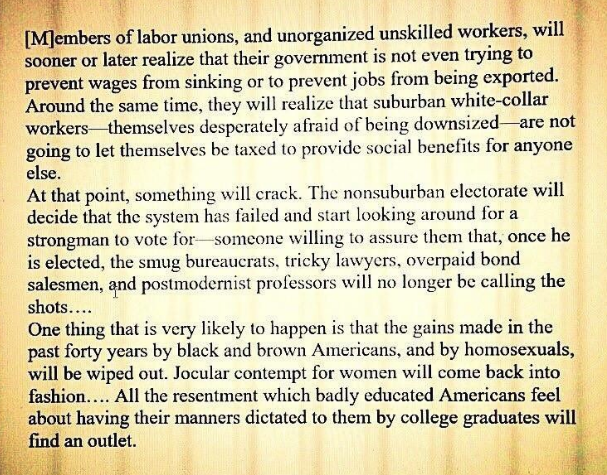
Twen­ty years ago a strong aca­d­e­m­ic left in uni­ver­si­ties all over the world spoke to polit­i­cal cul­ture the way that a glob­al­ized nation­al­ist far-right seems to now. Among pub­lic intel­lec­tu­als in the U.S., Richard Rorty’s name held par­tic­u­lar sway. Yet in his con­trar­i­an 1998 book Achiev­ing Our Coun­try, Rorty argued against the par­tic­i­pa­tion of phi­los­o­phy in pol­i­tics. A mem­ber of the so-called “Old Left,” or what he called the “reformist left,” Rorty took on the “Cul­tur­al Left” in ways we now hear in (often bit­ter) debates between sim­i­lar camps. In the course of his attacks, he made the uncan­ny pre­dic­tion above.

The cul­tur­al left, wrote Rorty, had come “to give cul­tur­al pol­i­tics pref­er­ence over real pol­i­tics, and to mock the very idea that demo­c­ra­t­ic insti­tu­tions might once again be made to serve social jus­tice.” He fore­saw cul­tur­al pol­i­tics on the left as con­tribut­ing to a tidal wave of resent­ment that would one day result in a time when “all the sadism which the aca­d­e­m­ic left has tried to make unac­cept­able to its stu­dents will come flood­ing back.”

As demo­c­ra­t­ic insti­tu­tions fail, he writes in the quote above:

[M]embers of labor unions, and unor­ga­nized unskilled work­ers, will soon­er or lat­er real­ize that their gov­ern­ment is not even try­ing to pre­vent wages from sink­ing or to pre­vent jobs from being export­ed. Around the same time, they will real­ize that sub­ur­ban white-col­lar workers—themselves des­per­ate­ly afraid of being downsized—are not going to let them­selves be taxed to pro­vide social ben­e­fits for any­one else.

At that point, some­thing will crack. The non­sub­ur­ban elec­torate will decide that the sys­tem has failed and start look­ing around for a strong­man to vote for—someone will­ing to assure them that, once he is elect­ed, the smug bureau­crats, tricky lawyers, over­paid bond sales­men, and post­mod­ernist pro­fes­sors will no longer be call­ing the shots. A sce­nario like that of Sin­clair Lewis’ nov­el It Can’t Hap­pen Here may then be played out. For once a strong­man takes office, nobody can pre­dict what will hap­pen. In 1932, most of the pre­dic­tions made about what would hap­pen if Hin­den­burg named Hitler chan­cel­lor were wild­ly overop­ti­mistic.

One thing that is very like­ly to hap­pen is that the gains made in the past forty years by black and brown Amer­i­cans, and by homo­sex­u­als, will be wiped out. Joc­u­lar con­tempt for women will come back into fash­ion. The words [slur for an African-Amer­i­can that begins with “n”] and [slur for a Jew­ish per­son that begins with “k”] will once again be heard in the work­place. All the sadism which the aca­d­e­m­ic Left has tried to make unac­cept­able to its stu­dents will come flood­ing back. All the resent­ment which bad­ly edu­cat­ed Amer­i­cans feel about hav­ing their man­ners dic­tat­ed to them by col­lege grad­u­ates will find an out­let.

He also then argues, how­ev­er, that this sadism will not sole­ly be the result of “eco­nom­ic inequal­i­ty and inse­cu­ri­ty,” and that such expla­na­tions would be “too sim­plis­tic.” Nor would the strong­man who comes to pow­er do any­thing but wors­en eco­nom­ic con­di­tions. He writes next, “after my imag­ined strong­man takes charge, he will quick­ly make his peace with the inter­na­tion­al super­rich.”

Rorty blamed the Marx­ist New Left for “retreat­ing from prag­ma­tism into the­o­ry,” wrote The New York Times in its review of Achiev­ing Our Coun­try. He felt the cul­tur­al left had aban­doned the “Amer­i­can exper­i­ment as sec­u­lar, anti-author­i­tar­i­an and infi­nite in pos­si­bil­i­ties,” such as “Whit­man ide­al­ized as lov­ing rela­tion­ships and Dewey as good cit­i­zen­ship.” The Times wrote then that Rorty’s pre­dic­tions above were a form of “intel­lec­tu­al bul­ly­ing.” We can take our dystopi­an futures from sci-fi nov­el­ists and film­mak­ers, but when philoso­phers “harus­pi­cate or scry,” as T.S. Eliot wrote in “The Dry Sal­vages,” we tend to dis­miss it as the “usu­al / Pas­times and drugs, and fea­tures of the press.”

The emi­nent Stan­ford pro­fes­sor exhort­ed his con­tem­po­raries to leave behind “semi­con­scious anti-Amer­i­can­ism” and embrace prag­mat­ic civ­il engage­ment, and did so by offer­ing up exam­ples from Amer­i­can lit­er­a­ture and phi­los­o­phy that all had fierce activist strains. Exco­ri­at­ing one kind of life of the mind, Rorty can’t help but offer anoth­er. “What does Rorty offer as a solu­tion?” asked the Times review, “Not real­ly very much.” Per­haps not to politi­cians. But to the post­mod­ern aca­d­e­mics and writ­ers he accused, he offers up as counter exam­ples Walt Whit­man, John Dewey, and—as Rorty not­ed in an inter­view—James Bald­win, whose “use of the phrase… achiev­ing our coun­try” inspired his book’s title, Achiev­ing Our Coun­try.

via Slate

Relat­ed Con­tent:

Octavia Butler’s 1998 Dystopi­an Nov­el Fea­tures a Fascis­tic Pres­i­den­tial Can­di­date Who Promis­es to “Make Amer­i­ca Great Again”

John Sear­le on Fou­cault and the Obscu­ran­tism in French Phi­los­o­phy

Hux­ley to Orwell: My Hell­ish Vision of the Future is Bet­ter Than Yours (1949)

Josh Jones is a writer and musi­cian based in Durham, NC. Fol­low him at @jdmagness.

Henry David Thoreau on When Civil Disobedience and Resistance Are Justified (1849)

His­to­ry is rife with exam­ples of oppres­sive gov­ern­ments. The present is rife with exam­ples of oppres­sive gov­ern­ments. You can name your own exam­ples. The ques­tion that presents itself to any oppo­si­tion is what is to be done? Go under­ground? Sab­o­tage? Take up arms? The like­li­hood of suc­cess in such cases—depending on the bel­liger­ence of the oppo­si­tion and the capa­bil­i­ties of the government—varies wide­ly. But I see no moral rea­son to con­demn peo­ple for fight­ing injus­tice, pro­vid­ed their cause itself is just. Nei­ther, of course, did Hen­ry David Thore­au, author of the 1849 essay “Civ­il Dis­obe­di­ence,” a doc­u­ment that every stu­dent of Polit­i­cal Phi­los­o­phy 101 knows as an ur-text of mod­ern demo­c­ra­t­ic protest move­ments.

This is an essay we have become all-too famil­iar with by rep­u­ta­tion rather than by read­ing. Thoreau’s polit­i­cal phi­los­o­phy is not pas­sive, as in the phrase “pas­sive resis­tance.” It is not mid­dle-of-the-road cen­trism dis­guised as rad­i­cal­ism. It lies instead at the water­ing hole where right lib­er­tar­i­an­ism and left anar­chism meet to have a drink. “I hearti­ly accept the mot­to, ‘That gov­ern­ment is best which gov­erns least,’” wrote Thore­au, and ulti­mate­ly “’That gov­ern­ment is best which gov­erns not at all.’”

Like many utopi­an the­o­rists of the 19th cen­tu­ry, Thore­au saw this as the inevitable future: “when men are pre­pared for it, that will be the kind of gov­ern­ment they will have.” Thore­au laments all restric­tions on trade and reg­u­la­tions on com­merce. He also denounces the use of a stand­ing army by “a com­par­a­tive­ly… few indi­vid­u­als.” And yet—despite these rad­i­cal positions—Thoreau has been enshrined in the his­to­ry of polit­i­cal thought both for his rad­i­cal tac­tics and his defense of pre­serv­ing gov­ern­ment, for the present.

“To speak prac­ti­cal­ly and as a cit­i­zen,” he wrote, “unlike those who call them­selves no-gov­ern­ment men, I ask for, not at once no gov­ern­ment, but at once a bet­ter gov­ern­ment.” He does not go to great lengths, as clas­si­cal philoso­phers were wont, to define the ide­al gov­ern­ment. It is rad­i­cal­ly demo­c­ra­t­ic, that we know. But as to what con­sti­tutes injus­tice, Thore­au is clear:

When the fric­tion comes to have its machine, and oppres­sion and rob­bery are orga­nized, I say, let us not have such a machine any longer. In oth­er words, when a sixth of the pop­u­la­tion of a nation which has under­tak­en to be the refuge of lib­er­ty are slaves, and a whole coun­try is unjust­ly over­run and con­quered by a for­eign army, and sub­ject­ed to mil­i­tary law, I think that it is not too soon for hon­est men to rebel and rev­o­lu­tion­ize. What makes this duty the more urgent is the fact that the coun­try so over­run is not our own, but ours is the invad­ing army.

This peo­ple must cease to hold slaves, and to make war on Mex­i­co, though it cost them their exis­tence as a peo­ple.

The fig­ure he cites of “a sixth of the pop­u­la­tion” is not erro­neous. As W.E.B. Du Bois showed in one of his rev­o­lu­tion­ary 1900 soci­o­log­i­cal visu­al­iza­tions, dur­ing the time of Thoreau’s essay, one-sixth of the country’s pop­u­la­tion was indeed com­prised of peo­ple of African descent, most of them enslaved. Thore­au wrote dur­ing debates over the imped­ing Fugi­tive Slave Act, a law that put every per­son of col­or in the expand­ing country—free or escaped, in every state and territory—at risk of enslave­ment or impris­on­ment with­out any due process.

Thore­au found both this devel­op­ing night­mare and the Mex­i­can-Amer­i­can war too intol­er­a­bly unjust for the coun­try to bear. And he rec­og­nized the lim­i­ta­tions of elec­tions to resolve them: “All vot­ing is a sort of gam­ing… with a slight moral tinge to it,” he wrote, then observed with dev­as­tat­ing irony, giv­en total dis­en­fran­chise­ment of peo­ple who were prop­er­ty, that “Only his vote can has­ten the abo­li­tion of slav­ery who asserts his own free­dom by his vote.”

“Unjust laws exist,” writes Thore­au, “I say, break the law. Let your life be a counter-fric­tion to stop the machine. What I have to do is to see, at any rate, that I do not lend myself to the wrong which I con­demn.” Thore­au had put his dic­ta into prac­tice already many years before. He had stopped pay­ing his poll tax in 1842 to protest the war and the expan­sion of slav­ery. He was final­ly arrest­ed and jailed for the offense in 1846. The inci­dent hard­ly sparked a move­ment. He was bailed out, per­haps by his aunt, the fol­low­ing day. And as we well know, the Mex­i­can-Amer­i­can war and the cri­sis of slav­ery were both resolved with… war.

But Thore­au used his expe­ri­ence as the basis for “Civ­il Dis­obe­di­ence,” which he wrote to a local audi­ence in his home state of Mass­a­chu­setts, and which went on to direct­ly inspire the mas­sive­ly suc­cess­ful, nation­al grass­roots move­ments of Gand­hi, Mar­tin Luther King, Jr. and oth­er non-vio­lent Human Rights and Anti-War lead­ers around the world. So what did he rec­om­mend dis­senters do? Here are the basics of his pre­scrip­tions, with his words in quotes:

“I do not hes­i­tate to say, that those who call them­selves Abo­li­tion­ists should at once effec­tu­al­ly with­draw their sup­port, both in per­son and prop­er­ty, from the gov­ern­ment of Mass­a­chu­setts.” Thore­au then goes on to describe his par­tic­u­lar form of resis­tance, the non-pay­ment of tax. His the­sis here, how­ev­er, allows for any just refusals to rec­og­nize gov­ern­ment author­i­ty.

“Under a gov­ern­ment which impris­ons any unjust­ly, the true place for a just man is also in prison.” Thore­au him­self suf­fered lit­tle, it’s true, but mil­lions who came after him—dissidents on all con­ti­nents save Antarctica—have endured impris­on­ment, beat­ing, and death. “Sup­pose blood should flow,” writes Thore­au, “Is there not a sort of blood shed when the con­science is wound­ed?” As for the just­ness of dis­obe­di­ence, Thore­au makes a very log­i­cal case: “If a thou­sand men were not to pay their tax-bills this year, that would not be a vio­lent and bloody mea­sure, as it would be to pay them, and enable the State to com­mit vio­lence and shed inno­cent blood.”  

Thore­au goes on to intro­duce a good deal of nuance into the argu­ment, writ­ing that com­mu­ni­ty tax­es sup­port­ing high­ways and schools are eth­i­cal, but those sup­port­ing unjust war and enslave­ment are not. He rec­om­mends dis­cern­ing, thought­ful action. And he expect­ed that the poor would under­take most of the resis­tance, because the bur­dens fell heav­i­est on them, and “because they who assert the purest right, and con­se­quent­ly are the most dan­ger­ous to a cor­rupt State, com­mon­ly have not spent much time in accu­mu­lat­ing prop­er­ty.” This has gen­er­al­ly, through­out his­to­ry, been true.

The best thing a per­son of means can do, he writes, is “to endeav­or to car­ry out those schemes which he enter­tained when he was poor.” Or, pre­sum­ably, if one has nev­er been so, to fol­low the poors’ lead. The para­dox of Thoreau’s asser­tion that the least pow­er­ful present the great­est threat to the State resolves in his recog­ni­tion that the State’s pow­er rests not in its appeal to “sense, intel­lec­tu­al or moral” but in its “supe­ri­or phys­i­cal strength.” By sim­ply refus­ing to yield to threats, anyone—even ordi­nary, pow­er­less people—can deny the government’s author­i­ty, “until the State comes to rec­og­nize the indi­vid­ual as a high­er and inde­pen­dent pow­er, from which all its own pow­er and author­i­ty are derived.”

Read Thoreau’s com­plete essay, “Civ­il Dis­obe­di­ence,” here.

Relat­ed Con­tent:

6 Polit­i­cal The­o­rists Intro­duced in Ani­mat­ed “School of Life” Videos: Marx, Smith, Rawls & More

Hear 21 Hours of Lec­tures & Talks by Howard Zinn, Author of the Best­selling A People’s His­to­ry of the Unit­ed States

‘Tired of Giv­ing In’: The Arrest Report, Mug Shot and Fin­ger­prints of Rosa Parks (Decem­ber 1, 1955)

Mar­tin Luther King, Jr. Writes a List of 16 Sug­ges­tions for African-Amer­i­cans Rid­ing New­ly-Inte­grat­ed Bus­es (1956)

Josh Jones is a writer and musi­cian based in Durham, NC. Fol­low him at @jdmagness

When Vladimir Nabokov Taught Ruth Bader Ginsburg, His Most Famous Student, To Care Deeply About Writing

There are a few ways to get a glimpse of Vladimir Nabokov as a teacher, a role he occu­pied for almost twen­ty years at Welles­ley and Cor­nell. We can take the “good read­er” quiz he gave to his stu­dents. We can lis­ten to his inter­views on life and lit­er­a­ture, though they won’t give us any sense of spon­tane­ity. The Russ­ian-émi­gré writer insist­ed on care­ful­ly script­ed ques­tions and answers “to ensure a dig­ni­fied beat of the mandarin’s fan.”

We can see also see Nabokov, as played by Christo­pher Plum­mer, teach his sec­ond favorite nov­el, Kafka’s The Meta­mor­pho­sis, at a Cor­nell lec­ture above. Plum­mer, who intro­duces him­self in the role, tells us, “this urbane, world­ly Russ­ian aris­to­crat spent a large part of his pro­duc­tive life in Itha­ca, New York.” And the char­ac­ter­i­za­tion, if not a like­ness, is a con­vinc­ing dra­mat­ic inter­pre­ta­tion of a very urbane, and wit­ty, Pro­fes­sor, not a man who “speak[s] like a child,” as the real Nabokov once wrote of him­self in 1973.

What of his stu­dents? What can they tell us about Nabokov as a teacher? One of his most famous, Thomas Pyn­chon, won’t say much. But per­haps his best known pupil, Ruth Bad­er Gins­burg, has paid him trib­ute many times, telling The Scribes Jour­nal of Legal Writ­ing in 2011, “I attribute my car­ing about writ­ing” to Nabokov, who “was a man in love with the sound of words. He taught me the impor­tance of choos­ing the right word and pre­sent­ing it in the right word order.”

Gins­burg, who stud­ied under Nabokov as an under­grad­u­ate in the ear­ly fifties, still sings his prais­es over six­ty years lat­er. “He was mag­net­i­cal­ly engag­ing,” she told The Cul­ture Trip this week. “He stood alone, not com­pa­ra­ble to any oth­er lec­tur­er.” And last month, the Supreme Court Jus­tice wrote a New York Times Op-Ed titled “Ruth Bad­er Ginsburg’s Advice for Liv­ing.” Sec­ond on the list, “teach­ers who influ­enced or encour­aged me in my grow­ing-up years.” Her first exam­ple, Nabokov, who “changed the way I read and the way I write.”

If Nabokov so pro­found­ly influ­enced Ginsburg’s read­ing and writ­ing, and made such a dra­mat­ic impres­sion on her as a pro­fes­sor, would we find any traces of that influ­ence in her jurispru­dence? Per­haps. As Jen­nifer Wil­son notes in the Los Ange­les Review of Books, Nabokov pro­nounced him­self “res­olute­ly ‘anti-seg­re­ga­tion­ist.’” This was among the “few issues he spoke out against strong­ly and unambiguously—Marxism, fas­cism, anti-Semi­tism, and racism.”

You may or may not see some influ­ence of Nabokov—of his repug­nance for legal­ized dis­crim­i­na­tion or of his metic­u­lous wording—in Ginsburg’s pas­sion­ate dis­sent to the 2013 gut­ting of the Vot­ing Rights Act, for exam­ple. There, Gins­burg called vot­er sup­pres­sion “the most con­sti­tu­tion­al­ly invid­i­ous form of dis­crim­i­na­tion” and wrote “giv­en a record replete with exam­ples of denial or abridge­ment of a para­mount fed­er­al right, the Court should have left the mat­ter where it belongs: in Con­gress’ baili­wick.” With­in their con­straints of legal writ­ing, I’d argue Ginsburg’s best sen­tences con­tain the cut­ting pre­ci­sion and wit of Nabokov’s scathing, deeply con­sid­ered obser­va­tions.

via The Cul­ture Trip/Vin­tage Anchor

Relat­ed Con­tent:

Take Vladimir Nabokov’s Quiz to See If You’re a Good Reader–The Same One He Gave to His Stu­dents

Vladimir Nabokov Names the Great­est (and Most Over­rat­ed) Nov­els of the 20th Cen­tu­ry

Vladimir Nabokov Talks About Life, Lit­er­a­ture & Love in a Metic­u­lous­ly Pre­pared Inter­view, 1969

Vladimir Nabokov (Chan­nelled by Christo­pher Plum­mer) Teach­es Kaf­ka at Cor­nell

Josh Jones is a writer and musi­cian based in Durham, NC. Fol­low him at @jdmagness


Sal Khan & the Muppets’ Grover Explain the Electoral College

Grover, the more intel­lec­tu­al­ly-aspi­rant of Sesame Street’s two blue mon­sters, is a self-appoint­ed expert on anato­my (“the head is cov­ered with this long stringy stuff”), hygiene, and Span­ish, but the work­ings of the Unit­ed States Elec­toral Col­lege elud­ed him, until Salman Khan, founder of the Khan Acad­e­my wan­dered into the frame.

The pairing’s not as odd as you might think. The Khan Academy’s mis­sion is in many ways quite sim­i­lar to that of Sesame Street—free edu­ca­tion for the peo­ple, dis­trib­uted on a glob­al scale. Both are non-prof­it. The Khan Acad­e­my uses white­board screen­cast­ing where Sesame Street uses Mup­pets, but the goal is the same.

The ener­getic and high­ly dis­tractible Grover would be a chal­leng­ing pupil in any set­ting. Khan, whose teacher-stu­dent inter­ac­tions are rarely so face-to-face, han­dles him like a pro, wise­ly par­ing down a stan­dard issue Khan Acad­e­my les­son on the Elec­toral Col­lege to an eas­i­ly digestible three-and-a-half min­utes.

The take­away?

The Unit­ed States is an indi­rect democ­ra­cy.

Each state awards its elec­toral votes to the can­di­date who wins the pop­u­lar vote in that state.

The num­ber of elec­toral votes in any giv­en state is equal to its num­ber of con­gress­peo­ple plus its two Sen­a­tors.

There are a total of 538 elec­toral votes. In order to win the pres­i­den­tial elec­tion, a can­di­date must win at least 270 of those votes.

Sim­ple enough, but this mea­sured expla­na­tion does not com­pute with Grover.

So Khan employs an edu­ca­tion­al Nin­ja tech­nique. “How can I explain it in a way that you might under­stand?” he asks.

It turns out Grover is some­thing of a visu­al learn­er, who’s not at all shy about the work­ings of his own per­son­al brain. He’s prob­a­bly not ready for 8th grade alge­bra, but the Khan Acad­e­my sub­sti­tu­tion method pro­vides a water­shed moment, when Khan replaces elec­toral votes with chick­ens.

(If your frag­ile grasp of the Elec­toral Col­lege process would be mud­dled by the intro­duc­tion of chick­ens, stop watch­ing at the two minute mark. As the pro­lif­er­at­ing com­ments on the Khan Academy’s fifth Amer­i­can Civics les­son prove, some­times the sim­ple approach cre­ates more ques­tions than it answers.)

Relat­ed Con­tent:

Free Online Polit­i­cal Sci­ence Cours­es 

Mor­gan Free­man Teach­es Kids to Read in Vin­tage Elec­tric Com­pa­ny Footage from 1971

Elec­tion 2012: Your Free Tick­et to a Pop­u­lar Stan­ford Course

Ayun Hal­l­i­day is an author, illus­tra­tor, the­ater mak­er and Chief Pri­ma­tol­o­gist of the East Vil­lage Inky zine.  Her play Zam­boni Godot is open­ing in New York City in March 2017. Fol­low her @AyunHalliday.

Father Writes a Great Letter About Censorship When Son Brings Home Permission Slip to Read Ray Bradbury’s Censored Book, Fahrenheit 451

book permission slip.jpg Ironic permission slip request https://twitter.com/i/moments/790703810427494400

How does cen­sor­ship come about in advanced, osten­si­bly demo­c­ra­t­ic soci­eties? In some cas­es, through insti­tu­tions col­lud­ing in ways that go unno­ticed by the gen­er­al pub­lic. As Noam Chom­sky has argued for decades, state agen­cies often col­lude with the press to spread cer­tain nar­ra­tives and sup­press oth­ers. And as we see dur­ing Banned Books Week, leg­is­la­tures, courts, and edu­ca­tion­al insti­tu­tions often col­lude with pub­lish­ers, teach­ers, and par­ents to sup­press lit­er­a­ture they view as threat­en­ing. One such case remains par­tic­u­lar­ly iron­ic giv­en the book in ques­tion: Ray Bradbury’s Fahren­heit 451, the sto­ry of a dystopi­an soci­ety in which all books are banned, and fire depart­ments burn con­tra­band copies.

Between the years 1967 and 1979, Bal­lan­tine pub­lished an expur­gat­ed ver­sion of the nov­el for use in high schools, remov­ing con­tent deemed objec­tion­able. Brad­bury was com­plete­ly unaware. For six of those years, the bowd­ler­ized ver­sion was the only one sold by the pub­lish­er. We can remem­ber this case when we read the response of writer Daniel Radosh to a per­mis­sion slip his son Milo brought home from his 8th grade teacher for a book club read­ing of Fahren­heit 451. Writ­ten in Milo’s own hand, the ini­tial note, at the top, informs Mr. Radosh that the nov­el “was chal­lenged because of it’s [sic] theme of the ille­gal­i­ty and cen­sor­ship of books. One book peo­ple got most angry about was the burn­ing of the bible. Sec­ond­ly, there is a large amount of curs­ing and pro­fan­i­ty in the book.”

After this con­fes­sion, Milo’s note asks for a parental sig­na­ture in a post­script. Address­ing the let­ter’s true writer, Milo’s teacher, Daniel Radosh respond­ed thus, in the typed note attached to his son’s let­ter.

I love this let­ter! What a won­der­ful way to intro­duce stu­dents to the theme of Fahren­heit 451 that books are so dan­ger­ous that the insti­tu­tions of soci­ety – schools and par­ents – might be will­ing to team up against chil­dren to pre­vent them from read­ing one.

It’s easy enough to read the book and say, ‘This is crazy. It could nev­er real­ly hap­pen,’ but pre­tend­ing to present stu­dents at the start with what seems like a total­ly rea­son­able ‘first step’ is a real­ly immer­sive way to teach them how insid­i­ous cen­sor­ship can be.

I’m sure that when the book club is over and the stu­dents realise the true intent of this let­ter they’ll be shocked at how many of them accept­ed it as an actu­al per­mis­sion slip.

In addi­tion, Milo’s con­cern that allow­ing me to add to this note will make him stand out as a trou­ble­mak­er real­ly brings home why most of the char­ac­ters find it eas­i­er to accept the world they live in rather than chal­lenge it.

I assured him that his teacher would have his back.

Radosh’s insin­u­a­tion that the let­ter his son was induced to write is not an “actu­al per­mis­sion slip” under­scores his claim that the exer­cise is real­ly a means of con­trol­ling chil­dren by means of col­lu­sion, even though, he jests, such a thing must be part of the les­son itself. Should he be allowed to read the nov­el, the sign­ing and deliv­ery of the per­mis­sion slip, Radosh dev­as­tat­ing­ly sug­gests, com­pletes Milo’s humil­i­a­tion, bring­ing home to him “why most of the char­ac­ters” in the book remain pas­sive, and “find it eas­i­er to accept the world they live in rather than chal­lenge it.”

In short, Radosh’s response, for all its pithy irony, digs deeply into the mech­a­nisms that sup­press speech deemed so “dan­ger­ous that the insti­tu­tions of society—schools and parents—might be will­ing to team up against chil­dren to pre­vent them” from read­ing it.

See Metro UK for a com­plete tran­scrip­tion of both let­ters.

via Vin­tage Anchor

Relat­ed Con­tent:

Hear Ray Bradbury’s Clas­sic Sci-Fi Sto­ry Fahren­heit 451 as a Radio Dra­ma

The Cov­er of George Orwell’s 1984 Becomes Less Cen­sored with Wear and Tear

Frank Zap­pa Debates Cen­sor­ship on CNN’s Cross­fire (1986)

Josh Jones is a writer and musi­cian based in Durham, NC. Fol­low him at @jdmagness

Odd Vintage Postcards Document the Propaganda Against Women’s Rights 100 Years Ago

suffragists-1

The vicious, vit­ri­olic imagery and rhetoric of this elec­tion sea­son can seem over­whelm­ing, but as even casu­al stu­dents of his­to­ry will know, it isn’t any­thing new. Each time his­toric social change occurs, reac­tionary counter-move­ments resort to threats, appeals to fear, and demean­ing caricatures—whether it’s anti-Recon­struc­tion pro­pa­gan­da of the 19th cen­tu­ry, anti-Civ­il Rights cam­paigns 100 years lat­er, or anti-LGBT rights efforts today.

suffragists-2

At the turn of the cen­tu­ry, the women’s suf­frage move­ment faced sig­nif­i­cant lev­els of abuse and resis­tance. One pho­to­graph has cir­cu­lat­ed, for exam­ple, of a suf­frage activist lying in the street as police beat her. (The woman in the pho­to is not Susan B. Antho­ny, as many claim, but a British suf­frag­ist named Ada Wright, beat­en on “Black Fri­day” in 1910.) It’s an arrest­ing image that cap­tures just how vio­lent­ly men of the day fought against the move­ment for wom­en’s suf­frage. [It’s also worth not­ing, as many have: the ear­ly suf­frage move­ment cam­paigned only for white women’s right to vote, and some­times active­ly resist­ed civ­il rights for African-Amer­i­cans.]

suffragists-11
suffragists-4

As you can see from the sam­ple anti-suf­frage post­cards here—dating from the late 19th to ear­ly 20th cen­turies— pro­pa­gan­da against the women’s vote tend­ed to fall into three broad cat­e­gories: Dis­turbing­ly vio­lent wish-ful­fill­ment involv­ing tor­ture and phys­i­cal silenc­ing; char­ac­ter­i­za­tions of suf­frag­ists as angry, bit­ter old maids, hatch­et-wield­ing har­ri­dans, or dom­i­neer­ing, shrewish wives and neglect­ful moth­ers; and, cor­re­spond­ing­ly, depic­tions of neglect­ed chil­dren, and hus­bands por­trayed as saint­ly vic­tims, emas­cu­lat­ed by threats to tra­di­tion­al gen­der roles, and men­aced by the sug­ges­tion that they may have to care for their chil­dren for even one day out of the year!

suffragists-5
suffragists-12

These post­cards come from the col­lec­tion of Cather­ine Pal­czews­ki, pro­fes­sor of women’s and gen­der stud­ies at the Uni­ver­si­ty of North­ern Iowa. She has been col­lect­ing these images, from both the U.S. and Britain, for 15 years. On her web­site, Pal­czews­ki quotes George Miller’s com­ment that post­cards like these “offer a vivid chron­i­cle of Amer­i­can polit­i­cal val­ues and tastes.” Pal­czews­ki describes these par­tic­u­lar images as “a fas­ci­nat­ing inter­sec­tion [that] occurred between advo­ca­cy for and against woman suf­frage, images of women (and men), and post­cards. Best esti­mates are that approx­i­mate­ly 4,500 post­cards were pro­duced with a suf­frage theme.”

suffragist-6

As she notes in the quote above, the post­cards print­ed dur­ing this peri­od did not all oppose women’s suf­frage. “Suf­frage advo­cates,” writes Pal­czews­ki, “rec­og­nized the util­i­ty of the post­card as a pro­pa­gan­da device” as well. Pro-suf­frage post­cards tend­ed to serve a doc­u­men­tary pur­pose, with “real-pho­to images of the suf­frage parades, ver­bal mes­sages iden­ti­fy­ing the states that had approved suf­frage, or quo­ta­tions in sup­port of extend­ing the vote to women.” For all their attempts at pre­sent­ing a seri­ous, infor­ma­tive coun­ter­weight to incen­di­ary anti-suf­frage images like those you see here, suf­frage activists often found that they could not con­trol the nar­ra­tive.

suffragists-10

As Lisa Tick­n­er writes in The Spec­ta­cle of Women: Imagery of the Suf­frage Cam­paign 1907–1914, post­card pro­duc­ers with­out a clear agen­da often used pho­tos and illus­tra­tions of suf­frag­ists to rep­re­sent “top­i­cal or humor­ous types” and “almost inci­den­tal­ly” under­cut advo­cates’ attempts to present their cause in a news­wor­thy light. The image of the suf­fragette as a triv­ial fig­ure of fun per­sist­ed into the mid-twen­ti­eth cen­tu­ry (as we see in Gly­nis Johns’ com­i­cal­ly neglect­ful Winifred Banks in Walt Disney’s 1964 Mary Pop­pins adap­ta­tion).

suffragists-7

Palczewski’s site offers a brief his­to­ry of the “Gold­en Age” (1893–1918) of polit­i­cal post­cards and orga­nizes the col­lec­tion into cat­e­gories. One vari­ety we might find par­tic­u­lar­ly charm­ing for its use of cats and kit­tens actu­al­ly has a pret­ty sin­is­ter ori­gin in the so-called “Cat-and-Mouse Act” in the UK. Jailed suf­frag­ists had begun to stage hunger strikes, and jour­nal­ists pro­voked pub­lic out­cry by por­tray­ing force-feed­ing by the gov­ern­ment as a form of tor­ture. Instead, strik­ing activists were released when they became weak. “If a woman died after being released,” Pal­czews­ki explains, “then the gov­ern­ment could claim it was not to blame.” When a freed activist regained her strength, she would be rear­rest­ed. “On Novem­ber 29, 1917,” Pal­czews­ki writes, “the US gov­ern­ment announced it plans to use Britain’s cat and mouse approach.”

suffragists-13

You can see many more his­tor­i­cal pro- and anti-suf­frage post­cards at Palczewski’s web­site, and you are free to use them for non-com­mer­cial pur­pos­es pro­vid­ed you attribute the source. You are also free, of course, to draw your own com­par­isons to today’s hyper­bol­ic and often vio­lent­ly misog­y­nist pro­pa­gan­da cam­paigns.

suffragists-8

via Dan­ger­ous Minds

Relat­ed Con­tent:

Down­load All 239 Issues of Land­mark UK Fem­i­nist Mag­a­zine Spare Rib Free Online

11 Essen­tial Fem­i­nist Books: A New Read­ing List by The New York Pub­lic Library

Down­load Images From Rad Amer­i­can Women A‑Z: A New Pic­ture Book on the His­to­ry of Fem­i­nism

Josh Jones is a writer and musi­cian based in Durham, NC. Fol­low him at @jdmagness

« Go BackMore in this category... »
Quantcast