George Orwell’s Life & Literature Presented in a 3‑Hour Radio Documentary: Features Interviews with Those Who Knew Orwell Best

via Wikimedia Commons

Image via Wiki­me­dia Com­mons

Say you find your­self in a one-par­ty state that promis­es to dis­man­tle every civ­il insti­tu­tion you believe in and tram­ple every eth­i­cal prin­ci­ple you hold dear. You may feel a lit­tle despon­dent. While a “this too shall pass” atti­tude may help you gain per­spec­tive, the prob­lem isn’t sim­ply that you’re on the los­ing side of a polit­i­cal con­test. As George Orwell wrote in 1984, total author­i­tar­i­an con­trol means that “Who con­trols the past con­trols the future. Who con­trols the present con­trols the past.” The epis­temic base­line you took for grant­ed may become increas­ing­ly, fright­en­ing­ly elu­sive as the rul­ing par­ty reshapes all of real­i­ty to its designs.

With more vivid clar­i­ty than per­haps any­one since, Orwell char­ac­ter­ized the mech­a­nisms by which total­i­tar­i­an­ism takes hold. His 1948 nov­el has not only giv­en us a near-uni­ver­sal set of terms to describe the phe­nom­e­non, but it also gives us a met­ric: when our soci­ety begins to resem­ble Orwell’s dystopia in per­va­sive and alarm­ing ways, we should know with­out ques­tion things have gone bad­ly wrong. Whether we can do much about it is anoth­er ques­tion, but we should remem­ber that Orwell him­self was not sim­ply an arm­chair observ­er of Fas­cism, Sovi­et total­i­tar­i­an­ism, or oppres­sive Eng­lish colo­nial rule. He fought Franco’s forces in Spain dur­ing the Span­ish Civ­il War and as a jour­nal­ist wrote crit­i­cal arti­cles and essays expos­ing hypocrisies and abus­es of law and lan­guage. The impact of his work on lat­er gen­er­a­tions speaks for itself.

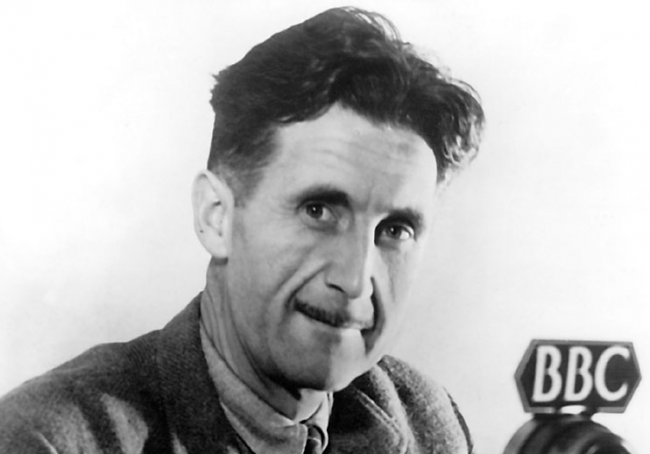
In the CBC radio doc­u­men­tary The Orwell Tapes, in three parts here, we have a com­pre­hen­sive intro­duc­tion to Orwell’s work, thought, and life. It opens with alarm­ing sound­bites from light­ning rods (and vil­lains or heroes, depend­ing on who you ask) Julian Assange and Edward Snow­den. But it doesn’t stray into the clichéd ter­ri­to­ry of over­heat­ed con­spir­a­cy those names often inspire. Instead we’re large­ly treat­ed through­out each episode to first­hand accounts of the sub­ject from those who knew him well.

“CBC is the only media orga­ni­za­tion in the world,” says host Paul Kennedy, “with a com­pre­hen­sive archive of record­ings fea­tur­ing peo­ple who knew Orwell, from his ear­li­est days, to his final moments. 75 peo­ple, 50 hours of record­ings.” Edit­ed snip­pets of these audio record­ings make up the bulk of The Orwell Tapes, hence the title, mak­ing the pro­gram oral his­to­ry rather than sen­sa­tion­al­ism. The inter­vie­wees include friends, for­mer girl­friends, com­rades-in-arms, and crit­i­cal oppo­nents. Each episode’s page on the CBC site fea­tures a list of names and rela­tions to Orwell at the bot­tom.

But of course, accu­sa­tions of sen­sa­tion­al­ism always fol­low those who warn of Orwellian trends and ten­den­cies. Like many of our con­tem­po­raries, Orwell was a con­tra­dic­to­ry fig­ure. He served as a colo­nial police­man in Bur­ma even as he grew dis­gust­ed with Empire; he con­sid­ered him­self a Demo­c­ra­t­ic Social­ist, but he nev­er looked away from the author­i­tar­i­an hor­rors of state com­mu­nism; and he has been held up as a pil­lar of resis­tance to state sur­veil­lance and con­trol, even as he also stands accused of “nam­ing names.” But the over­all impres­sion we get from Orwell’s friends and col­leagues is that he was ful­ly committed—to writ­ing, to polit­i­cal engage­ment, to telling the truth as he saw it.

In releas­ing The Orwell Tapes this month, the CBC gives us five rea­sons why Orwell “is still very much with us today.” Some of these—modern sur­veil­lance, the cor­rup­tions of pow­er (and the pow­er of corruption)—will be famil­iar, as will num­ber 3, a vari­a­tion on what we’ve come to call “empa­thy” for one’s oppo­nent. The 4th rea­son, CBC notes, is the renewed rel­e­vance of social­ism as a viable alter­na­tive to cap­i­tal­ist pre­da­tion. And final­ly, we have the con­tin­ued dan­ger of speak­ing truth to pow­er, and to those who serve it reli­gious­ly, uncrit­i­cal­ly, and often vio­lent­ly. As Orwell wrote in the pref­ace to Ani­mal Farm, “If lib­er­ty means any­thing at all, it means the right to tell peo­ple what they don’t want to hear.”

Relat­ed Con­tent:

Hux­ley to Orwell: My Hell­ish Vision of the Future is Bet­ter Than Yours (1949)

George Orwell Tries to Iden­ti­fy Who Is Real­ly a “Fas­cist” and Define the Mean­ing of This “Much-Abused Word” (1944)

George Orwell’s Six Rules for Writ­ing Clear and Tight Prose

Josh Jones is a writer and musi­cian based in Durham, NC. Fol­low him at @jdmagness

The Birth Control Handbook: The Underground Student Publication That Let Women Take Control of Their Bodies (1968)

birth-control-handbook

Cen­tral to Michel Foucault’s the­o­ry of “gov­ern­men­tal­i­ty” is what he calls “biopow­er,” an “explo­sion of numer­ous and diverse tech­niques for achiev­ing the sub­ju­ga­tions of bod­ies and the con­trol of pop­u­la­tions.” Where debates over abor­tion and con­tra­cep­tion gen­er­al­ly coa­lesce around ques­tions of reli­gion and rights, the French the­o­rist of pow­er saw these issues as part of the bio-polit­i­cal strug­gle between “gov­ern­ing the self” and “gov­ern­ing oth­ers.”

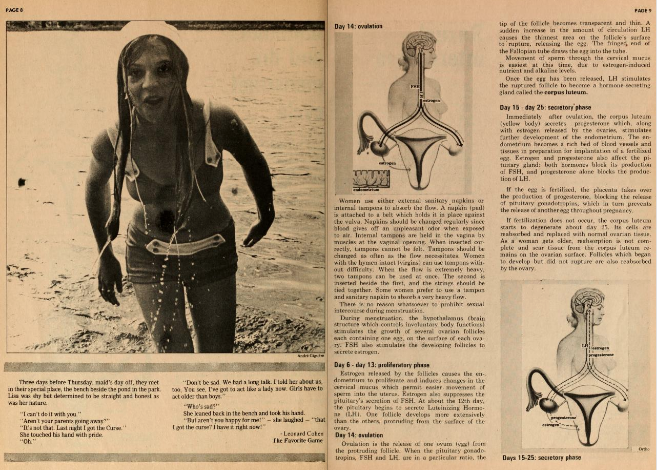
Those who resist repres­sive biopow­er seize on the for­mer def­i­n­i­tion of gov­ern­ment. Take a very point­ed exam­ple of both restric­tive gov­ern­ment biopow­er and cre­ative resis­tance to the same: the 1968 Birth Con­trol Hand­book you see here, print­ed ille­gal­ly by under­grad­u­ate stu­dents at Montreal’s McGill Uni­ver­si­ty. At the time of this text’s cre­ation, notes Atlas Obscu­ra, “under Canada’s Crim­i­nal Code, the dis­sem­i­na­tion, sale, and adver­tise­ment of birth con­trol meth­ods were all ille­gal, and abor­tion was pun­ish­able by life impris­on­ment.”

Despite fac­ing the pos­si­ble con­se­quences of up to two years in prison, the McGill Stu­dent Soci­ety “sold mil­lions of copies” of The Birth Con­trol Hand­book, writes Aman­da Edg­ley, “in Cana­da and inter­na­tion­al­ly.” Maya Koropat­nit­sky describes the tremen­dous social impact of the hand­book:

Stu­dents at McGill as well as oth­er Que­bec cam­pus­es snapped up the first run of 17,000 copies. Due to its major suc­cess, the com­mit­tee came out with a sec­ond issue of the hand­book in 1969. This hand­book is seen to be a major play­er in women’s lib­er­a­tion because it gave young women the knowl­edge and the abil­i­ty to con­trol repro­duc­tive func­tions.  

The hand­book fur­ther­more “mobi­lized women into form­ing meet­ings and groups to talk about con­scious­ness-rais­ing issues.” This infor­mal edu­ca­tion was invalu­able for mil­lions of women, who were “des­per­ate for this infor­ma­tion,” writes author Lau­ra Kaplan, “so starved for infor­ma­tion. You want­ed it, in as much detail as you could get it, as graph­ic as it could be made.”

birth-control-3

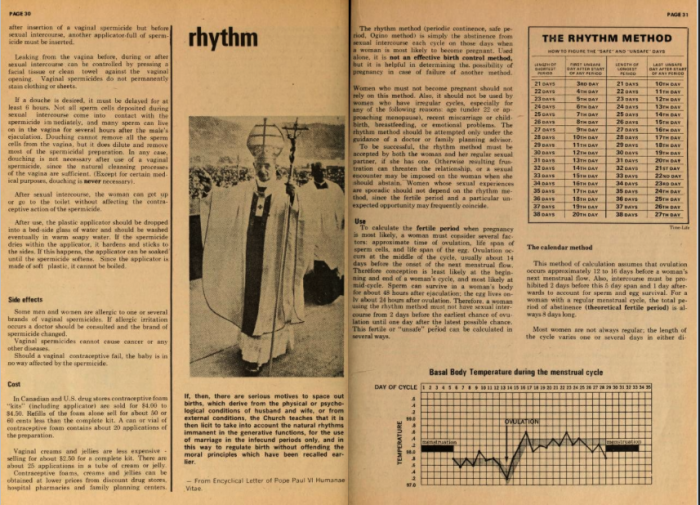
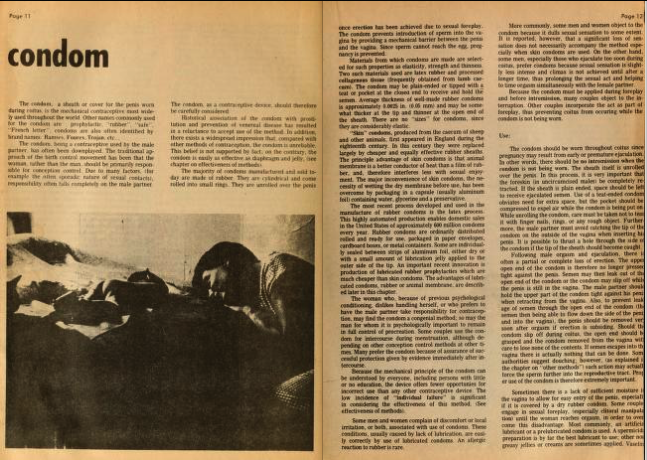
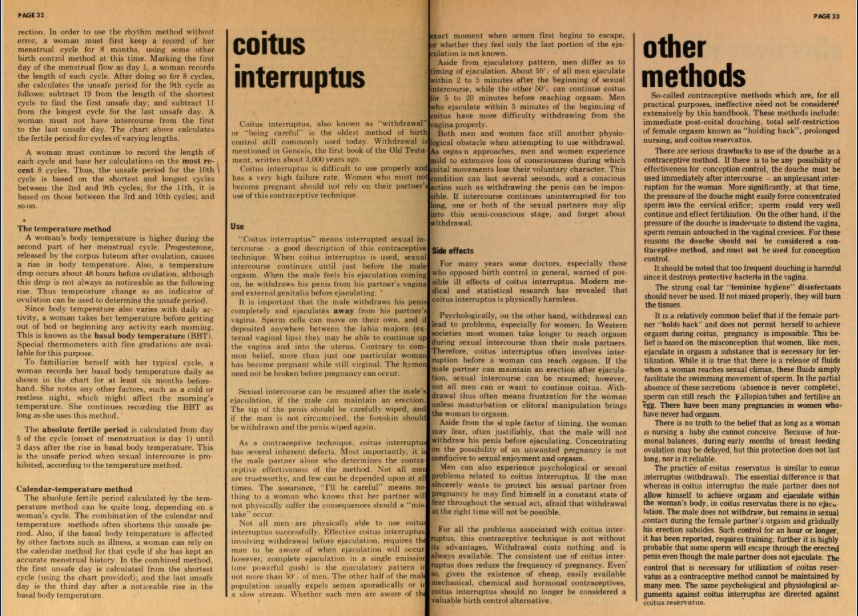
What the Cana­di­an, and U.S., gov­ern­ments saw as sex­u­al­ly explic­it will look to us like stan­dard biol­o­gy text­book illus­tra­tions, mun­dane charts and graphs, ordi­nary pic­tures of the birth expe­ri­ence, and taste­ful, rather tame nude pho­tos. Orig­i­nal authors Allan Fein­gold and Don­na Cher­ni­ak “pored through books in the med­ical library,” Atlas Obscu­ra writes, “and con­sult­ed med­ical advi­sors, com­pil­ing detailed infor­ma­tion on top­ics like sex­u­al inter­course, men­stru­al cycles, sur­gi­cal abor­tion tech­niques (accom­pa­nied by prices and sta­tis­tics), and how, exact­ly, to con­tact abor­tion providers.”

Illus­trat­ing anoth­er Fou­cauldian insight into the rela­tion­ship between knowl­edge and pow­er, not only were birth con­trol meth­ods under the strict con­trol of most­ly male doc­tors (and only avail­able with per­mis­sion from a hus­band), but even basic infor­ma­tion on repro­duc­tion and birth con­trol was dif­fi­cult for most women to access. “To have all the infor­ma­tion on the var­i­ous meth­ods of birth con­trol in one place,” says Kaplan, “with pros and cons and what you need­ed to know about them, was a rev­e­la­tion.” Cher­ni­ak lat­er remem­bered, “We joked that after the Bible, we were prob­a­bly one of the most wide­ly dis­trib­uted pub­li­ca­tions in Cana­da.”

birth-control-2

Both edi­tions of the hand­book addressed the con­tro­ver­sial top­ic of abor­tion, cit­ing the Cana­di­an crim­i­nal code along the way. “Con­cerned with the prob­lem of ille­gal abor­tion,” writes Uni­ver­si­ty of Ottowa pro­fes­sor Christa­belle Seth­na, “the coun­cil man­dat­ed the pub­li­ca­tion” of the hand­book, which also “con­tained edi­to­r­i­al com­men­tary that took West­ern pop­u­la­tion-con­trol experts to task for their racism and that sup­port­ed women’s repro­duc­tive rights as a func­tion of women’s lib­er­a­tion.” Seth­na sit­u­ates The Birth Con­trol Hand­book with­in a much larg­er Cana­di­an move­ment, just “one of the ways,” writes Edge­ley, “Cana­di­ans took con­trol over their own bod­ies.” Its cre­ators saw it as a means of chang­ing the world. “Those were the years,” Cher­ni­ak says, “in which you thought you could do any­thing.”

birth-control-5

Two years after the first print run of The Birth Con­trol Hand­book, the ur-text of fem­i­nist bio-pol­i­tics, Our Bod­ies, Our­selves, was pub­lished by the Boston Women’s Health Book Col­lec­tive. This book “became its own wide­ly cir­cu­lat­ed women’s health text,” Atlas Obscu­ra writes, “trans­lat­ed into 29 lan­guages.” But while Our Bod­ies, Our­selves remains famous for its key role in spread­ing much-need­ed infor­ma­tion about repro­duc­tive health, “its Cana­di­an coun­ter­part has been most­ly for­got­ten.” The Birth Con­trol Hand­book gave mil­lions of women the infor­ma­tion they need­ed to gov­ern their own lives. Redis­cov­er the com­plete text of the first, 1968 edi­tion and sec­ond, 1969 edi­tion at the Inter­net Archive, where you can see a scan, read tran­scribed full text, and down­load PDF, Kin­dle, and oth­er for­mats.

via Atlas Obscu­ra

Relat­ed Con­tent:

Down­load All 239 Issues of Land­mark UK Fem­i­nist Mag­a­zine Spare Rib Free Online

Simone de Beau­voir Explains “Why I’m a Fem­i­nist” in a Rare TV Inter­view (1975)

The Sto­ry Of Men­stru­a­tion: Watch Walt Disney’s Sex Ed Film from 1946

Watch Fam­i­ly Plan­ning, Walt Disney’s 1967 Sex Ed Pro­duc­tion, Star­ring Don­ald Duck

Josh Jones is a writer and musi­cian based in Durham, NC. Fol­low him at @jdmagness

George Orwell Tries to Identify Who Is Really a “Fascist” and Define the Meaning of This “Much-Abused Word” (1944)

via Wikimedia Commons

Image via Wiki­me­dia Com­mons

Two neol­o­gisms, “Post-truth” and “Alt-right,” have entered polit­i­cal dis­course in this year of tur­moil and upheaval, words so noto­ri­ous they were cho­sen as the win­ner and run­ner-up, respec­tive­ly, for Oxford Dic­tio­nar­ies’ word of the year. These “Orwellian euphemisms,” argues Noah Berlatsky “con­ceal old evils” and “white­wash fas­cism,” recall­ing “in form and con­tent… Orwell’s old words—specifically some of the newspeak from 1984. ‘Crime­think,’ ‘thought­crime,’ and ‘unper­son’.… They even sound the same, with their sim­ple, thunk-thunk con­struc­tion of sin­gle syl­la­bles mashed togeth­er.”

“The sheer ugly clum­si­ness is sup­posed to make the lan­guage seem futur­is­tic and cut­ting edge,” Berlatsky writes, “The world to come will be util­i­tar­i­an, slangy, and up-to-the-minute in its inel­e­gance. So the future was in Orwell’s day; so it is in 2016.” As in Orwell’s day, our cur­rent jar­gon gets mobi­lized in “defense of the indefensible”—as the nov­el­ist, jour­nal­ist, and rev­o­lu­tion­ary fight­er wrote in his 1946 essay “Pol­i­tics and the Eng­lish Lan­guage.” And just as in his day, the euphemisms pret­ty up con­stant, bla­tant lying and racist ide­olo­gies. We can also draw anoth­er lin­guis­tic com­par­i­son to Orwell’s time: the wide­spread use of the word “fas­cism.”

Berlatsky uses the word with­out defin­ing it (when he talks about “white­wash­ing fas­cism”), except to say that “fas­cism thrives on false­hoods.” That may well be the case, but is it enough of a cri­te­ri­on for an entire polit­i­cal and eco­nom­ic sys­tem? The word begs for a cogent analy­sis. Even Umber­to Eco, who grew up under Mussolini’s rule, felt the need for clar­i­ty, giv­en that “Amer­i­can rad­i­cals,” he wrote in 1995, abused the phrase “fas­cist pig” as a pejo­ra­tive for any author­i­ty, such that the word hard­ly meant any­thing thir­ty years after World War II.

But sure­ly Orwell—who fought fas­cism in Spain in 1936, and whose omi­nous post­war dystopi­an nov­els have done more than any lit­er­ary work to illus­trate its menace—could define the word with con­fi­dence? Alas, when we look to his work, even before the war had end­ed, we find him writ­ing, “‘Fas­cism,’ is almost entire­ly mean­ing­less.” His short 1944 essay, “What is Fas­cism?” does not, how­ev­er, push to abol­ish the word. He calls instead for “a clear and gen­er­al­ly accept­ed def­i­n­i­tion of it” against the ten­den­cy to “degrade it to the lev­el of a swear­word.”

But Orwell (being Orwell) is not opti­mistic. One rea­son a def­i­n­i­tion had been so dif­fi­cult to come by, he writes, is that any group to whom it is applied would have to make “admis­sions” most of them are not “will­ing to make”—admissions as to the real nature of their ide­ol­o­gy and objec­tives, behind the euphemisms, lies, and dou­ble-speak. If no one is a fas­cist, then every­one poten­tial­ly is. Even in the 40s, Orwell wrote, “if you exam­ine the press you will find that there is almost no set of people—certainly no polit­i­cal par­ty or orga­nized body of any kind—which has not been denounced as Fas­cist.”

He enu­mer­ates those so accused: “Con­ser­v­a­tives, Social­ists, Com­mu­nists, Trot­sky­ists, Catholics, War Resisters, Sup­port­ers of the war, Nation­al­ists.…” What of the text­book exam­ples just on the oth­er side of the front lines? “When we apply the term ‘Fas­cism’ to Ger­many or Japan or Mussolini’s Italy,” Orwell con­cedes, “we know broad­ly what we mean.” But appeal­ing to these extreme gov­ern­ments does lit­tle good, “because even the major Fas­cist states dif­fer from one anoth­er a good deal in struc­ture and ide­ol­o­gy.” Umber­to Eco is con­tent to say that fas­cism adopts the cul­tur­al trap­pings of the nations in which it aris­es, yet still shares sev­er­al con­stant, if con­tra­dic­to­ry, ide­o­log­i­cal traits. Orwell isn’t so sure he knows what those are.

So what can Orwell say about the word, one he is eager to hold on to but at a loss to pin down? Though he believes it must name a “polit­i­cal and eco­nom­ic” sys­tem as well, Orwell final­ly opts for an ordi­nary lan­guage def­i­n­i­tion, to which we “attach at any rate an emo­tion­al sig­nif­i­cance.” Whether we “reck­less­ly fling” the word “in every direc­tion” or use it in more pre­cise ways, we always mean “rough­ly speak­ing, some­thing cru­el, unscrupu­lous, arro­gant, obscu­ran­tist, anti-lib­er­al, and anti-work­ing class. Except for the rel­a­tive­ly small num­ber of Fas­cist sym­pa­thiz­ers, almost any Eng­lish per­son would accept ‘bul­ly’ as a syn­onym for ‘Fas­cist.’” Those today who are not bullies—or unapolo­getic fas­cist sympathizers—and who don’t need euphemisms for these words, would like­ly agree.

You can read “What is Fas­cism?here. You can find the short essay pub­lished in this vol­ume, The Col­lect­ed Essays, Jour­nal­ism and Let­ters of George Orwell.

Relat­ed Con­tent:

Umber­to Eco Makes a List of the 14 Com­mon Fea­tures of Fas­cism

George Orwell Reviews Mein Kampf: “He Envis­ages a Hor­ri­ble Brain­less Empire” (1940)

George Orwell Explains in a Reveal­ing 1944 Let­ter Why He’d Write 1984

Josh Jones is a writer and musi­cian based in Durham, NC. Fol­low him at @jdmagness

Tim Robbins’ Improv Classes Transform Prisoners’ Lives & Lower Recidivism Rates

If a 20‑something, Yale-edu­cat­ed New York­er reporter feels ner­vous step­ping in to her first ever improv class, imag­ine the stakes for your aver­age inmate, whose sur­vival depends on a suc­cess­ful­ly mono­lith­ic pro­jec­tion of tough­ness and con­trol.

Con­trol is actu­al­ly some­thing the Actors’ Gang Prison Project seeks to cul­ti­vate in its incar­cer­at­ed par­tic­i­pants. The Actors’ Gang’s Artis­tic Direc­tor, Tim Rob­bins, who found­ed the rad­i­cal­ly exper­i­men­tal ensem­ble fresh out of col­lege, notes a well-doc­u­ment­ed con­nec­tion between an inabil­i­ty to con­trol one’s emo­tions and crim­i­nal activ­i­ty.

Unchecked rage may have put these play­ers behind bars, but explor­ing a wide vari­ety of emo­tions behind the safe­ty of the Actors’ Gang’s mask-like white pan­cake make-up has proven lib­er­at­ing.

The dull prison rou­tine leaves pris­on­ers favor­ably inclined toward any divert­ing activ­i­ty, par­tic­u­lar­ly those that allow for cre­ative expres­sion. Shake­speare has made an impact on this pop­u­la­tion. Why not com­me­dia dell’arte-influenced improv?

It’s a tru­ly ther­a­peu­tic fit, as Actors Gang ensem­ble mem­ber Sabra Williams, the founder of the Prison Project, explains in her TED Talk, below.

Par­tic­i­pants are sub­ject­ed and held to the rig­or­ous phys­i­cal­i­ty and emo­tion­al hon­esty at the core of this group’s aes­thet­ic. Per­son­al con­nec­tion to the vis­i­tors is lim­it­ed to what­ev­er may tran­spire in-the-moment, but with­in the prison pop­u­la­tion, rela­tion­ships blos­som. Both guards and pris­on­ers speak of new­found empa­thy.

The emo­tion­al insights aris­ing from these spon­ta­neous explo­rations teach par­tic­i­pants how to dif­fuse aggres­sive sit­u­a­tions, present a more pos­i­tive face to the world, and inter­act gen­er­ous­ly with oth­ers. In between class­es, par­tic­i­pants write in jour­nals, with a goal of shar­ing aloud.

Gang signs, mimed weapons, and bod­i­ly con­tact are out of bounds. Wild inven­tion often car­ries the day.

Par­tic­i­pants have zero recidi­vism, and a wait­ing list in the hun­dreds attests to the program’s pop­u­lar­i­ty.

You can learn more about the Actors’ Gang ten-year-old Prison Project here.

Relat­ed Con­tent:

B.B. King Plays Live at Sing Sing Prison in One of His Great­est Per­for­mances (1972)

Inmates in New York Prison Defeat Harvard’s Debate Team: A Look Inside the Bard Prison Ini­tia­tive

What Pris­on­ers Ate at Alca­traz in 1946: A Vin­tage Prison Menu

Ayun Hal­l­i­day is an author, illus­tra­tor, the­ater mak­er and Chief Pri­ma­tol­o­gist of the East Vil­lage Inky zine.  Her play Zam­boni Godot is open­ing in New York City in March 2017. Fol­low her @AyunHalliday.

The Psychology That Leads People to Vote for Extremists & Autocrats: The Theory of Cognitive Closure

There’s a polit­i­cal dis­con­nect in the Unit­ed States. We have two polit­i­cal par­ties, each now liv­ing in its own real­i­ty and work­ing with its own set of facts. The com­mon ground between them? Next to none.

How to explain this dis­con­nect? Maybe the answer lies in the the­o­ry of “cog­ni­tive closure”–a the­o­ry first worked out by social psy­chol­o­gist Arie Kruglan­s­ki back in 1989.

“Peo­ple’s pol­i­tics are dri­ven by their psy­cho­log­i­cal needs,” Kruglan­s­ki explains in the short doc­u­men­tary above. “Peo­ple who are anx­ious because of the uncer­tain­ty that sur­rounds them are going to be attract­ed to mes­sages that offer cer­tain­ty.”

He sips a soda, then con­tin­ues, “The need for clo­sure is the need for cer­tain­ty, to have clear cut knowl­edge. You feel that you need to stop pro­cess­ing too much infor­ma­tion, to stop lis­ten­ing to a vari­ety of view­points, and zero in on what appears to be, to you, the truth.” “The need for clo­sure tricks your mind to believe you have the truth, even though you haven’t exam­ined the evi­dence very care­ful­ly.” And that, unfor­tu­nate­ly, can be very dan­ger­ous.

Kruglan­ski’s the­o­ry could help explain the rise of Nazism in the eco­nom­i­cal­ly-depressed Weimar Ger­many. And it’s per­haps why, across much of our eco­nom­i­cal­ly stag­nat­ing world, we’re see­ing pop­u­la­tions lurch toward extreme ide­olo­gies and auto­crat­ic per­son­al­i­ties. “The divi­sions, the polar­iza­tion, it’s all part of the same psy­cho­log­i­cal syn­drome,” says Kruglan­s­ki.

So what’s the cure? Lis­ten to oth­er points of view. Look at all avail­able infor­ma­tion. And, most of all, be sus­pi­cious of your own sense of right­eous.

If you would like to sign up for Open Culture’s free email newslet­ter, please find it here. It’s a great way to see our new posts, all bun­dled in one email, each day.

If you would like to sup­port the mis­sion of Open Cul­ture, con­sid­er mak­ing a dona­tion to our site. It’s hard to rely 100% on ads, and your con­tri­bu­tions will help us con­tin­ue pro­vid­ing the best free cul­tur­al and edu­ca­tion­al mate­ri­als to learn­ers every­where. You can con­tribute through Pay­Pal, Patre­on, and Ven­mo (@openculture). Thanks!

Relat­ed Con­tent:

Free Online Psy­chol­o­gy & Neu­ro­science Cours­es

The Pow­er of Con­for­mi­ty: 1962 Episode of Can­did Cam­er­aRe­veals the Strange Psy­chol­o­gy of Rid­ing Ele­va­tors

Free Online Polit­i­cal Sci­ence Cours­es

by | Permalink | Make a Comment ( 9 ) |

Why Socrates Hated Democracies: An Animated Case for Why Self-Government Requires Wisdom & Education

How often have you heard the quote in one form or anoth­er? “Democ­ra­cy is the worst form of Gov­ern­ment,” said Win­ston Churchill in 1947, “except for all those oth­er forms that have been tried from time to time.…” The sen­ti­ment express­es two cul­tur­al val­ues many Amer­i­cans are trained to hold uncrit­i­cal­ly: the pri­ma­cy of democ­ra­cy and the bur­den­some­ness of gov­ern­ment as a nec­es­sary evil.

In his new book Toward Democ­ra­cy, Har­vard his­to­ri­an James T. Klop­pen­berg argues that these ideas arose fair­ly recent­ly with “most­ly Protes­tants, at least at first,” notes Kirkus, in whose hands “the idea of democ­ra­cy as a dan­ger­ous doc­trine of the mob was reshaped into an ide­al.” Much of this trans­for­ma­tion “occurred in the for­mer British colonies that became the Unit­ed States, where, at least from a British nobleman’s point of view, mob rule did take hold.”


The mod­ern revamp­ing of democ­ra­cy into a sacred set of uni­ver­sal insti­tu­tions has defined our under­stand­ing of the term. Just as the West has co-opt­ed clas­si­cal Athen­ian archi­tec­ture as sym­bol­ic of demo­c­ra­t­ic puri­ty, it has often co-opt­ed Greek phi­los­o­phy. But as any­one who has ever read Plato’s Repub­lic knows, Greek philoso­phers were high­ly sus­pi­cious of democ­ra­cy, and could not con­ceive of a func­tion­ing egal­i­tar­i­an soci­ety with full suf­frage and free­dom of speech.

Socrates, espe­cial­ly, says Alain de Bot­ton in the School of Life video above, “was por­trayed in the dia­logues of Pla­to as huge­ly pes­simistic about the whole busi­ness of democ­ra­cy.” In the ide­al soci­ety Socrates con­structs in the Repub­lic, he famous­ly argues for restrict­ed free­dom of move­ment, strict cen­sor­ship accord­ing to moral­is­tic civic virtues, and a guardian sol­dier class and the rule of philoso­pher kings.

In Book VI, Socrates points out the “flaws of democ­ra­cy by com­par­ing a soci­ety to a ship.” If you were going on a sea voy­age, “who would you ide­al­ly want decid­ing who was in charge of the ves­sel, just any­one, or peo­ple edu­cat­ed in the rules and demands of sea­far­ing?” Unless we wish to be obtuse­ly con­trar­i­an, we must invari­ably answer the lat­ter, as does Socrates’ inter­locu­tor Adeiman­tus. Why then should just any of us, with­out regard to lev­el of skill, expe­ri­ence, or edu­ca­tion, be allowed to select the rulers of a coun­try?

The grim irony of Socrates’ skep­ti­cism, de Bot­ton observes, is that he him­self was put to death after a vote by 500 Athe­ni­ans. Rather than the typ­i­cal elit­ism of pure­ly aris­to­crat­ic think­ing, how­ev­er, Socrates insist­ed that “only those who had thought about issues ratio­nal­ly and deeply should be let near a vote.” Says de Bot­ton, “We have for­got­ten this dis­tinc­tion between an intel­lec­tu­al democ­ra­cy and a democ­ra­cy by birthright. We have giv­en the vote to all with­out con­nect­ing it to wis­dom.” (He does not tell us whom he means by “we.”)

For Socrates, so-called “birthright democ­ra­cy” was inevitably sus­cep­ti­ble to dem­a­goguery. Socrates “knew how eas­i­ly peo­ple seek­ing elec­tion could exploit our desire for easy answers” by telling us what we want­ed to hear. We should heed Socrates’ warn­ings against mob rule and the dan­gers of dem­a­goguery, de Bot­ton argues, and con­sid­er democ­ra­cy as “some­thing that is only ever as good as the edu­ca­tion sys­tem that sur­rounds it.” It’s a potent idea, and one often repeat­ed with ref­er­ence to a sim­i­lar warn­ing from Thomas Jef­fer­son.

What de Bot­ton does not men­tion in his short video, how­ev­er, is that Socrates also advised that his rulers lie to the cit­i­zen­ry, secur­ing their trust not with false promis­es and seduc­tive blan­d­ish­ments, but with ide­ol­o­gy. As the Inter­net Ency­clo­pe­dia of Phi­los­o­phy sum­ma­rizes, Socrates “sug­gests that [the rulers] need to tell the cit­i­zens a myth that should be believed by sub­se­quent gen­er­a­tions in order for every­one to accept his posi­tion in the city”—and to accept the legit­i­ma­cy of the rulers. The myth—like mod­ern sci­en­tif­ic racism and eugenics—divides the cit­i­zen­ry into an essen­tial hier­ar­chy, which Socrates sym­bol­izes by the met­als gold, sil­ver, and bronze.

But who deter­mines these cat­e­gories, or which vot­ers are the more “ratio­nal,” or what that cat­e­go­ry entails? How do we rec­on­cile the egal­i­tar­i­an premis­es of democ­ra­cy with the caste sys­tems of the utopi­an Repub­lic, in which vot­ing “ratio­nal­ly” means vot­ing for the inter­ests of the class that gets the vote? What about the uses of pro­pa­gan­da to cul­ti­vate offi­cial state ide­ol­o­gy in the pop­u­lace (as Wal­ter Lipp­man so well described in Pub­lic Opin­ion). And what are we to do with the deep sus­pi­cions of, say, Niet­zsche when it comes to Socrat­ic ideas of rea­son, many of which have been con­firmed by the find­ings of neu­ro­science?

As cog­ni­tive sci­en­tist and lin­guist George Lakoff writes, “Most thought is uncon­scious, since we don’t have con­scious access to our neur­al cir­cuit­ry.… Esti­mates by neu­ro­sci­en­tists vary between a gen­er­al ‘most’ to as much as 98%, with con­scious­ness as the tip of the men­tal ice­berg.” That is to say that—despite our lev­els of edu­ca­tion and spe­cial­ized training—we “tend to make deci­sions uncon­scious­ly,” at the gut lev­el, “before becom­ing con­scious­ly aware of them.” Even deci­sions like vot­ing.

These con­sid­er­a­tions should also inform cri­tiques of democ­ra­cy, which have not only warned us of its dan­gers, but have also been used to jus­ti­fy wide­spread vot­er sup­pres­sion and dis­en­fran­chise­ment for rea­sons that have noth­ing to do with objec­tive ratio­nal­i­ty and every­thing to do with myth and polit­i­cal ide­ol­o­gy.

Relat­ed Con­tent:

Socrates on TV, Cour­tesy of Alain de Bot­ton (2000)

Watch Ani­mat­ed Intro­duc­tions to 25 Philoso­phers by The School of Life: From Pla­to to Kant and Fou­cault

How to Know if Your Coun­try Is Head­ing Toward Despo­tism: An Edu­ca­tion­al Film from 1946

Josh Jones is a writer and musi­cian based in Durham, NC. Fol­low him at @jdmagness

Watch Georges Méliès’ The Dreyfus Affair, the Controversial Film Censored by the French Government for 50 Years (1899)

His­to­ry resounds with events so momen­tous they can be con­jured with a sin­gle word: Water­loo, Water­gate, Tianan­men, Brex­it.…

In the late nine­teenth cen­tu­ry, one sim­ple phrase, J’Ac­cuse!the title of an open let­ter pub­lished by nov­el­ist Emile Zolastood for a seri­ous injus­tice that inflamed the polit­i­cal pas­sions of artists, jour­nal­ists, and the pub­lic for decades after­ward, and pre­saged some of the 20th century’s most incred­i­ble state crimes.

Zola wrote in defense of French artillery cap­tain Alfred Drey­fus, who was accused, court-mar­shalled, and sen­tenced to life impris­on­ment on Devil’s Island for sup­pos­ed­ly giv­ing mil­i­tary secrets to the Ger­mans. It was the tri­al of the cen­tu­ry, writes Adam Gop­nik at The New York­er, and after­ward, Drey­fus, “a young Jew­ish artillery offi­cer and fam­i­ly man.… was pub­licly degrad­ed before a gawk­ing crowd.”

His insignia medals were stripped from him, his sword was bro­ken over the knee of the degrad­er, and he was marched around the grounds in his ruined uni­form to be jeered and spat at, while piteous­ly declar­ing his inno­cence and his love of France above cries of “Jew” and “Judas!”

Two years lat­er, com­pelling evi­dence came to light that showed anoth­er offi­cer, Fer­di­nand Ester­hazy, had com­mit­ted the trea­so­nous offence. But the evi­dence was buried, and the offi­cer who found it trans­ferred to North Africa and lat­er impris­oned. The Drey­fus Affair marked a major turn in Euro­pean civ­il soci­ety, “the moment where [Guy de] Maupassant’s world of ambi­tion and plea­sure met Kafka’s world of inex­plic­a­ble bureau­crat­ic suf­fer­ing.” After a per­func­to­ry two-day tri­al, Ester­hazy was unan­i­mous­ly acquit­ted by a mil­i­tary court, and Drey­fus con­vict­ed of addi­tion­al charges based on fal­si­fied doc­u­ments.

Five years after Drey­fus’ con­vic­tion, his sup­port­ers, the “Drey­fusards,” includ­ing Zola, Hen­ri Poin­care, and Georges Clemenceau, forced the gov­ern­ment to retry the case. Drey­fus was ulti­mate­ly par­doned, and lat­er ful­ly exon­er­at­ed and rein­stat­ed in the French army. He went on to serve with dis­tinc­tion in World War I.

dreyfus-disciples

Drey­fus’ accusers’ have most­ly sunk into obscu­ri­ty. His sup­port­ers— some car­i­ca­tured above as “the twelve apos­tles of Dreyfus”—included some of the most illus­tri­ous men of arts and let­ters in France. They can count among their num­ber the great French direc­tor and cin­e­mat­ic vision­ary Georges Méliès. Dur­ing the heat­ed year of 1899, “Méliès made a series of eleven one-minute non-fic­tion films about the Drey­fus Affair as it was still unfold­ing,” writes Eliz­abth Ezra,” por­tray­ing sym­pa­thet­i­cal­ly Drey­fus’ arrest,” impris­on­ment, and retri­al. You can watch Méliès’ com­plete Drey­fus film at the top of the post.

It may be dif­fi­cult to appre­ci­ate the dar­ing of Méliès’ project from our his­tor­i­cal dis­tance, and in the some­what alien idiom of silent film. “For today’s view­ers,” writes Ezra, “it is not always easy to dis­cern the sym­pa­thet­ic ele­ments of the films, but the abun­dance of huffy ges­tur­ing and self-right­eous facial expres­sions on the part of Drey­fus make of him a dig­ni­fied hero who refus­es to be degrad­ed by the accu­sa­tions made against him.” (In this respect, Méliès antic­i­pat­ed anoth­er silent film about anoth­er unjust tri­al in France, Carl Dreyer’s The Pas­sion of Joan of Arc.)

Like­wise, we may find it hard to under­stand the sig­nif­i­cant social import of “Méliès’ only known expres­sion of polit­i­cal com­mit­ment.” But to under­stand the Drey­fus Affair, we must under­stand, as the Nation­al Library of Israel points out, that “France was already a divid­ed coun­try and the case act­ed as a casus bel­li.… ‘The Jew from Alsace’ encap­su­lat­ed all that the nation­al­ist right loathed, and there­fore became the sym­bol of the nation’s pro­found divi­sion.” Land­ing in the mid­dle of this polit­i­cal firestorm, Méliès’ Drey­fus series “pro­voked par­ti­san fist­fights,” writes Ezra.

Not only did the Drey­fus case intro­duce into the pub­lic eye a vicious anti-Semit­ic show-tri­al, but it also served as a test case for cen­sor­ship and media sen­sa­tion­al­ism. Méliès’ film, says author Susan Daitch in the On the Media episode above, was the first docu­d­ra­ma, the “first recre­ation based on pho­tographs and illus­tra­tions in week­ly news­pa­pers in France at the time.” And it proved so con­tro­ver­sial that it was banned, along with all oth­er Drey­fus films, for fifty years, and only shown again in France in 1974.

The film, says Daitch—who has writ­ten a nov­el based on the Drey­fus Affair—emerged with­in a par­ti­san mass media war of the kind we’re far too famil­iar with today. “Both sides,” Daitch tells us, “used and altered the media,” and Drey­fus was both suc­cess­ful­ly rail­road­ed into prison and suc­cess­ful­ly retried and exon­er­at­ed part­ly on the strength of his sup­port­ers’ and accusers’ pro­pa­gan­da cam­paigns.

The Drey­fus Affair will be added to our list of Free Silent Films, a sub­set of our col­lec­tion, 4,000+ Free Movies Online: Great Clas­sics, Indies, Noir, West­erns, Doc­u­men­taries & More.

The film is con­sid­ered to be in the pub­lic domain in the Unit­ed States and comes to us via Wiki­me­dia Com­mons.

Relat­ed Con­tent:

The First Hor­ror Film, George Méliès’ The Haunt­ed Cas­tle (1896)

Watch After the Ball, the 1897 “Adult” Film by Pio­neer­ing Direc­tor Georges Méliès (Almost NSFW)

Carl Dreyer’s The Pas­sion of Joan of Arc (1928) Gets an Epic, Instru­men­tal Sound­track from the Indie Band Joan of Arc

Josh Jones is a writer and musi­cian based in Durham, NC. Fol­low him at @jdmagness

How to Know if Your Country Is Heading Toward Despotism: An Educational Film from 1946

Nobody likes a despot — even despots know it. But actu­al­ly iden­ti­fy­ing despo­tism can pose a cer­tain dif­fi­cul­ty — which despots also know, and they’d sure­ly like to keep it that way. Hence Ency­clo­pe­dia Bri­tan­ni­ca’s Despo­tism, a ten-minute Erpi Class­room Film on how a coun­try slides into that epony­mous state. It uses the exam­ple of Nazi Ger­many (which might strike us today as the most obvi­ous one but back in 1946 must have felt almost too fresh), but gen­er­al­izes the con­cept by look­ing back into more dis­tant his­to­ry, as far as Louis XIV’s immor­tal remark, “L’é­tat, c’est moi.”

“You can rough­ly locate any com­mu­ni­ty in the world some­where along a scale run­ning all the way from democ­ra­cy to despo­tism,” says Despo­tism’s stan­dard-issue man­nered nar­ra­tor before turn­ing it over to a stan­dard-issue sack-suit­ed and Bryl­creemed expert. And how can we know where our own soci­ety places on that scale? “Well, for one,” says the expert, “avoid the com­fort­able idea that the mere form of gov­ern­ment can of itself safe­guard a nation against despo­tism.” The film intro­duces a series of sub-scales usable to gauge a com­mu­ni­ty’s despot­ic poten­tial: the respect scale, the pow­er scale, the eco­nom­ic dis­tri­b­u­tion scale, and the infor­ma­tion scale.

The respect scale mea­sures “how many cit­i­zens get an even break,” and on the despot­ic end, “com­mon cour­tesy is with­held from large groups of peo­ple on account of their polit­i­cal atti­tudes; if peo­ple are rude to oth­ers because they think their wealth and posi­tion gives them that right, or because they don’t like a man’s race or his reli­gion.” The pow­er scale  “gauges the cit­i­zen’s share in mak­ing the com­mu­ni­ty’s deci­sions. Com­mu­ni­ties which con­cen­trate deci­sion mak­ing in a few hands rate low on a pow­er scale and are mov­ing towards despo­tism,” and even “today democ­ra­cy can ebb away in com­mu­ni­ties whose cit­i­zens allow pow­er to become con­cen­trat­ed in the hands of boss­es.”

The eco­nom­ic dis­tri­b­u­tion scale turns into a warn­ing sign when a soci­ety’s “eco­nom­ic dis­tri­b­u­tion becomes slant­ed, its mid­dle income groups grow small­er and despo­tism stands a bet­ter chance to gain a foothold.” If “the con­cen­tra­tion of land own­er­ship in the hands of a very small num­ber of peo­ple” and “con­trol of jobs and busi­ness oppor­tu­ni­ties is in a few hands, despo­tism stands a good chance.” So it also does in a soci­ety which rates low on the infor­ma­tion scale, where “the press, radio, and oth­er chan­nels of com­mu­ni­ca­tion are con­trolled by only a few peo­ple and when cit­i­zens have to accept what they are told,” a process that ren­ders its cit­i­zens ulti­mate­ly unable to eval­u­ate claims and ideas for them­selves.

The oppo­site of despo­tism, so Despo­tism pro­pos­es, is democ­ra­cy, a type of gov­ern­ment explained in the pre­vi­ous year’s Erpi Class­room Film of that name. Ger­many, a repub­lic where once “an aggres­sive despo­tism took root and flour­ished under Adolf Hitler,” now per­forms admirably on the respect, pow­er, eco­nom­ic dis­tri­b­u­tion, and infor­ma­tion scales — not per­fect­ly, of course, but no coun­try can ever com­plete­ly escape the threat of despo­tism. Much about the econ­o­my and the nature of infor­ma­tion may have changed over the past 70 years, but noth­ing about respect and pow­er have. Whichev­er soci­ety we live in, and wher­ev­er on the spec­trum between democ­ra­cy and despo­tism it now stands, we’ll do well to keep an eye on the scales. Both films were made by Ency­clo­pe­dia Bri­tan­ni­ca, in con­junc­tion with Yale Uni­ver­si­ty’s then promi­nent polit­i­cal sci­en­tist Harold Lass­well.

via Boing­Bo­ing

Relat­ed Con­tent:

How to Spot a Com­mu­nist Using Lit­er­ary Crit­i­cism: A 1955 Man­u­al from the U.S. Mil­i­tary

Rare 1940 Audio: Thomas Mann Explains the Nazis’ Ulte­ri­or Motive for Spread­ing Anti-Semi­tism

Don­ald Duck’s Bad Nazi Dream and Four Oth­er Dis­ney Pro­pa­gan­da Car­toons from World War II

George Orwell’s Final Warn­ing: Don’t Let This Night­mare Sit­u­a­tion Hap­pen. It Depends on You!

Umber­to Eco Makes a List of the 14 Com­mon Fea­tures of Fas­cism

Slavoj Žižek Calls Polit­i­cal Cor­rect­ness a Form of “Mod­ern Total­i­tar­i­an­ism”

Based in Seoul, Col­in Mar­shall writes and broad­casts on cities and cul­ture. He’s at work on a book about Los Ange­les, A Los Ange­les Primer, the video series The City in Cin­e­ma, the crowd­fund­ed jour­nal­ism project Where Is the City of the Future?, and the Los Ange­les Review of Books’ Korea Blog. Fol­low him on Twit­ter at @colinmarshall or on Face­book.

« Go BackMore in this category... »
Quantcast