Aldous Huxley, Psychedelics Enthusiast, Lectures About “the Visionary Experience” at MIT (1962)

huxley_visionary

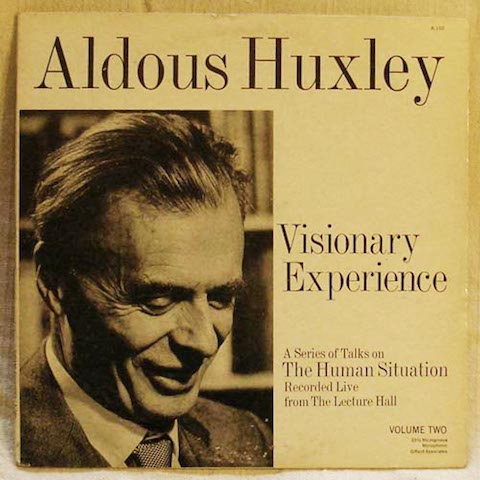
Today, those who get “turned on” to Aldous Hux­ley (as they might have said back in the 1960s) get it through his books: the dystopi­an nov­el Brave New World, usu­al­ly, or per­haps the mesca­line mem­oir The Doors of Per­cep­tion. But dur­ing Hux­ley’s life­time, espe­cial­ly in its final years from the late 1950s to the ear­ly 60s, he made no small num­ber of adher­ents through lec­tur­ing. Hav­ing trans­plant­ed him­self from his native Eng­land to Cal­i­for­nia in 1937, he even­tu­al­ly achieved great regard among the region’s self-styled intel­lec­tu­als and spir­i­tu­al seek­ers, giv­ing talks at such mys­ti­cal­ly high-in-the-zeit­geist places as Hol­ly­wood and San­ta Bar­bara’s Vedan­ta tem­ples and even Big Sur’s famous Esalen Insti­tute. But the pro­lif­ic speech-giv­er also went far­ther afield, to far squar­er venues such as the Mass­a­chu­setts Insti­tute of Tech­nol­o­gy. There, in 1962, he record­ed the album Vision­ary Expe­ri­ence: A Series Of Talks On The Human Sit­u­a­tion, which you can hear on Ubuweb, or right below.

At that point, Hux­ley had already gained world­wide fame for his views on bet­ter liv­ing, which was some­times achieved, he believed, through psy­che­del­ic drugs. This might have already sound­ed like old hat in, say, the San Fran­cis­co of the late 1960s, let alone the 70s and onward, but in these record­ings Hux­ley says his piece in — I still can’t quite believe it — the MIT of the ear­ly 1960s. But Hux­ley, diag­nosed a cou­ple years before with the can­cer that would claim his life the next, had noth­ing to lose by spread­ing the word of his sub­stance-induced dis­cov­er­ies. These would, as you may remem­ber, even facil­i­tate the death itself, Hux­ley’s final vision­ary expe­ri­ence. To learn even more about all those that pre­ced­ed it, see his col­lec­tion Writ­ings on Psy­che­delics and the Vision­ary Expe­ri­ence (1931–1963), that’s avail­able on the Inter­net Archive. While we here at Open Cul­ture don’t endorse drug use, we do endorse the words of Hux­ley as a sub­sti­tute, and per­haps an even more vivid one.

Relat­ed Con­tent:

Aldous Huxley’s Most Beau­ti­ful, LSD-Assist­ed Death: A Let­ter from His Wid­ow

Aldous Hux­ley Reads Dra­ma­tized Ver­sion of Brave New World

Zen Mas­ter Alan Watts Dis­cov­ers the Secrets of Aldous Hux­ley and His Art of Dying

Col­in Mar­shall hosts and pro­duces Note­book on Cities and Cul­ture and writes essays on cities, lan­guage, Asia, and men’s style. He’s at work on a book about Los Ange­les, A Los Ange­les Primer. Fol­low him on Twit­ter at @colinmarshall or on Face­book.

How To Think Like a Psychologist: A Free Online Course from Stanford

free-course-how-to-think-like-a-psychologist-In ear­ly Jan­u­ary, we brought you a set of 15 tips to help you stick to your New Year’s res­o­lu­tions, straight from The Willpow­er Instincta best­selling book by Dr. Kel­ly McGo­ni­gal. Today, we’re high­light­ing a course that McGo­ni­gal orga­nized for Stanford’s Con­tin­u­ing Stud­ies Pro­gram, enti­tled How To Think Like a Psy­chol­o­gist. The premise is sim­ple: McGo­ni­gal intro­duces promi­nent Stan­ford psy­chol­o­gists, who pro­ceed to dis­cuss their research and explain pre­cise­ly why their field hap­pens to be so fas­ci­nat­ing, after which McGo­ni­gal leads a short dis­cus­sion with the guest. An audi­ence Q&A ses­sion fol­lows.

Each of the course’s six lec­tures is a neat­ly pack­aged primer on a researcher’s area of exper­tise: Greg Wal­ton gives a detailed talk about his work on aca­d­e­m­ic stig­ma, and the role it plays in the achieve­ment gap so evi­dent in Amer­i­can edu­ca­tion, while in lat­er lec­tures, James Gross dis­cuss­es his research on emo­tion­al reg­u­la­tion, and Brid­get Mar­tin Hard explains the ben­e­fits of study­ing ani­mals to bet­ter under­stand humans. The strength of the course lies both in its acces­si­bil­i­ty, and its lev­el of depth: one does not need a back­ground in sci­ence to learn some­thing tan­gi­ble about cur­rent psy­cho­log­i­cal research. What’s more, one gets a sense of how rel­e­vant psy­chol­o­gy is as a prac­ti­cal sci­ence, gov­ern­ing every fleet­ing thought and social inter­ac­tion.

How To Think Like a Psy­chol­o­gist is cur­rent­ly avail­able on iTune­sU. You can find it list­ed in our col­lec­tion of Free Online Psy­chol­o­gy Cours­es, part of our col­lec­tion, 4,000+ Free Movies Online: Great Clas­sics, Indies, Noir, West­erns, Doc­u­men­taries & More.

Ilia Blin­d­er­man is a Mon­tre­al-based cul­ture and sci­ence writer. Fol­low him at @iliablinderman, or read more of his writ­ing at the Huff­in­g­ton Post.

Relat­ed Con­tent:

The Pow­er of Empa­thy: A Quick Ani­mat­ed Les­son That Can Make You a Bet­ter Per­son

Carl Gus­tav Jung Explains His Ground­break­ing The­o­ries About Psy­chol­o­gy in Rare Inter­view (1957)

Jacques Lacan’s Con­fronta­tion with a Young Rebel: Clas­sic Moment, 1972

New Ani­ma­tion Explains Sher­ry Turkle’s The­o­ries on Why Social Media Makes Us Lone­ly

What Happens When Your Brain is on Alfred Hitchcock: The Neuroscience of Film

If you have 22 min­utes, why not sit back and watch the clas­sic piece of tele­vi­sion above, Alfred Hitch­cock Presents’ 1961 episode “Bang, You’re Dead”? You may well have seen it before, quite pos­si­bly long ago, but you’ll find it holds up, keep­ing you in sus­pense today as art­ful­ly as it or any oth­er Hitch­cock pro­duc­tion always has. But why do we get so emo­tion­al­ly engaged in this sim­ple tale of a five-year-old boy who comes into pos­ses­sion of a real hand­gun that he mis­tak­en­ly thinks a harm­less toy? Here with detailed answers root­ed in the mechan­ics of the human brain, we have “Neu­rocin­e­mat­ics: the Neu­ro­science of Film,” a pre­sen­ta­tion by Uri Has­son of Prince­ton Uni­ver­si­ty’s Neu­ro­science Insti­tute.

Hitch­cock con­ceived of his style of cin­e­ma, says Has­son in the clip below, as “doing exper­i­ments on the audi­ence,” and of a movie itself as “a sequence of stages designed to have an effect on your brain.”

The brains of every­one sit­ting in the the­ater thus, the­o­ret­i­cal­ly, all become “res­o­nant and aligned with the movie in a very pow­er­ful and com­pli­cat­ed way.” Var­i­ous types of research bear this out, from mea­sur­ing the skin tem­per­a­ture, per­spi­ra­tion, and blood flow in the brains of sub­jects as they watch Hitch­cock­’s young pro­tag­o­nist add more “toy” bul­lets to the “toy” gun he bran­dish­es around the neigh­bor­hood. In the clip below, you can see exact­ly how the sci­en­tists’ func­tion­al MRI machines scan the view­ers as they watch the episode, whose plot, as one of the research team puts it, “keeps the par­tic­i­pants a bit on their feet,” flat on their back though they need to remain for the dura­tion. You’ll find the watch­ing expe­ri­ence much more com­fort­able in your chair. It won’t pro­duce much data for the sci­en­tif­ic com­mu­ni­ty, but at least now you’ll know what goes on in your brain as it hap­pens, some­thing about which even Hitch­cock him­self could only guess. To con­duct your own exper­i­ments, see our col­lec­tion of 21 Free Hitch­cock Movies Online.

Relat­ed Con­tent:

Alfred Hitch­cock Explains the Plot Device He Called the ‘MacGuf­fin’

Alfred Hitch­cock on the Filmmaker’s Essen­tial Tool: ‘The Kuleshov Effect’

Hitchcock’s Sev­en-Minute Edit­ing Mas­ter Class

Col­in Mar­shall hosts and pro­duces Note­book on Cities and Cul­ture and writes essays on cities, Asia, film, lit­er­a­ture, and aes­thet­ics. He’s at work on a book about Los Ange­les, A Los Ange­les Primer. Fol­low him on Twit­ter at @colinmarshall or on his brand new Face­book page.

Free Guided Meditations From UCLA: Boost Your Awareness & Ease Your Stress

Pre­vi­ous­ly, we’ve writ­ten about a grow­ing num­ber of cul­tur­al fig­ures who prac­tice tran­scen­den­tal med­i­ta­tion, with Paul McCart­ney, David LynchLeonard CohenEllen Degeneres, and Sheryl Crow being ardent sup­port­ers. Mind­ful­ness med­i­ta­tion, while less known, has also steadi­ly increased in pop­u­lar­i­ty over the past half-decade. In part, there’s its inher­ent appeal: mind­ful­ness cul­ti­vates an all-accept­ing aware­ness of the present moment, there­by dis­solv­ing anx­i­eties about the future or pre­oc­cu­pa­tions with thoughts of the past. There’s also the grow­ing momen­tum of mind­ful­ness research in the sci­en­tif­ic com­mu­ni­ty, with stud­ies sug­gest­ing that mind­ful­ness-based ther­a­peu­tic approach­es may ben­e­fit a host of psy­cho­log­i­cal issues. Its use to alle­vi­ate anx­i­ety, depres­sion, and stress is par­tic­u­lar­ly promis­ing.

“Sounds tempt­ing,” you say, “but where does one try this mind­ful­ness med­i­ta­tion busi­ness, any­way? Can I try it with­out going any­where?” You’re in luck, my friend! UCLA’s Mind­ful Aware­ness Research Cen­ter (MARC) has uploaded a set of mind­ful­ness med­i­ta­tions to iTune­sU, where the series is present­ly the #1 down­load. “I’m too busy,” you say, open­ing a Face­book tab. Not so fast! Most of the med­i­ta­tions are under 10 min­utes long, with the com­plete series clock­ing in at two hours.

We’ve had trou­ble lis­ten­ing to the lec­tures on the UCLA site, so if you’re inter­est­ed, head over to iTune­sU to down­load Mind­ful Med­i­ta­tions. Oth­er­wise, if you live with­in a rea­son­able dis­tance of UCLA’s Ham­mer Muse­um, drop in for free week­ly med­i­ta­tion ses­sions (record­ings for most of these are avail­able here).

Ilia Blin­d­er­man is a Mon­tre­al-based cul­ture and sci­ence writer. Fol­low him at @iliablinderman, or read more of his writ­ing at the Huff­in­g­ton Post.

Relat­ed Con­tent:

Alan Watts Intro­duces Amer­i­ca to Med­i­ta­tion & East­ern Phi­los­o­phy (1960)

David Lynch Talks Med­i­ta­tion with Paul McCart­ney

Mihaly Czik­szent­mi­ha­lyi Explains Why the Source of Hap­pi­ness Lies in Cre­ativ­i­ty and Flow, Not Mon­ey

David Lynch Explains How Med­i­ta­tion Enhances Our Cre­ativ­i­ty

The Science of Willpower: 15 Tips for Making Your New Year’s Resolutions Last from Dr. Kelly McGonigal

At the stroke of mid­night, mil­lions of New Year’s res­o­lu­tions went into effect, with the most com­mon ones being lose weight, get fit, quit drink­ing and smok­ing, save mon­ey, and learn some­thing new. Unfor­tu­nate­ly, 33% of these res­o­lu­tions will be aban­doned by Jan­u­ary’s end. And upwards of 80% will even­tu­al­ly fall by the way­side. Mak­ing res­o­lu­tions stick is tricky busi­ness. But it’s pos­si­ble, and Stan­ford psy­chol­o­gist Kel­ly McGo­ni­gal has a few sci­en­tif­i­cal­ly-proven sug­ges­tions for you.

For years, McGo­ni­gal has taught a very pop­u­lar course called The Sci­ence of Willpow­er in Stan­ford’s Con­tin­u­ing Stud­ies pro­gram, where she intro­duces stu­dents to the idea that willpow­er is not an innate trait. Rather it’s a “com­plex mind-body response that can be com­pro­mised by stress, sleep depri­va­tion and nutri­tion and that can be strength­ened through cer­tain prac­tices.” For those of you who don’t live in the San Fran­cis­co Bay Area, you can also find McGo­ni­gal’s ideas pre­sent­ed in a recent book, The Willpow­er Instinct: How Self-Con­trol Works, Why It Mat­ters, and What You Can Do to Get More of It, which just came out in paper­back yes­ter­day. Below, we have high­light­ed 15 of Dr. McGo­ni­gal’s strate­gies for increas­ing your willpow­er reserves and mak­ing your New Year’s res­o­lu­tion endure.

  1. Will pow­er is like a mus­cle. The more you work on devel­op­ing it, the more you can incor­po­rate it into your life. It helps, McGo­ni­gal says in this pod­cast, to start with small feats of willpow­er before try­ing to tack­le more dif­fi­cult feats. Ide­al­ly, find the small­est change that’s con­sis­tent with your larg­er goal, and start there.
  2. Choose a goal or res­o­lu­tion that you real­ly want, not a goal that some­one else desires for you, or a goal that you think you should want. Choose a pos­i­tive goal that tru­ly comes from with­in and that con­tributes to some­thing impor­tant in life.
  3. Willpow­er is con­ta­gious. Find a willpow­er role mod­el — some­one who has accom­plished what you want to do. Also try to sur­round your­self with fam­i­ly mem­bers, friends or groups who can sup­port you. Change is often not made alone.
  4. Know that peo­ple have more willpow­er when they wake up, and then willpow­er steadi­ly declines through­out the day as peo­ple fatigue. So try to accom­plish what you need to — for exam­ple, exer­cise — ear­li­er in the day. Then watch out for the evenings, when bad habits can return.
  5. Under­stand that stress and willpow­er are incom­pat­i­ble. Any time we’re under stress it’s hard­er to find our willpow­er. Accord­ing to McGo­ni­gal, “the fight-or-flight response floods the body with ener­gy to act instinc­tive­ly and steals it from the areas of the brain need­ed for wise deci­sion-mak­ing. Stress also encour­ages you to focus on imme­di­ate, short-term goals and out­comes, but self-con­trol requires keep­ing the big pic­ture in mind.” The upshot? “Learn­ing how to bet­ter man­age your stress is one of the most impor­tant things you can do to improve your willpow­er.” When you get stressed out, go for a walk. Even a five minute walk out­side can reduce your stress lev­els, boost your mood, and help you replen­ish your willpow­er reserves.
  6. Sleep depri­va­tion (less than six hours a night) makes it so that the pre­frontal cor­tex los­es con­trol over the regions of the brain that cre­ate crav­ings. Sci­ence shows that get­ting just one more hour of sleep each night (eight hours is ide­al) helps recov­er­ing drug addicts avoid a relapse. So it can cer­tain­ly help you resist a dough­nut or a cig­a­rette.
  7. Also remem­ber that nutri­tion plays a key role. “Eat­ing a more plant-based, less-processed diet makes ener­gy more avail­able to the brain and can improve every aspect of willpow­er from over­com­ing pro­cras­ti­na­tion to stick­ing to a New Year’s res­o­lu­tion,” McGo­ni­gal says.
  8. Don’t think it will be dif­fer­ent tomor­row. McGo­ni­gal notes that we have a ten­den­cy to think that we will have more willpow­er, ener­gy, time, and moti­va­tion tomor­row. The prob­lem is that “if we think we have the oppor­tu­ni­ty to make a dif­fer­ent choice tomor­row, we almost always ‘give in’ to temp­ta­tion or habit today.”
  9. Acknowl­edge and under­stand your crav­ings rather than deny­ing them. That will take you fur­ther in the end. The video above has more on that.
  10. Imag­ine the things that could get in the way of achiev­ing your goal. Under­stand the ten­den­cies you have that could lead you to break your res­o­lu­tion. Don’t be over­ly opti­mistic and assume the road will be easy.
  11. Know your lim­its, and plan for them. Says McGo­ni­gal, “Peo­ple who think they have the most self-con­trol are the most like­ly to fail at their res­o­lu­tions; they put them­selves in tempt­ing sit­u­a­tions, don’t get help, give up at set­backs. You need to know how you fail; how you are tempt­ed; how you pro­cras­ti­nate.”
  12. Pay atten­tion to small choic­es that add up. “One study found that the aver­age per­son thinks they make 14 food choic­es a day; they actu­al­ly make over 200. When you aren’t aware that you’re mak­ing a choice, you’ll almost always default to habit/temptation.” It’s impor­tant to fig­ure out when you have oppor­tu­ni­ties to make a choice con­sis­tent with your goals.
  13. Be spe­cif­ic but flex­i­ble. It’s good to know your goal and how you’ll get there. But, she cau­tions, “you should leave room to revise these steps if they turn out to be unsus­tain­able or don’t lead to the ben­e­fits you expect­ed.”
  14. Give your­self small, healthy rewards along the way. Research shows that the mind responds well to it. (If you’re try­ing to quite smok­ing, the reward should­n’t be a cig­a­rette, by the way.)
  15. Final­ly, if you expe­ri­ence a set­back, don’t be hard on your­self. Although it seems counter-intu­itive, stud­ies show that peo­ple who expe­ri­ence shame/guilt are much more like­ly to break their res­o­lu­tions than ones who cut them­selves some slack. In a nut­shell, you should “Give up guilt.”

To put all of these tips into a big­ger frame­work, you can get a copy of Kel­ly McGo­ni­gal’s book, The Willpow­er Instinct: How Self-Con­trol Works, Why It Mat­ters, and What You Can Do to Get More of ItOr you can get The WillPow­er Instinct, as a free audio book, if you care to try out Audible.com’s free tri­al pro­gram.

If you live in the SF Bay Area, you can take Kel­ly’s The Sci­ence of Willpow­er course that begins on Jan­u­ary 13. (Any­one can enroll, and yes, I know that because I help run the Con­tin­u­ing Stud­ies pro­gram at Stan­ford.)

Final­ly you might also want to peruse How to Think Like a Psy­chol­o­gist (iTunes Video), a free online course led by Kel­ly McGo­ni­gal. It appears in our col­lec­tion of 800 Free Cours­es Online.

Relat­ed Con­tent:

The Pow­er of Empa­thy: A Quick Ani­mat­ed Les­son That Can Make You a Bet­ter Per­son

Carl Gus­tav Jung Explains His Ground­break­ing The­o­ries About Psy­chol­o­gy in Rare Inter­view (1957)

Jacques Lacan’s Con­fronta­tion with a Young Rebel: Clas­sic Moment, 1972

New Ani­ma­tion Explains Sher­ry Turkle’s The­o­ries on Why Social Media Makes Us Lone­ly

Free Online Psy­chol­o­gy Cours­es (Part of our list of 800 Free Online Cours­es)

by | Permalink | Make a Comment ( 1 ) |

The Power of Empathy: A Quick Animated Lesson That Can Make You a Better Person

Sev­er­al years back, the RSA (Roy­al Soci­ety of the Arts) cre­at­ed a series of dis­tinc­tive ani­mat­ed shorts where heavy-hit­ter intel­lec­tu­als pre­sent­ed big ideas, and a tal­ent­ed artist rapid­ly illus­trat­ed them on a white­board. Some of those talks fea­tured the likes of Slavoj Zizek, Steven Pinker and Bar­bara Ehren­re­ich. Now RSA presents a new video series cre­at­ed in an entire­ly dif­fer­ent aes­thet­ic. Above, you can watch what will hope­ful­ly be the first of many “espres­so shots for the mind.” This clip fea­tures Dr. Brené Brown, a research pro­fes­sor at the Uni­ver­si­ty of Hous­ton Grad­u­ate Col­lege of Social Work, pro­vid­ing some quick insights into the dif­fer­ence between sym­pa­thy and empa­thy, and explain­ing why empa­thy is much more mean­ing­ful. To learn more about The Pow­er of Empa­thy, you can watch Brown’s com­plete RSA lec­ture here. You can also watch her very pop­u­lar TED Talk on The Pow­er of Vul­ner­a­bil­i­ty here.

If you would like to sign up for Open Culture’s free email newslet­ter, please find it here. It’s a great way to see our new posts, all bun­dled in one email, each day.

If you would like to sup­port the mis­sion of Open Cul­ture, con­sid­er mak­ing a dona­tion to our site. It’s hard to rely 100% on ads, and your con­tri­bu­tions will help us con­tin­ue pro­vid­ing the best free cul­tur­al and edu­ca­tion­al mate­ri­als to learn­ers every­where. You can con­tribute through Pay­Pal, Patre­on, and Ven­mo (@openculture). Thanks!

Relat­ed Con­tent:

Free Online Psy­chol­o­gy Cours­es (Part of our list of Free Online Cours­es)

Carl Gus­tav Jung Explains His Ground­break­ing The­o­ries About Psy­chol­o­gy in Rare Inter­view (1957)

Jacques Lacan’s Con­fronta­tion with a Young Rebel: Clas­sic Moment, 1972

New Ani­ma­tion Explains Sher­ry Turkle’s The­o­ries on Why Social Media Makes Us Lone­ly


by | Permalink | Make a Comment ( 10 ) |

Study Finds That Reading Tolstoy & Other Great Novelists Can Increase Your Emotional Intelligence

tolstoy social intelligence

A new study pub­lished this week in Sci­ence con­cludes that you may get some­thing unex­pect­ed from read­ing great lit­er­ary works: more fine­ly-tuned social and emo­tion­al skills. Con­duct­ed by Emanuele Cas­tano and David Com­er Kidd (researchers in the psych depart­ment at the New School for Social Research), the study deter­mined that read­ers of lit­er­ary fic­tion (as opposed to pop­u­lar fic­tion or non-fic­tion) find them­selves scor­ing bet­ter on tests mea­sur­ing empa­thy, social per­cep­tion and emo­tion­al intel­li­gence. In some cas­es, it took read­ing lit­er­ary fic­tion for only a few min­utes for test scores to improve.

The New York Times has a nice overview of the study, where, among oth­er things, it fea­tures a quote by Albert Wend­land, an Eng­lish pro­fes­sor at Seton Hall, who puts the rela­tion­ship between lit­er­a­ture and social intel­li­gence into clear terms: “Read­ing sen­si­tive and lengthy explo­rations of people’s lives, that kind of fic­tion is lit­er­al­ly putting your­self into anoth­er person’s posi­tion — lives that could be more dif­fi­cult, more com­plex, more than what you might be used to in pop­u­lar fic­tion. It makes sense that they will find that, yeah, that can lead to more empa­thy and under­stand­ing of oth­er lives.”

If you’re look­ing to increase your abil­i­ty to nav­i­gate com­plex social sit­u­a­tions — and have a plea­sur­able time doing it — then grab a good book. One place to start is with our recent post: The 10 Great­est Books Ever, Accord­ing to 125 Top Authors (Down­load Them for Free). Or sim­ply dive into our col­lec­tion of 500 Free eBooks, which includes many great clas­sics.

via Peter Kauf­man, mas­ter­mind of The Intel­li­gent Chan­nel

Relat­ed Con­tent:

David Bowie’s List of Top 100 Books

18 (Free) Books Ernest Hem­ing­way Wished He Could Read Again for the First Time

Neil deGrasse Tyson Lists 8 (Free) Books Every Intel­li­gent Per­son Should Read

550 Free Audio Books: Down­load Great Books for Free

by | Permalink | Make a Comment ( 7 ) |

Jacques Lacan’s Confrontation with a Young Rebel: Classic Moment, 1972

This is fas­ci­nat­ing to watch.

On Octo­ber 13, 1972, the charis­mat­ic and con­tro­ver­sial French the­o­rist and psy­cho­an­a­lyst Jacques Lacan is giv­ing a lec­ture at the Catholic Uni­ver­si­ty of Lou­vain, Bel­gium, when a young man with long hair and a chip on his shoul­der walks up to the front of the lec­ture hall and begins mak­ing trou­ble. He spills water and what appears to be flour all over Lacan’s lec­ture notes and then stam­mers his way into a strange speech that sounds as if it were tak­en straight out of Guy Debor­d’s The Soci­ety of the Spec­ta­cle:

“The com­pos­ite body which up to fifty years ago could be called ‘cul­ture’– that is, peo­ple express­ing in frag­ment­ed ways what they feel — is now a lie, and can only be called a ‘spec­ta­cle,’ the back­drop of which is tied to, and serves as, a link between all alien­at­ed indi­vid­ual activ­i­ties. If all the peo­ple here now were to join togeth­er and, freely and authen­ti­cal­ly, want­ed to com­mu­ni­cate, it’d be on a dif­fer­ent basis, with a dif­fer­ent per­spec­tive. Of course this can’t be expect­ed of stu­dents who by def­i­n­i­tion will one day become the man­agers of our sys­tem, with their jus­ti­fi­ca­tions, and who are also the pub­lic who with a guilty con­science will pick up the remains of the avant-garde and the decay­ing ‘spec­ta­cle.’ ”

The 71-year-old Lacan nev­er los­es his com­po­sure. (His cig­ar appears bent out of shape, but it was that way from the begin­ning.) The audi­ence, too, retains a cer­tain Gal­lic non­cha­lance. Dan­ger­ous Minds sums it up in the head­line “The Sin­gle Most ‘French’ Moment in all of 1972: Jacques Lacan Accost­ed, But No One Stops Smok­ing.” The scene is from Jacques Lacan Speaks, a one-hour doc­u­men­tary by Bel­gian film­mak­er Françoise Wolff. You can watch the com­plete film, which includes Lacan’s extend­ed and rather cryp­tic response to the inci­dent and oth­er excerpts from the lec­ture, fol­lowed by Wolf­f’s inter­view with Lacan the fol­low­ing day, in our post: “Charis­mat­ic Psy­cho­an­a­lyst Jacques Lacan Gives Pub­lic Lec­ture (1972).”

If you would like to sign up for Open Culture’s free email newslet­ter, please find it here. It’s a great way to see our new posts, all bun­dled in one email, each day.

If you would like to sup­port the mis­sion of Open Cul­ture, con­sid­er mak­ing a dona­tion to our site. It’s hard to rely 100% on ads, and your con­tri­bu­tions will help us con­tin­ue pro­vid­ing the best free cul­tur­al and edu­ca­tion­al mate­ri­als to learn­ers every­where. You can con­tribute through Pay­Pal, Patre­on, and Ven­mo (@openculture). Thanks!

via Lit­er­ary Kicks

Relat­ed Con­tent:

Free Online Phi­los­o­phy Cours­es

Michel Fou­cault: Free Lec­tures on Truth, Dis­course & The Self

John Sear­le on Fou­cault and the Obscu­ran­tism in French Phi­los­o­phy

Phi­los­o­phy with a South­ern Drawl: Rick Rod­er­ick Teach­es Der­ri­da, Fou­cault, Sartre and Oth­ers

Der­ri­da: A 2002 Doc­u­men­tary on the Abstract Philoso­pher and the Every­day Man

« Go BackMore in this category... »
Quantcast