A Sun Ra Christmas: Hear His 1976 Radio Broadcast of Poetry and Music

Every­body spreads hol­i­day cheer in their own way. On Christ­mas Day 1976, the eccen­tric jazz com­pos­er and band­leader did it by appear­ing on Blue Gen­e­sis, a show on the Uni­ver­si­ty of Penn­syl­va­ni­a’s radio sta­tion WXPN, read­ing his poet­ry with music. “The choice of poems and their sequenc­ing offers what Sun Ra thought was most impor­tant in his writ­ing,” writes John Szwed in Space is the Place: The Life and Times of Sun Ra. “Here are key words like ‘cos­mos,’ ‘truth,’ ‘bad,’ ‘myth,’ and ‘the impos­si­ble’; atten­tion to pho­net­ic equiv­a­lence; the uni­ver­sal­i­ty of the music and its meta­phys­i­cal sta­tus; allu­sions to black fra­ter­nal orders and secret soci­eties; bib­li­cal pas­sages and their inter­pre­ta­tion; and even a few auto­bi­o­graph­i­cal glimpses.”

Part 1

Part 2

Though read on Christ­mas, these poems have no par­tic­u­lar reli­gious slant — noth­ing, that is, but Sun Ra’s usu­al mix­ture of the Kab­bal­ah, Rosi­cru­cian­ism, numerol­o­gy, Freema­son­ry, ancient Egypt­ian mys­ti­cism, Gnos­ti­cism, and black nation­al­ism.

Fans of Sun Ra would expect no less. But those more recent­ly acquaint­ed with the jazzman born Her­man Poole Blount may find this an unusu­al half-hour of lis­ten­ing, for the hol­i­days or oth­er­wise. “A pio­neer of ‘Afro­fu­tur­ism,’ Sun Ra emerged from a tra­di­tion­al swing scene in Alaba­ma, tour­ing the coun­try in his teens as a mem­ber of his high school biol­o­gy teacher’s big band,” wrote Open Cul­ture’s own Josh Jones ear­li­er this year. “While attend­ing Alaba­ma Agri­cul­tur­al and Mechan­i­cal Uni­ver­si­ty, he had an out-of-body expe­ri­ence dur­ing which he was trans­port­ed into out­er space.”

In that post on Sun Ra’s 1971 UC Berke­ley Course “The Black Man in the Cos­mos,” you can learn more about the numer­ous non­stan­dard expe­ri­ences and philoso­phies that went into the pro­duc­tion of his words and his music, which con­verge in this spe­cial broad­cast you can hear at the top of the post or on Ubuweb. It’ll make you regret that Sun Ra and his free-jazz “Arkestra” nev­er pro­duced a full-length Christ­mas album — though maybe, on whichev­er dis­tant plan­et his immor­tal spir­it reached after the end of his Earth-life two decades ago, he’s record­ing it as we speak.

via Ubuweb

Relat­ed Con­tent:

Sun Ra’s Full Lec­ture & Read­ing List From His 1971 UC Berke­ley Course, “The Black Man in the Cos­mos”

The Cry of Jazz: 1958’s High­ly Con­tro­ver­sial Film on Jazz & Race in Amer­i­ca (With Music by Sun Ra)

Col­in Mar­shall hosts and pro­duces Note­book on Cities and Cul­ture and writes essays on cities, lan­guage, Asia, and men’s style. He’s at work on a book about Los Ange­les, A Los Ange­les Primer. Fol­low him on Twit­ter at @colinmarshall or on Face­book.

What We Heard on the Night John Lennon Was Shot: Radio & TV (December 8, 1980)

On Decem­ber 8, 1980, the New Eng­land Patri­ots-Mia­mi Dol­phins game was wind­ing down, the end of anoth­er Mon­day Night Foot­ball game. Then, Howard Cosell, America’s leg­endary sports­cast­er, broke the news to unsus­pect­ing view­ers: “An unspeak­able tragedy con­firmed to us by ABC News in New York City: John Lennon, out­side of his apart­ment build­ing on the West Side of New York City, the most famous, per­haps, of all of The Bea­t­les, shot twice in the back, rushed to Roo­sevelt Hos­pi­tal, dead on arrival.” Soon enough, more for­mal news reports fol­lowed on the BBC and ABC’s Night­line, and you can still hear what New York­ers heard on the radio that night (below). The sound file was orig­i­nal­ly post­ed by WFMU’s Beware of the Blog, and like Howard says, it puts a lot of things in per­spec­tive for us.

If you would like to sign up for Open Culture’s free email newslet­ter, please find it here. It’s a great way to see our new posts, all bun­dled in one email, each day.

If you would like to sup­port the mis­sion of Open Cul­ture, con­sid­er mak­ing a dona­tion to our site. It’s hard to rely 100% on ads, and your con­tri­bu­tions will help us con­tin­ue pro­vid­ing the best free cul­tur­al and edu­ca­tion­al mate­ri­als to learn­ers every­where. You can con­tribute through Pay­Pal, Patre­on, and Ven­mo (@openculture). Thanks!

Relat­ed Con­tent:

John Lennon’s Raw, Soul-Bar­ing Vocals From the Bea­t­les’ ‘Don’t Let Me Down’ (1969)

Hear John Lennon Sing Home Demo Ver­sions of “She Said, She Said,” “Straw­ber­ry Fields For­ev­er,” and “Don’t Let Me Down”

John Lennon & Yoko Ono’s Two Appear­ances on The Dick Cavett Show in 1971 and 72

by | Permalink | Make a Comment ( 5 ) |

Neil Gaiman Reads Bad, Fake Neil Gaiman Stories

The Amer­i­can Pub­lic Media show, “Wits,” asked its lis­ten­ers to write their “poor­est imi­ta­tions of Neil Gaiman’s writ­ing.” And then they got Gaiman him­self to read the best/worst sub­mis­sions. You can watch the results above, and hear the com­plete radio show here.

To watch/listen to Gaiman read­ing sto­ries that he actu­al­ly wrote, see this col­lec­tion where Neil reads eight works, includ­ing the entire­ty of The Grave­yard Book.

via @Electric Lit­er­a­ture

If you would like to sign up for Open Culture’s free email newslet­ter, please find it here. It’s a great way to see our new posts, all bun­dled in one email, each day.

If you would like to sup­port the mis­sion of Open Cul­ture, con­sid­er mak­ing a dona­tion to our site. It’s hard to rely 100% on ads, and your con­tri­bu­tions will help us con­tin­ue pro­vid­ing the best free cul­tur­al and edu­ca­tion­al mate­ri­als to learn­ers every­where. You can con­tribute through Pay­Pal, Patre­on, and Ven­mo (@openculture). Thanks!

Relat­ed Con­tent:

Neil Gaiman’s Free Short Sto­ries

Neil Gaiman Gives Grad­u­ates 10 Essen­tial Tips for Work­ing in the Arts

Where Do Great Ideas Come From? Neil Gaiman Explains

1,000 Free Audio Books: Down­load Great Books for Free

Hear Aldous Huxley Read Brave New World. Plus 84 Classic Radio Dramas from CBS Radio Workshop (1956–57)

Huxley

We are, it appears, in the midst of a “pod­cast­ing renais­sance,” as Col­in Mar­shall has recent­ly point­ed out. And yet, like him, I too was unaware that “pod­cast­ing had gone into a dark age.” Nev­er­the­less, its cur­rent popularity—in an age of ubiq­ui­tous screen tech­nol­o­gy and per­pet­u­al visu­al spectacle—speaks to some­thing deep with­in us, I think. Oral sto­ry­telling, as old as human speech, will nev­er go out of style. Only the medi­um changes, and even then, seem­ing­ly not all that much.

cbs-radio-workshop

But the dif­fer­ences between this gold­en age of pod­cast­ing and the gold­en age of radio are still sig­nif­i­cant. Where the pod­cast is often off-the-cuff, and often very inti­mate and personal—sometimes seen as “too per­son­al,” as Col­in writes—radio pro­grams were almost always care­ful­ly script­ed and fea­tured pro­fes­sion­al tal­ent. Even those pro­grams with man-on-the street fea­tures or inter­views with ordi­nary folks were care­ful­ly orches­trat­ed and medi­at­ed by pro­duc­ers, actors, and pre­sen­ters. And the busi­ness of scor­ing music and sound effects for radio pro­grams was a very seri­ous one indeed. All of these formalities—in addi­tion to the lim­it­ed fre­quen­cy range of old ana­log record­ing technology—contribute to what we imme­di­ate­ly rec­og­nize as the sound of “old time radio.” It is a quaint sound, but also one with a cer­tain grav­i­tas, an echo of a bygone age.

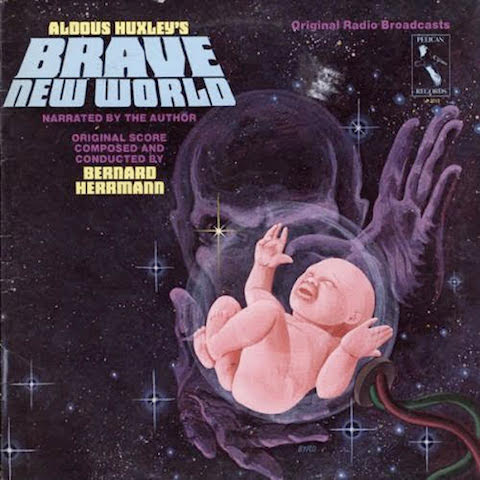
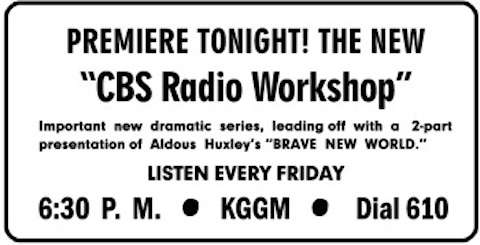
That gold­en age waned as tele­vi­sion came into its own in the mid-fifties, but near its end, some broad­cast com­pa­nies made every effort to put togeth­er the high­est qual­i­ty radio pro­gram­ming they could in order to retain their audi­ence. One such pro­gram, the CBS Radio Work­shop, which ran from Jan­u­ary, 1956 to Sep­tem­ber, 1957, may have been “too lit­tle too late”—as radio preser­va­tion­ist site Dig­i­tal Deli writes—but it nonethe­less was “every bit as inno­v­a­tive and cut­ting edge” as the pro­grams that came before it. The first two episodes, right below, were drama­ti­za­tions of Aldous Huxley’s Brave New World, read by the author him­self. (Find it also on Spo­ti­fy here.) The series’ remain­ing 84 pro­grams drew from the work of Antoine de Saint-Exupéry, James Thurber, H.L. Menck­en, Mark Twain, Robert Hein­lein, Eugene O’Neil, Balzac, Carl Sand­burg, and so many more. It also fea­tured orig­i­nal com­e­dy, dra­ma, music, and This Amer­i­can Life-style pro­files and sto­ry­telling.

Hux­ley returned in pro­gram #12, with a sto­ry called “Jacob’s Hands,” writ­ten in col­lab­o­ra­tion with and read by Christo­pher Ish­er­wood. The great Ray Brad­bury made an appear­ance, in pro­gram #4, intro­duc­ing his sto­ries “Sea­son of Dis­be­lief” and “Hail and Farewell,” read by John Dehn­er and Sta­cy Har­ris, and scored by future film and TV com­pos­er Jer­ry Gold­smith. Oth­er pro­grams, like #10, “The Exur­ban­ites,” nar­rat­ed by famous war cor­re­spon­dent Eric Sevareid, con­duct­ed prob­ing inves­ti­ga­tions of mod­ern life—in this case the growth of sub­ur­bia and its rela­tion­ship to the adver­tis­ing indus­try. The above is but a tiny sam­pling of the wealth of qual­i­ty pro­gram­ming the CBS Radio Work­shop pro­duced, and you can hear all of it—all 86 episodes—courtesy of the Inter­net Archive.

Sam­ple stream­ing episodes in the play­er above, or down­load indi­vid­ual pro­grams as MP3s and enjoy them at your leisure, almost like, well, a pod­cast. See Dig­i­tal Deli for a com­plete run­down of each program’s con­tent and cast, as well as an exten­sive his­to­ry of the series. This is the swan song of gold­en age radio, which, it seems, maybe nev­er real­ly left, giv­en the incred­i­ble num­ber of lis­ten­ing expe­ri­ences we still have at our dis­pos­al. Yes, some­day our pod­casts will sound quaint and curi­ous to the ears of more advanced lis­ten­ers, but even then, I’d bet, peo­ple will still be telling and record­ing sto­ries, and the sound of human voic­es will con­tin­ue to cap­ti­vate us as it always has.

Relat­ed Con­tent:

Dimen­sion X: The 1950s Sci­Fi Radio Show That Dra­ma­tized Sto­ries by Asi­mov, Brad­bury, Von­negut & More

Free: Lis­ten to 298 Episodes of the Vin­tage Crime Radio Series, Drag­net

How to Lis­ten to the Radio: The BBC’s 1930 Man­u­al for Using a New Tech­nol­o­gy

Josh Jones is a writer and musi­cian based in Durham, NC. Fol­low him at @jdmagness

Simone de Beauvoir Tells Studs Terkel How She Became an Intellectual and a Feminist (1960)

Studs_Terkel_Simone_de_Beauvoir

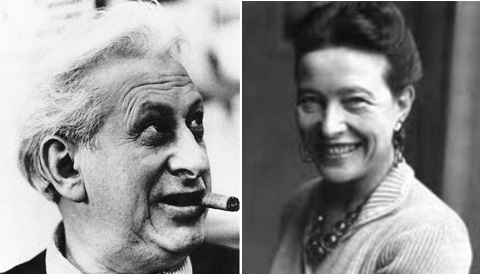
Before Ira Glass, before Ter­ry Gross, before any num­ber of NPR per­son­al­i­ties and inter­net pod­cast­ers who these days bring us inter­view after fas­ci­nat­ing inter­view with the great minds of our time, there was Studs Terkel. In addi­tion to his almost super­hu­man achieve­ments as an oral his­to­ri­an, film and TV actor, and Pulitzer Prize-win­ning author, Terkel pio­neered the radio inter­view with his Chica­go radio show, which ran for over four decades. “With no writ­ten ques­tions,” an NPR eulo­gy tells us, Terkel would “pick up a riff and impro­vise.” In 1960, he brought his jazz-like impro­vi­sa­tion­al style to Paris, to the apart­ment of exis­ten­tial­ist philoso­pher and nov­el­ist Simone de Beau­voir.

You can hear their con­ver­sa­tion, which spans near­ly half-an-hour, just below. De Beau­voir talks about her mid­dle-class upbring­ing, stu­dent days at the Sor­bonne, and devel­op­ment as a teacher and writer. She nar­rates her life his­to­ry in part because the first book of her three-vol­ume auto­bi­og­ra­phy, Mem­oirs of a Duti­ful Daugh­ter, had just been pub­lished, and the sec­ond, The Prime of Life, was near com­ple­tion. Already well-known for her philo­soph­i­cal and polit­i­cal work with her part­ner Jean-Paul Sartre and fel­low exis­ten­tial­ists Mau­rice Mer­leau-Pon­ty and Albert Camus, and her ground­break­ing fem­i­nist study The Sec­ond Sex, de Beau­voir was enter­ing a lat­er phase in her career, a very reflec­tive one. Suit­ably, Terkel opens the inter­view by observ­ing that “lis­ten­ers would very much like to know how you got this way.”


“This way” refers to de Beauvoir’s fierce com­mit­ments to phi­los­o­phy, and to fem­i­nism. Terkel com­pares her to tran­scen­den­tal­ist and fem­i­nist pio­neer Mar­garet Fuller, “of Boston, a cen­tu­ry ago,” who “too trav­eled to var­i­ous parts of the world and saw what she want­ed to see, what she intend­ed to see, the truth.” Accord­ing­ly, their con­ver­sa­tion turns from per­son­al rem­i­nisces to de Beauvoir’s belief that the writer must be “involved,” or—as she clar­i­fies, “committed”—ethically, philo­soph­i­cal­ly, and polit­i­cal­ly. What this means for her is “not ignor­ing the rest of the world.” As she puts it, “there is no pos­si­ble neu­tral­i­ty… you have to com­mit your­self… and not to just be picked by peo­ple, pre­tend­ing you are picked by nobody.” She goes on, in a vein rem­i­nis­cent of Howard Zinn’s remark that one “can’t be neu­tral on a mov­ing train”:

You are always picked one way or anoth­er way. You always help this one or this oth­er: the poor against the wealthy or the wealthy against the poor—you have no choice. And if you pre­tend just to stay and do noth­ing, even stay­ing and doing noth­ing means some­thing and it goes to one of the camp or the oth­er.

Intrigued, Terkel asks “I’m doing noth­ing, this too is a mat­ter of choice, you say?” De Beau­voir explains: “there is only one thing: is to begin to speak your­self, your own way. You have to say ‘I am against it,’ ‘I am for it’ because if you say noth­ing, your silence is used by the one you are for or against.” It’s a fas­ci­nat­ing inter­view first because de Beau­voir is such an engag­ing speak­er and sec­ond­ly because Terkel is such an excel­lent lis­ten­er.

Relat­ed Con­tent:

Simone de Beau­voir Explains “Why I’m a Fem­i­nist” in a Rare TV Inter­view (1975)

Philosophy’s Pow­er Cou­ple, Jean-Paul Sartre and Simone de Beau­voir, Fea­tured in 1967 TV Inter­view

Pho­tos of Jean-Paul Sartre & Simone de Beau­voir Hang­ing with Che Gue­vara in Cuba (1960)

Josh Jones is a writer and musi­cian based in Durham, NC. Fol­low him at @jdmagness

Walter Benjamin’s Radio Plays for Kids (1929–1932)

benjamin writing tips

Image by Wal­ter Ben­jamin Archiv, via Wiki­me­dia Com­mons

Many nov­el­ists and poets—from Oscar Wilde to Neil Gaiman—have excelled at reach­ing adults as well as kids, but it’s incred­i­bly rare to find an aca­d­e­m­ic who can do so. Two of the few excep­tions that come to mind are the ever pop­u­lar C.S. Lewis and J.R.R. Tolkien, both well-respect­ed Oxford schol­ars and more-than-able children’s authors. We can add to that short list a rather unex­pect­ed name—that of Wal­ter Ben­jamin: apoc­a­lyp­tic Marx­ist the­o­rist and lit­er­ary crit­ic, stu­dent of mys­ti­cal Judaism and Kab­bal­ah, men­tor and friend to Han­nah Arendt, Theodor Adorno, Bertolt Brecht, and Her­man Hesse, and children’s radio host. Dur­ing the years 1927 and 1933, while work­ing on his mon­u­men­tal, and unfin­ished, Arcades Project and teach­ing at the Uni­ver­si­ty of Hei­del­berg, Ben­jamin also main­tained a live­ly pres­ence as a broad­cast­er, where “he found him­self,” Crit­i­cal The­o­ry tells us, “writ­ing on a vari­ety of top­ics for… all ages, includ­ing chil­dren and ado­les­cents.”

Benjamin’s youth and adult pro­gram­ming has been col­lect­ed by Ver­so press in a new book enti­tled Radio Ben­jamin, which “brings togeth­er some of his most acces­si­ble” think­ing. “Fas­ci­nat­ed by the impact of new tech­nol­o­gy on cul­ture,” writes Ver­so, Ben­jamin “wrote and pre­sent­ed some­thing in the region of eighty broad­casts using the new medi­um of radio.” Between 1929 and 1932, he deliv­ered around 30 broad­casts he called “Enlight­en­ment for Chil­dren” (Aufk­lärung für Kinder), many of which you can hear read in the orig­i­nal Ger­man by Har­ald Wies­ner at Ubuweb (Ger­man speak­ers, lis­ten to an episode above). These, Ubuweb informs us, focused on “intro­duc­ing the youth to var­i­ous, some of them clas­si­cal, nat­ur­al cat­a­stro­phes, for instance the Lis­bon earth­quake of the 1750’s that so shook the opti­mism of Voltaire and the cen­tu­ry.”

Anoth­er of Benjamin’s sub­jects was “var­i­ous episodes of law­less­ness, fraud and deceit, much of it recent.” Dur­ing one such broad­cast, “The Boot­leg­gers,” Ben­jamin won­ders aloud rhetor­i­cal­ly, “should chil­dren even hear these kinds of sto­ries? Sto­ries of swindlers and mis­cre­ants who break the law try­ing to make a pile of dough, and often suc­ceed?” He admits, “It’s a legit­i­mate ques­tion.” He then goes on to elu­ci­date “the laws and grand inten­tions that cre­ate the back­drop for the sto­ries in which alco­hol smug­glers are heroes” and tells, in fas­ci­nat­ing detail, a few “lit­tle tales” of said heroes.

Ben­jamin, writes Crit­i­cal The­o­ry, played the role of “a Ger­man Ira Glass for teens,” with a kind of pop soci­ol­o­gy that also taught lessons about lan­guage, phi­los­o­phy, and class prej­u­dice. In anoth­er episode, “Berlin Dialect,” he “cel­e­brates ‘Berlin­ish,” a crude dialect of the work­ing class that was ditched as Berlin­ers sought to become more ‘refined.’” “Berlin­ish is a lan­guage that comes from work,” he explained, “It devel­oped not from writ­ers or schol­ars, but rather from the lock­er room and the card table, on the bus and at the pawn shop, at sport­ing are­nas and in fac­to­ries.”

The type­scripts of Benjamin’s radio plays for chil­dren were seized by the Gestapo after his sui­cide in 1940 and “only escaped destruc­tion by bureau­crat­ic error.” They were only pub­lished in Ger­man in 1985. The high the­o­rist him­self appar­ent­ly looked down upon this work but, Ver­so writes, these “plays, read­ings, book reviews, and fic­tion reveal Ben­jamin in a cre­ative, rather than crit­i­cal, mode… chan­nel­ing his sophis­ti­cat­ed think­ing to a wide audi­ence.” As such, these radio broad­casts may—as Jef­frey Mehlman argues in Wal­ter Ben­jamin for Chil­dren—help us bet­ter under­stand “one of this century’s most sug­ges­tive and per­plex­ing crit­ics.”

via Crit­i­cal The­o­ry

Relat­ed Con­tent:

Wal­ter Benjamin’s Mys­ti­cal Thought Pre­sent­ed by Two Exper­i­men­tal Films

Free Audio: Down­load the Com­plete Chron­i­cles of Nar­nia by C.S. Lewis

Por­traits of Vir­ginia Woolf, James Joyce, Wal­ter Ben­jamin & Oth­er Lit­er­ary Leg­ends by Gisèle Fre­und

Hear Theodor Adorno’s Avant-Garde Musi­cal Com­po­si­tions

Josh Jones is a writer and musi­cian based in Durham, NC. Fol­low him at @jdmagness

Hear Antonin Artaud’s Censored, Never-Aired Radio Play: To Have Done With The Judgment of God (1947)

artaud

Antonin Artaud had his first men­tal break­down at the age of 16 and, from there on out, spent much of his life in and out of asy­lums. Diag­nosed with “incur­able para­noid delir­i­um,” Artaud suf­fered from hal­lu­ci­na­tions, glos­so­lalia, and bouts of vio­lent rage. And his treat­ment prob­a­bly did about as much harm as it did good. He was pre­scribed lau­danum, which gave him a life­long addic­tion to opi­ates. He endured some tru­ly hor­rif­ic pro­ce­dures like elec­tric shock treat­ment along with the high­ly dubi­ous insulin ther­a­py, which put him in a coma for a while.

In spite of this, Artaud proved to be a huge­ly influ­en­tial the­o­rist and play­wright, famous for coin­ing the term, “The­ater of Cru­el­ty.” His per­for­mances were designed to assault the sens­es and sen­si­bil­i­ties of the audi­ence and awak­en them to the base real­i­ties of life — sex, tor­ture, mur­der and bod­i­ly flu­ids. Artaud want­ed to break down the bound­ary between actor and audi­ence and cre­ate an event that was ecsta­t­ic, uncon­tained and even dan­ger­ous. His ideas rev­o­lu­tion­ized the stage. As the late great Susan Son­tag once wrote, “no one who works in the the­ater now is untouched by the impact of Artaud’s spe­cif­ic ideas.”

But gen­er­al­ly speak­ing, his ideas about the­ater were more pop­u­lar than his actu­al pro­duc­tions. One of his most famous plays, first staged in 1935, was Les Cen­ci, about a father who rapes his daugh­ter and then gets bru­tal­ly killed by his daughter’s hired thugs. The play was a flop when it debuted, run­ning for a mere 17 per­for­mances. Even Son­tag con­ced­ed that Les Cen­ci was “not a very good play.”

Artaud’s last work was an audio piece called To Have Done With The Judg­ment Of God (Pour en Finir avec le Juge­ment de dieu), and it proved to be equal­ly unpop­u­lar, at least with some very impor­tant peo­ple. Com­mis­sioned by Fer­di­nand Pouey, head of the dra­mat­ic and lit­er­ary broad­casts for French Radio in 1947, the work was writ­ten by Artaud after he spent the bet­ter part of WWII interned in an asy­lum where he endured the worst of his treat­ment. The piece is as raw and emo­tion­al­ly naked as you might expect –an anguished rant against soci­ety. A rav­ing screed filled with scat­o­log­i­cal imagery, screams, non­sense words, anti-Amer­i­can invec­tives and anti-Catholic pro­nounce­ments.

The piece (above) was slat­ed to air on Jan­u­ary 2, 1948 but sta­tion direc­tor Vladimir Porché yanked it at the last moment. Appar­ent­ly, he wasn’t ter­ri­bly fond of the copi­ous ref­er­ences to poop and semen nor the anti-Amer­i­can vit­ri­ol. Porché’s rejec­tion caused a cause célèbre among Parisian intel­lec­tu­als. René Clair, Jean Cocteau and Paul Élu­ard among oth­ers loud­ly protest­ed the deci­sion, and Pouey even resigned from his job in protest, but to no avail. It nev­er aired. Artaud, who report­ed­ly took the rejec­tion very per­son­al­ly, died a month lat­er. You can lis­ten to the broad­cast above. And, in case your French isn’t up to snuff, you can still appre­ci­ate its the­atri­cal ele­ments, maybe while read­ing an Eng­lish trans­la­tion of the radio play script here.

If you can’t get enough of Artaud’s final work, you can watch this staged ver­sion of To Have Done With the Judg­ment of God below star­ring Bil­ly Bar­num and John Voigt (no, not Angeli­na Jolie’s father, the avant-garde musi­cian).

Via WFMU

Relat­ed Con­tent: 

Exten­sive Archive of Avant-Garde & Mod­ernist Mag­a­zines (1890–1939) Now Avail­able Online

Watch Dreams That Mon­ey Can Buy, a Sur­re­al­ist Film by Man Ray, Mar­cel Duchamp, Alexan­der Calder, Fer­nand Léger & Hans Richter

Un Chien Andalou: Revis­it­ing Buñuel and Dalí’s Sur­re­al­ist Film

The Hearts of Age: Orson Welles’ Sur­re­al­ist First Film (1934)

The Seashell and the Cler­gy­man: The World’s First Sur­re­al­ist Film

Man Ray and the Ciné­ma Pur: Four Sur­re­al­ist Films From the 1920s

Jonathan Crow is a Los Ange­les-based writer and film­mak­er whose work has appeared in Yahoo!, The Hol­ly­wood Reporter, and oth­er pub­li­ca­tions. You can fol­low him at @jonccrowAnd check out his blog Veep­to­pus, fea­tur­ing one new draw­ing of a vice pres­i­dent with an octo­pus on his head dai­ly. 

How to Listen to the Radio: The BBC’s 1930 Manual for Using a New Technology

BBC Good Listening

Click to enlarge

A com­par­i­son between the inven­tion of radio and that of the Inter­net need not be a strained or superf­i­cal exer­cise. Par­al­lels abound. The com­mu­ni­ca­tion tool that first drew the world togeth­er with news, dra­ma, and music took shape in a small but crowd­ed field of ama­teur enthu­si­asts, engi­neers and physi­cists, mil­i­tary strate­gists, and com­pet­ing cor­po­rate inter­ests. In 1920, the tech­nol­o­gy emerged ful­ly into the con­sumer sec­tor with the first com­mer­cial broad­cast by Westinghouse’s KDKA sta­tion in Pitts­burgh on Novem­ber 2, Elec­tion Day. By 1924, the U.S. had 600 com­mer­cial sta­tions around the coun­try, and in 1927, the mod­el spread across the Atlantic when the British Broad­cast­ing Cor­po­ra­tion (the BBC) suc­ceed­ed the British Broad­cast­ing Com­pa­ny, for­mer­ly an exten­sion of the Post Office.

Unlike the Wild West fron­tier of U.S. radio, since its 1922 incep­tion the BBC oper­at­ed under a cen­tral­ized com­mand struc­ture that, para­dox­i­cal­ly, fos­tered some very egal­i­tar­i­an atti­tudes to broadcasting—in cer­tain respects. In oth­ers, how­ev­er, the BBC, led by “con­sci­en­tious founder” Lord John Rei­th, took on the task of pro­vid­ing its lis­ten­ers with “ele­vat­ing and educa­tive” mate­r­i­al, par­tic­u­lar­ly avant garde music like the work of Arnold Schoen­berg and the Sec­ond Vien­nese School. The BBC, writes David Stubbs in Fear of Music, “were pre­pared to be quite bold in their broad­cast­ing pol­i­cy, mak­ing a point of includ­ing ‘futur­ist’ or ‘art music,’ as they termed it.” As you might imag­ine, “lis­ten­ers proved a lit­tle recal­ci­trant in the face of this high­brow pol­i­cy.”

In response to the vol­ume of lis­ten­er com­plaints, the BBC began a PR cam­paign in 1927 that sought to train audi­ences in how to lis­ten to chal­leng­ing and unfa­mil­iar broad­casts. One state­ment released by the BBC stress­es respon­si­ble, “cor­rect,” lis­ten­ing prac­tices: “If there be an art of broad­cast­ing there is equal­ly an art of lis­ten­ing… there can be no excuse for the lis­ten­er who tunes in to a pro­gramme, willy nil­ly, and com­plains that he does not care for it.” The next year, the BBC Hand­book 1928 includ­ed the fol­low­ing cas­ti­ga­tion of lis­ten­er antipa­thy and rest­less­ness.

Every new inven­tion that brings desir­able things more eas­i­ly with­in our reach there­by to some extent cheap­ens them… We seem to be enter­ing upon a kind of arm-chair peri­od of civil­i­sa­tion, when every­thing that goes to make up adven­ture is dealt with whole­sale, and deliv­ered, as it were, to the indi­vid­ual at his own door.

It’s as if Ama­zon were right around the cor­ner, and, in a cer­tain sense, it was. Like per­son­al com­put­ing tech­nol­o­gy, the wire­less rev­o­lu­tion­ized com­mu­ni­ca­tions and offered instant access to infor­ma­tion, if not yet goods, and not yet on an “on-demand” basis. Unlike Tim Berners-Lee’s World Wide Web, how­ev­er, British com­mer­cial radio strove might­i­ly to con­trol the ethics and aes­thet­ics of its con­tent. The hand­book goes on to elab­o­rate its pro­posed rem­e­dy for the poten­tial cheap­en­ing of cul­ture it iden­ti­fies above:

The lis­ten­er, in oth­er words, should be an epi­cure and not a glut­ton; he should choose his broad­cast fare with dis­crim­i­na­tion, and when the time comes give him­self delib­er­ate­ly to the enjoy­ment of it… To sum up, I would urge upon those who use wire­less to cul­ti­vate the art of lis­ten­ing; to dis­crim­i­nate in what they lis­ten to, and to lis­ten with their mind as well as their ears. In that way they will not only increase their plea­sure, but actu­al­ly con­tribute their part to the improve­ment and per­fec­tion of an art which is yet in its child­hood.

It seems that these lengthy prose pre­scrip­tions did not con­vey the mes­sage as effi­cient­ly as they might. In 1930, BBC admin­is­tra­tors pub­lished a hand­book that took a much more direct approach, which you can see above. Titled “Good Lis­ten­ing,” the list of instruc­tions, tran­scribed below, pro­ceeds under the assump­tion that any dis­sat­is­fac­tion with BBC pro­gram­ming should be blamed sole­ly on impa­tient, sloth­ful lis­ten­ers. As BBC pro­gram advi­sor Fil­son Young wrote that year in a Radio Times arti­cle, “Good lis­ten­ers will pro­duce good pro­grammes more sure­ly and more cer­tain­ly than any­thing else… Many of you have not even begun to mas­ter the art of lis­ten­ing. The arch-fault of the aver­age lis­ten­er is that he does not select.”

GOOD LISTENING

Make sure that your set is work­ing prop­er­ly before you set­tle down to lis­ten.

Choose your pro­grammes as care­ful­ly as you choose which the­atre to go to. It is just as impor­tant to you to enjoy your­self at home as at the the­atre.

Lis­ten as care­ful­ly at home as you do in a the­atre or con­cert hall. You can’t get the best out of a pro­gramme if your mind is wan­der­ing, or if you are play­ing bridge or read­ing. Give it your full atten­tion. Try turn­ing out the lights so that your eye is not caught by famil­iar objects in the room. Your imag­i­na­tion will be twice as vivid.

If you only lis­ten with half an ear you haven’t a quar­ter of a right to crit­i­cise.

Think of your favourite occu­pa­tion. Don’t you like a change some­times? Give the wire­less a rest now and then.

All maybe more than a lit­tle con­de­scend­ing, per­haps, but that last bit of advice now seems eter­nal.

via WFMU

Relat­ed Con­tent:

Orson Welles’ Radio Per­for­mances of 10 Shake­speare Plays

Hear Vin­tage Episodes of Buck Rogers, the Sci-Fi Radio Show That First Aired on This Day in 1932

Dimen­sion X: The 1950s Sci­Fi Radio Show That Dra­ma­tized Sto­ries by Asi­mov, Brad­bury, Von­negut & More

Josh Jones is a writer and musi­cian based in Durham, NC. Fol­low him at @jdmagness

« Go BackMore in this category... »
Quantcast