Kubrick’s 2001: A Space Odyssey Gets Turned Into “The Weirdest Sci-Fi Comic Ever Made” by Jack Kirby

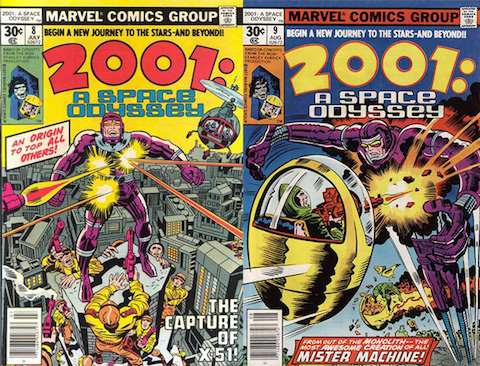
Kirby 2001 covers

Sure, we all enjoyed the adap­ta­tion of 2001: A Space Odyssey pre­sent­ed on the Howard John­son’s chil­dren’s menu from 1968 that we fea­tured last May. But would you believe that, when you swap out the name Howard John­son for that of Jack Kir­by, you get a work of high­er artis­tic mer­it? In his long career, the wide­ly respect­ed com­ic book artist, writer, and edi­tor put in time on both the DC and Mar­vel sides of the fence. 1976’s 2001: A Space Odyssey com­ic book, a meet­ing of Kir­by’s mind with those of Stan­ley Kubrick and Arthur C. Clarke, marked his return to Mar­vel after spend­ing the ear­ly 70s at DC.

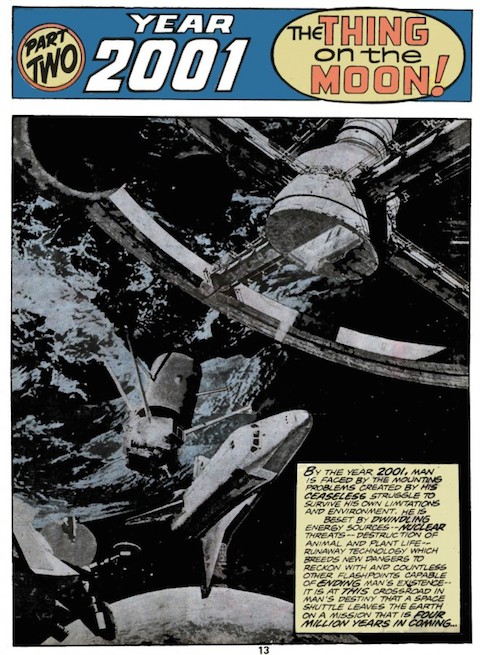
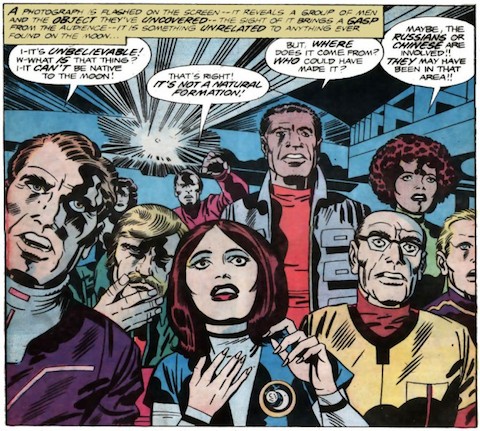
Kubrick­o­nia, which calls the com­mis­sion â€śa match made in bizarro world heav­en,” describes the prod­uct: “The adap­ta­tion was writ­ten & pen­ciled by Kir­by with ink­ing duties car­ried out by Frank Gia­coia. The almost 2 times larg­er than the reg­u­lar com­ic-book for­mat suit­ed Kir­by’s out­landish pop style, but this was a great tal­ent mere­ly going through the motions.” The Sequart Orga­ni­za­tion’s Julian Dar­ius calls it “sure­ly one of the strangest sci-fi fran­chise comics ever pub­lished,” a stuffy mar­riage between Kir­by’s “bom­bas­tic,” “action-ori­ent­ed,” “in-your-face” art and the style of Kubrick­’s film, one “all about the sub­tle. No one ever accused Kir­by of being sub­tle. Indeed, his almost com­plete lack of sub­tle­ty is part of his charm, but it’s not a charm one could pos­si­bly imag­ine fit­ting 2001.”

2001-adaptation-page-13-660x901

At The Dis­solve, Noel Mur­ray includes an exam­i­na­tion of Kir­by’s 2001 in the site’s “Adven­tures in Licens­ing” col­umn. Kir­by’s descrip­tion of Kubrick­’s immor­tal mil­len­nia-span­ning match cut, which the arti­cle quotes as an open­er, tells you every­thing you need to know:

As the surge of ela­tion sweeps through him, Moon­watch­er shouts in vic­to­ry and throws his weapon at the sky!! High­er and high­er, it sails — aimed at the infi­nite where the count­less stars wait for the com­ing of man… And, man comes to space!! Across the ago­niz­ing ages he fol­lows the des­tiny bequeathed to him by the mono­lith.

2001: A Space Odyssey in comics, which com­pris­es not just the over­sized book but ten month­ly issues that expand­ed upon the film — tak­ing it in, shall we say, a dif­fer­ent direc­tion than either Kubrick or Clarke might have envi­sioned — has, as you can see, inspired no small amount of dis­cus­sion among sci­ence fic­tion and com­ic book enthu­si­asts. Dar­ius wrote a whole book called The Weird­est Sci-Fi Com­ic Ever MadeAt Sci­FiDi­men­sons, Robert L. Bryant Jr. and Robert B. Cooke offer two more analy­ses of this unusu­al chap­ter in the his­to­ry of Amer­i­can sequen­tial art. What­ev­er its mer­its as read­ing mate­r­i­al, it shows us that genius plus genius does­n’t always pro­duce genius — but it nev­er fails to pro­duce some­thing fas­ci­nat­ing.

You can check out scans of the first issue of 2001: A Space Odyssey over on this web site.

2001-adaptation-page-22-e1364674017135-660x593

Relat­ed Con­tent:

Howard Johnson’s Presents a Children’s Menu Fea­tur­ing Kubrick’s 2001: A Space Odyssey (1968)

1966 Doc­u­men­tary Explores the Mak­ing of Kubrick’s 2001: A Space Odyssey (and Our High-Tech Future)

In 1968, Stan­ley Kubrick Makes Pre­dic­tions for 2001: Human­i­ty Will Con­quer Old Age, Watch 3D TV & Learn Ger­man in 20 Min­utes

Isaac Asi­mov Pre­dicts in 1964 What the World Will Look Like Today — in 2014

Arthur C. Clarke Pre­dicts the Future in 1964 … And Kind of Nails It

Col­in Mar­shall hosts and pro­duces Note­book on Cities and Cul­ture as well as the video series The City in Cin­e­ma and writes essays on cities, lan­guage, Asia, and men’s style. He’s at work on a book about Los Ange­les, A Los Ange­les Primer. Fol­low him on Twit­ter at @colinmarshall or on Face­book.

Neil Gaiman Reads “The Man Who Forgot Ray Bradbury”

man who forgot ray bradbury

Neil Gaiman sent Ray Brad­bury a gift for what turned out to be his last birth­day, his 91st. It was a sto­ry called “The Man Who For­got Ray Brad­bury.” And when Brad­bury’s edi­tor read it to the bed-rid­den author, he report­ed­ly took great plea­sure in it.

What could have been bet­ter? I guess only hear­ing Neil Gaiman read the sto­ry him­self. Which is pre­cise­ly what you can do with the audio below.

Gaiman’s read­ing was taped at the Aladdin The­ater in Port­land, Ore­gon. You can read the text of the sto­ry over at i09. We have many more instances of Gaiman read­ing Gaiman in our col­lec­tion of Free Neil Gaiman Sto­ries.

If you would like to sign up for Open Culture’s free email newslet­ter, please find it here. It’s a great way to see our new posts, all bun­dled in one email, each day.

If you would like to sup­port the mis­sion of Open Cul­ture, con­sid­er mak­ing a dona­tion to our site. It’s hard to rely 100% on ads, and your con­tri­bu­tions will help us con­tin­ue pro­vid­ing the best free cul­tur­al and edu­ca­tion­al mate­ri­als to learn­ers every­where. You can con­tribute through Pay­Pal, Patre­on, and Ven­mo (@openculture). Thanks!

Relat­ed Con­tent:

Neil Gaiman’s Free Short Sto­ries

Neil Gaiman Reads Dr. Seuss’ Green Eggs and Ham

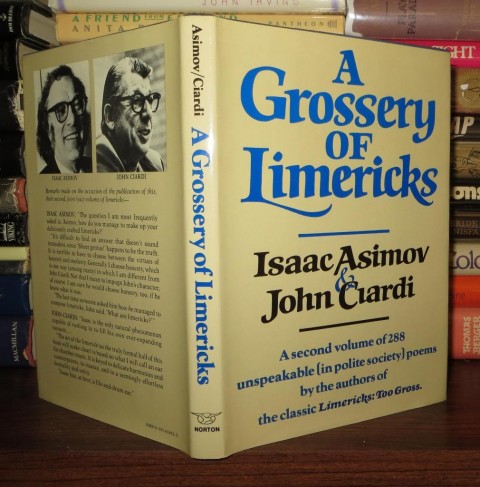
Isaac Asimov Wrote “Gross” Limericks — Lots of Them

asimov gross limericks
Isaac Asi­mov — he’s best known for his mas­ter­ful works of sci­ence fic­tion.  He was also a pro­fes­sor of bio­chem­istry at Boston Uni­ver­si­ty. A com­mit­ted human­ist. And some­one who enjoyed writ­ing lots of dirty lim­er­icks. Some­where on his list of 500+ books, you will find Lech­er­ous Lim­er­icks (1976), Lim­er­icks: Too Gross (1978), A Grossery of Lim­er­icks (1981), and Asi­mov Laughs Again: More Than 700 Jokes, Lim­er­icks, and Anec­dotes (1993). In two of these vol­umes, Asi­mov sparred with pop­u­lar poet and Dante trans­la­tor John Cia­r­di, each writ­ing dirty poems, and try­ing to mas­ter a rather strict poet­ic form that began in ear­ly 18th cen­tu­ry Eng­land.

Most of the lim­er­icks are indeed a “gross.” Many are crude. Some would be con­sid­ered down­right offen­sive by 2015 stan­dards. But, if you want a taste of what Asi­mov served up, you can try out these tamer ones from Lim­er­icks: Too Gross.

The haughty philoso­pher, Pla­to
Would unbend to a sweet young toma­to.
Though she might be naive
Like you would­n’t believe
He would patient­ly show her the way to.

A cer­tain young fel­low named Scott
Once jumped his young bride on their cot.
He intend­ed no shirk­ing.
But from sheer over­work­ing
A dry run is all that she got.

If you want to see Asi­mov at his tamest, you can also check out his book Lim­er­icks for Chil­dren.

Relat­ed Con­tent:

Isaac Asi­mov Pre­dicts in 1964 What the World Will Look Like Today — in 2014

Free: Isaac Asimov’s Epic Foun­da­tion Tril­o­gy Dra­ma­tized in Clas­sic Audio

Isaac Asi­mov Imag­ines Learn­ing in the Elec­tron­ic Age … and Gets It Quite Right (1989)

by | Permalink | Make a Comment ( 3 ) |

Kurt Vonnegut Reveals “Why My Dog Is Not a Humanist” in His Humanist of the Year Award Speech (1992)

Note: Von­negut starts talk­ing at around the 3:40 mark.

This is human­ism, as explained by bio­chemist, sci­ence fic­tion author and for­mer pres­i­dent of the Amer­i­can Human­ist Asso­ci­a­tion Isaac Asi­mov:

Human­ists believe that human beings pro­duced the pro­gres­sive advance of human soci­ety and also the ills that plague it. They believe that if the ills are to be alle­vi­at­ed, it is human­i­ty that will have to do the job. They dis­be­lieve in the influ­ence of the super­nat­ur­al on either the good or the bad of soci­ety, on either its ills or the alle­vi­a­tion of those ills.

There’s a wide­ly dis­sem­i­nat­ed Kurt Von­negut quote that puts things even more suc­cinct­ly:

I am a human­ist, which means, in part, that I have tried to behave decent­ly with­out any expec­ta­tion of rewards or pun­ish­ment after I’m dead.

It’s a def­i­n­i­tion Von­negut, Asimov’s hon­orary suc­ces­sor as AHA pres­i­dent, a scientist’s son, and, famous­ly, a sur­vivor of the fire­bomb­ing of Dres­den, embod­ied, though sure­ly not the only one he coined.

In his 1992 accep­tance speech for the association’s Human­ist of the Year award, above, he recalls how a stu­dent pressed him for a def­i­n­i­tion. He chose to fob the kid off on bet­ter paid col­leagues at the Uni­ver­si­ty of Iowa, but pri­vate­ly came up with anoth­er take:

…a human­ist, per­haps, was some­body who was crazy about human beings, who, like Will Rogers, had nev­er met one he did­n’t like. That cer­tain­ly did not describe me. It did describe my dog, though.

As the title of Vonnegut’s speech implies (“Why My Dog is Not a Human­ist”), Sandy, his undis­crim­i­nat­ing Hun­gar­i­an sheep­dog, ulti­mate­ly fell short of sat­is­fy­ing the cri­te­ria that would have labelled him a human­ist. He lacked the capac­i­ty for ratio­nal thought of the high­est order, and more­over, he regard­ed all humans — not just Von­negut — as gods.

Ergo, your dog is prob­a­bly not a human­ist either.

Char­ac­ter­is­ti­cal­ly, Von­negut ranged far and wide in his con­sid­er­a­tion of the mat­ter, touch­ing on a num­ber of top­ics that remain ger­mane, some 20 years after his remarks were made: race, exces­sive force, the treat­ment of prisoners…and Bill Cos­by.

For intro­duc­tion to human­ism, please see:  Stephen Fry Explains Human­ism in 4 Ani­mat­ed Videos: Hap­pi­ness, Truth and the Mean­ing of Life & Death

Relat­ed Con­tent:

Kurt Von­negut Explains “How to Write With Style”

Kurt Von­negut: Where Do I Get My Ideas From? My Dis­gust with Civ­i­liza­tion

Kurt Von­negut Dia­grams the Shape of All Sto­ries in a Master’s The­sis Reject­ed by U. Chica­go

Ayun Hal­l­i­day is an author, home­school­er, Hoosier and Chief Pri­ma­tol­o­gist of the East Vil­lage Inky zine. Fol­low her @AyunHalliday

Watch the Opening of Kubrick’s 2001: A Space Odyssey with the Original, Unused Score

How does a movie become a “clas­sic”? Expla­na­tions, nev­er less than utter­ly sub­jec­tive, will vary from cinephile to cinephile, but I would sub­mit that clas­sic-film sta­tus, as tra­di­tion­al­ly under­stood, requires that all ele­ments of the pro­duc­tion work in at least near-per­fect har­mo­ny: the cin­e­matog­ra­phy, the cast­ing, the edit­ing, the design, the set­ting, the score. Out­side first-year film stud­ies sem­i­nars and delib­er­ate­ly con­trar­i­an cul­ture columns, the label of clas­sic, once attained, goes prac­ti­cal­ly undis­put­ed. Even those who active­ly dis­like Stan­ley Kubrick­’s 2001: A Space Odyssey, for instance, would sure­ly agree that its every last audio­vi­su­al nuance serves its dis­tinc­tive, bold vision — espe­cial­ly that open­ing use of “Thus Spake Zarathus­tra.”

But Kubrick did­n’t always intend to use that piece, nor the oth­er orches­tral works we’ve come to close­ly asso­ciate with mankind’s ven­tures into realms beyond Earth and strug­gles with intel­li­gence of its own inven­tion. Accord­ing to Jason Kot­tke, Kubrick had com­mis­sioned an orig­i­nal score from A Street­car Named Desire, Spar­ta­cus, Cleopa­tra, and Who’s Afraid of Vir­ginia Woolf com­pos­er Alex North.

At the top of the post, you can see 2001’s open­ing with North’s music, and below you can hear 38 min­utes of his score on Spo­ti­fy. As to the ques­tion of why Kubrick stuck instead with the tem­po­rary score of Strauss, Ligeti, and Khatch­a­turi­an he’d used in edit­ing, Kot­tke quotes from Michel Cimen­t’s inter­view with the film­mak­er:

How­ev­er good our best film com­posers may be, they are not a Beethoven, a Mozart or a Brahms. Why use music which is less good when there is such a mul­ti­tude of great orches­tral music avail­able from the past and from our own time? [ … ]  Although [North] and I went over the pic­ture very care­ful­ly, and he lis­tened to these tem­po­rary tracks and agreed that they worked fine and would serve as a guide to the musi­cal objec­tives of each sequence he, nev­er­the­less, wrote and record­ed a score which could not have been more alien to the music we had lis­tened to, and much more seri­ous than that, a score which, in my opin­ion, was com­plete­ly inad­e­quate for the film.

North did­n’t find out about Kubrick­’s choice until 2001’s New York City pre­miere. Not an envi­able sit­u­a­tion, cer­tain­ly, but not the worst thing that ever hap­pened to a col­lab­o­ra­tor who failed to rise to the direc­tor’s expec­ta­tions.

For more Kubrick and clas­si­cal music, see our recent post: The Clas­si­cal Music in Stan­ley Kubrick’s Films: Lis­ten to a Free, 4 Hour Playlist

If you would like to sign up for Open Culture’s free email newslet­ter, please find it here. It’s a great way to see our new posts, all bun­dled in one email, each day.

If you would like to sup­port the mis­sion of Open Cul­ture, con­sid­er mak­ing a dona­tion to our site. It’s hard to rely 100% on ads, and your con­tri­bu­tions will help us con­tin­ue pro­vid­ing the best free cul­tur­al and edu­ca­tion­al mate­ri­als to learn­ers every­where. You can con­tribute through Pay­Pal, Patre­on, and Ven­mo (@openculture). Thanks!

Relat­ed Con­tent:

4,000+ Free Movies Online: Great Clas­sics, Indies, Noir, West­erns, Doc­u­men­taries & More

Kubrick’s 2001: A Space Odyssey Gets a Brand New Trail­er to Cel­e­brate Its Dig­i­tal Re-Release

1966 Film Explores the Mak­ing of Kubrick’s 2001: A Space Odyssey (and Our High-Tech Future)

James Cameron Revis­its the Mak­ing of Kubrick’s 2001: A Space Odyssey

Rare 1960s Audio: Stan­ley Kubrick’s Big Inter­view with The New York­er

Col­in Mar­shall hosts and pro­duces Note­book on Cities and Cul­ture and writes essays on cities, lan­guage, Asia, and men’s style. He’s at work on a book about Los Ange­les, A Los Ange­les Primer. Fol­low him on Twit­ter at @colinmarshall or on Face­book.

Blade Runner Spoofed in Three Japanese Commercials (and Generally Loved in Japan)

Blade Run­ner’s vision of a thor­ough­ly Japan­i­fied Los Ange­les in the year 2019 reflects the west­ern eco­nom­ic anx­i­eties of the ear­ly 1980s. And while that once far-flung year may not have come quite yet, Japan — giv­en the burst­ing of its post­war finan­cial bub­ble and the “lost decade” of the 1990s that fol­lowed — looks unlike­ly to own a frac­tion as much of the Unit­ed States as Rid­ley Scot­t’s Philip K. Dick adap­ta­tion (and many oth­er futur­is­tic sto­ries besides) assumed it even­tu­al­ly would. Still, the film’s cul­tur­al proph­esy came true: even dur­ing its eco­nom­ic stag­na­tion, Japan exer­cised more “soft pow­er” than ever before, turn­ing the world to the unique claims of its cul­ture, from the refine­ment of its cui­sine to the hyper­ac­tive exu­ber­ance of its music and ani­ma­tion to the match­less ele­gance of its tra­di­tion­al aes­thet­ics.

Even as Blade Run­ner showed us how much Japan­ese style would one day influ­ence, the style of the film had, for its part, an imme­di­ate influ­ence on Japan. Though famous­ly unap­pre­ci­at­ed by west­ern­ers on its ini­tial release (“a waste of time,” said Siskel and Ebert), its pro­to-cyber­punk sen­si­bil­i­ty won the hearts of Japan­ese view­ers, and Japan­ese cre­ators, right away. The video at the top of the post col­lects three Japan­ese tele­vi­sion com­mer­cials that both spoof and pay homage to Blade Run­ner: the first for the Hon­da Beat, a Japan-only road­ster; the sec­ond (an astute par­o­dy of a par­tic­u­lar­ly mem­o­rable scene) for Meni­con con­tact lens­es; and the third for mobile ser­vice provider J‑Phone.

But the movie’s effect on Japan did­n’t stop at the adver­tis­ing indus­try. The 1987 ani­mat­ed series Bub­blegum Cri­sis, which fol­lows the adven­tures of a cyborg-bat­tling team in the “Mega Tokyo” of 2032, plays so much like a home­grown Blade Run­ner that a fan could cre­ate the sec­ond video above: an ani­mat­ed recre­ation of Blade Run­ner’s trail­er, using all its orig­i­nal sound, with Bub­blegum Cri­sis’ footage. The 1988 video game Snatch­er stars the decid­ed­ly Har­ri­son-For­dian Gillian Seed, a detec­tive in pur­suit of the tit­u­lar killer androids in the “Neo Kobe” of 2044. You can still semuch of what the film inspired, and what inspired in the film, in major Japan­ese cities today. Even Los Ange­les has made strides here and there toward the Blade Run­ner future, though I regret to admit that we still await our tow­er-side geisha.

Relat­ed Con­tent:

The Art of Mak­ing Blade Run­ner: See the Orig­i­nal Sketch­book, Sto­ry­boards, On-Set Polaroids & More

The Blade Run­ner Pro­mo­tion­al Film

Blade Run­ner: The Pil­lar of Sci-Fi Cin­e­ma that Siskel, Ebert, and Stu­dio Execs Orig­i­nal­ly Hat­ed

Philip K. Dick Pre­views Blade Run­ner: “The Impact of the Film is Going to be Over­whelm­ing” (1981)

Col­in Mar­shall hosts and pro­duces Note­book on Cities and Cul­ture and writes essays on cities, lan­guage, Asia, and men’s style. He’s at work on a book about Los Ange­les, A Los Ange­les Primer. Fol­low him on Twit­ter at @colinmarshall or on Face­book.

H.P. Lovecraft Highlights the 20 “Types of Mistakes” Young Writers Make

lovecraft hp

Image by Lucius B. Trues­dell, via Wiki­me­dia Com­mons

H.P. Love­craft is remem­bered as a bril­liant fan­ta­sist, a cre­ator of a com­plete­ly unique uni­verse of hor­ror. He’s also remem­bered, unfor­tu­nate­ly, as a big­ot. But the author whose head—to the cha­grin of some—provided the mod­el for the World Fan­ta­sy Award is not often remem­bered as a par­tic­u­lar­ly good writer. Or rather, I should say, a par­tic­u­lar­ly good styl­ist. His writ­ing can sound sti­fling­ly archa­ic, over­stuffed with Vic­to­ri­anisms. “His prose, “writes Scott Malt­house, “can be turgid and adjec­tives suf­fo­cat­ing,” and “his char­ac­ters tend to be as thin as the paper they’re print­ed on.”

Writ­ers love him, Malt­house argues, because he was such an orig­i­nal “world builder,” not because he was a fine artist. Eliz­a­beth Bear at Tor echoes the sen­ti­ment, writ­ing that Love­craft’s work is “crit­i­cized for its style, for its pur­ple­ness and den­si­ty and fail­ures of struc­ture,” yet still evokes such a potent response that “the Love­craft­ian uni­verse must be con­sid­ered a col­lab­o­ra­tive effort at this point,” since so many writ­ers have fur­thered his “appeal­ing­ly bleak” vision. You can down­load a good part of his col­lect­ed works in ebook and audio­book for­mats here.

So per­haps he isn’t such a bad writer after all? In any case, he’s cer­tain­ly a very dis­tinc­tive one whose style, like Joseph Conrad’s, say, or even William Faulkner’s, endears read­ers pre­cise­ly for its fever­ish excess­es. Love­craft him­self was very self-con­scious about his craft and took writ­ing very seriously—enough to have pub­lished a lengthy, high­ly detailed essay called “Lit­er­ary Com­po­si­tion” which tack­les in sev­er­al para­graphs a host of issues the writer must con­tend with: gram­mar, “read­ing,” vocab­u­lary, “ele­men­tal phras­es,” descrip­tion, nar­ra­tion, “fic­tion­al nar­ra­tion,” “uni­ty, mass, coher­ence,” and “forms of com­po­si­tion.” We won’t recite the whole of his advice here—you can read the whole thing for your­self. But to give you some of the fla­vor of Lovecraft’s ped­a­gogy, we bring you his list of twen­ty “types of mis­takes” young writ­ers make.

See his com­plete list below.

  1. Erro­neous plu­rals of nouns, as val­lies or echos.
  2. Bar­barous com­pound nouns, as view­point or upkeep.
  3. Want of cor­re­spon­dence in num­ber between noun and verb where the two are wide­ly sep­a­rat­ed or the con­struc­tion involved
  4. Ambigu­ous use of pro­nouns.
  5. Erro­neous case of pro­nouns, as whom for who, and vice ver­sa, or phras­es like “between you and I,” or “Let we who are loy­al, act prompt­ly.”
  6. Erro­neous use of shall and will, and of oth­er aux­il­iary verbs.
  7. Use of intran­si­tive for tran­si­tive verbs, as “he was grad­u­at­ed from col­lege,” or vice ver­sa, as “he ingra­ti­at­ed with the tyrant.”
  8. Use of nouns for verbs, as “he motored to Boston,” or “he voiced a protest,”
  9. Errors in moods and tens­es of verbs, as “If I was he, I should do oth­er­wise”, or “He said the earth was”
  10. The split infini­tive, as “to calm­ly ”
  11. The erro­neous per­fect infini­tive, as “Last week I expect­ed to have met”
  12. False verb-forms, as “I pled with him.”
  13. Use of like for as, as “I strive to write like Pope wrote.”
  14. Mis­use of prepo­si­tions, as “The gift was bestowed to an unwor­thy object,” or “The gold was divid­ed between the five men.”
  15. The super­flu­ous con­junc­tion, as “I wish for you to do this.”
  16. Use of words in wrong sens­es, as “The book great­ly intrigued me”, “Leave me take this”, “He was obsessed with the idea”, or “He is a metic­u­lous”
  17. Erro­neous use of non-Angli­cised for­eign forms, as “a strange phe­nom­e­na”, or “two stratas of clouds”.
  18. Use of false or unau­tho­rised words, as bur­glarise or supremest.
  19. Errors of taste, includ­ing vul­garisms, pompous­ness, rep­e­ti­tion, vague­ness, ambigu­ous­ness, col­lo­qui­al­ism, bathos, bom­bast, pleonasm, tau­tol­ogy, harsh­ness, mixed metaphor, and every sort of rhetor­i­cal awk­ward­ness.
  20. Errors of spelling and punc­tu­a­tion, and con­fu­sion of forms such as that which leads many to place an apos­tro­phe in the pos­ses­sive pro­noun its.

Most of this is sol­id, com­mon sense writ­ing advice. Some of it isn’t. As with all things Love­craft, you would be wise to use your dis­cre­tion. A full read of Lovecraft’s trea­tise on com­po­si­tion will give you some sense of how to begin writ­ing your own Love­craft pas­tiche. For even more of his advice on the writ­ing of fiction—particularly, as he called it, “weird fic­tion,” see his list of five tips for hor­ror writ­ing, which we fea­tured in Octo­ber.

Relat­ed Con­tent:

H.P. Love­craft Gives Five Tips for Writ­ing a Hor­ror Sto­ry, or Any Piece of “Weird Fic­tion”

H.P. Lovecraft’s Clas­sic Hor­ror Sto­ries Free Online: Down­load Audio Books, eBooks & More

Love­craft: Fear of the Unknown (Free Doc­u­men­tary)

Stephen King’s Top 20 Rules for Writ­ers

Writ­ing Tips by Hen­ry Miller, Elmore Leonard, Mar­garet Atwood, Neil Gaiman & George Orwell

Josh Jones is a writer and musi­cian based in Durham, NC. Fol­low him at @jdmagness

The Art of Making Blade Runner: See the Original Sketchbook, Storyboards, On-Set Polaroids & More

There’s nev­er been a bad time to revis­it Blade Run­ner, but now, with all the news about the in-devel­op­ment Blade Run­ner 2 break­ing even as you read this, it seems like an espe­cial­ly appro­pri­ate time to go deep­er into Rid­ley Scot­t’s piece of ground­break­ing, Philip K. Dick-adapt­ing cyber­punk cin­e­ma. What­ev­er you think of the prospect of a sequel, if you call your­self a Blade Run­ner fan, you’ll nev­er turn down a chance for anoth­er look behind the scenes of the orig­i­nal.

Hence our offer­ing today of BBC crit­ic Mark Ker­mod­e’s doc­u­men­tary above, On the Edge of Blade Run­ner, and, via Fla­vor­wire, a selec­tion of orig­i­nal sto­ry­boards from the film. Few sci­ence-fic­tion movies hold up so well aes­thet­i­cal­ly after 32 years, but only because few sci­ence-fction movies had so much sheer work put into their design — we are still, I imag­ine, assured a steady stream of pro­duc­tion mate­ri­als to gaze upon for a long time to come.

blade runner storyboard

In recent years, for instance, Sean Young, who played the repli­cant Rachel, released her Polaroid pho­tos from the film’s set. And if you missed it the first time around, you’ll want to cir­cle back to our post fea­tur­ing a freely read­able online ver­sion of Blade Run­ner Sketch­book, a col­lec­tion of over 100 pro­duc­tion draw­ings and pieces of art­work that orig­i­nal­ly came out along­side the film. (See it above.)

blade runner polaroid

And what­ev­er direc­tion Blade Run­ner 2 takes, promis­ing or less so, we’ll all hear a lot about it in the com­ing months. So to bal­ance out the com­ing wave of pro­mo­tion for the sec­ond one, why not watch a lit­tle of the pro­mo­tion of the first one in the form of the con­ven­tion reel below (pro­duced not least to counter all the bad press the pro­duc­tion had drawn at the time), which con­tains inter­views with some of those respon­si­ble for Blade Run­ner’s most endur­ing qual­i­ties: Rid­ley Scott, “visu­al futur­ist” Syd Mead, and visu­al effects design­er Dou­glas Trum­bull. If all three of those guys work on the sequel, well, maybe I’ll start get­ting excit­ed.

Relat­ed Con­tent:

The Blade Run­ner Pro­mo­tion­al Film

Blade Run­ner: The Pil­lar of Sci-Fi Cin­e­ma that Siskel, Ebert, and Stu­dio Execs Orig­i­nal­ly Hat­ed

The Blade Run­ner Sketch­book: The Orig­i­nal Art of Syd Mead and Rid­ley Scott Online

Philip K. Dick Pre­views Blade Run­ner: “The Impact of the Film is Going to be Over­whelm­ing” (1981)

Col­in Mar­shall hosts and pro­duces Note­book on Cities and Cul­ture and writes essays on cities, lan­guage, Asia, and men’s style. He’s at work on a book about Los Ange­les, A Los Ange­les Primer. Fol­low him on Twit­ter at @colinmarshall or on Face­book.

« Go BackMore in this category... »
Quantcast