If his goal is to be taken seriously, William Shatner hasn’t always been his own best friend. His covers of pop hits launched a whole mini-genre of unintentionally bad celebrity recordings.
To his credit, he made fun of himself to great effect on Boston Legal but followed that series up with a Broadway show It’s Shatner’s World, We Just Live In It, to mixed reviews.
But the man never quits. Earlier this month the Canadian Space Agency organized a Tweetup with Canadian astronaut Chris Hadfield, who is aboard the International Space Station orbiting the Earth. One space lover who participated was Shatner, who tweeted:
@Cmdr_Hadfield: “Are you tweeting from space? MBB”
A few hours later Hadfield, responded: “Yes, Standard Orbit, Captain. And we’re detecting signs of life on the surface.”
Shatner and Hadfield planned a longer conversation and it was hard to say who was more thrilled by the event: Trekkies the world over, Shatner, or Hadfield.
For about fifteen minutes today, with Houston Mission Control acting as galactic switchboard operator, the two chatted about the space program, the risks of living in space, and even some existential matters.
Right off the bat, Shatner asked Hadfield whether the fact that he had used a Russian vehicle to get up to the space station means that America is “falling behind” in its space program. The answer—long and upbeat—was, in a word, no.
Then Shatner asked Hadfield why he’d volunteered for the as-yet unscheduled mission to Mars.
“Isn’t that a fearful endeavor, fraught with enormous difficulty and danger?”
“Well you’ve taken a lot of risks in your life as well,” Hadfield replied.
He later went on to say that programs like Star Trek inspired him to study to become an astronaut.
“Going to Mars is inevitable,” Hadfield said, speaking into a floating, hand-held microphone, “just as sailing across the Atlantic or going to the moon. We take those visualized fantasies and turn them into realities.”
The view of Earth from his window on the Space Station, he added, is just like the view that Sulu and Chekhov had from the Starship Enterprise.
“It’s an enormous wonderful rolling Earth but all you have to do is flip yourself upside-down and the rest of the universe is under you.”
By the end of their chat, Hadfield had invited Shatner to visit him at his cabin and watch the satellites fly through the sky.
“You know those scenes in Boston Legal at the end of an episode when you were on the veranda drinking a whiskey and smoking a cigar, you ought to visit me in Northern Ontario. It’s a great place to talk about life.”
Related Content:
Nichelle Nichols Tells Neil deGrasse Tyson How Martin Luther King Convinced Her to Stay on Star Trek
Leonard Nimoy Narrates Short Film About NASA’s Dawn: A Voyage to the Origins of the Solar System
William Shatner Narrates Space Shuttle Documentary
Star Trek Celebrities, William Shatner and Wil Wheaton, Narrate Mars Landing Videos for NASA
Kate Rix writes about digital media and education. Visit her at .
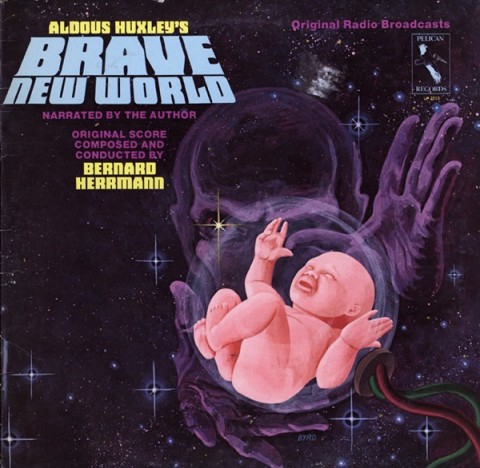 A little over a year ago, we brought you a roundup of great Science Fiction & Fantasy classics available on the web. The free collection included everything from Aldous Huxley reading a dramatized version of Brave New World, to a BBC radio broadcast of Isaac Asimov’s influential Foundation Trilogy, to an audiobook version of C.S. Lewis’ The Chronicles of Narnia. We’ve been updating the page ever since, adding a Neil Gaiman story here, and a Philip K. Dick story there. So if you’re a sci-fi fan, or if you’re friends with a sci-fi fan, you’ll want to pay a new visit to our collection: Free Science Fiction Classics on the Web: Huxley, Orwell, Asimov, Gaiman & Beyond. Also, if you notice any great resources missing from the list, don’t hesitate to let us know in the comments below.