Robert Crumb Illustrates Philip K. Dick’s Infamous, Hallucinatory Meeting with God (1974)

CrumbExperienceofPKD

“I saw God,” Fat states, and Kevin and I and Sher­ri state, “No, you just saw some­thing like God, exact­ly like God.” And hav­ing spoke, we do not stay to hear the answer, like jest­ing Pilate, upon his ask­ing, “What is truth?”

–Philip K. Dick, VALIS

In the months of Feb­ru­ary and March, 1974, Philip K. Dick met God, or some­thing like God, or what he thought was God, at least, in a hal­lu­ci­na­to­ry expe­ri­ence he chron­i­cled in sev­er­al obses­sive­ly dense diaries that recent­ly saw pub­li­ca­tion as The Exe­ge­sis of Philip K. Dick, a work of deeply per­son­al theo-philo­soph­i­cal reflec­tion akin to Carl Jung’s The Red Book. What­ev­er it was he encountered—Dick was nev­er too dog­mat­ic about it—he end­ed up refer­ring to it as Zebra, or by the acronym VALIS, Vast Active Liv­ing Intel­li­gence Sys­tem, also the title of a nov­el detail­ing the expe­ri­ences of one very PKD-like char­ac­ter with the improb­a­ble name of “Horselover Fat.”

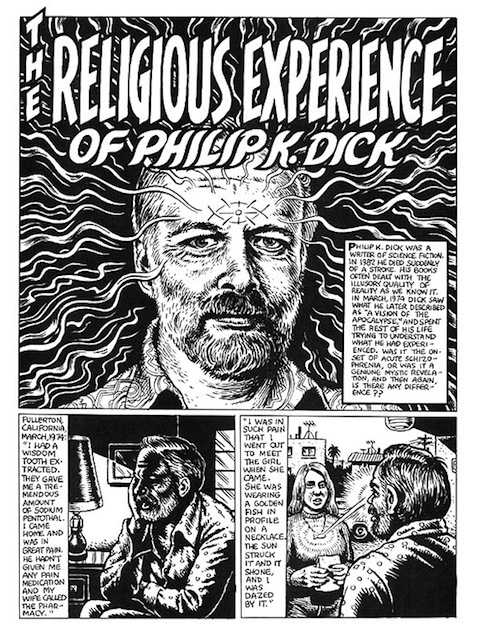
LSD-trig­gered psy­chot­ic break, gen­uine reli­gious expe­ri­ence, or some­thing else entire­ly, what­ev­er Dick’s encounter meant, he didn’t let the oppor­tu­ni­ty to turn it into art slip by him, and nei­ther did out­sider car­toon­ist and PKD fan Robert Crumb. In issue #17 of the under­ground comix mag­a­zine Weirdo, Crumb nar­rat­ed and illus­trat­ed Dick’s meet­ing with a divine intel­li­gence in the appro­pri­ate­ly titled “The Reli­gious Expe­ri­ence of Philip K. Dick.” It was even­tu­al­ly col­lect­ed in the edi­tion, The Weirdo Years by R. Crumb: 1981-’93. (See the com­ic in motion in the awk­ward, ama­teur video above.) The com­ic quotes direct­ly from Dick’s telling of the event, which began with a wis­dom tooth extrac­tion and was ulti­mate­ly trig­gered by a gold­en Chris­t­ian fish sym­bol worn around the neck of a phar­ma­ceu­ti­cal deliv­ery girl. Most PKD fans will be famil­iar with the sto­ry, whether they treat it as gospel or not, but to see it illus­trat­ed with such empa­thet­ic inten­si­ty by Crumb is tru­ly a treat.

If you only know Crumb as the cre­ator of las­civ­i­ous Rube­nesque women and schlub­by, drug­gy horn­dog hip­sters (like Fritz the Cat), you may be sur­prised by these emo­tion­al­ly real­ist illus­tra­tions. If you know Crumb’s more seri­ous work, like his take on the book of Gen­e­sis, you won’t. In either case, fans of Dick, Crumb, or—most likely—both, won’t want to miss this.

Relat­ed Con­tent:

Down­load 14 Great Sci-Fi Sto­ries by Philip K. Dick as Free Audio Books and Free eBooks

Philip K. Dick Pre­views Blade Run­ner: “The Impact of the Film is Going to be Over­whelm­ing” (1981)

The Con­fes­sions of Robert Crumb: A Por­trait Script­ed by the Under­ground Comics Leg­end Him­self (1987)

Josh Jones is a writer and musi­cian based in Durham, NC. Fol­low him at @jdmagness

Revisit Futuria Fantasia: The Science Fiction Fanzine That Ray Bradbury Published as a Teenager

futuriafantasia

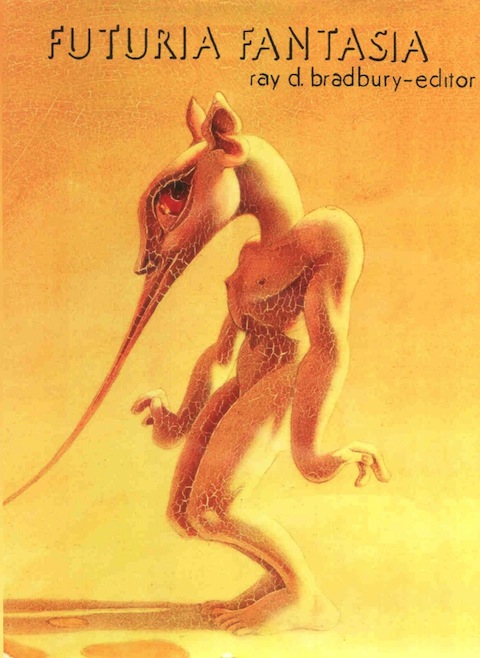
Bud­ding sci­ence-fic­tion authors today know that, to get their start, they should prob­a­bly go online and pub­lish them­selves. But even before the advent of the mod­ern inter­net, many writ­ers eager to tell spec­u­la­tive tales of human­i­ty’s future strug­gle with tech­nol­o­gy, knowl­edge, and its own nature showed a sim­i­lar self-start­ing bent. They made espe­cial­ly advan­ta­geous use of pho­to­copiers and sta­plers in the sev­en­ties and eight­ies, the decades com­mon­ly con­sid­ered the hey­day of those low-cir­cu­la­tion pub­li­ca­tions known as zines. But long before before that, the for­mat already incu­bat­ed seri­ous sci­ence-fic­tion tal­ent. Take Futuria Fan­ta­sia, which pub­lished four issues between 1939 and 1940. Its edi­tor? A cer­tain Ray Brad­bury, before Fahren­heit 451, before The Mar­t­ian Chron­i­cles — before every­thing.

“Released in 1939 short­ly after Brad­bury grad­u­at­ed from high school,” says Zinewik­i’s entry on the mag­a­zine, “Futuria Fan­ta­sia was pub­lished with the help of [sci-fi pro­mot­er] For­rest J. Ack­er­man, who lent Brad­bury $90.00 for the fanzine.” The first issue, avail­able free from Project Guten­berg, includes Brad­bury’s sto­ry “Let’s Get Tech­na­tal” (writ­ten under the pseu­do­nym “Ron Reynolds”) and poem “Thought and Space.”

The sec­ond issue includes an arti­cle he wrote under “Guy Amory” and his sto­ry “The Pen­du­lum.” The third includes a Brad­bury edi­to­r­i­al, the fourth anoth­er edi­to­r­i­al and the pseu­do­ny­mous sto­ries “The Piper” and “The Flight of the Good Ship Claris­sa.” “I hope you like this brain-child, spawned from the womb of a year long inan­i­ma­tion,” the ambi­tious young Brad­bury writes in his intro­duc­tion to the sum­mer 1939 issue. “This is only the first issue of FuFa … if it suc­ceeds there will be more, bet­ter issues com­ing up.” Three more would, indeed, emerge, but sure­ly even such a pre­dic­tive mind as Brad­bury’s could­n’t imag­ine what his career real­ly held in store.

You can hear all ten sto­ries from the Spring 1940 edi­tion of Futuria Fan­ta­sia in the playlist below. It includes “Gor­gono and Slith” by Ray Brad­bury:

Relat­ed Con­tent:

Ray Brad­bury Reads Mov­ing Poem on the Eve of NASA’s 1971 Mars Mis­sion

Ray Brad­bury: Sto­ry of a Writer 1963 Film Cap­tures the Para­dox­i­cal Late Sci-Fi Author

Ray Brad­bury Gives 12 Pieces of Writ­ing Advice to Young Authors (2001)

Ray Brad­bury Offers 12 Essen­tial Writ­ing Tips and Explains Why Lit­er­a­ture Saves Civ­i­liza­tion

Col­in Mar­shall hosts and pro­duces Note­book on Cities and Cul­ture and writes essays on lit­er­a­ture, film, cities, Asia, and aes­thet­ics. He’s at work on a book about Los Ange­lesA Los Ange­les Primer. Fol­low him on Twit­ter at @colinmarshall.

Free: Download 151 Sci-Fi & Fantasy Stories from Tor.com

tor storiesA quick note: If you’re not already famil­iar with it, Tor.com is a web site ded­i­cat­ed to “sci­ence fic­tion, fan­ta­sy, and all the things that inter­est SF and fan­ta­sy read­ers.” And, among oth­er things, the site reg­u­lar­ly pub­lish­es orig­i­nal sci-fi sto­ries. To cel­e­brate its 5th birth­day, Tor has decid­ed to assem­ble the last five years of its orig­i­nal fic­tion and make it avail­able as down­load­able ebook files. You will need to reg­is­ter with the site before­hand, and then you can down­load the texts in var­i­ous for­mats — PDF, Mobi, and ePub — all of which can be loaded onto ebook read­ers. And, yes, it’s all free.

If you’re a sci-fan, we’d encour­age you to see our post from ear­li­er this week, 100 Great Sci-Fi Sto­ries by Women Writ­ers and then some of the great relat­ed mate­r­i­al below.

via i09

Relat­ed Con­tent:

Free Sci­ence Fic­tion Clas­sics on the Web: Hux­ley, Orwell, Asi­mov, Gaiman & Beyond

Free Philip K. Dick: Down­load 11 Great Sci­ence Fic­tion Sto­ries

Isaac Asimov’s Sci­ence Fic­tion Clas­sic, The Foun­da­tion Tril­o­gy, Dra­ma­tized for Radio (1973)

Neil Gaiman’s Free Short Sto­ries

425 Free eBooks: Down­load to Kin­dle, iPad/iPhone & Nook

by | Permalink | Make a Comment ( 19 ) |

100 Great Sci-Fi Stories by Women Writers (Read 20 for Free Online)

Image by Frankie Fougan­thin, via Wiki­me­dia Com­mons

Since 2009, the orga­ni­za­tion VIDA: Women in the Lit­er­ary Arts has sought to bring bal­ance to the rep­re­sen­ta­tion of female authors in the lit­er­ary world. As revealed by the 2010 con­tro­ver­sy begun by author Jodi Picoult over the gush­ing treat­ment Jonathan Franzen’s Free­dom received in the New York Times, the dis­par­i­ty, and the bias, are real. Author Jen­nifer Wein­er chimed in as well, writ­ing: “when a man writes about fam­i­ly and feel­ings, it’s lit­er­a­ture with a cap­i­tal L, but when a woman con­sid­ers the same top­ics, it’s romance, or a beach book.” This fracas—involving a num­ber of most­ly New York literati and the death of the term “chick lit”—didn’t split even­ly down gen­der lines. Both male and female writ­ers lined up to defend Picoult and Franzen, but it did open up legit­i­mate ques­tions about the old (most­ly white) boys club that claims the upper ech­e­lons of lit­er­ary fic­tion and the brass ring that is the New York Times book review.

What received no notice in the pop­u­lar media dur­ing all this chat­ter was the place of women writ­ers in genre fic­tion, which most­ly lives out­side the gates and rarely gets much notice from the crit­ics (with the excep­tion of a hand­ful of “seri­ous” writ­ers and the Young Adult mar­ket). Well, there is a dis­cus­sion about gen­der par­i­ty in the sci­ence fic­tion world tak­ing place now on the blog of sci-fi crit­ic and writer Ian Sales. Sales curates SF Mis­tress­works—a blog for women sci-fi writers—and after review­ing a 1975 anthol­o­gy called Women of Won­der, he asked read­ers over at his blog to sub­mit their favorite short fic­tion by women writ­ers. His goal? To col­lect 100 sto­ries and novel­las as a counter to the clas­sic, and almost whol­ly male-dom­i­nat­ed col­lec­tion, 100 Great Sci­ence Fic­tion Short Short Sto­ries, edit­ed by Isaac Asi­mov. You can read the full list of 100 over at Sales’ blog. Below, we’ve excerpt­ed those sto­ries that are freely avail­able online. If you’re a sci­ence fic­tion fan and find your­self unable to name more than one or two female authors in the genre (every­one knows, for exam­ple, the fab­u­lous Ursu­la K. Le Guin and Mar­garet Atwood, pic­tured above), you might want to take a look at some of the great work you’ve missed out on.

Sales’ list spans sev­er­al decades and, as he writes, demon­strates “a good spread of styles and themes and approach­es across the genre.”

1 ‘The Fate of the Posei­do­nia’, Clare Winger Har­ris (1927, short sto­ry) online here

12 ‘The New You’, Kit Reed (1962, short sto­ry) online here

13 ‘The Put­nam Tra­di­tion’, Sonya Dor­man (1963, short sto­ry) online here

16 ‘The Heat Death of the Uni­verse’, Pamela Zoline (1967, short sto­ry) online here

24 ‘The Violet’s Embryo’, Angéli­ca Gorodis­ch­er (1973, nov­el­ette) online here (excerpt)

28 ‘The View from End­less Scarp’, Mar­ta Ran­dall (1978, short sto­ry) online here

51 ‘The Road to Jerusalem’, Mary Gen­tle (1991, short sto­ry) online here

71 ‘Cap­tive Girl’, Jen­nifer Pel­land (2006, short sto­ry) online here

79 ‘Spi­der the Artist’, Nne­di Okrafor (2008, short sto­ry) online here

81 ‘Eros, Phil­ia, Agape’, Rachel Swirsky (2009, nov­el­ette) online here

82 ‘Non-Zero Prob­a­bil­i­ties’, NK Jemisin (2009, short sto­ry) online here

85 ‘Blood, Blood’, Abbey Mei Otis (2010, short sto­ry) online here and here

88 ‘Amaryl­lis’, Car­rie Vaughn (2010, short sto­ry) online here

89 ‘I’m Alive, I Love You, I’ll See You in Reno’, Vylar Kaf­tan (2010, short sto­ry) online here

91 ‘Six Months, Three Days’, Char­lie Jane Anders (2011, short sto­ry) online here

93 ‘The Car­tog­ra­ph­er Bees and the Anar­chist Wasps’, E Lily Yu (2011, short sto­ry) online here

94 ‘Silent­ly and Very Fast’, Cath­erynne M Valente (2011, novel­la) online here, here and here

96 ‘A Vec­tor Alpha­bet of Inter­stel­lar Trav­el’, Yoon Ha Lee (2011, short sto­ry) online here

97 ‘Immer­sion’, Aliette de Bodard (2012, short sto­ry) online here

98 ‘The Lady Astro­naut of Mars’, Mary Robi­nette Kow­al (2012, nov­el­ette) online here

* Please note: an ear­li­er ver­sion of this post was titled “The 100 Best Sci-Fi Sto­ries by Women Writ­ers (Read 20 for Free Online).” As this list’s cura­tor, Ian Sales, points out unequiv­o­cal­ly below, this is not meant to be a defin­i­tive “best of” in any sense. Our apolo­gies for mis­read­ing his inten­tions. 

via Metafil­ter

Relat­ed Con­tent:

Free Sci­ence Fic­tion Clas­sics on the Web: Hux­ley, Orwell, Asi­mov, Gaiman & Beyond

Free Philip K. Dick: Down­load 11 Great Sci­ence Fic­tion Sto­ries

Isaac Asi­mov Recalls the Gold­en Age of Sci­ence Fic­tion (1937–1950)

425 Free eBooks: Down­load to Kin­dle, iPad/iPhone & Nook

Josh Jones is a writer and musi­cian based in Wash­ing­ton, DC. Fol­low him at @jdmagness

Patrick Stewart Talks Candidly About Domestic Violence in a Poignant Q&A Session at Comicpalooza

Patrick Stew­art came to Comic­palooza (aka The Texas Inter­na­tion­al Com­ic Con­ven­tion) as a spe­cial guest. It’s not hard to imag­ine why, espe­cial­ly giv­en his roles on Star Trek: The Next Gen­er­a­tion and the X‑Men film series.

Dur­ing a Q&A ses­sion with con­ven­tion atten­dees, Stew­art field­ed a ques­tion that asked every­one to leave behind the fan­ta­sy world and con­front some cold real­i­ties. Since 2006, Stew­art has worked with Amnesty Inter­na­tion­al and Refuge, a UK char­i­ty for abused women, to make a mean­ing­ful dent in the lev­els of domes­tic vio­lence expe­ri­enced in our soci­eties. Still haunt­ed, Stew­art per­son­al­ly wit­nessed domes­tic vio­lence in his own home as a child. As a young­ster, he felt pow­er­less to stop it. But, as an adult, he can now put his celebri­ty on the line and ask men to be part of the solu­tion, not the prob­lem. The video, which gets more mov­ing as it goes along, also makes the case for improv­ing treat­ment of PTSD — a prob­lem unto itself, and also some­thing that con­tributes to domes­tic vio­lence, espe­cial­ly dur­ing times of pro­longed war.

Note: the influ­en­tial speech ref­er­enced in the con­ver­sa­tion appears below.

via Red­dit

Relat­ed Con­tent:

Acclaimed BBC Pro­duc­tion of Ham­let, Star­ring David Ten­nant (Doc­tor Who) and Patrick Stew­art (Star Trek)

Shakespeare’s Satir­i­cal Son­net 130, As Read By Stephen Fry and Patrick Stew­art

by | Permalink | Make a Comment ( 2 ) |

Free Science Fiction Classics Available on the Web (Updated)

bravenewworldcoverA lit­tle over a year ago, we brought you a roundup of great Sci­ence Fic­tion & Fan­ta­sy clas­sics avail­able on the web. The free col­lec­tion includ­ed every­thing from Aldous Hux­ley read­ing a dra­ma­tized ver­sion of Brave New World, to a BBC radio broad­cast of Isaac Asi­mov’s influ­en­tial Foun­da­tion Tril­o­gy, to an audio­book ver­sion of C.S. Lewis’ The Chron­i­cles of Nar­nia. We’ve been updat­ing the page ever since, adding a Neil Gaiman sto­ry here, and a Philip K. Dick sto­ry there. So if you’re a sci-fi fan, or if you’re friends with a sci-fi fan, you’ll want to pay a new vis­it to our col­lec­tion: Free Sci­ence Fic­tion Clas­sics on the Web: Hux­ley, Orwell, Asi­mov, Gaiman & Beyond. Also, if you notice any great resources miss­ing from the list, don’t hes­i­tate to let us know in the com­ments below.

Note: a num­ber of oth­er sci-fi clas­sics can be found in our col­lec­tions of Free Audio Books and Free eBooks, not to men­tion or big list of Free Movies Online.

Find us on Face­bookTwit­ter and Google Plus and we’ll make it easy to share intel­li­gent media with your friends! 

by | Permalink | Make a Comment ( 1 ) |

A Cult Classic: William Shatner Sings Elton John’s “Rocket Man” at 1978 SciFi Awards Show

Start­ing in the 1960s, William Shat­ner, rid­ing high on his Star Trek fame, began his idio­syn­crat­ic musi­cal career. With his 1968 con­cept album, The Trans­formed Man, the actor gave us the first taste of his musi­cal schtick. He would­n’t sing songs. He would speak them, often in a melo­dra­mat­ic, exag­ger­at­ed fash­ion. Just lis­ten to his ver­sions of “Lucy in the Sky with Dia­monds” and “Mr. Tam­bourine Man” to see what I mean.

Four decades lat­er, the Shat has­n’t changed his style. In 2011, he released a pop­u­lar ver­sion of Queen’s “Bohemi­an Rhap­sody” (watch below) on his space-themed album, Seek­ing Major Tom. But real­ly, if you want to expe­ri­ence the high water­mark of Shat­ner’s musi­cal work, you need to beam your­self back to 1978. That’s when the actor host­ed The Sat­urn Awards (essen­tial­ly the Oscars for sci­ence fic­tion, fan­ta­sy & hor­ror films) and “sang” a ver­sion of “Rock­et Man,” the 1972 song co-writ­ten by Elton John and Bernie Taupin. It’s Taupin who intro­duces Shat­ner, and Karen Black who intro­duces Taupin.

As you will see (above), the broad­cast used chro­ma key video tech­niques to por­tray three dif­fer­ent images of Shat­ner, each of which rep­re­sent­ed a dif­fer­ent part of the Rock­et Man’s char­ac­ter. Now a cult clas­sic, Shat­ner’s per­for­mance has been par­o­died over the years by Beck, Fam­i­ly Guy, and Chris Elliot on a 1992 episode of Late Night with David Let­ter­man, among oth­ers. You can find a new record­ing of “Rock­et Man” on Seek­ing Major Tom.

Final­ly, if you’re won­der­ing who brought home the hard­ware from the ’78 Sat­urn Awards, it was George Burns, Jodie Fos­ter, Star Wars and Close Encoun­ters of the Third Kind.

by | Permalink | Make a Comment ( 1 ) |

Philip K. Dick Previews Blade Runner: “The Impact of the Film is Going to be Overwhelming” (1981)

PKD Blade Runner

Click the image to view larg­er ver­sion

Last week we fea­tured stu­dio-exec­u­tive notes on Blade Run­ner. “This movie gets worse every screen­ing,” they said. “Dead­ly dull,”  they said. “More tits,” they said. These remarks now offer some­thing in the way of irony and enter­tain­ment, but they only give even the most avid Blade Run­ner enthu­si­ast so much to think about. For a more inter­est­ing reac­tion, and cer­tain­ly a more artic­u­late one, we should turn to Philip K. Dick, the pro­lif­ic writer of psy­cho­log­i­cal­ly inven­tive sci­ence fic­tion whose Do Androids Dream of Elec­tric Sheep? pro­vid­ed Blade Run­ner’s source mate­r­i­al. Dick, alas, would not live to see the film open in the­aters, much less ascend to the top of the canon of sci-fi cin­e­ma decades lat­er, but he did get a good look, before mov­ing on to oth­er realms, at the script and some of the footage. With just those, he man­aged to out­guess every­one — audi­ences, crit­ics, and espe­cial­ly stu­dio exec­u­tives — about the film’s fate.

“This indeed is not sci­ence fic­tion,” Dick wrote in a let­ter avail­able on his offi­cial site. “It is not fan­ta­sy; it is exact­ly what [star] Har­ri­son [Ford] said: futur­ism. The impact of Blade Run­ner is sim­ply going to be over­whelm­ing, both on the pub­lic and on cre­ative peo­ple — and, I believe, on sci­ence fic­tion as a field. [ … ] Noth­ing we have done, indi­vid­u­al­ly or col­lec­tive­ly, match­es Blade Run­ner. This is not escapism; it is super real­ism, so grit­ty and detailed and authen­tic and god­dam con­vinc­ing that, well, after the seg­ment I found my nor­mal present-day ‘real­i­ty’ pal­lid by com­par­i­son.” 32 years on, many of us fre­quent Blade Run­ner-watch­ers feel just the same way, and Dick wrote that after catch­ing noth­ing more than a seg­ment about the pic­ture on the news. “It was my own inte­ri­or world,” he lat­er told inter­view John Boon­stra. “They caught it per­fect­ly.” And, at this point, all of our inte­ri­or worlds look a lit­tle more Blade Run­ner-esque.

H/T to Mar­i­anne for the lead on the PKD let­ter.

Relat­ed Con­tent:

Blade Run­ner: The Pil­lar of Sci-Fi Cin­e­ma that Siskel, Ebert, and Stu­dio Execs Orig­i­nal­ly Hat­ed

The Mak­ing of Blade Run­ner

The Blade Run­ner Sketch­book: The Orig­i­nal Art of Syd Mead and Rid­ley Scott Online

Col­in Mar­shall hosts and pro­duces Note­book on Cities and Cul­ture and writes essays on lit­er­a­ture, film, cities, Asia, and aes­thet­ics. He’s at work on a book about Los Ange­lesA Los Ange­les Primer. Fol­low him on Twit­ter at @colinmarshall.

« Go BackMore in this category... »
Quantcast