What Makes the Stradivarius Special? It Was Designed to Sound Like a Female Soprano Voice, With Notes Sounding Like Vowels, Says Researcher

What makes vio­lins made by the Stradi­vari and Guarneri fam­i­lies as valu­able to musi­cians as they are to col­lec­tors? And how do we mea­sure the opti­mal sound qual­i­ty of a vio­lin? One answer comes from vio­lin mak­er Anton Krutz, who spec­u­lates that these high­ly-prized clas­si­cal instru­ments sing so sweet­ly because they are “made with pro­por­tions and spi­rals based on Gold­en Ratio geom­e­try.”

Per­haps. But Joseph Nagy­vary, a pro­fes­sor emer­i­tus in bio­chem­istry at Texas A&M Uni­ver­si­ty, dis­cov­ered anoth­er, less lofty rea­son for the dis­tinc­tive sound of these cov­et­ed instru­ments. As Texas A&M Today reports, dur­ing his 25 years of research on Stradi­var­ius and Guarneri vio­lins, Nagy­vary found that the two mak­ers “soaked their instru­ments in chem­i­cals such as borax and brine to pro­tect them from a worm infes­ta­tion that was sweep­ing through Italy in the 1700s. By pure acci­dent the chem­i­cals used to pro­tect the wood had the unin­tend­ed result of pro­duc­ing the unique sounds that have been almost impos­si­ble to dupli­cate in the past 400 years.”

Though vio­lins have always been made to imi­tate the human voice, the unique­ness of the Stradi­vari and Guarneri vio­lins, Nagy­vary set out to prove, results in espe­cial­ly human­like tones. In a recent 2013 study pub­lished in the stringed instru­ment sci­ence peri­od­i­cal Savart Jour­nal, Nagy­vary pre­sent­ed research show­ing, writes Live Sci­ence, that these prized Ital­ian instru­ments “pro­duced sev­er­al vow­el sounds, includ­ing the Ital­ian ‘i’ and ‘e’ sounds and sev­er­al vow­el sounds from French and Eng­lish.” Whether by chem­i­cal acci­dent or grand geo­met­ric design, “the great vio­lin mas­ters were mak­ing vio­lins with more human­like voic­es than any oth­ers of the time.”

Seek­ing, as Nagy­vary says in the short video above, to “define what was the stan­dard of excel­lence for the vio­lin sound,” he decid­ed to mea­sure the Stradi­vari and Guarneri-made instru­ments against the orig­i­nal mod­el for their tim­bre: the female sopra­no voice. To com­pare the two, he had Itzhak Perl­man record a scale on a 1743 Guarneri vio­lin, then asked Met­ro­pol­i­tan Opera sopra­no Emi­ly Pul­ley to record her voice while she sang var­i­ous vow­el sounds. Nagy­vary ana­lyzed the har­mon­ic con­tent of both record­ings with a com­put­er pro­gram and mapped the results against each oth­er.

His project, writes Texas A&M Today, effec­tive­ly “proved that the sounds of Pulley’s voice and the violin’s could be locat­ed on the same map… and their respec­tive graph­ic images can be direct­ly com­pared.” The Guarneri vio­lin does indeed exact­ly mim­ic the tones of the singing human voice, repli­cat­ing vow­el sounds from Old Ital­ian and oth­er Euro­pean lan­guages.

Nagy­vary thinks his find­ings “could change how vio­lins may be valued”—for their sound rather than for the label inside the instru­ment. A vio­lin mak­er him­self, the for­mer bio­chem­istry pro­fes­sor also sug­gests a more prac­ti­cal appli­ca­tion for his research find­ings: they might teach vio­lin mak­ers how to improve the qual­i­ty of their instru­ments. Nagyvary’s sci­en­tif­ic approach may offer luthiers the exact chem­i­cal com­po­si­tion and the mea­sur­able tonal qual­i­ties of the Stradi­var­ius, enabling them to final­ly dupli­cate these beloved Renais­sance instru­ments.

Relat­ed Con­tent:

Why Vio­lins Have F‑Holes: The Sci­ence & His­to­ry of a Remark­able Renais­sance Design

Musi­cian Plays the Last Stradi­var­ius Gui­tar in the World, the “Sabionari” Made in 1679

The Art and Sci­ence of Vio­lin Mak­ing

Josh Jones is a writer and musi­cian based in Durham, NC. Fol­low him at @jdmagness

Act of Love: A Strange, Wonderful Visual Dictionary of Animal Courtship

As var­i­ous nature doc­u­men­taries over the years have made explic­it, the ani­mal king­dom pos­sess­es courtship rit­u­als of such yearn­ing and grace, they can make the erot­ic fum­blings of our species seem a very clum­sy dance indeed.

The above spot for Japan’s first con­dom man­u­fac­tur­er, Saga­mi Indus­tries, offers a vision of how humans might bring a lit­tle ani­mal feel­ing to their ten­der moments.

(It’s worth not­ing that while this delight is spon­sored by a con­dom com­pa­ny, humans are the only ani­mal to take pro­phy­lac­tic mea­sures to ward off sex­u­al­ly trans­mit­ted dis­eases and unwant­ed preg­nan­cies.)

Like actress Isabel­la Rosselli­ni, cre­ator of the mar­velous Green Porno series, direc­tor Greg Brunk­alla has an eye for both the fas­ci­nat­ing and the absurd.

But with­out Rossellini’s plain­spo­ken nar­ra­tion, this Act of Love remains mys­te­ri­ous, until the end, when the iden­ti­ty of the crea­tures the human dancers are embody­ing is revealed. Those of us who aren’t zool­o­gists will like­ly find that their cloth­ing pro­vides the clear­est clues up until that point.

Bisex­u­al behav­ior is ram­pant in the ani­mal world, but out­side of a not par­tic­u­lar­ly kinky-seem­ing pink-clad group, the five cou­ples in the ad are all het­ero­sex­u­al.

Sagami’s Eng­lish web­site takes a broad­er view, with in-depth reports on the sex­u­al prac­tices of 73 dif­fer­ent beasts, birds and insects. Tax­on­o­my, habi­tat, and size range are not­ed — a sci­en­tif­ic approach to what could very well serve as non-human online dat­ing pro­files.

Australia’s Superb Fairy Wrens are into open rela­tion­ships.

Lioness­es’ unabashed pref­er­ence for vir­ile young males gets them dubbed “true cougars.”

And E.B. White fans may find them­selves shocked by the vig­or of cou­pling orb weavers, seem­ing­ly the one fact of spi­der life Char­lotte refrained from explain­ing to her piglet friend, Wilbur :

After mat­ing, the male sud­den­ly sev­ers the mat­ing thread so that both he and the female end up dan­gling at sep­a­rate ends. This may look like a very abrupt part­ing of ways, but not so fast! The male imme­di­ate­ly re-strings his mat­ing thread and resumes his strum­ming. And despite hav­ing been cast off so sud­den­ly, the female again falls under the spell of his courtship vibra­tions, trans­fer­ring to the new mat­ing thread to mate a sec­ond time. As soon as they do so, the male sev­ers the thread once more so that the two spi­ders can go through the whole rou­tine again…and again and again and again. 

Explore Sagami’s entire col­lec­tion of not-so-pri­vate ani­mal lives here.

Relat­ed Con­tent:

Watch Isabel­la Rosselli­ni Embody the Ani­mal Kingdom’s Most Shock­ing Mater­nal Instincts in Mam­mas

Watch Fam­i­ly Plan­ning, Walt Disney’s 1967 Sex Ed Pro­duc­tion, Star­ring Don­ald Duck

The Turin Erot­ic Papyrus: The Old­est Known Depic­tion of Human Sex­u­al­i­ty (Cir­ca 1150 B.C.E.)

Ayun Hal­l­i­day is an author, illus­tra­tor, and Chief Pri­ma­tol­o­gist of the East Vil­lage Inky zine. Fol­low her @AyunHalliday

New LSD Research Provides the First Images of the Brain on Acid, and Hints at Its Potential to Promote Creativity

Talk to near­ly any vet­er­an of six­ties coun­ter­cul­ture, and you’re bound to hear a sto­ry or three about an acid trip. Some of those trips were bad, man, full of night­mare hal­lu­ci­na­tions and severe anx­i­ety. In oth­er accounts, how­ev­er, LSD gets cred­it for open­ing up the mind, releas­ing old pat­terns of thought, and free­ing up latent cre­ative ener­gy. From Ken Kesey to R. Crumb, these sto­ries abound. Are they cred­i­ble? Now that sci­en­tists have once again begun to study the drug—first syn­the­sized in 1938 and used in exper­i­ments in the 50s and 60s until it was banned near­ly everywhere—they are find­ing con­crete answers using the lat­est in brain imag­ing tech­nol­o­gy.

LSD Scans

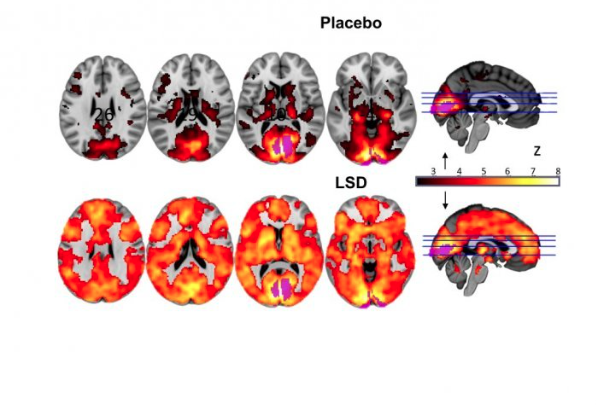
And it appears that LSD—-in a con­trolled lab­o­ra­to­ry set­ting at least—“can be seen as revers­ing the more restrict­ed think­ing we devel­op from infan­cy to adult­hood.” So reports The Guardian in regard to exper­i­ments recent­ly con­duct­ed by neu­rophar­ma­col­o­gist David Nutt, for­mer “drugs advi­sor” for the British gov­ern­ment. Nutt gave vol­un­teer sub­jects an injec­tion of LSD, then cap­tured the first images ever record­ed of the brain on acid. You can see dra­mat­ic ani­ma­tions of those scans in the video at the top of the post, com­par­ing the brains of test sub­jects on the drug and those on place­bo, and see some sta­t­ic images above. The study, says Nutt, “is to neu­ro­science what the Hig­gs boson was to par­ti­cle physics.” In an inter­view with Nature, he describes LSD research as a “way to study the bio­log­i­cal phe­nom­e­non that is con­scious­ness.”

What the sub­jects expe­ri­enced won’t nec­es­sar­i­ly sur­prise any­one who has been on one of those leg­endary, mind-alter­ing trips: researchers found, writes The Guardian, that “under the drug, regions [of the brain] once seg­re­gat­ed spoke to one anoth­er,” pro­duc­ing hal­lu­ci­na­tions, “feel­ings of one­ness with the world,” and “a loss of per­son­al iden­ti­ty called ‘ego dis­so­lu­tion.’” How­ev­er, pri­or to this study, Nutt says, “we didn’t know how these pro­found effects were pro­duced.” There has been pre­cious lit­tle data, because “sci­en­tists were either scared or couldn’t be both­ered to over­come the enor­mous hur­dles to get this done.”

Work­ing with the Beck­ley Foun­da­tion, which stud­ies psy­choac­tive drugs and pro­motes pol­i­cy reform, Nutt and his col­league Robert Carhart-Har­ris crowd­fund­ed their study; in the video above, you can hear them both describe the goals and ratio­nale of their research. What they even­tu­al­ly found, The Guardian reports, was that “under the influ­ence, brain net­works that deal with vision, atten­tion, move­ment and hear­ing became far more con­nect­ed, lead­ing to what looked like a ‘more uni­fied brain.’”

But at the same time, oth­er net­works broke down. Scans revealed a loss of con­nec­tions between part of the brain called the parahip­pocam­pus and anoth­er region known as the ret­ro­s­ple­nial cor­tex.

Nutt and his col­leagues have more spe­cif­ic exper­i­ments planned, he tells Nature, “to look at how LSD can influ­ence cre­ativ­i­ty, and how the LSD state mim­ics the dream state.” And just as the drug was test­ed decades ago as a ther­a­py for addic­tions and psy­chi­atric dis­or­ders, Nutt hopes he can con­duct sim­i­lar tri­als. But his research has an even larg­er scope: As Aman­da Feild­ing, direc­tor of the Beck­ley Foun­da­tion, puts it, “We are final­ly unveil­ing the brain mech­a­nisms under­ly­ing the poten­tial of LSD, not only to heal, but also to deep­en our under­stand­ing of con­scious­ness itself.” We look for­ward to Nut­t’s fur­ther research find­ings. Per­haps some­day, LSD will be avail­able with a pre­scrip­tion. Until then, it’s prob­a­bly wise not to try these exper­i­ments at home.

Relat­ed Con­tent:

Woman Takes LSD in 1956: “I’ve Nev­er Seen Such Infi­nite Beau­ty in All My Life,” “I Wish I Could Talk in Tech­ni­col­or”

Artist Draws Nine Por­traits on LSD Dur­ing 1950s Research Exper­i­ment

Ken Kesey Talks About the Mean­ing of the Acid Tests in a Clas­sic Inter­view

R. Crumb Describes How He Dropped LSD in the 60s & Instant­ly Dis­cov­ered His Artis­tic Style

Josh Jones is a writer and musi­cian based in Durham, NC. Fol­low him at @jdmagness

Carl Sagan Presents His “Baloney Detection Kit”: 8 Tools for Skeptical Thinking

Sagan_835

Pho­to by NASA via Wiki­me­dia Com­mons

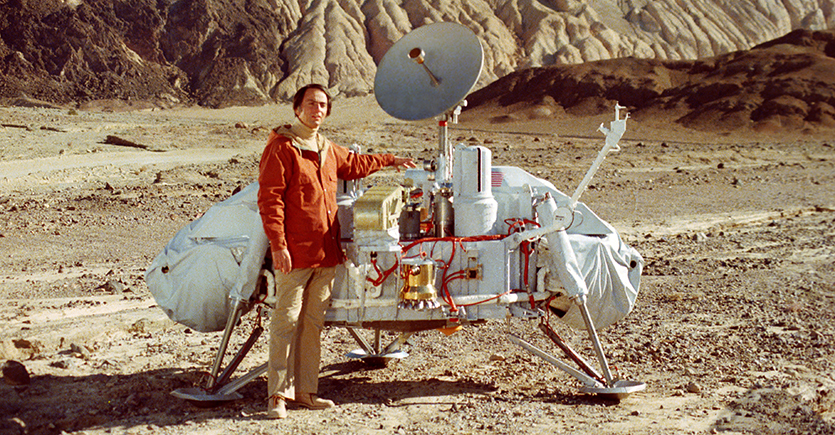
It is some­times said that sci­ence and phi­los­o­phy have grown so far apart that they no longer rec­og­nize each oth­er. Per­haps they no longer need each oth­er. And yet some of the most thought­ful sci­en­tists of modernity—those who most ded­i­cat­ed their lives not only to dis­cov­er­ing nature’s mys­ter­ies, but to com­mu­ni­cat­ing those dis­cov­er­ies with the rest of us—have been ful­ly steeped in a philo­soph­i­cal tra­di­tion. This espe­cial­ly goes for Carl Sagan, per­haps the great­est sci­ence com­mu­ni­ca­tor of the past cen­tu­ry or so.

Sagan wrote a num­ber of pop­u­lar books for lay­folk in which he indulged not only his ten­den­cies as a “hope­less roman­tic,” writes Maria Popo­va, but also as a “bril­liant philoso­pher.” He did not fear to ven­ture into the realms of spir­i­tu­al desire, and did not mock those who did like­wise; and yet Sagan also did not hes­i­tate to defend rea­son against “society’s most shame­less untruths and out­ra­geous pro­pa­gan­da.” These under­tak­ings best come togeth­er in Sagan’s The Demon-Haunt­ed World, a book in which he very patient­ly explains how and why to think sci­en­tif­i­cal­ly, against the very human com­pul­sion to do any­thing but.

In one chap­ter of his book, “The Fine Art of Baloney Detec­tion,” Sagan laid out his method, propos­ing what he called “A Baloney Detec­tion Kit,” a set of intel­lec­tu­al tools that sci­en­tists use to sep­a­rate wish­ful think­ing from gen­uine prob­a­bil­i­ty. Sagan presents the con­tents of his kit as “tools for skep­ti­cal think­ing,” which he defines as “the means to con­struct, and to under­stand, a rea­soned argu­ment and—especially important—to rec­og­nize a fal­la­cious or fraud­u­lent argu­ment.” You can see his list of all eight tools, slight­ly abridged, below. These are all in Sagan’s words:

  • Wher­ev­er pos­si­ble there must be inde­pen­dent con­fir­ma­tion of the “facts.”
  • Encour­age sub­stan­tive debate on the evi­dence by knowl­edge­able pro­po­nents of all points of view.
  • Argu­ments from author­i­ty car­ry lit­tle weight — “author­i­ties” have made mis­takes in the past. They will do so again in the future. Per­haps a bet­ter way to say it is that in sci­ence there are no author­i­ties; at most, there are experts.
  • Spin more than one hypoth­e­sis. If there’s some­thing to be explained, think of all the dif­fer­ent ways in which it could be explained. Then think of tests by which you might sys­tem­at­i­cal­ly dis­prove each of the alter­na­tives.
  • Try not to get over­ly attached to a hypoth­e­sis just because it’s yours. It’s only a way sta­tion in the pur­suit of knowl­edge. Ask your­self why you like the idea. Com­pare it fair­ly with the alter­na­tives. See if you can find rea­sons for reject­ing it. If you don’t, oth­ers will.
  • If what­ev­er it is you’re explain­ing has some mea­sure, some numer­i­cal quan­ti­ty attached to it, you’ll be much bet­ter able to dis­crim­i­nate among com­pet­ing hypothe­ses. What is vague and qual­i­ta­tive is open to many expla­na­tions.
  • If there’s a chain of argu­ment, every link in the chain must work (includ­ing the premise) — not just most of them.
  • Occam’s Razor. This con­ve­nient rule-of-thumb urges us when faced with two hypothe­ses that explain the data equal­ly well to choose the sim­pler. Always ask whether the hypoth­e­sis can be, at least in prin­ci­ple, fal­si­fied…. You must be able to check asser­tions out. Invet­er­ate skep­tics must be giv­en the chance to fol­low your rea­son­ing, to dupli­cate your exper­i­ments and see if they get the same result.

See the unabridged list at Brain Pick­ings, or read Sagan’s full chap­ter, ide­al­ly by get­ting a copy of The Demon-Haunt­ed World. As Popo­va notes, Sagan not only gives us suc­cinct instruc­tions for crit­i­cal think­ing, but he also makes a thor­ough list, with def­i­n­i­tions, of the ways rea­son fails us through “the most com­mon and per­ilous fal­lac­i­es of log­ic and rhetoric.” Sagan’s chap­ter on “Baloney Detec­tion” is, like the rest of the book, a high­ly lit­er­ary, per­son­al, engage­ment with the most press­ing sci­en­tif­ic con­sid­er­a­tions in our every­day life. And it is also an infor­mal yet rig­or­ous restate­ment of Aristotle’s clas­si­cal log­ic and rhetoric and Fran­cis Bacon’s nat­ur­al phi­los­o­phy.

Relat­ed Con­tent:

The Wis­dom of Carl Sagan Ani­mat­ed

Richard Feyn­man Cre­ates a Sim­ple Method for Telling Sci­ence From Pseu­do­science (1966)

Noam Chom­sky Calls Post­mod­ern Cri­tiques of Sci­ence Over-Inflat­ed “Poly­syl­lab­ic Tru­isms”

Josh Jones is a writer and musi­cian based in Durham, NC. Fol­low him at @jdmagness

NASA Releases 3 Million Thermal Images of Our Planet Earth

andes-mountains-as-seen-from-aster-data

Since 1999, NASA has used ASTER (Japan’s Advanced Space­borne Ther­mal Emis­sion and Reflec­tion Radiome­ter) to gath­er images of the Earth­’s sur­face, pro­vid­ing a way to “map and mon­i­tor the chang­ing sur­face of our plan­et.” They’ve mapped 99% of the plan­et’s sur­face over the years, gen­er­at­ing near­ly three mil­lion images, show­ing all kinds of things — “from mas­sive scars across the Okla­homa land­scape from an EF‑5 tor­na­do and the dev­as­tat­ing after­math of flood­ing in Pak­istan, to vol­canic erup­tions in Ice­land and wild­fires in Cal­i­for­nia.”

lena-river-as-seen-from-aster-data

And now, NASA is let­ting the pub­lic down­load and use those images at no cost. (Read the NASA announce­ment here.) You can access most of the images through a NASA data­base, and a small­er sub­set via an ASTER web­site.

To be com­plete­ly hon­est, you’ll need some patience and tech­ni­cal chops to fig­ure out how to down­load these images. The method was­n’t obvi­ous to me. If any­one has some clar­i­ty on that, please let us know in the com­ments, and we’ll update the post to include your insights.

Up top, see an aer­i­al shot of The Andes Moun­tains in Chile/Bolivia. Fur­ther down a shot of the Lena Riv­er in Rus­sia.

If you would like to sign up for Open Culture’s free email newslet­ter, please find it here. It’s a great way to see our new posts, all bun­dled in one email, each day.

If you would like to sup­port the mis­sion of Open Cul­ture, con­sid­er mak­ing a dona­tion to our site. It’s hard to rely 100% on ads, and your con­tri­bu­tions will help us con­tin­ue pro­vid­ing the best free cul­tur­al and edu­ca­tion­al mate­ri­als to learn­ers every­where. You can con­tribute through Pay­Pal, Patre­on, and Ven­mo (@openculture). Thanks!

via ABC h/t Illy­Bo­cean

Relat­ed Con­tent:

NASA Puts Online a Big Col­lec­tion of Space Sounds, and They’re Free to Down­load and Use

Free NASA eBook The­o­rizes How We Will Com­mu­ni­cate with Aliens

NASA Archive Col­lects Great Time-Lapse Videos of our Plan­et

Ray Brad­bury Reads Mov­ing Poem on the Eve of NASA’s 1971 Mars Mis­sion

Great Cities at Night: Views from the Inter­na­tion­al Space Sta­tion

NASA Presents “The Earth as Art” in a Free eBook and Free iPad App

Download the Sublime Anatomy Drawings of Leonardo da Vinci: Available Online, or in a Great iPad App

912597.tif

I’ve always found anatom­i­cal draw­ing fas­ci­nat­ing. At its best, it occu­pies an aes­thet­ic space some­where between mys­ti­cal fine art and cut­ting-edge sci­en­tif­ic observation—a space carved out dur­ing the Ital­ian Renais­sance, when the bound­aries between artis­tic train­ing and sci­en­tif­ic inquiry were per­me­able and often nonex­is­tent.

Famous­ly, the peri­od intro­duced ren­der­ings of the human fig­ure so anatom­i­cal­ly accu­rate that “until about 1500–1510,” writes the Met­ro­pol­i­tan Muse­um of Art, the artists’ “inves­ti­ga­tions sur­passed much of the knowl­edge of anato­my that was taught at the uni­ver­si­ties.”

Recto: Studies of a cranium. Verso: Notes on the nerves and move

Artists like the great Michelan­ge­lo Buon­nar­roti and Leonar­do da Vinci—as well as less­er-known fig­ures like Anto­nio Pol­laiuo­lo and Bac­cio Bandinelli—undertook “detailed anatom­i­cal dis­sec­tions at var­i­ous points in their long careers,” pro­duc­ing hun­dreds of sketch­es and stud­ies along­side and in prepa­ra­tion for the mus­cu­lar paint­ings and sculp­ture for which they’re best known.

Recto: The muscles of the back and arm. Verso: Studies of the in

Most Renais­sance artists “became anatomists by neces­si­ty,” the Met points out, “as they attempt­ed to refine a more life­like, sculp­tur­al por­tray­al of the human fig­ure.” Leonardo’s stud­ies in anato­my, how­ev­er, held a sci­en­tif­ic inter­est all their own, akin to his inves­ti­ga­tions into the physics of flight, weapon and bat­tle­ment design, archi­tec­ture, and oth­er pur­suits.

912375.tif

Many of Leonardo’s anatom­i­cal draw­ings con­tain detailed notes on his obser­va­tions, as you can see in the study of a heav­i­ly-mus­cled tor­so and of a human cra­ni­um, fur­ther up. He wrote these notes using his pro­pri­etary right-to-left “mir­ror-writ­ing” tech­nique, which he reserved for his pri­vate note­books. “Only when he was writ­ing some­thing intend­ed for oth­er peo­ple,” Boston’s Muse­um of Sci­ence informs us, “did he write in the nor­mal direc­tion.”

Recto: Studies of the foetus in the womb. Verso: Notes on reprod

Now we can see sev­er­al dozen of Leonardo’s anatom­i­cal draw­ings of human and ani­mal fig­ures (such as the bear foot above) all in one place, thanks to Buck­ing­ham Palace’s Roy­al Col­lec­tion Trust—who have dig­i­tized their siz­able col­lec­tion. Leonar­do not only stud­ied anatom­i­cal struc­ture, but also per­formed dis­sec­tions in order to under­stand human phys­i­ol­o­gy; he approached the work­ings of the human body as though it were an organ­ic machine, as con­fi­dent in the ratio­nal order­ing of its parts as he was of its priv­i­leged place in the nat­ur­al world. (See just above Leonardo’s well-known draw­ings of a fetus in the womb, with copi­ous notes on human repro­duc­tion on both sides.)

Da Vinci iPad App

In addi­tion to the many intrigu­ing sketch­es, stud­ies, and detailed illus­tra­tions in the Roy­al Col­lec­tion Trust’s online archive, iPad own­ers can also search and view the col­lec­tion on their devices with the free Leonar­do da Vin­ci Anato­my app (screen­shot above). “For the first time,” writes the descrip­tion, “it is pos­si­ble for any­one with an iPad to own and explore this remark­able tes­ta­ment to Leonardo’s sci­en­tif­ic and artis­tic genius…. All 268 pages from Leonardo’s note­books are pre­sent­ed here at the high­est res­o­lu­tion, opti­mized for the pin-sharp reti­na dis­play of the iPad.” The app includes incred­i­bly help­ful fea­tures like Eng­lish trans­la­tions of the notes, as well as essays and inter­views with experts dis­cussing the sig­nif­i­cance of Leonardo’s dis­cov­er­ies.

The head of Judas in the Last Supper

Whether you own an iPad or not, you can ben­e­fit immense­ly from this col­lec­tion. The online ver­sion allows view­ers to down­load high-res­o­lu­tion images like the “Head of Judas” sketch in red chalk above (c. 1495). Once on the page, click the down­load arrow to the bot­tom right of the draw­ing and you’ll be tak­en to a larg­er ver­sion of the image. You can zoom in to exam­ine details, like the very fine lines and sub­tle shad­ing that mark each of Leonardo’s illus­tra­tions, from the most util­i­tar­i­an to the most artis­ti­cal­ly-ren­dered, as the spe­cial cre­ations of an extra­or­di­nary artist with a gift­ed sci­en­tif­ic mind.

Da Vinci Judas Detail

Relat­ed Con­tent:

Orig­i­nal Por­trait of the Mona Lisa Found Beneath the Paint Lay­ers of da Vinci’s Mas­ter­piece

Leonar­do da Vinci’s Hand­writ­ten Resume (1482)

Leonar­do Da Vinci’s To Do List (cir­ca 1490) Is Much Cool­er Than Yours

Josh Jones is a writer and musi­cian based in Durham, NC. Fol­low him at @jdmagness

Florence Nightingale Saved Lives by Creating Revolutionary Visualizations of Statistics (1855)

I’ve long count­ed myself as a fan of Edward Tufte, the pre­em­i­nent liv­ing expert on the visu­al dis­play of quan­ti­ta­tive infor­ma­tion. I like to think this puts me in the com­pa­ny of Flo­rence Nightin­gale, founder of mod­ern nurs­ing as well as a pro­lif­ic writer and still today a house­hold name. Hav­ing lived in the Vic­to­ri­an era, she of course nev­er got to enjoy the work of Tufte him­self, though her own zeal for data and sta­tis­tics, in a time that val­ued such things less than ours, made her, in some sense, a Tufte of her day: the first female mem­ber of the Roy­al Sta­tis­ti­cal Soci­ety and an hon­orary mem­ber of the Amer­i­can Sta­tis­ti­cal Asso­ci­a­tion. The video above, an out­take from Hans Rosling’s The Joy of Stats, offers a brief intro­duc­tion to the sta­tis­ti­cal side of Nightin­gale’s career, and the impor­tant role data visu­al­iza­tion played in her mis­sion to save lives.

“When Flo­rence Nightin­gale arrived at a British hos­pi­tal in Turkey dur­ing the Crimean War, she found a night­mare of mis­ery and chaos,” writes Sci­ence News’ Julie Rehmey­er. “By the time Nightin­gale left Turkey after the war end­ed in July 1856, the hos­pi­tals were well-run and effi­cient, with mor­tal­i­ty rates no greater than civil­ian hos­pi­tals in Eng­land.”

But feel­ing great regret over all the lives lost there to pre­ventable dis­ease, she went on to save even more of them by bring­ing num­bers into play. She specif­i­cal­ly com­piled “vast tables of sta­tis­tics about how many peo­ple had died, where and why. Many of her find­ings shocked her. For exam­ple, she dis­cov­ered that in peace­time, sol­diers in Eng­land died at twice the rate of civil­ians — even though they were young men in their primes.”

1024px-Nightingale-mortality

Nightin­gale’s most influ­en­tial pre­sen­ta­tion of her data, which she called a “cox­comb,” appears just above. This Is Sta­tis­tics describes “Dia­gram of the Caus­es of Mor­tal­i­ty in the Army in the East” as “sim­i­lar to a pie chart, but more intri­cate. In a pie chart the size of the ‘slices’ rep­re­sent a pro­por­tion of data, while in a cox­comb the length, which the slice extends radi­al­ly from the cen­ter-point, rep­re­sents the first lay­er of data.” Her famous chart “was divid­ed even­ly into 12 slices rep­re­sent­ing months of the year, with the shad­ed area of each month’s slice pro­por­tion­al to the death rate that month. Her col­or-cod­ed shad­ing indi­cat­ed the cause of death in each area of the dia­gram.” She stat­ed the goal of her visu­al­iza­tion clear­ly: “to affect thro’ the Eyes what we fail to con­vey to the pub­lic through their word-proof ears.”

We all try to do the very same thing when we present infor­ma­tion today, though few of us—even armed with a degree of num­ber-crunch­ing and graph­ic design pow­ers that would have seemed mag­i­cal to Nightin­gale and her contemporaries—achieve the kind of results she did. She gal­va­nized sys­temic change in hos­pi­tal design and oper­a­tion as well as prompt­ed a rev­o­lu­tion in san­i­ta­tion which increased Britain’s aver­age nation­al life expectan­cy by 20 years—something to bear in mind when we start to get big ideas about how our Pow­er­point slide shows will change the world.

If you would like to sign up for Open Culture’s free email newslet­ter, please find it here. It’s a great way to see our new posts, all bun­dled in one email, each day.

If you would like to sup­port the mis­sion of Open Cul­ture, con­sid­er mak­ing a dona­tion to our site. It’s hard to rely 100% on ads, and your con­tri­bu­tions will help us con­tin­ue pro­vid­ing the best free cul­tur­al and edu­ca­tion­al mate­ri­als to learn­ers every­where. You can con­tribute through Pay­Pal, Patre­on, and Ven­mo (@openculture). Thanks!

via @pourmecoffee

Relat­ed Con­tent:

The Art of Data Visu­al­iza­tion: How to Tell Com­plex Sto­ries Through Smart Design

Slick Data Visu­al­iza­tion Reveals Sci­en­tif­ic Col­lab­o­ra­tions Tak­ing Place Around the Globe

In Under Three Min­utes, Hans Rosling Visu­al­izes the Incred­i­ble Progress of the “Devel­op­ing World”

Watch a Cool and Creepy Visu­al­iza­tion of U.S. Births & Deaths in Real-Time

Sta­tis­tics Explained Through Mod­ern Dance: A New Way of Teach­ing a Tough Sub­ject

Based in Seoul, Col­in Mar­shall writes and broad­casts on cities, lan­guage, and style. He’s at work on a book about Los Ange­les, A Los Ange­les Primer, the video series The City in Cin­e­ma, the crowd­fund­ed jour­nal­ism project Where Is the City of the Future?, and the Los Ange­les Review of Books’ Korea Blog. Fol­low him on Twit­ter at @colinmarshall or on Face­book.

Free M.I.T. Course Teaches You How to Become Bill Nye & Make Great Science Videos for YouTube

If I had my way, more aca­d­e­mics would care about teach­ing beyond the walls of the acad­e­my. They’d teach to a broad­er pub­lic and con­sid­er ways to make their mate­r­i­al more engag­ing, if not inspir­ing, to new audi­ences. You can find exam­ples out there of teach­ers who are doing it right. The heirs of Carl Sagan–Bri­an Greene, Neil deGrasse Tyson, and Bill Nye–know how to light a spark and make their mate­r­i­al come alive on TV and YouTube. How they do this is not exact­ly a mys­tery, not after M.I.T. post­ed online a course called “Becom­ing the Next Bill Nye: Writ­ing and Host­ing the Edu­ca­tion­al Show.

Taught at M.I.T. over a month-long peri­od, Becom­ing the Next Bill Nye was designed to teach stu­dents video pro­duc­tion tech­niques that would help them “to engag­ing­ly con­vey [their] pas­sions for sci­ence, tech­nol­o­gy, engi­neer­ing, and/or math.” By the end of the course, they’d know how to script and host a 5‑minute YouTube show.

You can now find the syl­labus and all mate­ri­als for that course online at MIT’s Open­Course­Ware site. This includes all video lec­tures and class assign­ments. Or, if you pre­fer, you can get the video lec­tures straight from this YouTube playlist.

Becom­ing the Next Bill Nye will be added to our meta col­lec­tion, 1,700 Free Online Cours­es from Top Uni­ver­si­ties.

Relat­ed Con­tent:

Carl Sagan Presents Six Lec­tures on Earth, Mars & Our Solar Sys­tem … For Kids (1977)

Watch the High­ly-Antic­i­pat­ed Evolution/Creationism Debate: Bill Nye the Sci­ence Guy v. Cre­ation­ist Ken Ham

Neil deGrasse Tyson Lists 8 (Free) Books Every Intel­li­gent Per­son Should Read

by | Permalink | Make a Comment ( 8 ) |

« Go BackMore in this category... »
Quantcast