If you head over to the Huy Fong Foods web site, they’ll tell you that Sriracha, their ever-popular Thai condiment, is “made from sun ripen chilies which are ground into a smooth paste along with garlic and packaged in a convenient squeeze bottle.” It’s the chilies that make your mouth burn when you pour that Sriracha onto your eggs or burgers, or in your soup and, yes, cocktails. But if you want to get scientific about things, it’s actually the capsaicin and dihydrocapsaicin — the two compounds inside the hot peppers — that set your mouth aflame. All of this, and more, gets covered by this new video, The Chemistry of Sriracha, from the American Chemical Society. It’s part of their video series, Reactions, that examines the chemistry of everyday things.
Between the mid-nineteenth and early twentieth centuries, men and women alike made scrapbooks as a way of processing the news. As Ellen Gruber Garvey shows in her book Writing with Scissors: American Scrapbooks from the Civil War to the Harlem Renaissance, the practice crossed lines of class and gender. Everyone from Mark Twain and Susan B. Anthony to Joseph W.H. Cathcart, an African-American janitor living in Philadelphia who amassed more than a hundred volumes in the second half of the nineteenth century, selected and pasted articles and ephemera into big books, often annotating and commenting upon the material.
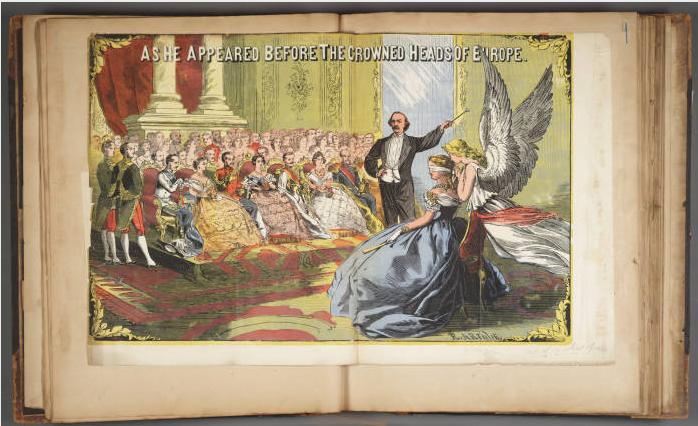
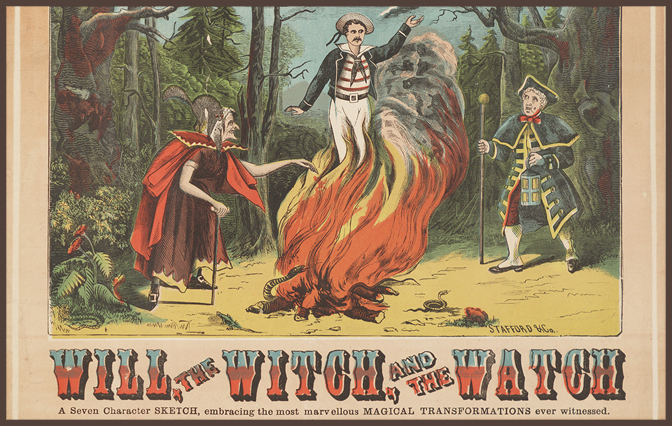
The Harry Ransom Center at the University of Texas at Austin has recently digitized ten scrapbooks belonging to Harry Houdini. The books are divided into three groups: volumes compiled by other magicians about their careers; scrapbooks holding Houdini’s clippings on the practice of magic in general; and books that chart Houdini’s investigations of fakes, frauds, and conjurers. (Later in his life, Houdini became fascinated with the post-WWI fad for spiritualism—mediums, séances, and psychics—and took on a role as skeptical debunker of spiritualist performers.)
The scrapbooks are fun to look at on a number of levels. First, it’s cool to think of Houdini and his magician colleagues selecting the articles and images and arranging them on the page. Second, the material that’s covered is colorful and bizarre (an article in one of Houdini’s books: “Trial By Combat Between A Dog And His Master’s Murderer”). Third, Houdini and his cohort clipped and saved from a wide array of periodicals; while it’s sometimes annoying that many of the articles have lost their metadata (date and place of publication), it’s still interesting to see the range of types of coverage that prevailed at the time.
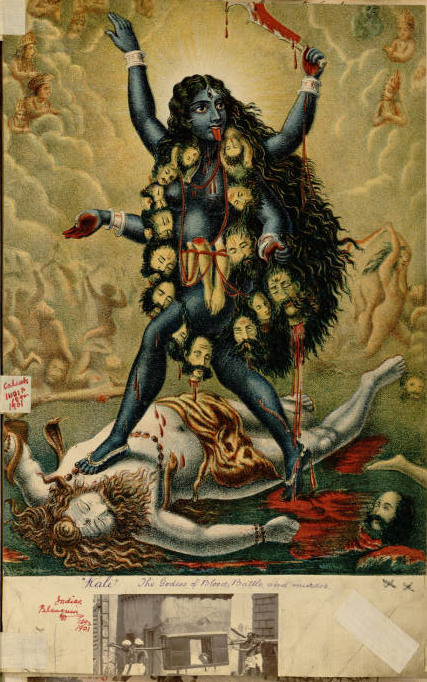
The book put together by the performer S.S. Baldwin, mailed to Houdini by Baldwin’s daughter Shadow after Baldwin’s death, is particularly interesting. The Ransom Center’s introduction to the collection notes that some items in the Baldwin scrapbook “depict graphic subject matter”—a sure enticement for this researcher, at least, to make sure to check it out. The warning may refer to this amazing image of the Indian goddess Kali draped in severed heads and limbs, or an engraving of an execution by elephant. Alongside many articles about his performances, fliers, and other ephemera, Baldwin also collected images of people living in the places where he performed—an approach that adds yet another level of interest to his scrapbook.
Rebecca Onion is a writer and academic living in Philadelphia. She runs Slate.com’s history blog, The Vault. Follow her on Twitter: @rebeccaonion.
If you have 22 minutes, why not sit back and watch the classic piece of television above, Alfred Hitchcock Presents’ 1961 episode “Bang, You’re Dead”? You may well have seen it before, quite possibly long ago, but you’ll find it holds up, keeping you in suspense today as artfully as it or any other Hitchcock production always has. But why do we get so emotionally engaged in this simple tale of a five-year-old boy who comes into possession of a real handgun that he mistakenly thinks a harmless toy? Here with detailed answers rooted in the mechanics of the human brain, we have “Neurocinematics: the Neuroscience of Film,” a presentation by Uri Hasson of Princeton University’s Neuroscience Institute.
Hitchcock conceived of his style of cinema, says Hasson in the clip below, as “doing experiments on the audience,” and of a movie itself as “a sequence of stages designed to have an effect on your brain.”
The brains of everyone sitting in the theater thus, theoretically, all become “resonant and aligned with the movie in a very powerful and complicated way.” Various types of research bear this out, from measuring the skin temperature, perspiration, and blood flow in the brains of subjects as they watch Hitchcock’s young protagonist add more “toy” bullets to the “toy” gun he brandishes around the neighborhood. In the clip below, you can see exactly how the scientists’ functional MRI machines scan the viewers as they watch the episode, whose plot, as one of the research team puts it, “keeps the participants a bit on their feet,” flat on their back though they need to remain for the duration. You’ll find the watching experience much more comfortable in your chair. It won’t produce much data for the scientific community, but at least now you’ll know what goes on in your brain as it happens, something about which even Hitchcock himself could only guess. To conduct your own experiments, see our collection of 21 Free Hitchcock Movies Online.
Today marks the 215th anniversary of pioneering English naturalist Charles Darwin’s birth — a suitable occasion, perhaps, to finally take that copy of On the Origin of Species down off your shelf (or from our collection of Free eBooks). Though Darwin’s best-known publication lays out his observations on evolution by natural selection, culminating in the theory often and unhesitatingly called the most important in biology, the book remains more respected than read. Still, any scientist’s legacy, even that of one with a name so widely known as Darwin’s, comes down to what they understood, and thus what they allowed the rest of humanity to understand, not what they wrote. But you still have to wonder: what did Darwin read?
We have two answers to that question, the first of which comes in the form of Darwin’s 1838 “to read” list above, which runs as follows:
Humboldt’s New Spain — — —
Richardson’s Fauna Borealis
Entomological Magazine — — —
Study Buffon on varieties of Domesticated animals — — — —
Find out from Statistical Soc. where M. Quetelet has published his laws about sexes relative to the age of marriage
Brown at end of Flinders & at the end of Congo voyage (Hooker 923) read
Decandolle Philosophie Decandolle on Geograph distrib: —
F. Cuvier on Instinct read
L. Jenyns paper in Annals of Nat. Hist. Prichard; a 3d vol Lawrence read
Bory St Vincent Vol 3. p 164 on unfixed form: Dr Royle on Himmalaya types (read) Smellie Philosophy of Zoology. Fleming Ditto Falconers remark on the influence of climate
You can find more on the list’s context at Endpaper, whose post describes it as found in Darwin’s “series of notebooks for theoretical work now known as Notebooks A, B, C, D, etc.,” specifically Notebook C. (The famous Tree of Life sketch, they add, came from Notebook B.) For our second answer to the question of which books equipped the celebrated biologist’s mind, we offer the books that furnished his home: back in 2011, we featured Cambridge University’s Biodiversity Heritage Library and its project to digitize and make freely available 330 texts from Darwin’s library. All come annotated by the man himself, so you can learn not just from what he read, but about how he read. The next, much more difficult step, then presents itself: to think how he thought.
Bill Nye the Science Guy has spent his career trying to “help foster a scientifically literate society, to help people everywhere understand and appreciate the science that makes our world work.” A graduate of Cornell and a student of Carl Sagan, Nye has produced educational programs for the Science Channel, the Discovery Channel, and PBS. Most recently, he has gone on record saying that teaching creationism in America’s classrooms is bad for kids, and bad for America’s future. “If the United States produces a generation of science students who don’t believe in science, that’s troublesome” because the United States needs science to remain competitive,” he warns in this video.
For some weeks, the internet has been abuzz about a debate between Bill Nye and Ken Ham, the president of Answers in Genesis (AiG) and the Creation Museum. The debate — something Richard Dawkins called a pointless endeavor — took place last night in Petersburg, Kentucky. It’s now online, all two and a half hours of it. We’re you’re done watching the spectacle, you can view some other high-profile religion-science debates that we’ve featured in the past.
If you would like to support the mission of Open Culture, consider making a donation to our site. It’s hard to rely 100% on ads, and your contributions will help us continue providing the best free cultural and educational materials to learners everywhere. You can contribute through PayPal, Patreon, and Venmo (@openculture). Thanks!
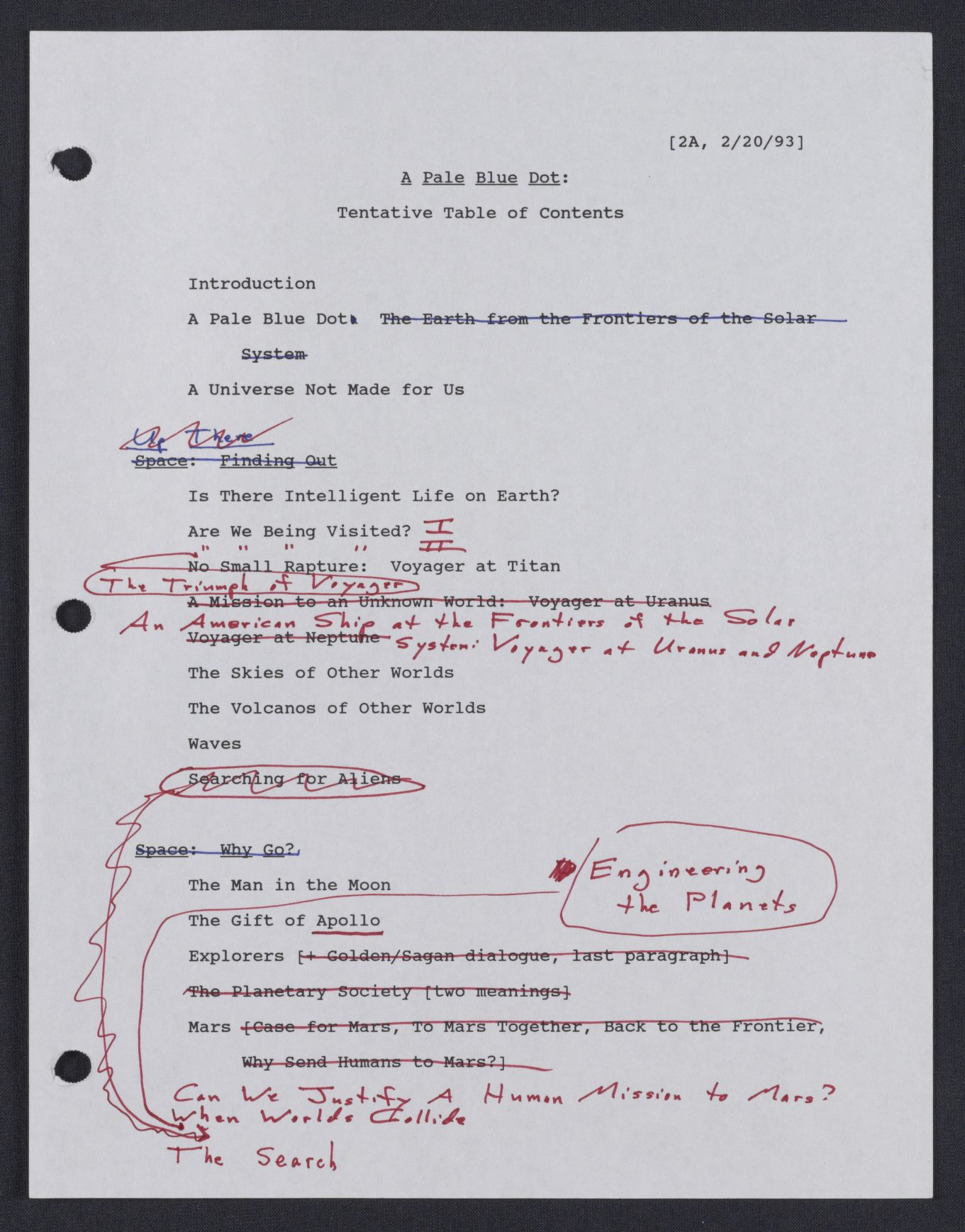
Historians, biographers, and die-hard Sagan devotees will inevitably want to visit the Library of Congress in person to view the full archive, which contains over 1700 boxes of material. The lay reader curious about Sagan’s life, however, won’t need to make the trek to the U.S. capital to sample the archive’s contents. That’s because the Library of Congress has uploaded a portion of the collection online, including sundry fascinating biographical pieces. Above, you can view a digitized set of the Sagan family’s silent home movies, where young Carl shows off his boyhood boxing prowess, rides horseback, and plays piano (preciously, we presume).
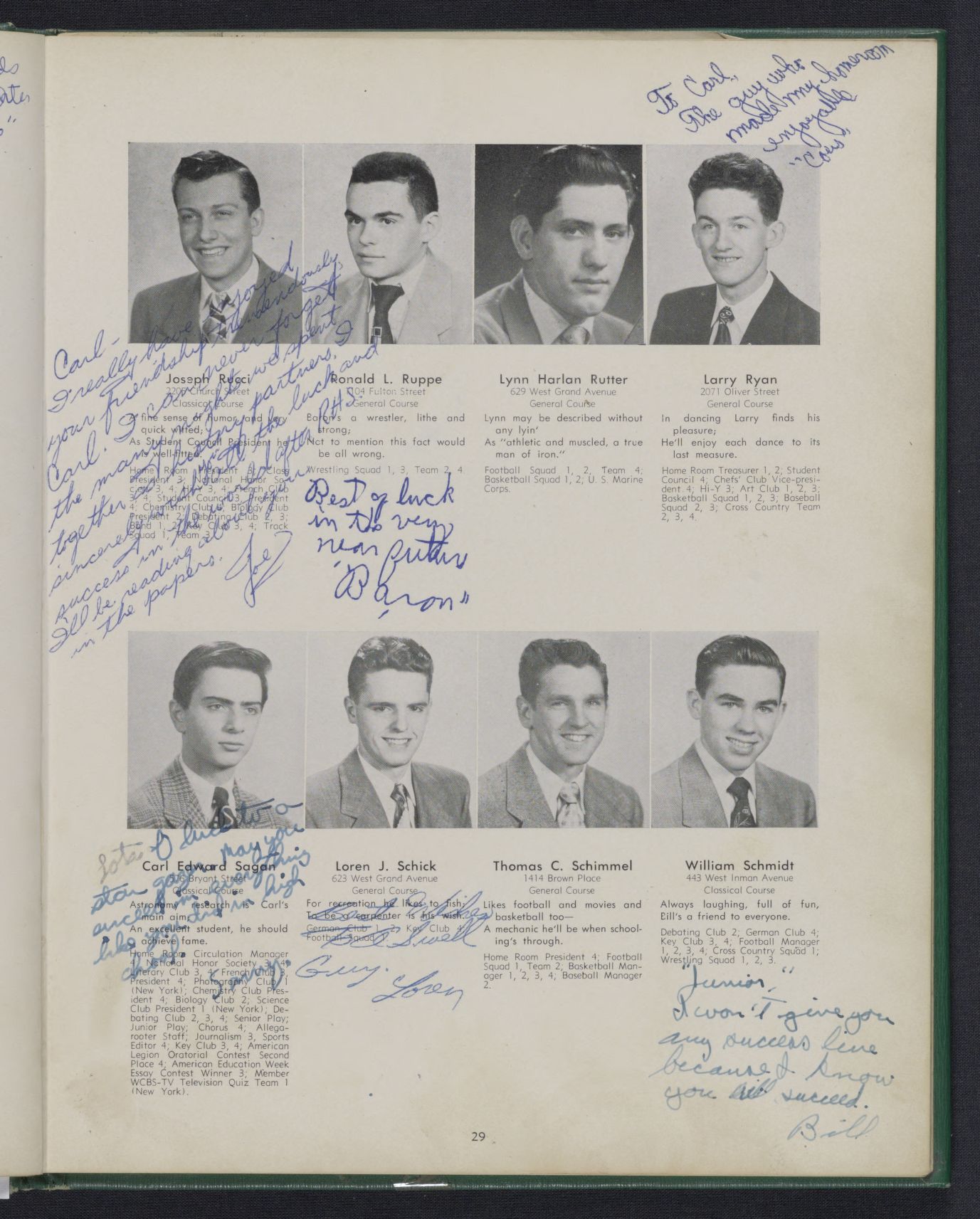
It was during high school that Sagan began to fill out intellectually. His senior yearbook is testimony to both his interest in science and the humanities: not only was Sagan president of both the science and chemistry clubs, he also led the French club, served as an editor on his school’s newspaper, debated, took part in theatre productions, and was a member of the photography club.
Indeed, Sagan displayed his uncanny ability to merge science with the humanities in Wawawhack, his high school newspaper, writing a piece entitled “Space, Time, and The Poet.” He begins by saying, “it is an exhilarating experience to read poetry and observe its correlation with modern science. Profound scientific thought is hardly a rarity among the poets.” Throughout the piece, Sagan goes on to draw from verses by Alfred Lord Tennyson, T. S. Eliot, John Milton, and Robert Frost.
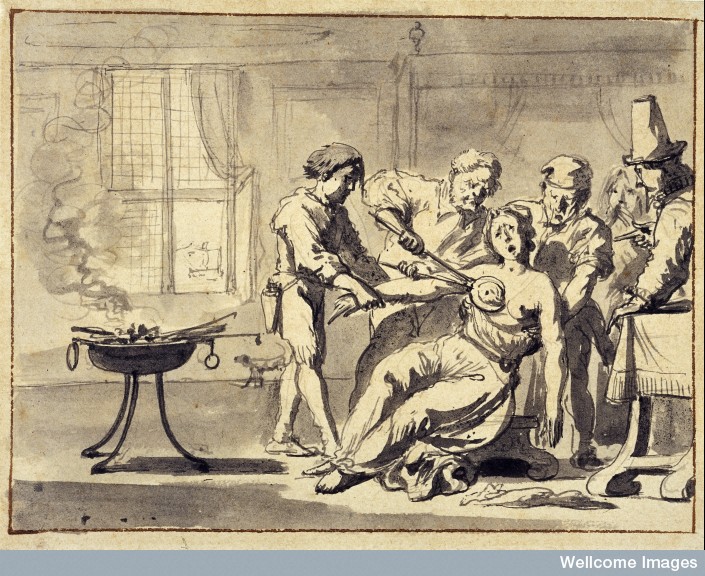
The Wellcome Library, in London, specializes in the history of medicine. While the institution has long offered a good digital collection for browsing, the library announced yesterday that they are making more than 100,000 historical images free to download under a Creative Commons CC-BY license. (Users can distribute, edit, or remix at will; the license even allows for commercial use, with attribution.)
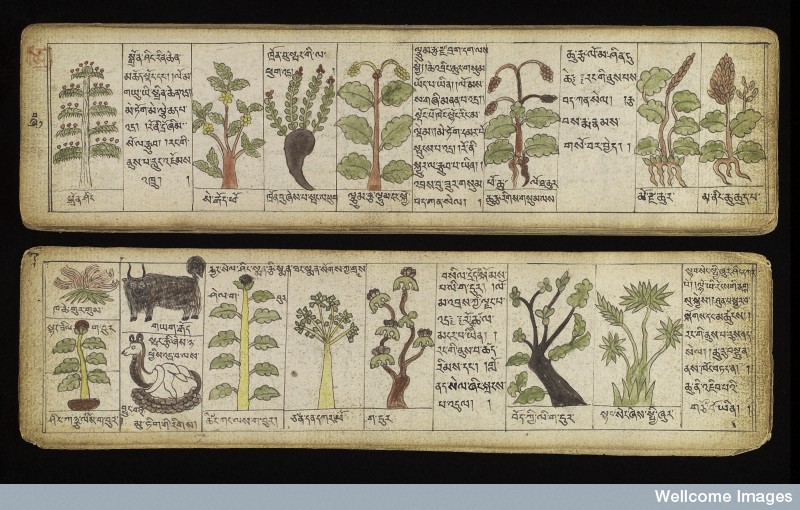
The Wellcome’s holdings represent the institution’s long-term interest in collecting art related to medicine, the body, public health, and medical science. The drop-down menu labeled “Technique” in the standard search box returns a staggering array of types of visual culture, from aquatint to carving to fresco to X‑ray. The library reports that the earliest image available is from 400 AD: a fragment of papyrus from an illustrated herbal manuscript, featuring a faded color drawing of a plant.
Browsers interested in dipping a toe into the stream of images may try out the galleries listed on the Images homepage. The “Olympic Sports” gallery offers an 1829 engraving of the famous conjoined twins Chang and Eng holding badminton rackets, and an 1870 illustration of recommended ring exercises for lady gymnasts. The “Witchcraft” collection (under the “Favourites” tab) contains many illustrations from historical books covering witchcraft in Europe and the American colonies, along with a more surprising 19th-century Malayan black-magic charm.
Rights-managed images are marked as such in the thumbnail results that appear after a search. Although the archive requires you to enter a CAPTCHA to access the free images, you can select several thumbnails on the search-results page in order to bulk-download files for many images at the same time. The sample files I requested arrived on my desktop at 300 dpi.
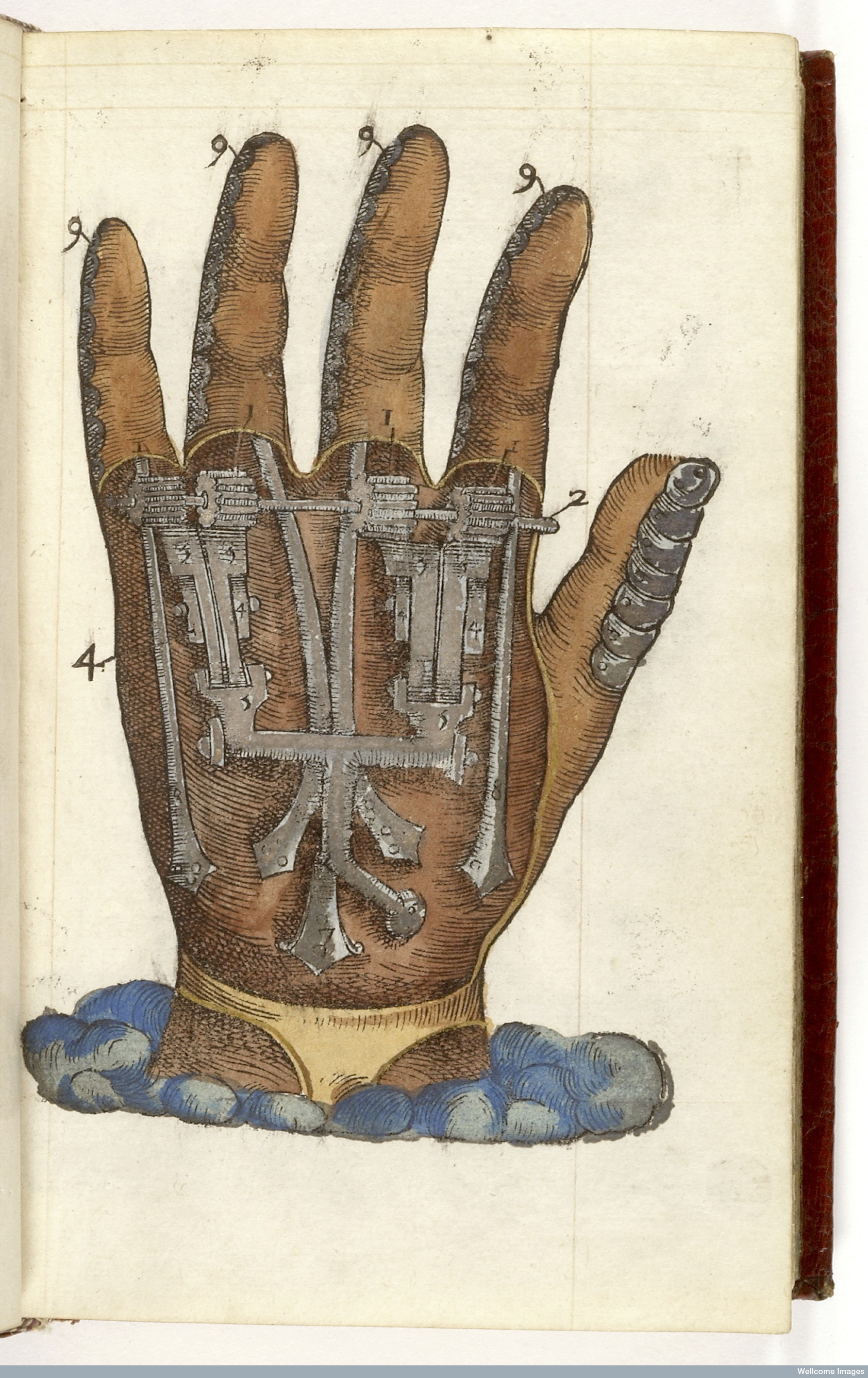
The image above is an illustration of a mechanical hand from 1564.
Rebecca Onion is a writer and academic living in Philadelphia. She runs Slate.com’s history blog, The Vault. Follow her on Twitter: @rebeccaonion.
It’s a new year, which means it’s time for the Edge.org to pose its annual question to some of the world’s finest minds. The 2014 edition asks the question, “What Scientific Idea is Ready for Retirement?” The question came prefaced by this thought:
Science advances by discovering new things and developing new ideas. Few truly new ideas are developed without abandoning old ones first. As theoretical physicist Max Planck (1858–1947) noted, “A new scientific truth does not triumph by convincing its opponents and making them see the light, but rather because its opponents eventually die, and a new generation grows up that is familiar with it.” In other words, science advances by a series of funerals. Why wait that long?
We're hoping to rely on loyal readers, rather than erratic ads. Please click the Donate button and support Open Culture. You can use Paypal, Venmo, Patreon, even Crypto! We thank you!
Open Culture scours the web for the best educational media. We find the free courses and audio books you need, the language lessons & educational videos you want, and plenty of enlightenment in between.