Franz Kafka’s Unfinished Novel, The Castle, Gets Turned Into an Album by Czech Musicians: Watch a Music Video for the Song, “The Grave”

If, for some unfath­omable rea­son, author Franz Kaf­ka should emerge from his grave to direct a music video, the result would most cer­tain­ly resem­ble the one for “The Grave” by The Kaf­ka Band, above.

The air of futil­i­ty and social fore­bod­ing…

The chilly bro­ken land­scape, ren­dered in black and white…

Biki­nis and bling…

(Kid­ding! Over­coats and hag­gard expres­sions.)

“The Grave” was direct­ed by ani­ma­tor, Noro Hold­er, but the lyrics are cred­it­ed to Kaf­ka, drawn direct­ly from his unfin­ished nov­el, The Cas­tle. As the band’s name might imply, this is no fick­le flir­ta­tion with the author’s sen­si­bil­i­ties.

“The Grave” is actu­al­ly part of a ten-song album inspired by The Cas­tle. (Stream it on Spo­ti­fy below.) As band­mate, author Jaroslav Rudiš, observed:

Kaf­ka is often deemed as a dark author, yet we strive to chal­lenge this cliché. The nov­el pos­sess­es plen­ty of black and absurd humour, which we reflect­ed in some of our com­po­si­tions.

The album led to a col­lab­o­ra­tion with Germany’s The­ater Bre­men on a the­atri­cal adap­ta­tion that fea­tured the music played live.

The moody wood­cut-inspired visu­als seen above come from a graph­ic nov­el adap­ta­tion of The Cas­tle illus­trat­ed by Rudiš’ band­mate, Jaromír 99, in col­lab­o­ra­tion with David Zane Mairowitz, an Amer­i­can play­wright who pre­vi­ous­ly tack­led Kafka’s The Tri­al

At the point where anoth­er group might decide to take a detour into sun­nier territory—a pop romp through the oeu­vre of Milan Kun­dera perhaps—the Kaf­ka Band is dou­bling down on anoth­er copro­duc­tion with The­ater Bre­men, an adap­ta­tion of Kafka’s nov­el Ameri­ka (or The Man Who Dis­ap­peared), slat­ed to open this fall.

The Grave

I’m dream­ing of

Being with you

With­out inter­rup­tion

On earth

There is no space

For our love

Not in the vil­lage

Not any­where else.

Deep in the earth / around us only death / the liv­ing won’t find us.

I’m imag­in­ing a grave

Deep and tight

We hold each oth­er

My face next to yours

Yours next to mine

Nobody will ever see us

On earth there is no space

For our love.

Deep in the earth / around us only death / the liv­ing won’t find us.

Watch the video for “Arrival,” anoth­er track inspired by The Cas­tle, with draw­ings by Jaromír 99 here.

Relat­ed Con­tent:

Meta­mor­fo­s­is: Franz Kafka’s Best-Known Short Sto­ry Gets Adapt­ed Into a Tim Bur­tonesque Span­ish Short Film

Four Franz Kaf­ka Ani­ma­tions: Enjoy Cre­ative Ani­mat­ed Shorts from Poland, Japan, Rus­sia & Cana­da

Franz Kafka’s Exis­ten­tial Para­ble “Before the Law” Gets Brought to Life in a Strik­ing, Mod­ern Ani­ma­tion

Ayun Hal­l­i­day is an author, illus­tra­tor, and the­ater mak­er, soon to be appear­ing in a clown adap­ta­tion of Faust, inspired by the cur­rent admin­is­tra­tion and open­ing in New York City this June. Fol­low her @AyunHalliday.

Every Poem in Baudelaire’s “Les Fleurs du Mal” Set to Music, Illustrated and Performed Live

Charles Baude­laire must be a joy­ful corpse indeed. His work has suc­ceed­ed as few oth­ers’ have, to be so pas­sion­ate­ly alive 150 years after his death.

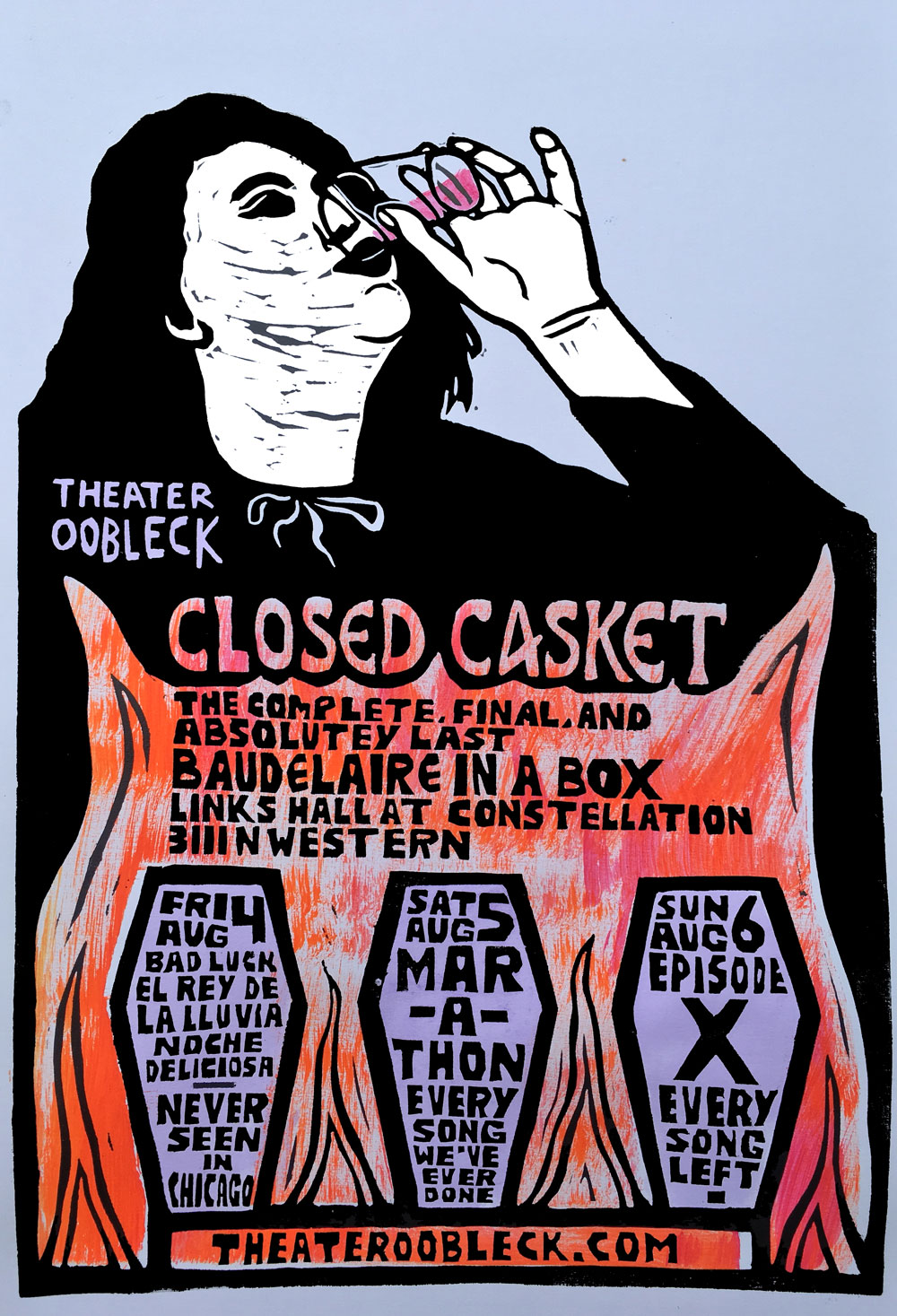
The­ater Oobleck, a Chica­go artis­tic col­lec­tive ded­i­cat­ed to cre­at­ing orig­i­nal afford­able the­atri­cal works, has spent the last eleven years assem­bling Baude­laire in a Box, a can­tas­to­ria cycle based on Les Fleurs du Mal.

Why?

Because he would be so irri­tat­ed. Because he might be charmed

There is a touch of vaude­ville and cabaret in Baude­laire. He tend­ed to go big or go home. Home to his moth­er.

Because he invent­ed the term “moder­ni­ty” and even now no one quite knows what it means. Because he wrote a poet­ry of immer­sion per­fect­ly suit­ed to the tran­sience and Now-ness of song and of the Ever-Mov­ing scroll. Because we nev­er had a prop­er goth phase. Sex and death! For all these rea­sons, and for the true one that remains just out of our grasp.

Each new install­ment fea­tures a line-up of musi­cians per­form­ing live adap­ta­tions of anoth­er 10 to 15 poems, as artist Dave Buchen’s paint­ed illus­tra­tions slow­ly spool past on hand-turned “crankies.”

The result­ing “pro­to music videos” are volup­tuous­ly inti­mate affairs, with plen­ty of time to reflect upon the orig­i­nal texts’ explic­it sex­u­al­i­ty, the gor­geous urban decay that so pre­oc­cu­pied one of Roman­tic poetry’s naugh­ti­est boys.

The instru­ments and musi­cal palate—klezmer, alt-coun­try, antifolk—are befit­ting of the inter­preters’ well honed down­town sen­si­bil­i­ties. The lyrics are drunk on their dark imagery.

The entire project makes for the sort of extrav­a­gant­ly eccen­tric night out that might lead a young poet to lean close to his blind date, mid-show, to whis­per “Wouldn’t it be agree­able to take a bath with me?” No word on whether that line worked for the poéte mau­dit, who report­ed­ly issued such an invi­ta­tion to a friend mid-sen­tence.

This August, The­ater Oobleck intends to observe the sesqui­cen­ten­ni­al of Baudelaire’s death in grand style with a marathon per­for­mance of the com­plete Baude­laire in a Box, a three-day effort involv­ing 50 artists and over 130 poems.

Allow a few past exam­ples to set the mood:

The Offend­ed Moon From Episode 9 of Baude­laire In A Box, “Unquenched.” Com­posed and trans­lat­ed by David Costan­za. Emmy Bean: vocal, Ron­nie Kuller: accor­dion, T‑Roy Mar­tin trom­bone, David E. Smith: clar­inet, Chris Schoen: vocal, Joey Spilberg: bass.

The Denial of St. Peter Com­posed, trans­lat­ed and per­formed by Sad Brad Smith, with Emmy Bean (hand per­cus­sion), Ron­nie Kuller (accor­dion), T‑Roy Mar­tin (trom­bone), Chris Schoen (man­dolin), and Joey Spilberg (bass).

The Drag Music com­posed by Ron­nie Kuller, to Mick­le Maher’s trans­la­tion of “L’Aver­tis­seur” by Charles Baude­laire. Per­formed by: Emmy Bean (vocal, per­cus­sion), Angela James (vocal), Ron­nie Kuller (piano, per­cus­sion), T‑Roy Mar­tin (vocal), Chris Schoen (vocal), David E. Smith (sax­o­phone), and Joey Spilberg (bass).

The Hard(-est) Work­ing Skele­ton Music by Amy War­ren, Per­formed by Nora O’Con­nor, with Addie Horan, Amalea Tshilds, Kate Dou­glas, James Beck­er and Ted Day.

The Pos­sessed Writ­ten and per­formed by Jeff Dorchen.

You can lis­ten to and pur­chase songs from Episodes 7 (the King of Rain) and 9 (Unquenched) on Band­camp.

Some of the par­tic­i­pat­ing musi­cians have released their own albums fea­tur­ing tracks of their Baude­laire-based tunes.

The­ater Oobleck is rais­ing funds for the upcom­ing Closed Cas­ket: The Com­plete, Final, and Absolute­ly Last Baude­laire in a Box on Kick­starter, with music and prints and orig­i­nals of Buchen’s work among the pre­mi­ums at var­i­ous pledge lev­els.

All images used with per­mis­sion of artist Dave Buchen.

Relat­ed Con­tent:

Great 19 Cen­tu­ry Poems Read in French: Baude­laire, Rim­baud, Ver­laine & More

Baude­laire, Balzac, Dumas, Delacroix & Hugo Get a Lit­tle Baked at Their Hash Club (1844–1849)

Hen­ri Matisse Illus­trates Baudelaire’s Cen­sored Poet­ry Col­lec­tion, Les Fleurs du Mal

Ayun Hal­l­i­day is an author, illus­tra­tor, the­ater mak­er and the Chief Pri­ma­tol­o­gist of the East Vil­lage Inky zine.  She will be appear­ing in a live excerpt from CB Goodman’s How to Kill an Ele­phant this Fri­day at Dixon Place in New York City. Fol­low her @AyunHalliday.

Sad 7‑Foot Tall Clown Sings “Pinball Wizard” in the Style of Johnny Cash, and Other Hits by Roy Orbison, Cheap Trick & More

Read­ers, are you over­come with the Fri­day Feels?

Pud­dles Pity Par­ty, a 6’8” Pier­rot from Atlanta, empathizes.

The ‘Sad Clown with the Gold­en Voice’ has tak­en to releas­ing emo­tion­al­ly-freight­ed cov­ers on select Fri­days.

There’s some­thing about a giant sad singing clown that com­forts us, let’s us know it’s ok to feel, to show our feel­ings. It’s a sad and beau­ti­ful world, and we’re all in it togeth­er, even when we’re total­ly alone.

So quoth Big Mike Geier, the founder and front­man of the band King­sized, and the man behind Pud­dles’ white make­up and rick­rack-trimmed clown suit.

What­ev­er he’s tapped into, it’s real. The New York Times’ Jason Zin­no­man, in a slight­ly skeeved-out think piece on clowns last year, wrote:

What makes him tran­scend the trope is his vul­ner­a­bil­i­ty. When you first see him charg­ing down the aisle, he’s an intim­i­dat­ing fig­ure, but his body is actu­al­ly not aggres­sive. It slumps, pas­sive­ly. When he asks for a hug, it looks as if he real­ly needs it. He makes you feel bad for find­ing him off-putting, and then he belts out a love­ly song.

Fri­day, March 3 found Pud­dles accom­pa­ny­ing him­self on a red gui­tar for “It’s a Heartache,” a hit for Bon­nie Tyler and lat­er, Rod Stew­art. They both have their strengths, but Pud­dles is unique­ly suit­ed to tap into the heartache of ‘stand­ing in the cold rain, feel­ing like a clown.”

A pre­vi­ous Fri­day Feel, Roy Orbison’s “Cry­ing,” was a fan request. (Yes, he’s still tak­ing them.)

The video for “She’s Gone Again”—previously cov­ered by Don Ho—touch­es on Pud­dles’  obses­sion with actor Kevin Cost­ner.

Feb­ru­ary 10’s Fri­day Feel brought new lis­ten­ers to a younger artist, Brett Den­nen. Pud­dles praised his “Heav­en” as “beau­ti­ful and thought­ful song,” con­fess­ing that he “bare­ly held it togeth­er on this one.” Also see Cheap Trick­’s “I Want You to Want Me” down below.

The piece de resis­tance, where­in the lyrics of Pin­ball Wiz­ard are sung to the tune of Fol­som Prison Blues, is at the top of the page. It’s no great sur­prise that that one’s gone viral. Pud­dles is trans­par­ent, how­ev­er, giv­ing cred­it to the late Gre­go­ry Dean Smal­l­ey, an Atlanta-based song­writer who died of AIDS in the late 90s:

 Back in 1994 or so, I saw (him) per­form this mashup at the Star Com­mu­ni­ty Bar. I was floored. Greg was a force of super­nat­ur­al pro­por­tions and he is missed. Many peo­ple have done it pri­or to me doing it. I guess it was always meant to be.

You can lis­ten to more of Pud­dles Pity Par­ty on Spo­ti­fy, or sup­port the artist with a pur­chase on Google Play or iTunes. Sub­scribe to his youtube chan­nel to stay abreast of future Fri­day Feels, or request a song.

via Boing­Bo­ing

Relat­ed Con­tent:

Watch Stephen Sond­heim Teach a Kid How to Sing “Send In the Clowns”

John­ny Cash & Joe Strum­mer Sing Bob Marley’s “Redemp­tion Song” (2002)       

Hear John­ny Cash Deliv­er Lincoln’s Get­tys­burg Address

Ayun Hal­l­i­day is an author, illus­tra­tor, the­ater mak­er and Chief Pri­ma­tol­o­gist of the East Vil­lage Inky zine.  Fol­low her @AyunHalliday.

Sinclair Lewis’ Chilling Play, It Can’t Happen Here: A Read-Through by the Berkeley Repertory Theatre

As a num­ber of com­men­ta­tors have not­ed, it has already hap­pened here in the past—that is, the fer­vid nativism, immi­gra­tion bans, and mass depor­ta­tions, the nation­al­ist, fanat­i­cal­ly reli­gious, anti-demo­c­ra­t­ic mil­i­tan­cy… many of the char­ac­ter­is­tics of Amer­i­can author­i­tar­i­an­ism, in oth­er words. In the polit­i­cal cli­mate we face today, these strains have come togeth­er in some very overt ways, under the lead­er­ship of a pur­port­ed­ly charis­mat­ic leader who swayed mil­lions of fol­low­ers with the promise of renewed “great­ness.”

The ques­tions that now arise are those once asked by It Can’t Hap­pen Here, the 1935 nov­el by Sin­clair Lewis that imag­ined the elec­tion of a charis­mat­ic leader who promis­es great­ness, “then quick­ly becomes a dic­ta­tor,” writes the Amer­i­can Library Association’s Pub­lic Pro­grams Office, “enact­ing mar­tial law and throw­ing dis­senters into labor camps.” The nov­el res­onat­ed with a pub­lic increas­ing­ly con­cerned about ris­ing dic­ta­tor­ships in Europe, as well as the grow­ing pow­er of the pres­i­den­cy at home. “Short­ly after it was pub­lished,” the ALA notes, “the nov­el was recre­at­ed as a play and opened in 21 cities nation­wide on Octo­ber 27, 1936.”

You can see some still images of an orig­i­nal It Can’t Hap­pen Here pro­duc­tion in the video above about the Fed­er­al The­ater Project. Last year—almost eighty years after the play’s debut and just days before the pres­i­den­tial election—several dozen the­aters, uni­ver­si­ties, and libraries across the coun­try held read­ings of Lewis’ the­atri­cal adap­ta­tion. See one such read­ing at the top of the post, per­formed on Octo­ber 24 at the Yolo Coun­ty Library in North­ern Cal­i­for­nia by the Berke­ley Reper­to­ry The­atre, who at the time also staged a full, two part pro­duc­tion of It Can’t Hap­pen Here that was both “thrilling and grim,” as Alexan­der Nazaryan writes at The New York­er. (See a trail­er below)

The Berke­ley Rep’s pro­duc­tion sig­nif­i­cant­ly rewrote Lewis’ adap­ta­tion, which they decid­ed was “ter­ri­ble.” But the nov­el itself is not quite a lit­er­ary mas­ter­piece. “Lewis was nev­er much of an artist,” Nanaryan notes, “but what he lacked in style he made up for with social obser­va­tion.” While his skills as a close observ­er of Amer­i­can polit­i­cal ten­den­cies may still be unmatched, the pre­science of his nov­el in imag­in­ing the sit­u­a­tion we find our­selves in today may have as much to do with Lewis’ abil­i­ties as with the recur­rence of cer­tain depress­ing themes in Amer­i­can polit­i­cal life. As Alex Wag­n­er writes at The Atlantic, the mass depor­ta­tions and raids on immi­grant pop­u­la­tions that have now increased in cities nation­wide saw a chill­ing prece­dent in the 1920s and 30s, “a time of eco­nom­ic strug­gle, racial resent­ment and increas­ing xeno­pho­bia.”

Then, Her­bert Hoover, “promised jobs for Americans—and made good on that promise by slash­ing immi­gra­tion by near­ly 90 per­cent” and deport­ing as many as “1.8 mil­lion men, women and chil­dren” of Mex­i­can descent or with “a Mex­i­can-sound­ing name.” As many as six­ty per­cent of those deport­ed were U.S. cit­i­zens. We’ve seen in recent months numer­ous com­par­isons of our cur­rent polit­i­cal sit­u­a­tion to Nazi Ger­many and Fas­cist Italy. While these may be war­rant­ed in many respects, they may also be super­flu­ous. To under­stand the ori­gins of racist author­i­tar­i­an­ism in Amer­i­ca, we need only look back to sev­er­al moments in our own his­to­ry, those that Lewis close­ly observed and sat­i­rized in a nov­el that once again shows us an image of the coun­try that many peo­ple have cho­sen not to see.

This read­ing will be added to our list, 1,000 Free Audio Books: Down­load Great Books for Free.

Relat­ed Con­tent:

How to Rec­og­nize a Dystopia: Watch an Ani­mat­ed Intro­duc­tion to Dystopi­an Fic­tion

George Orwell’s Final Warn­ing: Don’t Let This Night­mare Sit­u­a­tion Hap­pen. It Depends on You!

Philoso­pher Richard Rorty Chill­ing­ly Pre­dicts the Results of the 2016 Elec­tion … Back in 1998

1,000 Free Audio Books: Down­load Great Books for Free

Josh Jones is a writer and musi­cian based in Durham, NC. Fol­low him at @jdmagness

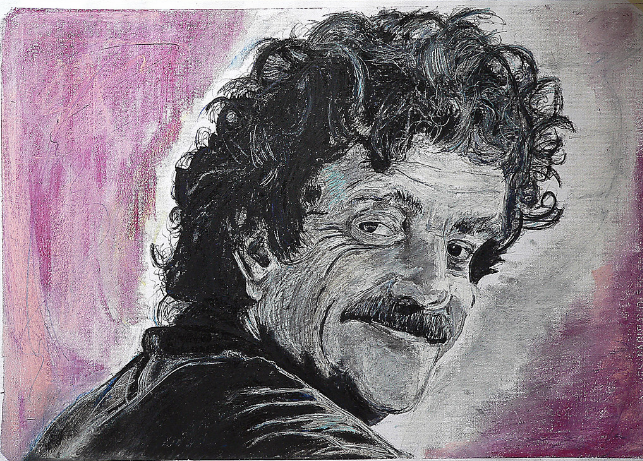
Kurt Vonnegut Gives a Sermon on the Foolishness of Nuclear Arms: It’s Timely Again (Cathedral of St. John the Divine, 1982)

Image by Daniele Prati, via Flickr Com­mons

Many writ­ers recoil at the notion of dis­cussing where they get their ideas, but Kurt Von­negut spoke on the sub­ject will­ing­ly. “I get my ideas from dreams,” he announced ear­ly in one speech, adding, “the wildest dream I have had so far is about The New York­er mag­a­zine.” In this dream, “the mag­a­zine has pub­lished a three-part essay by Jonathan Schell which proves that life on Earth is about to end. I am sup­posed to go to the largest Goth­ic cathe­dral in the world, where all the peo­ple are wait­ing, and say some­thing won­der­ful — right before a hydro­gen bomb is dropped on the Empire State Build­ing.”

It stands to rea­son that a such a vivid, fright­en­ing, and some­how fun­ny sce­nario would unfold in the uncon­scious mind of a man who wrote such vivid, fright­en­ing, and some­how fun­ny nov­els. (Von­negut’s own inter­pre­ta­tion? “I con­sid­er myself an impor­tant writer, and I think The New York­er should be ashamed that it has nev­er pub­lished me.”) As it hap­pens, he did deliv­er these words in a cathe­dral, name­ly New York City’s Cathe­dral of St. John the Divine in the spring of 1982.

This was just months after Schel­l’s three-part essay “The Fate of the Earth” (all three parts of it still avail­able online) real­ly ran in The New York­er, and Cold War fears about the prob­a­bil­i­ty of a hydro­gen bomb real­ly drop­ping on Amer­i­ca ran high. Von­negut’s speech was one of a series of Sun­day ser­mons the Cathe­dral had lined up on the sub­ject of nuclear dis­ar­ma­ment, assem­bling the rest of the ros­ter from mil­i­tary, sci­en­tif­ic, and activist fields. The author of Cat’s Cra­dleSlaugh­ter­house-Five, and Break­fast of Cham­pi­onsfresh off a trip to the Gala­pa­gos Islands with the St. John the Divine’s Bish­op Paul Moore—presumably rep­re­sent­ed the realm of let­ters.

“At the time, NYPR Archives Direc­tor Andy Lanset cov­ered the Von­negut ser­mon as a vol­un­teer for the WNYC News Depart­ment,” wrote WNY­C’s William Rod­ney Allen in 2014 on the redis­cov­ery and post­ing of Lanset’s record­ing. (The same pub­lic radio sta­tion, inci­den­tal­ly, would fif­teen or so years lat­er com­mis­sion Von­negut for a series of reports from the after­life.) Now we can not only read but also hear Von­negut, in his own voice, try­ing to imag­ine aloud a series of “fates worse than death.” Why? Not sim­ply to indulge his famous sense of gal­lows humor, but in order to put the nuclear threat, and the anx­i­eties it gen­er­at­ed, into the prop­er con­text.

“I am sure you are sick and tired of hear­ing how all liv­ing things siz­zle and pop inside a radioac­tive fire­ball,” Von­negut says, going on to assure his audi­ence that “sci­en­tists, for all their cre­ativ­i­ty, will nev­er dis­cov­er a method for mak­ing peo­ple dead­er than dead. So if some of you are wor­ried about being hydro­gen-bombed, you are mere­ly fear­ing death. There is noth­ing new in that. If there weren’t any hydro­gen bombs, death would still be after you.”

In any event, despite hav­ing shuf­fled through sev­er­al can­di­dates (“Life with­out petro­le­um?”), Von­negut can come up with no fate believ­ably worse than death besides cru­ci­fix­ion. But giv­en that non-cru­ci­fied human beings near­ly always and every­where pre­fer life to death, per­haps “we might pray to be res­cued from our inven­tive­ness” which gave us the abil­i­ty to destroy all life on Earth. But “the inven­tive­ness which we so regret now may also be giv­ing us, along with the rock­ets and war­heads, the means to achieve what has hith­er­to been an impos­si­bil­i­ty, the uni­ty of mankind.”

Von­negut sees this promise main­ly in tele­vi­sion, whose ter­ri­bly real­is­tic sounds and images ensure that “the peo­ple of every indus­tri­al­ized nation are nau­se­at­ed by war by the time they are ten years old.” A vet­er­an of the Sec­ond World War, he him­self remem­bers a very dif­fer­ent time, back when “it used to be nec­es­sary for a young sol­dier to get into fight­ing before he became dis­il­lu­sioned about war,” back when “it was unusu­al for an Amer­i­can, or a per­son of any nation­al­i­ty, for that mat­ter, to know much about for­eign­ers.”

Even before the 1980s, “thanks to mod­ern com­mu­ni­ca­tions, we have seen sights and heard sounds from vir­tu­al­ly every square mile of the land mass on this plan­et,” and so “know for cer­tain that there are no poten­tial human ene­mies any­where who are any­thing but human beings almost exact­ly like our­selves. They need food. How amaz­ing. They love their chil­dren. How amaz­ing. They obey their lead­ers. How amaz­ing. They think like their neigh­bors. How amaz­ing.”

Mod­ern com­mu­ni­ca­tions have, of course, come aston­ish­ing­ly far in the 35 years since Von­negut’s Sun­day ser­mon, but our fears about nuclear anni­hi­la­tion have had a way of resur­fac­ing. In recent months, the Amer­i­can peo­ple have even heard talk of a rein­vig­o­rat­ed nuclear arms race from their new pres­i­dent, a man whose rise detrac­tors part­ly blame on mod­ern com­mu­ni­ca­tion tech­nol­o­gy — not a lack of it, but an excess.

“The glob­al vil­lage that was once the inter­net has been replaced by dig­i­tal islands of iso­la­tion that are drift­ing fur­ther apart each day,” writes Mostafa M. El-Bermawy in a Wired piece on the threat social-media “fil­ter bub­bles” pose to democ­ra­cy. “We need to remind our­selves that there are humans on the oth­er side of the screen who want to be heard and can think and feel like us while at the same time reach­ing dif­fer­ent con­clu­sions.” Recent devel­op­ments would prob­a­bly dis­ap­point Von­negut (not that they would sur­prise him), but he’d sure­ly get a kick, as he always did, out of the irony of it all.

Relat­ed Con­tent:

Kurt Von­negut: Where Do I Get My Ideas From? My Dis­gust with Civ­i­liza­tion

In 1988, Kurt Von­negut Writes a Let­ter to Peo­ple Liv­ing in 2088, Giv­ing 7 Pieces of Advice

22-Year-Old P.O.W. Kurt Von­negut Writes Home from World War II: “I’ll Be Damned If It Was Worth It”

Hear Kurt Von­negut Vis­it the After­life & Inter­view Dead His­tor­i­cal Fig­ures: Isaac New­ton, Adolf Hitler, Eugene Debs & More (Audio, 1998)

Bene­dict Cum­ber­batch Reads Kurt Vonnegut’s Incensed Let­ter to the High School That Burned Slaugh­ter­house-Five

Based in Seoul, Col­in Mar­shall writes and broad­casts on cities and cul­ture. He’s at work on a book about Los Ange­les, A Los Ange­les Primer, the video series The City in Cin­e­ma, the crowd­fund­ed jour­nal­ism project Where Is the City of the Future?, and the Los Ange­les Review of Books’ Korea Blog. Fol­low him on Twit­ter at @colinmarshall or on Face­book.

The Theater Dictionary: A Free Video Guide to Theatre Lingo

It’s 11 o’clock. Do you know where your show­stop­pers are? Or, more to the point, do you know why a musi­cal-com­e­dy writ­ing team seeks to ori­ent its show­stop­ping num­ber at “eleven o’clock”?

The The­ater Devel­op­ment Fund’s The­atre Dic­tio­nary is an ongo­ing attempt to define and doc­u­ment the­ater terms for both the rab­ble and any bud­ding prac­ti­tion­ers who’ve yet to mas­ter the lin­go.

Each term is accom­pa­nied by a loopy slap­dash skit. Not all of the per­form­ers exhib­it the pedi­gree Veron­i­ca J. Kuehn and Nick Kohn of Avenue Q bring to “Eleven O’Clock Num­ber,” above, but cast­ing admin­is­tra­tors and tick­et booth reps in star­ring roles lend a homey egal­i­tar­i­an­ism, such as when stu­dents from the Yale School of Drama’s Depart­ment of Dra­matur­gy and Dra­mat­ic Crit­i­cism are giv­en free license to explore the ori­gins of “vom.”

(This loosey goosey approach also allows for uncred­it­ed appear­ances by oth­er the­atri­cal tropes—the marathon rehearsals where pop­corn con­sti­tutes lunch and one actor repeat­ed­ly com­plains that his work has been insuf­fi­cient­ly acknowl­edged.)

A “What Does This Word Mean” tab for each term anchors the video silli­ness, pro­vid­ing his­tor­i­cal and anec­do­tal con­text. It’s in keep­ing with the Dictionary’s greater goal of bring­ing the­ater to the peo­ple, let­ting every­one play with the toys.

Some of the def­i­n­i­tions are prac­ti­cal short­hand…

Oth­ers are couched in long­time, pos­si­bly archa­ic the­ater lore…

I’d exer­cise cau­tion with some of this lin­go. Even though many of these terms are born of prac­ti­cal­i­ty, overus­ing them may cause oth­ers to view you as the most obnox­ious of self-declared Triple Threats, the kid in the com­e­dy-tragedy mask sweat­shirt, prone to belt­ing out the entire sound­track of CATS at the slight­est provo­ca­tion. (“Thanks, 5!!!”)

Some of these terms have unex­pect­ed crossover appeal, most recent­ly Ghost Light, above. Know­ing the mean­ing of the term will help you bet­ter appre­ci­ate the pow­er of the Ghost­light Project, a post-elec­tion com­ing togeth­er of the­ater artists and audi­ences in defense and sup­port of vul­ner­a­ble com­mu­ni­ties.

You can browse the The­ater Dic­tio­nary com­plete glos­sary here or watch the videos on TDF’s Youtube chan­nel.

The The­ater Dictionary’s FAQ con­tains infor­ma­tion on how pro­fes­sion­al the­atre com­pa­nies and orga­ni­za­tions and col­lege-lev­el the­atre pro­grams can apply to con­tribute a video.

Relat­ed Con­tent:

100,000+ Won­der­ful Pieces of The­ater Ephemera Dig­i­tized by The New York Pub­lic Library

Young Orson Welles Directs “Voodoo Mac­beth,” the First Shake­speare Pro­duc­tion With An All-Black Cast: Footage from 1936

Take a “Breath” and Watch Samuel Beckett’s One-Minute Play

Ayun Hal­l­i­day is an author, illus­tra­tor, the­ater mak­er and Chief Pri­ma­tol­o­gist of the East Vil­lage Inky zine.  Her play Zam­boni Godot is open­ing in New York City in March 2017. Fol­low her @AyunHalliday.

Tim Robbins’ Improv Classes Transform Prisoners’ Lives & Lower Recidivism Rates

If a 20‑something, Yale-edu­cat­ed New York­er reporter feels ner­vous step­ping in to her first ever improv class, imag­ine the stakes for your aver­age inmate, whose sur­vival depends on a suc­cess­ful­ly mono­lith­ic pro­jec­tion of tough­ness and con­trol.

Con­trol is actu­al­ly some­thing the Actors’ Gang Prison Project seeks to cul­ti­vate in its incar­cer­at­ed par­tic­i­pants. The Actors’ Gang’s Artis­tic Direc­tor, Tim Rob­bins, who found­ed the rad­i­cal­ly exper­i­men­tal ensem­ble fresh out of col­lege, notes a well-doc­u­ment­ed con­nec­tion between an inabil­i­ty to con­trol one’s emo­tions and crim­i­nal activ­i­ty.

Unchecked rage may have put these play­ers behind bars, but explor­ing a wide vari­ety of emo­tions behind the safe­ty of the Actors’ Gang’s mask-like white pan­cake make-up has proven lib­er­at­ing.

The dull prison rou­tine leaves pris­on­ers favor­ably inclined toward any divert­ing activ­i­ty, par­tic­u­lar­ly those that allow for cre­ative expres­sion. Shake­speare has made an impact on this pop­u­la­tion. Why not com­me­dia dell’arte-influenced improv?

It’s a tru­ly ther­a­peu­tic fit, as Actors Gang ensem­ble mem­ber Sabra Williams, the founder of the Prison Project, explains in her TED Talk, below.

Par­tic­i­pants are sub­ject­ed and held to the rig­or­ous phys­i­cal­i­ty and emo­tion­al hon­esty at the core of this group’s aes­thet­ic. Per­son­al con­nec­tion to the vis­i­tors is lim­it­ed to what­ev­er may tran­spire in-the-moment, but with­in the prison pop­u­la­tion, rela­tion­ships blos­som. Both guards and pris­on­ers speak of new­found empa­thy.

The emo­tion­al insights aris­ing from these spon­ta­neous explo­rations teach par­tic­i­pants how to dif­fuse aggres­sive sit­u­a­tions, present a more pos­i­tive face to the world, and inter­act gen­er­ous­ly with oth­ers. In between class­es, par­tic­i­pants write in jour­nals, with a goal of shar­ing aloud.

Gang signs, mimed weapons, and bod­i­ly con­tact are out of bounds. Wild inven­tion often car­ries the day.

Par­tic­i­pants have zero recidi­vism, and a wait­ing list in the hun­dreds attests to the program’s pop­u­lar­i­ty.

You can learn more about the Actors’ Gang ten-year-old Prison Project here.

Relat­ed Con­tent:

B.B. King Plays Live at Sing Sing Prison in One of His Great­est Per­for­mances (1972)

Inmates in New York Prison Defeat Harvard’s Debate Team: A Look Inside the Bard Prison Ini­tia­tive

What Pris­on­ers Ate at Alca­traz in 1946: A Vin­tage Prison Menu

Ayun Hal­l­i­day is an author, illus­tra­tor, the­ater mak­er and Chief Pri­ma­tol­o­gist of the East Vil­lage Inky zine.  Her play Zam­boni Godot is open­ing in New York City in March 2017. Fol­low her @AyunHalliday.

A Whiskey-Fueled Lin-Manuel Miranda Reimagines Hamilton as a Girl on Drunk History

Back in July of 1804, when Vice Pres­i­dent Aaron Burr fired a fatal round into the abdomen of for­mer Sec­re­tary of the Trea­sury Alexan­der Hamil­ton, I won­der which sce­nario would have seemed more implau­si­ble: that these polit­i­cal rivals would one day be res­ur­rect­ed in the form of a black guy and a Nuy­or­i­can, or as two young women in reveal­ing­ly snug breech­es, above.

Time moves on. These days, your aver­age Hamil­ton-obsessed pre-teen may have trou­ble accept­ing that there was a time—Jan­u­ary 2015, to be exact—when most Amer­i­cans could­n’t say what the guy on the ten dol­lar bill was famous for.

I con­fess, until quite recent­ly, I was far more con­fi­dent in Arrest­ed Devel­op­ments fic­tion­al Bluth fam­i­ly’s exploits than any involv­ing Hamil­ton and Burr. This explains, in part, why I’m so drawn to the cast­ing instincts of Derek Waters’, cre­ator of Drunk His­to­ry

The most recent episode fea­tures Alia Shawkat, one of my favorite Arrest­ed Devel­op­ment play­ers as a sar­don­ic, pot­ty mouthed Hamil­ton.

No wor­ries that Drunk His­to­ry, which bills itself as a “liquored-up nar­ra­tion of our nation’s his­to­ry,” is the lat­est in a long line of John­ny-Come-Latelys, eager­ly bel­ly­ing up to the Hamil­ton trough.

Before Shawkat imbued him with her trade­mark edge, Drunk History’s Hamil­ton exud­ed the befud­dled sweet­ness of Shawkat’s besot­ted Arrest­ed Devel­op­ment cousinMichael Cera, who orig­i­nat­ed the part in a video that gave rise to the series, below.

That one’s far slop­pi­er, and not just in terms of pro­duc­tion val­ues. The inau­gur­al nar­ra­tor, Mark Gagliar­di, was ren­dered a good deal more than three sheets to the wind by the bot­tle of scotch he downed on a sag­ging brown velour couch.

Amer­i­ca would not want to see its cur­rent sweet­heart, Hamilton’s play­wright and orig­i­nal lead­ing man, Lin-Manuel Miran­da in such a con­di­tion.

Where­as Gagliar­di seemed dan­ger­ous­ly close to need­ing the buck­et Waters thought­ful­ly posi­tioned near­by, a whiskey-fuelled Miran­da seems mere­ly the tini­est bit buzzed, sit­ting cross legged in his parent’s liv­ing room, flesh­ing out Hamilton’s sto­ry with bits he didn’t man­age to cram into his Pulitzer Prize-win­ning musi­cal, such as a bewigged Tony Hale (aka Buster Bluth) as James Mon­roe.

On the oth­er hand, he does describe the Reynolds Pam­phlet as “Dick 101” (and failed to recall Face­Tim­ing var­i­ous friends post-record­ing) so…

You’ll need a Com­e­dy Cen­tral sub­scrip­tion to view the com­plete episode online, but Shawkat’s ear­li­er Drunk His­to­ry turn as Grover Cleveland’s “It Girl” wife, Frances, is free for all, here.

Relat­ed Con­tent:

“Alexan­der Hamil­ton” Per­formed with Amer­i­can Sign Lan­guage

Alexan­der Hamil­ton: Hip-Hop Hero at the White House Poet­ry Evening

Watch a Wit­ty, Grit­ty, Hard­boiled Retelling of the Famous Aaron Burr-Alexan­der Hamil­ton Duel

Ayun Hal­l­i­day is an author, illus­tra­tor, the­ater mak­er and Chief Pri­ma­tol­o­gist of the East Vil­lage Inky zine.  Her play Zam­boni Godot is open­ing in New York City in March 2017. Fol­low her @AyunHalliday.

« Go BackMore in this category... »
Quantcast