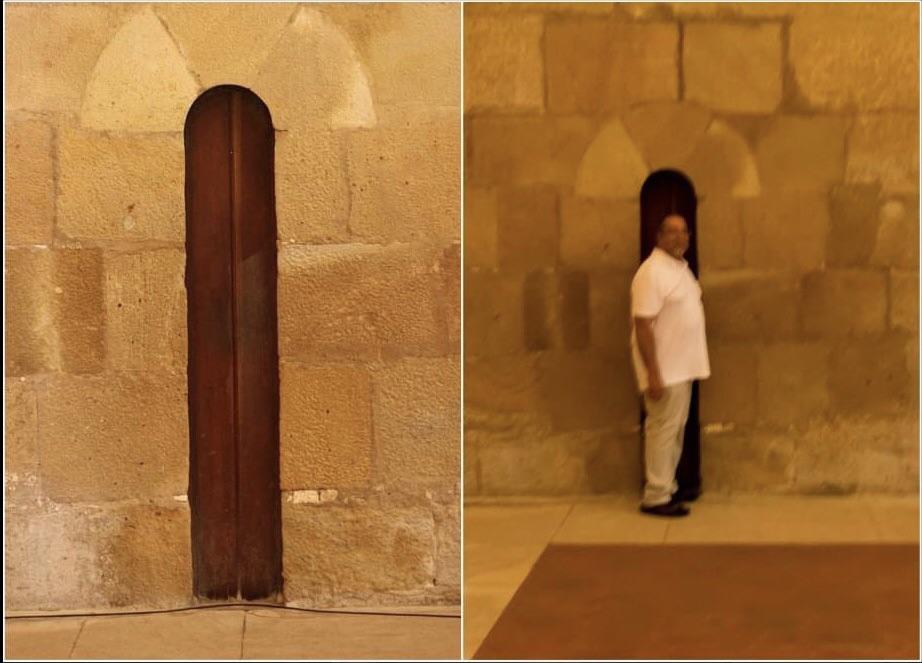
The Anti-Gluttony Door in Portugal’s Alcobaça Monastery Shamed Plump Monks to Start Fasting

Con­sid­er that you eat the sins of the peo­ple

—inscrip­tion carved above the entrance to the Monastery of Alcobaça’s refec­to­ry

Appar­ent­ly, the Monastery of Alcobaça’s res­i­dent monks were eat­ing plen­ty of oth­er things, too.

Even­tu­al­ly their rep­u­ta­tion for exces­sive plump­ness became prob­lem­at­ic.

A hefty physique may have sig­ni­fied pros­per­i­ty and health in 1178 when con­struc­tion began on the UNESCO World Her­itage site, but by the 18th-cen­tu­ry, those extra rolls of flesh were con­sid­ered at odds with the Cis­ter­cian monks’ vows of obe­di­ence, pover­ty and chasti­ty.

Its larders were well stocked, thanks in part to the rich farm­land sur­round­ing the monastery.

18th-cen­tu­ry trav­el­er William Beck­ford described the kitchen in Rec­ol­lec­tions of an Excur­sion to the Monas­ter­ies of Alcobaça and Batal­ha:

On one side, loads of game and veni­son were heaped up; on the oth­er, veg­eta­bles and fruit in end­less vari­ety. Beyond a long line of stoves extend­ed a row of ovens, and close to them hillocks of wheat­en flour whiter than snow, rocks of sug­ar, jars of the purest oil, and pas­try in vast abun­dance, which a numer­ous tribe of lay broth­ers and their atten­dants were rolling out and puff­ing up into a hun­dred dif­fer­ent shapes, singing all the while as blithe­ly as larks in a corn-field.

Lat­er he has the oppor­tu­ni­ty to sam­ple some of the dish­es issu­ing from that kitchen:

The ban­quet itself con­sist­ed of not only the most excel­lent usu­al fare, but rar­i­ties and del­i­ca­cies of past sea­sons and dis­tant coun­tries; exquis­ite sausages, pot­ted lam­preys, strange mess­es from the Brazils, and oth­ers still stranger from Chi­na (edi­ble birds’ nests and sharks’ fins), dressed after the lat­est mode of Macao by a Chi­nese lay broth­er. Con­fec­tionery and fruits were out of the ques­tion here; they await­ed us in an adjoin­ing still more spa­cious and sump­tu­ous apart­ment, to which we retired from the efflu­via of viands and sauces.

Lat­er in his trav­els, he is tak­en to meet a Span­ish princess, who inquires, “How did you leave the fat wad­dling monks of Alcobaça? I hope you did not run races with them.”

Per­haps such tat­tle is what con­vinced the brass that some­thing must be done.

The rem­e­dy took the form of a por­ta pega-gor­do (or “fat catch­er door”), 6′ 6″ high, but only 12.5” wide.

Keep in mind that David Bowie, at his most slen­der, had a 26” waist.

Alleged­ly, each monk was required to pass through it from the refec­to­ry to the kitchen to fetch his own meal. Those who couldn’t squeeze through were out of luck.

Did they have to sit in the refec­to­ry with their faces to the walls, silent­ly eat­ing the sins of the peo­ple (respicite quia pec­ca­ta pop­uli comedi­tis) while their slim­mer brethren filled their bel­lies, also silent­ly, face-to-the-wall, as a read­er read reli­gious texts aloud from a pul­pit?

His­to­ry is a bit unclear on this point, though Beckford’s enthu­si­asm waned when he got to the refec­to­ry:

…a square of sev­en­ty or eighty feet, begloomed by dark-coloured paint­ed win­dows, and dis­graced by tables cov­ered with not the clean­est or least unc­tu­ous linen in the world.

Accord­ing to a Ger­man Wikipedia entry, the monks passed through the por­ta pega-gor­do month­ly, rather than dai­ly, a more man­age­able mor­ti­fi­ca­tion of the flesh for those with healthy appetites.

Image via Wiki­me­dia Com­mons

If you are assem­bling a buck­et list of des­ti­na­tions for when we can trav­el freely again, con­sid­er adding this beau­ti­ful Goth­ic monastery (and the cel­e­brat­ed pas­try shop across the street). Your choice whether or not to suck it in for a pho­to in front of the por­ta pega-gor­do.

Relat­ed Con­tent:

Medieval Monks Com­plained About Con­stant Dis­trac­tions: Learn How They Worked to Over­come Them

Moun­tain Monks: A Vivid Short Doc­u­men­tary on the Monks Who Prac­tice an Ancient, Once-For­bid­den Reli­gion in Japan

How Tibetan Monks Use Med­i­ta­tion to Raise Their Periph­er­al Body Tem­per­a­ture 16–17 Degrees

Ayun Hal­l­i­day is an author, illus­tra­tor, the­ater mak­er and Chief Pri­ma­tol­o­gist of the East Vil­lage Inky zine. She most recent­ly appeared as a French Cana­di­an bear who trav­els to New York City in search of food and mean­ing in Greg Kotis’ short film, L’Ourse.  Fol­low her @AyunHalliday.

Rome’s Colosseum Will Get a New Retractable Floor by 2023 — Just as It Had in Ancient Times

Rome was­n’t built in a day. But one of its most renowned attrac­tions could be returned to its first-cen­tu­ry glo­ry in just two years — or at least, part of one of its most famous attrac­tions could be. In our time, the Colos­se­um has long been a major Roman tourist des­ti­na­tion–one that lacks even a prop­er floor. Vis­i­tors today see right through to its under­ground hypogeum, an impres­sive mechan­i­cal labyrinth used to con­vey glad­i­a­tors into the are­na, as well as a vari­ety of oth­er per­form­ers, will­ing and unwill­ing, human and oth­er­wise. “Eye­wit­ness­es describe how ani­mals appeared sud­den­ly from below, as if by mag­ic, some­times appar­ent­ly launched high into the air,” writes Smith­son­ian’s Tom Mueller.

“The hypogeum allowed the orga­niz­ers of the games to cre­ate sur­pris­es and build sus­pense,” the Ger­man Archae­o­log­i­cal Insti­tute in Rome’s Heinz-Jür­gen Beste tells Mueller. “A hunter in the are­na wouldn’t know where the next lion would appear, or whether two or three lions might emerge instead of just one.”

Now, the Ital­ian gov­ern­ment has announced plans to return the ele­ment of sur­prise to the Colos­se­um with a restora­tion of its elab­o­rate “retractable floor.” This has drawn the atten­tion of media con­cerned with his­to­ry and trav­el, but also the world of archi­tec­ture and design. With €10 mil­lion already pledged by the state, the world­wide call is out for archi­tec­tur­al pro­pos­als, due by Feb­ru­ary 1 of this year for a ten­ta­tive com­ple­tion date of 2023.

The Colos­se­um, which once seat­ed 50,000 spec­ta­tors, has­n’t put on a bat­tle since the fifth cen­tu­ry. The hypogeum’s long expo­sure to the ele­ments means that any archi­tec­tur­al firm eager to take on this project will have its work cut out for it. Few restora­tions could demand the strik­ing of a trick­i­er bal­ance between his­tor­i­cal faith­ful­ness and mod­ern func­tion­al­i­ty. What­ev­er design gets select­ed, its trap doors and hid­den ele­va­tors will be employed for rather dif­fer­ent enter­tain­ments than, say, the death match­es between slaves and beasts to which so many ancient Romans thrilled. The Ital­ian gov­ern­ment intends to use the Colos­se­um’s new floor to put on the­ater pro­duc­tions and con­certs – which should turn it into an even more pop­u­lar attrac­tion when we can all once again go to the the­ater, con­certs, and indeed Italy.

via Smith­son­ian

Relat­ed Con­tent:

Rome Reborn: Take a Vir­tu­al Tour of Ancient Rome, Cir­ca 320 C.E.

High-Res­o­lu­tion Walk­ing Tours of Italy’s Most His­toric Places: The Colos­se­um, Pom­peii, St. Peter’s Basil­i­ca & More

Build­ing the Colos­se­um: The Icon of Rome

Mag­nif­i­cent Ancient Roman Mosa­ic Floor Unearthed in Verona, Italy

Based in Seoul, Col­in Mar­shall writes and broad­casts on cities, lan­guage, and cul­ture. His projects include the Sub­stack newslet­ter Books on Cities, the book The State­less City: a Walk through 21st-Cen­tu­ry Los Ange­les and the video series The City in Cin­e­ma. Fol­low him on Twit­ter at @colinmarshall, on Face­book, or on Insta­gram.

Why Japan Has the Oldest Businesses in the World?: Hōshi, a 1300-Year-Old Hotel, Offers Clues

Per­haps, when the state of the world once again per­mits rea­son­ably con­ve­nient trav­el, you plan to vis­it Japan. If so, you’d do well to con­sid­er stay­ing at one of the coun­try’s ryokan, the tra­di­tion­al inns often locat­ed at hot springs. No accom­mo­da­tions could appeal more deeply to those in search of “old Japan,” and many ryokan deliv­er on that adjec­tive in the most lit­er­al sense. Take the Nisiya­ma Onsen Keiunkan, whose 1300 years of oper­a­tion at its hot spring in Yamanashi Pre­fec­ture make it the old­est hotel in the world. But it has yet to get the doc­u­men­tary treat­ment by Fritz Schu­mann, a Ger­man film­mak­er with an eye for Japan pre­vi­ous­ly fea­tured here on Open Cul­ture for his video on the “moun­tain monks” of Yam­a­ga­ta.

Schu­mann has, how­ev­er, made a sub­ject of the sec­ond-old­est hotel in the world, Komat­su’s Hōshi ryokan, found­ed in the year 718.  That Japan boasts both the word’s old­est and sec­ond-old­est hotels should sur­prise nobody who knows the nature of its busi­ness­es. “The coun­try is home to more than 33,000 with at least 100 years of his­to­ry — over 40 per­cent of the world’s total, accord­ing to a study by the Tokyo-based Research Insti­tute of Cen­ten­ni­al Man­age­ment,” write The New York Times’ Ben Doo­ley and Hisako Ueno.

“Over 3,100 have been run­ning for at least two cen­turies. Around 140 have exist­ed for more than 500 years. And at least 19 claim to have been con­tin­u­ous­ly oper­at­ing since the first mil­len­ni­um.” These shinise, or “old shops,” include brands like Nin­ten­do, found­ed as a play­ing-card com­pa­ny, and soy-sauce mak­er Kikko­man.

Doo­ley and Uneo high­light Ichi­wa, a shop that has sold mochi — those slight­ly sweet rice-based con­fec­tions often mold­ed into aes­thet­i­cal­ly pleas­ing shapes — for over a mil­len­ni­um. “Like many busi­ness­es in Japan,” Ichi­wa “takes the long view — albeit longer than most. By putting tra­di­tion and sta­bil­i­ty over prof­it and growth, Ichi­wa has weath­ered wars, plagues, nat­ur­al dis­as­ters, and the rise and fall of empires. Through it all, its rice flour cakes have remained the same.” At BBC’s Work­life, Bryan Lufkin exam­ines Tsuen Tea, a fix­ture of sub­ur­ban Kyoto since the year 1160, back when Kyoto was still Japan’s cap­i­tal, a his­to­ry that grants the city pride of place among tra­di­tion­al­ists. There, writes Lufkin, “many long-stand­ing busi­ness­es also tout a ded­i­ca­tion to good cus­tomer ser­vice as an ele­ment that keeps them thriv­ing.”

In Kyoto, or any­where else in Japan, this is “espe­cial­ly the case with ryokan,” which “treat guests like fam­i­ly.” Like many things Japan­ese, this aspect of the ryokan expe­ri­ence will both sur­prise first-time vis­i­tors and be just what they expect­ed. Whether in their look and feel, their set­tings, their stan­dard of ser­vice — or rather, in a com­bi­na­tion of all those qual­i­ties and oth­ers besides — ryokan offer some­thing avail­able nowhere else in the world. So do Japan’s oth­er shinise, which also set them­selves apart by hav­ing amassed the resources (finan­cial, famil­ial, and oth­er­wise) to keep going through hard times. This past year has been anoth­er such hard time, and with the ongo­ing pan­dem­ic still caus­ing a great deal of human and eco­nom­ic dam­age around the world, we might look to Hōshi and its long-lived kind for lessons on how do to busi­ness in the future.

Relat­ed Con­tent:

How Soy Sauce Has Been Made in Japan for Over 220 Years: An Inside View

Moun­tain Monks: A Vivid Short Doc­u­men­tary on the Monks Who Prac­tice an Ancient, Once-For­bid­den Reli­gion in Japan

Dis­cov­er the Japan­ese Muse­um Ded­i­cat­ed to Col­lect­ing Rocks That Look Like Human Faces

The Japan­ese Tra­di­tions of Sashiko & Boro: The Cen­turies-Old Craft That Mends Clothes in a Sus­tain­able, Artis­tic Way

Wabi-Sabi: A Short Film on the Beau­ty of Tra­di­tion­al Japan

20 Mes­mer­iz­ing Videos of Japan­ese Arti­sans Cre­at­ing Tra­di­tion­al Hand­i­crafts

Based in Seoul, Col­in Mar­shall writes and broad­casts on cities, lan­guage, and cul­ture. His projects include the Sub­stack newslet­ter Books on Cities, the book The State­less City: a Walk through 21st-Cen­tu­ry Los Ange­les and the video series The City in Cin­e­ma. Fol­low him on Twit­ter at @colinmarshall, on Face­book, or on Insta­gram.

A Look into the Wondrous Life & Expansive Work of the Late Jan Morris, Who Wrote the Entire World

Jan Mor­ris spent her long life and career writ­ing about the world. Her volu­mi­nous body of work includes books about coun­tries like Spain, the Unit­ed States, and her ances­tral home­land of Wales; cities like Oxford, Tri­este, and Syd­ney; and even city-states like Hong Kong and her beloved (if some­times resent­ed) Venice. And yet, as she declared on CBS Sun­day Morn­ing twen­ty years ago, “I hate being called a trav­el writer, and I don’t believe I am one. When I go to a place, I describe its effect upon my own sen­si­bil­i­ty. I’m not telling the read­er what they’re going to find there; I’m just telling peo­ple what effect the place has had upon me.” To The Paris Review she called her­self a “a bel­letrist, an old-fash­ioned word,” and a bel­letrist “most­ly con­cerned with place.”

“It’s hard not to be fas­ci­nat­ed by Jan Mor­ris,” says Observ­er edi­tor Robert McCrum in the BBC pro­file just above. This would be true of any writer who had seen and con­sid­ered so much of the Earth, which in Mor­ris’ case also hap­pens to include the top of Mt. Ever­est, con­quered in 1953 along with the his­to­ry-mak­ing expe­di­tion of Sir Edmund Hillary.

She reached the sum­mit as a he, hav­ing lived for her first forty or so years as James Mor­ris; becom­ing Jan, in her per­cep­tion, con­sti­tut­ed a jour­ney of anoth­er kind. “I have inter­pret­ed this thing roman­ti­cal­ly, coy­ly, and tweely as some sort of a quest that has been imposed upon me,” she said in a 1974 talk-show appear­ance pro­mot­ing her nar­ra­tive of tran­si­tion Conun­drum — “an arro­gant book, an ego­tis­ti­cal book about myself, and I’m afraid that you must take it or leave it.”

Just as Mor­ris nev­er called her­self a trav­el writer, she nev­er spoke of hav­ing under­gone a sex change. “I did not change sex,” she told her final inter­view­er, The Guardian’s Tim Adams. “I real­ly absorbed one into the oth­er. I’m a bit of each now.” For her many read­ers, this great­ly deep­ens her val­ue as an observ­er. “I’ve writ­ten as an out­sider, always,” as she puts it to McCrum. “I’ve nev­er pre­tend­ed to get inside the spir­it, or the thoughts of oth­er cul­tures, oth­er peo­ple, oth­er cities, even. I’m always the onlook­er.” And yet this very nature made her, among oth­er things, “the kind­est, shrewdest and most inde­fati­ga­ble mas­ter por­traitist of cities,” as her fel­low writer of place Pico Iyer tweet­ed in response to the news of her death on Novem­ber 20 at the age of 94.

Among Mor­ris’ work not filed under “trav­el” one finds sub­jects like Abra­ham Lin­coln, the Japan­ese Bat­tle­ship Yam­a­to, and the rise and fall of the British Empire. To my mind, this his­tor­i­cal per­spec­tive did a good deal to make her a mod­el “city crit­ic,” and one whose work lights the way for writ­ers of place to come. She con­tin­ued pub­lish­ing that work up until the end — and indeed will con­tin­ue past it, a delib­er­ate­ly posthu­mous vol­ume called Alle­go­riz­ings hav­ing been com­plet­ed years ago. “When I die, which I’m going to one of these days, I think peo­ple will be able to say that I’ve writ­ten an awful lot of books about the whole world at a par­tic­u­lar moment,” Mor­ris said in a recent inter­view on BBC Radio 3’s The Verb. She enjoyed a longer moment, not to men­tion a wider expanse, than most; through her writ­ing, we’ll car­ry on enjoy­ing it our­selves.

Relat­ed Con­tent:

Venice in Beau­ti­ful Col­or Images 125 Years Ago: The Rial­to Bridge, St. Mark’s Basil­i­ca, Doge’s Palace & More

Watch the Rise and Fall of the British Empire in an Ani­mat­ed Time-Lapse Map ( 519 A.D. to 2014 A.D.)

Watch Sir Edmund Hillary Describe His Ever­est Ascent, on the 60th Anniver­sary of His Climb

The Dig­i­tal Trans­gen­der Archive Fea­tures Books, Mag­a­zines & Pho­tos Telling the His­to­ry of Trans­gen­der Cul­ture

The Best Writ­ing Advice Pico Iyer Ever Received

Based in Seoul, Col­in Mar­shall writes and broad­casts on cities, lan­guage, and cul­ture. His projects include the Sub­stack newslet­ter Books on Cities, the book The State­less City: a Walk through 21st-Cen­tu­ry Los Ange­les and the video series The City in Cin­e­ma. Fol­low him on Twit­ter at @colinmarshall, on Face­book, or on Insta­gram.

Watch Digital Dancers Electrify the Streets of Istanbul

Are you open to the idea of oth­er­world­ly beings mov­ing amongst us, benign but unseen?

Direc­tor Gökalp Gönen seems to be in the above video for jazz inno­va­tor Ilhan Ersahin’s “Hur­ri-Mitan­ni” (Good News).

Things kick off in a decid­ed­ly low key manner—a young woman sets off for a night­time stroll through the streets of Istan­bul, her face delib­er­ate­ly obscured by a snug­ly tied black and white cloth.

Turn­ing a cor­ner, she pass­es an anony­mous fig­ure, wrapped head to toe in sim­i­lar stripes.

Does this unex­pect­ed sight elic­it any dis­cernible reac­tion?

Our guess is no, but we can’t say for sure, as the cam­era los­es inter­est in the young woman, opt­ing to linger with the svelte and exu­ber­ant mum­my, who’s danc­ing like no one is watch­ing.

Else­where, oth­er increas­ing­ly col­or­ful beings per­form vari­a­tions on the mum­my’s box step, alone or in groups.

As their out­fits become more fan­ci­ful, Gönen employs CGI and 3D ani­ma­tion to unhitch them from the laws of physics and famil­iar bound­aries of human anato­my.

They pixel­late, sprout extra legs, project rays rem­i­nis­cent of string art, appear more veg­etable than ani­mal.…

Some grow to Godzil­la-like pro­por­tions, shed­ding lit­tle humanoid forms and bound­ing across the Bosporus.

A small spiky ver­sion ignores the paws of a curi­ous kit­ten.

These fan­tas­ti­cal, face­less beings are invis­i­ble to passer­by. Only one, per­form­ing on an out­door stage, seems eager for inter­ac­tion. None of them seen to mean any harm.

They just wan­na boo­gie…

…or do they?

The director’s state­ment is not eas­i­ly parsed in trans­la­tion:

A group of anony­mous wan­der­ing the streets. Every­where is very crowd­ed but iden­ti­ties are very few. Try­ing to be some­one is as dif­fi­cult as writ­ing your name on the waves left by this fast-mov­ing giant ship. Every­one is every­one and every­one is nobody any­more. This silence could only exist through glow­ing screens, even if it found itself nooks. On those loud screens, they remind­ed who actu­al­ly had the pow­er by enter­ing the places that were said to be inac­ces­si­ble. But they did­n’t even care about this pow­er. The areas where we had pas­sion­ate con­ver­sa­tions about it for days were a “now like this” place for us, but they looked like this to say “no, it was actu­al­ly like that” but they did not speak much. They had the charm of a cat. When they said, “Look, it was like this,” they became part of every­thing that made it “like this” and became unno­tice­able like paving stones. They just want­ed to have a lit­tle fun, to be able to live a few years with­out wor­ry. In five min­utes, fif­teen sec­onds at most, they exist­ed and left.

A few crea­tures who got left on the cut­ting room floor can be seen danc­ing on Gönen’s Insta­gram pro­file.

via Colos­sal

Relat­ed Con­tent: 

Rare Grooves on Vinyl from Around the World: Hear Curat­ed Playlists of Ara­bic, Brazil­ian, Bol­ly­wood, Sovi­et & Turk­ish Music

The Dance The­atre of Harlem Dances Through the Streets of NYC: A Sight to Behold

Istan­bul Cap­tured in Beau­ti­ful Col­or Images from 1890: The Hagia Sophia, Top­ka­ki Palace’s Impe­r­i­al Gate & More

Ayun Hal­l­i­day is an author, illus­tra­tor, the­ater mak­er and Chief Pri­ma­tol­o­gist of the East Vil­lage Inky zine.  Fol­low her @AyunHalliday.

The Last Video Store: A Short Documentary on How the World’s Oldest Video Store Still Survives Today

When was the last time you went to a video store? Per­haps your habit died with the major rental out­lets like Block­buster Video, all of whose loca­tions closed by ear­ly 2014. Or rather, almost all of them: as fans of retro video cul­ture know, the sole Block­buster store on this Earth rents on in Bend, Ore­gon. But for all the nos­tal­gic appeal of its blue-and-yel­low brand liv­ery, the “last Block­buster” is at its heart the local oper­a­tion it had been before the once-mighty inter­na­tion­al chain assim­i­lat­ed it in 2000. Back then, recall, we cinephiles saw Block­buster and its like as remorse­less cor­po­rate preda­tors ready to swal­low every inde­pen­dent video store, hard­ly spar­ing the ones at which we’d received our own film edu­ca­tion.

My own teenage induc­tion into cinephil­ia hap­pened at Scare­crow Video, which con­tin­ues to serve Seat­tle’s film obses­sives today. Indeed, of all video stores that have ever exist­ed, only the eccen­tric inde­pen­dents still stand. This holds true on both sides of the pond: though Lon­don now has no video stores at all, Bris­tol boasts the old­est video store in the world, one with the expe­ri­en­tial­ly apt name of 20th Cen­tu­ry Flicks. You can have a look at this tena­cious oper­a­tion in Arthur Cau­ty’s doc­u­men­tary short “The Last Video Store,” which in the words of the shop’s own­ers and staff explains just how Flicks (as they refer to it) has man­aged to carve out an eco­nom­ic and cul­tur­al space in the 21st cen­tu­ry.

“Flicks, because it’s got this very strange, idio­syn­crat­ic col­lec­tion of trash to extreme high-brow movies, we just had this niche that we man­aged to sur­vive in,” says co-own­er David Tay­lor. Since its found­ing in 1982 (and through a few moves in that time), the store has amassed “the biggest col­lec­tion in the U.K. by quite a long way. It’s over 20,000 movies,” which by Tay­lor’s reck­on­ing is “about five times more than Net­flix.” This gets at an unex­pect­ed but now com­mon com­plaint about the stream­ing-media future in which we now live: despite their tech­ni­cal capac­i­ty to offer film libraries of Bor­ge­sian vast­ness, lib­er­at­ed as they are from the increas­ing­ly con­strained spaces of tra­di­tion­al video stores, even the most suc­cess­ful stream­ing plat­forms main­tain dis­ap­point­ing­ly lim­it­ed selec­tions.

“There’s some good stuff as well, admit­ted­ly, but it’s hid­den behind all of the trash,” Flicks clerk Daisy Stein­hardt says of Net­flix, refer­ring to a very dif­fer­ent kind of “trash” than that proud­ly stocked by her store. “If you come here, then you can talk to some­one who knows about or at least likes film, and then actu­al­ly have a con­ver­sa­tion rather than just trust­ing an algo­rithm.” It is this sense of com­mu­ni­ty — which Block­buster-style chains failed to offer, and which inter­net-based ser­vices can hard­ly hope to repli­cate — on which sur­viv­ing video stores have cap­i­tal­ized. 20th Cen­tu­ry Video have even built a pair of small the­aters in the store, which cus­tomers can book to view any­thing in its far-reach­ing col­lec­tion. Should a bold investor come along, co-own­er David White envi­sions “a bar, a lit­tle restau­rant, a retro arcade,” even an entire “empo­ri­um for an old-school type of expe­ri­ence.” And who among us would­n’t enjoy the occa­sion­al night out in the 20th cen­tu­ry?

via Messy Nessy

Relat­ed Con­tent:

The Inter­net Archive Hosts 20,000 VHS Record­ings of Pop Cul­ture from the 1980s & 1990s: Enter the VHS Vault

The Beau­ty of Degrad­ed Art: Why We Like Scratchy Vinyl, Grainy Film, Wob­bly VHS & Oth­er Ana­log-Media Imper­fec­tion

A Beau­ti­ful Short Doc­u­men­tary Takes You Inside New York City’s Last Great Chess Store

The Last Book­store: A Short Doc­u­men­tary on Per­se­ver­ance & the Love of Books

An Inter­ac­tive Map of Every Record Shop in the World

Feel Strange­ly Nos­tal­gic as You Hear Clas­sic Songs Reworked to Sound as If They’re Play­ing in an Emp­ty Shop­ping Mall: David Bowie, Toto, Ah-ha & More

Based in Seoul, Col­in Mar­shall writes and broad­casts on cities, lan­guage, and cul­ture. His projects include the Sub­stack newslet­ter Books on Cities, the book The State­less City: a Walk through 21st-Cen­tu­ry Los Ange­les and the video series The City in Cin­e­ma. Fol­low him on Twit­ter at @colinmarshall, on Face­book, or on Insta­gram.

Trips on the World’s Oldest Electric Suspension Railway in 1902 & 2015 Show How a City Changes Over a Century

Today we take a ride on the world’s old­est elec­tric sus­pen­sion railway—the Wup­per­tal Schwe­be­bahn in Ger­many.

Actu­al­ly, we’ll take two rides, trav­el­ing back in time to do so, thanks to YouTu­ber pwduze, who had a bit of fun try­ing to match up two videos dis­cov­ered online for comparison’s sake.

The jour­ney on the left was filmed in 1902, when this mir­a­cle of mod­ern engi­neer­ing was but a year old.

The train pass­es over a broad road trav­eled most­ly by pedes­tri­ans.

Note the absence of cars, traf­fic lights, and sig­nage, as well as the pro­lif­er­a­tion of green­ery, ani­mals, and space between hous­es.

The trip on the right was tak­en much more recent­ly, short­ly after the rail­way began upgrad­ing its fleet to cars with cush­ioned seats, air con­di­tion­ing, infor­ma­tion dis­plays, LED light­ing, increased access for peo­ple with dis­abil­i­ties and regen­er­a­tive brakes.

An extend­ed ver­sion at the bot­tom of this page pro­vides a glimpse of the con­trol pan­el inside the driver’s booth.

There are some changes vis­i­ble beyond the wind­shield, too.

Now, cars, bus­es, and trucks dom­i­nate the road.

A large mon­u­ment seems to have dis­ap­peared at the 2:34 mark, along with the plaza it once occu­pied.

Field­stone walls and 19th-cen­tu­ry archi­tec­tur­al flour­ish­es have been replaced with bland cement.

There’s been a lot of building—and rebuild­ing. 40% of Wuppertal’s build­ings were destroyed by Allied bomb­ing in WWII.

Although Wup­per­tal is still the green­est city in Ger­many, with access to pub­lic parks and wood­land paths nev­er more than a ten-minute walk away, the views across the Wup­per riv­er to the right are decid­ed­ly less expan­sive.

As Ben­jamin Schnei­der observes in Bloomberg City­Lab:

For the Schwebebahn’s first rid­ers at the turn of the 20th cen­tu­ry, these vis­tas along the eight-mile route must have been a rev­e­la­tion. Many of them would have rid­den trains and ele­va­tors, but the unob­struct­ed, straight-down views from the sus­pend­ed mono­rail would have been nov­el, if not ter­ri­fy­ing.

The bridge struc­tures appear to have changed lit­tle over the last 120 years, despite sev­er­al safe­ty upgrades.

Those steam­punk sil­hou­ettes are a tes­ta­ment to the planning—and expense—that result­ed in this unique mass tran­sit sys­tem, whose ori­gin sto­ry is sum­ma­rized by Elmar Thyen, head of Schwe­be­bah­n’s Cor­po­rate Com­mu­ni­ca­tions and Strate­gic Mar­ket­ing:

We had a sit­u­a­tion with a very rich city, and very rich cit­i­zens who were eager to be social­ly active. They said, ‘Which space is pub­licly owned so we don’t have to go over pri­vate land?… It might make sense to have an ele­vat­ed rail­way over the riv­er.’

In the end, this is what the mer­chants want­ed. They want­ed the emper­or to come and say, ‘This is cool, this is inno­v­a­tive: high tech, and still Pruss­ian.’

At present, the sus­pen­sion rail­way is only oper­at­ing on the week­ends, with a return to reg­u­lar ser­vice antic­i­pat­ed for August 2021. Face masks are required. Tick­ets are still just a few bucks.

Relat­ed Con­tent: 

The Fly­ing Train: A 1902 Film Cap­tures a Futur­is­tic Ride on a Sus­pend­ed Rail­way in Ger­many

Trains and the Brits Who Love Them: Mon­ty Python’s Michael Palin on Great Rail­way Jour­neys

A New Dig­i­tized Menu Col­lec­tion Lets You Revis­it the Cui­sine from the “Gold­en Age of Rail­road Din­ing”

Ayun Hal­l­i­day is an author, illus­tra­tor, the­ater mak­er and Chief Pri­ma­tol­o­gist of the East Vil­lage Inky zine.  Fol­low her @AyunHalliday.

Three Days in Twin Peaks: An In-Depth Journey Through the Evocative Locations of David Lynch’s TV Series

After a time of great per­son­al loss, a friend of mine set off on a road trip around the Unit­ed States. When I lat­er asked what part of the coun­try had made the deep­est impres­sion on him, he named a few towns about thir­ty miles east of Seat­tle: the shoot­ing loca­tions, he hard­ly need­ed tell a fel­low David Lynch fan, of Twin Peaks. Raised in Spokane, Wash­ing­ton, among a vari­ety of oth­er mod­est Amer­i­can cities, Lynch saw clear­ly the look and feel of the tit­u­lar set­ting by the time he co-cre­at­ed the show with writer Mark Frost. He even­tu­al­ly found it in the Wash­ing­ton­ian towns of Sno­qualmie, North Bend and Fall City, which even today offer a friend­ly recep­tion to the occa­sion­al Twin Peaks pil­grim — at least accord­ing to my friend.

This was more recent­ly cor­rob­o­rat­ed by Jere­mi­ah Beaver, cre­ator of Youtube “Twin Peaks the­o­ry and analy­sis show” Take the Ring. Thir­ty years after the pre­miere of the famous­ly cryp­tic yet trans­fix­ing orig­i­nal series, the Indi­anapo­lis-based Beaver made the trip to Wash­ing­ton to vis­it its every remain­ing loca­tion — as well as those used in the 1992 pre­quel film Twin Peaks: Fire Walk with Me, 2017’s Twin Peaks: The Return, and even these pro­duc­tions’ delet­ed scenes.

Into the half-hour-long “Three Days in Twin Peaks” Beaver fits a great deal of infor­ma­tion relat­ed to Twin Peaks’ pro­duc­tion and mythos as well as the real-life his­to­ry of the rel­e­vant places. “It was at times hard to dis­tin­guish the Twin Peaks that lived in my imag­i­na­tion ver­sus the ground beneath my feet,” he admits.

Beaver makes his way to loca­tions both major and minor, from the Twin Peaks Sher­if­f’s Depart­ment (now the Dirt­Fish Ral­ly Rac­ing School) and the Dou­ble R din­er (Twede’s Cafe, “one of the few spots in Wash­ing­ton state that real­ly owns its Peakness”) to the shack of the Book House bik­er club and the bench in E.J. Roberts Park once sat upon by the late Har­ry Dean Stan­ton’s Carl Robb. Some real build­ings played dual roles: both Twin Peaks’ Blue Pine Lodge and Great North­ern Hotel are in real­i­ty dif­fer­ent parts of Pouls­bo’s Kiana Lodge, and the Mt. Si Motel appears as “two dif­fer­ent motels with ele­ments of the super­nat­ur­al,” first in Fire Walk with Me, then even more seed­i­ly in The Return. “That fresh moun­tain air and smell of trees is no joke,” says Beaver, words to heed if you plan on mak­ing your own Twin Peaks pil­grim­age — and if you do, you can sure­ly guess how he describes the cof­fee and cher­ry pie at Twede’s.

Relat­ed Con­tent:

Watch the Twin Peaks Visu­al Sound­track Released Only in Japan: A New Way to Expe­ri­ence David Lynch’s Clas­sic Show

David Lynch Draws a Map of Twin Peaks (to Help Pitch the Show to ABC)

Watch an Epic, 4‑Hour Video Essay on the Mak­ing & Mythol­o­gy of David Lynch’s Twin Peaks

Twin Peaks Actu­al­ly Explained: A Four-Hour Video Essay Demys­ti­fies It All

Play the Twin Peaks Video Game: Retro Fun for David Lynch Fans

Based in Seoul, Col­in Mar­shall writes and broad­casts on cities, lan­guage, and cul­ture. His projects include the Sub­stack newslet­ter Books on Cities, the book The State­less City: a Walk through 21st-Cen­tu­ry Los Ange­les and the video series The City in Cin­e­ma. Fol­low him on Twit­ter at @colinmarshall, on Face­book, or on Insta­gram.

« Go BackMore in this category... »
Quantcast