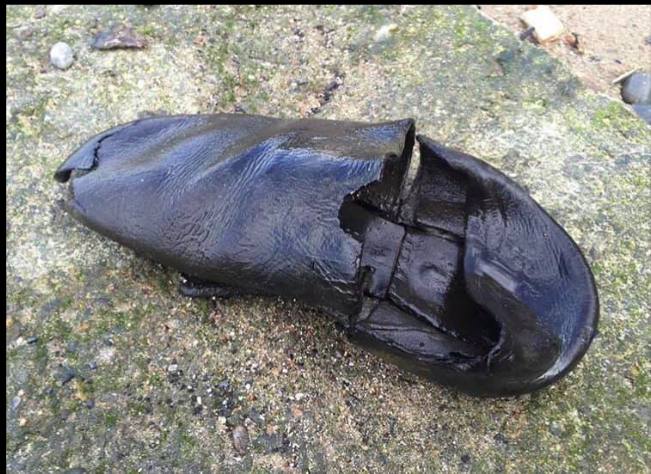
Mudlarking on the Thames: A Treasure Trove of History Washes Ashore Every Low Tide

If you’re look­ing for free out­door activ­i­ties to pull you from the dig­i­tal realm, may we rec­om­mend mud­lark­ing?

Lara Maik­lem, author of Mud­lark­ing: Lost and Found on the Riv­er Thames and A Field Guide to Lark­ing, has devel­oped a keen eye in the 20 years she’s been scav­eng­ing his­toric detri­tus from the fore­shore of the Thames at low tide.

 I nev­er use a met­al detec­tor and I often walk lit­tle more than a mile in 5 hours, yet I can trav­el 2,000 years back in time through the objects that are revealed by the tide. Pre­his­toric flint tools, medieval pil­grim badges, Tudor shoes, Geor­gian wig curlers and Vic­to­ri­an pot­tery, ordi­nary objects left behind by the ordi­nary peo­ple who made Lon­don what it is today. 

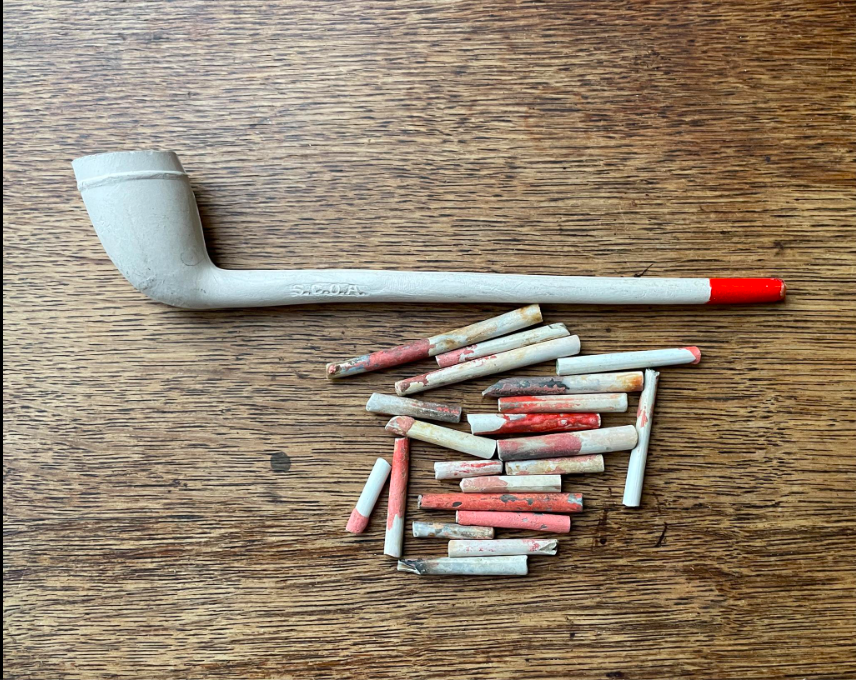
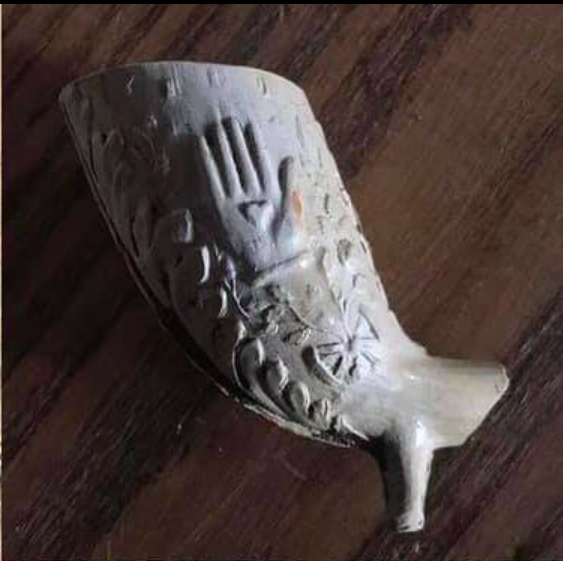
As she says in the short film above, her first find has become one of her most com­mon — a clay pipe frag­ment.

The term mud­lark was invent­ed to describe the pover­ty strick­en Vic­to­ri­ans who scoured the fore­shore for cop­per, wire, and oth­er items with resale val­ue, as well as things they could clean off and use them­selves.

Today’s mud­larks are pri­mar­i­ly his­to­ry buffs and ama­teur arche­ol­o­gists.

The hob­by has become so pop­u­lar that The Port of Lon­don Author­i­ty, which con­trols the Thames water­way along with the Crown Estate, has start­ed to require fore­shore per­mits of all prospec­tive debris hunters.

Per­mit­ted mud­larks can claim as sou­venirs how­ev­er many Vic­to­ri­an clay pipes and blue and white pot­tery shards they dig up, but are legal­ly oblig­ed by the Portable Antiq­ui­ties Scheme to report items of poten­tial­ly greater his­toric and mon­e­tary val­ue — i.e. Trea­sure — to a muse­um-trained Finds Lia­son Offi­cer:

  • Any metal­lic object, oth­er than a coin, pro­vid­ed that at least 10 per cent by weight of met­al is pre­cious met­al (that is, gold or sil­ver) and that it is at least 300 years old when found. If the object is of pre­his­toric date it will be Trea­sure pro­vid­ed any part of it is pre­cious met­al.
  • Any group of two or more metal­lic objects of any com­po­si­tion of pre­his­toric date that come from the same find (see note below).
  • Two or more coins from the same find pro­vid­ed they are at least 300 years old when found and con­tain 10 per cent gold or sil­ver (if the coins con­tain less than 10 per cent of gold or sil­ver there must be at least ten of them). Only the fol­low­ing groups of coins will nor­mal­ly be regard­ed as com­ing from the same find: Hoards that have been delib­er­ate­ly hid­den; Small­er groups of coins, such as the con­tents of purs­es, that may been dropped or lost; Votive or rit­u­al deposits.
  • Any object, what­ev­er it is made of, that is found in the same place as, or had pre­vi­ous­ly been togeth­er with, anoth­er object that is Trea­sure.

How did all this his­toric refuse come to be in the Thames? Maik­lem told Col­lec­tors Week­ly that there are many rea­sons:

Obvi­ous­ly, it’s been used as a rub­bish dump. It was a use­ful place to chuck your house­hold waste. It was essen­tial­ly a busy high­way, so peo­ple acci­den­tal­ly dropped things and lost things as they trav­eled on it. Of course, peo­ple also lived right up against it. Lon­don was cen­tered on the Thames so hous­es were all along it, and there was all this stuff com­ing out of the hous­es and off the bridges. It was the biggest port in the world in the 18th cen­tu­ry, so there was all the ship­build­ing and indus­try going on.

And then of course, there’s the rub­bish that was used to build up the fore­shore and cre­ate barge beds. The riverbed in its nat­ur­al state is a V shape, so they had to build up the sides next to the riv­er wall to make them flat­ter so the flat-bot­tom barges could rest there at low tide. They did that by pour­ing rub­bish and build­ing spoil and kiln waste, any­thing they could find—industrial waste, domes­tic waste. When they dug into the ground fur­ther up, they’d bring the spoil down and use it to build up the fore­shore, and cap it off with a lay­er of chalk, which was soft and didn’t dam­age the bot­tom of the barges.

One of the rea­sons we’re find­ing so much in the riv­er now is because there’s so much ero­sion. While it was a “work­ing riv­er,” these barge beds were patched up and the revet­ments, or the wood­en walls that held them in, were repaired when they broke. But now, they’re being left to fall apart, and these barge beds are erod­ing as the riv­er is get­ting busier with riv­er traf­fic.

There are numer­ous social media groups where mod­ern mud­larks can proud­ly share their finds, and seek assis­tance in iden­ti­fy­ing strange or frag­ment­ed objects.

Maiklem’s Lon­don Mud­lark Face­book page is an edu­ca­tion in and of itself, a reflec­tion of her abid­ing inter­est in the his­toric sig­nif­i­cance of the items she truf­fles up.

Wit­ness the pewter buck­le plate dat­ing to the 14th or 15th-cen­tu­ry that she spot­ted on the fore­shore in late Novem­ber, turned over to her Finds Liai­son Offi­cer and researched with the help of his­toric pewter crafts­man Col­in Torode:

Pri­or to c.1350 pewter belt fit­tings seem to have been rather rare, although a Lon­don Girdlers’ Guild Char­ter of 1321 which banned the use of pewter belt fit­tings does show that the met­al was cer­tain­ly in use. In 1344 the Girdlers’ guild again reit­er­at­ed the ban on what they felt were infe­ri­or met­als such as pewter, tin and lead. In 1391 how­ev­er, a statute rec­og­nized that these met­als had been in use for some time and that their use could con­tin­ue with­out restric­tion

This ornate plate would have had a sep­a­rate buck­le frame attached to it and is prob­a­bly a cheap­er copy of the more upmar­ket cop­per alloy or sil­ver ver­sions that were pro­duced at the time.  Although the the open­work design is sim­i­lar to those found in in fur­ni­ture or church screens, it’s not reli­gious or pil­grim relat­ed.

Maik­lem also chal­lenges fans to play along from home with “spot the find” videos for such items as a Tudor clothes hook, Geor­gian cuf­flink, and a Ger­man salt glazed, stoneware bottle’s neck embossed with a human face.

She also reminds would be mud­larks to always wear gloves as it’s not all medieval thim­bles, WWI medals and 16th-cen­tu­ry box­wood combs, beau­ti­ful­ly pre­served by the Thames’ anaer­o­bic mud.

The riv­er also spews up plen­ty of drowned rats, flush­ing them out with the sewage after a heavy rain. Oth­er poten­tial haz­ards include hypo­der­mic nee­dles and bro­ken glass.

In addi­tion to such safe­ty pre­cau­tions as gloves, stur­dy footwear, and remain­ing mind­ful of incom­ing tides, Maik­lem advis­es novice mud­larks to look for straight lines and per­fect cir­cles — “the things that nature doesn’t make.”

It takes prac­tice and patience to devel­op a skilled eye, but don’t get dis­cour­aged if your first out­ings don’t yield the sort of jaw drop­ping dis­cov­er­ies Maik­lem has made — an intact glass Vic­to­ri­an sug­ar crush­er, a 16th-cen­tu­ry child’s leather shoe and Roman era pot­tery shards galore.

Some­times even plas­tic comes with a com­pelling sto­ry.

I’m still feel­ing quite gid­dy over this bit of plas­tic. I came to Corn­wall this week to write and to beach­comb. I hoped I might find a small piece of Lost Lego, but I wasn’t hold­ing out much hope. Calm weath­er means less plas­tic: good for the beach, bad for the Lego look­er. Then I found this wedged between two boul­ders. It’s one of the black octo­pus­es from the Lego spill of 1997 when, 20 miles from Land’s End, a huge wave hit the car­go ship Tokio Express. It tilt­ed 45 degrees and 62 con­tain­ers slid into the water. One con­tain­er was filled with near­ly 5 mil­lion pieces of Lego, much of which was sea themed. Lit­tle scu­ba tanks, flip­pers, octo­pus­es, cut­lass­es, life rafts, spear guns, drag­ons and octo­pus­es like this still wash up on the beach­es of Corn­wall and fur­ther afield.

Stay abreast of Lara Maiklem’s mud­lark­ing finds here.

Try your hand at mud­lark­ing the Thames in per­son, dur­ing a guid­ed tour with the Thames Explor­er Trust.

Relat­ed Con­tent 

Prize-Win­ning Ani­ma­tion Lets You Fly Through 17th Cen­tu­ry Lon­don

The Growth of Lon­don, from the Romans to the 21st Cen­tu­ry, Visu­al­ized in a Time-Lapse Ani­mat­ed Map

Watch the Sex Pis­tols Play a Gig on a Thames Riv­er Barge Dur­ing the Queen’s Sil­ver Jubilee, and Get Shut Down by the Cops (1977)

- Ayun Hal­l­i­day is a mud­lark­ing new­bie, the Chief Pri­ma­tol­o­gist of the East Vil­lage Inky zine and author, most recent­ly, of Cre­ative, Not Famous: The Small Pota­to Man­i­festo.  Fol­low her @AyunHalliday.

A Tour of Studio Ghibli’s Brand New Theme Park in Japan, Which Re-Creates the Worlds of Spirited Away, My Neighbor Totoro, and Other Classics

Two and a half years ago, we fea­tured the con­cept art for Stu­dio Ghi­b­li’s theme park here on Open Cul­ture, and just two weeks ago it opened its doors. Locat­ed on the grounds of Expo 2005 in Japan’s Aichi Pre­fec­ture (a three- to four-hour train trip west from Tokyo, or a two-hour train trip east of Osa­ka), Ghi­b­li Park com­pris­es sev­er­al themed areas like the Grand Ware­house, the Hill of Youth, and Don­doko For­est. Just hear­ing those names sure­ly fires up the imag­i­na­tions of many a Ghi­b­li fan, even before they hear about the park’s vis­i­tor-ready recon­struc­tions of every­thing from Cas­tle in the Sky’s ruined gar­dens to Whis­per of the Heart’s antique shop to My Neigh­bor Totoro’s Cat­bus.

“Unlike Dis­ney­land, Ghi­b­li Park does not fea­ture roller coast­ers or rides,” writes My Mod­ern Met’s Margheri­ta Cole. “Instead, it wel­comes vis­i­tors to immerse them­selves in life-size sets that are har­mo­nious­ly inte­grat­ed with nature.” You can get a sense of how this con­cept has been exe­cut­ed in the fif­teen-minute video at the top of the post from Japan-based trav­el vlog­gers Didi and Bryan.

In it, they pass through the afore­men­tioned spaces as well as oth­ers includ­ing Cin­e­ma Ori­on, which screens ten short films once only view­able at the Ghi­b­li Muse­um, and the Siberia milk stand, which offers the epony­mous sponge cake from The Wind Ris­es, Ghi­b­li mas­ter­mind Hayao Miyaza­k­i’s final ani­mat­ed fea­ture — or rather, his penul­ti­mate ani­mat­ed fea­ture.

The repeat­ed­ly un-retired Miyaza­ki returned to the stu­dio in 2016 to begin a film called How Do You Live?. Though the COVID-19 pan­dem­ic slowed down its pro­duc­tion by forc­ing him and his col­lab­o­ra­tors to work from home, it seems not to have thrown the new theme park’s con­struc­tion far off track. In three years’ time, Cole writes, “Ghi­b­li Park will open its last two sec­tions — Mononoke no sato (‘Mononoke Vil­lage’) and Majo no tani (‘Val­ley of the Witch’) — which are ded­i­cat­ed to the films Princess Mononoke and Kik­i’s Deliv­ery Ser­vice, respec­tive­ly. There may even be a future ride in store, as some of the con­cept art appears to depict spin­ning teacups inspired by Kik­i’s cat Jiji.” That will require care­ful design­ing: a cer­tain oth­er ani­ma­tion stu­dio with long-stand­ing theme parks has a teacup ride of its own — and lit­tle patience for appar­ent imi­ta­tors, no mat­ter the artis­tic heights to which they soar.

Relat­ed con­tent:

Stu­dio Ghi­b­li Releas­es Tan­ta­liz­ing Con­cept Art for Its New Theme Park, Open­ing in Japan in 2022

A Vir­tu­al Tour Inside the Hayao Miyazaki’s Stu­dio Ghi­b­li Muse­um

Stu­dio Ghi­b­li Makes 1,178 Images Free to Down­load from My Neigh­bor Totoro, Spir­it­ed Away & Oth­er Beloved Ani­mat­ed Films

Hayao Miyaza­ki, The Mind of a Mas­ter: A Thought­ful Video Essay Reveals the Dri­ving Forces Behind the Animator’s Incred­i­ble Body of Work

Watch Hayao Miyazaki’s Beloved Char­ac­ters Enter the Real World

Based in Seoul, Col­in Mar­shall writes and broad­casts on cities, lan­guage, and cul­ture. His projects include the Sub­stack newslet­ter Books on Cities, the book The State­less City: a Walk through 21st-Cen­tu­ry Los Ange­les and the video series The City in Cin­e­ma. Fol­low him on Twit­ter at @colinmarshall or on Face­book.

The Rise and Fall of Concorde, the Midcentury Supersonic Jetliner That Still Inspires Awe Today

The pop­u­lar­i­ty of the phrase “style over sub­stance” has encour­aged us to assume an inher­ent and absolute divide between those con­cepts. But as the most ambi­tious works of man remind us, style pushed to its lim­its its sub­stance, and vice ver­sa. This truth has been expressed in var­i­ous spe­cial­ized ways: archi­tect Louis Sul­li­van’s max­im “form fol­lows func­tion,” for exam­ple, which went on to attain some­thing like scrip­tur­al sta­tus among mod­ernists of the mid-twen­ti­eth cen­tu­ry. It was in that same era that aero­space engi­neer­ing pro­duced one of the most glo­ri­ous proofs of the uni­ty of style and sub­stance, form and func­tion, mechan­ics and aes­thet­ics: Con­corde, the super­son­ic jet­lin­er that flew between 1976 and 2003.

Nobody who flew on Con­corde (col­lo­qui­al­ly but not offi­cial­ly “the” Con­corde) has for­got­ten it. The sharp­ness and length of its ascent; the thrust of the after-burn­er, press­ing you into your seat like the accel­er­a­tion of a high-per­for­mance sports car; the vis­i­ble cur­va­ture of the Earth and the deep pur­ple of the sky; the impec­ca­ble food and drink ser­vice that turned a flight between New York and Lon­don into a sump­tu­ous French meal. A host of for­mer pas­sen­gers, crew mem­bers, and pilots rem­i­nisce vivid­ly about all this in the BBC doc­u­men­tary Con­corde: A Super­son­ic Sto­ry.  That sto­ry is told more briefly in the Vox video at the top of the post, which asks the ques­tion, “This plane could cross the Atlantic in 3.5 hours. Why did it fail?”

The short answer has to do with busi­ness via­bil­i­ty. At super­son­ic speeds an air­craft leaves a son­ic boom in its wake, which rel­e­gat­ed Con­corde to transocean­ic flights. Its inabil­i­ty to hold enough fuel to cross the Pacif­ic left New York-Lon­don, oper­at­ed by British Air­ways, as its sole viable route, with Air France also run­ning between New York and Paris. For Con­corde was an Anglo-French project, launched as a part­ner­ship between the two gov­ern­ments in 1962, at the height of the Space Age — and despite enor­mous sub­se­quent cost over­runs an effec­tive­ly un-can­ce­lable one, since one coun­try could­n’t pull out with­out the oth­er’s say-so.

With nation­al pride at stake, French com­mit­ment did much to make Con­corde what it was. “Because it went so fast, the V.I.P.s on board would­n’t need much more, from an Eng­lish point of view, than a sand­wich, a cup of tea, and a glass of whiskey,” says Jonathan Glancey, author of Con­corde: The Rise and Fall of the Super­son­ic Air­lin­er. But the French said, “No, this a lux­u­ry air­craft,” and it was ulti­mate­ly lux­u­ry — as well as a sleek­ly func­tion­al sil­hou­ette that nev­er stopped look­ing futur­is­tic — that kept Con­corde going until its retire­ment in 2003. (Nor could the con­ve­nience fac­tor be ignored, for invest­ment bankers and inter­na­tion­al celebri­ties alike: “It’s always excit­ing to get to New York before you’ve left,” said fre­quent fli­er Sting.)

“The real flaw in Con­corde was not tech­no­log­i­cal but social,” writes Fran­cis Spufford in the Lon­don Review of Books. “Those who com­mis­sioned it assumed that air trav­el would remain, as it was in 1962, some­thing done by the rich: and not the mobile, hard-work­ing man­age­r­i­al rich either, but the gild­ed upper-crust celebri­ty rich,” the orig­i­nal “jet set.” Alas, the future lay not with speed but vol­ume: “The Boe­ing 747 was just as bold a leap into the unknown as Con­corde, just as extreme in its depar­ture from the norm; noth­ing so large had ever left the ground before. And Boeing’s gam­ble paid off.” Super­son­ic jet­lin­ers have nev­er­the­less re-entered devel­op­ment in recent years, and if any come to mar­ket, they’ll sure­ly do so with such lux­u­ries unknown in the Space Age as per­son­al, on-demand enter­tain­ment sys­tems. But will any­thing they can show be as thrilling as Con­corde’s cab­in speedome­ter reach­ing mach two?

Relat­ed con­tent:

An Ani­mat­ed His­to­ry Of Avi­a­tion: From da Vinci’s Sketch­es to Apol­lo 11

Col­or­ful Maps from 1914 and 2016 Show How Planes & Trains Have Made the World Small­er and Trav­el Times Quick­er

NASA Cap­tures First Air-to-Air Images of Super­son­ic Shock­waves Inter­act­ing in Flight

Down­load 14 Free Posters from NASA That Depict the Future of Space Trav­el in a Cap­ti­vat­ing­ly Retro Style

Based in Seoul, Col­in Mar­shall writes and broad­casts on cities, lan­guage, and cul­ture. His projects include the Sub­stack newslet­ter Books on Cities, the book The State­less City: a Walk through 21st-Cen­tu­ry Los Ange­les and the video series The City in Cin­e­ma. Fol­low him on Twit­ter at @colinmarshall, on Face­book, or on Insta­gram.

Watch Vintage Videos Capturing Life in Japan from the 1960s Through Today

Just yes­ter­day, Japan ful­ly re-opened its bor­ders to tourism after a long peri­od of COVID-19-moti­vat­ed clo­sure. This should prove eco­nom­i­cal­ly invig­o­rat­ing, given how much demand to vis­it the Land of the Ris­ing Sun has built up over the past cou­ple of years. Even before the pan­dem­ic, Japan had been a coun­try of great inter­est among world trav­el­ers, and for more than half a cen­tu­ry at that. Much of that attrac­tive­ness has, of course, to do with its dis­tinc­tive nature, which man­i­fests both deep tra­di­tion and hyper-moder­ni­ty at once.

But some of it also has to do with the fact that, since ris­ing from the dev­as­ta­tion of the Sec­ond World War, Japan has hard­ly shied away from self-pro­mo­tion. “A Day in Tokyo,” the short film at the top of the post, was pro­duced by the Japan Nation­al Tourism Orga­ni­za­tion in 1968.

Its vivid col­or footage of Japan’s great metrop­o­lis, “the world’s largest and liveli­est,” cap­tures every­day life as it was then lived in Toky­o’s depart­ment stores, stock exchanges, con­struc­tion sites, and zoos.

The film puts a good deal of empha­sis on the cap­i­tal’s still-ongo­ing post­war trans­for­ma­tion: “In a con­stant meta­bol­ic cycle of destruc­tion and cre­ation, Tokyo pro­gress­es at a dizzy­ing pace,” declares the film’s nar­ra­tor. “Peo­ple who haven’t seen Tokyo for ten years, or even five, would scarce­ly rec­og­nize it today.” And if Tokyo was dizzy­ing in the late nine­teen-six­ties, it became pos­i­tive­ly dis­ori­ent­ing in the eight­ies. On the back of that era’s eco­nom­ic bub­ble, Japan looked about to become the wealth­i­est coun­try in the world, and Toky­oites both worked and played accord­ing­ly hard.

This two-part com­pi­la­tion of scenes from Japan in the eight­ies con­veys that time with footage drawn from a vari­ety of sources, includ­ing fea­ture films (not least Ita­mi Jūzō’s beloved 1985 ramen com­e­dy Tam­popo.) “It was a mag­i­cal place at a mag­i­cal time,” remem­bers one Amer­i­can com­menter who lived in Japan back then. “Every­thing seemed pos­si­ble. Every­body was pros­per­ing. Almost every crazy busi­ness idea seemed to suc­ceed. Peo­ple were hap­py and shared their hap­pi­ness and good for­tune with oth­ers. It was like no oth­er place on earth.”

As dra­mat­i­cal­ly as the bub­ble burst at the end of the eight­ies, Japan­ese life in the sub­se­quent “lost decades” has also pos­sessed a rich­ness of its own. You can see it in this com­pi­la­tion of footage of Japan in the nineties and two-thou­sands from the same chan­nel, TRNGL. Though it no longer seemed able to buy up the rest of the world, the coun­try had by that era built up a glob­al con­scious­ness of its cul­ture by export­ing its films, its ani­ma­tion, its music, its video games, and much more besides. Even if you haven’t seen this Japan in per­son, you’ve come to know it through its art and media.

If you’re con­sid­er­ing mak­ing the trip, this video of “Japan nowa­days” will give you a sense of what you’ve been miss­ing. The Tokyo of the twen­ty-first cen­tu­ry shown in its clips cer­tain­ly isn’t the same city it was in 1968. Yet it remains “an inter­min­gling of Ori­ent and Occi­dent, seem­ing­ly new, but actu­al­ly old,” as the nar­ra­tor of “A Day in Tokyo” puts it. “Beneath its mod­ern exte­ri­or, there still lingers an atmos­phere of past glo­ries. The cit­i­zens remain unal­ter­ably Japan­ese, and yet this great city is able to accom­mo­date and under­stand peo­ple of all races, lan­guages, and beliefs” — peo­ple now arriv­ing by the thou­sands once again.

Relat­ed con­tent:

The Entire His­to­ry of Japan in 9 Quirky Min­utes

Watch Life on the Streets of Tokyo in Footage Record­ed in 1913: Caught Between the Tra­di­tion­al and the Mod­ern

1850s Japan Comes to Life in 3D, Col­or Pho­tos: See the Stereo­scop­ic Pho­tog­ra­phy of T. Ena­mi

Hand-Col­ored 1860s Pho­tographs Reveal the Last Days of Samu­rai Japan

An Intro­duc­tion to Japan­ese Kabu­ki The­atre, Fea­tur­ing 20th-Cen­tu­ry Mas­ters of the Form (1964)

How Youtube’s Algo­rithm Turned an Obscure 1980s Japan­ese Song Into an Enor­mous­ly Pop­u­lar Hit: Dis­cov­er Mariya Takeuchi’s “Plas­tic Love”

Based in Seoul, Col­in Mar­shall writes and broad­casts on cities, lan­guage, and cul­ture. His projects include the Sub­stack newslet­ter Books on Cities, the book The State­less City: a Walk through 21st-Cen­tu­ry Los Ange­les and the video series The City in Cin­e­ma. Fol­low him on Twit­ter at @colinmarshall or on Face­book.

The Art of Translating Hamilton into German: “So Kribbeln Schmetterlinge, Wenn Sie Starten”

The city of Hamburg’s nick­name is Tor zur Welt- the gate­way to the world.

If the Ger­man lan­guage pro­duc­tion of Lin-Manuel Miranda’s record break­ing hiphop musi­cal now in pre­views in that city’s St. Pauli The­ater is as warm­ly received as the Eng­lish orig­i­nal has been in Lon­don, Mel­bourne, and, of course, the US, it may earn itself with an addi­tion­al one — Hamil­ton­burg.

Excite­ment has been build­ing since ear­ly sum­mer, when a dual lan­guage video mashup of the open­ing num­ber placed the orig­i­nal Broad­way cast along­side their Ger­man lan­guage coun­ter­parts.

One need not speak Ger­man to appre­ci­ate the sim­i­lar­i­ties in atti­tude — in both per­for­mance, and inter­nal asso­nances, a lyri­cal aspect of hip hop that Miran­da was intent on pre­serv­ing.

Trans­la­tor Kevin Schroed­er quipped that he and co-trans­la­tor rap­per Sera Finale embraced the mot­to “as free as nec­es­sary, as close as pos­si­ble” in approach­ing the score, which at 46 num­bers and over 20,000 words, more than dou­bles the word count of any oth­er musi­cal:

At least we had all these syl­la­bles. It gave us room to play around.

Good thing, as the Ger­man lan­guage abounds with mul­ti­syl­lab­ic com­pound nouns, many of which have no direct Eng­lish equiv­a­lent.

Take schaden­freude which the cre­ators of the musi­cal Avenue Q summed up as “hap­pi­ness at the mis­for­tune of oth­ers.”

Or torschlusspanik — the sense of urgency to achieve or do some­thing before it’s too late.

Might that one speak to a trans­lat­ing team who’ve devot­ed close to four years of their lives to get­ting every­thing — words, syl­la­bles, meter, sound, flow, posi­tion, musi­cal­i­ty, mean­ing, and dou­ble mean­ings — right?

Before Schroed­er and Finale were entrust­ed with this her­culean task, they had to pass muster with Miranda’s wife’s Aus­tri­an cousin, who lis­tened to their sam­ples and pro­nounced them in keep­ing with the spir­it of the orig­i­nal.

As trans­la­tors have always done, Schroed­er and Finale had to take their audi­ence into account, swap­ping out ref­er­ences, metaphors and turns of phrase that could stump Ger­man the­ater­go­ers for ones with proven region­al res­o­nance.

In a round up demon­strat­ing the Ger­man team’s dex­ter­i­ty, the New York Times Michael Paul­son points to “Sat­is­fied,” a song where­in Hamilton’s prospec­tive sis­ter-in-law recalls their first encounter:

ORIGINAL

So this is what it feels like to match wits

With some­one at your lev­el! What the hell is the catch?

It’s the feel­ing of free­dom, of see­ing the light

It’s Ben Franklin with a key and a kite

You see it right?


GERMAN

So kribbeln Schmetter­linge, wenn sie starten

Wir bei­de voll auf einem Lev­el, offene Karten!

Das Herz in den Wolken, ich flieg’ aus der Bahn

Die Füße kom­men an den Boden nich’ ran

Mein lieber Schwan!


ENGLISH TRANSLATION OF GERMAN

So that’s how but­ter­flies tin­gle when they take off

We’re on the same lev­el, all cards on the table!

My heart in the clouds, I’m thrown off track

My feet don’t touch the floor

My dear swan!

Miran­da, who par­tic­i­pat­ed in shap­ing the Ger­man trans­la­tion using a 3 col­umn sys­tem remark­ably sim­i­lar to the com­pare and con­trast con­tent above, gives this change a glow­ing review:

That sec­tion sounds fan­tas­tic, and gives the same feel­ing of falling in love for the first time. The metaphor may be dif­fer­ent, but it keeps its propul­sive­ness.

And while few Ger­man the­ater­go­ers can be expect­ed to be con­ver­sant in Rev­o­lu­tion­ary War era Amer­i­can his­to­ry, Ger­many’s size­able immi­grant pop­u­la­tion ensures that cer­tain of the musical’s themes will retain their cul­tur­al rel­e­vance.

The Ham­burg pro­duc­tion fea­tures play­ers from Liberia and Brazil. Oth­er cast mem­bers were born in Ger­many to par­ents hail­ing from Ghana, the Philip­pines, Aru­ba, Benin, Suriname…and the Unit­ed States.

For more of Michael Paulson’s insights into the chal­lenges of trans­lat­ing Hamil­ton, click here.

Hamil­ton is in pre­views at Hamburg’s St. Pauli The­ater, with open­ing night sched­uled for Octo­ber 6.

- Ayun Hal­l­i­day is the Chief Pri­ma­tol­o­gist of the East Vil­lage Inky zine and author, most recent­ly, of Cre­ative, Not Famous: The Small Pota­to Man­i­festo. Fol­low her @AyunHalliday.

A Tour of All the Pizza Styles You Can Eat in the United States (and the History Behind Your Favorite Slices)

When it comes to chili, Texas, Kansas City and Cincin­nati, will cede no quar­ter, each con­vinced that their par­tic­u­lar region­al approach is the only sane option.

Hot dogs? Put New York City and Chica­go in a pit and watch them tear each oth­er to rib­bons.

But piz­za?

There are so many geo­graph­ic vari­a­tions, even an impar­tial judge can’t see their way through to a clear vic­tor.

The play­ing field­’s thick as stuffed piz­za, a polar­iz­ing Chica­go local spe­cial­ty that’s deep­er than the deep­est dish.

Weird His­to­ry Food’s whirl­wind video tour of Every Piz­za Style We Could Find In the Unit­ed States, above, savors the ways in which var­i­ous piz­za styles evolved from the Neapoli­tan pie that Ital­ian immi­grant Gen­naro Lom­bar­di intro­duced to New York City in 1905.

Wait, though. We all have an acquain­tance who takes per­verse plea­sure in off­beat top­ping choic­es — look­ing at you, Cal­i­for­nia — but oth­er than that, isn’t piz­za just sauce, dough, and cheese?

How much room does that leave for vari­a­tion?

Plen­ty as it turns out.

Crusts, thick or thin, fluc­tu­ate wild­ly accord­ing to the type of flour used, how long the dough is proofed, the type of oven in which they’re baked, and phi­los­o­phy of sauce place­ment.

(In Buf­fa­lo, New York, piz­zas are sauced right up to their cir­cum­fer­ence, leav­ing very lit­tle crusty han­dle for eat­ing on the fly, though per­haps one could fold it down the mid­dle, as we do in the city 372 miles to the south.)

Sauce can also swing pret­ty wild­ly — sweet, spicy, pre­pared in advance, or left to the last minute — but cheese is a much hot­ter top­ic.

Detroit’s piz­za is dis­tin­guished by the inclu­sion of Wis­con­sin brick cheese.

St. Louis is loy­al to Prov­el cheese, a home­grown processed mix of ched­dar, Swiss, and pro­volone and liq­uid smoke.

Mia­mi piz­zas cater to the palates of its Cuban pop­u­la­tion by mix­ing moz­zarel­la with gou­da, a cheese that was both wide­ly avail­able and pop­u­lar before 1962’s rationing sys­tem was put in place.

Rhode Island’s apt­ly named Red Strips have no cheese at all…which might be prefer­able to the Altoona, Penn­syl­va­nia favorite that arrives topped with Amer­i­can cheese slices or — the hor­ror — Velvee­ta.

(This may be where we part ways with the old saw equat­ing piz­za with sex — even when it’s bad, it’s still pret­ty good.)

Cut and size also fac­tor in to piz­za pride.

Wash­ing­ton DC’s Jum­bo slices are pret­ty much the stan­dard issue New York-style thin crust slice, writ large.

Not only does size mat­ter here, it may be the only thing that matters…to the point where a local busi­ness improve­ment dis­trict had to inter­vene on behalf of side­walk rub­bish bins hard pressed to han­dle the vol­ume of greasy super-sized slice box­es Wash­ing­to­ni­ans were toss­ing away every evening.

In the land of oppor­tu­ni­ty, where small­er towns are under­stand­ably eager to claim their piece of pie, Weird His­to­ry Food gives the nod to Old Forge, Penn­syl­va­nia, opti­misti­cal­ly dubbed “the Piz­za Cap­i­tal of the World by Uncov­er­ing PA’s Jim Cheney, and Steubenville Ohio, home of the “over­sized Lunch­ableAtlas Obscu­ra refers to as America’s most mis­un­der­stood piz­za.

For good mea­sure, watch the PBS Idea Channel’s His­to­ry of Piz­za in 8 slices, below, then rep your favorite local pizze­ria in the com­ments.

We want to try them all!

Relat­ed Con­tent 

The First Piz­za Ordered by Com­put­er, 1974

When Mikhail Gor­bachev, the Last Sovi­et Leader, Starred in a Piz­za Hut Com­mer­cial (1998)

Piz­za Box Becomes a Playable DJ Turntable Through the Mag­ic of Con­duc­tive Ink

- Ayun Hal­l­i­day is the Chief Pri­ma­tol­o­gist of the East Vil­lage Inky zine and author, most recent­ly, of Cre­ative, Not Famous: The Small Pota­to Man­i­festo. Fol­low her @AyunHalliday.

Architect Breaks Down Five of the Most Iconic New York City Apartments

Real estate is a peren­ni­al­ly hot top­ic in New York City, as is gen­tri­fi­ca­tion.

Above, archi­tect Michael Wyet­zn­er, breaks down the defin­ing fea­tures of sev­er­al typ­i­cal NYC apart­ments.

You’re on your own to truf­fle up the sort of rent a 340 square feet stu­dio com­mands in an East Vil­lage ten­e­ment these days.

The ances­tors would be shocked, for sure. My late moth­er-in-law nev­er tired of caus­ing young jaws to drop by reveal­ing how she once paid $27/month for a 1 bed­room on Sheri­dan Square…and her moth­er, who immi­grat­ed at the turn of the cen­tu­ry, couldn’t wait to put the Low­er East Side behind her.

He may not truck in final sales fig­ures, but Wyet­zn­er drops in a wealth of inter­est­ing fac­tu­al tid­bits as he sketch­es lay­outs with a black Pen­tel Sign Pen. His tone is more Low­er East Side Ten­e­ment Muse­um tour guide than the com­ments sec­tion of a real estate blog where salty New York­ers flaunt their street cred.

For instance, those enfilade ten­e­ment apartments–to employ the grand archi­tec­tur­al term Wyet­zn­er just taught us–were not only dark, but dan­ger­ous­ly under-ven­ti­lat­ed until 1901, when reforms stip­u­lat­ed that air shafts must be opened up between side by side build­ings.

This pub­lic health ini­tia­tive changed the shape of ten­e­ment build­ings, but did lit­tle to stop the pover­ty and over­crowd­ing that activist/photographer Jacob Riis famous­ly doc­u­ment­ed in How the Oth­er Half Lives.

(Anoth­er mea­sure decreed that build­ing own­ers must sup­ply one indoor toi­let …per 20 peo­ple!)

While we’re on the top­ic of toi­lets, did you know that there was a time when every brown­stone back­yard boast­ed its own privy?

Home­own­ers who’ve spent mil­lions on what many con­ceive of as the most roman­tic of New York City build­ings (then mil­lions more on gut ren­o­va­tions) proud­ly dis­play old bot­tles and oth­er refuse exca­vat­ed from the site where privys once stood. The for­mer res­i­dents turn their out­hous­es into garbage chutes upon achiev­ing indoor plumb­ing.

Lay­ing aside its dis­tinc­tive col­or, a brownstone’s most icon­ic fea­ture is sure­ly its stoop.

Stoops grabbed hold of the Amer­i­can public’s imag­i­na­tion thanks to Sesame Street, the Harlem pho­tographs of Gor­don Parks and the films of Spike Lee, who learned of Mar­tin Luther King’s assas­si­na­tion as an 11-year-old, sit­ting on his.

“Not porch!,” he empha­sized dur­ing a Tonight Show appear­ance. ”In Brook­lyn, it’s stoops. Stoops!”

(For­give me if I delve into NYC real estate prices for a sec: the Bed-Stuy brown­stone from Lee‘s semi-auto­bi­o­graph­i­cal Crook­lyn, above, just went on the mar­ket for $4.5 mil­lion.)

There’s no ques­tion that brown­stone stoops make excel­lent hang out spots, but that’s not the rea­son they rose to promi­nence.

As Esther Crain writes in Ephemer­al New York, the Com­mis­sion­ers’ Plan of 1811 which led to the city’s grid­like lay­out negat­ed the pos­si­bil­i­ty of alleys:

With­out a back door to a row­house accessed through an alley, ser­vants and work­ers would enter and exit a res­i­dence using the same front stoop the own­ers used—which wasn’t too pop­u­lar, at least with the own­ers. 

But a tall stoop set back from the side­walk allowed for a side door that led to the low­er lev­el of the house. While the own­ers con­tin­ued to go up and down the stoop to get to the par­lor floor (and see and be seen by their neigh­bors), every­one else was rel­e­gat­ed to the side…And of course, as New York entered the Gild­ed Age of busy streets filled with dust, ash, refuse, and enor­mous piles of horse manure, a very high stoop helped keep all the filth from get­ting into the house. 

Flash for­ward a hun­dred and fifty some years, and, as Wyet­zn­er notes, a stoop’s top step offers a high­ly scenic view of the Hefty bags the neigh­bors haul to the curb the night before New York’s Strongest roll through.

Wyet­zn­er also pro­vides the his­tor­i­cal con­text behind such archi­tec­tural­ly dis­tinc­tive digs as SoHo’s astro­nom­i­cal­ly priced light-filled lofts, the always desir­able Clas­sic Six res­i­dences on the Upper East and Upper West Sides, one-room stu­dios both mod­ern and orig­i­nal fla­vor, and our blight­ed pub­lic hous­ing projects.

If you’re itch­ing to play along from home, check out the New York Times’ reg­u­lar fea­ture The Hunt, which invites read­ers to trail a sin­gle, fam­i­ly, or cou­ple delib­er­at­ing between three prop­er­ties in New York City.

A sam­ple: “After a mouse infes­ta­tion at her West Vil­lage rental, a sin­gle moth­er need­ed a bet­ter spot for her fam­i­ly, includ­ing a son with autism.”

Review the lay­outs and click here to see whether she chose a brand-new 127-unit build­ing with a rooftop pool, a Harlem brown­stone duplex with a back­yard rights, or an updat­ed one bed­room in a down­town co-op from 1910.

Relat­ed Con­tent

A New Inter­ac­tive Map Shows All Four Mil­lion Build­ings That Exist­ed in New York City from 1939 to 1941

Behold the New York City Street Tree Map: An Inter­ac­tive Map That Cat­a­logues the 700,000 Trees Shad­ing the Streets of New York City

New York Pub­lic Library Puts 20,000 Hi-Res Maps Online & Makes Them Free to Down­load and Use

The New York Pub­lic Library Lets You Down­load 180,000 Images in High Res­o­lu­tion: His­toric Pho­tographs, Maps, Let­ters & More

- Ayun Hal­l­i­day is the Chief Pri­ma­tol­o­gist of the East Vil­lage Inky zine and author, most recent­ly, of Cre­ative, Not Famous: The Small Pota­to Man­i­festo. She has lived in all man­ner of New York City apart­ments, but hopes to nev­er move again. Fol­low her @AyunHalliday.

Behold a Secret Gallery of Art Created Using Discarded Gum on London’s Millennium Bridge

Through­out his­to­ry, deter­mined artists have worked on avail­able sur­faces — scrap wood, card­board, walls…

Ben Wil­son has cre­at­ed thou­sands of works using chew­ing gum as his can­vas.

Specif­i­cal­ly, chew­ing gum spat out by care­less strangers.

His work has become a defin­ing fea­tur­ing of London’s Mil­len­ni­um Bridge, a mod­ern struc­ture span­ning the Thames, and con­nect­ing such South Bank attrac­tions as Tate Mod­ern and the Shake­speare’s Globe with St. Paul’s Cathe­dral to the north.

A 2021 pro­file in The Guardian doc­u­ments the cre­ation process:

The tech­nique is very pre­cise. He first soft­ens the oval of flat­tened gum a lit­tle with a blow­torch, sprays it with lac­quer and then applies three coats of acrylic enam­el, usu­al­ly to a design from his lat­est book of requests that come from peo­ple who stop and crouch and talk. He uses tiny mod­el­ers’ brush­es, quick-dry­ing his work with a lighter flame as he goes along, and then seals it with more lac­quer. Each paint­ing takes a few hours and can last for many years.

Unsur­pris­ing­ly, Wil­son works very, very small.

For every Mil­len­ni­um Bridge pedes­tri­an who’s hip to the ever-evolv­ing solo exhi­bi­tion under­foot, there are sev­er­al hun­dred who remain com­plete­ly obliv­i­ous.

Stoop to admire a minia­ture por­trait, abstract, or com­mem­o­ra­tive work, and the bulk of your fel­low pedes­tri­ans will give you a wide berth, though every now and then a con­cerned or curi­ous par­ty will stop to see what the deal is.

Wil­son, who works sprawled on the bridge’s met­al treads, his nose close to touch­ing his tiny, untra­di­tion­al can­vas, receives a sim­i­lar response, as described in Zachary Den­man’s short doc­u­men­tary, Chew­ing Gum Man:

They make think I’ve fall­en over and they may think I’ve had a car­diac arrest or some­thing, so I’ve had lots of ambu­lances turn­ing up…I’ve had loads of police.

His sub­jects are sug­gest­ed by the shape of the spat out gum, by friends, by strangers who stop to watch him work:

I’ve had to deal with peo­ple memo­ri­al­iz­ing peo­ple who have been mur­dered. Peo­ple who have been so lone­ly, or remem­ber­ing favorite pets; peo­ple who are des­ti­tute in all sorts of ways. It goes from pro­pos­al pic­tures, ‘Will you mar­ry me?’, to peo­ple who I drew when they were kids and they now have their own kids.

Like any street artist, Wilson’s had his share of run ins with the law, includ­ing a wrong­ful 2010 arrest for crim­i­nal dam­age, when a crowd of school­child­ren who’d been enthu­si­as­ti­cal­ly watch­ing an itty bit­ty St. Pauls tak­ing shape on a blob of gum wit­nessed him being dragged off by his feet. (He asked if he could fin­ish the pic­ture first…)

He may not get per­mis­sion to cre­ate the pub­lic works he goes out dai­ly to cre­ate, but he con­tributes by clear­ing the area of lit­ter, and as he points out, paint­ing on dis­card­ed gum doesn’t con­sti­tute defac­ing anyone’s actu­al prop­er­ty:

Tech­ni­cal­ly in one sense, I’m work­ing with­in the law …if I paint on chew­ing gum, it’s like find­ing No Man’s Land or com­mon ground. It’s a space which is not under the juris­dic­tion of a local or nation­al gov­ern­ment.


See more of Ben Wilson’s work in his online Gum Gallery.

Pho­tos in this arti­cle tak­en by Ayun Hal­l­i­day, 2022. All rights reserved.

- Ayun Hal­l­i­day is the Chief Pri­ma­tol­o­gist of the East Vil­lage Inky zine and author, most recent­ly, of Cre­ative, Not Famous: The Small Pota­to Man­i­festo.  Fol­low her @AyunHalliday.

« Go BackMore in this category... »
Quantcast