Some of the best, most succinct writing advice I ever received came from the great John McPhee, via one of his former students: “Writing is paying attention.” What do you see, hear, taste, etc.? Questions of style, syntax, and punctuation come later. Obsess over them before you’ve learned to pay attention, and you’ll have nothing of interest to write about. And in order to notice what you’re noticing, you’ve got to record it; so keep a notebook with you at all times to jot down overheard expressions, thrilling sights and insights, dramatic chance encounters… hoarding material, all the time.
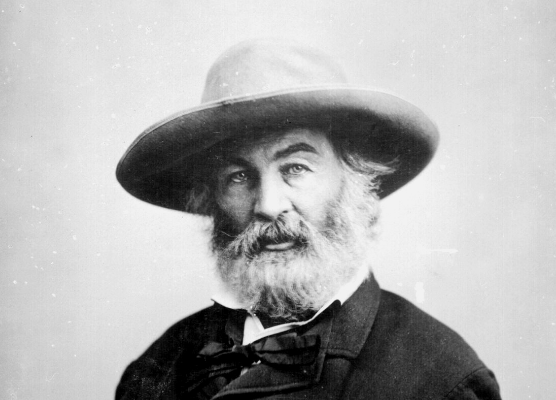
Amongst the tidal wave of advice you’ll encounter when you first begin to write—much of it contradictory and some of little practical benefit—you’d have a hard time finding anyone who disagrees with McPhee. Not even Walt Whitman, who embraced contrariness and contradiction like no other American writer, thus becoming all the more an honest reflection of the nation. Few writers spent more time noticing than Whitman, who seemingly recorded everything he saw and heard on his travels. “I heard what the talkers were talking,” he proclaimed, “I perceive after all so many uttering tongues.” Whitman—as a project called HarvardX Neuroscience dubs him—was a “poet of perception.”
But he was also a hard-headed realist with a bent toward the utilitarian and a scrappy resourcefulness that made him an artistic survivor. Whitman contained multitudes, not only in his poetry but in his writing advice. When editors of The Signal, newspaper of The College of New Jersey, asked the poet in 1888 to advise young scholars on the “literary life,” he obliged, giving the paper a brief interview in which the “gray-haired, handsome, aged poet of Camden” proffered the following (condensed in list form below):
1. Whack away at everything pertaining to literary life—mechanical part as well as the rest. Learn to set type, learn to work at the ‘case’, learn to be a practical printer, and whatever you do learn condensation.
2. To young literateurs I want to give three bits of advice: First, don’t write poetry; second ditto; third ditto. You may be surprised to hear me say so, but there is no particular need of poetic expression. We are utilitarian, and the current cannot be stopped.
3. It is a good plan for every young man or woman having literary aspirations to carry a pencil and a piece of paper and constantly jot down striking events in daily life. They thus acquire a vast fund of information. One of the best things you know is habit. Again, the best of reading is not so much in the information it conveys as the thoughts it suggests. Remember this above all. There is no royal road to learning.
Whitman’s advice contains sound, practical tips on what we might today call “professionalization.” Should we take his admonishment against writing poetry seriously? Why not? For a good portion of his life, Whitman earned a living “whacking away,” as he liked to say often, at more utilitarian forms of writing, from reportage to an advice column. Whitman took seriously his role as a voice of working people and perhaps saw this interview as an occasion to address them.
Whitman’s “seething rejection of poetry,” writes Nicole Kukawski in the Walt Whitman Quarterly Review, should not surprise us; it is “simply part of his attack on conventionality in all respects… poetry can never be ‘utilitarian’—in no way can it reach the masses for their benefit.” Unlike our day, poetry was ubiquitous in late nineteenth century America, part of an entrenched, highly conventional polite discourse. Who knows, maybe a Whitman of the early 21st century would feel very differently on this point. Surely we could use a great deal more “poetic expression” these days.
Whitman’s final piece of advice accords fully with John McPhee’s—and several hundred other writers and teachers. But in Whitman’s estimation, noticing, and acquiring “a vast fund of information,” was not only essential to the literary life but also key to pursuing an “individualistic,” real-world self-education. “One subject about which Whitman did not contradict himself,” writes Kukawski, “was his consistent belief that the scholar should learn by encountering life instead of reading books alone.” There may be no better exemplar of that philosophy in American letters than Walt Whitman himself.
Is it possible to fully separate a word’s sound from its meaning—to value words solely for their music? Some poets come close: Wallace Stevens, Sylvia Plath,John Ashbery. Rare phonetic metaphysicians. Surely we all do this when we hear words in a language we do not know. When I first encountered the Spanish word entonces, I thought it was the most beautiful three syllables I’d ever heard.
I still thought so, despite some disappointment, when I learned it was a commonplace adverb meaning “then,” not the rarified name of some magical being. My reverence for entonces will not impress a native Spanish speaker. Since I do not think in Spanish and struggle to find the right words when I speak it—always translating—the sound and sense of the language run on two different tracks in my mind.
An example from my native tongue: the word obdurate, which I adore, became an instant favorite for its sound the first time I said it aloud, before I’d ever used it in a sentence or parsed its meaning. It’s not a common English word, however, and maybe that makes it special. A word like always, which has a pretty sound, rarely strikes me as musical or interesting, though non-English speakers may find it so.
Every writer has favorite words. Some of those words are ordinary, some of them not so much. David Foster Wallace’s lists of favorite words consist of obscurities and archaisms unlikely to ever feature in the average conversation. “James Joyce thought cuspidor the most beautiful word in the English language,” writes the blog Futility Closet,” Arnold Bennet chose pavement. J.R.R. Tolkien felt the phrase cellar door had an especially beautiful sound.”
So, what about you, reader? What are some of your favorite words in English—or whatever your native language happens to be? And do you, can you, choose them for their sound alone? Please let us know in the comments below.
Quite patiently, Ben Watts cut apart and stitched together scenes from 53 films (find a complete list here) showing characters suffering through writer’s block. Adaptation, Barton Fink, Shakespeare in Love, The Royal Tenenbaums, and, yes, Throw Momma From the Train–they’re among the films featured in the 4‑minute supercut above. If you give the clip a little time, you’ll see that the supercut has an arc to it. It tells a tale, and has an ending that Hollywood would love.
If you would like to sign up for Open Culture’s free email newsletter, please find it here. It’s a great way to see our new posts, all bundled in one email, each day.
If you would like to support the mission of Open Culture, consider making a donation to our site. It’s hard to rely 100% on ads, and your contributions will help us continue providing the best free cultural and educational materials to learners everywhere. You can contribute through PayPal, Patreon, and Venmo (@openculture). Thanks!
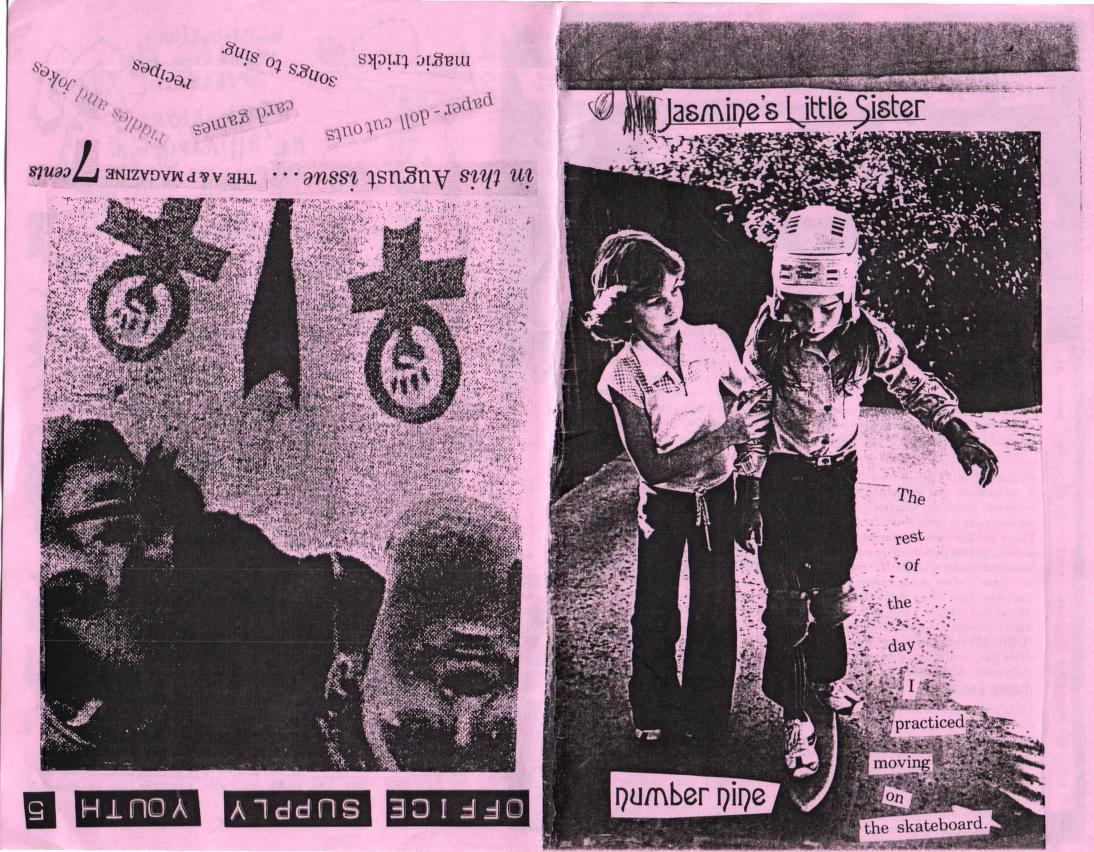
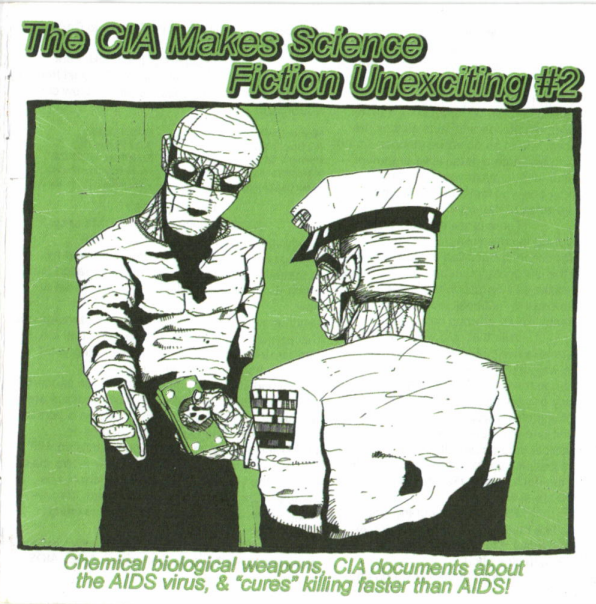
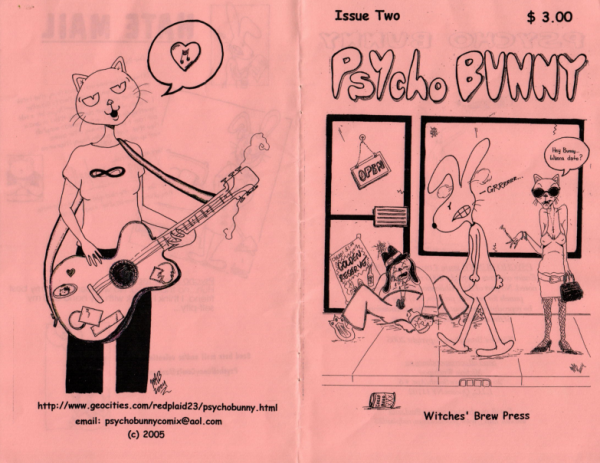
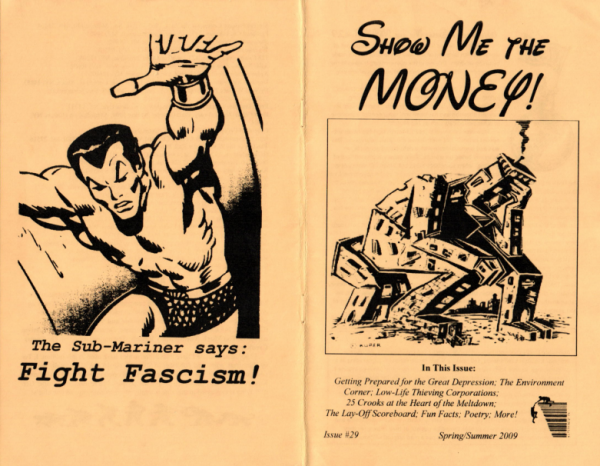
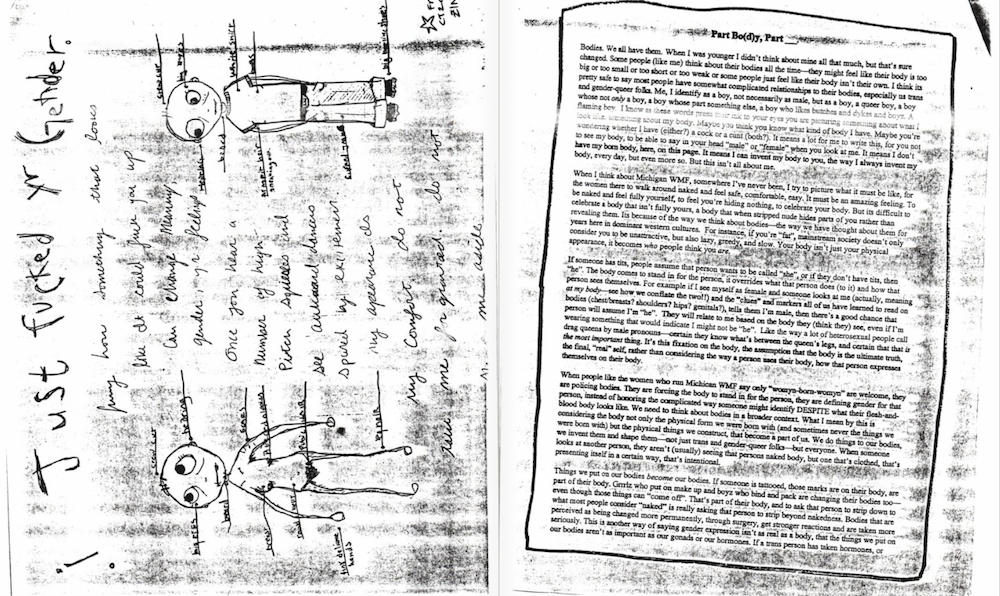
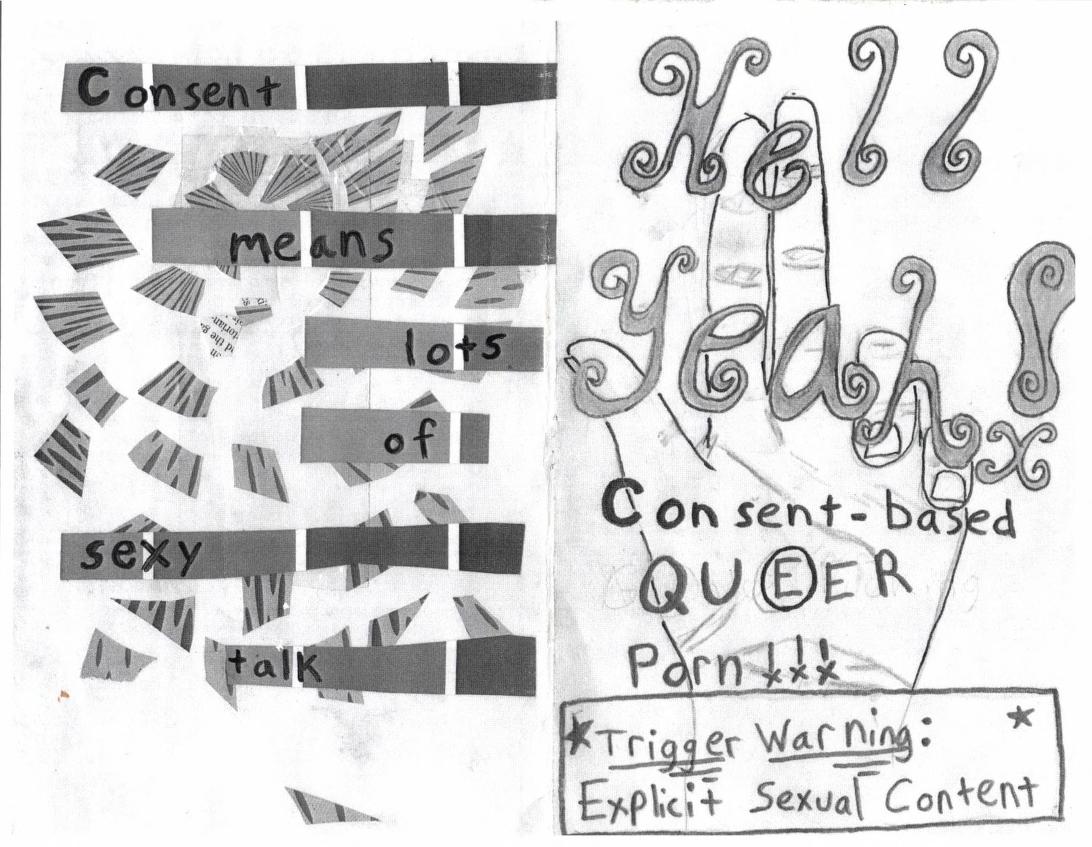
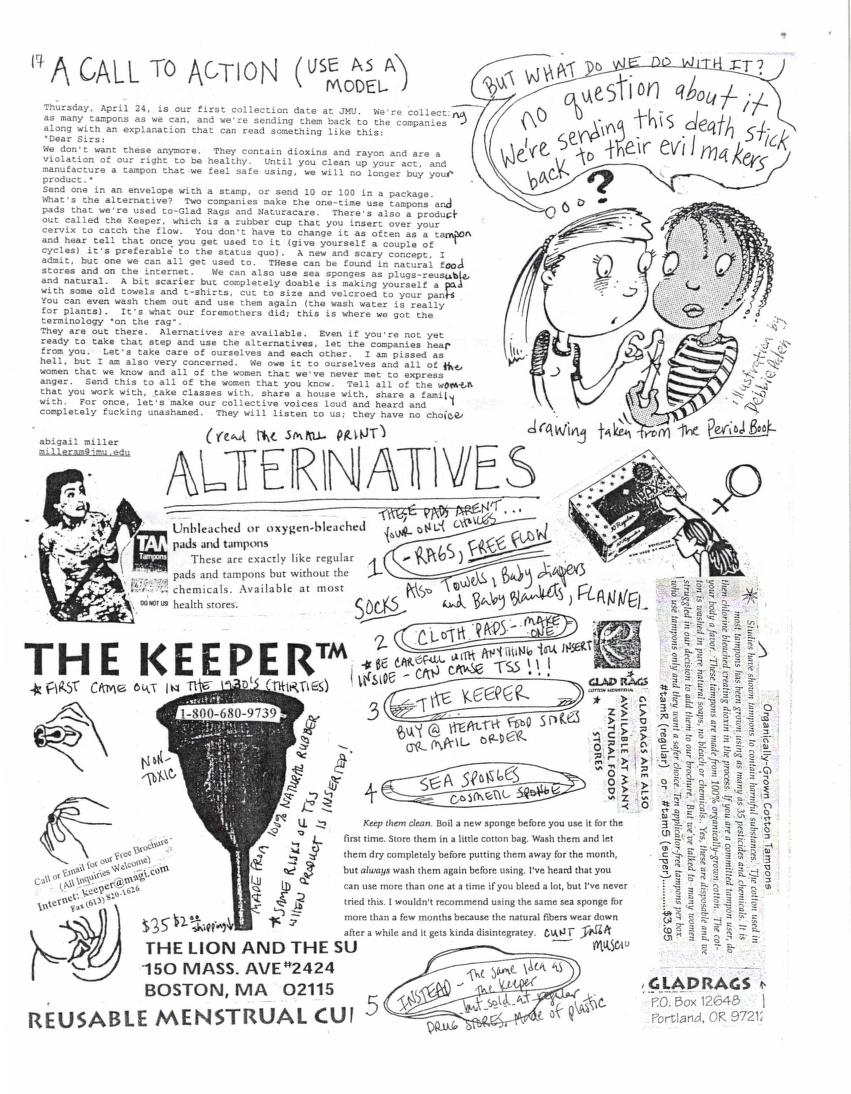
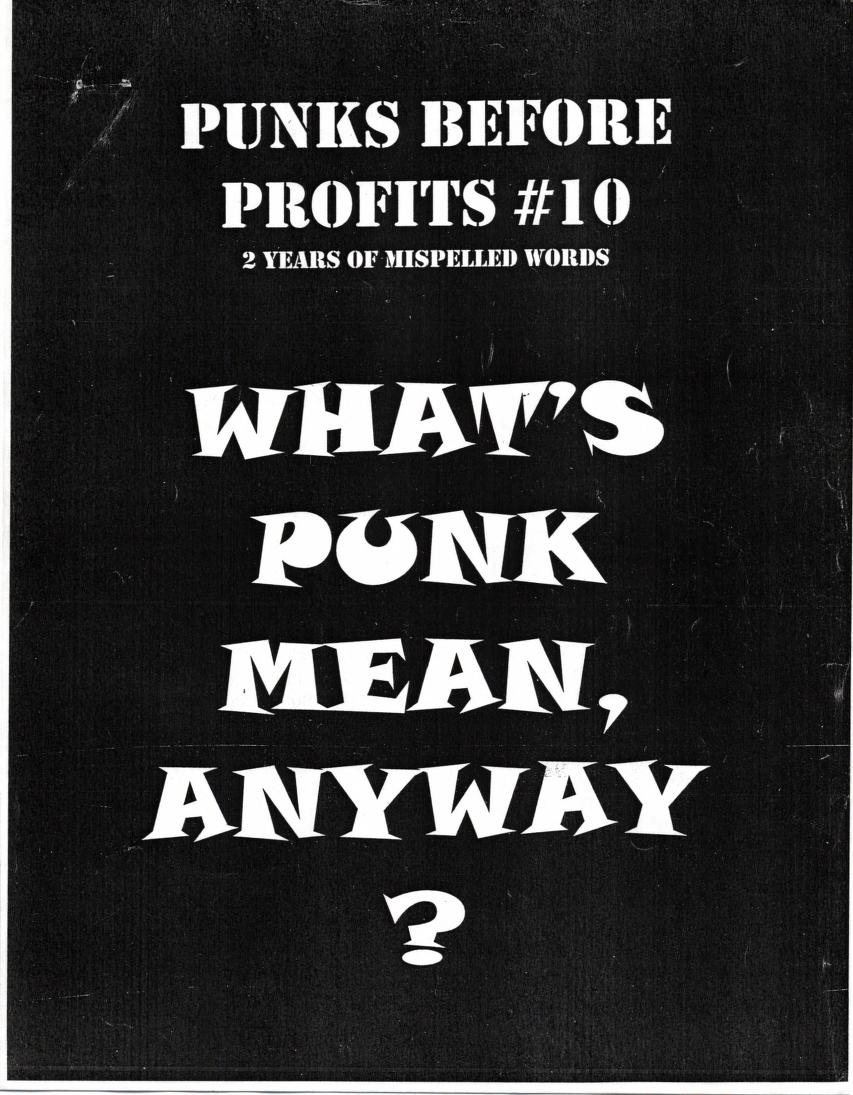
No matter how many readers they attract, the creators of these small-circulation labors of love take their agendas very seriously. Whether the ultimate goal is to inform, to agitate, to smear or to celebrate, their contents are as raw as the cut-and-paste aesthetic that provided their defacto look, pre-Etsy.
While some zinesters are good about preserving master copies and donating back issues to zine libraries, many others’ titles fall through the cracks of history, as the makers age out of the practice, or move on to other interests.
Individual zines’ best chance at survival lies in academia, where experienced archivists and fleets of interns have the time and resources to catalogue and digitize thousands of poorly photocopied, often handwritten pages.
Unsurprisingly, the largest number of titles falls into the Music category. Before the Internet, punk shows were the most reliable channel of zinely distribution, and few of these fanzines are devoid of political content.
Below, Kansas University English professor Frank Farmer (who arranged for the donation) and archivist Becky Schulte discuss the importance of “counter-public documents” and zine culture.
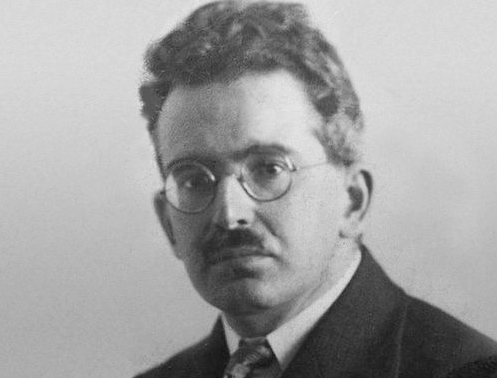
The probability of Walter Benjamin’s name coming up in your average MFA workshop, or fiction writers’ group of any kind, likely approaches zero. But head over to a name-your-critical-political-literary-theory class and I’d be surprised not to hear it dropped at least once, if not half a dozen times. Benjamin, after all, mentored or befriended the first generation Frankfurt School, Hannah Arendt, Bertolt Brecht, Leo Strauss, and nearly every other twentieth-century German intellectual who escaped the Nazis. Tragically, Benjamin himself did not fare so well. It has long been believed that he killed himself rather than face Nazi capture. Another theory speculates that Stalin had him murdered.
Since his death, the legend of Benjamin as a kind of heterodox Marxist prophet—an image he fostered with his embrace of Jewish mysticism—has grown and grown. And yet, despite his rarified academic pedigree, I maintain that writers of all kinds, from the most pedantic to the most visceral, can learn much from him.
Benjamin did not strictly confine himself to the arcane textual analysis and literary-theological hermeneutics for which he’s best known; he spent most of his career working as a freelance critic and journalist, writing almost casual travelogues, personal reminiscences of Weimar Berlin, and approachable essays on a variety of subjects. For a few years, he even wrote and presented popular radio broadcasts for young adults—acting as a kind of “German Ira Glass for teens.”
And, like so many writers before and since, Benjamin once issued a list of “writer’s tips”—or, as he called it, “The Writer’s Technique in Thirteen Theses,” part of his 1928 treatise One-Way Street, one of only two books published in his lifetime. In Benjamin’s hands, that well-worn, well meaning, but often less than helpful genre becomes a series of oracular pronouncements that can seem, at first read, comical, superstitious, or puzzlingly idiosyncratic. But read them over a few times. Then read them again. Like all of his writing, Benjamin’s suggestions, some of which read like commandments, others like Nietzschean aphorisms, reveal their meanings slowly, illuminating the postures, attitudes, and physical and spiritual disciplines of writing in surprisingly humane and astute ways.
The Writer’s Technique in Thirteen Theses:
Anyone intending to embark on a major work should be lenient with himself and, having completed a stint, deny himself nothing that will not prejudice the next.
Talk about what you have written, by all means, but do not read from it while the work is in progress. Every gratification procured in this way will slacken your tempo. If this regime is followed, the growing desire to communicate will become in the end a motor for completion.
In your working conditions avoid everyday mediocrity. Semi-relaxation, to a background of insipid sounds, is degrading. On the other hand, accompaniment by an etude or a cacophony of voices can become as significant for work as the perceptible silence of the night. If the latter sharpens the inner ear, the former acts as a touchstone for a diction ample enough to bury even the most wayward sounds.
Avoid haphazard writing materials. A pedantic adherence to certain papers, pens, inks is beneficial. No luxury, but an abundance of these utensils is indispensable.
Let no thought pass incognito, and keep your notebook as strictly as the authorities keep their register of aliens.
Keep your pen aloof from inspiration, which it will then attract with magnetic power. The more circumspectly you delay writing down an idea, the more maturely developed it will be on surrendering itself. Speech conquers thought, but writing commands it.
Never stop writing because you have run out of ideas. Literary honour requires that one break off only at an appointed moment (a mealtime, a meeting) or at the end of the work.
Fill the lacunae of inspiration by tidily copying out what is already written. Intuition will awaken in the process.
Nulla dies sine linea [‘No day without a line’] — but there may well be weeks.
Consider no work perfect over which you have not once sat from evening to broad daylight.
Do not write the conclusion of a work in your familiar study. You would not find the necessary courage there.
Stages of composition: idea — style — writing. The value of the fair copy is that in producing it you confine attention to calligraphy. The idea kills inspiration, style fetters the idea, writing pays off style.
Eco’s passing adds some poignancy to a video he recorded just last year, on behalf of The Louisiana Channel, a media outlet based, of all places, in Denmark. In the clip above, Eco gives some counsel to aspiring writers: Keep your ego in check, and your ambitions, realistic. Put in the time and the hard work, and don’t shoot for the Nobel Prize in Literature straight out of the gate. That, Eco says, kills every literary career. And remember that writing is “10% inspiration and 90% perspiration.” They’re truisms–you discover after spending decades as a writer–that turn out to be true. That confirmation is one of the gifts he leaves behind.
Every generation, it seems, has its preferred bestselling genre fiction. We’ve had fantasy and, at least in very recent history, vampire romance keeping us reading. The fifties and sixties had their westerns and sci-fi. And in the forties, it won’t surprise you to hear, detective fiction was all the rage. So much so that—like many an irritable contrarian critic today—esteemed literary tastemaker Edmund Wilson penned a cranky New Yorker piece in 1944 declaiming its popularity, writing “at the age of twelve… I was outgrowing that form of literature”; the form, that is, perfected by Edgar Allan Poe, Arthur Conan Doyle, and Wilkie Collins, and imitated by a host of pulp writers in Wilson’s day. Detective stories, in fact, were in vogue for the first few decades of the 20th century—since the appearance of Sherlock Holmes and a derivative 1907 character called “the Thinking Machine,” responsible, it seems, for Wilson’s loss of interest.
Thus, when Wilson learned that “of all people,”Paul Grimstad writes, T.S. Eliot “was a devoted fan of the genre,” he must have been particularly dismayed, as he considered Eliot “an unimpeachable authority in matters of literary judgment.” Eliot’s tastes were much more ecumenical than most critics supposed, his “attitude toward popular art forms… more capacious and ambivalent than he’s often given credit for.” The rhythms of ragtime pervade his early poetry, and “in his later years he wanted nothing more than to have a hit on Broadway.” (He succeeded, sixteen years after his death.) Eliot peppered his conversation and poetry with quotations from Arthur Conan Doyle and wrote several glowing reviews of detective novels by writers like Dorothy Sayers and Agatha Christie during the genre’s “Golden Age,” publishing them anonymously in his literary journal The Criterion in 1927.
One novel that impressed him above all others is titled The Benson Murder Case by an American writer named S.S. Van Dine, pen name of an art critic and editor named Willard Huntington Wright. Referring to an eminent art historian—whose tastes guided those of the wealthy industrial class—Eliot wrote that Van Dine used “methods similar to those which Bernard Berenson applies to paintings.” He had good reason to ascribe to Van Dine a curatorial sensibility. After a nervous breakdown, the writer “spent two years in bed reading more than two thousand detective stories, during with time he methodically distilled the genre’s formulas and began writing novels.” The year after Eliot’s appreciative review, Van Dine published his own set of criteria for detective fiction in a 1928 issue of The American Magazine. You can read his “Twenty Rules for Writing Detective Stories” below. They include such proscriptions as “There must be no love interest” and “The detective himself, or one of the official investigators, should never turn out to be the culprit.”
Rules, of course, are made to be broken (just ask G.K. Chesterton), provided one is clever and experienced enough to circumvent or disregard them. But the novice detective or mystery writer could certainly do worse than take the advice below from one of T.S. Eliot’s favorite detective writers. We’d also urge you to see Raymond Chandler’s 10 Commandments for Writing Detective Fiction.
THE DETECTIVE story is a kind of intellectual game. It is more — it is a sporting event. And for the writing of detective stories there are very definite laws — unwritten, perhaps, but none the less binding; and every respectable and self-respecting concocter of literary mysteries lives up to them. Herewith, then, is a sort Credo, based partly on the practice of all the great writers of detective stories, and partly on the promptings of the honest author’s inner conscience. To wit:
1. The reader must have equal opportunity with the detective for solving the mystery. All clues must be plainly stated and described.
2. No willful tricks or deceptions may be placed on the reader other than those played legitimately by the criminal on the detective himself.
3. There must be no love interest. The business in hand is to bring a criminal to the bar of justice, not to bring a lovelorn couple to the hymeneal altar.
4. The detective himself, or one of the official investigators, should never turn out to be the culprit. This is bald trickery, on a par with offering some one a bright penny for a five-dollar gold piece. It’s false pretenses.
5. The culprit must be determined by logical deductions — not by accident or coincidence or unmotivated confession. To solve a criminal problem in this latter fashion is like sending the reader on a deliberate wild-goose chase, and then telling him, after he has failed, that you had the object of his search up your sleeve all the time. Such an author is no better than a practical joker.
6. The detective novel must have a detective in it; and a detective is not a detective unless he detects. His function is to gather clues that will eventually lead to the person who did the dirty work in the first chapter; and if the detective does not reach his conclusions through an analysis of those clues, he has no more solved his problem than the schoolboy who gets his answer out of the back of the arithmetic.
7. There simply must be a corpse in a detective novel, and the deader the corpse the better. No lesser crime than murder will suffice. Three hundred pages is far too much pother for a crime other than murder. After all, the reader’s trouble and expenditure of energy must be rewarded.
8. The problem of the crime must he solved by strictly naturalistic means. Such methods for learning the truth as slate-writing, ouija-boards, mind-reading, spiritualistic se’ances, crystal-gazing, and the like, are taboo. A reader has a chance when matching his wits with a rationalistic detective, but if he must compete with the world of spirits and go chasing about the fourth dimension of metaphysics, he is defeated ab initio.
9. There must be but one detective — that is, but one protagonist of deduction — one deus ex machina. To bring the minds of three or four, or sometimes a gang of detectives to bear on a problem, is not only to disperse the interest and break the direct thread of logic, but to take an unfair advantage of the reader. If there is more than one detective the reader doesn’t know who his codeductor is. It’s like making the reader run a race with a relay team.
10. The culprit must turn out to be a person who has played a more or less prominent part in the story — that is, a person with whom the reader is familiar and in whom he takes an interest.
11. A servant must not be chosen by the author as the culprit. This is begging a noble question. It is a too easy solution. The culprit must be a decidedly worth-while person — one that wouldn’t ordinarily come under suspicion.
12. There must be but one culprit, no matter how many murders are committed. The culprit may, of course, have a minor helper or co-plotter; but the entire onus must rest on one pair of shoulders: the entire indignation of the reader must be permitted to concentrate on a single black nature.
13. Secret societies, camorras, mafias, et al., have no place in a detective story. A fascinating and truly beautiful murder is irremediably spoiled by any such wholesale culpability. To be sure, the murderer in a detective novel should be given a sporting chance; but it is going too far to grant him a secret society to fall back on. No high-class, self-respecting murderer would want such odds.
14. The method of murder, and the means of detecting it, must be be rational and scientific. That is to say, pseudo-science and purely imaginative and speculative devices are not to be tolerated in the roman policier. Once an author soars into the realm of fantasy, in the Jules Verne manner, he is outside the bounds of detective fiction, cavorting in the uncharted reaches of adventure.
15. The truth of the problem must at all times be apparent — provided the reader is shrewd enough to see it. By this I mean that if the reader, after learning the explanation for the crime, should reread the book, he would see that the solution had, in a sense, been staring him in the face-that all the clues really pointed to the culprit — and that, if he had been as clever as the detective, he could have solved the mystery himself without going on to the final chapter. That the clever reader does often thus solve the problem goes without saying.
16. A detective novel should contain no long descriptive passages, no literary dallying with side-issues, no subtly worked-out character analyses, no “atmospheric” preoccupations. such matters have no vital place in a record of crime and deduction. They hold up the action and introduce issues irrelevant to the main purpose, which is to state a problem, analyze it, and bring it to a successful conclusion. To be sure, there must be a sufficient descriptiveness and character delineation to give the novel verisimilitude.
17. A professional criminal must never be shouldered with the guilt of a crime in a detective story. Crimes by housebreakers and bandits are the province of the police departments — not of authors and brilliant amateur detectives. A really fascinating crime is one committed by a pillar of a church, or a spinster noted for her charities.
18. A crime in a detective story must never turn out to be an accident or a suicide. To end an odyssey of sleuthing with such an anti-climax is to hoodwink the trusting and kind-hearted reader.
19. The motives for all crimes in detective stories should be personal. International plottings and war politics belong in a different category of fiction — in secret-service tales, for instance. But a murder story must be kept gemütlich, so to speak. It must reflect the reader’s everyday experiences, and give him a certain outlet for his own repressed desires and emotions.
Though it’s sometimes regarded as a pretentious-sounding term for genre writers who don’t want to associate with genre, I’ve always liked the phrase “speculative fiction.” J.G. Ballard, Philip K. Dick, Shirley Jackson, Margaret Atwood, Neil Gaiman… A touch of surrealist humor, a highly philosophical bent, and a somewhat tragic sensibility can be found among them all, and also in the work of Ursula K. Le Guin, who does not shy away from the genre labels of science fiction and fantasy, but who approaches these categories in the way of, say, Virginia Woolf in her Orlando: as feminist thought experiments and fables about human ecological failings and inter-cultural potential.
That’s not to say that Le Guin’s writing is driven by political agendas, but that she has a very clear, uncompromising vision, which she has realized over the course of over five decades in novels, short stories, and children’s fiction. LeGuin’s writing takes us away from the familiar to worlds we recognize as alternatives to our own.
Like those in ancient epics, her characters undertake journeys to realms unknown, where they learn as much or more about themselves as about the alien inhabitants. And though we experience in her stories the thrill of discovery and danger common to fantasy and sci-fi, we also enter a world of ideas about who we are as human beings, and how we might be different. For Le Guin, fiction is a vessel that can carry us out of ourselves and return us home changed.
Le Guin stated last year that she no longer has the “vigor and stamina” for writing novels, and having given up teaching as well, said she missed “being in touch with serious prentice writers.” Thus, she decided to start an online writing workshop at the site Book View Café, describing it as “a kind of open consultation or informal ongoing workshop in Fictional Navigation.” In keeping with the metaphor of sea voyaging, she called her workshop “Navigating the Ocean of Story” and declared that she would not take reader questions about publishing or finding an agent: “We won’t be talking about how to sell a ship, but how to sail one.” Reader questions poured in, and Le Guin did her best to answer as many as she could, posting advice every other Monday for all of the summer and much of the fall of 2015.
The first question she received was a doozy—“How do you make something good?”—and her lengthy answer sets the tone for all of her counsel to follow. She is witty and honest, and surprisingly helpful, even when confronted with such a vague, seemingly unanswerable query. The dozens of questions she selected in the following weeks tend to deal with much more manageable issues of style and technique, and in each instance, Le Guin offers the querent a clear set of coordinates to help them navigate the waters of their own fictional journeys. Below are just a few choice excerpts from the many hundreds of words Le Guin generously donated to her reading community.
The problem of exposition:
In answers to two readers’ questions about providing sufficient backstory, Le Guin refers to an old New Yorker feature called “The Department of Fuller Explanation, where they put truly and grand examples of unnecessary explaining.” Most of us, Le Guin writes, “tend to live in the Department of Fuller Explanation” when writing; “We are telling ourselves backstory and other information, which the reader won’t actually need to know when reading it.”
To avoid the “Expository Lump or the Infodump,” as she calls it, Le Guin advises the writer to “decide—or find out when revising—whether the information is actually necessary. If not, don’t bother. If so, figure out how to work it in as a functional, forward-moving element of the story… giving information indirectly, by hint and suggestion.”
The problem of description:
When it comes to describing characters’ appearances, Le Guin suggests getting specific:
It’s not just facial features—a way of moving, a voice quality, can ’embody’ a character. Specific features or mannerisms (even absurdly specific ones!) can help fix a minor character in the reader’s mind when they turn up again…. To work on this skill, you might try describing people you see on the bus or in the coffee shop: just do a sentence about them in your head, trying to catch their looks in a few words.
The problem of setting:
Le Guin answers a reader who confesses to trouble with “world building” by pointing out the central importance of setting:
Event requires location. Where we are affects who we are, what we say and and do, how and why we say and do it. It matters, doesn’t it, whether we’re in Miami or Mumbai — even more whether we’re on Earth or in Made-Up Place? So, I don’t know if it would work to try and build up a world– “all those details” – and tack it onto what you’ve written. If inventing a world isn’t your thing, OK. Stick close to this world, or use readymade, conventional sf and fantasy props and scenery. They’re there for all of us to use.
The problem of dialogue:
Le Guin offers some very practical advice on how to make speech sound convincing and genuine:
All I can recommend is to read/speak your dialogue aloud. Not whispering, not muttering, OUT LOUD. (Virginia Woolf used to try out her dialogue in the bathtub, which greatly entertained the cook downstairs.) This will help show you what’s fakey, hokey, bookish — it just won’t read right out loud. Fix it till it does. Speaking it may help you to vary the speech mannerisms to suit the character. And probably will cause you to cut a lot. Good! Many contemporary novels are so dialogue-heavy they seem all quotation marks — disembodied voices yaddering on in a void.
Getting started:
Many readers wrote to ask Le Guin about their difficulty in getting a story started at all. She replied with the caveat that “no answer to this question is going to fit every writer.” While some writers work from “a rough sketch, notes as to where the story is headed and how it might get there, with more extended notes about the world it takes place in,” for others, “a complete outline is absolutely necessary before starting to write.” Whatever the method:
A story is, after all, and before everything else, dynamic: it starts Here, because it’s going There. Its life principle is the same as a river: to keep moving. Fast or slow, straight or erratic, headlong or meandering, but going, till it gets There. The ideas it expresses, the research it embodies, the timeless inspirations it may offer, are all subordinate to and part of that onward movement. The end itself may not be very important; it is the journey that counts. I don’t know much about “flow” states, but I know that the onward flow of a story is what carries a writer from the start to the end of it, along with the whole boatload of characters and ideas and knowledge and meaning — and carries the reader in the same boat.
There are dozens more questions from readers, and dozens more insightful, funny, and very helpful answers from Le Guin. Whether you are a writer of science fiction, fantasy, speculative fiction, or none of the above, much of her advice will apply to any kind of fiction writing you do—or will give you unique insights into the techniques and trials of the fiction writer. Read all of the questions and Le Guin’s answers in her “Navigating the Ocean of Story” posts at Book View Café.
We're hoping to rely on loyal readers, rather than erratic ads. Please click the Donate button and support Open Culture. You can use Paypal, Venmo, Patreon, even Crypto! We thank you!
Open Culture scours the web for the best educational media. We find the free courses and audio books you need, the language lessons & educational videos you want, and plenty of enlightenment in between.