Eco’s passing adds some poignancy to a video he recorded just last year, on behalf of The Louisiana Channel, a media outlet based, of all places, in Denmark. In the clip above, Eco gives some counsel to aspiring writers: Keep your ego in check, and your ambitions, realistic. Put in the time and the hard work, and don’t shoot for the Nobel Prize in Literature straight out of the gate. That, Eco says, kills every literary career. And remember that writing is “10% inspiration and 90% perspiration.” They’re truisms–you discover after spending decades as a writer–that turn out to be true. That confirmation is one of the gifts he leaves behind.
Every generation, it seems, has its preferred bestselling genre fiction. We’ve had fantasy and, at least in very recent history, vampire romance keeping us reading. The fifties and sixties had their westerns and sci-fi. And in the forties, it won’t surprise you to hear, detective fiction was all the rage. So much so that—like many an irritable contrarian critic today—esteemed literary tastemaker Edmund Wilson penned a cranky New Yorker piece in 1944 declaiming its popularity, writing “at the age of twelve… I was outgrowing that form of literature”; the form, that is, perfected by Edgar Allan Poe, Arthur Conan Doyle, and Wilkie Collins, and imitated by a host of pulp writers in Wilson’s day. Detective stories, in fact, were in vogue for the first few decades of the 20th century—since the appearance of Sherlock Holmes and a derivative 1907 character called “the Thinking Machine,” responsible, it seems, for Wilson’s loss of interest.
Thus, when Wilson learned that “of all people,”Paul Grimstad writes, T.S. Eliot “was a devoted fan of the genre,” he must have been particularly dismayed, as he considered Eliot “an unimpeachable authority in matters of literary judgment.” Eliot’s tastes were much more ecumenical than most critics supposed, his “attitude toward popular art forms… more capacious and ambivalent than he’s often given credit for.” The rhythms of ragtime pervade his early poetry, and “in his later years he wanted nothing more than to have a hit on Broadway.” (He succeeded, sixteen years after his death.) Eliot peppered his conversation and poetry with quotations from Arthur Conan Doyle and wrote several glowing reviews of detective novels by writers like Dorothy Sayers and Agatha Christie during the genre’s “Golden Age,” publishing them anonymously in his literary journal The Criterion in 1927.
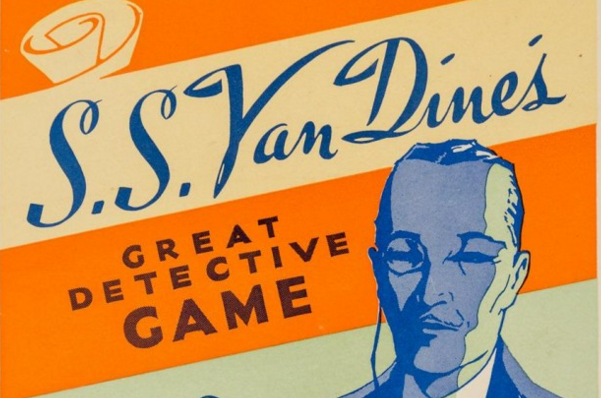
One novel that impressed him above all others is titled The Benson Murder Case by an American writer named S.S. Van Dine, pen name of an art critic and editor named Willard Huntington Wright. Referring to an eminent art historian—whose tastes guided those of the wealthy industrial class—Eliot wrote that Van Dine used “methods similar to those which Bernard Berenson applies to paintings.” He had good reason to ascribe to Van Dine a curatorial sensibility. After a nervous breakdown, the writer “spent two years in bed reading more than two thousand detective stories, during with time he methodically distilled the genre’s formulas and began writing novels.” The year after Eliot’s appreciative review, Van Dine published his own set of criteria for detective fiction in a 1928 issue of The American Magazine. You can read his “Twenty Rules for Writing Detective Stories” below. They include such proscriptions as “There must be no love interest” and “The detective himself, or one of the official investigators, should never turn out to be the culprit.”
Rules, of course, are made to be broken (just ask G.K. Chesterton), provided one is clever and experienced enough to circumvent or disregard them. But the novice detective or mystery writer could certainly do worse than take the advice below from one of T.S. Eliot’s favorite detective writers. We’d also urge you to see Raymond Chandler’s 10 Commandments for Writing Detective Fiction.
THE DETECTIVE story is a kind of intellectual game. It is more — it is a sporting event. And for the writing of detective stories there are very definite laws — unwritten, perhaps, but none the less binding; and every respectable and self-respecting concocter of literary mysteries lives up to them. Herewith, then, is a sort Credo, based partly on the practice of all the great writers of detective stories, and partly on the promptings of the honest author’s inner conscience. To wit:
1. The reader must have equal opportunity with the detective for solving the mystery. All clues must be plainly stated and described.
2. No willful tricks or deceptions may be placed on the reader other than those played legitimately by the criminal on the detective himself.
3. There must be no love interest. The business in hand is to bring a criminal to the bar of justice, not to bring a lovelorn couple to the hymeneal altar.
4. The detective himself, or one of the official investigators, should never turn out to be the culprit. This is bald trickery, on a par with offering some one a bright penny for a five-dollar gold piece. It’s false pretenses.
5. The culprit must be determined by logical deductions — not by accident or coincidence or unmotivated confession. To solve a criminal problem in this latter fashion is like sending the reader on a deliberate wild-goose chase, and then telling him, after he has failed, that you had the object of his search up your sleeve all the time. Such an author is no better than a practical joker.
6. The detective novel must have a detective in it; and a detective is not a detective unless he detects. His function is to gather clues that will eventually lead to the person who did the dirty work in the first chapter; and if the detective does not reach his conclusions through an analysis of those clues, he has no more solved his problem than the schoolboy who gets his answer out of the back of the arithmetic.
7. There simply must be a corpse in a detective novel, and the deader the corpse the better. No lesser crime than murder will suffice. Three hundred pages is far too much pother for a crime other than murder. After all, the reader’s trouble and expenditure of energy must be rewarded.
8. The problem of the crime must he solved by strictly naturalistic means. Such methods for learning the truth as slate-writing, ouija-boards, mind-reading, spiritualistic se’ances, crystal-gazing, and the like, are taboo. A reader has a chance when matching his wits with a rationalistic detective, but if he must compete with the world of spirits and go chasing about the fourth dimension of metaphysics, he is defeated ab initio.
9. There must be but one detective — that is, but one protagonist of deduction — one deus ex machina. To bring the minds of three or four, or sometimes a gang of detectives to bear on a problem, is not only to disperse the interest and break the direct thread of logic, but to take an unfair advantage of the reader. If there is more than one detective the reader doesn’t know who his codeductor is. It’s like making the reader run a race with a relay team.
10. The culprit must turn out to be a person who has played a more or less prominent part in the story — that is, a person with whom the reader is familiar and in whom he takes an interest.
11. A servant must not be chosen by the author as the culprit. This is begging a noble question. It is a too easy solution. The culprit must be a decidedly worth-while person — one that wouldn’t ordinarily come under suspicion.
12. There must be but one culprit, no matter how many murders are committed. The culprit may, of course, have a minor helper or co-plotter; but the entire onus must rest on one pair of shoulders: the entire indignation of the reader must be permitted to concentrate on a single black nature.
13. Secret societies, camorras, mafias, et al., have no place in a detective story. A fascinating and truly beautiful murder is irremediably spoiled by any such wholesale culpability. To be sure, the murderer in a detective novel should be given a sporting chance; but it is going too far to grant him a secret society to fall back on. No high-class, self-respecting murderer would want such odds.
14. The method of murder, and the means of detecting it, must be be rational and scientific. That is to say, pseudo-science and purely imaginative and speculative devices are not to be tolerated in the roman policier. Once an author soars into the realm of fantasy, in the Jules Verne manner, he is outside the bounds of detective fiction, cavorting in the uncharted reaches of adventure.
15. The truth of the problem must at all times be apparent — provided the reader is shrewd enough to see it. By this I mean that if the reader, after learning the explanation for the crime, should reread the book, he would see that the solution had, in a sense, been staring him in the face-that all the clues really pointed to the culprit — and that, if he had been as clever as the detective, he could have solved the mystery himself without going on to the final chapter. That the clever reader does often thus solve the problem goes without saying.
16. A detective novel should contain no long descriptive passages, no literary dallying with side-issues, no subtly worked-out character analyses, no “atmospheric” preoccupations. such matters have no vital place in a record of crime and deduction. They hold up the action and introduce issues irrelevant to the main purpose, which is to state a problem, analyze it, and bring it to a successful conclusion. To be sure, there must be a sufficient descriptiveness and character delineation to give the novel verisimilitude.
17. A professional criminal must never be shouldered with the guilt of a crime in a detective story. Crimes by housebreakers and bandits are the province of the police departments — not of authors and brilliant amateur detectives. A really fascinating crime is one committed by a pillar of a church, or a spinster noted for her charities.
18. A crime in a detective story must never turn out to be an accident or a suicide. To end an odyssey of sleuthing with such an anti-climax is to hoodwink the trusting and kind-hearted reader.
19. The motives for all crimes in detective stories should be personal. International plottings and war politics belong in a different category of fiction — in secret-service tales, for instance. But a murder story must be kept gemütlich, so to speak. It must reflect the reader’s everyday experiences, and give him a certain outlet for his own repressed desires and emotions.
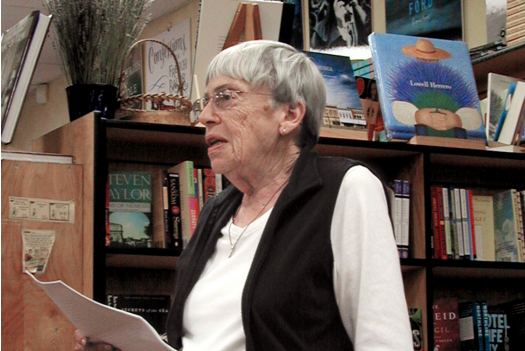
Though it’s sometimes regarded as a pretentious-sounding term for genre writers who don’t want to associate with genre, I’ve always liked the phrase “speculative fiction.” J.G. Ballard, Philip K. Dick, Shirley Jackson, Margaret Atwood, Neil Gaiman… A touch of surrealist humor, a highly philosophical bent, and a somewhat tragic sensibility can be found among them all, and also in the work of Ursula K. Le Guin, who does not shy away from the genre labels of science fiction and fantasy, but who approaches these categories in the way of, say, Virginia Woolf in her Orlando: as feminist thought experiments and fables about human ecological failings and inter-cultural potential.
That’s not to say that Le Guin’s writing is driven by political agendas, but that she has a very clear, uncompromising vision, which she has realized over the course of over five decades in novels, short stories, and children’s fiction. LeGuin’s writing takes us away from the familiar to worlds we recognize as alternatives to our own.
Like those in ancient epics, her characters undertake journeys to realms unknown, where they learn as much or more about themselves as about the alien inhabitants. And though we experience in her stories the thrill of discovery and danger common to fantasy and sci-fi, we also enter a world of ideas about who we are as human beings, and how we might be different. For Le Guin, fiction is a vessel that can carry us out of ourselves and return us home changed.
Le Guin stated last year that she no longer has the “vigor and stamina” for writing novels, and having given up teaching as well, said she missed “being in touch with serious prentice writers.” Thus, she decided to start an online writing workshop at the site Book View Café, describing it as “a kind of open consultation or informal ongoing workshop in Fictional Navigation.” In keeping with the metaphor of sea voyaging, she called her workshop “Navigating the Ocean of Story” and declared that she would not take reader questions about publishing or finding an agent: “We won’t be talking about how to sell a ship, but how to sail one.” Reader questions poured in, and Le Guin did her best to answer as many as she could, posting advice every other Monday for all of the summer and much of the fall of 2015.
The first question she received was a doozy—“How do you make something good?”—and her lengthy answer sets the tone for all of her counsel to follow. She is witty and honest, and surprisingly helpful, even when confronted with such a vague, seemingly unanswerable query. The dozens of questions she selected in the following weeks tend to deal with much more manageable issues of style and technique, and in each instance, Le Guin offers the querent a clear set of coordinates to help them navigate the waters of their own fictional journeys. Below are just a few choice excerpts from the many hundreds of words Le Guin generously donated to her reading community.
The problem of exposition:
In answers to two readers’ questions about providing sufficient backstory, Le Guin refers to an old New Yorker feature called “The Department of Fuller Explanation, where they put truly and grand examples of unnecessary explaining.” Most of us, Le Guin writes, “tend to live in the Department of Fuller Explanation” when writing; “We are telling ourselves backstory and other information, which the reader won’t actually need to know when reading it.”
To avoid the “Expository Lump or the Infodump,” as she calls it, Le Guin advises the writer to “decide—or find out when revising—whether the information is actually necessary. If not, don’t bother. If so, figure out how to work it in as a functional, forward-moving element of the story… giving information indirectly, by hint and suggestion.”
The problem of description:
When it comes to describing characters’ appearances, Le Guin suggests getting specific:
It’s not just facial features—a way of moving, a voice quality, can ’embody’ a character. Specific features or mannerisms (even absurdly specific ones!) can help fix a minor character in the reader’s mind when they turn up again…. To work on this skill, you might try describing people you see on the bus or in the coffee shop: just do a sentence about them in your head, trying to catch their looks in a few words.
The problem of setting:
Le Guin answers a reader who confesses to trouble with “world building” by pointing out the central importance of setting:
Event requires location. Where we are affects who we are, what we say and and do, how and why we say and do it. It matters, doesn’t it, whether we’re in Miami or Mumbai — even more whether we’re on Earth or in Made-Up Place? So, I don’t know if it would work to try and build up a world– “all those details” – and tack it onto what you’ve written. If inventing a world isn’t your thing, OK. Stick close to this world, or use readymade, conventional sf and fantasy props and scenery. They’re there for all of us to use.
The problem of dialogue:
Le Guin offers some very practical advice on how to make speech sound convincing and genuine:
All I can recommend is to read/speak your dialogue aloud. Not whispering, not muttering, OUT LOUD. (Virginia Woolf used to try out her dialogue in the bathtub, which greatly entertained the cook downstairs.) This will help show you what’s fakey, hokey, bookish — it just won’t read right out loud. Fix it till it does. Speaking it may help you to vary the speech mannerisms to suit the character. And probably will cause you to cut a lot. Good! Many contemporary novels are so dialogue-heavy they seem all quotation marks — disembodied voices yaddering on in a void.
Getting started:
Many readers wrote to ask Le Guin about their difficulty in getting a story started at all. She replied with the caveat that “no answer to this question is going to fit every writer.” While some writers work from “a rough sketch, notes as to where the story is headed and how it might get there, with more extended notes about the world it takes place in,” for others, “a complete outline is absolutely necessary before starting to write.” Whatever the method:
A story is, after all, and before everything else, dynamic: it starts Here, because it’s going There. Its life principle is the same as a river: to keep moving. Fast or slow, straight or erratic, headlong or meandering, but going, till it gets There. The ideas it expresses, the research it embodies, the timeless inspirations it may offer, are all subordinate to and part of that onward movement. The end itself may not be very important; it is the journey that counts. I don’t know much about “flow” states, but I know that the onward flow of a story is what carries a writer from the start to the end of it, along with the whole boatload of characters and ideas and knowledge and meaning — and carries the reader in the same boat.
There are dozens more questions from readers, and dozens more insightful, funny, and very helpful answers from Le Guin. Whether you are a writer of science fiction, fantasy, speculative fiction, or none of the above, much of her advice will apply to any kind of fiction writing you do—or will give you unique insights into the techniques and trials of the fiction writer. Read all of the questions and Le Guin’s answers in her “Navigating the Ocean of Story” posts at Book View Café.
So you want to be a rock and roll star? Or a writer, or a filmmaker, or a comedian, or what-have-you…. And yet, you don’t know where to start. You’ve heard you need to find your own voice, but it’s difficult to know what that is when you’re just beginning. You have too little experience to know what works for you and what doesn’t. So? “Steal,” as the great John Cleese advises above, “or borrow or, as the artists would say, ‘be influenced by’ anything that you think is really good and really funny and appeals to you. If you study that and try to reproduce it in some way, then it’ll have your own stamp on it. But you have a chance of getting off the ground with something like that.”
Cleese goes on to sensibly explain why it’s nearly impossible to start with something completely new and original; it’s like “trying to fly a plane without any lessons.” We all learn the rudiments of everything we know by imitating others at first, so this advice to the budding writer and artist shouldn’t sound too radical. But if you need more validation for it, consider William Faulkner’s exhortation to take whatever you need from other writers. The beginning writer, Faulkner told a class at the University of Virginia, “takes whatever he needs, wherever he needs, and he does that openly and honestly.” There’s no shame in it, unless you fail to ever make it your own. Or, says Faulkner, to make something so good that others will steal from you.
One theory of how this works in literature comes from critic Harold Bloom, who argued in The Anxiety of Influence that every major poet more or less stole from previous major poets; yet they so misread or misinterpreted their influences that they couldn’t help but produce original work. T.S. Eliot advanced a more conservative version of the claim in his essay “Tradition and the Individual Talent.” We have a “tendency to insist,” wrote Eliot, on “those aspects or parts of [a poet’s] work in which he least resembles anyone else.” (Both Eliot and Faulkner used the masculine as a universal pronoun; whatever their biases, no gender exclusion is implied here.) On the contrary, “if we approach a poet without this prejudice we shall often find that not only the best, but the most individual parts of his work may be those in which the dead poets, his ancestors, assert their immortality most vigorously.”
It may have been a requirement for Eliot that his literary predecessors be long deceased, but John Cleese suggests no such thing. In fact, he worked closely with many of his favorite comedy writers. The point he makes is that one should “copy someone who’s really good” in order to “get off the ground.” In time—whether through becoming better than your influences, or misreading them, or combining their parts into a new whole—you will, Cleese and many other wise writers suggest, develop your own style.
Cleese has liberally discussed his influences, in his recent autobiography and elsewhere, and one can clearly see in his work the impression comedic forbears like Laurel and Hardy and the writer/actors of The Goon Showhad on him. But whatever he stole or borrowed from those comedians he also made entirely his own through practice and perseverance. Just above, see a television special on Cleese’s comedy heroes, with interviews from Cleese, legends who followed him, like Rik Mayall and Steve Martin, and those who worked side-by-side with him on Monty Python and other classic shows.
Most writers find their individual voice only after they sojourn through periods of imitation. Though it’s an excellent way to appropriate experimental techniques and move out of comfortable ruts, imitation can only take us so far. But more prescriptive guidelines from famous authors can offer ways to refine our individual styles and visions. Advice, for example, from such a clear and succinct theorist as Kurt Vonnegut can go a very long way indeed for aspiring fiction writers.
Another reason for appreciating great writers’ how-to guidelines accords with the injunction we often hear: to read, read, read as much as possible. Learning how William Faulkner conceived of his craft can give us useful insights into his novels. What did Faulkner think of the writing enterprise and the social role of the writer? How did he come to formulate his impressively dense style? What was his view of learning from other writers?
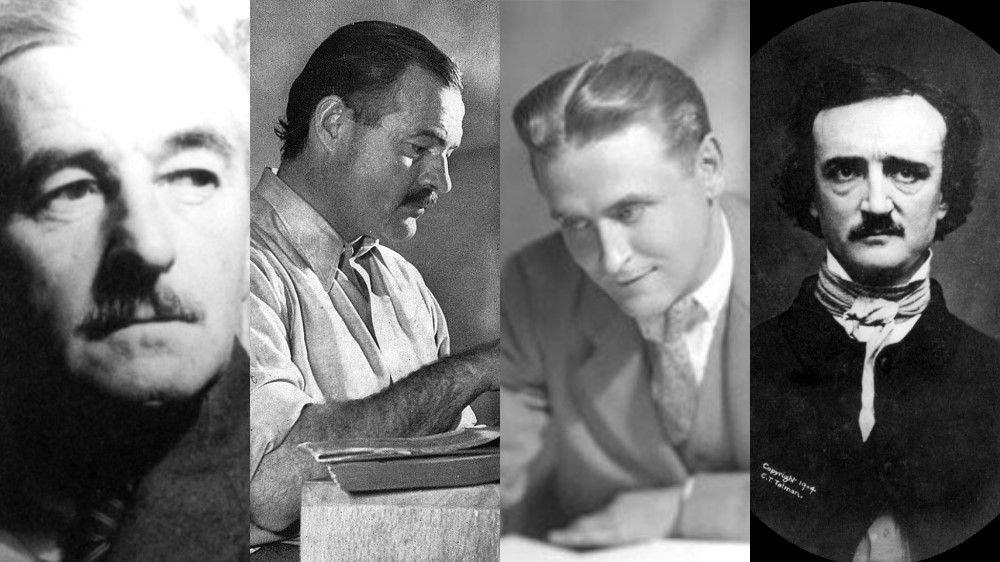
We can answer the last question by reference to seven writing tips we previously compiled from lectures and Q&A sessions Faulkner conducted while serving as writer-in-residence at the University of Virginia from 1957 to ’58. The first tip? Take what you need from other writers. To that end, we offer seven writing tips each from four American greats (or 28 tips in total). As writers, we’re free to take or leave their guidelines; as readers we may always find their philosophies of keen interest.
William Faulkner:
Take What You Need From Other Writers
During a writing class on February 25, 1957, Faulkner said the following:
I think the writer, as I’ve said before, is completely amoral. He takes whatever he needs, wherever he needs, and he does that openly and honestly because he himself hopes that what he does will be good enough so that after him people will take from him, and they are welcome to take from him, as he feels that he would be welcome by the best of his predecessors to take what they had done.
Faulkner’s advice can help tremendously–at least in a psychological sense–those writers who might have qualms about “stealing” from others. You have permission to do so from none other than perhaps the greatest American modernist writer of them all.
Faulkner also said “the young writer would be a fool to follow a theory,” a piece of advice we might bear in mind as we peruse famous writing theories. “The good artist,” he said, “believes that nobody is good enough to give him advice.”
Faulkner’s modernist foil and sometime rival Ernest Hemingway had some characteristically pragmatic advice for budding writers. Like many writers’ tips, some of his advice may do little but help you write more like Hemingway. And some of it, like “use a pencil,” is perfectly useless if you’ve already found your preferred method of working. One guideline, however, is intriguingly counter-intuitive. Hemingway counsels us to
Never Think about the Story When You’re Not Working
This is one thing Faulkner and Hemingway might agree on. In an Esquire article, Hemingway describes his experience during the composition of A Moveable Feast, one Faulkner characterizes in his writing advice as “never exhaust your imagination.”
When I was writing, it was necessary for me to read after I had written. If you kept thinking about it, you would lose the thing you were writing before you could go on with it the next day. It was necessary to get exercise, to be tired in the body, and it was very good to make love with whom you loved. That was better than anything. But afterwards, when you were empty, it was necessary to read in order not to think or worry about your work until you could do it again. I had learned already never to empty the well of my writing, but always to stop when there was still something there in the deep part of the well, and let it refill at night from the springs that fed it.
Despite his reputation as an undisciplined and messy writer, Fitzgerald has some of the most practical tips of all for organizing your ideas. One of his more philosophical prescriptions takes a similar tone as Hemingway’s in regard to the private world of the imagination:
Don’t Describe Your Work-in-Progress to Anyone
Fitzgerald offered this piece of advice in a 1940 letter to his daughter, Scottie, writing,
I think it’s a pretty good rule not to tell what a thing is about until it’s finished. If you do you always seem to lose some of it. It never quite belongs to you so much again.
This seems to me a good piece of advice for holding on to the magic of a creatively imagined world. Trying to summarize a good story in brief—like trying to explain a joke—generally has the effect of taking all the fun out of it.
Finally, we reach back to the 19th century, to the father of the American gothic and the detective story, Edgar Allan Poe, who had some very specific, very Poe things to say about the art of fiction. In his essay “The Philosophy of Composition,” Poe focuses on how to achieve what he vaguely called a “unity of effect,” the quality he desired most to produce in his narrative poem “The Raven.” Perhaps the clearest piece of advice Poe offers in his treatise is:
Know the Ending in Advance, Before You Begin to Write
You will likely find other authors who advise against this and tell you to write your way to the end. Bearing in mind Faulkner’s disclaimer—that we would be “fool to follow a theory”—we might at least try this practice and see if it works for us as it did for Poe. As he described it, “nothing is more clear than that every plot, worth the name, must be elaborated to its dénouement before any thing be attempted with the pen.”
Keeping the end “constantly in view,” wrote Poe, gives “a plot its indispensable air of consequence.” Poe’s advice applies to short works that can be read in a single sitting, the only ones he generally allows can achieve “unity of effect.” Novel-writing is different. I don’t know if it’s necessary to fully know the ending of a short story before one begins, but Vonnegut counsels writers to “start as close to the end as possible” when writing one.
Should you desire more writing advice, you’ll find no shortage here at Open Culture, from writers as diverse as Stephen King, Toni Morrison, Roberto Bolaño, H.P. Lovecraft, Haruki Murakami, Ray Bradbury, and many more. Whether or not we decide to take any of their advice, it always opens a window onto their art of creating fictional worlds, which can seem to many of us a creative act akin to magic.
An interesting thing happens when you read certain of George Saunders’ stories. At first, you see the satirist at work, skewering American meanness and banality with the same unsparing knife’s edge as earlier postmodernists like John Barth or Donald Barthelme. Then you begin to notice something else taking shape… something perhaps unexpected: compassion. Rather than serving as paper targets of Saunders’ dark humor, his misguided characters come to seem like real people, people he cares about; and the real target of his satire becomes a culture that alienates and devalues those people.
Take the oft-anthologized “Sea Oak,” a farcical melodrama about a dead aunt who returns reanimated to annoy and depress her downwardly mobile family members. The stage is set for a series of buffoonish episodes that, in the hands of a less mature writer, might play out to emphasize just how ridiculous these characters’ lives are, and how justifiably we—author and reader—might mock them from our perches. Saunders does not do this at all. Rather than distancing, he draws us closer, so that the characters in the story become more sympathetic and three-dimensional even as events become increasingly outlandish.
All of this humanizing is by design, or rather, we might say that empathy is baked into Saunders’ ethos—one he has articulated many times in essays, interviews, and a moving 2013 Syracuse University commencement speech. Now we can see him in a candid filmed appearance above, in a documentary titled “George Saunders: On Story” by Redglass Pictures (executive produced by Ken Burns). Created from a two-hour interview with Saunders, the short video at the top offers “a direct look at the process by which he is able to take a single mundane sentence and infuse it with the distinct blend of depth, compassion, and outright magic that are the trademarks of his most powerful work.”
In Saunders’ own words, “a good story is one that says, at many different levels, ‘we’re both human beings, we’re in this crazy situation called life, that we don’t really understand. Can we put our heads together and confer about it a little bit at a very high, non-bullshitty level?’ Then, all kinds of magic can happen.” The rest of Saunders’ fascinating monologue on story gets an animated treatment that illustrates the magic he describes. If you haven’t read Saunders, this is almost as good an introduction to him as, say, “Sea Oak.” His thoughts on the role fiction plays in our lives and the ways good stories work are always lucid, his examples vividly inventive. The effect of listening to him mirrors that of sitting in a seminar with one of the best teachers of creative writing, which Saunders happens to be as well.
I would love to take a class with him, but barring that, I’m very happy for the chance to hear him discuss writing techniques and philosophy in the short film at the top and in the interview extras below it: “On the relationship between reader and writer,” “On the tricks of the writing process,” and “In defense of darkness.” Praised by no less a postmodernist luminary than Thomas Pynchon, Saunders’ story collections like CivilWArLand in Bad Decline, Pastoralia, and In Persuasion Nation get at much of what ails us in these United States, but they do so always with an underlying hopefulness and a “non-bullshitty” conviction of shared humanity.
Though few of us like to hear it, the fact remains that success in any endeavor requires patient, regular training and a daily routine. To take a mundane, well-worn example, it’s not for nothing that Stephen R. Covey’s best-selling classic of the business and self-help worlds offers us “7 Habits of Highly Effective People,” rather than “7 Sudden Breakthroughs that Will Change Your Life Forever”—though if we credit the spam emails, ads, and sponsored links that clutter our online lives, we may end up believing in quick fixes and easy roads to fame and fortune. But no, a well-developed skill comes only from a set of practiced routines.
That said, the type of routine one adheres to depends on very personal circumstances such that no single creative person’s habits need exactly resemble any other’s. When it comes to the lives of writers, we expect some commonality: a writing space free of distractions, some preferred method of transcription from brain to page, some set time of day or night at which the words flow best. Outside of these basic parameters, the daily lives of writers can look as different as the images in their heads.
But it seems that once a writer settles on a set of habits—whatever they may be—they stick to them with particular rigor. The writing routine, says hyper-prolific Stephen King, is “not any different than a bedtime routine. Do you go to bed a different way every night?” Likely not. As for why we all have our very specific, personal quirks at bedtime, or at writing time, King answers honestly, “I don’t know.”
“I have a glass of water or a cup of tea. There’s a certain time I sit down, from 8:00 to 8:30, somewhere within that half hour every morning,” he explained. “I have my vitamin pill and my music, sit in the same seat, and the papers are all arranged in the same places. The cumulative purpose of doing these things the same way every day seems to be a way of saying to the mind, you’re going to be dreaming soon.”
The King quotes come to us via the site (and now book) Daily Routines, which features brief summaries of “how writers, artists, and other interesting people organize their days.” We’ve previously featured a few snapshots of the daily lives of famous philosophers. The writers section of the site similarly offers windows into the daily practices of a wide range of authors, from the living to the long dead.
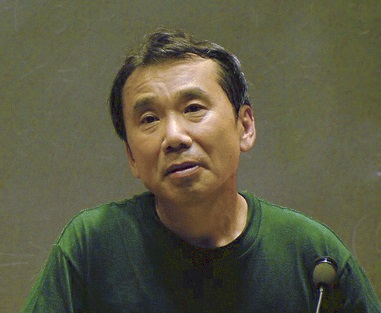
A contemporary of King, though a slower, more self-consciously painstaking writer, Haruki Murakami incorporates into his workday his passion for running, an avocation he has made central to his writing philosophy. Expectedly, Murakami keeps a very athletic writing schedule and routine.
When I’m in writing mode for a novel, I get up at 4:00 am and work for five to six hours. In the afternoon, I run for 10km or swim for 1500m (or do both), then I read a bit and listen to some music. I go to bed at 9:00 pm. I keep to this routine every day without variation. The repetition itself becomes the important thing; it’s a form of mesmerism. I mesmerize myself to reach a deeper state of mind. But to hold to such repetition for so long — six months to a year — requires a good amount of mental and physical strength. In that sense, writing a long novel is like survival training. Physical strength is as necessary as artistic sensitivity.
Not all writers can adhere to such a disciplined way of living and working, particularly those whose waking hours are given over to other, usually painfully unfulfilling, day jobs.
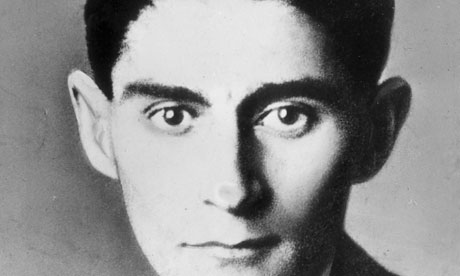
An almost archetypal case of the writer trapped in such a situation, Franz Kafka kept a routine that would cripple most people and that did not bring about physical strength, to say the least. As Zadie Smith writes of the author’s portrayal in Louis Begley’s biography, Kafka “despaired of his twelve hour shifts that left no time for writing.”
[T]wo years later, promoted to the position of chief clerk at the Workers’ Accident Insurance Institute, he was now on the one-shift system, 8:30 AM until 2:30 PM. And then what? Lunch until 3:30, then sleep until 7:30, then exercises, then a family dinner. After which he started work around 11 PM (as Begley points out, the letter- and diary-writing took up at least an hour a day, and more usually two), and then “depending on my strength, inclination, and luck, until one, two, or three o’clock, once even till six in the morning.” Then “every imaginable effort to go to sleep,” as he fitfully rested before leaving to go to the office once more. This routine left him permanently on the verge of collapse.
Might he have chosen a healthier way? When his fiancée Felice Bauer suggested as much, Kafka replied, “The present way is the only possible one; if I can’t bear it, so much the worse; but I will bear it somehow.” And so he did, until his early death from tuberculosis.
While writers require routine, nowhere is it written that their habits must be salubrious or measured. According to Simone De Beauvoir, outré French writer Jean Genet “puts in about twelve hours a day for six months when he’s working on something and when he has finished he can let six months go by without doing anything.” Then there are those writers who have relied on pointedly unhealthy, even dangerous habits to propel them through their workday. Not only did William S. Burroughs and Hunter S. Thompson write under the influence, but so also did such a seemingly conservative person as W.H. Auden, who “swallowed Benzedrine every morning for twenty years… balancing its effect with the barbiturate Seconal when he wanted to sleep.” Auden called the amphetamine habit a “labor saving device” in the “mental kitchen,” though he added that “these mechanisms are very crude, liable to injure the cook, and constantly breaking down.”
So, there you have it, a very diverse sampling of routines and habits in several successful writers’ lives. Though you may try to emulate these if you harbor literary ambitions, you’re probably better off coming up with your own, suited to the oddities of your personal makeup and your tolerance—or not—for serious physical exercise or mind-altering substances. Visit Daily Routines to learn about many more famous writers’ habits.
In a perfect world, I could write this post for free. Alas, the rigors of the modern economy demand that I pay regular and sometimes high prices for food, shelter, books, and the other necessities of life. And so if I spend time working on something — and in my case, that usually means writing something — I’d better ask for money in exchange, or I’ll find myself out on the street before long. Nobody understands this better than Harlan Ellison, the hugely prolific author of novels, stories, essays screenplays, comic books, usually in, or dealing with, the genre of science fiction.
Ellison also starred in Dreams with Sharp Teeth, a documentary about his colorful life and all the work he’s written during it, a clip of which you can see at the top of the post. In it, he describes receiving a call just the day before from “a little film company” seeking permission to include an interview clip with him previously shot about the making of Babylon 5, a series on which he worked as creative consultant. “Absolutely,” Ellison said to the company’s representative. “All you’ve got to do is pay me.”
This simple request seemed to take the representative—who went on to insist that “everyone else is just doing it for nothing” and that “it would be good publicity”—quite by surprise. “Do you get a paycheck?” Ellison then asked. “Does your boss get a paycheck? Do you pay the telecine guy? Do you pay the cameraman? Do you pay the cutters? Do you pay the Teamsters when they schlep your stuff on the trucks? Would you go to the gas station and ask them to give you free gas? Would you go to the doctor and have them take out our spleen for nothing?”
This line of questioning has come up again and again since Ellison told this story, as when the journalist Nate Thayer, or more recently Wil Wheaton, spoke out against the expectation that writers would hand out the rights to their work “for exposure.” The pragmatic Ellison frames the matter as follows: “Cross my palm with silver, and you can use my interview.” But do financially-oriented attitudes such as his (“I don’t take a piss without getting paid for it”) taint the art and craft of writing? He doesn’t think so: “I sell my soul,” he admits, “but at the highest rates.”
We're hoping to rely on loyal readers, rather than erratic ads. Please click the Donate button and support Open Culture. You can use Paypal, Venmo, Patreon, even Crypto! We thank you!
Open Culture scours the web for the best educational media. We find the free courses and audio books you need, the language lessons & educational videos you want, and plenty of enlightenment in between.