A Reading of Charles Bukowski’s First Published Story, “Aftermath of a Lengthy Rejection Slip” (1944)

BukowskiStoryCover

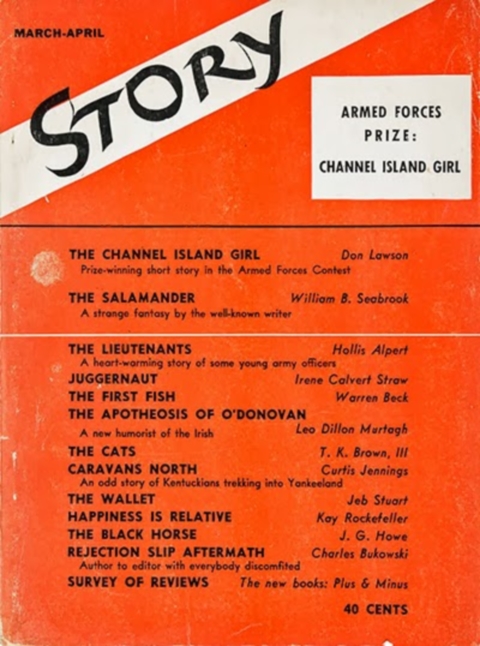
“Everyone’s got to start some­where,” a banal plat­i­tude that express­es a tru­ism worth repeat­ing: wher­ev­er you are, you’ve got to get start­ed. If you’re John Updike (who would have been 82 years old yes­ter­day), you start where so many oth­er accom­plished fig­ures have, the Har­vard Lam­poon. If you’re Charles Bukows­ki… believe it or not, you actu­al­ly start in an equal­ly renowned pub­li­ca­tion. Bukowski’s first fic­tion appeared in Sto­ry, a mag­a­zine that helped launch the careers of Cheev­er, Salinger, Saroy­an, Car­son McCullers and Richard Wright.

But if you’re Charles Bukows­ki, you come out swing­ing. Your first pub­lished work in 1944  is a non­sense sto­ry writ­ten as an eff you to the edi­tor, Whit Bur­nett. You fea­ture Mr. Bur­nett as a char­ac­ter, along with a cat who shakes hands (sort of), a pros­ti­tute named Mil­lie, a few card-play­ing drunks, an impe­ri­ous “short sto­ry instruc­tress,” and a mys­te­ri­ous “bleary-eyed tramp.” Oh, and you open the sto­ry by quot­ing ver­ba­tim one of Burnett’s rejec­tion let­ters:

Dear Mr. Bukows­ki:

Again, this is a con­glom­er­a­tion of extreme­ly good stuff and oth­er stuff so full of idol­ized pros­ti­tutes, morn­ing-after vom­it­ing scenes, mis­an­thropy, praise for sui­cide etc. that it is not quite for a mag­a­zine of any cir­cu­la­tion at all. This is, how­ev­er, pret­ty much the saga of a cer­tain type of per­son and in it I think you’ve done an hon­est job. Pos­si­bly we will print you some­time but I don’t know exact­ly when. That depends on you.

Sin­cere­ly yours,

Whit Bur­nett

I won’t spoil it for you—you must read (or lis­ten to below) “After­math of a Lengthy Rejec­tion Slip” for yourself—but the let­ter sets up a typ­i­cal­ly Bukowskian punch­line: wry and sar­cas­tic and wist­ful and lyri­cal all at once.

Bukows­ki was 24 and had only been writ­ing for two years by this time. He lat­er recalled being very unhap­py with the pub­li­ca­tion. For one, writes Book­tryst, “it had been buried in the End Pages sec­tion of the mag­a­zine as, Bukows­ki felt, a curios­i­ty rather than a seri­ous piece of writ­ing.” How­ev­er, Bukows­ki had already sent Sto­ry dozens of what he con­sid­ered seri­ous pieces of writ­ing before pen­ning “After­math,” which he admits he tamed for the sake of Burnett’s sen­si­bil­i­ties. In an inter­view near the end of his life, Bukows­ki remem­bered sub­mit­ting to the mag­a­zine “a cou­ple of short sto­ries a week for maybe a year and half. The sto­ry they final­ly accept­ed was mild in com­par­i­son to the oth­ers. I mean in terms of con­tent and style and gam­ble and explo­ration and all that.”

Bukows­ki may have been bit­ter, but his first pub­li­ca­tion, and last sub­mis­sion to Sto­ry, might deserve cred­it for inspir­ing a life­time of boozy mate­r­i­al: look­ing back, he recalls that after the per­ceived slight, he “drank and became one of the best drinkers any­where, which takes some tal­ent also.” Everybody’s got to start some­where.

Book­tryst has more to the sto­ry, as well as sev­er­al images of the rare 1944 Bukows­ki issue of Sto­ry. Above, in two parts, lis­ten to the sto­ry in the won­der­ful­ly dry bari­tone of Tom O’Bedlam, whom you may already know from our pre­vi­ous posts on Bukowski’s poems “Nir­vana” and “So You Want to Be a Writer?

Relat­ed Con­tent:

Three Inter­pre­ta­tions of Charles Bukowski’s Melan­choly Poem “Nir­vana”

Lis­ten to Charles Bukows­ki Poems Being Read by Bukows­ki Him­self & the Great Tom Waits

So You Want to Be a Writer?: Charles Bukows­ki Explains the Dos & Don’ts

Josh Jones is a writer and musi­cian based in Durham, NC. Fol­low him at @jdmagness

William S. Burroughs Teaches a Free Course on Creative Reading and Writing (1979)

Accord­ing to Ted Mor­gan, author of William S. Bur­roughs biog­ra­phy Lit­er­ary Out­law (which Bur­roughs hat­ed), the hard-liv­ing Beat writer added “teacher” to the list of jobs he did not like after an unhap­py semes­ter teach­ing cre­ative writ­ing at the City Col­lege of New York. He com­plained about dimwit­ted stu­dents, and dis­liked the job—arranged for him by Allen Ginsberg—so much that he lat­er turned down a posi­tion at the Uni­ver­si­ty of Buf­fa­lo that paid $15,000 a semes­ter, even though he des­per­ate­ly need­ed the mon­ey. That Bur­roughs had recent­ly kicked hero­in may have con­tributed to his unease with the pro­sa­ic reg­u­lar­i­ties of col­lege life. What­ev­er the sto­ry, he lat­er remarked that the “teach­ing gig was a les­son in nev­er again.”

What then could have lured Bur­roughs out to Boul­der Col­orado five years lat­er to deliv­er a series of lec­tures on cre­ative writ­ing at Naropa Uni­ver­si­ty? He’d picked up his hero­in habit again, and his friend­ship with Ginsberg—who co-found­ed Naropa’s writ­ing program—must have played a part. What­ev­er the rea­sons, this assign­ment dif­fered great­ly from his City Col­lege stint: no stu­dent writ­ing, no office hours or admin. Just Bur­roughs doing what came naturally—holding court, on lit­er­a­ture, para­psy­chol­o­gy, occult eso­ter­i­ca, vio­lence, aliens, neu­ro­science, and his own nov­els Naked Lunch and The Soft Machine.

Bur­roughs’ lec­tures are heav­i­ly philo­soph­i­cal, which might have turned off his New York stu­dents, but sure­ly turned on his Naropa audi­ence. And if you stopped to lis­ten, it will prob­a­bly turn you on too, in ways cre­ative and intel­lec­tu­al. Osten­si­bly on the sub­ject of cre­ative read­ing, Bur­roughs also offers cre­ative writ­ing instruc­tion in each talk. His dis­cus­sions of writ­ers he admires—from Car­son McCullers to Aleis­ter Crow­ley to Stephen King—are fas­ci­nat­ing, and he uses no short­age of exam­ples to illus­trate var­i­ous writ­ing tech­niques. For­tu­nate­ly for us, the lec­tures were record­ed. Says Dan­ger­ous Minds, who pro­vide help­ful descrip­tions of each lec­ture: “now you can have your very own cre­ative writ­ing class from William S. Bur­roughs, all thanks to the won­ders of YouTube.” Hear all three lec­tures above, and be by turns inspired, instruct­ed, enlight­ened, and warped.

You can find Bur­rough’s lec­tures on Cre­ative Read­ing list­ed in our col­lec­tion of Free Online Lit­er­a­ture Cours­es, part of our larg­er col­lec­tion, 1,700 Free Online Cours­es from Top Uni­ver­si­ties.

If you would like to sign up for Open Culture’s free email newslet­ter, please find it here. It’s a great way to see our new posts, all bun­dled in one email, each day.

If you would like to sup­port the mis­sion of Open Cul­ture, con­sid­er mak­ing a dona­tion to our site. It’s hard to rely 100% on ads, and your con­tri­bu­tions will help us con­tin­ue pro­vid­ing the best free cul­tur­al and edu­ca­tion­al mate­ri­als to learn­ers every­where. You can con­tribute through Pay­Pal, Patre­on, and Ven­mo (@openculture). Thanks!

Relat­ed Con­tent:

William S. Bur­roughs Explains What Artists & Cre­ative Thinkers Do for Human­i­ty: From Galileo to Cézanne and James Joyce

William S. Bur­roughs on the Art of Cut-up Writ­ing

William S. Bur­roughs Reads His Con­tro­ver­sial 1959 Nov­el Naked Lunch

Josh Jones is a writer and musi­cian based in Durham, NC. Fol­low him at @jdmagness

Stephen King Creates a List of 96 Books for Aspiring Writers to Read

stephenking

Image by The USO, via Flickr Com­mons

I first dis­cov­ered Stephen King at age 11, indi­rect­ly through a babysit­ter who would plop me down in front of day­time soaps and dis­ap­pear. Bored with One Life to Live, I read the stacks of mass-mar­ket paper­backs my absen­tee guardian left around—romances, mys­ter­ies, thrillers, and yes, hor­ror. It all seemed of a piece. King’s nov­els sure looked like those oth­er lurid, pulpy books, and at least his ear­ly works most­ly fit a cer­tain for­mu­la, mak­ing them per­fect­ly adapt­able to Hol­ly­wood films. Yet for many years now, as he’s ranged from hor­ror to broad­er sub­jects, King’s cul­tur­al stock has risen far above his genre peers. He’s become a “seri­ous” writer and even, with his 2000 book On Writ­ing—part mem­oir, part “textbook”—something of a writer’s writer, mov­ing from the super­mar­ket rack to the pages of The Paris Review

Few con­tem­po­rary writ­ers have chal­lenged the some­what arbi­trary divi­sion between lit­er­ary and so-called genre fic­tion so much as Stephen King, whose sta­tus pro­vokes word wars like this recent debate at the Los Ange­les Review of Books. What­ev­er adjec­tives crit­ics throw at him, King plows ahead, turn­ing out book after book, refin­ing his craft, hap­pi­ly shar­ing his insights, and read­ing what­ev­er he likes. As evi­dence of his dis­re­gard for aca­d­e­m­ic canons, we have his read­ing list for writ­ers, which he attached as an appen­dix to On Writ­ing. Best-sell­ing genre writ­ers like Nel­son DeMille, Thomas Har­ris, and needs-no-intro­duc­tion J.K. Rowl­ing sit com­fort­ably next to lit-class sta­ples like Dick­ens, Faulkn­er, and Con­rad. King rec­om­mends con­tem­po­rary real­ist writ­ers like Richard Bausch, John Irv­ing, and Annie Proulx along­side the occa­sion­al post­mod­ernist or “dif­fi­cult” writer like Don DeLil­lo or Cor­mac McCarthy. He includes sev­er­al non-fic­tion books as well.

King pref­aces the list with a dis­claimer: “I’m not Oprah and this isn’t my book club. These are the ones that worked for me, that’s all.” Below, we’ve excerpt­ed twen­ty good reads he rec­om­mends for bud­ding writ­ers. These are books, King writes, that direct­ly inspired him: “In some way or oth­er, I sus­pect each book in the list had an influ­ence on the books I wrote.” To the writer, he says, “a good many of these might show you some new ways of  doing your work.” And for the read­er? “They’re apt to enter­tain you. They cer­tain­ly enter­tained me.”

10. Richard Bausch, In the Night Sea­son
12. Paul Bowles, The Shel­ter­ing Sky
13. T. Cor­aghes­san Boyle, The Tor­tilla Cur­tain
17. Michael Chabon, Were­wolves in Their Youth
28. Rod­dy Doyle, The Woman Who Walked into Doors
31. Alex Gar­land, The Beach
42. Peter Hoeg, Smilla’s Sense of Snow
49. Mary Karr, The Liar’s Club
53. Bar­bara King­solver, The Poi­son­wood Bible
54. Jon Krakauer, Into Thin Air
58. Nor­man Maclean, A Riv­er Runs Through It and Oth­er Sto­ries
62. Frank McCourt, Angela’s Ash­es
66. Ian McE­wan, The Cement Gar­den
67. Lar­ry McMurtry, Dead Man’s Walk
70. Joyce Car­ol Oates, Zom­bie
71. Tim O’Brien, In the Lake of the Woods
73. Michael Ondaat­je, The Eng­lish Patient
84. Richard Rus­so, Mohawk
86. Vikram Seth, A Suit­able Boy
93. Anne Tyler, A Patch­work Plan­et

Like much of King’s own work, many of these books sug­gest a spec­trum, not a chasm, between the lit­er­ary and the com­mer­cial, and many of their writ­ers have found suc­cess with screen adap­ta­tions and Barnes & Noble dis­plays as well as wide­spread crit­i­cal acclaim. For the full range of King’s selec­tions, see the entire list of 96 books at Aero­gramme Writ­ers’ Stu­dio.

via Gal­l­ey­cat

Relat­ed Con­tent:

Stephen King Turns Short Sto­ry into a Free Web­com­ic

Stephen King Writes A Let­ter to His 16-Year-Old Self: “Stay Away from Recre­ation­al Drugs”

Stephen King Reads from His Upcom­ing Sequel to The Shin­ing

Stan­ley Kubrick’s Anno­tat­ed Copy of Stephen King’s The Shin­ing

Josh Jones is a writer and musi­cian based in Durham, NC. Fol­low him at @jdmagness

The Roving Typist: A Short Film About a New York Writer Who Types Short Stories for Strangers

C.D. Her­melin, a lit­er­ary agency asso­ciate with a degree in Cre­ative Writ­ing, is the self-pro­claimed Rov­ing Typ­ist. It’s an apt title for one who achieved fame and for­tune — okay, rent mon­ey — by appear­ing in var­i­ous pub­lic spaces around New York City, type­writer in lap. Direc­tor Mark Cer­sosi­mo’s short film, above, intro­duces him as a mild-man­nered, slight­ly awk­ward soul. Engag­ing with strangers lured by the sign taped to his type­writer case is where Her­melin comes into his own.

The sign promis­es “sto­ries while you wait,” a con­cept that recalls the “Poems on Demand” author and writ­ing guru, Natal­ie Gold­berg, who com­posed poems to raise funds for the Min­neso­ta Zen Cen­ter. (Her­melin got his idea — and per­mis­sion to imple­ment it — from a guy he saw doing some­thing sim­i­lar in San Fran­cis­co.)

He’s open to requests, and pay­ment is left to the dis­cre­tion of the recip­i­ent. He seems to take extra care when his cus­tomer is a child.

A harm­less enough pur­suit in an era where sub­way musi­cians and car­i­ca­tur­ists lin­ing the path to the Cen­tral Park Zoo hus­tle hard­er than ‘90s-era shell game artistes.

It’s rea­son­able to assume that inno­cent­ly blun­der­ing onto a cel­lo play­er’s turf is the worst trou­ble a guy like Her­melin’s like­ly to stir up.

Instead, he became the tar­get of a mass cyber­bul­ly­ing cam­paign, after a stranger post­ed a pho­to of him and his type­writer parked on the High Line on a swel­ter­ing day in 2012. Cue an avalanche of hip­ster-hat­ing Red­dit com­ments, in addi­tion to a meme at his expense.

Rather than suc­cumb to the vast neg­a­tive out­pour­ing, the Rov­ing Typ­ist con­front­ed the sit­u­a­tion head on, pub­lish­ing his side of the sto­ry in The Awl:

Orig­i­nal­ly, it felt sil­ly label­ing my ven­ture a “cause” while I defend­ed myself to an anony­mous horde—but now it feels any­thing but. The expe­ri­ence of being labeled and then cast aside made me real­ize that what many peo­ple call “hip­ster­ism” or, what they per­ceive as a slav­ish devo­tion to irony, are often in fact just forms of extreme, rad­i­cal sin­cer­i­ty. I think of Brook­lyn-based “hip­ster” brand Mast Broth­ers Choco­late, which uses an old-fash­ioned schooner to retrieve their cacao beans, because the ener­gy is clean­er, because they think that’s how it should be done. I think of the legions of Etsy-type hand­made artist shops, of peo­ple who couldn’t make mon­ey in their pro­fes­sion, so found a way to make mon­ey with their art.

Sub­ject a whim­si­cal project to the forge, and it just might become a voca­tion.

Be sure to check out the bonus out­take “I Was  A Hat­ed Hip­ster Meme” and don’t fret if your trav­els won’t take you near New York City any­time soon. Her­melin and his type­writer are spend­ing the win­ter indoors, ful­fill­ing the pub­lic’s on-demand sto­ries via mail order.

Relat­ed Con­tent:

David Rees Presents a Primer on the Arti­sanal Craft of Pen­cil Sharp­en­ing

Humans of New York: Street Pho­tog­ra­phy as a Cel­e­bra­tion of Life

What Hap­pens When Every­day Peo­ple Get a Chance to Con­duct a World-Class Orches­tra in NYC

Ayun Hal­l­i­day is an author, illus­tra­tor, and Chief Pri­ma­tol­o­gist of the long run­ning zine, The East Vil­lage Inky. Fol­low her @AyunHalliday

Kurt Vonnegut Diagrams the Shape of All Stories in a Master’s Thesis Rejected by U. Chicago

“What has been my pret­ti­est con­tri­bu­tion to the cul­ture?” asked Kurt Von­negut in his auto­bi­og­ra­phy Palm Sun­day. His answer? His master’s the­sis in anthro­pol­o­gy for the Uni­ver­si­ty of Chica­go, “which was reject­ed because it was so sim­ple and looked like too much fun.” The ele­gant sim­plic­i­ty and play­ful­ness of Vonnegut’s idea is exact­ly its endur­ing appeal. The idea is so sim­ple, in fact, that Von­negut sums the whole thing up in one ele­gant sen­tence: “The fun­da­men­tal idea is that sto­ries have shapes which can be drawn on graph paper, and that the shape of a giv­en society’s sto­ries is at least as inter­est­ing as the shape of its pots or spear­heads.” In 2011, we fea­tured the video below of Von­negut explain­ing his the­o­ry, “The Shapes of Sto­ries.” We can add to the dry wit of his les­son the pic­to-info­graph­ic by graph­ic design­er Maya Eil­am above, which strik­ing­ly illus­trates, with exam­ples, the var­i­ous sto­ry shapes Von­negut described in his the­sis. (Read a con­densed ver­sion here.)

The pre­sen­ter who intro­duces Von­negut’s short lec­ture tells us that “his sin­gu­lar view of the world applies not just to his sto­ries and char­ac­ters but to some of his the­o­ries as well.” This I would affirm. When it comes to puz­zling out the import of a sto­ry I’ve just read, the last per­son I usu­al­ly turn to is the author. But when it comes to what fic­tion is and does in gen­er­al, I want to hear it from writ­ers of fic­tion. Some of the most endur­ing lit­er­ary fig­ures are expert writ­ers on writ­ing. Von­negut, a mas­ter com­mu­ni­ca­tor, ranks very high­ly among them. Does it do him a dis­ser­vice to con­dense his ideas into what look like high-res, low-read­abil­i­ty work­place safe­ty graph­ics? On the con­trary, I think.

Though the design may be a lit­tle slick for Von­negut’s unapolo­get­i­cal­ly indus­tri­al approach, he’d have appre­ci­at­ed the slight­ly corny, slight­ly macabre boil­er­plate iconog­ra­phy. His work turns a sus­pi­cious eye on over­com­pli­cat­ed pos­tur­ing and cham­pi­ons unsen­ti­men­tal, Mid­west­ern direct­ness. Vonnegut’s short, trade pub­li­ca­tion essay, “How to Write With Style,” is as suc­cinct and prac­ti­cal a state­ment on the sub­ject in exis­tence. One will encounter no more a ruth­less­ly effi­cient list than his “Eight Rules for Writ­ing Fic­tion.” But it’s in his “Shapes of Sto­ries” the­o­ry that I find the most insight into what fic­tion does, in bril­liant­ly sim­ple and fun­ny ways that any­one can appre­ci­ate.

Relat­ed Con­tent: 

The Shape of A Sto­ry: Writ­ing Tips from Kurt Von­negut

Kurt Von­negut: Where Do I Get My Ideas From? My Dis­gust with Civ­i­liza­tion

Kurt Vonnegut’s Eight Tips on How to Write a Good Short Sto­ry

Kurt Von­negut Reads from Slaugh­ter­house-Five

Josh Jones is a writer and musi­cian based in Durham, NC. Fol­low him at @jdmagness

New “Hemingway” App Promises to Make Your Writing “Strong and Clear”

hemingway writing app

I con­fess, I pre­fer Faulkn­er to Hem­ing­way and see noth­ing wrong with long, com­plex sen­tences when they are well-con­struct­ed. But in most non-Faulkn­er writ­ing, they are not. Stream of con­scious­ness is a delib­er­ate effect of care­ful­ly edit­ed prose, not the unre­vised slop of a first draft. In my days as a writ­ing teacher, I’ve read my share of the lat­ter. The Eng­lish teacher’s guide for par­ing down unruly writ­ing resem­bles a new online app called “Hem­ing­way,” which exam­ines writ­ing and grades it on a col­or-cod­ed dif­fi­cul­ty scale. “Hem­ing­way” sug­gests using sim­pler dic­tion, edit­ing out adverbs in favor of stronger verbs, and elim­i­nat­ing pas­sive voice. It promis­es to make your writ­ing like that of the famous Amer­i­can min­i­mal­ist, “strong and clear.”

Of course I couldn’t resist run­ning the above para­graph through Hem­ing­way. It received a score of 11—merely “O.K.” It sug­gest­ed that I change the pas­sive in sen­tence one and remove “care­ful­ly” from the fourth sen­tence (I declined), and it iden­ti­fied “unruly” as an adverb (it is not). Like all forms of advice, it pays to use your own judg­ment before apply­ing whole­sale. Nev­er­the­less, the sug­ges­tion to stream­line and sim­pli­fy for clarity’s sake is a gen­er­al rule worth heed­ing more often than not. Broth­ers Adam and Ben Long, cre­ators of the app, real­ized that their “sen­tences often grow long to the point that they became dif­fi­cult to read.” It hap­pens to every­one, ama­teur and pro­fes­sion­al alike. The app sug­gests writ­ing that scores a Grade 10 or below is “bold and clear.” Writ­ing above this mea­sure is “hard” or “very hard” to read. Which prompts the inevitable ques­tion: How does Hem­ing­way him­self score in the Hem­ing­way app?

In a blog post yes­ter­day for The New York­er, Ian Crouch ran a few of the master’s pas­sages through the online edit­ing tool (a con­cept akin to John Malkovich enter­ing John Malkovich’s head). The open­ing para­graph of “A Clean, Well-Light­ed Place” received a score of 15. Hemingway’s descrip­tion of Romero the bull­fight­er from The Sun Also Ris­es also “breaks sev­er­al of the Hem­ing­way rules” with its use of pas­sive voice and extra­ne­ous adverbs. Does this mean even Hem­ing­way falls short of the ide­al? Or only that writ­ing rules exist to be bro­ken? Both, per­haps, and nei­ther. Style is as elu­sive as gram­mar is con­strict­ing, and both are mas­tered only through end­less prac­tice. Will “Hem­ing­way” turn you into Hem­ing­way? No. Will it make you a bet­ter writer? Maybe. But only, I’d sug­gest, inas­much as you learn when to accept and when to ignore its advice.

Relat­ed Con­tent:

Sev­en Tips From Ernest Hem­ing­way on How to Write Fic­tion

Jack Ker­ouac Lists 9 Essen­tials for Writ­ing Spon­ta­neous Prose

Crime Writer Elmore Leonard Pro­vides 13 Writ­ing Tips for Aspir­ing Writ­ers

Josh Jones is a writer and musi­cian based in Durham, NC. Fol­low him at @jdmagness

The Very First Written Use of the F Word in English (1528)

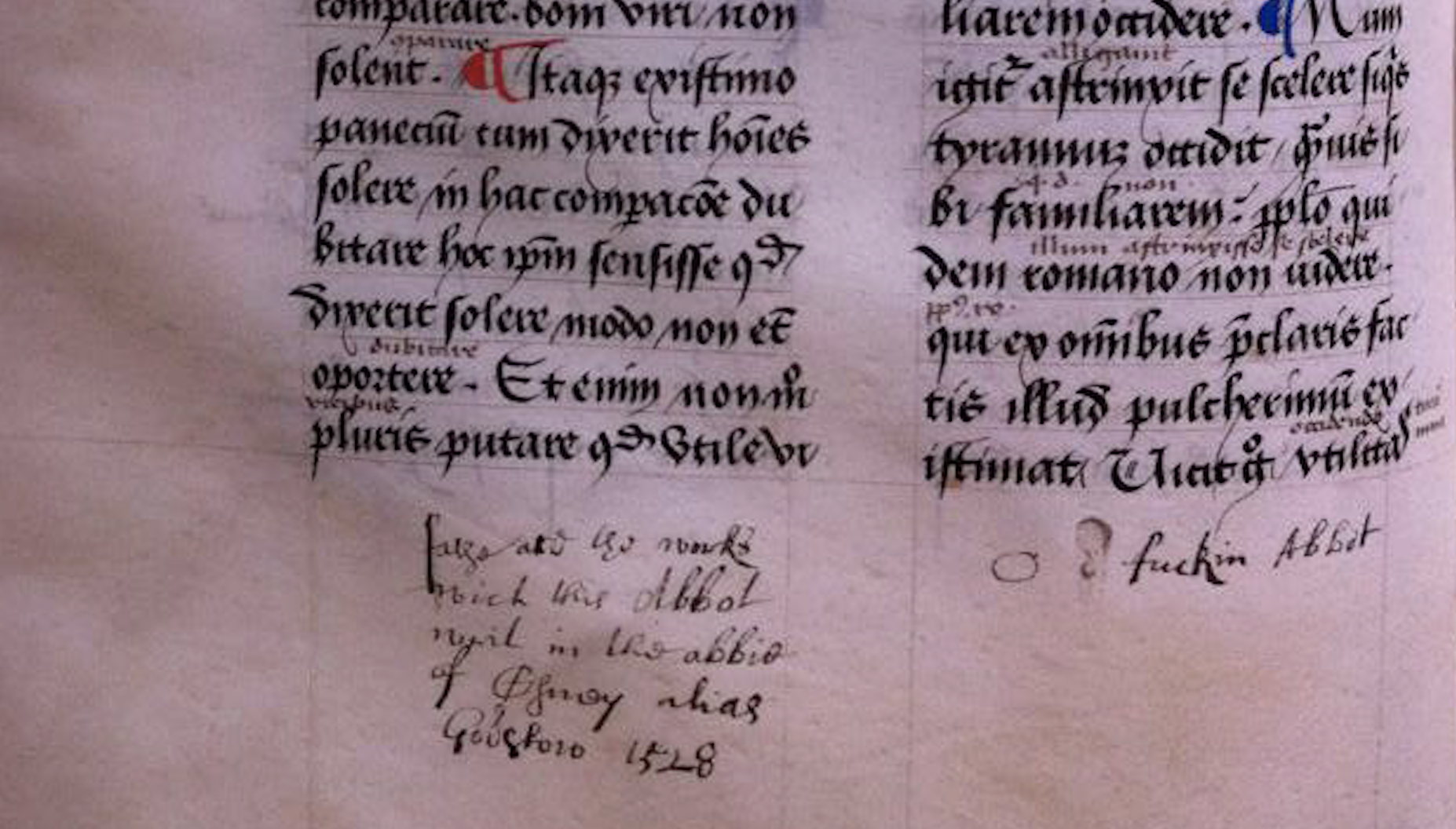
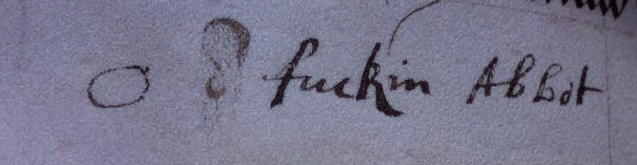
Eng­lish speak­ers enjoy what seems like an unmatched curios­i­ty about the ori­gins and his­tor­i­cal usages of their lan­guage’s curs­es. The exceed­ing­ly pop­u­lar “F word” has accret­ed an espe­cial­ly wide body of tex­tu­al inves­ti­ga­tion, wide-eyed spec­u­la­tion, and implau­si­ble folk ety­mol­o­gy. (One of the ter­m’s well-known if spu­ri­ous cre­ation myths even has a Van Halen album named after it.) “The his­to­ry begins in murky cir­cum­stances,” says the Oxford Eng­lish Dic­tio­nary’s site, and that dic­tio­nary of dic­tio­nar­ies has man­aged to place the word’s ear­li­est print appear­ance in the ear­ly six­teenth cen­tu­ry, albeit writ­ten “in code” and “in a mixed Latin-and-Eng­lish con­text.” Above, you can see one of the few con­crete pieces of infor­ma­tion we have on the mat­ter: the first defin­i­tive use of the F word in “the Eng­lish adjec­ti­val form, which implies use of the verb.”

Here the word appears (for the first time if not the last) not­ed down by hand in the mar­gins of a prop­er text, in this case Cicero’s De Offici­is. “It’s a monk express­ing his dis­plea­sure at an abbot,” writes Katharine Tren­da­cos­ta at i09. “In the mar­gins of a guide to moral con­duct. Because of course.” She quotes Melis­sa Mohr, author of Holy Sh*t: A Brief His­to­ry of Swear­ing, as declar­ing it “dif­fi­cult to know” whether this mar­gin­a­lia-mak­ing monk meant the word lit­er­al­ly, to accuse this abbott of “ques­tion­able monas­tic morals,” or whether he used it “as an inten­si­fi­er, to con­vey his extreme dis­may.” Either way, it holds a great deal of val­ue for schol­ars of lan­guage, giv­en, as the OED puts it, “the absence of the word from most print­ed text before the mid twen­ti­eth cen­tu­ry” and the “quo­ta­tion dif­fi­cul­ties” that caus­es. If you find noth­ing to like in the F word’s ever-increas­ing preva­lence in the media, think of it this way: at least future lex­i­cog­ra­phers of swear­ing will have more to go on.

To view the com­plete man­u­script page, click here. The doc­u­ment seem­ing­ly resides at Brasenose Col­lege, Oxford.

via io9

Relat­ed Con­tent:

Steven Pinker Explains the Neu­ro­science of Swear­ing (NSFW)

Stephen Fry, Lan­guage Enthu­si­ast, Defends The “Unnec­es­sary” Art Of Swear­ing

George Car­lin Per­forms His “Sev­en Dirty Words” Rou­tine: His­toric and Com­plete­ly NSFW

Medieval Cats Behav­ing Bad­ly: Kit­ties That Left Paw Prints … and Peed … on 15th Cen­tu­ry Man­u­scripts

Col­in Mar­shall hosts and pro­duces Note­book on Cities and Cul­ture and writes essays on cities, Asia, film, lit­er­a­ture, and aes­thet­ics. He’s at work on a book about Los Ange­les, A Los Ange­les Primer. Fol­low him on Twit­ter at @colinmarshall or on his brand new Face­book page.

David Foster Wallace Creates Lists of His Favorite Words: “Maugre,” “Tarantism,” “Ruck,” “Primapara” & More

WallaceLexicon1

Every­one I know has a list of least-favorite words. For var­i­ous rea­sons, “moist” always seems to make the top three. But per­haps it takes a writer—someone who savors the sounds, tex­tures, and his­to­ries of pecu­liar words—to com­pile a list of their most-favorites. A few I’ve placed in keep­sake box­es over the years—little cor­ru­gat­ed min­er­als that remind me of what words can do: “palaver,” “obdu­rate,” “crevasse,” “super­fe­cund”….

I could go on, but it’s cer­tain­ly not my list you’ve come for. You’re read­ing, I sus­pect, because you well know the con­sum­mate care and atten­tion David Fos­ter Wal­lace lav­ished on his prose—his rep­u­ta­tion as a smith of end­less cre­ativ­i­ty who, Alex Ross wrote in a series of McSweeney’s trib­utes, spent his time “keen­ly observ­ing, forg­ing acronyms, rean­i­mat­ing life­less OED entries, and cre­at­ing sen­tences that make us spit out our beer.”

Ross’s men­tion of the Oxford Eng­lish Dic­tio­nary, that ven­er­a­ble repos­i­to­ry of the vast breadth and depth of writ­ten Eng­lish (sad­ly kept behind a pay­wall), helps us appre­ci­ate Wallace’s list, which fea­tures such archa­ic adverbs as “mau­gre” (“in spite of, notwith­stand­ing”) and obscure adjec­tives as “lacinate” (“fringed”). Who has read, much less writ­ten, the Anglo-Sax­on “ruck” (“a mul­ti­tude of peo­ple mixed togeth­er”)? And while the equal­ly rock-hard, mono­syl­lab­ic “wrack” is famil­iar, I have not before encoun­tered the love­ly “prima­para” (“woman who’s preg­nant for the first time”).

WallaceList2

Anoth­er page of Wallace’s list (above—click images to enlarge) includes such trea­sures as “taran­tism,” a “dis­or­der where you have an uncon­trol­lable need to dance,” and “sci­olism,” a “pre­ten­tious air of schol­ar­ship; super­fi­cial knowl­edga­bil­i­ty.” While it is true that Wal­lace has been accused of the lat­ter, I do not think this is a com­pe­tent judg­ment. Instead, I would describe him with anoth­er of my favorite words—“amateur”—not at all, of course, in the sense of an unpaid or unskilled begin­ner, but rather, as it meant in French, a “devot­ed lover” of the Eng­lish lan­guage.

These pages come to us from Lists of Note (and the Har­ry Ran­som Cen­ter at UT-Austin), who writes that they are “just two pages from the hun­dreds of word lists he amassed over the years.” Per­haps one day we’ll see a pub­lished edi­tion of David Fos­ter Wallace’s favorite words. For the nonce, head on over to Lists of Note to see this min­im of his lex­i­con tran­scribed.

Relat­ed Con­tent:

David Fos­ter Wallace’s Love of Lan­guage Revealed by the Books in His Per­son­al Library

David Fos­ter Wal­lace Breaks Down Five Com­mon Word Usage Mis­takes in Eng­lish

David Fos­ter Wallace’s 1994 Syl­labus: How to Teach Seri­ous Lit­er­a­ture with Light­weight Books

30 Free Essays & Sto­ries by David Fos­ter Wal­lace on the Web

Josh Jones is a writer and musi­cian based in Durham, NC. Fol­low him at @jdmagness

« Go BackMore in this category... »
Quantcast