Flannery O’Connor’s Satirical Cartoons: 1942–1945

Sci-fi author B.C. Kowal­s­ki recent­ly post­ed a short essay on why the advice to write every day is, for lack of a suit­able euphemism, “bull­shit.” Not that there’s any­thing wrong with it, Kowal­s­ki main­tains. Only that it’s not the only way. It’s said Thack­er­ay wrote every morn­ing at dawn. Jack Ker­ouac wrote (and drank) in binges. Every writer finds some method in-between. The point is to “do what works for you” and to “exper­i­ment.” Kowal­s­ki might have added a third term: diver­si­fy. It’s worked for so many famous writ­ers after all. James Joyce had his music, Sylvia Plath her art, Hem­ing­way his machis­mo. Faulkn­er drew car­toons, as did his fel­low South­ern writer Flan­nery O’Connor, his equal, I’d say, in the art of the Amer­i­can grotesque. Through both writ­ers ran a deep vein of pes­simistic humor, oblique, but detectable, even in scenes of high­est pathos.


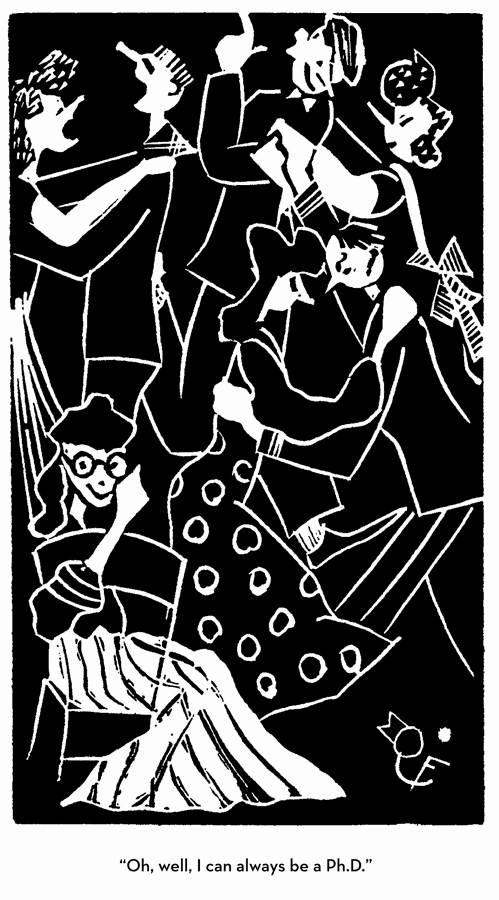
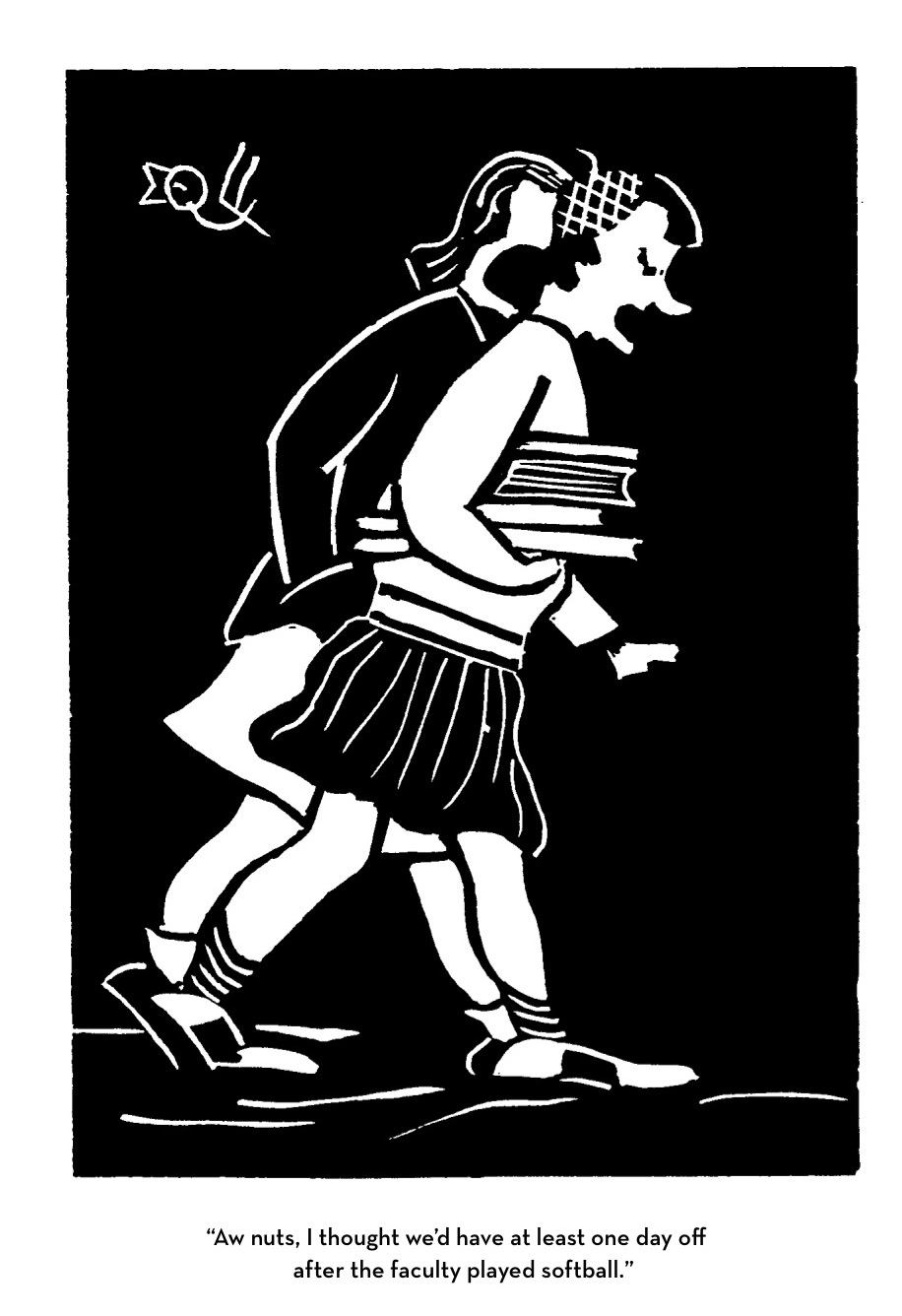
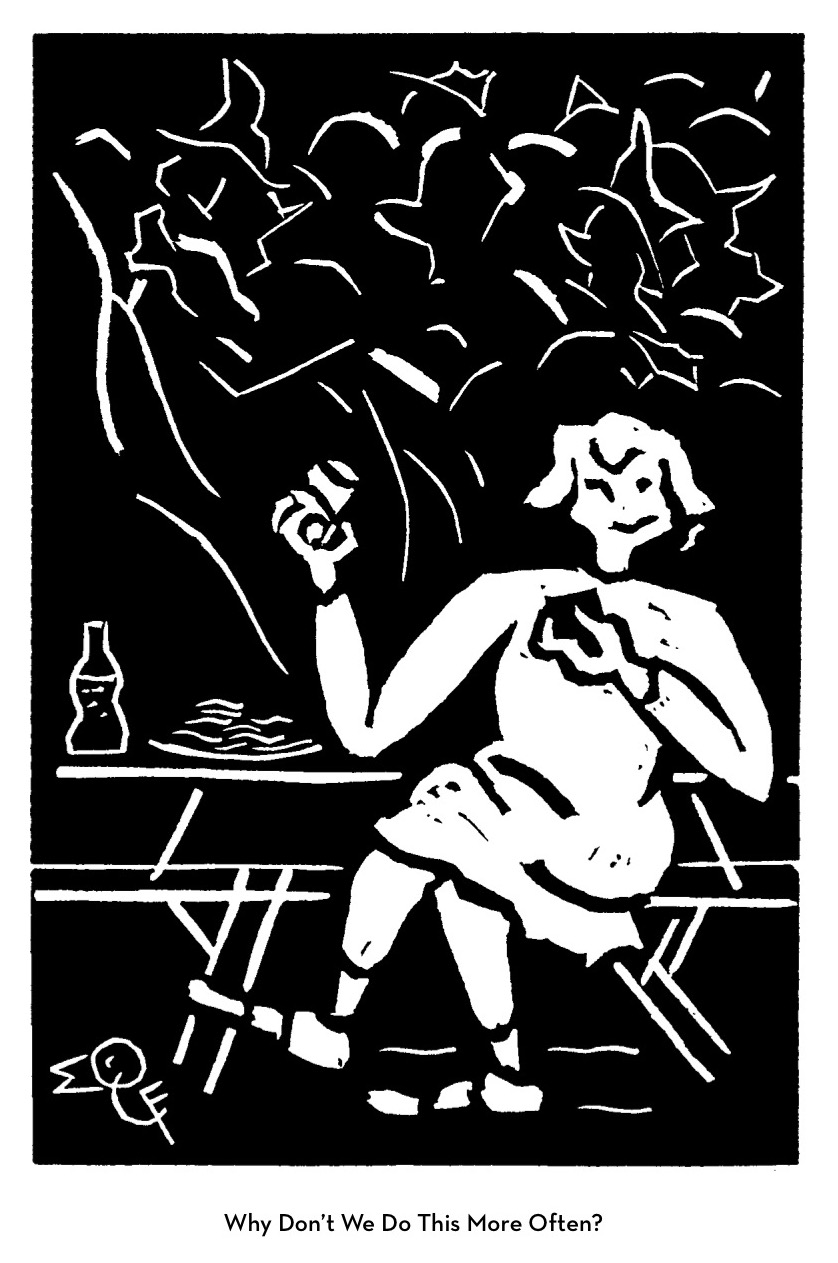
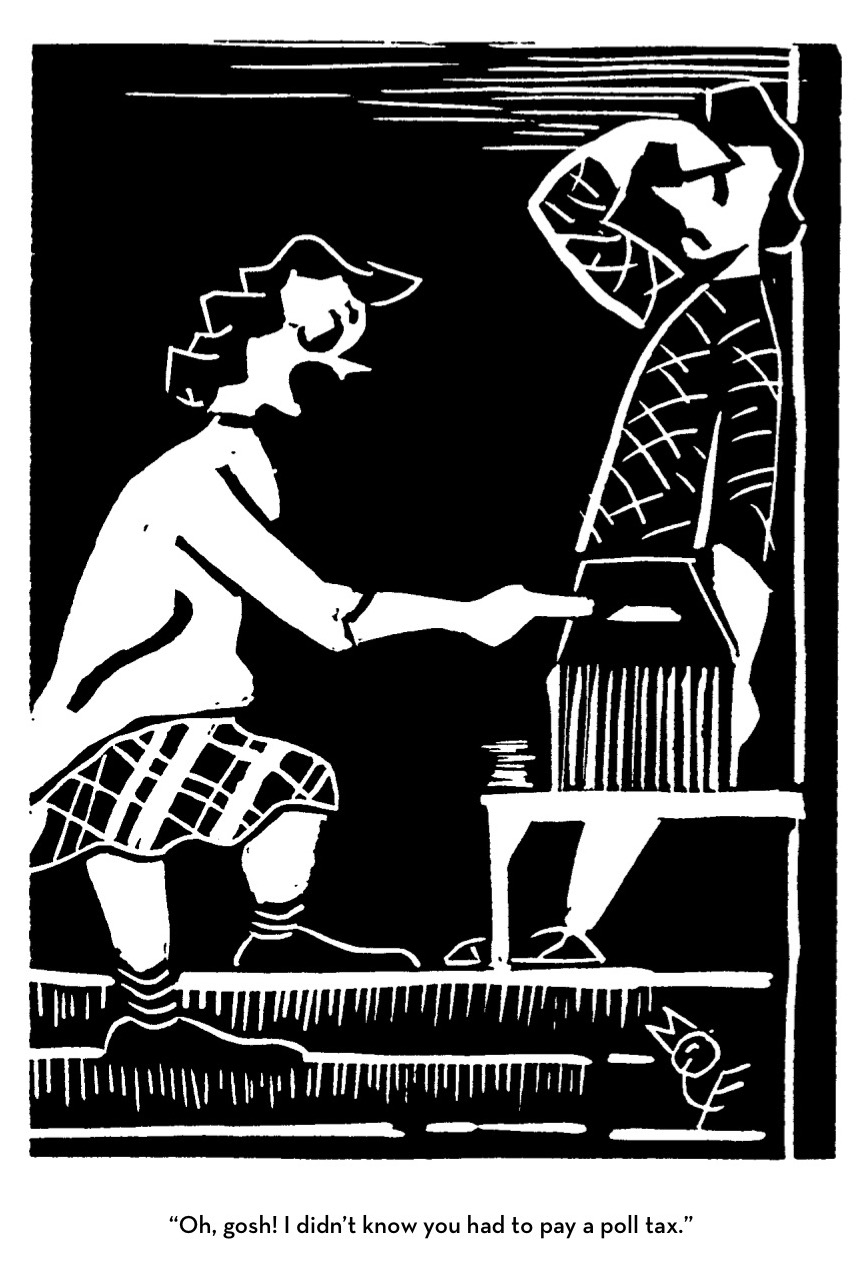
O’Connor’s visu­al work, writes Kel­ly Ger­ald in The Paris Review, was a “way of see­ing she described as part of the ‘habit of art’”—a way to train her fic­tion writer’s eye. Her car­toons hew close­ly to her autho­r­i­al voice: a lone sar­don­ic observ­er, supreme­ly con­fi­dent in her assess­ments of human weak­ness. Per­haps a bet­ter com­par­i­son than Faulkn­er is with British poet and doo­dler Ste­vie Smith, whose bleak vision and razor-sharp wit sim­i­lar­ly cut through moun­tains of… shall we say, bull­shit. In both pen & ink and linoleum cuts, O’Connor set dead­pan one-lin­ers against images of pre­ten­sion, con­for­mi­ty, and the banal­i­ty of col­lege life. In the car­toon at the top, she seems to mock the pur­suit of cre­den­tials as a refuge for the social­ly dis­af­fect­ed. Above, a cam­paign­er for a low-lev­el office deploys bom­bas­tic pseu­do-Lenin­ist rhetoric, and in the car­toon below, a cranky char­ac­ter escapes a horde of iden­ti­cal WAVES.

O’Connor was an intense­ly visu­al writer with, Ger­ald writes, a “nat­ur­al pro­cliv­i­ty for cap­tur­ing the humor­ous char­ac­ter of real peo­ple and con­crete sit­u­a­tions,” ful­ly cred­i­ble even at their most extreme (as in the increas­ing­ly hor­rif­ic self-lac­er­a­tions of Wise Blood’s Hazel Motes). She began draw­ing at five and pro­duced small books and sketch­es as a child, even­tu­al­ly pub­lish­ing car­toons in almost every issue of her high-school and college’s news­pa­pers and year­books. Her alma mater Geor­gia Col­lege, then known as Geor­gia State Col­lege for Women, has pub­lished a book fea­tur­ing her car­toons from her under­grad­u­ate years, 1942–45.

More recent­ly, Ger­ald edit­ed a col­lec­tion called Flan­nery O’Connor: The Car­toons for Fan­ta­graph­ics. In his intro­duc­tion, artist Bar­ry Moser describes in detail the tech­nique of her linoleum cuts, call­ing them “coarse in tech­ni­cal terms.” And yet, “her rudi­men­ta­ry han­dling of the medi­um notwith­stand­ing, O’Connor’s prints offer glimpses into the work of the writer she would become” with their “lit­tle O’Connor petards aimed at the walls of pre­ten­tious­ness, aca­d­e­mics, stu­dent pol­i­tics, and stu­dent com­mit­tees.” Had O’Connor con­tin­ued mak­ing car­toons into her pub­lish­ing years, she might have, like B.C. Kowal­s­ki, aimed one of those petards at those who dis­pense dog­mat­ic, cook­ie-cut­ter writ­ing advice as well.

via Geor­gia Col­lege/The Paris Review

Relat­ed Con­tent:

The Art of William Faulkn­er: Draw­ings from 1916–1925

The Art of Sylvia Plath: Revis­it Her Sketch­es, Self-Por­traits, Draw­ings & Illus­trat­ed Let­ters

The Art of Franz Kaf­ka: Draw­ings from 1907–1917

Rare 1959 Audio: Flan­nery O’Connor Reads ‘A Good Man is Hard to Find’

Flan­nery O’Connor: Friends Don’t Let Friends Read Ayn Rand (1960)

Josh Jones is a writer and musi­cian based in Durham, NC. Fol­low him at @jdmagness

How J.K. Rowling Plotted Harry Potter with a Hand-Drawn Spreadsheet

JK-Rowlings-Phoenix-Plot-Outline

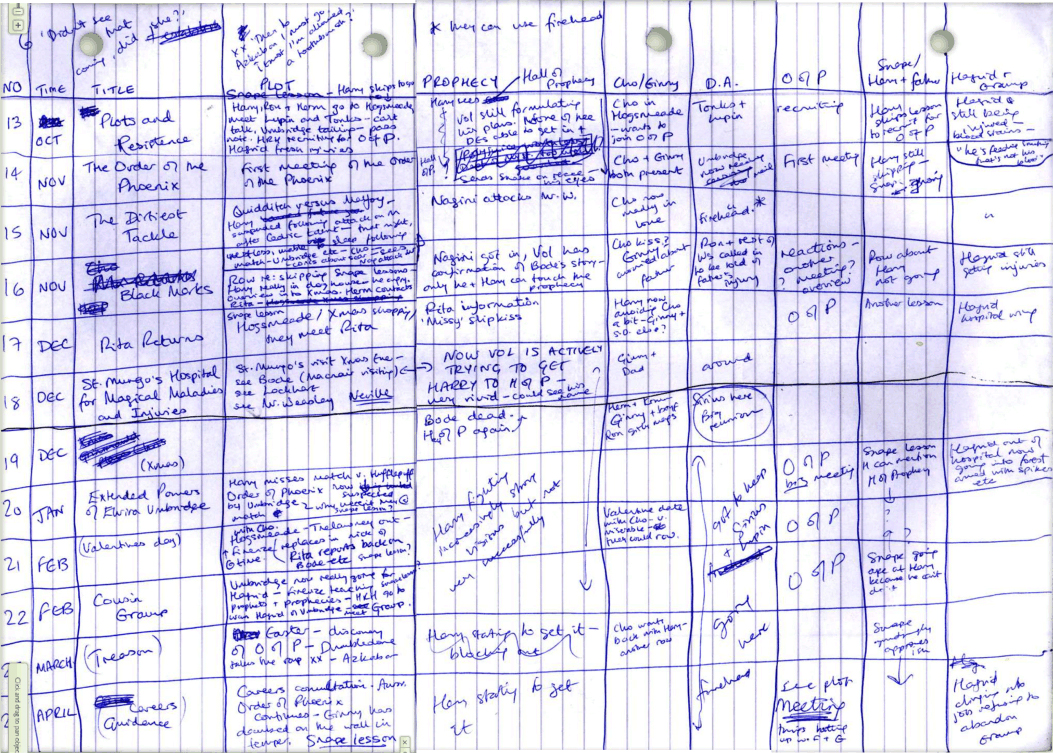
At the height of the Har­ry Pot­ter nov­els’ pop­u­lar­i­ty, I asked a num­ber of peo­ple why those books in par­tic­u­lar enjoyed such a devot­ed read­er­ship. Every­one gave almost the same answer: that author J.K. Rowl­ing “tells a good sto­ry.” The response at once clar­i­fied every­thing and noth­ing; of course a “good sto­ry” can draw a large, enthu­si­as­tic (and, at that time, impa­tient) read­er­ship, but what does it take to actu­al­ly tell a good sto­ry? Peo­ple have prob­a­bly made more mon­ey attempt­ing, ques­tion­ably, to pin down, define, and teach the best prac­tices of sto­ry­telling, but at the top of this post, we have a reveal­ing scrap of Rowl­ing’s own process. And I do, almost lit­er­al­ly, mean a scrap: this piece of lined paper con­tains part of the hand­writ­ten plot spread­sheet she used to write the fifth Har­ry Pot­ter nov­el, Har­ry Pot­ter and the Order of the Phoenix.

This par­tic­u­lar page (click to view it in a larg­er for­mat) cov­ers chap­ters 13 through 24, dur­ing which even more hap­pens than you may now remem­ber. It may have amount­ed to more than Rowl­ing, too, could remem­ber, hence the spread­sheet itself. End­pa­per explains some of her sto­ry notes as fol­lows:

  • “Prophe­cy”: A sub­plot about the prophe­cy Har­ry finds him­self con­cerned about all through the book
  • “Cho/Ginny”: The book’s roman­tic sub­plot
  • “D.A.”: What’s hap­pen­ing with the resis­tance army, or “Dumbledore’s Army”
  • “O of P”: What’s hap­pen­ing with the “Order of the Phoenix” group
  • “Snape/Harry”: What’s hap­pen­ing with Snape and Har­ry
  • “Hagrid and Grawp”: What’s hap­pen­ing with Hagrid and Grawp

If you think about Har­ry Pot­ter and the Order of the Phoenix, that’s it,” writes /Film’s Ger­main Lussier. “Those columns pret­ty much encom­pass the whole sto­ry.” Rowl­ing, of course, hard­ly counts as the only nov­el­ist to write with such tech­niques, and based on this exam­ple, hers don’t get near­ly as elab­o­rate as some. (I recall once read­ing that Vikram Chan­dra had to bust out Microsoft Project to keep track of the com­pli­ca­tions of Sacred Games, his 900-page nov­el about the Mum­bai under­world.) But Rowl­ing must cer­tain­ly rank as the most famous nov­el­ist to, quite lit­er­al­ly, draw up spread­sheets like this. I sup­pose it does leave her books even more exposed to accu­sa­tions of over­plot­ting than before, but some­thing tells me it won’t both­er her.

Relat­ed Con­tent:

Down­load Two Har­ry Pot­ter Audio Books for Free (and Get the Rest of the Series for Cheap)

Take Free Online Cours­es at Hog­warts: Charms, Potions, Defense Against the Dark Arts & More

The Quan­tum Physics of Har­ry Pot­ter, Bro­ken Down By a Physi­cist and a Magi­cian

Cel­e­brate Har­ry Potter’s Birth­day with Song. Daniel Rad­cliffe Sings Tom Lehrer’s Tune, The Ele­ments.

Har­ry Pot­ter Pre­quel Now Online

Col­in Mar­shall hosts and pro­duces Note­book on Cities and Cul­ture and writes essays on cities, lan­guage, Asia, and men’s style. He’s at work on a book about Los Ange­les, A Los Ange­les Primer. Fol­low him on Twit­ter at @colinmarshall or on Face­book.

Sound Effects Genius Michael Winslow Performs the Sounds of 32 Typewriters (1898–1983)

“When forced to leave my house for an extend­ed peri­od of time, I take my type­writer with me,” once wrote essay­ist-humorist David Sedaris. “Togeth­er we endure the wretched­ness of pass­ing through the X‑ray scan­ner. The lap­tops roll mer­ri­ly down the belt, while I’m instruct­ed to stand aside and open my bag. To me it seems like a nor­mal enough thing to be car­ry­ing, but the typewriter’s declin­ing pop­u­lar­i­ty arous­es sus­pi­cion and I wind up elic­it­ing the sort of reac­tion one might expect when trav­el­ing with a can­non. ‘It’s a type­writer,’ I say. ‘You use it to write angry let­ters to air­port secu­ri­ty.’ ” But Sedaris, one of the last high-pro­file hold-outs against elec­tron­ic word pro­cess­ing, wrote those words almost fif­teen years ago — even before air­port secu­ri­ty real­ly cracked down in our post‑9/11 real­i­ty. Sure­ly he has since picked up and pre­sum­ably learned to use a com­put­er. We now find our­selves in an age when type­writer usage has tran­scend­ed the sta­tus of an act of nos­tal­gia and attained the sta­tus of an act of rebel­lion; if you insist on using a clas­sic old Under­wood Rem­ing­ton, or an Invic­ta, or a Con­ti­nen­tal Stan­dard, or Olympia Moni­ka Deluxe, well, you must real­ly have a state­ment to make.

Yet I dare­say that for all their mechan­i­cal heft, free­dom from inter­net-borne dis­trac­tion, and thor­ough­ly ana­log aes­thet­ic appeal, type­writ­ers bring with them a num­ber of bur­dens. We have their dif­fi­cul­ty in clear­ing TSA lines, yes, but also their thirst for phys­i­cal ink and paper (“I can always look at my loaded wastepa­per bas­ket and tell myself that if I failed,” said Sedaris, “at least I took a few trees down with me”), and their noise — oh my, their noise. You can hear the vary­ing sounds of 32 mod­els belong­ing to many suc­ces­sive type­writer gen­er­a­tions in the video at the top of the post. They don’t come as straight record­ings, but as sounds repro­duced by mouth to per­fec­tion by that one-in-a-mil­lion mim­ic Michael Winslow, best known from the Police Acad­e­my movies as Sergeant Larvell “Motor Mouth” Jones. “The His­to­ry of the Type­writer Recit­ed by Michael Winslow” orig­i­nat­ed in the mind of Span­ish artist Igna­cio Uri­arte, who, accord­ing to Frieze“has employed stan­dard office sup­plies such as Biros, high­lighters and jot­ters,” not to men­tion “the ubiq­ui­tous spread­sheet tool Microsoft Excel, per­haps soon fac­ing its own obso­les­cence.” This pro­duc­tion “telling­ly cul­mi­nates with the sounds of a machine from 1983, the year before the arrival of the first home com­put­er with a graph­i­cal inter­face.” Which leads one to won­der: can Winslow do hard dri­ve nois­es?

We’ll def­i­nite­ly add “The His­to­ry of the Type­writer Recit­ed by Michael Winslow” to our col­lec­tion, 4,000+ Free Movies Online: Great Clas­sics, Indies, Noir, West­erns, Doc­u­men­taries & More.

via Kot­tke

Relat­ed Con­tent:

The Endur­ing Ana­log Under­world of Gramer­cy Type­writer

Woody Allen’s Type­writer, Scis­sors and Sta­pler: The Great Film­mak­er Shows Us How He Writes

Dis­cov­er Friedrich Nietzsche’s Curi­ous Type­writer, the “Malling-Hansen Writ­ing Ball”

Mark Twain Wrote the First Book Ever Writ­ten With a Type­writer

Dis­rup­tive Tech­nol­o­gy: Stu­dent Brings Type­writer to Class

Col­in Mar­shall hosts and pro­duces Note­book on Cities and Cul­ture and writes essays on cities, lan­guage, Asia, and men’s style. He’s at work on a book about Los Ange­les, A Los Ange­les Primer. Fol­low him on Twit­ter at @colinmarshall or on Face­book.

Ray Bradbury on Zen and the Art of Writing (1973)

ray-bradbury-zen

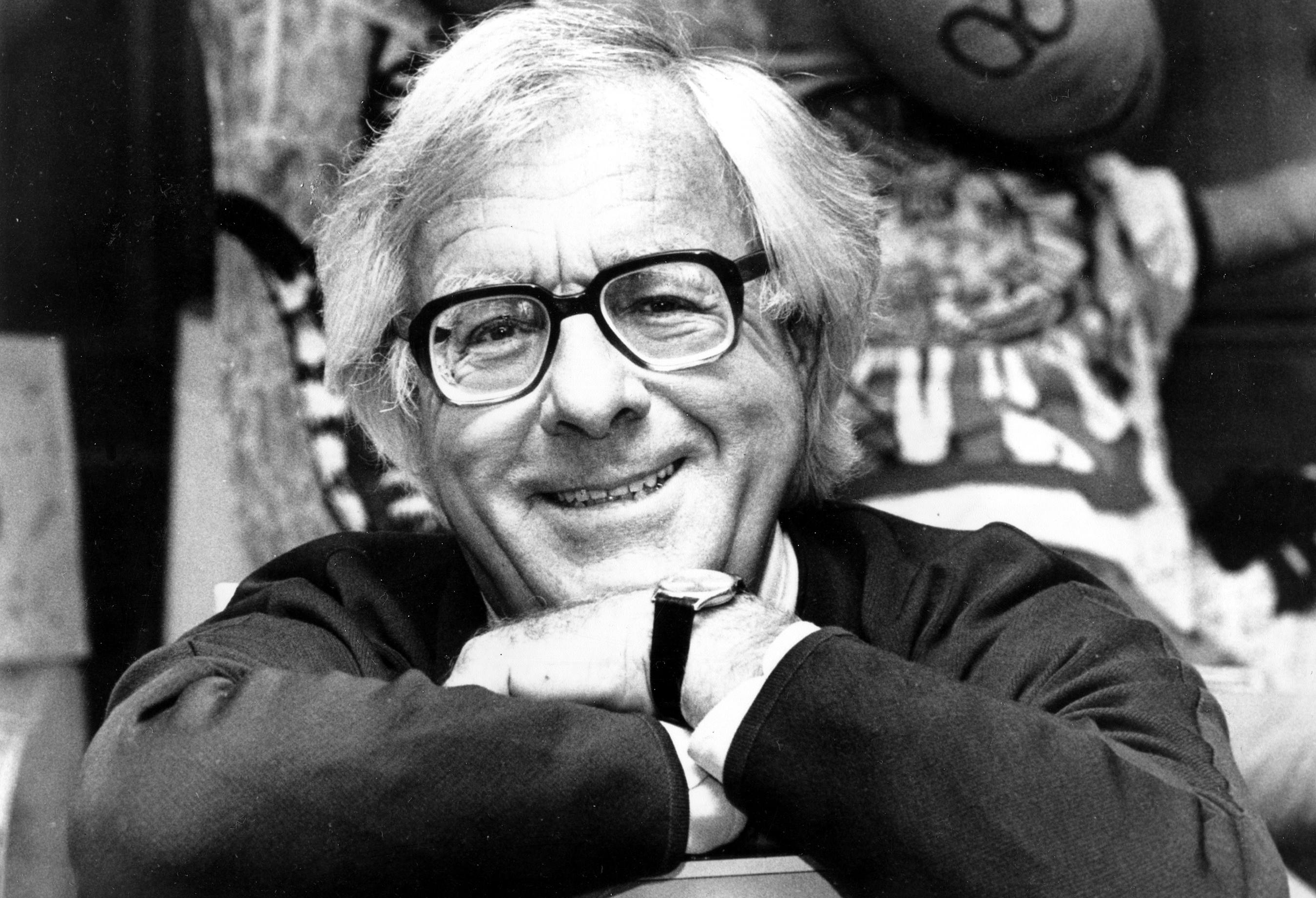
The pro­lif­ic Ray Brad­bury, author of Fahren­heit 451The Mar­t­ian Chron­i­cles, and many oth­er works both inside and out­side the realm of sci­ence fic­tion, appar­ent­ly suf­fered no short­age of cre­ativ­i­ty. Pro­lif­ic in his fic­tion writ­ing, he also proved gen­er­ous in his encour­age­ment of younger writ­ers: we’ve pre­vi­ous­ly fea­tured not just his twelve essen­tial pieces of writ­ing advice but his secret to life and love. He even wrote enough on the sub­ject of writ­ing to con­sti­tute an entire book, the col­lec­tion Zen in the Art of Writ­ing: Essays on Cre­ativ­i­ty. In the 1973 title piece, Brad­bury, hard­ly known as a Bud­dhist, explains his use of the term zen for its “shock val­ue”: “The vari­ety of reac­tions to it should guar­an­tee me some sort of crowd, if only of curi­ous onlook­ers, those who come to pity and stay to shout. The old sideshow Med­i­cine Men who trav­eled about our coun­try used cal­liope, drum, and Black­foot Indi­an, to insure open-mouthed atten­tion. I hope I will be for­giv­en for using ZEN in much the same way, at least here at the start. For, in the end, you may dis­cov­er I’m not jok­ing after all.”

He breaks down his own idea of zen in his writ­ing process by first ask­ing him­self, “Now while I have you here before my plat­form, what words shall I whip forth paint­ed in red let­ters ten feet tall?” He paints the fol­low­ing, and after each we include selec­tions from the essay:

  • WORK. “It is, above all, the word about which your career will revolve for a life­time. Begin­ning now you should become not its slave, which is too mean a term, but its part­ner. Once you are real­ly a co-shar­er of exis­tence with your work, that word will lose its repel­lent aspects. [ … ] We often indulge in made work, in false busi­ness, to keep from being bored. Or worse still we con­ceive the idea of work­ing for mon­ey. The mon­ey becomes the object, the tar­get, the end-all and be-all. Thus work, being impor­tant only as a means to that end, degen­er­ates into bore­dom. Can we won­der then that we hate it so?”
  • RELAXATION. “Impos­si­ble! you say. How can you work and relax? How can you cre­ate and not be a ner­vous wreck? [ … ] Tense­ness results from not know­ing or giv­ing up try­ing to know. Work, giv­ing us expe­ri­ence, results in new con­fi­dence and even­tu­al­ly in relax­ation. The type of dynam­ic relax­ation again, as in sculpt­ing, where the sculp­tor does not con­scious­ly have to tell his fin­gers what to do. The sur­geon does not tell his scalpel what to do. Nor does the ath­lete advise his body. Sud­den­ly, a nat­ur­al rhythm is achieved. The body thinks for itself.”
  • DON’T THINK! “The writer who wants to tap the larg­er truth in him­self must reject the temp­ta­tions of Joyce or Camus or Ten­nessee Williams, as exhib­it­ed in the lit­er­ary reviews. He must for­get the mon­ey wait­ing for him in mass-cir­cu­la­tion. He must ask him­self, ‘What do I real­ly think of the world, what do I love, fear, hate?’ and begin to pour this on paper. Then, through the emo­tions, work­ing steadi­ly, over a long peri­od of time, his writ­ing will clar­i­fy; he will relax because he thinks right and he will think even righter because he relax­es. The two will become inter­change­able. At last he will begin to see him­self.”
  • FURTHER RELAXATION. “We should not look down on work nor look down on the forty-five out of fifty-two sto­ries writ­ten in our first year as fail­ures. To fail is to give up. But you are in the midst of a mov­ing process. Noth­ing fails then. All goes on. Work is done. If good, you learn from it. If bad, you learn even more. Work done and behind you is a les­son to be stud­ied. There is no fail­ure unless one stops. Not to work is to cease, tight­en up, become ner­vous and there­fore destruc­tive of the cre­ative process. [ … ] Isn’t it obvi­ous by now that the more we talk of work, the clos­er we come to Relax­ation.”
  • “Have I sound­ed like a cultist of some sort? A yogi feed­ing on kumquats, grapenuts and almonds here beneath the banyan tree? Let me assure you I speak of all these things only because they have worked for me for fifty years. And I think they might work for you. The true test is in the doing. Be prag­mat­ic, then. If you’re not hap­py with the way your writ­ing has gone, you might give my method a try. If you do, I think you might eas­i­ly find a new def­i­n­i­tion for Work. And the word is LOVE.

You can read much more about Brad­bury’s method of work­ing, relax­ing, not think­ing, and relax­ing fur­ther still — and his thoughts on the joy of writ­ing, keep­ing the muse fed, estab­lish­ing a thou­sand-or-two-words-a-day habit, and “how to climb the tree of life, throw rocks at your­self, and get down with­out break­ing your bones or your spir­it” — in the book, Zen in the Art of Writ­ing: Essays on Cre­ativ­i­ty.

Relat­ed Con­tent:

Ray Brad­bury Gives 12 Pieces of Writ­ing Advice to Young Authors (2001)

The Secret of Life and Love, Accord­ing to Ray Brad­bury (1968)

Ray Brad­bury: Lit­er­a­ture is the Safe­ty Valve of Civ­i­liza­tion

Ray Brad­bury: “The Things That You Love Should Be Things That You Do.” “Books Teach Us That”

Ray Brad­bury: Sto­ry of a Writer 1963 Film Cap­tures the Para­dox­i­cal Late Sci-Fi Author

Col­in Mar­shall hosts and pro­duces Note­book on Cities and Cul­ture and writes essays on cities, lan­guage, Asia, and men’s style. He’s at work on a book about Los Ange­les, A Los Ange­les Primer. Fol­low him on Twit­ter at @colinmarshall or on Face­book.

Music That Helps You Write: A Free Spotify Playlist of Your Selections

AliceColtraneUC

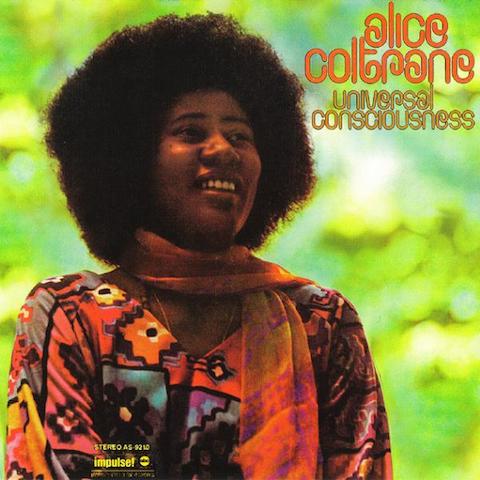
What music puts you in the mood to write? At the moment, I have on Alice Coltrane’s “Bat­tle at Armaged­don” from her 1971 Uni­ver­sal Con­scious­ness, a work of psy­che­del­ic free jazz that makes my fin­gers skit­ter over the key­board and sends thoughts rac­ing through my mind. Should Coltrane’s mys­tic jazz counter the mood I want to sum­mon, I might find some­thing less syn­co­pat­ed, more lugubri­ous, omi­nous, melan­choly, serene, etc. (Per­haps Grouper’s atmos­pher­ic suite of reverb-drenched tone-poems The Man Who Died in His Boat.)

This inter­ac­tion between the ears, the fin­gers, and the writ­ing mind struck our inter­est back in 2012, and we put out a call to read­ers to sug­gest the best pieces of music to write by. Some read­ers found that silence made for the best—or only—accompaniment. Many more made rec­om­men­da­tions rang­ing from Miles Davis, to min­i­mal­ist com­pos­er Steve Reich, sitar mae­stro Ravi Shankar, the clas­sic Krautrock sound of Neu!, the dub reg­gae of King Tub­by, the vio­lin Sonatas of Bach, and the ambi­ent sound­scapes of Bri­an Eno. We took it upon our­selves to com­pile a sam­pling of your sug­ges­tions with Youtube videos at the time. Now we offer above a more portable Spo­ti­fy ver­sion of our “music to write by” playlist—over 13 hours of music. (Stream it above. Or find it online here. If you need to down­load Spo­ti­fy, grab the soft­ware here.) I’ve added Alice Coltrane, Grouper, and the beau­ti­ful …Until We Felt Red (2006) from one of my favorite gui­tarists, Kaki King.

I hope this playlist inspires you, or at least inspires you to make your own. While it could go on indef­i­nite­ly, the key to a good mix­tape is the art of judi­cious selec­tion. Please tell us in the com­ments, what would you absolute­ly have to add? What artists, com­posers, and musi­cians get you in the mood to write, help you shift tem­pos, or move you from major to minor keys while you com­pose, whether you write non­fic­tion, poet­ry, tech­ni­cal man­u­als, or the Great Amer­i­can What­ev­er? We’ll add many of your sug­ges­tions to the playlist over the next few days.

Relat­ed Con­tents:

The Best Music to Write By: Give Us Your Rec­om­men­da­tions

The Best Music to Write By, Part II: Your Favorites Brought Togeth­er in a Spe­cial Playlist

Lis­ten to Philip K. Dick’s Favorite Clas­si­cal Music: A Free, 11-Hour Playlist

62 Psy­che­del­ic Clas­sics: A Free Playlist Cre­at­ed by Sean Lennon

Josh Jones is a writer and musi­cian based in Durham, NC. Fol­low him at @jdmagness.

How Vi Hart Makes Her Viral Videos: A Look Inside Her Creative Process

Spend some time pok­ing around on the Khan Acad­e­my, or this site for that mat­ter, and your chances of run­ning into math­e­mu­si­cian Vi Hart are extreme­ly favor­able. 

I’ve tried—and failed—to keep up with her high­ly digres­sive, rapid fire, doo­dle-based expla­na­tions on such top­ics as net neu­tral­i­ty and the space-time con­tin­u­um. I had bet­ter luck fol­low­ing her direc­tions for turn­ing squig­gles into snakes, a math-based par­lor trick that seems more like mag­ic to me.

What I real­ly want­ed to know is how does she make those fun­ny lit­tle videos of hers?  Doubt­less, any sev­en-year-old who’s logged two or three hours in an after-school pro­gram devot­ed to stop motion ani­ma­tion would have the chops to explain how to make sim­ple draw­ings ren­dered in Sharpie on a spi­ral bound note­book come to life, but what if I still did­n’t get it? I would­n’t want to give the short­ies the impres­sion that the lay­men and women of my gen­er­a­tion are too dim to keep up with mod­ern tech­nol­o­gy.

Then on a whim, I typed “how does Vi Hart make her videos” into a search engine and voila! The video above, in which the doyenne her­self reveals exact­ly how she does just that.

Actu­al­ly “exact­ly” might be over­stat­ing things a bit, giv­en that she does so in her imme­di­ate­ly rec­og­niz­able style. If I under­stand cor­rect­ly, she starts with a script, which she pares to the essen­tials, before shoot­ing the seg­ment with a team of interns, some of whom serve as body dou­bles for her hands, their arms encased in funky, detach­able sleeves. Then she speeds things up by delet­ing the frames in which the mov­ing hand obscures the page. I’m pret­ty sure she wings it when record­ing her voiceover nar­ra­tion, but I could be wrong.

She also seems to have a thing for pin­ning her long brown hair up with a turkey feath­er. Even so, I’ll bet the deci­sion to give her ador­ing pub­lic a glimpse of some­thing beyond mere hands cement­ed many a celebri­ty crush. She’s a Tina Fey for the geek set. (Not that Tina Fey isn’t already serv­ing that func­tion for the same demo­graph­ic.)

As win­some as she is, I have to say, I pre­ferred her 14-year-old intern Ethan Bres­nick’s con­sci­en­tious behind-the-scenes look at how these things come togeth­er. Have a look above if you’d like some straight dope on soft­ware, cam­era posi­tions, and the like.

(Depend­ing on how much work you’ve got to get done today, you may also enjoy the extreme­ly infor­mal, hour-plus inter­view Ethan con­duct­ed via Skype, dur­ing which Hart eats her din­ner and invites fans to join them via Twit­ter.)

The only thing lack­ing is the nit­ty grit­ty on how and where Hart stores her enor­mous video files. With­out a benev­o­lent Khan Acad­e­my to over­see my work, such tech­ni­cal specs would def­i­nite­ly come in handy for a begin­ner such as myself. The Sharpies on spi­ral bound I can fig­ure out on my own.

Relat­ed Con­tent:

Vi Hart Uses Her Video Mag­ic to Demys­ti­fy Stravin­sky and Schoenberg’s 12-Tone Com­po­si­tions

Vi Hart Explains & Defends Net Neu­tral­i­ty in a New Doo­dle-Filled Video

Math­e­mu­si­cian Vi Hart Explains the Space-Time Con­tin­u­um With a Music Box, Bach, and a Möbius Strip

Ayun Hal­l­i­day is the author of sev­en books, a cou­ple of which have mor­phed into ebooks. Fol­low her @AyunHalliday

“The Periodic Table of Storytelling” Reveals the Elements of Telling a Good Story

periodic table storytelling

Dmitri Mendeleev might have designed the orig­i­nal peri­od­ic table – a graph­ic rep­re­sen­ta­tion of all the basic build­ing blocks of the uni­verse – but artist James Har­ris has done some­thing way cool with that tem­plate — the Peri­od­ic Table of Sto­ry­telling.

That’s right. Har­ris has tak­en all the tropes, arche­types and clichés found in movies (not to men­tion TV, com­ic books, lit­er­a­ture, video and even pro­fes­sion­al wrestling) and syn­the­sized them into an ele­gant­ly real­ized chart. Instead of group­ing the ele­ments by noble gas­es or met­als, Har­ris has orga­nized them by sto­ry ele­ments — struc­ture, plot devices, hero arche­types. Each ele­ment is linked to a vast wiki that gives def­i­n­i­tions and exam­ples. For instance, if you click on the ele­ment Chk, you’ll go to a page explain­ing the trope of Chekhov’s Gun. And if you click on Neo, you’ll go to the page for, of course, the Cho­sen One.

Below the chart, Har­ris has even cre­at­ed sto­ry mol­e­cules for a few spe­cif­ic movies. Ghost­busters, for exam­ple, is the com­bi­na­tion of an atom con­sist­ing of 5ma (Five Man Band) and Mad (Mad Sci­en­tist) and one con­sist­ing of Iac (Sealed Evil in a Can) and Hil (Hilar­i­ty Ensues).

So if you’re in film school or if you have a copy of Robert McKee’s Sto­ry on your book­shelf or if you’re one of the rough­ly three dozen peo­ple in the Los Ange­les cof­fee shop where I’m writ­ing this arti­cle who are bang­ing out screen­plays, you need to check this table out. But be warned: it will suck away a good chunk of your day.

via No Film School

Relat­ed Con­tent:

Pixar’s 22 Rules of Sto­ry­telling

Ira Glass, the Host of This Amer­i­can Life, Breaks Down the Fine Art of Sto­ry­telling

World’s Small­est Peri­od­ic Table on a Human Hair

“The Peri­od­ic Table Table” — All The Ele­ments in Hand-Carved Wood

Free Online Chem­istry Cours­es

Jonathan Crow is a Los Ange­les-based writer and film­mak­er whose work has appeared in Yahoo!, The Hol­ly­wood Reporter, and oth­er pub­li­ca­tions. You can fol­low him at @jonccrow.

The Secret of Life and Love, According to Ray Bradbury (1968)

“Jump off the cliff and build your wings on the way down.” This—writes Sam Weller in his intro­duc­tion to a 2010 inter­view with sci-fi and fan­ta­sy lumi­nary Ray Brad­bury—was the author’s “life­long cre­do.” Weller writes of dis­cov­er­ing an unpub­lished Paris Review inter­view from the 1970s in Bradbury’s garage, with a note from edi­tor George Plimp­ton that read “a bit infor­mal in places, maybe over­ly enthu­si­as­tic.” The irony of this judg­ment is that it is Bradbury’s enthu­si­asm, his lack of for­mal­i­ty, which make him so com­pelling and so copi­ous a writer and speak­er. Brad­bury didn’t self-edit or sec­ond guess much—his approach is best char­ac­ter­ized as fear­less and pas­sion­ate, just as he describes his writ­ing process:

I type my first draft quick­ly, impul­sive­ly even. A few days lat­er I retype the whole thing and my sub­con­scious, as I retype, gives me new words. Maybe it’ll take retyp­ing it many times until it is done. Some­times it takes very lit­tle revi­sion.

It’s that unfet­tered expres­sion of his sub­con­scious that Brad­bury dis­cuss­es in the short clip above, in which he re-invig­o­rates all the sort of carpe diem clichés one hears so often by fram­ing them not as self-help sug­ges­tions but as imper­a­tives for a full and healthy life. Respond­ing in the moment, says Brad­bury, refus­ing to “put off till tomor­row… what I must do, right now,” allows him to “find out what my secret self needs, wants, desires with all its heart.” For Brad­bury, writ­ing is much more than a for­mal exer­cise or a spe­cial­ized craft—it is a vital expres­sion of his full human­i­ty and a means of “cleans­ing the stream” of his mind: “We belong only by doing,” he says, “and we own only by doing, and we love only by doing…. If you want an inter­pre­ta­tion of life and love, that would be the clos­est thing I could come to.”

Brad­bury doesn’t lim­it his phi­los­o­phy to the writ­ing life; he advo­cates for every­one an unabashed emo­tion­al engage­ment with the world. For him, the man (and woman, we might pre­sume), who can­not “laugh freely,” cry, or “be violent”—which he defines in sub­li­mat­ing terms as any phys­i­cal or cre­ative activity—is a “sick man.” Bradbury’s “over­ly enthu­si­as­tic” explo­rations of cre­ative pas­sion were almost as much a part of his out­put as his fic­tion. His inter­views, tele­vised and in print, are inspir­ing for this rea­son: he is nev­er coy or pre­ten­tious but push­es oth­ers to aspire to the same kind of authen­tic joy he seemed to take in every­thing he did.

By the way, the first per­son we see above is leg­endary Warn­er Bros. ani­ma­tor Chuck Jones (as one Youtube com­menter says, we get in this clip “two vision­ar­ies for the price of one”). Bradbury’s “vital­i­ty,” says Jones, “rubs off on the peo­ple who work with him.” And, he might have added, all of the peo­ple who read and lis­ten to him, too.

Relat­ed Con­tent:

Ray Brad­bury: “The Things That You Love Should Be Things That You Do.” “Books Teach Us That”

Ray Brad­bury: Sto­ry of a Writer 1963 Film Cap­tures the Para­dox­i­cal Late Sci-Fi Author

Ray Brad­bury Gives 12 Pieces of Writ­ing Advice to Young Authors (2001)

Ray Brad­bury: Lit­er­a­ture is the Safe­ty Valve of Civ­i­liza­tion

Josh Jones is a writer and musi­cian based in Durham, NC. Fol­low him at @jdmagness

« Go BackMore in this category... »
Quantcast