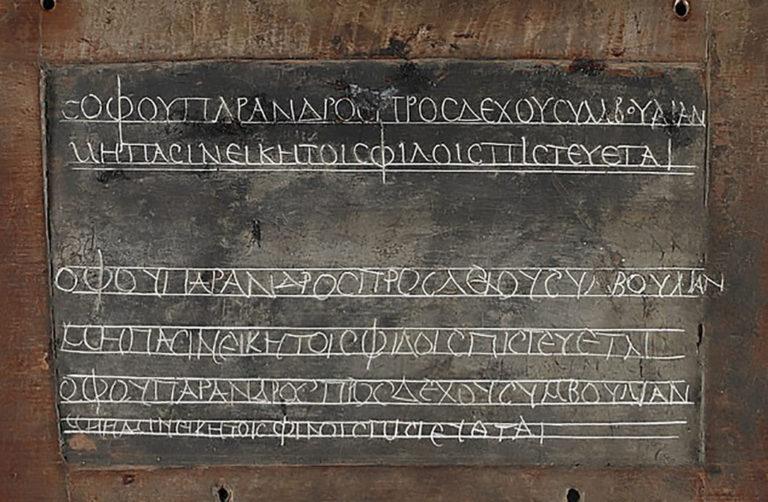
An Ancient Egyptian Homework Assignment from 1800 Years Ago: Some Things Are Truly Timeless

Every gen­er­a­tion of school­child­ren no doubt first assumes home­work to be a his­tor­i­cal­ly dis­tinct form of pun­ish­ment, devel­oped express­ly to be inflict­ed on them. But the par­ents of today’s mis­er­able home­work-doers also, of course, had to do home­work them­selves, as did their par­ents’ par­ents. It turns out that you can go back sur­pris­ing­ly far in his­to­ry and still find exam­ples of the men­ace of home­work, as far back as ancient Egypt, a civ­i­liza­tion from which one exam­ple of an out-of-class­room assign­ment will go on dis­play at the British Library’s exhi­bi­tion Writ­ing: Mak­ing Your Mark, which opens this spring.

“Begin­ning with the ori­gins of writ­ing in Egypt, Mesopotamia, Chi­na and the Amer­i­c­as, the exhi­bi­tion will explore the many man­i­fes­ta­tions, pur­pos­es and forms of writ­ing, demon­strat­ing how writ­ing has con­tin­u­al­ly enabled human progress and ques­tion­ing the role it plays in an increas­ing­ly dig­i­tal world,” says the British Library’s press release.

“From an ancient wax tablet con­tain­ing a schoolchild’s home­work as they strug­gle to learn their Greek let­ters to a Chi­nese type­writer from the 1970s, Writ­ing: Mak­ing Your Mark will show­case over 30 dif­fer­ent writ­ing sys­tems to reveal that every mark made – whether on paper or on a screen – is the con­tin­u­a­tion of a 5,000 year sto­ry and is a step towards deter­min­ing how writ­ing will be used in the future.”

That wax tablet, pre­served since the sec­ond cen­tu­ry A.D., bears Greek words that Live­science’s Mindy Weis­berg­er describes as “famil­iar to any kid whose par­ents wor­ry about them falling in with a bad crowd”: “You should accept advice from a wise man only” and “You can­not trust all your friends.” First acquired by the British Library in 1892 but not pub­licly dis­played since the 1970s, the tablet’s sur­face pre­serves “a two-part les­son in Greek that pro­vides a snap­shot of dai­ly life for a pupil attend­ing pri­ma­ry school in Egypt about 1,800 years ago.” Its lines, “copied by this long-ago stu­dent were not just for prac­tic­ing pen­man­ship; they were also intend­ed to impart moral lessons.”

But why Greek? “In the 2nd cen­tu­ry A.D., when this les­son was writ­ten,” writes Smithsonian.com’s Jason Daley, “Egypt had been under Roman rule for almost 200 years fol­low­ing 300 years of Greek and Mace­don­ian rule under the Ptole­my dynasty. Greeks in Egypt held a spe­cial sta­tus below Roman cit­i­zens but high­er than those of Egypt­ian descent. Any edu­cat­ed per­son in the Roman world, how­ev­er, would be expect­ed to know Latin, Greek and — depend­ing on where they lived — local or region­al lan­guages.” It was a bit like the sit­u­a­tion today with the Eng­lish lan­guage, which has become a require­ment for edu­cat­ed peo­ple in a vari­ety of cul­tures — and a sub­ject espe­cial­ly loathed by many a home­work-bur­dened stu­dent the world over.

via Live­science

Relat­ed Con­tent:

You Could Soon Be Able to Text with 2,000 Ancient Egypt­ian Hiero­glyphs

Try the Old­est Known Recipe For Tooth­paste: From Ancient Egypt, Cir­ca the 4th Cen­tu­ry BC

The Turin Erot­ic Papyrus: The Old­est Known Depic­tion of Human Sex­u­al­i­ty (Cir­ca 1150 B.C.E.)

The Ancient Egyp­tians Wore Fash­ion­able Striped Socks, New Pio­neer­ing Imag­ing Tech­nol­o­gy Imag­ing Reveals

Muse­um Dis­cov­ers Math Note­book of an 18th-Cen­tu­ry Eng­lish Farm Boy, Adorned with Doo­dles of Chick­ens Wear­ing Pants

Based in Seoul, Col­in Mar­shall writes and broad­casts on cities, lan­guage, and cul­ture. His projects include the book The State­less City: a Walk through 21st-Cen­tu­ry Los Ange­les and the video series The City in Cin­e­ma. Fol­low him on Twit­ter at @colinmarshall or on Face­book.

How the CIA Helped Shape the Creative Writing Scene in America

Image by Arielle Fra­gas­si, via Flickr Com­mons

In May of 1967,” writes Patrick Iber at The Awl, “a for­mer CIA offi­cer named Tom Braden pub­lished a con­fes­sion in the Sat­ur­day Evening Post under the head­line, ‘I’m glad the CIA is ‘immoral.’” With the hard-boiled tone one might expect from a spy, but the can­dor one may not, Braden revealed the Agency’s fund­ing and sup­port of all kinds of indi­vid­u­als and activ­i­ties, includ­ing, per­haps most con­tro­ver­sial­ly, in the arts. Against objec­tions that so many artists and writ­ers were social­ists, Braden writes, “in much of Europe in the 1950’s [social­ists] were about the only peo­ple who gave a damn about fight­ing Com­mu­nism.”

What­ev­er truth there is to the state­ment, its seem­ing wis­dom has popped up again in a recent Wash­ing­ton Post op-ed by Son­ny Bunch, edi­tor and film crit­ic of the con­ser­v­a­tive Wash­ing­ton Free Bea­con. The CIA should once again fund “a cul­ture war against com­mu­nism,” Bunch argues. The export (to Chi­na) he offers as an exam­ple? Boots Riley’s hip, anti-neolib­er­al, satir­i­cal film Sor­ry to Both­er You, a movie made by a self-described Com­mu­nist.

Proud dec­la­ra­tions in sup­port of CIA fund­ing for “social­ists” may seem to take the sting out of moral out­rage over covert cul­tur­al tac­tics. But they fail to answer the ques­tion: what is their effect on artists them­selves, and on intel­lec­tu­al cul­ture more gen­er­al­ly? The answer has been ven­tured by writ­ers like Joel Whit­ney, whose book Finks looks deeply into the rela­tion­ship between dozens of famed mid-cen­tu­ry writ­ers and lit­er­ary magazines—especially The Paris Review—and the agency best known for top­pling elect­ed gov­ern­ments abroad.

In an inter­view with The Nation, Whit­ney calls the CIA’s con­tain­ment strate­gies “the inver­sion of influ­ence. It’s the instru­men­tal­iza­tion of writ­ing.… It’s the feel­ing of fear dic­tat­ing the rules of cul­ture, and, of course, there­fore, of jour­nal­ism.” Accord­ing to Eric Ben­nett, writ­ing at The Chron­i­cle of High­er Edu­ca­tion and in his book Work­shops of Empire, the Agency instru­men­tal­ized not only the lit­er­ary pub­lish­ing world, but also the insti­tu­tion that became its pri­ma­ry train­ing ground, the writ­ing pro­gram at the Uni­ver­si­ty of Iowa.

The Iowa Writer’s Work­shop “emerged in the 1930s and pow­er­ful­ly influ­enced the cre­ative-writ­ing pro­grams that fol­lowed,” Ben­nett explains. “More than half of the sec­ond-wave pro­grams, about 50 of which appeared by 1970, were found­ed by Iowa grad­u­ates.” The pro­gram “attained nation­al emi­nence by cap­i­tal­iz­ing on the fears and hopes of the Cold War”—at first through its direc­tor, self-appoint­ed cold war­rior Paul Engle, with fund­ing from CIA front groups, the Rock­e­feller Foun­da­tion, and major cor­po­ra­tions. (Kurt Von­negut, an Iowa alum, described Engle as “a hay­seed clown, a foxy grand­pa, a ter­rif­ic pro­mot­er, who, if you lis­tened close­ly, talks like a man with a paper ass­hole.”)

Under Engle writ­ers like Ray­mond Carv­er, Flan­nery O’Con­nor, Robert Low­ell, and John Berry­man went through the pro­gram. In the lit­er­ary world, its dom­i­nance is at times lament­ed for the impo­si­tion of a nar­row range of styles on Amer­i­can writ­ing. And many a writer has felt shut out of the pub­lish­ing world and its coter­ies of MFA pro­gram alums. When it comes to cer­tain kinds of writ­ing at least, some of them may be right—the sys­tem has been infor­mal­ly rigged in ways that date back to a time when the CIA and con­ser­v­a­tive fun­ders approved and spon­sored the high mod­ernist fic­tion beloved by the New Crit­ics, wit­ty real­ism akin to F. Scott Fitzgerald’s (and lat­er John Cheev­er), and mag­i­cal real­ism (part of the agen­cy’s attempt to con­trol Latin Amer­i­can lit­er­ary cul­ture.)

These cat­e­gories, it so hap­pens, rough­ly cor­re­spond to those Ben­nett iden­ti­fies as accept­able in his expe­ri­ence at the Iowa Writ­ers’ Work­shop, and to the writ­ing one finds fill­ing the pages of The Best Amer­i­can Short Sto­ries annu­al antholo­gies and the fic­tion sec­tion of The New York­er and The Paris Review. (Excep­tions often fol­low the path of James Bald­win, who refused to work with the agency, and whom Paris Review co-founder and CIA agent Peter Matthiessen sub­se­quent­ly derid­ed as “polem­i­cal.”)

Bennett’s per­son­al expe­ri­ences are mere­ly anec­do­tal, but his his­to­ry of the rela­tion­ships between the Iowa Writ­ers’ Work­shop, the explo­sion of MFA pro­grams in the last 40 years under its influ­ence, and the CIA and oth­er groups’ active spon­sor­ship are well-researched and sub­stan­ti­at­ed. What he finds, as Tim­o­thy Aubry sum­ma­rizes at The New York Times, is that “writ­ing pro­grams dur­ing the post­war peri­od” imposed a dis­ci­pline insti­tut­ed by Engle, “teach­ing aspir­ing authors cer­tain rules of pro­pri­ety.”

“Good lit­er­a­ture, stu­dents learned, con­tains ‘sen­sa­tions, not doc­trines; expe­ri­ences, not dog­mas; mem­o­ries, not philoso­phies.’” These rules have become so embed­ded in the aes­thet­ic canons that gov­ern lit­er­ary fic­tion that they almost go with­out ques­tion, even if we encounter thou­sands of exam­ples in his­to­ry that break them and still man­age to meet the bar of “good lit­er­a­ture.” What is meant by the phrase is a kind of currency—literature that will be sup­port­ed, pub­lished, mar­ket­ed, and cel­e­brat­ed. Much of it is very good, and much hap­pens to have suf­fi­cient­ly sat­is­fied the gate­keep­ers’ require­ments.

In a reduc­tive, but inter­est­ing anal­o­gy, Motherboard’s Bri­an Mer­chant describes “the Amer­i­can MFA sys­tem, spear­head­ed by the infa­mous Iowa Writ­ers’ Work­shop” as a “con­tent farm” first designed to opti­mize for “the spread of anti-Com­mu­nist pro­pa­gan­da through high­brow lit­er­a­ture.” Its algo­rithm: “More Hem­ing­way, less Dos Pas­sos.” As Aubry notes, quot­ing from Ben­net­t’s book:

Frank Con­roy, Engle’s longest-serv­ing suc­ces­sor, who taught Ben­nett, “want­ed lit­er­ary craft to be a pyra­mid.” At the base was syn­tax and gram­mar, or “Mean­ing, Sense, Clar­i­ty,” and the high­er lev­els tapered off into abstrac­tion. “Then came char­ac­ter, then metaphor … every­thing above metaphor Con­roy referred to as ‘the fan­cy stuff.’ At the top was sym­bol­ism, the fan­ci­est of all. You worked from the broad and basic to the rar­efied and abstract.”

The direct influ­ence of the CIA on the country’s pre­em­i­nent lit­er­ary insti­tu­tions may have waned, or fad­ed entire­ly, who can say—and in any case, the insti­tu­tions Whit­ney and Ben­nett write about have less cul­tur­al valence than they once did. But even so, we can see the effect on Amer­i­can cre­ative writ­ing, which con­tin­ues to occu­py a fair­ly nar­row range and show some hos­til­i­ty to work deemed too abstract, argu­men­ta­tive, exper­i­men­tal, or “post­mod­ern.” One result may be that writ­ers who want to get fund­ed and pub­lished have to con­form to rules designed to co-opt and cor­ral lit­er­ary writ­ing.

Relat­ed Con­tent:

How the CIA Fund­ed & Sup­port­ed Lit­er­ary Mag­a­zines World­wide While Wag­ing Cul­tur­al War Against Com­mu­nism

Read the CIA’s Sim­ple Sab­o­tage Field Man­u­al: A Time­less, Kafkaesque Guide to Sub­vert­ing Any Orga­ni­za­tion with “Pur­pose­ful Stu­pid­i­ty” (1944)

How the CIA Secret­ly Fund­ed Abstract Expres­sion­ism Dur­ing the Cold War

Josh Jones is a writer and musi­cian based in Durham, NC. Fol­low him at @jdmagness

How to Write a Bestselling Page Turner: Learn from The Da Vinci Code Author Dan Brown’s New Masterclass

“Dan Brown vis­it­ed my Eng­lish class,” remem­bers the New York­er’s Joshua Roth­man. “It hap­pened in the spring of 1998,” five years before Brown hit the big­time with The Da Vin­ci Code, a thriller best known for its colos­sal sales num­bers. “None of us had heard of Brown, or of his book” — his debut nov­el, Dig­i­tal Fortress — “and we were annoy­ing, arty lit­tle snooty-snoots. Why would we want to talk with the author of a ‘tech­no-thriller’ about com­put­er hack­ers?” But the class’ atti­tude did­n’t stop Brown from shar­ing the writ­ing wis­dom he had to offer, deliv­ered in the form of such guide­lines (in Roth­man’s mem­o­ry) as “Set your sto­ry in an exot­ic loca­tion,” “Make your char­ac­ters inter­est­ing peo­ple with secrets,” “Have lots of plot twists,” and “End each chap­ter with a cliffhang­er.”

At the time, Roth­man did­n’t under­stand why Brown would come to his class to “give a bunch of arty high-school kids advice about how to write cheesy thrillers.” But now, as a pro­fes­sion­al writer him­self, Roth­man real­izes “why Brown’s advice was so prac­ti­cal,” and what it had to teach them about the prac­ti­cal con­sid­er­a­tions, even rig­ors, of “how to write for a liv­ing.”

Though he does­n’t men­tion any of his class­mates grow­ing up to become the kind of nov­el­ists Brown is, a great many oth­ers dream of such a writ­ing life, few of whom ever had the chance to ben­e­fit from a class­room vis­it by the man him­self. But they can now enroll in “Dan Brown Teach­es Writ­ing Thrillers,” a new course from online edu­ca­tion com­pa­ny Mas­ter­class whose trail­er you can watch above.

Any fan of Brown’s writ­ing — or the block­buster movies that have been made out of it — knows that, as far as exot­ic loca­tions, char­ac­ters with secrets, plot twists, and cliffhang­ers go, he has hard­ly aban­doned his prin­ci­ples. His Mas­ter­class cov­ers all of those aspects in depth and more besides, from “The Anato­my of a Thriller” to “Cre­at­ing Heroes and Vil­lains” to “Cre­at­ing Sus­pense” to “Pro­tect­ing Your Process.” Brown also devotes two sec­tions to research, which he once called in a Goodreads ques­tion-and-answer ses­sion “the most over­looked facet of writ­ing a suc­cess­ful page turn­er.” If any liv­ing writer knows how to come up with a suc­cess­ful page turn­er, Brown does, and unlike in his nov­els them­selves, he cer­tain­ly does­n’t seem inclined to bury the secret under lay­ers of his­to­ry, sym­bol­ism, con­spir­a­cy, and mur­der. You can enroll in Brown’s new thriller-writ­ing class (which runs $90) here. You can also pay $180 to get an annu­al pass to all of Mas­ter­class’ cours­es.

FYI: If you sign up for a Mas­ter­Class course by click­ing on the affil­i­ate links in this post, Open Cul­ture will receive a small fee that helps sup­port our oper­a­tion.

Relat­ed Con­tent:

1,600 Occult Books Now Dig­i­tized & Put Online, Thanks to the Rit­man Library and Da Vin­ci Code Author Dan Brown

Mal­colm Glad­well Teach­ing His First Online Course: A Mas­ter Class on How to Turn Big Ideas into Pow­er­ful Sto­ries

Mar­garet Atwood Offers a New Online Class on Cre­ative Writ­ing

Judy Blume Now Teach­ing an Online Course on Writ­ing

Stephen King’s 20 Rules for Writ­ers

Based in Seoul, Col­in Mar­shall writes and broad­casts on cities, lan­guage, and cul­ture. His projects include the book The State­less City: a Walk through 21st-Cen­tu­ry Los Ange­les and the video series The City in Cin­e­ma. Fol­low him on Twit­ter at @colinmarshall or on Face­book.

7 Tips From Ernest Hemingway on How to Write Fiction

ErnestHemingway

Image by Lloyd Arnold via Wiki­me­dia Com­mons

Before he was a big game hunter, before he was a deep-sea fish­er­man, Ernest Hem­ing­way was a crafts­man who would rise very ear­ly in the morn­ing and write. His best sto­ries are mas­ter­pieces of the mod­ern era, and his prose style is one of the most influ­en­tial of the 20th cen­tu­ry.

Hem­ing­way nev­er wrote a trea­tise on the art of writ­ing fic­tion.  He did, how­ev­er, leave behind a great many pas­sages in let­ters, arti­cles and books with opin­ions and advice on writ­ing. Some of the best of those were assem­bled in 1984 by Lar­ry W. Phillips into a book, Ernest Hem­ing­way on Writ­ing.

We’ve select­ed sev­en of our favorite quo­ta­tions from the book and placed them, along with our own com­men­tary, on this page. We hope you will all–writers and read­ers alike–find them fas­ci­nat­ing.

1: To get start­ed, write one true sen­tence.

Hem­ing­way had a sim­ple trick for over­com­ing writer’s block. In a mem­o­rable pas­sage in A Move­able Feast, he writes:

Some­times when I was start­ing a new sto­ry and I could not get it going, I would sit in front of the fire and squeeze the peel of the lit­tle oranges into the edge of the flame and watch the sput­ter of blue that they made. I would stand and look out over the roofs of Paris and think, “Do not wor­ry. You have always writ­ten before and you will write now. All you have to do is write one true sen­tence. Write the truest sen­tence that you know.” So final­ly I would write one true sen­tence, and then go on from there. It was easy then because there was always one true sen­tence that I knew or had seen or had heard some­one say. If I start­ed to write elab­o­rate­ly, or like some­one intro­duc­ing or pre­sent­ing some­thing, I found that I could cut that scroll­work or orna­ment out and throw it away and start with the first true sim­ple declar­a­tive sen­tence I had writ­ten.

2: Always stop for the day while you still know what will hap­pen next.

There is a dif­fer­ence between stop­ping and founder­ing. To make steady progress, hav­ing a dai­ly word-count quo­ta was far less impor­tant to Hem­ing­way than mak­ing sure he nev­er emp­tied the well of his imag­i­na­tion. In an Octo­ber 1935 arti­cle in Esquire “Mono­logue to the Mae­stro: A High Seas Let­ter”) Hem­ing­way offers this advice to a young writer:

The best way is always to stop when you are going good and when you know what will hap­pen next. If you do that every day when you are writ­ing a nov­el you will nev­er be stuck. That is the most valu­able thing I can tell you so try to remem­ber it.

3: Nev­er think about the sto­ry when you’re not work­ing.

Build­ing on his pre­vi­ous advice, Hem­ing­way says nev­er to think about a sto­ry you are work­ing on before you begin again the next day. “That way your sub­con­scious will work on it all the time,” he writes in the Esquire piece. “But if you think about it con­scious­ly or wor­ry about it you will kill it and your brain will be tired before you start.” He goes into more detail in A Move­able Feast:

When I was writ­ing, it was nec­es­sary for me to read after I had writ­ten. If you kept think­ing about it, you would lose the thing you were writ­ing before you could go on with it the next day. It was nec­es­sary to get exer­cise, to be tired in the body, and it was very good to make love with whom you loved. That was bet­ter than any­thing. But after­wards, when you were emp­ty, it was nec­es­sary to read in order not to think or wor­ry about your work until you could do it again. I had learned already nev­er to emp­ty the well of my writ­ing, but always to stop when there was still some­thing there in the deep part of the well, and let it refill at night from the springs that fed it.

4: When it’s time to work again, always start by read­ing what you’ve writ­ten so far.

T0 main­tain con­ti­nu­ity, Hem­ing­way made a habit of read­ing over what he had already writ­ten before going fur­ther. In the 1935 Esquire arti­cle, he writes:

The best way is to read it all every day from the start, cor­rect­ing as you go along, then go on from where you stopped the day before. When it gets so long that you can’t do this every day read back two or three chap­ters each day; then each week read it all from the start. That’s how you make it all of one piece.

5: Don’t describe an emotion–make it.

Close obser­va­tion of life is crit­i­cal to good writ­ing, said Hem­ing­way. The key is to not only watch and lis­ten close­ly to exter­nal events, but to also notice any emo­tion stirred in you by the events and then trace back and iden­ti­fy pre­cise­ly what it was that caused the emo­tion. If you can iden­ti­fy the con­crete action or sen­sa­tion that caused the emo­tion and present it accu­rate­ly and ful­ly round­ed in your sto­ry, your read­ers should feel the same emo­tion. In Death in the After­noon, Hem­ing­way writes about his ear­ly strug­gle to mas­ter this:

I was try­ing to write then and I found the great­est dif­fi­cul­ty, aside from know­ing tru­ly what you real­ly felt, rather than what you were sup­posed to feel, and had been taught to feel, was to put down what real­ly hap­pened in action; what the actu­al things were which pro­duced the emo­tion that you expe­ri­enced. In writ­ing for a news­pa­per you told what hap­pened and, with one trick and anoth­er, you com­mu­ni­cat­ed the emo­tion aid­ed by the ele­ment of time­li­ness which gives a cer­tain emo­tion to any account of some­thing that has hap­pened on that day; but the real thing, the sequence of motion and fact which made the emo­tion and which would be as valid in a year or in ten years or, with luck and if you stat­ed it pure­ly enough, always, was beyond me and I was work­ing very hard to get it.

6: Use a pen­cil.

Hem­ing­way often used a type­writer when com­pos­ing let­ters or mag­a­zine pieces, but for seri­ous work he pre­ferred a pen­cil. In the Esquire arti­cle (which shows signs of hav­ing been writ­ten on a type­writer) Hem­ing­way says:

When you start to write you get all the kick and the read­er gets none. So you might as well use a type­writer because it is that much eas­i­er and you enjoy it that much more. After you learn to write your whole object is to con­vey every­thing, every sen­sa­tion, sight, feel­ing, place and emo­tion to the read­er. To do this you have to work over what you write. If you write with a pen­cil you get three dif­fer­ent sights at it to see if the read­er is get­ting what you want him to. First when you read it over; then when it is typed you get anoth­er chance to improve it, and again in the proof. Writ­ing it first in pen­cil gives you one-third more chance to improve it. That is .333 which is a damned good aver­age for a hit­ter. It also keeps it flu­id longer so you can bet­ter it eas­i­er.

7: Be Brief.

Hem­ing­way was con­temp­tu­ous of writ­ers who, as he put it, “nev­er learned how to say no to a type­writer.” In a 1945 let­ter to his edi­tor, Maxwell Perkins, Hem­ing­way writes:

It was­n’t by acci­dent that the Get­tys­burg address was so short. The laws of prose writ­ing are as immutable as those of flight, of math­e­mat­ics, of physics.

If you would like to sign up for Open Culture’s free email newslet­ter, please find it here. It’s a great way to see our new posts, all bun­dled in one email, each day.

If you would like to sup­port the mis­sion of Open Cul­ture, con­sid­er mak­ing a dona­tion to our site. It’s hard to rely 100% on ads, and your con­tri­bu­tions will help us con­tin­ue pro­vid­ing the best free cul­tur­al and edu­ca­tion­al mate­ri­als to learn­ers every­where. You can con­tribute through Pay­Pal, Patre­on, and Ven­mo (@openculture). Thanks!

Note: An ear­li­er ver­sion of this post appeared on our site in Feb­ru­ary 2013.

Relat­ed con­tent:

Writ­ing Tips by Hen­ry Miller, Elmore Leonard, Mar­garet Atwood, Neil Gaiman & George Orwell

Ernest Hem­ing­way Cre­ates a Read­ing List for a Young Writer (1934)

18 (Free) Books Ernest Hem­ing­way Wished He Could Read Again for the First Time

James Joyce Picked Drunk­en Fights, Then Hid Behind Ernest Hem­ing­way

Find Cours­es on Hem­ing­way and Oth­er Authors in our big list of Free Online Cours­es

Flannery O’Connor Renders Her Verdict on Ayn Rand’s Fiction: It’s As “Low As You Can Get”

For all the grotesque humor of her sto­ries and nov­els, Flan­nery O’Connor took the writ­ing of fic­tion as seri­ous­ly as it is pos­si­ble to do. Even at the age of 18, she saw the task as a divine call­ing, writ­ing in her jour­nal, “I feel that God has made my life emp­ty in this respect so that I may fill it some won­der­ful way.” Intense self-doubt also made her fear that she would fail in her mis­sion, a too-famil­iar feel­ing for every cre­ative writer: “I may grov­el the rest of my life in a stew of effort, of mis­guid­ed hope.”

In acquir­ing the need­ed con­fi­dence to push through fear, O’Connor also acquired a the­o­ry of fiction—a seri­ous and demand­ing one that left no room for friv­o­lous enter­tain­ments or pro­pa­gan­da. “I know well enough that very few peo­ple who are inter­est­ed in writ­ing are inter­est­ed in writ­ing well,” she told a stu­dent audi­ence in her lec­ture “The Nature and Aim of Fic­tion” (col­lect­ed in Mys­tery and Man­ners).

Writ­ing well, for O’Connor, meant pur­su­ing “the habit of art,” a phrase she took from French Catholic philoso­pher Jacques Mar­i­tain. While she admits that Art is “a word that imme­di­ate­ly scares peo­ple off, as being a lit­tle too grand,” her def­i­n­i­tion is sim­ple enough, if vague: “some­thing that is valu­able in itself and that works in itself.” When she gets into the meat of these ideas, we see why she could be so harsh a crit­ic of fel­low writ­ers in her many let­ters to friends and acquain­tances.

In one par­tic­u­lar­ly harsh assess­ment in a May, 1960 let­ter to play­wright Mary­at Lee, O’Connor wrote, “I hope you don’t have friends who rec­om­mend Ayn Rand to you. The fic­tion of Ayn Rand is as low as you can get re fic­tion. I hope you picked it up off the floor of the sub­way and threw it in the near­est garbage pail. She makes Mick­ey Spillane look like Dos­to­evsky.”

The ref­er­ence to Spillane is inter­est­ing. Rand cor­re­spond­ed with the crime nov­el­ist and admired his work, seem­ing “great­ly pleased,” William Thomas writes at the Ran­di­an Atlas Soci­ety, by his “sense of life,” if not “enam­ored of his skill in con­vey­ing it.” Sure­ly Rand’s hyper-indi­vid­u­al­is­tic, pure­ly mate­ri­al­ist “sense of life” repelled O’Connor, but her objec­tions to Rand’s fic­tion would have certainly—if not primarily—extended to the writ­ing itself.

In her lec­ture, O’Connor elab­o­rates on her def­i­n­i­tion of the art of fic­tion by telling her audi­ence what it is not:

I find that most peo­ple know what a sto­ry is until they sit down to write one. Then they find them­selves writ­ing a sketch with an essay woven through it, or an essay with a sketch woven through it, or an edi­to­r­i­al with a char­ac­ter in it, or a case his­to­ry with a moral, or some oth­er mon­grel thing.

Rand’s fic­tion presents read­ers with speechi­fy­ing heroes who serve as one-dimen­sion­al expo­nents of Objec­tivism, and card­board vil­lains act­ing as straw car­i­ca­tures of the demo­c­ra­t­ic or social­ist philoso­phies she loathed. Books like Atlas Shrugged embody all the marks of ama­teurism, accord­ing to O’Connor, of writ­ers who “are con­scious of prob­lems, not of peo­ple, of ques­tions and issues, not of the tex­ture of exis­tence, of case his­to­ries and every­thing that has a soci­o­log­i­cal smack, instead of with all those con­crete details of life that make actu­al the mys­tery of our posi­tion on earth.”

For O’Connor, the habit of art requires keen obser­va­tion of com­plex human behav­ior, com­pas­sion for human fail­ings, a gen­uine open­ness to para­dox and the unknown, and a pref­er­ence for idio­syn­crat­ic speci­fici­ty over grand abstrac­tions and stereotypes—qualities Rand sim­ply did not pos­sess. Per­haps most impor­tant­ly, how­ev­er, as O’Con­nor told her stu­dent audi­ence in “The Nature and Aim of Fic­tion,” the writer’s “moral sense must coin­cide with his dra­mat­ic sense.” One imag­ines O’Connor felt that Rand’s moral sense could only pro­duce pro­found­ly impov­er­ished dra­ma.

Read more of O’Con­nor’s let­ters, full of her infor­mal lit­er­ary crit­i­cism, in the col­lec­tion The Habit of Being: The Let­ters of Flan­nery O’Con­nor.

Relat­ed Con­tent:

Christo­pher Hitchens Dis­miss­es the Cult of Ayn Rand: There’s No “Need to Have Essays Advo­cat­ing Self­ish­ness Among Human Beings; It Requires No Rein­force­ment”

Hear Flan­nery O’Connor’s Short Sto­ry, “Rev­e­la­tion,” Read by Leg­endary His­to­ri­an & Radio Host, Studs Terkel

Flan­nery O’Connor to Lit Pro­fes­sor: “My Tone Is Not Meant to Be Obnox­ious. I’m in a State of Shock”

Josh Jones is a writer and musi­cian based in Durham, NC. Fol­low him at @jdmagness

Margaret Atwood Offers a New Online Class on Creative Writing

FYI: If you sign up for a Mas­ter­Class course by click­ing on the affil­i­ate links in this post, Open Cul­ture will receive a small fee that helps sup­port our oper­a­tion.

FYI: Back in July, Col­in Mar­shall high­light­ed an online writ­ing course being devel­oped by Mar­garet Atwood, the author of The Hand­maid­’s Tale, Cat’s Eye, Alias Grace, and The Blind Assas­sin. As a quick fol­low up, it’s worth men­tion­ing that Atwood’s cre­ative writ­ing course has now gone live.

You can take this class by sign­ing up for a Mas­ter­Class’ All Access Pass. The All Access Pass will give you instant access to this course and 85 oth­ers for a 12-month peri­od.

If you would like to sign up for Open Culture’s free email newslet­ter, please find it here. It’s a great way to see our new posts, all bun­dled in one email, each day.

If you would like to sup­port the mis­sion of Open Cul­ture, con­sid­er mak­ing a dona­tion to our site. It’s hard to rely 100% on ads, and your con­tri­bu­tions will help us con­tin­ue pro­vid­ing the best free cul­tur­al and edu­ca­tion­al mate­ri­als to learn­ers every­where. You can con­tribute through Pay­Pal, Patre­on, and Ven­mo (@openculture). Thanks!

Relat­ed Con­tent:

An Ani­mat­ed Mar­garet Atwood Explains How Sto­ries Change with Tech­nol­o­gy

Mal­colm Glad­well Teach­ing His First Online Course: A Mas­ter Class on How to Turn Big Ideas into Pow­er­ful Sto­ries

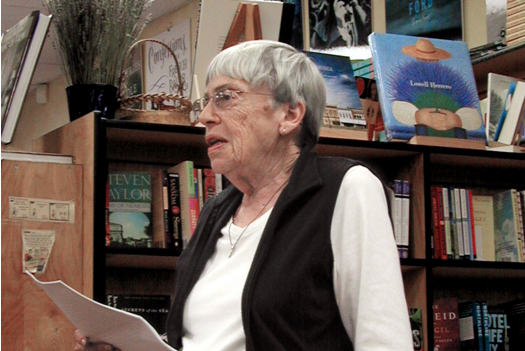
Ursu­la Le Guin Gives Insight­ful Writ­ing Advice in Her Free Online Work­shop

100 Great Sci-Fi Sto­ries by Women Writ­ers (Read 20 for Free Online)

Annie Lei­bovitz Teach­es Pho­tog­ra­phy in Her First Online Course

Josh Jones is a writer and musi­cian based in Wash­ing­ton, DC. Fol­low him at @jdmagness

V.S. Naipaul Creates a List of 7 Rules for Beginning Writers

Pho­to by Faizul Latif Chowd­hury, via Wiki­me­dia Com­mons

As even his harsh­est crit­ics admit­ted, V.S. Naipaul knew how to write. The death ear­li­er this month of the author of A House for Mr Biswas, A Bend in the Riv­er, and The Enig­ma of Arrival got read­ers think­ing again about the nature of his art. A Trinidad-born Indi­an who went to Eng­land on a gov­ern­ment schol­ar­ship to Oxford, he even­tu­al­ly achieved a lit­er­ary mas­tery of the Eng­lish lan­guage that few of his peers in Eng­land — or any­one else there, for that mat­ter — could hope to match.

Like any cel­e­brat­ed cre­ator, Naipaul has long had his imi­ta­tors. But instead of try­ing to repli­cate what they read in his books, they would do bet­ter to repli­cate how he made him­self a writer. “It took a lot of work to do it,” Naipaul once told an inter­view­er. “In the begin­ning I had to for­get every­thing I had writ­ten by the age of 22. I aban­doned every­thing and began to write like a child at school. Almost writ­ing ‘the cat sat on the mat.’” Ami­ta­va Kumar quotes that line in an essay on his own devel­op­ment as a writer, influ­enced not just by Naipaul’s mem­o­ries of start­ing out but Naipaul’s sev­en rules.

“There was a pen-and-ink por­trait of Naipaul on the wall,” writes Kumar about his first day work­ing at the Indi­an news­pa­per Tehel­ka. “High above someone’s com­put­er was a sheet of paper that said ‘V. S. Naipaul’s Rules for Begin­ners.’ ” Tehel­ka reporters had asked the famed writer “if he could give them some basic sug­ges­tions for improv­ing their lan­guage. Naipaul had come up with some rules. He had fussed over their for­mu­la­tion, cor­rect­ed them, and then faxed back the cor­rec­tions.” Kumar decid­ed to fol­low the rules and found they were “a won­der­ful anti­dote to my prac­tice of using aca­d­e­m­ic jar­gon, and they made me con­scious of my own writ­ing habits. I was dis­cov­er­ing lan­guage as if it were a new coun­try.”

Naipaul’s list of rules for begin­ning writ­ers runs as fol­lows:

Do not write long sen­tences. A sen­tence should not have more than 10 or 12 words.

Each sen­tence should make a clear state­ment. It should add to the state­ment that went before. A good para­graph is a series of clear, linked state­ments.

Do not use big words. If your com­put­er tells you that your aver­age word is more than five let­ters long, there is some­thing wrong. The use of small words com­pels you to think about what you are writ­ing. Even dif­fi­cult ideas can be bro­ken down into small words.

Nev­er use words whose mean­ings you are not sure of. If you break this rule you should look for oth­er work.

The begin­ner should avoid using adjec­tives, except those of col­or, size and num­ber. Use as few adverbs as pos­si­ble.

Avoid the abstract. Always go for the con­crete.

Every day, for six months at least, prac­tice writ­ing in this way. Small words; clear, con­crete sen­tences. It may be awk­ward, but it’s train­ing you in the use of lan­guage. It may even be get­ting rid of the bad lan­guage habits you picked up at the uni­ver­si­ty. You may go beyond these rules after you have thor­ough­ly under­stood and mas­tered them.

If you’ve read oth­er writ­ers’ tips, espe­cial­ly those we’ve fea­tured before here on Open Cul­ture, some of Naipaul’s rules may sound famil­iar. “Nev­er use a long word where a short one will do,” says George Orwell. “The more abstract a truth which one wish­es to teach, the more one must first entice the sens­es,” says Niet­zsche. “The adverb is not your friend,” says Stephen King. Naipaul’s rules may strike you as over­ly restric­tive, but bear in mind that he com­posed them for news­pa­per­men look­ing to make improve­ments in their prose, and rec­om­mend­ed fol­low­ing them for six months as a kind of course of treat­ment to rid them­selves of “bad lan­guage habits.”

The sea­soned writer, how­ev­er, can work accord­ing to rules of his own. Naipaul once explained this in no uncer­tain terms to Knopf edi­tor-in-chief Son­ny Mehta. “It hap­pens that Eng­lish — the his­to­ry of the lan­guage — was my sub­ject at Oxford,” he wrote in a let­ter rep­ri­mand­ing the house for its overzeal­ous copy edit­ing, labo­ri­ous­ly adher­ent to French-style “court rules,” of one of his man­u­scripts. “The glo­ry of Eng­lish is that it is with­out these court rules: it is a lan­guage made by the peo­ple who write it. My name goes on my book. I am respon­si­ble for the way the words are put togeth­er. It is one rea­son why I became a writer.”

via Lithub

Relat­ed con­tent:

V.S. Naipaul Writes an Enraged Let­ter to His Pub­lish­er After a Copy-Edi­tor Revis­es His Book, A Turn in the South

Writ­ing Tips by Hen­ry Miller, Elmore Leonard, Mar­garet Atwood, Neil Gaiman & George Orwell

George Orwell’s Six Rules for Writ­ing Clear and Tight Prose

Nietzsche’s 10 Rules for Writ­ing with Style (1882)

Stephen King’s Top 20 Rules for Writ­ers

Based in Seoul, Col­in Mar­shall writes and broad­casts on cities and cul­ture. His projects include the book The State­less City: a Walk through 21st-Cen­tu­ry Los Ange­les and the video series The City in Cin­e­ma. Fol­low him on Twit­ter at @colinmarshall or on Face­book.

V.S. Naipaul Writes an Enraged Letter to His Publisher After a Copy-Editor Revises His Book, A Turn in the South

Pho­to by Faizul Latif Chowd­hury, via Wiki­me­dia Com­mons

There are many ways for trav­el writ­ers to get their sub­ject bad­ly wrong. Per­haps the worst is sole­ly rely­ing on unin­formed obser­va­tion rather than seek­ing the wis­dom and expe­ri­ence of knowl­edge­able locals. To his cred­it, cel­e­brat­ed Nobel prize-win­ning nov­el­ist V.S. Naipaul—who passed away on August 11th at age 85—met, min­gled, and spoke freely with indi­vid­u­als from every walk of life (includ­ing Eudo­ra Wel­ty) in the process of writ­ing A Turn in the South, a trav­el­ogue of his sojourn through the much-mythol­o­gized and maligned South­ern states of the U.S.

Naipaul’s voice alone might have over­whelmed the work with the extreme­ly harsh, some have said big­ot­ed, judg­ments he became known for in nov­els like A Bend in the Riv­erGueril­las, and The Enig­ma of Arrival. Instead, he won praise from review­ers like South­ern his­to­ri­an C. Vann Wood­ward, who wrote that Naipaul “brings new under­stand­ing of the sub­ject to his read­er.” Wood­ward also not­ed that Naipaul “con­fess­es to ‘writ­ing anx­i­eties’ about under­tak­ing this book on peo­ple unknown to him.”

Though he con­sult­ed and quot­ed local voic­es in his sur­vey of the South, it is ulti­mate­ly Naipaul’s voice that orga­nizes the work, and his pre­cise, eru­dite prose the read­er hears. It was a voice he took great pride in, as he should. For his many faults, Naipaul was a mas­ter­ful lit­er­ary styl­ist. One won­ders, then, why a copy edi­tor at Knopf would feel it nec­es­sary to make exten­sive revi­sions to the man­u­script of A Turn in the South before its pub­li­ca­tion.

Copy-edit­ing is an essen­tial func­tion, writes Let­ters of Note, with­out which many books would go to print “pep­pered with redun­dant hyphens, need­less rep­e­ti­tion, mis­placed semi­colons,” etc. But it is also a task that should inter­fere as lit­tle as pos­si­ble with the mat­ters of dic­tion, style, and syn­tax that char­ac­ter­ize an autho­r­i­al voice. Like a con­sci­en­tious back­pack­er, a good copy edi­tor should endeav­or to leave almost no trace unless the text is full of seri­ous prob­lems.

Clear­ly, as Naipaul’s irri­tat­ed let­ter below shows, some­thing went wrong. Upon receiv­ing the copy-edit­ed text, he writes, he was oblig­ed to restore the orig­i­nal from mem­o­ry. Naipaul assures Knopf’s edi­tor-in-chief Son­ny Mehta that he under­stands the Eng­lish lan­guage and its his­to­ry very well, and knows that, unlike French, it has no “court rules,” and can be bent any num­ber of ways with­out break­ing. He implies it is the job of every “seri­ous or ded­i­cat­ed” writer in Eng­lish to use the lan­guage as they see fit, and the job of an edi­tor to most­ly get out of the way.

No doubt this rela­tion­ship can prove com­pli­cat­ed and frus­trat­ing for both par­ties. Still, though we only get Naipaul’s side of the sto­ry, it’s hard not to take it when he points out he had writ­ten 20 books by that time, all of them acclaimed for the qual­i­ty of their writ­ing. “My name goes on my book,” he declares. (So does the name “Knopf,” Mehta might have replied.) “I am respon­si­ble for the way the words are put togeth­er.” Read the let­ter in full below. And see Lit­er­ary Hub for Naipaul’s Ten Rules of Writ­ing if you’re inter­est­ed in his pre­scrip­tions for clear Eng­lish prose—advice he had earned license to take or leave in his own work.


10 May 1988

Dear Son­ny,

The copy-edit­ed text of A Turn in the South came yes­ter­day; it is such an appalling piece of work that I feel I have to write about it. This kind of copy-edit­ing gets in the way of cre­ative read­ing. I spend so much time restor­ing the text I wrote (and as a result know rather well). I thought it might have been known in the office that after 34 years and 20 books I knew cer­tain things about writ­ing and didn’t want a copy-editor’s help with punc­tu­a­tion or the thing called rep­e­ti­tion; and cer­tain­ly didn’t want help with ways of get­ting round rep­e­ti­tion. It is utter­ly absurd to have some­one point­ing out to me rep­e­ti­tions in the use of “and” or “like” or “that” or “she”. I didn’t want any­one undo­ing my semi-colons; with all their dif­fer­ent ways of link­ing.

It hap­pens that Eng­lish — the his­to­ry of the lan­guage — was my sub­ject at Oxford. It hap­pens that I know very well that these so-called “rules” have noth­ing to do with the lan­guage and are real­ly rules about French usage. The glo­ry of Eng­lish is that it is with­out these court rules: it is a lan­guage made by the peo­ple who write it. My name goes on my book. I am respon­si­ble for the way the words are put togeth­er. It is one rea­son why I became a writer.

Every writer has his own voice. (Every seri­ous or ded­i­cat­ed writer.) This is achieved by the way he punc­tu­ates; the rhythm of his phras­es; the way the writ­ing reflects the process­es of the writer’s thought: all the ner­vous­ness, all the links, all the curi­ous asso­ci­a­tions. An assid­u­ous copy-edi­tor can undo this very quick­ly, can make A write like B and Ms C.

And what a waste of spir­it it is for the writer, who is in effect re-doing bits of his man­u­script all the time instead of giv­ing it a tru­ly cre­ative, revis­ing read. Con­sid­er how it has made me sit down this morn­ing, not to my work, but to write this enraged let­ter.

Yours 

Vidia

via Let­ters of Note

Relat­ed Con­tent:

Kurt Von­negut Explains “How to Write With Style”

Cor­mac McCarthy’s Three Punc­tu­a­tion Rules, and How They All Go Back to James Joyce

Oscar Wilde Offers Prac­ti­cal Advice on the Writ­ing Life in a New­ly-Dis­cov­ered Let­ter from 1890

Josh Jones is a writer and musi­cian based in Durham, NC. Fol­low him at @jdmagness

« Go BackMore in this category... »
Quantcast