A story appearing in July’s Stanford Magazine begins with the caption: “An Internet smear campaign nearly destroyed the South Korean star, but he fought back with the only weapon he had: the truth.” And, from there, you’re launched into one of the more flabbergasting stories you’ve read in some time. Give The Persecution of Daniel Lee a read, and you’ll see that we’re not being the least bit hyperbolic.
The internet can be a wonderful place. We all know that. But, as with any other place humans inhabit, it has a dark side, and that’s what we encounter here…
Cynicism. Ruthlessness. Deviousness. Power politics. These words are often associated with Niccolò Machiavelli, the author of The Prince (1532). But, it turns out, he was anything but. He was a sweet man (though something of a philanderer), a profound democrat, good looking, a party animal. In short, Machiavelli has gotten a bad rap, says novelist Salman Rushdie.
To get more insight into this badly misunderstood figure, we’d recommend spending time with Philosophy Bites’ interview (MP3 or iTunes) with Quentin Skinner, one of England’s finest intellectual historians who has written extensively on Machiavelli. You can also find The Prince listed in our collection of Free eBooks. H/T Andrew Sullivan
If you would like to support the mission of Open Culture, consider making a donation to our site. It’s hard to rely 100% on ads, and your contributions will help us continue providing the best free cultural and educational materials to learners everywhere. You can contribute through PayPal, Patreon, and Venmo (@openculture). Thanks!
Earlier this month, Netflix upped its monthly subscription by a good 60%, creating what amounted to a bourgeois tragedy for many. If you subscribe to Netflix, then fear not. Help may be on its way. FunnyorDie feels your pain, and, with the help of Jason Alexander (you know him from Seinfeld), they’re promoting the Netflix Relief Fund. Wink.
If you plan on sticking with Netflix, you can find here a great list of quality films, all streamable via the web. (If needed, snag a free one month subscription to Netflix here.) Or if you’re looking for other options, don’t miss our collection of Free Movies Online, where you’re pretty much guaranteed to find something you like…
Back in 2009, the folks at RadioLab tackled another big question: “What happens at the moment when we slip from life…to the other side? Is it a moment? If it is, when exactly does it happen? And what happens afterward?”
The show (listen here) inspired filmmaker Will Hoffman to shoot a video the meditates on the little moments that give life (and death) their meaning. Some moments stand in isolation. Others moments are connected, creating a link between birth and death, cause and effect, beginnings and ends. In this audio clip, Hoffman talks with RadioLab co-host Robert Krulwich about the vision informing the video simply called Moments. And, if it delights, don’t miss two other Hoffman/RadioLab productions, one simply called Words, the other Symmetry.
According this fascinating piece in The Smithsonian, Franco Zeffirelli’s 1979 weepfest The Champ is the most consistently effective tearjerker in the history of film. It’s also the tearjerker most often used in scientific studies of grief and sadness:
The Champ has been used in experiments to see if depressed people are more likely to cry than non-depressed people (they aren’t). It has helped determine whether people are more likely to spend money when they are sad (they are) and whether older people are more sensitive to grief than younger people (older people did report more sadness when they watched the scene). Dutch scientists used the scene when they studied the effect of sadness on people with binge eating disorders (sadness didn’t increase eating).
We would have gone with either the last scene of West Side Story or that devastating 1989 Negro College Fund commercial with the pennies. Feel free to post your own candidates in the comments.
Sheerly Avni is a San Francisco-based arts and culture writer. Her work has appeared in Salon, LA Weekly, Mother Jones, and many other publications. You can follow her on twitter at @sheerly.
Good luck staying dry-eyed through this moving tribute to Jim Henson, which features a group of puppets trying to cope with the death of their beloved creator. It’s a long time since we’ve seen the so-called stages of grief dramatized so beautifully and with such economy. (The filmmakers recently followed up their 5‑minute short with a trailer for what looks like a promising feature-length version.)
Sheerly Avni is a San Francisco-based arts and culture writer. Her work has appeared in Salon, LA Weekly, Mother Jones, and many other publications. You can follow her on twitter at @sheerly.
When you think of The New Yorker, you think about two things — long-form articles and legendary cartoons. The two art forms have gone hand-in-hand since the magazine began publishing in 1925, and, decades later, a younger generation of cartoonists still delivers the laughs. Thanks to the Gel Conference 2011 (see all videos here), you can spend 25 minutes inside their artistic world. Matt Diffee, Drew Dernavich, and Zach Kanin talk about their sometimes controversial work at the magazine and draw improv cartoons based on audience suggestions. Fun guaranteed for all. H/T @opedr
Wolfgang Grajonca had a hard childhood. Young and orphaned during World War II, Grajonca moved from Germany to Paris, Marseille and Lisbon, and eventually the United States by sea, each time staying one step ahead of the westward-moving Nazis. The 10 year old settled in New York, changed his name to Bill Graham, later fought in Korea, and headed to San Francisco, where he became a legendary concert promoter. Jefferson Airplane, The Grateful Dead, Country Joe and The Fish, The Rolling Stones — Graham put them all on the West coast stage.
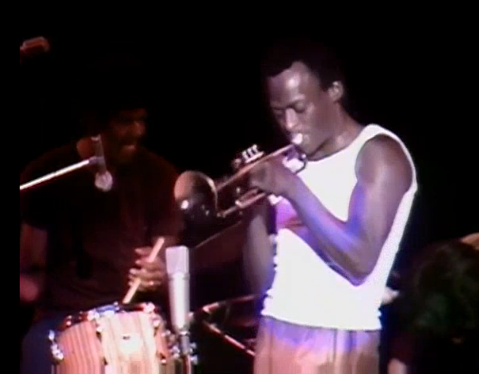
The promoter of the Counterculture was killed in a helicopter crash in October 1991 and left behind a huge trove of recordings and memorabilia. Out of the ashes arose Wolfgang’s Vault, a website that peddles many Bill Graham goods, but also features a good number of free concerts from the heyday: The Who and Miles Davis (Tanglewood, 1970), The Allman Brothers Band (New York, 1970), Muddy Waters (Los Angeles, 1971), Bob Marley and the Wailers and Tom Petty & the Heartbreakers (1978). They’re all available online, along with other acts including Van Morrison, AC/DC, Santana, The Band, and Crosby, Stills & Nash. Jump into the collection here.
A few weeks ago, we posted New York Times critic A.O.Scott’s thoughtful three-minute look back at the surrealist classic Un Chien Andalou. The 1929 Buñuel/Dalí production may well be the world’s most famous bit of early surrealist cinema, but it was not the first. That honor goes to another very strange (and indubitably surreal) short film screened in Paris in 1928, prompting the now infamous condemnation from the British Board of Film Censors. It insisted that the 31-minute film was “apparently meaningless.” They then added, “If there is a meaning, it is doubtless objectionable.”
The Seashell and the Clergyman, based on Antonin Artaud’s screenplay about a priest who lusts after a General’s wife, was directed by the cinema theorist, journalist, and critic Germaine Dulac (1882–1942). Dulac was also a groundbreaking feminist filmmaker — she is best known today for The Smiling Mrs. Beudet (1923), a seminal silent film about a woman trapped in a loveless marriage.
Sheerly Avni is a San Francisco-based arts and culture writer. Her work has appeared in Salon, LA Weekly, Mother Jones, and many other publications. You can follow her on twitter at @sheerly.
During World War II, all hands were on deck, even in Hollywood. Many of America and Britain’s finest filmmakers, from Hitchcock to Frank Capra, were recruited to create propaganda films to support the war effort. (More on that here.) And the same went for Walt Disney, who turned his lovable cartoon characters into good patriots.
In 1942, Disney released “Der Fuehrer’s Face,” an anti-Nazi propaganda movie that bolstered support for the war, and eventually won the Academy Award for Best Animated Short Film. Then, a year later, came The Spirit of ’43, which features Donald Duck helping Americans to understand why they need to pay their taxes. Other wartime Disney shorts include Donald Gets Drafted (1942), The Old Army Game (1943), and Commando Duck (1944). Then, coming out of this propaganda tradition, you’ll also find Donald Duck Meets Glenn Beck in Right Wing Radio Duck, a recent spoof by Jonathan McIntosh (of Rebellious Pixels). It’s a good bit of fun.
We're hoping to rely on loyal readers, rather than erratic ads. Please click the Donate button and support Open Culture. You can use Paypal, Venmo, Patreon, even Crypto! We thank you!
Open Culture scours the web for the best educational media. We find the free courses and audio books you need, the language lessons & educational videos you want, and plenty of enlightenment in between.
 A story appearing in July’s Stanford Magazine begins with the caption: “An Internet smear campaign nearly destroyed the South Korean star, but he fought back with the only weapon he had: the truth.” And, from there, you’re launched into one of the more flabbergasting stories you’ve read in some time. Give The Persecution of Daniel Lee a read, and you’ll see that we’re not being the least bit hyperbolic.