Hans Rosling, a professor of global health at Sweden’s Karolinska Institute, focuses on ‘dispelling common myths about the so-called developing world’ (as his TED bio well notes). And he has established a reputation for presenting data in extremely imaginative ways. Just watch the video above, an outtake from the BBC show “The Joy of Stats”). In four minutes, Rosling visually traces the health of 200 countries over 200 years, using 120,000 data points, and we end up with a little reason for optimism. Great stuff… Thanks to @Sheerly for flagging this.
3D Rome Was Built in a Day
Computer scientists at UNC-Chapel Hill and colleagues at the Swiss university, ETH-Zurich, have created an algorithm that searches through millions of photos on Flickr, then uses them to build a 3D model of landmarks and geographical locations. Case in point, the video above. According to The Daily Tar Heel, “researchers demonstrated the technique by using 3 million images of Rome to reconstruct the city’s primary landmarks. A single PC processed the images in less than 24 hours. Landmarks in Berlin were reconstructed in the same manner.” Not bad for a day’s work…
via ReadWriteWeb
Who is Julian Assange? Three Profiles of the WikiLeaks Founder
 Trying to make heads or tails of WikiLeaks, which just released 250,000 US diplomatic cables this week? Then you may want to spend some time with one article and one video. First, The New Yorker published this summer an extensive profile of Julian Assange, the driving force behind WikiLeaks. A key passage explaining Assange’s world view appears below, and you can get the full profile right here. Next up, we have Chris Anderson, the head of TED, in conversation Assange. The interview, running 20 minutes, tells you essentially “Why the World Needs WikiLeaks.” And then why not add to the list Forbes’ lengthy interview with Assange, published earlier this week. (Thanks Avi for that.)
He had come to understand the defining human struggle not as left versus right, or faith versus reason, but as individual versus institution. As a student of Kafka, Koestler, and Solzhenitsyn, he believed that truth, creativity, love, and compassion are corrupted by institutional hierarchies, and by “patronage networks”—one of his favorite expressions—that contort the human spirit. He sketched out a manifesto of sorts, titled “Conspiracy as Governance,” which sought to apply graph theory to politics. Assange wrote that illegitimate governance was by definition conspiratorial—the product of functionaries in “collaborative secrecy, working to the detriment of a population.” He argued that, when a regime’s lines of internal communication are disrupted, the information flow among conspirators must dwindle, and that, as the flow approaches zero, the conspiracy dissolves. Leaks were an instrument of information warfare.
The Titanic: Rare Footage of the Ship Before Disaster Strikes (1911–1912)
These days, it’s easier to come across footage of the Titanic below water rather than above. But here you have it. The Titanic under construction in Belfast in 1911 — a year before it became the stuff of legend. Thanks Lauren for sending this our way. Always appreciate readers joining in on the fun…
If you would like to support the mission of Open Culture, consider making a donation to our site. It’s hard to rely 100% on ads, and your contributions will help us continue providing the best free cultural and educational materials to learners everywhere. You can contribute through PayPal, Patreon, and Venmo (@openculture). Thanks!
Dear Monsieur Picasso: A Free eBook
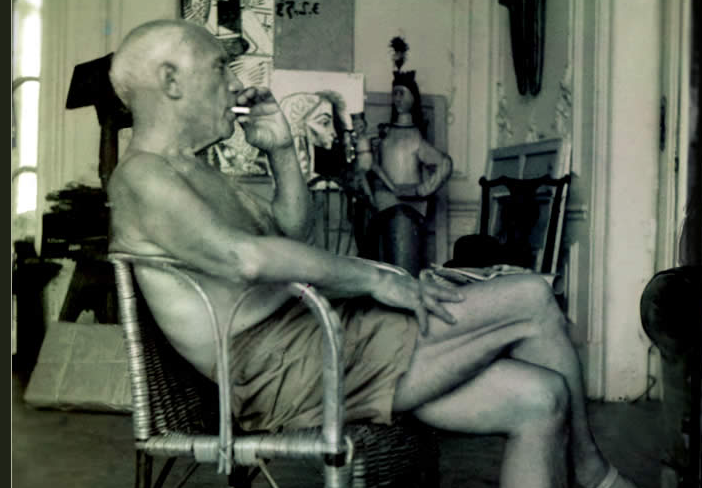
In the summer of 1955, Frederick Baldwin, a college student at Columbia University, set out on a pilgrimage of sorts, hoping to meet Pablo Picasso. Baldwin traveled first to Le Havre (presumably by boat), then headed south, down to Vallauris and Cannes, until he eventually reached Picasso’s home on the Riviera, known as Villa la Californie. It took a little craftiness and moxie, but the young American gained entrance into Picasso’s studio. And there he was, the great painter himself, wearing shorts, sandals and not much else.
More than five decades later, Baldwin has produced an elegant e‑book (available for free right here) that uses photographs and text to preserve the memory of this defining moment. After meeting Picasso, Baldwin became a professional photographer, working for Audubon, LIFE, National Geographic, Smithsonian Magazine, and The New York Times, among other magazines. And, later, he looked to “replicate the Picasso experience professionally,” always controlling his own agenda, never taking a job where he wasn’t making his own decisions. You can download the 22 page e‑book, Dear Monsieur Picasso, right here. Find more great texts in our collection of Free eBooks.
Related Content:
Free: The Guggenheim Puts 65 Modern Art Books Online
The World in a Satirical Nutshell
Greece and Ireland are down. Portugal is teetering. And Spain may soon be the biggest domino to fall. All of this makes this satirical clip a little timely – perhaps a bit too painfully timely. Featured here are two Australian satirists John Clarke and Bryan Dawe…
Early Experiments in Color Film (1895–1935)
Hollywood didn’t start producing color feature films until the mid 1930s. (Becky Sharp, the first Technicolor film from 1935, appears in our collection of Free Movies Online.) But experiments with color filmmaking started long before that. Earlier this year, Kodak unearthed a test of Kodachrome color film from 1922 (above). But then you can travel back to 1912, when a filmmaker tested out a Chronochrome process on the beaches of Normandy. Or how about moving all the way back to 1895? Here we have footage from Thomas Edison’s hand-painted film Anabelle’s Dance, which was made for his Kinetoscope viewers. For more on the history of color film, visit here.
If you would like to support the mission of Open Culture, consider making a donation to our site. It’s hard to rely 100% on ads, and your contributions will help us continue providing the best free cultural and educational materials to learners everywhere. You can contribute through PayPal, Patreon, and Venmo (@openculture). Thanks!
Related Content:
Tsarist Russia Comes to Life in Vivid Color Photographs Taken Circa 1905–1915
H.G. Wells’ 1930s Radio Broadcasts
 H.G. Wells (1866–1946) gave us The Time Machine, The Invisible Man, and The War of the Worlds and practically invented science fiction as we know it. (Find his classic texts in our Free Audio Books and Free eBooks collections.) Now, thanks to the BBC, you can travel back in time and get a glimpse into Wells’ creative mind. During the 1930s and 1940s, Wells made regular radio broadcasts for the BBC, where he had the freedom to range widely, to talk about “world politics, the history of the printing press, the possibilities of technology and the shape of things to come…” Nine recordings now appear online. You can start listening here, or dip into an archive of Wells’ personal letters.
Finally, don’t miss one of my personal favorites. Orson Welles reading a dramatized version of H.G. Wells’ The War of the Worlds in 1938. It’s perhaps the most famous radio broadcast in American history and it drove America into a bout of mass hysteria, at least for a night …
H/T to @fionaatzler for flagging these BBC audio recordings.
A Darwinian Theory of Beauty, or TED Does Its Best RSA
You have undoubtedly seen one, if not many, of RSA’s catchy videos during the past year. They feature the words of thought leaders accompanied by the fast-moving animation of Andrew Park. Along the way, we have featured RSA talks by Daniel Pink, Sir Ken Robinson, and Barbara Ehrenreich, among others.
The RSA videos have always struck me as a good alternative, or perhaps complement, to the more well-known TED videos. TED developed its style of presentation – speakers presenting on a live stage in a crisp 18 minutes (or less). Then RSA rolled out its distinctive animated videos. And now this: TED has Andrew Park animate Denis Dutton’s talk – A Darwinian Theory of Beauty – in RSA style. Intriguing talk. But a strange move on TED’s part. Hopefully, it’s just a one-off, and not a jump-the-shark moment…
Why Can’t We Walk Straight?
When we’re blindfolded, we’re doomed to walk in circles. The same thing happens when we drive and swim without the benefit of sight. Around and around we go. Robert Krulwich, the cohost of the excellent Radiolab show (iTunes — Feed — Site), breaks this all down with some intriguing animation. But let me add this little spoiler alert. What makes us spin in circles still defies scientific explanation. H/T to Mike in Cambridge.
via berto-meister
Developing Apps for iPhone & iPad: A Free Stanford Course
 Looking to design apps for the iPhone or iPad? Stanford University now has a course online that will help you do just that.
Simply called Developing Apps for iOS, the course features 20 video lectures (the last installment was uploaded just this week) and, somewhat fittingly, they’re all available on Apple’s iTunesU.
Paul Hegarty teaches the course, and he assumes that you have experience programming in C, and some familiarity with UNIX, object-oriented programming and graphical toolkits.
You can find Developing Apps for iOS in the Computer Science section of our big collection of Free Online Courses, along with two previous Stanford app development courses, both called iPhone Application Development.
Support Us
We're hoping to rely on loyal readers, rather than erratic ads. Please click the Donate button and support Open Culture. You can use Paypal, Venmo, Patreon, even Crypto! We thank you!

Great Lectures
About Us

Open Culture scours the web for the best educational media. We find the free courses and audio books you need, the language lessons & educational videos you want, and plenty of enlightenment in between.
Advertise With Us
Archives
- October 2026
- September 2026
- August 2026
- July 2026
- June 2026
- May 2026
- April 2026
- March 2026
- February 2026
- January 2026
- December 2025
- November 2025
- October 2025
- September 2025
- August 2025
- July 2025
- June 2025
- May 2025
- April 2025
- March 2025
- February 2025
- January 2025
- December 2024
- November 2024
- October 2024
- September 2024
- August 2024
- July 2024
- June 2024
- May 2024
- April 2024
- March 2024
- February 2024
- January 2024
- December 2023
- November 2023
- October 2023
- September 2023
- August 2023
- July 2023
- June 2023
- May 2023
- April 2023
- March 2023
- February 2023
- January 2023
- December 2022
- November 2022
- October 2022
- September 2022
- August 2022
- July 2022
- June 2022
- May 2022
- April 2022
- March 2022
- February 2022
- January 2022
- December 2021
- November 2021
- October 2021
- September 2021
- August 2021
- July 2021
- June 2021
- May 2021
- April 2021
- March 2021
- February 2021
- January 2021
- December 2020
- November 2020
- October 2020
- September 2020
- August 2020
- July 2020
- June 2020
- May 2020
- April 2020
- March 2020
- February 2020
- January 2020
- December 2019
- November 2019
- October 2019
- September 2019
- August 2019
- July 2019
- June 2019
- May 2019
- April 2019
- March 2019
- February 2019
- January 2019
- December 2018
- November 2018
- October 2018
- September 2018
- August 2018
- July 2018
- June 2018
- May 2018
- April 2018
- March 2018
- February 2018
- January 2018
- December 2017
- November 2017
- October 2017
- September 2017
- August 2017
- July 2017
- June 2017
- May 2017
- April 2017
- March 2017
- February 2017
- January 2017
- December 2016
- November 2016
- October 2016
- September 2016
- August 2016
- July 2016
- June 2016
- May 2016
- April 2016
- March 2016
- February 2016
- January 2016
- December 2015
- November 2015
- October 2015
- September 2015
- August 2015
- July 2015
- June 2015
- May 2015
- April 2015
- March 2015
- February 2015
- January 2015
- December 2014
- November 2014
- October 2014
- September 2014
- August 2014
- July 2014
- June 2014
- May 2014
- April 2014
- March 2014
- February 2014
- January 2014
- December 2013
- November 2013
- October 2013
- September 2013
- August 2013
- July 2013
- June 2013
- May 2013
- April 2013
- March 2013
- February 2013
- January 2013
- December 2012
- November 2012
- October 2012
- September 2012
- August 2012
- July 2012
- June 2012
- May 2012
- April 2012
- March 2012
- February 2012
- January 2012
- December 2011
- November 2011
- October 2011
- September 2011
- August 2011
- July 2011
- June 2011
- May 2011
- April 2011
- March 2011
- February 2011
- January 2011
- December 2010
- November 2010
- October 2010
- September 2010
- August 2010
- July 2010
- June 2010
- May 2010
- April 2010
- March 2010
- February 2010
- January 2010
- December 2009
- November 2009
- October 2009
- September 2009
- August 2009
- July 2009
- June 2009
- May 2009
- April 2009
- March 2009
- February 2009
- January 2009
- December 2008
- November 2008
- October 2008
- September 2008
- August 2008
- July 2008
- June 2008
- May 2008
- April 2008
- March 2008
- February 2008
- January 2008
- December 2007
- November 2007
- October 2007
- September 2007
- August 2007
- July 2007
- June 2007
- May 2007
- April 2007
- March 2007
- February 2007
- January 2007
- December 2006
- November 2006
- October 2006
- September 2006

