Brilliant, and we’ve added this one, too, to our YouTube Favorites. Now I’m off for the long weekend. See you Tuesday!
Brilliant, and we’ve added this one, too, to our YouTube Favorites. Now I’m off for the long weekend. See you Tuesday!
Google Earth has somewhat outgrown its name. These days, Google’s satellite program (download it here) gives you more than a unique view of our planet Earth. It also offers a nice tour of Mars (and the Moon). The Mars tour is guided by a familiar voice — the voice of Ira Flatow, who hosts the well known NPR program, Talk Of The Nation: Science Friday. The video below will show you how to access the tour in a quick two minutes. In the meantime, you should also note that Google Earth hosts other educational content. In the past, we’ve mentioned how the program will let you tour the Prado Art collection in Spain, and also see Ancient Rome in 3D. But that’s not where the educational content ends. For more, please visit this summary page assembled by Google.
Launch the program, and then toggle on the Uranus icon on the top nav bar. Then
The poem was W.H. Auden’s. The date marked the moment when Germany invaded Poland, initiating the start of World War II. “September 1, 1939” was originally published in The New Republic on October 18, 1939. You can find the text of the poem here. Plus, you can also read George Orwell’s account of what happened that historic day in Poland. I found it, and just had to throw that in.
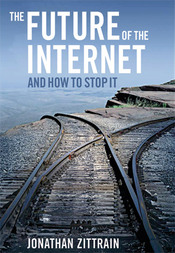 Lawrence Lessig calls Jonathan Zittrain’s book “Absolutely required reading.” Cass Sunstein says it’s “Absolutely essential reading.” And Lawrence Tribe declares that it is “The most compelling book ever written on why a transformative technology’s trajectory threatens to stifle that technology’s greatest promise for society.”
The book is The Future of the Internet–And How to Stop It. You can buy it on Amazon for $11.56, or, even better, you can download it for free from Zittrain’s web site. Visit the web site, and find the PDF here. Thanks for this tip goes to Tony Yet, who guest blogged TED to China: An Inside View earlier this summer.
Related Content:
Download Free Audiobook of Chris Anderson’s “Free”
The Future of the Internet: A Free Stanford Course
Lawrence Lessig’s Free Culture: Available in Text or Audio (For Free)
What happens when Socrates tries to land a job at a university? It doesn’t go so well. Below, we have the comments returned by the interview committee, as imagined by THE (Times Higher Education). In this piece, you’ll also find Tolstoy, Kafka, Jane Austen and other geniuses coming up short with the search committees. Now to Socrates…
“At first the candidate’s own list of questions felt refreshing, but soon became counter-productive to the interview process. His spirit of inquiry masked an indifference to time constraints and a passive-aggressive need to dominate the conversation. As another candidate cooled his heels, the request for him to conclude his thoughts on the ideal society scarcely registered as we wondered if, then began to wish that, someone would spike his drink.”
I enjoy replaying this vintage gem every now and then — Malcolm X debating at Oxford University in 1964. In this classic video, you get a good feel for Malcolm X’s presence and message, not to mention the social issues that were alive during the day. You’ll hear X’s trademark claim that liberty can be attained by “whatever means necessary,” including force, if the government won’t guarantee it, and that “intelligently directed extremism” will achieve liberty far more effectively than pacifist strategies. (He’s clearly alluding to Martin Luther King.) You can listen to the speech in its entirety here (Real Audio), something that is well worth doing. But I’d also encourage you to watch the dramatic closing minutes and pay some attention to the nice rhetorical slide, where X takes lines from Shakespeare’s Hamlet and uses them to justify his “by whatever means necessary” position. You’d probably never expect to see Hamlet getting invoked that way, let alone Malcolm X speaking at Oxford. A wonderful set of contrasts.
“I read once, passingly, about a man named Shakespeare. I only read about him passingly, but I remember one thing he wrote that kind of moved me. He put it in the mouth of Hamlet, I think, it was, who said, ‘To be or not to be.’ He was in doubt about something—whether it was nobler in the mind of man to suffer the slings and arrows of outrageous fortune—moderation—or to take up arms against a sea of troubles and by opposing end them. And I go for that. If you take up arms, you’ll end it, but if you sit around and wait for the one who’s in power to make up his mind that he should end it, you’ll be waiting a long time. And in my opinion, the young generation of whites, blacks, browns, whatever else there is, you’re living at a time of extremism, a time of revolution, a time when there’s got to be a change. People in power have misused it, and now there has to be a change and a better world has to be built, and the only way it’s going to be built—is with extreme methods. And I, for one, will join in with anyone—I don’t care what color you are—as long as you want to change this miserable condition that exists on this earth.”
Related Content:
Free Online Shakespeare Courses: Primers on the Bard from Oxford, Harvard, Berkeley & More
Hear Allen Ginsberg’s Short Free Course on Shakespeare’s Play, The Tempest (1980)
James Baldwin Bests William F. Buckley in 1965 Debate at Cambridge University
Why did so many find Charles Darwin’s concept of natural selection so subversive and disconcerting straight from the beginning? American philosopher Daniel Dennett explains. To get to the meat of things, you might want to skip to 1:16.
Crime writer Dominick Dunne passed yesterday today at 83, his death overshadowed by that of Ted Kennedy. Above, we feature Dunne remembering his rather unpleasant relationship with Frank Sinatra. It’s a perverse story, though told in a somewhat humorous way.
Initially, I considered featuring another video, but it’s entirely too sad, especially for any parents among us. Back in 1982, Dunne’s daughter, an actress, was strangled to death by her boyfriend. And, in this clip, Dunne reflects on his relationship with his daughter. A heartbreaking bit.
As a side note, Dunne kept a diary during the trial of his daughter’s murderer. The account was eventually published in Vanity Fair, and you can find it here, along with many other major pieces that Dunne wrote for VF. Amazingly, the murderer was convicted and served less than 4 years. Meanwhile, millions who have peddled small amounts of drugs are doing considerably more time across the US.
Bob Dylan sings your favorite Christmas songs. “Here Comes Santa Claus,” “Winter Wonderland,” “Little Drummer Boy” and “Must Be Santa.”
It sounds strange. But it’s very real. All money will go to charity. You can pre-order now. And although the album won’t be released until October, it’s already #4 on Amazon.com’s sales chart.
If anyone comes across some mp3s from the album, Christmas in the Heart, please send them our way. Get more details on the project here.
New from the Google Books Blog:
Try doing a search for [Hamlet] on Google Books. The first few results you’ll get are “Full View” books — which means you can read the full text. And, because the book is in the public domain, you can also download a copy of Hamlet in PDF form.
Starting today, you’ll be able to download these and over one million public domain books from Google Books in an additional format. We’re excited to now offer downloads in EPUB format, a free and open industry standard for electronic books. It’s supported by a wide variety of applications, so once you download a book, you’ll be able to read it on any device or through any reading application that supports the format. That means that people will be able to access public domain works that we’ve digitized from libraries around the world in more ways, including some that haven’t even been built or imagined yet.
Flashback to 1966. The Beatles hold a press conference in LA, on the eve of their very last live concert. As you’ll see, the questions range from the frivolous (“What do you think of American women’s legs?”) to the more serious (“Do you really think you’re more popular than God?” Or, “What would happen if you came to an event without an armored truck and without police?”). A brief glimpse into a day in the life of a Beatle. Part 1 is above. Part 2 is here. And Part 3, here.


Open Culture scours the web for the best educational media. We find the free courses and audio books you need, the language lessons & educational videos you want, and plenty of enlightenment in between.

©2006-2026 Open Culture, LLC.
All rights reserved.
