Does Every Picture Tell a Story? A Conversation with Artist Joseph Watson for Pretty Much Pop: A Culture Podcast #51
Storytelling is an essential part of Las Vegas artist Joseph Watson’s painting methodology, whether he’s creating city scenes or public sculpture or children’s illustrations. So how does the narrative an author may have in mind affect the viewer, and is this different for different types of art?
Joseph is perhaps best known as the illustrator of the Go, Go, GRETA! book series and does online streaming of drawing sessions through Instagram and Facebook. On this episode of Pretty Much Pop, he joins your hosts Mark Linsenmayer, Erica Spyres, and Brian Hirt to explore the picture-narrative connection and more generally how knowing about the creation of an image affects our reception of it, touching on Guernica, Where the Wild Things Are, Dr. Seuss, The Chronicles of Narnia, and more.
You can browse Joseph’s work at josephwatsonart.com, and you’re really going to want in particular to look at a couple of the works that we consider explicitly:
- The painting that he gives us the whole story for is “Walk Up, Walk Out.” (And yes, there are X’s in the windows, but I’m pretty sure what Erica was asking about was the one that the dog has just walked across in the top row, whose meaning will remain a mystery!)
- Brian invites us to impose meaning on the cover of Go, Go GRETA! Busy As Can Be without reading the book. Also, you can see the various concept drawings for Greta.
- Erica near the end asks about the inclusion of the “Honorable Mention” trophy in Joseph’s “Elements of Inspiration.”
- Joseph also mentions his flower series and cars made of musical instruments.
Other sources we looked at in preparation for this discussion include:
- “The Uncomfortable Truth About Children’s Books” by Daskha Slater
- “Children’s Book Illustration Masterclass — Use of Colour and Style,” a video by Shoo Rayner
- “How ‘The Snowy Day’ Became an Enduring Illustration of Diversity” by Abilgail Cain
- “10 of the Greatest Children’s Book Illustrators, from EH Shepard to Quentin Blake” by Matthew Dennison
- “The Tragic Story Behind Pablo Picasso’s Guernica, One of World’s Most Famous Paintings” by Andrey V.
- “10 World Famous Paintings with Interesting Backstories” by Shyam T. Unni
- “35 Powerful Photos That Tell a Story” from JotForm (The discussion actually didn’t get to photography; that’ll have to wait for a future episode. Advertising is another relevant area we should pick up later.)
Follow Joseph on Instagram @josephwatsonart; also Twitter and Facebook.
Learn more at prettymuchpop.com. This episode includes bonus discussion that you can only hear by supporting the podcast at patreon.com/prettymuchpop. This week, it includes a particularly philosophical consideration of the notion of escapism and how different that is from so-called serious pursuits. Is this just a version of the high-low culture distinction that we largely rejected in episode one? This podcast is part of the Partially Examined Life podcast network.
Pretty Much Pop: A Culture Podcast is the first podcast curated by Open Culture. Browse all Pretty Much Pop posts.
Read More...An Animated Introduction to the Pioneering Anthropologist Margaret Mead
Modern Western societies haven’t solved the problem of sex, but Samoa has the answer. Or at least it does according to the work of influential anthropologist Margaret Mead, subject of the animated introduction from Alain de Botton’s School of Life above. Her mentor Franz Boas, the founder of anthropology in the United States, saw not a world progressing “in a linear fashion from barbarism to savagery to civilization” but “teeming with separate cultures, each with their own unique perspectives, insights, and efficiencies.”
Though Mead’s time living among the natives on the distant islands of Samoa came at Boas’ suggestion, she already believed that “isolated cultures could serve as laboratories that would reveal ways of living that the modern world had forgotten about, but needed to remember.” The resulting book, 1928’s Coming of Age in Samoa, turned Mead into the most famous anthropologist in the world. In it she describes Samoan culture as “far more open and comfortable with sex than the modern United States. Little children in Samoa knew all about masturbation, and learned about intercourse and other acts through first-hand observation, but thought of it as no more scandalous or worthy of comment than death or birth.”
Mead also noted an acceptance of not just homosexuality but a natural shift in sexual orientation over time — a condition bound to intrigue a serious scholar who herself led a rather unconventional life, “simultaneously involved with successive husbands and her ever-present female lover.” Her analysis of Samoa, which informed the worldviews of such influential figures as childrearing guru Benjamin Spock, would take on an even broader appeal in the 1960s, when a rising counterculture sought inspiration in its push to transform Western society. Proponents of the “sexual revolution” and its loosening of norms found a natural ally in Mead, and traces of her life and work remain in fragments of the Summer of Love up to and including Hair, one of whose minor characters has her name.
Mead also comes up in Hunter Thompson’s 1971 epitaph for the counterculture, Fear and Loathing in Las Vegas. The scene is the National District Attorneys Association’s Conference on Narcotics and Dangerous Drugs, at which a participant suggests that Mead partakes in the substance known as marijuana. The “drug expert” onstage replies thus: “At her age, if she did smoke grass, she’d have one hell of a trip.” Though Mead publicly showed sympathy for addicts, whom she described as “casualties of a badly organized society,” her own experiences with mind-altering substances are less well documented. But then, her time in Samoa may well have been the only consciousness-expanding trip she needed.
Related Content:
The History of Western Social Theory, by Alan MacFarlane, Cambridge University
Anthropologist Claude Lévi-Strauss Remembered
Based in Seoul, Colin Marshall writes and broadcasts on cities, language, and culture. His projects include the book The Stateless City: a Walk through 21st-Century Los Angeles and the video series The City in Cinema. Follow him on Twitter at @colinmarshall, on Facebook, or on Instagram.
Read More...Rewatch Every Episode of The Sopranos with the Talking Sopranos Podcast, Hosted by Michael Imperioli & Steve Schirripa
The Sopranos premiered on January 10, 1999, and television did not change forever — or rather, not right away. Though its treatment of the life of mid-level New Jersey mob boss Tony Soprano drew large numbers of dedicated viewers right away, few could have imagined during the show’s eight-year run how completely its success would eventually rewrite the rules of dramatic TV. More than twenty years later, nearly all of us place the beginning of our ongoing televisual “golden age” at the broadcast of The Sopranos’ first episode. You can hear that epoch-making 50 minutes discussed in depth on the first episode of the new podcast Talking Sopranos (YouTube — Apple — Spotify), whose hosts Michael Imperioli and Steve Schirripa know the series more intimately than most — not least because they were on it.
Fans know Imperioli and Schirripa as Tony’s protégé Christopher Moltisanti and Tony’s brother-in-law Bobby Baccalieri. On Talking Sopranos they “follow the Sopranos series episode by episode giving fans all the inside info, behind the scenes stories and little-known facts that could only come from someone on the inside,” announces the podcast’s description, which also promises “interviews with additional cast members, producers, writers, production crew and special guests.”
Among these voices there is, of course, one sizable absence: star James Gandolfini, Tony Soprano himself, who died in 2013. But it shows promise that, just fourteen episodes in, the podcast has already brought on Edie Falco, who played Tony’s wife Carmela; Robert Iler, their son A.J. Soprano; Jamie-Lynn Sigler, their daughter Meadow Soprano; and Michael Rispoli, the first season’s short-lived Jackie Aprile Sr.
None of these actors would have made their mark on the show without the work of casting directors Georgianne Walken and Sheila Jaffe, who also make an appearance on the podcast, as does co-executive producer and sometime director Henry Bronchtein. You can download Talking Sopranos on its web site, subscribe to it on Apple Podcasts and elsewhere, or even watch it on Youtube. If you’d like to supplement all this with an even greater wealth of detail, pick up a copy of Matt Zoller Seitz and Alan Sepinwall’s book The Sopranos Sessions, an episode-by-episode analysis featuring interviews with figures including series creator David Chase. Never has there been a better time to do a Sopranos re-watch of your own — and if you never watched it in the first place, well, better a couple of decades late than never.
Related Content:
How David Chase Breathed Life into the The Sopranos
David Chase Reveals the Philosophical Meaning of The Sopranos’ Final Scene
Maurice Sendak Animated; James Gandolfini Reads from Sendak’s Story “In The Night Kitchen”
James Gandolfini Shows Kinder, Softer, Gentler Side on Sesame Street (2002)
Based in Seoul, Colin Marshall writes and broadcasts on cities, language, and culture. His projects include the book The Stateless City: a Walk through 21st-Century Los Angeles and the video series The City in Cinema. Follow him on Twitter at @colinmarshall, on Facebook, or on Instagram.
Read More...The End of an Era: A Short Film About The Last Day of Hot Metal Typesetting at The New York Times (1978)
This is usually what happens when I write a piece for Open Culture: As I drink an overpriced coffee at my local coffee shop, I research a topic on the internet, write and edit an article on Microsoft Word and then copy and paste the whole thing into WordPress. My editor in Open Culture’s gleaming international headquarters up in San Francisco gives it a look-over and then, with the push of a button, publishes the article on the site.
It’s sobering to think what I casually do over the course of a morning would require the effort of dozens of people 40+ years ago.
Until the 1970s, with the rise in popularity of computer typesetting, newspapers were printed the same way for nearly a century. Linotype machines would cast one line at a time from molten lead. Though an improvement from handset type, where printers would assemble lines of type one character at a time, linotype still required numerous skilled printers to assemble each and every newspaper edition.
The New York Times transitioned from that venerated production method to computer typesetting on Sunday, July 2, 1978. David Loeb Weiss, a proofreader at the Times, documented this final day in the documentary Farewell — Etaoin Shrdlu.
The title of the movie, by the way, comes from the first two lines of a printer’s keyboard, which are arranged according to a letter’s frequency of use. When a printer typed “etaoin shrdlu,” it meant that the line had a mistake in it and should be discarded.
Watching the movie, you get a sense of just how much work went into each page and how printers were skilled craftsmen. (You try spotting a typo on a page of upside down and backwards type.) The film also captures the furious energy and the cacophony of clinks and clanks of the composing room. You can see just how much physical work was involved. After all, each page was printed off of a 40-pound plate made of lead.
The tone of the movie is understandably melancholy. The workers are bidding farewell to a job that had existed for decades. “All the knowledge I’ve acquired over my 26 years is all locked up in a little box now called a computer,” notes one printer. “And I think most jobs are going to end up the same way.” Someone else wrote the following on the composing room’s chalkboard. “The end of an era. Good while it lasted. Crying won’t help.”
You can watch the full documentary above. It will also be added to our list of 200 Free Documentaries, a subset of our meta collection, 4,000+ Free Movies Online: Great Classics, Indies, Noir, Westerns, Documentaries & More.
Note: This post originally appeared on our site in August 2015.
Related Content:
Friedrich Nietzsche’s Curious Typewriter, the “Malling-Hansen Writing Ball”
The Enduring Analog Underworld of Gramercy Typewriter
Mark Twain Wrote the First Book Ever Written With a Typewriter
Jonathan Crow is a Los Angeles-based writer and filmmaker whose work has appeared in Yahoo!, The Hollywood Reporter, and other publications. You can follow him at @jonccrow. And check out his blog Veeptopus, featuring lots of pictures of vice presidents with octopuses on their heads. The Veeptopus store is here.
Read More...Imagining the Martin Luther King and Malcolm X Debate That Never Happened
American history as it’s usually taught likes to focus on rivalries, and there are many involving big personalities and major historical stakes. Abraham Lincoln and Stephen Douglas, Thomas Jefferson and Alexander Hamilton, W.E.B. DuBois and Booker T. Washington. These figures are set up to represent the “both sides” we expect of every political question. While the issues are oversimplified (there are always more than two sides and politics isn’t a sport) the figures in question genuinely represented very different perspectives on power and progress.
When it comes to the history of the Civil Rights movement, we are given another such rivalry, between Martin Luther King, Jr. and Malcolm X. Their ideas and influence are pitted against each other as though they had shared a debate stage. In fact, the two leaders met only once, during Senate debates on the Civil Rights Act of 1964. “King was stepping out of a news conference,” writes DeNeen L. Brown at The Washington Post, when Malcolm X, dressed in an elegant black overcoat and wearing his signature horn-rimmed glasses, greeted him.”
“Well, Malcolm, good to see you,” King said.
“Good to see you,” Malcolm X replied.
Cameras clicked as the two men walked down the Senate hall together.
“I’m throwing myself into the heart of the civil rights struggle,” Malcolm X told King.
Later, King would express his disagreement with Malcolm’s “political and philosophical views—at least insofar as I understand where he now stands.” The comment allowed for an evolution in X’s thought that would, in fact, occur that year, while later events would push King in a far more radical direction. As Brown writes:
Although the two men held what appeared to be diametrically opposing views on the struggle for equal rights, scholars say by the end of their lives their ideologies were evolving. King was becoming more militant in his views of economic justice for black people and more vocal in his criticism of the Vietnam War. Malcolm X, who had broken with the Nation of Islam, had dramatically changed his views on race during his 1964 pilgrimage to Mecca.
“Much of America did not know the radical King—and too few know today,” writes Cornell West in his introduction to The Radical King, a collection of lesser-known speeches and writings. But “the FBI and US government did. They called him ‘the most dangerous man in America.’” Malcolm X’s extremely harsh criticism of King as “a 20th-century or modern Uncle Tom” is even more unfair and unwarranted against this background, especially given the title of King’s final, undelivered, sermon: “Why America May Go to Hell.”
In the years after X’s death, King fought for labor rights and advocated for “a better distribution of wealth,” writing in 1966, “America must move toward democratic socialism.” His anti-imperialist, anti-colonial stance alienated many former supporters and enraged the government, but “he refused to silence his voice in his quest for unarmed truth and unconditional love,” West writes. Maybe Malcolm’s unrelenting criticisms played a part in King’s radicalization.
The video “debate” above—actually a 9‑minute edit of their interview discussions of each other—begins with one of Malcolm X’s withering statements about King’s nonviolent resistance, which he characterizes as “defenselessness.” One can see, given the ad hominem attacks, why King refused requests for a debate. Had it happened, however, it might have gone something like this, with questions focused solely on violence vs. nonviolence as effective and/or morally justifiable tactics for the Civil Rights struggle.
The nuances and sickening historical ironies of the question get lost when disagreement is staged as a zero-sum prizefight, as the Rocky theme in the intro not-so-subtly suggests it is. King, X, and virtually every other civil rights leader throughout history, understood the practical importance of self-defense in a violently racist state. “Even the pacifist King was a firm advocate of black gun ownership,” writes John Merfield at Wisconsin Public Radio,” although he, like others, drew a sharp distinction between self-defense, which he saw as legitimate, and political violence, which he called folly.”
King also staunchly refused to address the question of violence outside the larger question of justice, without which, he said, there could be no peace. Movement leaders like Angela Davis who carried forward the radical, anti-imperialist analysis of both the later King and X would continue to push against the simplistic question of whether violence is justified as a response to brutal oppression. In a famous interview clip above, she demonstrates the absurdity of the idea that people subjected to racial terrorism by the authorities and groups protected by them should have to answer charges of committing political violence.
The history of racist killings is a long “unbroken line,” said Davis more recently during the Ferguson uprising. While Civil Rights leaders of the 20th century may have disagreed about the right response, all of them agreed it had to end immediately if the country is to survive and the promise of true freedom to be realized.
Related Content:
Watch Malcolm X Debate at Oxford, Quoting Lines from Shakespeare’s Hamlet (1964)
Josh Jones is a writer and musician based in Durham, NC. Follow him at @jdmagness
Read More...An Anti-Racist Reading List: 20 Books Recommended by Open Culture Readers
You may have received an email from your favorite online retailer, your boss, university president, or the CEO of your bank: “It has come to our attention that racism is real, and it is really, really bad.” Opportunism is real too, but a significant number of individuals seem to have finally drawn the same conclusion and feel morally compelled to do something about an epidemic that has—very discriminately—killed tens of thousands of black, indigenous, and people of color in the U.S. through the unequal distribution of medical resources, and dozens more at the hands of the police and racist vigilantes. That’s only in the past three months.
But racism isn’t new; the current conflict has been on its way for a very long time. How long? Anti-racist scholar and activist Ibram X. Kendi, author of the National Book Award-Winning Stamped from the Beginning, would say from the country’s earliest settlement and enslavement of African people. “For nearly six centuries,” he writes, “antiracist ideas have been pitted against two kinds of racist ideas: segregationist and assimilationist,” Kendi wrote during the protests in Ferguson and other U.S. cities. At the time, antiracists were largely characterized in mainstream media as fringe agitators, naïve Gen‑Z neophytes, and possible foreign agents, not “real Americans.”
How things have changed in six years. Antiracism has become a default position, all of a sudden, for perhaps the first time in U.S. history, so much so that every company and institution has issued some sort of statement in support of Black Lives Matter, and everyone is collecting and sharing Anti-Racist Reading Lists, nearly all of which contain Kendi’s follow-up book, last year’s How to Be an Anti-Racist (which he discusses above with Brené Brown). How long this will last is anyone’s guess, but it is without a doubt a cultural sea change a long time in the making.
Kendi and White Fragility author Robin DiAngelo are the “mac daddies of the bunch” of recent antiracist authors, Lauren Michele Jackson writes at Vulture, and it’s become a crowded field as more and more Americans attempt to come to grips with a national history many of them are learning for the first time. As Kendi and Pulitzer Prize-winning journalist Nikole Hannah-Jones, creator of the 1619 project, discuss on Chris Hayes’ podcast at the top, the country’s past as it is taught to us and as it happened are two entirely different things. Antiracism has always recognized the vicious, ceaseless murder, disenfranchisement, and ransacking of black and brown people, and has pushed against the narratives that deny or excuse these acts.
Carol Anderson, author of White Rage, has given us one of the most raw, compelling, and exhaustively researched accounts of the violence of Reconstruction and the lynchings of the early 20th century. Above, she links the murder of 25-year-old Ahmaud Arbery and recent police killings to the shockingly brutal racism that followed the Civil War. Anderson’s book also routinely appears on suggested reading lists, and well it should. All of these scholars and authors have produced accessible work full of histories one might previously have only encountered in graduate-level college and university courses. It is essential information for people committed to overturning racist systems, which is exactly why it has been left out of the textbooks.
For all the urgency of education, the anti-racist booklist is an ambiguous kind of currency. Jackson wonders what function it serves, exactly. Reading lists can be an erudite brush-off, a polite way of saying, “go away and read a book.” They can be a way to signal mastery and work for online merit badges rather than real beneficial action. They can “feel good to solicit, good to mete out, but someone at some point has to get down to the business of reading. And there, between giving and receiving, lies a great gulf. No one can quite account for what happens. Reading, hopefully, but you never can be sure.”
Jackson’s critique of the anti-racist reading list is worth reading before engaging with lists of books, recent and historical, that oppose racist ideas, policies, and systems. What are we looking for in such lists? And can we really make good use of them? She makes a case for why fiction, poetry, and drama should not appear, since they deserve the status of art, not as instrumental works of social change. “It is unfair,” Jackson writes, “to beg other literature and other authors, many of them dead, to do this sort of work for someone,” when the work they set out to do is primarily creative. Ignoring genre “reinforces an already pernicious literary divide that books written by or about minorities are for educational purposes” only.
Despite many potential blind spots, despite the fact that “our customarily wan attention spans have been decimated” by pandemic and protest, the reading “has to get done,” Jackson wearily admits. Anti-racist booklists must circulate. And readers must make critical judgments about which books to read and what to take away from them, since we’re given the equivalent of a syllabus without a class or an instructor. We trust that our readers can find their way and will make a good faith effort to do the reading. There won’t be a graded exam; the test is far more consequential than that.
We solicited an anti-racist reading list on Twitter and chose the books below submitted by our readers. Since there’s no such thing as a definitive list, and different kinds of readers have different needs, we include other collections of readings lists here, including “41 Children’s Books to Support Conversations on Race, Racism, and Resistance.” You’ll find an anti-racist reading list on Twitter, here, compiled by doctoral researcher Victoria Alexander, and a list on LinkedIn entitled “Why White People Stay Silent on Racism, and What to Read First,” from organizational psychologist Adam Grant.
If this is overwhelming but you feel you must start to engage with the history and theory of anti-racism, don’t despair or buy a pile of books you know you can’t read right now. All of the most prominent anti-racist authors have been in high demand for interviews. “There are snappier places to glean the long-story-short of America, like podcasts, if it took someone this long to care,” writes Jackson, or if, like so many millions of other stressed out, angry, grieving, out-of-work Americans, you’re simply too burned out to crack another book. But if you’re willing and able to dig in, see our reader-submitted list below and suggest other titles you’d recommend in the comments. If you prefer audiobooks, many of these texts also exist as audiobooks on Audible. Get details on Audible’s free trial here.
Between the World and Me—Ta-Nehisi Coates: Hailed by Toni Morrison as “required reading,” a bold and personal literary exploration of America’s racial history by “the most important essayist in a generation and a writer who changed the national political conversation about race” (Rolling Stone)
Biased: Uncovering the Hidden Prejudice That Shapes What We See, Think, and Do—Jennifer L. Eberhardt PhD: How do we talk about bias? How do we address racial disparities and inequities? What role do our institutions play in creating, maintaining, and magnifying those inequities? What role do we play? With a perspective that is at once scientific, investigative, and informed by personal experience, Dr. Jennifer Eberhardt offers us the language and courage we need to face one of the biggest and most troubling issues of our time. She exposes racial bias at all levels of society—in our neighborhoods, schools, workplaces, and criminal justice system. Yet she also offers us tools to address it.
Black Like Me—John Howard Griffin: The history-making classic about crossing the line in America’s segregated south. The Atlanta Journal & Constitution calls it “One of the deepest, most penetrating documents yet set down on the racial question.”
How To Be An Antiracist — Ibram X. Kendi: “What do you do after you have written Stamped From the Beginning, an award-winning history of racist ideas? … If you’re Ibram X. Kendi, you craft another stunner of a book.… What emerges from these insights is the most courageous book to date on the problem of race in the Western mind, a confessional of self-examination that may, in fact, be our best chance to free ourselves from our national nightmare.”—The New York Times
I Can’t Breathe: A Killing on Bay Street—Matt Tiabbi: A work of riveting literary journalism that explores the roots and repercussions of the infamous killing of Eric Garner by the New York City police.
Just Mercy: A Story of Justice and Redemption—Bryan Stevenson: “Every bit as moving as To Kill a Mockingbird, and in some ways more so … a searing indictment of American criminal justice and a stirring testament to the salvation that fighting for the vulnerable sometimes yields.”—David Cole, The New York Review of Books
On the Courthouse Lawn: Confronting the Legacy of Lynching in the Twenty-First Century—Sherrilyn A. Ifill: “This pathbreaking book by Sherrilyn Ifill shows how the ugliest messages from our racial history and politics can hide openly in the public square. Her unflinching memory restores hope for the common good.”—Taylor Branch, Pulitzer Prize–winning author of Parting the Waters
So You Want to Talk About Race—Ijeoma Oluo: “Ijeoma Oluo’s [book] is a welcome gift to us all — a critical offering during a moment when the hard work of social transformation is hampered by the inability of anyone who benefits from systemic racism to reckon with its costs. Oluo’s mandate is clear and powerful: change will not come unless we are brave enough to name and remove the many forces at work strangling freedom. Racial supremacy is but one of those forces.” ―Darnell L. Moore, author of No Ashes in the Fire
Stamped from the Beginning: The Definitive History of Racist Ideas in America—Ibram X. Kendi: The National Book Award winning history of how racist ideas were created, spread, and deeply rooted in American society. In this deeply researched and fast-moving narrative, Kendi chronicles the entire story of anti-black racist ideas and their staggering power over the course of American history. He uses the life stories of five major American intellectuals to drive this history: Puritan minister Cotton Mather, Thomas Jefferson, abolitionist William Lloyd Garrison, W.E.B. Du Bois, and legendary activist Angela Davis.
Stamped: Racism, Antiracism, and You—Jason Reynolds and Ibram X. Kendi: “Readers who want to truly understand how deeply embedded racism is in the very fabric of the U.S., its history, and its systems will come away educated and enlightened. Worthy of inclusion in every home and in curricula and libraries everywhere. Impressive and much needed.” ―Kirkus
Sundown Towns—James Loewen: In this groundbreaking work, sociologist James W. Loewen brings to light decades of hidden racial exclusion in America. In a sweeping analysis of American residential patterns, Loewen uncovers the thousands of “sundown towns”—almost exclusively white towns where it was an unspoken rule that blacks weren’t welcome—that cropped up throughout the twentieth century, most of them located outside of the South.
The Autobiography of Malcolm X: As Told to Alex Haley: In the searing pages of this classic 1964 autobiography, Malcolm X outlines the lies and limitations of the American Dream, along with the inherent racism in a society that denies its nonwhite citizens the opportunity to dream.
The Color of Law—Richard Rothstein: Rothstein argues with exacting precision and fascinating insight how segregation in America—the incessant kind that continues to dog our major cities and has contributed to so much recent social strife—is the byproduct of explicit government policies at the local, state, and federal levels.
The Fire Next Time—James Baldwin: “Baldwin’s bestseller from 1963, which commemorated the centennial of the signing of the Emancipation Proclamation, still resonates powerfully today. The late author’s book consists of two essays that examine racial injustice in America, including his own experience growing up as a black teenager in Harlem.”
The New Jim Crow: Mass Incarceration in the Age of Colorblindness —Michelle Alexander: The New Jim Crow “took the academy and the streets by storm, and forced the nation to reconsider the systems that allowed for blatant discrimination.”—The Chronicle of Higher Education
The Other by Wes Moore: “This is a fascinating book about two young men from Baltimore with the same name. One, the author, became a Rhodes Scholar while the other landed in jail. It’s as much a meditation on circumstance and luck as it is a commentary on how successful our society is in managing those who are on the precipice, both socially and economically.”
The Person You Mean to Be: How Good People Fight Bias—Dolly Chugh: An inspiring guide from Dolly Chugh, an award-winning social psychologist at the New York University Stern School of Business, on how to confront difficult issues including sexism, racism, inequality, and injustice so that you can make the world (and yourself) better.
The Warmth of Other Suns—Isabel Wilkerson: In this epic, beautifully written masterwork, Pulitzer Prize–winning author Isabel Wilkerson chronicles one of the great untold stories of American history: the decades-long migration of black citizens who fled the South for northern and western cities, in search of a better life.
White Fragility: Why It’s So Hard for White People to Talk About Racism—Robin DiAngelo: The New York Times best-selling book exploring the counterproductive reactions white people have when their assumptions about race are challenged, and how these reactions maintain racial inequality.
White Rage—Carol Anderson: “White Rage is a riveting and disturbing history that begins with Reconstruction and lays bare the efforts of whites in the South and North alike to prevent emancipated black people from achieving economic independence, civil and political rights, personal safety, and economic opportunity.” — The Nation
Why Are All the Black Kids Sitting Together in the Cafeteria?—Beverly Daniel Tatum: Walk into any racially mixed high school and you will see Black, White, and Latino youth clustered in their own groups. Is this self-segregation a problem to address or a coping strategy? Beverly Daniel Tatum, a renowned authority on the psychology of racism, argues that straight talk about our racial identities is essential if we are serious about enabling communication across racial and ethnic divides. This fully revised edition is essential reading for anyone seeking to understand the dynamics of race in America.
Related Content:
Josh Jones is a writer and musician based in Durham, NC. Follow him at @jdmagness
Read More...How David Chase Breathed Life into the The Sopranos
Warning: watching the above video essay with David Chase, Matthew Weiner, Terence Winter, and the other writers of The Sopranos (along with select longer-form videos below) may send you into a binge watch (or re-watch) of the HBO series. Just saying, because you might want to set aside some time.
It is hard to believe that the series premiere was over 20 years ago, since its insights into America, our love affair with violence, and the mob hasn’t changed. (I mean, look at the gangsters currently running the country).
David Chase originally balked at the idea of a Godfather-type show after it was pitched to him, but the gangster idea stuck and mutated into an idea for a feature film about a mob boss seeking therapy. Across town in one of those Hollywood coincidences, Harold Ramis was having the same idea for a film called Analyze This.
Ramis’ film would be a perfectly fine comedy and Chase wound up taking his feature idea and turning it into a television series. It would go on to revolutionize television and change the gangster genre for good. For now here was a show about gangsters who were all very aware of the film and television history of the genre, and they acted according to the roles that they idolized from The Godfather and from Good Fellas. Yet, as Chase points out, the characters never really know how to feel about all this:
To me it wasn’t just the ending that was ambiguous. There was ambiguity going on all the time. And you know what that comes down to now that I think about it—the characters in the piece were ambiguous themselves. They didn’t know how they felt. When you write a scene sometimes you think, does this guy really believe what he’s saying? Does he really feel this? Or is this just a placeholder in his mind? ‘I’ll say this line just so I can eat my sandwich’…That’s why [the show] is so fun to write, because usually you are writing what people are thinking of feeling, but in The Sopranos you’re always writing what they’re *not* thinking or feeling.
These were brutish, dumb guys who believed they were the clever, funny guys they grew up watching, and you can extrapolate that to quite a lot of our history from the Cold War and beyond—electing people based on who we want them to be, or for the role they play, not for who they actually are. The end point of Tony Soprano’s therapy sessions is not that he was “cured,” but that he learned the language of therapy in order to justify his actions to himself. As Weiner says, Dr. Melfi’s realization was, “This was all a waste of time. He can’t be helped. I’ve just made him be a better criminal.” Once a sociopath, always a sociopath.
Chase also reveals how the show was structured for each of its seven, 13-episode seasons, with character arcs originally being plotted as separate stories. But inevitably in the writers’ room, the thematic connections between the stories would reveal themselves and the scripts would be tweaked accordingly. Conversations in the room would often be about everything *except* the story and the characters. In the end this was all material that would wind up in the show, the mulch that would create the garden.
This is a good time indeed for a rewatch. Not only did critics Matthew Zoller Seitz and Alan Sepinwall drop the lovingly detailed The Soprano Sessions last year, but actors Michael Imperioli (Christopher Moltisanti) and Steve Schirripa (Bobby Baccalieri) have a podcast where they are currently rewatching and commenting on the show, one episode at a time. You can find all their episodes so far on this youtube playlist. The show is also listed in our new collection, The 150 Best Podcasts to Enrich Your Mind.
Related Content:
HBO Is Streaming 500 Hours of Shows for Free: The Sopranos, The Wire, and More
How Martin Scorsese Directs a Movie: The Techniques Behind Taxi Driver, Raging Bull, and More
Ted Mills is a freelance writer on the arts who currently hosts the Notes from the Shed podcast and is the producer of KCRW’s Curious Coast. You can also follow him on Twitter at @tedmills, and/or watch his films here.
Read More...What Makes a Cover Song Great?: Our Favorites & Yours
Many years ago I tried to persuade friends I played with in a local indie band to debut a country-punk version of Wu Tang Clan’s “C.R.E.A.M.” live. No one went for it, and looking back, I’m pretty sure it would have been a musical disaster. That 90s hip-hop classic deserves better than our Weird Al-meets-Ween-meets-Wilco approach, which is not to say that such a cover couldn’t work at all, but that Neil Young was more our speed.
Great cover songs come in all styles, and the world’s best musicians (which my friends and I were not) can take material from almost any genre and make it their own (cf. Coltrane). For most people, the cover song is tricky territory.
Hew too closely to an iconic original and you risk a competent but totally unnecessary remake, like Gus Van Sant’s version of Psycho—“all that’s missing is the tension,” as Roger Ebert wrote of that 1998 endeavor, “the conviction that something urgent is happening.”
Stray too far from the source, as I nearly dared to do with “C.R.E.A.M.,” and the effort can seem hokey, tone-deaf, disrespectful, culturally appropriative, and so forth. For some reason, older artists seem to have more grace with others’ material, perhaps because they’ve lived enough to understand it inside and out. Many of my favorite covers, and yours, are in this vein, like two well-known from film and television: Charles Bradley’s cover of Ozzy’s “Changes” and Johnny Cash’s cover of Trent Reznor’s “Hurt.”
The fact that both of these soulful, raspy singers have passed on gives these songs an extra-musical poignancy. They were also two singers well acquainted in life with grief, loss, and hurt. Other cover versions that stick with me include Cat Power’s “At the Dark End of the Street” and R.E.M.’s cover of art-punks Wire’s “Strange.” What makes them great? I could go on about the merits of each one, but I don’t have a general theory of covers. You’ll find such a theory in the Polyphonic video at the top, however, which asks and answers the question, “how does an artist navigate the tumultuous waters of cover songs?”
The narrator admits the ambiguity inherent in judging a successful cover. “I don’t think there’s a clear set of rules you can stick to that will guarantee success. But I do think there are lessons to be learned from looking at the great covers of the past.” He does so by analyzing three of the most successful covers, both critically and commercially, ever recorded: Jimi Hendrix’s haunted electric take on Dylan’s “All Along the Watchtower,” Aretha’s anthemic transfiguration of Otis Redding’s “Respect,” and Cash’s open wound cover of “Hurt.”
All of these songs, in their own ways, transform the source material completely, such that each became a signature for the artist. Dylan, for example, was so impressed with Hendrix’s cover that his live versions began to resemble Jimi’s arrangement. “Strange how when I sing it,” he wrote in the liner notes to Biograph, “I always feel it’s a tribute to him in some kind of way.” That’s a rarified “endorsement of a successful cover,” if there ever was one, Polyphonic says. But there’s more to it than earning the songwriter’s approval.
To understand how a successful cover works, retrospectively at least, we have to go back to the source and find the quality the cover artist extrapolated and expanded upon. In Hendrix’s case, that was a “sense of tension and desperation”—announced in his pounding intro, the first howling line of the song, and, of course, in Hendrix’s slinky, spooky, effects-laden guitar runs. He translated the emotional tenor of Dylan’s original into a musical vocabulary that was fully his own in every respect.
Covers also evoke a host of personal associations, as the video concedes, that are difficult to navigate to firm conclusions about what makes one a success. We form lifelong relationships with certain songs and may accept no substitutes—or we might, on the other hand, be more drawn to cover versions through a love of the original. That’s especially true with covers that alchemically change a song’s sound, meaning, tempo, and feel while keeping its intangible emotional essence intact. Leave your favorite covers in the comments below and tell us what you think makes them so great.
Related Content:
Hear 100 Amazing Cover Versions of Beatles Songs
Josh Jones is a writer and musician based in Durham, NC. Follow him at @jdmagness
Read More...The Expansive Vocal Range of Joni Mitchell: From the Early to Later Years
It’s quite a testament to Joni Mitchell’s musicianship that her “voice is arguably the most underrated aspect of her music.” So writes a contributor to The Range Place, an online project that analyzes the vocal ranges of popular singers. This is not to say that Mitchell’s voice is underrated—far from it—but her adventurous, deeply personal lyricism and experimental songwriting are how she is most often distinguished from the cohort of 60s singer-songwriters who emerged from the folk scene. (She first became known as the writer of Judy Collins’ hit, “Both Sides, Now.”)
That said, there’s no mistaking her for any other singer. “With very wide vibrato, she would frequently reach into her upper register comfortably with a blissful falsetto while still being able to reach some smooth lower notes with ease.” You can hear examples of her vocal range above, in excerpts from dozens of songs, both studio and live versions, recorded throughout her career. “She was a mezzo-soprano through the late sixties and seventies, with her voice standing out among other singer-songwriters due to its unusual comfort in the fifth octave.”
There are many other qualities that set Mitchell’s voice apart, including her incredible sense of pitch and rhythm. As session singer and vocal coach Jaime Babbitt writes, “singers who study singing and play instruments that make chords are better than all the rest. Joni Mitchell played many: dulcimer, guitar, piano, and flute, even ukulele as a child.” Mitchell’s instrumental skill gave her precise vocal timing, “a critical and often overlooked singer-skill,” and one that contributes hugely to a vocal performance.
Her love of jazz infuses even her folkiest songs with rhythmic vocal patterns that run up and down the scale. (Hear an example in the isolated vocals from 1971’s “River,” just above.) Just as every singer’s voice will do, Mitchell’s range narrowed with age. “Her voice nowadays,” writes The Range Place (though she no longer performs), “is closer to that of a contralto than to that of a mezzo-soprano, having lowered substantially more than other singers from the seventies”—a likely outcome of her lifelong smoking habit.
It’s common to say of an older singer that “she can’t hit the high notes anymore,” but this judgment misses out on the richness of a mature voice. Mitchell’s “indomitable technique” never wavered in her later years, Paul Taylor argues at The Independent. Her later voice was “stunning (bereft, bewildered, stoical),” transformed from the ambitious, piercing falsetto to “radiant/rueful” and wise.
Related Content:
Josh Jones is a writer and musician based in Durham, NC. Follow him at @jdmagness
Read More...Stream 15 Audio Drama Podcasts & Get Through COVID-19: Features Rami Malek, Catherine Keener, Tim Robbins & More
At my home now, we constantly tell stories: to distract, soothe, entertain—telling and retelling, collaboratively authoring over meals, listening to a ton of story podcasts. These activities took up a good part of the day before all hell broke loose and schools shut down. Now they guide us from morning to night as we try to imagine other worlds, better worlds, than the one we’re living in at present. We are painting on the walls of our cave, so to speak, with brave and fearful images, while outside, confusion sets in.
Lest anyone think this is kid stuff, it most assuredly is not. Narrative coherence seems particularly important for healthy human functioning. We may grow to appreciate greater levels of complexity and moral ambiguity, it’s true. But the desire to experience reality as something with arcs, rather than erratic and disturbing non-sequiturs, remains strong. Experimental fiction proves so unsettling because it defies acceptable notions of cause and consequence.
From the tales told by plague-displaced aristocrats in Boccaccio’s Decameron to the radio dramas that entertained families sheltering in place during the Blitz to our own podcast-saturated coronavirus media landscape…. Stories told well and often have a healing effect on the distressed psyches of those trapped in world-historical dramas. “While stories might not protect you from a virus,” writes Andre Spicer at New Statesman, “they can protect you from the ill feelings which epidemics generate.”
In addition to advice offered throughout history—by many of Boccaccio’s contemporaries, for example, who urged story and song to lift plague-weary spirits—“dozens of studies” by psychologists have shown “the impact storytelling has on our health.” Telling and hearing stories gives us language we may lack to describe experience. We can communicate and analyze painful emotions through metaphors and characterization, rather than too-personal confession. We can experience a sense of kinship with those who have felt similarly.
Perhaps this last function is most important in the midst of catastrophes that isolate people from each other. As reality refuses to conform to a sense of appropriate scope, as cartoonish villains destroy all proportion and probability, empathy fatigue can start to set in. Through the art of storytelling, we might learn we don’t have to share other people’s backgrounds, beliefs, and interests to understand their motivations and care about what happens to them.
We can also learn to start small, with just a few people, instead of the whole world. Short fiction brings unthinkable abstractions—the death tolls in wars and plagues—to a manageable emotional scale. Rather than showing us how we might defeat, avoid, or escape invisible antagonists like viral pandemics, stories illustrate how people can behave well or badly in extreme, inhuman circumstances.
Below, find a series of audio dramas, both fiction and non, in podcast form—many featuring celebrity voices, including Rami Malek, Catherine Keener, Tim Robbins & more—to help you in your journey through our narratively exhausting times. Parents and caregivers likely already find themselves immersed in stories much of the day. Yet adults, whether they’re raising kids or not, need storytime too—maybe especially when the stories we believed about the world stop making sense.
Alice Isn’t Dead — Apple — Spotify — Google — Web Site — A truck driver searches across America for the wife she had long assumed was dead. In the course of her search, she will encounter not-quite-human serial murderers, towns literally lost in time, and a conspiracy that goes way beyond one missing woman.
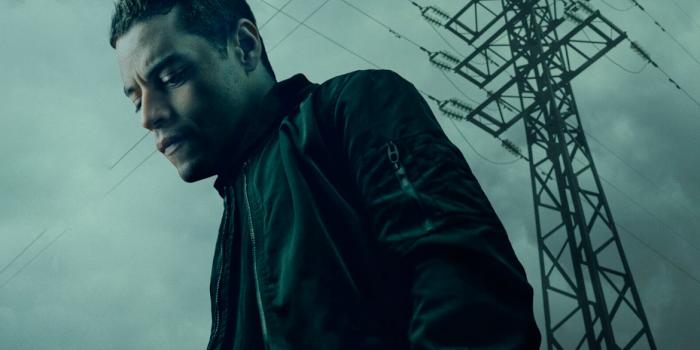
Blackout — Apple — Spotify — Google — Academy Award winner Rami Malek stars in this apocalyptic thriller as a small-town radio DJ fighting to protect his family and community after the power grid goes down nationwide, upending modern civilization.
LifeAfter/The Message — Apple — Spotify — Google — The Message and its sequel, LifeAfter, take listeners on journeys to the limits of technology. n The Message, an alien transmission from decades ago becomes an urgent puzzle with life or death consequences. In LifeAfter, Ross, a low level employee at the FBI, spends his days conversing online with his wife Charlie – who died eight months ago. But the technology behind this digital resurrection leads Ross down a dangerous path that threatens his job, his own life, and maybe even the world. Winner of the Cannes Gold Lion.
Homecoming — Apple — Spotify — Google — Homecoming centers on a caseworker at an experimental facility, her ambitious supervisor, and a soldier eager to rejoin civilian life — presented in an enigmatic collage of telephone calls, therapy sessions, and overheard conversations. Starring Catherine Keener, Oscar Isaac, David Schwimmer, David Cross, Amy Sedaris, Michael Cera, Mercedes Ruehl, Alia Shawkat, Chris Gethard, and Spike Jonze.
Limetown — Apple — Spotify — Google — Web Site — The premise: Ten years ago, over three hundred men, women and children disappeared from a small town in Tennessee, never to be heard from again. In this podcast, American Public Radio reporter Lia Haddock asks the question once more, “What happened to the people of Limetown?”
Motherhacker — Apple — Spotify — Google — Web Site — The plot: Bridget’s life is a series of dropped calls. With a gift for gab, an ex-husband in rehab, and down to her last dollar, Bridget’s life takes a desperate turn when she starts vishing over the phone for a shady identity theft ring in order to support her family.
Passenger List — Apple — Spotify — Google — Web Site — Atlantic Flight 702 has disappeared mid-flight between London and New York with 256 passengers on board. Kaitlin Le (Kelly Marie Tran), a college student whose twin brother vanished with the flight, is determined to uncover the truth.
Sandra — Apple — Spotify — Web Site — Co-stars Kristen Wiig, Alia Shawkat, and Ethan Hawke. Here’s the plot: Helen’s always dreamed of ditching her hometown, so when she lands a job at the company that makes Sandra, everyone’s favorite A.I., she figures it’s the next-best thing. But working behind the curtain isn’t quite the escape from reality that Helen expected.
The Angel of Vine — Apple — Spotify — Google — Web Site — A present day journalist uncovers the audio tapes of a 1950s private eye who cracked the greatest unsolved murder mystery Hollywood has ever known… and didn’t tell a soul. Starring Joe Manganiello, Alfred Molina, Constance Zimmer, Alan Tudyk, Camilla Luddington, and more.
The Bright Sessions — Apple — Spotify — Google — Web Site — A science fiction podcast that follows a group of therapy patients. But these are not your typical patients — each has a unique supernatural ability. The show documents their struggles and discoveries as well as the motivations of their mysterious therapist, Dr. Bright.
The Orbiting Human Circus — Apple — Spotify — Google — Discover a wondrously surreal world of magic, music, and mystery. This immersive, cinematic audio spectacle follows the adventures of a lonely, stage-struck janitor who is drawn into the larger-than-life universe of the Orbiting Human Circus, a fantastical, wildly popular radio show broadcast from the top of the Eiffel Tower. WNYC Studios presents a special director’s cut of this joyous, moving break from reality. Starring John Cameron Mitchell, Julian Koster, Tim Robbins, Drew Callander, Susannah Flood, and featuring Mandy Patinkin and Charlie Day.
The Truth — Apple — Spotify — Google — Web Site — The Truth makes movies for your ears. They’re short stories that are sometimes dark, sometimes funny, and always intriguing. Every story is different, but they all take you to unexpected places using only sound. If you’re new, some good starting places are: Silvia’s Blood, That’s Democracy, Moon Graffiti, Tape Delay, or whatever’s most recent. Listening with headphones is encouraged!
The Walk — Apple — Spotify — “Dystopian thriller, The Walk, is a tale of mistaken identity, terrorism, and a life-or-death mission to walk across Scotland. But the format of this story is — unusual. The Walk is an immersive fiction podcast, and the creators want you to listen to it while walking. It begins with a terrorist attack at a train station; you are the protagonist, known only as Walker, and the police think you’re a member of a shadowy terror group called The Burn.” “Author Naomi Alderman, whose latest novel was a bestseller called The Power, is the creator of The Walk.”
We’re Alive — Apple — Spotify — Google — An award-wining audio drama, originally released in podcast form. Its story follows a large group of survivors of a zombie apocalypse in downtown Los Angeles, California.
Wolf 359 — Apple — Spotify — Google — A science fiction podcast created by Gabriel Urbina. Following in the tradition of Golden Age radio dramas, Wolf 359 tells the story of a dysfunctional space station crew orbiting the star Wolf 359 on a deep space survey mission.
These podcasts can be found in the new collection, The 150 Best Podcasts to Enrich Your Mind.
Related Content:
Pandemic Literature: A Meta-List of the Books You Should Read in Coronavirus Quarantine
How Can Boccaccio’s 14th Century Decameron Help Us Live Through COVID-19?
1,000 Free Audio Books: Download Great Books for Free
Josh Jones is a writer and musician based in Durham, NC. Follow him at @jdmagness
Read More...Support Us
We're hoping to rely on loyal readers, rather than erratic ads. Please click the Donate button and support Open Culture. You can use Paypal, Venmo, Patreon, even Crypto! We thank you!

About Us

Open Culture scours the web for the best educational media. We find the free courses and audio books you need, the language lessons & educational videos you want, and plenty of enlightenment in between.
Advertise With Us
FREE UPDATES!
GET OUR DAILY EMAIL
Get the best cultural and educational resources on the web curated for you in a daily email. We never spam. Unsubscribe at any time.
FOLLOW ON SOCIAL MEDIA
Open Culture editor Dan Colman scours the web for the best educational media. He finds the free courses and audio books you need, the language lessons & movies you want, and plenty of enlightenment in between.
Advertise With Us

