The 150 Best Podcasts to Enrich Your Mind
Feed your brain with great podcasts on art, music, history, philosophy, plus captivating true and imagined stories. This is a soft launch of a new page. If we’re missing important podcasts, please let us know here.
Art, Design & Fashion
99 Percent Invisible — Apple — Spotify — Google — Web Site — RSS — Design is everywhere in our lives, perhaps most importantly in the places where we’ve just stopped noticing. 99% Invisible is a weekly exploration of the process and power of design and architecture. From award winning producer Roman Mars.
A History of the World in 100 Objects — Apple — Spotify — Google — Web Site — This podcast uses the British Museum’s collection to tell an epic history of humanity spanning over two million years. This 100-part series is narrated by Neil MacGregor, Director of the British Museum, and was originally broadcast on BBC Radio 4.
Articles of Interest — Apple — Spotify — Google — Web Site — A show about what we wear. It’s a six-part series from 99% Invisible, looking at clothing.
ArtCurious — Apple — Spotify — Google — Web Site — Think art history is boring? Think again. It’s weird, funny, mysterious, enthralling, and liberating. Join us as we cover the strangest stories in art. Is the Mona Lisa fake? Did Van Gogh actually kill himself? And why were the Impressionists so great?
Art Detective — Apple — Spotify — Understanding art allows us to understand history: to pin it with images, and pepper it with the faces, colors, drama and expression of its time. This series is designed to give bite-sized insights into the world of Art History, bringing one image to life across 20 minutes through discussion with experts.
Art History for All — Apple — Spotify — Google — Web Site — From art lovers to art haters to art-is-just-okay-ers, Art History for All aims to get all kinds of people thinking about art and what it means to them. Each episode, Allyson Healey tackles a single work of art and its history and larger significance, always asking the question: so what? Art History for All takes you beyond the art historical canon and helps you find the way in which art speaks to you (even if it’s never spoken to you before).
Design Matters — Apple — Google — Web Site — Hosted by Debbie Millman, Design Matters is the world’s first podcast about design and an inquiry into the broader world of creative culture through wide-ranging conversations with designers, writers, artists, curators, musicians, and other luminaries of contemporary thought.
Dressed: The History of Fashion — Apple — Spotify — Google — Web Site — With over 7 billion people in the world, we all have one thing in common. Every day we all get dressed. Join Dressed as they explore the social and cultural histories behind the who, what, when of why we wear.
Last Seen — Apple — Spotify — Google — Web Site — RSS — It remains the most valuable — and confounding — art heist in history: 13 artworks stolen from Boston’s Isabella Stewart Gardner Museum. Twenty-eight years later, not a single piece in a haul worth half a billion dollars has surfaced. The art, and the thieves who made off with it, remain at large. With first-ever interviews, unprecedented access, and more than a year of investigative reporting, “Last Seen” takes us into the biggest unsolved art heist in history. A joint production from WBUR and The Boston Globe. Read more here.
Raw Material — Apple — Spotify — Google — Web Site — RSS — Raw Material is an arts and culture podcast from the San Francisco Museum of Modern Art (SFMOMA). Each season focuses on a different topic, featuring voices of artists working in all media and exploring the inspiration and stories behind modern and contemporary art.
Recording Artists — Apple — Spotify — Google — Web Site — What was it like to be a woman making art as the feminist and civil rights movements were transforming American society? In this first season of Recording Artists, from the Getty, this podcast uses archival interviews to explore the lives of six women artists—Alice Neel, Lee Krasner, Betye Saar, Helen Frankenthaler, Yoko Ono, and Eva Hesse. Read more here.
The Lonely Palette — Apple — Spotify — Google — Web Site — The Lonely Palette returns art history to the masses, one painting at a time. Each episode, host Tamar Avishai picks a painting du jour, interviews unsuspecting museum visitors in front of it, and then dives deeply into the object, the movement, the social context, and anything and everything else that will make it as neat to you as it is to her.
The Modern Art Notes Podcast — Apple — Spotify — Google — Web Site — RSS — A weekly, hour-long interview program featuring artists, historians, authors, curators and conservators. Pulitzer Prize-winning art critic Sebastian Smee called The MAN Podcast “one of the great archives of the art of our time.”
Audio Dramas
Alice Isn’t Dead — Apple — Spotify — Google — Web Site — A truck driver searches across America for the wife she had long assumed was dead. In the course of her search, she will encounter not-quite-human serial murderers, towns literally lost in time, and a conspiracy that goes way beyond one missing woman.
Asking for It — Apple — Spotify — Google — Web Site — A queer contemporary take of the Goldilocks tale: about love, music, and breaking the cycle of abuse. Goldie escapes a chaotic childhood only to go from a partner who starves her of love to a partner who nearly drowns her in it, before learning to be just right on her own. From CBC Podcasts and Mermaid Palace.
Blackout — Apple — Spotify — Google — Academy Award winner Rami Malek stars in this apocalyptic thriller as a small-town radio DJ fighting to protect his family and community after the power grid goes down nationwide, upending modern civilization.
LifeAfter/The Message — Apple — Spotify — Google — The Message and its sequel, LifeAfter, take listeners on journeys to the limits of technology. n The Message, an alien transmission from decades ago becomes an urgent puzzle with life or death consequences. In LifeAfter, Ross, a low level employee at the FBI, spends his days conversing online with his wife Charlie – who died eight months ago. But the technology behind this digital resurrection leads Ross down a dangerous path that threatens his job, his own life, and maybe even the world. Winner of the Cannes Gold Lion.
Homecoming — Apple — Spotify — Google — Homecoming centers on a caseworker at an experimental facility, her ambitious supervisor, and a soldier eager to rejoin civilian life — presented in an enigmatic collage of telephone calls, therapy sessions, and overheard conversations. Starring Catherine Keener, Oscar Isaac, David Schwimmer, David Cross, Amy Sedaris, Michael Cera, Mercedes Ruehl, Alia Shawkat, Chris Gethard, and Spike Jonze.
Limetown — Apple — Spotify — Google — Web Site — The premise: Ten years ago, over three hundred men, women and children disappeared from a small town in Tennessee, never to be heard from again. In this podcast, American Public Radio reporter Lia Haddock asks the question once more, “What happened to the people of Limetown?”
Motherhacker — Apple — Spotify — Google — Web Site — The plot: Bridget’s life is a series of dropped calls. With a gift for gab, an ex-husband in rehab, and down to her last dollar, Bridget’s life takes a desperate turn when she starts vishing over the phone for a shady identity theft ring in order to support her family.
Passenger List — Apple — Spotify — Google — Web Site — Atlantic Flight 702 has disappeared mid-flight between London and New York with 256 passengers on board. Kaitlin Le (Kelly Marie Tran), a college student whose twin brother vanished with the flight, is determined to uncover the truth.
Sandra — Apple — Spotify — Web Site — Co-stars Kristen Wiig, Alia Shawkat, and Ethan Hawke. Here’s the plot: Helen’s always dreamed of ditching her hometown, so when she lands a job at the company that makes Sandra, everyone’s favorite A.I., she figures it’s the next-best thing. But working behind the curtain isn’t quite the escape from reality that Helen expected.
The Angel of Vine — Apple — Spotify — Google — Web Site — A present day journalist uncovers the audio tapes of a 1950s private eye who cracked the greatest unsolved murder mystery Hollywood has ever known… and didn’t tell a soul. Starring Joe Manganiello, Alfred Molina, Constance Zimmer, Alan Tudyk, Camilla Luddington, and more.
The Bright Sessions — Apple — Spotify — Google — Web Site — A science fiction podcast that follows a group of therapy patients. But these are not your typical patients — each has a unique supernatural ability. The show documents their struggles and discoveries as well as the motivations of their mysterious therapist, Dr. Bright.
The Orbiting Human Circus — Apple — Spotify — Google — Discover a wondrously surreal world of magic, music, and mystery. This immersive, cinematic audio spectacle follows the adventures of a lonely, stage-struck janitor who is drawn into the larger-than-life universe of the Orbiting Human Circus, a fantastical, wildly popular radio show broadcast from the top of the Eiffel Tower. WNYC Studios presents a special director’s cut of this joyous, moving break from reality. Starring John Cameron Mitchell, Julian Koster, Tim Robbins, Drew Callander, Susannah Flood, and featuring Mandy Patinkin and Charlie Day.
The Truth — Apple — Spotify — Google — Web Site — The Truth makes movies for your ears. They’re short stories that are sometimes dark, sometimes funny, and always intriguing. Every story is different, but they all take you to unexpected places using only sound. If you’re new, some good starting places are: Silvia’s Blood, That’s Democracy, Moon Graffiti, Tape Delay, or whatever’s most recent. Listening with headphones is encouraged!
The Walk — Apple — Spotify — “Dystopian thriller, The Walk, is a tale of mistaken identity, terrorism, and a life-or-death mission to walk across Scotland. But the format of this story is — unusual. The Walk is an immersive fiction podcast, and the creators want you to listen to it while walking. It begins with a terrorist attack at a train station; you are the protagonist, known only as Walker, and the police think you’re a member of a shadowy terror group called The Burn.” “Author Naomi Alderman, whose latest novel was a bestseller called The Power, is the creator of The Walk.”
We’re Alive — Apple — Spotify — Google — An award-wining audio drama, originally released in podcast form. Its story follows a large group of survivors of a zombie apocalypse in downtown Los Angeles, California.
Welcome to Night Vale — Apple — Spotify — Google — Web Site — Twice-monthly community updates for the small desert town of Night Vale, where every conspiracy theory is true. Turn on your radio and hide. Never listened before? It’s an ongoing radio show. Start with the current episode, and you’ll catch on in no time.
Wolf 359 — Apple — Spotify — Google — A science fiction podcast created by Gabriel Urbina. Following in the tradition of Golden Age radio dramas, Wolf 359 tells the story of a dysfunctional space station crew orbiting the star Wolf 359 on a deep space survey mission.
Audio Reads: Fiction & Non-Fiction
LeVar Burton Reads — Apple — Spotify — Google — Web Site — The best short fiction, handpicked by the best voice in podcasting. In every episode, host LeVar Burton (Roots, Reading Rainbow, Star Trek) invites you to take a break from your daily life, and dive into a great story. LeVar’s narration blends with gorgeous soundscapes to bring stories by Neil Gaiman, Haruki Murakami, Octavia Butler, Ray Bradbury and more to life. So, if you’re ready, let’s take a deep breath.
New Yorker Fiction Podcast — Apple — Web Site — This podcast features readings of classic fiction published in The New Yorker.
Selected Shorts — Apple — Spotify — Google — Web Site — RSS — Great actors read great fiction in front of a live audience.
Books & Language
A Way with Words — Apple — Spotify — Google — Web Site — A fun and funny radio show and podcast about language. Co-hosts Martha Barnette and Grant Barrett talk with callers from around the world about linguistics, slang, new words, jokes, riddles, word games, grammar, old sayings, word origins, regional dialects, family expressions, books, literature, folklore, and speaking and writing well.
Lexicon Valley - Apple — Spotify — RSS — A show about language, from pet peeves, syntax, and etymology to neurolinguistics and the death of languages. Hosted by linguist John McWhorter.
Literature and History — Apple — Spotify — Google — Web Site — A podcast covering Anglophone literature and its roots, from ancient times to the present! Each episode covers an influential work of world literature, featuring summaries of the texts, historical analysis of the cultures that produced them, and some original music and goofiness thrown in to keep you entertained.
The Allusionist — Apple — Spotify — Google — Web Site — The Allusionist scratches the surface of why we say the things we say. English is a big messy mutt of a language, formed by military invasion after military invasion, plus countless tiny idiosyncratic decisions made by its users along the way. The Allusionist is the latest from award-winning host Helen Zaltzman. Based in London, UK.
The History of English Podcast — Apple — Spotify — Google — A chronological history of the English language examined through the lens of historical events that shaped the development and spread of the language from the Eurasian steppe to the entire world.
The Penguin Podcast — Apple — Spotify — Google — The Penguin Podcast features conversations with some our of leading authors and creative thinkers, as we seek to understand how they write and where their ideas come from. Guests bring to the interview a handful of objects that have inspired their work. Recent guests include Noam Chomsky, Paul McCartney, William Gibson, Arundhati Roy and more.
Ideas
Against the Rules with Michael Lewis — Apple — Spotify — Google — Web Site — Journalist and bestselling author Michael Lewis (Liar’s Poker, Moneyball) takes a searing look at what’s happened to fairness. It feels like there’s less of it every day—whether it comes to lending practices, college admissions, professional sports, or psychological well-being. Who are the people trying to level the playing field, and are they making an impact? Lewis interviews referees (Season 1) and coaches (Season 2) from many walks of life, bringing his trademark insight and wry humor to their stories of (in)equality today.
Akimbo — Apple — Spotify — Google — Akimbo is an ancient word, from the bend in the river or the bend in an archer’s bow. It’s become a symbol for strength, a posture of possibility, the idea that when we stand tall, arms bent, looking right at it, we can make a difference. Seth Godin’s Akimbo is a podcast about our culture and about how we can change it. About seeing what’s happening and choosing to do something. The culture is real, but it can be changed. You can bend it.
Benjamen Walker’s Theory of Everything — Apple — Spotify — Google — Web Site — Theory of Everything plunges listeners into a whirl of journalism, fiction, art, interviews, and the occasional exploding pipe dream. Host Benjamen Walker connects the dots in a hyper-connected world, featuring conversations with philosophers, friends, and the occasional too-good-to-be-real guest.
Complexity — Apple — Google — Spotify — Web Site — RSS — Far-reaching conversations with a worldwide network of scientists and mathematicians, philosophers and artists developing new frameworks to explain our universe’s deepest mysteries. Created by the Santa Fe Institute.
Entitled Opinions — Apple — Google — Web Site — Entitled Opinions is a literary talk show on Stanford University Radio, KZSU, in which Professor Robert Harrison interviews guests about issues that range from literature and philosophy to politics and sports. Read more here.
Flash Forward — Apple — Spotify — Google — Web Site — RSS — A show about possible (and not so possible) future scenarios. What would the warranty on a sex robot look like? How would diplomacy work if we couldn’t lie? Hosted and produced by award winning science journalist Rose Eveleth, each episode combines audio drama and journalism to go deep on potential tomorrows, and uncovers what those futures might really be like.
Freakonomics Radio — Apple — Spotify — Google — Web Site — RSS — Discover the hidden side of everything with Stephen J. Dubner, co-author of the Freakonomics books. Each week, Freakonomics Radio tells you things you always thought you knew (but didn’t) and things you never thought you wanted to know (but do) — from the economics of sleep to how to become great at just about anything. Dubner speaks with Nobel laureates and provocateurs, intellectuals and entrepreneurs, and various other underachievers.
Fresh Air — Apple — Spotify — Google — Web Site — RSS — Fresh Air from WHYY, the Peabody Award-winning weekday magazine of contemporary arts and issues, is one of public radio’s most popular programs. Hosted by Terry Gross, the show features intimate conversations with today’s biggest luminaries.
Here’s the Thing — Apple — Spotify — Google — Web Site — Alec Baldwin takes listeners into the lives of artists, policy makers and performers. Alec sidesteps the predictable by going inside the dressing rooms, apartments, and offices of people we want to understand better: Ira Glass, Patti Smith, David Brooks, Roz Chast, Chris Rock and others.
Hidden Brain — Apple — Spotify — Google — Web Site — RSS — NPR’s Shankar Vedantam uses science and storytelling to reveal the unconscious patterns that drive human behavior, shape our choices and direct our relationships.
Imaginary Worlds — Apple — Spotify — Google — Web Site — SoundCloud — A bi-weekly podcast about science fiction and other fantasy genres. Host Eric Molinsky talks with novelists, screenwriters, comic book artists, filmmakers, and game designers about their craft of creating fictional worlds. The show also looks at the fan experience, exploring what makes us suspend our disbelief, and what happens when that spell is broken.
In Our Time - Apple — Spotify — Web Site — In Our Time is a live BBC radio discussion series exploring the history of ideas, presented by Melvyn Bragg since October 1998. It is one of BBC Radio 4’s most successful discussion programs, acknowledged to have “transformed the landscape for serious ideas at peak listening time.’” Read more here.
Intelligence Squared — Apple — Spotify — Web Site — The world’s leading forum for debate and intelligent discussion. Live and online we take you to the heart of the issues that matter, in the company of some of the world’s sharpest minds and most exciting orators.
Longform — Apple — Spotify — Google — Web Site — Interviews with writers, journalists, filmmakers, and podcasters about how they do their work. Hosted by Aaron Lammer, Max Linsky, and Evan Ratliff.
Making Sense Podcast — Apple — Spotify — Web Site — Join Sam Harris—neuroscientist, philosopher, and best-selling author—as he explores some of the most important questions about the human mind, society, and current events.
On Being — Apple — Spotify — Google — Web Site — Groundbreaking Peabody Award-winning conversation about the big questions of meaning — spiritual inquiry, science, social healing, and the arts. Each week a new discovery about the immensity of our lives. Hosted by Krista Tippett.
Revisionist History — Apple — Spotify — Web Site — RSS — Malcolm Gladwell’s journey through the overlooked and the misunderstood. Every episode re-examines something from the past—an event, a person, an idea, even a song—and asks whether we got it right the first time.
Radiolab — Apple — Spotify — Web Site — RSS — A two-time Peabody Award-winner, Radiolab is an investigation told through sounds and stories, and centered around one big idea. In the Radiolab world, information sounds like music and science and culture collide. Hosted by Jad Abumrad and Robert Krulwich, the show is designed for listeners who demand skepticism, but appreciate wonder.
Sean Carroll’s Mindscape — Apple — Spotify — Web Site — RSS — Ever wanted to know how music affects your brain, what quantum mechanics really is, or how black holes work? Do you wonder why you get emotional each time you see a certain movie, or how on earth video games are designed? Then you’ve come to the right place. Each week, Sean Carroll will host conversations with some of the most interesting thinkers in the world. From neuroscientists and engineers to authors and television producers, Sean and his guests talk about the biggest ideas in science, philosophy, culture and much more.
Solvable — Apple — Spotify — Google — RSS — Solvable showcases the world’s most innovative thinkers and their proposed solutions to the world’s most daunting problems. The interviews, conducted by journalists like Malcolm Gladwell and Jacob Weisberg, will launch a dialogue that both acknowledges the complexity of the issues while inspiring hope that the problems are, in fact, solvable
TED Radio Hour — Apple — Spotify — Web Site — TED Radio Hour investigates the biggest questions of our time with the help of the world’s greatest thinkers. Can we preserve our humanity in the digital age? Where does creativity come from? And what’s the secret to living longer? In each episode, host Manoush Zomorodi explores a big idea through a series of TED Talks and original interviews, inspiring us to learn more about the world, our communities, and most importantly, ourselves.
The Joy of X — Apple — Spotify — Web Site — Hosted by Steven Strogatz, The Joy of X podcast opens a window into the inner worlds of top-tier scientists and mathematicians while shining light on universal themes like creativity, collaboration or navigating professional challenges.
The New Yorker Radio Hour — Apple — Spotify — Web Site — David Remnick is joined by The New Yorker’s award-winning writers, editors and artists to present a weekly mix of profiles, storytelling, and insightful conversations about the issues that matter.
The Wild — Apple — Spotify — Google — Web Site — Chris Morgan takes listeners around the world to Italy, Germany and his own backyard of the Pacific Northwest to explore the beauty and wonder of the outdoors and its inhabitants. From beavers to wolves to grizzly bears we experience up close the resilient power of nature and our relationship with it.
WTF — Apple — Spotify — Web Site — RSS — Marc Maron welcomes comedians, actors, directors, writers, authors, musicians and folks from all walks of life to his home for amazingly revealing conversations. Marc’s probing, comprehensive interview style allows guests to express themselves in ways listeners have never heard.
History
1619 — Apple — Spotify — Web Site — In August of 1619, a ship carrying more than 20 enslaved Africans arrived in the English colony of Virginia. America was not yet America, but this was the moment it began. No aspect of the country that would be formed here has been untouched by the 250 years of slavery that followed. On the 400th anniversary of this fateful moment, it is time to tell the story.
BackStory — Apple — Spotify — Google — Web Site — There’s the history you had to learn, and the history you want to learn — that’s where BackStory comes in. Each week BackStory takes a topic that people are talking about and explores it through the lens of American history. Through stories, interviews, and conversations with our listeners, BackStory makes history engaging and fun. Based at the University of Virginia, it’s created by U.S. historians Ed Ayers, Brian Balogh, Nathan Connolly and Joanne Freeman.
Hope, Through History — Apple — Spotify — Hosted by Pulitzer Prize winning historian Jon Meacham, this podcast explores some of the most historic and trying times in American history, and how this nation dealt with these moments, the impact of these moments and how we came through these moments a unified nation. Season One takes a look at critical moments around the 1918 Flu Pandemic, the Great Depression, World War II, the polio epidemic and the Cuban Missile Crisis.
Revolutions — Apple — Spotify — Web Site — RSS — A weekly podcast exploring great political revolutions. It’s created by the New York Times best selling author Mike Duncan.
The Dollop — Apple — Spotify — RSS — Comedians Dave Anthony and Gareth Reynolds pick a subject from history and examine it.
The History of Byzantium — Apple — Spotify — Web Site — RSS — A podcast telling the story of the Roman (Byzantine) Empire from 476 AD to 1453.
The History of Rome — Apple — Spotify — 192 episodes tracing the history of the Roman Empire, beginning with Aeneas’s arrival in Italy and ending with the exile of Romulus Augustulus, last Emperor of the Western Roman Empire. Now complete!
The Bowery Boys — Apple — Spotify — Web Site — RSS — New York City history is America’s history. It’s the hometown of the world, and most people know the city’s familiar landmarks, buildings and streets. Why not look a little closer and have fun while doing it? Now has 300+ episodes.
The Last Archive — Apple — Spotify — Web Site — A podcast about history and epistemology by New Yorker contributor and Harvard historian Jill Lepore. It’s is a show about the history of truth, and the historical context for our current fake news, post-truth moment. It’s a show about how we know what we know, and why it seems, these days, as if we don’t know anything at all anymore.
This Day in Esoteric Political History — Apple — Spotify — Web Site — From a global pandemic upending society to an especially intense U.S. presidential election cycle, we’re living in an unprecedented time. Maybe. In this show, Jody Avirgan, political historian Nicole Hemmer, and special guests rescue stories from the entirety of U.S. political history to map our journey through this era. Each episode takes one moment, big or small, from that day in the past and explores how it might inform our present –– and it does so in under ten minutes.
Throughline — Apple — Spotify — Google — Web Site — RSS — The past is never past. Every headline has a history. Join NPR’s Throughline every week as they go back in time to understand the present. These are stories you can feel and sounds you can see from the moments that shaped our world.
Uncivil — Apple — Spotify — Web Site — America is divided, and it always has been. We’re going back to the moment when that split turned into war. This is Uncivil: Gimlet Media’s new history podcast, hosted by journalists Jack Hitt and Chenjerai Kumanyika. We ransack the official version of the Civil War, and take on the history you grew up with. We bring you untold stories about covert operations, corruption, resistance, mutiny, counterfeiting, antebellum drones, and so much more. And we connect these forgotten struggles to the political battlefield we’re living on right now.
You’re Dead To Me — Apple — Spotify — Web Site — From the BBC. The history podcast for people who don’t like history… and those who do. Greg Jenner brings together the best names in comedy and history to learn and laugh about the past.
Music, TV & Film
All Songs Considered - Apple — Spotify — Google — Web Site — Hosts/nerds Bob Boilen and Robin Hilton are your friendly music buddies with the week’s best new music discoveries, including conversations with emerging artists, icons and more. Hear songs that can completely change your day, with humor, heart and (sometimes) a whole lot of noise. Directions for use: Morning commute, the gym, or alone time. (If rash persists, discontinue use.)
Broken Record — Apple — Spotify — Web Site — Broken Record is hosted by producer Rick Rubin, the writer Malcolm Gladwell, and New York Times former editor Bruce Headlam. It features musicians you love talking about their life, inspiration, and craft.
Hit Parade — Apple — Spotify — Web Site — What makes a song a smash? Talent? Luck? Timing? All that—and more. Chris Molanphy, pop-chart analyst and author of Slate’s “Why Is This Song No. 1?” series, tells tales from a half-century of chart history. Through storytelling, trivia and song snippets, Chris dissects how that song you love—or hate—dominated the airwaves, made its way to the top of the charts and shaped your memories forever.
Mogul - Apple — Spotify — Web Site- An engaging show about hip hop’s most iconic moments, told by the people who lived them.
Nakedly Examined Music — Apple — Web Site — Why do musicians create what they do? Why do they create in that particular way? Mark Linsenmayer (aka songwriter Mark Lint, and host of The Partially Examined Life) talks to songwriters and composers about specific recordings, which are played in full. They cover lyric meanings, writing and recording techniques, arrangements, band dynamics, the stories behind the songs, and even music theory.
Office Ladies — Apple — Spotify — Web Site — The Office co-stars and best friends, Jenna Fischer and Angela Kinsey, are doing the ultimate The Office re-watch podcast for you. Each week Jenna and Angela will break down an episode of The Office and give exclusive behind-the-scenes stories that only two people who were there, can tell you.
Pop Culture Happy Hour — Apple — Spotify — Web Site — RSS — A fun and freewheeling chat about the latest movies, television, books, and music.
Pretty Much Pop — Apple — Web Site — RSS — A philosopher, an actor/musician, and a sci-fi writer (often with entertainment industry guests) talk about media and how we consume it: TV, film, music, novels, games, comics, comedy, theater, podcasts, online video, and more. Most of what (other) people like is pretty weird when you think about it, so thinking about it is what they do.
Settling the Score — Apple — Spotify — Web Site — Join Jon and Andy as they explore the world of film music, one score at a time. Each episode is an in-depth discussion of a classic film score: what makes it tick, how it serves the movie, and whether it’s, you know, any good. It’s a freewheeling, opinionated conversation with an analytical bent, richly illustrated with musical examples. No expertise required.
Slash Film — Apple — Spotify — Web Site — In the Slashfilmcast, hardcore geeks David Chen, Devindra Hardawar, and Jeff Cannata debate, pontificate, and delve into the latest films, TV shows, and other entertainment-related items from the past week. Weekly guests include everyday bloggers, webmaster luminaries, film directors, and movie stars from all walks of life
Sodajerker on Songwriting — Apple — Spotify — Web Site — A program devoted to the art and craft of songwriting. The show, created and hosted by the UK songwriting team Sodajerker, features interviews with some of the most successful songwriters and musicians in the world.
Song Exploder — Apple — Spotify — Web Site — RSS — A podcast where musicians take apart their songs, and piece by piece, tell the story of how they were made.
Sound Opinions — Apple — Spotify — Web Site — RSS — The world’s only rock and roll talk show, hosted by Jim DeRogatis and Greg Kot.
Soundtracking with Edith Bowman — Apple — Spotify — Google — Web Site — In a unique weekly podcast, Edith Bowman sits down with a variety of film directors, actors, producers and composers to talk about the music that inspired them and how they use music in their films, from their current release to key moments in their career.
Stay Free: The Story of the Clash — Spotify — The rise and fall of the punk band, The Clash, narrated by Public Enemy’s Chuck D. Read more here.
Switched on Pop — Apple — Spotify — Web Site — RSS — A Vox podcast that reveals the secret formulas that make pop songs so infectious. Every Tuesday, musicologist Nate Sloan and songwriter Charlie Harding pull back the curtain on how pop hits work their magic. You’ll fall in love with songs you didn’t even know you liked.
Talking Sopranos — Apple — Spotify — Google — Web Site — Sopranos co-stars Michael Imperioli and Steve Schirripa host the definitive Sopranos re-watch podcast. Michael and Steve follow the Sopranos series episode by episode giving fans all the inside info, behind the scenes stories and little-known facts that could only come from someone on the inside.
‘The Wire: Way Down in the Hole’ — Apple — Spotify — Jemele Hill and Van Lathan recap, breakdown, and analyze every episode of the iconic HBO hit series, The Wire, starting from the beginning with season one.
Philosophy
Hi-Phi Nation - Apple — Spotify — Google Play — Web Site — A philosophy podcast that turns stories into ideas. It begins with a story, from ordinary life, law, science, or culture, and then transforms it into an examination of philosophical ideas. The show is created by Barry Lam, a PhD in philosophy at Princeton University, and Associate Professor of Philosophy at Vassar College. Read more here.
History of Philosophy Without Any Gaps — Apple – Spotify — RSS Feed — Peter Adamson, Professor of Philosophy at King’s College London, takes listeners through the history of philosophy, “without any gaps.” The series looks at the ideas, lives and historical context of the major philosophers as well as the lesser-known figures of the tradition. With more than 300+ episodes, it covers both western and eastern traditions. Read more here.
In Our Time: Philosophy — Apple — Spotify — Downloads — The storied BBC show covers everything from Altruism to Wittgenstein, philosophers, theories and key themes.
Partially Examined Life - Apple — Spotify — Web Site — Philosophy, philosophers and philosophical texts. This podcast features an informal roundtable discussion, with each episode loosely focused on a short reading that introduces at least one “big” philosophical question, concern, or idea. Recent episodes have focused on Nietzsche, Sartre and Aldous Huxley, and featured Francis Fukuyama as a guest.
Philosophy Bites — Apple — Spotify — Web Site — RSS — David Edmonds (Uehiro Centre, Oxford University) and Nigel Warburton (freelance philosopher/writer) interview top philosophers on a wide range of topics. Two books based on the series have been published by Oxford University Press. There are over 400 podcasts in this collection. Read more here.
Philosophize This! — Apple — Spotify — Web — RSS — Libsyn — Beginner friendly if listened to in order! For anyone interested in an educational podcast about philosophy where you don’t need to be a graduate-level philosopher to understand it. In chronological order, the thinkers and ideas that forged the world we live in are broken down and explained. Read more here.
Very Bad Wizards — Apple — Spotify — Google — Web Site — Very Bad Wizards is a podcast featuring a philosopher (Tamler Sommers) and a psychologist (David Pizarro), who share a love for ethics, pop culture, and cognitive science, and who have a marked inability to distinguish sacred from profane. Each podcast includes discussions of moral philosophy, recent work on moral psychology and neuroscience, and the overlap between the two.
True Stories & Storytelling
13 Minutes to the Moon — Apple — Spotify — Web Site — Epic stories of Nasa’s missions to the Moon. Season 1: the first Moon landing, Apollo 11. Season 2: the near disaster of Apollo 13. Presenter: Kevin Fong. Theme music: Hans Zimmer.
Cautionary Tales — Apple — Spotify — Google — Web Site — We tell our children unsettling fairy tales to teach them valuable life lessons, but these Cautionary Tales are for the education of the grown ups – and they are all true. Tim Harford (Financial Times, BBC, author of “Messy” and “The Undercover Economist”) brings you stories of awful human error, tragic catastrophes, daring heists and hilarious fiascos. They’ll delight you, scare you, but also make you wiser.
Crimetown — Apple — Spotify — Web Site — RSS — A serial documentary podcast looks at how organized crime has shaped particular American cities.
Criminal — Apple — Spotify — Web Site — RSS — A podcast about crime. Not so much the “if it bleeds, it leads,” kind of crime. Something a little more complex. Stories of people who’ve done wrong, been wronged, and/or gotten caught somewhere in the middle.
Ear Hustle — Apple — Spotify — Google — Web Site — Ear Hustle brings you the daily realities of life inside prison shared by those living it, and stories from the outside, post-incarceration. The podcast is a partnership between Nigel Poor, a Bay Area visual artist, and Earlonne Woods, formerly incarcerated at San Quentin State Prison, and was co-founded with former San Quentin resident Antwan Williams.
Futility Closet — Apple — Spotify — Web Site — RSS — Forgotten stories from the pages of history. Join us for surprising and curious tales from the past and challenge yourself with our lateral thinking puzzles.
Heavyweight — Apple — Spotify — Web Site — RSS — A podcast created and produced by humorist Jonathan Goldstein where he helps people try to resolve a moment from their past that they wish they could change.
HumaNature — Apple — Spotify — Web Site — RSS — HumaNature is the podcast that explores where humans and our habitat meet. The show tells real stories about human experiences in nature. Along the way, we’ll meet people whose encounters help us reflect on our own place in the natural world.
Invisibilia — Apple — Spotify — Web Site — RSS — Unseeable forces control human behavior and shape our ideas, beliefs, and assumptions. Invisibilia—Latin for invisible things—fuses narrative storytelling with science that will make you see your own life differently.
Modern Love — Apple — Spotify — Google — Web Site — RSS — Modern Love features top actors performing true stories of love, loss, and redemption. It has included performances by Kate Winslet, Uma Thurman, Angela Bassett, Jake Gyllenhaal, Sterling K. Brown, and more. A collaboration between WBUR and The New York Times.
Mystery Show — Apple — Spotify — Google — Web Site — Voted the top podcast of the year, this podcast features Starlee Kine solving mysteries.
Myths and Legends — Apple — Spotify — Google — Web Site — Jason Weiser tells stories from myths, legends, and folklore that have shaped cultures throughout history. Some, like the stories of Aladdin, King Arthur, and Hercules are stories you think you know, but with surprising origins. Others are stories you might not have heard, but really should. All the stories are sourced from world folklore, but retold for modern ears.
Outside — Apple — Spotify — Web Site — RSS — Outside’s longstanding literary storytelling tradition comes to life in audio with features that will both entertain and inform listeners. The podcast offers a range of story formats, including interviews with the biggest figures in sports, adventure, and politics, as well as reports from our correspondents in the field.
S‑Town — Apple — Spotify — Web Site — RSS — From Serial and This American Life, this podcast tells you about a man named John who despises his Alabama town and decides to do something about it. He asks Brian to investigate the son of a wealthy family who’s allegedly been bragging that he got away with murder. But when someone else ends up dead, the search for the truth leads to a nasty feud, a hunt for hidden treasure, and an unearthing of the mysteries of one man’s life.
Serial — Apple — Google — Web Site — Hosted by Sarah Koenig, Serial unfolds one story — a true story — over the course of a whole season. The show follows the plot and characters wherever they lead, through many surprising twists and turns. Sarah won’t know what happens at the end of the story until she gets there, not long before you get there with her.
Snap Judgment — Apple — Spotify — Google — Web Site — This podcast mixes real stories with killer beats to produce cinematic, dramatic, kick-ass radio. Snap’s raw, musical brand of storytelling dares listeners to see the world through the eyes of another. Also see their spinoff podcast, Spooked.
StoryCorps — Apple — Spotify — Web Site — RSS — Stories of the human heart. A candid, unscripted conversation between two people about what’s really important in life: love, loss, family, friendship. When the world seems out of hand, tune in to StoryCorps and be reminded of the things that matter most.
The Ballad of Billy Balls — Apple — Spotify — Web Site — It’s 1982, and a man bursts into an East Village storefront apartment and shoots punk musician Billy Balls. Author and activist iO Tillett Wright and Crimetown Producer Austin Mitchell unravel a mystery of love and loss, the tender binds of family, and the stories we tell ourselves just to survive.
The Clearing — Apple — Spotify — When April Balascio was 40 years old, something she’d feared for decades was finally proven true. Her father, Edward Wayne Edwards, really was a murderer. The Clearing is about what came after April called a detective in 2009 to tell him about her suspicions — a call that led to her father’s arrest and eventual conviction on multiple murders.
The Kitchen Sisters Present — Apple — Spotify — Web Site — RSS — The Kitchen Sisters Present… Stories from the b‑side of history. Lost recordings, hidden worlds, people possessed by a sound, a vision, a mission. The episodes tell deeply layered stories, lush with interviews, field recordings and music.
The Leap — Apple — Spotify — Google — Web Site — RSS — From a doctor’s controversial LSD treatments to a mother’s high-risk efforts to recover her abducted child to a punk rock pioneer’s radical career reinvention, these are stories of people making dramatic, risky changes—and the big and small decisions that change the course of lives. Hosted by award-winning journalist Judy Campbell.
The Memory Palace — Apple — Spotify — Web Site — RSS — Short, surprising stories of the past, sometimes heartbreaking, sometimes hysterical, often a little bit of both.
The Moth — Apple — Spotify — Web Site — RSS — Since its launch in 1997, The Moth has presented thousands of true stories, told live and without notes, to standing-room-only crowds worldwide. Moth storytellers stand alone, under a spotlight, with only a microphone and a roomful of strangers. The storyteller and the audience embark on a high-wire act of shared experience which is both terrifying and exhilarating. Since 2008, The Moth podcast has featured many of our favorite stories told live on Moth stages around the country.
This American Life — Apple — Spotify — Web Site — RSS — A famous weekly public radio program and podcast. Each week they choose a theme and put together different kinds of stories on that theme.
This is Love — Apple — Spotify — Web Site — RSS — From the makers of the award-winning podcast Criminal, This is Love investigates life’s most persistent mystery. Stories of sacrifice, obsession, and the ways in which we bet everything on each other.
White Lies — Apple — Spotify — Google — Web Site — RSS — In 1965, Rev. James Reeb was murdered in Selma, Alabama. Three men were tried and acquitted, but no one was ever held to account. Fifty years later, two journalists from Alabama return to the city where it happened, expose the lies that kept the murder from being solved and uncover a story about guilt and memory that says as much about America today as it does about the past.
You Must Remember This — Apple — Spotify — Web Site — This is a storytelling podcast exploring the secret and/or forgotten histories of Hollywood’s first century. It’s the brainchild and passion project of Karina Longworth (founder of Cinematical.com, former film critic for LA Weekly), who writes, narrates, records and edits each episode. It is a heavily-researched work of creative nonfiction: navigating through conflicting reports, mythology, and institutionalized spin, Karina tries to sort out what really happened behind the films, stars and scandals of the 20th century.
Business & Economy
a16z — Apple — Spotify — Google — Web Site — The a16z Podcast discusses tech and culture trends, news, and the future – especially as ‘software eats the world’. It features industry experts, business leaders, and other interesting thinkers and voices from around the world. This podcast is produced by Andreessen Horowitz (aka “a16z”), a Silicon Valley-based venture capital firm.
Harvard Business Review IdeaCast — Apple — Spotify — Google — Web Site — RSS — A weekly podcast featuring the leaders in business and management.
How I Built This — Apple — Spotify — Google — Web Site — RSS — From NPR. Guy Raz dives into the stories behind some of the world’s best known companies. The podcast weaves a narrative journey about innovators, entrepreneurs and idealists—and the movements they built.
Marketplace — Apple — Spotify — Web Site — RSS — Hosted by Kai Ryssdal, NPR’s flagship program is all about providing context on the economic news of the day. Through stories, conversations and newsworthy numbers, we help listeners understand the economic world around them.
Masters of Scale — Apple — Spotify — Web Site — The best startup advice from Silicon Valley & beyond in a podcast hosted by host Reid Hoffman — LinkedIn cofounder, Greylock partner and legendary Silicon Valley investor. The show features iconic CEOs — from Nike to Netflix, Starbucks to Slack — sharing the stories & strategies that helped them grow from startups into global brands.
Pivot — Apple — Spotify — Web Site — Kara Swisher and NYU Professor Scott Galloway offer sharp, unfiltered insights into the biggest stories in tech, business, and politics.
Planet Money — Apple — Spotify — Google — Web Site — RSS — The economy explained by NPR. Imagine you could call up a friend and say, “Meet me at the bar and tell me what’s going on with the economy.” Now imagine that’s actually a fun evening.
The Journal — Apple — Spotify — Web Site — A Wall Street Journal podcast on the most important stories, explained through the lens of business. A podcast about money, business and power.
WorkLife with Adam Grant — Apple — Spotify — Web Site — Organizational psychologist Adam Grant takes you inside the minds of some of the world’s most unusual professionals to explore the science of making work not suck. From learning how to love criticism to harnessing the power of frustration, one thing’s for sure: You’ll never see your job the same way again.
Personal Development (Including creativity)
Finding Mastery — Apple — Spotify — Web Site — RSS — Michael Gervais is a high performance psychologist. His podcast is built around a central goal: unpacking and decoding how the greatest performers in the world use their minds to create amazing journeys while they pursue the boundaries of human potential.
Magic Lessons- Apple — Google — Web Site — Writer Elizabeth Gilbert’s creativity podcast “features her interviewing people about how they overcome the fears that are inherent in the creative process, and calling up famous creatives to get their input.”
The Happiness Lab with Dr. Laurie Santos — Apple — Spotify — Google — Web Site — You might think you know what it takes to lead a happier life… more money, a better job, or Instagram-worthy vacations. You’re dead wrong. Yale professor Dr. Laurie Santos has studied the science of happiness and found that many of us do the exact opposite of what will truly make our lives better. Based on the psychology course she teaches at Yale–the most popular class in the university’s 300-year history–Laurie will take you through the latest scientific research and share some surprising and inspiring stories that will change the way you think about happiness.
The Jordan Harbinger Show — Apple — Spotify — Google — The Jordan Harbinger Show (Apple’s Best of 2018) is where self-motivated people, just like you, dig deep into the untapped wisdom of the world’s sharpest minds- from legendary creators to intelligence operatives, iconoclastic writers to visionary change-makers. They bring amazing stories and brilliant personalities to the table, and help you demystify what they do and how they do it.
The Moment with Brian Koppelman — Apple — Spotify — Google — Interviews about the pivotal moments that fueled fascinating creative careers. Hosted by Brian Koppelman.
The Tim Ferriss Show — Apple — Spotify — Web Site — YouTube — RSS — This popular podcast covers topics ranging from personal and character development, to morning routines and meditation habits of celebrities, CEOs and cultural figures like Neil Gaiman, Brene Brown, Michael Lewis, Amanda Palmer, Alain de Botton and more.
Unlocking Us with Brené Brown — Apple — Spotify — Web Site — RSS — Join researcher and #1 New York Times best-selling author Brené Brown as she unpacks and explores the ideas, stories, experiences, books, films, and music that reflect the universal experiences of being human, from the bravest moments to the most brokenhearted.
Sports
30 for 30 — Apple — Spotify — Web Site — Original audio documentaries from the makers of the acclaimed 30 for 30 film series, featuring stories from the world of sports and beyond. 30 for 30 offers captivating storytelling for sports fans and general interest listeners alike, going beyond the field to explore how sports, competition, athleticism and adventure affect our lives and our world. Sports stories like you’ve never heard before.
The Bill Simmons Podcast — Apple — Spotify — Web Site — HBO and The Ringer’s Bill Simmons hosts the most downloaded sports podcast of all time, with a rotating crew of celebrities, athletes, and media staples.
We Came to Win — Apple — Spotify — Every four years, people all over the world turn their eyes, ears, and hearts toward the most exciting sports competition on the planet: The World Cup. We Came to Win tells the stories behind the tournament’s most memorable moments.
News & Current Events
538 — Apple — Spotify — Web Site — Nate Silver and the FiveThirtyEight team cover the latest in politics, tracking the issues and “game-changers” every week.
Deep Background with Noah Feldman — Apple — Spotify — Google — Web Site — Every story has a backstory, even in today’s 24-hour news cycle. In Deep Background, Harvard Law School professor and Bloomberg View columnist Noah Feldman will bring together a cross-section of expert guests to explore the historical, scientific, legal, and cultural context that help us understand what’s really going on behind the biggest stories in the news.
Embedded — Apple — Spotify — Google — Web Site — RSS — NPR host Kelly McEvers takes a story from the news and goes deep. Whether that means digging into the Trump administration’s past, the stories behind police shootings caught on video, or visiting a town ravaged by the opioid epidemic, Embedded takes you where the news is happening.
Reveal — Apple — Spotify — Google — Web Site — From prisons to protests, immigration to the environment, Peabody Award-winning Reveal goes deep into the pressing issues of our times. The Atlantic says “the experience of each episode is akin to a spoonful of sugar, even when it’s telling a story about Richard Spencer’s cotton farms or a man’s final days as a heroin addict.” Reveal is a project of The Center for Investigative Reporting.
Stay Tuned with Preet — Apple — Google — Spotify — Web Site — Join former U.S. Attorney Preet Bharara as he breaks down legal topics in the news and engages thought leaders in a podcast about power, policy, and justice.
The City — Apple — Spotify — The City is an investigative podcast from USA TODAY that tells true stories about how power works in urban America.
The Daily — Apple — Spotify — Google — RSS — From The New York Times, this is what the news should sound like. The biggest stories of our time, told by the best journalists in the world. Hosted by Michael Barbaro.
Read More...Bill Gates Recommends 5 Thought-Provoking Books to Read This Summer
Have free time on your hands? Then let Bill Gates suggest five books to fill your days. Most take you deeper into thinking about our challenging times. At least one provides a mental escape. Bill writes:
Upheaval: Turning Points for Nations in Crisis, by Jared Diamond. I’m a big fan of everything Jared has written, and his latest is no exception. The book explores how societies react during moments of crisis. He uses a series of fascinating case studies to show how nations managed existential challenges like civil war, foreign threats, and general malaise. It sounds a bit depressing, but I finished the book even more optimistic about our ability to solve problems than I started. More here.
Nine Pints: A Journey Through the Mysterious, Miraculous World of Blood. If you get grossed out by blood, this one probably isn’t for you. But if you’re like me and find it fascinating, you’ll enjoy this book by a British journalist with an especially personal connection to the subject. I’m a big fan of books that go deep on one specific topic, so Nine Pints (the title refers to the volume of blood in the average adult) was right up my alley. It’s filled with super-interesting facts that will leave you with a new appreciation for blood. More here.
A Gentleman in Moscow, by Amor Towles. It seems like everyone I know has read this book. I finally joined the club after my brother-in-law sent me a copy, and I’m glad I did. Towles’s novel about a count sentenced to life under house arrest in a Moscow hotel is fun, clever, and surprisingly upbeat. Even if you don’t enjoy reading about Russia as much as I do (I’ve read every book by Dostoyevsky), A Gentleman in Moscow is an amazing story that anyone can enjoy. More here.
Presidents of War: The Epic Story, from 1807 to Modern Times, by Michael Beschloss. My interest in all aspects of the Vietnam War is the main reason I decided to pick up this book. By the time I finished it, I learned a lot not only about Vietnam but about the eight other major conflicts the U.S. entered between the turn of the 19th century and the 1970s. Beschloss’s broad scope lets you draw important cross-cutting lessons about presidential leadership. More here.
The Future of Capitalism: Facing the New Anxieties, by Paul Collier. Collier’s latest book is a thought-provoking look at a topic that’s top of mind for a lot of people right now. Although I don’t agree with him about everything—I think his analysis of the problem is better than his proposed solutions—his background as a development economist gives him a smart perspective on where capitalism is headed.
Find another additional list of books Gates considers worth reading here.
If you would like to support the mission of Open Culture, consider making a donation to our site. It’s hard to rely 100% on ads, and your contributions will help us continue providing the best free cultural and educational materials to learners everywhere. You can contribute through PayPal, Patreon, and Venmo (@openculture). Thanks!
Related Content:
Bill Gates Names 5 Books You Should Read This Summer (2018)
Bill Gates Recommends Five Books for Summer 2017
5 Books Bill Gates Wants You to Read This Summer (2016)
Read More...The Evocativeness of Decomposing Film: Watch the 1926 Hollywood Movie The Bells Become the Experimental 2004 Short Film, Light Is Calling
We think of movies as lasting forever. And since we can pull up videos of films from 50, 80, even 100 years ago, why shouldn’t we? But as everyone who dives deep into this history of cinema knows, the further back in time you go, the more movies are “lost,” wholly or partially. In the case of the latter, bits and pieces remain of film — actual, physical film — but often they’ve been poorly preserved and thus have badly degraded. Still, they have value, and not just to cinema scholars. The thirty-year-long career of filmmaker Bill Morrison, for instance, demonstrates just how evocatively film at the end of its life can be put to artistic use.
“Created using a decomposing 35mm print of the crime drama The Bells (1926), the experimental short Light Is Calling (2004) depicts a dreamy encounter between a soldier and a mysterious woman,” says Aeon. “With images that reveal themselves only to distort and disappear into the decaying amber-tinted nitrate,” Morrison “invites viewers to meditate on the fleeting nature of all things physical and emotional, while a minimalistic violin score suffuses the century-old images with a wistful, haunting beauty.” Light Is Calling would have one kind of poignancy if The Bells were a lost film, but since you can watch it in full just below — and with a decently kept-up image, by the standards of mid-1920s movies — it has quite another.
Like many pictures of the silent era, The Bells was adapted from a stage play, in this case Alexandre Chatrian and Emile Erckmann’s Le Juif Polonais. Originally written in 1867, the play was turned into an opera before it was turned into a film — which first happened in 1911 in Australia, then in 1913 and 1918 in America, then in 1928 in a British-Belgian co-production. This 1926 Hollywood version, which features such big names of the day as Boris Karloff and Lionel Barrymore, came as Le Juif Polonais’ fifth film adaptation, but not its last: two more, made in Britain and Australia, would follow in the 1930s. The material of the story, altered and altered again through generations of use, feels suitable indeed for Light Is Calling, whose thoroughly damaged images make us imagine the intentions of the original, each in our own way.
Related Content:
What the First Movies Really Looked Like: Discover the IMAX Films of the 1890s
Watch Alain Resnais’ Short, Evocative Film on the National Library of France (1956)
See What David Lynch Can Do With a 100-Year-Old Camera and 52 Seconds of Film
Based in Seoul, Colin Marshall writes and broadcasts on cities, language, and culture. His projects include the book The Stateless City: a Walk through 21st-Century Los Angeles and the video series The City in Cinema. Follow him on Twitter at @colinmarshall, on Facebook, or on Instagram.
Read More...The Shakespeare and Company Project Digitizes the Records of the Famous Bookstore, Showing the Reading Habits of the Lost Generation
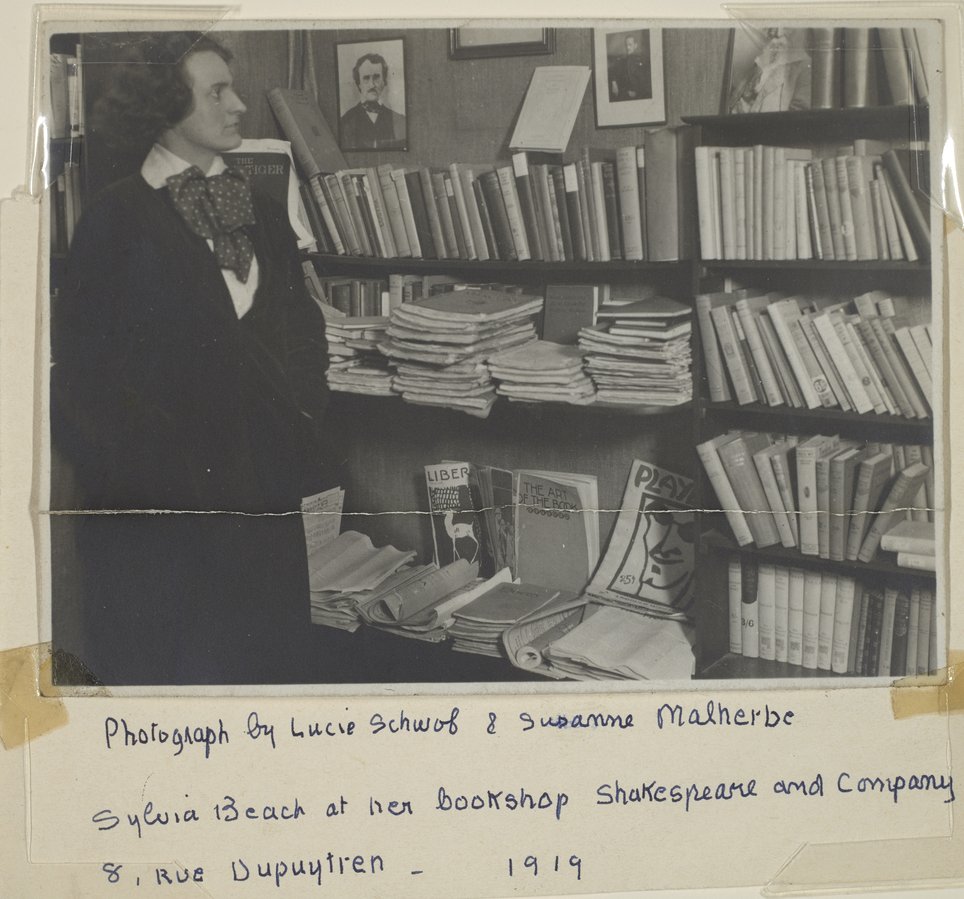
Great writers don’t come out of nowhere, even if some of them might end up there. They grow in gardens tended by other writers, readers, editors, and pioneering booksellers like Sylvia Beach, founder and proprietor of Shakespeare and Company. Beach opened the English-language shop in Paris in 1919. Three years later, she published James Joyce’s Ulysses, “a feat that would make her—and her bookshop and lending library—famous,” notes Princeton University’s Shakespeare and Company Project. (Infamous as well, given the obscenity charges against the novel in the U.S.)
Just as the publication of Allen Ginsberg’s Howl put Lawrence Ferlinghetti’s City Lights at the center of the Beat movement, so Joyce’s masterpiece made Shakespeare and Company a destination for aspiring Modernists.
The shop was already “the meeting place for a community of expatriate writers and artists now known as the Lost Generation.” Along with Joyce, there gathered Ernest Hemingway, Ezra Pound, and Gertrude Stein, all of whom not only bought books but borrowed them and left a handwritten record of their reading habits.
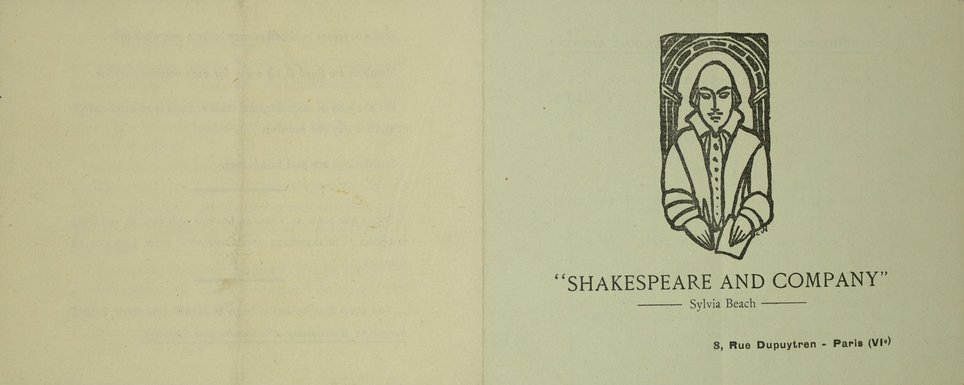
Through a large-scale digitization project of the Sylvia Beach papers at Princeton, the Shakespeare and Company Project will “recreate the world of the Lost Generation. The Project details what members of the lending library read and where they lived, and how expatriate life changed between the end of World War I and the German Occupation of France.” During the thirties, Beach began to cater more to French-speaking intellectuals. Among later logbooks we’ll find the names Aimé Césaire, Jacques Lacan, and Simone de Beauvoir. Beach closed the store for good in 1941, the story goes, rather than sell a Nazi officer a copy of Finnegans Wake.
Princeton’s “trove of materials reveals, among other things,” writes Lithub, “the reading preferences of some of the 20th century’s most famous writers,” it’s true. But not only are there many famous names; the library logs also record “less famous but no less interesting figures, too, from a respected French physicist to the woman who started the musicology program at the University of California.” Shakespeare and Company became the place to go for thousands of French and expat patrons in Paris during some of the city’s most legendarily literary years.
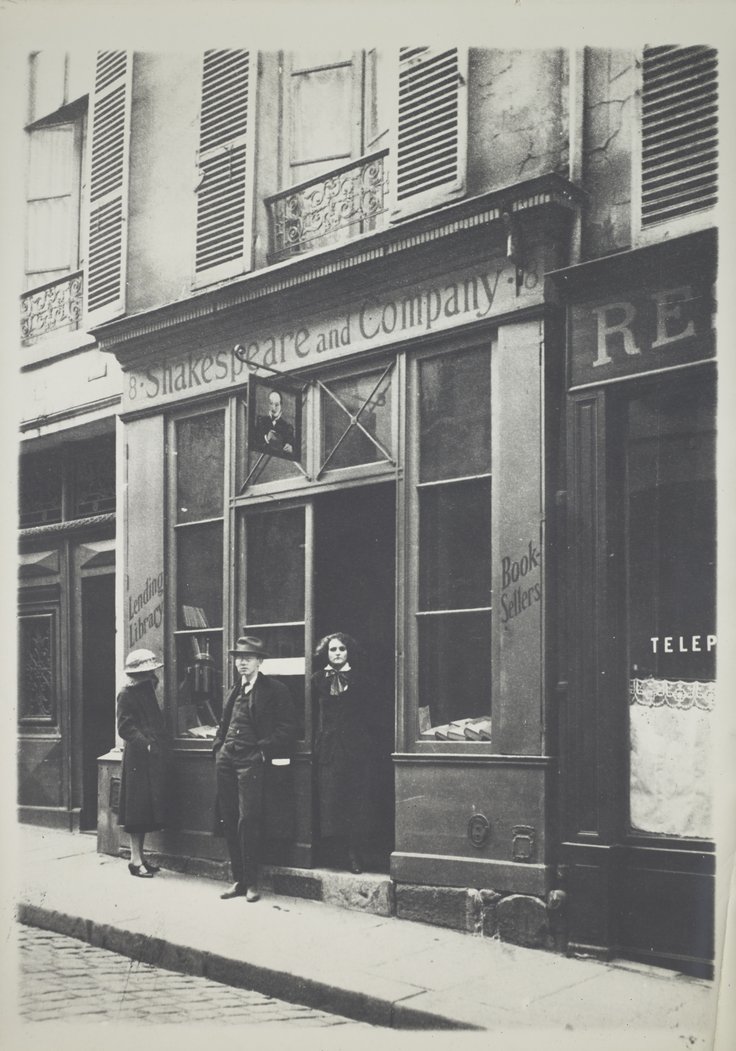
“English-language books are expensive,” if you’ve arrived in the city in the 1920s, the Project explains—“five to twenty times the price of French books.” English-language holdings at other libraries are limited. Readers, and soon-to-be famous writers, go to Shakespeare and Company to borrow a copy of Moby Dick or pick up the latest New Yorker.
You find Shakespeare and Company on a narrow side street, just off the Carrefour de l’Odéon. You step inside. The room is filled with books and magazines. You recognize a framed portrait of Edgar Allan Poe. You also recognize a few framed Whitman manuscripts. Sylvia Beach, the owner, introduces herself and tells you that her aunt visited Whitman in Camden, New Jersey and saved the manuscripts from the wastebasket. Yes, this is the place for you.
The lending library had different membership plans (you can learn about them here) and kept careful records with codes indicating the status of each borrower. These records are still being digitized and the Project is ongoing. It does not officially launch until next month. But at the moment, you can: “Search the lending library membership. Browse the lending library cards. Read about joining the lending library. Download a preliminary export of Project data. In June, you will be able to search and browse the lending library’s books, track the circulation of your favorite novels—and discover new ones.”
See how these literary communities shaped and reshaped themselves around what would become “the most famous bookstore in the world.”
via Lithub
Related Content:
James Joyce Picked Drunken Fights, Then Hid Behind Ernest Hemingway
7 Tips From Ernest Hemingway on How to Write Fiction
Gertrude Stein Gets a Snarky Rejection Letter from Publisher (1912)
Josh Jones is a writer and musician based in Durham, NC. Follow him at @jdmagness
Read More...Nina Simone Song “Color Is a Beautiful Thing” Animated in a Gorgeous Video
Four years (or what seems like a lifetime) ago, controversy erupted over the casting of actress Zoe Saldana, with darkened skin, as iconic pianist and singer Nina Simone in the biopic Nina. Accusations of racism and colorism met the film, historical attitudes hundreds of years in the making that Simone herself fought throughout her career, especially after she joined the Civil Rights movement in the 1960s and actively made her personal struggles with racism central to her political statements.
“You cannot understand Nina Simone’s life and legacy without taking stock of her identity as a dark-skinned black woman,” says Vox’s Victoria Massie. “That fact was inextricably linked to her life’s trajectory, her art and her politics—to everything that made Nina fearlessly and unapologetically Nina.” Her daughter Simone Kelly put it this way:
We all have a story. My mother suffered. We can go all the way back to when she was a child and people told her her nose was too big, her skin was too dark, her lips were too wide. It’s very important the world acknowledges my mother was a classical musician whose dreams were not realized because of racism.
Simone carried the wounds of those experiences throughout her life, and she sought to heal them through music that affirmed the experience of other young, dark-skinned girls who faced similar obstacles.
The outstanding narrative “Four Women,” from 1966’s Wild is the Wind, articulates the different treatment its characters receive based on skin color. The Village Voice’s Thulani Davis called the song “an instantly accessible analysis of the damning legacy of slavery.” The famous “To Be Young, Gifted and Black,” written for Simone’s friend and mentor Lorraine Hansberry, became an anthem of the Civil Rights movement in the 1970s.
Years later, in “Color is a Beautiful Thing,” Simone revisited the theme in a short, repetitive one-minute piece that is instantly sing-along-able. The song comes from her 1982 album Fodder on My Wings, just re-released last month by Verve. “Color is a Beautiful Thing” is perfectly tailored for young children, who will respond with joy not only to Simone’s rollicking piano but to the beautifully animated video above.
Fodder on My Wings is an overlooked album, Sheldon Pearce writes at Pitchfork, “about personal freedom—about liberating herself from her past and finding the liberty to create as she pleased. It was Simone’s means of working through fear—of death, manipulation, discrimination.” In the liner notes, she herself writes, “What I did on this album was try to get myself deep into joy.”
The method above is mantra-like, the song’s refrain “like something she’s trying to internalize, a coda to 1969’s ‘To Be Young, Gifted and Black.” Simone never seemed to overcome her own pain, but her gift—in addition to her musical brilliance—was to freely share the lessons she learned in the struggle, the bitter and the sweet, and to teach new generations of artists.
Related Content:
How Nina Simone Became Hip Hop’s “Secret Weapon”: From Lauryn Hill to Jay Z and Kanye West
Watch a New Nina Simone Animation Based on an Interview Never Aired in the U.S. Before
Josh Jones is a writer and musician based in Durham, NC. Follow him at @jdmagness
Read More...Little Richard Burst Into the “Then-Macho World of Rock” and “Changed it Forever”
If Sister Rosetta Tharpe was the Godmother of Rock and Roll, then Little Richard, who passed away Saturday at the age of 87 from bone cancer, deserves to be its Godfather. This is no empty honorific, despite the fact that Tharpe was already touring the country as a teenage gospel prodigy in 1932 when Richard Penniman was born in Macon Georgia, and “other musicians,” including Chuck Berry, Fats Domino, Bo Diddley, and Elvis Presley, “had already been mining a similar vein by the time [Little Richard] recorded his first hit, ‘Tutti Frutti’—a raucous song about sex, its lyrics cleaned up but its meaning hard to miss,” writes Tim Weiner in a New York Times obituary.
Little Richard “raised the energy level several notches and created something not quite like any music that had been heard before—something new, thrilling and more than a little dangerous.” Taking his lessons from Tharpe, he brought the dynamism of the gospel he was raised to sing and the profane rhythms of the blues into a high-voltage synthesis. Little Richard’s reputation needs no burnishing. He has never been neglected by historians of rock and roll. Nonetheless, it is startling to recognize, as guitar great Vernon Reid wrote in a Twitter tribute: “No Jimi, No Beatles No Bowie, No Bolan. NO GLAM, No Freddie, No Prince, No Elton, No Preston No Sly, No Stevie, WITHOUT Little Richard!”
Little Richard’s life story mirrors his early hero Rosetta Tharpe’s in several significant ways. Not only were they two of the most widely influential stars to emerge from the black church and onto secular stages, but they were also the music’s first stars to live openly gay lives, for a time, before succumbing to church and social pressures and returning to the closet. For Tharpe, that meant ending a long relationship with her romantic and touring partner Marie Knight and agreeing “to participate in a spectacle of a wedding endorsed and encouraged by the record label for profit,” writes Lynnee Denise, “in front a paying crowd of 25,000 paying guests.”
Little Richard famously walked away from his explosive career in 1957 to marry, adopt a son, and become a missionary. The marriage, and re-conversion, didn’t last. After four years, he was divorced following an arrest for “approaching men in a restroom,” notes France 24. “Richard—resentful that rock ‘n’ roll was taking off without him—soon returned to music with a triumphant tour of England.” (See him in a fierce performance in France above from 1966.) Then he went back to the church and never left. “By the late 1980s he had managed to merge his religious life and his stage persona, touring as a preacher and officiating at flashy celebrity weddings.”
He became something of a caricature of himself in later years, appearing as a high-camp figure in TV and film. Throughout his life, Richard identified openly as gay or bisexual, recounting stories of orgies and telling Penthouse in 1995, “I’ve been gay my whole life.” He also preached against LGTBTQ people, calling same-sex attraction “unnatural.” The L.A. Times’ Richard Cromelin understates the case in writing, “he variously modified his story and renounced and/or denied his homosexuality.” Depending on how one saw it, he was either divinely “healed” of his lifelong sexual orientation, or he was tragically beset by ingrained religious self-hatred.
Maybe none of this should matter much in assessing Little Richard’s musical legacy, except for the fact that his sudden appearance as a gay artist in the “then-macho world of rock,” as France 24 puts it, changed that world irrevocably. Little Richard’s flamboyance and teasing ambivalence became a hallmark of pop culture; his persona informed the stage career of nearly every queer and sexually ambiguous superstar to follow. As a “sexually fluid black man coming from the US south,” he gave black artists permission to experiment with identity and defy rigid stereotypes imposed by a legacy of slavery. There’s also no getting around the fact that “Tutti Frutti,” the song that “intoxicated legions of teenage fans eager to break loose from buttoned-up mid-century America,” was originally a song about anal sex. You can read those excised lyrics at Billboard. They involve the phrases “good booty” and “grease it.”
Like one of his most talented of his many offspring, Prince, Little Richard somehow found a lifelong home in a religion that rejected his sexual desire. This has been difficult for many of his fans to understand. Perhaps he was enacting this complicated, liberating, likely tortuous struggle to reconcile the irreconcilable while onstage screaming bloody murder and generally tearing the roof off the place. In whatever way Little Richard ultimately came to terms with his presence in music he claimed to have invented (despite Sister Rosetta), and yet also called “demonic,” it’s undeniable that the past sixty years or so of pop culture would never have happened without him.
Related Content:
The Woman Who Invented Rock n’ Roll: An Introduction to Sister Rosetta Tharpe
New Web Project Immortalizes the Overlooked Women Who Helped Create Rock and Roll in the 1950s
Chuck Berry Takes Keith Richards to School, Shows Him How to Rock (1987)
Josh Jones is a writer and musician based in Durham, NC. Follow him at @jdmagness
Read More...The Case for a Universal Basic Income in the Time of COVID-19
The idea of Universal Basic Income (UBI) has been the subject of much debate in the past few years. The candidacy of Andrew Yang for U.S. President brought the issue to national prominence, where it has remained during the spread of COVID-19. What is UBI? Put simply, it proposes that the government give every citizen a certain amount of money each month to cover, at the least, basic living expenses. As the video above by YouTube channel Kurzgesagt explains, those citizens are then free to live their lives as they like.
Unlike most welfare state models, UBI usually does not involve any means testing. In most schemes, every citizen, no matter their current wealth or income, receives the benefit. (Though most studies of the program have only given it to poor or unemployed beneficiaries.) Those who do not need the money can do whatever they want with it, but so too can those who need it. UBI ensures that people do not have go homeless or hungry if they lose their livelihood, and that they can survive without paternalist state agencies breathing down their necks.
UBI is not a new idea but dates back at least to Thomas Paine, whose Common Sense inspired the American Revolution and whose Rights of Man defended the French a few years later. As Paine argued in another, little-read, pamphlet, Agrarian Justice, no one could be truly free if they had no means of subsistence. Since capitalism had placed most of those means under private ownership, he reasoned, citizens should be compensated for being deprived of resources that belonged to them by natural right as much as to anyone else.
This philosophical justification doesn’t always enter into the conversation, which is often framed in more pragmatic terms as a political and economic expedient in times of capitalist crisis: in times, for example, like the present moment. The COVID-19 crisis has intensified calls for a UBI, as millions of layoffs point toward the inevitability of a depression. Pushing people back to work during the pandemic seems to be the only thing the U.S. government plans to do, but no amount of coercion can stop the virus from forcing closures all over again.
Even the famously libertarian economist Milton Friedman once embraced a version of UBI—as an alternative to the liberal social programs he loathed. Under Richard Nixon, of all people, such a policy almost came into being in 1969. Neither Friedman nor Nixon believed in the natural right of all citizens to a share in the profits of a state’s natural resources. But they could see the wisdom of ensuring millions of U.S. citizens weren’t relegated to living in destitution.
The program required testing, so the administration set up a trial run. “Tens of millions of dollars were budgeted to provide a basic income for more than 8,500 Americans” in five states across the country, writes Rutger Bregman at The Correspondent. Researchers wanted to know: 1. if those who received a basic income would work significantly less, 2. if the program would be too expensive, and 3. if it would prove “politically unfeasible.” The findings? “No, no, and maybe.”
The chief objection, idleness, held no water. As the chief data analyst for the Denver experiment put it at the time, “The ‘laziness’ contention is just not supported by our findings.” The two groups who did cut back on hours, 20-somethings and mothers of young children, were people who most needed the money so they could go to college or devote time to their kids. Otherwise, recipients did not quit their jobs and lay around watching TV.
Yet there remains a powerful species of human busybody who cannot rest until they’re sure everyone’s working. Such people continue to object—whether in good faith or not—that “just giving people money” will turn everyone into a slacker, as though most people were only motivated by the threat of starvation. And so, trials continue decades later. Researchers at the University of Helsinki recently conducted a two-year study in Finland with a random selection of 2,000 unemployed people across the country. Each participant was given €560 (about $607) a month to ease their burden, and received the funds whether or not they sought or found a job.
“The scheme was not strictly speaking a universal basic income trial because the recipients came from a restricted group and the payments were not enough to live on,” points out Guardian correspondent Jon Henley. Nonetheless, the researchers found that recipients were significantly less stressed than a control group—and that they could make different choices than they might otherwise. “Some said the basic income allowed them to go back to the life they had before they became unemployed,” the study authors write. “While others said it gave them the power to say no to low-paid insecure jobs, and thus increased their sense of autonomy.”
Other findings also showed how UBI could radicalize our relationship to work. “Freelancers and artists and entrepreneurs had more positive views on the effects of the basic income, which some felt had created opportunities for them to start businesses.” People providing unpaid care for others felt their time was more valued. “The security of the basic income allowed them to do more meaningful things, as they felt it legitimized this kind of care work.” The findings are being taken seriously by many European governments.
In Spain, Scotland, and elsewhere, leaders are proposing or considering some form of UBI to combat massive unemployment due to the pandemic. While the idea may have little political future in the U.S. at the moment, where priorities are to use the country’s wealth to further enrich the wealthy, UBI is becoming tremendously popular elsewhere. (A recent poll found support among 71% of Europeans surveyed.) No one believes UBI is a panacea for the world’s ills, but as the Wired video above argues, there may be no better time than now to make the case for it.
Related Content:
Hear Alan Watts’s 1960s Prediction That Automation Will Necessitate a Universal Basic Income
Josh Jones is a writer and musician based in Durham, NC. Follow him at @jdmagness
Read More...Watch Florian Schneider (RIP) in Classic Early Kraftwerk Performances
The seventies, am I right….?
Not that I can claim to have experienced it firsthand. But if I could have been a witness to any period in pop history it would have been the decade in which experimental fusion movements invaded rock and roll. There was Miles Davis and his protegees, of course. But there was much more besides: The Wailers’ fusion of rock, reggae, and soul; Fela Kuti’s fusion of Ghanaian high life, James Brown funk, and Nigerian jazz; Ryuchi Sakamoto’s fusion of indigenous, classical, and electronic dance music….
Few of these influential international artists became widely known among U.S. audiences at the time, but we have their music to thank for some of the most interesting directions post-punk and New Wave bands would take.
One of the most influential artists of the seventies, the recently departed Florian Schneider, who resembled an office manager at a German Dunder-Mifflin, was truly an unlikely character for major international stardom. And yet the mild-mannered flautist from Düsseldorf co-founded one of the most famous experimental fusion bands of all time with classmate Ralf Hütter.
I’m talking about Kraftwerk, of course, though the label “fusion” may not especially come to mind when thinking of the robotic German funk of the band’s major eighties’ releases. But Kraftwerk first emerged from the psych-blues-jazz-conceptual-electronic hybrid of the so-called “krautrock” scene, a somewhat derisive label applied to bands like Popul Vuh, Tangerine Dream, Can, and Neu!, one of the most obscurely influential bands of the decade, and one whose two members—guitarist Michael Rother and drummer Klaus Dinger—played in an early version of Kraftwerk. “We had no father figures,” says Hütter. “We were part of this ’68 movement, where suddenly there were possibilities, and we performed at happenings and art situations.”
For a brief time, in fact, Kraftwerk consisted only of Rother, Dinger, and Florian Schneider on the flute. They made one appearance in this configuration on the German TV program Beat Club. See them at the top play “Rückstoss-Gondoliere.” No, it’s not at all like “Autobahn,” although synthesizers were always central to the band’s sound. It’s a lot more like Pink Floyd, and they look the part. To what might we compare the sound of the band’s first TV appearance, above, live at Rockpalast in 1970? Hütter, looking like a Ramone, plays some sort of keytar-like synth that sounds like a dying goose; Dinger shows off his strict-yet-funky, now world-famous “motorik” beat; and Schneider lays down some very heavy flute grooves.
Rother and Dinger took these experiments and turned them into what David Bowie would call “the sound of the eighties.” He might have said the same of Kraftwerk, who heavily influenced Bowie, especially after Schneider and Hütter adopted their tongue-in-cheek businessmen/technician personae, inspired by po-faced artists Gilbert & George. Kraftwerk brought a deadpan sense of humor to New Wave that was adopted by every eighties synthpop star from Gary Numan to Depeche Mode to New Order, whose “Blue Monday” was partly inspired by “Uranium” from 1975’s Radio-Activity. This is a strange, transitional album, and one perhaps most often cited by other musicians inspired by Kraftwerk. It was their fifth album, but only the first in which they went fully electronic, and featured members Karl Bartos and Wolfgang Flür, who would complete the classic lineup of the late seventies and early eighties.
As you can see in the “Radioactivity” video further up, they have not become robots just yet. These are clearly humans, still a little loose and shaggy around the edges. (If Hütter’s delivery, haircut, and the band’s sound in general, make you think of Joy Division’s Ian Curtis—he was a huge fan.) How silly were Kraftwerk’s later concepts? Tremendously silly. But so too was Radio-Activity, an album full of punning banalities and geeky astrophysics references. By the time of The Man-Machine, Schneider and Hütter had so committed to their roles that we might almost, for a moment, believe the fan-made video above is a “rare pilot for the uncommissioned Kraftwerk sitcom, ‘Ralf and Florian.’” The single “Das Model,” below, has a bit more of a 70s Cabaret feel to it. And maybe a bit more dancing than we’re used to seeing from Kraftwerk.
They were in on the joke, but also so musically and technologically savvy they could update its premise every few years and shift pop music in new, weirder, funnier, and more danceable directions. “Do you want to know what the eighties will sound like?” they asked in 1981. And there was Computer World, which you can see the band perform in part below in Nagoya, Japan. Schneider’s flute is nowhere to be seen, but his penchant for penetrating, repetitive grooves and waves of weird synthesized sounds still drives the sound. Kraftwerk’s fusion of influences evolved principally through the partnership of Schneider and Hütter, the Richards and Jagger of experimental electronic pop.
Kraftwerk was not a band, Hütter insisted, but a “multi-media project.” Their onstage act was what Rolling Stone’s Rob Sheffield calls “cerebral technocrats” very much derived from their personalities, especially Schneider’s, magnified into performance art. “Kraftwerk is not a band,” Schneider said back in 1975. “It’s a concept. We call it ‘Die Menschmaschine,’ which means ‘the human machine.’ We are not the band. I am me. Ralf is Ralf. And Kraftwerk is a vehicle for our ideas.” Yet those ideas, which Schneider tended to express in coldly analytic terms, also produced some of the most joyfully danceable music ever made. That is the paradox of Kraftwerk, and their genius, from Dinger’s motorik beats to the pulsing synths built by Hütter and Schneider. They truly achieved a musical synthesis, one that honored the human desire for groove and melody and the machine’s desire for inhuman sounds and robotic precision.
Related Content:
Kraftwerk’s First Concert: The Beginning of the Endlessly Influential Band (1970)
Kraftwerk’s “The Robots” Performed by German First Graders in Adorable Cardboard Robot Outfits
The Case for Why Kraftwerk May Be the Most Influential Band Since the Beatles
Josh Jones is a writer and musician based in Durham, NC. Follow him at @jdmagness
Read More...Take Hannah Arendt’s Final Exam for Her 1961 Course “On Revolution”
After her analysis of totalitarianism in Nazi Germany and Stalin’s Soviet Union, Hannah Arendt turned her scholarly attention to the subject of revolution—namely, to the French and American Revolutions. However, the first chapter of her 1963 book On Revolution opens with a paraphrase of Lenin about her own time: “Wars and revolutions… have thus far determined the physiognomy of the twentieth century.”
Arendt wrote the book on the threshold of many wars and revolutions yet to come, but she was not particularly sympathetic to the leftist turn of the 1960s. On Revolution favors the American Colonists over the French Sans Culottes and Jacobins. The book is in part an intellectual contribution to anti-Communism, one of many ideologies, Arendt writes, that “have lost contact with the major realities of our world”?
What are those realities? “War and revolution,” she argues, “have outlived all their ideological justifications… no cause is left but the most ancient of all, the one, in fact, that from the beginning of our history has determined the very existence of politics, the cause of freedom versus tyranny.” This sounds like pamphleteering, but Arendt did not use such abstractions lightly. As one of the foremost scholars of ancient Greek and modern European philosophy, she was eminently qualified to define her terms.
Her students, on the other hand, might have struggled with such weighty concepts as “revolution,” “rights, “freedom,” etc. which can so easily become meaningless slogans without substantive elaboration and “contact with reality.” Arendt was a thorough teacher. Once her students left her class, they surely had a better grasp on the intellectual history of liberal democracy. Such understanding constituted Arendt’s life’s work, and it was through teaching that she developed and refined the ideas that became On Revolution.
Arendt began research for the book at Princeton, where she was appointed the first woman to serve as a full professor in 1953. Throughout the 50s and early 60s, she taught at Berkeley, Columbia, Cornell, the University of Chicago, and Northwestern before joining the faculty of the New School. In 1961, she taught a Northwestern seminar called “On Revolution.” Just above, you can see the course’s final exam. (View it in a larger format here.) If you’re wondering why she gave the test in March, perhaps it’s because the following month, she boarded a plane to cover the Adolf Eichmann trial for The New Yorker.
What did Arendt want to make sure that her students understood before she left? See a transcription of the exam questions below. We see the two poles of her later argument coming into focus, the French and the American Revolutionary ideas. The latter example has been seen by many critical philosophers as hardly revolutionary at all, given that it was primarily waged in the interests of merchants and slave-owning plantation owners. It was, as one historian puts it, “a revolution in favor of government.”
This criticism is likely the basis of Arendt’s final question on the test. But in her erudite argument, the American Revolution is foundational to use of “revolution” as a political term of art. As Arendt writes in a late 60s lecture, re-discovered in 2017, “prior to the two great revolutions at the end of the 18th century and the specific sense it then acquired, the word ‘revolution’ was hardly prominent in the vocabulary of political thought or practice.” Rather, it mainly had astrological significance.
Arendt saw all subsequent world revolutions as partaking of the twinned logics of the 18th century. “Its political usage was metaphorical,” she says, “describing a movement back into some pre-established point, and hence a motion, a swinging back to a pre-ordained order.” Generally, that order has been pre-ordained by the revolutionaries themselves. See if your understanding of revolutionary history is up to Arendt’s pedagogical standards, below, and get a more comprehensive history of revolution from the readings on recent course syllabuses here, here, and here.
Answer at least five of the following questions:
- What is the origin of the word “revolution”?
How was the word originally used in political language?
- Identify the following dates:
The 14th of July
The 9th of Thermidore
The 18th of Brumaire
- Who wrote The Rights of Man?
Who wrote Reflections on the French Revolution?
What was the connection between the two books?
- Who was Crevecoeur? Give title of his book.
- Enumerate some authors and books that played a role in the revolutions?
- What is the difference between absolutism and a “limited monarchy”?
- Who is the author of The Spirit of the Laws?
- Which author had the greatest influence on the men of the French Revolution?
- What is meant by the phrase “state of nature”?
- The following words are of Greek origin; give their English equivalent: monarchy—oligarchy—aristocracy—democracy.
Write a short essay of no more than four pages on one of the following topics:
-
It is a main thesis of R.R. Palmer’s The Age of the Democratic Revolution that “the American Revolution was an event within an Atlantic civilization as a whole.” Explain and discuss.
-
Clinton Rossiter asserts that “America’s debt to the idea of social contract is so huge as to defy measurement.” Explain and discuss.
-
Differences and similarities between the American and the French Revolution.
-
Connect on possible meanings of the phrase: Pursuit of happiness.
-
Describe Melville’s attitude to the French Revolution in Billy Budd.
-
The American Revolution—was there any?
via Samantha Hill
Related Content:
Josh Jones is a writer and musician based in Durham, NC. Follow him at @jdmagness
Read More...Take a Virtual Tour of the World’s Only Sourdough Library
There’s 15-year-old Precious from the Netherlands…
And Bubble from Australia, age 4…
Yeasty Beasty Methuselah, from Twin Falls, Idaho, is estimated to be around 50…
Every sourdough starter is special to the ones who made or maintain it, but of the 1000s registered online with Quest for Sourdough, only 125 have earned a permanent place in the Puratos Sourdough Library in Saint-Vith, Belgium. It’s the world’s only library dedicated to Sourdough, and you can take a virtual tour here.
Housed in identical jars in a museum-quality refrigerated cabinets, these heritage starters have been carefully selected by librarian Karl De Smedt, above, who travels the world visiting bakeries, tasting bread, and learning the stories behind each sample that enters the collection.
As De Smedt recalls in an interview with the Sourdough Podcast, the idea for the museum began taking shape when a Lebanese baker reached out to Puratos, a hundred-year-old company that supplies commercial bakers and pastry makers with essentials of the trade. The man’s sons returned from a baking expo in Paris and informed their dad that when they took over, they planned to retire his time-honored practice of baking with fermented chickpeas in favor of instant yeast. Worried that his prized recipe would be lost to history, he appealed to Puratos to help preserve his protocols.
While fermented chickpeas do not count as sourdough—a combination of flour, water, and the resulting microorganisms this marriage gives rise to over time—the company had recently collected and analyzed 43 venerable starters. The bulk came from Italy, including one from Altamura, the “city of bread, producer of what Horace called in 37 B.C. ‘the best bread to be had, so good that the wise traveler takes a supply of it for his onward journey.’”
Thus was a non-circulating library born.

Each specimen is analyzed by food microbiologist Marco Gobbetti from the University of Bolzano and Bari.
A collaboration with North Carolina State University biologists Rob Dunn and Anne Madden revealed that sourdough bakers’ hands share distinct microbes with their starters.
More than 1100 strains of microorganisms have been recorded so far.
Every two months, the starters are taken out of the fridge and fed, i.e. reactivated, with a combination of water and some of their flour of origin, yearly quantities of which are contributed by their bakers. Without this regular care, the starters will die off.
(The pandemic has De Smedt working from home, but he intimated to The New York Times that he intended to make it back to feed his babies, or “mothers” as they are known in sourdough circles.)
#72 from Mexico feeds on eggs, lime and beer
#100 from Japan is made of cooked sake rice.
#106 is a veteran of the Gold Rush.
Their consistency is documented along a line that ranges from hard to fluid, with Silly Putty in the middle.
Each year, De Smedt expands the collection with starters from a different area of the world. The latest additions come from Turkey, and are documented in the mouthwatering travelogue above.
For now, of course, he’s grounded in Belgium, and using his Instagram account to provide encouragement to other sourdough practitioners, answering rookie questions and showing off some of the loaves produced by his own personal starters, Barbara and Amanda.
Register your starter on Quest for Sourdough here.
If you haven’t yet taken the sourdough plunge, you can participate in North Carolina State University’s Wild Sourdough Project by following their instructions on making a starter from scratch and then submitting your data here.
And bide your time until you’re cleared to visit the Puratos Sourdough Library in person by taking an interactive virtual tour or watching a complete playlist of De Smedt’s collecting trips here.
Related Content:
How to Bake Ancient Roman Bread Dating Back to 79 AD: A Video Primer
An Archive of Handwritten Traditional Mexican Cookbooks Is Now Online
400 Ways to Make a Sandwich: A 1909 Cookbook Full of Creative Recipes
Ayun Halliday is an author, illustrator, theater maker and Chief Primatologist of the East Village Inky zine. Her current starter, Miss Sourdough, was brought to life with an unholy splash of apple cider. Follow her @AyunHalliday.
Read More...Support Us
We're hoping to rely on loyal readers, rather than erratic ads. Please click the Donate button and support Open Culture. You can use Paypal, Venmo, Patreon, even Crypto! We thank you!

About Us

Open Culture scours the web for the best educational media. We find the free courses and audio books you need, the language lessons & educational videos you want, and plenty of enlightenment in between.
Advertise With Us
FREE UPDATES!
GET OUR DAILY EMAIL
Get the best cultural and educational resources on the web curated for you in a daily email. We never spam. Unsubscribe at any time.
FOLLOW ON SOCIAL MEDIA
Open Culture editor Dan Colman scours the web for the best educational media. He finds the free courses and audio books you need, the language lessons & movies you want, and plenty of enlightenment in between.
Advertise With Us

