H.P. Lovecraft Writes “Waste Paper: A Poem of Profound Insignificance,” a Devastating Parody of T.S. Eliot’s “The Waste Land” (1923)
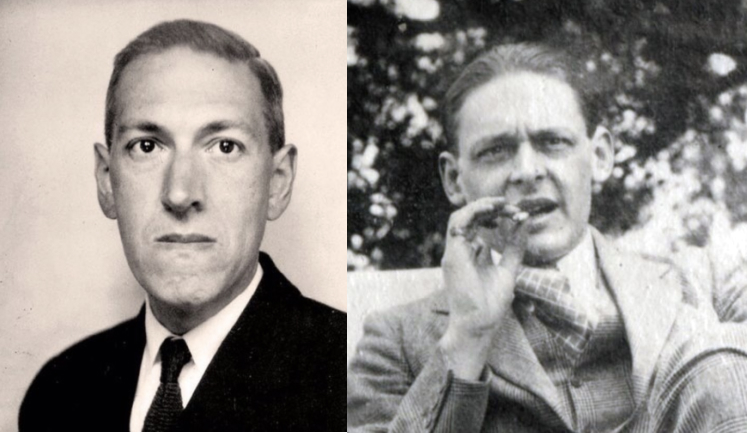
Image by Lucius B. Truesdell and Lady Morrell, via Wikimedia Commons
Howard Phillips Lovecraft, as his ever-growing fan base knows, seldom spared his characters — or at least their sanity — from the vast, unspeakable horrors lurking beneath his imagined reality. Not that he showed much more mercy as a critic either, as his assessment of “The Waste Land” (1922) reveals. Though now near-universally respected, T.S. Eliot’s best-known poem failed to impress Lovecraft, who, in his journal The Conservative, wrote in 1923 that
We here behold a practically meaningless collection of phrases, learned allusions, quotations, slang, and scraps in general; offered to the public (whether or not as a hoax) as something justified by our modern mind with its recent comprehension of its own chaotic triviality and disorganisation. And we behold that public, or a considerable part of it, receiving this hilarious melange as something vital and typical; as “a poem of profound significance”, to quote its sponsors.
Eliot’s work, Lovecraft argued, simply couldn’t hold up in the modern world, where “man has suddenly discovered that all his high sentiments, values, and aspirations are mere illusions caused by physiological processes within himself, and of no significance whatsoever in an infinite and purposeless cosmos.” Science, in his view, has made nonsense of tradition and “a rag-bag of unrelated odds and ends” of the soul. A poet like Eliot, it seems, “does not know what to do about it; but compromises on a literature of analysis, chaos, and ironic contrast.”
Looking on even this hatchet job, Lovecraft must have felt he’d failed to slay the beast, and so he composed a parody of “The Waste Land” entitled “Waste Paper” in late 1922 or early 1923. This “Poem of Profound Insignificance,” which Lovecraft scholar S.T. Joshi calls the writer’s “best satirical poem,” begins thus:
Out of the reaches of illimitable light
The blazing planet grew, and forc’d to life
Unending cycles of progressive strife
And strange mutations of undying light
And boresome books, than hell’s own self more trite
And thoughts repeated and become a blight,
And cheap rum-hounds with moonshine hootch made tight,
And quite contrite to see the flight of fright so bright
You can read the whole thing, including its probably apocryphal half-epigraph from the Greek poet Glycon, at the H.P. Lovecraft Archive. “In many parts of this quite lengthy poem,” Joshi writes, “he has quite faithfully parodied the insularity of modern poetry — its ability to be understood only by a small coterie of readers who are aware of intimate facts about the poet.”
Lovecraft also tried his hand at non-parodic poetry, though history remembers him much less for that than for striking a more primal chord with his sui generis “weird fiction,” whose parameters he was determining at the same time he was savaging his contemporary Eliot. And though scientific progress has marched much farther on since the 1920s, especially as regards the understanding of the human mind and whatever now passes for a soul, both men’s bodies of work have only gained in resonance.
Related Content:
H.P. Lovecraft’s Classic Horror Stories Free Online: Download Audio Books, eBooks & More
H.P. Lovecraft Gives Five Tips for Writing a Horror Story, or Any Piece of “Weird Fiction”
Lovecraft: Fear of the Unknown (Free Documentary)
Based in Seoul, Colin Marshall writes and broadcasts on cities and culture. His projects include the book The Stateless City: a Walk through 21st-Century Los Angeles and the video series The City in Cinema. Follow him on Twitter at @colinmarshall or on Facebook.
Read More...Enter Digital Archives of the 1960s Fluxus Movement and Explore the Avant-Garde Art of John Cage, Yoko Ono, John Cale, Nam June Paik & More
When it comes to the influence of the arts on everyday life, it can seem like our reality derives far more from Jeff Koons’ “augmented banality” than from the Fluxus movement’s playful experiments with chance operations, conceptual rigor, and improvisatory performance. But perhaps in a Jeff Koons world, these are precisely the qualities we need. Mainly based in New York, and “taking shape around 1959,” notes the University of Iowa’s Fluxus: A Field Guide, “the international cohort of artists known as Fluxus experimented with—or better yet between—poetry, theater, music, and the visual arts.” Big names like John Cage and Yoko Ono might give the uninitiated a sense of what the 60s art movement was all about. An “interdisciplinary aesthetic,” writes Ubuweb, that “brings together influences as diverse as Zen, science, and daily life and puts them to poetic use.”

Of course, there’s more to it than that… but Fluxus artists keep us wondering what that might be, suggesting that ordinary experience and the stuff of everyday life provide all the material we need. Japanese artist Mieko Shiomi describes Fluxus as a “pragmatic consciousness” that makes us “see things differently in everyday life after performing or seeing Fluxus works.”
The definitions of Fluxus, you might notice, can begin to sound a bit circular, maybe because they are entirely beside the point. George Maciunas, who named and co-founded the movement, called Fluxus “a way of doing things.” He called it a number of other things as well.
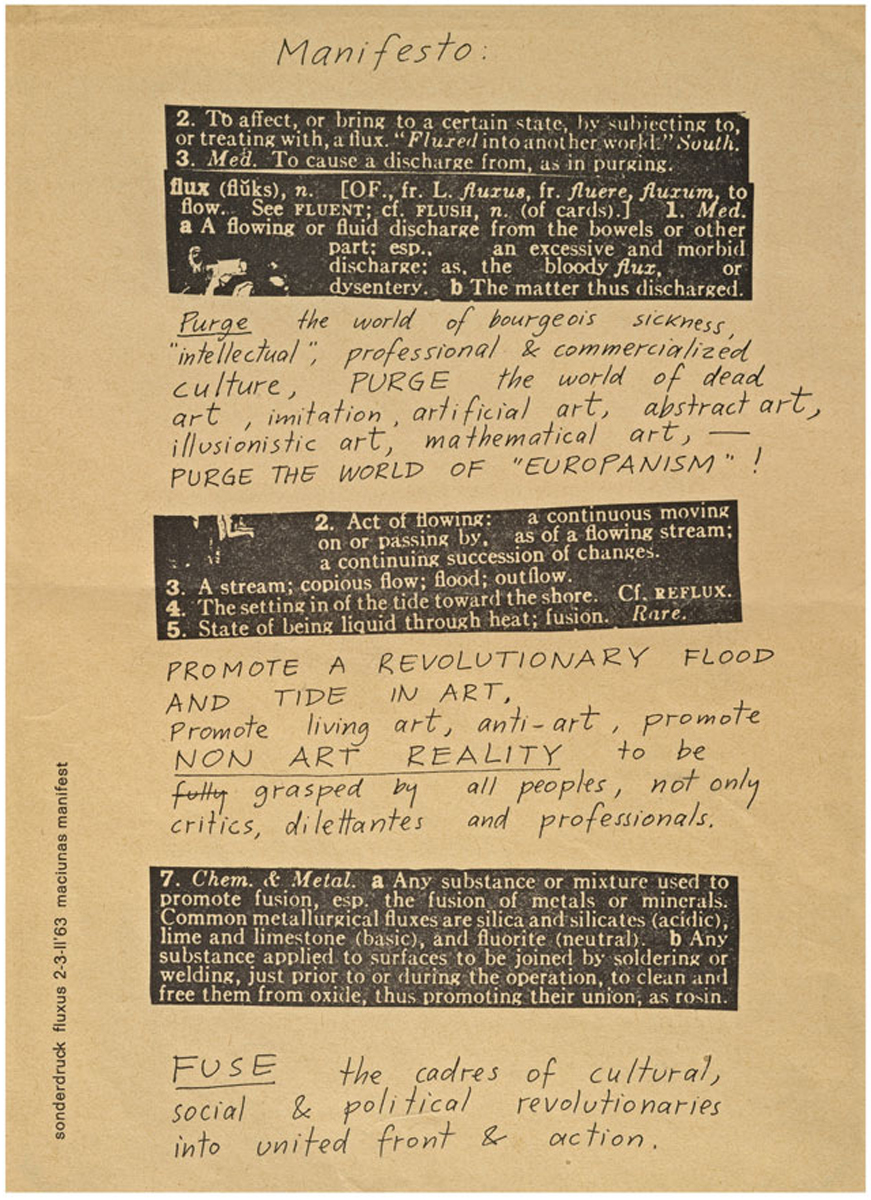
Maciunas’ 1963 “Fluxus Manifesto” makes all the right manifesto moves, paraphrasing Tristan Tzara’s “Dada Manifesto” in its promise to “purge the world of bourgeois sickness, ‘intellectual,’ professional & commercialized culture,” and so on. He begins with a dictionary definition of Fluxus, involving the symptoms of dysentery, and “the matter just discharged.” But the art of Fluxus, aiming at a “non art reality,” seems mild-mannered by contrast with this ironic bluster.
Though it could also be dangerous at times, Fluxus was always a form of play, often seemingly contentless, as in Nam June Paik’s “Zen for Film,” a silent, eight-minute film almost entirely composed of a fuzzy white screen or, in the most notorious example, John Cage’s “musical” composition, 4.33.
Fluxus has become so closely associated with the musical experiments and performance art of Cage and Ono that the centrality of poetry and the visual arts to the movement can go unremarked. Maciunas himself was a highly skilled graphic artist and an aspiring bourgeois proprietor: he first sought to turn Fluxus into a commercial corporation and designed a number of products such as chess sets, posters, and a wooden box filled with assemblages of small art objects created by his fellow Fluxus artists. He later admitted, “no one was buying it.” Of course, plenty of people did, just not in a way that returned on his sizable cash investment. See an “unboxing” of Maciunas’ Flux Box 2, above and try not to think of Wes Anderson.

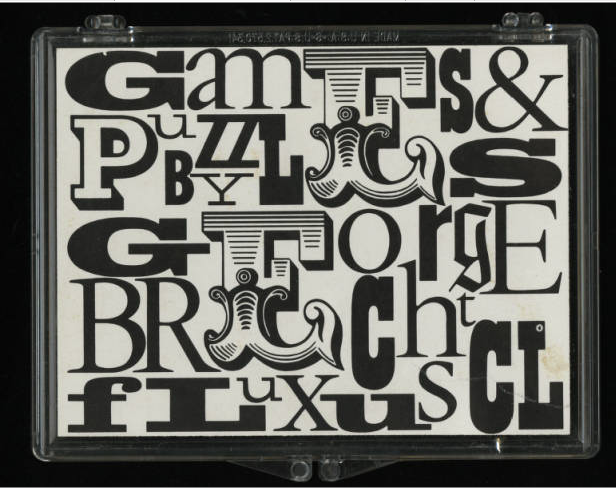
Like their Dada forebears, Fluxus artists worked in every medium. At the University of Iowa Library’s Fluxus Digital Collection, you can find visual art by Maciunas and his colleagues, like Joseph Beuy’s “Fluxus West” postcard, further up, George Brecht’s Fluxus Games and Puzzles below it, and A‑Yo’s “Finger Box,” above. At Monoskop, you’ll find links to more art, film, music, and books by and about artists like Yoko Ono and Fluxus poet Dick Higgens.
At Ubuweb, you’ll find a Fluxfilm Anthology, dating from 1962–1970 and containing short films by Paik, Ono, Maciunas, George Brecht, and many more (including a 1966 short from John Cale). And at Ubuweb: Sound, you’ll find eight cassettes worth of Fluxus and Fluxus-inspired music, from 1962 to 1992, like the Wolf Vostell “music sculpture,” Le Cri / The Cry, from 1990, above. The Fluxus approach may seem puckishly quaint, even precious, next to the slick hyperreality of Snapchat, but you will experience the everyday world around you quite differently after immersing yourself in the conceptual process-world of Fluxus.
Related Content:
Yoko Ono Lets Audience Cut Up Her Clothes in Conceptual Art Performance (Carnegie Hall, 1965)
The Music of Avant-Garde Composer John Cage Now Available in a Free Online Archive
Josh Jones is a writer and musician based in Durham, NC. Follow him at @jdmagness
Read More...Google Launches Three New Artificial Intelligence Experiments That Could Be Godsends for Artists, Museums & Designers
You’ll recall, a few months ago, when Google made it possible for all of your Facebook friends to find their doppelgängers in art history. As so often with that particular company, the fun distraction came as the tip of a research-and-development-intensive iceberg, and they’ve revealed the next layer in the form of three artificial intelligence-driven experiments that allow us to navigate and find connections among huge swaths of visual culture with unprecedented ease.
Google’s new Art Palette, as explained in the video at the top of the post, allows you to search for works of art held in “collections from over 1500 cultural institutions,” not just by artist or movement or theme but by color palette.
You can specify a color set, take a picture with your phone’s camera to use the colors around you, or even go with a random set of five colors to take you to new artistic realms entirely.
Admittedly, scrolling through the hundreds of chromatically similar works of art from all throughout history and across the world can at first feel a little uncanny, like walking into one of those houses whose occupant has shelved their books by color. But a variety of promising uses will immediately come to mind, especially for those professionally involved in the aesthetic fields. Famously color-loving, art-inspired fashion designer Paul Smith, for instance, appears in another promotional video describing how he’d use Art Palette: he’d “start off with the colors that I’ve selected for that season, and then through the app look at those colors and see what gets thrown up.”
In collaboration with the Museum of Modern Art, Google’s Art Recognizer, the second of these experiments, uses machine learning to find particular works of art as they’ve variously appeared over decades and decades of exhibition. “We had recently launched 30,000 installation images online, all the way back to 1929,” says MoMA Digital Media Director Shannon Darrough in the video above. But since “those images didn’t contain any information about the actual works in them,” it presented the opportunity to use machine learning to train a system to recognize the works on display in the images, which, in the words of Google Arts and Culture Lab’s Freya Murray, “turned a repository of images into a searchable archive.”
The formidable photographic holdings of Life magazine, which documented human affairs with characteristically vivid photojournalism for a big chunk of the twentieth century, made for a similarly enticing trove of machine-learnable material. “Life magazine is one of the most iconic publications in history,” says Murray in the video above. “Life Tags is an experiment that organizes Life magazine’s archives into an interactive encyclopedia,” letting you browse by every tag from “Austin-Healey” to “Electronics” to “Livestock” to “Wrestling” and many more besides. Google’s investment in artificial intelligence has made the history of Life searchable. How much longer, one wonders, before it makes the history of life searchable?
Related Content:
Google’s Free App Analyzes Your Selfie and Then Finds Your Doppelganger in Museum Portraits
Google Art Project Expands, Bringing 30,000 Works of Art from 151 Museums to the Web
Based in Seoul, Colin Marshall writes and broadcasts on cities and culture. His projects include the book The Stateless City: a Walk through 21st-Century Los Angeles and the video series The City in Cinema. Follow him on Twitter at @colinmarshall or on Facebook.
Read More...One Man Shows You How to Play Kraftwerk’s “The Robots” with Just One Synthesizer
Claudio aka Doctor Mix runs a YouTube channel where he uploads tutorials on mixing and producing music, reviews of audio gear and instruments, and hawks his online mixing and mastering service. But the above video caught our attention. Using just one synthesizer, the brand new *analog* Arturia MatrixBrute (what a name!), Doctor Mix recreates the Kraftwerk hit “The Robots.” (Which, if you are a longtime reader of this site, you know we love.)
Doctor Mix builds up the song piece by piece, and while the original band used several different synths to create the track, the MatrixBrute is able to handle everything, as it has a sequencer/drum pads built in, and programmable sounds that in this supplemental video, Doctor Mix will sell to you. (He even is able to use a vocoder with the machine to intonate its Russian lyrics: “Ja tvoi sluga / Ja tvoi rabotnik”)
It all looks so easy, doesn’t it?
When Kraftwerk recorded Man Machine, the 1978 landmark album that leads off with “The Robots,” they had accumulated years’ worth of synths and other equipment, along with synths that had been custom-built for the band, like the “Synthanorma Sequenzer” made by studio Matten & Wiechers to handle the repetitive loops they started using on their previous album Trans Europe Express.
Along with that and electronic-drum pads (first seen on TV in 1975), the band also used the Moog Mini-Moog, the ARP Odyssey, and a Roland Space-Echo, which provided the vocoder sounds.
At the time, band member Ralf Hütter said of the making of the album: “We are playing the machines, the machines play us, it is really the exchange and the friendship we have with the musical machines which make us build a new music.”
But we’ll hand it to Doctor Mix: the Arturia MatrixBrute is a good ol’ fashioned analog machine, and a lot of the new gear reviewed on his site shows that the warm tones of analog equipment is having a renaissance. Warm up those vaccuum tubes, kids, the other sound of the ‘70s is back!
Related Content:
Kraftwerk’s First Concert: The Beginning of the Endlessly Influential Band (1970)
The Case for Why Kraftwerk May Be the Most Influential Band Since the Beatles
The Psychedelic Animated Video for Kraftwerk’s “Autobahn” from 1979
Ted Mills is a freelance writer on the arts who currently hosts the artist interview-based FunkZone Podcast and is the producer of KCRW’s Curious Coast. You can also follow him on Twitter at @tedmills, read his other arts writing at tedmills.com and/or watch his films here.
Read More...Public Economics: A Free Online Course from Harvard
Course description: This is the first of two courses in the graduate public economics sequence at Harvard. This one-semester course covers basic issues in the optimal design of tax and social insurance policies, with emphasis on combining theoretical models with empirical evidence. Topics include efficiency costs and incidence of taxation, income taxation, transfer and welfare programs, public goods and externalities, optimal social insurance (excluding social security), and welfare analysis in behavioral models.
It was taught by Raj Chetty when he was at Harvard. He now teaches at Stanford.
Public Economics (available above or via this playlist on YouTube) will be added to our collection of Free Economics Courses, a subset of our collection, 1,700 Free Online Courses from Top Universities.
Read More...Public Economics and Finance: A Free Online Course from NYU
Course description: Public finance (also known as public economics) analyzes the impact of public policy on the allocation of resources and the distribution of income in the economy. In this course, you will learn how to use the tools of microeconomics and empirical analysis to analyze the economic effects of public expenditures and taxation.
This course requires a working knowledge of certain prerequisite courses, namely Statistics, Microeconomics, and Financial Management.
It was taught by Nirupama Rao, when she taught at NYU. She now teaches at the University of Michigan.
Public Economics and Finance (available above or via this playlist on YouTube) will be added to our collection of Free Economics Courses, a subset of our collection, 1,700 Free Online Courses from Top Universities.
Read More...The Truth Behind Jane Austen’s Fight Club: Female Prize Fights Were a Thing During the 18th Century
The first rule of Fight Club is: you do not talk about Fight Club.
The second rule of Fight Club is: you DO NOT talk about Fight Club!
- Chuck Palahniuk, Fight Club
Could it be a case of authorial oversight that all subsequent rules are exclusively concerned with such practical matters as dress and fight duration?
Given the macho reputation of both the book and the film adaptation, it seems like the third rule of Fight Club should be: you DO NOT talk about the fact that a fair number of Edwardian ladies were badass bare knuckle fighters.
Because doing so might diminish Fight Club’s street cred just a bitsy…
Filmmaker (and popular audiobook narrator) Emily Janice Card has a good deal of fun in Jane Austen’s Fight Club, above, marrying Palahniuk’s tropes to the social mores of England’s Regency period.
“No corsets, no hat pins and no crying,” Tyler Durden stand-in Lizzie instructs the eager young ladies in her circle. Soon, they’re proudly sporting bruises beneath their bonnets and stray blood spots on their tea dresses.
While young women of the fictional Bennet sisters’ social class refrained from brutal fisticuffs, there’s ample evidence of female combatants from the proletarian ranks. They fought for money, and occasionally to settle a disagreement, training hard for weeks in advance.
Their bouts drew spectators to the amphitheater owned by boxing promoter James Figg, and the marvelously named Hockley in the Hole, a seedy establishment whose other attractions included bearbaiting, bullbaiting, and fighting with broadswords and cudgels.
The female fist fighters challenged each other with paid notices in local papers, like this one from “championess and ass-driver” Ann Field of Stoke Newington:
Whereas I, Ann Field, of Stoke Newington, ass-driver, well known for my abilities, in boxing in my own defense wherever it happened in my way, having been affronted by Mrs. Stokes, styled the European Championess, do fairly invite her to a trial of her best skill in Boxing for 10 pounds, fair rise and fall; and question not but to give her such proofs of my judgment that shall oblige her to acknowledge me Championess of the Stage, to the satisfaction of all my friends.
Mrs. Stokes promptly announced her readiness to come out of retirement:
I, Elizabeth Stokes, of the City of London, have not fought in this way since I fought the famous boxing- woman of Billingsgate 29 minutes, and gained a complete victory (which is six years ago); but as the famous Stoke Newington ass-woman dares me to fight her for the 10 pounds, I do assure her I will not fail meeting her for the said sum, and doubt not that the blows which I shall present her with will be more difficult for her to digest than any she ever gave her asses.
Rather than keeping mum on Fight Club, these female pugilists shared Muhammad Ali’s flare for drumming up interest with irresistibly cocky wordplay.
References to adversaries fighting in “close jacket, short petticoats, and holland drawers … with white stockings and pumps” suggest that the adversaries played to the spectators’ prurience, though not always. Unlike the 20th-century stunt of bikini clad jello wrestling, sex appeal was not obligatory.
In a chapter devoted to public entertainments, sports and amusements, Alexander Andrews, author of The Eighteenth Century or Illustrations of the Manners and Customs of Our Grandfathers, documents how the Merry Wives of Windsor, a crew comprised of “six old women belonging to Windsor town” took out an ad seeking “any six old women in the universe to outscold them.”
On June 22nd, 1768, a woman called Bruising Peg “beat her antagonist in a terrible manner” to win a new chemise, valued at half a guinea.
In 1722, Hannah Hyfield of Newgate Market, resolved to give her challenger, Elizabeth Wilkinson, “more blows than words,” promising to deliver “a good thumping.” Both parties agreed to hold a half-crown in their fists for the duration of the fight. William B. Boulton, author of 1901’s Amusements of Old London, speculates that this was a practical measure to minimize scratching and hair-pulling.
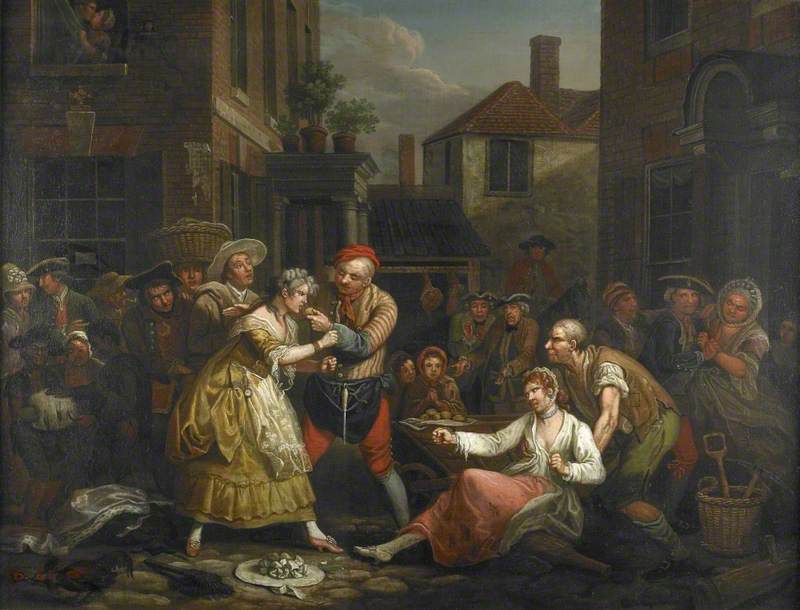
Time travel to an 18th-century female bare knuckles fight via Female Single Combat Club’s exhaustive coverage, Sarah Murden’s excellent analysis of John Collet’s painting, The Female Bruisers, above, or Jeremy Freeston’s short documentary available on YouTube.
Related Content:
Watch Author Chuck Palahniuk Read Fight Club 4 Kids
Ayun Halliday is an author, illustrator, theater maker and Chief Primatologist of the East Village Inky zine. Follow her @AyunHalliday.
Read More...How to Write Like an Architect: Short Primers on Writing with the Neat, Clean Lines of a Designer
We have another national crisis on our hands.
Our children are not only ill-equipped to read maps and tell time with analog clocks, their handwriting is in serious decline.
Forget cursive, which went the way of the dodo earlier in the millennium. Youngsters who are dab hands on the keyboard may have little impulse—or opportunity—to practice their printing.
It sure as shootin’ might be during a zombie invasion, given the attendant breakdown of digital communication and the electricity that powered it.
But even in less dire times, legible penmanship is a good skill to master.
As Virginia Berninger, professor emeritus and principal investigator of the University of Washington’s Interdisciplinary Learning Disabilities Center, told The New York Times, “Handwriting — forming letters — engages the mind, and that can help children pay attention to written language.”
Hand lettering is also a complex neurological process, a workout involving various cognitive, motor, and neuromuscular functions.
There’s also a school of thought that teachers who still accept handwritten assignments unconsciously award the highest grades to pupils with the neatest penmanship, which is easier on tired eyes. Something to keep in mind for those gearing up to take the handwritten essay portions of the SAT and ACT.
Let’s remember that letters are really just shapes.
The Finns and French have long-established uniformity with regard to handwriting. In the absence of classroom instruction, Americans have the freedom to peruse various penmanship styles, identify their favorite, and work hard to attain it.
(This writer is proof that penmanship can become part of the DNA through practice, having set out to duplicate my mother’s delightful, eccentric-to-the-point-of-illegibile hand at around the age of 8. I added a few personal quirks along the way. The result is I’m frequently bamboozled into serving as scribe for whatever group I happen to find myself in, and my children can claim they couldn’t read the important handwritten instructions hurriedly left for them on Post-Its.)
Historically, the most legible American penmanship belongs to architects.
Their precisely rendered all caps suggest meticulousness, accountability, steadiness of character…
And almost anyone can achieve it, regardless of whether those are qualities they personally possess.
All it takes is determination, time, and—as taught by Doug Patt in his How to Architect series, above—more tools than can be simultaneously operated with two hands:
a parallel rule or t‑square
a small plastic triangle customized with bits of tape
a .5mm Pentel drafting pencil
If this sounds needlessly laborious, keep in mind that such specialty equipment may appeal to reluctant hand writers with an interest in engineering, robotics, or scientific experimentation.
(Be prepared for some frustration if this is the student’s first time at the rodeo with these instruments. As any veteran comic book artist can attest, few are born knowing how to use an Ames lettering guide.)
It should be noted that Patt’s alphabet deviates a bit from traditional standards in the field.
His preference for breathing some life into his letters by not closing their loops, squashing traditionally circular forms into ellipses, and using “dynamic angles” to render crosspieces on a slant would likely not have passed muster with architecture professors of an earlier age, my second grade teacher, or the font designers responsible for the computer-generated “hand lettering” gracing the bulk of recent architectural renderings.
He’s likely the only expert suggesting you make your Ks and Rs reminiscent of actor Ralph Macchio in the 1984 film, The Karate Kid.
There’s little chance you’ll find yourself grooving to Patt’s videos for anything other than their intended purpose. Whereas the late Bob Ross’ Joy of Painting series has legions of fans who tune in solely for the meditative benefits they derive from his mellow demeanor, Patt’s rapid fire instructional style is that of the busy master, deftly executing moves the fledgling student can only but fumble through.
But if the Karate Kid taught us anything, it’s that practice and grit lead to excellence. If the above demonstration whips by too quickly, Patt expands on the shaping of each letter in 30-second video tutorials available as part of a $19 online course.
Those looking for architectural lower case, or techniques for controlling the thickness of their lines can find them in the episode devoted to lettering with a .7mm Pentel mechanical drafting pencil.
Explore further secrets of the architects on Patt’s How to Architect channel or 2012 book, also called How to Architect.
Related Content:
Discover What Shakespeare’s Handwriting Looked Like, and How It Solved a Mystery of Authorship
Helen Keller Had Impeccable Handwriting: See a Collection of Her Childhood Letters
Ayun Halliday is an author, illustrator, theater maker and Chief Primatologist of the East Village Inky zine. Follow her @AyunHalliday.
Read More...Download 240+ Free eBooks on Design, Data, Software, Web Development & Business from O’Reilly Media
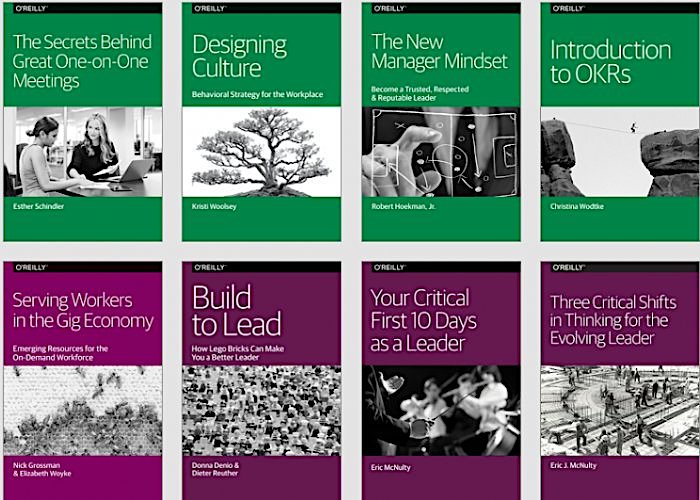
Last year we highlighted for you 20 Free eBooks on Design from O’Reilly Media. Little did we know that we were just scratching the surface of the free ebooks O’Reilly Media has to offer.
If you head over to this page, you can access 240+ free ebooks covering a range of different topics. Below, we’ve divided the books into sections (and provided links to them), indicated the number of books in each section, and listed a few attractive/representative titles.
You can download the books in PDF format. An email address–but no credit card–is required. Again the complete list is here.
- Business & Leadership (10 ebooks total)
- Data & Artificial Intelligence (95 ebooks total)
- Design (21 ebooks)
- Hardware & the Internet of Things (24 ebooks)
- Software/Programming (36 ebooks)
- Security (8 ebooks)
- Web Development & Performance (19 ebooks)
- Web Ops & DevOps (31)
Note: An earlier version of this post originally appeared on our site in January 2017.
If you would like to support the mission of Open Culture, consider making a donation to our site. It’s hard to rely 100% on ads, and your contributions will help us continue providing the best free cultural and educational materials to learners everywhere. You can contribute through PayPal, Patreon, and Venmo (@openculture). Thanks!
Related Content:
Download 20 Free eBooks on Design from O’Reilly Media
Read 700 Free eBooks Made Available by the University of California Press
A New Free eBook Every Month from the University of Chicago Press
800 Free eBooks for iPad, Kindle & Other Devices
Read More...Hear Freddie Mercury’s Vocals Soar in the Isolated Vocal Track for “Somebody to Love”
For some time now, certain fans of Queen have sought the elusive answer to the question “what made Freddie Mercury such an incredible singer?” That he was an incredible singer—one of the greatest in terms of vocal range, emotive power, stage presence, songwriting, etc.—is hardly a fact in dispute. Or it shouldn’t be. You don’t need to love Queen’s music to acknowledge its brilliance, and marvel at its frontman’s seemingly superhuman power and stamina. The explanations for it are multiple and have become far more sophisticated in recent years.
Scientific research has examined the possible physiological structure of Mercury’s vocal chords, and concluded that he was able to vibrate several vocal folds at once, creating subharmonics and a vibrato faster than that of any other singer. It’s a compelling theory, albeit a little gross. Who wants to listen to “Somebody to Love”’s glorious, swooping soulful verses and Broadway showstopper choruses and picture vibrating vocal folds? Mercury was a showman, not a singing machine—and his unique inflections derived not only from biology but also—argues Rudi Dolezal, director of Freddie Mercury: The Untold Story—from culture.
Mercury’s formative experiences as a child in Zanzibar and India, and the “culture shock” of his move to London as a teenager, may have contributed to his expansive vocal prowess: “it was multiculturalism that was combined in Freddie Mercury,” says Dolezal, suggesting that Mercury’s voice went places no one else’s did in part because he combined the strengths of Eastern and Western music. Maybe. Mercury grew up emulating English and American artists like Cliff Richard and Little Richard, but one of his biggest influences was Bollywood superstar Lata Mangeshkar.
Mercury himself had his own unusual theory, believing that his distinctive overbite somehow played a part in his singing ability, which is why he never had his teeth straightened despite a lifetime of self-consciousness about them. Maybe the most honest fan answer to the question might be, “who cares?” Just enjoy it—over-analysis of the parts takes away from the experience of Queen’s bombastic theatrical whole. That’s fair enough, I suppose, but if there’s any voice worth obsessing over it’s Mercury’s.
If you’re still in doubt about why, listen to the isolated vocal track at the top for “Somebody to Love” from start to finish. You’ll hear a singer who sounds capable of doing pretty much anything that it’s possible to do with the human voice except sing off-key. Yes, of course, it’s impressive in context, with the band’s vocal harmonies lifting Mercury’s voice like a great pair of wings. Take them away, however, and strip away all of the song’s instrumentation, and Mercury’s vocal seems to soar even higher. I’d kind of like to know how he did that.
Related Content:
Freddie Mercury: The Untold Story of the Singer’s Journey From Zanzibar to Stardom
Josh Jones is a writer and musician based in Durham, NC. Follow him at @jdmagness
Read More...Support Us
We're hoping to rely on loyal readers, rather than erratic ads. Please click the Donate button and support Open Culture. You can use Paypal, Venmo, Patreon, even Crypto! We thank you!

About Us

Open Culture scours the web for the best educational media. We find the free courses and audio books you need, the language lessons & educational videos you want, and plenty of enlightenment in between.
Advertise With Us
FREE UPDATES!
GET OUR DAILY EMAIL
Get the best cultural and educational resources on the web curated for you in a daily email. We never spam. Unsubscribe at any time.
FOLLOW ON SOCIAL MEDIA
Open Culture editor Dan Colman scours the web for the best educational media. He finds the free courses and audio books you need, the language lessons & movies you want, and plenty of enlightenment in between.
Advertise With Us



