Download 150 Free Coloring Books from Great Libraries, Museums & Cultural Institutions: The British Library, Smithsonian, Carnegie Hall & More
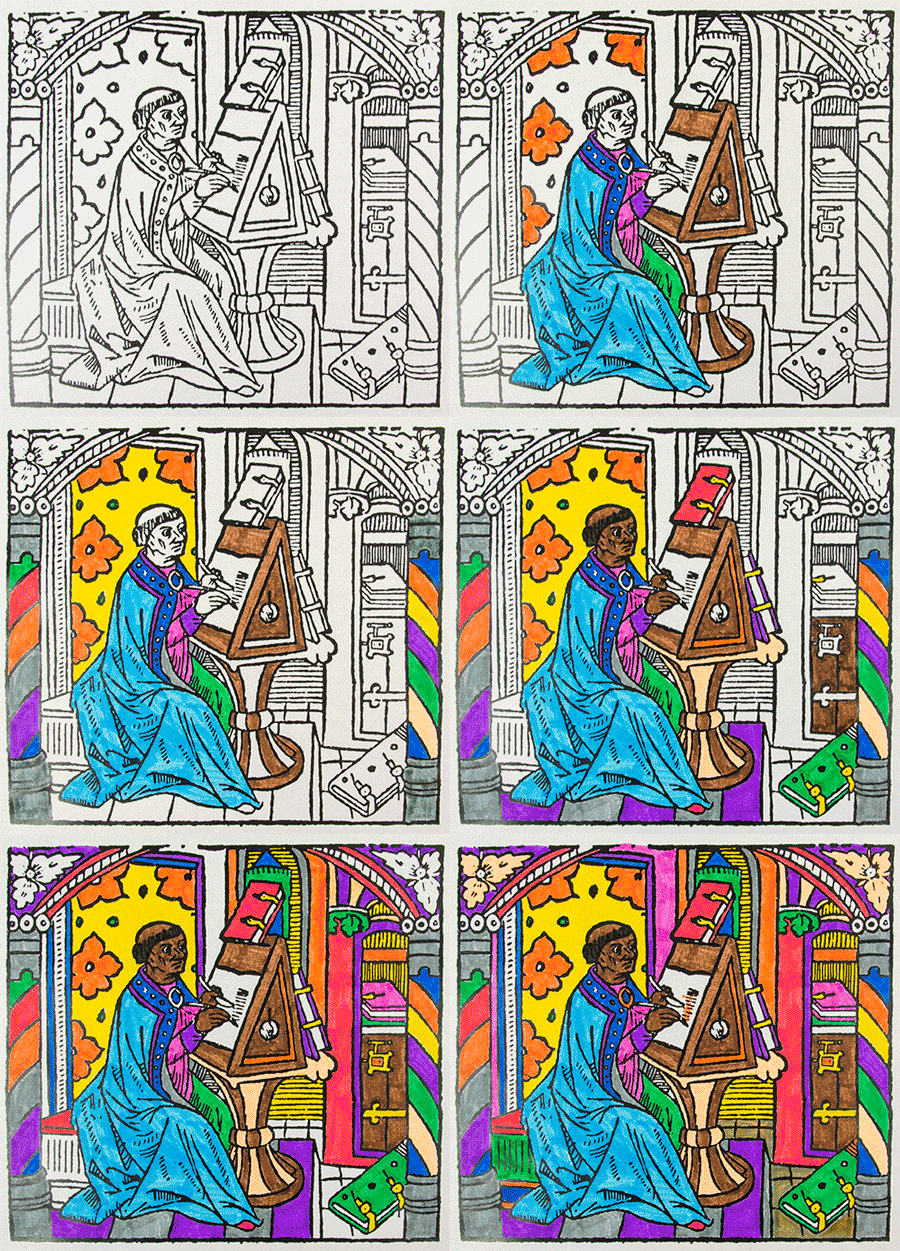
A news alert for fans of coloring books.
You can now take part in the 2018 edition of #ColorOurCollections–a campaign where museums, libraries and other cultural institutions make available free coloring books, letting you color artwork from their collections and then share it on Twitter and other social media platforms. When sharing, use the hashtag #ColorOurCollections.
Below you can find a collection of 20 free coloring books, which you can download, print, and color until you can color no more. Also find a complete list of 150 coloring books over at this site maintained by The New York Academy of Medicine Library.
To see the free coloring books offered up in 2016, click here. And 2017, here.
- Brooklyn Collection at Brooklyn Public Library
- Cambridge University Library Coloring Book
- Carnegie Hall Archives Coloring Book
- Digita Vaticana
- Escuela Superior de Artes de Yucatán Coloring Book
- Europeana Coloring Book
- Harvard Center for the History of Medicine
- Lane Medical Library – Medical History Center, Stanford Medicine Coloring Book
- Newberry Library Coloring Book
- New York Academy of Medicine
- Northwestern University Distinctive Collections Coloring Book
- Queens’ College Library, Cambridge Coloring Book
- The Bodleian Libraries Coloring Book (Oxford)
- The British Library
- The Biodiversity Heritage Library
- The New York Botanical Garden
- The Smithsonian
- The University of Kansas
- Thomas Edison National Historical Park Coloring Book
- University of Strathclyde Archives and Special Collections Coloring Book
The image up top comes from The British Library.
If you would like to support the mission of Open Culture, consider making a donation to our site. It’s hard to rely 100% on ads, and your contributions will help us continue providing the best free cultural and educational materials to learners everywhere. You can contribute through PayPal, Patreon, and Venmo (@openculture). Thanks!
Related Content:
The First Adult Coloring Book: See the Subversive Executive Coloring Book From 1961
Download 15,000+ Free Golden Age Comics from the Digital Comic Museum
Dr. Seuss Draws Anti-Japanese Cartoons During WWII, Then Atones with Horton Hears a Who!
Read More...How the Fences & Railings Adorning London’s Buildings Doubled (by Design) as Civilian Stretchers in World War II
London is a particularly rich destination for visitors with an interest in World War II:
Winston Churchill’s underground War Rooms…
Blitz-specific walking tours…
…and the scabby steel fences/railings surrounding a number of South London housing estates?
These mesh-and-pipe barriers look utterly unremarkable until one hears their origin story—as emergency stretchers for bearing away civilian casualties from the rubble of Luftwaffe raids.
The no-frills design was intended less for patient comfort than easy clean up. Kinks in the long stretcher poles kept the injured off the ground, and allowed for easy pick up by volunteers from the Civil Defence Service.
Some 600,000 of these stretchers were produced in preparation for airborne attacks. The Blitz killed over 28,000 London civilians. The number of wounded was nearly as high. The manufacture of child-sized stretchers speaks to the citizens’ awareness that the human price would be ghastly indeed.
”I am almost glad we have been bombed,” Queen Elizabeth “the Queen Mum” told a friend after Buckingham Palace was strafed in 1940. ”Now I feel I can look the East End in the face.”
Born of community spirit, it’s fitting that the stretchers continue to serve the community, replacing more ornamental fences that had been uprooted for scrap metal as part of the war effort.
Few neighborhood residents, let alone tourists, seem aware of the fences’ history, as evidenced in the video above.
Perhaps the recently formed Stretcher Railing Society—for the promotion, protection and preservation of London’s Air Raid Protection Stretcher Railings—will change that, or at the very least, put up some plaques.
See photos of the stretchers in action, then follow the Stretcher Railing Society’s map to their present locations.
Related Content:
31 Rolls of Film Taken by a World War II Soldier Get Discovered & Developed Before Your Eyes
Ayun Halliday is an author, illustrator, theater maker and Chief Primatologist of the East Village Inky zine. Follow her @AyunHalliday.
Read More...Carl Sagan’s “The Pale Blue Dot” Animated
Back in 1990, Voyager 1 snapped a photo of planet Earth from a record distance – 3.7 billion miles away. And there we saw it, our home, Planet Earth, a small blue dot almost swallowed by the vastness of space. This image inspired the title of Carl Sagan’s 1994 book, The Pale Blue Dot: A Vision of the Human Future in Space, which captivated millions of readers then, and still many more now.
A quarter century later, The Pale Blue Dot continues to give creative inspiration to many, including filmmakers who have produced animations that sync with Sagan’s narration of a famous passage from his book. The latest animation comes from a class of students at the Ringling College of Art and Design, located in Sarasota, Florida. Give it a watch. It will help you put everything in perspective.
If you would like to support the mission of Open Culture, consider making a donation to our site. It’s hard to rely 100% on ads, and your contributions will help us continue providing the best free cultural and educational materials to learners everywhere. You can contribute through PayPal, Patreon, and Venmo (@openculture). Thanks!
Related Content:
Carl Sagan Presents His “Baloney Detection Kit”: 8 Tools for Skeptical Thinking
Carl Sagan Explains Evolution in an Eight-Minute Animation
Carl Sagan Issues a Chilling Warning to America in His Final Interview (1996)
Read More...The Psychological & Neurological Disorders Experienced by Characters in Alice in Wonderland: A Neuroscience Reading of Lewis Carroll’s Classic Tale
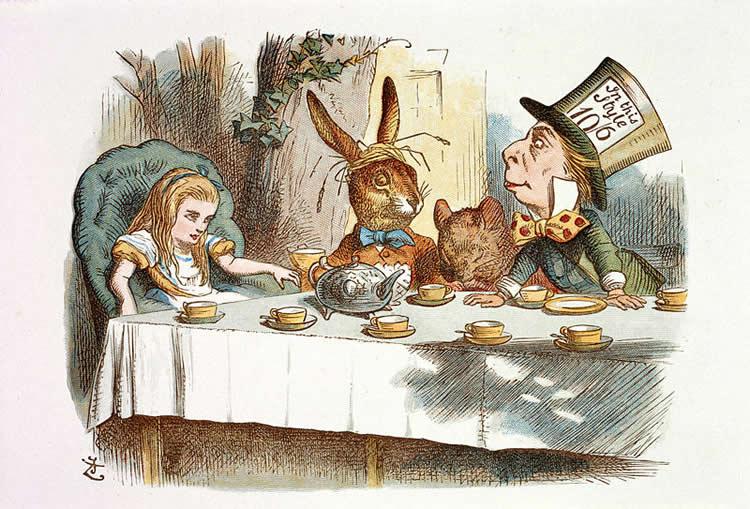
Most reputable doctors tend to refrain from diagnosing people they’ve never met or examined. Unfortunately, this circumspection doesn’t obtain as often among lay folk. When we lob uninformed diagnoses at other people, we may do those with genuine mental health issues a serious disservice. But what about fictional characters? Can we ascribe mental illnesses to the surreal menagerie, say, in Lewis Carroll’s Alice’s Adventures in Wonderland? It’s almost impossible not to, given the overt themes of madness in the story.
Carroll himself, it seems, drew many of his depictions directly from the treatment of mental disorders in 19th century England, many of which were linked to “extremely poor working conditions,” notes Franziska Kohlt at The Conversation. During the industrial revolution, “populations in so-called ‘pauper lunatic asylums’ for the working class skyrocketed.” Carroll’s uncle, Robert Wilfred Skeffington Lutwidge, happened to be an officer of the Lunacy Commission, which supervised such institutions, and his work offers “stunning insights into the madness in Alice.”
Yet we should be careful. Like the supposed drug references in Alice, some of the lay diagnoses now applied to Alice’s characters may be a little far-fetched. Do we really see diagnosable PTSD or Tourette’s? Anxiety Disorder and Narcissistic Personality Disorder? These conditions hadn’t been categorized in Carroll’s day, though their symptoms are nothing new. And yet, experts have long looked to his nonsense fable for its depictions of abnormal psychology. One British psychiatrist didn’t just diagnose Alice, he named a condition after her.
In 1955, Dr. John Todd coined the term Alice in Wonderland Syndrome (AIWS) to describe a rare condition in which—write researchers in the Journal of Pediatric Neurosciences—“the sizes of body parts or sizes of external objects are perceived incorrectly.” Among other illnesses, Alice in Wonderland Syndrome may be linked to migraines, which Carroll himself reportedly suffered.
We might justifiably assume the Mad Hatter has mercury poisoning, but what other disorders might the text plausibly present? Holly Barker, doctoral candidate in clinical neuroscience at King’s College London, has used her scholarly expertise to identify and describe in detail two other conditions she thinks are evident in Alice.
Depersonalization:
“At several points in the story,” writes Barker, “Alice questions her own identity and feels ‘different’ in some way from when she first awoke.” Seeing in these descriptions the symptoms of Depersonalization Disorder (DPD), Barker describes the condition and its location in the brain.
This disorder encompasses a wide range of symptoms, including feelings of not belonging in one’s own body, a lack of ownership of thoughts and memories, that movements are initiated without conscious intention and a numbing of emotions. Patients often comment that they feel as though they are not really there in the present moment, likening the experience to dreaming or watching a movie. These symptoms occur in the absence of psychosis, and patients are usually aware of the absurdity of their situation. DPD is often a feature of migraine or epileptic auras and is sometimes experienced momentarily by healthy individuals, in response to stress, tiredness or drug use.
Also highly associated with childhood abuse and trauma, the condition “acts as a sort of defense mechanism, allowing an individual to become disconnected from adverse life events.” Perhaps there is PTSD in Carroll’s text after all, since an estimated 51% of DPD patients also meet those criteria.
Prosopagnosia:
This condition is characterized by “the selective inability to recognize faces.” Though it can be hereditary, prosopagnosia can also result from stroke or head trauma. Fittingly, the character supposedly affected by it is none other than Humpty-Dumpty, who tells Alice “I shouldn’t know you again if we did meet.”
“Your face is the same as everybody else has – the two eyes, so-” (marking their places in the air with his thumb) “nose in the middle, mouth under. It’s always the same. Now if you had two eyes on the same side of the nose, for instance – or the mouth at the top – that would be some help.”
This “precise description” of prosopagnosia shows how individuals with the condition rely on particularly “discriminating features to tell people apart,” since they are unable to distinguish family members and close friends from total strangers.
Scholars know that Carroll’s text contains within it several abstract and seemingly absurd mathematical concepts, such as imaginary numbers and projective geometry. The work of researchers like Kohit and Barker shows that Alice’s Adventures in Wonderland might also present a complex 19th century understanding of mental illness and neurological disorders, conveyed in a superficially silly way, but possibly informed by serious research and observation. Read Barker’s article in full here to learn more about the conditions she diagnoses.
Related Content:
Lewis Carroll’s Photographs of Alice Liddell, the Inspiration for Alice in Wonderland
See Salvador Dali’s Illustrations for the 1969 Edition of Alice’s Adventures in Wonderland
Josh Jones is a writer and musician based in Durham, NC. Follow him at @jdmagness.
Read More...The Improbable Time When Orson Welles Interviewed Andy Kaufman (1982)
“Sitcoms are the lowest form of entertainment,” declares Andy Kaufman as portrayed by Jim Carrey in Milos Forman’s biopic Man on the Moon. “I mean, it’s just stupid jokes and canned laughter.” The scene comes in the period of Kaufman’s life in the late 1970s when, growing ever more well-known on the back of acts like his “Foreign Man” character, he receives an offer to take part in ABC’s Taxi. The real-life Kaufman, eventually convinced to join the show’s cast, developed the Foreign Man into the unplaceable mechanic Latka Gavras. Quite possibly Taxi’s most memorable character, Latka also won the appreciation of no less demanding a cultural figure than Orson Welles.
Guest-hosting the Merv Griffin Show in June of 1982, Welles describes Taxi as a show that has “kept television from being a criminal felony” just before bringing Kaufman on for a brief (and uncharacteristically straightforward) chat. He heaps praise on Kaufman’s performance as Latka, adding, “I want to know why it is that you go and wrestle with people when you can act so well.” Kaufman had shown up wearing a neck brace, an accessory signifying the end of his stint as a professional wrestler, one of the many inexplicable but somehow compelling choices in a short career that blurred the lines between comedy, performance art, and life itself.
“Nobody ever came from nowhere more completely,” Welles says, drawing a big studio-audience laugh with this description of not just Latka but Kaufman as well. Asked how he came up with such a distinctive character voice, Kaufman says only that he “grew up in New York, and you hear a lot of different voices in New York” (“You don’t hear that one,” replies Welles). He also cites the accents of a high-school friend from South America and a college roommate from Iran. Less than four years later, both Kaufman and Welles would be gone (and actor Ron Glass, looking on from the other side of the couch, joined them this past November).
Or at least both men would be gone if you don’t credit the rumors about Kaufman having elaborately faked his death. “I don’t know whether it’s the innocence of the fellow or the feeling you have that he is not stupider than everybody, but maybe smarter, that adds to the fascination,” Welles says. Again he speaks ostensibly of Kaufman’s Foreign Man/Latka persona, but his words apply equally to the man who not just played but periodically — and sometimes unpredictably — became him. 33 years after Kaufman’s death, or in any case disappearance from life, that fascination remains as strong as ever.
Related Content:
A Look Back at Andy Kaufman: Absurd Comic Performance Artist and Endearing Weirdo
Orson Welles’ Last Interview and Final Moments Captured on Film
Based in Seoul, Colin Marshall writes and broadcasts on cities and culture. His projects include the book The Stateless City: a Walk through 21st-Century Los Angeles and the video series The City in Cinema. Follow him on Twitter at @colinmarshall or on Facebook.
Read More...How to Draw in the Style of Japanese Manga: A Series of Free & Wildly Popular Video Tutorials from Artist Mark Crilley
In Japan, the word manga refers broadly to the art form we know in English as comics. But as used in the West, it refers to a comic art style with distinctive aesthetic and storytelling conventions of its own, originating from but now no longer limited to Japan. Just as the past century or so has seen the emergence of Western masters of such things thoroughly Japanese as sushi, judo, and even tea ceremony, the past few decades brought us the work of the Western mangaka, or manga artist. Mark Crilley stands as one of the best-known practitioners of that short tradition, thanks not only to his art but to his efforts to teach fans how to draw in the style of Japanese manga themselves as well.
Apart from comic-book series like Akiko, Miki Falls, and Brody’s Ghost, the Detroit-born Crilley has also published a trilogy of Mastering Manga instructional books. In an interview with Wired, he frames his own manga-mastering process as a project similar to language-learning: “When I went to Taiwan to teach English after graduating from college, I threw myself into learning Chinese with a real ‘tunnel vision’ kind of dedication. As a result I became conversational in Mandarin within about a year. More recently I decided to teach myself how to draw in a manga-influenced style and thus focused exclusively on that for many months.”
Crilley first took to Youtube to promote his then-new manga series, but he “soon found that people were watching my videos as drawing lessons. As more people watched I got hooked on passing on drawing tips to the next generation, and so I continued producing more and more instructional videos.”
More youngsters seem to have an interest in drawing in the style of Japanese comics and animation than ever (at least if my friends’ kids are generationally representative), and Crilley finds that they “appreciate having an art teacher who takes manga seriously, and doesn’t dismiss it as an inferior art form. I’m sure plenty of art teachers are all, ‘Stop drawing those saucer-eyed characters! Draw this still life instead!’ ”
Not to say that Crilley doesn’t appreciate realism: he’s put out a whole book on the subject, and some of his instructional videos cover how to draw lifelike eyes (a tutorial that has drawn 27 million views and counting), leopards, mushrooms, and much else besides. But for the aspiring mangaka of any nationality, his Youtube channel offers a wealth of lessons on how to draw everything from faces to clothes to figures in motion to big eyes in the manga aesthetic. But as he surely knows — having cited in the Wired interview a wide range of influences from Star Wars to Mad magazine to Monty Python’s Flying Circus — if you want to truly find your own style, you can’t limit yourself to any one source of inspiration. Acquire the skills, of course, but then take them to new places.
You can see a playlist of 256 how-to-draw videos by Crilley here. Or a series of smaller drawing playlists here.
Related Content:
A Big List of Free Art Lessons on YouTube
How to Draw the Human Face & Head: A Free 3‑Hour Tutorial
Watch Groundbreaking Comic Artist Mœbius Draw His Characters in Real Time
Cartoonist Lynda Barry Shows You How to Draw Batman in Her UW-Madison Course, “Making Comics”
W.B. Yeats’ Poem “When You Are Old” Adapted into a Japanese Manga Comic
Based in Seoul, Colin Marshall writes and broadcasts on cities and culture. His projects include the book The Stateless City: a Walk through 21st-Century Los Angeles and the video series The City in Cinema. Follow him on Twitter at @colinmarshall or on Facebook.
Read More...10 Reasons Why Hannibal’s Military Genius Still Captures Our Imagination Today
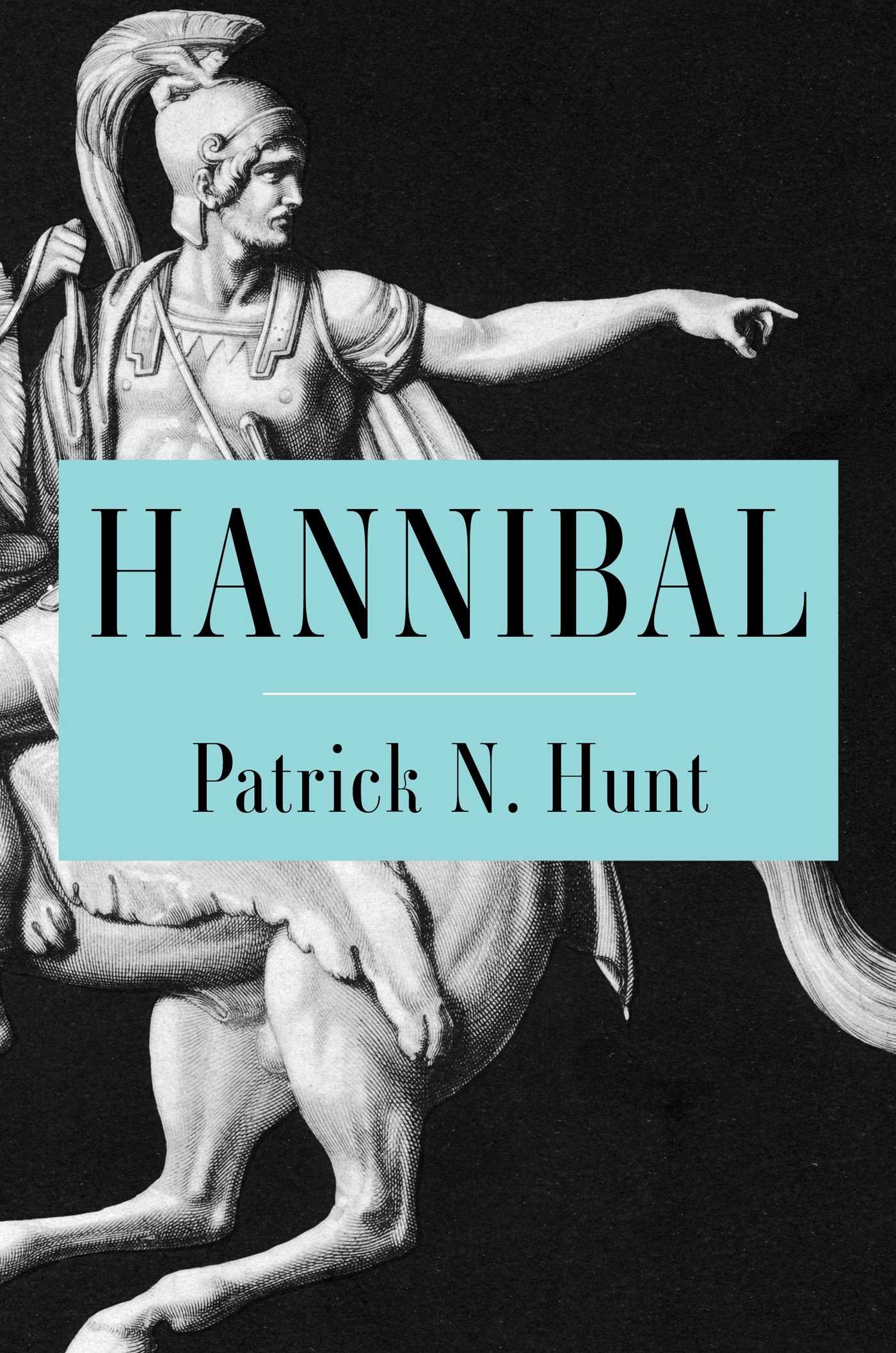
Note: This is a guest post from Patrick Hunt, author of the new book, Hannibal.
Hannibal Barca, otherwise simply known as Hannibal, lived and waged war over two thousand years ago – but is he still relevant in a world where the Romans are long gone? His famous crossing of the Alps in winter with an intrepid army and elephants is unforgettable, but are his brilliant maneuvers and intelligence gathering still worth examining? Despite the enigma of this great Carthaginian general being unable to preserve Carthage after him, Hannibal’s tactics and methods offer great lessons not only for military history but also for civilization at large. History reveals the Romans had a destiny of world conquest, but what is less well known is how much Hannibal changed the ways in which the Romans conducted the wars that eventually brought them Pax Romana, a peace often forged out of violence after a brutal expansion that killed and enslaved millions, including Carthage a century after Hannibal.
Before Hannibal, Rome was hemmed in by seas on almost all sides and could hardly expand except northward into Etruscan and Celtic territory; acquiring Sicily was Rome’s first step outside its mainland. But Hannibal forced Rome to fight a very different kind of war; his victories taught them how exploitable their military organization was, and he pressured Rome to change for survival. More relevant, while Hannibal didn’t invent spycraft, he seemingly used it more effectively than any other ancient general by his careful contingency planning. Hannibal set precedents for spy agencies and intelligence gathering and how to stage battles in any kind of terrain and weather–templates that current nations still study and follow. Every military academy today offers detailed classes and seminars on Hannibal’s tactics. I am frequently invited to lecture on Hannibal’s intelligence gathering in venues like the U.S. Naval War College, where classes are filled with Navy, Army, Marines, and Air Force officers along with representatives of the intelligence agencies. That is also why the National Geographic Society sponsored my Hannibal field research – sending me to every Hannibal battle site and to Carthage in Tunisia, along with Spain, France, Italy and even Turkey where Hannibal concluded his dramatic life — and also why Simon and Schuster published my biography Hannibal this summer. Here are some nuggets from 20 years of Hannibal fieldwork found in this new book.
- Hannibal studied his opponents very carefully, employing every means of gathering intelligence in enemy camps, including spies from allied populations who provisioned the Romans.
- When necessary, Hannibal paid for credible intelligence with silver supplied from mines in Carthaginian Spain; as long as that silver lasted to pay for good intel, he was unbeatable. Once Rome conquered Spain’s silver mines, Hannibal’s ability to gather and exploit such military intelligence was cut off. There is a direct correlation to Hannibal’s access to silver for intel or mercenary use and his brilliant victories.
- Hannibal usually went for the unpredictable surprise maneuver that had never been seen before, including crossing the Alps in winter and forcing the Romans to fight in the dead of winter and at night.
- Hannibal got into the minds of his enemies with psy-ops, exposing their weaknesses, triggering their anger and vanity, and making them fall into his traps; undermining the confidence of the Roman foot soldiers in big battles and paralyzing them with fear. Romans taught their children to fear Hannibal as the bogeyman – always warning in crises for centuries that “Hannibal is at the Gates”.
- Hannibal proved it’s not the size of your army but how well prepared it is. He epitomizes the old adage, “Better 10 men wisely led than 100 with a fool at the head.” Even if austere, Hannibal’s leadership was legendarily charismatic – he even slept with his men on the ground wrapped in a blanket. He taught his men the brutality of war with likely less PTSD than his enemies because he always prepared them with ideas like “fight or die.” Much later, Machiavelli even alluded to Hannibal in The Prince with the concept that it’s “better to be feared than loved.”
- Hannibal effectively used the most mobile units possible with his Numidian cavalry, often outflanking the Roman infantry on multiple campaigns, especially in his famous “double envelopment” or where he finished battles with ambushes from the rear where there was no escape.
- Because his armies were almost always smaller – especially after his difficult Alps crossing when he lost many soldiers – Hannibal augmented his arsenal with weapons of nature: forcing the Romans to cross the frozen Trebbia River, hiding his armies in the fog above Lake Trasimene, driving captured cattle with torches tied to their horns to fool the Romans into thinking he was on the move at night at Volturnus, making the Romans face the blinding dust and sand blowing from Africa at Cannae. He even confused the Romans at Cannae with some of his troops outfitted with captured Roman gear.
- Similarly, after studying terrain and topography, Hannibal always chose his battle sites when possible for the best possible advantage, especially constricting the larger Roman armies where they would be unable to outflank him and instead they would be hemmed in by rivers or hills, etc., also choosing terrain where he could hide ambushes in nearby forests.
- Hannibal sagely exploited the 2‑consul Roman alternating command rotated one day between an experienced military veteran and the next day with a political appointee populist leading. On at least three occasions, Hannibal annihilated the Romans on the days when fools were the supposed commanders. The following Roman generations learned the hard lesson from this and the Senate created a professional army commanded by veteran leadership. Eventually Rome also amped up its cavalry and became less dependent on infantry thanks to Hannibal.
- Hannibal taught his one formidable Roman opponent Scipio how to implement brilliant tactics, how to mine data from military intelligence and how to benefit from Spain’s mercenary silver to bribe the Numidians to abandon Carthage. Scipio – the only one to beat Hannibal — respected Hannibal more than any other Roman because he learned so much from him. It’s one of the great ironies in history that Hannibal is apparently more famous than Scipio, and it’s not only because of crossing the Alps with elephants: ultimately the Romans didn’t appreciate a victorious Scipio any more than the Carthaginians appreciated a victorious Hannibal. Hannibal will remain a profound enigma in that he could not ultimately win the war with Rome, yet he could win so many brilliant battles with incredibly memorable tactics still taught today.
The Roman book Stratagemata by Frontinus — a compilation of military stratagems — has more clever ruses of Hannibal than any other commander up to that time. Historic great commanders or officers who studied or emulated Hannibal include but are not limited to Julius Caesar, Belisarius, Charlemagne, Napoleon, Suvorov, Kutuzov, von Clausewitz, Montgomery, Liddell Hart, Rommel, Patton and Schwarzkopf, among many others. Even the term blitzkrieg alluded to Hannibal’s clan (Barca = “lightning”) and his rapid advance in his invasion of Italy.” So, of course, Hannibal is at least as relevant as any other memorable person in history, especially in a time of world chaos and rethinking strategic allegiances.
Postscript: Hannibal (Simon and Schuster 2017) has been acclaimed in reviews from The New York Times, Christian Science Monitor, Philadelphia Inquirer, Ancient History Encyclopedia, a starred Kirkus Review and many others, and also nominated in the Kirkus List of Best Nonfiction Books of 2017.
Read More...What Books Did Wunderkind Philosopher J.S. Mill Read Between Ages 3 and 7?: Plato’s Apology (in Ancient Greek), Cervantes’ Don Quixote & Much More
I left much of my reading of C.S. Lewis behind, but one quote of his will stay with me for life: “It is a good rule,” he advised, “after reading a new book, never to allow yourself another new one till you have read an old one in between.” I believe his advice is invaluable for maintaining a balanced perspective and achieving a healthy critical distance from the tumult of the present.
Reading works of ancient writers shows us how alike the mores and the crises of the ancients were to ours, and how vastly different. Those similarities and differences can help us evaluate certain current orthodoxies with greater wisdom. And that’s not to mention countless historians, novelists, poets, playwrights, critics, and philosophers from the past few hundred years, or several decades, who have much to teach us about where our modern ideas came from and how much they’ve deviated from their precedents.
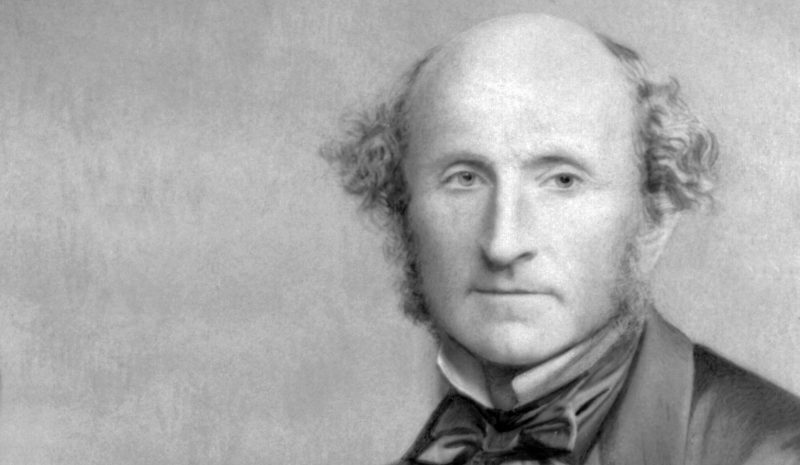
For example, 19th century liberal political philosopher John Stuart Mill is now widely admired by conservative and libertarian writers and academics as a proponent of individual economic liberty, the free market, and a flat tax. And they are not wrong, he was all of that, in his early thought. (Mill later supported several socialist causes.) Many of his other political views might be denounced by quite a few as the excesses of campus activist leftism. Adam Gopnik summarizes the Victorian philosopher’s generous slate of positions:
Mill believed in complete equality between the sexes, not just women’s colleges and, someday, female suffrage but absolute parity; he believed in equal process for all, the end of slavery, votes for the working classes, and the right to birth control (he was arrested at seventeen for helping poor people obtain contraception), and in the common intelligence of all the races of mankind. He led the fight for due process for detainees accused of terrorism; argued for teaching Arabic, in order not to alienate potential native radicals.…
Can people to Mill’s left on economics learn something from him? Sure. Can people to his right on nearly everything else learn a thing or two? It’s worth a shot. Mill championed engaging those with whom we disagree (he greatly admired Thomas Carlyle; the two couldn’t have been more different in many respects). He also argued vigorously for “’liberty of the press’ as one of the securities against corrupt or tyrannical government.” Before nodding your head in agreement—read Mill’s arguments. He might not agree with you.
And what did John Stuart Mill read? In Chapter One of his autobiography, Mill gives a detailed account of his classical education from ages 3–7, during which time he read “the whole of Herodotus,” “the first six dialogues of Plato,” “part of Lucian,” all in their original Greek, of course, as any young gentleman of the time would. Mill’s father, Scottish philosopher James Mill, intentionally set out to create a genius with this advanced course of study.
Lapham’s Quarterly excerpted the passage, and turned the many books Mill mentions into a list called “Early Education.” You can find all of the titles below, including the ancients mentioned and over two dozen “modern” works (that is, since the time of the Renaissance) Mill read as a child in English, including Cervantes’ mammoth Don Quixote. Most of us will have to make do with translations of the Greek texts, but take heart, even Mill “learnt no Latin until my eighth year.” The list shows not only Mill’s daunting precocity, but also how essential classical texts were to well-educated Europeans of any age.
It also highlights what kinds of texts were valued by Mill’s society, or at least by his father. All of the authors but one are men, all of them are Europeans, most of the works are histories and biographies. Given Mill’s broad views, his own recommended reading list might look different. Nonetheless, Mill’s account of his extraordinary early years gives us a fascinating look at the relative breadth of a liberal education in 19th century Britain. What ancient authors did you read as a young student? Or do you read now, between books, essays, articles, or Twitterstorms du jour?
In Greek
Aesop–The Fables
Xenophon–The Anabasis, Memorials of Socrates, The Cryopadeia
Herodotus–The Histories
Diogenes Laertius–some of The Lives of Philosophers
Lucian–various works
Isocrates–parts of To Demonicus and To Nicocles
Plato--Euthyphro, Apology, Crito, Phaedo, Cratylus, Theaetetus
In English
William Robertson–The History of America, The History of the Reign of the Emperor Charles V, The History of Scotland During the Reigns of Queen Mary and King James VI
David Hume–The History of England
Edward Gibbon–The History of the Decline and Fall of the Roman Empire
Robert Watson–The History of the Reign of Philip II, King of Spain
Robert Watson and William Thompson–The History of the Reign of Philip III, King of Spain
Nathaniel Hooke–The Roman History, from the Building of Rome to the Ruin of the Commonwealth
Charles Rollin–The Ancient History of the Egyptians, Carthaginians, Assyrians, Babylonians, Medes and Persians, Macedonians and Grecians
Plutarch–Parallel Lives
Gilbert Burnet--Bishop Burnet’s History of His Own Time
The Annual Register of World Events, A Review of the Year (1758–1788)
John Millar–An Historical View of the English Government
Johann Lorenz von Mosheim–An Ecclesiastical History
Thomas McCrie–The Life of John Knox
William Sewell–The History of the Rise, Increase, and Progress of the Christian People Called Quakers
Thomas Wight and John Rutty–A History of the Rise and Progress of People Called Quakers in Ireland
Philip Beaver–African Memoranda
David Collins–An Account of the English Colony in New South Wales
George Anson–A Voyage Round the World
Daniel Defoe–Robinson Crusoe
The Arabian Nights and Arabian Tales
Miguel de Cervantes–Don Quixote
Maria Edgeworth–Popular Tales
Henry Brooke–The Fool of Quality; or the History of Henry, Earl of Moreland
Related Content:
Noam Chomsky Defines What It Means to Be a Truly Educated Person
Introduction to Political Philosophy: A Free Yale Course
Leo Strauss: 15 Political Philosophy Courses Online
Josh Jones is a writer and musician based in Durham, NC. Follow him at @jdmagness
Read More...Bryan Cranston Gives Advice to the Young: Find Yourself by Traveling and Getting Lost
I don’t know what time you’re reading this post but “What do you really want to do in life?” is a question that can wake you up right fast, or make you want to pack it in and sleep on it.
It’s also a question asked maybe a bit too early of our young people, which starts with fantasy (“What do you want to be when you grow up?” “A spaceman!”) and by our teens it turns into a more serious, fate-deciding inquiry by people who may not be happy with their station in life.
Actor Bryan Cranston takes on this question in this Big Think video, and extolls the virtues of travel and wandering.
“Traveling forces you to be social,” Cranston says. “You have to get directions.You have to learn where things are. You’re attuned to your environment.”
Cranston thought he was going to be a policeman when he entered college. Then he took an acting class. So, at 19, Cranston explored America for two years by motorcycle with his brother, in essence to find themselves by getting lost. He says he’s passed on this directionless wandering to his now 24 year-old daughter.
That idea of letting go and just wandering also dovetails nicely into his other advice about auditions. You don’t go there to get a job, you go to create a character and present it. The rest is out of your control.
Now, Cranston says that the period between high school/college and the “real world” is the best time to do it, but there’s really no time like right now. To quote Nigerian author Chimamanda Ngozi Adichie, “I think you travel to search and you come back home to find yourself there,” and the boats are always leaving. Just jump on.
Related Content:
Ray Bradbury Gives 12 Pieces of Writing Advice to Young Authors (2001)
John Cleese’s Advice to Young Artists: “Steal Anything You Think Is Really Good”
Ursula Le Guin Gives Insightful Writing Advice in Her Free Online Workshop
Akira Kurosawa’s Advice to Aspiring Filmmakers: Write, Write, Write and Read
Ted Mills is a freelance writer on the arts who currently hosts the artist interview-based FunkZone Podcast and is the producer of KCRW’s Curious Coast. You can also follow him on Twitter at @tedmills, read his other arts writing at tedmills.com and/or watch his films here.
Read More...A Free Trial Offer for The Great Courses Plus: A Special Deal for Open Culture Readers

We’ve told you about the Great Courses Plus (now called Wondrium) before–a new video subscription service that lets you watch free courses (about 8,000 lectures in total) across a wide range of subjects, all taught by some of the best lecturers in the country. The topics cover everything from History, Philosophy, Literature, and Economics, to Math, Science, Professional Development, Cooking, and Photography. And you can binge-watch entire college courses in a matter of days by watching videos on your TV, tablet, laptop and smart phone, with the help of apps designed for Apple, Google Play, Kindle Fire, and Roku.
Interested in trying out this service? Right now, the Great Courses Plus/Wondrium is offering a special deal for Open Culture readers. If you click here, and sign up for a free trial, you can use this service for 30 days … for free. And then, if you would like, you can continue to subscribe and pay their normal prices. If you have time on your hands, this is a great way to keep your mind engaged and stream what PC Magazine has called “an excellent library of college-level lectures.”
Note: The Great Courses is a partner with Open Culture. So if you sign up for a free trial, it benefits not just you and Great Courses Plus. It benefits Open Culture too. So consider it win-win-win.
Read More...Support Us
We're hoping to rely on loyal readers, rather than erratic ads. Please click the Donate button and support Open Culture. You can use Paypal, Venmo, Patreon, even Crypto! We thank you!

About Us

Open Culture scours the web for the best educational media. We find the free courses and audio books you need, the language lessons & educational videos you want, and plenty of enlightenment in between.
Advertise With Us
FREE UPDATES!
GET OUR DAILY EMAIL
Get the best cultural and educational resources on the web curated for you in a daily email. We never spam. Unsubscribe at any time.
FOLLOW ON SOCIAL MEDIA
Open Culture editor Dan Colman scours the web for the best educational media. He finds the free courses and audio books you need, the language lessons & movies you want, and plenty of enlightenment in between.
Advertise With Us


