Read 10 Short Stories by Gabriel García Márquez Free Online (Plus More Essays & Interviews)

Image by Festival Internacional de Cine en Guadalajara via Wikimedia Commons
“Our independence from Spanish domination did not put us beyond the reach of madness,” said Gabriel García Márquez in his 1982 Nobel Prize acceptance speech. García Márquez, who died yesterday at the age of 87, refers of course to all of Spain’s former colonies in Latin America and the Caribbean, from his own Colombia to Cuba, the island nation whose artistic struggle to come to terms with its history contributed so much to that art form generally known as “magical realism,” a syncretism of European modernism and indigenous art and folklore, Catholicism and the remnants of Amerindian and African religions.
While the term has perhaps been overused to the point of banality in critical and popular appraisals of Latin-American writers (some prefer Cuban novelist Alejo Carpentier’s lo real maravilloso, “the marvelous real”), in Marquez’s case, it’s hard to think of a better way to describe the dense interweaving of fact and fiction in his life’s work as a writer of both fantastic stories and unflinching journalistic accounts, both of which grappled with the gross horrors of colonial plunder and exploitation and the subsequent rule of bloodthirsty dictators, incompetent patriarchs, venal oligarchs, and corporate gangsters in much of the Southern Hemisphere.
Nevertheless, it’s a description that sometimes seems to obscure García Marquez’s great purpose, marginalizing his literary vision as trendy exotica or a “postcolonial hangover.” Once asked in a Paris Review interview the year before his Nobel win about the difference between the novel and journalism, García Márquez replied, “Nothing. I don’t think there is any difference. The sources are the same, the material is the same, the resources and the language are the same.”
In journalism just one fact that is false prejudices the entire work. In contrast, in fiction one single fact that is true gives legitimacy to the entire work. That’s the only difference, and it lies in the commitment of the writer. A novelist can do anything he wants so long as he makes people believe in it.
García Márquez made us believe. One would be hard-pressed to find a 20th century writer more committed to the truth, whether expressed in dense mythology and baroque metaphor or in the dry rationalist discourse of the Western episteme. For its multitude of incredible elements, the 1967 novel for which García Márquez is best known—One Hundred Years of Solitude—captures the almost unbelievable human history of the region with more emotional and moral fidelity than any strictly factual account: “However bizarre or grotesque some particulars may be,” wrote a New York Times reviewer in 1970, “Macondo is no never-never land.” In fact, García Márquez’s novel helped dismantle the very real and brutal South American empire of banana company United Fruit, a “great irony,” writes Rich Cohen, of one mythology laying bare another: “In college, they call it ‘magical realism,’ but, if you know history, you understand it’s less magical than just plain real, the stuff of newspapers returned as lived experience.”
Edith Grossman, translator of several of García Márquez’s works—including Love in the Time of Cholera and his 2004 autobiography Living to Tell the Tale (Vivir para Cotarla)—agrees. “He doesn’t use that term at all, as far as I know,” she said in a 2005 interview with Guernica’s Joel Whitney: “It’s always struck me as an easy, empty kind of remark.” Instead, García Márquez’s style, says Grossman, “seemed like a way of writing about the exceptionalness of so much of Latin America.”
Today, in honor and with tremendous gratitude for that indefatigable chronicler of exceptional lived experience, we offer several online texts of Gabriel García Márquez’s short works at the links below.
HarperCollins’ online preview of García Marquez’s Collected Stories includes the full text of “The Third Resignation,” “The Other Side of Death,” “Eva Is Inside Her Cat,” “Bitterness for Three Sleepwalkers,” and “Dialogue with the Mirror,” all from the author’s 1972 collection Eyes of a Blue Dog (Ojos de perro azul).
At The New Yorker, you can read García Marquez’s story “The Autumn of the Patriarch” (1976) and his 2003 autobiographical essay “The Challenge.”
Follow the links below for more of García Marquez’s short fiction from various university websites:
“Death Constant Beyond Love” (1970)
“The Handsomest Drowned Man in the World” (1968)
“A Very Old Man with Enormous Wings” (1955)
Visit The Modern Word for an excellent biographical sketch of the author.
See The New York Times for “A Talk with Gabriel Garcia Marquez” in the year of his Nobel win, an essay in which he recounts his 1957 meeting with Ernest Hemingway, and many more reviews and essays.
Finally, we should also mention that you can download Love in the Time of Cholera or Hundred Years of Solitude for free (as audio books) if you join Audible.com’s 30-day program. We have details on it here.
As we say farewell to one of the world’s greatest writers, we can remember him not only as a writer of “magical realism,” whatever that phrase may mean, but as a teller of complicated, wondrous, and sometimes painful truths, in whatever form he happened to find them.
Related Content:
Read 18 Short Stories From Nobel Prize-Winning Writer Alice Munro Free Online
Read 12 Masterful Essays by Joan Didion for Free Online, Spanning Her Career From 1965 to 2013
600 Free eBooks: Download Great Books for Free
Josh Jones is a writer and musician based in Durham, NC. Follow him at @jdmagness
Read More...Before The Simpsons, Matt Groening Illustrated a “Student’s Guide” for Apple Computers (1989)
A friend once told me of his older cousin who, for the freakish act of installing a computer in his college dorm room, found himself immediately and irrevocably dubbed “computer Jon.” This happened in the early 1980s, and boy, have times changed. They’d even changed by the late 1980s, by which time Apple’s college marketing efforts had become sufficiently advanced to require the talents of Matt Groening, best known as the man who created The Simpsons. But that prime-time animated sitcom wouldn’t begin its record-breaking run (still without an end in sight) until Christmas 1989, while the Groening-illustrated Who Needs a Computer Anyway? (which you can flip through above) appeared earlier that year. Back then, readers might well have known him first and foremost as the creator of the satirical alternative-weekly comic strip Life in Hell, which had debuted in 1977. One of its stars, the hapless but good-hearted young one-eared rabbit Bongo, even made his way to Apple brochure’s cover. Though computers themselves had long since come to dominate America’s campuses by the time I entered college, he and Groening’s other now-lesser-known characters did do their part to prepare me for academia.
I refer, of course, to School is Hell, his 1987 Life in Hell book offering sardonic primers on each and every phase of modern education from kindergarten to grad school (“when you haven’t had enough punishment”). Groening’s pages in Who Needs a Computer Anyway? read like a less sharp-edged version of those cartoons, following Life in Hell’s signature “The 9 Types of…” format to present the reader with their nine types of future college classmates, from “the stressed” to “the technoid” to “the unemployed.” Between these, you can read Apple’s pitch for why you’ll find a piece of equipment still somewhat outlandish and expensive so essential to every aspect of your college career. Though dated technically — the text mentions nothing of the internet, for instance, which this generation of college students would sooner drop out than do without — it nevertheless underscores the design virtues of Apple computers — an intuitive interface, application interoperability, “everything you need in one small, transportable case” — that remain design virtues today. It also displays an impressive prescience of the personal computer’s coming indispensability, a confident prediction that, if not for the slacker’s levity lent by Groening’s hand, might, at the time, actually have sounded implausible.
via Retronaut/Dangerous Minds
Related Content:
Hunter S. Thompson’s Edgy 1990s Commercial for Apple’s Macintosh Computer
Every Apple Ad Ever Aired on TV
Colin Marshall hosts and produces Notebook on Cities and Culture and writes essays on cities, language, Asia, and men’s style. He’s at work on a book about Los Angeles, A Los Angeles Primer. Follow him on Twitter at @colinmarshall or on Facebook.
Read More...How to Survive the Coming Zombie Apocalypse: An Online Course by Michigan State
These days, the naysayers like to ask: “What is a college education good for? What does it prepare you to do in the world?”
Here’s one compelling answer for you: Survive an Apocalypse.
Starting on May 12, Michigan State students can take an award-winning online course called Surviving the Coming Zombie Apocalypse — Disasters, Catastrophes, and Human Behavior. The course “brings together the latest thinking on how and why humans behave during disasters and catastrophes. Why do some survive and others don’t? What are the implications for planning, preparedness, and disaster management?” Along the way, students will form survival groups whose goal is to escape death, endure catastrophic events, and preserve the future of civilization. Together, they will learn a valuable lesson: survival depends not on the individual, but on the group. Unfortunately, the course is only open to MSU students and guest students for a fee. But you can watch the trailer above for free. Be warned, the film, and especially the Charles Manson-like character, is a little intense.
via Mental Floss
Related Content:
An Animated Survival Guide to the Post Apocalypse
How a Clean, Tidy Home Can Help You Survive the Atomic Bomb: A Cold War Film from 1954
53 Years of Nuclear Testing in 14 Minutes: A Time Lapse Film by Japanese Artist Isao Hashimoto
Duck and Cover, or: How I Learned to Elude the Bomb
Read More...Free Online Shakespeare Courses: Primers on the Bard from Oxford, Harvard, Berkeley & More

I had the great good fortune of having grown up just outside Washington, DC, where on a fifth grade class trip to the Folger Library and Theater, I fell in love with Shakespeare. This experience, along with a few visits to see his plays performed at nearby Wolftrap, made me think I might go into theater. Instead I became a student of literature, but somehow, my love of Shakespeare on the stage didn’t translate to the page until college. While studying for a sophomore-level “Histories & Tragedies” class, I sat, my Norton Shakespeare open, in front of the TV—reading along while watching Kenneth Branagh’s stylish film adaptation of Hamlet, which draws on the entire text of the play.
Only then came the epiphany: this language is music and magic. The rhythmic beauty, depths of feeling, humor broad and incisive, extraordinary range of human types.… If we are to believe pre-eminent Shakespeare scholar Harold Bloom, Shakespeare invented modern humanity. If this seems to go too far, he at least captured human complexity with greater inventive skill than any English writer before him, and possibly after. Is there any shame in finally “getting” Shakespeare’s language from the movies? None at all. One of the most excellent qualities of the Bard’s work—among so many reasons it endures—is its seemingly endless adaptability to every possible period, cultural context, and medium.
While engagement with any of the innumerable Shakespeare adaptations and performances promises reward, there’s little that enhances appreciation of the Bard’s work more than reading it under the tutelage of a trained scholar in the playwright’s Elizabethan language and history. Universal though he may be, Shakespeare wrote his plays in a particular time and place, under specific influences and working conditions. If you have not had the pleasure of studying the plays in a college setting—or if your memories of those long-ago English classes have faded—we offer a number of excellent free online courses from some of the finest universities. See a list below, all of which appear in our list of Free Online Literature Courses, part of our larger list of 875 Free Online Courses.
Also, speaking of the Folger, that venerable institution has just released all of Shakespeare’s plays in free, searchable online texts based on their highly-regarded scholarly print editions. And though some beg to differ, I still say you can’t go wrong with Branagh.
- Approaching Shakespeare – Free iTunes Audio — Free Online Audio -Emma Smith, Oxford
- Shakespeare After All: The Later Plays – Free Course in Multiple Formats – Marjorie Garber, Harvard
- Shakespeare’s Principal Plays — Free iTunes Audio – Free Online Audio — Ralph Williams, University of Michigan
- Survey of Shakespeare’s Plays — Free Online Audio – William Flesch, Brandeis
- Not Shakespeare: Elizabethan and Jacobean Popular Theatre –Free iTunes Audio — Free Online Audio — Multiple profs, Oxford
- Shakespeare — Free iTunes Audio — Free Online Audio — Charles Altieri, UC Berkeley
Related Content:
Read All of Shakespeare’s Plays Free Online, Courtesy of the Folger Shakespeare Library
Take a Virtual Tour of Shakespeare’s Globe Theatre
Josh Jones is a writer and musician based in Durham, NC. Follow him at @jdmagness
Read More...Read an Excerpt of J.R.R. Tolkien’s 1926 Translation of Beowulf Before It’s Finally Published Next Month
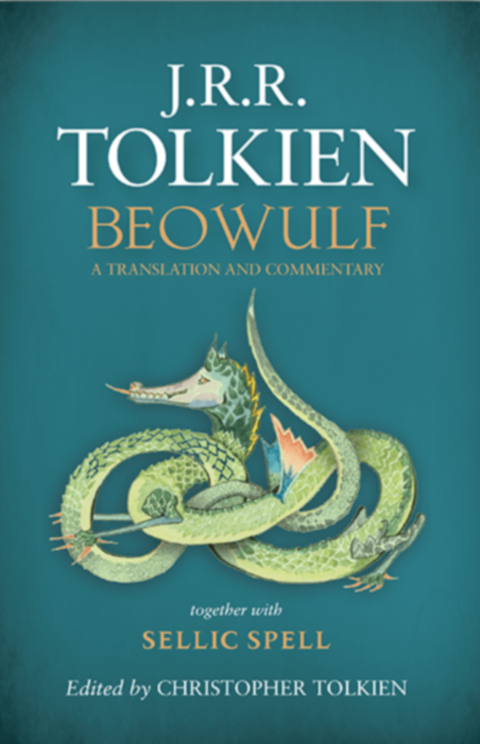
For the first time, J.R.R. Tolkien’s 1926 translation of the 11th century epic poem Beowulf will be published this May by HarperCollins, edited and with commentary by his son Christopher. The elder Tolkien, says his son, “seems never to have considered its publication.” He left it along with several other unpublished manuscripts at the time of his death in 1973. The edition will also include a story called Sellic Spell and excerpts from a series of lectures on Beowulf Tolkien delivered at Oxford in the 1930s. Tolkien did publish one of those lectures, “The Monster and the Critic,” in 1936. In this “epoch-making paper,” writes Seamus Heaney in the introduction to his hugely popular 1999 dual language verse edition, Tolkien treated the Beowulf poet as “an imaginative writer,” not a historical reconstruction. His “brilliant literary treatment changed the way the poem was valued and initiated a new era—and new terms—of appreciation.” This very same thing could be said of Heaney’s translation which, true to his stated goals, brought the poem out of academic conferences and classrooms and into living rooms and coffee shops everywhere. (You can hear Heaney read from that translation here.)
Nowhere in Heaney’s introduction to his version does he mention Tolkien’s translation of the poem, so we must presume he did not know of it. Long before Tolkien’s lectures and translation, Beowulf had been perhaps the most revered poem in the English language, at least since the 18th century, when the sole manuscript was rescued from fire and and translated and disseminated widely. Despite that status, Beowulf was not actually written in English—not an English we would recognize—but in Old English, or Anglo-Saxon. As readers of Heaney’s dual translation will know, that distant provincial ancestor of the modern global language, named for the mixture of Germanic peoples who inhabited England 1000 years ago, appears mostly alien to us now. (To add to the strangeness, its unfamiliar alphabet once consisted entirely of runes).
The poem, moreover, is not set in England, but where Shakespeare set his Hamlet, Denmark. Its titular hero, a prince from Geat (ancient Sweden), stalks a monster named Grendel on behalf of Danish king Hroðgar, killing the monster’s mother along the way. Tolkien’s almost universally beloved body of fiction was deeply influenced by Beowulf. Nevertheless, his translation may be less accessible than Heaney’s, though no less beautiful, perhaps, for different reasons. In Heaney’s verse, one hears Ted Hughes, some echoes of Milton, Heaney’s own voice. If we are to credit the redditor who posted a now-defunct 2003 article from Canadian newspaper National Post that quotes from Tolkien’s translation, the Hobbit author’s verse hews to a more direct correspondence with the Anglo Saxon, a language made of giant rocks and timber and crashing waves, not elegant, elaborated clauses. The National Post article announces the discovery at Oxford of the Tolkien translation by English Professor Michael Drout (a story he’s since debunked), and quotes from both Heaney and Tolkien. See the comparison below:
Heaney’s translation:
Time went by, the boat was
on water,
in close under the cliffs.
Men climbed eagerly up the
gangplank,
sand churned in surf, warriors
loaded
a cargo of weapons, shining
war-gear
in the vessel’s hold, then
heaved out,
away with a will in their
wood-wreathed ship.
Tolkien’s translation of Beowulf and his men setting sail:
On went the hours:
on
ocean afloat
under cliff was their craft.
Now climb blithely
brave man aboard;
breakers pounding
ground the shingle.
Gleaming harness
they hove to the bosom of the
bark, armour
with cunning forged then cast
her forth
to voyage triumphant,
valiant-timbered
fleet foam twisted.
One wonders what the recently departed Irish poet would have said had he lived to read this Tolkien edition. Might it, as Heaney said of his lectures, change the way the poem is valued? Or might he see it resembling other difficult attempts to make modern English replicate the strongly inflected built-in rhythms of Anglo-Saxon—a language, Tolkien once said, from “the dark heathen ages beyond the memory of song.”
You can pre-order a copy of Tolkien’s translation of Beowulf here.
Related Content:
Seamus Heaney Reads His Exquisite Translation of Beowulf and His Memorable 1995 Nobel Lecture
Discover J.R.R. Tolkien’s Personal Book Cover Designs for The Lord of the Rings Trilogy
“The Tolkien Professor” Presents Three Free Courses on The Lord of the Rings
Josh Jones is a writer and musician based in Durham, NC. Follow him at @jdmagness
Read More...Hear Allen Ginsberg’s Short Free Course on Shakespeare’s Play, The Tempest (1980)

Image by Michiel Hendryckx, via Wikimedia Commons
Ginsberg Class One
Ginsberg Class Two
Like so many great poets, Allen Ginsberg composed extemporaneously as he spoke, in erudite paragraphs, reciting lines and whole poems from memory—in his case, usually the poems of William Blake. In a 1966 Paris Review interview, for example, he discusses and quotes Blake at length, concluding “The thing I understood from Blake was that it was possible to transmit a message through time that could reach the enlightened.” Eight years later, Ginsberg would begin to midwife this concept as a teacher at the newly-founded Jack Kerouac School of Disembodied Poetics at the Naropa Institute in Boulder, Colorado. Ginsberg taught summer workshops at the school from 1974 until the end of his life, eventually spending the remainder of the year in a full-time position at Brooklyn College. The Internet Archive hosts recordings of many of these workshops, such as his lectures on 19th Century Poetry, Jack Kerouac, Spiritual Poetics, and Basic Poetics. In the audio lectures here, from August 1980, Ginsberg teaches a four-part course on Shakespeare’s The Tempest (parts one and two above, three and four below), a play he often returned to for reference in his own work.
Ginsberg Class Three
Ginsberg Class Four
Ginsberg’s method of teaching Shakespeare is unlike anyone else’s. He’s not interested in exegesis so much as an open conversation—with the text, with his students, and with any ephemera that strikes his interest. It’s almost a kind of divination by which Ginsberg teases out the “messages” Shakespeare’s play sends through the ages, working with the rhythmic and syntactical oddities of individual lines instead of grand, abstract interpretative frameworks. Ginsberg’s pedagogy requires patience on the part of his students. He doesn’t drive toward a point as much as arrive at it circuitously as by the chance operations of his meditative mind. His first of four lectures above, for example, begins with a great deal of futzing around about different editions, which can seem a little tedious to an impatient listener. Give in to the urge to fast-forward, though, and you’ll miss the diamond-like bits of wisdom that emerge from Ginsberg’s discursive exploration of minutiae.
Ginsberg explains to his class why he thinks the Penguin G.B. Harrison edition was the best available at the time because it draws from the original folio and has “more respect than the actual arrangement of the lines for speaking as determined by the editions printed in Shakespeare’s day.” Harrison’s text, he says, recovers the idiosyncrasies of Shakespeare’s lines: “Since [Alexander] Pope and [John] Dryden and others messed with Shakespeare’s texts—straightened them out and modernized them and improved them—they’ve always been reproduced too smoothly.” Such was the hubris of Pope and Dryden. Ginsberg spends a few minutes “correcting” the punctuation of a line for students with more modernized editions. One can see the appeal of the first folio for Ginsberg as he insists that its text is “not all exactly properly lined up pentametric blank verse but is more broken, more irregular lines, more like free verse actually, because it fitted exactly to speech.” Much like his own work in fact, and that of his fellow Beats, whom he reads and draws into the discussion of The Tempest’s poetics throughout the course of his lectures. The Allen Ginsberg Project has more on the poet’s teaching of Shakespeare during his Naropa days.
When Ginsberg founded the Jack Kerouac School with Anne Waldman in 1974, he and his fellow Beats had not taught before. They simply invented their own ways of passing on their poetic enlightenment. Invited to create the school at Naropa University in Boulder by his spiritual teacher and Naropa founder Chogyam Trungpa Rinpoche, Ginsberg seemed to combine in equal parts the Buddhist tradition of spiritual lineage with that of Western literary filiation. He distilled this synthesis in his elliptical 1992 text “Mind Writing Slogans,”: “two decades’ experience teaching poetics at Naropa Institute” and a “half decade at Brooklyn College,” Ginsberg writes, “boiled down to brief mottoes from many sources found useful to guide myself and others in the experience of ‘writing the mind.’” This document is an excellent source of Ginsberg’s eclectic wisdom, as is his “Celestial Homework” reading list for his class “Literary History of the Beats.”
Ginsberg and company’s relationship to Trungpa’s Shambhala Buddhist school, and to the artistic community of Boulder, was not without its detractors. Poet Kenneth Rexroth and others accused Ginsberg and his teacher of a kind of cultic exploitation of Buddhist teachings, of “Buddhist fascism.” The conflict between Ginsberg’s guru and poets like W.S. Merwin—who apparently had a humiliating experience at Naropa—is documented in Tom Clark’s polemical The Great Naropa Poetry Wars. Others remember the Naropa founder much more fondly. Two documentaries offer different portraits of life at Naropa. The first, Fried Shoes, Cooked Diamonds (above)—filmed in 1978 and narrated by Ginsberg himself—presents a raw, in-the-moment picture of the anarchic Kerouac School’s early days. Former Naropa student Kate Lindhardt’s “micro-budget” Crazy Wisdom, below, offers a more detached look at the school and asks questions about what she calls the “institutionalization” of creativity from a more feminist perspective.
Ginsberg’s Tempest course will be added to our collection of 875 Free Online Courses; the films mentioned above can be found in our collection of 640 Free Movies Online. The Tempest and poems by Ginsberg can be found in our collection of Free eBooks.
Related Content:
Allen Ginsberg Recordings Brought to the Digital Age. Listen to Eight Full Tracks for Free
Josh Jones is a writer and musician based in Durham, NC. Follow him at @jdmagness
Read More...Bruce Springsteen and Pink Floyd Get Their First Scholarly Journals and Academic Conferences

When I first entered college in the mid-‘90s, the phenomenon of pop culture studies in academia seemed like an exciting novelty, bound to the ethos of the Clinton years. Often incisive, occasionally frivolous, pop culture studies made academia fun again, and reinvigorated the world of scholarly publishing and college life in general. All manner of fandom ruled the day: we took classes in hip hop videos and Buffy the Vampire Slayer, Alanis Morrissette redefined irony, and nearly everyone got hired right after graduation (see for reference the cult classic 1994 film PCU). These days I don’t need to tell you that the prospects for new grads are considerably reduced, but I’m very happy to find academic societies and journals still organized around TV shows, fantasy novels, and pop music. Today we bring you two examples from the world of Classic Rock & Roll Studies (to coin a term). First up we have BOSS, or “The Biannual Online-Journal of Springsteen Studies.”
Springsteen Studies is not new. In fact, a massive Springsteen symposium called “Glory Days”—jointly sponsored by Virginia Tech, Penn State, and Monmouth University—has taken place twice in West Long Branch, New Jersey since 2005 and is currently preparing for its next event. BOSS, however, only just emerged, the first scholarly Springsteen journal ever published. The first issue will appear in June of this year, and the editors are now soliciting 15 to 25 page academic articles for their January, 2015 issue. Describing themselves as a “scholarly space for Springsteen Studies in the contemporary academy,” BOSS seeks “broad interdisciplinary and cross-disciplinary approaches to Springsteen’s songwriting, performance, and fan community.” Springsteen scholars: check the BOSS site for deadlines and contact info.
Unlike most scholarly journals, BOSS is open-access, so fans and admirers of all kinds can read the sure-to-be fascinating discussions it fosters as it works toward securing “a place for Springsteen Studies in the contemporary academy.” Springsteen Studies’ advocacy appears to be working—Rutgers University plans to add a Springsteen theology class, covering Springsteen’s entire discography, and other institutions like Princeton and the University of Rochester have offered Springsteen courses in the past.
In another first for a specialized pop culture field, the first-ever academic conference on the work of Pink Floyd will be held this coming April 13 at Princeton University. Called “Pink Floyd: Sound, Sight, and Structure,” the event promises to be a multi-media extravaganza, featuring as its keynote speaker Grammy-award winning Pink Floyd producer and engineer James Guthrie. (See Guthrie and others discuss the production of the surround-sound Super Audio CD of Wish You Were Here in the video above). In addition to Guthrie’s talk, and his surround sound mix of the band’s music, the conference will offer “live compositions and arrangements inspired by Pink Floyd’s music,” an “exhibition of Pink Floyd covers and art,” and a screening of The Wall. Papers include “The Visual Music of Pink Floyd,” “Space and Repetition in David Gilmour’s Guitar Solos,” and “Several Species of Small Furry Animals: The Genius of Early Floyd.” Admission is free, but you’ll need to RSVP to get in. The town of Princeton will join in the festivities with “Outside the Wall,” a series of events and specials on drinks, dining, art, and music.
While these events and publications may seem to locate pop culture studies squarely in New Jersey, those interested can find conferences all over the world, in fact. A good place to start is the site of the PCA (“Pop Culture Association”), which hosts its annual conference next month in Chicago, and the International Conference on Media and Popular Culture will be held this May in Vienna. Pop culture and media studies still seem to me to be particular products of the optimistic ‘90s (due to my own vintage, no doubt), but it appears these academic fields are thriving, despite the vastly different economic climate we now live in, with its no-fun, belt-tightening effects on higher ed across the board.
Related Content:
Heat Mapping the Rise of Bruce Springsteen: How the Boss Went Viral in a Pre-Internet Era
Watch Documentaries on the Making of Pink Floyd’s Dark Side of the Moon and Wish You Were Here
Josh Jones is a writer and musician based in Durham, NC. Follow him at @jdmagness
Read More...Michel Foucault and Alain Badiou Discuss “Philosophy and Psychology” on French TV (1965)
If subtitles don’t play automatically, please click the “CC” button at the bottom of each video.
When Sigmund Freud died in 1939, the year Hitler invaded Poland, W.H. Auden wrote a eulogy in verse and remarked “We are all Freudians now.” One might have said something similar of Michel Foucault after his death in 1984. Foucault became a fiercely political philosopher after the May 1968 Paris student uprising and in a year that saw the Tet Offensive in Vietnam and the assassinations of Martin Luther King Jr. and Robert Kennedy. In the following year—after the Manson murders and the grim events at Altamont—the sixties effectively came to an end as its utopian projects flared up and fizzled.
In the next repressive decade, Foucault published Discipline and Punish (1974) and his History of Sexuality (1976). Even as he used Freudian concepts, he declared Freudian psychoanalysis complicit in what he called “disciplinary society,” another method, like prisons, schools, and hospitals, of keeping masses of people under constant surveillance and in states of submission. It is this post-‘68 Foucault many of us came to know—an anti-philosopher whose deep distrust of all institutional forms of power seemed the perfect ally for post-adolescent college students in comfortable rebellion. This is why it is a little surprising to see the Foucault above, in a 1965 conversation with philosopher Alain Badiou, ensconced in the bourgeois world of a French philosophical culture, with its lineages and ordinary citizens browsing paperback copies of Marx and Hegel, instead of staging Situationist actions to disrupt the social order.
But of course, it’s only logical to infer that the one culture led directly to the other. For all his rhetorical theatrics, Foucault never gave up on the humanist institution of the university, but always made his home in classrooms, lecture halls, and yes, even TV interviews. His topic in conversation with Badiou is “Philosophy and Psychology” and they came together on the educational television program L’enseignement de la philosophie—another testament, like the well-stocked bookstores and cultural landmarks, to a sixties French culture steeped in philosophical attitudes. Unfortunately we have only the first two parts of the interview, above, with English subtitles (the third and final part is still waiting to be translated). You can, however, see the full interview in French below.
The interview opens with the question “What is psychology?” Foucault’s answer, which he would revise many times in the coming decades, along with his terminology, begins by asking that we “interrogate” the discipline of Psychology “like any other type of culture.” Prodded by Badiou, he elaborates: Psychology is yet another institutionalized “form of knowing” that makes up a disciplinary society, the core concept of his philosophy. Foucault’s interviewer Badiou is now an elder statesman of French philosophy, its “greatest living exponent,” writes his publisher. His most recent book documents forty years of what he calls the “’French moment’ in contemporary thought”—one greatly inspired by Michel Foucault.
Related Content:
Clash of the Titans: Noam Chomsky & Michel Foucault Debate Human Nature & Power on Dutch TV, 1971
Free Online Philosophy Courses
Josh Jones is a writer and musician based in Durham, NC. Follow him at @jdmagness
Read More...William S. Burroughs Teaches a Free Course on Creative Reading and Writing (1979)
According to Ted Morgan, author of William S. Burroughs biography Literary Outlaw (which Burroughs hated), the hard-living Beat writer added “teacher” to the list of jobs he did not like after an unhappy semester teaching creative writing at the City College of New York. He complained about dimwitted students, and disliked the job—arranged for him by Allen Ginsberg—so much that he later turned down a position at the University of Buffalo that paid $15,000 a semester, even though he desperately needed the money. That Burroughs had recently kicked heroin may have contributed to his unease with the prosaic regularities of college life. Whatever the story, he later remarked that the “teaching gig was a lesson in never again.”
What then could have lured Burroughs out to Boulder Colorado five years later to deliver a series of lectures on creative writing at Naropa University? He’d picked up his heroin habit again, and his friendship with Ginsberg—who co-founded Naropa’s writing program—must have played a part. Whatever the reasons, this assignment differed greatly from his City College stint: no student writing, no office hours or admin. Just Burroughs doing what came naturally—holding court, on literature, parapsychology, occult esoterica, violence, aliens, neuroscience, and his own novels Naked Lunch and The Soft Machine.
Burroughs’ lectures are heavily philosophical, which might have turned off his New York students, but surely turned on his Naropa audience. And if you stopped to listen, it will probably turn you on too, in ways creative and intellectual. Ostensibly on the subject of creative reading, Burroughs also offers creative writing instruction in each talk. His discussions of writers he admires—from Carson McCullers to Aleister Crowley to Stephen King—are fascinating, and he uses no shortage of examples to illustrate various writing techniques. Fortunately for us, the lectures were recorded. Says Dangerous Minds, who provide helpful descriptions of each lecture: “now you can have your very own creative writing class from William S. Burroughs, all thanks to the wonders of YouTube.” Hear all three lectures above, and be by turns inspired, instructed, enlightened, and warped.
You can find Burrough’s lectures on Creative Reading listed in our collection of Free Online Literature Courses, part of our larger collection, 1,700 Free Online Courses from Top Universities.
If you would like to support the mission of Open Culture, consider making a donation to our site. It’s hard to rely 100% on ads, and your contributions will help us continue providing the best free cultural and educational materials to learners everywhere. You can contribute through PayPal, Patreon, and Venmo (@openculture). Thanks!
Related Content:
William S. Burroughs on the Art of Cut-up Writing
William S. Burroughs Reads His Controversial 1959 Novel Naked Lunch
Josh Jones is a writer and musician based in Durham, NC. Follow him at @jdmagness
Read More...R.E.M Plays “Radio Free Europe” on Their National Television Debut on The David Letterman Show (1983)
It’s hard for me to believe that we now live in a post‑R.E.M. world. Also a post-Sonic Youth world, post-Pixies world (as far as I’m concerned), etc. The bands of my errant youth are no more; sometimes it feels like all I can do is toss out the occasional, half-hearted “get off my lawn” or mumble bemusedly, “what’s a Lorde?” when contemplating the current state of music.
Yet all is not lost for “aging hipsters”—in the parlance of the blog Rock Turtleneck!. Though our pop culture may seem to slip into an irrelevant ice age, we can at least warm ourselves at the flickering screen, where Youtube caches troves of footage of our bygone heroes—like the video above of R.E.M. playing “Radio Free Europe” for their first appearance on TV in 1983.
Now, this was before the time of my fandom, which dates from the later 80s. Still, it’s always a joy to see one of my all time favorites roaring in their lionhearted youth.
The band appeared on Letterman, promoting their debut, Murmur. The venue is no surprise, given Dave’s consistent championing of instant-classic American artists. But after this appearance, they would not return to his show for another 12 years, this time to play “Crush With Eyeliner” in the midst of their 1995 Monster tour (above). I loved R.E.M. no less then, but they were pros by that time, not the scrappy, jangly Southern alt-rockers boldly challenging the orthodoxy of bloated stadium rock.
I think Rock Turtleneck! does not overstate its case in claiming that the band’s national television debut “was the college rock equivalent of The Beatles playing the Ed Sullivan Show in 1964.” Well, maybe just a little, but it’s still a pivotal moment in the history of alt-rock. Murmur appears as number 1 on this list of the “best albums of 1983”—calculated from “overall rankings in over 13,000 greatest album charts”—followed by other new wave and alternative classics like the Violent Femmes’s eponymous debut, The Police’s Synchronicity, U2’s War, Tom Wait’s Swordfishtrombones, and New Order’s Power, Corruption and Lies. Simpler times, simpler times….
If you would like to support the mission of Open Culture, consider making a donation to our site. It’s hard to rely 100% on ads, and your contributions will help us continue providing the best free cultural and educational materials to learners everywhere. You can contribute through PayPal, Patreon, and Venmo (@openculture). Thanks!
Related Content:
Two Very Early Concert Films of R.E.M., Live in ‘81 and ‘82
R.E.M.’s Final Encore (and an Early Concert from Germany)
R.E.M.’s “Losing My Religion” Reworked from Minor to Major Scale
Josh Jones is a writer and musician based in Durham, NC. Follow him at @jdmagness
Read More...Support Us
We're hoping to rely on loyal readers, rather than erratic ads. Please click the Donate button and support Open Culture. You can use Paypal, Venmo, Patreon, even Crypto! We thank you!

About Us

Open Culture scours the web for the best educational media. We find the free courses and audio books you need, the language lessons & educational videos you want, and plenty of enlightenment in between.
Advertise With Us
FREE UPDATES!
GET OUR DAILY EMAIL
Get the best cultural and educational resources on the web curated for you in a daily email. We never spam. Unsubscribe at any time.
FOLLOW ON SOCIAL MEDIA
Open Culture editor Dan Colman scours the web for the best educational media. He finds the free courses and audio books you need, the language lessons & movies you want, and plenty of enlightenment in between.
Advertise With Us



