NASA Creates a Visualization That Sets Breathtaking Footage of the Moon to Claude Debussy’s “Clair de Lune” (Moonlight)
From NASA’s Ernie Wright comes “Moonlight (Clair de Lune),” a visualization that takes beautiful images of the lunar terrain and sets them to Claude Debussy’s 1905 composition, Clair de Lune (1905). Here’s how Wright describes the project:
This visualization attempts to capture the mood of Claude Debussy’s best-known composition, Clair de Lune (moonlight in French). The piece was published in 1905 as the third of four movements in the composer’s Suite Bergamasque, and unlike the other parts of this work, Clair is quiet, contemplative, and slightly melancholy, evoking the feeling of a solitary walk through a moonlit garden. The visuals were composed like a nature documentary, with clean cuts and a mostly stationary virtual camera. The viewer follows the Sun throughout a lunar day, seeing sunrises and then sunsets over prominent features on the Moon. The sprawling ray system surrounding Copernicus crater, for example, is revealed beneath receding shadows at sunrise and later slips back into darkness as night encroaches. The visualization was created to accompany a performance of Clair de Lune by the National Symphony Orchestra Pops, led by conductor Emil de Cou, at the Kennedy Center for the Performing Arts in Washington, DC, on June 1 and 2, 2018, as part of a celebration of NASA’s 60th anniversary. The visualization uses a digital 3D model of the Moon built from Lunar Reconnaissance Orbiter global elevation maps and image mosaics. The lighting is derived from actual Sun angles during lunar days in 2018.
Enjoy…
Related Content:
Hear Debussy Play Debussy: A Vintage Recording from 1913
Pianist Plays Beethoven, Bach, Chopin, Ravel & Debussy for Blind Elephants in Thailand
Read More...Watch the Original TV Coverage of the Historic Apollo 11 Moon Landing: Recorded on July 20, 1969
During a recent dinner a few friends and I found ourselves reminiscing about formative moments in our collective youth. The conversation took a decidedly downbeat turn when a nationally televised moment we all remembered all too well came up: the 1986 explosion of the space shuttle Challenger. Like millions of other schoolkids at the time we had been glued to the live broadcast, and became witnesses to horror. “It was NASA’s darkest tragedy,” writes Elizabeth Howell at Space.com, an accident that “changed the space program forever.”
The contrast with our parents’ indelible memories of a televised space broadcast from seventeen years earlier could not be starker. On July 20, 1969, the nation witnessed what could easily be called NASA’s greatest triumph, the Apollo 11 moon landing, which not only really happened, but was broadcast live on CBS, with commentary by Walter Cronkite and former astronaut Wally Schirra and live audio from Mission Control in Houston and Buzz Aldrin himself, “whose job during the landing,” Jason Kottke writes, “was to keep an eye on the LM (lunar module)’s altitude and speed.”
We don’t hear much from Neil Armstrong—“he’s busy flying and furiously searching for a suitable landing site. But it’s Armstrong that says after they land, ‘Houston, Tranquility Base here. The Eagle has landed.’” Kottke’s fascinating description of the events points out details that heighten the drama, such as the fact that Armstrong’s heartrate “peaked at 150 beats per minute at landing” (his resting heartrate was 60 bpm). At around 10 minutes to landing, the astronauts link to Mission Control cut out briefly, which must have been terrifying.
“Then there were the intermittent 1201 and 1202 program alarms, which neither the LM crew nor Houston had encountered in any of the training simulations.” These turn out “to be a simple case,” notes NASA, “of the computer trying to do too many things at once.” Given that the Lunar Module’s computer only had 4KB of memory, this is hardly a surprise. What is astonishing is that such a relatively primitive machine could handle the task at all.
The film viewers saw on their screens was not, of course, a live feed—CBS did not have cameras in space or on the moon—but rather an animation.
The CBS animation shows the fake LM landing on the fake Moon before the actual landing — when Buzz says “contact light” and then “engine stop”. The animation was based on the scheduled landing time and evidently couldn’t be adjusted. The scheduled time was overshot because of the crater and boulders situation mentioned above.
There were, however, cameras mounted on the Lunar Module, and that 16mm footage of the landing, which you can see above, was later released. And then there’s that moon walk (which really happened), which you can see below—blurry and indistinct but no less amazing.
Just a little over eight years “since the flights of Gagarin and Shepard,” NASA writes, “followed quickly by President Kennedy’s challenge to put a man on the moon before the decade is out,” it happened. Armstrong, Aldrin, and Michael Collins landed on the moon. Armstrong and Aldrin walked around and collected samples for two hours, then returned safely to Earth. In a post-flight press conference, Armstrong called the successful mission “a beginning of a new age,” and it was, though his optimism would seem almost quaint when a couple decades later, the U.S. turned its sights on weaponizing space.
Read more about this extraordinary event at NASA and Kottke.
via Kottke
Related Content:
Stanley Kubrick’s Daughter Vivian Debunks the Age-Old Moon Landing Conspiracy Theory
The Source Code for the Apollo 11 Moon Landing Mission Is Now Free on Github
Josh Jones is a writer and musician based in Durham, NC. Follow him at @jdmagness
Read More...Noam Chomsky Defines The Real Responsibility of Intellectuals: “To Speak the Truth and to Expose Lies” (1967)

Image by Andrew Rusk, via Wikimedia Commons
The novel medium of social media—and the novel use of Twitter as the official PR platform for public figures—allows not only for endless amounts of noise and disinformation to permeate our newsfeeds; it also allows readers the opportunity to refute statements in real time. Whether corrections register or simply get drowned in the sea of information is perhaps a question for a 21st century Marshall McLuhan to ponder.
Another prominent theorist of older forms of media, Noam Chomsky, might also have an opinion on the matter. In his 1988 book Manufacturing Consent, written with Edward Herman, Chomsky details the ways in which governments and media collude to deliberately mislead the public and socially engineer support for wars that kill millions and enrich a handful of profiteers.
Moreover, in mass media communications, those wars, invasions, “police actions,” regime changes, etc. get conveniently erased from historical memory by public intellectuals who serve the interests of state power. In one recent example on the social medium of record, Twitter, Richard N. Haas, President of the Council on Foreign Relations, expressed dismay about the disturbingly cozy state of affairs between the U.S. Administration and Putin’s Russia by claiming that “International order for 4 centuries has been based on non-interference in the international affairs of others and respect for sovereignty.”
One recent critique of foreign policy bodies like CFR would beg to differ, as would the history of hundreds of years of colonialism. In a very Chomsky-like rejoinder to Haas, journalist Nick Turse wrote, “This might be news to Iraqis and Afghans and Libyans and Yemenis and Vietnamese and Cambodians and Laotians and Koreans and Iranians and Guatemalans and Chileans and Nicaraguans and Mexicans and Cubans and Dominicans and Haitians and Filipinos and Congolese and Russians and….”
Genuine concerns about Russian election tampering notwithstanding, the list of U.S. interventions in the “affairs of others” could go on and on. Haas’ initial statement offers an almost perfect example of what Chomsky identified in another essay, “The Responsibility of Intellectuals,” as not only a “lack of concern for truth” but also “a real or feigned naiveté about American actions that reaches startling proportions.”
“It is the responsibility of intellectuals to speak the truth and to expose lies,” wrote Chomsky in his 1967 essay. “This, at least, may seem enough of a truism to pass over without comment. Not so, however. For the modern intellectual, it is not at all obvious.” Chomsky proceeds from the pro-Nazi statements of Martin Heidegger to the distortions and outright falsehoods issued routinely by such thinkers and shapers of foreign policy as Arthur Schlesinger, economist Walt Rostow, and Henry Kissinger in their defense of the disastrous Vietnam War.
The background for all of these figures’ distortions of fact, Chomsky argues, is the perpetual presumption of innocence on the part of the U.S., a feature of the doctrine of exceptionalism under which “it is an article of faith that American motives are pure, and not subject to analysis.” We have seen this article of faith invoked in hagiographies of past Administrations whose domestic and international crimes are conveniently forgotten in order to turn them into foils, stock figures for an order to which many would like to return. (As one former Presidential candidate put it, “America is great, because America is good.”)
Chomsky would include the rhetorical appeal to a nobler past in the category of “imperialist apologia”—a presumption of innocence that “becomes increasingly distasteful as the power it serves grows more dominant in world affairs, and more capable, therefore, of the unconstrained viciousness that the mass media present to us each day.”
We are hardly the first power in history to combine material interests, great technological capacity, and an utter disregard for the suffering and misery of the lower orders. The long tradition of naiveté and self-righteousness that disfigures our intellectual history, however, must serve as a warning to the third world, if such a warning is needed, as to how our protestations of sincerity and benign intent are to be interpreted.
For those who well recall the events of even fifteen years ago, when the U.S. government, with the aid of a compliant press, lied its way into the second Iraq war, condoning torture and the “extraordinary rendition” of supposed hostiles to black sites in the name of liberating the Iraqi people, Chomsky’s Vietnam-era critiques may sound just as fresh as they did in the mid-sixties. Are we already in danger of misremembering that recent history? “When we consider the responsibility of intellectuals,” Chomsky writes, the issue at hand is not solely individual morality; “our basic concern must be their role in the creation and analysis of ideology.”
What are the ideological features of U.S. self-understanding that allow it to recreate past errors again and again, then deny that history and sink again into complacency, perpetuating crimes against humanity from the Cambodian bombings and My Lai massacre, to the grotesque scenes at Abu Ghraib and the drone bombings of hospitals and weddings, to supporting mass killings in Yemen and murder of unarmed Palestinian protestors, to the kidnapping and caging of children at the Mexican border?
The current ruling party in the U.S. presents an existential threat, Chomsky recently opined, on a world historical scale, displaying “a level of criminality that is almost hard to find words to describe.” It is the responsibility of intellectuals, Chomsky argues in his essay—including journalists, academics, and policy makers and shapers—to tell the truth about events past and present, no matter how inconvenient those truths may be.
Read Chomsky’s full essay, “The Responsibility of Intellectuals,” at The New York Review of Books.
Related Content:
Noam Chomsky Defines What It Means to Be a Truly Educated Person
Josh Jones is a writer and musician based in Durham, NC. Follow him at @jdmagness
Read More...Watch “The Hangman,” a Classic Animated Film That Explores What Happens When No One Dares to Stand Up to Evil
Last Friday, I was downtown at an open air cinema to watch a collection of animated shorts. It was also a beastly hot night with roaring sundowners, a very present danger of being clocked in the head by falling palm fronds, and an existential danger of fire in the hills. The other existential danger was that of the authoritarian turn of this country that, at that moment, seemed so far away from our picnic baskets and wine in a can.
In the middle of the program of well made but light and fluffy shorts came the above animated film, “The Hangman.” The version above is not the restored version we saw, but it’s pretty much the same, give or take a scratch. Les Goldman and Paul Julian’s 1964 short delivers a moral message along the same lines as anti-Nazi pastor Martin Niemöller’s “First they came for the Socialists” statement–currently a meme you’ve probably seen pass through your social feed. And though the narrative, based on the poem by Maurice Ogden, is easy to suss out as it trundled towards its mortal conclusion, it did not stop the fact that the rambunctious Friday night audience fell dead silent upon its conclusion. You may too.
The poem first appeared in a 1954 issue of Masses and Mainstream, a monthly Marxist publication that continued publishing through the worst excesses of the McCarthy hearings to an understandably vanishing readership. The poem has occasionally been taught in the context of the Holocaust, but any kind of creeping fascism will do. Not much is really known about Ogden, who wrote the poem under the pseudonym Jack Denoya in its original publication. (He is possibly the same man who taught at Coast Community College in Costa Mesa, CA, and ministered at Orange Coast Unitarian Universalist Church.)
The animated version, with its modernist look influenced by UPA’s animation studio, came out one year after Masses and Mainstream folded. During that Friday night viewing, I suspected the narrator to be Ken Nordine, who recorded a vocal jazz album around that time. But actually the voice belongs to Herschel Bernardi, a film and theater actor who would have been known to Broadway fans for his starring role in Fiddler on the Roof but to television fans as Charlie Tuna in the Starkist commercials. Before all that, however, he was a victim of the Hollywood blacklist, which made him a perfect choice to narrate “The Hangman.”
Director Paul Julian illustrated much of the background art used in Warner Bros. cartoons, and his claim to pop culture fame is providing the “beep beep” sound for the Road Runner cartoons by the same studio. Producer Les Goldman went on to produce several other influential animated shorts, such as “The Dot and the Line” and “The Phantom Tollbooth.”
However, “The Hangman” is serious food for thought in these fraught times, and it’s good to see it back in circulation, thanks to curator Ron Diamond. Here’s to hoping history doesn’t repeat itself.
Related Content:
A Short Animated Introduction to Karl Marx
The Best Animated Films of All Time, According to Terry Gilliam
Ted Mills is a freelance writer on the arts who currently hosts the artist interview-based FunkZone Podcast and is the producer of KCRW’s Curious Coast. You can also follow him on Twitter at @tedmills, read his other arts writing at tedmills.com and/or watch his films here.
Read More...French Bookstore Blends Real People’s Faces with Book Cover Art

You can lead the I‑generation to a bookstore, but can you make them read?
Perhaps, especially if the volume has an eye-catching cover image that bleeds off the edge.
If nothing else, they can be enlisted to provide some stunning free publicity for the titles that appeal to their highly visual sense of creative play. (An author’s dream!)
France’s first indie bookstore, Bordeaux’s Librairie Mollat, is reeling ‘em in with Book Face, an irresistible selfie challenge that harkens back to DJ Carl Morris’ Sleeveface project, in which one or more people are photographed “obscuring or augmenting any part of their body or bodies with record sleeve(s), causing an illusion.”
The results are proliferating on the store’s Instagram, as fetching young things (and others) apply themselves to finding the best angles and costumes for their lit-based Trompe‑l’œil masterstrokes.

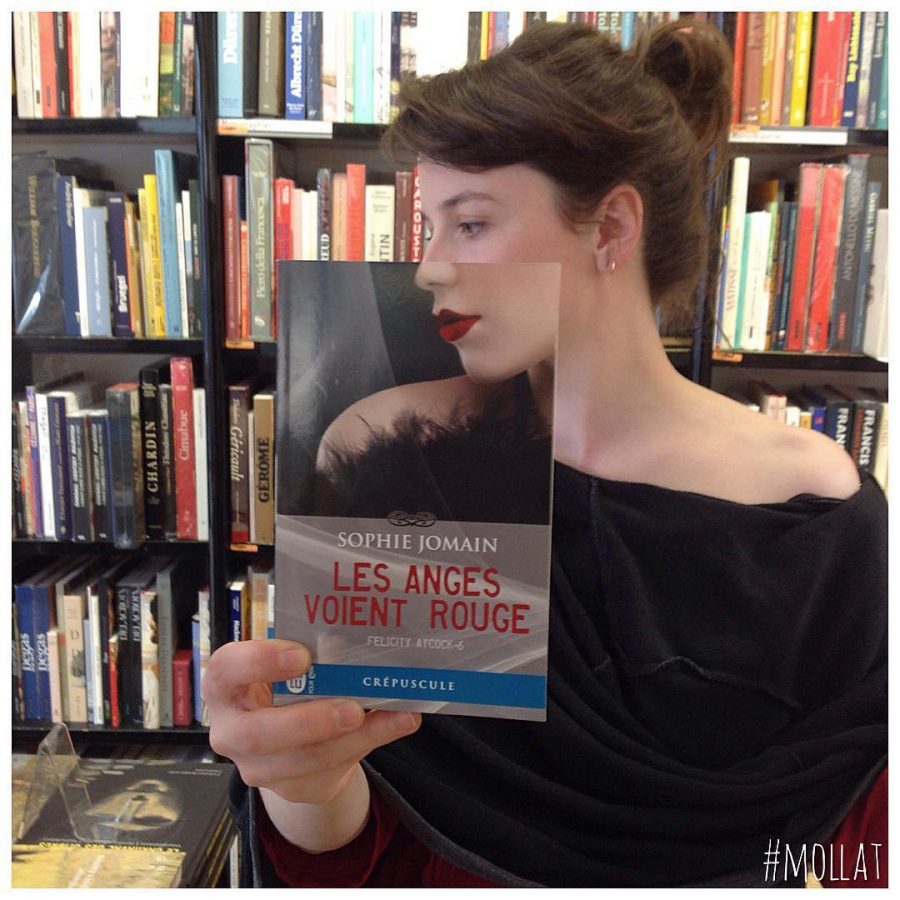



…even the ones that don’t quite pass the forced perspective test have the capacity to charm.

…and not every shot requires intense pre-production and precision placement.

Hopefully, we’ll see more kids getting into the act soon. In fact, if some youngsters of your acquaintance are expressing a bit of boredom with their vacances d’été, try turning them loose in your local bookstore to identify a likely candidate for a Book Face of their own.
(Remember to support the bookseller with a purchase!)
Back stateside, some librarians shared their pro tips for achieving Book Face success in this 2015 New York Times article. The New York Public Library’s Morgan Holzer also cites Sleeveface as the inspiration behind #BookfaceFriday, the hashtag she coined in hopes that other libraries would follow suit.
With over 50,000 tagged posts on Instagram, looks like it’s caught on!
See Librairie Mollat’s patrons’ gallery of Book Faces here.
Readers, if you’ve Book Faced anywhere in the world, please share the link to your efforts in the comments section.
via This is Colossal/Hyperallergic
Related Content:
The Art of Sci-Fi Book Covers: From the Fantastical 1920s to the Psychedelic 1960s & Beyond
Ayun Halliday is an author, illustrator, theater maker and Chief Primatologist of the East Village Inky zine. In honor of her son’s 18th birthday, she invites you to Book Face your baby using The Big Rumpus, her first book, for which he served as cover model. Follow her @AyunHalliday.
Read More...New Web Site Showcases 700,000 Artifacts Dug Up from the Canals of Amsterdam, Some Dating Back to 4300 BC

Amsterdam has many pleasures to offer, not least boating through its hundred-kilometer network of canals. First laid out in the early 17th century, they constitute a rich history lesson in and of themselves. But Amsterdam is also, of course, a modern city with modern infrastructure, such as a metro system with a new line set to open this month. Amsterdammers have been waiting for that line for fifteen years now, and the reasons for the prolonged construction have to do with the old canals, or rather part of the River Amstel that feeds them.

Boring the tunnels entailed draining the river, and draining the river turned out to offer another history lesson, and a much deeper one than expected. “It is not often that a riverbed, let alone one in the middle of a city, is pumped dry and can be systematically examined,” says the web site Below the Surface. “The excavations in the Amstel yielded a deluge of finds, some 700,000 in all: a vast array of objects, some broken, some whole, all jumbled together.”

The unintended archaeological benefit of draining the river amounts to “a multi-faceted picture of daily life in the city of Amsterdam. Every find is a frozen moment in time, connecting the past and the present. The picture they paint of their era is extremely detailed and yet entirely random due to the chance of objects or remains sinking down into the riverbed and being retrieved from there.” At Below the Surface you can browse the extensive catalog of all these artifacts, the oldest of which date to around 4300 BC, more than five and a half millennia before the founding of Amsterdam itself.

Below the Surface’s collection is organized into ten different categories including “interiors and accessories,” “crafts and industry,” “arms and armor,” “communication and exchange,” and “games and recreation.” On your digitized object-based historical journey there, you’ll encounter objects from all of those realms of human life across time, from 13th-century coins, 15th-century keys, 18th-century tiles, and 20th-century medicine tins. To we humans of the 21st century, in the Netherlands or elsewhere, some of these might look surprisingly contemporary — or at least not nearly as ancient as a mobile phone from the 1990s. Enter Below the Surface here.

Related Content:
The Rijksmuseum Puts 125,000 Dutch Masterpieces Online, and Lets You Remix Its Art
16th-Century Amsterdam Stunningly Visualized with 3D Animation
Flashmob Recreates Rembrandt’s “The Night Watch” in a Dutch Shopping Mall
20,000 Endangered Archaeological Sites Now Catalogued in a New Online Database
Based in Seoul, Colin Marshall writes and broadcasts on cities and culture. His projects include the book The Stateless City: a Walk through 21st-Century Los Angeles and the video series The City in Cinema. Follow him on Twitter at @colinmarshall or on Facebook.
Read More...Teaching Tolerance to Activists: A Free Course Syllabus & Anthology
The waters of academia have grown choppy of late, and many veteran sailors have found themselves ill-equipped to navigate the brave new world student activists are forging at a breakneck pace.
Trigger warnings. Safe spaces. Curricula restructured with an eye toward identity. Swift judgments for those who fail to comply.
Admissions brochures and campus tours make frequent mention of their institution’s commitment to social justice. They have to—many high schoolers share the undergrads’ beliefs.
Those of us whose college years are but a distant memory shouldn’t depend on our school’s alumni mag to paint an accurate picture of the battles that may be raging within. Sustainability, preferred pronouns, and inclusive bathroom facilities may get a mention, but the official organ’s unlikely to peek into the abyss where tolerance goes to die.
Cultural scholar Frances Lee, a queer trans person of color recovering from a forced conversion to evangelical Christianity, took a hard look at the problem of intolerance within activist circles as a second year Masters student in Cultural Studies at the University of Washington.
Published exactly one year ago, their essay, Kin Aesthetics: Excommunicate Me from the Church of Social Justice, was plainspoken about the negative side effects of social progress in activist circles, and by extension, on campus:
Telling people what to do and how to live out their lives is endemic to religious and to dogmatic activism. It’s not that my comrades are the bosses of me, but that dogmatic activism creates an environment that encourages people to tell other people what to do. This is especially prominent on Facebook. Scrolling through my news feed sometimes feels Iike sliding into a pew to be blasted by a fragmented, frenzied sermon. I know that much of the media posted there means to discipline me to be a better activist and community member. But when dictates aren’t followed, a common procedure of punishment ensues. Punishments for saying/doing/believing the wrong thing include shaming, scolding, calling out, isolating, or eviscerating someone’s social standing. Discipline and punishment have been used for all of history to control and destroy people. Why is it being used in movements meant to liberate all of us? We all have made serious mistakes and hurt other people, intentionally or not. We get a chance to learn from them when those around us respond with kindness and patience. Where is our humility when examining the mistakes of others? Why do we position ourselves as morally superior to the lowly un-woke?
The essay’s viral success gives extra oomph to “Woker Than Thou: Leftist Activist Identity Formations,” a community course Lee designed and taught earlier this year.
Intended for community leaders, political activists, and organizers, Lee welcomed anyone with any interest in the subject, provided they were willing “to stay open to dissenting or unpopular ideas for the sake of discussion, instead of foreclosing certain topics or ideas by judging them as not worthy of attention.”
The 10-week syllabus delved into such relevant topics as Call-out Culture, the False Promises of Empathy, and of course “wokeness,” a term Lee takes care to attribute to Black culture.
While not all of the required readings can be found online, Lee provides a wealth of links to those that can.
Titles include University of San Francisco Professor Rhonda Magee’s “Addressing Social Injustice with Compassion,” author Andrea Smith’s “The Problem with Privilege,” Trauma Stewardship Institute founder Laura van Dernoot Lipsky’s TEDx Talk on systematic oppression and liberation theory.
There’s even a Sufjan Stevens song that evolved from cheap shots at skater Tonya Harding’s expense to something that considered the “wholeness of the person… with dignity and grace.”
Following Lee’s course materials seems a much more rational way to confront the current social climate than binging on confessional essays by liberal arts professors who feel hamstrung by not-unfounded fears that their students could cost them their jobs … and the good reputation required to secure another.
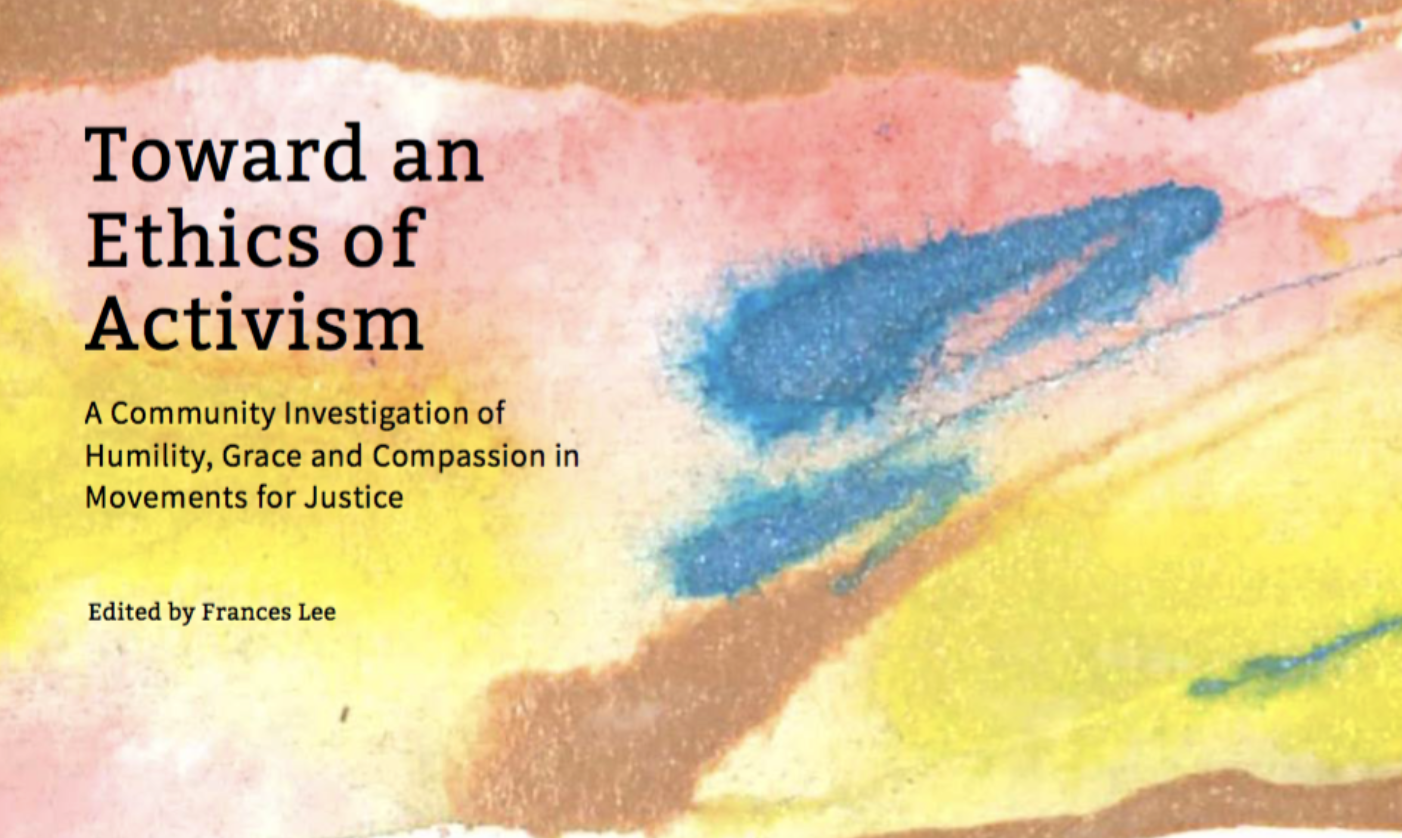
For further reading, Lee offers free downloads of Toward An Ethics of Activism: A Community Investigation of Humility, Grace and Compassion in Movements for Justice, an anthology that “seeks to disrupt dogmatic, exclusionary activist culture with kindness and connection.”
Find Frances Lee’s “Woker Than Thou” syllabus here.
Download a PDF of the anthology Toward An Ethics of Activism here. (A screen reader accessible version is also available.)
Related Content:
Slavoj Žižek Calls Political Correctness a Form of “Modern Totalitarianism”
Ayun Halliday is an author, illustrator, theater maker and Chief Primatologist of the East Village Inky zine. Follow her @AyunHalliday.
Read More...Read George Washington’s “110 Rules of Civility”: The Code of Decency That Guided America’s First President
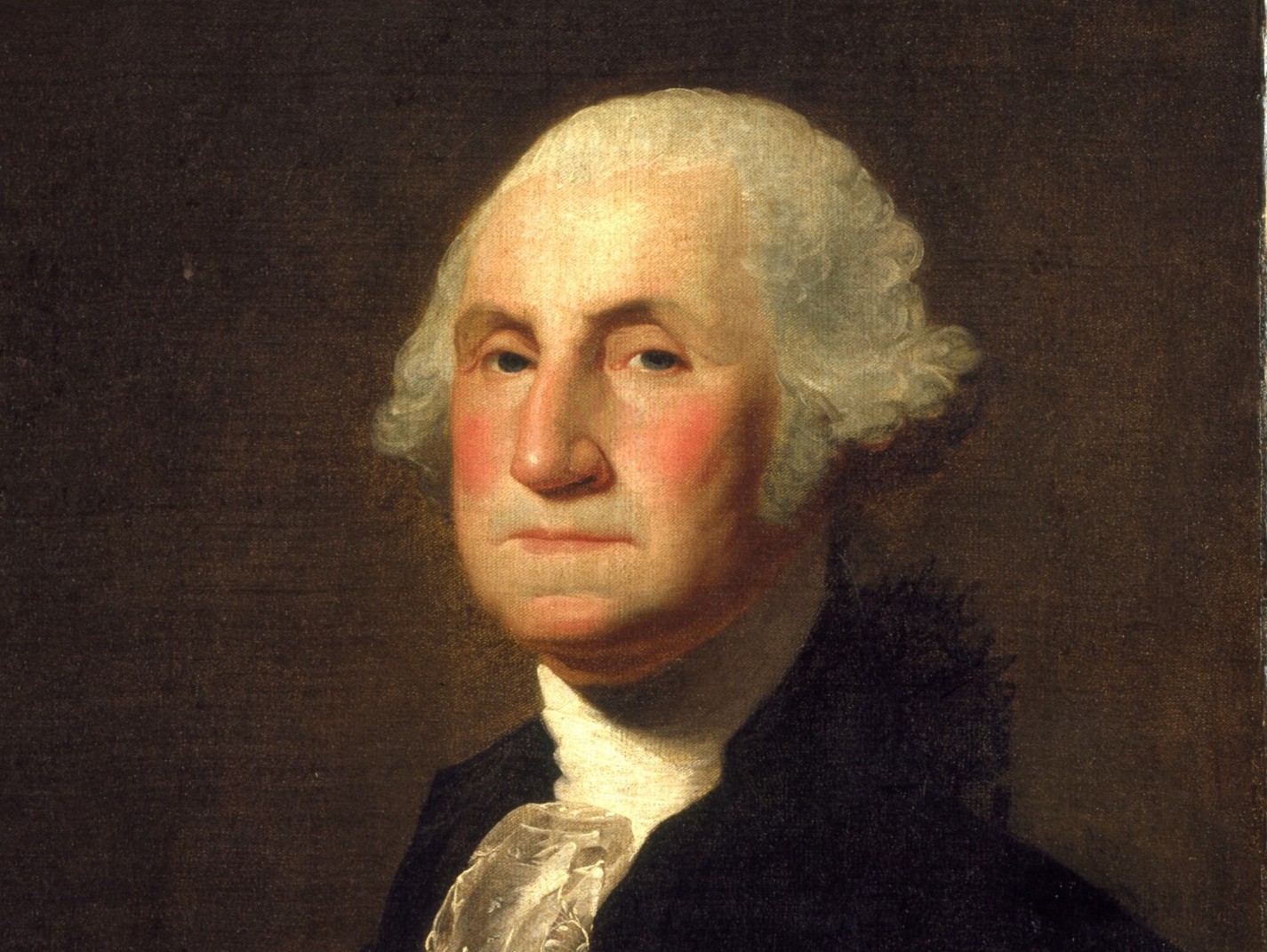
Contrary to a thoroughly abused political metaphor, Washington, DC was not in fact built on a swamp, though anyone who has visited in the summer will find that story plausible. Having just returned to my hometown for a few days, I’ve had ample reminder of its stickiness, and have experienced its figuratively overheated atmosphere firsthand. I needn’t go over the political and moral crises turning the capital into a cauldron of “incivility.”
But what exactly is “civility” and what does it entail? Is it just another word for politeness, or a hypocritically insidious code for silencing dissent? Oxford Dictionaries recently chose the word for its Weekly Word Watch, citing an Oxford English Dictionary entry defining it as “the minimum degree” of decorum in social situations. Deriving from the Latin civis, or “citizen,” and related to “civics” and “civilization,” the word first meant “citizenship,” and connoted the treatment supposedly due a person with said status. As often happens, connotation became denotation, and civility came to stand for basic respect.
Nervous columnists now worried about civility’s decline have pinned the problem on citizen protesters exercising civil disobedience and their first amendment rights, rather than on the torrents of abuse, threats, and lies that pour forth daily from the executive, who seems incapable of treating anyone with minimal decency. But the very first holder of the office—faced with a fractious and uncivil populace (some of whom toasted to his “speedy death”)—believed it was his duty to set “a standard to which the wise and honest can repair.”
What, we might wonder, would George Washington, builder of DC, have thought of the city’s current state? We can speculate by reference to his “Farewell Address,” in which the departing president wrote:
The alternate domination of one faction over another, sharpened by the spirit of revenge natural to party dissention, which in different ages & countries has perpetrated the most horrid enormities, is itself a frightful despotism. But this leads at length to a more formal and permanent despotism. The disorders & miseries, which result, gradually incline the minds of men to seek security & repose in the absolute power of an Individual: and sooner or later the chief of some prevailing faction more able or more fortunate than his competitors, turns this disposition to the purposes of his own elevation, on the ruins of Public Liberty.
Washington, argues historian and conservative columnist Richard Brookhiser, governed his own behavior with a strict code of conduct based on “The Rules of Civility & Decent Behavior in Company and Conversation,” a list he carefully copied out by hand as a schoolboy in Virginia. “Based on a 16th-century set of precepts compiled for young gentlemen by Jesuit instructors,” notes NPR, “the Rules of Civility were one of the earliest and most powerful forces to shape America’s first president,” as Brookhiser claims in his 2003 book Rules of Civility: The 110 Precepts That Guided Our First President in War and Peace.
Many of these “rules” are outmoded etiquette, many are baroque in their level of detail, some should never go out of style, and many would be mocked and derided today as “political correctness.” Brookhiser “warns against dismissing the maxims” as mere politeness, noting that they “address moral issues, but they address them indirectly. Maybe they can work on us in our century as the Jesuits intended them to work in theirs—indirectly—by putting us in a more ambitious frame of mind.” Or maybe they could induce some humility among the already politically ambitious.
See all of the 110 “Rules of Civility” below, with modernized spelling and punctuation, courtesy of NPR:
- Every action done in company ought to be with some sign of respect to those that are present.
- When in company, put not your hands to any part of the body not usually discovered.
- Show nothing to your friend that may affright him.
- In the presence of others, sing not to yourself with a humming voice, or drum with your fingers or feet.
- If you cough, sneeze, sigh or yawn, do it not loud but privately, and speak not in your yawning, but put your handkerchief or hand before your face and turn aside.
- Sleep not when others speak, sit not when others stand, speak not when you should hold your peace, walk not on when others stop.
- Put not off your clothes in the presence of others, nor go out of your chamber half dressed.
- At play and attire, it’s good manners to give place to the last comer, and affect not to speak louder than ordinary.
- Spit not into the fire, nor stoop low before it; neither put your hands into the flames to warm them, nor set your feet upon the fire, especially if there be meat before it.
- When you sit down, keep your feet firm and even, without putting one on the other or crossing them.
- Shift not yourself in the sight of others, nor gnaw your nails.
- Shake not the head, feet, or legs; roll not the eyes; lift not one eyebrow higher than the other, wry not the mouth, and bedew no man’s face with your spittle by approaching too near him when you speak.
- Kill no vermin, or fleas, lice, ticks, etc. in the sight of others; if you see any filth or thick spittle put your foot dexterously upon it; if it be upon the clothes of your companions, put it off privately, and if it be upon your own clothes, return thanks to him who puts it off.
- Turn not your back to others, especially in speaking; jog not the table or desk on which another reads or writes; lean not upon anyone.
- Keep your nails clean and short, also your hands and teeth clean, yet without showing any great concern for them.
- Do not puff up the cheeks, loll not out the tongue with the hands or beard, thrust out the lips or bite them, or keep the lips too open or too close.
- Be no flatterer, neither play with any that delight not to be played withal.
- Read no letter, books, or papers in company, but when there is a necessity for the doing of it, you must ask leave; come not near the books or writtings of another so as to read them unless desired, or give your opinion of them unasked. Also look not nigh when another is writing a letter.
- Let your countenance be pleasant but in serious matters somewhat grave.
- The gestures of the body must be suited to the discourse you are upon.
- Reproach none for the infirmities of nature, nor delight to put them that have in mind of thereof.
- Show not yourself glad at the misfortune of another though he were your enemy.
- When you see a crime punished, you may be inwardly pleased; but always show pity to the suffering offender.
- Do not laugh too loud or too much at any public spectacle.
- Superfluous compliments and all affectation of ceremonies are to be avoided, yet where due they are not to be neglected.
- In putting off your hat to persons of distinction, as noblemen, justices, churchmen, etc., make a reverence, bowing more or less according to the custom of the better bred, and quality of the persons. Among your equals expect not always that they should begin with you first, but to pull off the hat when there is no need is affectation. In the manner of saluting and resaluting in words, keep to the most usual custom.
- ‘Tis ill manners to bid one more eminent than yourself be covered, as well as not to do it to whom it is due. Likewise he that makes too much haste to put on his hat does not well, yet he ought to put it on at the first, or at most the second time of being asked. Now what is herein spoken, of qualification in behavior in saluting, ought also to be observed in taking of place and sitting down, for ceremonies without bounds are troublesome.
- If any one come to speak to you while you are are sitting stand up, though he be your inferior, and when you present seats, let it be to everyone according to his degree.
- When you meet with one of greater quality than yourself, stop and retire, especially if it be at a door or any straight place, to give way for him to pass.
- In walking, the highest place in most countries seems to be on the right hand; therefore, place yourself on the left of him whom you desire to honor. But if three walk together the middest place is the most honorable; the wall is usally given to the most worthy if two walk together.
- If anyone far surpasses others, either in age, estate, or merit, yet would give place to a meaner than himself in his own lodging or elsewhere, the one ought not to except it. So he on the other part should not use much earnestness nor offer it above once or twice.
- To one that is your equal, or not much inferior, you are to give the chief place in your lodging, and he to whom it is offered ought at the first to refuse it, but at the second to accept though not without acknowledging his own unworthiness.
- They that are in dignity or in office have in all places precedency, but whilst they are young, they ought to respect those that are their equals in birth or other qualities, though they have no public charge.
- It is good manners to prefer them to whom we speak before ourselves, especially if they be above us, with whom in no sort we ought to begin.
- Let your discourse with men of business be short and comprehensive.
- Artificers and persons of low degree ought not to use many ceremonies to lords or others of high degree, but respect and highly honor then, and those of high degree ought to treat them with affability and courtesy, without arrogance.
- In speaking to men of quality do not lean nor look them full in the face, nor approach too near them at left. Keep a full pace from them.
- In visiting the sick, do not presently play the physician if you be not knowing therein.
- In writing or speaking, give to every person his due title according to his degree and the custom of the place.
- Strive not with your superior in argument, but always submit your judgment to others with modesty.
- Undertake not to teach your equal in the art himself professes; it savors of arrogancy.
- Let your ceremonies in courtesy be proper to the dignity of his place with whom you converse, for it is absurd to act the same with a clown and a prince.
- Do not express joy before one sick in pain, for that contrary passion will aggravate his misery.
- When a man does all he can, though it succeed not well, blame not him that did it.
- Being to advise or reprehend any one, consider whether it ought to be in public or in private, and presently or at some other time; in what terms to do it; and in reproving show no signs of cholor but do it with all sweetness and mildness.
- Take all admonitions thankfully in what time or place soever given, but afterwards not being culpable take a time and place convenient to let him know it that gave them.
- Mock not nor jest at any thing of importance. Break no jests that are sharp, biting, and if you deliver any thing witty and pleasant, abstain from laughing thereat yourself.
- Wherein you reprove another be unblameable yourself, for example is more prevalent than precepts.
- Use no reproachful language against any one; neither curse nor revile.
- Be not hasty to believe flying reports to the disparagement of any.
- Wear not your clothes foul, or ripped, or dusty, but see they be brushed once every day at least and take heed that you approach not to any uncleaness.
- In your apparel be modest and endeavor to accommodate nature, rather than to procure admiration; keep to the fashion of your equals, such as are civil and orderly with respect to time and places.
- Run not in the streets, neither go too slowly, nor with mouth open; go not shaking of arms, nor upon the toes, kick not the earth with your feet, go not upon the toes, nor in a dancing fashion.
- Play not the peacock, looking every where about you, to see if you be well decked, if your shoes fit well, if your stockings sit neatly and clothes handsomely.
- Eat not in the streets, nor in the house, out of season.
- Associate yourself with men of good quality if you esteem your own reputation; for ’tis better to be alone than in bad company.
- In walking up and down in a house, only with one in company if he be greater than yourself, at the first give him the right hand and stop not till he does and be not the first that turns, and when you do turn let it be with your face towards him; if he be a man of great quality walk not with him cheek by jowl but somewhat behind him, but yet in such a manner that he may easily speak to you.
- Let your conversation be without malice or envy, for ’tis a sign of a tractable and commendable nature, and in all causes of passion permit reason to govern.
- Never express anything unbecoming, nor act against the rules moral before your inferiors.
- Be not immodest in urging your friends to discover a secret.
- Utter not base and frivolous things among grave and learned men, nor very difficult questions or subjects among the ignorant, or things hard to be believed; stuff not your discourse with sentences among your betters nor equals.
- Speak not of doleful things in a time of mirth or at the table; speak not of melancholy things as death and wounds, and if others mention them, change if you can the discourse. Tell not your dreams, but to your intimate friend.
- A man ought not to value himself of his achievements or rare qualities of wit; much less of his riches, virtue or kindred.
- Break not a jest where none take pleasure in mirth; laugh not aloud, nor at all without occasion; deride no man’s misfortune though there seem to be some cause.
- Speak not injurious words neither in jest nor earnest; scoff at none although they give occasion.
- Be not froward but friendly and courteous, the first to salute, hear and answer; and be not pensive when it’s a time to converse.
- Detract not from others, neither be excessive in commanding.
- Go not thither, where you know not whether you shall be welcome or not; give not advice without being asked, and when desired do it briefly.
- If two contend together take not the part of either unconstrained, and be not obstinate in your own opinion. In things indifferent be of the major side.
- Reprehend not the imperfections of others, for that belongs to parents, masters and superiors.
- Gaze not on the marks or blemishes of others and ask not how they came. What you may speak in secret to your friend, deliver not before others.
- Speak not in an unknown tongue in company but in your own language and that as those of quality do and not as the vulgar. Sublime matters treat seriously.
- Think before you speak, pronounce not imperfectly, nor bring out your words too hastily, but orderly and distinctly.
- When another speaks, be attentive yourself and disturb not the audience. If any hesitate in his words, help him not nor prompt him without desired. Interrupt him not, nor answer him till his speech be ended.
- In the midst of discourse ask not of what one treats, but if you perceive any stop because of your coming, you may well entreat him gently to proceed. If a person of quality comes in while you’re conversing, it’s handsome to repeat what was said before.
- While you are talking, point not with your finger at him of whom you discourse, nor approach too near him to whom you talk, especially to his face.
- Treat with men at fit times about business and whisper not in the company of others.
- Make no comparisons and if any of the company be commended for any brave act of virtue, commend not another for the same.
- Be not apt to relate news if you know not the truth thereof. In discoursing of things you have heard, name not your author. Always a secret discover not.
- Be not tedious in discourse or in reading unless you find the company pleased therewith.
- Be not curious to know the affairs of others, neither approach those that speak in private.
- Undertake not what you cannot perform but be careful to keep your promise.
- When you deliver a matter do it without passion and with discretion, however mean the person be you do it to.
- When your superiors talk to anybody hearken not, neither speak nor laugh.
- In company of those of higher quality than yourself, speak not ’til you are asked a question, then stand upright, put off your hat and answer in few words.
- In disputes, be not so desirous to overcome as not to give liberty to each one to deliver his opinion and submit to the judgment of the major part, especially if they are judges of the dispute.
- Let your carriage be such as becomes a man grave, settled and attentive to that which is spoken. Contradict not at every turn what others say.
- Be not tedious in discourse, make not many digressions, nor repeat often the same manner of discourse.
- Speak not evil of the absent, for it is unjust.
- Being set at meat scratch not, neither spit, cough or blow your nose except there’s a necessity for it.
- Make no show of taking great delight in your victuals. Feed not with greediness. Eat your bread with a knife. Lean not on the table, neither find fault with what you eat.
- Take no salt or cut bread with your knife greasy.
- Entertaining anyone at table it is decent to present him with meat. Undertake not to help others undesired by the master.
- If you soak bread in the sauce, let it be no more than what you put in your mouth at a time, and blow not your broth at table but stay ’til it cools of itself.
- Put not your meat to your mouth with your knife in your hand; neither spit forth the stones of any fruit pie upon a dish nor cast anything under the table.
- It’s unbecoming to heap much to one’s mea. Keep your fingers clean and when foul wipe them on a corner of your table napkin.
- Put not another bite into your mouth ’til the former be swallowed. Let not your morsels be too big for the jowls.
- Drink not nor talk with your mouth full; neither gaze about you while you are drinking.
- Drink not too leisurely nor yet too hastily. Before and after drinking wipe your lips. Breathe not then or ever with too great a noise, for it is uncivil.
- Cleanse not your teeth with the tablecloth, napkin, fork or knife, but if others do it, let it be done with a pick tooth.
- Rinse not your mouth in the presence of others.
- It is out of use to call upon the company often to eat. Nor need you drink to others every time you drink.
- In company of your betters be not longer in eating than they are. Lay not your arm but only your hand upon the table.
- It belongs to the chiefest in company to unfold his napkin and fall to meat first. But he ought then to begin in time and to dispatch with dexterity that the slowest may have time allowed him.
- Be not angry at table whatever happens and if you have reason to be so, show it not but on a cheerful countenance especially if there be strangers, for good humor makes one dish of meat a feast.
- Set not yourself at the upper of the table but if it be your due, or that the master of the house will have it so. Contend not, lest you should trouble the company.
- If others talk at table be attentive, but talk not with meat in your mouth.
- When you speak of God or His attributes, let it be seriously and with reverence. Honor and obey your natural parents although they be poor.
- Let your recreations be manful not sinful.
- Labor to keep alive in your breast that little spark of celestial fire called conscience.
Related Content:
The Poetry of Abraham Lincoln
John Green’s Crash Course in U.S. History: From Colonialism to Obama in 47 Videos
Josh Jones is a writer and musician based in Durham, NC. Follow him at @jdmagness
Read More...Color Film Was Designed to Take Pictures of White People, Not People of Color: The Unfortunate History of Racial Bias in Photography (1940–1990)
In the history of photography and film, getting the right image meant getting the one which conformed to prevalent ideas of humanity. This included ideas of whiteness, of what colour — what range of hue — white people wanted white people to be.
- Richard Dyer, White: Essays on Race and Culture
As the bride in the 2014 Interracial Wedding Photographer skit (see below) on her titular sketch comedy TV show, comedian Amy Schumer cast herself in a small but essential background role. She is for all practical purposes a living Shirley card, an image of a young white woman that was for years the standard photography techs used to determine “normal” skin-color balance when developing film in the lab.
The Shirley card—named for its original model, Kodak employee Shirley Page–featured a succession of young women over the years, but skin tone-wise, the resemblance was striking.
As described by Syreeta McFadden in a Buzzfeed essay that also touches on Carrie Mae Weems’ 1988 four-panel portrait, Peaches, Liz, Tamika, Elaine, a color wheel meme featuring actress Lupita Nyong’o, and artists Adam Broomberg and Oliver Chanarin’s 2013 project that trained an apartheid-era Polaroid ID2 camera and nearly 40-year-old film stock on dark-skinned South African subjects as a lens for examining racism:
She is wearing a white dress with long black gloves. A pearl bracelet adorns one of her wrists. She has auburn hair that drapes her exposed shoulders. Her eyes are blue. The background is grayish, and she is surrounded by three pillows, each in one of the primary colors we’re taught in school. She wears a white dress because it reads high contrast against the gray background with her black gloves. “Color girl” is the technicians’ term for her. The image is used as a metric for skin-color balance, which technicians use to render an image as close as possible to what the human eye recognizes as normal. But there’s the rub: With a white body as a light meter, all other skin tones become deviations from the norm.
This explains why the portrait session McFadden’s mom set up in a shopping mall studio chain yielded results so disastrous that McFadden instinctively gravitated toward black-and-white when she started taking pictures. Grayscale did a much better job of suggesting the wide variety of multicultural skin tones than existing color film.
In her 2009 paper “Looking at Shirley, the Ultimate Norm: Colour Balance, Image Technologies and Cognitive Equity,” Concordia University media and communication studies professor Lorna Roth went into the chemistry of inherent, if unconscious, racial bias. The potential to recognize a spectrum of yellow, brown and reddish skin tones was there, but the film companies went with emulsions that catered to the perceived needs of their target consumers, whose hides were noticeably lighter than those of black shutterbugs also seeking to document their family vacations, milestones, and celebrations.
Industry progress can be chalked up to pressure from vendors of wood furniture and chocolate, who felt their dark products could look better on film.
Oprah Winfrey and Black Entertainment Television were early adopters of cameras equipped with two computer chips, thus enabling them to accurately portray a variety of individual tones simultaneously.
Who knew that Amy Schumer sketch, below, would turn out to have such historic significance? Once you know about the Shirley card, the comedy becomes even darker. Generations of real brides and grooms, whose skin tones fell to either side of Schumer’s TV groom, DJ Ali Shaheed Muhammad of A Tribe Called Quest fame, failed to show up in their own wedding photos, through no fault of their own.
via Vox
Related Content:
Tsarist Russia Comes to Life in Vivid Color Photographs Taken Circa 1905–1915
New Archive of Middle Eastern Photography Features 9,000 Digitized Images
Ayun Halliday is an author, illustrator, theater maker and Chief Primatologist of the East Village Inky zine. Follow her @AyunHalliday.
Read More...The 50 Best Ambient Albums of All Time: A Playlist Curated by Pitchfork

What makes a good ambient record? I’m not sure I can even begin to answer that question, and I count myself a longtime fan of the genre, such as it is. Though conceived, ostensibly, by Brian Eno as modernist mood music—“as ignorable as it is interesting,” he wrote in the liner notes to 1978’s Ambient 1: Music for Airports—the term has come to encompass “tracks you can dance to all the way to harsh noise.” This description from composer and musician Keith Fullerton Whitman at Pitchfork may not get us any closer to a clear definition in prose, though “cloud of sound” is a lovely turn of phrase.
Unlike other forms of music, there is no set of standards—both in the jazz sense of a canon and the formal sense of a set of rules. Reverberating keyboards, squelching, burping synthesizers, droning guitar feedback, field recordings, found sounds, laptops, strings… whatever it takes to get you there—“there” being a state of suspended emotion, “drifting” rather than “driving,” the sounds “soothing, sad, haunting, or ominous.” (Cheerful, upbeat ambient music may be a contradiction in terms.)
Given the looseness of these criteria, it only stands to reason that “good” ambient must be judged on far more subjective terms than most any other kind of music. Next to “atmospheric,” a primary operative word in an ambient critical lexicon is “evocative,” and what the music evokes will differ vastly from listener to listener. “No one agrees on the language surrounding this music,” Whitman admits, “not the musicians who make it, not the audience.”
Ambient’s close association with trends in avant-garde minimalism, from Erik Satie to Steve Reich, La Monte Young, and Charlemagne Palestine, may prepare us for its many crossover strains in electronic music, but not, perhaps, for the seeming synergy between ambient and certain developments in heavy metal (though Lou Reed seems to have presaged this evolution). “There are many roads one can take into this particular sector,” writes Whitman, “virtually every extant sub- and micro-genre has an ambient shadow.”
Such ecumenicalism is a feature: it means that a list like Pitchfork’s “50 Best Ambient Albums of All Time” (stream most of those albums on the Spotify playlist above) can pull from an impressively wide array of musical domains, from the early experimental electronic music of Laurie Spiegel to the spiritual jazz of Alice Coltrane; the chill-out electronica of The Orb and The KLF to the ethereal indie post-folk dreampop of Grouper, a very rare entry with vocals.
If the genre has stars, Tim Hecker and William Basinski might be considered two of them; if it has august forebears, Pauline Oliveros, Terry Riley, and of course Eno are three. (Music for Airports comes in at number one, though another very well-chosen inclusion here is Eno and Harold Budd’s utterly gorgeous The Pearl.) Other entries I’m very pleased to see on this list include albums by Gas, composer Max Richter, and vocal experimentalist Juliana Barwick, artists who might never share a stage, but sit quite comfortably next to each other here.
What’s missing? Maybe the glacially slow, guitar and bass drones of Sunn O))) or the deeply unnerving noise of Prurient or the lush electro-acoustic compositions of Ashley Bellouin, I don’t know. These aren’t complaints but suggestions on the order of if you like Pitchfork’s “50 Best Ambient Albums of All Time,” check out…. I could go on, but I’d rather leave it to you, reader. What’s on your list that didn’t make the cut?
Visit Pitchfork’s list here.
Related Content:
The “True” Story Of How Brian Eno Invented Ambient Music
10 Hours of Ambient Arctic Sounds Will Help You Relax, Meditate, Study & Sleep
Josh Jones is a writer and musician based in Durham, NC. Follow him at @jdmagness
Read More...Support Us
We're hoping to rely on loyal readers, rather than erratic ads. Please click the Donate button and support Open Culture. You can use Paypal, Venmo, Patreon, even Crypto! We thank you!

About Us

Open Culture scours the web for the best educational media. We find the free courses and audio books you need, the language lessons & educational videos you want, and plenty of enlightenment in between.
Advertise With Us
FREE UPDATES!
GET OUR DAILY EMAIL
Get the best cultural and educational resources on the web curated for you in a daily email. We never spam. Unsubscribe at any time.
FOLLOW ON SOCIAL MEDIA
Open Culture editor Dan Colman scours the web for the best educational media. He finds the free courses and audio books you need, the language lessons & movies you want, and plenty of enlightenment in between.
Advertise With Us


