Kermit the Frog Learns to Love Jazz Through “Visual Thinking” (1959)
Jim Henson launched his first televised puppet program, Sam and Friends, when he was a freshman at the University of Maryland. The show ran for six years on NBC affiliate WRC-TV in Washington, DC. During the production of Sam and Friends, Henson developed the design of his flexible, foam-rubber puppets, which moved much more naturally than wooden marionettes. And they became the prototypes of the beloved Muppets that would make him famous. In the short film above from Sam and Friends, “Visual Thinking,” an early version of Kermit the Frog has an exchange with a stoner character called Harry the Hipster, who introduces him to an advanced form of visual thinking that moves from single notes, to chords, to classical passages to jazz.
The sketch represents a unique combination of puppetry and animation that would come to characterize some of Henson’s most recognizable work, such as Sesame Street. Although it’s in black and white and obviously not produced for children, it’s very much in the style of the later Henson, who maintained a kind of beat sensibility throughout his career, whether working in fantasy with The Dark Crystal or madcap puppet ensembles like The Muppet Movie. In the above sketch, Kermit and Harry work out the intricacies of jazz phrasing by visualizing the notes in white squiggles on the screen, which Harry erases by scatting them backwards. Eventually, they’re overwhelmed and erased by jazz, in a kind of tribute to the form’s complex indeterminacy. The sketch is one of the few early films to feature Kermit, since the character’s rights are owned by Disney. Produced in 1959, the sketch was remade for The Ed Sullivan Show in 1966 and again for The Dick Cavett Show in 1971.
If you would like to support the mission of Open Culture, consider making a donation to our site. It’s hard to rely 100% on ads, and your contributions will help us continue providing the best free cultural and educational materials to learners everywhere. You can contribute through PayPal, Patreon, and Venmo (@openculture). Thanks!
Related Content:
Jim Henson Pilots The Muppet Show with Adult Episode, “Sex and Violence” (1975)
Puppet Making with Jim Henson: A Primer
Jim Henson’s Zany 1963 Robot Film Uncovered by AT&T: Watch Online
Josh Jones is a doctoral candidate in English at Fordham University and a co-founder and former managing editor of Guernica / A Magazine of Arts and Politics.
Read More...Lawrence Krauss Presents “Secular Sermon” on Theoretical Physics and the Meaning of Life
Alain de Botton, the writer who “has always tried to get ideas to impact on the way we actually live,” started The School of Life in order to offer an education crafted “according to things we all tend to care about: careers, relationships, politics, travels, families.” At its central London location, you can enroll in courses like “How to Have Better Conversations,” “How to Balance Work with Life,” and, perhaps most critically important of all, “How to Be Cool.” This seems like just the sort of institution which won’t confront you with the sort of numerically rigorous, seemingly abstract math and science classes that gave us grief in our regular educations. Yet de Botton and his School of Life co-founders understand that just because a subject assigns aggravating homework doesn’t mark it out as irrelevant. According to Lawrence Krauss, Foundation Professor in the School of Earth and Space Exploration and Physics Departments at Arizona State University and director of the Origins Initiative, physics could hardly have more to do with your daily experiences.
The School of Life brought Krauss to London’s Conway Hall to deliver one of their signature “Secular Sermons.” (De Botton, you may know, recently published a manifesto calling for a religion for atheists.) You can watch his 45-minute presentation free online and learn how science, as he tells it, both describes and offers an escape from reality. Using examples from his field of physics, Krauss demonstrates how science, by zooming in as close as possible or zooming out as far as possible, puts our everyday concerns and quibbles in proper context. What’s more, he notes,physics has it that we’re all made up of the same bits and pieces as everything, and thus everyone, else. Have you ever heard a more elegant argument for the notion of universal connectedness? But this isn’t to say that Krauss marshals the fruits of such rigorous study in the name of warm-and-fuzzy pronouncements. When you hear him declare how physics will make you understand that “you’re even more insignificant than you thought,” you’ll know just how far his sensibility lays from either warmth or fuzziness. The life of a physicist, so I’ve heard, benefits from a little gallows humor.
Related content:
Lawrence Krauss: Every Atom in Your Body Comes From a Star
Lawrence Krauss Explains How You Get ‘A Universe From Nothing’
Lawrence Krauss on the Mysterious Allure of Extra Dimensions
Life-Affirming Talks by Cultural Mavericks Presented at The School of Life
Alain de Botton Wants a Religion for Atheists: Introducing Atheism 2.0
Colin Marshall hosts and produces Notebook on Cities and Culture. Follow him on Twitter at @colinmarshall.
Read More...Hurricane Sandy Seen from Outer Space, in Timelapse Motion
Hovering some 22,300 miles above Earth, the GOES-14 satellite, operated by the National Oceanic and Atmospheric Administration, captured images of Hurricane Sandy barreling its way across the Atlantic yesterday. The video above puts into animation a series of images taken over an 11 hour period. Off to the left, you see the state of North Carolina, which looks sadly small compared to the 900-mile-wide storm. For anyone living on the east coast, you might want to check out this resource that offers advice on what to do before, during, and after a hurricane. Stay safe, and we’ll see you on the other side of the storm.
Note: Below you will find an alternate view provided by the NASA Goddard Space Flight Center. This animation brings together satellite observations from October 26 through October 29 2012.
Bela Lugosi Discusses His Drug Habit as He Leaves the Hospital in 1955
In 1955 Bela Lugosi was in a sad state. The once-handsome, Hungarian-born star of Dracula had seen his career degenerate over the previous two decades until at last he was reduced to playing a cruel parody of himself in some of the tackiest B horror films ever made. Along the way he picked up a drug habit. In late April of 1955 the 72-year-old actor, destitute and recently divorced from his fourth wife, checked himself into the psychopathic ward at Los Angeles General Hospital. A few days later, in a hearing held at the ward, Lugosi pleaded with a judge to commit him to a state hospital. A United Press article from April 23, 1955 describes the scene:
Although weighing only 125 pounds and only a shadow of his former self, Lugosi’s voice was clear and resonant as he told the court how shooting pains in his legs led him to start taking morphine injections in 1935. Without morphine, he couldn’t work, Lugosi said.
“I started using it under a doctor’s care,” he said. “I knew after a time it was getting out of control.”
“Seventeen years ago, on a trip to England, I heard of Methodone, a new drug. I brought a big box of it back home. I guess I brought a pound,” Lugosi said.
“Ever since I’ve used that, or demerol. I just took the drugs. I didn’t eat. I got sicker and sicker.”
The judge commended Lugosi for taking action to fight his addiction, and committed him to the Metropolitan State Hospital in Norwalk, a suburb of Los Angeles, for a minimum of three months and a maximum of two years. During his time in the hospital, the old man plotted his comeback. In The Immortal Count: The Life and Films of Bela Lugosi, Arthur Lennig writes:
While at the hospital, Lugosi had been given the script of his next Ed Wood picture, The Ghoul Goes West, a strange concoction in which a mad doctor goes out west to carry out his scheme to make super-creatures out of cowboys and rule the world. The actor looked forward to this forthcoming production, which he believed would begin about ten days after leaving the hospital, and brandished the script as proof that he would start work. “It’s very cute,” he said to the reporters. It probably wasn’t, but Lugosi no doubt believed that all the front page publicity, however notorious, would aid in his comeback, a comeback that would eventually raise him above the lowly ranks of Ed Wood’s shoestring productions. Bela posed for a photograph with the script in one hand while his other hand was dramatically raised in an assertive fist.
The interview above was filmed on August 4, 1955, one day before the actor’s release from the hospital. In the clip, Lugosi smiles and declares himself “a new man.” Less than three weeks later he married his fifth wife, an obsessed fan who reportedly sent him a letter every day he was in the hospital. The Ghoul Goes West never materialized, but Lugosi collaborated with Ed Wood on a couple of other projects, including a movie that some critics would eventually call “the worst film ever made,” Plan 9 From Outer Space. As his hope of a genuine comeback crumbled, Lugosi drank heavily. On August 16, 1956–barely over a year after his release from Metropolitan State Hospital–Lugosi died of a heart attack. He was buried in his Dracula costume.
Several Lugosi films appear on our big list of Free Movies Online.
Read More...The Moth Now Streams its Brilliant & Quietly Addictive Stories on the Web
The Moth, a New York City-based storytelling organization, is a rare creature indeed. Founded in 1997 by poet and novelist George Dawes Green, The Moth was originally Green’s attempt to re-create summer nights in his native Georgia, when friends would gather on the porch and tell each other stories—a southern tradition Green missed in the north, symbolized by the moths he remembered as part of the scene. From its beginnings in Green’s New York living room, the organization has grown into a multi-media phenomenon, with live storytellers on stage in New York and Los Angeles, and on tour around the world, a podcast, and The Moth Radio Hour, airing on over 200 stations nationwide.
So who tells stories at The Moth? An amazing range of people, from actors, authors, and musicians, to everyday people with something to say and the courage to say it in front of a crowd. In fact, if you feel like you belong in that last category, The Moth invites you to pitch them two minutes of your story and submit it for a chance to tell it live. Oh, one other thing: The Moth stipulates that all stories must be true stories and must be your stories, not someone else’s. How do they know? I suppose they’ve just got finely-tuned BS detectors after 15 years in the storytelling business.
To give you an idea of what a Moth story is like (I almost wrote “a typical Moth story,” but there is no such thing) have a look at the video above, with Neil Gaiman telling a drily humorous story from his teenage years. Gaiman’s presentation is subdued, in his understated English way, and replete with delightful digressions and asides. An example of a more impassioned, urgent Moth tale comes from comedian Anthony Griffith, who tells the story of his rise to comic fame with his Tonight Show appearances while he was also nursing his young daughter who had cancer.
As I said, there is no “typical Moth story,” and that’s the appeal. Everyone who takes the stage has something to say that no one else could, because it’s theirs alone. Both of the videos above are available on The Moth’s Youtube channel, which features dozens more live storytellers (I’d recommend Dan Savage’s story among so many others).
Oh, but wait, there’s more! (Can you tell I’m excited about this?). The Moth is now streaming audio of recent storytelling events on its website, with some available for free download. Some here are not-to-be-missed. For instance, you should drop whatever you’re doing (reading this sentence, I assume) and listen to Damien Echols’ harrowing story of his 18 years on death row as one of the wrongly-convicted, and recently freed, “West Memphis Three.” Still here? Fine. Then you must immediately go away and listen to playwright A.E. Hotchner tell his story about watching a bullfight with his friend Ernest Hemingway. If neither of these appeals, you’re probably hopeless, but hey, what can it hurt to scroll through the extensive list of stories streaming on The Moth website and find a few that speak to you? Invariably, this will happen: when you start listening to Moth storytellers, you’ll find it very hard to stop. It’s a pretty great non-profit racket they’ve got going: banking on the oldest and most durable form of entertainment and human connection.
Josh Jones is a doctoral candidate in English at Fordham University and a co-founder and former managing editor of Guernica / A Magazine of Arts and Politics.
Read More...The Amazing Flights of Wingsuit Champion Espen Fadnes
The 2011 video, Sense of Flying (below), gave viewers a remarkable look at Espen Fadnes flying down mountain sides at speeds of 155 miles per hour. If you saw the video along with 2.5 million others, you perhaps wondered: What could be going through this guy’s head? Well, now is your chance to find out. A newly-released video, Split of a Second (above), gets into the psyche and motivation of the Norwegian Wingsuit World Champion. It also shows the extent to which this guy really lives on a razor’s edge. Strap yourself in. Put on your crash helmet. And enjoy the ride.
Watch Nosferatu, the Seminal Vampire Film, Free Online (1922)
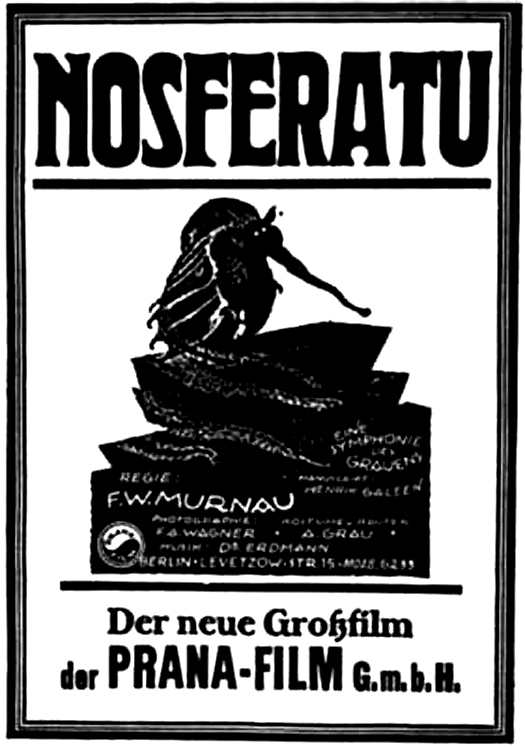
What, you haven’t seen Nosferatu yet? But you’re in luck: not only do you still have a few days left to fit this seminal classic of vampiric cinema into your Halloween viewing rotation, but when the 31st comes, you can watch it free online yet again. An inspiration for countless vampire films that would follow over the next ninety years, F.W. Murnau’s 1922 silent feature adapts Bram Stoker’s Dracula, but just loosely enough so that it could put its own stamp on the myth and not actually have to pay for rights to the novel. Jonathan and Mina Harker? Now Thomas and Ellen Hutter. Jonathan’s boss Renfield? Now a fellow named Knock. Count Dracula, to whose vast and crumbling estate Renfield sends the hapless Jonathan? Now Count Orlok — and unforgettably so. We can post no more relevant endorsement of Nosferatu’s enduring value than to say that it remains scary, or at least eerie, to this day. I defy any sophisticated modern viewer to spend All Hallows’ eve with this picture and not come away feeling faintly unsettled.
Part of it has to do with sheer age: while some visual effects haven’t held up — get a load of Orlok escaping his coffin in the ship’s cargo hold, employing a technique trusted by every nine-year-old with a video camera — the deeply worn look and feel seems, at moments, to mark the film as coming from a distant past when aristocratic blood-sucking living corpses may as well have existed.
This same process has, over four decades, imbued with a patina of menace every horror film made in the seventies. Fans of the 1979 Werner Herzog-Klaus Kinski collaboration Nosferatu the Vampyre, a companion piece obviously worth viewing in any case, can attest to this. You might also consider incorporating in your Halloween night viewing E. Elias Merhige’s Shadow of the Vampire, a satire of the 1920s film industry’s collision of eccentric old-world craftsmanship and savage commercial buffoonery which imagines Orlok as having been played by a geniune vampire. As for Francis Ford Coppola’s rights-having 1992 adaptation Bram Stoker’s Dracula… well, its chief point of interest is still Gary Oldman’s hairstyle.
You can always find Nosferatu on our list of Great Silent Films, part of our larger collection, 4,000+ Free Movies Online: Great Classics, Indies, Noir, Westerns, Documentaries & More.
Related content:
Fritz Lang’s Metropolis: Uncut & Restored
Where Horror Film Began: The Cabinet of Dr. Caligari
Colin Marshall hosts and produces Notebook on Cities and Culture. Follow him on Twitter at @colinmarshall.
Read More...Stephen King Turns Short Story into a Free Webcomic
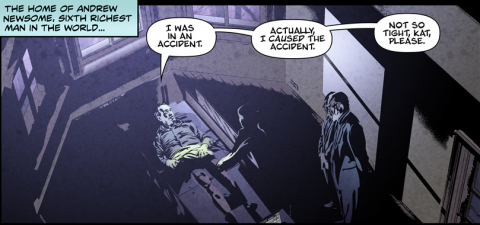
Prior to becoming a household name, Stephen King did time as a high school English teacher and a laborer in an industrial laundry. These days, he could insulate his lovely Victorian home with crisp hundreds if such were his whim. Yet it seems he hasn’t forgotten what it’s like to watch every penny, wishing there was enough fat in the budget for the purchase of one measly comic book based on an insanely famous author’s obscure short story…
Are generosity and the remembrance of past struggles motivating King to dole out artist Dennis “X‑Men Noir” Calero’s graphic adaptation of his short story, “The Little Green God of Agony,” for the next seven weeks?
Or is he researching what it feels like to be an undiscovered writer in the digital age, anxiously dangling free content on his website in an attempt to build readership?
Broken into thrice weekly installments to be delivered over a period of eight weeks, King’s story concerns one Andrew Newsome, the sixth richest man in the world, and Kat MacDonald, the exponentially less well-to-do RN caring for him in the wake of a debilitating accident, another subject to which King is no stranger. As of this writing, the comic is only available on the author’s website, though the King juggernaut is so unstoppable, the next move may well be a film, a tv miniseries or a Broadway musical. Maine winters are long and cold. Perhaps even the master of suspense warms to the prospect of some extra insulation.
You can start following the “The Little Green God of Agony” here.
via GalleyCat
Read More...Neil Young Reveals the New Killer Gadget That Will Save Music
In the opening minutes of his new memoir Waging Heavy Peace (I listened to the audio book, and you can too for free), Neil Young talks about his model trains, his extensive collection of vintage cars, and not much about music per se — although he does highlight his entrepreneurial effort to save the music industry with a new-fangled audio system called PureTone.
For quite some time now, Young has lamented the decline of music during the digital age. It’s not pirating that’s the culprit. It’s the MP3, a format that degrades the quality of the music we hear. Speaking at a Wall Street Journal conference earlier this year (watch here), Young complained that the MP3 can’t “transfer the depth of the art.” “My goal,” he continued, “is to try and rescue the art form that I’ve been practicing for the past 50 years.”
Enter PureTone, which has actually been renamed Pono more recently. The device/music service will hit the market next year, and it essentially promises to let fans hear recordings in super high fidelity, as if they owned the original master tapes created by various artists. Not long ago, Flea, the bassist of the Red Hot Chili Peppers, raved about the sound of Pono, telling Rolling Stone: “It’s not like some vague thing that you need dogs’ ears to hear. It’s a drastic difference.”
If that’s right, Young may do a great service for musicians everywhere, and make a lot of money for himself and others along the way. I mean imagine the number of remasters that could hit the market in the comings years, starting with two by Bob Dylan — The Freewheelin’ Bob Dylan and Highway 61 Revisited. A perfect place to begin.
Related Content:
Neil Young on the Travesty of MP3s
Read More...Calibre’s Open Source Software Makes It Easy to Read Free eBooks (and Much More)
We at Open Culture have discovered a handy piece of software that will make it easier to use our collection, 600 Free eBooks for iPad, Kindle & Other Devices. Calibre is a free e‑book library management software that lets users convert e‑books from one format to another.
Say that you’ve downloaded Jane Austen’s Pride and Prejudice in the open ePUB format and want to move the book onto your Kindle. Calibre can convert the text into all of the major e‑reader formats, including Kindle’s proprietary format. The program will then sync the text to your device and you’re good to go.
Calibre supports e‑book formats used by major manufacturers (including Amazon, Apple, Barnes & Noble and Sony), but if your device isn’t listed in the program’s list, Calibre’s “generic device” option will most likely do the job.
The program also offers a default viewer for reading texts on your computer, and books can be converted from one platform to another, making it easy to move books from your phone to iPad to laptop and beyond.
Calibre fills a niche for e‑book readers, providing a simple way to manage e‑libraries. The program also helps manage and organize online magazines, newspapers and other reading materials. Click “Fetch News” and Calibre will scan selected online news outlets and catalog them in your collection.
You can even buy books by using Calibre’s interface to search for the best price on a selected title.
You can download Calibre here and then start mining our ever-growing collection of Free eBooks.
Kate Rix writes about digital culture and education. Find more of her work at .
Read More...Support Us
We're hoping to rely on loyal readers, rather than erratic ads. Please click the Donate button and support Open Culture. You can use Paypal, Venmo, Patreon, even Crypto! We thank you!

About Us

Open Culture scours the web for the best educational media. We find the free courses and audio books you need, the language lessons & educational videos you want, and plenty of enlightenment in between.
Advertise With Us

FREE UPDATES!
GET OUR DAILY EMAIL
Get the best cultural and educational resources on the web curated for you in a daily email. We never spam. Unsubscribe at any time.
FOLLOW ON SOCIAL MEDIA

Open Culture editor Dan Colman scours the web for the best educational media. He finds the free courses and audio books you need, the language lessons & movies you want, and plenty of enlightenment in between.
Advertise With Us


