Filmmaker Errol Morris Gives Us “11 Excellent Reasons Not to Vote?”
All throughout this interminably long presidential election cycle, which has been going on since at least 2010, I’ve had a laser-like focus on political news. You might even call it a death grip. Because I’m a politics junkie. It’s a disease, I know, I recognize I need help, and I’ll get it—after November 6th. As a politics junkie, I am subject to a certain severe irritation: profound exasperation with those mythical beasts called “undecided voters,” who are even more galling than third party voters are to hyper-partisans. “What?” I shout at the radio, when one of these crypto-zoological creatures calls in. “You dreamers, you oblivious blockheaded dreamers!” I shout, and other things. Yes, in my mania, I’ve shouted these things at the radio, because how can people not have made up their minds months ago, been glued to internet news and opinion for hours, pored over miniscule policy details, destroyed their eyesight, collapsed their spine under the weight of civic duty? How, indeed. But perhaps (and every politics junkie fears this possibility), the undecided voters aren’t idiots—perhaps they’re thoughtful, kind, trusting, truly… dare I say it, independent….
Now with all of our weird vitriol directed at the “undecideds,” preternaturally myopic junkies lose sight of a bloc with the power to bend, break, or shatter the scales altogether—non-voters. In a nation that has expended trillions of dollars, thousands of lives, and quite a lot of international good will to give others the right to vote in Iraq, Libya, Afghanistan, we make a pretty poor showing at the polls every four years, with roughly half of us declining to exercise our fundamental right to vote for our leaders. Think about that: half. Fifty percent of Americans: when women only won the right in 1920 and after amending the Constitution. When African Americans fought for a hundred years and only fully won the right in 1965 with the Voting Rights Act. These are significant–if significantly belated—achievements, and, to be sure, they’re the reason so many people treasure their vote as a precious token of political autonomy. But non-voters are an invisible enigma: no one talks much about the appallingly low turnout in this country, except to mention it in passing. So documentary filmmaker Errol Morris (The Thin Blue Line, The Fog of War), provocateur and social critic, decided to discuss the issue with over 50 people under the age of 40. The result is the short film above, teasingly titled “11 Reasons Not to Vote?”
What Morris found confounds the faithful—the junkies scowling into their microfiche readers. Non-voters, and the undecided, can take a larger view; as Morris points out in his accompanying New York Times essay, non-voters not only comment on the fact that no major party candidate has discussed issues so many people care about—poverty, climate change, the drug war, the dysfunctional prison system—but non-voters realize that if no one’s talking, nothing will be done. Some of them may be cynical, but many more may justly say they’re realists. Perhaps it’s us, the voters, who are dreamers.
The 11 reasons Morris gives, with tongue lodged in cheek, are as follows (with my explanatory glosses in parentheses):
- You can’t depend on demigods (Hint: politicians aren’t demigods, even when they seem so)
- Like jazz, apathy is an American art form (slack, an appropriate response to political fundamentalism?)
- Florida (debacle, year 2000)
- The Electoral College (does anyone understand this thing?)
- Missed entrepreneurial opportunities (one vote, one price)
- Potential extradition (absentee ballot if under rendition?)
- Awkward family dinners (voting out of spite for family members)
- Traffic (accidents on the way to polls canceled out by dating opportunities at the polls)
- Forced analogies (warning: involves football)
- Overzealous advocates (carrots and sticks)
- Masculinity is underappreciated (The Man: stick it to him)
I come away from Morris’s exercise subdued, not cured, but perhaps ready to wean myself away enough to look at why we make elections matter so much, when they seem to do so little for so many. That said, however, I’m still going to vote. The comment that struck me more than any other was this: “If you don’t vote, you cancel your own vote.” Morris replies, “that’d be stupid.” And it would be, I think, damn it all.
Josh Jones is a doctoral candidate in English at Fordham University and a co-founder and former managing editor of Guernica / A Magazine of Arts and Politics.
Read More...Troma Entertainment, the Maker of Acclaimed B‑Movies, Puts 150 Free Films on YouTube
It all began in 1974. That’s when Troma Entertainment began pumping out schlocky, low-budget B‑films that somehow garner the respect of serious cineastes. As you may know, Troma’s films often feature sex, gore, and graphic violence. They also seem custom made for the low-def, pell-mell world of YouTube. Which brings me to my point: Troma has put over 150 movies from its back catalogue on a new YouTube channel, giving users everywhere free access to their distinctive lowbrow films.
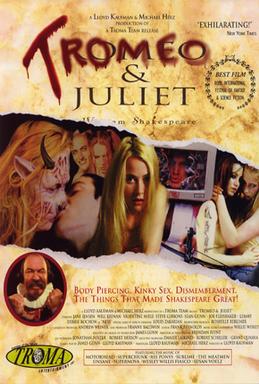
The collection includes Cannibal! The Musical, the first feature film created by South Park creators Trey Parker and Matt Stone. But let’s not overlook these honorable mentions: The Battle of Love’s Return where Oliver Stone made his acting debut; Nightbeast, which features music written by JJ Abrams; and Tromeo and Juliet, the well-reviewed 1996 film that lured in viewers by promising “Body Piercing, Kinky Sex, Dismemberment, The Things That Made Shakespeare Great!”
The Troma catalogue also offers some classic films, including the 1932 film White Zombie with Bela Lugosi and No Substitute For Victory!, a propagandistic pro-Vietnam War documentary hosted by John Wayne. Select films from the Troma YouTube collection will find their way onto our list of 500 Free Movies Online.
Thanks go to Carlos S. for flagging these for us.
Related Content:
21 Free Hitchcock Movies Online
John Wayne: 25 Free Western Films on the Web
Tarkovsky Films Now Free Online
Read More...Joseph Campbell and Bill Moyers Break Down Star Wars as an Epic, Universal Myth
Some of Star Wars’ detractors call the series schlocky, blunt, predictable, and implausible even by fantasy’s standards. A defender might respond that they’re looking at it all wrong: to appreciate Star Wars, you need to watch it as an epic myth. George Lucas himself, who has more or less mounted this argument in response to charges of unsubtlety, rarely seems far from dropping the phrase “the power of myth.” That, surely not coincidentally, is also the title of a 1988 Bill Moyers television series on mythologist Joseph Campbell and his ideas about myth through time and across human cultures. Moyers and Campbell actually conducted their first five episodes’ worth of conversations at Lucas’ Skywalker Ranch. Just as Lucas did his reading of Campbell, Campbell did his reading of Star Wars: in the brief clip from The Power of Myth above, the scholar expresses his enthusiasm for the films’ use of mythological elements drawn from across the world. (Find the complete Power of Myth series on DVD here.)
If you want to know about myth, Campbell remains the go-to guy. You can hear more from him on the Joseph Campbell Foundation’s YouTube channel, which features clips of Campbell on the mythology of the trickster, on myth as mirror for the ego, and, of course, on circumcision. Though obviously not as extensive as the aforementioned in-depth six-hour sit-down between Campbell and Moyers, they’ll still give you a sense of why Campbell’s observations about the eternal relevance of the strongest myths have themselves stayed so relevant a quarter-century after his passing. Applicable essay question: to what extent can we put the relative lack of enthusiasm for the newer Star Wars prequels down to George Lucas not having cracked his copy of The Hero With a Thousand Faces in a while?
Related content:
The Existential Star Wars: Sartre Meets Darth Vader
Colin Marshall hosts and produces Notebook on Cities and Culture. Follow him on Twitter at @colinmarshall.
Read More...Hunter S. Thompson Interviews Keith Richards, and Very Little Makes Sense (1993)
Let’s rewind the videotape to 1993. Gonzo journalist Hunter S. Thompson finally gets to interview Rolling Stones guitarist Keith Richards. The conversation is utterly and predictably incomprehensible. But it’s amusing nonetheless.
Decipherable conversation topics include: if J. Edgar Hoover returned to this world, what form might he take? (A worm? a fart? a weasel?) What was Keith doing on Christmas Eve in 1962, 1966, and 1969? And what exactly went down at the infamous Altamont concert in December 1969?
If you would like to support the mission of Open Culture, consider making a donation to our site. It’s hard to rely 100% on ads, and your contributions will help us continue providing the best free cultural and educational materials to learners everywhere. You can contribute through PayPal, Patreon, and Venmo (@openculture). Thanks!
Related Content:
Johnny Depp Reads Letters from Hunter S. Thompson
Hunter S. Thompson Calls Tech Support, Unleashes a Tirade Full of Fear and Loathing (NSFW)
Keith Richards Interviewed at The New York Public Library
Hunter S. Thompson Gets Confronted by The Hell’s Angels
Read More...Archive of Handwritten Recipes (1600 — 1960) Will Teach You How to Stew a Calf’s Head and More
 If you’ve ever tried to follow a recipe from your grandmother’s collection, squinting at her spidery writing on a stained 3x5 card, you might be a candidate for the University of Iowa Libraries’ latest DIY History project.
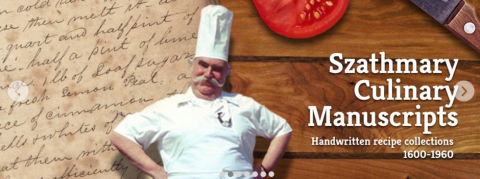
The University’s special collections manages the Szathmary Culinary Manuscipts and Cookbooks, a handwritten collection of American and European recipes from the 1600s to the 1960s.
Helpful foodies, history buffs and handwriting sleuths are invited to participate in UI’s crowdsourcing history project by transcribing digitized images of recipes.
It’s not the first time the university has outsourced a portion of its archival handwork. Last year the Civil War Diaries and Letters Transcription Project was powered by volunteers, who transcribed more than 15,000 pages of material. All you need to do is select a page from within the collection and get started. So far more than 17,000 pages have been transcribed and volunteers chat and post questions on a discussion forum.
An example of the historical nuggets uncovered while transcribing: a posnet is an 18th century term for a small metal pot, a spider is a skillet, and to scearce is to sift. Of course no cookbook historian has completed their task until they have actually tried the recipes themselves. This could be interesting for the lucky transcriber of a recipe from Abigail Wellington Townsend’s cookbook, circa 1840:
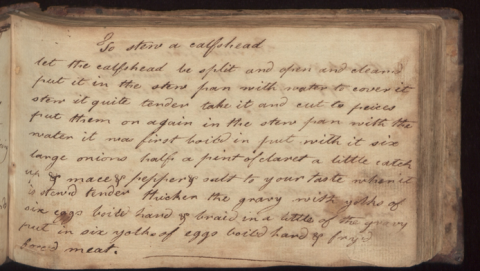
To stew a calfshead, let the calfshead be split and open and cleaned put it in the stew pan with water to cover it stew it quite tender take it and cut it to pieces put them on again in the stew pan with the water it was first boiled in put with it six large onions half a pint of claret a little catch up a little mace & pepper & salt to your taste when it is stewed tender thicken the gravy with yolks of six eggs boiled hard & braid in a little of the gravy put in six yolks of eggs boiled hard & fry’d forced meat.
Kate Rix writes about digital media and education. Find more of her work at and thenifty.blogspot.com.
Read More...Mountain Biker Joy Rides on a $13,000 Carbon Road Bike
Professional cycling has certainly seen better days. Last week, the International Cycling Union formally stripped Lance Armstrong of his seven Tour de France titles. This came after Armstrong refused to contest an evidence-filled case prepared by the U.S. Anti-Doping Agency, and after Armstrong’s former teammates started confessing to doping one by one. (On that note, Tyler Hamilton, once a domestique for Lance, gave a rather revealing radio interview this week, along with Daniel Coyle. Together they co-wrote a new book, The Secret Race: Inside the Hidden World of the Tour de France: Doping, Cover-ups, and Winning at All Costs.) Anyway, this is all a long way of saying that cycling fans could use something to smile about. And maybe this fits the bill: Above, we have Martyn Ashton, a well-known mountain biker, taking a $13,000 Pinarello Dogma 2 out for a very casual radical spin. Enjoy.
Boris Karloff and Bela Lugosi Square Off in a Monstrous Game of Chess (1934)
Long before the release of the cult film Dracula vs. Frankenstein (Rotten Tomatoes calls the 1971 movie “a slapdash epic of bad filmmaking”), the original stars of Dracula and Frankenstein met face to face–for a game of chess.
The scene is from an early 1934 episode of Columbia Pictures’ Screen Snapshots, a series of short films featuring the off-screen lives of Hollywood stars. Carl Laemmle at Universal Pictures had recently come up with the idea of casting Boris Karloff, who played the monster in the 1931 film Frankenstein, and Bela Lugosi, star of the same year’s Dracula, together in one movie. The Black Cat, based very loosely on the short story by Edgar Allan Poe, premiered in May of 1934 with Karloff and Lugosi at the top of the bill.
The appearance by Karloff and Lugosi on Screen Snapshots #11 was essentially a covert promotion for The Black Cat, but because Columbia and Universal were rivals the film isn’t mentioned. Instead, the two horror stars talk about the “Film Stars Frolic,” a fundraising event for the Screen Actors Guild that coincided with the opening of Gilmore Stadium in Los Angeles–and, as it happened, with the premiere of The Black Cat. The Screen Snapshots vignette begins with an atmosphere of menace as the two men frown at one another.
“Are you ready for the test, Dracula?” says Karloff.
“I’m ready, Frankenstein,” says Lugosi.
“Then–let us begin.”
At which point the two men break out laughing as the camera pulls back to reveal a chess board. For some reason Dracula has the white pieces.
Related content:
Bela Lugosi Discusses his Drug Habit as He Leaves the Hospital in 1955
Read More...The Known Universe: The Hayden Planetarium’s Tour of the Cosmos Gets a Hans Zimmer Soundtrack
The German composer Hans Zimmer has made a name for himself (and earned a star on the Hollywood Walk of Fame) by creating original scores for films. You’ve heard his music, even if you haven’t heard of him. The Lion King, The Dark Knight and Inception are a few of the films he scored.
If you’ve seen Inception then the music behind this video will sound familiar. Zimmer’s music plays behind a small video with vast subject matter: The Known Universe, a six minute tour of, that’s right, the entire known universe. Put together in 2009 by the Hayden Planetarium in NYC, the video originally had a more New Agey, orchestral score. Zimmer’s track is beautiful and thankfully somebody decided to lay it down behind the Planetarium’s video. The results are amazing, a slicker version of Charles and Ray Eames’ famous film Powers of Ten, but with a more distant starting and ending point.
Where Powers of Ten started its tour out at a bird’s eye level above Earth, The Known Universe begins above the planet’s highest point, above the Himalayan Mountains, and quickly pans out to show the Moon’s orbit, the orbits of the other planets in our solar system, and beyond.
Really beyond—all the way into the afterglow of the Big Bang. And even though it’s a simulation, it’s an accurate one.
The Known Universe was made using the Digital Universe Atlas, a four-dimensional map of the universe maintained and updated by astrophysicists at the American Museum of Natural History.
Slip into your headphones and enjoy Zimmer’s music. The piece is called “Time (We Plants are Happy Plants Remix)” and it’s a tuneful, upbeat soundtrack that’s out of our galaxy.
Are you watching, Carl Sagan?
Kate Rix writes about digital media and education. Find more of her work at .
Read More...Watch James Burke’s TV Series Connections, and Discover the Unexpected History of Innovation
Even if we didn’t grow up as science fans, all of us caught at least the occasional television show on science history. Some came expertly produced. Others packed the information to a very high density (by TV’s standards, at least). Others cracked jokes to keep our wits engaged. Others got us intrigued enough about a particular discovery to perform our own further research at the library or on the internet. But those of us who came of age during a run of one of James Burke’s Connectionsseries got all of that at once, executed on a higher plane, and with quite different philosophical premises. Designing each of his programs to examine a different nexus between several elements of science, nature, and engineering, Burke premises these narratives on the inseparability of human ingenuity, historical coincidence, and sheer accident. How, for instance, did we end up in a world of film projectors (currently being displaced by digital projectors though they may be)? For the answer, Burke argues, you’ve got to start with medieval castle fortifications. Then you work your way through cannons, mapping, limelight, billiard-ball ivory, guncotton, the zoopraxiscope, Morse code, and the phonograph. These technological threads all converge to give us the cinematic experience we enjoy today — or enjoyed in 1978, anyway.
If you enjoyed that episode of Connections back then, know that you can now relive it on a Youtube channel dedicated to Burke and his shows. If you never watched any in the first place, you can now catch up on not just the ten episodes of the original Connections, but 1994’s twice-as-long Connections2, and the final series, 1997’s Connections3. I recommend beginning at the beginning, with Connections’ first episode, “The Trigger Effect,” embedded above. It gets you into the mindset of Burke’s “alternative view of change” by breaking down and illustrating the very concept of human reliance on complexly connected networks. The program’s clear and fast-moving but no-stone-unturned methodology of explanation takes you through the New York Blackout of 1965, ancient Egyptian agriculture, and the oil fields of Kuwait. Reach the end of the third series, and you wind up learning just how much the Eiffel Tower has to do with the Elgin Marbles, Benjamin Franklin, London Bridge, and the ZIP code. Burke emphasizes that none of the historical agents involved in all these scattered small innovations that enabled the big ones — the ones with such effects on our modern lives — could have planned for things to go the way they did. His stories thus grant us more than a bit of humility about predicting the innovations of the future, built as they will be atop the kind of complexity that not even Connections ever described.
Related content:
Exquisite Paper Craft Animations Tell the Stories of Words
The Science of the Olympic Flame; Ancient Style Meets Modern Technology
Colin Marshall hosts and produces Notebook on Cities and Culture. Follow him on Twitter at @colinmarshall.
Read More...50 Free Online Certificate Courses Starting Soon (Including Intro to Philosophy)
A quick heads up: Several weeks back, we rolled out a handy list of Free Courses Granting Certificates from Great Universities. We started with 60 courses, and we’ve now added another 50. They all start in the near future (between November and January), and they mostly come from the two biggest providers of Massive Open Online Courses — Coursera and Udacity (which just landed $15 million in funding last week).
Above we’re featuring a clip promoting a course called Introduction to Philosophy. It comes courtesy of the University of Edinburgh, an institution first founded in 1583, that hopes to teach a timeless discipline in a new way. So far, Coursera and Udacity have only offered courses in science and technology — in disciplines that yield rather quantifiable answers. Now it’s time to see how they can handle subjects where the questions and answers are more subtle. The free course begins on January 28, and any student who successfully completes the interactive course will receive “a certificate signed by the instructors.” Sign up here, and find a complete list of online certificate courses here.
Related Content:
The Big List of 530 Free Online Courses from Top Universities (New Additions)
55 Free Philosophy Courses
A Big List of 375 Free eBooks for Your iPad, Kindle, Nook and Other Devices
Read More...Support Us
We're hoping to rely on loyal readers, rather than erratic ads. Please click the Donate button and support Open Culture. You can use Paypal, Venmo, Patreon, even Crypto! We thank you!

About Us

Open Culture scours the web for the best educational media. We find the free courses and audio books you need, the language lessons & educational videos you want, and plenty of enlightenment in between.
Advertise With Us

FREE UPDATES!
GET OUR DAILY EMAIL
Get the best cultural and educational resources on the web curated for you in a daily email. We never spam. Unsubscribe at any time.
FOLLOW ON SOCIAL MEDIA

Open Culture editor Dan Colman scours the web for the best educational media. He finds the free courses and audio books you need, the language lessons & movies you want, and plenty of enlightenment in between.
Advertise With Us