Fellini: I’m a Born Liar Profiles the Filmmaker’s Love of Artifice (and Features Italo Calvino)
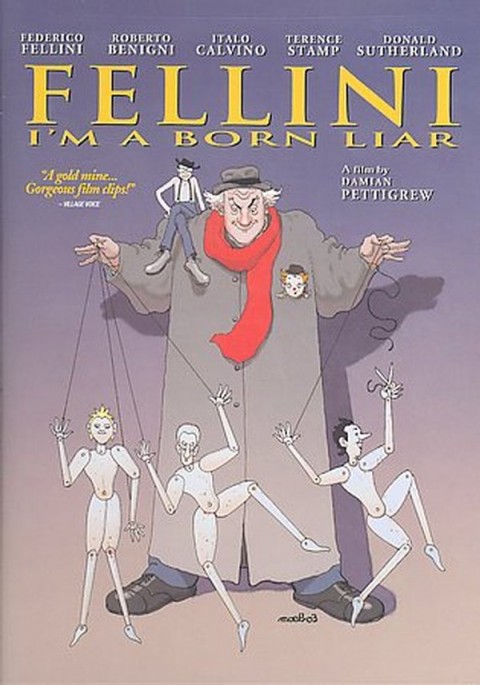
“If you know little about Fellini,” warns Roger Ebert in his review of Fellini: I’m a Born Liar (watch it free online here), “this is not the place to start.” Perhaps he rightly issues such a disclaimer about a formally unorthodox documentary that plunges deeply and immediately into the aesthetics of its subject’s work while paying barely any heed to the facts of his life. But if you can’t say that Federico Fellini dealt near-exclusively in aesthetics, you can’t say it about anyone. The director’s love of artifice, which eventually led to his total dedication to shooting all scenes on a soundstage, produced motion pictures so flamboyant yet so distinctive and personal that first-time viewers still find themselves undecided as to whether to call them elegant or grotesque. The verdict, as any regular attendee of revival screenings of 8½, Juliet of the Spirits, Satyricon, and Amarcord knows, is that they’re both: grotesque to the extent of their elegance, and elegant to the extent of their grotesqueness. This already gives documentarian Damian Pettigrew much to work with, and indeed, he would have had the material and expertise to assemble a robust essay film on Fellini’s visuals alone. But he chose to make a fresher examination.
Though he premiered the movie in 2002, Pettigrew’s real work on I’m a Born Liar began nearly twenty years before. In 1983, he met with the Italian novelist Italo Calvino, intending to shoot a documentary about him. But upon realizing that their conversations came around inevitably to Fellini, the writer arranged a surprise meeting of the two filmmakers. Years later, Fellini would submit to the ten-hour interview from Pettigrew that structures this film. Certain collaborators give testimony, notably still-shaken actors like Donald Sutherland and Terence Stamp. But Calvino’s own appearance turns out to shed the most light on his countryman’s work, and vice versa, not least because both of them preferred to find the truth through elaborate fabrication. I’m a Born Liar’s surprisingly thorough Wikipedia page quotes a passage from Calvino’s Mr. Palomar that supposedly inspired Fellini on a shoot, but may also reflect the whole basis of his craft: “Life on the surface is so rich and various that I have no urge to enquire further. I believe that it is only when you’ve come to know the surface of things that you can try to find out what lies beneath. But the surface of things is inexhaustible.”
Related content:
Federico Fellini Introduces Himself to America in Experimental 1969 Documentary
Fellini’s Fantastic TV Commercials
John Turturro Reads Italo Calvino’s Animated Fairy Tale
Colin Marshall hosts and produces Notebook on Cities and Culture. Follow him on Twitter at @colinmarshall.
Read More...Watch Historic Footage of Joseph Kittinger’s 102,800 Jump from Space (1960)
When I first heard that 43-year old Austrian daredevil and former military parachutist Felix Baumgartner would be jumping 128,000 feet from space, my immediate reaction was, “What? Why?!” Because why would anyone do that? And I assumed it was all some macho stunt to promote Red Bull, his corporate sponsor, which isn’t entirely unfounded. But I also had no sense of the historic context, the scientific implications, and until I read the details, the truly death-defying magnitude of it all. As I watched the jump and then learned more, my wonder and admiration grew, particularly in reading Baumgartner’s own accounts of his seven years of preparation for the feat.
Baumgartner bested Chuck Yeager on the same day in history that Yeager broke the sound barrier (he says Yeager’s going to be “pissed”). He also broke the record set by Joseph Kittinger, an Air Force pilot who leapt from 102,800 feet (19.5 miles) above earth in 1960. You can watch a short documentary of Kittinger’s famous jump above. The technology of 1960 didn’t allow for the crystal-clear images Baumgartner captured with his two suit cameras, but it’s still an impressive little film, made more so by Kittinger’s voice over describing the sensations he experienced during free fall. Below is a classic 1960 newsreel film of the jump, with a dramatic announcer and triumphal, martial music.
Kittinger and Baumgartner first met in 2008, and the elder test pilot supported and helped plan the Red Bull Stratos project that would break his record. He also served as Baumgartner’s mission control, guiding him from his tiny space capsule to the ground. The jump was apparently supposed to take place two years earlier, on the 50th anniversary of Kittinger’s, but was delayed. Below, you can watch Kittinger discuss the project and his own career in a 2010 interview with Red Bull.
Josh Jones is a doctoral candidate in English at Fordham University and a co-founder and former managing editor of Guernica / A Magazine of Arts and Politics.
Read More...The Writer Who Couldn’t Read … And What That Tells Us About the Brain
It happened suddenly one day. Howard Engel, a Canadian mystery writer, woke up and realized he couldn’t read the daily newspaper, let alone his own novels. He had suffered a stroke, it turns out, that left him with a rare condition called alexia sine agraphia, a condition that strangely leaves victims unable to read, but able to write. It seems paradoxical. Reading and writing go hand in hand, right? Not necessarily, and that’s why we’re glad that we have NPR’s artful video here to explain.
Read More...Remembering Janis Joplin: Some Classic Live Performances and Previews of a New Joplin Musical
Janis Joplin died forty-two years ago this month at age 27 of the same excesses that killed many of her peers and at the absolute height of her career. But in the mid-nineteen fifties, Joplin was a misfit kid with terrible acne living a lonely existence in Port Arthur, Texas. Then she discovered the blues, and it transformed her. Bessie Smith and Leadbelly, Odetta and Aretha Franklin. By 1964, she was living in San Francisco and recording blues standards with future Jefferson Airplane guitarist Jorma Kaukonen. She rose to prominence and found herself a place to fit in with psychedelic pioneers Big Brother and the Holding Company. Big Brother didn’t initially take to Joplin’s soulful rasp, but she eventually won them over, and won millions of fans over to the band, particularly with their second album Cheap Thrills, which spawned the single “Piece of My Heart,” and my favorite, her rendition of blues classic “Ball and Chain.” Her performance of the latter at the Monterey Pop Festival in 1967 is legendary, and the recording of it above is pristine, with excellent live sound quality and close-up camera angles of Joplin and the rest of the band.
Joplin broke away from Big Brother shortly after Cheap Thrills and formed a solo act, touring and recording with The Kozmic Blues Band, with whom she recorded just one album, I Got Dem ‘Ol Kozmic Blues Again Mama!. Critics didn’t love it, but this transitional phase was important for Janis since it enabled her to work in a more blue-based sound better suited to her dramatic persona. Kozmic draws on the classic Stax/Volt records template, with horns and backing vocals as prominent accompaniment. The record’s strongest moments are probably the Bee Gees-penned “To Love Somebody” and the funk-soul “Try (Just a Little Bit Harder)” (above in Frankfurt, Germany).
In the last year of her life, Joplin headlined the all-star Festival Express train tour through Canada, with Buddy Guy, The Band, The Grateful Dead, and others. The tour was documented by Academy Award winning cinematographer Peter Biziou and the footage has been acquired by Historic Films Archive, who are digitizing almost 96 hours of film from the tour, including, they claim, the only known live footage of Joplin singing “Me and My Bobby McGee.” Below is a full, energetic, performance of “Tell Mama” from the Festival Express tour:
Joplin continued, through most of that year, to elevate her art, recording the best-selling, posthumously-released Pearl with new backing band Full Tilt Boogie. This is the Joplin most casual fans know—of “Me and My Bobby McGee” and “Mercedes Benz,” and for good reason. One of her final public appearances was on The Dick Cavett Show in June of 1970 (below), where she performs several live numbers with Full Tilt Boogie. In Cavett’s interview with her, Joplin returns to her painful teenage years, saying that her high school classmates “laughed me out of class, out of town, and out of the state.”
While the final period of Joplin’s life saw her produce some incredible work, her name occasionally becomes a shorthand for rock and roll excesses that obscure her amazing, if all-too-brief, career. In an effort to celebrate her life, rather than dwell on her death, the producers of the new show One Night With Janis Joplin (currently at the Arena Stage in Washington, DC) elide the drug abuse that killed her and focus on the music. Joplin’s brother Michael talks about their musical upbringing in the video below, which also includes clips from the loosely-plotted musical, with Mary Bridget Davies as the star.
Josh Jones is a doctoral candidate in English at Fordham University and a co-founder and former managing editor of Guernica / A Magazine of Arts and Politics.
Read More...
Amazing Human-Powered Helicopter Closes in on $250,000 Prize
A team of student engineers at the University of Maryland are closing in on the American Helicopter Society’s $250,000 Sikorsky Prize, which has remained unclaimed for over thirty years. The requirements of the prize sound simple enough. The winner must build and demonstrate a human-powered helicopter that can lift off the ground vertically and hover for one minute, reaching a height of three meters (about 10 feet) without drifting from a 10-square-meter area. But as this video from the NPR “Radio Pictures” series explains, those parameters test the limits of light-weight aircraft design. After four years of trial and error, the Maryland team has satisfied two of the three requirements. In one recent flight they kept their helicopter, the Gamera II, in the air for a world-record 65 seconds while staying within the required 10-meter area–but only reaching a height of two feet. In shorter flights they’ve approached the 10 foot goal. To learn more about the project you can read and listen to Adam Cole’s story at NPR, “Human-Powered Helicopter: Straight Up Difficult.”
Read More...Helen Keller Pays a Visit to Martha Graham’s Dance Studio Circa 1954
Helen Keller’s story is remarkable. With the help of Anne Sullivan, Keller (1880–1968) escaped from a “double dungeon of darkness and silence” and achieved great things. In 1904, she graduated from Radcliffe College (now Harvard), becoming the first deaf blind person to earn a B.A. in the U.S.. She went on to write 14 books (a few more than the rest of us) and championed important political causes. A radical at heart, she backed women’s suffrage and birth control movements, helped found the ACLU, urged pacifism, and railed against capitalism. She counted many world leaders and cultural luminaries as friends, palling around with figures like Charlie Chaplin and Mark Twain. And then there’s the time she paid a visit to the dance studio of Martha Graham and gained a tactile introduction to modern dance. The narrator describes the memorable scene fairly well. But, if you want more backstory and photos, you should head over to BrainPickings to get the bigger picture.
Related Must-See Video: Helen Keller and Anne Sullivan Together in 1930
Read More...Tune into Allen Ginsberg’s Poetry Teaching Marathon (Free Streaming Audio)
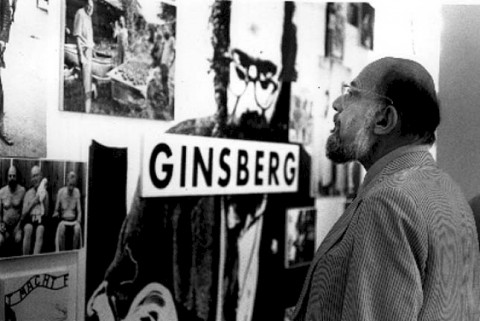
Definitely worth a quick heads up: The folks who run PennSound, the poetry audio archive at the University of Pennsylvania, have been streaming a marathon of Allen Ginsberg’s poetry classes, all recorded at the Naropa Institute during the 1970s and 1980s. If you ever wondered how the finest poet of the Beat Generation taught poetry, now is your chance to find out. But don’t dilly-dally around. The marathon will likely wrap up by Wednesday or Thursday. Find the audio stream here.
via @SteveSilberman via Poetry Foundation
Related Content:
Allen Ginsberg Reads His Classic Beat Poem, Howl
Bob Dylan and Allen Ginsberg Visit the Grave of Jack Kerouac (1979)
Read More...
Ray Bradbury Appears with Groucho Marx on You Bet Your Life (1955)
In 1955, Ray Bradbury paid a visit to Groucho Marx’s iconic game show You Bet Your Life. Bradbury, then 35 years old, had already published some of his now classic works. But apparently Fahrenheit 451 and The Martian Chronicles hadn’t made their way onto Groucho’s reading list. When Marx asked Bradbury what he did for a living, Bradbury had to clarify things. “I’m a writer. W‑r-i-t-e‑r.” Not a “rider” of motorcycles or ponies. Perhaps it was a serious exchange. Perhaps it was all part of a scripted joke. Either way, it’s a great clip from the increasingly distant past. You can watch the complete episode here.
For more Bradbury classic, spend time with:
Ray Bradbury Gives 12 Pieces of Writing Advice to Young Authors (2001)
Ray Bradbury: Literature is the Safety Valve of Civilization
Ray Bradbury Reads Moving Poem on the Eve of NASA’s 1971 Mars Mission
via i09
Read More...Download 397 Free Art Catalogs from The Metropolitan Museum of Art
Earlier this year, the Guggenheim Museum put online 65 modern art books, giving you free access to books introducing the work of Alexander Calder, Edvard Munch, Francis Bacon, Gustav Klimt & Egon Schiele, and Kandinsky. Now, just a few short months later, the Metropolitan Museum of Art has launched MetPublications, a portal that will “eventually offer access to nearly all books, Bulletins, and Journals” published by the Met since 1870.
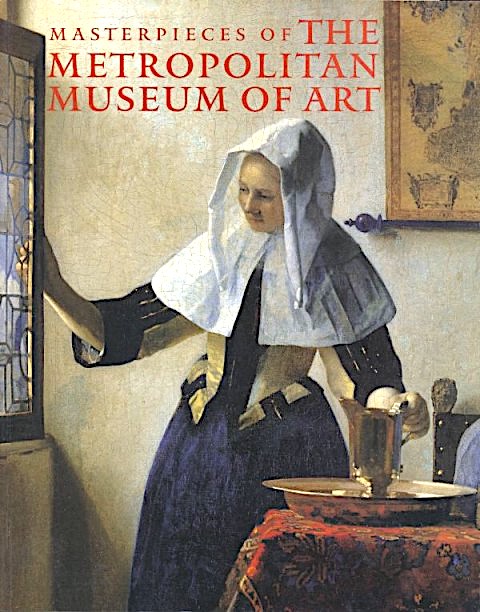
Of the many resources you can explore, here’s one obvious highlight: MetPublications now makes available 397 out-of-print titles, including lots of informative and visually-packed art catalogs from the museum’s past exhibitions. You can read the books online or download them in PDF format (although I should warn you that the PDF downloads take some time, so be patient). When you rummage around, you’ll come across works like these and more:
- Al-Andalus: The Art of Islamic Spain
- American Impressionism and Realism: The Painting of Modern Life, 1885–1915
- American Art Posters of the 1890s in The Metropolitan Museum of Art
- Degas: The Artist’s Mind
- Leonardo da Vinci: Anatomical Drawings from the Royal Library
- Masterpieces of The Metropolitan Museum of Art
- The Art of Illumination
- Vermeer and the Delft School
- Wisdom Embodied: Chinese Buddhist and Daoist Sculpture in The Metropolitan Museum of Art
- Words and Images: Chinese Poetry, Calligraphy, and Painting
Related Content:
MoMA Puts Pollock, Rothko & de Kooning on Your iPad
Google “Art Project” Brings Great Paintings & Museums to You
The History of Western Architecture: From Ancient Greece to Rococo (A Free Online Course)
Read More...
Alan Rickman Does Epic Violence to a Cup of Tea in Super Slow Motion
“Epic Tea Time with Alan Rickman” comes from a video series called Portraits in Dramatic Time, which features “an array of glacially paced performances of theater artists and actors.” According to its creator David Michalek, the portraits, each offering “a physical metaphor for an emotional condition,” were originally projected onto a building facade at Lincoln Center in New York City during a 2011 festival. This particular portrait shows actor Alan Rickman (you know him from Harry Potter, Dogma, Die Hard, etc.) doing epic violence to a cup of tea. As one YouTuber put it, “It’s a bit like watching God create the universe. A very angry God.”
If you would like to support the mission of Open Culture, consider making a donation to our site. It’s hard to rely 100% on ads, and your contributions will help us continue providing the best free cultural and educational materials to learners everywhere. You can contribute through PayPal, Patreon, and Venmo (@openculture). Thanks!
Read More...Support Us
We're hoping to rely on loyal readers, rather than erratic ads. Please click the Donate button and support Open Culture. You can use Paypal, Venmo, Patreon, even Crypto! We thank you!

About Us

Open Culture scours the web for the best educational media. We find the free courses and audio books you need, the language lessons & educational videos you want, and plenty of enlightenment in between.
Advertise With Us

FREE UPDATES!
GET OUR DAILY EMAIL
Get the best cultural and educational resources on the web curated for you in a daily email. We never spam. Unsubscribe at any time.
FOLLOW ON SOCIAL MEDIA

Open Culture editor Dan Colman scours the web for the best educational media. He finds the free courses and audio books you need, the language lessons & movies you want, and plenty of enlightenment in between.
Advertise With Us

