Glenn Gould Predicts Mash-up Culture in 1969 Documentary
Like the Beatles, Canadian piano virtuoso Glenn Gould gave up live performance in the mid-1960s and focused his creative energies on recording. “At live concerts,” he told an interviewer, “I feel demeaned, like a vaudevillian.” Gould ruffled quite a few feathers in the classical music establishment when he publicly embraced the practice of splicing together pieces of tape from different recordings to create a new performance. In effect, he provoked a re-evaluation of the word “performance.” In this short 1969 documentary from the Canadian Broadcasting Corporation’s Telescope series, Gould talks about the reasons for his dislike of playing concerts and his philosophy of art in the age of electronic recording. In the prologue, he more or less predicts today’s mash-up culture:
I have a feeling that the end result of all our labors in the recording studio is not going to become some kind of autocratic finished product such as we turn out now with relative ease, with the help of splice-making which we do or which engineers do for us, but is going to be a rather more democratic assemblage. I think we’re going to make kits, and I think we’re going to send out these kits to listeners, perhaps to viewers also, as videotape cartridge gets into the act, as I think it will, and we’re going to say, Do it yourself. Take the assembled components and make of those components something that you genuinely appreciate. If you don’t like the result as you put together the first time, put it together a second time. Be in fact your own editor. Be, in a sense, your own performer.
Variations on Glenn Gould offers a fascinating take–or, as the title suggests, several different takes–on Gould’s world-view. There is a short musical interlude, in which he plays an excerpt from the first movement, “Allegro ma non troppo,” of Beethoven’s Symphony No. 6 in F Major. And within the 24-minute time frame, the filmmakers allow Gould to develop his idiosyncratic thoughts on several subjects, including his “contrapuntal radio documentaries’ and his sense of isolation from society. “I absolutely enjoy being surrounded by a sort of electronic wallpaper, having music everywhere about me,” says Gould. “I think that it gives a certain shelter, and sets you apart. And I think that the only value I have as an artist–the only value most artists have, whether they realize it or not– is their particular isolation from the world about which they write, and to which they hope to contribute.”
Related Content:
A Young Glenn Gould Plays Bach
Glenn Gould and Leonard Bernstein Play Bach
Read More...Why the University System, as We Know It, Won’t Last .… and What’s Coming Next
It’s easy to sell books and other commodities on the web. It’s not easy to deliver a quality education. But two converging trends point toward a future when we will see the traditional university give way to an online alternative — something I wasn’t willing to bank on two years ago. First, Silicon Valley is finally focusing on e‑learning. Udacity, Coursera, Kahn Academy, EdX — they’re all looking to lift e‑learning out of a long period of stagnation. And, second, times are tough, and the traditional university system doesn’t care enough about managing costs, while wrongly assuming that it has a captive audience.
This weekend, The New York Times took a good look at the financing of a college education and highlighted a few staggering data points.
- The U.S. has racked up more than $1 trillion in student loans.
- Today 94 percent of students earning a bachelor’s degree take out loans — up from 45 percent in 1993.
- It’s estimated that the “average debt [per student] in 2011 was $23,300, with 10 percent owing more than $54,000 and 3 percent more than $100,000.”
- “Payments are being made on just 38 percent of the balance of federal student loans, down from 46 percent five years ago.”
- Finally, state funding of education is going down, and tuition is going up, which means that the figures above will just get worse.
You don’t need me to spell things out. Paying for a college education is getting unsustainable, so much so that many expect a crisis in the college loan market in the coming years. And then you consider this. Many universities seem indifferent to the difficulties students face, if they’re not intentionally exacerbating the problem. At one point in the Times article, E. Gordon Gee, the president of Ohio State University, goes on record saying, “I readily admit it … I didn’t think a lot about costs. I do not think we have given significant thought to the impact of college costs on families.” Now listen to the latest episode of Planet Money, The Real Price of College (audio), which underscores a more galling fact — many colleges think that they gain a competitive advantage if they have a high sticker price. For many schools, lower tuition is a sign of weakness, not strength.
Universities can behave this way because they think they have a captive audience. Because college grads still earn considerably more than high school grads, colleges assume that students will keep enrolling. But what will happen when cash-strapped students are presented with a viable alternative? It may take 10 to 20 years, but I wouldn’t be surprised if a new breed of school emerges, schools that throw away the four year model (and the humanities too) and offer students a very targeted online education in “practical” fields — from accounting to coding to nursing to law and business — at a dramatically lower cost. Here, the education cycle gets shortened to perhaps two years, and then students get credentialed (maybe by a trusted third-party provider) and go to work, only to return later in their careers to take more courses in specialized areas. This model will require the right technology platform (something that will get worked out fairly soon) and a change in the expectations of employers and society more broadly (something that will take time to develop, but less time than complacent colleges think).
The new system won’t be better than the current one in many respects. It won’t offer a rounded education. The teaching will be less personal. Long-lasting social bonds won’t be made as easily. (You’ll need to pay the big bucks at a traditional school for that. No, they won’t all go away.) And the teaching jobs created by these universities won’t be terribly fulfilling or lucrative. But the new system will offer a more focused and affordable education to students on a mass scale. And when students graduate mostly debt free, they won’t complain. Nor will they be forced to forego college altogether, as some would now advocate. There’s perhaps something inevitable about this shift. But the insouciance of administrators and faculty inhabiting the current system won’t do anything to delay it. Stick around, and you’ll probably see that I’m right. And if you think my look into the crystal ball is wrong, let me know.
In the meantime, we give you another take on how to solve our world’s educational problems — Father Guido Sarducci’s Five Minute University:
For oodles of free courses, don’t forget to visit our collection of 450 Free Courses from Top Universities.
Read More...
Neil deGrasse Tyson & Richard Dawkins Ponder the Big Enchilada Questions of Science
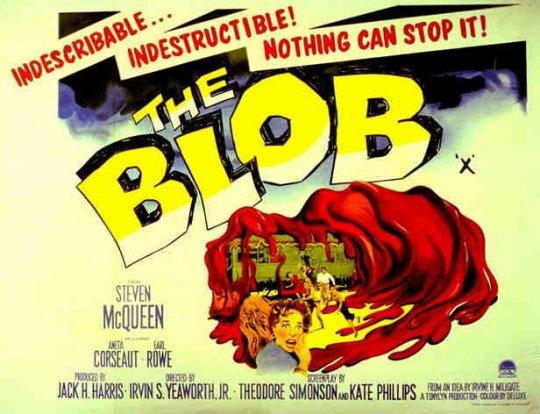
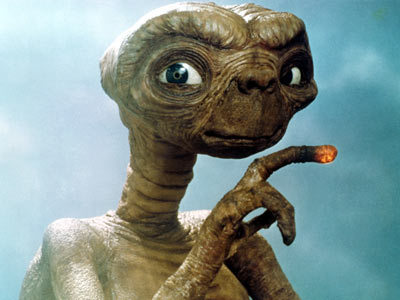
Whenever you bring together Neil deGrasse Tyson and Richard Dawkins — one the public face of astrophysics, the other the public face of biology — you’re pretty much guaranteed a good crowd and a spirited conversation. And that’s what students got in September 2010, when the scientists shared the stage at Howard University and considered some big enchilada questions. For example: Why did our mind — from an evolutionary point of view — lead us to abstract mathematics, which drives the major discoveries in physics? What are the chances that we’ll discover intelligent life in the universe, and, if they discover us (rather than the other way around), could we, as a civilization, be in big trouble? Is natural selection operative throughout the universe and would aliens look anything like us? And why is The Blob a much better alien than ET? In short, they’re considering just the kinds of mind-bending questions that college students love to entertain — and hopefully you do to. Their conversation runs about 50 minutes and a Q&A follows.
Related Content:
Neil deGrasse Tyson Lists 8 (Free) Books Every Intelligent Person Should Read
125 Great Science Videos: From Astronomy to Physics & Psychology
30 Free Physics Courses from Top Universities (More Free Courses here)
Read More...Headbanging Anthropologist Takes Us Through the World of Heavy Metal in 2005 Documentary
Don’t worry; I don’t know anything about metal either. As least, I didn’t know anything about it before I watched Metal: A Headbanger’s Journey, a 2005 documentary on this vast yet much-derided musical subculture that you can watch on YouTube. Sam Dunn, an anthropologist, bassist, and unapologetic metalhead, uses the film to ask many question about his favorite music: what exactly is metal? How do metal players get it to sound so evil? Why does one person give himself over completely to the metal lifestyle, while another barely notices its existence at all? What feeling do the most die-hard fans get from metal, and how do they get addicted to it? Why does metal’s mostly straight male audience thrill to the sight of metal’s mostly straight male performers strutting around in tight leather? How did metal grow so many subgenres — black metal, glam metal, power metal, death metal? Does Satan really have anything to do with metal, or does it all come down to a big piece of Halloween-ish theater? And how come northern Europeans take metal so deadly seriously?
In pursuit of the answers, Dunn travels the world interviewing metalists of every stripe, from Rob Zombie to Alice Cooper to Rush bassist Geddy Lee to Twisted Sister frontman Dee Snider to Iron Maiden’s multitalented Rob Dickinson to a pair of masked men from Slipknot. He even talks twice to the late Ronnie James Dio, the singer who supposedly popularized the now-universal sign of the horns metal hand gesture. Seeking context for these first-hand accounts, Dunn talks to academic sociologists and musicologists as well as the mile-a-minute cultural essayist Chuck Klosterman. Following his anthropological instinct, he also puts in a great deal of time with fellow metalheads of myriad ages and nationalities (though they usually come from the same range of grimly dull childhoods). Dunn’s disarming personality and undying enthusiasm for the material offer a way into this seemingly contradictory musical culture of virtuosity and brutality, whose creators sing in death grows yet speak eloquently, whose hardened outsider followers somehow find in it a fount of community, friendship and belonging.
via Metafilter
Colin Marshall hosts and produces Notebook on Cities and Culture. Follow him on Twitter at @colinmarshall.
Read More...Remembering Donald ‘Duck’ Dunn, the Backbone of Memphis Soul, with Grooving Video
The legendary bassist Donald ‘Duck’ Dunn has died at the age of 70. As a member of the Stax Records house band in the 1960s, Dunn laid down the bass line for some of the greatest songs of the era, including Wilson Pickett’s “In the Midnight Hour,” Sam & Dave’s “Soul Man,” and Albert King’s “Born Under a Bad Sign.” He and other members of the Stax band recorded a series of classic instrumentals under the name Booker T. and the MG’s. The video above features Dunn and his bandmates–guitarist Steve Cropper, drummer Al Jackson, Jr., and keyboardist Booker T. Jones–performing “Green Onions,” though that particular song was first recorded before Dunn joined the band.
Dunn died while on a Stax music tour of Japan with Cropper and Eddie Floyd. Cropper, who grew up with Dunn in Memphis, broke the news on his Facebook page. “Today I lost my best friend, the World has lost the best guy and bass player to ever live,” wrote Cropper. “Duck Dunn died in his sleep Sunday morning May 13 in Tokyo Japan after finishing 2 shows at the Blue Note Night Club.” No cause of death has been announced.
Expressions of sympathy and grief have been spreading across the Internet. “I can’t imagine not being able to hear Duck laugh and curse,” wrote Booker T. Jones on his Web site, “but I’m thankful I got to spend time and make music with him.” On Twitter, Red Hot Chili Peppers bassist Flea wrote, “What a deep pocket that dude had, so glad I got to see him play, beautiful bass player we’ll be listening to forever.” And former Rolling Stones bassist Bill Wyman, who had been in daily e‑mail contact with Dunn up until the day before he died, paid tribute to his friend by posting a video on his Web site showing Dunn performing “Try a Little Tenderness” with Otis Redding on the 1967 Stax European tour. You can see it below.
The Original Episode of Dark Shadows, the 1960s TV Series That Inspired Tim Burton’s New Film
For millions of American kids growing up in the late 1960s, it was a thrill to run home from school and flip on the TV in time to hear the creepy theremin music at the beginning of Dark Shadows. A soap opera with a vampire! There was something strangely subversive about it. As a headline writer for The New York Times recently put it, Barnabas Collins (the undead star of the show) was “The Vampire Who Came Out in the Afternoon.”
Tim Burton was one of those kids who ran home to watch the show. “I should probably have been doing homework or playing sports after school instead of watching ‘Dark Shadows,’ ” Burton told Terrence Rafferty for the Times article. “But seeing that show every afternoon, at home, in Burbank, it just doesn’t get much weirder than that.”
It might get just a little weirder tonight, with the American opening of Burton’s campy new film adaptation of Dark Shadows, starring Johnny Depp as Barnabas Collins. The movie has been getting positive reviews. Manohla Dargis in The New York Times calls it “Mr. Burton’s most pleasurable film in years.” To help get you in the spirit, so to speak–and to add perspective–we’re taking you back to the very first episode of the original series (above) from June, 1966. Alas, Barnabas Collins didn’t make his appearance until episode number 211, a year later. The actor who played Collins, Jonathan Frid, died last month at the age of 87. He makes a cameo appearance in Burton’s movie. For a preview of the film, see below. You can purchase the complete Dark Shadows TV series on DVD here, which comes in a nice package of 131 discs.
Related Content:
Vincent: Tim Burton’s Early Animated Film
Frankenweenie: Tim Burton Turns Frankenstein Tale into Disney Kids Film (1984)
Tim Burton’s The World of Stainboy: Watch the Complete Animated Series
Read More...James Joyce Manuscripts Online, Free Courtesy of The National Library of Ireland
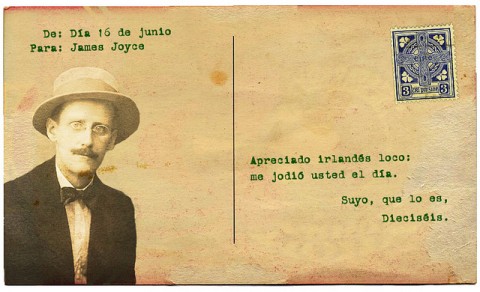
Soon, the National Library of Ireland will re-scan, re-organize, and fully contextualize its online collection of James Joyce manuscripts. But the die-hard Joyce enthusiasts among us probably found this out in April, when what the NLI calls “The Joyce Papers, c. 1903–1928″ first became available. They would have had to do some clicking to get there, though, since the collection debuted and remains buried several layers deep in the site, enjoying what the restaurant industry calls a “soft opening,” before its more user-friendly “grand opening” in the near future. But when you’ve got the chance to read millions of euros’ worth of writing in Joyce’s own hand — drafts of Ulysses, proofs of Finnegans Wake, notes dating back to his university days — why dawdle?
The collection awaits a detailed guide, offering at the moment only a list of manuscripts labeled 36,639/1 through 36,639/19. But you can get a sense of what’s in there from assistant keeper Peter Kenny’s summary at the top of the page. Terence Killeen in the Irish Times draws special attention to document 36,639/2/A, a journal or “commonplace book, which Joyce used for an unusual variety of purposes: as an account book, as a repository of various passages and poems from his reading that struck him (Ben Jonson is a particular favourite); reading lists; thoughts and reflections on aesthetics; remarks on friends (JF Byrne, for instance); and, eventually, notes for Dubliners and for the figure of Stephen Dedalus as he emerged in the later fiction (some of the notes even look forward to Ulysses).” As if that weren’t enough, he also recommends the next document down, a “subject notebook” for Ulysses including “notes on the Irish,” “the Clerkenwell bombing of 1867, “the Celtic view of hell by a German professor,” and “the Jews and theosophy.” And if actually deciphering Joyce’s own hand proves too daunting a task, well, you can always wait for the transcriptions.
Related content:
James Joyce Reads ‘Anna Livia Plurabelle’ from Finnegans Wake
Passages from James Joyce’s Finnegans Wake: The Film
James Joyce’s Ulysses: Download the Free Audio Book
Colin Marshall hosts and produces Notebook on Cities and Culture. Follow him on Twitter at @colinmarshall.
Read More...1377 TED Talks Listed in a Neat Spreadsheet — And More Stellar Culture Links on the Web
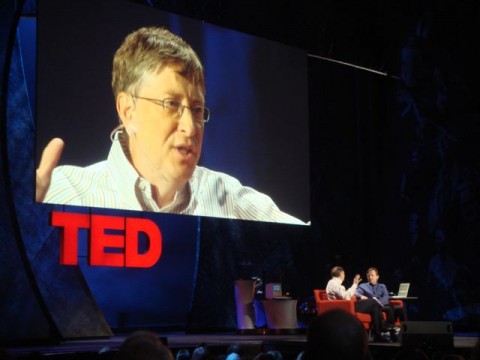
A quick fyi for TED heads. In early 2011 we mentioned that someone put together a handy online spreadsheet that lists 1377 TED Talks, with handy links to each individual video. It’s worth mentioning the spreadsheet again because this evolving Google doc has now grown beyond 1200 talks. That works out to more than 340 hours of “riveting talks by remarkable people.” Because the page gets updated on a regular basis, you’ll definitely want to bookmark it and keep tabs on the new additions.
Now time for more good culture links, all previously featured on our happenin’ Twitter stream.
Archaeologists Unearth Ancient Maya Calendar Writing
Virginia Woolf. Playing Cricket
Delta Dawn: How Sears, Roebuck & Co. Midwifed the Birth of the Blues
Maurice Sendak’s Last Video Appearance with Stephen Colbert
‘Madame Bovary’ in Pie Chart Form. (Did Someone Say Pie?)
From Whistler to Warhol, Famous Artists Paint Their Mothers
Jose Saramago’s First Reaction after Watching the Movie Blindness
All 268 Pages from Leonardo’s Notebooks Presented in High Res iPad App
Margaret Atwood Recommends That Martians Read Moby Dick to Understand America
Biographer Robert Caro Discusses Political Power—How to Get It and Use It
A Recording of 24-Year-Old John Ashbery Reading His Poems
John Peel’s Massive Record Collection Now Available Online
The Strange Politics of Gertrude Stein
David Sedaris Reads “Six to Eight Black Men” from the Album ‘Live at Carnegie Hall’
Follow us on Facebook, Twitter, Google Plus or Email, and we’ll bring intelligent media right to you. We’re at your service, you know?
Read More...Five Historical Misconceptions Debunked
Viking helmets had horns, Napoleon was quite short and Lady Godiva rode through Coventry naked. Most of us accept these tales as facts because they’ve been told for many generations. But C.G.P. Grey took a closer look and compiled this short video in which he debunks not only these historical misconceptions but also two myths surrounding the Roman “Vomitorium” and Columbus.
Bonus material:
- 10 more historical misconceptions
- A scientific paper called “The Invention of the Viking Horned Helmet”
By profession, Matthias Rascher teaches English and History at a High School in northern Bavaria, Germany. In his free time he scours the web for good links and posts the best finds on Twitter.
Read More...The Electronic Nose and The Strange Future of Public Health & Safety
Over in Nate Lewis’ Caltech lab, they’re working on developing an “electronic nose” that can sniff out diseases, bombs, dangerous toxins and beyond. And then they want to put that e‑nose right in your smartphone.
Need to find out if you have a little tuberculosis? No problem, there’s an app for that. Wondering if that powder may be anthrax? Oh iPhone, what say you?
Read More...Support Us
We're hoping to rely on loyal readers, rather than erratic ads. Please click the Donate button and support Open Culture. You can use Paypal, Venmo, Patreon, even Crypto! We thank you!

About Us

Open Culture scours the web for the best educational media. We find the free courses and audio books you need, the language lessons & educational videos you want, and plenty of enlightenment in between.
Advertise With Us

FREE UPDATES!
GET OUR DAILY EMAIL
Get the best cultural and educational resources on the web curated for you in a daily email. We never spam. Unsubscribe at any time.
FOLLOW ON SOCIAL MEDIA

Open Culture editor Dan Colman scours the web for the best educational media. He finds the free courses and audio books you need, the language lessons & movies you want, and plenty of enlightenment in between.
Advertise With Us