Pursuit of Light: The Earth & Beyond Seen with NASA’s Amazing Data Visualizations
Last week NASA released Pursuit of Light, a short HD film that uses amazing data visualizations (mixed with live action footage) to tell stories about the Earth, The Moon, The Sun, The Planets, and the Deep Sky. And it’s all “wrapped in poetic implication about humanity’s need to explore,” says the film’s producer. Pursuit of Light will appear on Hyperwalls around the country, a new screen technology created by NASA’s Goddard Space Flight Center. But you can watch it first on the web, or freely download it here. H/T Metafilter
If you would like to support the mission of Open Culture, consider making a donation to our site. It’s hard to rely 100% on ads, and your contributions will help us continue providing the best free cultural and educational materials to learners everywhere. You can contribute through PayPal, Patreon, and Venmo (@openculture). Thanks!
Read More...Henry Rollins Tells Young People to Avoid Resentment and to Pursue Success with a “Monastic Obsession”
How to explain Henry Rollins to someone who doesn’t know his work? Twenty years ago, you could’ve just called him a musician, the guy who used to sing with Black Flag. At that point he had moved on to front his own band, one which also showcased the personality that routinely drives journalists through their synonyms for “intense.” Having sworn off singing, Rollins these days concentrates on column writing, television hosting, radio broadcasting, and politically charged spoken-word performing. (You can watch him participate in a live reading of David Foster Wallace’s The Pale King here.) His personality remains in full effect and, unencumbered by early punk rock’s demand for emotional bluntness, he now projects a more complicated, harder-to-caricature image. He still seems driven by seething anger at society’s shortcomings, but his current middle-aged mixture of rage and benevolence (though sometimes unsettling in its own way) avoids the raw aggression with which music history has associated him.
Rollins seemingly never swallowed punk’s youthful nihilism, but now, in full maturity, he sometimes sounds downright motivational. Case in point: his “Letter to a Young American” from Big Think, a warning about the debilitating effects of feeling spite toward the privileged. “You will encounter people who never have to pay in full,” he says. “They get to wreck the room and never have to clean it. They can get all the way through high school and never understand where a dollar comes from, because they just get it given to them.” While acknowledging the existence of such people, often in positions of power, Rollins recommends the strategy of ignoring them: “You cannot let these people make you feel that you have in any way been dwarfed or outclassed. You must really go for your own and realize how short life is. You got what you got, so you’ve got to make the most of it. You really can’t spend a whole lot of time worrying about his.” Like or dislike the Henry Rollins persona, how often have you seen a high-profile activist take such a firm stand against resentment? A transcript for his “Letter to a Young American” can be found here.
Colin Marshall hosts and produces Notebook on Cities and Culture. Follow him on Twitter at @colinmarshall.
Read More...Something from Nothing? Richard Dawkins and Lawrence Krauss Discuss Cosmology, Origins of Life & Religion Before a Packed Crowd
Richard Dawkins needs no introduction. Lawrence Krauss barely needs an introduction — although we’ll tell you that he’s a leading voice in theoretical physics and the author of the recent book, A Universe from Nothing: Why There Is Something Rather than Nothing. (We recommend watching this lecture to get familiar with his work.) In February, the two scientists met up at Arizona State University and spent two hours in a freewheeling conversation, touching on evolution, cosmology, religion, and other topics. They spoke before a packed house, but Shirley Films was good enough to post the video online, and you can watch it above. Another conversation — this one recorded at The Australian National University on 10 April 2012 — can be viewed here.
Related Content:
Lawrence Krauss: Every Atom in Your Body Comes From a Star
Richard Dawkins & John Lennox Debate Science & Atheism
Read More...Yale’s Open Courses Inspire a New Series of Old-Fashioned Books
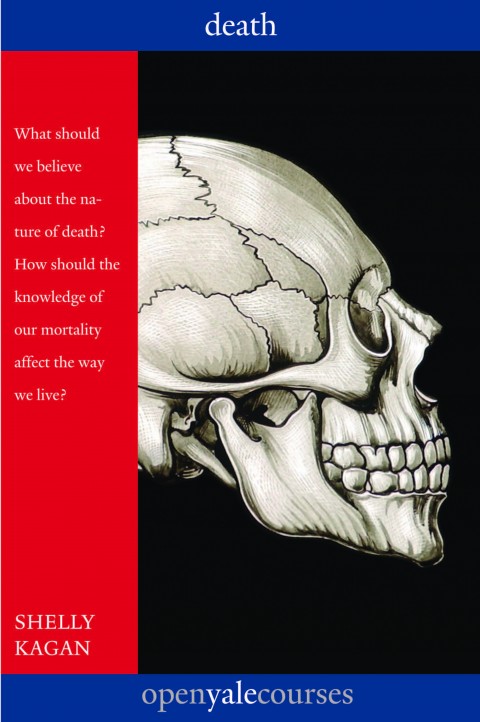 Last month we reported on Yale’s addition of seven new online courses to its growing roster of free offerings. Now we’ve learned that Yale is inaugurating a new series of books based on its popular open courses.
“It may seem counterintuitive for a digital project to move into books and e‑books, because these are a much more conventional way of publishing,” Open Yale Courses founding project director Diana E.E. Kleiner told The Chronicle of Higher Education last week. But the books are in keeping with Open Yale’s mission of “reaching out in every way that we could.”
Yale University Press is bringing out the first six titles this year. The paperbacks are priced at roughly $12 on Amazon, with e‑book editions going for closer to $10. The first three volumes–Theory of Literature by Paul H. Fry, New Testament History and Literature by Dale B. Martin, and Death by Shelly Kagan–are available now, while three additional titles–The Moral Foundations of Politics by Ian Shapiro, Introduction to the Bible by Christine Hayes, and Political Philosophy by Steven B. Smith–will be published later this year. The publisher says the books are “designed to bring the depth and breadth of a Yale education to a wide variety of readers.”
For more open education resources, take a moment to explore our collection of 450 free online courses from top universities.
Read More...Fight For Your Right Revisited: Adam Yauch’s 2011 Film Commemorates the Beastie Boys’ Legendary Music Video
By now you’ve heard the news. Beastie Boys co-founder Adam Yauch has died at the age of 47. The cause, salivary cancer. The Beastie Boys broke onto the national scene in 1986, with the release of Licensed to Ill, which became the best-selling rap album of the 1980s and the first hip hop LP to top the Billboard chart. Either then or some time since, you’ve likely heard their best known song from the album — (You Gotta) Fight for Your Right (To Party!).
The original music video for the song (below) became something of an MTV mainstay and played on themes from George A. Romero’s zombie movie Dawn of the Dead. 25 years later, Adam Yauch produced Fight For Your Right Revisited, a 30 minute surreal film that picks up where the original video left off. It stars Elijah Wood, Danny McBride and Seth Rogen. You can watch it above in full. It’s also added to our meta collection, 4,000+ Free Movies Online: Great Classics, Indies, Noir, Westerns, Documentaries & More.
via Mubi.com
Follow Open Culture on Facebook and Twitter and share intelligent media with your friends. Or better yet, sign up for our daily email and get a daily dose of Open Culture in your inbox. And if you want to make sure that our posts definitely appear in your Facebook newsfeed, just follow these simple steps.
Read More...MIT & Khan Academy Team Up to Develop Science Videos for Kids. Includes The Physics of Unicycling
Of course, the big news this week is that MIT and Harvard announced that they’re joining forces to offer free online courses starting next fall. We gave you the scoop on that yesterday. Now we give you another MIT announcement that has largely flown beneath the radar.
MIT is teaming up with Khan Academy (whose founder went to MIT and will deliver MIT’s commencement speech this spring), and together they will produce “short videos teaching basic concepts in science and engineering” for K‑12 students. The videos will be produced by MIT’s ever-so-creative students themselves and then be made available through a dedicated MIT website and YouTube channel. You can click the links to start watching the first batch of videos, or watch an example above, The Physics of Unicycling. H/T @HKPerkinson
Read More...Brian Eno on Creating Music and Art As Imaginary Landscapes (1989)
In Imaginary Landscapes, documentarians Duncan Ward and Gabriella Cardazzo paint an impressionistic video portrait of Brian Eno: record producer, visual artist, collaborator with the likes of U2 and David Bowie, ambient music-inventing musician, self-proclaimed “synthesist,” early member of Roxy Music, and co-creator of the Oblique Strategies. Even if you’ve never handled an actual deck of Oblique Strategies cards — and few have — you’ve surely heard one or two of the Strategies themselves in the air: “Honor thy error as a hidden intention.” “The most important thing is the most easily forgotten.” “Do something boring.” The idea is to draw a card and follow its edict whenever you hit a creative block. This should, in theory, get you around the block, no matter what you’re trying to create. Eno first published the Oblique Strategies with painter Peter Schmidt in 1975, and here in Imaginary Landscapes, fourteen years later, you can hear him still excited about the cards’ basic premise: if you follow arbitrary rules and theoretical positions, they’ll lead you to creative decisions you never would have otherwise made.
This short documentary combines interviews of Eno with footage of him crafting sounds in his studio, simulating the echoes of a cave, say, then turning that cave into a liquid. It weaves these segments together with a trip through American cities like Los Angeles, San Francisco, and New York, then back to the Woodbridge, Suffolk of Eno’s youth, then on to Venice, one of the world’s places that draws him irresistibly with its wateriness. Place itself emerges as one of Eno’s driving concepts, not simply as a source of inspiration (though it seems to work that way for his video Mistaken Memories of Medieval Manhattan), but as a form. When Eno talks about making albums, or images, or installations, he talks about them as places for audiences to exist. In any physical place, you’re presented with a certain set of choices. You can’t always tell the deliberately designed elements from the “natural” ones, and having a rich experience demands that you actively use your own awareness. This, so Eno explains, guides how he builds “places” — imaginary landscapes, if you will — for listeners, gallerygoers, recording artists, or himself, trying to open up “the spaces between categories” and “make use of the watcher’s brain as part of the process.” Look into his more recent projects, like his iPhone apps or his collaborations with bands like Coldplay or his touring exhibition 77 Million Paintings, and you’ll find him building them still.
Colin Marshall hosts and produces Notebook on Cities and Culture. Follow him on Twitter at @colinmarshall.
Read More...Jim Henson’s Commercials for Wilkins Coffee: 15 Twisted Minutes of Muppet Coffee Ads (1957–1961)
Drink our coffee. Or else. That’s the message of these curiously sadistic TV commercials produced by Jim Henson between 1957 and 1961.
Henson made 179 ten-second spots for Wilkins Coffee, a regional company with distribution in the Baltimore-Washington D.C. market, according to the Muppets Wiki: “The local stations only had ten seconds for station identification, so the Muppet commercials had to be lightning-fast–essentially, eight seconds for the commercial pitch and a two-second shot of the product.”
Within those eight seconds, a coffee enthusiast named Wilkins (who bears a resemblance to Kermit the frog) manages to shoot, stab, bludgeon or otherwise do grave bodily harm to a coffee holdout named Wontkins. Henson provided the voices of both characters.
Up until that time, TV advertisers typically made a direct sales pitch. “We took a different approach,” said Henson in Christopher Finch’s Of Muppets and Men: The Making of the Muppet Show. “We tried to sell things by making people laugh.”
The campaign for Wilkins Coffee was a hit. “In terms of popularity of commercials in the Washington area,” said Henson in a 1982 interview with Judy Harris, “we were the number one, the most popular commercial.” Henson’s ad agency began marketing the idea to other regional coffee companies around the country. Henson re-shot the same spots with different brand names. “I bought my contract from that agency,” said Henson, “and then I was producing them–the same things around the country. And so we had up to about a dozen or so clients going at the same time. At the point, I was making a lot of money.”
You can watch many of the Wilkins Coffee commercials above. If you’re a glutton for punishment, there are more on YouTube. And a word of advice: If someone ever asks you if you drink Wilkins Coffee, just say yes.
Related Content:
Jim Henson’s Original, Spunky Pitch for The Muppet Show
Jim Henson’s Zany 1963 Robot Film Uncovered by AT&T: Watch Online
Jim Henson Pilots The Muppet Show with Adult Episode, “Sex and Violence” (1975)
Read More...Lit2Go’s 200 Free (and Teacher-Friendly) Audio Books: Ready for Downloads
From fairy tales to The Iliad (Web — iTunes), Lit2Go organizes more than 200 titles by author and genre (adventure, gothic, history, science fiction) with clear genre descriptions and plot summaries for young readers. The look and feel of the site’s beta version is user-friendly and library-like, with typewriter fonts and illustrations making it a pleasure to browse. There are a few small kinks to be worked out however, so teachers interested in downloading supplemental materials should opt for the original site.
Lit2Go marries the old school library form (each novel’s year of publication and original publisher is included) with the capacity of the web (a link takes readers directly to the iTunes store, where Lit2Go has its own section of free downloads).
Many titles include support material to kick off classroom discussion or to coach students through developing their own character diagrams. One of the site’s real assets is the way it curates titles into collections, including African-American Literature, American Founders and the intriguing Happiness Collection where readers find Robert Louis Stevenson’s poem “The Swing” and Shakespeare’s heart-stopping scene in which Friar Laurence marries Romeo to Juliet (Web — iTunes).
Another curatorial bonus: Materials are also organized by grade level, using the Flesch-Kincaid Grade Level index. Teachers and students can also download each title’s full text as a PDF, to read along to the audio.
Meanwhile, your can find hundreds of downloadable works of literature in our own meta collection of Free Audio Books.
Kate Rix writes about k‑12 instruction and higher ed.
Read More...Supermassive Black Hole Shreds a Star, and You Get to Watch
Imagine a star (like our sun) wandering close to a supermassive black hole and finding itself mercilessly ripped apart by this beast weighing millions to billions times more than the hapless star. It doesn’t happen very often. But when it happens, it’s pretty spectacular. And now NASA has produced a computer simulation showing this spectacle, drawing on evidence gathered by NASA’s Galaxy Evolution Explorer and the Pan-STARRS1 telescope located in Hawaii. Here’s how NASA describes what you’re seeing in the clip above:
Some of the stellar debris falls into the black hole and some of it is ejected into space at high speeds. The areas in white are regions of highest density, with progressively redder colors corresponding to lower-density regions. The blue dot pinpoints the black hole’s location. The elapsed time corresponds to the amount of time it takes for a Sun-like star to be ripped apart by a black hole a million times more massive than the Sun.
NASA has more information on this stellar homicide here.
If you would like to support the mission of Open Culture, consider making a donation to our site. It’s hard to rely 100% on ads, and your contributions will help us continue providing the best free cultural and educational materials to learners everywhere. You can contribute through PayPal, Patreon, and Venmo (@openculture). Thanks!
Read More...Support Us
We're hoping to rely on loyal readers, rather than erratic ads. Please click the Donate button and support Open Culture. You can use Paypal, Venmo, Patreon, even Crypto! We thank you!

About Us

Open Culture scours the web for the best educational media. We find the free courses and audio books you need, the language lessons & educational videos you want, and plenty of enlightenment in between.
Advertise With Us

FREE UPDATES!
GET OUR DAILY EMAIL
Get the best cultural and educational resources on the web curated for you in a daily email. We never spam. Unsubscribe at any time.
FOLLOW ON SOCIAL MEDIA

Open Culture editor Dan Colman scours the web for the best educational media. He finds the free courses and audio books you need, the language lessons & movies you want, and plenty of enlightenment in between.
Advertise With Us

