Bono, Glen Hansard & Friends Busk For Charity on Grafton Street
Shoppers on Grafton Street in Dublin were treated to a rare street performance on Christmas Eve by some of Ireland’s most illustrious pop musicians. U2 frontman Bono, oscar-winning singer/songwriter Glen Hansard, Liam O’ Maonlai of Hothouse Flowers, Mundy, and Declan O’Rourke gathered on the famous shopping street to spread holiday cheer and raise money for the homeless.
It was the third straight year of Christmas Eve busking for Bono and Hansard. A large group of fans showed up in anticipation, having been tipped off the day before by Hansard. “Busking with some friends tomorrow on Grafton St.,” he wrote on Twitter. “Come and throw a coin in the box for Simon Community and the Peter McVerry trust.” The crowd grew so big that the police moved the performance to the gate of St. Stephen’s Green, at the end of the street.
The group performed a rousing, sing-along version of the Mic Christopher song “Heyday” (above), and some holiday favorites, including the 1960s hit “Christmas (Baby Please Come Home),” which can be seen on YouTube here and here.
Read More...Wanna Achieve Linguistic Immortality? Not So Fast Cautions Animated NPR Video
Have you ever dreamed of becoming a word? NPR’s Adam Cole has, and he’s written a song about the immortality that comes from having your name turned into a noun. But as his colleague Robert Krulwich points out, many of the people whose names are now in dictionaries would be horrified. Joseph Guillotine, for example, hated the death penalty. And James Thomas Brudenell, seventh earl of Cardigan, must be turning over in his grave: “Here’s a brave cavalry officer, who led the Charge of the Light Brigade during the Crimean War, watched his men cut down, butchered by the enemy, a man of action, a soldier, and what do we remember him for,” writes Krulwich on his blog? “Yup, by some trick of fate, he is now a sweater with buttons down the front. I mean, really…”
Read More...Christopher Hitchens Gets Contrarian on Christmas from the Grave (Plus Some Tom Lehrer)
Back in 1959, Tom Lehrer, the Harvard lecturer and satirist, recorded “A Christmas Carol” before a live audience at the Sanders Theater in Cambridge, Mass. The song, offering an early commentary on the commercialism of Christmas, provides the jumping off point for Christopher Hitchens’ article “Forced Merriment: The True Spirit of Christmas,” which has been published posthumously in this weekend’s Wall Street Journal. Even from the grave, Hitchens goes on being Hitch: blunt, bound to make the majority bristle, but also brimming with some contrarian insights…
But the thing about the annual culture war that would probably most surprise those who want to “keep the Christ in Christmas” is this: The original Puritan Protestants regarded the whole enterprise as blasphemous. Under the rule of Oliver Cromwell in England, Christmas festivities were banned outright. The same was true in some of the early Pilgrim settlements in North America.
Last year I read a recent interview with the priest of one of the oldest Roman Catholic churches in New York, located downtown and near Wall Street. Taking a stand in favor of Imam Rauf’s “Ground Zero” project, he pointed to some parish records showing hostile picketing of his church in the 18th century. The pious protestors had been voicing their suspicion that a profane and Popish ceremonial of “Christ Mass” was being conducted within.
and some humor.…
In their already discrepant accounts of the miraculous birth, the four gospels give us no clue as to what time of year—or even what year—it is supposed to have taken place. And thus the iconography of Christmas is ridiculously mixed in with reindeer, holly, snow scenes and other phenomena peculiar to northern European myth. (Three words for those who want to put the Christ back in Christmas: Jingle Bell Rock.) There used to be an urban legend about a Japanese department store that tried too hard to symbolize the Christmas spirit, and to show itself accessible to Western visitors, by mounting a display of a Santa Claus figure nailed to a cross. Unfounded as it turned out, this wouldn’t have been off by much.
You can read Hitchens’ unabridged piece in WSJ here. H/T goes to @opedr
Read More...Chet Baker’s Soulful Version of ‘Time After Time’
The jazz trumpeter and singer Chet Baker was born on this day in 1929. Earlier we featured Let’s Get Lost, Bruce Weber’s documentary of the musician’s troubled life. Today we take you back to 1964, when Baker was 34, as he performs a melancholy interpretation of the Sammy Cahn and Jule Styne standard, “Time After Time.”
The scene is from a Belgian television program. Baker is joined by French pianist Rene Urtreger, Belgian flautist Jacques Pelzer, and an Italian rhythm section of Luigi Trussardi on bass and Franco Manzecchi on drums. Baker sings and plays the flugelhorn. The Belgian TV show, along with a performance 15 years later in Norway, are preserved in the Jazz Icons DVD Chet Baker Live in ’64 and ’79. In the liner notes, Rob Bowman writes:
Beauty comes in many forms. In music, it can be the result of a perfectly constructed melodic line, a harmonic voicing that sends shivers down your spine, a groove that somehow captures the joy of being alive, or a timbre so sensuously rich that it makes your body quiver from head to toe. In the case of Chet Baker, a jazzman capable of spinning out some of the most achingly beautiful music human beings have ever known, beauty was a result of finding the poignancy in sorrow, in deploying pitch inflection, melodic arc and a vibratoless timbre to conjure up something of rarefied value in a life of addiction and endless disappointment. There are many virtuosic technicians in the history of jazz. Few of them could capture the pathos of the human condition in the way that Baker did.
Read More...MIT to Offer Certificates to Students Taking Free Courses on the Web
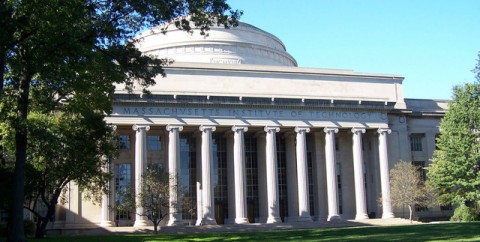
It happens at least a few times a day. Students look through our list of 400 Free Online Courses, and ask us whether they can get a certificate for taking a class. And, unfortunately, our answer has been no — no, you can’t. But that may be about to change.
Earlier this fall, Stanford launched a highly-publicized series of free courses that offer students something novel: the ability to take tests and receive a “statement of accomplishment” from the instructor — though not the school itself — if they pass the class. (Stanford will launch 14 more courses starting in January and February. Click link for details.)
Now, MIT wants to up the ante on the certification of free courses. Starting next spring, the university, already famous for its OpenCourseWare project, will launch MITx, an e‑learning initiative that will offer certificates to students demonstrating mastery of free MIT courses. According to a new set of FAQs, the certificates won’t bear MIT’s name. Rather, “MIT plans to create a not-for-profit body within [MITx] that will offer certification for online learners of MIT coursework. That body will carry a distinct name to avoid confusion.” The courses will be free; the certificates will cost just a “modest” sum. It’s all a big step in the right direction.
UPDATE: You can find a list of free courses offering certificates from great universities here.
Related Content:
MIT Introduces Complete Courses to OpenCourseWare Project
Download The Edupunks’ Guide to a DIY Credential (Free eBook)
Read More...Free Audio: Download the Complete Chronicles of Narnia by C.S. Lewis
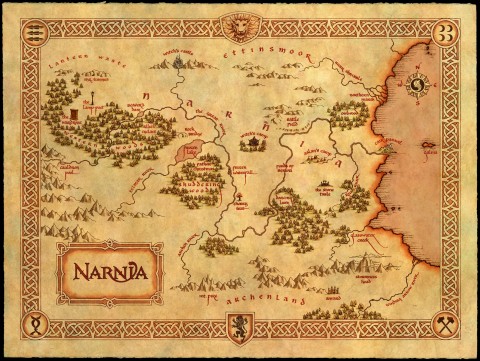 Before the days of Harry Potter, generations of young readers let their imaginations take flight with The Chronicles of Narnia, a series of seven fantasy novels written by C. S. Lewis. Like his friend J.R.R. Tolkien, Lewis served on the English faculty at Oxford University and took part in the Inklings, an Oxford literary group dedicated to fiction and fantasy.
Published between 1950 and 1956, The Chronicles of Narnia has sold over 100 million copies in 47 languages, delighting younger and older readers worldwide. The seven volumes in the series include:
- The Lion, the Witch and the Wardrobe
- Prince Caspian: The Return to Narnia
- The Voyage of the Dawn Treader
- The Silver Chair
- The Horse and His Boy
- The Magician’s Nephew
- The Last Battle
Now, with the apparent blessing of the C.S. Lewis estate, the seven volume series is available in a free audio format. There are 101 audio recordings in total, each averaging 30 minutes and read by Chrissi Hart. Download the complete audio via the web or RSS Feed. Or start listening to the opening chapters of The Lion, The Witch, and The Wardrobe right below.
We have added The Chronicles of Narnia recordings to our collection of Free Audio Books, where you will find many other great classics. h/t metafilter
Related Content:
Free: Download Copy of New Steve Jobs Biography
Free Audio: Download George Orwell’s 1984 and Animal Farm for Free
Download 20 Popular High School Books Available as Free eBooks & Audio Books
Read More...Tuileries: A Short, Slightly Twisted Film by Joel and Ethan Coen
They call Paris the City of Love. It’s also the birthplace of the Marquis de Sade. Behind the romantic postcard facade, there’s something a bit more complicated going on. In Tuileries, a short film by Joel and Ethan Coen from the 2006 anthology, Paris Je T’Aime, Steve Buscemi plays a mild-mannered tourist caught completely out of his element. What transpires is a rather bizarre five-minute cultural lesson they won’t teach you at Berlitz. It’s now added to our collection, 4,000+ Free Movies Online: Great Classics, Indies, Noir, Westerns, Documentaries & More.
Follow us on Facebook, Twitter and now Google Plus.
Related Content:
John Turturro Reads Italo Calvino’s Animated Fairy Tale
World Cinema: Joel and Ethan Coen’s Playful Homage to Cinema History
Read More...
RIP Christopher Hitchens: Stephen Fry Pays Tribute, Hitch Rejects the Deathbed Conversion
18 months after being diagnosed with oesophageal cancer, the polemical writer Christopher Hitchens has died at the age of 62. His fans began to fear the worst last month when Hitchens, suddenly hospitalized with pneumonia, couldn’t attend a widely-publicized debate in London. The promoters of the event, Intelligence², quickly turned the debate into a celebration of Hitchens’ life. Stephen Fry played host, and Richard Dawkins, Christopher Buckley, Salman Rushdie, Lewis Lapham, Martin Amis, James Fenton and Sean Penn all paid tribute. Above, we’re highlighting the poignant video once again.
Also fittingly, we’re bringing back another clip that features Hitchens discussing how his struggle with cancer affected his views on the question of an afterlife. “I would say it fractionally increases my contempt for the false consolation element of religion and my dislike for the dictatorial and totalitarian part of it,” he responded. “It’s considered perfectly normal in this society to approach dying people who you don’t know but who are unbelievers and say, ‘Now are you gonna change your mind?’ That is considered almost a polite question.” During the event taped last February (watch the full program here), Hitchens made his views pretty clear: No deathbed conversion for me, thanks, but it was good of you to ask.
And finally we cap things off with a montage of 22 comments from Christopher Hitchens. When you add them all up, you get some vintage Hitchens — everything that made him sometimes loved, sometimes hated but always respected.
If you have never spent time reading Hitch, we’re going to recommend his last piece for Vanity Fair — his reflection on Nietzsche’s famous line “Whatever doesn’t kill me makes me stronger.” It was published last week, and it’s quite the coda.
Read More...Helen Mirren Tells Us Why Wassily Kandinsky Is Her Favorite Artist (And What Acting & Modern Art Have in Common)
Russian abstract painter and art theorist Wassily Kandinsky was born in Moscow on December 16, 1866 (December 4 on the Julian calendar), and raised in Odessa, where he took an early interest in music. As a young man he studied economics and law, but in 1895 his life was forever changed when he attended a Moscow exhibition of paintings by the French Impressionists. Kandinsky was deeply struck by one of Monet’s paintings from the series Haystacks at Giverny. He later recalled his epiphany:
That it was a haystack the catalogue informed me. I could not recognize it. This non-recognition was painful to me. I considered that the painter had no right to paint indistinctly. I dully felt that the object of the painting was missing. And I noticed with surprise and confusion that the picture not only gripped me, but impressed itself ineradicably on my memory. Painting took on a fairy-tale power and splendor.
Kandinsky quit his job as a law professor and dedicated himself to painting. He emigrated, first to France and then to Germany, where he moved further and further away from figurative painting. He was among the first to create works that were completely abstract, or non-objective. In his 1910 treatise, Concerning the Spiritual in Art, Kandinsky declares that the elements within a painting should not correspond to any outer object, but only to the artist’s “inner need.”
In observance of the artist’s 145th birthday, we present two videos with different perspectives on his work. Above, actress Helen Mirren talks with the Museum of Modern Art about what Kandinsky, and art, mean to her. Below, a trio of scholars–Beth Harris, Juliana Kreinik and Steven Zucker–discuss Kandinsky’s 1913 masterpiece, “Composition VII,” for the Khan Academy’s Smarthistory series. “Composition VII” was painted by Kandinsky in Munich over a period of four days–but only after he had made more than 30 preparatory sketches, watercolors and oil studies.
Related Content
MoMA Puts Pollock, Rothko & de Kooning on Your iPad
Jackson Pollock: Lights, Camera, Paint! (1951)
John Berger’s Ways of Seeing: The TV Series
Read More...The Godfather Without Brando?: Coppola Explains How It Almost Happened
It’s hard to imagine The Godfather, the iconic 1972 film, without Marlon Brando. But that’s almost how it turned out.
During casting, Paramount executives originally pushed for Laurence Olivier. But when he couldn’t take the film, and when the director, Francis Ford Coppola, asked them to consider Brando, they initially responded: “Marlon Brando will never appear in this motion picture.” Above, Coppola and co-star James Caan explain how the execs were eventually cajoled into changing their minds, and how the classic film fell into place. As you watch this, also keep in mind that Paramount initially asked two other directors (Sergio Leone and then Peter Bogdanovich) to make The Godfather before approaching Coppola, plus they later wanted Robert Redford or Ryan O’Neal to play Michael Corleone. But Coppola, who threatened to quit the production, got his way and put the relatively unknown Al Pacino into the film. The rest, as they say, is history.…
Related Content:
Free Movies Online: Great Classics, Indies, Noir, Westerns, etc.
Bruce Lee Auditions for The Green Hornet
Kurt Russell Auditions for Star Wars
Read More...Support Us
We're hoping to rely on loyal readers, rather than erratic ads. Please click the Donate button and support Open Culture. You can use Paypal, Venmo, Patreon, even Crypto! We thank you!

About Us

Open Culture scours the web for the best educational media. We find the free courses and audio books you need, the language lessons & educational videos you want, and plenty of enlightenment in between.
Advertise With Us

FREE UPDATES!
GET OUR DAILY EMAIL
Get the best cultural and educational resources on the web curated for you in a daily email. We never spam. Unsubscribe at any time.
FOLLOW ON SOCIAL MEDIA

Open Culture editor Dan Colman scours the web for the best educational media. He finds the free courses and audio books you need, the language lessons & movies you want, and plenty of enlightenment in between.
Advertise With Us

