Science for The Rest of Us: Podcasts At a Glance
Today, Elizabeth Green Musselman has penned a guest blog post that you’re bound to enjoy. Elizabeth is a professor and historian who works on the history of science, and she has recently launched a thoughtful podcast on the history of science, medicine, and technology. It’s called “The Missing Link” (iTunes — Feed — Web Site). Below, she highlights for us a range of podcasts that will appeal to everyday science enthusiasts. (If you’re interested in doing some guest blogging, drop us a line.) Thanks Elizabeth and take it away:
These can seem like dark days for those people who love science but who neither specialize in the field nor can quite stomach the gee-whiz factor that plagues so much popular science writing and broadcasting. Now that Stephen Jay Gould is cavorting somewhere in the Beyond with Charles Darwin, and ever since the New York Academy of Sciences put the ax to its inspired magazine The Sciences, where is a levelheaded lover of the sciences to turn?
The podcast world has begun to develop a niche market for just such listeners, that is, listeners who like their science relatively non-technical but still high-minded – listeners who think of science as a part of human culture, rather than an arcane temple. Not surprisingly, some of the best content comes from radio programs that have been re-released as podcasts. These include WNYC’s RadioLab, an hour-long show whose serious investigations on a theme (such as sleep or mortality) take on an intriguingly funhouse quality through the program’s inventive use of sound and the humorous interaction between co-hosts Jad Abumrad and Robert Krulwich. NPR has also released Krulwich’s solo reports in podcast form as Hmmm… Krulwich on Science.
Another longstanding NPR favorite, The Engines of Our Ingenuity, began broadcasting brief, thoughtful reflections on technology and culture in 1988. Written and hosted by John Lienhard, a retired professor of mechanical engineering and history at the University of Houston, the show now airs five days a week on 30 NPR affiliates in the U.S. The brief programs are also available in podcast form.
On the other side of the pond, the BBC 4’s long-running, popular show, In Our Time, frequently considers scientific topics and can also be heard in podcast form. Most recently, the program explored antimatter. On each hour-long program the host, Melvyn Bragg, keeps a panel of three scholars moving at a pace that skirts neatly between brisk and contemplative.
Finally, several podcasts produced by individuals have begun to appear, each of which considers science in context. Exploring Environmental History features Jan Oosthoek’s smart interviews with his fellow environmental historians and scientists, often focusing on how historical study can point us toward stronger environmental policy solutions. The most recent episode considers Arctic climate conditions both today and in the Little Ice Age. My own monthly podcast, The Missing Link, considers those fascinating moments in the history of science, medicine, and technology, when our intellectual and technical prowess rubs up against our very human dreams and failings. The most recent episode visits Berlin, Germany, where the gruesomeness of a pathology museum’s collection masks a centuries-long history of both inequitable medical care and brilliant microbiological research. The program also discusses the Berlin Phonogram Archive, one of the first attempts to record the world’s music for posterity, designed originally to demonstrate the evolutionary scale of primitive to civilized humanity.
Read More...Information R/evolution: The New Video
Earlier this year, Michael Wesch, an assistant professor of cultural anthropology at Kansas State, released a smart video that immediately went viral on the internet. It was called Web 2.0… the Machine is Us/ing Us and it cleverly explained the often vague concept of Web 2.0 and why it matters. Now Wesch has launched another video under the title Information R/evolution (see below). Influenced by the recent book, Everything Is Miscellaneous: The Power of the New Digital Disorder, Wesch’s new clip offers a creative look at how the digital age fundamentally changes our relationship to information and how information gets organized. Have a look.

Our Ancestral Mind in the Modern World: An Interview with Satoshi Kanazawa
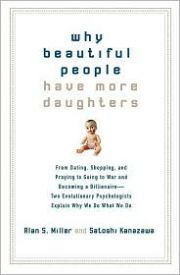 Human behavior is notoriously complex, and there’s been no shortage of psychologists and psychological theories venturing to explain what makes us tick. Why do we get irrationally jealous? Or have midlife crises? Why do we overeat to our own detriment? Why do we find ourselves often strongly attracted to certain physical traits? Numerous theories abound, but few are perhaps as novel and thought-provoking as those suggested by a new book with a long title: Why Beautiful People Have More Daughters: From Dating, Shopping, and Praying to Going to War and Becoming a Billionaire — Two Evolutionary Psychologists Explain Why We Do What We Do. Written by Satoshi Kanazawa and Alan S. Miller, the book finds answers not in ids, egos and superegos, but in the evolution of the human brain. Written in snappy prose, their argument is essentially that our behavior — our wants, desires and impulses — are overwhelmingly shaped by the way our brain evolved 10,000+ years ago, and one consequence is that our ancestral brain is often responding to a world long ago disappeared, not the modern, fast-changing world in which we live. This disconnect can lead us to be out of sync, to act in ways that seem inexplicable or counter-productive, even to ourselves. These arguments belong to new field called “evolutionary psychology,” and we were fortunate to interview Satoshi Kanazawa (London School of Economics) and delve further into evolutionary psychology and the (sometimes dispiriting) issues it raises. Have a read, check out the book, and also see the related piece that the Freakonomics folks recently did on this book. Please note that the full interview continues after the jump.
DC: In a nutshell, what is “evolutionary psychology”? (e.g. when did the field emerge? what are the basic tenets/principles of this school of thinking?)
SK: Evolutionary psychology is the application of evolutionary biology to human cognition and behavior. For more than a century, zoologists have successfully used the unifying principles of evolution to explain the body and behavior of all animal species in nature, except for humans. Scientists held a special place for humans and made an exception for them.
In 1992, a group of psychologists and anthropologists simply asked, “Why not? Why can’t we use the principles of evolution to explain human behavior as well?” And the new science of evolutionary psychology was born. It is premised on two grand generalizations. First, all the laws of evolution by natural and sexual selection hold for humans as much as they do for all species in nature. Second, the contents of the human brain have been shaped by the forces of evolution just as much as every other part of human body. In other words, humans are animals, and as such they have been shaped by evolutionary forces just as other animals have been.
DC: Evolutionary psychology portrays us as having impulses that took form long ago, in a very pre-modern context (say, 10,000 years ago), and now these impulses are sometimes rather ill-adapted to our contemporary world. For example, in a food-scarce environment, we became programmed to eat whenever we can; now, with food abounding in many parts of the world, this impulse creates the conditions for an obesity epidemic. Given that our world will likely continue changing at a rapid pace, are we doomed to have our impulses constantly playing catch up with our environment, and does that potentially doom us as a species?
SK: In fact, we’re not playing catch up; we’re stuck. For any evolutionary change to take place, the environment has to remain more or less constant for many generations, so that evolution can select the traits that are adaptive and eliminate those that are not. When the environment undergoes rapid change within the space of a generation or two, as it has been for the last couple of millennia, if not more, then evolution can’t happen because nature can’t determine which traits to select and which to eliminate. So they remain at a standstill. Our brain (and the rest of our body) are essentially frozen in time — stuck in the Stone Age.
One example of this is that when we watch a scary movie, we get scared, and when we watch porn we get turned on. We cry when someone dies in a movie. Our brain cannot tell the difference between what’s simulated and what’s real, because this distinction didn’t exist in the Stone Age.
DC: One conclusion from your book is that we’re something of a prisoner to our hard-wiring. Yes, there is some room for us to maneuver. But, in the end, our evolved nature takes over. If all of this holds true, is there room in our world for utopian (or even mildly optimistic) political movements that look to refashion how humans behave and interact with one another? Or does this science suggest that Edmund Burke was on to something?
SK: Steven Pinker, in his 2002 book The Blank Slate, makes a very convincing argument that all Utopian visions, whether they be motivated by left-wing ideology or right-wing ideology, are doomed to failure, because they all assume that human nature is malleable. Evolutionary psychologists have discovered that the human mind is not a blank slate, a tabula rasa; humans have innate biological nature as much as any other species does, and it is not malleable. Paul H. Rubin’s 2002 book Darwinian Politics: The Evolutionary Origin of Freedom gives an evolutionary psychological account of why Burke and classical liberals (who are today called libertarians) may have been right.
As a scientist, I am not interested in Utopian visions (or any other visions for society). But it seems to me that, if you want to change the world successfully, you cannot start from false premises. Any such attempt is bound to fail. If you build a house on top of a lake on the assumption that water is solid, it will inevitably collapse and sink to the bottom of the lake, but if you recognize the fluid nature of water, you can build a successful houseboat. A houseboat may not be as good as a genuine house built on ground, but it’s better than a collapsed house on the bottom of the lake. A vision for society based on an evolutionary psychological understanding of human nature at least has a fighting chance, which is a much better than any Utopian vision based on the assumption that human nature is infinitely malleable.
Read More...One Formula Thinking
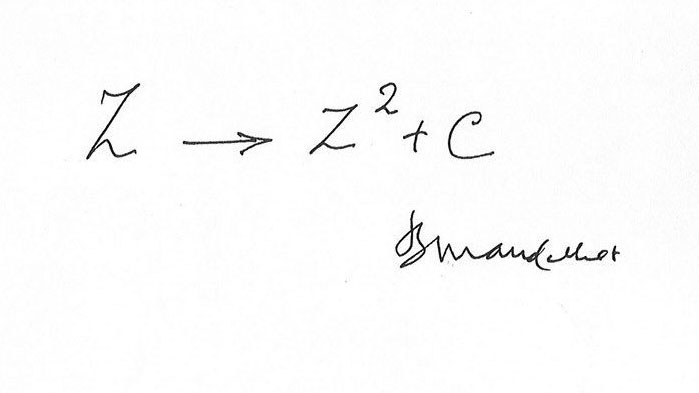
Speaking of Einstein–have you ever wanted to explain the world on a napkin? The Edge, self-described as “an online collective of deep thinkers,” has teamed up with the Serpentine Gallery in London to participate in a month-long Experiment Marathon. The Serpentine has been asking leading scientists and thinkers “What Is Your Formula?” and the Edge is now hosting the fascinating answers on their site. Rickard Dawkins, Brian Eno and Benoit Mandelbrot are just a few of the contributors.
Read More...Re-Organizing the Free Audiobook Podcast Collection
This is just a quick note to let you know that we “re-orged” the Audiobook Podcast Collection. The list, which had become a bit unwieldy, is now broken down by genre: Literature/Fiction, Nonfiction, and Poetry. And, within these categories, the texts are organized by the author’s name. Hopefully this all makes the collection easier to use. Check it out.
Read More...
Animated Woody Allen Stand-Up
Last week, we offered you Woody Allen’s stand-up routine in black & white; this week we’re doing it in animated color. (You can get more animated bits here and here, and note that we created a Comedy category here.)

Give Books Away; Get Books You Want
This is a great concept & service for our readers. BookMooch is an online book swapping web site that has 45,000 members and 750,000 books in its inventory. What goes on here is fairly straightforward. Users can give away books they’ve read in exchange for books they want to read — all for no money, other than the shipping costs. That makes it easy to support your reading habit, and it saves a few trees. The inner-workings of the book swapping are explained here and here. Have a look.
Check out our collection of free podcasts of free audiobooks
Read More...
A New Model for Investigative Journalism
As we’ve discussed before on this blog, one of the major casualties in the shifting new media landscape is the traditional investigative journalist–someone with the time and resources to research in-depth stories. In response to this problem a new group called Pro Publica is proposing a novel economic model: hire the journalists into a foundation and give their work away to the publications where it will make the biggest impact.
The new initiative, headed up by Paul Steiger, head editor at the Wall Street Journal for 16 years, will spend $10 million annually to support a newsroom of 24 journalists and 12 other staff in New York City. The money comes from Herbert and Marion Sandler, former heads of Golden West Financial Corporation, a big player in mortgages and savings.
It seems likely to me that Pro Publica will succeed in attracting some high-level talent, both because of Steiger and because many journalists have come to fear for their jobs in the shrinking newsrooms of traditional papers. The real question is how well this system will work in digging up and delivering quality reporting. What do you lose, and what do you gain, when your employer is no longer a “paper of record” but a private foundation funded by people with their own political agendas? On the other hand, it’s easy to argue that every newspaper already has some kind of political position, so maybe Pro Publica will be no different.
Read More...
The Future of Collaborative Culture?
 I just heard Jimmy Wales, founder of Wikipedia, speaking at Stanford Law School today. Wales is working on some new projects that he hopes will harness the community-driven collaboration of Wikipedia. He’s already had some success in branching out from the encyclopedia idea with Wikia, which is a “wiki farm” compiling information on a variety of different subjects (some of the most successful so far relate to video games).
What Wales spoke about today, however, is a new collaborative search project. The concept is still in its early stages, it seems, but the idea would be to harness the intelligence and dedication of human beings to produce search results significantly better than Google’s. This raises a few questions:
Is Google broken? It’s amazing what Google pulls up, but maybe we’ve all gotten so good at working with an imperfect system that we just tune out the spam and misinterpretations that still crop up.
Is a collaborative social model the appropriate solution to this problem? People are good at compiling encyclopedias, but they may not be good at emulating search rank algorithms. Also, Google is powered by millions of servers in dozens of data centers over the world managing petabytes of information. In other words, this may be a technology+money business, not a people+transparency business.
These issues aside, Wikipedia is one of the most amazing things to come out of the whole Internet experiment, so I’m excited to see what Wales comes up with. Has search become a basic service? Would it work better as an open-source system?
Read More...
Philosophers and Theorists on YouTube
When we announced last week that UC Berkeley had launched a new channel on YouTube, we were curtly informed by a European reader that Berkeley wasn’t the first to get into this game. Apparently, the European Graduate School (or EGS) has been at it for a while. The school’s YouTube collection features talks by important contemporary theorists and philosophers including Jacques Derrida, Jean Baudrillard, and Judith Butler. (There are also some filmmakers mixed in — take for example, Peter Greenaway and John Waters.) To be frank, much of the content runs counter to what we’re looking to do here — to make thinking less insular and emphasize ideas that speak to a thinking public. This is not to dismiss the caliber of the thinking presented here. It’s simply to comment on where it fits (or doesn’t fit) into the kind of project that we’re undertaking. However, if the ESG YouTube channel speaks to you, dig in. It’s yours to enjoy.
Read More...
Support Us
We're hoping to rely on loyal readers, rather than erratic ads. Please click the Donate button and support Open Culture. You can use Paypal, Venmo, Patreon, even Crypto! We thank you!

About Us

Open Culture scours the web for the best educational media. We find the free courses and audio books you need, the language lessons & educational videos you want, and plenty of enlightenment in between.
Advertise With Us

FREE UPDATES!
GET OUR DAILY EMAIL
Get the best cultural and educational resources on the web curated for you in a daily email. We never spam. Unsubscribe at any time.
FOLLOW ON SOCIAL MEDIA

Open Culture editor Dan Colman scours the web for the best educational media. He finds the free courses and audio books you need, the language lessons & movies you want, and plenty of enlightenment in between.
Advertise With Us