How Stevie Nicks Wrote “Rhiannon” & Embodied the Medieval Witch Character Onstage
It seems as inevitable as bell bottoms and shoulder-wide collars that Stevie Nicks would transform into the New Age priestess who greeted the 70s with a wave of a billowy, shawl-draped arm. “It makes sense,” Bill DeMain writes at Classic Rock, that her “signature song was inspired by a kind of ancient magic” of the kind that everybody was getting into. That song, “Rhiannon,” takes its name from “an old Welsh witch,” as Nicks would often announce onstage. During Fleetwood Mac’s Nicks/Buckingham heyday, Nicks embodied the character as though possessed, her performances of the song “like an exorcism,” Mick Fleetwood recalled.
The story of how “Rhiannon” came to be, however, is not as straightforward as Nicks’ reaching into the pages of the Mabinogion, the Welsh prose cycle in which Rhiannon first appears. The name came to her several steps removed from its mythical origins, from a novel by Mary Leader called Triad.
“It was just a stupid little paperback that I found somewhere at somebody’s house,” she recalls of the uncanny 1974 composition. “And it was all about this girl who becomes possessed by a spirit named Rhiannon. I read the book, but I was so taken with that name that I thought: ‘I’ve got to write something about this.’ So I sat down at the piano and started this song about a woman that was all involved with these birds and magic.”
“I come to find out,” she says, “after I’ve written the song, that in fact Rhiannon was the goddess of steeds, maker of birds.” The perfect anthem for a singer on the threshold of turning the already famous Fleetwood Mac into one of the biggest rock bands in the world. They were in a kind of wilderness period, having fired longtime guitarist and musical linchpin Danny Kirwan and lost guitarist Bob Welch. When Lindsay Buckingham, his replacement, insisted that Nicks join with him, she brought the song “about an old Welsh witch” along with the pair’s collection of shawls, capes, and kimonos.
You can learn more about the myths of the Mabinogion, the oldest known prose stories in Britain, in the Polyphonic video above. The collection inspired the epic fantasies of J.R.R. Tolkien, and by proxy the epic fantasies of Led Zeppelin and every heavy metal band thereafter. It also features in Lloyd Alexander’s 1960’s fantasy series Chronicles of Prydain (later poorly adapted in Disney’s The Black Cauldron). The pop culture of the 70s had been infused with ancient Welsh before Rhiannon came along, but the goddess herself seemed to belong exclusively to Stevie Nicks, who intuited a deep magic in the music of her ancient name.
Related Content:
Josh Jones is a writer and musician based in Durham, NC. Follow him at @jdmagness
Read More...A New Digital Archive Preserves Black Lives Matter & COVID-19 Street Art

Image by Amanda-Lee Harris Gibbs, “Floyd & Taylor Tribute”
What happens when anti-racist protesters gather in the streets and are not met with tear gas, rubber bullets, and batons? For one thing, they make art and graffiti. Lots of it, on walls, streets, sidewalks, courthouse doors, the plywood of boarded-up windows, wherever. Public activist art serves not only as a memorial for victims of state oppression, but as a way to imagine what the future needs and visually occupy the space to make it happen. In the intertwining “mutual relations of the political and the aesthetic,” symbols can begin to call real conditions into existence.
The streets of cities around the country have become temporary galleries of artworks that remember victims of systemically racist police violence and call for justice, even as they imagine what a more just world might look like: one where people are not trapped in cycles of poverty by austerity and state violence. Such displays have proliferated especially in Minneapolis, where George Floyd was killed. There, the “memorial… is constantly changing. In the days following Floyd’s murder by the police, street art, flowers, handwritten notes, and more” appeared.
Now the site “has become a living space,” Todd Lawrence, a professor at the University of St. Thomas, tells Leah Feiger at Hyperallergic. “The state of flux characterizes much of Minneapolis’s street art scene in the wake of recent protests,” Feiger writes. “The ownership of the physical art is contentious,” and temporary installations become sites of long-term debate. The University of St. Thomas has decided to preserve these ephemeral statements in a database called Urban Art Mapping: George Floyd & Anti-Racist Street Art. The project began with a focus on Minneapolis and has “steadily expanded with every new submission.”
The project includes in its wider scope a database of COVID-19 street art, with many an acknowledgement of how government failures in response to the pandemic connect to the willful disregard for human life the Black Lives Matter movement calls out. “Artists and writers producing work in the streets—including tags, graffiti, murals, stickers, and other installations on walls, pavement, and signs—are in a unique position to respond quickly and effectively in a moment of crisis,” notes the COVID-19 Street Art site. As we limit our movement through public space, that space itself transforms, responding in direct ways to a multitude of intersecting crises none of us can afford to ignore.
Make submissions to the COVID-19 Street Art archive here and to the George Floyd & Anti-Racist Street Art archive here.
Related Content:
Public Enemy Releases a Fiery Anti-Trump Protest Song (NSFW)
How Jazz Helped Fuel the 1960s Civil Rights Movement
Josh Jones is a writer and musician based in Durham, NC. Follow him at @jdmagness
Read More...Vincent Van Gogh’s Self Portraits: Explore & Download a Collection of 17 Paintings Free Online
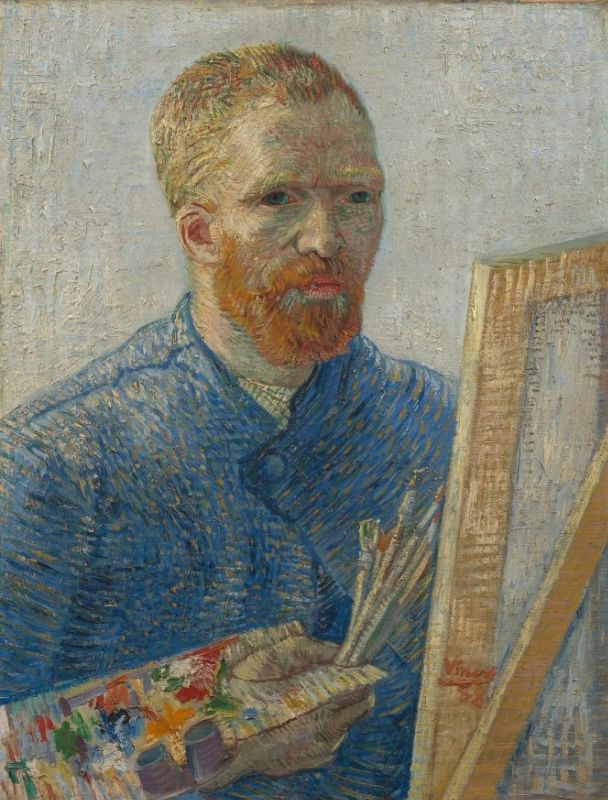
“They say — and I gladly believe it — that it is difficult to know yourself,” Vincent Van Gogh once wrote to his brother Theo, “but it isn’t easy to paint oneself either.” This from one of the most prolific self-portraitists of all time. Between the years 1885 and 1889, Van Gogh painted himself more than 35 times, most of them during the two years in the middle when he lived in Paris. Always short of funds, but especially straitened there, he saved the cost of hiring models by investing in a mirror instead.

That mirror, Van Gogh wrote in another letter, was “good enough to enable me to work from my image in default of a model, because if I can manage to paint the coloring of my own head, which is not to be done without some difficulty, I shall likewise be able to paint the heads of other good souls, men and women.” At the Van Gogh Museum’s online collection you can browse up close and in detail — as well as download — seventeen examples of the painter’s essays in his own head color, and much else about himself besides.

We’ve all seen Van Gogh’s two or three most well-known self-portraits. The most famous of those, 1889’s Self-Portrait With a Bandaged Ear (one of two painted that year), hints at the act of self-mutilation that followed one of his many quarrels with his friend and colleague Paul Gauguin. Held at the Courtauld Gallery, that painting doesn’t appear on the Van Gogh Museum’s site, but those that do reveal aspects of the painter (literally, in some cases) artistically unexplored by his more widely seen works.
Take Self-Portrait as a Painter at the top of the post, an unusual depiction in that Van Gogh makes reference in it to his profession. Created between December 1887 and February 1888, this final Parisian work includes a palette, paintbrushes, and an easel, but the way in which Van Gogh painted it tells us something more: “He showed that he was a modern artist by using a new painting style, with bright, almost unblended colors,” says the Van Gogh Museum’s web site, “the blue of his smock, for instance, and the orange-red of his beard” chosen to intensify one another.

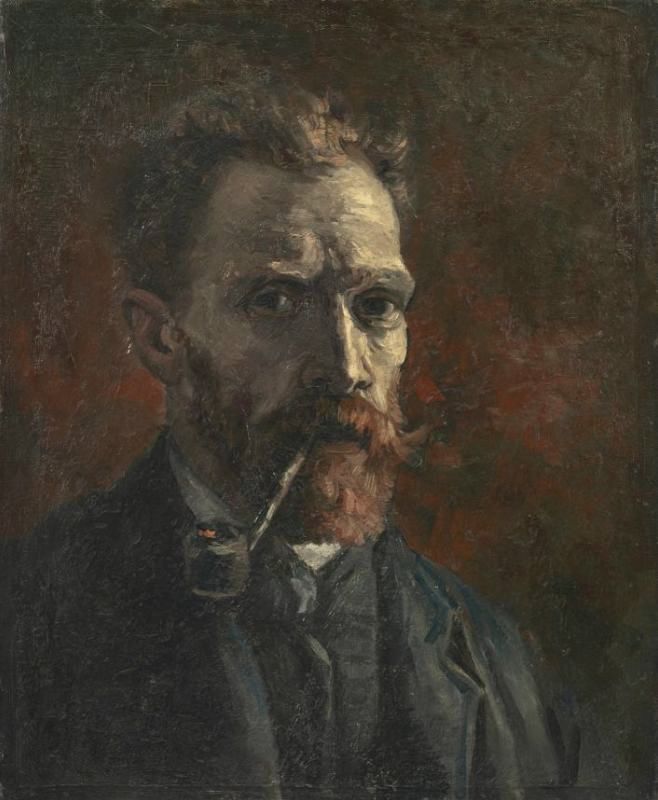
Different self-portraits emphasize different distinctive elements of Van Gogh’s appearance and self-presentation. In 1887’s Self-Portrait with Straw Hat he wears the titular piece of headwear that allows him to use his beloved color yellow, even as he “examines us with one blue and one green eye.” In some self-portraits he goes not just without a hat but without any of the accoutrements of his work at all, including his artist’s smock. In others, as in the Adolphe Monticelli-inspired example here, he smokes a pipe; in the clearly Impressionist-influenced self-portrait just above, he opts for both pipe and hat. Yet we can always recognize Van Gogh by the intensity of his expression — or as Douglas Coupland less reverently put it, his “selfie face.”

Related Content:
Download Hundreds of Van Gogh Paintings, Sketches & Letters in High Resolution
Experience the Van Gogh Museum in 4K Resolution: A Video Tour in Seven Parts
Watch as Van Gogh’s Famous Self-Portrait Morphs Into a Photograph
Discovered: The Only Known Picture of Vincent Van Gogh as an Adult Artist? (Maybe, Maybe Not)
Based in Seoul, Colin Marshall writes and broadcasts on cities, language, and culture. His projects include the book The Stateless City: a Walk through 21st-Century Los Angeles and the video series The City in Cinema. Follow him on Twitter at @colinmarshall, on Facebook, or on Instagram.
Read More...Gilda Radner Does a Comic Impersonation of Patti Smith: Watch the Classic SNL Skit, “Rock Against Yeast” (1979)
Gimme Mick, gimme Mick
Baby’s hair, bulgin’ eyes, lips so thick
Are you woman, are you man
I’m your biggest funked-up fan
So rock me and roll meeee…
‘Til I’m sick—(the fictional) Candy Slice, Saturday Night Live
Sir Michael Philip—aka Mick Jagger—celebrated his 77th birthday earlier this summer, a milestone his fellow Rolling Stones Keith Richards and Ronnie Wood observed remotely, as befits seniors at particular risk from COVID-19 infection.
You, Mick Jagger, are English and go out with a model and get an incredible amount of publicity
You, Mick Jagger, don’t keep regular hours
You, Mick Jagger, have the greatest rock ‘n roll band in the history of rock ‘n roll, and you don’t even play an instrument yourself
It’s a bit sobering, watching the late Gilda Radner, expertly preening and prancing as the then-36-year-old, yet-to-be-knighted Mick in “Rock Against Yeast,” the star studded Saturday Night Live Sketch from 1979, above.
Readers over the age of 36 who want to get seriously bummed out, poll your under-35 friends to see who’s heard of the versatile Gilda, an original Not-Ready-for-Prime-Time Player and one of America’s most complicated sweethearts.
Fortunately, she’s not entirely forgotten:
I can personally attest, and I feel comfortable speaking for Amy Poehler, Maya Rudolph and Rachel Dratch when I say that seeing Gilda as a kid…[she was] so authentically herself and so regular in so many ways. She was not a piece of casting, she was who she was on TV. We all saw that and said, ‘I want to do that, and it’s possible because I see her doing that. It was an early example for me of how important representation is, for everyone from every walk of life. Gilda was our equivalent of Michelle Obama. —Tina Fey
Gilda’s not alone in having left us at a young age. Some of her “Rock Against Yeast” castmates and the celebrities they spoofed made similarly shocking early exits:
Guest host Ricky Nelson, appearing as himself
Music producer Don Kirshner—embodied here by musician Paul Shaffer—made it to a ripe old age, ie: just a year younger than Sir Mick is now.
Actually, Gilda’s Mick routine was filtered through the fictional Candy Slice, a satirical take on Godmother of Punk Patti Smith—now a venerable 73-year-old National Book award-winning memoirist, gearing up for next month’s “high-end multi-camera visual and sonic experience,” i.e. virtual book reading for last year’s Year Of The Monkey.
Smith, who over the years has proved herself to be a very good egg, admitted to NPR that while her band found Gilda’s characterization “hilarious,” she took a while to warm up to it:
When I was younger, I—it sort of bothered me because, you know, she makes a big thing about, you know, I think it’s like the white powder and the vast amounts of cocaine in the recording studio. I had never even had cocaine. It wasn’t how—it’s not how I work. But I thought it was actually hilarious besides that. She was a great artist.
It was—actually, it was a privilege to be played—it was a privilege to have Gilda Radner project what she thought I might be like. And the funniest part was since there was a big controversy over the armpit hair on the cover of “Easter,” she brushed the hair under her arms, and I think she had like a foot of hair coming from her armpit, and we were all laughing so hard.
She was a great artist, and cocaine or not, I salute her. And I feel very lucky to have been, you know, portrayed by Gilda.
Read a full transcript of “Rock Against Yeast” here, while heaving a sigh of relief that that singer Dolly Parton (Jane Curtin) continues to walk so vigorously amongst us.
Related Content:
Bill Murray & Gilda Radner Deliver the Laughs in Two 1970s Skits for National Lampoon
When William S. Burroughs Appeared on Saturday Night Live: His First TV Appearance (1981)
Ayun Halliday is an author, illustrator, theater maker and Chief Primatologist of the East Village Inky zine. Follow her @AyunHalliday.
Read More...Ballerina Misty Copeland Recreates the Poses of Edgar Degas’ Ballet Dancers
“I am a man of motion,” tragic modernist ballet dancer Vaslav Nijinsky wrote in his famous Diary, “I am feeling through flesh…. I am God in a body.” Nijinsky suffered the unfortunate onset of schizophrenia after his career ended, but in his lucid moments, he writes of the greatest pain of his illness—to never dance again. A degree of his obsessive devotion seems intrinsic to ballet.
Misty Copeland, who titled her autobiography Life in Motion, thinks so. “All dancers are control freaks a bit,” she says. “We just want to be in control of ourselves and our bodies. That’s just what the ballet structure, I think, kind of puts inside of you. If I’m put in a situation where I am not really sure what’s going to happen, it can be overwhelming. I get a bit anxious.” As Nijinsky did, Copeland is also “forcing people to look at ballet through a more contemporary lens,” writes Stephen Mooallem in Harper’s Bazaar.
Copeland has been candid about her struggles on the way to becoming the first African American woman named a principal dancer at the American Ballet Theatre, including coping with depression, a leg-injury, body-image issues, and childhood poverty. She is also “in the midst of the most illuminating pas de deux with pop culture for a classical dancer since Mikhail Baryshnikov went toe-to-toe with Gregory Hines in White Nights” (a reference that may be lost on younger readers, but trust me, this was huge).
Like another modernist artist, Edgar Degas, Copeland has revolutionized the image of the ballet dancer. Degas’ ballet paintings, “which the artist began creating in the late 1860s and continued making until the years before his death, in 1917, were infused with a very modern sensibility. Instead of idealized visions of delicate creatures pirouetting onstage, he offered images of young girls congregating, practicing, laboring, dancing, training….” He showed the unglamorous life and work behind the costumed pageantry, that is.
Photographers Ken Browar and Deborah Ory envisioned Copeland as several of Degas’ dancers, posing her in couture dresses in recreations of some of his famous paintings and sculptures. The photographs are part of their NYC Dance Project, in partnership with Harper’s Bazaar. As Kottke points out, conflating the histories of Copeland and Degas’ dancers raises some questions. Degas had contempt for women, especially his Parisian subjects, who danced in a sordid world in which “sex work” between teenage dancers and older men “was a part of a ballerina’s reality,” writes author Julia Fiore (as it was too in Nijinsky’s day).
This context may unsettle our viewing, but the images also show Copeland in full control of Degas’ scenes, though that’s not the way it felt, she says. “It was interesting to be on shoot and to not have the freedom to just create like in normally do with my body. Trying to re-create what Degas did was really difficult.” Instead, she embodied his figures as herself. “I see a great affinity between Degas’s dancers and Misty,” says Thelma Golden, director of the Studio Museum in Harlem. “She has knocked aside a long-standing music-box stereotype of the ballerina and replaced it with a thoroughly modern, multicultural image of presence and power.”
See more of Copeland’s Degas recreations at Harper’s Bazaar.
Related Content:
Impressionist Painter Edgar Degas Takes a Stroll in Paris, 1915
Josh Jones is a writer and musician based in Durham, NC. Follow him at @jdmagness
Read More...When Edward Gorey Designed Book Covers for Classic Novels: See His Ironic-Gothic Take on Dickens, Conrad, Poe & More
Twenty years after his death, it’s cooler than ever to like Edward Gorey. This is evidenced not just by the frequent posting of his intensively crosshatched, Victorian- and Edwardian-period-inflected, grimly comic art on social media, but by the number of artists who now claim him as an influence. Where, one wonders, did they come across Gorey in the first place? Having published more than a hundred books in his lifetime (if often in small runs from obscure presses), he certainly put the work out there to be found.
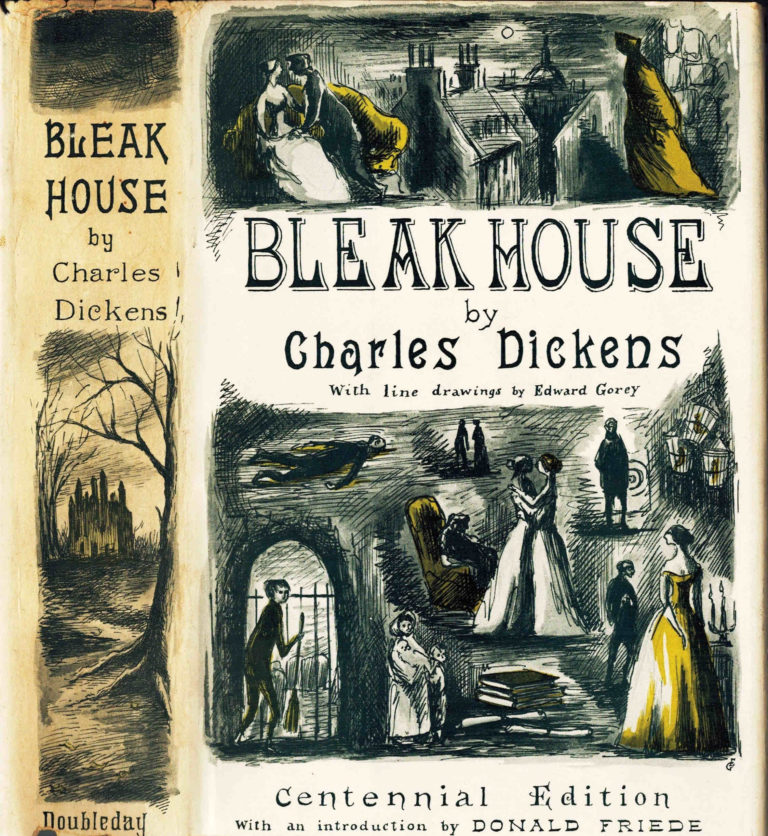
But it was the much more well-known books of other writers like Charles Dickens, Joseph Conrad, T.S. Eliot, and Herman Melville that first propagated Gorey’s sensibility of, as The New York Times’ Steven Kurutz puts it, “camp-macabre, ironic-gothic or dark-whimsy.”
Gorey designed the covers for these books and others between 1953 to 1960, when he worked at the art department of publishers Doubleday Anchor. He had been tasked specifically with their new series of paperbacks meant to be “serious,” as opposed to the abundance of cheap, lowbrow, and often salaciously packaged novels that had inspired the term “pulp fiction.”
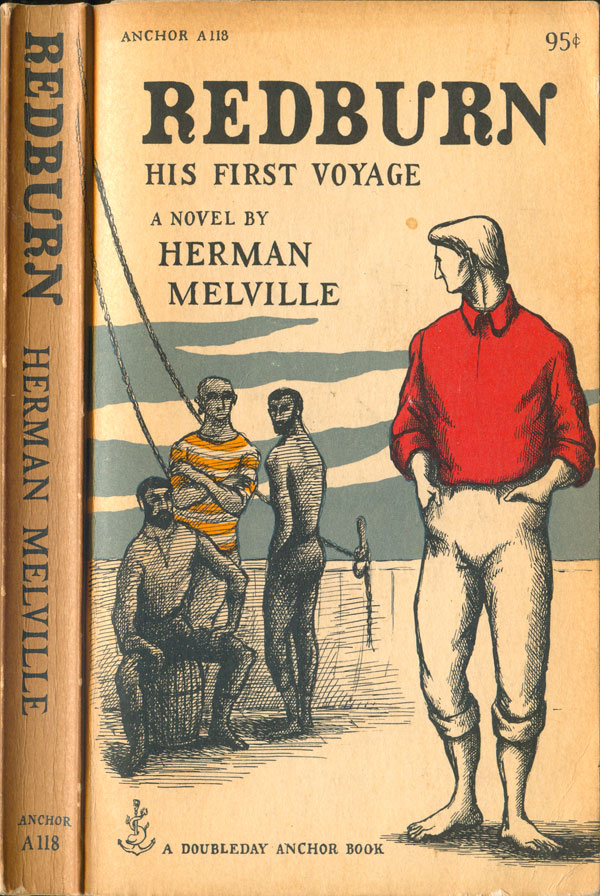
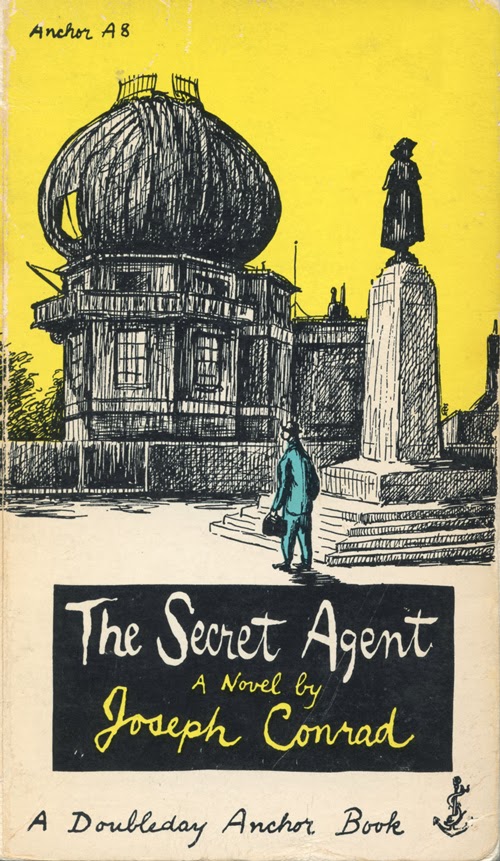
Of the first 200 titles in this series, says Goreyography, “about a fourth of these have line drawn covers by Gorey.” Even when other artists (the lineup of whom included Leonard Baskin, Milton Glaser, Philippe Julian, and Andy Warhol) drew the illustration, “Gorey then designed the finished product lending a uniform appearance to the whole line.” You can see a variety of Gorey’s Doubleday Anchor paperback covers at Lithub, the most Goreyesque of which (such as Joseph Conrad’s The Secret Agent at the top of the post) not only bear his illustrations but contain nothing not drawn by Gorey, text and colophon included.
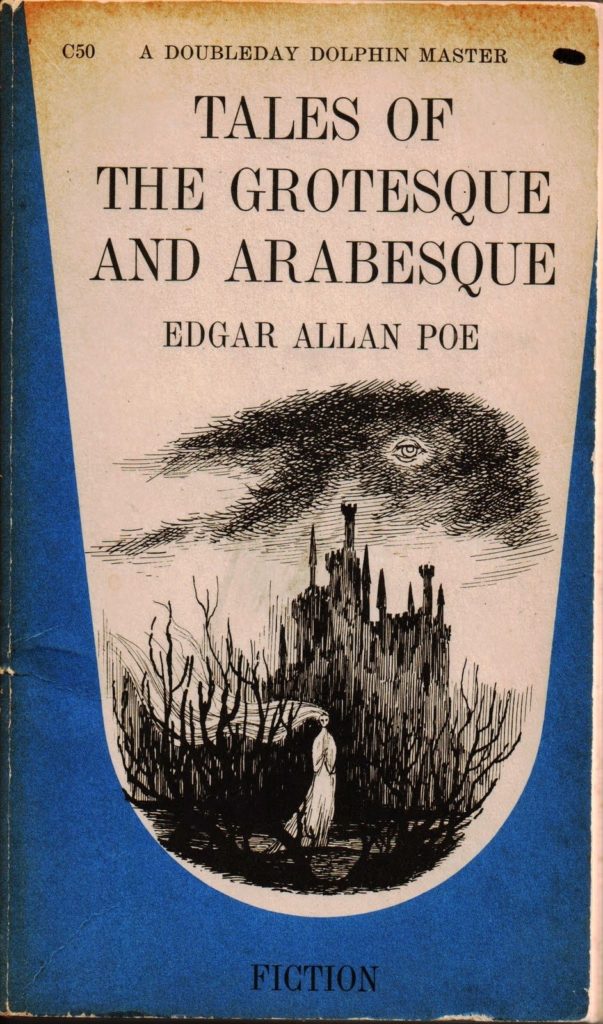
“When these covers first appeared against the backdrop of mass-market covers in general,” according to Goreyography, “they were hailed as ‘modern’ and ‘arty.’ Print magazine praised ‘a feeling of unity… a quality of their own.’ ” The end of Gorey’s time at Doubleday didn’t mean the end of his work on others’ books: in the 1970s, for example, he contributed suitably eerie cover and interior art to John Bellairs’ young-adult novel The House with a Clock in Its Walls and five of the sequels that would follow it. It was in Bellairs’ books that I first encountered the visions of Edward Gorey. More than a few readers of my generation and the generations since could say the same — and also that we’ve been pleasurably haunted by them ever since.
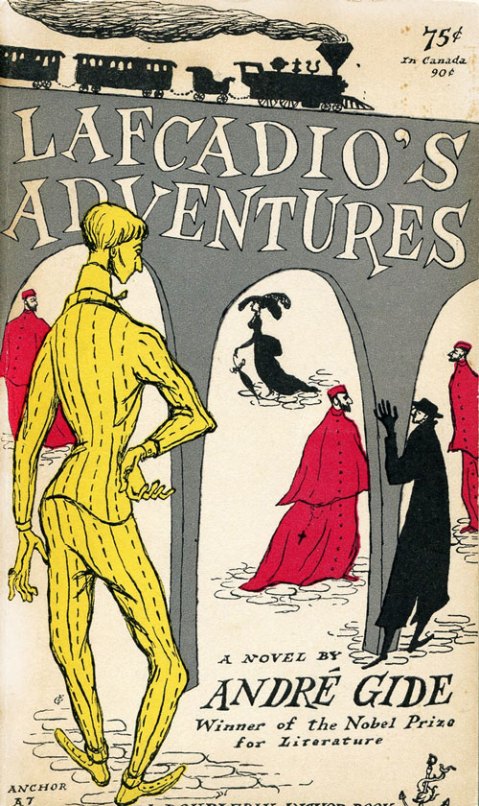
See more covers over at Lithub.
Related Content:
Edward Gorey Illustrates H.G. Wells’ The War of the Worlds in His Inimitable Gothic Style (1960)
Lemony Snicket Reveals His Edward Gorey Obsession in an Upcoming Animated Documentary
Edward Gorey Talks About His Love Cats & More in the Animated Series, “Goreytelling”
The Best of the Edward Gorey Envelope Art Contest
Based in Seoul, Colin Marshall writes and broadcasts on cities, language, and culture. His projects include the book The Stateless City: a Walk through 21st-Century Los Angeles and the video series The City in Cinema. Follow him on Twitter at @colinmarshall, on Facebook, or on Instagram.
Read More...How John Woo Makes His Intense Action Scenes: A Video Essay
The world does not lack action movies, but well-made ones have for most of cinema history been few and far between. Despite long understanding that action sells, Hollywood seldom manages to get the most out of the genre’s master craftsmen. Hence the excitement in the early 1990s when fans of Hong Kong gangster pictures learned that John Woo, that country’s preeminent action auteur, was coming stateside. His streak of Hong Kong hits at that point included A Better Tomorrow, The Killer, Bullet in the Head, and Hard Boiled, most of which starred no less an action icon than Chow Yun-fat. For Woo’s American debut Hard Target, starring a Belgian muscleman called Jean-Claude Van Damme, it would prove a hard act to follow.
Hard Target, Evan Puschak (better known as the Nerdwriter) drily puts it in the video essay above, is “not quite a masterpiece.” Woo “battled a mediocre script, studio pressure, and a star who couldn’t really act,” and then “the studio re-edited a lot of the movie to get an R rating, and to make it more palatable for American moviegoers, diluting Woo’s signature style in the process.”
But despite being a weak spot in Woo’s filmography, it makes for an illuminating case study in his cinematic style. Puschak calls its action scenes “absurdly creative” in a way that has “grown more impressive over time”: in them Woo employs slow motion — a signature technique “he weaves it into his highly kinetic sequences like an expert composer” — and other forms of time dilation to “heighten the experience of impact.”
Like most action movies, Hard Target offers a great many impacts: punches, kicks, improbable leaps, gunshots, and explosions aplenty. Under Woo’s direction they feel even more plentiful than they are, given that he “often repeats things two or three times so that the impact has an echoing effect.” Yet unlike in run-of-the mill examples of the genre, we feel each and every one of those impacts, owing to such relatively subtle editing strategies as presenting the firing of a gun and the bullet hitting its target as “two distinct moments.” (Several such gunshots, as Puschak shows us using deleted footage, were among the studio-mangled sequences.) “This is unlike any traditional films in the States,” Woo later said of Hard Target’s disappointing performance, “so the audience didn’t understand what’s going on with these techniques.” More than a quarter-century later, Western audiences have more of a grasp of Woo’s cinematic language, but few other filmmakers have come close to mastering it.
Related Content:
The Dark Knight: Anatomy of a Flawed Action Scene
Why Is Jackie Chan the King of Action Comedy? A Video Essay Masterfully Makes the Case
How One Simple Cut Reveals the Cinematic Genius of Yasujirō Ozu
Based in Seoul, Colin Marshall writes and broadcasts on cities, language, and culture. His projects include the book The Stateless City: a Walk through 21st-Century Los Angeles and the video series The City in Cinema. Follow him on Twitter at @colinmarshall, on Facebook, or on Instagram.
Read More...When We All Have Pocket Telephones (1923)
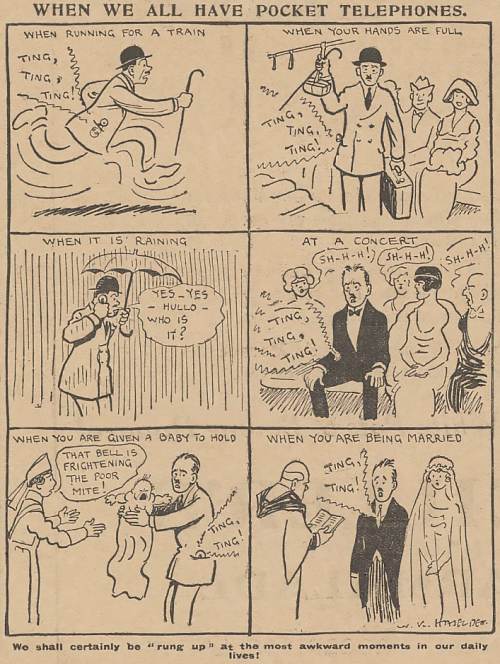
From England’s Daily Mirror (January 23, 1923).
Find more timely predictions in the Relateds below.
Related Content:
A 1947 French Film Accurately Predicted Our 21st-Century Addiction to Smartphones
Read More...The Golden Age of Berlin Comes to Life in the Classic, Avant-Garde Film, Berlin: Symphony of a Metropolis (1927)
The rediscovery of Berlin began thirty years ago this November, with the demolition of the wall that had long divided the city’s western and eastern halves. Specifically, the Berlin Wall had stood since 1961, meaning the younger generation of West and East Berliners had no memory of their city’s being whole. In another sense, the same could be said of their parents’ generation, who saw nearly a third of Berlin destroyed in the Second World War. Only the most venerable Berliners would have remembered the social and industrial golden age the undivided city enjoyed back in the 1920s — an age exhilaratingly presented in the film Berlin: Symphony of a Metropolis.
An early example of the silent-era “city symphonies” that showed off the capitals of the world on film (several of which you can watch here on Open Culture), Berlin takes the viewer along streets and waterways, through parks, onto trains and elevators, on roller coasters, and into factories, building sites, cabarets, and skies. Shot over a year and compressed into less than an hour, this avant-garde documentary captures the experience of Berlin in the 1920s — or rather it captures, in that mightily industrial age, experience at the intersection of human and machine. Director Walther Ruttmann “charts the movements of crowds of children, workers, swimmers, rowers, and so on,” writes Popmatters’ Chadwick Jenkins, “but only occasionally focuses on a person as an individual. Moreover, many of the most striking scenes in the film avoid the intrusion of people altogether, concentrating instead on the operation of mechanical devices.”
Absent explanatory narration or title cards, the film invites a variety of readings. Chadwick sees it as “the defamatory dehumanization of the human, the derogation of human autonomy and dominion over a world of indifferent matter, a reduction of the divine spark in humankind to the status of another mere thing.” This same quality drove away one of Ruttmann’s key collaborators on Berlin, the writer Carl Mayer. Ruttmann, for his part, described his own motivation as “the idea of making something out of life, of creating a symphonic film out of the millions of energies that comprise the life of a big city.”
A primary interest in movement itself is perhaps to be expected from a filmmaker who had previously distinguished himself as an abstract animator. (What his later work as an assistant to Leni Riefenstahl on Triumph of the Will indicates is another matter.) But if Berlin: Symphony of a Metropolis “dehumanizes,” writes Jenkins, it does so as a deliberate artistic strategy to show that “the city is more than its various components, including its human components,” and to “provide an insight into the emergent qualities that make a city what it is, beyond being a mere composite of the elements within its geographical boundaries,” however those boundaries get drawn and redrawn over time.
Berlin: Symphony of a Metropolis will be added to our collection, 4,000+ Free Movies Online: Great Classics, Indies, Noir, Westerns, Documentaries & More.
Related Content:
Watch Samuel Beckett Walk the Streets of Berlin Like a Boss, 1969
See Berlin Before and After World War II in Startling Color Video
Dramatic Color Footage Shows a Bombed-Out Berlin a Month After Germany’s WWII Defeat (1945)
Berlin Street Scenes Beautifully Caught on Film (1900–1914)
The First Avant Garde Animation: Watch Walter Ruttmann’s Lichtspiel Opus 1 (1921)
Based in Seoul, Colin Marshall writes and broadcasts on cities, language, and culture. His projects include the book The Stateless City: a Walk through 21st-Century Los Angeles and the video series The City in Cinema. Follow him on Twitter at @colinmarshall, on Facebook, or on Instagram.
Read More...Professor Who Picked Every Election Winner Since Ronald Reagan Reveals His Prediction for the 2020 Election
The New York Times writes: “Right now, polls say Joe Biden has a healthy lead over President Trump. But we’ve been here before (cue 2016), and the polls were, frankly, wrong. One man, however, was not. The historian Allan Lichtman was the lonely forecaster who predicted Mr. Trump’s victory in 2016 — and also prophesied the president would be impeached. That’s two for two. But Professor Lichtman’s record goes much deeper. In 1980, he developed a presidential prediction model that retrospectively accounted for 120 years of U.S. election history. Over the past four decades, his system has accurately called presidential victors, from Ronald Reagan in ’84 to, well, Mr. Trump in 2016.
In the video Op-Ed above, Professor Lichtman walks us through his system, which identifies 13 “keys” to winning the White House. Each key is a binary statement: true or false. And if six or more keys are false, the party in the White House is on its way out”
No spoilers from us. You have to watch until the end.
If you would like to support the mission of Open Culture, consider making a donation to our site. It’s hard to rely 100% on ads, and your contributions will help us continue providing the best free cultural and educational materials to learners everywhere. You can contribute through PayPal, Patreon, and Venmo (@openculture). Thanks!
Read More...Support Us
We're hoping to rely on loyal readers, rather than erratic ads. Please click the Donate button and support Open Culture. You can use Paypal, Venmo, Patreon, even Crypto! We thank you!

About Us

Open Culture scours the web for the best educational media. We find the free courses and audio books you need, the language lessons & educational videos you want, and plenty of enlightenment in between.
Advertise With Us

FREE UPDATES!
GET OUR DAILY EMAIL
Get the best cultural and educational resources on the web curated for you in a daily email. We never spam. Unsubscribe at any time.
FOLLOW ON SOCIAL MEDIA

Open Culture editor Dan Colman scours the web for the best educational media. He finds the free courses and audio books you need, the language lessons & movies you want, and plenty of enlightenment in between.
Advertise With Us


