Hear the Recently Discovered, Earliest Known Recording of “Swing Low, Sweet Chariot” (1894)
As keen observers of American culture and history like W.E.B. Du Bois and Ralph Ellison have written, there is no American music without African-American music. The history of the recording industry bears witness to the fact, with jazz, blues, and ragtime dominating the early releases that drove the industry forward. Before these popular forms and the age of “race records,” however, came the spirituals, gospel songs dating back to slavery, whose fame spread across the world in the latter half of the 19th century with groups like the Fisk Jubilee Singers. As Du Bois wrote in 1903, “their songs conquered till they sang across the land and across the sea, before Queen and Kaiser, in Scotland and Ireland, Holland and Switzerland… they tell of death and suffering and unvoiced longing toward a truer world, of misty wanderings and hidden ways.”
Given the worldwide fascination with the spiritual and the singing groups who spread them across the world, it’s no wonder this was sought-after material for a nascent industry eager for music that appealed to the masses. And no spiritual has had more mass appeal than “Swing Low, Sweet Chariot.”
The first recording of the song was long thought to have been performed in 1909 by a foursome, the Fisk University Jubilee Quartet, “carrying on the legacy,” notes Public Domain Review, “of the original Fisk Jubilee Singers of the 1870s.” You can hear that recording below, made by Victor Studios.
Even before the turn of the century, writes Toni Anderson at the Library of Congress, “the musical landscape was peppered with over ten companies fashioned after the original Jubilee Singers, and by the 1890s, many black groups had launched successful foreign tours.” (Du Bois laments the poor quality of many of these imitators.) The 1909 recording, writes Public Domain Review, “popularized the song hugely,” or, we might say, even more hugely, helping to make it a staple in decades to come for artists like Paul Robeson, Louis Armstrong, Etta James, Johnny Cash, and Eric Clapton (in a 1975 reggae take). However, it turns out that an even earlier recording exists, made by one of those successful traveling groups, the Standard Quartette, in 1894.
Recorded on a wax cylinder by Columbia Records in Washington, DC while the group made a stop on a spring tour, this “’holy grail’ of early recording history,” writes Archeophone Records, “pushes back by fifteen years the first known recording of the classic spiritual,” but it might have been lost forever had not a careful collector preserved it and Archeophone’s Richard Martin not identified its badly-decayed sounds as “Swing Low, Sweet Chariot.” The recording has been included on a 102-track compilation, Waxing the Gospel: Mass Evangelism and the Phonograph, 1890–1900.
First discovered on a “large group of damaged early cylinders—moldy, noisy, and thought to have no retrievable content,” the song has been unearthed from beneath “an ocean of noise.” What Archeophone’s Meagan Hennessey found is that the version “is very different from what people expect. The chorus is familiar, but the verses are different. The Standard Quartette sing lyrics we associate with other jubilee songs.” Also, as Martin points out, the song’s arrangement is unusual: “there are complex things going on here with harmony and rhythm, but you’ve got to listen closely through the noise.” (Learn more about the discovery and restoration in the short video above.)
The song itself may have been written in the mid-1800s by an enslaved man named Wallace Willis, who was taken from Mississippi to Oklahoma by his half-Choctaw owner during forced relocation in the 1830s, then “rented out” to a school for Native boys. The headmaster heard him sing it, and passed it on to the Jubilee singers. In another, more dramatic, account of the song’s composition, it “’burst forth’ from the anguished soul of Sarah Hannah Sheppard, the mother of Ella Sheppard of Fisk Jubilee Singer fame,” when Sarah learned she would be sold and separated forever from her daughter.
In his live performance of the song, above, Johnny Cash gives a picturesque origin story of an anonymous slave, “sitting on his cotton sack one day,” and singing about a vision of a chariot. But whatever the song’s true origins, “Swing Low, Sweet Chariot,” perhaps more than any other popular spiritual of the 19th century, has come to represent the music, Du Bois wrote, through which “the slave spoke to the world.”
Related Content:
Hear Walt Whitman (Maybe) Reading the First Four Lines of His Poem, “America” (1890)
Hear Voices from the 19th Century: Tennyson, Gladstone & Tchaikovsky
Hear the First Jazz Record, Which Launched the Jazz Age: “Livery Stable Blues” (1917)
Josh Jones is a writer and musician based in Durham, NC. Follow him at @jdmagness
Read More...The 16,000 Artworks the Nazis Censored and Labeled “Degenerate Art”: The Complete Historic Inventory Is Now Online
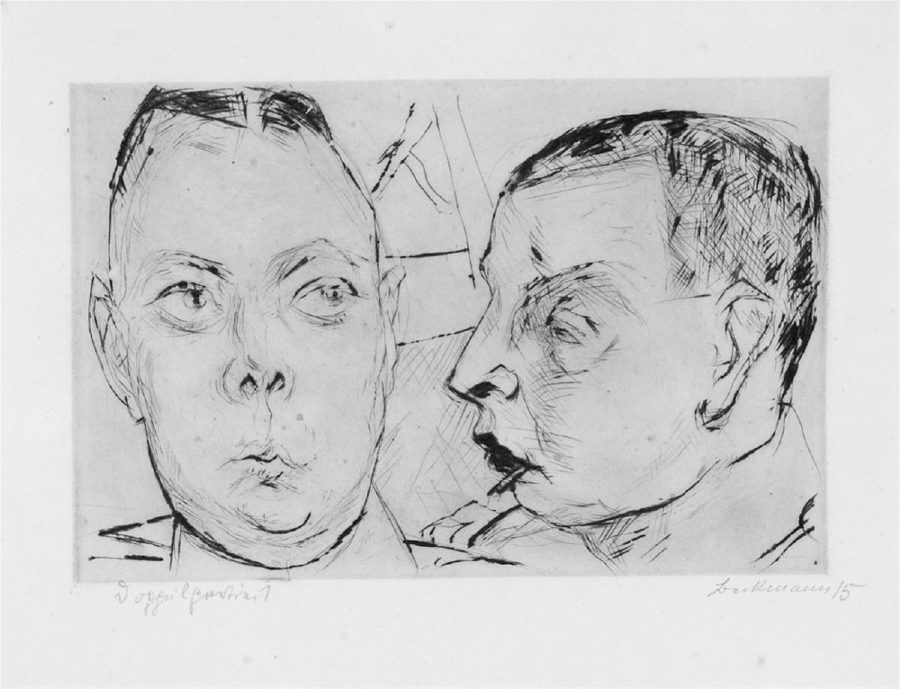
The Nazis may not have known art, but they knew what they liked, and much more so what they didn’t. We’ve previously featured here on Open Culture the “Degenerate Art Exhibition” of 1937, put on by Hitler’s party four years after it rose to power. Following on a show of only Nazi-approved works — including many depictions of classically Germanic landscapes, robust soldiers in action, blonde nudes — it toured the country with the intent of revealing to the German people the “insult to German feeling” committed by Entartete Kunst (Degenerate art), a Nazi-defined category of art created by the likes of Paul Klee, Wassily Kandinsky, Max Beckmann, George Grosz, and others, a roster heavy on the abstract, the expressionistic, and the Jewish.
Now, thanks to the Victoria and Albert Museum, we know exactly which works of art the Nazis condemned. “The V&A holds the only known copy of a complete inventory of ‘Entartete Kunst’ confiscated by the Nazi regime from public institutions in Germany, mostly during 1937 and 1938,” says the museum’s site.
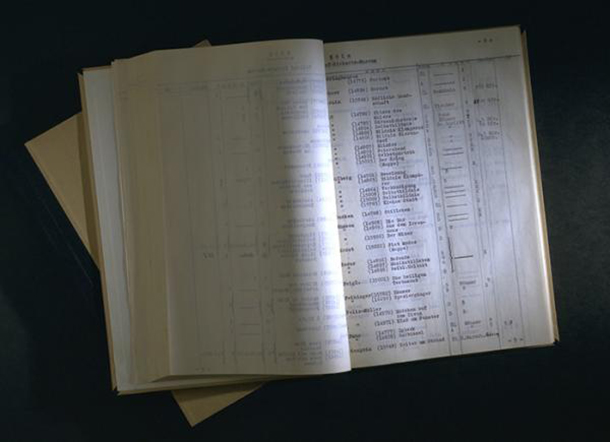
“The list of more than 16,000 artworks was produced by the Reichsministerium für Volksaufklärung und Propaganda (Reich Ministry for Public Enlightenment and Propaganda) in 1942 or thereabouts. It seems that the inventory was compiled as a final record, after the sales and disposals of the confiscated art had been completed in the summer of 1941.”
You can read and download the entire document, which provides “crucial information about the provenance, exhibition history and fate of each artwork,” in PDF form at the V&A’s page about it.
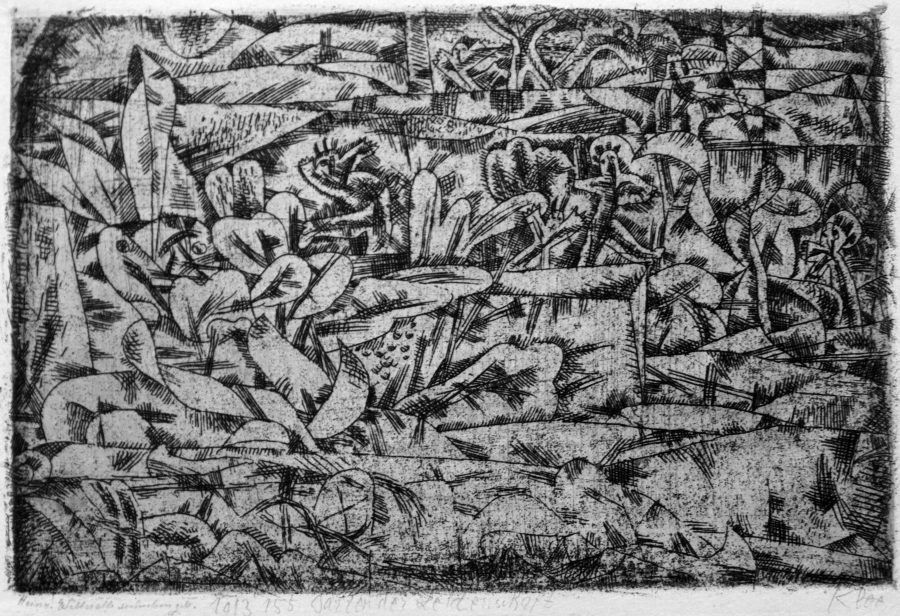
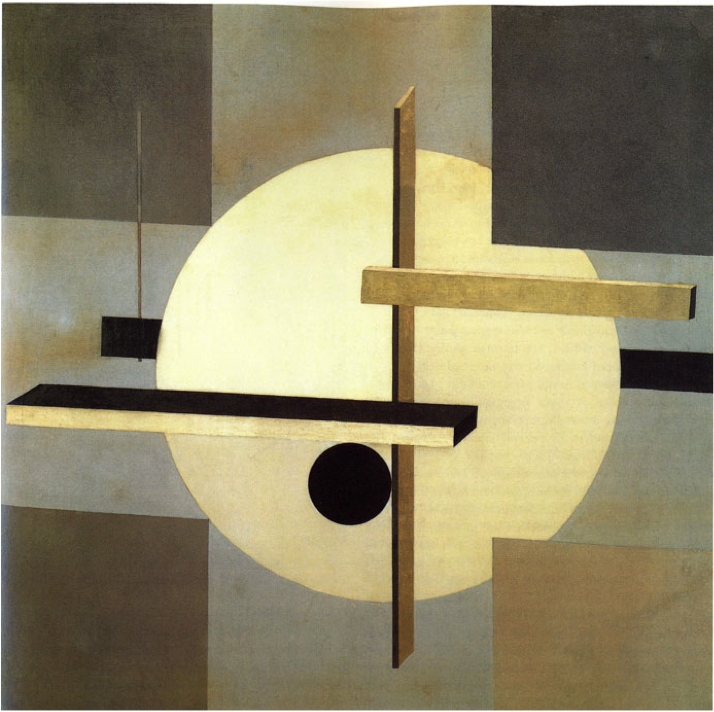
Daunting though the inventory itself may seem, Hyperallergic’s Jillian Steinhauer points out “a way to connect many of these pieces to the present day: an online database maintained by the Freie Universität Berlin. You can plug an artwork’s inventory number from the Nazi log books directly into their search engine, and it will pull up a record.” Here you see Max Beckmann’s Zwei Auto-Offiziere, El Lissitzky’s Proun R.V.N. 2, and Paul Klee’s Garten der Leidenschaft, just three examples of the thousands upon thousands of images that Hitler and company considered a threat to their regime. Today, the artistic merits of work by these and other artists once labeled Entartete Kunst have drawn more admirers than ever — though the very fact that the Nazis didn’t like it constitutes a decent reason for appreciation as well.
via Hyperallergic
Related Content:
The Nazi’s Philistine Grudge Against Abstract Art and The “Degenerate Art Exhibition” of 1937
How the CIA Secretly Funded Abstract Expressionism During the Cold War
The Nazis’ 10 Control-Freak Rules for Jazz Performers: A Strange List from World War II
Joseph Stalin, a Lifelong Editor, Wielded a Big, Blue, Dangerous Pencil
Based in Seoul, Colin Marshall writes and broadcasts on cities and culture. His projects include the book The Stateless City: a Walk through 21st-Century Los Angeles and the video series The City in Cinema. Follow him on Twitter at @colinmarshall or on Facebook.
Read More...The Power of Eddie Vedder’s Voice: Hear Isolated Vocal Tracks from Three Classic Pearl Jam Songs
A lifetime of rock star excess has taken its toll on Eddie Vedder’s voice but not on his talent. Most recent performances have tilted towards the gentle, the acoustic, the Americana, reflecting his larger embrace of the broad expanse of American music. And yes, he can still rock when needs be.
But these isolated vocal tracks–”Alive” above and “Black” and “Porch” below–show how powerful Vedder’s pipes were back in the day at the height of grunge. Vedder used a lot of vibrato, more than one can hear in the full band versions. He doesn’t use it so much when he holds a note, but on all the little notes in between.
And on “Porch” there’s a powerful pleading to the entire delivery that’s both vulnerable and hypermasculine at the same time. Where Kurt Cobain always seemed to be delivering rage inward, Vedder delivered it outwards, like the sound of mountains as a logging company got to work.
The videos try to match up concert footage with these studio tracks and the fact they sync so well show the consistency in his delivery. (The sped up tempo changes, not so much.)
Of course, isolated vocals also mean remixers attack! Here’s a few that might horrify a few grunge stalwarts.
Related Content:
Eddie Vedder Sings Disney’s “Let It Go” at Pearl Jam Concert in Italy
Willie Nelson Sings Pearl Jam’s “Just Breathe” (And We’re Taking a Deep Breath Too)
Ted Mills is a freelance writer on the arts who currently hosts the artist interview-based FunkZone Podcast and is the producer of KCRW’s Curious Coast. You can also follow him on Twitter at @tedmills, read his other arts writing at tedmills.com and/or watch his films here.
Read More...How the Mysteries of the Vatican Secret Archives Are Being Revealed by Artificial Intelligence
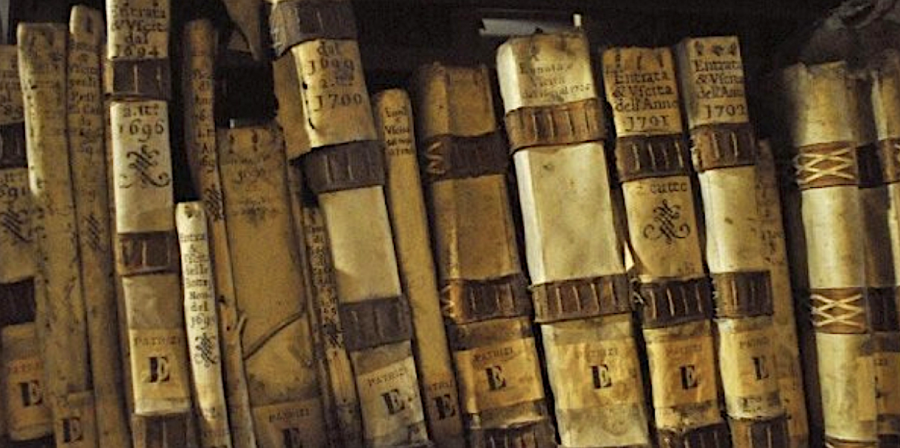
Somewhere within the Vatican exists the Vatican Secret Archives, whose 53 miles of shelving contains more than 600 collections of account books, official acts, papal correspondence, and other historical documents. Though its holdings date back to the eighth century, it has in the past few weeks come to worldwide attention. This has brought about all manner of jokes about the plot of Dan Brown’s next novel, but also important news about the technology of manuscript digitization. It seems a project to get the contents of the Vatican Secret Archives digitized and online has made great progress cracking a problem that once seemed impossibly difficult: turning handwriting into computer-searchable text.
In Codice Ratio is “developing a full-fledged system to automatically transcribe the contents of the manuscripts” that uses not the standard method of optical character recognition (OCR), which looks for the spaces between words, but a new way that can handle connected cursive and calligraphic letters. Their method, in the lingo of the field, “is to govern imprecise character segmentation by considering that correct segments are those that give rise to a sequence of characters that more likely compose a Latin word. We have designed a principled solution that relies on convolutional neural networks and statistical language models.”
This is a job, in other words, for artificial intelligence, but in partnership with human intelligence, a seldom-tapped source of which the scientists behind In Codice Ratio have harnessed: that of high-school students. Their special OCR software, writes the Atlantic’s Sam Kean, works by “dividing each word into a series of vertical and horizontal bands and looking for local minimums—the thinner portions, where there’s less ink (or really, fewer pixels). The software then carves the letters at these joints.” But the software “needs to know which groups of chunks represent real letters and which are bogus,” and so “the team recruited students at 24 schools in Italy to build the projects’ memory banks,” manually separating the letters the system had properly recognized from those over which it had stumbled.
And so the students became the system’s “teachers,” improving its ability to extract the content of handwriting, and not just handwriting but vast quantities of archaic handwriting, with every click they made. The encouraging results thus far mean that it probably won’t be long before large portions of the Vatican Secret Archives (which, contrary to its awkwardly translated name, is such a non-secret it even has its own official web site) will finally become easy to browse, search, copy, paste, and analyze. So they may, in the fullness of time, prove a fruitful resource indeed to writers of Catholicism-centric thrillers like Brown — who, after all, has already gone public with his enthusiasm for manuscript digitization.
Related Content:
Based in Seoul, Colin Marshall writes and broadcasts on cities and culture. His projects include the book The Stateless City: a Walk through 21st-Century Los Angeles and the video series The City in Cinema. Follow him on Twitter at @colinmarshall or on Facebook.
Read More...Enter an Archive of Over 95,000 Aerial Photographs Taken Over Britain from 1919 to 2006
As deep as we get into the 21st century, many of us still can’t stop talking about the 20th. That goes especially for those of us from the West, and specifically those of us from America and Britain, places that experienced not just an eventful 20th century but a triumphant one: hence, in the case of the former, the designation “the American Century.” And even though that period came after the end of Britain’s supposed glory days, the “Imperial Century” of 1815–1914, the United Kingdom changed so much from the First World War to the end of the millennium — not just in terms of what lands it comprised, but what was appearing and happening on them — that words can’t quite suffice to tell the story.

Enter Britain from Above, an archive of over 95,000 pieces of aerial photography of Britain taken not just from the air but from the sweep of history between 1919 and 2006. Its pictures, says its about page, come from “the Aerofilms collection, a unique aerial photographic archive of international importance.
The collection includes 1.26 million negatives and more than 2000 photograph albums.” Originally created by Aerofilms Ltd, an air survey set up by a couple veterans of World War I and later expanded to include smaller collections from the archives of two other companies, it “presents an unparalleled picture of the changing face of Britain in the 20th century” and “includes the largest and most significant number of air photographs of Britain taken before 1939.”

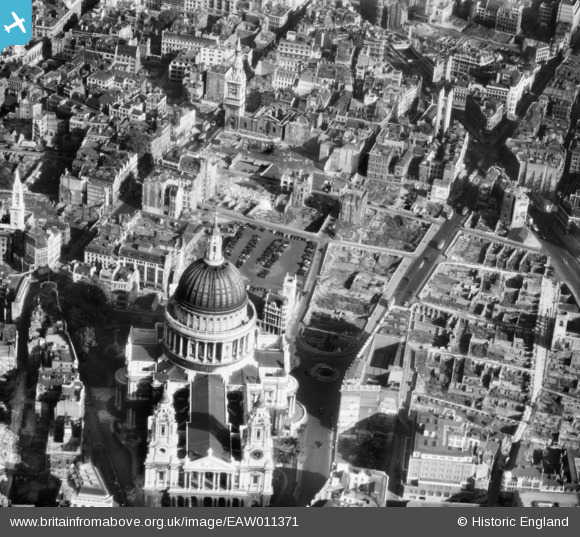
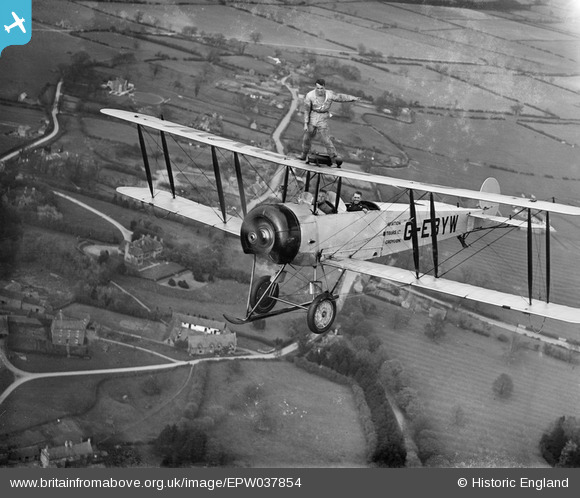
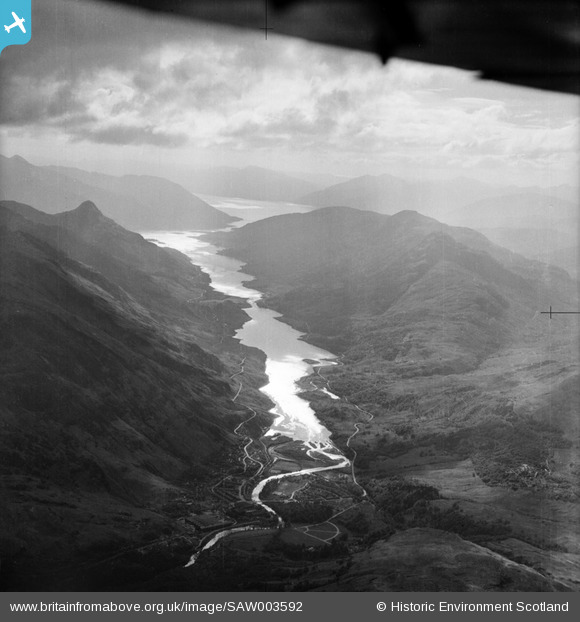
Here you see just four selections from among those 95,000 images from the Aerofilms collection digitized by the four-year-long Britain from Above project with the goal of conserving its “oldest and most valuable” photographs. At the top of the post, see bomb damaged and cleared areas to the east of St Paul’s Cathedral, London, 1947. Then wingwalker Martin Hearn does his daredevilish job in 1932. Below that, a nearly abstract pattern of housing stretches out around St. Aidan’s Church in Leeds in 1929, the light ship Alarm passes the SS Collegian in Liverpool Bay in 1947; and Scotland’s Loch Leven passes through the Mam na Gualainn in that same year.
Attaining a firm grasp of a place’s history often requires what we metaphorically call a “view from 30,000 feet,” but in the case of one of the leading parts of the world in as technologically and developmentally heady a time as the 20th century, we mean it literally. Enter the Britain from Above photo archive here.
Related Content:
1927 London Shown in Moving Color
A Dazzling Aerial Photograph of Edinburgh (1920)
Amazing Aerial Photographs of Great American Cities Circa 1906
Free: British Pathé Puts Over 85,000 Historical Films on YouTube
Based in Seoul, Colin Marshall writes and broadcasts on cities and culture. His projects include the book The Stateless City: a Walk through 21st-Century Los Angeles and the video series The City in Cinema. Follow him on Twitter at @colinmarshall or on Facebook.
Read More...Charlie Chaplin Films a Scene Inside a Lion’s Cage in 200 Takes
Charlie Chaplin was an actor and filmmaker committed to his craft–a perfectionist, in short. When directing City Lights (1931), Chaplin demanded as many as 342 takes of a fairly straightforward three-minute scene. That’s what it took to get it right.
Above, we find an earlier example of the filmmaker’s attention to detail … and his appetite for risk. In the 1928 film, The Circus, Chaplin took more than 200 takes to complete the Lion’s Cage scene shown above. Many of those takes, the official Charlie Chaplin website reminds us, took place inside the lion’s cage itself. As the scene unfolds, the tension builds and Chaplin puts in a performance that helped him secure his first Academy Award.
Enjoy.
If you would like to support the mission of Open Culture, consider making a donation to our site. It’s hard to rely 100% on ads, and your contributions will help us continue providing the best free cultural and educational materials to learners everywhere. You can contribute through PayPal, Patreon, and Venmo (@openculture). Thanks!
Related Content:
65 Free Charlie Chaplin Films Online
Watch Charlie Chaplin Demand 342 Takes of One Scene from City Lights
When Charlie Chaplin Entered a Chaplin Look-Alike Contest and Came in 20th Place
Read More...Apply to Become an Archivist Overseeing Prince’s Artifacts & Archival Materials: Applications Are Being Accepted Now
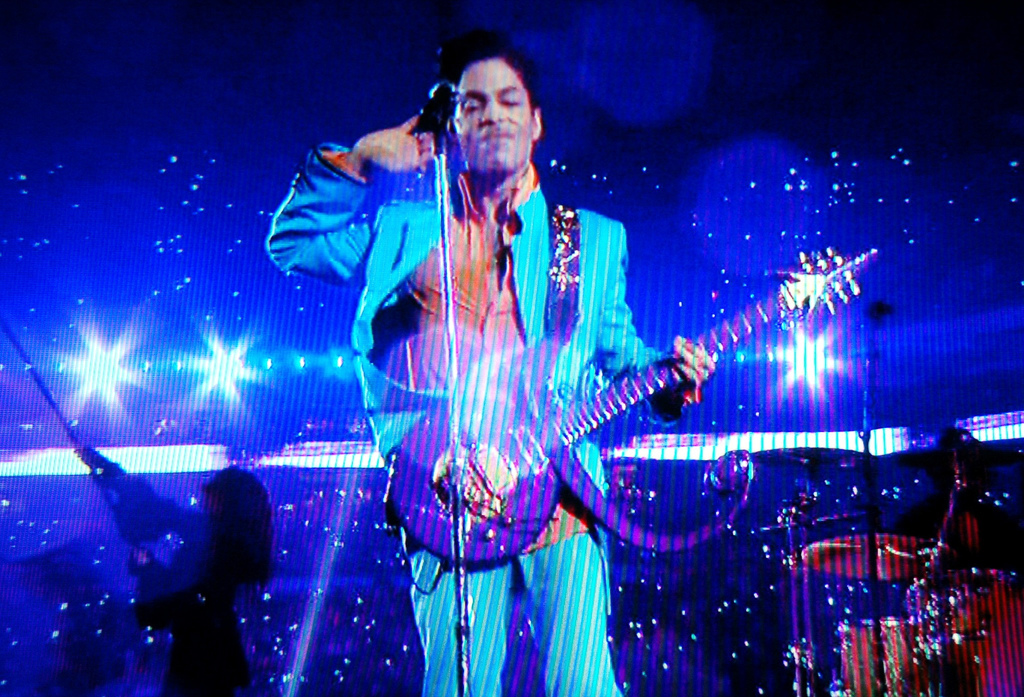
Image by Ann Althouse, via Flickr Commons
If all of Prince’s official releases somehow disappeared from history—no Controversy, 1999, Purple Rain, Sign o’ the Times, Lovesexy—you could still make a case for him as a singular, if unheard, musical genius based on his massive trove of unreleased material alone. At least that’s my theory, but the evidence is somewhat lacking since we’ve yet to hear much from the notorious Paisley Park vault. We do know, as Rolling Stone reported in 2016, that it’s full of “thousands of hours of unheard live and studio material—jams, random songs and entire albums”…enough material, it seems, to recreate Prince should his career somehow get erased from the timeline.
One former Paisley Park employee, Scott LeGere, witnessed the Purple One’s manic energy during many a long recording session, as he churned out music at a superhuman rate, then relegated much of it, for reasons known only to Prince, to the Vault—an actual basement bank vault “complete with a time lock and large spinning handle.” Only Prince knew the combination. “At one point,” LeGere remembered, “I was holding tapes and he would beckon me to come in. I said, ‘Actually, sir, I’d rather not. That is your space and your work.’” I don’t know about you, but I probably would have gone in. Then again, I’ve never actually been to Paisley Park and experienced what seems to have been a very humbling atmosphere.
As you must have heard by now, the Vault is open, and unreleased material has begun to trickle out, like the original studio recording of “Nothing Compares 2 U,” above with previously unreleased rehearsal footage of Prince and his band. He “recorded every part himself,” writes Jon Pareles, as was his custom, “except some backing vocals (by Paul Peterson and Susannah Melvoin) and a saxophone solo (by Eric Leeds).” It is, without a doubt, “a crescendo of heartache underscored by everyday details, a finished song.”
If you’re a Prince fan (and how could you not be?), you’ll have to wait until September for the first full album of songs from the Vault. But one lucky person with the relevant skills and experience in archival work and conservation will get the chance to work directly with the materials at Paisley Park, now a permanent museum, as the Archives Supervisor reporting to the Director of Archives. “Some knowledge of Prince is helpful,” the job announcement—posted on April 12th—specifies.
You’ll have to be prepared to work weekends, holidays, evenings, and overtime. Benefits are not guaranteed but “may be be offered after successful completion of a sixty (60) day introductory period.” You must have a car and “adhere to a pescatarian environment.” I can’t speak to how these conditions compare to similar kinds of employment, but hey, for the chance to “work in a confidential work area,” including, we might assume, the mysterious Vault itself, some sacrifices may be worth it. You’ll likely get to see and hear, before anyone else, the profusion of unreleased film and audio Prince left behind—a lifetime’s worth of work that puts most other musicians to shame, stashed away in the basement for future generations to find. You can apply here.
Related Content:
Prince Gets an Official Purple Pantone Color
Hear Prince’s Personal Playlist of Party Music: 22 Tracks That Will Bring Any Party to Life
Josh Jones is a writer and musician based in Durham, NC. Follow him at @jdmagness
Read More...Special David Bowie MetroCards Get Released in New York City

Some pretty famous faces ride the New York City subway. Was David Bowie’s ever among them?
If so, he succeeded in dodging the cameras of the curious.
His home stop would have been SoHo’s Broadway/Lafayette—close to the Angelika Film Center, Housing Works Bookstore Cafe, and an upscale men’s clothing store that opened on the sacred ground of CBGB, where Bowie and Bianca Jagger once arrived by limousine to see Richard Hell and the Voidoids.
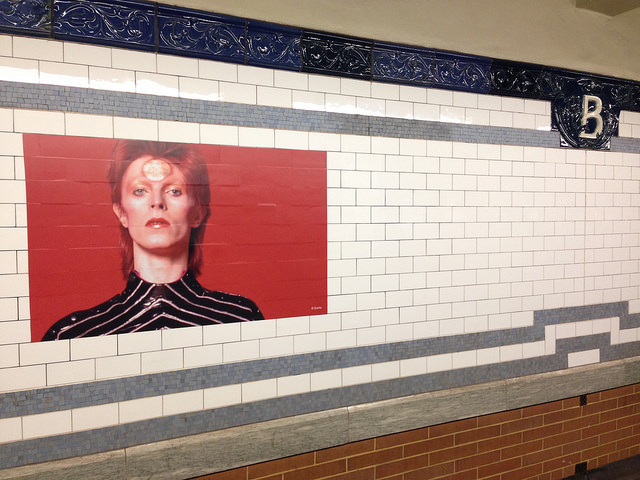
From there, it’s not exactly a straight shot to the David Bowie Is exhibit at the Brooklyn Museum, but the Metropolitan Transit Authority will get you there for the price of a single $2.75 subway fare.
Given that the MTA stopped accepting tokens 15 years ago, you’ll also need to cough up $1 for a MetroCard. You may want to even if you already own one.
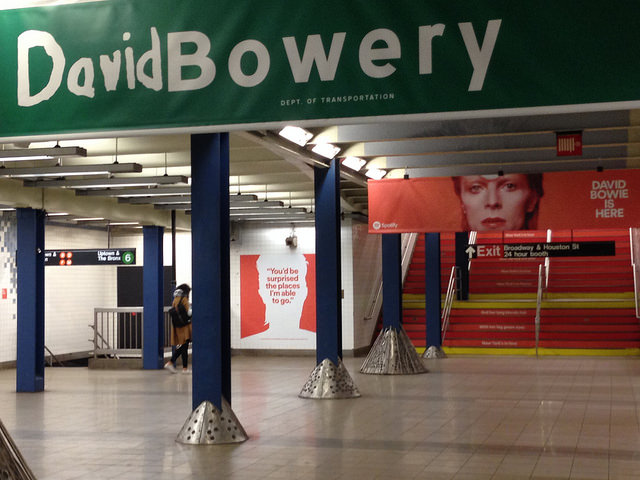
In celebration of all things Bowie, the MTA has teamed with Spotify to create 5 limited edition MetroCards, available in vending machines throughout the station for a New York minute—about as long as it takes Bowie fans to descend en masse to snag the instant collectibles of their hero in some of his many guises:
and, most touchingly, the teenage David Jones, aka Bowie, saxophonist for the Kon-Rads.

Underground Bowie mania extends way beyond MetroCards. Until Mother’s Day, the unusually lofty station is festooned with Bowie—everything from fan art to giant reproductions of photos from the current exhibition.
Many of the images are accompanied by a scannable Spotify code to transport riders to a relevant sound file, a nifty echo of the progressive audio museum-goers experience through their headphones.
The global exhibit has London roots, but the MTA is focused on Bowie’s ties to New York with photos and video stills from such locations as Carnegie Hall, Radio City Music Hall, Madison Square Garden, and the late, lamented Magic Shop studio.
Civic pride is also on display in the form of city-specific Bowie quotes posted throughout the station:
I have a great time here: we can go where we want, eat where we want, walk out with our child, go to the park, ride the subway, do the things that any family does.
Ah ha! So he did ride the subway here, as well as in Japan (below).
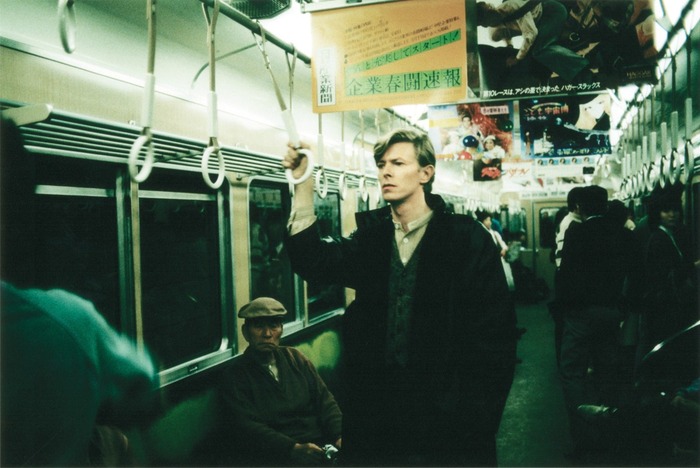
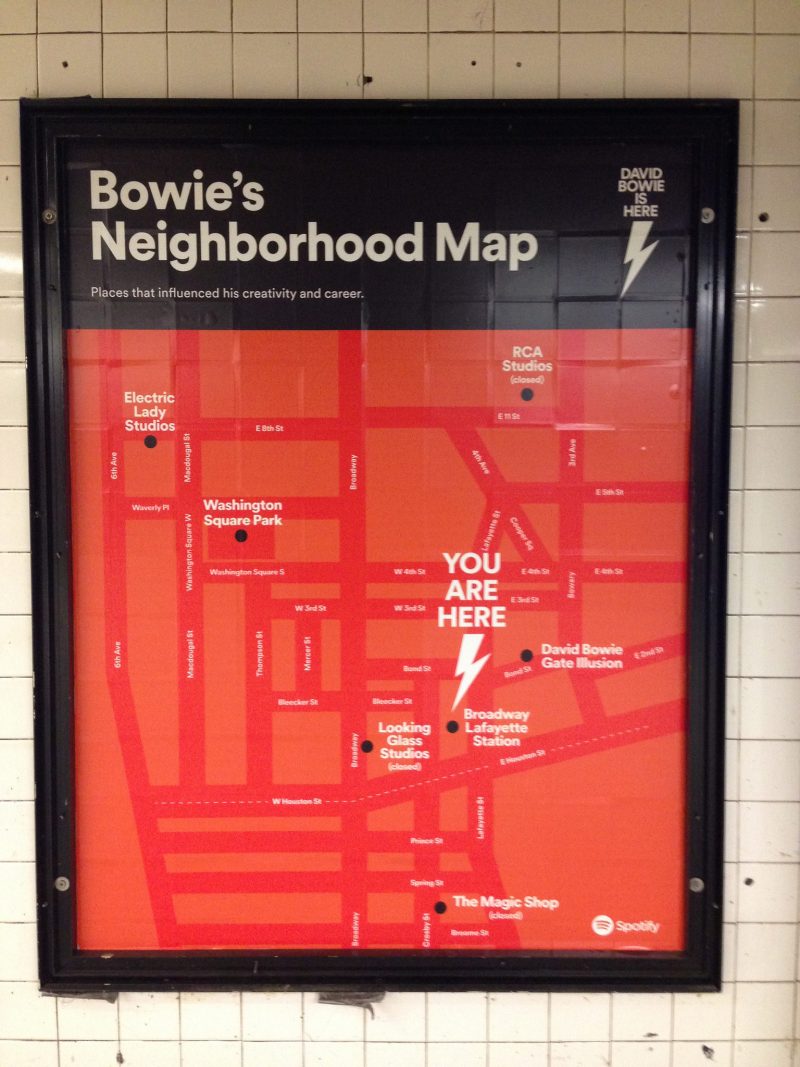
According to a fan on Bowery Boogie, he also popped up at the New York Public Library’s Mulberry Street branch, just around the corner from the subway’s entrance. To find your way there, consult the bright orange “Bowie’s Neighborhood Map” before leaving the station, where your location is denoted with a lightning bolt.
See riders’ photos of the subway takeover here.
Related Content:
Ayun Halliday is an author, illustrator, theater maker and Chief Primatologist of the East Village Inky zine. Join her in NYC on Monday, April 23 for the third installment of her literary-themed variety show, Necromancers of the Public Domain. Follow her @AyunHalliday.
Read More...Malcolm Gladwell Explains Where His Ideas Come From
For many readers out there, the publication of a new Malcolm Gladwell article ranks as an event demanding immediate attention. They’ll read whatever he writes, not just because they enjoy his style but because they trust his instinct for finding fascinating subjects, from coffee to health care, college rankings to dog training, shopping malls to school shootings. How did he develop that instinct? He reveals aspects of his idea-generating process in the seventeen-minute interview with New Yorker editor David Remnick just above. It turns out that, just as with most of us — or as it would ideally go with most of us — Gladwell’s ideas sprout organically from his strengths.
But those strengths, in turn, sprout organically from his weaknesses. An early New Yorker assignment, handed down by then-editor Tina Brown, had Gladwell covering the 1989 attack on the woman referred to, at the time, as the Central Park Jogger. Instead of doing the kind of prolonged, emotional interviews many reporters would have done with the victim’s friends and family, he instead contacted the surgeon who operated on her, ending up with a piece on “practice variation in medicine,” the phenomenon whereby different medical practitioners in different regions of the country end up going about their job in persistently different ways. “They can’t seem to get everyone on the same page,” as Gladwell frames the problem.
The intersection of the New Yorker’s tradition of and expectation for long-form pieces with his own inability to perform traditional reportage gave Gladwell a sense of where he should look for promising leads. Rejecting character as a hook, he instead goes looking for intriguing theories, operating on the conception of most writers as “experience-rich and theory-poor.” Instead of simply reporting on the latest school shooting, for instance, he wrote about a Stanford sociologist’s theory of riots that he could apply to the phenomenon of school shootings themselves. His next book, about which he reveals a thing or two in this interview, deals in part with a different kind of shooting: that committed by police.
“I have the advantage of coming to it late,” Gladwell says to Remnick, explaining how his perspective and thus his writing on the subject might differ from those of others. That simple statement may hold the key to Gladwell’s vault of ideas: with no obligation to give a rundown of the facts as they emerge, he can step back for a moment (be it a few months or a few decades) and get a sense of which stories will ultimately take the right shape to connect to the many broad, intriguing ideas, in the form of academic theory or otherwise, with which he’s already familiarized himself. As much as Gladwell seems like a writer of the moment (and here he describes his “ur-reader” as a fortysomething Trader Joe’s executive who only has time for three books a year, plus podcasts), he gets a fair bit of mileage out of one of the most old-fashioned assets of them all: a well-stocked mind.
Related Content:
The Case for Writing in Coffee Shops: Why Malcolm Gladwell Does It, and You Should Too
John Cleese on the Origin of Creativity
Kurt Vonnegut: Where Do I Get My Ideas From? My Disgust with Civilization
Based in Seoul, Colin Marshall writes and broadcasts on cities and culture. His projects include the book The Stateless City: a Walk through 21st-Century Los Angeles and the video series The City in Cinema. Follow him on Twitter at @colinmarshall or on Facebook.
Read More...A Map Showing How the Ancient Romans Envisioned the World in 40 AD

We’ve all seen that famous New Yorker cover satirizing a New Yorker’s distorted, self-centered view of the world: Manhattan occupies a good half of the image, relegating the rest of America (and indeed the world) to the status of outer-outer boroughs. What Saul Steinberg did with a drawing in 1976, pioneering Roman geographer Pomponius Mela had done, in a much less comedic but much more accurate way, with text nineteen centuries before. Writing from his perspective under the reign of the Emperor Gaius, Claudius, or both, Mela created nothing less than a worldview, which tells us now how the ancient Romans conceived of the world around them, its characteristics and its relationship to the territory of the mightiest empire going.
“Pomponius Mela is a puzzle, and so is his one known work, The Chorography,” writes Frank E. Romer in Pomponius Mela’s Description of the World. In that series of three books, which seems not to have contained any maps itself, Mela divides the Earth into two rough “hemispheres” and five zones, two of them cold, one of them hot, and two in between.
Pulling together what in his day constituted a wealth of geographical knowledge from a variety of previous sources, he painted a word-picture of the world more accurate, on the whole, than any written down before. Scholars since have also praised Mela’s clear, accessible prose style — clear and accessible, in any case, for a first-century text composed in Latin.
Various maps, including the 1898 reproduction pictured at the top of the post (see it in a larger format here), have attempted to visualize Mela’s worldview and make it legible at a glance. You can see more versions at Cartographic-images.net, and the David Rumsey Map Collection shows the world according to Mela placed alongside the world according to Ptolemy and the world according to Dionysius Periegetes. Though Mela showed greater insight into the integration of the various parts of the world known to the ancient Romans than did his predecessors, he also, of course, had his blind spots and rough areas, including the assumption that human beings could only live in the two most temperate of the climatic zones he defined. Even so, the maps derived from his work provide an informative glimpse of how, exactly, Romans saw their place in the world — or rather how, exactly, they saw their place in the center of it.
Related Content:
Ancient Rome’s System of Roads Visualized in the Style of Modern Subway Maps
Based in Seoul, Colin Marshall writes and broadcasts on cities and culture. His projects include the book The Stateless City: a Walk through 21st-Century Los Angeles and the video series The City in Cinema. Follow him on Twitter at @colinmarshall or on Facebook.
Read More...Support Us
We're hoping to rely on loyal readers, rather than erratic ads. Please click the Donate button and support Open Culture. You can use Paypal, Venmo, Patreon, even Crypto! We thank you!

About Us

Open Culture scours the web for the best educational media. We find the free courses and audio books you need, the language lessons & educational videos you want, and plenty of enlightenment in between.
Advertise With Us

FREE UPDATES!
GET OUR DAILY EMAIL
Get the best cultural and educational resources on the web curated for you in a daily email. We never spam. Unsubscribe at any time.
FOLLOW ON SOCIAL MEDIA

Open Culture editor Dan Colman scours the web for the best educational media. He finds the free courses and audio books you need, the language lessons & movies you want, and plenty of enlightenment in between.
Advertise With Us


