How to Send an E‑mail: A 1984 British Television Broadcast Explains This “Simple” Process
Earlier this month, the world got news of the death of a man whose name many of us had never heard but whose act of innovation shaped what we do every day. “When historians of the future study the ways information technology affected people’s lives in the late 20th century,” said his Economist obituary, “they will surely recognise e‑mail as one of the most profound. Today, about 2.5m e‑mails are sent every second. The first e‑mail of all, though” — to be precise, “the first message between terminals attached to separate CPUs, albeit that these two computers stood side-by-side in the same room” — “was sent 45 years ago by Ray Tomlinson.”
Fifteen years after that quietly history-making transmission, e‑mail had evolved to the point that it had become a subject in the news. This 1984 segment of the Thames Television computer show Database shows how one early-adopting couple, Pat and Julian Green of north London, communicate with the world by connecting their computer to, of all things, the telephone line. “It’s simple, really,” says Julian, unplugging a British Telecom cable from one socket and plugging it into a modem, plugging a different wire from the modem into the first socket, switching on the modem, and then hand-dialing the number of a “main computer” — with his rotary phone. “Extremely simple,” he reiterates.
What can they do on Micronet, their service provider, once connected? They might read the news, have a look at “reviews of the software that’s currently available” and even download some of it, or use the feature that Pat (in addition to her use of the computer for “keeping household records, such as what I have in the freezer, and people’s telephone numbers and addresses,” as well as “a word processor for my letters, which always come out perfect now”) describes as most exciting of all: “the mailbox where I write to other people.” We see how she can use this new electronic mail to ask her doctor to refill a prescription, and even to send a message to the Database studio.
All this must have intrigued the viewers of the day, who, if they had their own computers at the ready, could even “download” software straight from the broadcast by recording the tone that plays over the show’s end credits. (As long as their computers were BBC Micros, that is, at least in this particular episode.) The past 32 years have seen enthusiasm for new technology spread all across the world, turning us all, in some sense, into Pat and Julian Greens. Today we marvel at all what we can do with our smartphones, devices that would’ve seemed magical in 1984, but in three decades from now, even our current technological lives will surely look quainter than anything in the Database archives.
Related Content:
The Internet Imagined in 1969
From the Annals of Optimism: The Newspaper Industry in 1981 Imagines its Digital Future
Where Is Technology Taking Us?
Based in Seoul, Colin Marshall writes and broadcasts on cities, language, and style. He’s at work on a book about Los Angeles, A Los Angeles Primer, the video series The City in Cinema, the crowdfunded journalism project Where Is the City of the Future?, and the Los Angeles Review of Books’ Korea Blog. Follow him on Twitter at @colinmarshall or on Facebook.
Read More...Peter Sellers Recites The Beatles’ “A Hard Day’s Night” in the Style of Shakespeare’s Richard III
“Now is the winter of our discontent….” If you know nothing else of Shakespeare’s Richard III, you’ll know this famous opening line, and it’s likely many of us know it through Laurence Olivier’s performance of Richard as a “melodramatic baddie” in the famous 1955 film. If not, take a look at the clip below to familiarize yourself with Olivier’s distinctive mannerisms and speech. The reference may largely be lost these days, but in 1965, at the very height of The Beatles’ fame, Olivier’s performance was still fresh in the minds of the TV viewing public. And the mercurial English comedian Peter Sellers put it to good use in a Beatles-tribute variety program called The Music of Lennon and McCartney that aired in the UK. In the clip above, Sellers recites the lyrics to “A Hard Day’s Night” in character as Olivier’s dandyish Richard.
Unsurprisingly, Sellers and the Beatles had hit it off right away when they were introduced by George Martin, and as we showed you in a recent post, the comedian milked their lyrics for more material, reading “She Loves You,” in a variety of accents. Sellers’ rendition of “A Hard Day’s Night” was hardly the first Shakespearean turn for the band.
The previous year, they appeared in another variety television special called Around the Beatles, “produced concurrently,” writes Dangerous Minds, “while A Hard Day’s Night was being shot.” (Around the Beatles was directed by producer and manager Jack Good, a “Shakespeare fan,” who also, it turns out, convinced rockabilly star Gene Vincent to dress up like Richard III.) In this earlier program, the band—always good sports about this kind of thing—dressed up in Shakespearean garb and staged a raucous performance of a scene from A Midsummer Night’s Dream.
Related Content:
The Beatles Saturday Morning Cartoon Show: The Complete 1965–1969 Series
Josh Jones is a writer and musician based in Durham, NC. Follow him at @jdmagness
Read More...Watch David Bowie Star in His First Film Role, a Short Horror Flick Called The Image (1967)
Rock stars who became respected actors… the pool is a small one, perhaps outnumbered by the many musicians who have made less successful attempts at movie stardom. But without a doubt, the former category includes David Bowie. In his various musical guises, Bowie the cracked actor put to use the skills he honed for decades on movie after movie. Not every film is worth watching, but nearly every performance contains seeds of greatness.
What you may not know is that Bowie the actor and Bowie the musician grew up together. He had always been both, taking his first film role in a short horror flick, The Image, back in 1967, the same year he released his first, self-titled album. You can be forgiven for never hearing about either. Neither one made much of an impression (and Bowie more or less disavowed the album). But the movie did have the rare distinction at the time of receiving an X rating. “I think it was the first short that got an X‑certificate,” says writer and director Michael Armstrong, “for its violence, which in itself was extraordinary.”
Tame by today’s standards, the movie features 20-year-old Bowie as a painting come to life. He got the part not because Armstrong—a fan of his first album—considered him “perfect for the role. It was really to give him a job.” Armstrong described his star to The Wall Street Journal as “very pretty” and “flirtatious” and remembers Bowie’s impressive Elvis impersonation. Bowie seems to have found the whole thing very funny. On set, there were “a lot of issues with corpsing—bursting into laughter during a take,” writes Metro.co.uk. When the film appeared in theaters, viewers expected to see porn—not only because of its X‑rating but also because, writes Rolling Stone, it “briefly screened between two porn films at a London theater.” (The film’s star saw the movie by himself in a theater filled with lone men in raincoats.) Bowie, says Armstrong, “thought it was hilarious.”
The Image has only recently appeared online thanks to the WSJ, who received permission from the David Bowie Archive to show it. You can watch the almost 14-minute film up top. (You can see a Youtube version below it.) Like Bowie’s first album, it may not herald the birth of a new star—his abilities as an actor may not have been fully evident until his first feature-length starring part in The Man Who Fell to Earth. But as with music, so with acting: Bowie never stopped working at the craft, and the films that fell flat seemed only to inspire him to work harder and create even more ambitious characters.
The Image will be added to our collection, 4,000+ Free Movies Online: Great Classics, Indies, Noir, Westerns, Documentaries & More.
via The Wall Street Journal/Metro
Related Content:
A 17-Year-Old David Bowie Defends “Long-Haired Men” in His First TV Interview (1964)
Hear Demo Recordings of David Bowie’s “Ziggy Stardust,” “Space Oddity” & “Changes”
How “Space Oddity” Launched David Bowie to Stardom: Watch the Original Music Video From 1969
Josh Jones is a writer and musician based in Durham, NC. Follow him at @jdmagness
Read More...Free: Read All of George Orwell’s War Diaries Online (1938–1942)
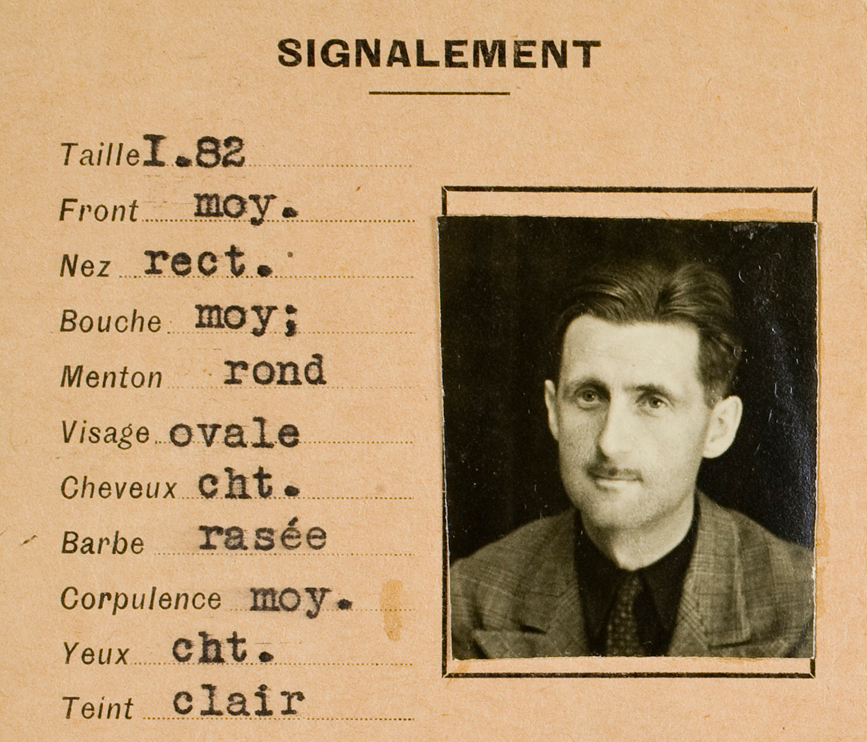
Journalist, essayist, and novelist Eric Blair, better known as George Orwell, has the distinction of writing not just one, but two of the most well-known cautionary novels about totalitarian governments: 1984 and Animal Farm. You’ve likely read at least one of them, perhaps both, and you’ve likely seen either or both of the film adaptations based on these books. Were this the totality of Orwell’s legacy, it would surely be secure for many decades to come—and perhaps many hundreds of years. Who knows how our descendants will remember us; but whether they manage to fully transcend authoritarianism or still wrestle with it many generations later, the name of Orwell may forever be associated with its threatening rise.
And yet, had Orwell never written a word of fictional prose, we would probably still invoke his name as an important journalistic witness to the 20th century’s bloodiest conflicts over fascism. He directly participated in the Spanish Civil War, fighting with the Marxist resistance group POUM (Partido Obrero de Unificación Marxista). The horrific takeover of Spain by Francisco Franco, with help from Hitler’s Luftwaffe, paralleled the Nazi’s gradual takeover of Western Europe, and the experience changed not only Orwell’s outlook, but that of Europeans generally. As he wrote in his personal account of the war, Homage to Catalonia, “People then had something we haven’t got now. They didn’t think of the future as something to be terrified of….”
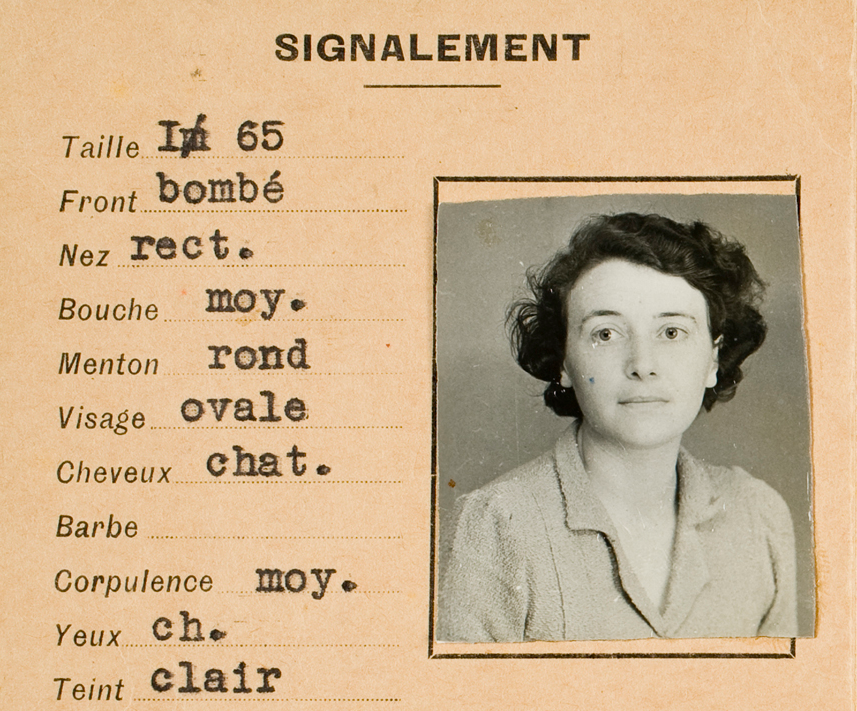
Orwell’s tour of duty in Spain ended in 1937 when he was shot in the throat; later he and his wife Eileen were charged with “rabid Trotskyism” by pro-Soviet Spanish communists. The Orwells retired to Morocco to recuperate. There, Orwell began keeping a diary, which he maintained until 1942, chronicling his impressions and experiences throughout the war years as he and Eileen made their way out of Morocco and back to England. You can follow their journeys in a Google Maps project here. And you can read all of Orwell’s diary entries at the website of The Orwell Prize, “Britain’s most prestigious prize for political writing.” The Prize site began blogging Orwell’s entries in 2008—70 years to the day after the first entry—and continued in “real time” thereafter until 2012.
The first entries reveal little, showing us “a largely unknown Orwell, whose great curiosity is focused on plants, animals, woodwork,” and other domestic concerns. Then, from about September, 1938 on, we see “the Orwell whose political observations and critical thinking have enthralled and inspired generations since his death in 1950. Whether writing about the Spanish Civil War or sloe gin, geraniums or Germany, Orwell’s perceptive eye and rebellion against the ‘gramophone mind’ he so despised are obvious.” These diaries—posted with explanatory footnotes—preserve a keen eyewitness to history, one who had been tested in war and seen firsthand the danger fascism posed. Orwell’s experiences gave him material for the novels for which we best remember him. And his personal and journalistic accounts give us a gripping firsthand portrait of life under the threat of Nazi victory.
Start reading Orwell’s War Diaries, beginning with the last one, at the Orwell Prize site. Along with the diaries themselves, you’ll find contextual articles and an image gallery with scanned clippings and documents like the 1938 ID cards for George and Eileen Orwell, above.
Orwell’s War Diaries will be added to our collection, 800 Free eBooks for iPad, Kindle & Other Devices.
Related Content:
George Orwell Explains in a Revealing 1944 Letter Why He’d Write 1984
George Orwell’s Final Warning: Don’t Let This Nightmare Situation Happen. It Depends on You!
Josh Jones is a writer and musician based in Durham, NC. Follow him at @jdmagness
Read More...Mark Bittman’s Most Loved Recipes from The New York Times: Learn to Cook Healthy, Earth-Friendly Meals
Food writer and healthy eating advocate Mark Bittman has “no patience” for those who say, “I’d love to cook but I have a lousy kitchen,” but that doesn’t make him a hectoring meanie in the Top Chef panelist mold:
To me the question was not, “Would I cook this as a native would?” but rather, “How would a native cook this if he had my ingredients, my kitchen, my background?” It’s obviously a different dish. But as Jacques Pépin once said to me, you never cook a recipe the same way twice, even if you try. I never maintained that my way of cooking was the “best” way to cook, only that it’s a practical way to cook. (I’m lazy, I’m rushed, and I’m not all that skillful, and many people share those qualities.)
If you’ve made it to adulthood without learning how to cook, or for that matter, how to eat for the good of your body and the planet, Bittman is your man.
With the exception of his baroque, James Beard-inspired scrambled eggs, his recipes are swift and simple, and his well documented flexibility makes him a good fit for any number of palates and dietary restrictions.
Having introduced the world to the idea of eating “vegan before six,” he ditched his cushy New York Times columnist gig to start a plant-based meal kit service in San Francisco. The Purple Carrot’s stated goal is not to get people to give up meat, but rather to up their intake of home cooked dishes that are good for their health as well as the environment.
Ergo, he’s likely not too chagrinned that this collection of Bittman’s “most-loved recipes,” in a career spanning more than 1500 bylines at the New York Times, includes such ingredients as chorizo, mayonnaise, chicken, and eggs.
Below you can find a selection (a baker’s dozen) of favorite Bittman recipes for chefs at all levels, including absolute beginners, to try. (The complete list is here.) Their ingredients are fairly straightforward, though Holly Golightly types who store books in the oven, may have to upgrade the kitchen with some ramekins and a pastry cutter.
- Classic Scones [top]: Those without a food processor can do as my grandma, an excellent, unfussy farm cook did, and cut the butter into the dough with two forks.
- Roasted Brussels Sprouts With Garlic: The liverwurst of vegetables no more! This is so simple it’s barely a recipe. More of a philosophy. His sweet potato fries fall into the same category.
- Simplest Roast Chicken: Perfect to pack along on a Hemingway picnic.
- Vegetable Soup: This one presumes a microwave. You can do it the old fashioned way by adding some water or boxed vegetable stock to a stovetop pot. See? Cooking is easy!
- Roasted Sweet Potato Salad With Black Beans and Chili Dressing: Homemade dressing is a skill worth acquiring.
- Fried Chickpeas With Chorizo and Spinach: Lose the chorizo and boom! It’s a vegan entree.
- Corn and Crab Cakes: Don’t care for crab? Take a stab at one of Bittman’s 103 fish recipes and use the leftovers in place of the crustacean.
- Spiced Red Lentil Dal: This recipe costs less than the print edition of the Times.
- Sautéed Shrimp With Capers and Olives: Unless your veganism is shaping up to be a 24/7 commitment, you’re gonna have to learn how to devein shrimp sometime, pal.
- Grilled Corn: You don’t even have to have a working kitchen! Just a hibachi and a bowl!
- Fastest Pasta With Spinach Sauce: Love carbs? So does Bittman, as evidenced by the number of pasta recipes he’s published.
- Mexican Chocolate Tofu Pudding: If one might frame a vegan dessert in terms of killing birds, this is the stone that will polish off your fear of tofu, ramekins…and vegan desserts!
- Champagne Cocktail: Congratulations! You’re a chef! Toast your accomplishments.
Find all of Bittman’s New York Times recipes here. And even more on his website.
Related Content:
MIT Teaches You How to Speak Italian & Cook Italian Food All at Once (Free Online Course)
Ayun Halliday is an author, illustrator, and Chief Primatologist of the East Village Inky zine. Follow her @AyunHalliday
Read More...A Complete Collection of Wes Anderson Video Essays
What with the lavish attention he and his collaborators pay to art, design, costuming, framing, composition, and editing — and especially considering the pains he and his collaborators take to reference and adapt pieces of the art of cinema that came before them — who does it surprise that Wes Anderson become such a fruitful subject for video essayists? His films, from the humble feature debut Bottle Rocket and sophomore breakout Rushmore to more recent extensions of his project like Moonrise Kingdom and The Grand Budapest Hotel, can seem made especially for cinephiles handy with Final Cut to take apart, and put back together again.
“I will NOT be doing a Wes Anderson video essay,” says Tony Zhou, creator of the video essay series Every Frame a Painting. “The market is saturated and I have nothing to add.” Those who have enjoyed Zhou’s astute breakdowns of the work of Martin Scorsese, Jackie Chan, Michael Bay, Edgar Wright, Akira Kurosawa, David Fincher, Buster Keaton, and the Coen Brothers (as well as the use and abuse of his hometown of Vancouver) previously featured here might consider that a shame. But he has put together a list of all the other video essayists’ work on Anderson, which includes Matt Zoller Seitz’s thirteen pieces:
Bottle Rocket
Rushmore
The Royal Tenenbaums
The Life Aquatic with Steve Zissou
The Darjeeling Limited
Fantastic Mr. Fox
Moonrise Kingdom
The Grand Budapest Hotel
[Note: All of the videos above are gathered here in one place.]
Wes Anderson: The Substance of Style (five parts)
And Zhou’s list features video essays from other creators:
Wes Anderson // Centered
Wes Anderson // From AboveJaume R. Lloret
Wes Anderson // VehiclesRishi Kaneria
Red & Yellow: A Wes Anderson SupercutPaul Waters
Wes Anderson: A Mini DocumentaryWay Too Indie
Mise en Scène & The Visual Themes of Wes Anderson
Zhou also includes three in-depth blog posts by film scholar David Bordwell on Anderson’s shot-consciousness, The Grand Budapest Hotel, and Moonrise Kingdom. “Now, never ask me about Wes Anderson again,” having already re-emphasized that he does not, in any case, take video essay requests. But if you’d like to continue seeing him make video essays on whichever subjects he does choose going forward, have a look at Every Frame a Painting’s Patreon page to find out how you can support his always-stimulating examinations of never-Anderson auteurs.
(And if you still can’t do without more Anderson, spend some time with the related content below.)
Related Content:
Watch 7 New Video Essays on Wes Anderson’s Films: Rushmore, The Royal Tenenbaums & More
The Geometric Beauty of Akira Kurosawa and Wes Anderson’s Films
Watch a Super Cut of Wes Anderson’s Signature Slo-Mo Shots
Wes Anderson Likes the Color Red (and Yellow)
The Perfect Symmetry of Wes Anderson’s Movies
A Glimpse Into How Wes Anderson Creatively Remixes/Recycles Scenes in His Different Films
Books in the Films of Wes Anderson: A Supercut for Bibliophiles
Based in Seoul, Colin Marshall writes and broadcasts on cities, language, and style. He’s at work on a book about Los Angeles, A Los Angeles Primer, the video series The City in Cinema, the crowdfunded journalism project Where Is the City of the Future?, and the Los Angeles Review of Books’ Korea Blog. Follow him on Twitter at @colinmarshall or on Facebook.
Read More...The Anti-Slavery Alphabet: 1846 Book Teaches Kids the ABCs of Slavery’s Evils
Frequently, I see stories in the education news reporting on a textbook company, school board, or curriculum attempting to minimize or erase the history of slavery in the United States. One recent example made national news: a textbook published by McGraw-Hill that described the Atlantic slave trade as bringing “millions of workers from Africa to the United States to work on agricultural plantations.”
Roni Dean-Burren—mother of the student who noticed the “error” and herself an educator—pointed out, writes NPR, that “while the book describes many Europeans immigrating as indentured servants,” there was “no mention in this lesson of Africans forced to the U.S. as slaves.” It’s pretty egregiously bad historical framing; describing slaves as migrant “workers” is at best gross understatement and at worst disinformation.
The textbook company maintains it was a mistake, others have alleged a deliberate whitewash of a history that makes many people uncomfortable. Similarly heated controversies have arisen around certain puzzlingly cheerful children’s books. I won’t weigh in here on the politics of these debates, but I am very curious about why teaching the history of slavery is such a contentious issue in classrooms across the country.
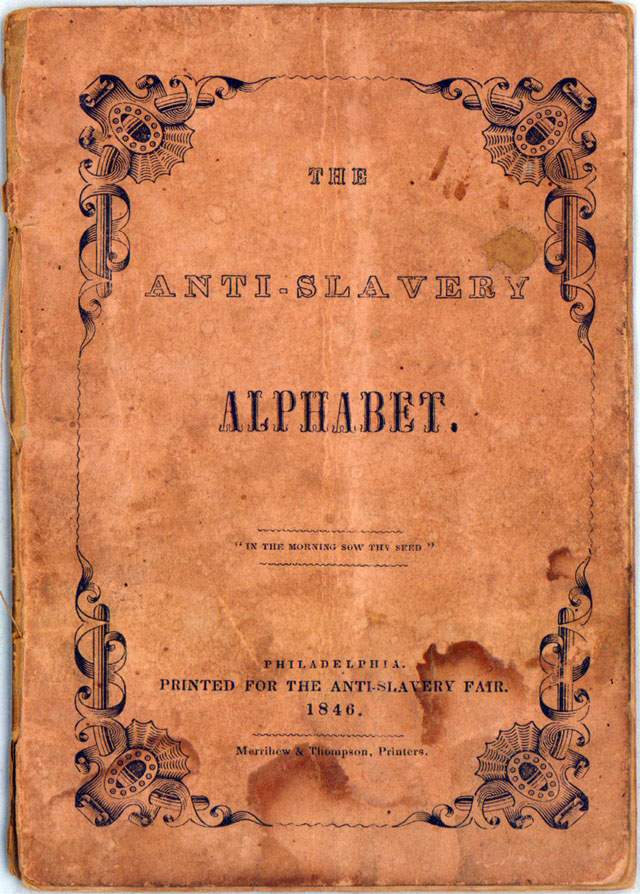
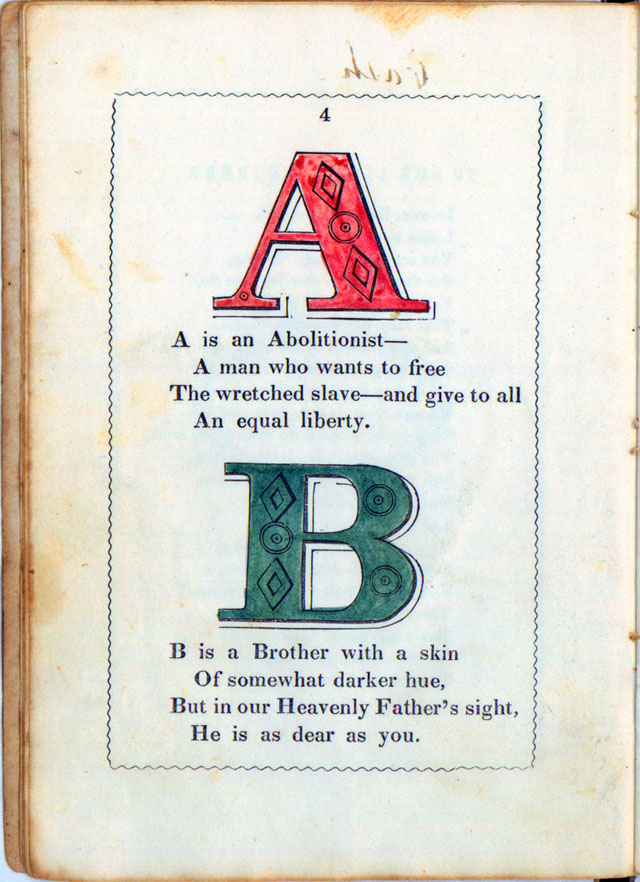
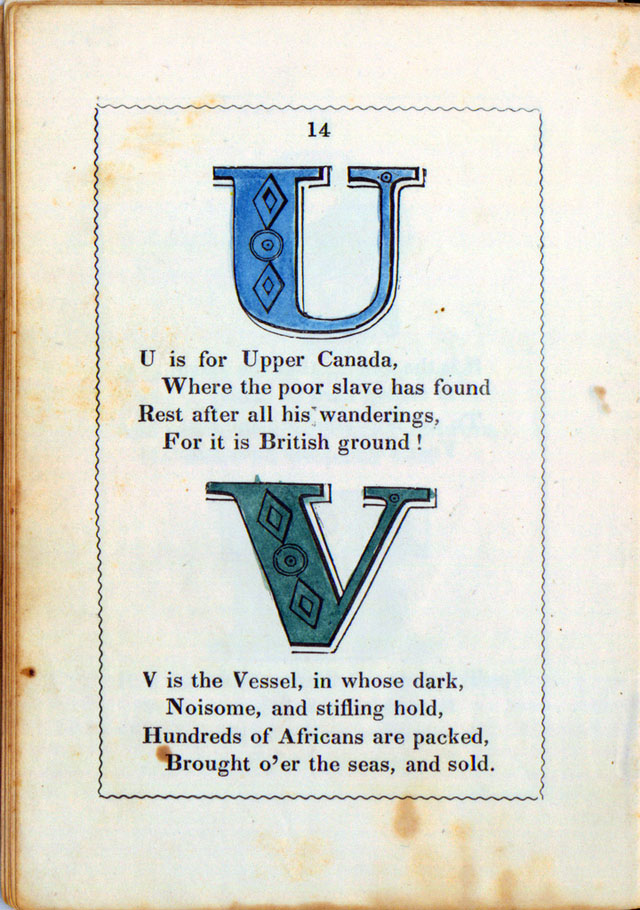
If you were to ask most teachers, they would—one hopes—denounce U.S. slavery as a great moral wrong and praise its end as self-evidently necessary. So what would it look like to teach the subject that way? Well, for one thing, teachers and parents might refer to primary documents like “The Anti-Slavery Alphabet,” an abolitionist teaching tool written by Quakers Hannah and Mary Townsend and sold at the Philadelphia Female Anti-Slavery society fair in 1846.
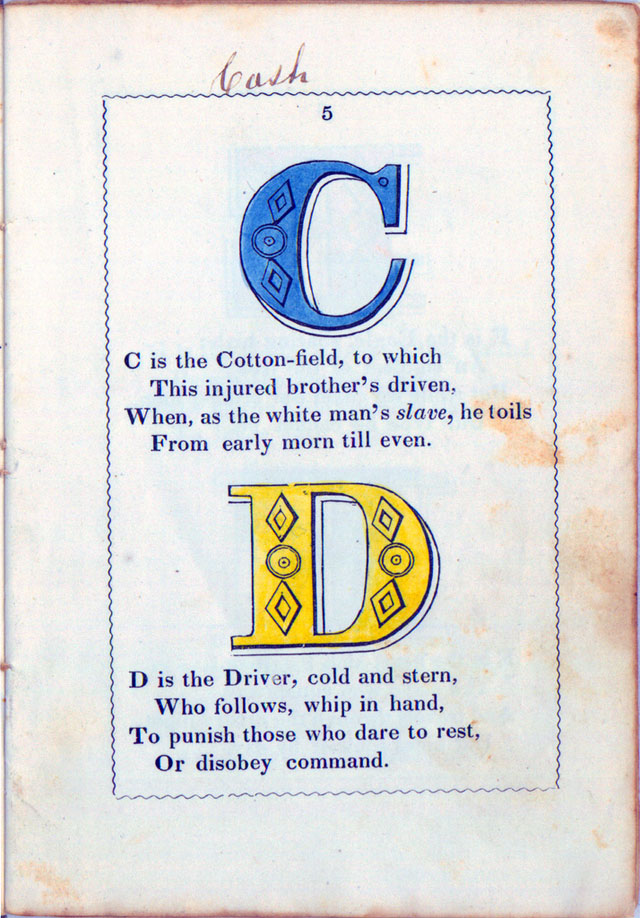
The alphabet, writes The Man in the Gray Flannel Suit, “consists of sixteen leaves, printed on one side, with the printed pages facing each other and hand-sewn into a paper cover. Each of the letter illustrations is hand-colored.” Certainly a labor of love, and though targeted to young children, it is instructive for students of all ages to see how abolitionist pedagogy framed these issues, refusing to soft-pedal the “wretched” conditions slaves endured.
Nor does this text shy away from directly relating these conditions to the commodity market that sustained them. In the page below, for example, children learn that the sugar “put into your pie and tea / Your candy, and your cake,” comes from slave labor. Ditto the “poisonous and nasty” tobacco the gentlemen chew.
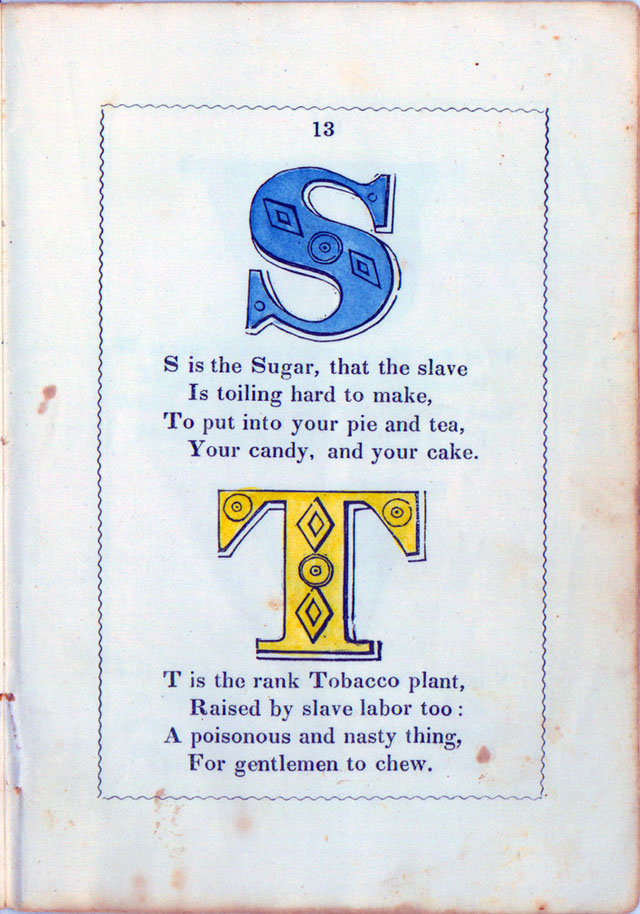
The language, as is typical of the time, is occasionally sentimental or sternly moralistic, but the facts do not suffer much for it. Is this propaganda? Certainly, for a point of view that would take another 20 years, a bloody civil war, and a long struggle through a failed Reconstruction and brutal Jim Crow era to take hold nationwide, pockets of reactionaries notwithstanding.
To see all of “The Anti-Slavery Alphabet,” visit The Man in the Gray Flannel Suit or the Mississippi Department of Archives and History, who allow you to zoom in and examine each page closely. For more contemporary books for children on the history of slavery, see this list of “13 Honest Books About Slavery.” And for a wealth of primary abolitionist documents from the late 18th to the late 19th ( as well as more recent texts on modern slavery) see the archive of “50 Essential Documents” at the Abolition Seminar, an “educational tool for teachers, students, and all who fight for freedom.
Related Content:
Visualizing Slavery: The Map Abraham Lincoln Spent Hours Studying During the Civil War
Josh Jones is a writer and musician based in Durham, NC. Follow him at @jdmagness
Read More...Nina Simone’s Live Performances of Her Poignant Civil Rights Protest Songs
When armored troops and tanks arrived in the St. Louis suburb of Ferguson, advancing on civilians with guns drawn and launching tear gas canisters into the crowd, more than a few people watching it happen exclaimed, “Missouri Goddam!” After the Charleston, SC massacre last summer, many exclaimed, “South Carolina Goddam!” The phrases directly reference an earlier, all too similar, time in the violent history of civil rights struggles, 1964, when Nina Simone wrote and performed “Mississippi Goddam” (above in Holland). It was “a song that would change her career,” writes Matt Staggs at Signature, “complicating her relationship with the white establishment while cementing her allegiance with the civil rights movement.”
After her ambitions as a concert pianist were frustrated, Simone rose to fame as a brilliantly talented performer of classical, jazz, folk, blues, and cabaret music. She “did not so much interpret songs,” writes Adam Shatz in the New York Review of Books, “as take possession of them.” But her most famous remains her own composition, “Mississippi Goddam,” a passionate response to the murder of Medgar Evers, the Sixteenth Street Church bombing in Birmingham, and other shocking acts of brutality by members of the White Citizens Council and the Ku Klux Klan, as well as the retaliatory police violence and mass arrests at Tennessee sit-ins.
After her first performance of the song at a 1964 Carnegie Hall concert (during which she shouted at the shocked audience, “You’re all gonna die!”), it would become “a civil rights anthem.” The performance itself was a sly bait-and-switch; “determined to bring a taste of the era’s injustice to her mostly white audience,” Simone introduced the song as a “show tune, but the show hasn’t been written for it yet.” And indeed it sounds like one, “at least for a few moments.” The song, writes Shatz, “represented a revolution in black political oratory.”
Now, many people born long after Simone’s that first bombshell performance of “Mississippi Goddam” are discovering her life and work through the Oscar-nominated Netflix documentary What Happened, Miss Simone!, as well as the controversy surrounding a two-year-old unreleased biopic (so heated even its star disavowed the film). Released on the day of murdered pastor and State Senator Clementa Pinckney’s funeral, the documentary renews the focus on Simone’s role as a fierce activist on and off the stage. In songs like “Backlash Blues,” written by Langston Hughes (above, in a live 1968 Paris recording session), Simone protested “second class houses / and second class schools” as well as the Vietnam War draft and frozen wages.
In “I Wish I Knew How It Would Feel to Be Free,” above in a 1976 performance, she expresses profound longing to “share / All the love that’s in my heart” and “Remove all the bars / That keep us apart.” As Shatz tells us, Simone once defined what freedom meant to her when an interviewer asked in 1968: “I’ll tell you what freedom is to me: no fear. I mean really, no fear!” She seemed to embody fearlessness onstage as she devoted her career to activism.
And yet, writes Claudia Roth Pierpont in The New Yorker, she “had been hesitant at first.” It was playwright Lorraine Hansberry who pushed her into speaking, though she “only started a process that events in American quickly accelerated.” After the Birmingham bombing, Simone recalled wanting to “go out and kill someone… I could identify as being in the way of my people.” Instead she took her outrage to the stage, and she memorialized Hansberry after her friend’s death at age 34 with a song she called “the Black national anthem,” also the title of Hansberry’s posthumous autobiography, “To Be Young, Gifted and Black.” Before the performance above, at a Morehouse College recording session in 1969, Simone emotionally describes the genesis of the song in an interview. The song itself hints broadly at the pain of her own childhood, and that of so many others, then concludes with pride, hope, and affirmation.
Young, gifted and black
How I long to know the truth
There are times when I look back
And I am haunted by my youthOh but my joy of today
Is that we can all be proud to say
To be young, gifted and black
Is where it’s at
Related Content:
Nina Simone Sings Her Breakthrough Song, ‘I Loves You Porgy,’ in 1962
Watch a New Nina Simone Animation Based on an Interview Never Aired in the U.S. Before
Josh Jones is a writer and musician based in Durham, NC. Follow him at @jdmagness
Read More...Brian Greene Breaks Down Einstein’s Theory of Gravitational Waves for Stephen Colbert
Earlier this month, we gave you this news bulletin: “scientists announced that they had recorded the sound of two black holes colliding a billion light years away, providing the first real proof that gravitational waves actually exist–something Albert Einstein predicted 100 years ago in his famous paper on general relativity.” This news actually gets much more interesting if you wrap your minds around the whole concept of Gravitational Waves, which is exactly what physicist Brian Greene–featured on this site many times before–set out to do when he appeared on The Late Show with Stephen Colbert last week. Watch his visual-rich explanation above, and you’ll start getting a hang of the concepts. Below, for extra credit, you can watch another popularizer of science, Neil deGrasse Tyson, taking his own stab at explaining this phenomenon.
Related Content:
Free Online Physics Courses, part of our larger collection, 1150 Free Online Courses from Top Universities
Gravity Visualized by High School Teacher in an Amazingly Elegant & Simple Way
Read More...Sergei Eisenstein’s Ten Days That Shook the World (1928)
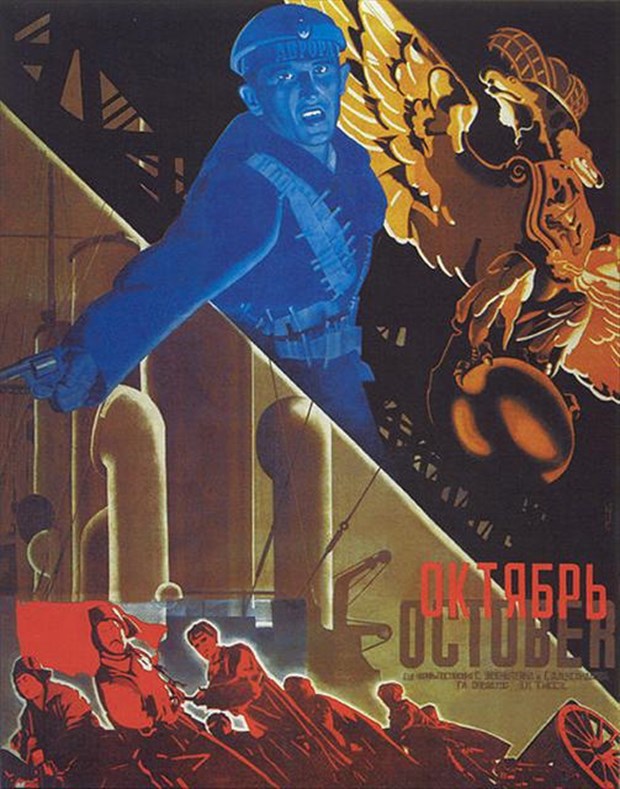
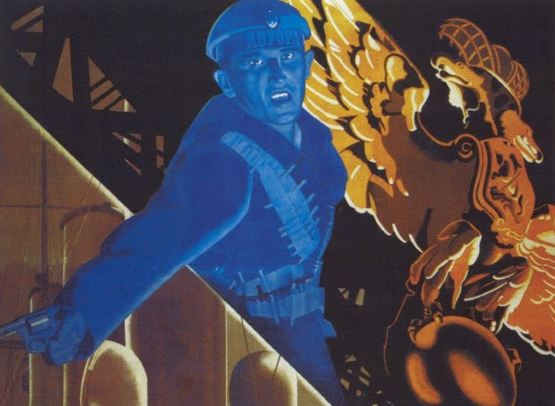
Behold Sergei Eisenstein and Grigori Aleksandrov’s acclaimed dramatization of the Russian Revolution that unfolded in October of 1917. Commissioned by the Soviet government to commemorate the tenth anniversary of that Revolution, the film was originally released in 1928 as Oktober in the Soviet Union, and later internationally as Ten Days That Shook The World, borrowing from John Reed’s well-known book on the Revolution. Courtesy of Archive.org, you can watch the film below, and find it in our collection, 4,000+ Free Movies Online: Great Classics, Indies, Noir, Westerns, Documentaries & More.
If you would like to support the mission of Open Culture, consider making a donation to our site. It’s hard to rely 100% on ads, and your contributions will help us continue providing the best free cultural and educational materials to learners everywhere. You can contribute through PayPal, Patreon, and Venmo (@openculture). Thanks!
Read More...Support Us
We're hoping to rely on loyal readers, rather than erratic ads. Please click the Donate button and support Open Culture. You can use Paypal, Venmo, Patreon, even Crypto! We thank you!

About Us

Open Culture scours the web for the best educational media. We find the free courses and audio books you need, the language lessons & educational videos you want, and plenty of enlightenment in between.
Advertise With Us

FREE UPDATES!
GET OUR DAILY EMAIL
Get the best cultural and educational resources on the web curated for you in a daily email. We never spam. Unsubscribe at any time.
FOLLOW ON SOCIAL MEDIA

Open Culture editor Dan Colman scours the web for the best educational media. He finds the free courses and audio books you need, the language lessons & movies you want, and plenty of enlightenment in between.
Advertise With Us