Yoga in an X‑Ray Machine
Courtesy of Hybrid Medical Animations comes a high-tech “visual study/exploration of the body in motion.” The goal of the animation was to create a realistic representation of x‑rays, while also capturing the beauty of various yoga poses. Looks like they hit the mark on both accounts.
In creating this 3D animation, no x‑rays were actually used. No one was exposed to radiation in any way, shape or form. It’s all just animation — sophisticated animation that somehow manages to show “proper bone densities and represent actual bone marrow inside each individual bone.” If you practice yoga, you’ll certainly recognize some of the poses in the clip.
If you would like to support the mission of Open Culture, consider making a donation to our site. It’s hard to rely 100% on ads, and your contributions will help us continue providing the best free cultural and educational materials to learners everywhere. You can contribute through PayPal, Patreon, and Venmo (@openculture). Thanks!
Related Content:
Sonny Rollins Describes How 50 Years of Practicing Yoga Made Him a Better Musician
Watch a New Music Video Shot Entirely Within an MRI Machine
What Happens When Your Brain is on Alfred Hitchcock: The Neuroscience of Film
This is Your Brain on Sex and Religion: Experiments in Neuroscience
Free Guided Meditations From UCLA: Boost Your Awareness & Ease Your Stress
Read More...Different From the Others (1919): The First Gay Rights Movie Ever … Later Destroyed by the Nazis
From Albert Kinsey, to Sigmund Freud, to Magnus Hirschfeld, prominent social scientists have offered dissenting opinions to prevailing mainstream ideas about homosexuality as a consequence of parental or societal influences. This doesn’t mean those researchers have agreed with each other, or with current ideas, but their conclusions were controversial and startling to a consensus often complicit in the criminalization and political repression of gays and lesbians. If you haven’t heard the last name on that list above, there’s probably a good reason: Hirschfeld—a gay, Jewish physician, sexologist, and advocate in Weimar Germany—had much of his work burned by the Nazis in their 1933 rise to power.
One of Hirschfeld’s works destroyed in Nazi fires was a film he co-wrote and co-starred in called Different From the Others, the first gay rights movie in history. Released in 1919, and banned in 1920, the film explored a doomed relationship between a violinist, played by silent star Conrad Veidt, and his student. Extensive flashback scenes show both characters’ early sexual experiences, their failed attempts to change their sexual orientation (including treatment with bogus “ex-gay” therapies), and their eventual self-acceptance. In their present day, the couple is openly affectionate, until the violinist is blackmailed and dragged into court by an extortionist, then abandoned by his friends and family. He commits suicide, and his lover vows to fight the law that criminalized homosexuality in Germany, known as Paragraph 175.
Different From the Others would be lost to history were it not for Hirschfeld’s preservation of 40 minutes of footage in a separate documentary. You can view the surviving film above, with English title cards. The film was part of a didactic series on themes of sexuality that Hirschfeld made with director Richard Oswald. In each one, Hirschfeld appears as a doctor who intervenes on behalf of persecuted individuals. In Different from the Others, he does so with the violinist’s parents, telling them, “You must not condemn your son because he is a homosexual, he is not to blame for his orientation. It is not wrong, nor should it be a crime. Indeed, it is not even an illness, merely a variation, and one that is common to all of nature.”
In many other such scenes, most of them now lost, Hirschfeld explicitly states his argument that, as The New York Times writes, “homophobia, not homosexuality, was a scourge of society.” The then-radical point of view found little contemporary support—screenings were restricted solely to medical practitioners and lawyers until the film’s destruction—but it makes this artifact of tremendous interest to film historians and activists today. In addition to Hirschfeld’s pioneering activism, the film is notable for starring Viedt, who went on to fame for his role in The Cabinet of Dr. Caligari.
Despite its many lacunae and entire missing scenes, and characters, Different From the Others is currently being restored and turned into an expanded, “watchable feature,” using the surviving remnants, along with found photos and film stills, by the Outfest-UCLA Legacy Project (see their fully-funded Kickstarter here). Many scenes—such as a lengthy theoretical lecture by Hirschfeld—will be reconstructed from a synopsis, “a few reviews, and little else.” “You’re not seeing the original,” admits UCLA Film & Television Archive director Jan-Christopher Horek of the coming reconstruction, “because we don’t know what the original looks like.” Nevertheless, in whatever form, Different From the Others represents a perspective at least “50 years ahead of its time,” says Horak, with an “enlightened theory that you wouldn’t see in this country probably until the ‘70s or ‘80s.”
Different from the Others will be added to our list of Great Silent Films, part of our larger collection, 4,000+ Free Movies Online: Great Classics, Indies, Noir, Westerns, Documentaries & More.
Related Content:
Rudolf Brazda, Last Man to Wear the Pink Triangle During the Holocaust, Tells His Story
Josh Jones is a writer and musician based in Durham, NC. Follow him at @jdmagness
Read More...Pablo Picasso’s Two Favorite Recipes: Eel Stew & Omelette Tortilla Niçoise
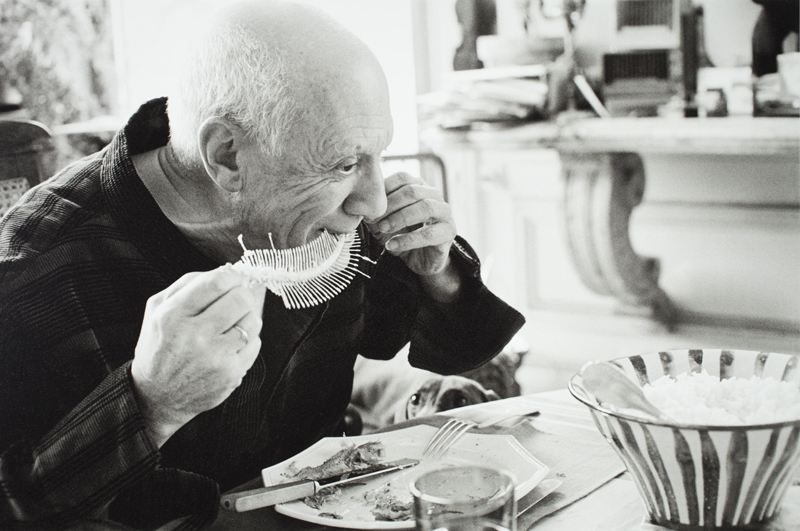
Back in 1964, Pablo Picasso shared with Vogue’s food columnist Ninette Lyon two of his favorite recipes — one for Eel Stew, the other for Omelette Tortilla Niçoise. If you live in the South of France, as Picasso did, the recipes probably won’t be entirely foreign to you. But if you aren’t so lucky, you might want to add these recipes, now reprinted by Vogue, to your culinary bucket list.
Below, we’ve highlighted the ingredients for the recipes. But, for step-by-step directions on how to prepare the dishes, head over to Vogue itself.
For more recipes from cultural icons — Hemingway, Tolstoy, Alice B. Toklas, Jane Austen, David Lynch, Miles Davis, etc. — head to the bottom of this page.
Eel Stew for Four People
6 tablespoons olive oil
6 tablespoons butter
12 small white onions
1 teaspoon sugar
2 yellow onions, chopped
12 mushrooms
⅓ pound salt pork, cubed
2 shallots, minced
2 cloves garlic, minced
2 eels of about 1 pound each, cut into four- to five-inch sections
1 bottle of good red wine
1 tablespoon flour
Salt, pepper, cayenne pepper
Bouquet garni: thyme, bay leaf, parsley, fennel, and a small branch of celery
Omelette Tortilla Niçoise for Four People
6 tablespoons olive oil
1 large onion
4 peppers, red and green
3 tomatoes
2 tablespoons wine vinegar
8 eggs
Salt and pepper
Related Content:
Ernest Hemingway’s Favorite Hamburger Recipe
Leo Tolstoy’s Family Recipe for Macaroni and Cheese
David Lynch Teaches You to Cook His Quinoa Recipe in a Weird, Surrealist Video
Thomas Jefferson’s Handwritten Vanilla Ice Cream Recipe
Alice B. Toklas Reads Her Famous Recipe for Hashish Fudge (1963)
Marilyn Monroe’s Handwritten Turkey-and-Stuffing Recipe
Read Filmmaker Luis Buñuel’s Recipe for the Perfect Dry Martini, and Then See Him Make One
Miles Davis’ “South Side Chicago Chili Mack” Recipe Revealed
The Recipes of Iconic Authors: Jane Austen, Sylvia Plath, Roald Dahl, the Marquis de Sade & More
Read More...Hear The Flaming Lips Cover All of The Beatles’ Sgt. Pepper’s: Streaming Free for a Limited Time
In 2012, Rolling Stone issued a revised list of the 500 Greatest Albums of All Time, at the very top of which sits The Beatles’ 1967 record, Sgt. Pepper’s Lonely Hearts Club Band. Justifying making the album its number one pick, Rolling Stone wrote:
Sgt. Pepper’s Lonely Hearts Club Band is the most important rock & roll album ever made, an unsurpassed adventure in concept, sound, songwriting, cover art and studio technology by the greatest rock & roll group of all time. From the title song’s regal blasts of brass and fuzz guitar to the orchestral seizure and long, dying piano chord at the end of “A Day in the Life,” the 13 tracks on Sgt. Pepper’s Lonely Hearts Club Band are the pinnacle of the Beatles’ eight years as recording artists. John Lennon, Paul McCartney, George Harrison and Ringo Starr were never more fearless and unified in their pursuit of magic and transcendence.…
Sgt. Pepper formally ushered in an unforgettable season of hope, upheaval and achievement: the late 1960s and, in particular, 1967’s Summer of Love. In its iridescent instrumentation, lyric fantasias and eye-popping packaging, Sgt. Pepper defined the opulent revolutionary optimism of psychedelia and instantly spread the gospel of love, acid, Eastern spirituality and electric guitars around the globe. No other pop record of that era, or since, has had such an immediate, titanic impact. This music documents the world’s biggest rock band at the very height of its influence and ambition.
Given Sgt. Pepper’s iconic status, it’s hard to imagine a contemporary band deciding to cover the entire album. (Can you really improve upon it?) But that’s just what The Flaming Lips have done with With a Little Help From My Fwends. Scheduled to be released next week, the album features contributions by fwends like Moby, My Morning Jacket, Miley Cyrus, and others. Proceeds from the album — which is now streaming free for a limited time at NPR — will go to the Bella Foundation, a non-profit that assists low-income, elderly or terminally ill pet owners with the cost of veterinary care when it cannot be afforded. You can pre-order the Flaming Lips album on Amazon and iTunes.
In other news, Paul McCartney announced today that he has unearthed a Wings’ song he played (back in the day) with John Bonham on drums. An intriguing idea. Catch it here.
Read More...Stephen Colbert Explains How The Colbert Report Is Made in a New Podcast

“I do the show in character, he’s an idiot, he’s willfully ignorant of what you know and care about, please honestly disabuse me of my ignorance and we’ll have a great time.”
This secret speaks to the heart of comedian and fake-pundit Stephen Colbert’s wildly popular Colbert Report. But how exactly does he manage to pull this rabbit from his hat, night after night grueling night?
The nuts and bolts of Colbert’s working day make for a fascinating inaugural episode of Working, a new Slate podcast hosted by David Plotz. It shares a title with radio personality Studs Terkel’s famous non-fictional examination, but Plotz’s project is more process oriented. Soup-to-nuts-and-bolts, if you will.
Colbert is happy to oblige with a Little Red Hen-like corn metaphor in which alcohol, not bread, is the ultimate goal.
His morning begins with a deep rummage through the headlines—Google News, Reddit, Slate, The Drudge Report, Fox News, Buzzfeed, The Huffington Post… imagine if this stack was made of paper. When does he have the time to google ex-girlfriends?
Whenever patterns and trends emerge, Colbert and his hard working team ferret out ways to impose his character onto them. Occasionally some lucky non-story will find itself elevated to Queen for a Day, if it speaks to something Colbert-the-character would care about passionately. The proposed ban on horse carriages in Central Park, the Colorado VA’s marijuana stance, and the self-declared lesbian trouple are three that have borne fruit of late.
From pitch meeting through read-aloud and rewrites, the school hours portion of Colbert’s day resembles that of other deadline-driven shows. He’s quick to acknowledge the contributions of a dedicated and like-minded staff, including executive producer Tom Purcell and head writer Opus—as in Bloom County—Moreschi.
As showtime approaches, Colbert swaps his jeans for a Brooks Brothers suit, and leaves the homey, dog-friendly townhouse where the bulk of the writing takes place for the studio next door.
There are last minute rewrites, a guest to greet, a Bic pen to be nibbled…
Ideally, he’ll get at least 10 minutes of headspace to become the monster of his own making, liberal America’s favorite willfully ignorant idiot. (Most of liberal America, anyway. My late-mother-in-law refused to believe it was an act, but it is.)
A bit of schtick with the makeup artist serves as a litmus test for audience responsiveness.
When the cameras roll, Colbert sticks close to his prompter, further proof that the character is a construct. Any improvisational impulses are unleashed during one-on-one interactions with the guest. With some 10,000 hours of comedy under his belt, his instincts tend toward the unerring.
At days end, he thanks the audience, the guest and everyone backstage except for one guy who gets a mere wave. The show is then edited at a zip squeal pace, and will hopefully fall into the “yay!” category. (The other choices are “solid” or “wrench to the head.”)
Colbert will only watch the show if there was a problem.
And then? The day begins again.
After peering through this window onto Colbert’s world, we’re stoked for future episodes of Working, when guests as varied as a rock musician, a hospice nurse, and porn star Jessica Drake walk Plotz through a typical day.
Related Content:
Stephen Colbert & Louis CK Recite The Gettysburg Address, With Some Help from Jerry Seinfeld
Stephen Colbert Tries to Make Sense of MOOCs with the Head of edX
A Serious Stephen Colbert Gives Advice on Love & Life to Teenage Girls
Ayun Halliday is the creator of The Mermaid’s Legs, a trauma-filled Hans Christian Andersen reboot premiering this week in NYC. See it! And follow her @AyunHalliday
Read More...How Wolves Change Rivers
In nature, everything is connected — connected in ways you might not expect. The short video above is narrated by George Monbiot, an English writer and environmentalist, who now considers himself a “rewilding campaigner.” The concept of rewilding and how it can save ecosystems in general, and how wolves changed Yellowstone National Park in particular, is something Monbiot explains in greater detail in his 2013 TED Talk below, and in his new book — Feral: Searching for Enchantment on the Frontiers of Rewilding.
Related Content:
Environment & Natural Resources: Free Online Courses
E.O. Wilson’s Life on Earth Released as a Free eBook and Free Course on iTunes
How Climate Change Is Threatening Your Daily Cup of Coffee
New Google-Powered Site Tracks Global Deforestation in ‘Near-Real-Time’
Read More...The Paintings of Miles Davis
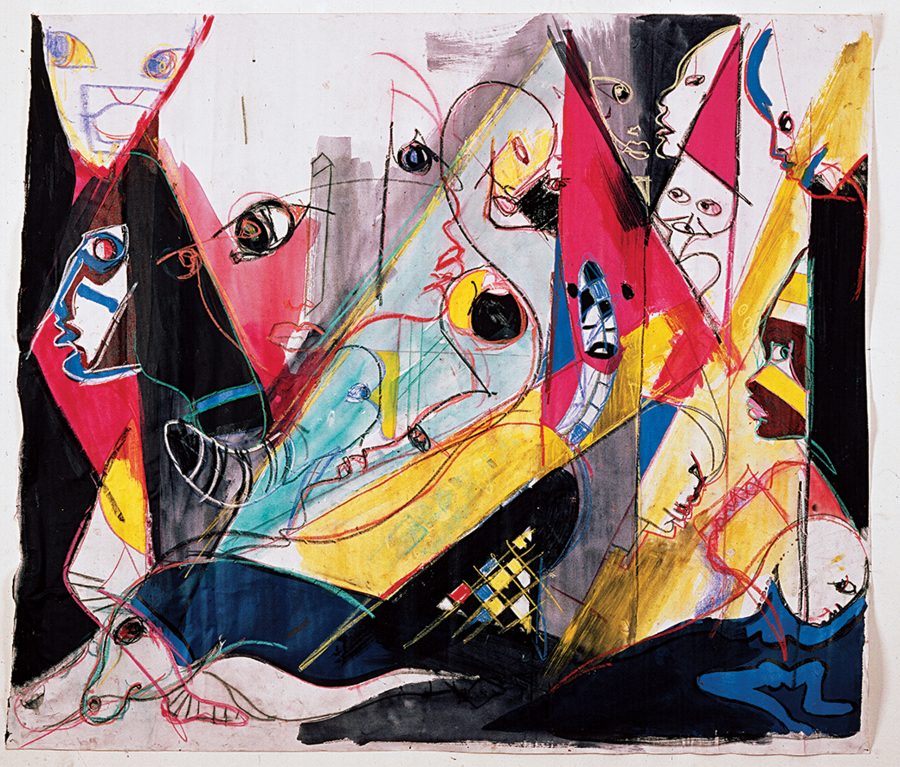
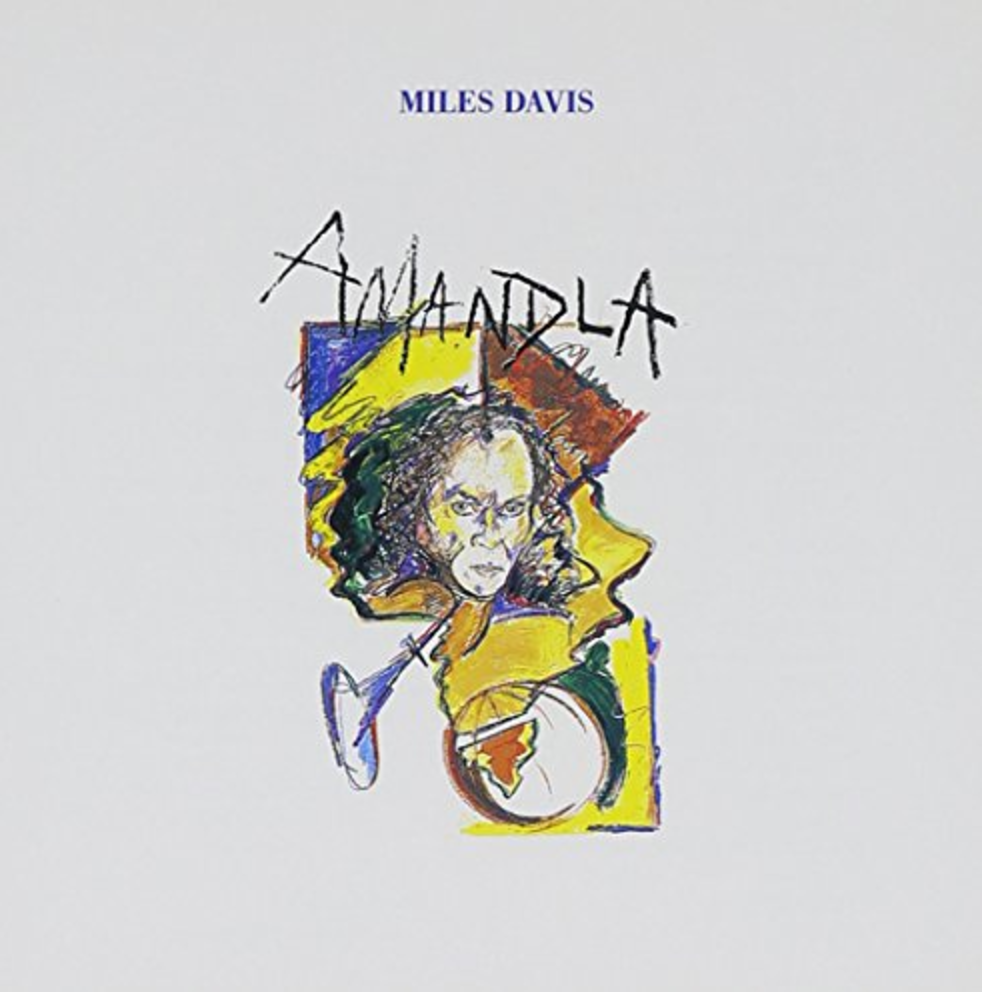
Ask enough people to name their favorite artist of any kind, and sooner rather than later, someone will name Miles Davis. The trumpeter and jazz auteur behind — or, strictly speaking, up in front of — such unchallenged masterpieces as Birth of the Cool, Kind of Blue, Sketches of Spain, and Bitches Brew has long since ascended to the pantheon of American music, but that doesn’t mean we should overlook his other artistic achievements. Achievements as a painter, for instance: true fans know that Davis’ visual art appears on a few of his album covers, such as that of 1989’s Amandla right below. “Painting, long a Davis avocation, is becoming a profitable sideline,” says a contemporary Los Angeles Times article. “In collaboration with his girlfriend, Jo Gelbard, he did the artwork for his new album; the cover is an impressive self-portrait using the reds and greens he seems to favor.”
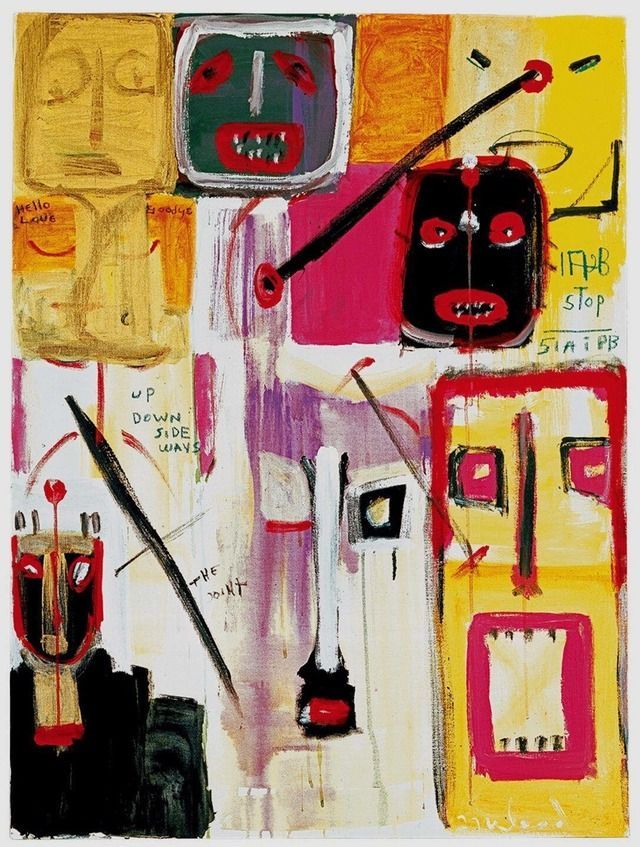
You can see more of Davis’ visual art over at Dangerous Minds and The Daily Beast. The so-called Prince of Darkness “didn’t begin to draw and paint in earnest until he was in his mid-fifties, during the early 1980s and a period of musical inactivity,” writes Tara McGinley. ”
Miles being Miles, he didn’t merely dabble, but made creating art as much a part of his life as making music in his final decade,” resulting in “a sharp, bold and masculine mixture of Kandinsky, Jean-Michel Basquiat, Picasso and African tribal art.” Just last year, Insight Editions published Miles Davis: The Collected Artwork, finally bringing together the fruits of the creativity the trumpeter could command even without his horn. Countless young jazz players claim Davis as an influence to this day, and they’ll continue to do so as long as jazz itself persists, but I do wonder how soon young painters will as well.




Related Content:
The Night When Miles Davis Opened for the Grateful Dead in 1970: Hear the Complete Recordings
Miles Davis’ “South Side Chicago Chili Mack” Recipe Revealed
Colin Marshall hosts and produces Notebook on Cities and Culture and writes essays on cities, language, Asia, and men’s style. He’s at work on a book about Los Angeles, A Los Angeles Primer. Follow him on Twitter at @colinmarshall or on Facebook.
Read More...“Heidegger in the Kitchen”: Alain de Botton’s Video Essay Explains the Philosopher’s Concept of Being
Are you feeling doomed and insignificant, like a shrimp destined for the frying pan? Well, then, we have just the thing for you. Last week we featured three introductory philosophy videos from Alain de Botton’s School of Life, on Martin Heidegger, the Stoics, and Epicurus. Each of these shorts is designed to show how philosophy, ancient and modern, can enhance our daily life by addressing questions of freedom, suffering, and happiness. Above—in what Maria Popova at Brain Pickings calls an “imaginative video essay”—de Botton again engages with Heidegger’s thought, this time distilling the difficult German philosopher’s concept of “Being” (das sein) to its essence.
Heidegger’s desire, de Botton tells us, was to “wake us up to the idea that we are surrounded by death.” (Heidegger used the “grander term,” das nichts,” the nothing, or “inexistence, the opposite of life.”) Instead of simply awakening existential terror by reminding us of how fragile and precarious our lives are, Heidegger sought to encourage moments of insight into the mysterious unity and beauty of life. In these moments, he thought, we might learn “to recognize our kinship with all living things and with the Earth itself.”
What keeps us from having these insights all of the time? For Heidegger, our social denial of Being takes the form of “endless chatter,” what he called das gerede. We are all familiar with its many manifestations; from the perpetual trivia of celebrity gossip to the numbing scaremongering of the 24-hour news cycle, thousands of voices surround us hourly, clamoring for our attention and seeking to drown out our individual awareness of death and of Being. In the visual kitchen metaphor above, das gerede is represented by a “pancake-like dough layer” that “smothers our connection with Being.” “The task of philosophy,” Heidegger believed, “is to remove us from the doughy comfort of chatter and introduce us, systematically, to the bracing concept of Nothingness.”
It’s certainly not for nothing that Heidegger has been identified as an existentialist, though he repudiated the term. For Heidegger, the question of human existence was primary and above all other kinds of inquiry. Heidegger did not believe that the methods and technologies of the natural sciences could ever offer satisfactory answers to our fundamental questions about our existence. So what was Heidegger’s cheerful advice to those of us seeking a more authentic connection to Being? Like Morrissey and various Romantic poets, Heidegger recommended that we “spend more time in graveyards.” To get in touch with life, he suggests, we must first learn to get in touch with death.
via Brain Pickings
Related Content:
Martin Heidegger Talks About Language, Being, Marx & Religion in Vintage 1960s Interviews
Martin Heidegger Talks Philosophy with a Buddhist Monk on German Television (1963)
Find several courses on Heidegger, including his magnum opus Being and Time, in our collection of Free Online Philosophy Courses
Josh Jones is a writer and musician based in Durham, NC. Follow him at @jdmagness.
Read More...Wes Anderson’s Animated Books
It was 2012, and Focus Features flew me and about three dozen other journalists to interview Wes Anderson for his latest movie Moonrise Kingdom right on the beach at Cannes. Though the day was hot enough to produce more than a few leathery topless sunbathers, Anderson wore the exact ‘80s-style beige corduroy suit you might expect him to wear. Just like his eccentric, ironic — and given the setting, uncomfortable — sartorial choices, Anderson’s movies are distinctive from frame one. He is Hollywood’s current reigning formalist.
Moonrise Kingdom is probably his most successful recent movie. Though the film is filled with his trademark symmetrical framing, deadpan set design and off-kilter juxtapositions, the film never feels like self-parody, unlike some of his previous movies — think Darjeeling Limited. Set on the remote New Penzance Island in 1965, Moonrise is about a star-crossed pre-teen love affair between Sam, a precocious bespectacled boy scout in a coonskin cap, and Suzy, a troubled teen who favors saddle shoes, raccoon-like eye makeup and above all books. Before she steals away into the woods with Sam, she stuffs her suitcase with six of her favorite (fictitious) books, all swiped from the local library.
Anderson features the books prominently in the movie, giving them titles like The Girl from Jupiter or Disappearance of the 6th Grade. Each book was designed by artists that Anderson personally commissioned. Though Suzy reads parts from three of the books in the film, Anderson originally had a much grander vision: “At one point in the process, when she’s reading these passages from these books,” he told Entertainment Weekly. “I’d thought about going into animation.” The filmmaker had just completed his stopmotion movie The Fantastic Mr. Fox; clearly, animation was on Anderson’s mind.
Ultimately, Anderson decided against this approach, but the idea still apparently intrigued him. So here it is as a promotional piece for Moonrise. In the span of six weeks, blindingly fast for animation, Anderson and his producer Jeremy Dawson managed to animate passages from all six books – written by the filmmaker – in the style of the book covers. The video is hosted by Bob Balaban who played the Moonrise Kingdom’s tuque-sporting narrator.
“I think we all just pitched in and we pulled a lot of favors because it was not like we spent a ton of money doing it,” said Dawson to EW. “People got excited about it because it was a creative thing rather than if they were making a Snickers ad or something.”
You can see the results above.
Related Content:
Watch 7 New Video Essays on Wes Anderson’s Films: Rushmore, The Royal Tenenbaums & More
Watch Wes Anderson’s Charming New Short Film, Castello Cavalcanti, Starring Jason Schwartzman
Wes Anderson’s First Short Film: The Black-and-White, Jazz-Scored Bottle Rocket (1992)
Jonathan Crow is a Los Angeles-based writer and filmmaker whose work has appeared in Yahoo!, The Hollywood Reporter, and other publications. You can follow him at @jonccrow. And check out his blog Veeptopus, featuring lots of pictures of vice presidents with octopuses on their heads. The Veeptopus store is here.
Read More...9 New Episodes of David Lynch’s Twin Peaks to Air in 2016
David Lynch just announced on Twitter this morning, “Dear Twitter Friends… it is happening again. http://s.sho.com/TwinPeaks #damngoodcoffee”
He’s referring to the revival of his early 1990s cult classic show, Twin Peaks, on Showtime in 2016.
Showtime’s Youtube Channel adds this detail:
The groundbreaking television phenomenon, Golden Globe® and Peabody Award-winner TWIN PEAKS will return as a new limited series on SHOWTIME in 2016. Series creators and executive producers David Lynch and Mark Frost will write and produce all nine episodes of the limited series, and Lynch will direct every episode. Set in the present day, TWIN PEAKS will continue the lore of the original series, providing long-awaited answers and a satisfying conclusion for the series’ passionate fan base.
According to the fan site WelcometoTwinPeaks, David Lynch and Mark Frost are “trying to bring back as much of the original cast as possible, with Kyle MacLachlan definitely on board reprising his role as Special Agent Dale Cooper. Composer Angelo Badalamenti and Emmy Award-winning editor Duwayne Dunham will likely be involved as well.” You can rest assured that WelcometoTwinPeaks will keep you posted on new details as they come to light.
In the meantime, the original Twin Peaks series was re-issued on blu-ray this summer. And US-based viewers can watch the original series for free on Hulu.
via Biblioklept
Follow us on Facebook, Twitter and Google Plus and share intelligent media with your friends. Or better yet, sign up for our daily email and get a daily dose of Open Culture in your inbox.
Related Content:
David Lynch Presents the History of Surrealist Film (1987)
David Lynch Explains How Meditation Enhances Our Creativity
David Lynch Teaches You to Cook His Quinoa Recipe in a Weird, Surrealist Video
Dumbland, David Lynch’s Twisted Animated Series (NSFW)
Read More...Support Us
We're hoping to rely on loyal readers, rather than erratic ads. Please click the Donate button and support Open Culture. You can use Paypal, Venmo, Patreon, even Crypto! We thank you!

About Us

Open Culture scours the web for the best educational media. We find the free courses and audio books you need, the language lessons & educational videos you want, and plenty of enlightenment in between.
Advertise With Us

FREE UPDATES!
GET OUR DAILY EMAIL
Get the best cultural and educational resources on the web curated for you in a daily email. We never spam. Unsubscribe at any time.
FOLLOW ON SOCIAL MEDIA

Open Culture editor Dan Colman scours the web for the best educational media. He finds the free courses and audio books you need, the language lessons & movies you want, and plenty of enlightenment in between.
Advertise With Us

